


India is once again in the grip of a harsh monsoon. For weeks now, heavy rains have been lashing many states, leading to floods, landslides, and cloudbursts. Swollen rivers are overflowing into villages, roads are caving in, and essential services have broken down in many areas.
The India Meteorological Department (IMD) has warned that the downpour is not over yet, and more rain can be expected in the coming days. Delhi, which is not usually affected by such strong monsoon weather, has crossed the 1,000 mm rainfall barrier this year.
From the plains of Punjab and Haryana to Himachal Pradesh’s Himalayas, Uttarakhand, and Jammu & Kashmir, humans are witnessing the worst of nature’s fury.
Delhi crosses 1,000 mm rainfall as Yamuna floods
Rain after rain has pummeled Delhi, rendering this one of its wettest monsoons in recent years. On Monday, 1st September, the city experienced 37.8 mm of rainfall, followed by 16 mm the following day. With that, the capital’s season rainfall breached 1,000 mm, far exceeding its normal of 774 mm.
The Yamuna River, swollen because of excess inflows from upstream barrages, crossed the year’s evacuation mark for the first time. Entire floodplains in Delhi were flooded, and hundreds of families had to relocate to safer areas. Inhabitants rushed to rescue whatever they could as water entered their huts and temporary homes.
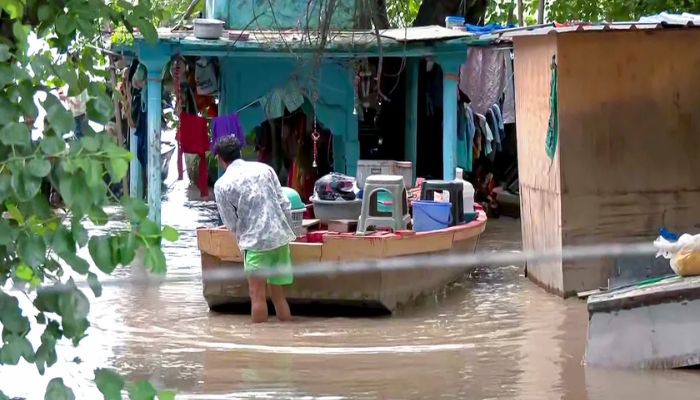
Delhi Flood Control and Irrigation Minister Parvesh Verma maintained that the government was fully equipped. “We are working day and night. Boats, life jackets, and pumps have been dispatched, and our officers are present at the sites to oversee the situation,” he asserted.
Gurugram comes to a halt after heavy rain
Haryana also sees its own set of issues. The state’s corporate capital, Gurugram, was submerged in water after heavy rains on Monday, 1st September. Major roads, underpasses, and residential areas were flooded, and traffic came to a standstill.
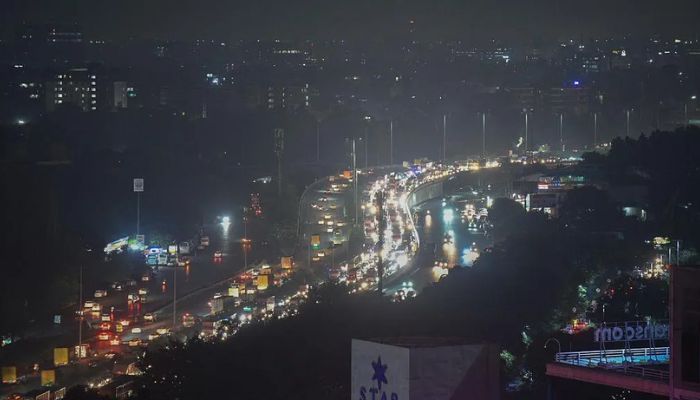
The situation further aggravated when Aravali dam in Kadarpur village was broken, leading to flooding of villages that surround it. Vehicles were stuck for hours, and schools were forced to adjust bus timings so that kids would be home without an issue. Authorities have suggested that private companies make it compulsory for employees to work from home, thereby minimising disturbances.
Farmers in rural Haryana reported extensive damage to crops as heavy rain inundated their fields.
Punjab faces its worst floods since 1988
Punjab is suffering from one of the worst floods in the last 37 years. Non-stop rain in the last week has converted huge tracts of the state into a sea of water. Massive rain in Himachal Pradesh and Jammu & Kashmir has driven rivers such as the Sutlej, Beas, and Ravi to perilous heights, submerging villages and agricultural fields.
Earlier, the state had 12 districts affected by the floods, as per a bulletin released by the state government on the affairs from 1st August to 1st September.
As per a bulletin released on Tuesday, 2nd September, 23 districts of the state have been announced hit by the floods.
1,400 villages have been notified as hit with an estimated 3.5 lakh people affected till now, of which the deluge has claimed 30 lives in 12 districts. Pathankot alone has reported six fatalities.
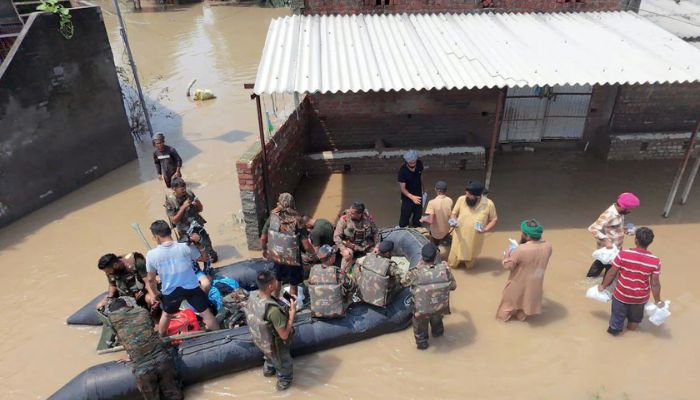
Punjab is facing its worst floods in almost four decades, with 29 individuals having lost their lives in 12 worst-affected districts of the border state.
As per the data gathered by the Punjab government between 1st August to 1st September, since rivers and rivulets began overflowing following heavy rain in Himachal Pradesh and Jammu and Kashmir hills, six persons lost their lives in Pathankot district following the swollen Ravi river, three each in Hoshiarpur, Amritsar, Ludhiana, Mansa, Rupnagar and Barnala districts.
The flood took one life each in Bathinda, Gurdaspur, Patiala, Mohali and Sangrur districts.
Three individuals are missing in Pathankot district after the flash floods devastated the area last week. Apart from the Ravi, the Beas and Sutlej have wreaked havoc in Punjab, causing one of the worst floods after 1988.
“Figures of deaths have been compiled based on the reports received at the district headquarters. It covers those who died by electrocution, incidents of house collapsing and died in drowning due to floods in the affected areas,” said a senior state government officer.
As per the official statistics, 56,834 acres of farm land have been damaged in Amritsar district, followed by 42,020 acres in Mansa district, 36,902 acres in Kapurthala, 29,363 acres in Tarn Taran, 27,754 acres in Ferozepur, 14,754 acres in Hoshiarpur and 6,034 acres in Pathankot district.
Relief efforts are at full capacity. 16,000 individuals have been evacuated, and 7,000 are residing in government-operated relief camps.
Flash flood warnings for the Himalayan states
The IMD issued a flash flood warning on Tuesday, 2nd September, in parts of Uttarakhand, Jammu and Kashmir, Ladakh, and Himachal Pradesh amid continuing heavy rainfall. The forecast indicates a number of districts are at “moderate to high risk” of flash flooding in the next few days.
Districts such as Almora, Chamoli, Dehradun, Rudraprayag, and Pithoragarh of Uttarakhand, and Kullu, Shimla, Chamba, and Kangra of Himachal have been instructed to stay on high alert. Anantnag, Ramban, Kathua, and Kulgam districts in Jammu & Kashmir are under danger.
Uttarakhand affected by cloudbursts and landslides
Uttarakhand has been severely affected. Cloudbursts, flash floods, and landslides have razed houses, bridges, and fields. Rudraprayag and Chamoli districts were severely affected. At Basukedar, four houses were destroyed, although fortunately, individuals were relocated in time.
During another incident in Chamoli, rubble had accumulated within houses, injuring a couple, while two people went missing in Dewal. In Bageshwar, cowsheds collapsed and some animals were killed.
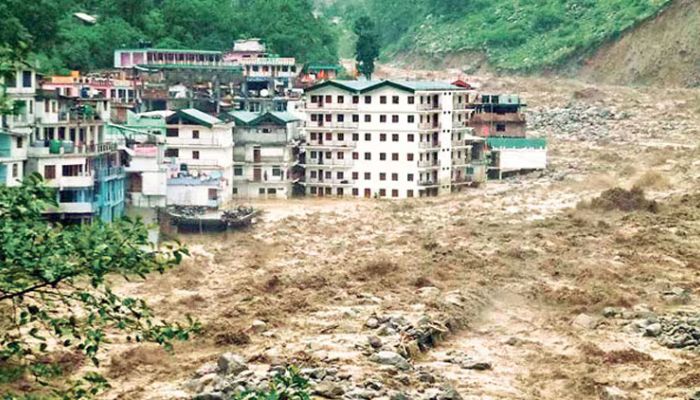
The Alaknanda and Mandakini rivers are flowing above the danger mark, forcing people to vacate their homes. The Hanuman temple in Rudraprayag got submerged, while a bridge was swept away in the Kedarnath valley.
Chief Minister Pushkar Singh Dhami said that he is monitoring the situation himself. “Rescue teams are on ground, and schools in most districts have been closed as a precautionary measure,” he added.
Himachal declares itself disaster-hit
More than 300 people have died in Himachal Pradesh since 20th June as relentless monsoon rain triggered landslides, flash floods and widespread damage to homes, farms and infrastructure, officials said.
According to the State Disaster Management Authority (SDMA), 166 people were killed in rain-related incidents such as landslides, drowning and electrocution, while another 154 died in road accidents linked to the weather. At least 379 others were injured.
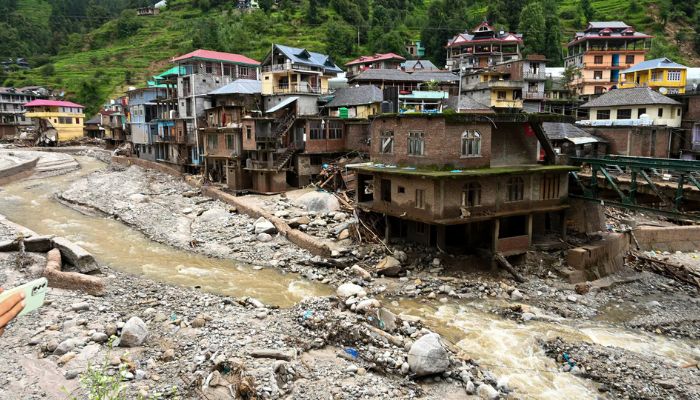
“Entire Himachal Pradesh has been declared a disaster-hit state and notification has been issued to declare the state as disaster-hit,” announced Chief Minister Sukhvinder Singh Sukhu in the Himachal assembly on Monday in the wake of the widespread devastation faced by the state that has suffered ₹3,056 crore losses so far.
The Himachal Pradesh government declared the rain-battered entire state as “disaster-affected” under Section 34 of the National Disaster Management Act, following widespread devastation caused by incessant monsoon rains, landslides and cloudbursts since late June.
The CM said, “The monsoon reactivated on 21st August, triggering a fresh wave of extreme rainfall, landslides, and cloudbursts, affecting Chamba, Kullu, Lahaul-Spiti, Mandi, Shimla, Kangra, and Hamirpur districts the most.”
He said the Chamba district is the worst-hit. No district is untouched by the devastation, with maximum damage is of roads, power infrastructure and drinking water schemes.
The impact of the cloudburst has been severe in several locations. In Rudraprayag district, six people went missing. Water levels of the Alaknanda and Mandakini rivers at their confluence are continuously rising. In Kedarnath Valley’s Lawara village, a bridge on the motor road was swept away by strong currents. The situation in Chenagad has also turned critical.
Looking at the large-scale devastation being faced by the state, former chief minister and Bharatiya Janata Party leader Shanta Kumar has written to Prime Minister Narendra Modi seeking a special grant for the state.
In his letter to PM Modi, he mentioned that the Government of India has around ₹2 lakh crore belonging to people without heirs. He had written to the Prime Minister, along with the complete list from all banks and LICs. “This ₹2-lakh crore belongs to those people who had deposited money but died without any legal heirs. This entire wealth belongs to the nation,” mentioned Shanta Kumar in his letter.
Flood alert in Jammu & Kashmir
In Jammu, the Chenab River is flowing dangerously high after heavy rains and water release from dams.
The authorities have opened the spill gates at the 900-MW Baglihar hydroelectric project and 690 mw Salal hydroelectric project over the Chenab River.
The 250 km long Jammu-Srinagar national highway (NH 44) has also been closed for traffic movement following heavy rains.
“It’s been raining heavily almost along the entire stretch of NH-44 since wee hours. Apart from sinking zones created at Tharad and Balli Nullah due to incessant rains, there are reports of slides and shooting stones at Tharad, Samroli Chanderkote, Mehar, Monkey Morh, Digdol, Kishtwari Pathe etc. In view of heavy rains, landslides, mudslides and shooting stones, traffic movement has been stopped,” said a traffic police officer.
The pilgrimage to Shri Mata Vaishno Devi Yatra remained suspended for the eighth consecutive day on Tuesday, 2nd September, due to inclement weather conditions in Trikuta hills in Reasi district, said officials.
Since 26th August, when 34 Vaishno Devi pilgrims were killed and scores injured in a landslide near Adhkuwari, Shri Mata Vaishno Devi Shrine Board has suspended the pilgrimage, said a police officer.
He informed that repair and restoration work was on but the pilgrimage remains suspended in view of rains.
“Only members of the shrine board staff and a few security personnel attend morning and evening Arti,” he said.
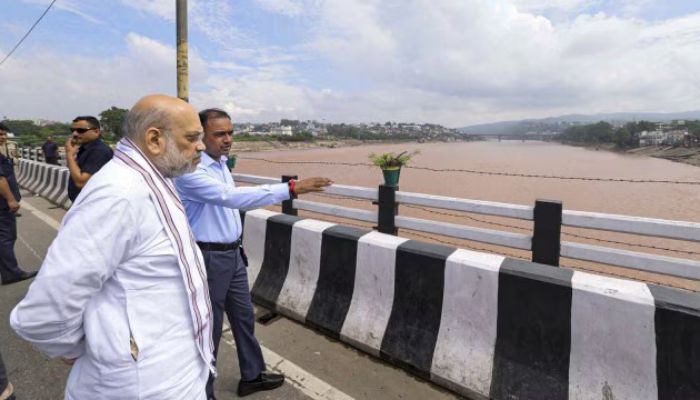
Union Home Minister Amit Shah recently visited Jammu, while Chief Secretary Atal Dulloo chaired a meeting to ensure that essential services were restored and public infrastructure was made safe.
Heavy rain forecast in Northeast
IMD issues heavy rain alert, Arunachal to see widespread showers this week. The India Meteorological Department (IMD) on Tuesday, 2nd September, issued a heavy rain alert for West Kameng district, warning that intense showers are “very likely” at isolated places by 3rd September.
According to the district-wise weather maps, Arunachal Pradesh is expected to see scattered to widespread rainfall over the next five days, with varying intensities across different regions.
This monsoon season has turned out to be one of the toughest in recent memory. From Punjab’s farms drowning under floodwaters to Uttarakhand’s cloudbursts sweeping away bridges, and from Delhi’s Yamuna crossing danger levels to Arunachal’s looming threats, large parts of the country are battling nature’s fury.


