


The Calcutta High Court has restrained the publication and circulation of a 36-minute video titled “How Modi and Adani Stole India: The Friendship Files,” in a defamation suit filed by Adani Enterprises Limited against Sabeer Bhatia and social media platforms.
Justice Aryak Dutt passed the ad interim injunction on 26 October 2026, in CS No. 75 of 2026 with IA/GA No. 1 of 2026. The order will remain in force till 31 January 2027, or until further orders.
According to the Calcutta High Court judgment, the video targeting PM Modi and Gautam Adani was uploaded on 9 October 2026, on a YouTube channel run by Sabeer Bhatia, “Bcubed (Breaking Boundaries with Sabeer Bhatia)”, in collaboration with “Shadow Citizens”. It was also posted on his X account “@sabeer.” The video had been viewed 46,134 times on YouTube and about 40,000 times on X, the court recorded.
Court’s order and directives
The court noted that access to the original YouTube upload was later disabled in India, apparently on a government complaint under Rule 3(1)(d) of the Information Technology (Intermediary Guidelines and Digital Media Ethics Code) Rules, 2021.
However, Bhatia reposted the video on X on 22 October 2026, after the original video was disabled.
Adani Enterprises argued that the video contained false and defamatory statements and that its reputation, as part of the right to life under Article 21, was being harmed. The company said it was not seeking to restrain constructive criticism of government policy or business concentration, but only the impugned video and its defamatory imputations.
The Calcutta High Court has restrained the circulation of a YouTube video titled “How Modi and Adani Stole India: The Friendship Files”, holding that the case appeared to fall within the exceptional category of defamation cases warranting a pre-trial injunction. Read more: https://t.co/HMvEATLN6x #CalcuttaHighCourt #Modi #Adani #defamation #socialmedia
— Live Law (@LiveLawIndia) October 27, 2026
The court said a pre-trial injunction in a defamation case touching public interest must be granted with great caution, citing the Supreme Court’s decision in “Bloomberg Television Production Services India Pvt Ltd v. Zee Entertainment Enterprises Ltd (2024 SCC OnLine SC 426).
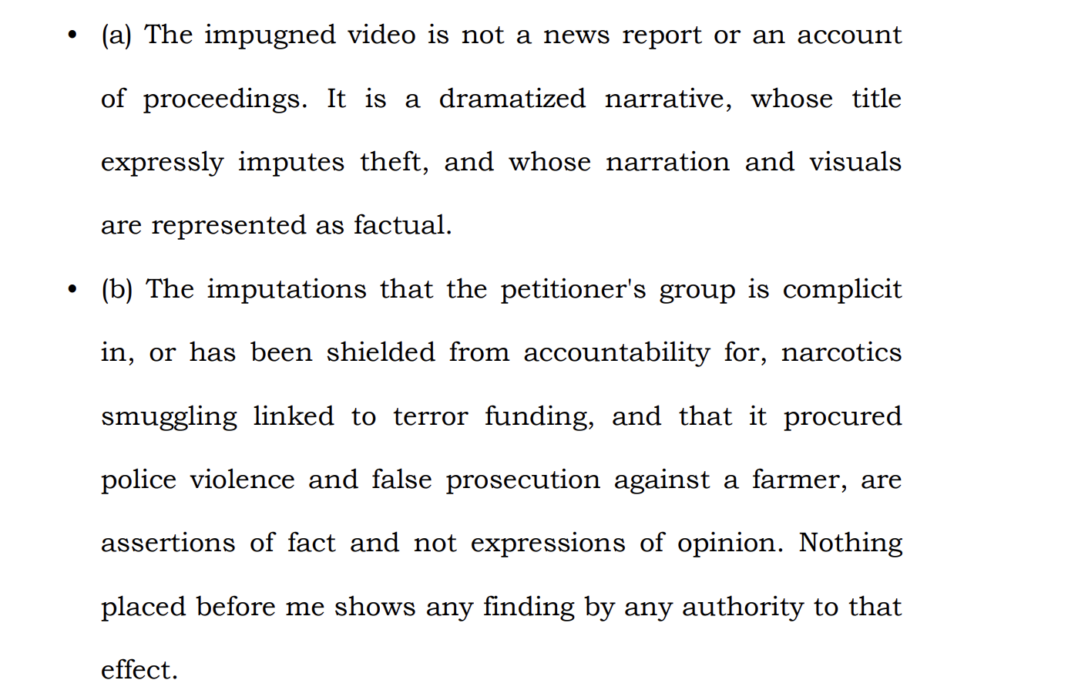
It held that the present case fell within the exceptional class because the video was a “dramatised narrative” whose title expressly imputed theft; its allegations about narcotics smuggling linked to terror funding and police violence, and false prosecution against a farmer, were assertions of fact, not opinion, with no authority’s finding shown; the original upload had already been disabled; and the repost after disablement prima facie showed want of good faith.
The court restrained the respondents, their agents and collaborators from publishing, republishing, uploading, sharing, communicating or otherwise disseminating the video, or any clip, excerpt, shortened version or materially identical reproduction of it, and from making the defamatory statements referred to in paragraphs 15 to 18 of the petition or similar statements.
It directed the respondents to remove the video and related clips from accounts, channels and pages owned or controlled by them, including posts at Serial Nos. 1 and 2 under uploads on X in Schedule A. YouTube, X and Instagram were directed to remove or disable access to the video at each URL listed in Schedule A and to disable reposts, quote posts, shares and similar engagements through which the video is accessible.
For certain X entries in Schedule A that were not specific post URLs, the petitioner was directed to furnish the specific URLs, after which the takedown direction would apply. The platforms were also directed to preserve subscriber information, registration details, IP logs at the time of upload and access logs, and to disclose basic subscriber information of accounts whose holders are not identifiable from Schedule A in a sealed cover by affidavit within two weeks.
The court further directed that the platforms shall not run or serve advertisements on, or share revenue in respect of, the said URLs or the impugned video, and shall preserve records of any advertisement revenue generated from them until further orders.
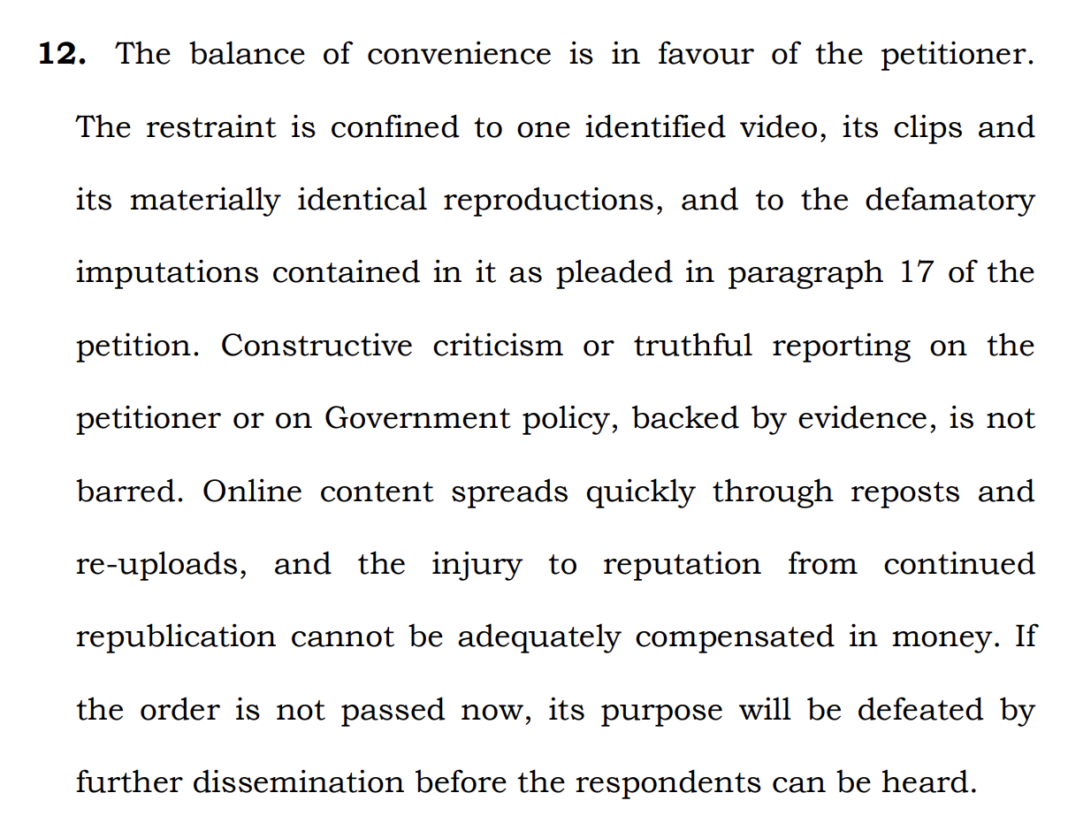
While imposing the ban, the court clarified that its order does not restrict “constructive criticism or fair reporting” on the Adani Group or any government policy. It emphasised that the restraint was confined to the identified video and its materially identical reproductions. The court also stated that its observations were prima facie.
The respondents have been directed to file affidavits-in-opposition within four weeks of service, with the petitioner filing a reply within two weeks thereafter. The platforms must file affidavits of compliance within two weeks. The matter has been listed for hearing in the monthly list of January 2027 before the regular bench under the heading “Adjourned Motion.”


