

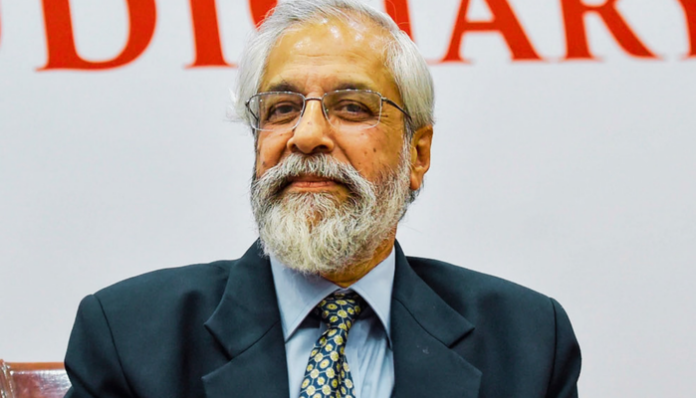
LAFC announces an Independent Commission of Former Supreme Court & High Court Judges to examine the Special Intensive Revision (SIR) of electoral rolls.
— Lawyers' Association For Constitution (@lafcindia) October 2, 2026
Chaired by Justice Madan B. Lokur, the Commission will undertake public hearings, legal research and scrutiny. pic.twitter.com/p6J0AXpyeC
The Commission has been tasked to conduct an ‘independent inquiry’ to find out if the SIR exercise was undertaken by the Election Commission in a fair manner. The full panel of the commission will be travelling across the country, hearing testimony of citizens allegedly affected by the SIR exercise and collecting data on the additions or deletions in the electoral rolls, as stated in the press release of the LAFC.
Apart from the intriguing composition of the commission, the timing of its formation is also interesting. The commission comes at a time when the Opposition and mainstream media portals like the Indian Express are trying hard to push a narrative to cast aspersions on the Election Commission by alleging irregularities in the SIR exercise and connivance with the BJP government. What adds to the suspicion is that the head of the commission, retired Justice Lokur, is known for being at odds with the current BJP government.
Criticised abrogation of Article 370 and the UAPA law
Justice Lokur had criticised the abrogation of Article 370 by the Modi government, which was upheld by the Supreme Court itself. He also voiced his objections to the Unlawful Activities Prevention Act (UAPA), which empowers the government to effectively deal with anti-national activities.
He was part of the infamous rebel group of four judges who held an unprecedented press conference in 2018, with allegations, including the government’s lack of response to the Memorandum of Procedure (MoP) governing the appointment of judges. Justice Lokur was also on the Constitutional Bench that, in 2015, struck down the National Judicial Appointment Commission (NJAC), introduced by the Modi government to replace the controversial Collegium system for the appointment of judges.
Friends with Pakistani Judges
While Justice Lokur has been critical of the government at home, he has had warm and cordial relations with Pakistani judges. In January 2019, the former apex court judge attended the swearing-in ceremony of the former Chief Justice of the Supreme Court of Pakistan, Asif Saeed Khosa, who is also said to be a close friend of his. This was not the only time that the former judge attended the swearing-in ceremony of a judge in Pakistan. Years before this, he had also taken part in the swearing-in ceremony of former Pakistan Chief Justice Tassaduq Hussain Jillani, when he took the oath as the Chief Justice of the Supreme Court.
Member of a foreign-funded NGO, opposed NRC detentions
The former Supreme Court judge is also a senior member of an NGO funded by the US State Department. He is an Executive Committee member of the Commonwealth Human Rights Initiative (CHRI). As a CHRI member, he signed a statement along with other so-called ’eminent citizens’ against the detention of illegal immigrants under the National Register of Citizens (NRC) framework and the setting up of detention centres.
CHRI monitors the ‘human rights situation’ across the Commonwealth through its International Advocacy and Programming (IAP) unit, which explains Justice Lokur’s stance against detentions and detention centres under the NRC framework. Pertinently, the Ministry of Home Affairs (MHA) suspended the Foreign Contribution (Regulation) Act (FCRA) license of the CHRI in June 2021. Subsequently, in April 2022, the MHA completely canceled the FCRA license of the NGO due to violations and failure to submit required reports.
Notably, Justice Lokur is the first Indian judge to be appointed as a judge in a foreign country’s court. He was appointed as a member of the non-resident panel of judges at the Supreme Court of Fiji.
Conducted the Pegasus snoopgate investigation against the Centre
Furthermore, Justice Lokur was part of a two-member commission constituted by the Mamata Banerjee government in West Bengal in July 2021 to investigate the Pegasus ‘snoopgate’ scandal. The Pegasus snoopgate scandal involved allegations that the BJP government used military-grade spyware purchased from Israel’s NSO Group for surveillance of journalists, opposition politicians, activists, and constitutional authorities.
Defends opposition politicians, targets former BJP leaders
Justice Lokur’s criticism of the ruling BJP government need not be mistaken for a neutral and non-partisan stance, as a former judge. His political leanings were exposed when he defended Aam Aadmi Party (AAP) national convenor and former Delhi CM Arvind Kejriwal’s refusal to resign and to continue to work from jail after being arrested by the Enforcement Directorate (ED) and the Central Bureau of Investigation (CBI) in 2024 over corruption and money laundering allegations linked to Delhi’s scrapped excise policy.
The retired judge admitted that Kejriwal’s refusal to resign as the CM post his arrest amounted to a violation of constitutional morality. However, he supported him, saying that so many people have violated constitutional morality and so Kejriwal doing the same would make no difference. This was like a judge letting a thief off the hook, citing other instances of theft.
Not just that, Justice Lokur tried to portray Congress leader Priyanka Gandhi Vadra’s temporary detention by Uttar Pradesh police after Lakhimpur Kheri violence to prevent a law and order situation as an illegal arrest. Priyanka had gone to visit Lakhimpur Kheri to score political points on the incident in which four BJP workers were killed. She was temporarily detained by the police to maintain law and order in the area.
On the other hand, the former judge cast aspersions on the acquittal of former BJP MP Brij Bhushan Sharan Singh by a Delhi Court in a case concerning sexual harassment allegations against him. Justice Lokur criticised the Delhi Police for the handling of the case against Brij Bhushan and said that the Supreme Court should have monitored the investigation in the case.
Attributed malice to the government for ex-judge Justice Muralidhar’s transfer
Justice Lokur attributed malicious intentions to the central government for the transfer of former judge Justice S Muralidhar from Delhi High Court to the Punjab & Haryana High Court, alleging that this was done as a result of a certain judgment that the latter had delivered.
Later again, he accused the BJP government of influencing the Collegium’s decision, which led to Justice Muralidhar not being elevated to the top court. Justice Lokur blamed the government for not acting on the recommendation of the Collegium, which was later recalled, to appoint Justice Muralidhar as the Chief Justice of the Madras High Court. Official Collegium records showed that the recommendation was made in September 2022 and was recalled in April 2023, considering Justice Muralidhar was due to retire four months later, in August 2024.
Justice Lokur later questioned the opacity in the appointments of judges by the Collegium. It is interesting to note that he was the one to oppose the NJAC, which offered a more transparent substitute for the Collegium system that he accused of acting under government pressure.
Notably, in November 2018, a Delhi High Court bench including Justice Muralidhar had ordered the release of Gautam Navlakha and 4 other urban naxals in a controversial verdict. The urban naxals were arrested in connection with the Bhima Koregaon violence. Justice Muralidhar directed the urban naxals to be released despite the police pointing out that they were involved in a conspiracy to assassinate Prime Minister Narendra Modi.
His biased report on anti-Hindu Delhi riots and call for more Judicial activism
Justice Lokur headed a committee, which released a report on the 2020 anti-Hindu Delhi riots suggesting that the riots were a premeditated act of violence by the Hindu community against the Muslim community. The report pushed an anti-Hindu narrative by cherry-picking facts and distorting the truth.
Justice Lokur has been an advocate of activism by the judiciary. And perhaps, it is because of his passion for activism by judges that he has now decided to sit in judgment as the head of a Kangaroo court on a routine electoral exercise, which was upheld by the Supreme Court. The above-mentioned information leaves little doubt as to the political leanings of Justice Lokur.
The commission is made up of a group of people who have been publicly and fiercely condemning the SIR exercise undertaken by the Election Commission. This raises the question whether the findings of the commission will be free from bias. The commission is, at best, like a private court, with no constitutional backing to conduct the inquiry. Given the interesting composition of its panel, it is not difficult to guess its findings.
What is Lawyers Association For Constitution (LAFC)?
The ‘independent commission’ has been constituted by the Lawyers Association for Constitution, which is a private lawyers’ body, claiming to be “non-partisan, secular, and non-casteist”. The association was officially launched on August 15, 2026, at Kerala House, New Delhi, and its membership is open to advocates and law students who subscribe to its objectives. Former Justice Lokur attended the launch of the association.


