

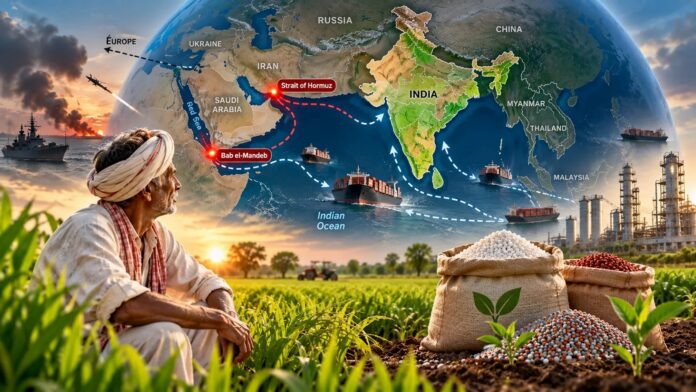
Amid escalating geopolitical friction in the world and the war in the Middle East, global agricultural supply chains faced severe structural vulnerability in recent months. Crises in essential nutrient manufacturing hubs and key shipping routes threatened to trigger acute price shocks and food inflation across global markets. Yet, despite heavy import dependency for vital fertilisers like Diammonium Phosphate (DAP), Muriate of Potash (MOP), and natural gas feedstocks, Indian agricultural productivity and distribution of fertilisers remained remarkably steady.
India imports roughly a third of its urea, a substantial share of its DAP and virtually all of its potash.
When geopolitical crises simultaneously disrupted imports from Russia, the Red Sea and the Persian Gulf, the consequences could have travelled all the way from distant battlefields to Indian farms and ultimately to household food prices. It did not happen.
The crisis emerged from several directions. Houthi attacks on commercial shipping in the Red Sea forced vessels to avoid the Suez route and travel around the Cape of Good Hope, adding thousands of kilometres and weeks to voyages while raising freight and insurance costs. Meanwhile, the US-Israel war against Iran disrupted commercial shipping through the Strait of Hormuz, through which major supplies of ammonia and finished fertilisers from the Gulf must pass. Russia presented another challenge. As one of the world’s largest fertiliser exporters, it is an important source of potash, urea and phosphatic fertilisers, but Western sanctions following the Ukraine war complicated payments, shipping and insurance.
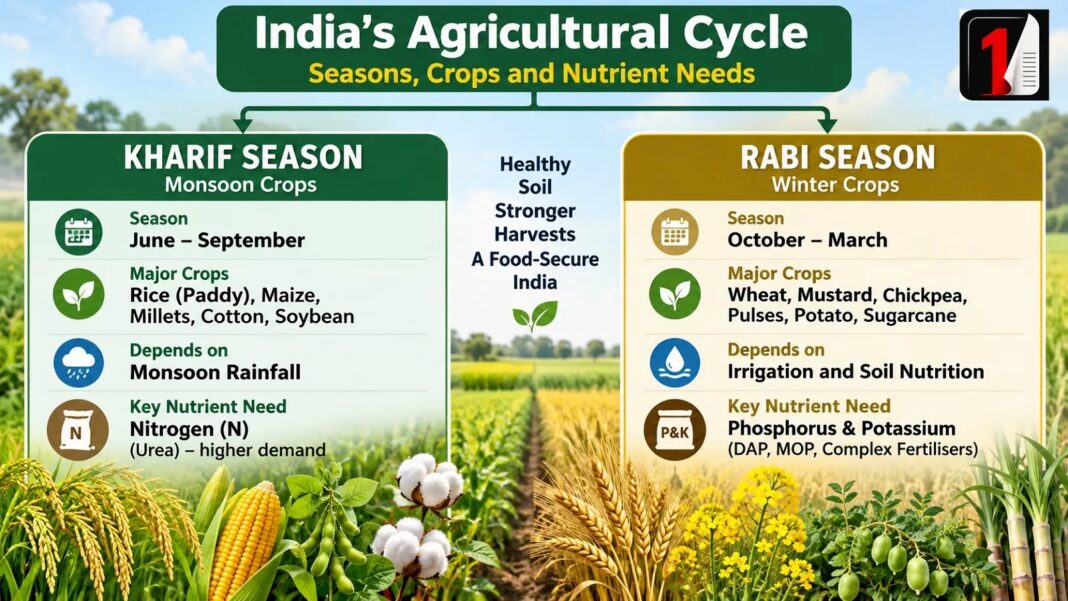
The vulnerability is particularly significant because India’s Kharif and Rabi seasons have different fertiliser requirements. Paddy-heavy Kharif agriculture depends heavily on nitrogen supplied through urea. Domestic production and government buffer stocks, assisted by favourable monsoon conditions, helped India negotiate the recent Kharif season without severe shortages. Rabi is more complicated. Wheat, mustard, chickpea and other winter crops require phosphorus and potassium at the beginning of sowing, making supplies of DAP, MOP and NPK particularly important. India’s dependence on imported potash and DAP consequently makes disruptions during the narrow Rabi sowing window potentially serious.
India’s resilience was not an accident of geography, but the result of calibrated, pragmatic diplomacy coupled with decisive policy intervention by the government. While Western nations struggled with soaring fertiliser tariffs and supply bottlenecks, India engaged in multi-channel trade negotiations. By securing long-term supply pacts with key global producers across Russia, the Middle East, North Africa, and South America, India effectively insulated its domestic agrarian economy from global market turbulence.
At the heart of this strategy was a balance between global engagement and internal stabilisation. On the international front, Indian sovereign trading entities and private consortia negotiated fixed-rate import contracts, bypassing speculative spot-market price surges. On the domestic front, the central government expanded the Nutrient Based Subsidy (NBS) mechanism, absorbing international price hikes to ensure that local farmers received fertilisers at affordable, capped rates during crucial Kharif and Rabi sowing seasons.
Furthermore, this multi-front strategy was bolstered by accelerating domestic production capabilities. Reopening dormant fertiliser units in places like Sindri, Gorakhpur, Talcher, Ramagundam, etc and expanding Nano Urea adoption reduced foreign exchange pressure while laying the groundwork for self-reliance. This combination of dynamic international trade and robust domestic safety nets prevented severe crop yield drop-offs, keeping grain reserves healthy and domestic food inflation under control.
The lessons from this period underscore a broader shift in geopolitical strategy: food security and nutrient supply chains are now as critical to national sovereignty as energy grid resilience and maritime defense. India’s proactive model offers a blueprint for navigating supply shocks in an increasingly unpredictable multipolar world.
The detailed article explaining how India rose with remarkable strategic planning and execution to meet the global supply challenge and ensure enough fertilisers for its massive domestic needs can be read here in Chapter One Magazine.


