

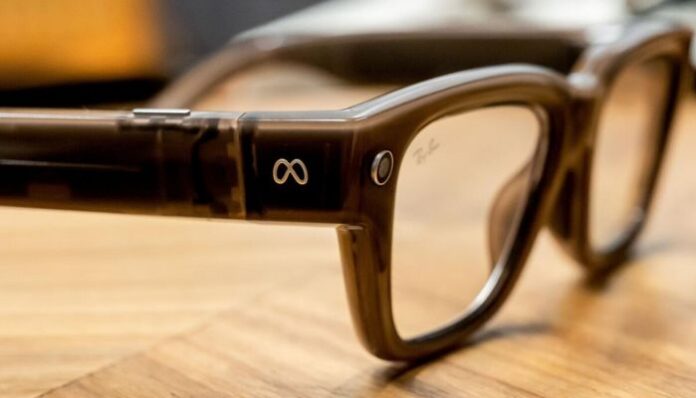
The AI-powered smart glasses by Meta are being promoted as a new way to use technology without constantly reaching for a phone. But behind their promise of hands-free help, live translation and quick photo and video recording, growing concerns are being raised about privacy.
A major part of the concern comes from what happens to the information captured by the glasses after it is recorded. An investigation in Kenya found that workers who help train Meta’s AI systems have seen highly private material captured through the glasses, including videos from homes, bathrooms and bedrooms. Other investigations have also highlighted cases where people were filmed without knowing it and later found themselves appearing in widely shared social media videos.
Kenya investigation brings hidden data work into focus
The Kenya case began with workers employed by Sama, a company that works as a subcontractor for Meta. In Nairobi, thousands of data annotators help train AI systems by reviewing and labelling images and videos so that machines can understand objects, people and the world around them.
Their work includes identifying objects in images, following shapes and checking whether AI systems have correctly understood visual information. But some workers told Swedish newspapers Svenska Dagbladet and Göteborgs-Posten that the material they handle can go far beyond ordinary images.
Workers described seeing videos recorded inside private homes. Some said they had encountered footage showing people using bathrooms, getting dressed, having sex or accidentally exposing private information such as bank cards. One worker described seeing a man leave his glasses on a bedside table before his wife entered the room and changed her clothes.
The workers said the material can be extremely sensitive and that they are expected to continue working even when they realise they are looking into someone’s private life. They also described reviewing conversations and transcripts involving subjects such as crimes, protests and sexual comments.
The investigation also found questions around the protection of people appearing in the footage. Former Meta employees said faces in annotation material are automatically blurred, but workers in Kenya said the system does not always work properly. In difficult lighting conditions, faces and bodies can sometimes remain visible.
Meta did not directly answer several questions about how such highly private material could reach subcontractors. The company referred to its AI terms and privacy policy, which say that some interactions with its AI systems may be reviewed by humans.
How do Meta’s smart glasses work?
Meta’s smart glasses are made in partnership with eyewear company EssilorLuxottica and use the familiar Ray-Ban design. They contain a small camera, speakers built into the arms and, in newer versions, lenses capable of displaying information.
The glasses can be activated using the voice command “Hey Meta”. They can answer questions, interpret what the camera sees, take photographs and videos, handle calls, play music and podcasts, and provide features such as live translation.
Meta has presented the glasses as an all-in-one assistant that can help users at work, guide them while travelling and allow them to capture moments without taking out a smartphone. The company has also promoted privacy controls and says users remain in control of their data.
However, the way the technology works creates a difficult privacy question. The camera is built into the frame and can be less noticeable than a phone camera. A small light is meant to indicate when the glasses are recording, but users and people around them may not always notice it, especially in bright conditions.
The glasses also rely on Meta’s infrastructure for several AI functions. An investigation by Svenska Dagbladet and Göteborgs-Posten found that when the glasses were tested without an internet connection, some AI features stopped working. Network traffic showed frequent communication between the phone and Meta servers. The investigation concluded that the AI could not operate entirely locally on the phone.
Meta’s privacy terms say that voice recordings may be saved for product improvement or training when a user actively agrees. But data needed for the AI assistant to function, including voice, text, images and sometimes video, can be processed automatically. The terms also state that some interactions with Meta AI can be reviewed manually by humans.
Privacy concerns are growing
The concern is not limited to what the wearer chooses to record. People around the wearer may also be captured without knowing it.
Meta markets its glasses with the message that they are designed for privacy and controlled by the user. The company advises users to respect people’s wishes and switch the glasses off in sensitive places.
But several incidents have shown how difficult that can be in everyday life.
One of the biggest concerns is the growing use of smart glasses to secretly record strangers for social media content. Men have been seen approaching women in public places, including shopping areas and beaches, while wearing Meta’s glasses. They ask casual questions or use pickup lines, while the women do not realise that a camera is recording them. The videos are then posted online, sometimes attracting large audiences and abusive comments.
The technology has also been used for prank videos. Some creators have recorded unsuspecting people while carrying out fake petitions, embarrassing stunts or other tricks. Because the glasses look like ordinary eyewear, people may not realise that a camera is operating nearby.
This creates a different problem from traditional filming. When someone holds up a phone, the camera is usually visible. With smart glasses, the recording device can be much harder to notice.
Meanwhile, reports say that Norway is contemplating stricter rules for smart glasses, including a possible ban on facial recognition in public spaces.
Woman discovers she was secretly filmed
One such case involved a woman identified by the BBC as Alice, a name used to protect her identity.
Alice said she was walking into a London shopping centre when a man wearing smart glasses approached her. She believed he was simply trying to talk to her. She later discovered that the interaction had been recorded and posted on social media.
The video was viewed around 40,000 times before she learned about it through a friend. Alice said she felt shocked because the man had not been holding a phone or placing an obvious camera in front of her.
When Alice contacted the account and asked for the video to be removed, she said she was told that removal would be a “paid service”. She did not pay and reported the matter to police.
The Metropolitan Police said an investigation was opened but could not progress because of limited information. The man later told the BBC that he did not intend to cause distress and described his content as light-hearted interactions.
The video was later removed from TikTok, and the platform banned his account for violating its rules on bullying and harassment. But Alice said she remained worried because the person still had the original file and could upload it again.
Another woman finds her video had gone viral
A similar case involved Toluwa Omitowoju, who discovered that she had been secretly filmed by a man wearing Meta’s AI glasses.
She only found out after friends and people she had not spoken to for years began sending her the video. It had spread across social media and received more than 200,000 views.
Omitowoju said she had not known she was being filmed and had not been asked for permission before the video was posted. She said that with a phone camera, a person at least has the chance to see the device and object to being recorded. With smart glasses, she felt that this ability to refuse was being taken away.
A video of Toluwa Omitowoju received hundreds of thousands of views online — but she didn’t post it, nor did she know that she was being recorded at the time with Meta’s AI glasses.
— CBS Mornings (@CBSMornings) August 21, 2026
Her story is part of growing privacy concerns surrounding people recording their surroundings… pic.twitter.com/4aHzLTv70Y
The incident is part of a wider trend in which content creators use wearable cameras to make prank and pickup-line videos involving people who have not agreed to be recorded.
Instagram head Adam Mosseri said the platform was taking action against videos that harass people or invade their privacy. Meta has also said its glasses have safety features, including a light that comes on during recording and software designed to stop recording if that light is covered.
However, a CBS News test found that the disabling mechanism did not appear to work when the light was covered after recording had already started. Meta responded that the feature is designed to prevent recording when the light is covered before the recording button is pressed.
Swedish investigation raises questions about data processing
The concerns go beyond secret filming on the street. The investigation by Svenska Dagbladet and Göteborgs-Posten also examined what happens to information once users activate the AI functions.
Reporters bought a pair of Meta Ray-Ban glasses and connected them to the Meta AI app. During testing, they found that the glasses contacted Meta servers while AI functions were being used.
The investigation also examined information given by sales staff in Sweden. Some retailers told customers that they had complete control over what information was shared with Meta, while others admitted they were not sure where the data went.
The newspapers found that the actual process was more complicated. The glasses needed Meta’s infrastructure to process information for certain AI functions, meaning that saying all information simply remained on the user’s device did not give the complete picture.
Privacy experts questioned whether users fully understand what happens to their information. Under European data protection rules, companies must be transparent about how personal data is processed and where it goes.
Kleanthi Sardeli, a data protection lawyer at the organisation None Of Your Business, said there could be a transparency problem if people do not realise that the camera is recording when they speak to the AI assistant.
The Swedish Authority for Privacy Protection also raised concerns about how clearly users understand what happens behind the scenes. Petter Flink of the authority said people may not realise how much information can be extracted from their daily lives.
Meta says users bear responsibility for how the technology is used
Meta has defended the privacy and safety features of its glasses. The company says users are informed about the possibility of human review through its terms and has said that it has teams working to limit misuse.
At the same time, Meta has said that the responsibility ultimately lies with users not to misuse the technology.
The company has also said that its glasses have a recording light and other measures intended to prevent covert recording. But critics argue that the problem is not only whether a person presses the record button secretly. It is also about whether people nearby can realistically know that they are being recorded and where that footage may eventually go.
A bigger challenge as smart glasses become common
Meta’s glasses have already become a major product in the smart-glasses market. The company says seven million pairs have been sold, while estimates cited in the investigation put Meta’s share of AI and smart-glasses sales at more than 80 %.
Other major technology companies are also moving into the market. Apple is reportedly developing smart glasses, Snap has announced a new version of its Specs, and Google is again working on smart-glasses technology.
If these products become widely used, privacy concerns could become much larger. Cameras built into ordinary-looking glasses could make it harder for people to know when they are being recorded in places such as shops, museums, hospitals, cinemas, courthouses and other public spaces.
Meta has also reportedly considered adding facial recognition to future versions, which could take the privacy issue further by allowing wearers not only to record people but potentially identify them.
The technology has clear benefits. Users can take photographs without reaching for their phones, listen to music while staying aware of their surroundings, make calls and use AI assistance while travelling.
But as smart glasses become more common, the question is no longer simply what the wearer can do with them. It is also about what happens to the people who happen to be in front of the camera and whether they have any real way of knowing, refusing or controlling what happens to their images and personal information.


