

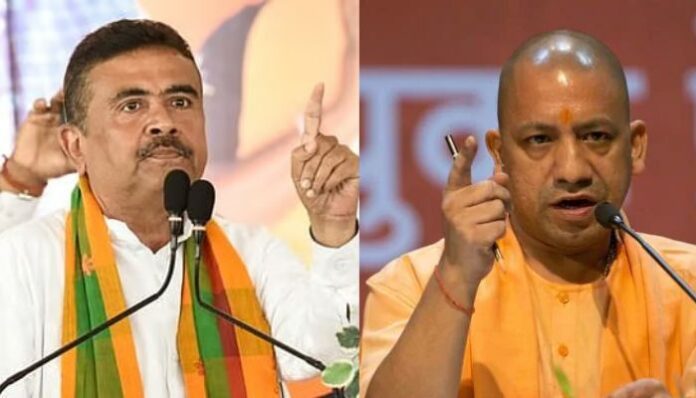
The law and order landscape in West Bengal has undergone a dramatic shift since the Bharatiya Janata Party (BJP) government took charge in May 2026 under Chief Minister Suvendu Adhikari. With a declared intent to dismantle the networks of hardened criminals and rapists, the state police have intensified their crackdowns, resulting in a series of police encounters. The most recent incident occurred in the early hours of Monday, 9th November, when a prime accused in the brutal rape and murder of a minor in Raiganj was killed in an encounter by the police while attempting to flee across the border into Bihar.
JUST IN | Accused in rape and murder of a minor in West Bengal’s Uttar Dinajpur shot dead by police. Dilip Roy, the accused was killed in the early hours of November 9 when the police tried to arrest him. Fourth ‘encounter’ death in the State after the BJP government came to power in May 2026 reports @shivsahays.
— The Hindu (@the_hindu) November 9, 2026
According to police officials, the accused, Dilip Roy, had been on the run since the mutilated body of a 13-year-old minor was recovered on Thursday, 5th November. The young victim had gone missing on Tuesday, 3rd November, sparking intense panic and grief in the locality. Her body was eventually discovered inside the Kulik Wildlife Sanctuary. Following a preliminary investigation, a formal case of rape and murder was registered at the Raiganj police station by her distraught parents, triggering a massive manhunt led by the district police.
At approximately 3:30 a.m. on Monday, a police team tracked Roy down to the Gauri village area, where he was attempting to cross into neighbouring Bihar to evade arrest.
As the police approached to apprehend him, Roy opened fire on the personnel. In self-defence, the police engaged in retaliatory firing, during which Dilip Roy sustained critical bullet injuries. He was rushed immediately to a nearby hospital, where the attending doctors declared him dead upon arrival. His body was subsequently sent for a post-mortem examination.
Suvendu Adhikari gives police a free hand in crimes against women
The encounter comes amid Chief Minister Suvendu Adhikari’s repeated warnings against sexual violence and crimes targeting women and girls. The West Bengal Chief Minister has made it clear that his government will not compromise on women’s safety. Reiterating that his government would never compromise on women’s safety, Adhikari announced that the state police had been granted a completely free hand to deal ruthlessly with perpetrators of crimes against women.
Emphasising that those who disrespect women will face severe and immediate consequences, the Chief Minister declared, “Whatever needs to be done will be done. Women have nothing to worry about. I have given police a free hand.”
Invoking the traditional cultural and religious significance attributed to women in Indian society, Adhikari urged citizens to remain vigilant while assuring them that the state apparatus would take every necessary step to ensure justice and deterrence.
This latest operation in Raiganj marks the 4th encounter against violent criminals and rapists in West Bengal since Chief Minister Suvendu Adhikari assumed power in May 2026. The striking frequency of these encounters signals a radical departure from previous policing norms in the state, establishing a clear pattern of armed retaliation against accused who attempt to attack law enforcement or flee justice.
Prabhas Mondal killed in Baruipur rape and murder case
The first encounter took place on 8th July, when Prabhas Mondal, one of the prime accused in the rape and murder of a 12-year-old girl in Baruipur, South 24 Parganas district, was killed in police encounter.
According to police sources, late at night on 8th July, a team from the Baruipur Police Station took Mondal to Suryapur for the mandatory crime scene reconstruction. Just as the procedure was about to begin, Mondal snatched the service weapon of a police officer, fired a live round at the team, and attempted to sprint away. In the ensuing return fire, Mondal was injured and rushed to Baruipur Hospital, where doctors declared him dead.
#WATCH | West Bengal: Prabhas Mondal, the accused in the Baruipur rape and murder case, killed in a police encounter. While the crime scene was being reconstructed, he attempted to snatch a weapon from the police and open fire at them. In retaliation, the police fired back, striking Prabhas; he was declared dead at the hospital. Visuals from the spot where the Police encounter took place.
— ANI (@ANI) July 8, 2026
Superintendent of Baruipur Police Palash Chandra Dhali briefed reporters on the sequence of events, explaining that Mondal had previously been seen with the victim.
The victim’s body had been recovered from a local pond on 5th July, after Mondal himself pointed out the location to locals. Preliminary investigation suggested that Mondal had abducted and sexually assaulted the girl before throwing her into the pond. CCTV footage showed him with the victim before her disappearance.
Chief Minister Suvendu Adhikari had personally visited the victim’s family on 7th July, promising exemplary punishment. The accused were formally booked under stringent provisions of the Bharatiya Nyaya Sanhita (BNS), including sections for rape, gang-rape, murder, and evidence tampering, alongside the POCSO Act.
Prahlad Das killed in Gaighata rape-murder case
The second encounter involving an accused in a rape and murder case took place in Gaighata, North 24 Parganas district, on 27th October. Prahlad Das, the prime accused in the rape and murder of a 17-year-old girl, was also dead in a police encounter during the reconstruction of the crime scene.
#WestBengal: Accused in rape and murder of minor student dies in police encounter! In Gaighata, Bengal, 23-year-old Prahlad Das, arrested in the case of rape and murder of a schoolgirl, died in a police encounter! The accused had snatched a service revolver from an officer and fired shots!
— Siraj Noorani (@sirajnoorani) October 28, 2026
Das was accused in the brutal rape and murder of a 17-year-old girl whose naked and mutilated body was discovered behind a neighbour’s house. Police had taken Das to the crime scene for reconstruction when he snatched a revolver from an officer, opened fire, injured a policeman, and jumped into a nearby pond to escape. The police returned fire in self-defence, and Das was rushed to Chandpara Rural Hospital, where he was pronounced dead.
The victim’s grieving father, while expressing the irreparable nature of his loss, openly praised the police action and called for immediate encounters in all such cases. “It is good that the Police did an encounter. But will this bring back my daughter? Still, whatever the Police did is good. Chief Minister has done a really good job. May no other parents ever have to go through what we went through. Police should do an immediate encounter in such cases,” he stated.
BJP worker’s murder accused Samaul Sheikh killed in Murshidabad
The third encounter took place on the same day, 27th October, in Murshidabad district. In addition to crimes against women, the hardline approach of the Suvendu government has extended to other violent crimes.
Samaul Sheikh, a key accused in the murder of local BJP worker Sujit Mondal, was shot dead during a gunfight with police in Dhulian. According to Jangipur Police District Superintendent Surinder Singh, Sheikh was brought to the spot by CID officials for crime scene reconstruction when he snatched an officer’s service weapon and tried to flee, leading to his death in retaliatory firing.
The murder case dates back to 28th August, when Sujit Mondal, a 36-year-old bidi worker and local BJP activist, went missing. His family subsequently received a ransom call, while parts of his dismembered body were later recovered. Police arrested three people, including Samaul Sheikh, Tazkira Bibi and Johni Sheikh, in connection with the murder. Investigators suspected that a financial dispute could have been behind the crime.
Suvendu Adhikari follows the Yogi Adityanath model of policing
The systematic deployment of police encounters and uncompromising crackdowns in West Bengal clearly mirrors the governance and law-and-order model pioneered by Uttar Pradesh Chief Minister Yogi Adityanath. Since coming to power in 2017, Yogi has pursued an aggressive approach against organised crime, hardened criminals and sexual predators. His government has repeatedly highlighted police encounters, arrests and action against criminal networks as part of its zero-tolerance policy.
Adhikari appears to be adopting a similar approach in West Bengal, particularly in cases involving rape, sexual assault and murder of women and minor girls. In Uttar Pradesh, the implementation of this zero-tolerance doctrine has been credited with transforming a state once plagued by high crime rates.
Yogi Adityanath’s zero-tolerance policy against crimes against women
Uttar Pradesh Chief Minister Yogi Adityanath has repeatedly maintained that his government follows a zero-tolerance policy towards crimes against women. Emphasising this policy, Yogi Adityanath noted, “UP Govt has a policy of zero tolerance against crimes. Due to continuous action by the state government, there has been a significant reduction in crimes against girls/women.”
The impact of these measures is reflected in the comparative crime figures for Uttar Pradesh released by the National Crime Records Bureau (NCRB). According to the 2024 data, published in 2026, several major categories of crimes against women registered a decline compared to the previous year.
Dowry deaths in the state fell by 50.7%, from 2,122 cases in 2023 to 1,047 in 2024. Rape cases declined by 8.7%, from 3,516 to 3,209. The number of murders of women also fell from 702 to 668, registering a decline of 4.8%. Cases categorised as assault on women with intent to outrage their modesty declined by 53.3%, from 9,453 in 2023 to 4,418 in 2024.
Abduction and kidnapping cases also registered a sharp fall, dropping from 14,272 in 2023 to 5,306 in 2024, a decline of 62.8%.
The recent figures become more significant when the crime figures from before Yogi Adityanath assumed office are examined. According to the NCRB’s Crime in India 2017 report, Uttar Pradesh recorded the highest number of crimes against women among Indian states. Out of 3,59,849 cases registered across the country, 56,011 were reported in Uttar Pradesh alone. The figures placed UP at the top of the list during the period when Yogi Adityanath took charge as Chief Minister in March 2017. Recognising that systemic lawlessness required drastic intervention, the subsequent adoption of aggressive anti-crime campaigns turned the tide.
Over the course of roughly 8.5 years under Yogi Adityanath’s tenure, the scale of the crackdown in Uttar Pradesh became unprecedented. According to a statement issued by the Uttar Pradesh government in October 2025, police had conducted 15,726 encounters since the BJP government came to power in 2017. These police encounters resulted in the elimination of 256 hardened criminals, the arrest of nearly 32,000 offenders, and the injury of over 10,300 criminals.
The impact of these tough policies is evident. Crimes such as theft, robbery, and kidnapping have seen a drastic reduction, supported by the data. According to a state government report:
- Robberies have plummeted by 85% since 2016.
- Theft cases have dropped by 77%.
- Murders have declined by 41%.
Transforming West Bengal’s security paradigm
By embracing this very model, Chief Minister Suvendu Adhikari is seeking to overhaul a West Bengal security apparatus that had long been criticised for political patronage of criminals and lax law enforcement under the previous Trinamool Congress (TMC) administration led by Mamata Banerjee.
Under the former regime, the state had witnessed horrifying lapses in women’s safety, most notably the shocking rape and murder of a postgraduate trainee doctor at RG Kar Medical College and Hospital in Kolkata, an incident that triggered nationwide outrage, massive street protests, and widespread condemnation of systemic administrative apathy.
The stark contrast between the previous era of inaction and the current climate of swift, decisive retribution highlights a profound political and structural evolution in West Bengal. By giving the police a free hand and adopting the Yogi model of encounters and zero tolerance, the Adhikari-led government aims to send an unmistakable message to perpetrators of heinous crimes.


