

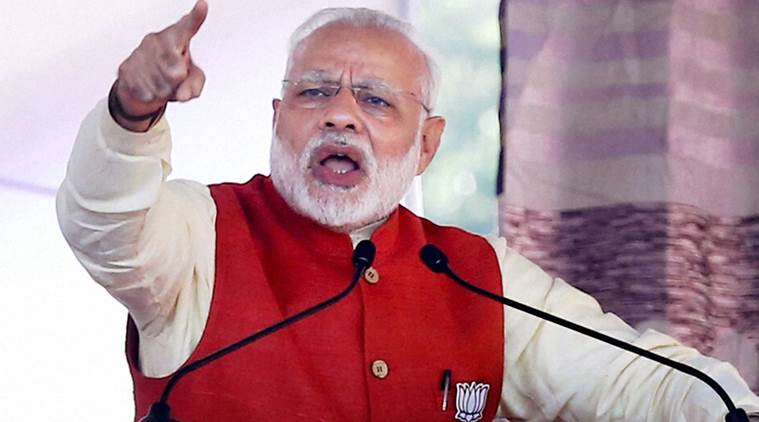
In a rally in Fatehpur (UP) on Sunday, PM Modi created quite a flutter after claiming that there was a form of religious discrimination going on in UP when it came to supplying electricity. He was largely quoted as saying:
Ramzan mein bijli aati hai to Diwali mein bhi aani chaahiye; Bhed bhaav nahi hona chaahiye (If there is electricity during Ramadan then it should be available during Diwali too)
He was drilling home the point about no bhed-bhaav (discrimination) against anybody and had stated, “If electricity is available at Holi, it must be available on Eid as well” after his Ramzan and Diwali statement. Only then he had said, “bhed bhaav nahi hona chahiye”. In spite of this, his words were taken out of context and spun as a communal statement.
Be that as it may, the fact remained that he had attempted to make the populace aware about the discrimination carried out by the UP government. After his speech the Media was more interested in bringing out a communal spin rather than highlighting the PM’s claims.
Founding Editor of the leftist site, The Wire, went on to declare that there was no evidence of such discrimination:
When there’s no evidence electricity or funeral grants are given on religious basis, it takes a devious mind to even pose such questions 9/n
— Siddharth (@svaradarajan) February 19, 2017
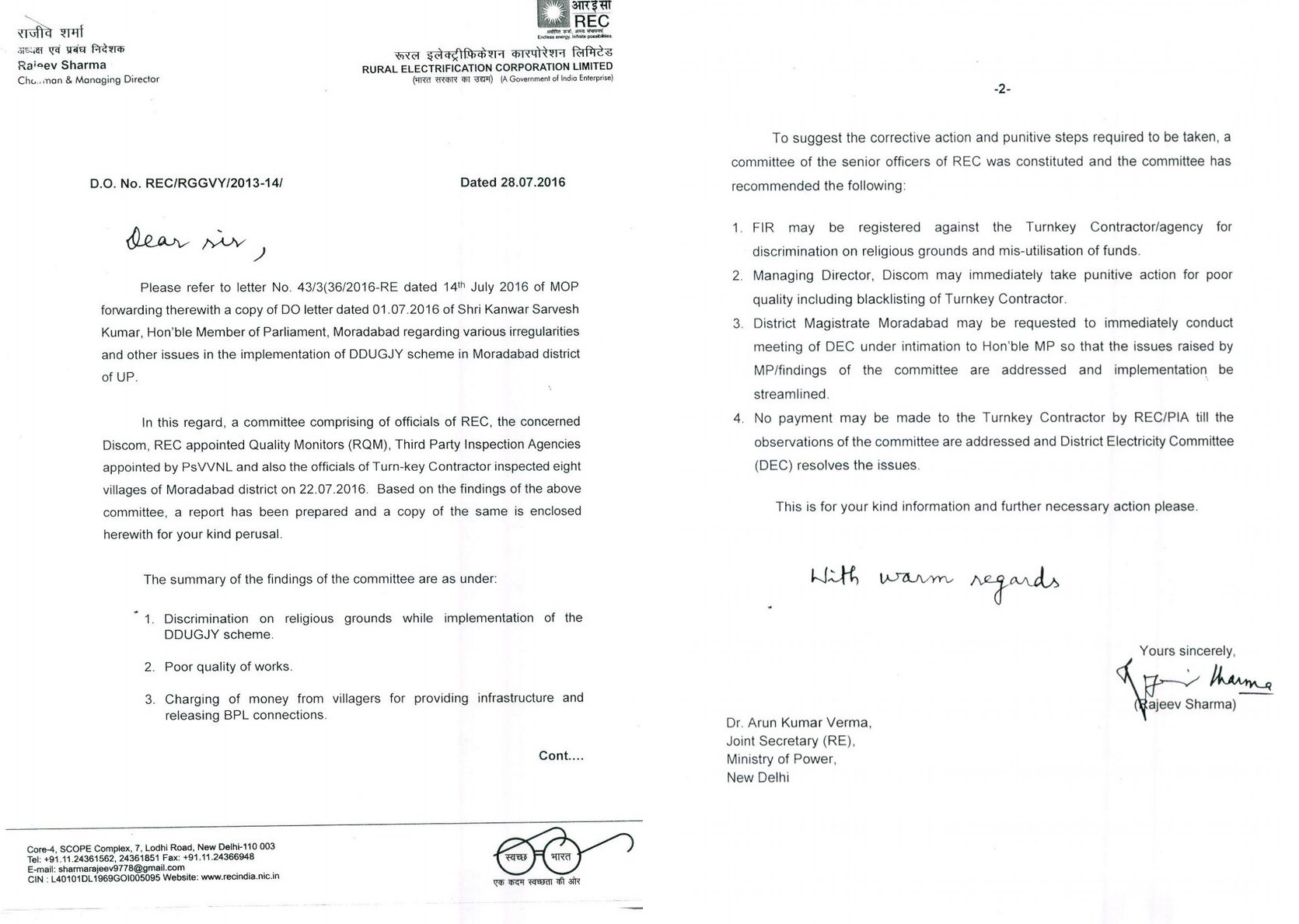
But if he had decided to dig a bit deeper, he would have go the answer. A few days back, Union power minister Piyush Goyal, had stated the same thing, that the Akhilesh Yadav Govt had given a preference to Muslims over Hindus in this regard. He referred to a complain lodged by a BJP MP Sarvesh Kumar with Prime Minister’s Office (PMO) about discrimination in distribution of power connections on the basis of religion in Moradabad and after an inquiry was carried out, these charges were found to be true.
The details of the same are now available in the following letter of Rural Electrification Corporation Limited (RECL), in which it is revealed that a committee had investigated the matter and found that there had been discrimination on religious grounds while implementing the Deen Dayal Upadhyaya Gram Jyoti Yojana (DDUGJY) scheme which was designed to provide continuous power supply to rural India.
This was also pointed out by Tajendar Bagga, who shared the following news clip:
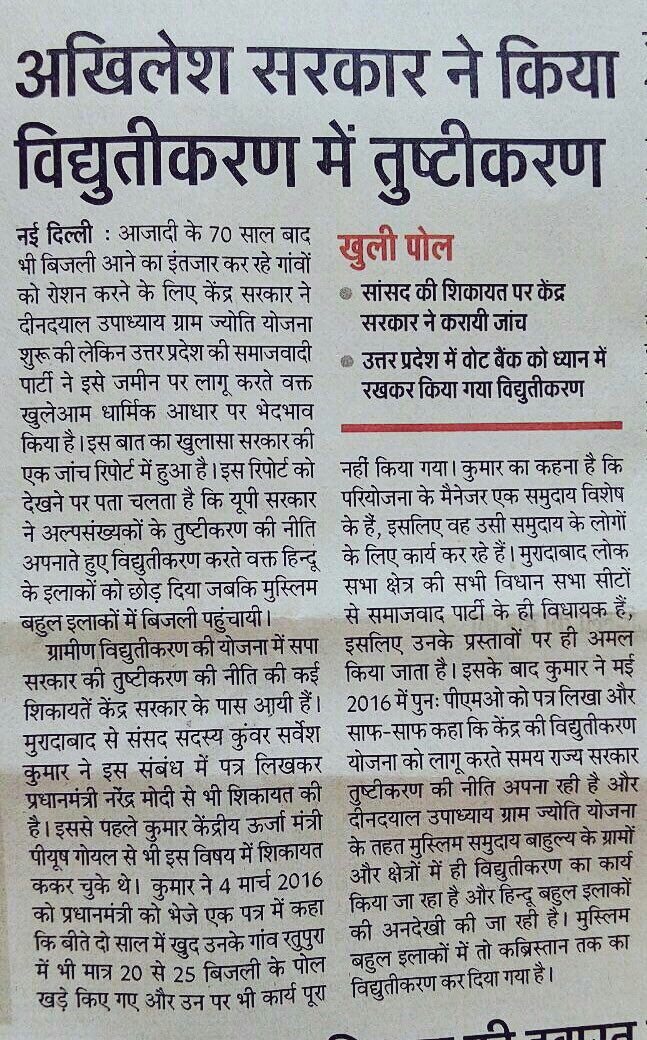
This article points out how the UP government disregarded Hindu areas to supply electricity to Muslim areas. The MP quoted by Mr Goyal had sent that particular letter to the PMO in March 2016 and in that had claimed that the Manager of the electrification scheme was from a particular community and hence only worked for his own people. In another letter written in May 2016 he clearly stated that electrification work was only being done in villages with Muslim majority and also stated that even a graveyard in those areas had been provided electricity.
It has long been known that some specific constituencies chiefly belonging to the ruling Yadav family used to get or still get 24×7 electricity but a divide existing on religious lines was not known.


