The 10th page of the April 28th edition of Times of India carried an anti-Modi propaganda advertisement, but it was published like a news item. The article was authored by Devlina Chakravarty who went on a rant against the Modi government with respect to the COVID-19 outbreak in the country.
While criticising the central government for its policies and implementation is a fair game, what was wrong with the article was the way it was portrayed to the readers by the Times of India. An advertisement or a paid article was passed off as a news item by the ToI.
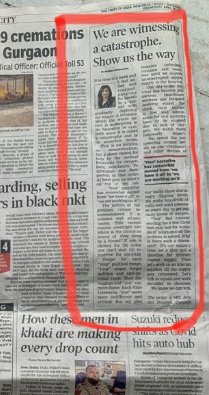
Normally, advertisements have a starkly different appearance than regular articles and reports by the media house and its journalists. They have distinct borders, “ad” is written somewhere on them to leave no doubts in the minds of the readers that it is an advertisement and not an editorial piece. There’s a sponsor’s insert included in the advertisement for which he has paid to the newspaper.
However, in this case, there was no way the reader could discern whether the article was a news story or a paid advertisement. To the untrained eye, it could have been a normal news article, but not for Newsbred’s Ashish Shukla, there was something wrong in the article. On closer inspection, he found that the font of the paid advertisement was distinctly different from the one used for other articles. For Ashish, it was a giveaway that the article was a paid advertisement maligning PM Modi and not a genuine news story.
This shenanigan of the Times of India was exposed by Ashish on his news portal Newsbred. The paid article was a two-column long piece, extended till half the length of the page. An ad of this length normally costs around Rs 20-30 lakhs in Times of India.
Besides font, there were other subtle giveaways as well to make out that the article which was portrayed to be a news story or an opinion piece was in reality a paid advertisement. The article included words like you and your in double inverted commas. Furthermore, the article also carried the photo of the author next to it. Usually, opinion columns or exclusive reports publish the picture of the author with their reports, not advertisements.
If this was not enough, it also came to light that the same writer, the same article, verbatim, was published on the leftist online rag The Wire on April 25, three days before it was produced in the Times of India edition. Even if one considers it to be the reproduction of the article first published on The Wire, the one published in the Times of India did not end with: “This opinion piece had first appeared in The Wire” or “Courtesy: The Wire”.
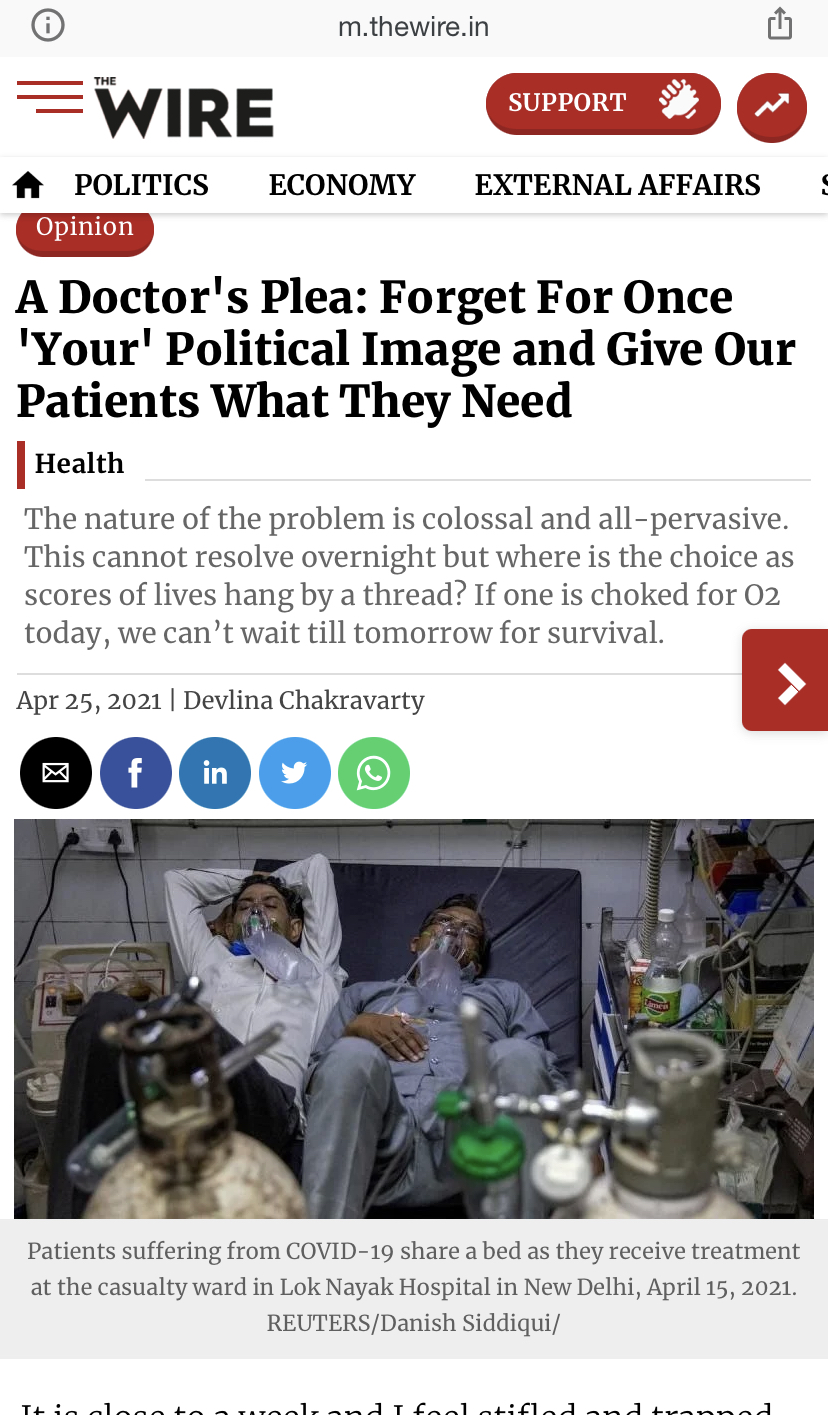
These are basics of print and digital media, but they were not included in the article that was published in the Times of India. A meticulous attempt was being made by the newspaper to pass off an advertisement as a news article that carried propaganda against the Modi government on its handling of the COVID-19 outbreak.
After the Times of India was exposed for indulging in this trickery, it was quickly scrubbed off from its digital website. The online link to the article now reads: “This article has been removed”.

The scourge of “paid news” in India
In media parlance, such advertisements which appear like news articles are termed as “Paid News”. In its investigation in 2010, the Press Council of India found that “paid news” benefits journalists and media organisations. “It’s paid for by politicians, organisations, brands, movies and celebrities. The Wikipedia page says that this abuse is pioneered by Bennett, Coleman and Company Ltd group, incidentally the same organisation which owns the Times of India publication.
There have been several incidents of media outlets peddling “paid news”, especially during the UPA regime. The Election Commission had earlier reported that more than 1,400 cases of paid news between 2009 and 2013 during which elections were held in 17 states in India.