Home Blog Page 109

China moves to fast-track Teesta project in Bangladesh under Tarique Rahman govt: Why is raises strategic concerns for India near Siliguri corridor; Explained

On 22nd February, China said that it is willing to move forward with the Teesta River Comprehensive Management and Restoration Project which has been pending for a long time. Notably, China made the announcement within a week of Tarique Rahman becoming the Prime Minister of Bangladesh. The development is likely to cause strategic unease for India.

Foreign Minister of Bangladesh, Dr Khalilur Rahman, met with Chinese Ambassador Yao Wen on Sunday. Following the meeting, Wen spoke to the media and said that China and Bangladesh had engaged in discussions over the Teesta River project for several years. He claimed that the work on the project would begin soon.

Wen added that China is ready to execute the project and stated that its implementation would depend on the priorities set by the newly elected government in Bangladesh. China’s remarks, which came via Wen, are being seen as its intent to operationalise a major infrastructure commitment following regime change in Bangladesh.

Interestingly, Wen described the recent General Elections in Bangladesh as “smooth and orderly” and called them a “victory of democracy”. He added that China is ready to work with the new leadership in Bangladesh and strengthen bilateral relations across sectors. Furthermore, high level discussions between the two nations would continue in the coming months.

Beijing signals deeper Belt and Road push under new Bangladeshi leadership

The recent statements made by Chinese leaders make it clear that Beijing wants to expand its approach towards Bangladesh beyond diplomatic engagement. On 17th February, Chinese Premier Li Qiang sent a congratulatory message to Rahman following his swearing in. The message reaffirmed China’s willingness to work with the new administration to advance “high quality Belt and Road cooperation”.

In his message, Li called China and Bangladesh long standing Comprehensive Strategic Cooperative Partners. He emphasised that China is willing to provide support for the priorities of Rahman’s government. He added that China is ready to elevate bilateral cooperation across multiple sectors, including infrastructure and river management. The wording of the message indicated that the Teesta project may now be formally embedded within the broader Belt and Road Initiative framework.

China emphasised expanding strategic cooperation at the very outset of the new government’s tenure, which indicates that it wants to increase its influence in Bangladesh’s infrastructure planning ecosystem, specifically in sectors that carry long term operational and geographical significance.

The proposed Teesta management project includes large scale dredging, embankment strengthening, flood control infrastructure, irrigation canals, land reclamation, and reservoir construction along a transboundary river system. Notably, Teesta flows close to India’s eastern frontier. In case a third party gets involved in the project’s execution, especially if that “third party” is China, it is likely to be closely watched by the Government of India.

What the Teesta project entails, and why it is more than a river plan

The Teesta River Comprehensive Management and Restoration Project is officially being presented as a development-oriented river management programme. However, its scope goes far beyond routine flood control or irrigation modernisation.

When executed as intended, it would involve dredging of riverbeds, strengthening of embankments, construction of reservoirs for dry season storage, development of irrigation canal networks, erosion control infrastructure, land reclamation, transport linkages, and long-term hydrological monitoring systems.

When these projects are considered together, it effectively amounts to the creation of a permanent river basin management ecosystem. Such projects require the sustained presence of foreign contractors, engineers, survey teams, project management units, equipment corridors, and monitoring stations across multiple sites along Bangladesh’s Teesta basin.

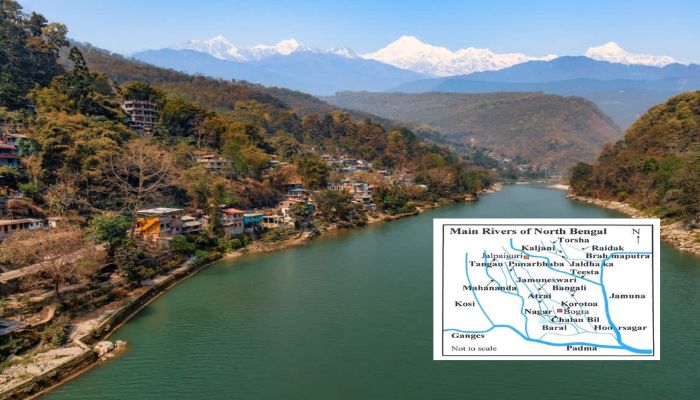
If Bangladesh undertakes such projects, it does not concern India per se. However, Chinese involvement in the project in a geographically sensitive zone along a transboundary river that originates in India’s eastern Himalayan region and flows into northern Bangladesh before joining the Brahmaputra does raise serious concerns for Delhi.

The Teesta originates in Sikkim and travels through North Bengal before entering Bangladesh. It is a critical upstream resource for India and a key downstream dependency for Dhaka. Any basin wide management intervention downstream inevitably has implications for upstream flow dynamics, seasonal storage patterns, and long-term water release expectations.

Dispute history, why the Teesta issue has remained unresolved for decades

The Teesta water sharing dispute between India and Bangladesh is not a recent development. It is a long-standing bilateral issue. Despite efforts made by governments on both sides for decades, the matter has remained unresolved.

The two nations have been engaging in discussions over equitable distribution of Teesta waters since the early 1970s. In 1972, the Joint Rivers Commission was established to facilitate discussions on transboundary river management.

In 1983, India and Bangladesh reached an ad hoc arrangement that allocated 39% of dry season flows to India and 36% to Bangladesh. The remaining portion was left unallocated pending further agreement. However, the formula was never materialised into a permanent treaty framework.

A notable development came in 2011 when an interim agreement was proposed that would have allocated 42.5% of Teesta waters to India and 37.5% to Bangladesh during the lean season. However, the proposal was shelved at the last moment due to objections raised by the then West Bengal government over concerns that increased water sharing could adversely impact irrigation needs of farmers in North Bengal.

Since then, several rounds of dialogue have taken place between India and Bangladesh, but nothing concrete has been materialised into an acceptable settlement. This has left Teesta as the most significant unresolved water sharing dispute between the two neighbours.

The absence of a formal treaty means that Bangladesh depends on upstream releases from India during the dry months between December and April. In the case of India, specifically the agrarian districts of North Bengal, any commitment to increase the downstream release of water raises concerns over irrigation security and hydropower generation in the region. Notably, North Bengal already faces seasonal water stress.

Bangladesh’s move to seek help from China for comprehensive basin management is thus being seen as an attempt to bypass the limitations imposed due to the stalled bilateral framework with India.

Why Chinese involvement near the Siliguri corridor raises security concerns for India

The renewed push for a China backed Teesta River management project raises concern for India when viewed through the lens of geography rather than development rhetoric. The lower Teesta basin in Bangladesh lies in close proximity to India’s strategically vital Siliguri corridor which is often referred to as the Chicken’s Neck. It is a narrow stretch of land measuring roughly 20 kilometres in width that connects the northeastern states to the rest of mainland India.

This corridor is not just a logistical route but a critical strategic lifeline for troop movement, civilian connectivity, supply chains, and infrastructure access to India’s northeastern frontier. Any long-term infrastructure activity involving external actors, especially China, in its immediate neighbourhood is a concern for national security.

A comprehensive river basin project of the scale that is being discussed between Bangladesh and China will require construction activity across multiple locations that include embankments, water storage systems, monitoring stations, and dredging sites along Bangladesh’s northern districts adjoining the Indian border.

From India’s standpoint, the prospect of Chinese companies, engineers, technical personnel, and project management units operating for extended periods in areas geographically contiguous to the Siliguri corridor presents a new layer of complexity.

Furthermore, while the river management projects are being shown as civilian in nature on paper, such projects often involve detailed terrain mapping, soil analysis, floodplain modelling, and satellite assisted hydrological monitoring. In a sensitive frontier region, such activities could potentially generate granular topographical and environmental datasets that hold value beyond developmental planning.

There are concerns regarding the revival of the Lalmonirhat airbase in northern Bangladesh which is not too far from India. While Bangladeshi authorities have maintained that the facility is being developed for civilian aviation and aerospace education purposes, the infrastructure initiatives in the same geographical belt have drawn attention in Indian strategic circles.

In effect, what is being presented as a river restoration effort could also enable the creation of a sustained third-party footprint in a zone that directly abuts India’s most vulnerable land corridor linking its northeast.

India’s dilemma, water security versus geopolitical leverage

For India, the current situation presents a layered dilemma that is not limited to just water sharing. On the one hand, India has legitimate hydrological concerns regarding the availability of Teesta waters during the lean season. The river provides crucial water resources to several districts in North Bengal. The water from Teesta is used for irrigation and drinking purposes.

The Teesta Barrage project in West Bengal was developed to irrigate over nine lakh hectares of farmland and generate hydropower for the region. An increase in downstream release commitments could adversely affect water availability for Indian farmers, especially during the stressful dry months.

On the other hand, prolonged inability to conclude a bilateral agreement with Bangladesh risks creating space for external intervention, allowing Dhaka to frame Chinese involvement as a necessary developmental alternative in the face of stalled negotiations with India.

This places India in a difficult negotiating position. Accelerating talks may invite domestic political resistance in West Bengal, where water sharing remains a sensitive electoral issue. Delaying engagement, however, could enable China to entrench itself deeper within Bangladesh’s infrastructure planning ecosystem under the rubric of development cooperation.

The result is a strategic balancing act between safeguarding India’s own water security interests and preventing the emergence of an external operational footprint in its immediate eastern neighbourhood.

What changes under Tarique Rahman, and what India should watch next

China’s open signalling on Teesta immediately after Tarique Rahman’s government took office suggests that Beijing sees the political transition in Dhaka as an opportunity to push through projects that had remained in limbo, either due to Bangladesh’s internal politics or because of the unresolved India Bangladesh water sharing framework.

For India, the key shift is not merely that Bangladesh is exploring a river management project with China, that conversation has existed for years. The shift is the timing and tone, China is publicly projecting readiness to execute, praising the election outcome, endorsing the new government’s policy positioning, and creating a narrative of forward movement at the start of Tarique Rahman’s tenure.

What India should watch first is whether Dhaka formally lists Teesta as an early priority item in its new government programme and whether the project moves from broad political signalling to specific operational decisions. That would include fresh MoUs, feasibility studies, revised financial commitments, tendering processes, and mobilisation of technical teams.

Second, India should watch the diplomatic choreography. The Chinese envoy has already hinted at the tradition of high-level exchanges and expressed hope that Tarique Rahman would visit Beijing soon. A Beijing visit early in the tenure would likely be used to announce headline projects, including Teesta, under the language of Comprehensive Strategic Cooperative Partnership and Belt and Road cooperation.

Third, there is the domestic pressure layer inside Bangladesh. Over recent months, political and civil mobilisations around Teesta in Bangladesh have increasingly framed the issue as “water injustice” linked to India’s upstream control during the lean season. If that narrative is amplified under the new government, Teesta could be used as a political weapon to harden public opinion against India while simultaneously justifying deeper Chinese involvement as a sovereign development choice.

Finally, India will also have to factor the broader calendar of transboundary water diplomacy with Bangladesh. The Ganga Water Sharing Treaty signed in 1996 is due for renewal by December 2026. Even though Teesta and Ganga are separate issues, Dhaka’s domestic politics may increasingly link both under a single headline, India must deliver water fairness. That linkage, combined with China offering an alternate framework through river basin infrastructure assistance, could sharpen bargaining pressure on New Delhi in the coming months.

For India, the Teesta question is no longer only about hydrology and state level politics in West Bengal. With China attempting to convert an unresolved bilateral dispute into an entry point for strategic infrastructure presence, Teesta is fast turning into a security and neighbourhood policy test case, one playing out uncomfortably close to the Siliguri corridor.

Punch and the viral misunderstanding: How monkey social behaviour explains the heartbreaking video

For the past few days, a video of a baby macaque named Punch at Ichikawa City Zoo in Japan has been going viral online. In the video, a baby monkey is being dragged and scolded by an adult monkey inside its enclosure. Footage captured Punch being dragged across the ground and later retreating in fear, quickly spreading across social media platforms. Many social media viewers were deeply moved by the scene, especially after seeing the Punch run to the corner and cling to his stuffed toy for comfort. The emotional nature of the video led to widespread sympathy, with many people expressing sadness and concern for the orphaned baby monkey. Some even questioned whether Punch was being bullied or mistreated by other monkeys.

Who is Punch

Punch was born on July 26, 2025, at Ichikawa City Zoo, but his mother abandoned him immediately after the birth. Without maternal care, he was reared by zookeepers who supplied him with food, shelter, and emotional support. Because of a lack of mother’s connection and comfort, the Zoo offered him a plush orangutan toy to help him cope with loneliness and stress. Punch grew emotionally attached to the toy over time, frequently keeping it close and using it for comfort. His naive behaviour and obvious reliance on the toy made people fall in love with him. He became a famous and beloved animal online.

What happened in the video

In the viral reel, Punch was trying to approach and interact with another baby monkey. However, the interaction was quickly turned into violence. An adult monkey, believed to be the baby’s mother, reacted aggressively. As a protective or disciplinary response, the adult monkey dragged Punch across the ground and scolded him. Punch, who was obviously scared and upset, was able to escape and dash to a corner of the cage, where he promptly snatched up his stuffed animal and clung to it for safety and comfort. Due to the heartbreaking visuals, combined with Punch’s vulnerable background as an orphan, many viewers interpreted the incident as bullying, sparking strong feelings and heated discussions on social media.

Zoo’s explanation: Understanding natural monkey behaviour

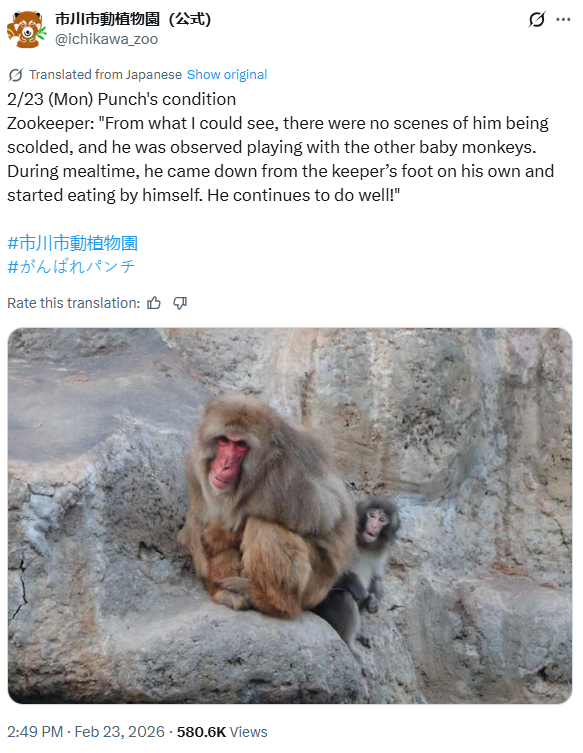
In response to the viral reaction, the Ichikawa City Zoo issued an official statement to address public concern and provide clarification. According to the Zoo, Punch tried to engage with another baby monkey, but the adult monkey, who was probably the baby’s mother, retaliated by scolding Punch and dragging him as a form of protection and punishment. The zoo stressed that this kind of behaviour is typical of the macaque social structure, in which older monkeys set limits and instruct younger ones on appropriate social behaviour. That statement said that “While Punch is scolded, he shows resilience and mental strength. When you observe these disciplinary behaviours from other troop members toward Punch, when he tries to communicate with them, we would like you to support Punch’s efforts, rather than feel sorry for him.”

Source: X

The zoo went on to claim that Punch is still learning how to behave in a monkey colony after being abandoned and raised by humans. Even though they may appear harsh to human observers, these interactions are critical to his social development. These encounters provide Punch with the communication, structure, and social limits he requires to fit in with the group.

Importantly, the zoo emphasised Punch’s perseverance, noting that despite being scolded, he continues to approach and socialise with other monkeys. This demonstrates that he is gradually adapting and learning the social skills required to live as part of the group. The zoo asked visitors not to see Punch as a victim, but as a young monkey learning and growing via natural social interactions.

Scientific explanation: What research says about orphaned monkeys

According to psychologist Harry Harlow’s scientific research, social interaction is crucial for infant monkeys. In research, young monkeys who were denied social interaction and maternal care later in life experienced extreme emotional anguish, social anxiety, and trouble connecting with other monkeys. His studies demonstrated the importance of social experience, physical comfort, and emotional bonding for healthy behavioural development.

Monkeys, like Punch, are left behind or reared without their mums; they must interact with other group members to acquire social norms. Although it may seem harsh, these encounters can occasionally involve rejection, violence, or discipline, all of which are normal components of their social learning process. In order to set limits and impart appropriate behaviour within the group hierarchy, adult monkeys frequently reprimand or chastise younger monkeys.

Such social correction helps orphaned monkeys gradually understand communication, social limits, and group structure. Over time, these experiences allow them to integrate into the troop, form social bonds, and function normally within their society. Without these interactions, orphaned monkeys risk remaining socially isolated and psychologically distressed.

Conclusion

Although Punch’s widely shared video may seem tragic, professional analysis and scientific knowledge indicate that he is not being mistreated. Rather, he is learning to survive in monkey society through a normal, essential process. His growth and long-term welfare depend on these social interactions, which include adult monkey discipline.

Punch’s journey demonstrates adaptability and resiliency as he progressively gains the ability to negotiate social situations and locate his position within the troop. His experience illustrates the difficulties faced by orphaned animals and their capacity to overcome them through organic social integration rather than being a tale of cruelty.

Congress attempts to justify disruption of AI Impact Summit as ‘peaceful protest’ and ‘constitutional right’: Read why arrest of IYC goons for embarassing India during global event is justified

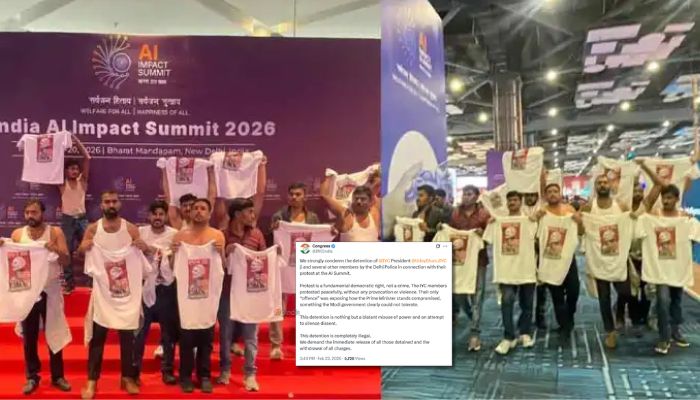
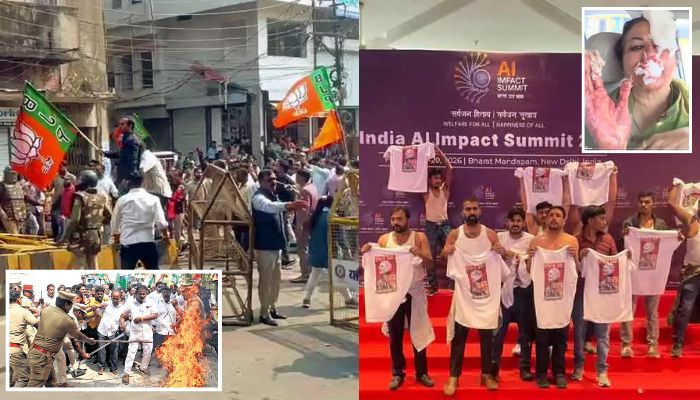
Desperation to secure political clout and pose as ‘revolutionaries-fighting-the-dictator’ so high that the Congress party decided to bring embarrassment to the nation. On the 20th February 2026, chaos erupted at the prestigious India AI Impact Summit held at Bharat Mandapam in Delhi when Indian Youth Congress (IYC) workers staged a shirtless protest, chanting slogans against Prime Minister Narendra Modi. While the detractors of the Modi government drew joy from embarrassing host India at the global event, the common people were outraged. In no time, Delhi Police swung into action and arrested several Youth Congress members who partook in the ignominious ‘protest’.

So far, five people have been identified and arrested. These include IYC National Secretary Krishna Hari, Bihar State Secretary Kundan Yadav, UP State Vice President Ajay Kumar, National Coordinator Narasimha Yadav,  and Jitendra Yadav from Madhya Pradesh’s Gwalior.

Calling the action against Youth Congress workers ‘draconian’, Indian Youth Congress National President, Uday Bhanu said on 22nd February, “When even the smallest, peaceful act of democratic dissent invites a draconian crackdown, it is not “foolish”. It is a warning bell. This is what a stifling atmosphere looks like. When asking questions is punished, silence is enforced. And that should worry anyone who still believes in democracy.”

IYC National President Uday Bhanu Chib is reported to have been detained by Delhi Police on 23rd February for questioning in connection with the present case.

Lamenting IYC leader Udhay Bhanu’s detention, the Indian Youth Congress Kerala said that somehow ‘dictator’ Modi is getting those who staged ‘peaceful protest’ arrested. The IYC Kerala wrote on X on 23rd February, “History is witness: Dictators too are remembered, and so are those who refused to bow before fear. The Delhi Police’s illegal detention of IYC President @UdayBhanuIYC shows that a peaceful protest has robbed the Prime Minister and the BJP of their sleep. This fight is no longer just ours; it belongs to the people, and now everyone must come together to decide what kind of democracy they want.”

Congress spokesperson Rakesh Sinha invoked the constitution to justify the disgraceful shirtless protest by Youth Congress workers, and said, “I believe that what the Youth Congress members did was absolutely to save the country’s honour, and in a democracy, we have the right to protest. Where should we go to protest in a democracy? Should we go to their homes and protest? So, we have protested, and the Constitution gives us this right.”

Meanwhile, the official X handle of the Congress party put out a post condemning the arrest of IYC National President Uday Bhanu. The Congress party emphasised the ‘peaceful’ and ‘non-violent’ nature of the protests that its workers staged at the AI Impact Summit in Delhi, saying that it was their democratic right.

“We strongly condemn the detention of @IYC President @UdayBhanuIYC ji and several other members by the Delhi Police in connection with their protest at the AI Summit. Protest is a fundamental democratic right, not a crime. The IYC members protested peacefully, without any provocation or violence. Their only “offence” was exposing how the Prime Minister stands compromised, something the Modi government clearly could not tolerate.  This detention is nothing but a blatant misuse of power and an attempt to silence dissent. This detention is completely illegal. We demand the immediate release of all those detained and the withdrawal of all charges.

Gurmehar Kaur also jumped on the bandwagon and invoked the ‘constitutional right’ argument to justify the opprobrious act of the Youth Congress workers. Kaur wrote on X, “Peaceful protest is a constitutional right – not a crime! Release IYC President and peaceful protesters NOW!”

It must be recalled that  Youth Congress leaders had removed their shirts with slogans printed on them and waved them while chanting slogans like “PM is compromised”. They were protesting against the recently announced India-US tariff agreement, alleging it compromises national interests and lacks transparency.

The protest took place inside the summit venue, disrupting proceedings for a few minutes as attendees, including top CEOs and international delegates, looked on in surprise. Visuals from the scene showed protesters holding up T-shirts emblazoned with images and messages criticising Prime Minister Narendra Modi.

However, they were confronted by visitors at the venue, who slammed them for disrupting the global event with politics. This led to a physical confrontation between the disruptors and visitors, with several Youth Congress leaders having to face angry blows from the members of the public.

While the Youth Congress defended its actions as a democratic right to protest, the BJP described the episode as a “national shame,” accusing the Congress of politicising a global technology event.

Is freedom of expression and the right to protest absolute? Congress’s demonstration of dissent came at the cost of India’s reputation, and their arrest is thus justified

While the Congress party has a track record of making a mockery of democracy, democratic institutions, flout the constitutional principles, the party hypocritically claims to be a defender of democracy and the constitution. From signing MoUs with China’s CCP, seeking foreign intervention in India’s internal political affairs, echoing Pakistan’s fake ‘Rafale shot down’ narrative, to staging a shirtless protest at the India AI Impact Summit at Delhi’s Bharat Mandapam, Congress has on many occasions demonstrated that it’s not Prime Minister Modi but Congress party’s ethics that are compromised.

The recurrent usage of terms like ‘peaceful protests’, ‘constitutional right’, ‘freedom of expression’ and whatnot does not justify the political degeneracy displayed by IYC workers at the AI Summit. A protest being peaceful alone does not vindicate it, particularly not at an event where global leaders have gathered, and a national reputation is at stake.

Thus, the arrest and detention of Youth Congress workers is more than justified. In fact, IYC workers being able to sneak in placards with slogans against PM Modi, the India-US trade agreement, and going shirtless to give an overdramatic spin to their theatrics should be seen as a security failure. Who knows, the ‘protestors’ would have assaulted foreign visitors or vandalised the venue to draw international media attention?

The IYC workers did not conduct a routine demonstration or seek permission from the authorities; they outrightly barged into a high-security international venue during a prestigious event where India, being the host nation, was showcasing its AI ambitions, in the presence of foreign dignitaries, global tech giants, heads of state, and other major stakeholders.

Under Article 19(1)(a) and 19(1)(b) of the Constitution, Indian citizens have the right to protest; however, this right is not absolute. It is rightly subject to reasonable restrictions under Article 19(2) and 19(3) for public order, decency, morality, and sovereignty and integrity of India.

In fact, a Delhi Court made an explicit observation while remanding four IYC workers to five days’ police custody that the act of the accused “transcended the ambit of legitimate dissent and hurt the country’s diplomatic image before foreign stakeholders.”

No matter how loud the Congress leaders shout and lionise their shirtless hooligans, the truth will not change that their protest was not a ‘peaceful’ or ‘democratic’ Satyagrah, but a deliberate disruption at a summit meant to posit India as a global AI powerhouse, bring pride and investments.

While picking Youth Congress workers to hold the shirtless protest may have been a calculated choice to spin a narrative before the international media that India’s Gen-Z, broadly youth, is absolutely discontent and frustrated with the Modi government’s policies, this ‘youth activism’ gimmick did not resonate with the Indian youth, largely.

Ever since the Gen-Z protests toppled the corrupt Oli government in Nepal, Congress leader Rahul Gandhi has explicitly been trying to win over the Indian Gen-Z. However, the Indian youth support the right to protest and freedom of expression more than any other generation, arguably, yet they do not trade these rights and freedoms for national reputation and honour. The deal is simple; opposing Modi is fine, imperilling India’s image in the process is intolerable, and criminal and shall have consequences.

Apparently, the Congress party saw the AI Impact Summit, where global leaders flocked in, and the international media focus was on, as an opportunity to trade headlines from India’s AI ambitions to the so-called “sell-out” India-US deal that is not even formally signed yet. The IYC workers breached security and decorum at the AI Impact Summit, perhaps hoping that foreign media would amplify the ‘crackdown on dissent under fascist Modi’ sort of propaganda.

Moreover, the way hooliganism in Delhi snowballed into violence and stone pelting across other cities, including Chandigarh and Indore, during IYC’s coordinated protest,s shows that the entire fiasco was pre-planned to maximise national embarrassment. Given the Youth Congress’s history of violence and hooliganism, be it at the AI Impact Summit, attacks on BJP and BRS workers, or attacking Sikhs during the 1984 anti-Sikh pogrom, if not for the swift action by the Delhi Police, a larger conspiracy to destabilise the nation may have unfolded.

This is not mere suspicion, alarmism, or the villainization of the Youth Congress; in fact, the Delhi Police informed the court on 21st February that the Indian Youth Congress sought to stir up a protest similar to that in Nepal. The police stated that the IYC workers wanted to defame India internationally during the event. While seeking a five-day remand of the accused IYC workers, the Delhi Police told the court that there is a deep conspiracy at play, three police officers were injured during the ruckus caused by the accused, and that the organised fashion in which the entire episode unfolded, it is imperative to conduct a proper investigation.

“Three policemen were injured, and their (accused) mobile phones need to be recovered to verify whether they received funding. Four people from four different locations came together and printed T-shirts. Five days’ custody is necessary to investigate the matter,” the police said.

If the Congress party does not want its workers to be arrested, it should refrain from deploying them to turn prestige events in protest battlegrounds. While Congress leaders are justifying the ‘shirtless protest’, saying that they had to resort to such action because they are deprived of forums to register protests, including the Parliament, it is the same Congress-led opposition that does not let the House function when they actually get their rightful opportunity to debate and criticise the government.

Instead of crying hoarse over the arrest and detention of IYC workers, the Congress leadership should understand that in the garb of ‘dissent’, ‘shirtless stunts cannot topple governments, rather, they only expose the desperation to drag India down. If Congress workers or anyone dares to gatecrash India’s global moment, the law will gatecrash them.

End of Naxalism: With Devuji’s surrender in Telangana, just one more Politburo member Misir Besra left in CPI (Maoist), read who is he

The senior leadership of the outlawed Communist Party of India (Maoist) has surrendered, leading to one of the largest losses to the armed movement and severely damaging its organisational core throughout Chhattisgarh and the surrounding states. On 22nd February (Sunday), the authorities informed that Tippiri Tirupati, also known as Devuji has turned himself in to the Telangana Police’s Special Intelligence Bureau after almost 40 years of violent life.

The 60-year-old Maoist general secretary from the Karimnagar district and with a Rs 25 lakh bounty in Telangana laid down weapons in the Mulugu area of Telangana. He served as the secretary of the Central Committee alongside the Politburo and was considered the organisation’s “supreme commander.”

He was also joined by senior CPI(M) leaders including, Damodar Bade Chokka Rao alias Damodar, Pusunuri Narahari alias Santosh, Malla Raji Reddy alias Sangram, Narasimha Reddy or Ganganna, Muppidi Sambaiah, Vartha Shekar and 16 to 20 others, marking a significant turning point in the protracted fight against Left Wing Extremism in the country.

These cadres consist of the state, district and area committees along with even Politburo members. They came out of the Asifabad forest two days ago and entered the plain areas. Their surrender will be formally announced in an upcoming press conference. They carried rewards ranging from Rs 25 to 20 lakh and less depending on their position within the party.

Tippiri is considered to have taken over for the late Nambala Keshav Rao (Basavaraju) who was neutralised in May 2025. He purportedly headed the party’s military commission as well. He was regarded as a “top gun” by the Naxals is seen as the last nail in red terror’s coffin.

Security forces have been working together for a long time in Telangana and Chhattisgarh’s neighbouring regions, according to sources quoted by India Today. The top brass of the Maoist outfit was reportedly cornered by a recent crackdown in the Karregutta hills. Their communication channels were broken and important operational bases collapsed under the tremendous pressure applied by security personnel. Hence, they were left with no alternative after the structure was upended.

Tippiri’s move is also very important because he became the spokesperson for the group that wanted to continue their fight with the country after Mallojula Venugopal Rao (Sonu) surrendered in October 2025, causing an internal rift.

Who is Tippiri Tirupati

Tippiri was born in a humble Madiga family of Ambedkar Nagar Colony, Korutla town and completed his intermediate-level education there. He became involved in radical politics while working on his degree in the early 1980s.

A former Intelligence Bureau official mentioned, “His career emphasised a military-first strategy, prioritising guerrilla tactics over pure ideology. He joined the Radical Students Union (RSU), the student wing of the People’s War Group (PWG). After violent clashes with rivals like ABVP (Akhil Bharatiya Vidyarthi Parishad), he went underground in late 1983, starting as a dalam squad member in Maharashtra’s Gadchiroli district,” reported Deccan Herald.

“He swiftly advanced to Area Commander, then Divisional Commander. His tactical acumen secured spots on the Central Committee and Central Military Commission (CMC). He helped form the People’s Liberation Guerrilla Army (PLGA),” the insider added. Tippiri went underground after joining the Communist Party of India (Marxist–Leninist) Liberation’s People’s War Group (PWG) in 1983.

He was a member of Gadchiroli Dalam from 1983 to 1984 before being promoted to area committee member in 1985. According to the reports, he then rose to the role of a central committee member in 2001 and took over as its leader in 2016.

Tippiri initially drew attention when N Chandrababu Naidu, the chief minister at the time, became the target of a landmine explosion at Alipiri in Tirupati. His name appeared in several similar strikes such as the 2007 Unity Congress and the assault on the Geedam police station in Chhattisgarh.

He is also suspected of being the mastermind behind the Tadimetla (Dantewada) ambush in April 2010 which claimed the lives of 76 troops. He also edited the party’s underground publication Awami Jung (People’s War) under other names to unite cadres and created the Buniyadi (Fundamental) Communist Training School in 2009 for training modern guerrillas.

“His influence spanned the Red Corridor especially Bastar (Chhattisgarh), Gadchiroli (Maharashtra) and Odisha. A pure military man he led the CMC for armed operations, commanded Dandakaranya militias and oversaw South India famously linked to the deadly 2010 Dantewada attack on 76 CRPF jawans,” the IB official highlighted.

Misir Besra: The last active Maoist commander

The Maoist party’s central committee is down to only 5 members from approximately 50 and the Politburo has essentially been reduced to just one active participant, Misir Besra alias Sagar or Sunirmal. He has a bounty of Rs 1 crore on his head. He is a native of Madandih village in the Pirtand police station area of Giridih district.

According to Besra’s interview with journalist Rahul Pandita, he and other new recruits were trained by the Andhra Pradesh-based rebels of the People’s War Group (PWG). The Maoist Communist Centre (MCC) which operated in Bihar and Jharkhand, merged with PWG to establish the CPI (Maoist) in 2004.

Besra presided over the security at the party’s ninth congress, which was held at Bhimbandh in Bihar. His men killed four police officers during a raid on a police picket in Lakhisarai district on their way back. According to reports, he planned and carried out an ambush that resulted in the deaths of 29 police officers in Baliba of the West Singhbhum district of Jharkhand in 2004.

End of Naxalism

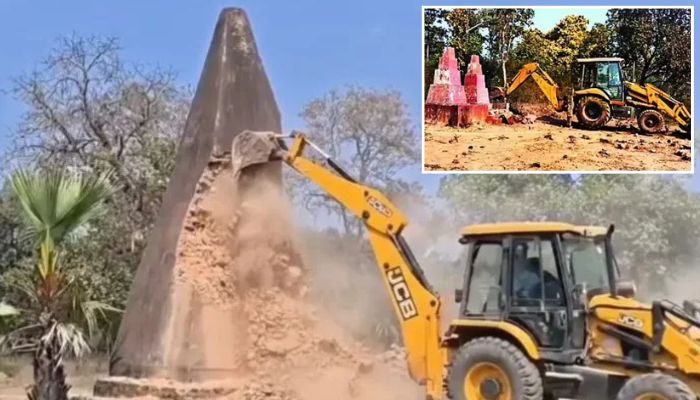
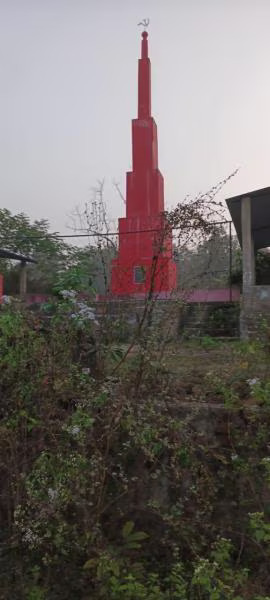
There has been a major attrition rate among cadres. Security forces have killed about 500 Maoists since 2024 and around 22 Maoists have been eliminated so far in 2026, compared to roughly 285 who perished in 2025. Additionally, more than 100 Maoist memorials erected in memory of dead leaders and cadres have been destroyed by security forces, wiping out the tangible reminders of Maoist rule in their multiple former bastions.

A senior officer expressed, “The CPI (Maoist) has virtually no leadership now. Only some militia and leftover cadres in the Bastar region, led by lower-rung military commanders, are active. They will soon either fall to bullets or see the writing on the wall and surrender,” reported The Indian Express.

The centre, state governments, security forces and local administrations have come together to move forward in their effort to liberate the nation from the terror of Naxalites by the 31st of March this year, as repeatedly promised by Union Minister Amit Shah. Bihar was recently declared free from this threat as the number of affected districts has also decreased to seven in the latest analysis. Now, the recent surrenders have further weakened the CPI(M), representing a long stride towards the aim of an India free from the clutches of this menace.

Wrongful arrest, scapegoating of Hindus and CPIM conspiracy: As Sabarimala Tantri is granted bail after 41 days, read what the court said in ‘gold theft case’

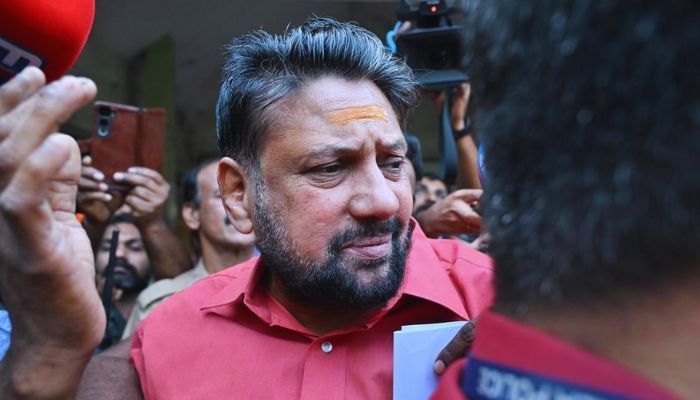
“Not an iota of evidence” against Tantri Rajeevaru Kandararu. This is what the Kollam Vigilance Court said on 18th February, while granting bail to the Sabarimala Temple chief priest or Tantri Rajeevaru Kandararu, in the gold theft case. 41 days after his controversial arrest, Kandararu walked out of the Poojappura Central Prison. The court observations in this case indicate that the Left government in Kerala is scapegoating Hindu priests to shield its own corrupt ministers.

The arrest of Sabarimala Temple Tantri Rajeevaru Kandararu

Rajeevaru was arrested on 9th January 2026 by the SIT probing the Sabarimala gold theft case. He was made the 13th accused in one FIR related to gold theft from the sanctum sanctorum door frames and the 16th accused in another FIR pertaining to the guardian deity (Dwarpalaka) plates. The Tantri’s arrest came after the police levelled serious charges against him, including criminal breach of trust, forgery, criminal conspiracy, and provisions of the Prevention of Corruption Act.

Kollam Vigilance Court grants bail as the SIT failed to provide evidence to back its allegations against the Sabarimala Temple Tantri

In a strongly worded bail order, the court said that the Kerala Police’s Special Investigation Team (SIT) failed to establish any “prima facie materials to link the petitioner in the alleged conspiracy by any means”.

The court accepted Kandararu’s argument that the Tantri’s role, as per the Devaswom Manual, is essentially confined to performing poojas and religious ceremonies. He has no authority over maintenance, repair, or upkeep of the temple property, and this responsibility rests with the Travancore Devaswom Board (TDB) officials.

Emphasising that the SIT had placed “nothing on record, not even an iota of evidence” to establish Tantri Rajeevaru Kandararu’s involvement in the alleged temple gold theft, Vigilance Court Judge Mohit C S pointed out that the accused Tantri had not signed key mahazars (documents) dated 18th May and 20th July 2019, which would have been essential if a criminal conspiracy existed.

Furthermore, the court noted that Kandararu’s opinion dated 18th May 2019, recommending replating, was described as a routine response to a formal TDB decision, not evidence of wrongdoing.

The court said that although Kandararu signed another mahazar dated 19th July 2019 concerning the handing over of the gilded sheets from Dwarapalaka idols, the mahazar was prepared in accordance with the Devaswom Board’s official decision to hand over the artefacts to the prime accused, Unnikrishnan Potti.

“Further, the mere signing of the first mahazar of July 19, 2019, by itself in the absence of any other incriminating circumstances is also not a ground to implicate Tantri at this stage, especially since the mahazar was prepared pursuant to the formal decision of the Devaswom Board,” the court said.

The court found that without any incriminating circumstances, Kandararu’s signing of these mahazars alone cannot be a ground to implicate him in the case.

The SIT, however, remained conspicuously adamant about implicating Kandararu and ensuring that his bail plea is denied. Accordingly, the SIT contended that they are investigating the suspicious financial transactions of the accused Tantri. However, the court noted that since Kandararu is the Tantri of the Sabarimala Temple, he must be receiving huge money as “Dakshina” and other perquisites from devotees. The court pointed out that this alone cannot be used as a ground to suspect Tantri’s complicity in the crime in question.

Thus, the court decided to grant bail to Tantri Rajeevaru Kandararu. Meanwhile, the SIT is reportedly planning to move Kerala High Court against the order.

‘Kerala govt taking revenge for my opposition during the women’s entry row: Contentions made in the bail application filed by Tantri Rajeevaru Kandararu

In his bail application filed through counsels B Raman Pillai, Sujesh Menon, and C D Anil, Tantri Rajeevaru Kandararu alleged that the Chief Minister Pinarayi Vijayan-led Left government in Kerala was exacting “revenge” against him for his strong opposition to the LDF government’s bid to allow women of age 10- 50 enter the Sabarimala Temple.

The application stated that Kandararu was arrested by the SIT for “taking a strong stand on preserving temple customs and rituals”. 

Kandararu argued that he had opposed political interference in the Sabarimala Mandir’s affairs and even threatened to stop performing rituals if the customs of the temple were tampered with.

The plea further stated that at the behest of CPM leaders, some senior police officials attempted to facilitate the entry of women from the restricted age group into the Sabarimala Temple. However, as Kandararu thwarted this attempt, he had to face “public attacks from the influential figures of the ruling front.”

Highlighting what further irked the Left government, Kandararu’s bail plea stated that his objection to the proposal of opening of the temple on all days did not sit well with the state government. Thus, they decided to tarnish the Tantri’s reputation and falsely implicate him in the temple gold theft case, to seek retribution.

It was further argued that his false implication, and arrest in gold theft case was done to establish a false narrative that the Sabarimala Temple’s highest priest is involved in the alleged illicit transactions.

CPIM accuses Rajeevaru Kandararu of figuring among ‘big thieves’, Congress says that the Sabarimala Temple Tantri was deliberately trapped in the LDF govt’s behest

As the Kollam Vigilance Court said that there was “not an iota of evidence” against the Sabarimala Temple Tantri, a political storm erupted in Kerala. While the ruling CPIM claimed that Rajeevaru Kandararu is figured among “big thieves”, the opposition Congress party alleged that the Tantri’s arrest was done by the SIT at the Kerala CMO’s behest.

During media interaction on Sunday in Kannur, CPIM leader M V Govindan said, “He (Tantri Rajeevaru Kandararu) figures in the ‘list of big thieves”.

The CPIM further raised questions over the authority of the Kollam Vigilance Court to make observations regarding the direction of the SIT’s probe, when the High Court has already said that the probe is headed in the right direction.

“If a high court division bench has observed that the investigation is proceeding in the right direction, it is not usual for a lower court, while considering a bail plea, to make observations that appear like a final verdict in the case.”

Addressing a press conference on 22nd February, Congress MLA Ramesh Chennithala said, “We should assume that the Sabarimala tantri was deliberately trapped in the case. It is clear that there was a political intervention to arrest the Tantri.”

The Congress leader alleged that the Tantri was arrested to divert the investigation away from the LDF government-linked powerful figures. Chennithala named current Devaswom Minister V N Vasavan, former minister Kadakampally Surendran, and ex-TDB president P S Prasanth as the real targets that the Kerala government is desperately trying to protect.

“Investigators filed a partial chargesheet in the actor rape case to deny the suspects from getting statutory bail after 90 days. The legal precedent begs the question of what prevented the SIT from adopting a similar approach in the Sabarimala gold theft case. This is clearly a case of political intervention in a high-profile probe to save ruling front figures,” Chennithala added.

Meanwhile, the Bhartiya Janata Party (BJP), joined by multiple Hindu rights organisations, also condemned Tantri Kandararu’s arrest. The opposition parties are alleging that the LDF government in Kerala is scapegoating Sabarimala Tantris to hide their own corruption and involvement in the theft of the temple gold.

It must be recalled that in December 2025, the court allowed the ED to conduct its own investigation into the Sabarimala gold theft and the linked money laundering, while the SIT would conduct its own probe. Initially, the SIT has opposed ED’s involvement in the case. However, the court overrode their opposition.

Sabarimala Thanthri Sabha had moved HC seeking a CBI probe

Days after Tantri Rajeevaru Kandararu’s arrest, Akhila Tanthri Pracharak Sabha chairman M S Sreerajasekharan moved a plea before the Kerala High Court, seeking a CBI investigation into the Sabarimala gold theft case.

Similar to the allegations made in Kandararu’s bail plea, the Tantri Sabha argued that the investigation into the matter is surround with ‘political clouds’, with some media reports suggesting that top political leaders from the ruling LDF may be involved in the gold heist. It also alleged that the local authorities are not arresting influential persons in the case.

The petition further highlighted that despite the court’s previous observation that the SIT’s investigation was proper so far, the SIT inducted two additional officers. The Thanthri Sabha alleges that the SIT is shielding real culprits due to the political influence of the ruling front. The petitioner further alleges that there is a conspiracy to make Thanthris and Pujaris the scapegoats.

It further mentioned the case of Thanthri Kandararu Rajeevaru, who was arrested by the SIT in this case. However, despite the SIT’s alleged failure to furnish any direct evidence against the arrested Thanthri, the SIT named him as an accused based on the allegation that Rajeevaru had allowed the removal of gold-clad copper coverings without obtaining the ‘anunja’ or permission of Lord Ayyappa.

The petitioners argue that the SIT is causing a deliberate delay in filing a chargesheet in the case, to expand the scope of the investigation into the gold plating of the flag post in the Sabarimala Temple, as the SIT understood that the arrest and arraignment of Thantri Kandararu Rajeevaru in the case would not “sustain in a court of law”.

According to the Akhila Tanthri Pracharak Sabha, there is no connection between the misappropriation of Dwarapalaka idols and the door frames, and thus, another probe agency should separately investigate the same.

Sabarimala gold theft case

The SIT, formed after the directions of the Kerala High Court, has been probing two cases relating to the theft of gold from the Dwarapalaka idols and the loss of gold from the Sreekovil door frames at Sabarimala temple.

Several Travancore Devaswom Board (TDB) members and officials have been indicted in the cases arising from the handing over of gold-clad copper plates from the Dwarapalaka idols and Sreekovil door frames to Potty for electroplating in 2019. Potty has been named as the main accused in the case.

In September 2025, the Kerala High Court pulled up the Travancore Devaswom Board (TDB) for removing the gold-plated copper coverings of deities in the Sabarimala temple in Kerala. While examining the records relating to the gold plating of temple items, the High Court observed several inconsistencies in the decision-making process. The court noted that the Thiruvabharanam Commissioner initially recommended the traditional method for gold coating using 303 grams of gold (costing around ₹31 lakhs), but later reversed his stance after discussions with the sponsor and recommended that the items be sent to Chennai for electroplating.

The court pointed out that this violated the TDB Sub Group Manual, which requires such works to be carried out at Sannidhanam itself. It ordered the seizure of all records relating to the gold-plating and cladding of the idols, including details of a former pair of Dwarapalaka idols reportedly kept in the strong room for possible gold extraction. Besides, the court impleaded Unnikrishnan Potti and Smart Creations (where the coverings were sent to be repaired) as additional respondents, requiring them to furnish all financial and communication records linked to the repairs and sponsorships.

Who was ‘El Mencho’, the cartel leader who supplied drugs to the US and whose killing has wreaked havoc in Mexico

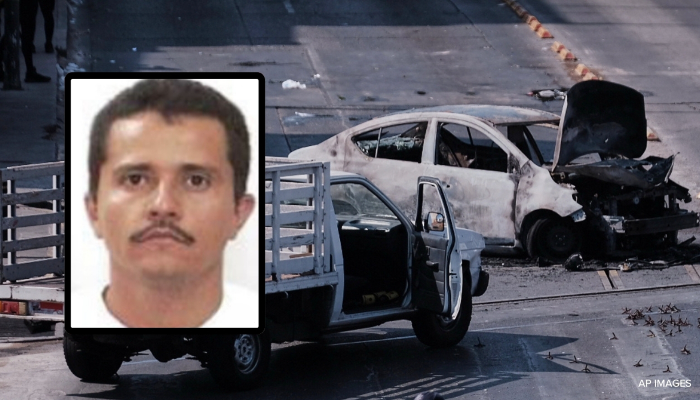
Nemesio Ruben Oseguera Cervantes, popularly known as “El Mencho,” the head of the Jalisco New Generation Cartel (CJNG) was killed in an operation by special forces in western Mexico on 22nd February (Sunday). The action, backed by intelligence from the United States, led to the deaths of 6 other persons as well.

Officials confiscated firearms, rocket launchers and armoured vehicles from cartel members while 2 individuals were placed under arrest. 3 Mexican military personnel also endured wounds. Afterwards, violence broke out in the country which is a part of an extensive history of confrontations between CJNG and the authorities.

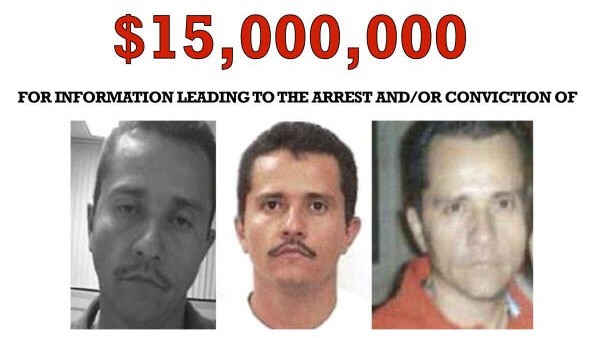
The United States had been looking for Oseguera for years, charging that he and CJNG were smuggling large quantities of fentanyl and other drugs into the nation. The State Department even offered a $15,000,000 prize for information that led to his capture.

Image via Reuters

The latest development unfolded against a backdrop of persistent threats from Washington to Mexico to enhance its anti-drug trafficking initiatives or face a potential US military intervention. The two sides have hailed his death as a victory.

Meet the feared kingpin “El Mencho”

Oseguera or El Mancho, an ex-cop, was born and raised in Michoacan, specifically in Aguililla. He had been heavily involved in drug trafficking since the 1990s. He stayed in California after breaking into the US as an undocumented immigrant in the 1980s and was deported after being nabbed on drug-related charges. Interestingly, he had already experienced his initial run-ins with the law when growing marijuana in his home state.

Oseguera again landed in the United States unlawfully and was once more arrested on similar allegations in 1992. He was found guilty of conspiring to distribute heroin in the nation’s district court for the Northern District of California in 1994 and was sentenced to over three years in jail.

He was then released on parole and deported a second time after which he resumed his criminal activities alongside drug lord Ignacio Coronel Villareal alias “Nacho Coronel.”

El Mencho and Erik Valencia Salazar also known as “El 85” founded the CJNG in 2007 following Villareal’s demise. They were in the Sinaloa Cartel at first but later broke away and the two organisations have been fighting for territory throughout the Latin American nation for years.

Oseguera rose to prominence and had a reputation as a cunning and vicious leader while working with the Milenio Cartel which was situated in his hometown of Michoacan. He was in a prime position when the cartel fractured and turned it into the country’s most powerful criminal outfit. He combined territorial growth and refocused operations into new and profitable illicit ventures.

The fall of the Sinaloa group with the extradition of its leader, Joaquín “El Chapo” Guzman, to the United States also proved advantageous to his leadership and gang. Oseguera soon gained a reputation for threatening officials and enemies in profanity-filled recordings that were posted on social media. Nevertheless, he preferred to stay in the shadows, shrouded in mystery and very few images of him exist.

He operated inside Jalisco with almost complete impunity for years, paying off police and even seeking political safety. His son Ruben Oseguera or “El Menchito,” was convicted regarding narcotics and firearms offences in the United States and given a life term in jail in March 2025. The senior Oseguera had likewise been charged several times in the country prior to his passing.

According to the State Department, he was most recently indicted in April 2022 on counts of conspiracy to produce and distribute cocaine, fentanyl and methamphetamine for importation into the United States, as well as using a handgun during and in connection with narcotics trafficking breaches.

The dreaded Jalisco New Generation Cartel

CJNG, notorious for its ultraviolence and massive military-style arsenal, witnessed a skyrocketing expansion throughout Mexico and established itself in at least 21 of the 32 states with activity in nearly every US state in addition to its global reach. The cartel has more than $20 billion in assets and is mostly based in the west, including the Tierra Caliente region with strongholds in Jalisco, Nayarit and Colima.

The outfit has between 15,000 and 20,000 members and earns billions of dollars a year via illegal mining, forestry drug trafficking, extortion, fuel theft, abduction and migrant smuggling. It is a major distributor of synthetic substances on the continent, including cocaine, methamphetamine and fentanyl.

CJNG used improvised explosive devices and drones to innovate violence. According to Stratfor, it is most violent in Mexico, contributing to the unrest in Guanajuato, Tijuana, Juarez and Mexico City. Its gruesome attacks included the deployment of a rocket-propelled grenade to bring down an army helicopter when an effort was made to catch Oseguera in 2015 along with murdering several politicians, judges, law enforcement and state officials.

The group held public executions that had been widely reported on social media and hung the bodies of their victims from bridges. The persistent aggression is driven by its attempts to increase control. The cartel recruited heavily online and been known for its hits on security officers.

Omar Garcia Harfuch, the current Secretary of Security and Civilian Protection in Mexico, was the target of a 2020 assassination plot. CJNG members with powerful guns, grenades and body armour ambushed him as he was driving to a meeting in an armoured SUV. He survived but two of his bodyguards and a woman were slain.

Similarly, former high-ranking cartel leader Cristian Fernando Gutierrez-Ochoa had been accused of abducting two officers of the Mexican Navy in 2021 in an attempt to free Oseguera’s wife after she was caught by Mexican authorities. She was eventually released in February of last year.

Beheadings and other graphic forms of intimidation were frequently used by the organisation which claimed the lives of two dozen police officers in western Mexico over the course of six weeks in 2015 to threaten the authorities.

According to reports, CJNG used phoney job postings to try to recruit new members, then coerced the gullible candidates into joining the cartel. Those who attempted to resist or flee have been tortured or executed. A team searching for missing family members discovered burnt bones, shoes and clothing in a suspected CJNG training ground in March.

Aftermath of “El Mencho’s” death

Several regions of Mexico have been paralysed following the outbreak of violence after news of Oseguera’s death circulated. Meanwhile, countries including the United States, Canada and India have issued advisories to their nationals residing there and some flights have been cancelled in response to the critical situation.

From creating ruckus during AI Impact Summit to attacking BJP and BRS workers: Here are 5 recent incidents where Congress goons resorted to violence and hooliganism

The Congress party is again under the spotlight after its workers resorted to hooliganism, leaving no chance to embarrass the nation in front of the world. In the past few days, protests and violent clashes between Congress and its youth wing have created political unrest in various states. Right from the dramatic disruption of the AI Impact Summit in Delhi to attacks in Indore, Puducherry, and Telangana, the incidents have further exposed the violent tactics of the Congress party.

Shirtless protest at Bharat Mandapam sparks outrage

The incident started at the prestigious AI Impact Summit, which took place at the Bharat Mandapam in the national capital. The international event, with top tech CEOs and international delegates in attendance, was to highlight India’s rising power in the field of artificial intelligence. However, the Indian Youth Congress (IYC) members disrupted the international summit by staging a shirtless protest and raising slogans against Prime Minister Narendra Modi inside the event.

According to the police, some leaders of the Youth Congress entered the event site on Friday, 20th February, after registering online and entering through QR codes. They wore sweaters and jackets to hide T-shirts with political slogans. After entering Hall No. 5, they removed their winter clothing and T-shirts, waved them in the air, and started shouting slogans against Prime Minister Narendra Modi, including “PM is compromised.” The protest was organised to oppose the recently announced India-US tariff agreement, which the Congress party alleges compromises the nation’s interests.

The disruption shocked attendees, many of whom were foreign delegates. Videos emerged showing the protesters holding T-shirts with pictures and messages against the Prime Minister. The situation turned ugly as a scuffle broke out, and at least three police personnel were injured while trying to control the situation. The Delhi Police arrested four Youth Congress leaders, including Krishna Hari, Kundan Yadav, Ajay Kumar, and Narasimha Yadav.

A court later sent them to five days of police custody after the police told the court that the arrested persons had plans to create unrest similar to what happened in Nepal and had the intention to defame India on an international stage.

While the Youth Congress defended its actions as a democratic right to protest, the BJP described the episode as a “national shame,” accusing the Congress of politicising a global technology event.

Violent clashes in Indore leave several injured 

The political unrest did not take long to spill over into the streets of Indore in the state of Madhya Pradesh. On Saturday, 21st February, clashes erupted near the Congress office in Machhi Bazar between the workers of the Bharatiya Janata Yuva Morcha (BJYM) and Congress supporters.

The confrontation reportedly began when BJYM workers gathered to protest against the Youth Congress’s actions at the AI Summit. Despite heavy police barricading, tensions escalated quickly. According to police officials, stone-pelting began suddenly, with both sides accusing each other of starting the violence.

A BJP woman worker, identified as Bindu Chauhan, suffered serious injuries when a stone struck her near the eye. Visuals shared by the BJP showed her bleeding from the forehead and nose. In her statement, she said that stones were thrown from the Congress office and that she was deliberately targeted. Several other protesters, media personnel and even a police sub-inspector were injured in the chaos.

The Pandhrinath Police Station registered two FIRs, one based on a complaint by BJYM worker Avesh Rathore and another filed by Congress leaders. A third case was initiated by the police for obstruction of government work and violation of prohibitory orders. In the BJYM complaint, around 20 Congress leaders, including city Congress president Chintu Chokse and district president Vipin Wankhede, were named along with several unidentified persons. The charges include unlawful assembly, rioting, voluntarily causing hurt and criminal conspiracy.

Congress leaders, on the other hand, alleged that BJYM workers attempted to gherao the Congress office and damaged vehicles parked outside. Police officials stated that CCTV footage and video evidence from both sides are being examined to determine responsibility. Deputy Commissioner of Police Krishna Lalchandani said it was too early to conclude which side initiated the violence.

AI Summit fallout turns into a nationwide political storm

The fallout from the AI Summit disruption did not end in Delhi. The next day, Youth Congress workers intensified their protests in Delhi and Chandigarh, once again raising slogans against the Prime Minister. In both cities, police had to use water cannons to disperse protesters after clashes with security personnel.

Posters depicting Mahatma Gandhi with the caption “Shirtless Congressi” appeared in parts of Delhi, further escalating the political temperature. The BJP’s youth wing organised counter-protests in several states, accusing Congress of tarnishing India’s global image.

Delhi Police told the court that the arrested Youth Congress workers had tried to create a ruckus in front of international leaders and tech giants. The police also said they were examining the mobile phones of the accused to ascertain whether any external funding was involved. The defence lawyers argued that the protest was peaceful and that political dissent should not be criminalised.

Puducherry sees violent face-off outside BJP office

The tension soon spread to Puducherry, where a clash between Congress and BJP workers resulted in five people, including Superintendent of Police Vamsi Reddy, being injured. The violence involved more than 100 Congress functionaries marching towards the BJP office, smashing police barricades on the way. They also burned Prime Minister Modi in effigy, triggering a confrontation with BJP workers. 

The protest was organised by State Congress president V Vaithilingam and former CM V Narayanasamy. The situation turned ugly, and the police were forced to conduct a lathi-charge to disperse the protesters. SP Vamsi Reddy was injured in the hand while trying to control the situation. More than 100 police personnel were deployed to maintain law and order.

Clash in Kamareddy over land dispute

Another flashpoint emerged in Kamareddy, Telangana, where Congress and BJP workers clashed over a land dispute on Saturday, 21st February. The tension followed a heated exchange between state government adviser Mohammed Ali Shabbir and BJP MLA K. Venkata Ramana Reddy.

Congress leader Giri Reddy Mahender Reddy and his supporters assembled in an area close to the BJP MLA’s camp office, protesting against him. In the course of the violence, Mahender Reddy’s car was turned upside down by Congress supporters.  Police were seen struggling to control the crowd.

Telangana BJP president N. Ramchander Rao condemned the incident as political violence. Sharing a post on X, he said, “The ghastly attack by Congress workers at the Kamareddy BJP MLA K Venkat Ramana Reddy garu’s Camp Office is deeply condemnable and shocking…” “Such acts of political violence have no place in a democracy,” Rao said.

He further added that he will personally visit the site to stand with BJP karyakartas and assess the situation firsthand.

Congress workers storm BRS office in Telangana

In a separate incident that took place months earlier in Telangana’s Bhongir town, Congress workers stormed the office of the Bharat Rashtra Samithi after a BRS leader reportedly made derogatory remarks about Chief Minister A. Revanth Reddy.

According to eyewitnesses, Congress workers broke into the office, damaged furniture, and threw chairs, causing extensive damage. The police were quick to act, dispersing the crowd. An investigation has been launched, with the review of CCTV footage to identify the culprits.

BRS working president K. T. Rama Rao condemned the incident, holding Congress responsible for promoting a culture of violence and anarchy in the state. He called for immediate arrests and threatened to take stern action against such attacks. 

As clashes and protests continue to unfold across states, the political atmosphere remains deeply polarised. With hooliganism, violence and attempts to embarrass the country at global platforms, the ongoing confrontation between Congress and BJP has once again raised serious questions about the limits of protest and the responsibility of political parties in maintaining public order.

Delhi’s pollution crisis is alarming: Here is how we can fix it at a personal and govt level

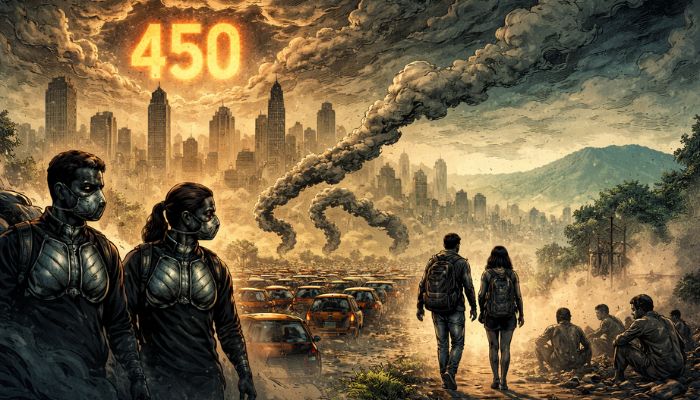
Not only Delhiwallahs but the entire nation is fed up with stories of Delhi’s pollution crisis, which is a cyclical disorder. It is a number that stares you in the face, and even 450 has stopped exciting us.

Day after day, year on year, the problem repeats itself. For the whole year, it hovers around from poor to severe. Delhiites have now developed lungs of stainless steel. Governments come and go, debates continue on TV, anchors and participants shout their lungs out (steel lungs). You know nothing will happen, and yet you debate- it is a form of catharsis where you feel good by abusing somebody and everybody.

No solution, as people do not know the problem

If the doctor cannot diagnose the disease, he cannot start any treatment. In this case, the doctor knows the problem, but the patient does not stop ‘indulging’. A patient with severe acidity is prescribed an antacid and also advised to abstain from alcohol and spicy food. The patient keeps popping antacid tablets every day, but also has chaat papadi and chola bhatura- ‘kya karen control he nahi hota’.

The problem of pollution and its causes are crystal clear. A report by IIT Delhi (Centre of Excellence for Research on Clean Air (CERCA), IIT Delhi) says that 53% of the problem is polluting vehicle emissions. The contributors to PM2.5 (the most harmful fine particles) vary by season, but a clear picture exists. This was the end of 2020, but nothing has been done so far. You keep giving antacid and the patient still eats spicy food- you can’t blame the doctor!

Transport vehicles cause 53% of pollution.  And then there is a compounding effect of Secondary aerosols, which are tiny particles or liquid droplets that are not emitted directly from an exhaust pipe. Instead, they “grow” in the air through chemical reactions between gases already present in the atmosphere.

This is like “atmospheric bakery.” Secondary aerosols are formed when invisible “ingredient” gases react with sunlight and moisture to create new solid or liquid particles. And this accounts for 30% of the problem. Industry and power plants are 10- 15 %. Road and construction dust accounts for only 2 to 5 per cent. Therefore, 80% of the problem is due to vehicles and the additional baking effect.

Dilli ‘car bazar’

The Delhi-NCR region has a huge vehicle count, with roughly 3.3 crore registered vehicles (cars, buses, trucks) as of mid-2025.  Delhi alone had over 1.2 crore vehicles, including around 35 lakh private cars, accounting for 1/3rd of the fleet. Can you reduce this number? No way. We are a democracy and not Singapore (Singocracy).

Studies suggest that long-term exposure can reduce a Delhi resident’s lifespan by up to 11.9 years.

Systematic migration- take a chill pill

It is hardly possible to build anything if frustration, bitterness and a mood of helplessness prevail.” – Lech Walesa  

Decongestion is the only answer.  Good sense is now prevailing on those who can take the call of abandoning Delhi/NCR.

There is a growing trend of people permanently leaving Delhi due to its toxic air quality. This phenomenon has led to a tribe called ’smog escapees’—residents who feel forced to relocate/escape to protect their long-term health.

One study found that nearly 35% of Delhi-NCR residents are considering moving out specifically due to deteriorating air quality. Some more aggressive reports suggest that up to 80% of families have discussed or considered relocation as a serious option. 

A November 2025 survey by Smytten PulseAI  (they enable businesses to decode evolving consumer behaviour, measure campaign impacts).  Out of 4,000 residents, we found that 34.6% (roughly 1 in 3) are actively considering moving out of the region due to toxic air.

To add to it, there are security issues, attitude problem ‘tu janta hai mera baap kaun hai’ type swag. People carry a baseball bat in their cars for security, road rage, traffic jams, extreme cold, extreme heat and Demographic dandruff – Delhi, Haryana, Punjab and Uttar Pradesh. It is a molten pot.

A “reverse migration” is occurring among those who have the financial and professional flexibility to leave this toxic region.

Today, there is an infra push towards smaller towns. Connectivity- physical and digital are moving at breakneck speed.

For those who can, this is a great way to help yourself and help the city. You can sell a property in Gurugram and buy something at a fraction of the cost in a smaller town with a hefty bank balance too.

The people leaving are typically young professionals with remote-work capabilities, families with young children, and retirees. They are moving to cities with cleaner ai,r like Kochi, Goa, Jamshedpur, and various hill towns and tier two cities.

The rise of remote work has made it possible for “white-collar” workers to keep their Delhi-level salaries while living in environmentally safer regions

Those who are stuck

The majority of Delhi’s population—daily wage earners, street vendors, and industrial workers—cannot afford to leave. This is their bread and butter. They remain “trapped” in the hazardous environment.

For those who leave, the decision is rarely about lifestyle and almost always about survival and the health of their children and elders.

Personal decision

It is a decision by the family- of course, job hopping takes place. Professionals do relocate if they get a ‘better job’. Money may not be the only consideration- a better life, a more relaxed lifestyle, better health and work-life balance are important too. One has to do a SWOT and take a call- but it is worth considering.

Do not ask what Delhi can do for you, ask what you can do for Delhi.

I am a hardcore Delhiite but took a conscious decision to settle down in Pune, and that is the best decision of my life. Smaller towns definitely have a slower pace and a better quality of life. What is the point of struggling in a city where you can neither breathe nor can you travel in comfort?

Some have their relatives in Delhi, but just count how many times you visited someone or they visited you in the last six months. You can count on your fingertips.

If you love Delhi so much, then be an NRD (Non-resident Delhiite)! Come twice a year, poop off your money, meet everyone as if you are coming from abroad- get gifts- diili walas love gifts.

Yes, if your business is such that it keeps you anchored- so be it.

“If what you’ve done over the past 5 years hasn’t worked for you, then change what you’re doing, or the next 5 years will be the same”

Government can do its bit

Some governments make the city less “comfortable” to encourage a natural exit:

  • ​Congestion Pricing: Charging high fees to drive in the city centre (like in London or Singapore).
  • ​Strict Zoning: Limiting the height of new buildings or increasing “green space” requirements, which naturally caps density.
  • ​Higher Property Taxes: Implementing higher taxes on urban real estate compared to rural holdings.

You can offer cash to help with the move

  • ​Relocation Grants: Countries like Japan have offered families up to 1 million yen per child to move out of Tokyo to rural areas.
  • ​Remote Work Stipends: In the U.S., states like Vermont and cities like Tulsa, Oklahoma, offer grants (often $10,000+) to remote workers who relocate there.
  • ​Property for “Peanuts”: Towns in Italy and Spain famously sell abandoned homes for €1 on the condition that the buyer renovates the property and lives there for a set period.
  • Payroll Tax Breaks: Incentivising companies to hire employees who live in designated “underpopulated” zones.
  • ​Startup Subsidies: Providing grants specifically for entrepreneurs who launch businesses in rural or tier-2 cities.

Saffron-clad Yogi Adityanath follows the lead of PM Modi, sets out abroad to bring global investments to Uttar Pradesh: Read the significance of this cultural diplomacy

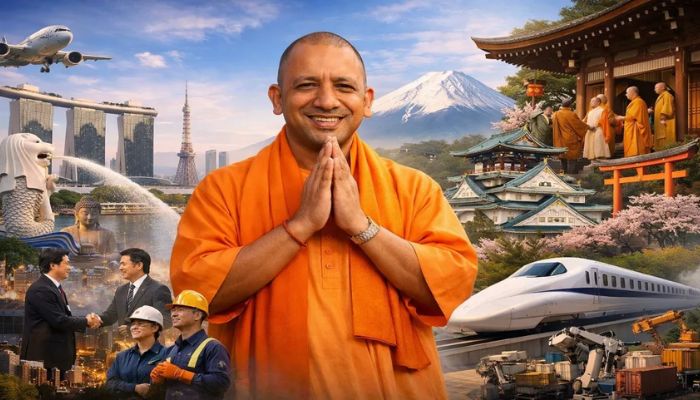
Uttar Pradesh Chief Minister Yogi Adityanath is set to begin a five-day visit to Singapore and Japan from Sunday, 22nd February. The visit is aimed at attracting global investment, building stronger international partnerships, and presenting Uttar Pradesh as a fast-growing economic powerhouse. At the same time, the tour is also being seen as a moment of cultural diplomacy.

The Chief Minister has a clear target to help make Uttar Pradesh a $1 trillion economy between 2027 and 2030. Over the past eight years, the state has seen rapid infrastructure growth, including expressways, airports, defence corridors, and industrial hubs. Now, the focus is on bringing in more foreign companies and advanced technology to speed up development.

Walking the path shown by PM Modi

Political observers say this outreach reminds many of the approach taken by Narendra Modi during his time as Gujarat Chief Minister from 2001 to 2014. Through global visits and the Vibrant Gujarat summit, Modi invited international investors and helped Gujarat attract major foreign companies.

Japanese automobile giants like Suzuki, Honda, and Toyota expanded their presence in Gujarat during that period. Singapore’s urban planning ideas were also studied and adapted. Modi had once said he travelled abroad as the face of Gujarat to bring investment back home.

Now, Yogi Adityanath appears to be applying a similar strategy for Uttar Pradesh, meeting global investors directly and presenting the state as a ready destination for manufacturing, technology, and infrastructure.

Singapore leg: smart cities and urban growth

The Chief Minister will arrive in Singapore on the evening of 22nd February and stay until 24th February. During this phase, the focus will be on smart city development, urban transport systems, water management, and skill training.

Investor roadshows are scheduled, where Uttar Pradesh will be showcased as an investment-friendly state. Meetings are expected with business groups such as the Singapore Chamber of Commerce and Industry (SICCI) and India’s FICCI. MoUs may be signed to boost cooperation in infrastructure, logistics, housing, and digital services.

He will also meet members of the Indian community in Singapore, especially those with roots in Uttar Pradesh. Officials believe the diaspora can act as a bridge between global companies and opportunities back home.

Singapore is widely respected for its clean cities, modern housing systems, and efficient public services. Uttar Pradesh aims to learn from these models to strengthen its own urban planning.

Japan visit: technology, manufacturing and maglev ride

From 24th February to 27th February, Yogi Adityanath will be in Japan, visiting Tokyo, Yamanashi, Osaka, and Kyoto.

A major business conference titled “Japan–Uttar Pradesh Partnership for Manufacturing, Mobility, and Technology” will be held at Tokyo’s Imperial Hotel. Leaders from the automobile, electric vehicle, electronics, railway, chemical, and logistics sectors are expected to attend.

Japan has been one of India’s strongest development partners. Uttar Pradesh already has an MoU with Yamanashi Prefecture. Discussions are likely to cover industrial cooperation, technology transfer, Buddhist tourism, yoga, and Ayurveda.

One of the most talked-about parts of the tour will be the Chief Minister’s 100-kilometre trial ride on Japan’s high-speed Maglev train. This train runs at nearly 600 kilometres per hour using magnetic levitation technology, without touching the tracks. Since Uttar Pradesh is exploring advanced transport solutions, this experience is expected to help in understanding high-speed rail possibilities.

Plan for ‘Japan City’ and ‘Singapore City’ in UP

A key outcome of the visit could be progress on plans to build ‘Japan City’ and ‘Singapore City’ in Greater Noida under the Yamuna Expressway Industrial Development Authority (YEIDA).

Japan City is proposed on 500 acres in Sector 5A, while Singapore City will be developed on 500 acres in Sector 7. According to the plan, 70 % of the land will be used for industrial purposes, 12 % for residential areas, 13 % for commercial use, and 5 % for institutions.

These projects will follow the EPC mode for development. The cities are expected to reflect planning standards inspired by Japan and Singapore. Companies from both countries may be offered land to set up factories and offices. If implemented successfully, the projects could generate large employment opportunities and significantly boost industrial output in the state.

Saffron robes and cultural message

Another major talking point is that Yogi Adityanath will wear his traditional saffron kurta-chola throughout the visit. As the head priest of the Nath sect, saffron is his regular attire. However, this will be the first time an Indian constitutional office-holder travels abroad on an official visit in saffron robes.

Supporters say this reflects confidence in India’s cultural identity. Saffron represents sacrifice and spirituality in Indian tradition and is closely linked with Hindu heritage.

Japan, known for its Buddhist temples and spiritual traditions, shares historical and cultural connections with India. Uttar Pradesh is home to key Buddhist sites such as Sarnath and Kushinagar. Talks during the visit may include strengthening the Buddhist circuit and increasing pilgrimage tourism between the two countries.

Reports suggest the Chief Minister may also visit a peaceful temple around 45 kilometres from Tokyo. Many believe such gestures will strengthen cultural bonds along with economic ties.

Big Picture: Development with Identity

The Yogi government says Uttar Pradesh has already made strong progress in infrastructure and ease of doing business. However, with a population of around 230 million, faster industrial growth is essential.

From Japan, the state hopes to attract investment in electric vehicles, semiconductors, advanced manufacturing, and high-speed rail systems. From Singapore, it aims to bring expertise in smart cities, water treatment, and logistics parks.

As Yogi Adityanath begins this overseas tour, attention will be on the agreements signed and investment commitments secured. If successful, the visit could mark a major step toward the $1 trillion goal.

At the same time, the image of a saffron-clad Chief Minister meeting global leaders may send another message that India is moving ahead in development while staying rooted in its cultural traditions.

Complete wipe out: As the March 31 deadline approaches, not only Naxals, their memorials too are being destroyed by security forces

In a fresh push towards the Centre’s target of a Naxal-free India by March 31, 2026, security forces demolished four Maoist memorials in Bijapur district of Chhattisgarh on Friday, 20th February. The memorials were located under the Farsegarh and Tarrem police station areas, both of which have witnessed intense anti-Maoist operations in recent years.

For more than four decades, the Bastar region of Chhattisgarh remained a stronghold of the Maoists. They held sway over vast stretches of territory and constructed hundreds of memorials that came to represent their influence and control in the area.

Inspector General of Police for Bastar region, Sundarraj P, said, “The removal of Maoist memorials and symbols is a conscious decision to end the ideological influence of Maoism and to strengthen the process of restoring normalcy in the region, reinforcing good governance, and integrating society into the mainstream. The demolition of memorials established by Maoists is a significant step toward eliminating their symbolic and psychological influence.”

“Earlier, such memorials were used by Maoists as instruments to maintain fear, dominance, and ideological control within local communities. Their removal sends a clear message that the legitimate authority of the state and the rule of law are being steadily reinforced in the region, and that Maoist influence is gradually weakening,” the IG said.

“Brick by brick, we would destroy the idea and its manifestation in each and every form,” G P Singh, Director General of the Central Reserve Police Force (CRPF), said in a social media post.

Earlier this month, the Central Reserve Police Force (CRPF) demolished a memorial of Ravula Srinivas alias Ramanna, a central committee member of the CPI (Maoist), in Gogunda village of Sukma district. Assistant Commandant of the 74th Battalion said the area had remained under Maoist influence for a long time and was earlier inaccessible to security forces. After a forward operating base was set up in November 2025, the forces moved in and razed the structure in a joint operation, calling it a step toward a “brighter future” for the younger generation.

Meanwhile, Union Home Minister Amit Shah on Monday, 16th February, again reiterated the Central government’s commitment to end Naxalism by March 31 this year, a decades-old menace that left hundreds of civilians and security forces dead. Shah’s assurance came while speaking at the 79th Foundation Day of Delhi Police, as the Centre’s deadline to eradicate Naxalism would expire in the next 44 days.

44 Naxal memorials razed in Gadchiroli

Just days earlier, on Wednesday, 18th February, a massive demolition drive was carried out in the Gadchiroli district of Maharashtra. The Gadchiroli Police and the CRPF jointly demolished 44 Naxal-built monuments spread across the district.

The drive included nearly 800 personnel from 18 teams, including the elite C-60 anti-Naxal force, the Bomb Detection and Disposal Squad, and the CRPF. The monuments were situated in forested zones, which are strongholds of the Left-wing terrorists, in 15 police posts and sub-posts in areas such as Pengunda, Kawande, and Tumarkothi.

Demolitions were conducted in Etapalli of Gadchiroli district, where 18 structures were torn down, 17 in Hedri, five in Bhamragad, and a few more in Jimlagatta, Dhanora, and Pendhari. Superintendent of Police Nilotpal stated that the demolition is a part of the efforts to destroy the infrastructure of the Maoist movement. He further stated that the Maoist activities in the region have significantly reduced due to continuous security operations.

The demolition drive is not only meant to destroy the infrastructure but also to convey a message that the government is in complete control. Gadchiroli, which was once one of the worst-hit districts in Maharashtra by Maoists, is now witnessing a gradual transition towards development and enhanced security.

Maharashtra Chief Minister Devendra Fadnavis congratulated the Gadchiroli police force on this success. He said the move goes beyond just tearing down physical structures and marks a clear triumph of democracy over the fear that had dominated people’s lives for years.

53 memorials demolished in 15 days

The demolition campaigns in Bijapur and Gadchiroli are a part of a larger, joint effort. In the last 15 days alone, the CRPF has destroyed 53 Naxal memorials in Sukma, Bijapur, and Bastar in Chhattisgarh.

This is in line with the directives of Union Home Minister Amit Shah in a review meeting on Left-Wing Extremism held in Raipur on 8th February. With the help of location mapping, often conducted with the assistance of local villagers, the security forces are working towards the destruction of all such infrastructure by the end of February. After this, plantation drives will be conducted to ensure that the land becomes a part of the surrounding forests, leaving no trace of Maoist activity.

The CRPF has played a central role in this campaign, maintaining a strong presence in interior villages through forward-operating bases. Among the memorials destroyed recently are those erected after the neutralisation of CPI (Maoist) general secretary Namballa Keshava Rao alias Basavaraju in Narayanpur in May 2025 and central committee member Ramachandra Pratap Reddy alias Chalapathi in Gariyaband in January 2025.

In the last three years, security forces have killed over 520 Maoists and destroyed more than 100 such memorials in Bastar alone. Between 2018 and 2023, around 60 memorials were destroyed. However, between 2023 and February 2026, the figure shot up to 113, indicating the intensified crackdown.

One of the tallest structures, a 64-foot memorial at Komatpalli village near the Telangana border, was destroyed in January 2025. The village had once witnessed massive Maoist rallies, including the ‘Shahidi Saptah’ rally in 2022, which was attended by senior Maoist leaders and members of Battalion 1 of the People’s Liberation Guerrilla Army. That area was once beyond the reach of security forces, a situation that has now completely changed.

Tallest maoist memorial (Image via TIE)

Why the demolitions matter

The removal of these Naxal memorials is both practical and symbolic. Practically, these structures served as rallying points and psychological markers of Naxal supremacy in remote regions. They reminded villagers of the insurgents’ power and often reinforced fear.

Demolishing them represents the dismantling of Naxal-Maoist ideology itself. When Home Minister Amit Shah set March 31, 2026, as the deadline to end Naxalism, it was presented not as a political slogan but as a firm timeline. The government’s message is that the insurgency has already weakened significantly, and what remains is the final phase of closure.

Naxalism had been India’s longest-running internal insurgency for almost five decades. It had spread across the region that was once known as the Red Corridor, covering several states. However, 2025 was a turning point in the history of Naxalism. Top Maoist leaders were eliminated, recruitment networks were busted, and hundreds of cadres surrendered. Entire districts fell out of Maoist hands.

Inspector General of Police for the Bastar range, Sundarraj P, said that removing these memorials helps restore normalcy and strengthen governance. Earlier, such structures were used to maintain dominance and ideological control. Their removal sends a clear signal that the rule of law is firmly back.

Operation Kagar and the centre’s initiative for a Naxal-free India

The demolition drives are part of a broader national strategy under Operation Kagar, launched in January 2024. Over the last decade, the central government has amped up operations in Naxal strongholds to entirely uproot the Maoist cadres. The government has adopted a two-pronged strategy of eliminating the Maoist cadres through military operations clubbed with development-oriented works such as expansion of roads, transport facilities, water, electricity and other welfare schemes of the government reaching the villagers.

As part of this strategy, the central government launched this operation in January 2024 to eradicate Naxalism in Chhattisgarh, Maharashtra (Gadchiroli), Odisha, Bihar, Jharkhand, Madhya Pradesh and Telangana. Under the operation, around 1 lakh para-military troops, including the Central Reserve Police Force (CRPF), its elite CoBRA units, District Reserve Guards DRG), and state police, equipped with modern technology, have been deployed in the left-wing terrorism affected areas to completely uproot the naxal terrorism from its last remaining strongholds.

The success of the centre’s anti-Naxal operation can be estimated from the fact that from 2015 to 2025, the number of Naxal-affected districts came down from 106 to 18. Out of these districts, 12 were considered the worst affected by Naxalism. However, this number further reduced to only 6 worst Naxal-affected districts, including Bijapur, Kanker, Narayanpur, and Sukma in Chhattisgarh, West Singhbhum in Jharkhand, and Gadhchiroli in Maharashtra.

On 19th February (Thursday), Bihar authorities announced that the state is now “Naxal-free” after the surrender of prominent Maoist Suresh Koda, also known as Mustakim, who had a reward of Rs 3 lakh. He surrendered himself to the Special Task Force (STF) of the Munger district police a day ago. It is pertinent to note that the number of districts affected by left-wing extremists (LWE) has also decreased to seven, as per a recent analysis of the affected region. 

Last month, the Centre released a detailed 10-point plan to ensure that areas cleared of Left-Wing Extremism remain peaceful. The plan is meant for the post-Left-Wing Extremism phase and focuses on stabilising districts that have lived through years of violence. It aligns with the development-oriented part of the Centre’s two-pronged strategy for eliminating Naxalism.