Home Blog Page 111

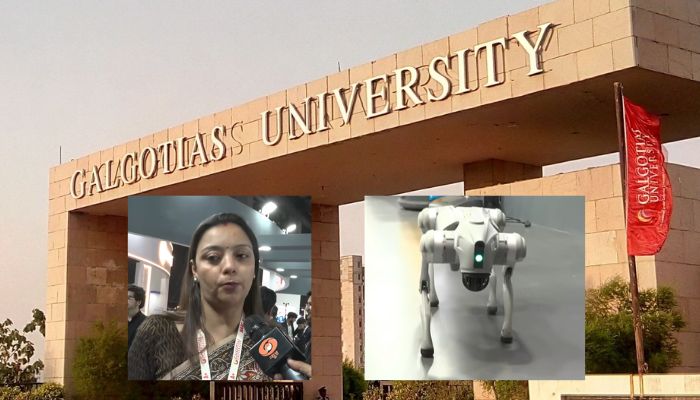
Galgotias University plays victim card, claims ‘negative propaganda’ after Chinese robot dog fiasco: Read how they are lying

0

On the intervening night of 17 February and 18 February, Galgotias University played the victim card, claiming a “negative propaganda campaign” against it after facing backlash over showcasing a Chinese robot dog as part of its AI ecosystem at the AI Impact Summit 2026. However, its own earlier statements, a now-deleted DD India video, and a press release distributed by the university via NewsVoir tell a very different story.

The ‘negative propaganda’ post and sudden denial

In its latest press release, the university stated, “We at Galgotias, faculty and students, are deeply pained by the propaganda campaign against our university.”

It claimed that the robotic programming initiative was simply about giving students exposure to AI using “globally available tools and resources” and warned that “spreading negativity can harm the morale of students”.

In an earlier clarification issued the same evening, Galgotias asserted, “Let us be clear Galgotias has not built this robodog, neither have we claimed.” It described the Unitree robodog as a learning tool and insisted that the university never presented it as an indigenous development.

The university claimed that it never “claimed” to have built the robodog. The problem is that the public record says otherwise.

What DD India showed before deleting the video

In a now-deleted DD India video from the AI Impact Summit 2026 at Bharat Mandapam, Professor Neha Singh of Galgotias University was seen stating that the robotic dog was developed by the “Centre of Excellence” at the university. A clip of the deleted video is being widely shared on social media.

The original clip was aired and widely circulated before it was quietly deleted. The presentation at the summit projected the robodog not merely as a purchased device, but as part of the university’s own development ecosystem.

In the deleted DD News video, at 50 seconds, Professor Neha Singh asks the journalist to meet the robot dog Orion, and says, “This has been developed at the centre of excellence at Galgotias University.”

Rs 350 crore AI ecosystem and the ORION rebranding

Interestingly, the university’s own press release, distributed by NewsVoir, adds to the contradiction. Under the headline, “Galgotias University Pavilion Emerges as a Key Attraction at AI Impact Summit 2026 with Rs. 350+ Crore AI Showcase”, the university claimed to have presented a “comprehensive Rs. 350+ crore Artificial Intelligence ecosystem”.

A “major crowd puller” at the pavilion, the release said, was ORION, Operational Robotic Intelligence Node, which “interacted live with delegates and demonstrated applied robotics and intelligent systems integration”.

The Chinese Unitree robodog was thus rebranded as ORION and showcased as part of the university’s AI driven Centres of Excellence and infrastructure. What makes the situation worse is that the Unitree branding was reportedly still visible on the robot. In other words, the product was renamed without even removing the original manufacturer’s markings.

Government handles share DD News coverage of Galgotias’ false claim

The controversy escalated further when government social media handles shared videos that included the robodog. The amplification by government social media handles lent official weight to the impression that an Indian university had developed an advanced robotic platform as part of its Rs. 350+ crore AI investment push.

After the false claims of Galgotias University were busted on social media, the government handles have taken down the posts too. Overall, the University seems to have taken everyone, including the DD News journalist and organisers of the event, for a ride.

Playing innocent after projection

There is no disputing the fact that universities import global technologies for learning. Galgotias itself wrote that “innovation knows no borders” and that students must be exposed to cutting edge tools. However, the issue is not procurement but projection.

At a major international summit, the Chinese robot by Unitree was renamed ORION, showcased as an indigenously developed product under a Rs. 350+ crore AI ecosystem banner, attributed to a Centre of Excellence, amplified by national media, and circulated by government handles. After that, to call criticism “negative propaganda” and claim that no such assertion was ever made stretches credibility.

Embarrassingly, Chinese handles have also picked up the incident and flagging how the University told blatant lies.

The drone soccer

Another claim that Galgotias University’s professor Neha Singh made while talking to DD News was about drone soccer. It is basically a drone fitted inside a ball.

She claimed, “From its end to end engineering to its application, everything has happened at the university. And this is India’s first drone soccer arena which you will get to see on the Galgotias campus. Here, students play games inside this arena. They fly it, enhance their flying skills, and are developing it further in new ways, making it stronger and adding more enhanced features.”

However, social media users pointed out that the drone is strikingly similar to the Striker V3 ARF soccer drone sold by Skyball. It is used in drone games and is available for US$453.

Source: Skyball

Conclusion

The controversy is not about students learning from global technology or about universities procuring foreign hardware for academic use. The core issue is the manner in which the products were projected at the global platform as genuine innovation and subsequently defended when questioned. The university tried to give the impression that it had developed advanced technologies in house, which was not true. When scrutiny followed, the narrative shifted to denial and allegations of propaganda.

Tribal villages can bar entry of missionaries: Read how SC rejected Colin Gonsalves’ plea and upheld Chhattisgarh HC’s stand amid rampant forced conversions

There is no alternative way to express the acute plague of religious conversion that has invaded the country. Even the most remote areas are not immune to the deceptive enticements of Christian missionaries who employ various tactics to compel the people to forsake their indigenous beliefs in favour of a foreign faith.

Hence, some tribal villages of Chhattisgarh, weary of this malicious agenda, resorted to enforcing restrictions on the entry of these missionaries and pastors. Notably, the issue was initially brought before the Chhattisgarh High Court and subsequently to the Supreme Court. However, both courts dismissed the petition by Digbal Tandi from the Kanker district, challenging the imposed restrictions.

The matter stemmed after resolutions were adopted by Gram Sabhas and hoardings were placed in Scheduled Areas warning against the activities of religious conversion. The decision was made by 8 tribal villages of the Kanker district, including Habechur, Musurputta, Sulagi, Parvi, Junwani, Ghota, Ghotiya and Kudal. The locals set up boards that conveyed that the Panchayat Extension to Scheduled Areas Act barred the arrival of Christian priests and pastors.

The Supreme Court effectively stands with the high court’s order

On 16th February (Monday), a bench of Justices Vikram Nath and Justice Sandeep Mehta refused to overrule the Chhattisgarh High Court’s judgement, which had made specific observations regarding conversions carried out through coercion and deceit, as well as their effects on social harmony, along with tribal cultural identity.

Tandi was represented by senior counsel Colin Gonsalves, who alleged that the high court passed general and unfavourable statements about Christian missionary work without any supporting documentation. He insisted that the high court’s remarks on conversions were outside the purview of the petition, and the subject at hand was also limited.

According to Gonsalves, the apex court is currently considering a case involving more than “700 assaults” on pastors during prayer sessions. Additionally, he cited cases in which tribals who embraced Christianity were supposedly refused the right to be buried in their hamlets.

Gonsalves then pointed to another case and contended that the bodies of converted tribal individuals laid to rest in villages were being unearthed. He added that throughout the previous ten years, not a single conviction had occurred under the state’s conversion law. “You can’t stop me from doing my Sunday prayer meeting and the high court says it’s not unconstitutional,” he stated, claiming wider ramifications because of its comments.

On the other hand, Solicitor General Tushar Mehta, who argued on behalf of the Chhattisgarh government, retorted that several submissions made before the bench were not included in the initial pleadings heard by the high court. He highlighted that the high court’s case was limited to the removal of hoardings and the petitioners had been instructed to contact the relevant Gram Sabhas.

The bench noted that the writ petition before the high court was strictly focused and concurred with the state’s stance. “Gonsalves, please see the writ petition before the high court and the relief claimed. You have been asked to go to the Gram Sabhas,” the justices pronounced. The Supreme Court firmly sided with the high court’s verdict and rejected the plea.

Chhattisgarh HC ruled in support of protecting the interests of indigenous tribes

On 28th October (Tuesday) of last year, the Chhattisgarh High Court refused to stop the residents of the 8 villages from erecting hoardings to stop forcible or fraudulent conversions. A bench of Chief Justice Ramesh Sinha and Justice Bibhu Datta Guru decided that hanging signs warning tribal members against illicit conversions cannot be considered unlawful.

They turned down the petition that called for the hoardings to be taken down in the name of discrimination against Christian pastors and converts by banning their admission into the communities. Tandi accused the Christian community and its religious leaders of being separated from the rest of the population.

Furthermore, the plea charged that the Panchayat Department directed the Zila and Janpad panchayats alongside the Gram panchayat to introduce a resolution labelled “Hamari Parampara Hamari Virasat (Our tradition, our heritage)” that blocked pastors and converted Christians from the village.

“No material has been placed on record to indicate that the circular authorises discrimination against any religious group,” the court countered. It similarly declared that nothing in the hoardings could be construed as discriminatory against Christians and only excluded specific pastors from entering if they planned to host religious conversion events.

The court concluded that neither the hoardings nor the Panchayat Department circular included any indications of bias against the Christian community and observed, “The hoardings appear to have been installed by the concerned Gram Sabhas as a precautionary measure to protect the interests of indigenous tribes and local cultural heritage.”

It ordered the petitioner to first exhaust all other legislative remedies, as he had not used any of them before approaching the court. “A party must firstly exhaust the statutory alternative remedy available before approaching the high court seeking redressal of any grievance,” the bench mentioned.

The judges outline how poor SC/ST people are trapped, leading to “cultural coercion” through conversion

The judges recognised that extensive religious conversions undermine social cohesion and compromise the traditional character of tribals. They explained that missionary organisations have been evangelising and pushing unbelievers to become Christians under the guise of social assistance.

The court remarked, “Missionary activity in India dates back to the colonial period, when Christian organisations established schools, hospitals and welfare institutions. Initially, these efforts were directed at social upliftment, literacy and health care.”

“However, over time, some missionary groups began using these platforms as avenues for proselytisation. Among economically and socially deprived sections, especially the Scheduled Tribes and the Scheduled Castes, this led to a gradual religious conversion under the promise of better livelihoods, education, or equality,” it highlighted.

The court emphasised how the conversions of the poor and illiterate cause division in tribal groups and are tantamount to “cultural coercion.” It noted, “In remote tribal belts, missionaries are often accused of targeting illiterate and impoverished families, offering them monetary aid, free education, medical care, or employment in exchange for conversion. Such practices distort the spirit of voluntary faith and amount to cultural coercion.”

The bench conveyed, “This process has also led to deep social divisions within tribal communities, distancing them from traditional rituals and communal festivals. As a result, villages become polarised, leading to tension, social boycotts and sometimes even violent clashes.”

Religious freedom is not absolute, and it does not allow targeting of the vulnerable populace

The court clarified that religious freedom as guaranteed by Article 25 of the Constitution is not unqualified and is governed by morals, public order and health. It underscored that anti-conversion laws have been imposed by multiple state governments because the right is vulnerable to abuse.

“India’s secular fabric thrives on coexistence and respect for diversity. Religious conversion, when voluntary and spiritual, is a legitimate exercise of conscience. However, when it becomes a calculated act of exploitation disguised as charity, it undermines both faith and freedom,” the judges expressed.

“The so-called ‘conversions by inducement’ by certain missionary groups is not merely a religious concern. It is a social menace that threatens the unity and cultural continuity of India’s indigenous communities. The remedy lies not in intolerance, but in ensuring that faith remains a matter of conviction, not compulsion,” they added.

Chhattisgarh continues to grapple with rampant Christian conversion

India is currently tackling the sensitive issue of forced conversions, whether under the pretext of love jihad or through the inducements offered by Christian missionaries in various regions of India, and Chhattisgarh is not exempt from this challenge. Christian missionaries have been regularly involved in unauthorised endeavours in the state, pressurising people to embrace their religion.

A similar case was launched after a prayer meeting in a village under the jurisdiction of the Katghora police station in the Korba district of Chhattisgarh in December 2025. The gathering, which was organised by Christian community members in an open field, targeted sick and impoverished people, childless couples, sparking complaints from the locals and police intervention.

According to locals, several outsiders joined the conference and focused on vulnerable groups in society, such as the sick, childless couples and low-income families. They mentioned that it was announced that prayers could cure illnesses and eliminate suffering. The attendees were encouraged and asked to convert for spiritual healing.

Last November, another episode of illegal conversion surfaced when some Hindu women and children were discovered participating in a Christian prayer within a home in the Chilhati village near the Sarkanda police station in the Bilaspur district of the state. Afterwards, Hindu activists rushed there with a loudspeaker to warn people of the Christian prayer meet. According to Kanhaiya Sahu, a member of a Hindu outfit, he was informed that a residence on the village’s Shandi Mandir road was utilised to seduce Hindus to become Christians.

It was then reported that there have been over 38 such incidents in many places, including Civil Lines, Sarkanda, Koni, Sakri, Torwa, Masturi, Sipat and Pachpedi, over the past six months. Two distinct cases of religious conversion were previously filed in the Sarkanda and Pachpedi police station regions on 12th November.

Moreover, a new trend of religious conversion came to light in different regions of Chhattisgarh a month earlier, where female preachers, commonly known as “lady missionaries,” offer a sympathetic ear to widows, daily wage workers and economically disadvantaged women before inviting them to “Changai Sabhas” (healing prayer gatherings) and promising to alleviate their problems.

According to investigations, women and young girls, including 3 to 14 years of age, are convinced to become Christians during these events through spiritual rites and emotional appeals. They are gently exposed to church operations and repeatedly indoctrinated that prayer is the only way to end their pain.

Women are invited to fill out forms at the churches, promising to regularly attend Sunday prayers and to trust that God is going to take care of their health issues and other struggles. The preachers then attribute any improvement in health to “the Lord’s blessings,” even though contemporary medications are frequently employed in these situations.

The majority of these converts do not legally assume Christian names or become nuns; rather, they remain in their communities with their previous Hindu names and identities while clandestinely promoting the religion. Thus, they can stay out of the public eye and continue to exploit government privileges like caste-based reservations.

A June report from that year unveiled that there has been a significant shift in the religious makeup of the residents in numerous districts of Madhya Pradesh, Chhattisgarh and Rajasthan, especially in tribal areas, during the past few decades. The figures even indicated an increase by 41% in several districts.

The infected lesion of Christian conversion

The aforesaid occurrences do not even begin to address the extent of the conversion racket, which is outlined by The Joshua Project, a Christian conversion “research” program. It boasted of converting 24 lakh individuals each year in 2024. The group is behind a conversion network in Madhya Pradesh, Jharkhand, Odisha and Chhattisgarh, reaching 60 million individuals in its extensive campaign.

The outrageous claims made by these missionaries or pastors might appear humorous and offer ample content for meme creators on social media, however, the reality is that their actions carry grave consequences on the ground, affecting not only the Hindu demographic and infringing upon the rights of the SC/ST communities through Dalit conversions but also posing a glaring threat to national security, as was recently witnessed in Rajasthan.

German couple, Swain Boz Bet Jaler and Sandra, as well as others, were arrested for manipulating people to become Christians by tempting them with money in the Sri Ganganagar district. An unlicensed church was running in a rental home with the assistance of foreigners in the city that borders Pakistan. Derogatory remarks were also made about Hindu gurus and deities in an attempt to push people towards Christianity.

Most importantly, the couple travelled to the Majhiwala border, which prompted a security alert in the area to counter any unfortunate incident. Sri Karanpur is a sensitive region where strict regulations control the movement of foreign nationals. However, the duo entered there without permission and secretly organised a religious gathering.

Is it feasible for a vulnerable nation such as India, which is destined to share borders with hostile adversaries like Pakistan, to allow such individuals within its territory, thereby jeopardising national security and endangering the lives of thousands of people?

Can “religious liberity”, which has been repeatedly defined as not absolute by not only high courts but also the apex court, and certainly does not involve conversion, be permitted to risk national security? Additionally, how can the same be limited to Christians who wish to convert, while Hindus who are simply trying to resist are overlooked?

These elements, despite their faults, should not be exposed to violence, but why is a peaceful hoarding being contested following the high court judgement? The fact was also pointed out by the Solicitor General. It only provides a legitimate warning to undesirable entities that might disturb the harmony in their regions. In what way is that controversial, or should Christian missionaries be awarded the ultimate freedom to instigate even more disorder and unrest in Indian society?

Conclusion

If persuading others to abandon their beliefs via financial incentives and bogus promises only to convert to Christianity is marketed as “religious freedom,” then the impacted parties likewise possess the right to devise their own methods to safeguard themselves from this threat. There cannot be any ambiguity regarding this.

The assertion of segregation or isolation presented in such cases is equally hollow. Isn’t the segregation already evident both in name and spirit once a person decides to sever ties with the faith and culture that linked them to the mainstream? Why strive to masquerade as part of a community that has already been relinquished? Or the underlying motive is to turn even the furthest corner into a deracinated centre where people only seem native on the surface while everything else has been washed away in the tide of an Abrahamic faith?


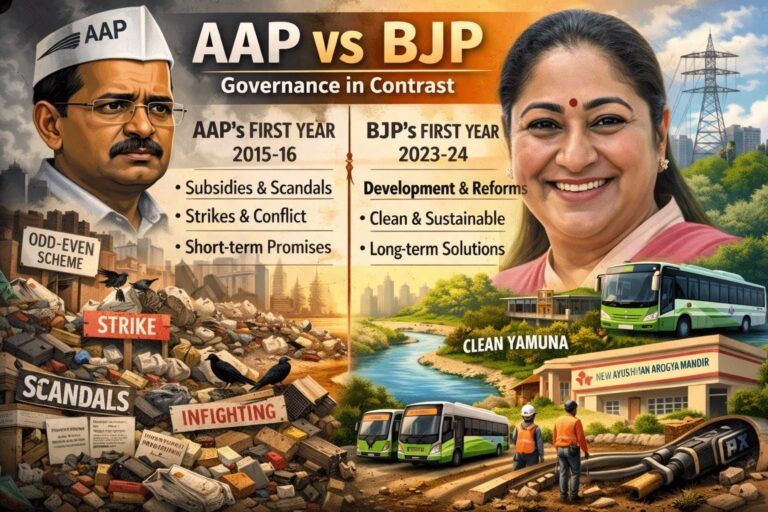
1 year of the BJP govt in Delhi: A governance shift from AAP’s subsidy politics to structural development

Recently, the BJP government in Delhi under CM Rekha Gupta completed its first year in office, marking an important milestone that naturally invites public evaluation of its governance and delivery. Over the past few days, the Aam Aadmi Party and its social media ecosystem have launched a political offensive, trying to portray the current administration as ineffective and lacking in delivery. This coordinated attack, echoed by party workers, aims to change the public image of the BJP’s governance in a relatively short time. However, such assertions call for an objective analysis of the AAP’s own performance since it took power in February 2015 with a historic mandate of 67 out of 70 seats, one of the most decisive electoral victories in Delhi’s political history. 

Back in 2015, AAP presented itself as a transformative political force promising corruption-free governance, administrative transparency, and systemic reform. Its first year was widely promoted through campaigns such as #1YearofHonestPolitics and “Ek saal Bemisaal”, projecting an image of clean and effective governance. Aside from Political campaigning, the period was characterised by significant subsidy expansion, institutional tensions, internal party revolt, administrative disturbances, and a number of controversies that gained widespread notice. As political narratives resume dominance in public discourse following the BJP government’s one-year anniversary, it is critical to examine the AAP’s own first-year governance record in order to distinguish between political projection and administrative reality.

Subsidy-driven governance model of AAP

After assuming office in February 2015, one of the first major decisions was to implement large-scale consumer subsidies to fulfil electoral promises. The AAP government introduced free water of up to 20,000 litres per household per month and free electricity of up to 200 units, along with a 50% subsidy for 201-400 units.

These initiatives provided immediate financial relief to consumers and became integral to the party’s governance model and electoral discourse. However, the fiscal implications of these initiatives were immediate and significant. Delhi’s subsidy expenditure increased by more than 600%, from Rs. 1,554.72 crore in 2014-15 to Rs.10,995.34 crore in 2024-25. The power subsidy increased from Rs. 291.94 crore in 2014-15 to Rs. 1,442.76 crore within a year of the AAP taking office, and then to Rs. 3,600.50 crore. Similarly, subsidy support for the Delhi Jal Board increased from Rs. 20.83 crore to Rs. 500 crore during the same period.

The rapid development mirrored a governance style that relied on recurring subsidies rather than structural reforms of public utilities, posing long-term questions about fiscal sustainability and institutional financial stability. These types of governance are comparable to a glittering facade, visually appealing and politically lucrative in the short term, but structurally weak, with long-term implications for budgetary health and governing ability.

Administrative failures and governance crisis

Along with the implementation of a subsidy-driven model, the Aam Aadmi Party government’s first year was marked by significant administrative disruptions and governance issues. One of the most obvious crises was the sanitation workers’ strike. In April 2015, sanitation workers across East and North Delhi went on strike due to unpaid salaries. The strike lasted nearly two weeks, resulting in significant garbage piling up across roads, residential colonies and public areas. It raised concerns about the health emergency. Although the Delhi government approved a loan of ₹551 crore to municipal organisations, the crisis highlighted deficiencies in financial planning and administrative cooperation. The severity of the problem became known when the Delhi High Court intervened, forcing the Delhi government to release adequate funds to pay sanitation workers’ salary arrears. The court cautioned that the continuous disruption of rubbish collection services could lead to an epidemic. After this intervention, the Lt Governor approved releasing ₹493 crore to municipal corporations to fix the situation.

The Kejriwal government’s first year was also marked by a protected institutional conflict with the Lieutenant Governor’s office and the central government over administrative power and appointments. These disputes developed over fundamental governance issues, including the selection of the chief secretary, control of the Anti-Corruption Bureau, and administrative authority over top officials. These disagreements resulted in a series of high-profile episodes, including police action against AAP MPs and a CBI raid on the Chief Minister’s Principal Secretary’s office in December 2015. Such developments created an atmosphere in which governance and administrative functioning were frequently eclipsed by political and institutional conflict, raising concerns about the government’s stability and effective policy implementation during its critical first year.

Controversies and credibility questions 

The Aam Aadmi Party rose to power on the promise of clean governance and ethical political behaviour. However, its first year was marked by several controversies and allegations involving senior leaders and government officials. It raised serious concerns about trustworthiness and internal accountability. In June 2015, Delhi Police arrested then law minister Jitendar Singh Tomar on allegations of owning a forged degree. The episode forced his departure and showed the reality of an anti-corruption government whose whole narrative was to remove the corrupt politician. Eventually, it became the same part of the system, or even the worst, which gave hope to people of Delhi. 

In April 2025, another incident occurred, which drew nationwide attention when farmer Gajendra Singh died by suicide during an AAP rally in Delhi. And the most shocking part was the continuation of the political rally even as the incident unfolded, attracting widespread criticism and raising concerns about leadership response and political sensitivity during a human tragedy.

Simultaneously, the government faced a major internal political crisis when founding members Yogendra Yadav and Prashant Bhushan were expelled from the party after questioning the leadership’s functioning. Both accused Kejriwal of running the party undemocratically. “AAP is now run by a Khaap (panchayat). “All dreams of a movement have been shattered by a small coterie and a dictator,” Prashant Bhushan said, which is how the party and government were completely ruled by a single man under the name of a democratic setup. It exposed the project’s internal instability and contradicted its image of transparent, principled governance.

Policy announcements and limited structural impact

During its first year, the Aam Aadmi Party government implemented a number of policy measures and initiatives billed as governance improvements. Among the most visible was the Odd-Even vehicle rationing programme, which was adopted in January 2016 as an experimental solution to combat Delhi’s chronic air pollution and traffic congestion. According to the detailed study analysing pollution data across multiple locations in Delhi, including Punjabi Bagh, RK Puram, Anand Vihar, Mandir Marg, NSIT Dwarka, and Shadipur, the scheme had an inconsistent and limited impact on overall pollution levels.

Importantly, the most harmful pollutants, PM2.5 and PM10, remained significantly above both national and World Health Organisation safety limits during the Odd-Even period. In several areas, including NSIT Dwarka and Mandir Marg, pollution levels either showed negligible improvement or increased during the implementation period. The study concluded that vehicular restrictions alone could not substantially reduce pollution, as major contributing factors such as construction dust, industrial emissions, waste burning, and cross-border pollution remained unaddressed.

In addition to the Odd-Even scheme, the government launched initiatives such as an anti-corruption helpline, approval of e-rickshaw licences, regularisation of unauthorised colonies, and restrictions on slum demolitions. While these measures were presented as governance reforms, their structural impact during the initial year remained limited. The approach adopted by the AAP government was short-term interventions rather than structural reforms. Their aim was never to sustainably grow the country’s capital, but rather to provide a short-term solution for themselves as heroic figures before the Delhi people.

BJP Government’s first year: Governance and structural initiatives

Recently, the BJP government under CM Rekha Gupta completed its first year in office in Delhi. Its governance approach reflected a shift towards administrative execution, infrastructure development, and structural civic management. Unlike the previous government, which focused on subsidies and announcement-driven measures. The first year of the BJP government was focused on the longstanding issues such as waste management, urban infrastructure, pollution control and institutional coordination. In the initial phase, the government’s efforts focused on improving infrastructure, strengthening civic services, and implementing rules to support long-term urban management.

Yamuna cleaning and sewage infrastructure changes

Rekha Gupta’s government started a structured plan to address sewage discharges and river pollution. It focuses on long-term infrastructure solutions. The government launched plans to connect 20 major drains to sewage treatment plants (STPs), which will help prevent untreated sewage from entering the Yamuna. New STPs are constructed while existing plants are being upgraded to improve the treatment capacity and compliance. Additionally, the government has launched a large-scale sewer connectivity programme. Under the programme, 13000 sewer connections in slum areas and approximately 2.5 lakh connections in residential colonies are targeted for untreated domestic sewage discharge. River rejuvenation operations include clearing encroachments and restoring almost 1,600 hectares of the Yamuna floodplain through plantation and ecological restoration projects. A dedicated special task force has been established, with a clear deadline to achieve quantifiable progress in river cleaning through structural interventions. 

Public transport expansion and electric bus infrastructure

Under CM Gupta, the BJP government has promoted the growth and expansion of Delhi’s public transport fleet. Primarily, it focused on electric buses to reduce pollution and improve operational efficiency. Over 500 new buses have been added, bringing the total number of electric buses to more than 4,000. Now, Delhi has one of the largest electric bus networks. The government aims to increase these numbers to 7500 buses by 2026 and 14000 electric buses by 2028. New interstate electric bus lines, such as the Delhi-Panipat corridor, have been introduced to promote regional connectivity. The expansion is part of a larger effort to update public transportation infrastructure, reduce vehicle emissions, and increase accessibility.

Healthcare infrastructure expansion through Ayushman Arogya Mandirs

The BJP government has built 319 Ayushman Arogya Mandirs across Delhi to improve primary healthcare infrastructure, with a long-term goal of establishing 1,100 centres serving every Assembly constituency. Outpatient care, diagnostic testing, medication distribution, immunisation, maternal healthcare, and preventive services are all included in the comprehensive healthcare services offered by these centres.

These centres are built as permanent infrastructure connected to national healthcare systems such as Ayushman Bharat and digital health records, in contrast to temporary or portable healthcare facilities. Through the expansion of institutional infrastructure, the emphasis has been on enhancing healthcare coverage, service quality, and accessibility.

Landfill clearance acceleration and Waste Management

The government has increased landfill remediation efforts by appointing additional biomining agencies and increasing waste processing capacity from approximately 15,000 tonnes per day to 25,000 tonnes per day. At the Okhla landfill site, over 56 lakh metric tonnes of legacy waste have been processed, reducing landfill height significantly and reclaiming more than 30 acres of land. Fresh garbage dumping at certain landfill sites has been stopped to enable permanent remediation. Phase-II and Phase-III biomining operations have been launched, supported by dedicated funding and infrastructure expansion. The government has set a long-term target to eliminate landfill sites by 2028.

Power infrastructure modernisation and underground cabling

The BJP government under CM Gupta has initiated large-scale underground cabling projects to modernise Delhi’s electricity infrastructure and improve safety. A pilot underground cabling project has been launched in Shalimar Bagh, replacing overhead wires with underground networks. The government has allocated ₹100 crore for the phased expansion of underground cabling and approved a ₹463 crore project covering 125 colonies.

Long-term infrastructure modernisation plans worth approximately ₹17,000 crore include underground cable expansion, grid strengthening, and installation of modern monitoring systems. The objective is to improve reliability, safety, and the quality of urban infrastructure by reducing reliance on overhead power distribution

Direct comparison: Governance models and administrative outcomes

The governance approaches reveal fundamentally different administrative goals and governance models. The Aam Aadmi Party government’s first year was marked by subsidy-driven policies, political controversies, and institutional confrontation. While these actions provide immediate political visibility and short-term public relief, they do not address the structural challenges faced by Delhi’s people. 

In contrast, the BJP government’s first year has focused on structural governance interventions, infrastructure expansion, and institutional execution. Initiatives such as sewer connectivity expansion, accelerated landfill remediation, underground power cabling, healthcare infrastructure development, and public transport modernisation reflect a governance approach centred on long-term capacity building rather than short-term policy announcements.

While subsidies primarily redistribute financial resources, infrastructure investments create long-term public assets that improve governance efficiency, environmental sustainability, and urban functionality. Structural measures such as waste-processing infrastructure, sewage-treatment expansion, and power-network modernisation directly address the root causes of urban governance challenges.

The contrast between the two governance approaches highlights the difference between consumption-driven governance and structural governance. The AAP governance got immediate political visibility, while the BJP governance focuses on long-term administrative capability and infrastructure development.

Conclusion: Governance beyond political narrative

The completion of one year of the BJP government in Delhi has triggered political debate and competing narratives. However, governance must ultimately be assessed not through political messaging but through administrative record and structural outcomes. The first year of the Aam Aadmi Party government in 2015–16 was marked by subsidy expansion, internal instability, institutional confrontation, and limited structural reform. In contrast, the BJP government’s first year reflects a governance approach focused on infrastructure development, institutional execution, and long-term urban management.

Urban governance requires sustained structural investment in infrastructure, environmental management, and public service delivery. While political narratives may shift with time, administrative outcomes remain measurable and consequential. The long-term impact of governance is determined not by announcements or short-term relief measures, but by the strength of institutions, infrastructure, and structural reforms implemented during a government’s tenure.

As Delhi continues to face complex urban challenges, governance effectiveness will ultimately be judged by the ability to deliver lasting structural improvements rather than temporary political visibility.

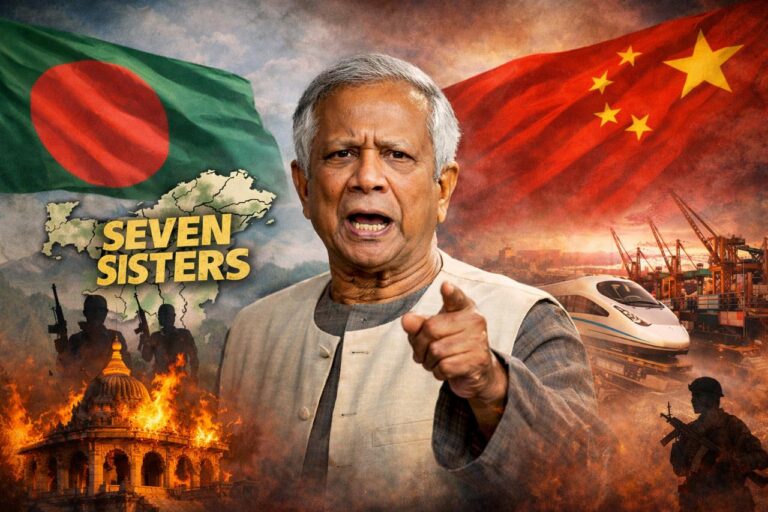
Muhammad Yunus and the ‘seven sisters’ dog whistle: How Bangladesh’s outgoing chief rekindled tensions with India and whitewashed attacks on Hindus

Muhammad Yunus did not step down quietly after the Bangladesh Nationalist Party (BNP) swept the elections. Instead of using his farewell address to heal wounds left by an unstable 18-month interim regime, Yunus chose to project defiance outward, most conspicuously at India with his reference to the ‘seven sisters‘ while carefully sidestepping uncomfortable questions about his own failures at home.

Facing sustained criticism for failing to restore democratic normalcy and for presiding over a period marked by repeated attacks on Hindu minorities, Yunus used his final speech less as an exercise in accountability and more as a political counter-offensive wrapped in nationalist rhetoric.

Nationalism for export, evasion at home

Yunus headed the interim government in the aftermath of Sheikh Hasina’s ouster in August 2024, at a time when Bangladesh was already grappling with institutional decay, political uncertainty, and a serious breakdown in law and order. The post-uprising period saw targeted violence against Hindu minorities, temple vandalism, intimidation of minorities, and the emboldening of Islamist radical groups across several districts.

Yet in his farewell address, Yunus offered no introspection. There was no acknowledgement of the fear among Hindu citizens, no admission of administrative lapses, and no recognition of the interim regime’s selective enforcement of law. Instead, he painted his tenure as a triumphant story of reform, boasting of restored “sovereignty, national interest, and dignity,” and declaring that Bangladesh was “no longer submissive or guided by others’ directives.”

The subtext was obvious. This was not aimed at an abstract global audience. It was aimed squarely at New Delhi.

The “Seven Sisters” dog whistle

The political signalling became unmistakable when Yunus spoke of future economic integration involving Nepal, Bhutan, and the “Seven Sisters”, a term commonly used for India’s northeastern states, without once naming India.

“Our open seas are not just borders; they are gateways to the global economy. With Nepal, Bhutan, and the Seven Sisters, this region has immense economic potential,” Yunus said, sketching a vision of Bangladesh as the hub of a new sub-regional economic space.

This was not diplomatic clumsiness. It was semantic engineering with a purpose.

By grouping India’s northeastern states, an integral, non-negotiable part of the Indian Union, alongside sovereign countries, Yunus blurred established political boundaries. The implication was subtle but loaded: the Northeast was being framed not as an internal part of India, but as a separate economic and geopolitical unit that could be reorganised around Bangladesh’s ports and maritime access.

For New Delhi, this is not an academic concern. For years, India has invested heavily in connectivity and infrastructure through Bangladesh precisely to integrate the Northeast more firmly with the rest of the country. Yunus’s formulation tries to invert that narrative, implying that the region’s future access and opportunities would increasingly depend on Dhaka’s strategic choices rather than Indian planning.

In a region with a long history of insurgency, external interference, and separatist propaganda, such language is not neutral. It functions as a dog whistle to old balkanisation narratives, whether Yunus admits it or not.

The China card and “strategic balance”

Yunus then doubled down by foregrounding “strategic balance” and highlighting deeper ties with China, as well as with Japan, the US, and Europe. He specifically cited progress on Chinese-backed projects such as the Teesta River initiative, located uncomfortably close to India’s strategically vital Siliguri corridor, and a major hospital project in Nilphamari.

Rather than reassuring regional partners, Yunus seemed intent on signalling that Bangladesh would no longer prioritise Indian security sensitivities. The message was clear: Dhaka under his stewardship had options, and Beijing was a central one.

This is a familiar script across South Asia. “Multi-alignment” and “strategic balance” often translate into inviting Chinese capital and influence into geopolitically sensitive spaces, using it as leverage against neighbouring countries. When paired with ambiguous rhetoric about India’s Northeast, the pattern becomes hard to ignore: dilute India’s centrality, normalise China’s presence, and dress it up as sovereign assertion.

The military undertone

Yunus’s reference to military modernisation and the need to strengthen Bangladesh’s armed forces to “counter any aggression” added another hard edge to his speech. The phrase was vague, but in the context of his broader sovereignty narrative and pointed regional references, it was clearly not accidental.

For a departing interim head to inject such language into a farewell address is less about defence policy and more about strategic posturing.

What Yunus didn’t say

Perhaps the most telling aspect of the speech was what it omitted.

There was no reckoning with the interim government’s failure to reassure minorities. No acknowledgement of the repeated attacks on Hindus. No admission that the state response was often slow, selective, or politically constrained. No reflection on the core promise of the interim setup: to restore democratic confidence and basic security for all citizens.

Instead, Yunus chose to shift the spotlight outward, toward grand regional visions, foreign policy bravado, and carefully curated defiance of India. In one instance, Yunus even downplayed the systematic targeting of Hindus in Bangladesh, stating that those incidents were criminal in nature and not communal. By defending such incidents, Yunus was sending a message to the rioters: come what may, he will continue to shield them, and attacks on Hindus can go unabated.

A parting shot, not a statesman’s exit

Having resigned after the BNP’s electoral victory, Yunus could have used his final address to lower temperatures and ease the path for a diplomatic reset between Dhaka and New Delhi. Instead, he chose to leave behind a narrative landmine, one that reframes India’s Northeast, elevates China’s role, and entrenches suspicion in bilateral ties.

Yunus’ farewell reads less like a unifying closing chapter and more like a defensive political statement shaped by domestic pressure and criticism. By dodging accountability at home and flirting with geopolitical provocation abroad, Muhammad Yunus exits office, leaving behind not clarity, but unanswered questions, about democracy, minority protection, and the wisdom of playing semantic and strategic games in a region where history shows that words can have very real consequences.

Because no amount of rhetorical “sovereignty” or “strategic balance” can change a basic fact: India’s Northeast is India, and treating it otherwise is not diplomacy, it is destabilising posturing. And it will have deep geopolitical repercussions, something which Yunus possibly wants the incoming BNP to face after Bangladesh’s populace rejected his tumultuous regime.

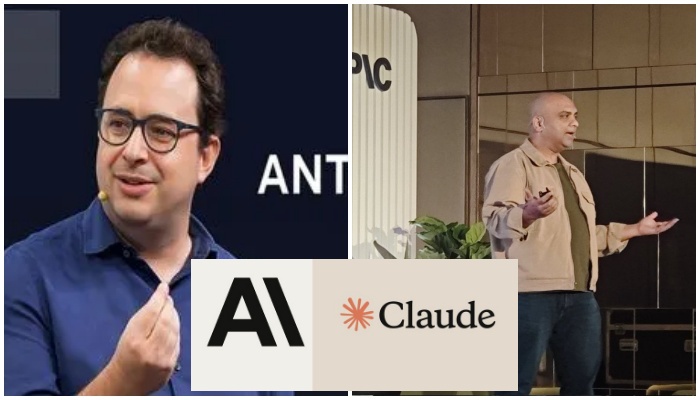
‘India is the second largest market for Claude, developers here doing the most intense work’: As India hosts AI Impact Summit, global giant Anthropic opens office

As India hosts the AI Impact Summit 2026 in Delhi, US-based AI company Anthropic has officially opened its new office in Bengaluru, marking a major step in its India AI expansion. Along with the office launch, the company has announced a wide range of partnerships across enterprise, startups, education, agriculture and the public sector.

The Bengaluru office is Anthropic’s second base in Asia after Tokyo and will be led by Irina Ghose, Managing Director of Anthropic India. The company plans to hire local talent across multiple roles as it deepens its engagement in the country.

India has quickly become one of the most important markets for Claude.ai, Anthropic’s popular AI assistant. The company says India is now its second-largest market globally.

Nearly half of Claude’s usage in India comes from technical work such as coding, mathematical tasks, building applications, upgrading legacy systems and shipping production software, Anthropic says. This shows how Indian developers are using AI tools not just for content or chat, but for serious engineering work.

Speaking about the expansion, Irina Ghose said India offers a strong foundation for responsible AI. She pointed to the country’s technical talent, large-scale digital infrastructure and its track record of using technology to improve everyday life. According to her, this combination makes India one of the most promising places in the world to expand the benefits of AI to more people and businesses.

“Impossible things are possible in India”: Rahul Patil

At the developer summit marking the office launch, Anthropic’s Chief Technology Officer, Rahul Patil, shared a personal message that resonated with many in the audience. He said, “Impossible things are possible in India,” as he spoke about growing up in Bengaluru.

Patil said his mother was a computer science teacher and that he studied at Baldwin institutions, St. Joseph’s and later at PES University, which he described as “very, very strict.” He also shared that he met his wife during his first year of engineering. His speech highlighted how India has not only become a key market for AI but also a place that has shaped global tech leaders.

Strengthening AI in Indian Languages

One of Anthropic’s key focus areas in India is language. Although more than a billion people in the country speak one of over a dozen officially recognised languages, AI systems often perform better in English, Anthropic stated.

To address this, Anthropic started a company-wide effort six months ago to improve performance in ten widely spoken Indian languages: Hindi, Bengali, Marathi, Telugu, Tamil, Punjabi, Gujarati, Kannada, Malayalam and Urdu. The company says it curated better and more representative training data, leading to noticeable improvements in fluency. Work is still ongoing to make the models even stronger in Indic languages.

Anthropic is also working with Karya and Collective Intelligence Project to design evaluation systems that test AI on tasks relevant to India, especially in agriculture and law. Domain experts from nonprofits such as Digital Green and Adalat AI are part of this effort. The goal is to make these evaluation tools publicly available so others can also build better AI systems for Indian users.

Enterprises and startups adopt Claude at scale

Anthropic says its revenue run rate in India has doubled since it announced expansion plans in October 2025. The growth is coming from large enterprises, digital-first companies and early-stage startups.

Air India is using Claude Code to help its developers ship custom software faster and at lower cost as part of a broader effort to use agent-based AI across operations. Fintech platform CRED has reported 2x faster feature delivery and 10% improvement in test coverage with Claude Code. Meanwhile, global IT services firm Cognizant is deploying Claude to 350,000 employees worldwide to modernise systems and speed up AI adoption for enterprise clients, as per reports.

Among startups, Razorpay has integrated AI into its risk systems, operations and internal decision-making. Enterpret uses Claude to power its AI assistant and has built an MCP integration that connects customer insights directly into Claude.

Another startup, Emergent, which allows users to create software by describing what they want in simple language, reached $25 million in annual recurring revenue and two million users in less than five months, built entirely with Claude.

To support this growing ecosystem, Anthropic’s India team will provide applied AI expertise to enterprises and startups, helping them design and scale Claude-based solutions suited to their business needs.

AI for education and underserved communities

Education-related tasks account for about 12% of Claude’s usage in India. Anthropic has partnered with Pratham, one of the country’s largest education nonprofits. Pratham selected Anthropic as its first strategic AI lab partner, focusing on safety and educational quality.

Their “Anytime Testing Machine,” powered by Claude, is currently being tested with 1,500 students across 20 schools and is expected to expand to 100 schools by the end of 2026. The tool has also been adapted for more than 5,000 learners in Pratham’s Second Chance program, which supports women who dropped out of formal schooling. The idea is to provide flexible exam preparation and credible certification pathways.

Anthropic is also working with Central Square Foundation to support AI-enabled tools such as personalised tutors, teacher coaching platforms and assessment-based instruction systems. The company will offer technical support, mentorship and API credits to help these tools reach more primary school students in underserved communities.

AI in agriculture, health and the legal system

India’s digital public infrastructure has often been seen as a model for large-scale, interoperable systems. Anthropic is partnering with EkStep Foundation to explore how AI can build on this foundation.

Agriculture, which contributes nearly one-sixth of India’s economy and employs almost half of its workforce, is one focus area. Through the OpenAgriNet effort, Anthropic is working towards deploying Claude to expand access to expert knowledge for farmers and agriculture workers.

In healthcare, nonprofits like Noora Health and Intelehealth are exploring how Claude Code and Cowork can improve internal systems and connect patients in remote areas to better care.

India’s legal system, with around 50 million pending court cases, is another area where AI can make a difference. Anthropic is supporting Adalat AI in launching a national WhatsApp helpline that provides instant case updates, document summaries, translations and interactive legal queries in Indian languages.

The company has also promoted open standards through its Model Context Protocol, which it donated to the Linux Foundation. The Ministry of Statistics and Programme Implementation, supported by Bharat Digital, has launched the first Indian government MCP server to allow AI systems to access national statistics in an open way. In the private sector, Swiggy is using MCP to enable grocery ordering and dining reservations directly through Claude.

Why global AI giants are choosing India

Anthropic’s expansion is part of a larger trend. Over the past two years, global AI companies have increasingly invested in India for research, partnerships and market expansion.

Companies like OpenAI and Microsoft have deepened their India presence through research collaborations, cloud partnerships and developer initiatives. Google has also expanded its AI research and product rollouts tailored for Indian users.

India offers three major advantages. First, it has one of the world’s largest developer bases. Second, its digital public infrastructure, including large-scale identity and payments systems, allows AI tools to scale quickly. Third, the country’s diversity of languages and real-world use cases provides a strong testing ground for AI models.

India’s AI market is expected to grow rapidly and contribute significantly to the country’s digital economy over the coming years.

As Anthropic opens its Bengaluru office, it is clear that India is no longer just a consumer of global AI technology. It is becoming a core partner in building and shaping the next wave of AI innovation.

Delhi HC calls out anti-India activist Amrit Wilson over cancellation of her OCI card, cites IB report of her activities, says ‘we can’t allow the country to be maligned’

On 16th February, the Delhi High Court made strong oral observations while hearing a petition filed by pro Islamist UK based academic, writer and journalist Amrit Wilson. In her petition, 82 year old Wilson has challenged the cancellation of her Overseas Citizen of India, OCI, card. Justice Purushaindra Kumar Kaurav remarked that India cannot be “such a tolerant State that we allow our own country to be criticised or maligned at international platforms”. His remarks showcased the seriousness with which the Court viewed the allegations placed before it against Wilson.

The remarks by Justice Kaurav came after the Bench reviewed the confidential material submitted by the Central Government in a sealed cover. The Court noted that there were Intelligence Bureau reports concerning Wilson and that the allegations against her went beyond isolated social media posts. In open court, the judge observed that there were not merely “two tweets” involved but allegations of participation in activities considered adverse to India’s interests. The Court made it clear that issues touching upon sovereignty and integrity cannot be treated lightly.

In March 2023, the High Commission of India in London revoked her OCI status. The show cause notice issued to her in November 2022 pointed towards her engagement in several anti India activities. The notice stated that she participated in “detrimental propaganda” against the Government of India, posing a threat to the sovereignty and integrity of the country and the interests of the general public.

Senior Advocate Trideep Pais appeared for Wilson. He claimed before the Court that the show cause notice lacked details to effectively respond to the allegations. He also objected to the reliance on sealed cover submissions. He contended that such a practice has been deprecated in certain Supreme Court decisions. On the other hand, the Central Government submitted that while publicly available material had been shared, certain intelligence inputs were confidential in nature and directly related to matters affecting national security.

After examining the sealed material, the Court observed that the allegations reflected therein were serious. It directed both parties to file written submissions and listed the matter for further hearing in August. The Bench’s observations indicate that the issue is not merely procedural but concerns the broader question of whether activities undertaken abroad, if found detrimental to India’s sovereignty, can justify withdrawal of OCI privileges.

OCI is a statutory privilege, not citizenship or a right

There have been several cases where the Government of India has revoked OCI status. Such cases include that of controversial academic Nitasha Kaul, author Aatish Taseer, Ashok Swain and several others. One thing that needs to be pointed out is that an OCI card is just a privilege and not a right.

It does not grant political rights, voting rights, or constitutional status equivalent to that of an Indian citizen. It is a long term visa facility extended to certain categories of foreign nationals of Indian origin under Section 7B of the Citizenship Act, 1955.

In 2020, the Central Government clarified before courts that OCI status is a statutory right created by legislation and policy. It is not a fundamental or constitutional right. In an affidavit filed in the Delhi High Court, the Ministry of External Affairs explicitly stated that fundamental rights guaranteed under the Constitution are only for Indian citizens and cannot be claimed as a matter of entitlement by OCI cardholders.

The affidavit emphasised that the grant of OCI privileges depends entirely upon the policy of the Central Government. Since the facility is conferred by notification under statutory provisions, the scope of rights and the conditions attached to them are determined by the executive within the framework of law. This means that the continuation of OCI benefits is conditional upon compliance with Indian law and conduct consistent with the sovereignty and integrity of the nation.

Under the Citizenship Act and the relevant rules, the government is empowered to revoke OCI registration if it is satisfied that the registration was obtained by fraud, concealment of material facts, or if the cardholder has shown disaffection towards the Constitution of India, engaged in unlawful trade or communication with an enemy state, or acted in a manner prejudicial to the sovereignty and integrity of India.

Therefore, legally speaking, OCI status is not an immutable entitlement. It is a facility that can be withdrawn if statutory conditions are triggered. In the simplest possible terms, it is just a glorified visa with some additional features, nothing more.

Revocation does not amount to permanent exclusion

An important aspect often overlooked in public discourse is that cancellation of an OCI card does not amount to a blanket ban on entering India. A person whose OCI status has been revoked can still apply for a regular tourist, research, employment or business visa like any other foreign national.

Such visa applications are processed in accordance with prevailing immigration rules and security clearances. The government retains discretion, as it does with all foreign nationals, to grant or refuse entry based on policy considerations and security assessments. However, revocation of OCI does not, in itself, permanently sever the possibility of visiting India.

This distinction is crucial. OCI is frequently described as a form of “quasi citizenship,” but in reality, it is closer to a long duration visa with additional conveniences such as exemption from registration with the Foreigners Regional Registration Office and parity with non resident Indians in certain economic and educational matters. It does not create a constitutional bond equivalent to citizenship.

Those whose OCI status gets revoked often behave as if India has stripped them of their citizenship. In reality, it is just cancellation of a long duration visa.

Background of public positions and controversies

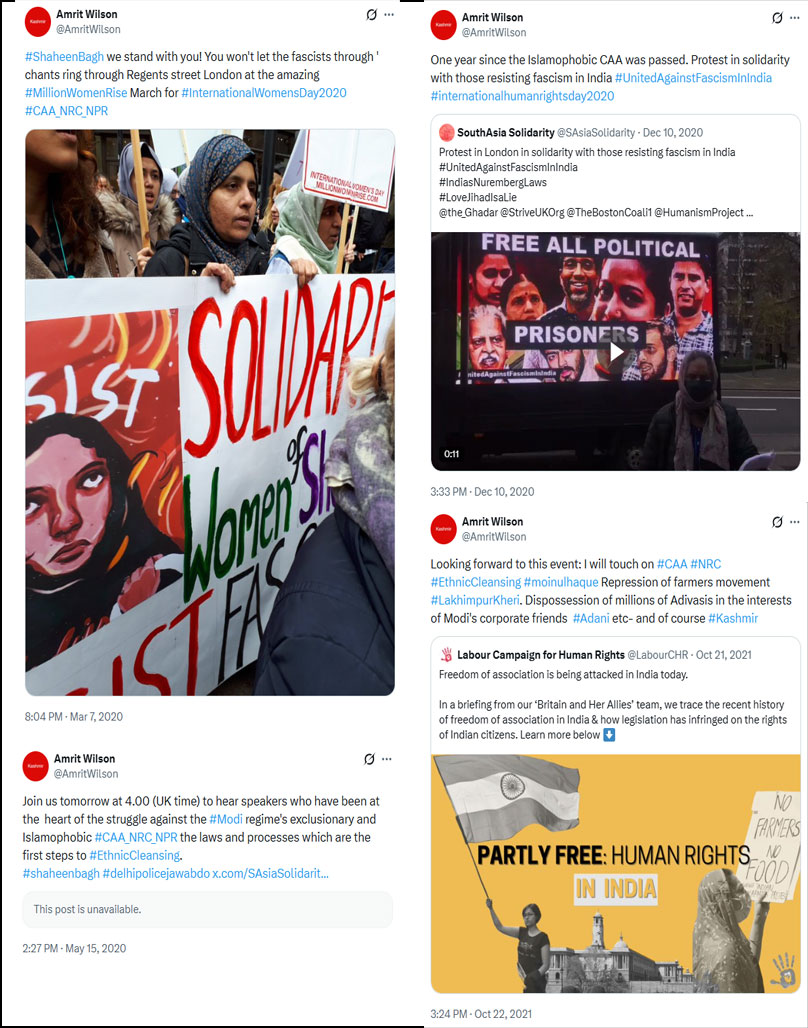
Wilson has publicly criticised various policies of the Government of India. She has opposed the Citizenship Amendment Act, CAA, the proposed National Register of Citizens, NRC, and the National Population Register, NPR. She has described Prime Minister Narendra Modi and his government in strong terms in public forums, often calling them fascist.

It is important to note that while protests against NRC and NPR were widespread, no operational rules were ever notified for implementation of NRC or NPR at a nationwide level.

Source: X

In addition to criticism of domestic politics, Wilson has participated in international events where India’s legislative measures were described as Islamophobic and as steps towards “ethnic cleansing”. She has also made statements regarding the unrest in Leicester. She claimed that RSS supporters were transported to provoke conflict and to strengthen a narrative of Hindus as victims. Such claims were strongly contested by several community organisations and commentators who cited evidence of Islamist mobs attacking Hindu homes and temples.

Wilson has been associated with the South Asia Solidarity Group based in Britain, which has organised protests outside the Indian High Commission and has frequently posted material critical of the BJP and RSS on social media. The group has portrayed developments in Kashmir through a lens that aligns with separatist narratives and has participated in campaigns framing India as an aggressor in the region.

Her social media activity has included use of symbolic imagery associated with separatist campaigns after the abrogation of Article 370, further placing her in alignment with narratives viewed by the Indian government as hostile to its territorial integrity.

The likes of Wilson, Nitasha Kaul, Aatish Taseer and Ashok Swain have lost their OCI privilege not because of any vendetta of the government against them. They lost the privilege because of their anti India actions that were a threat to the sovereignty and national security of the country.

Economic Times targets Suryakumar Yadav over handshake, forgets Pakistan’s terror record and its own Aman ki Asha nostalgia

On 17th February, Economic Times chose to lecture Indian cricketers on “respect” because Suryakumar Yadav did not indulge in a choreographed handshake with his Pakistani counterpart after winning T20 World Cup match on Sunday. One would imagine that, in 2026, Indian media would have moved beyond the lazy trope that sporting courtesy must exist in a vacuum, untouched by geopolitics, terrorism and state complicity. Apparently, that is not the case.

The suggestion that “history may judge India harshly” over a handshake is not just melodramatic. It is divorced from the realities of the relationship between India and Pakistan. History, if it judges anyone harshly, will do so on far weightier matters than whether two captains shook hands for the cameras.

Cricket does not exist in a vacuum

One thing that everyone needs to be clear on is that nothing exists in a vacuum. The very notion of a vacuum is nothingness. India’s reluctance to normalise gestures with Pakistan is not petulance. It is policy rooted in decades of cross-border terrorism and Pakistan’s continued patronage of anti-India terror networks.

The demand that Indian players must behave as if nothing is amiss is to demand selective amnesia. It is to insist that the burden of “maturity” lies solely with the victim, never the aggressor.

It is a fact that sporting rivalry is built on respect. However, respect is not a one-way street. It cannot be ritualistic theatre while the underlying reality remains hostile. If the Board has decided that bilateral warmth is inappropriate in the current context, that is a sovereign choice. The players are representatives of a nation, not freelance diplomats freelancing niceties.

The ‘Aman ki Asha’ amnesia

It is particularly ironic that this sermon emerged from a publication within the Times Group ecosystem. The same group that once championed the “Aman ki Asha” campaign with great fanfare, projecting cultural bonhomie as a bridge over very real fault lines. What did that optimism lead to? Did terror infrastructure disappear? Did masterminds of terrorist attacks against India face credible justice? Did cross-border infiltration cease?

The problem with performative peace initiatives is that they are heavy on optics and light on accountability. Handshakes make for good photographs. They do not dismantle terror networks. If “Aman ki Asha” could not alter ground realities, perhaps it is time to stop pretending that a televised handshake will.

In fact, when India, during Operation Sindoor, destroyed terror infrastructure within Pakistan and Pakistan Occupied Jammu and Kashmir, the hostile neighbour reacted and tried to attack India. It is now actively funding terror outfits to help rebuild the infrastructure where terrorists train for attacks against India.

The rivalry that is not a rivalry

There is another curious contradiction in the criticism. Suryakumar Yadav himself downplayed the so-called “India Pakistan rivalry” back in September 2025 as Pakistan’s SKY Network trolled its own team during a press conference. He insisted that it is just another cricket match. He has categorically said that “it is not a rivalry anymore”, citing the fact that the majority of matches between India and Pakistan, especially during international tournaments like the World Cup, have been won by India. Now, when the same team refuses to indulge in overt warmth, it is accused of politicising sport.

Which is it? If it is “just another match”, then the absence of a handshake should not carry civilisational weight. If it is a high voltage political spectacle, then perhaps it is naive to pretend that gestures are devoid of meaning.

The truth is simpler. India is the dominant cricketing and financial power. Pakistan’s cricket board needs these fixtures far more desperately. The asymmetry is real. India does not need to perform symbolic reconciliation to validate its sporting stature.

Respect is not submission

The op-ed written by Anand Vasu for ET framed the handshake as a litmus test of maturity. That is a dangerously simplistic metric. Respect in sport is demonstrated through adherence to rules, the absence of sledging that crosses lines, and fairness in play. By all accounts, the match in Colombo proceeded without incident. No on-field ugliness. No acrimony. Just cricket.

What was missing was a carefully staged gesture. To equate that absence with moral diminishment is to trivialise far more substantive issues. Indian players are not obliged to project warmth towards representatives of a state that continues to be hostile to their own country.

Financial morality lectures ring hollow

Interestingly, the op-ed acknowledged that India versus Pakistan is the financial heart of global cricket. Broadcasters, sponsors and boards depend on it. Yet it chastised India for not performing sportsmanship to enhance the spectacle. If commerce is comfortable monetising the rivalry, it should also be comfortable accepting the political realities that underpin it. One cannot harvest the drama and then recoil at its consequences.

To suggest that Indian cricket’s “legacy” will be defined by a handshake rather than by performance, professionalism and results shows how “hurt” the author was by the defeat Pakistan faced.

The thing is, India did not refuse to play. It did not boycott the match. It did not engage in theatrics. It competed, won, and moved on. It is those who are suffering from “Aman Ki Asha” amnesia who are hurt by the lack of a simple handshake.

Uttar Pradesh: Pakistani national mother and daughter accused of 30-year illegal stay using forged Indian documents, ISI links, visits to Army and gov offices in Delhi – Read what the FIR says

0

On 14th February, Meerut Police registered a case against a mother and daughter accused of residing in India for nearly three decades despite being Pakistani nationals. The complainant, identified as a social worker, Rukhsana, accused the mother and daughter duo of securing Indian identity documents through fraudulent means. In her complaint, she stated that the two obtained forged Aadhaar cards, voter ID cards and Indian passports while continuing to hold Pakistani citizenship.

Speaking to the media, Superintendent of Police Avinash Pandey stated that they received information about a man named Farhat Masood who resides in the Delhi Gate area. Reportedly, he travelled to Pakistan and married a woman named Saba. A daughter was born to the couple in Pakistan. Both Saba and her daughter are Pakistani nationals.

The SSP said a preliminary inquiry confirmed that the accused were residing without valid Indian citizenship. On finding substance in the allegations during an earlier probe conducted by the Superintendent of Police, City, a formal FIR was registered. Further legal action is underway, and a detailed investigation has been ordered.

What the FIR says

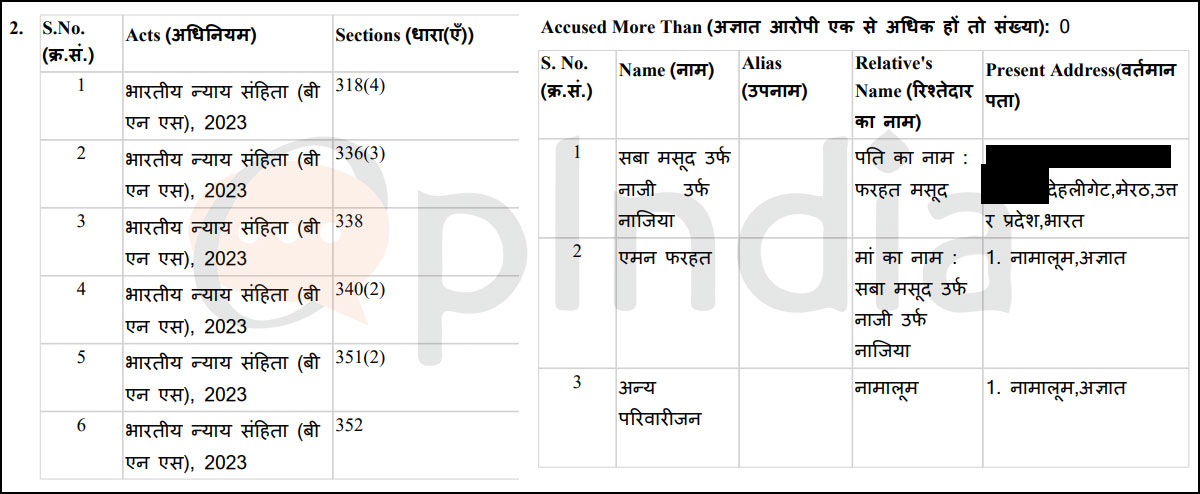
OpIndia accessed the FIR registered in the case. It names Saba Masood alias Naji alias Najia and her daughter Aiman Farhat as the main accused. The following sections of the Bharatiya Nyaya Sanhita, 2023, have been invoked: Sections 318(4), 336(3), 338, 340(2), 351(2) and 352, relating to cheating, forgery, use of forged documents and criminal intimidation.

Source: UP Police

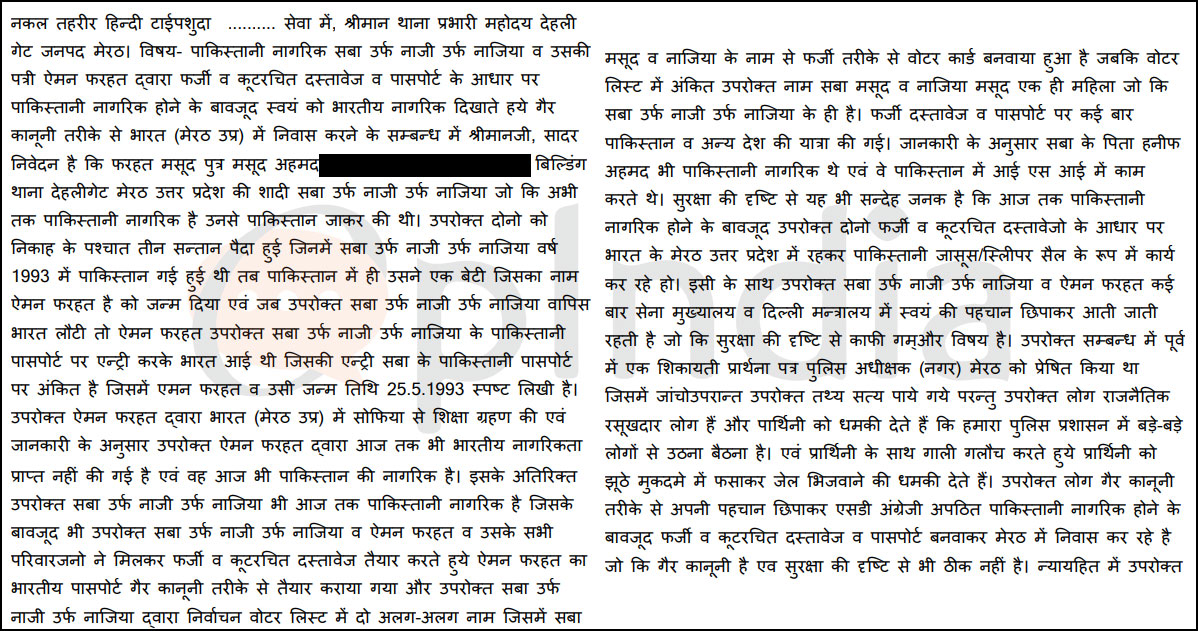
The complainant stated that Saba married Farhat Masood in Pakistan and that Aiman was born there on 25th May 1993. She further stated that when Saba returned to India, Aiman entered the country on Saba’s Pakistani passport, with her name and date of birth clearly endorsed on the travel document.

The complainant, Rukhsana, further stated that despite being Pakistani nationals, both mother and daughter continued to live in Meerut without acquiring Indian citizenship through due legal process. She added that Aiman pursued her education locally while remaining a Pakistani citizen and that no lawful citizenship application was ever completed.

Source: UP Police

She further stated that forged and fabricated documents were prepared to obtain an Indian passport for Aiman. Saba also secured two separate voter cards under different names, Saba Masood and Najia Masood. The complainant contended that these acts amount to deliberate concealment of identity and cheating of Indian authorities.

Rukhsana also raised security concerns in her complaint. She added that the accused travelled multiple times to Pakistan and other countries on the basis of forged passports and documents. She further told the police that Saba’s father, Hanif Ahmed, was allegedly a Pakistani national associated with the ISI, and that this background makes the matter sensitive from a national security perspective. The complainant further stated that the accused frequently visited Army headquarters and government offices in Delhi while concealing their true identity.

Additionally, the FIR noted that the complainant alleged that she was threatened and intimidated when she earlier raised objections, and that the accused allegedly cited political influence and links within the police administration.

AI Impact Summit, semiconductors, Bhashini and more: Read how the Modi govt is making giant strides in technological advancements and preparing India for the future


Over the past decade, India has witnessed significant digital and technological transformation. To make India future-ready, the Modi government has given a massive push in the technology sector through various initiatives and decisions that will have long-term impacts. To actualise the vision of a Viksit Bharat (Developed India) by 2047, the Modi government has rolled out various initiatives, rooted in the resolve of Atmanirbhar Bharat, that will potentially propel India to the position of a global tech leader.

This push is not confined to mere rhetoric or papers but reflects in the opening of avenues that will create jobs, boost productivity, and ensure that India is ready for the future digital age. The key metrics include a booming startup ecosystem, massive PLI-fuelled manufacturing growth, and the building of sovereign tech capabilities.

India’s stride in Artificial Intelligence: From follower to frontrunner

The Modi government has taken the imperative to bolster India’s AI ecosystem seriously, making AI a national priority, aiming for a sovereign AI tailored to India’s requirements.

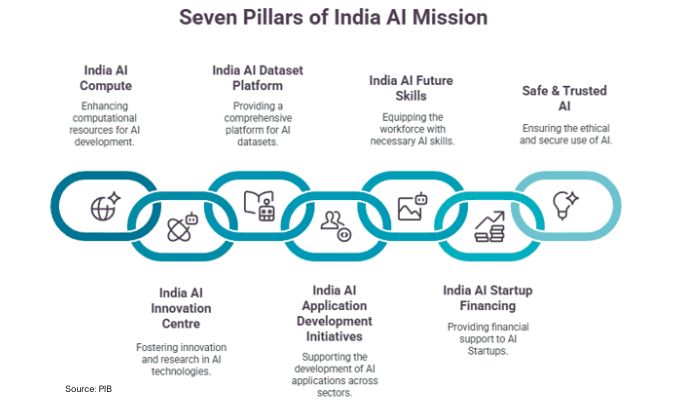
In 2024, a flagship program, India AI Mission, was launched. Approved with Rs 10,372 crore over five years, the program has seven pillars: compute capacity, innovation centres, datasets, applications, skills, startup funding, and safe/trusted AI. Since its launch in March 2024, the mission has made significant progress in expanding India’s computing infrastructure. From an initial target of 10,000 Graphics Processing Units (GPUs), India has now achieved over 38,000 GPUs, reflecting India’s progress in providing affordable access to world-class AI resources.

The first pillar, IndiaAI Compute Pillar, provides high-end GPUs at affordable costs. By December 2025, over 38,000 GPUs at a subsidized rate of Rs 65 per hour.

The second pillar, IndiaAI Application Development Initiative, was launched in August 2024, to tackle India’s specific challenges, particularly in the healthcare, agriculture, climate change, governance, and assistive learning technologies sectors. As per the IADI’s website, the initiative sources problem statements from Central Ministries, State Departments, and institutions in critical sectors and invites AI researchers, innovators and start-ups to build, develop and deploy solutions that address the identified challenges. 

Meanwhile, AIKosh (Dataset Platform), develops large datasets for training AI models by integrating data from government and non-government sources. This dataset platform has more than 9,867 datasets and 273 AI models across 20 sectors.

Under the IndiaAI FutureSkills program, AI-skilled professionals are being trained.  With this program, the Central government intends to create a robust pipeline of AI-skilled professionals through strategic interventions at various educational levels, from undergraduate to doctoral studies. The initiative provides support to 500 PhD fellows, 5,000 postgraduates, and 8,000 undergraduates for talent development.

Besides training AI-skilled professionals, the Modi government has also focused on providing necessary funding for native AI startups under the program, IndiaAI Startup Financing. Launched in March 2025, this initiative helps 10 Indian startups expand into the European market in collaboration with Station F and HEC Paris.

Meanwhile, the AI Foundation Models pillar backs the development of indigenous foundational models, including large language and multimodal models, aligned with India’s linguistic, cultural and socio-economic diversity.

On 13th February, Union Minister of State for Electronics and Information Technology, Jitin Prasada, informed the Rajya Sabha that twelve organisations and consortia, including Sarvam AI, Soket AI, Gnani AI, Gan AI, Avataar AI, IIT Bombay Consortium (BharatGen), GenLoop, Zenteq, Intellihealth, Shodh AI, Fractal Analytics Ltd., and Tech Mahindra Maker’s Lab, have been shortlisted to develop indigenous foundational models.

Recently, Bengaluru-based Sarvam AI outperformed giant AI models like Gemini and ChatGPT on certain benchmarks in optical character recognition (OCR).

The Safe and Trusted AI pillar is aimed at designing and developing adequate guardrails to advance the responsible development, deployment, and adoption of AI. The idea is to implement responsible AI projects that promote the development of indigenous tools and frameworks, self-assessment checklists for innovators, and other guidelines and governance frameworks that advance the adoption of responsible AI principles throughout the AI lifecycle.

“They focus on machine unlearning, bias mitigation, privacy-preserving ML, explainability, auditing, and governance testing. Over 400 applications were received in the second round. An expression of interest was published on 9 May 2025 for partner institutions to join the IndiaAI Safety Institute,” the government says.

Breaking language barriers with Bhashini

Aimed at breaking language barriers by providing translation and speech tools in multiple Indian languages in real-time, the Modi government launched an AI-powered program called Bhashini in 2023. The program powers multilingual government services apps, and content with billions of inferences processed.

Pertinently, Bhashini has migrated to the sovereign Indian cloud for data security. Bhashini has integrated into panchayats and welfare schemes for real digital inclusion as envisioned by the Modi government.

In addition to Bhashini, the Centre also launched a multilingual AI model, BharatGen AI, in June 2025. This government-funded and built using domestic datasets multimodal large language model supports 22 Indian languages, integrating text, speech, and image understanding.

Kisan e-Mitra: AI for farmers

Launched in 2023 and upgraded in 2024, Kisan e-Mitra is an AI chatbot on the PM-KISAN portal, resolving grievances in more than 11 languages. Kisan e-Mitra handles millions of queries under 49 categories, with Bhashini’s IndicTrans2 model. In November 2025, it was reported that Kisan e-Mitra handled over 2.69 million queries in 186 days, marking not only a sharp increase from the traditional grievance redressal mechanism but also a surge in effective resolution, empowering over 2,90,000 farmers.

AI Impact Summit 2026

Starting on 16th February 2026, India is hosting the India AI Impact Summit to showcase India’s AI capabilities and encourage innovation across sectors. This is the first major AI summit in the Global South, drawing more than 20 global leaders, tech CEOs like Sam Altman and Sundar Pichai. The Summit focuses on ethical, human-centric and inclusive AI.

Indigenous semiconductors: A gradual but decisive pivot from import dependence to self-reliance

It is said that chips are the cornerstone of tech self-reliance. The Modi government has, through its policy interventions, demonstrated that it understands that India needs to become more and more self-reliant in the semiconductor arena.

India is rapidly expanding and bolstering its semiconductor chip design ecosystem. The Modi government launched the India Semiconductor Mission

In 2021, with Rs 76,000 crore in incentives. The Mission approved at least 10 projects worth Rs 1.6 lakh crore across six states. The initiative is aimed at attracting global manufacturers, building fabs, packaging units and a local supply chain to reduce reliance on imports. The initial focus is on mature-node fabs (28nm to 65nm), not bleeding-edge nodes like 5nm or 3nm, which are dominated by TSMC and Samsung.

In May 2025, the Union Cabinet approved India’s sixth semiconductor manufacturing unit in Jewar in western Uttar Pradesh, for establishment through a joint venture between the HCL Group and Taiwanese electronics giant Foxconn. Among the five semiconductor plants, four are in Gujarat: Tata Electronics-PSMC Semiconductor fab, CG Power-Renesas-Stars Microelectronics ATMP unit, Micron Technology’s ATMP unit, and Kaynes Semicon ATMP unit, while the Tata Semiconductor Assembly and Test (TSAT) Unit is in Assam. With these, India is pushing for “Made in India” chips for space, defence and EVs to reduce reliance on Taiwan and create local high-skill jobs.

To support indigenous startups, the Modi government launched the Design Linked Incentive (DLI) Scheme in 2022, to ensure venture capital investment in this sector by curbing upfront risk through financial support, access to advanced EDA tools, IP cores etc. and greater ecosystem awareness of semiconductor chip design.

In November 2024, the Centre approved C2i Semiconductors for financial support and access to advanced chip design tools under the DLI Scheme. Led by Semicon industry veterans, C2i Semiconductors is developing power-management semiconductor solutions for next-generation AI data centres and cloud infrastructure.  As per a government press release dated 16th February 2026, C2i has “become one of the top three users amongst 100 companies of the centralised Electronic Data Automation (EDA) tools, provided through the centralised EDA tool grid at the ChipIN Centre under the DLI Scheme.”

In the Union Budget 2026-27, the Modi government announced the India Semiconductor Mission 2.0 with Rs 1,000 crore allocated to bolster domestic semiconductor capabilities. In its new phase, the Mission will focus on the production of semiconductor equipment and materials in India. Special focus will be on designing full-stack Indian semiconductor intellectual property and fortifying both domestic and global supply chains.

Data Centres: Transforming India into a global digital hub

To boost AI and cloud growth, the Modi government is aggressively building data infrastructure. In the Union Budget 2026-27, the Centre announced a long-term tax holiday framework designed to attract foreign investment while preserving India’s domestic tax base.

As reported earlier, foreign companies that procure data centre services from specified data centres located in India will be exempt from paying tax in India on income earned from serving customers outside the country until 31st March 2047. To ensure that the tax holiday does not mean Indian interests are overlooked, the Modi government added a caveat that revenue earned from Indian users must be routed through an Indian reseller entity and taxed domestically.

Under the Modi government, India is attracting massive foreign funding in this arena. In December 2025, Microsoft CEO Satya Nadella announced a US$17.5 billion investment to expand India’s AI infrastructure, develop advanced skills, and strengthen sovereign technological capabilities.

In October 2025, Google announced its plans to develop India’s largest AI data centre campus in Andhra Pradesh with an investment of $15 billion over five years.

With various PLI schemes to support telecom, electronics and other sectors, National Quantum Mission for qubits and secure comms, IN-SPACe opening doors for private players in space and defence tech, and expansion of UPI, alongside various innovation and skills related schemes rolled out, the Modi government is truly living up to PM Modi’s emphasis that this is India’s “Techade” or a decade, where technology drives growth.

Punjab: 2,700 women died of cancer in 2025, 13,299 in five years; AAP MP Seechewal links surge to water pollution, chemicals used in agriculture

Punjab is witnessing a grave health crisis, with an average of eight women dying every single day because of cancer. The recent data have once again brought the issue of a silent crisis in the state to the forefront of the country’s attention. According to the latest data discussed in Parliament, close to 2,700 women have lost their lives to cancer in Punjab in the year 2025 alone.

The alarming situation was brought to the notice of the Rajya Sabha on Thursday, 12th February, by Rajya Sabha Member Balbir Singh Seechewal. Terming the situation an issue that is directly related to the existence of Punjab, the AAP MP called for immediate attention from both the Centre and the Punjab government.

Balbir Singh Seechewal raises the issue in the Rajya Sabha

In a Special Mention in the House, Seechewal expressed his grave concern over the increasing number of cancer cases among women in Punjab.

In his speech, Seechewal said, “I wish to draw attention to a very serious issue, the rapid increase in cancer cases among women in Punjab. This trend is deeply concerning and demands urgent action. According to information provided by the honourable Ministry, in 2025, in the Rajya Sabha, approximately 2,700 women in Punjab died of cancer, which averages to 8 women per day. Between 2021 and 2025, a total of 13,299 women lost their lives due to cancer. Among these, breast cancer was the leading cause with 7,186 deaths, followed by Cervix Uteri (3,502 deaths) and Ovary cancer (2,611 deaths).”

He further said, “Alarmingly, cancer cases are rising even among women aged 40-45, showing that this disease is no longer limited to old age, but increasingly threatening younger lives. Environmental factors, particularly water pollution and the widespread use of chemical fertilisers in agriculture, are considered major contributors. These chemicals, once in the soil, eventually enter our food chain.”

He stressed that these figures should serve as a wake-up call for policymakers and society alike.

The growing cancer burden in Punjab

Citing data presented by the Union Health Ministry in Parliament, Seechewal informed the House that 13,299 women died due to cancer in Punjab between 2021 and 2025. Breast cancer accounted for the highest number of deaths at 7,186. This was followed by cervical cancer with 3,502 deaths and ovarian cancer with 2,611 deaths.

He said that the number of cancer cases is increasing rapidly, even among women aged 40-45 years, and in some cases, even younger women are being diagnosed with cancer. This is an indication that cancer is no longer a disease of older age groups.

Environmental pollution has been identified as one of the major causes of cancer. Polluted drinking water, the use of chemical fertilisers and pesticides in agriculture, and industrial waste have been identified as possible causes. Seechewal told the House that it was only after the presence of harmful chemicals such as DDT was detected in the breast milk of mothers that these chemicals were banned, and this is an indication of how deeply toxins can enter the human body.

He appealed to the government to make cancer treatment completely free for women and to provide at least 75% to 80% subsidy for treatment, whether in government or private hospitals, to economically weaker families. He said that women are the backbone of families and society, and their health needs to be protected for the future of Punjab.

Why is Punjab called the ‘Cancer Capital’

Punjab, especially Malwa, has been labelled as the “cancer capital” of India. Malwa, famous for its agricultural produce and nicknamed “Makheon Meetha Malwa” (sweeter than honey), is also known as the “cancer belt.”

Earlier, a research paper published in the Asian Pacific Journal of Cancer Prevention observed 500 cancer patients from Punjab. “Of the 500 patients, 65% were females and 35% were males. The most affected female age groups were 50-54 and 60-64; while males in the age groups of 65-69 and 60-64 had the highest risk. The leading cancers in females were breast, followed by cervix and ovary, whereas in males they were colon, followed by oesophagus and tongue.

According to media report, Punjab had at least 172 cancer patients per 100,000 people, and the Malwa region had a higher incidence of cancer. Recent estimates suggest that the cancer rate in Malwa has reached alarming levels. Agricultural chemicals and pesticides are widely blamed for the rise. The liberal use of fertilisers in cotton and other crops is believed to have contaminated the soil and groundwater.

Nationally, cancer cases are also rising. Government data revealed that India recorded nearly 1.5 million cancer cases in 2023, up from 1.46 million in 2022. Experts believe that lifestyle changes, environmental pollution, genetic factors and delayed diagnosis are contributing to the increase. However, the situation in Punjab is particularly alarming due to its close association with pollution.

The infamous ‘Cancer Train’ of Punjab

One of the most heartbreaking symbols of the cancer situation in Punjab is the Bathinda-Bikaner train, commonly referred to as the ‘cancer train.’ Every night, at about 9:30 pm, a humble train consisting of 12 coaches departs from Bathinda with hundreds of passengers, including cancer patients.

The train takes about 325 kilometres to reach the Bikaner district of Rajasthan, reaching there early in the morning. A large number of passengers head to the Acharya Tulsi Regional Cancer Hospital and Research Centre for treatment. The main reason why a majority of patients travel from other states is that cancer treatment is cheaper in Bikaner.

Patients suffering from cancer are allowed to travel free in the train, and their attendants are given a 75% concession. Under the Mukh Mantri Punjab Cancer Raahat Kosh Scheme, patients are provided with financial assistance of up to ₹15 lakh in some hospitals in Bikaner. This is the only hope for many poor families.

The image of patients carrying plastic folders full of medical documents, travelling all night to get treatment, has become a reminder of the crisis.

Who is Balbir Singh Seechewal?

Sant Balbir Singh Seechewal, often known as “Eco Baba,” is a Sikh environmental activist, spiritual leader, and Rajya Sabha MP from Punjab, nominated by Aam Aadmi Party (AAP) for his green work.  He received national and international acclaim for cleaning up the Kali Bein, a river that was heavily polluted and flows for 160 kilometres before merging into the Sutlej and Beas rivers.

At a time when the river had turned into a dumping ground for industrial waste and sewage from dozens of villages, Seechewal led a massive volunteer-driven movement to restore it. His efforts earned him global praise, and in 2008, he became the only Indian and Asian at the time to receive TIME magazine’s “Hero of the Environment” award.

He also introduced the “Seechewal Model,” which is a cheap underground sewage system treating wastewater for farms, now backed by the Punjab government. He links health woes like cancer to pollution, fighting for clean water and air while serving in Parliament on issues from farmers to this crisis.