Home Blog Page 1339

PM Modi to attend Pran Pratishtha ceremony of a temple where Lord Krishna himself installed the Shiva idol: The miraculous tale of Mehsana’s Valinath Mahadev Mandir

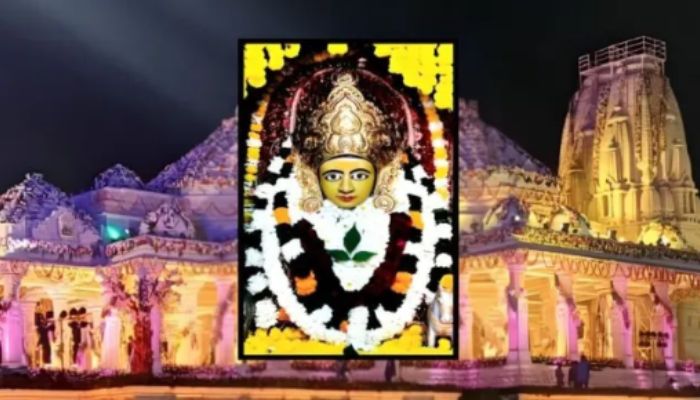
On 22nd February 2024, PM Modi will attend the consecration of the Shiv Linga at the grand temple of Valinath Mahadev in Mehsana’s Tarabh. The consecration ceremony is slated on the auspicious occasion of Guru Pushya Amrit Siddhi Yoga in the presence of many saints and ascetics who will be coming from all across the country. The history of Valinath Mahadev Mandir is quite fascinating and magnificent. It is said that worship of Lord Valinath has been ongoing here since the time of the Mahabharata period. The faith of the local people is deeply connected with this divine Shivdham.

OpIndia reached out to the locals to find out about the glorious history of Mehsana’s Valinath Mandir. The Rabari community has a special reverence for Valinath Mahadev and the local Hindus also worship Valinath Mahadev. OpIndia contacted the local Rajdeepbhai Rabari whose entire family holds Valinath Mahadev in high esteem. Additionally, the Rabari community also takes special care of this temple. Rajdeepbhai Rabari told OpIndia about the glorious history of Valinath Mahadev Temple.

Lord Krishna himself installed the Shiva Pratima

According to Rajdeepbhai, Lord Shri Krishna settled in Dwarka. During that period, he frequently travelled to various places and forests in Gujarat for sightseeing. Once, he ventured into the forests of Darbha (the area where the recent Valinath temple stands) in North Gujarat. There, Lord Shri Krishna stayed along with his companions and engaged in a grand Rasleela with the gopis. However, in this Rasleela, the participation of any outsider men was strictly prohibited. It was during this time that Lord Mahadev expressed his desire to witness Lord Shri Krishna’s divine Rasaleela. Despite the prohibition, Mahadev decided to participate in the Rasleela in disguise, assuming the form of a gopi.

As the Gopis and even Mahadev himself were engrossed in the Rasaleela with Lord Krishna, Shri Krishna recognized Mahadev’s presence. He addressed Shivaji, saying, “You are the Lord of Lords, Mahadev, and are revered by all of us. Your presence brings immense auspiciousness to this occasion. How can we restrict your entry into this Rasleela? Please bless us with your divine form.” Upon hearing these words from Lord Shri Krishna, Mahadev revealed himself in his eternal and true form. 

However, when disguised as a gopi, Mahadev had adorned vali (an ornament worn in the ear) which remained clung to his ears. At that moment, Lord Shri Krishna addresses him as Valinath.

After this entire sequence of events, Lord Krishna found the form of Mahadev to be supernatural and divine. Afterwards, Lord Krishna himself installed a statue of Lord Mahadev adorned with the vali there. Since then till now the idol of Lord Shiva is known as Valinath Mahadev. While in predominantly all Shiva temples, devotees worship Shivalinga, this (Valinath Mahadev) is perhaps the first temple in India where a Shiva idol is worshipped.

Connection with the Rabari community

The Rabari community of North Gujarat holds a great reverence for Valinath Mahadev. Behind this lies the magnificent history of the Valinath Mahadev Mandir. Several centuries passed after Sri Krishna installed the idol. During the cycle of time, amidst adverse circumstances, the Valinath Mahadev Mandir gradually deteriorated, and there came a time when the temple was buried under the earth. However, where there is truth, power, and divinity, it does not remain dormant forever. 

About nine centuries ago, there was a Rabari settlement known as Moidavad near the forests of Darbha, close to the banks of a river known as Rupen River. A Rabari named Tabhovan Moydav was grazing cows when he started feeling sleepy and took shelter under the shade of a tree near the riverbank. 

Tabhovan Rabari was feeling restless. In the meantime, he had a dream in which some divine power made him aware of the entire temple and its location. In the dream, he learnt that he should inform a hermit sitting under a tree at that place. He told that saint about the dream. As time passed, the saint was recognised as the first head priest Mahant Viramgiri Bapu of the Valinath temple. Tabhovan Rabari had discussed the dream with Viramgiri. After this excavations were carried out in which the remains of an ancient temple and a statue of Valinath Mahadev were discovered. 

Subsequently, Tabhovan Rabari installed the idol of Valinath Mahadev there. At the same time, the Rabari community built a temple there and established it as the seat of saints. They installed Viramgiri Bapu as the first Mahant and Guru of Valinath Gadi. Tabhovan Rabari started the Gurugadi service in the Valinath area, established a village there, and started a settlement there. The village is Mahesana’s Tarabh, which was settled by Tabhovan Rabari 900 years ago. Because of this, the people of the Rabari community have a special reverence for Valinath Mahadev.

A prime example of social harmony, the temple is also mentioned in ancient scriptures

The journey of the revered Gaadipatis Mahants of the sacred Valinath Gaadi, established as the seat of the Rabari community’s spiritual lineage, is mentioned in ancient scriptures. During this journey, they travelled across the Kathiawad region of Saurashtra, receiving hospitality and imparting spiritual teachings. Hence, over the years, even the Kathi community of Saurashtra held as much reverence for Valinath Mahadev as the Rabari community did. Once, a Kathi gifted ‘Remi Ghodi’ to Gadipati Mahant, whose lineage is still alive today. Over time, changes have occurred in the Valinath temple established by Lord Krishna. Even after excavations, every Gaadipati Mahant has renovated this temple during their tenure and given it a new form.

At present, the construction of the magnificent and divine Valinath temple was initiated by former Gaadipati Baldevbapu at the cost of several crores. It has now been completed by the current Gaadipati Jayramgiri Bapu. Although established as the spiritual seat of the Valinath Rabari community’s lineage, the temple has been a centre of reverence for every community since ancient times and serves as an exemplary symbol of social harmony. 

Each Gaadipati has contributed to the spread of their good deeds in every society. In this premises, many saints and devotees have attained living samadhi. Not only followers of the Sanatan Dharma, but many Muslims also had immense reverence for Valinath Mahadev in ancient times. A Muslim girl named Nathi Bai attained living samadhi in the temple at the age of 12, the evidence of which still exists today.

An ancient manuscript titled Kanhadde Prabandha, penned centuries ago by Padmanatha, also mentions the temple of Valinath Mahadev in the Darbha forest of Rupen Kantha. According to the locals, the antiquity, religious significance, and historical importance of the Valinath Mahadev temple, which serves as the focal point of faith for people of all castes, have been upheld by every ruler and chief minister even after independence. For centuries, if there is one major pilgrimage site in North Gujarat, it is Valinath. Furthermore, Valinath occupies a significant position among the 13 holiest akhadas of India. These 13 akharas participate in the Kumbh Mela, where they partake in royal baths and receive royal honours.

The Mahant of the Rabari community performs rituals as a temple priest

It is to be noted that people from different castes perform priestly duties in many temples and shrines in Gujarat. For centuries, temples in Gujarat have been breaking the myth that only Brahmins perform the duty of priest. Jayaramgiri Bapu, the current Gadipati of Valinath Temple was also born in the Rabari community. However, later he took Sanyasa as Mahant of Dashnami Akhara, but he is not a Brahmin by birth but works as a priest and Mahant of Valinath Mahadev temple, further promoting social harmony.

Not only in the Valinath Mahadev Madir but there are hundreds of temples in Gujarat where people from the entire Hindu community perform priestly duties. Even the famous pilgrimage site of Gujarat, Guru Ashram Bagdana does not have a Brahmin priest. There a person from the Ramanandi tradition has been given the status of a priest.

The magnificent history of the Valinath Mahadev temple in Mahesana is very interesting and popular. References to this history are found in many ancient texts as well. According to locals, Lord Valinath is worshipped by every community. It is not just a temple of the Rabari community. Devotees from every caste bow their heads to the deity. Along with that, many folk traditions and cultural practices are also associated with the Valinath Mahadev temple.

Supreme Court turns down petition seeking CBI probe into Sandeshkhali violence, tells petitioner to not ‘compare’ situation with Manipur

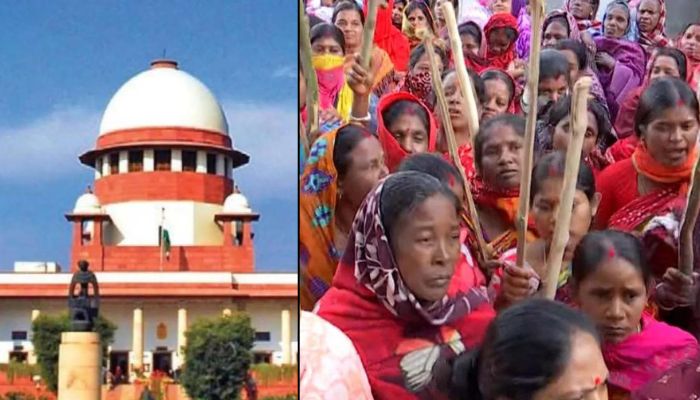
On Monday (19th February), the Supreme Court dismissed a public interest litigation (PIL) seeking an investigation by a Special Investigation Team (SIT) or the Central Bureau of Investigation (CBI) into the violence in Sandeshkhali village in North 24 Parganas district of West Bengal.

The matter came up for hearing before a 2-Judge Bench of the Supreme Court, comprising Justices BV Nagarathna and Ujjal Bhuyan. The petitioner, Alakh Alok Srivastava, pointed out allegations of sexual violence in Sandeshkhali and highlighted the prior concerns of the apex court about a similar situation in Manipur.

At that point, Justice BV Nagarathna intervened and said, “Please do not compare with what happened in Manipur to what happened here. Please.”

The Supreme Court asked the petitioner to move the Calcutta High Court instead, adding that High Courts have the power to constitute an SIT with officers of other States.

The 2-Judge Bench noted that the Calcutta High Court has already taken cognisance of the matter and that multiple proceedings before different courts should be avoided.

“This plea is dismissed as withdrawn with liberty reserved to approach High Court,” the Supreme Court ruled. Petitioner Alakh Alok Srivastava had said that women in Sandeshkhali were equally oppressed as women in Manipur.

Earlier on Monday (19th February), the Calcutta High Court refused to entertain a PIL for an urgent hearing, which sought protection for women residing in the Sandeshkhali area amid allegations of sexual violence perpetrated by individuals affiliated with the ruling Trinamool Congress.

The Background of the Controversy

On 8th February this year, hundreds of women in Sandeshkhali took to the streets to protest against land grabbing, non-payment of wages and sexual violence committed by Trinamool Congress goon Sheikh Shahjahan and his two aides Shiba Prasad Hazra and Uttam Sardar.

The women attacked Shahjahan’s illicitly obtained properties and set fire to a poultry farm owned by Shiba Prasad Hazra. They also surrounded the Sandeshkali police station and demanded the immediate arrest of the trio. The agitation in the village lasted for 3 days.

During that time, the TMC goons retaliated and the police acted as mute spectators. In several cases, the cops themselves resorted to harassment of the women. It had come to light that the residents were the subject of sexual violence by the TMC for a long time.

On 10th February, the local police imposed Section 144 in various areas in Sandeshkhali and also banned the use of the Internet in 16 panchayats scattered over the two blocks of Sandeshkhali-I and Sandeshkhali-II.

In a bid to pacify the angry villagers of Sandeshkhali, the TMC leadership suspended Uttam Sardar from the party for six years. The suspended TMC leader and Zilla Parishad member was subsequently arrested in the Sandeshkhali police station area.

The Mamata Banerjee-led-TMC government arrested a former CPI(M) MLA named Nirpada Sardar in connection to the case on 11th February. BJP leader Vikas Singh, who happens to be the Convenor of the Basirhat Lok Sabha constituency, was also arrested in connection to the women’s protest against TMC goons.

On Friday (17th February), the police arrested TMC leader Shibu Prasad Hazra over land grabbing and sexual exploitation of women in Sandeshkhali. The primary accused Sheikh Shahjahan, is still on the run from the law enforcement authorities.

India Today journalist defends violence by ‘farmer protestors’, lies about farm protest 1.0 too

On 16th February, India Today’s executive editor, Preeti Choudhary, was seen putting a lot of effort during the “Democratic Newsroom” program to defend violence by the “farmer protestors”. During the program, she lied about the farmer protests 1.0 as well.

Democratic Newsroom is a program where India Today’s reporters and editors join in a debate on a specific topic. On 16th February, they were discussing the farmer protests when Choudhary defended the violence by the “protestors” on 26th January 2021 when they entered Delhi and hoisted alien flags on Red Fort.

She said, “What did they ask for? They asked for access. They asked for access to the Ramlila Maidan. They were not given it. Perhaps Republic Day also happened because you did not allow them access to Ramlila Maidan for a year.” She further claimed that the right to protest is a Fundamental Right and that occupying public spaces is how protests happen in India.

The contention that protesting is a fundamental right is flawed. Articles 12 to 35 in Part III of the Constitution of India deal with the Fundamental Rights given to the country’s citizens. It says, “Right to freedom of speech and expression, assembly, association or union, movement, residence, and right to practice any profession or occupation (some of these rights are subject to security of the State, friendly relations with foreign countries, public order, decency or morality).” That means, while you are free to protest, it is subject to the security of the State and public order. Moving around with swords, batons, and pelting stones is NOT a fundamental right.

When Gaurav Sawant, Managing Editor of India Today, pointed out that several incidents during protests were not appropriately reported, she cut her in the middle. She questioned how many farmers died during the protests. The panellist continued to claim over 700 farmers died. The contention that 700+ farmers died during farmer protests 1.0 is entirely false and based on dubious data. In January 2022, OpIndia did a detailed analysis of the list the protesters and opposition leaders used. It was revealed that many of the deaths claimed in the list did not happen in or around the protest sites.

For example, a farmer drowned at his native place but was added to the list just because he joined farmer protests multiple times. Another farmer died while boarding a moving train far from the protest sites. However, his name appeared on the list as well. There were some reports of suicides which needed investigation as there were injury marks on the dead bodies.

When Akshita Nandagopal, Deputy Editor, India Today, mentioned that there were intel notes that suggested that thousands of farmers were planning to march towards Ramlila Maidan and it would have created havoc in the national capital, Choudhary said it was not an intel and farmers asked for permission. Nandagopal countered and asked if it would not have made the problem, to which Choudhary suggested it would not have if they were given Ramlila Maidan to protest. Choudhary’s claims there was not intel was false. Intelligence agencies had warned about modified tractors to be used by protesters. Interestingly, India Today itself covered the intelligence report.

Interestingly, Choudhary completely ignored the fact that the visuals coming from the Haryana borders, where the police stopped the protesters, clearly showed they were equipped with weapons. The so-called protesters mocked the police, challenged them and put up posters of Khalistani terrorist Jarnail Singh Bhindranwale. Furthermore, they used modified tractors and machines to move the barricades; they pelted stones at the police and created tension at the Haryana border. The national capital could have a law and order problem if they entered Delhi.

Not to forget, when the protesters were allowed to take a tractor rally in January 2021 through a pre-decided route, they not only went out of the route but also attacked the police and damaged both public and private properties.

Choudhary also claimed that protesters brought tractors because there was concrete barricading. However, concrete barricading was done after reports that the farmers were getting modified tractors to break the usual traffic barricading.

Interestingly, during farmer protests 1.0, Choudhary had expressed concerns about sexual harassment of female reporters by the protesters. She said on X (then Twitter) that a ‘sizeable chunk of depraves’ are sexually harassing reporters and that others are letting it happen. Detailed report can be checked here.

‘Losses of more than Rs 500 crore everyday’: Industry body fears farmers’ protest 2.0 will have severe economic impact 

0

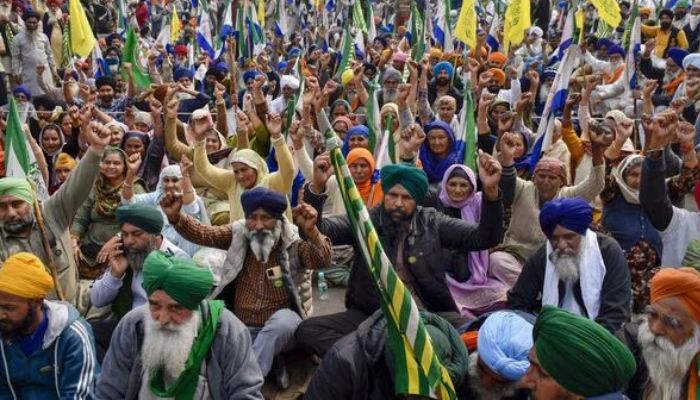
The ongoing Farmers’ Protest 2.0 could severely hit trade and industry as well as loss of employment in the Northern states, as apprehended by the Industry body PHDCCI. According to the President of the PHD Chamber of Commerce and Industry, Sanjeev Agrawal, the ongoing farmers’ protest in Delhi-NCR will cost more than Rs 500 crore every day and will negatively impact the quarter-four Gross State Domestic Product (GSDP) numbers of Northern states. 

While appreciating the constructive talks between the farmers’ unions and the Union government, Sanjeev Agrawal stated that the cost of lingering agitation will be more than Rs 500 crore per day and will have an impact on the Q4 GSDP of Northern States. He added that the Industry body is looking forward to an early resolution of the issues from both the Government and the farmers, with a common consensus for the welfare of all in the country. 

He pointed out that the Farmers’ agitation is severely impacting the businesses of MSMEs in Punjab, Haryana, Delhi, and parts of Uttar Pradesh and Rajasthan as raw materials of such units are procured largely from other states to execute production processes and to meet up the demand of the consumers. 

Pertinent to note that in the wake of the Farmers’ Protest 2.0 that commenced on 13th February, several major routes leading to Delhi have been sealed to stop the large influx of agitating farmers from Punjab, to avoid a repeat of ugly scenes witnessed during the previous Farmer protest in 2020-2021. Additionally, traffic has been substantially diverted leading to traffic congestion in the protest-hit areas, added logistical challenges, and losses in time and money.  

According to an old estimate, more than 50 thousand trucks come to Delhi daily carrying goods from different states across the country while about 30 thousand trucks carry goods from Delhi to other states. As Delhi is neither an agricultural nor an industrial state, to maintain its distributive character of trade, it has to depend upon the buying and selling of goods. Delhi as well as local businesses in the protest-hit areas are the major sufferers of farmers’ protest as it is leading to logistical barriers, road blockages, and forced adoption of alternate – remote or longer routes. 

The major hit will be on the MSMEs in Punjab, Haryana, and Delhi. PHDCCI President Agarwal further noted, “The combined GSDP of Punjab, Haryana, and Delhi is estimated at Rs 27 lakh crore in 2022-23 at current prices. There are around 34 lakh MSMEs in Punjab, Haryana, and Delhi which employ about 70 lakh workers in their respective factories” 

He added, “The economic activities such as food processing, cotton textiles, garments, automobile, farm machinery, information technology, trading, tourism, hospitality, and transport will be severely impacted by the continuous farm agitation with the disrupted supplies of many raw materials to the industry.” 

As per media reports, major tourist destinations are also facing the negative impact of the farmers’ protest with reduced tourist footfalls from the Delhi-NCR and neighbouring regions. 

Earlier on 13th February, the members of the Confederation of Bahadurgarh Industries (COBI)-District Jhajjhar in Haryana urged farmers not to harm their livelihoods and not stage the protest in the industrial hub of Bahadurgarh. During the peaceful demonstration, the members of the Confederation were seen raising posters appealing to the protesting farmers not to congregate in the Bahadurgarh area to ensure minimum impact on their business.

The posters raised by the COBI members read “Industries and workers of Bahadurgarh humbly request our farmer brothers not to gather and take away our means of livelihood.”

Speaking to AajTak, the employees of Bahadurgarh Chamber of Commerce and Industry said that “last time they suffered the loss of Rs 20,000 crore due to the farmer protest as they blocked the Tikri border for one year and seventeen days.”

The farmers’ protests have also started to inflate the prices of basic amenities like food, milk, and other commodities in the Delhi-NCR area. The traders in Ghazipur Mandi recently reported a Rs 4 increase in carrot prices over the past 15 days due to supply chain disruptions amidst farmers’ protests. 

It is important to note that Businesses suffered an estimated loss of Rs 60,000 crores during the Farmers’ Protest in 2020-2021 that continued for over a year against the three farmer laws rolled back by the Union government as demanded by the agitating farmers to call off their protest. 

Evidently, the Confederation of All India Traders(CAIT) had back then pegged the losses endured by the country during 12 months of farmers’ protest at Rs 60,000 crores. The trade body said that the losses were predominantly incurred in the initial phase of the protests—November, December 2020, and January 2021. 


Furthermore, in March 2021, Union Minister for Roads, Transport, Highways and MSMEs Nitin Gadkari gave a written reply to the Rajya Sabha about the losses incurred because of farmers’ protest. The Union Minister informed the house that the National Highways Authority of India suffered a toll revenue loss of Rs 814.4 crore till 16th March 2021 as a result of farmers’ agitation in three states. The total losses to NHAI escalated further as the protest was called off in December of that year.

Farmers’ Protest 2.0 and the development so far

As reported earlier, a large number of farmers marched towards the national capital on 13th February. The police have deployed concrete slabs, iron nails, barricades, barbed wires, and police and paramilitary personnel at Kurukshetra in Haryana because of the ‘Delhi Chalo’ march by the farmers. The police fired tear gas on the protestors at the Punjab-Haryana Shambhu Border. The protestors are seeking legal guarantees for MSP and other demands.

In addition to drafting a law on MSP, the protesting farmers have been demanding that India should quit the World Trade Organisation (WTO), halt trade agreements with other nations, and a monthly pension of Rs 10,000 to farmers who attain the age of 60 years among others. The protest has been called by Sanyukt Kisan Morcha and Punjab Kisan Mazdoor Sangharsh Committee, led by farmer union leaders Jagjeet Singh Dallewal and Sarwan Singh Pandher.

So far there have been four rounds of talks between the representatives of the agitating farmers’ Unions and three Union Ministers on 8th,12th,15th, and 18th February. After the fourth round of meetings yesterday, Union Minister Piyush Goyal said that the talks were “positive”. During the meeting, the Union government presented a five-year plan for the purchase of pulses, maize, and cotton crops by government agencies at minimum support prices to boost crop diversification. 

Minister Goyal said, “We proposed a solution involving cooperative societies like NAFED entering into five-year contracts with farmers, ensuring purchases at MSP without quantity limitations.” He also highlighted the proposal’s focus on diversification into pulses, cotton, and maize with MSP assurances without limitations on the quantity.

Following the government’s proposal, the farmers have decided to temporarily halt the ‘Delhi Chalo’ march while they go through the proposal and decide on a further action plan.

Calcutta HC declines urgent hearing of PIL seeking protection for women in Sandeshkhali

0

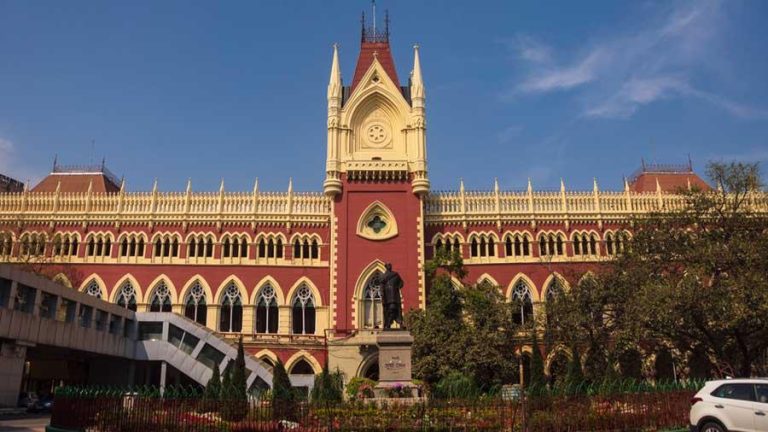
On Monday, the Calcutta High Court declined to prioritise a PIL for an urgent hearing, which sought protection for women residing in the Sandeshkhali area amid allegations of sexual violence perpetrated by individuals affiliated with the ruling Trinamool Congress. Chief Justice T S Sivagnanam, leading a division bench, inquired whether the petitioner held an elected position such as MLA or panchayat pradhan, or if they were a resident of Sandeshkhali, stressing that merely attaching newspaper reports to the petition would not suffice.

The Chief Justice informed the petitioner’s lawyer that the essential criteria for a PIL must be met for consideration. Despite the lawyer’s plea for an urgent hearing regarding the public interest litigation (PIL) aimed at safeguarding women villagers of Sandeshkhali in West Bengal’s North 24 Parganas district, the division bench, also including Justice Hiranmay Bhattacharya, verbally conveyed its inability to expedite the petition.

The bench explained that as another bench was already scheduled to address a matter concerning Sandeshkhali, simultaneous proceedings could not be entertained. They advised the lawyer to observe the proceedings before Justice Kaushik Chanda’s court, where a related petition regarding Sandeshkhali was listed for a hearing, and if independent evidence existed, to request intervention in that proceeding.

Certain villages in Sandeshkhali’s community development block II in the North 24 Parganas district have witnessed protests due to allegations of sexual misconduct by some local TMC leaders and their associates, as well as land grabbing from villagers.

The Background of the Controversy

On 8th February this year, hundreds of women in Sandeshkhali took to the streets to protest against land grabbing, non-payment of wages and sexual violence committed by Trinamool Congress goon Sheikh Shahjahan and his two aides Shiba Prasad Hazra and Uttam Sardar.

The women attacked Shahjahan’s illicitly obtained properties and set fire to a poultry farm owned by Shiba Prasad Hazra. They also surrounded the Sandeshkali police station and demanded the immediate arrest of the trio. The agitation in the village lasted for 3 days.

During that time, the TMC goons retaliated and the police acted as mute spectators. In several cases, the cops themselves resorted to harassment of the women. It had come to light that the residents were the subject of sexual violence by the TMC for a long time.

On 10th February, the local police imposed Section 144 in various areas in Sandeshkhali and also banned the use of the Internet in 16 panchayats scattered over the two blocks of Sandeshkhali-I and Sandeshkhali-II.

In a bid to pacify the angry villagers of Sandeshkhali, the TMC leadership suspended Uttam Sardar from the party for six years. The suspended TMC leader and Zilla Parishad member was subsequently arrested in the Sandeshkhali police station area.

The Mamata Banerjee-led-TMC government arrested a former CPI(M) MLA named Nirpada Sardar in connection to the case on 11th February. BJP leader Vikas Singh, who happens to be the Convenor of the Basirhat Lok Sabha constituency, was also arrested in connection to the women’s protest against TMC goons.

On Friday (17th February), the police arrested TMC leader Shibu Prasad Hazra over land grabbing and sexual exploitation of women in Sandeshkhali. The primary accused Sheikh Shahjahan, is still on the run from the law enforcement authorities.

Chhattisgarh: Gausevak Sadhram Yadav murdered in ISIS-style in Kawardha, FIR under UAPA filed against Ayaz, Idris, Rafiq and 3 others

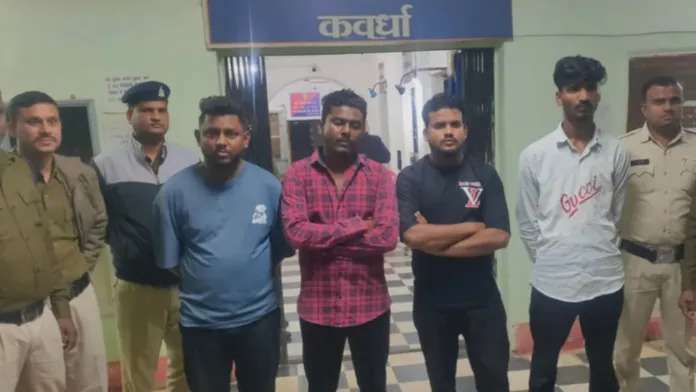
Days after a Hindu youth named Sadhram Yadav was brutally murdered in Chhttisgarh’s Kawardha, the police booked six accused in the case under the Unlawful Activities Prevention Act (UAPA). Following his return from Kashmir, Ayaz Khan and his accomplices killed the 50-year-old Gausevak by slitting his throat in the style of the Islamic terrorist group ISIS. This was done in an attempt to incite fear before the consecration of the Ram Mandir in Ayodhya.

Six persons, including Ayaz, Idrish, Mehtab, and Sheikh Rafiq, murdered Gausevak Sadhram Yadav on 20th January in Lalpur village of Kawardha, Chhattisgarh, by slitting his throat like ISIS terrorists.

The police have imposed Section 16 of the UAPA on the six accused in the case. The terrorist connection between Ayaz and Idris has also been uncovered. Moreover, there is information regarding Ayaz visiting Kashmir and Idris meeting some suspects. According to media sources, UAPA was invoked for the first time in a case other than against Naxalites in the state.  

The accused had deliberately quarrelled with Sadhram Yadav and murdered him in ‘Sar Tan Se Juda’ style. Kawardha residents were outraged following Sadhram’s horrific murder. Meanwhile, the police have arrested the accused and the administration has bulldozed their houses.

Following the investigation, the police imposed a UAPA section against the accused. According to Kawardha SP Abhishek Pallav, one of the murder accused, Ayaz, often travelled to Kashmir, and evidence has been found of Idris being in contact with dubious people.

According to Kawardha SP, when Ayaz Khan was arrested and his phone was searched, information about his multiple trips to Jammu and Kashmir was found. When a team from Chhattisgarh was sent to Jammu and Kashmir, links to terrorists were also revealed. Information has been received regarding another accused Idris Khan talking to the suspected individuals, the officer said.

Meanwhile, Hindu organisations are calling for strict action on the matter. Gausevak Sadhram Yadav’s wife recently returned a government cheque for Rs 5 lakh. Sadhram Yadav’s wife stated that she does not want assistance, but rather stern action against the murderers of her husband.

Uttarakhand: Govt razes illegal house of Fardeen who along with Rauf attacked a Hindu girl for refusing to withdraw molestation case

On Thursday, February 15, the administration of Kashipur in Uttarakhand’s Uddham Singh Nagar district ran a bulldozer over the house of a youth named Fardeen Mohammad, the prime accused in the recent attack on a Hindu girl in Mohalla Khalsa.

Fardeen’s house was demolished after the government discovered during the investigation that he built an unauthorized house on government land.

Speaking about the demolition, tehsildar Pankaj Chandola said the action was justified as the accused’s house was built on encroached land.

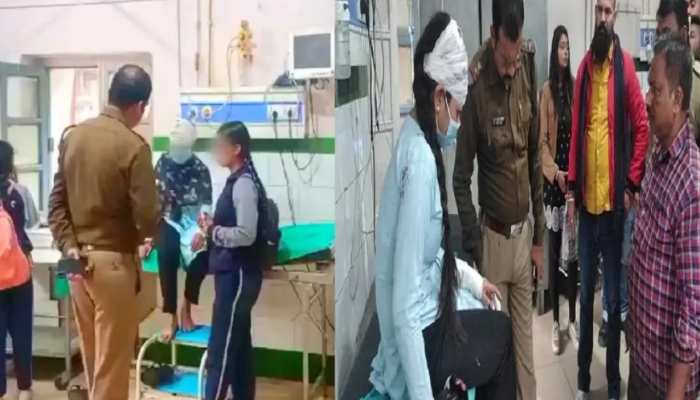
Notably, three days before the administration razed Fardeen Mohammad’s house, he and his accomplice Rauf had fatally attacked a 17-year-old minor Hindu girl named Pooja with a sharp fodder cutter, while she was on her way to her coaching class. The accused fled leaving the girl bleeding on the streets. The commuters rushed her to a nearby hospital. However, the incident was caught on the CCTV camera installed on the road which helped the police identify and arrest the accused.

According to reports, Fardeena and Rauf attacked the girl since she was refusing to withdraw a molestation case that she and her family members had previously lodged against Fardeen. Fardeen had been arrested in the molestation case and was out on bail when he attacked Pooja.

Reportedly, after the attack, Fardeen’s family members visited Pooja’s house and threatened her parents to withdraw the molestation case filed against their son.

Upon learning about the attack, members of various Hindu organisations reached the police station and demanded swift action against the perpetrators. The police, in turn, filed a case against the duo and arrested them.

The incident

The incident took place in the Khalsa locality of Kashipur Kotwali area of Udham Singh Nagar at around 4.15 pm on Monday (February 12, 2024). Pooja along with her sisters were going to their tuition class when Fardeen and Rauf arrived on a bike. Fardeen dragged Pooja and forced her to sit on his bike, but she resisted his attempts by pushing him aside. Pooja and her sisters moved on but the duo kept following them on the bike and when the girls reached the Gurudwara near the powerhouse in Mohalla PakkaKot, Fardeen attacked Pooja on her head with a sharp knife generally used to cut fodder. Pooja was badly injured in the attack.

Fardeen’s family members stood and watched him attack the victim

Notably, when Fardeen launched the attack on Pooja, his father Rizwan and his brothers Bilal, Aaqib, Anas and Afridi were also standing there but none of them stopped Fardeen from attacking the girl. Several people passing by rushed to the scene hearing Pooja scream in pain. Seeing people gather, Fardeen and Rauf threatened the victim and fled the scene.

The girl was rushed to a nearby hospital in a critical condition from where she was referred to LD Bhatt Sub District Hospital. After receiving information about the attack, members of several Hindu organizations reached the police station and demanded the arrest of the accused. BJP MLA Arvind Pandey also met the victim and assured her justice.

Accused’s kin threatened the victim’s family

Following the attack, Fardeen’s family members and relatives, including his mother Baby, maternal uncles Taju and Firoz, three aunts and another relative named Sahil, reached the victim’s home where they threatened her parents and pressured them to withdraw the molestation cases registered against Fardeen.

Notably, Fardeen had been harassing the victim for the last four years. Based on the complaint of her parents, the police registered three cases of molestation and harassment against Fardeen in 2019, 2021, and 2022 respectively. In fact, Fardeen had also gone to jail, but this did not deter him from harassing the victim. He was out on bail when he attacked the victim.

The police have, meanwhile, registered a case against Fardeen under IPC sections 147, 307, 323, 354, 452, 504 and 506. Speaking to OpIndia, Senior Sub Inspector Pradeep Mishra posted at the Kotwali said that both the main accused have been arrested. Investigation in the case is underway and other arrests will also be made soon.

“I am smart enough to have multiple options…,” says EAM Jaishankar at Munich Security Conference, PM Modi lauds India’s ‘strong’ foreign policy

0

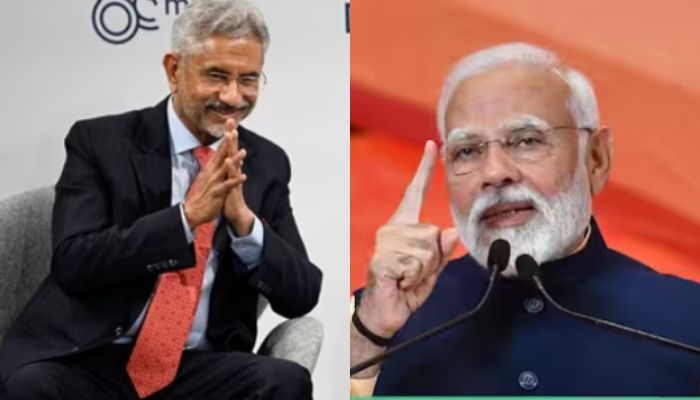
February 17-18 was an eventful weekend for India as its foreign policy acumen was displayed by External Affairs Minister S Jaishankar at the Munich Security Conference (MSC) on Saturday and earned heaps of praises from the Prime Minister at the National Convention of the BJP on Sunday.

EAM S Jaishankar on 17th February reaffirmed India’s stand and commitment to buy Russian oil despite respective sanctions on Moscow amid the military conflict with Ukraine, saying it should not be a problem for others.

In response to a query on how New Delhi was balancing its growing bilateral ties with Washington while continuing to trade with Moscow, the EAM’s confident and witty response turned all heads.

“Is that a problem, why should that be a problem? If I am smart enough to have multiple options, you should be admiring me. Is that a problem for others? I don’t think so, suddenly in this case. We try to explain what are the different pulls and pressures that countries have. it’s very hard to have that unidimensional relationship,” Jaishankar said.

He added, “Different countries and different relationships have different histories. If I want to look at the US and Germany, it is rooted. There is an alliance, nature to it. There is a certain history on which that relationship is grounded. In our case it’s very different, so I don’t want you to even inadvertently give the impression that we are purely unsentimentally transactional. We are not, we get along with people, we believe in things, we share things, and we agree on some things but there are time when you are located in different places have different levels of development, and different experiences all of that gets into that.”

“Life is complicated, life is differentiated. and I think it’s very important today. I agree with Antony which is, good partners provide choices, smart partners take some of the choices. But sometimes, there will be choices, you say I’ll pass on that,” he stated further.

On a lighter note, EAM S Jaishankar was heard addressing US Secretary of State Antony Blinken as “Tony” while the latter addressed the EAM as “Jai”.

Germany hints Western powers should acknowledge prejudice against Global South in the past

Moreover, a sense of acknowledgement of historical wrongs appeared in German Foreign Minister Annalena Baerbock’s response to a question on division between the Global South and the Western world over several issues like sanctions on Russia over war with Ukraine.

“We have to be respectful that especially within Ukraine – and I think this is the lesson we have learned, and it was very important to speak to partners like India and so many around the world – Brazil, South Africa – that obviously in this moment when we said we need the whole international security, others asked some questions, like: Where have you been when we needed you? Or asked some questions, so actually what does it mean for the future? Do you also stand with us? And this is, I would say, maybe something you in the attitude – at least from our foreign politics from Europe to say, okay, we cannot take for granted that everybody just agrees with our European or transatlantic vision,” Baerbock said.

She added that Western democracies needed to ask themselves why the Global South cannot support them. “In our national security strategy we try to do it, talking about, for example, our colonialism past. Understanding why South Africa was mentioning the whole time their ties with Russia in the Apartheid regime. And being self-critical and saying, oh, yeah, not all democracies have stood back in time at their side, and taking that as something where we said, yes, we might have made a mistake in the past,” the German Foreign Minister said.

PM Modi hails India’s successful foreign policy

Lauding how India’s foreign policy is going strong, Prime Minister Narendra Modi on Sunday (18th February) said that the world is seeing how New Delhi’s relations with many countries continue to grow stronger in trade, tourism, technology and various other aspects.

In a jibe against the critical remarks over the years on experience in foreign policy, PM Modi said that when he took the oath as India’s Prime Minister, questions were raised about him not having “experience outside a state.”

While addressing the concluding day of the National Convention of the Bharatiya Janata Party (BJP) at Delhi’s Bharat Mandapam, PM Modi said, “When I took oath in 2014, many of our critics said that what experience does Modi have outside a state. Many things were said about foreign policy.”

PM Modi’s diplomatic triumphs were widely seen, when, during the last year, he embarked on a series of diplomatic missions, fostering international collaborations, strengthening ties, and showcasing India’s commitment to global peace and development.

Not only that, as 2024 began, Prime Minister Modi made a historic visit to the UAE and Qatar as well.

“Five Arab countries gave me the highest honour of their country, this is not the honour of PM Modi but the honour of the 140 crore countrymen,” he noted.

(With agency inputs)

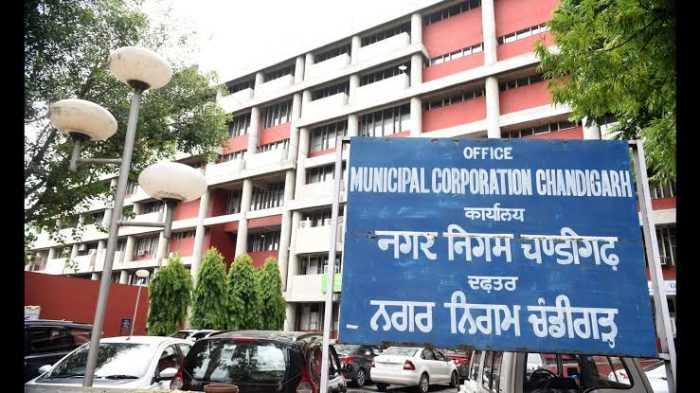
Chandigarh: Split in AAP ahead of fresh Mayor elections, 3 Councilors leave the party to join BJP

On Sunday (January 18), Chandigarh Mayor Manoj Sonkar (from BJP) resigned from his post as Mayor of the city. Now, elections will be held again for the post of Mayor in the Union Territory which is the capital of both Punjab and Haryana. Sonkar resigned before the hearing in the Supreme Court over his election. Meanwhile, before the fresh elections, the Aam Aadmi Party (AAP) has suffered a major setback as three of its councilors have joined BJP.

AAP councilors Neha Musawat, Poonam and Gurcharan Kala were given party membership by BJP General Secretary Vinod Tawde. With this, BJP now has the upper hand in the Municipal Corporation. BJP now has 18 councilors in the Municipal Corporation, whereas AAP is left with only 10 councilors. Apart from this, Congress has 7 councilors and Shiromani Akali Dal (SAD) has 1 councilor.

Councilor Gurcharan Kala, who took membership of BJP, said that AAP had been putting pressure on him. However, impressed by the works of PM Modi, Kala took membership of BJP. Neha Musawat has also made similar allegations against Aam Aadmi Party.

In Chandigarh Municipal Corporation, 36 councilors together elect the post of Mayor. After recent updates, BJP has the support of 17 councilors, 1 MP (MPs also vote in the Chandigarh Mayor elections), and the lone councilor of SAD. At the same time, AAP and Congress together have only 17 votes. It is also worth noting that on the basis of new political equations, AAP is finding it difficult to get the support of Congress, because it had recently announced to contest the Punjab-Chandigarh Lok Sabha elections alone.

The matter will also be heard in the Supreme Court today (February 19, 2024). During last elections, BJP’s Manoj Sonkar was elected Mayor in the elections held on January 30. The alliance of Aam Aadmi Party and Congress had made allegations of rigging in this election and had approached the Supreme Court. The Supreme Court had summoned election officer Anil Masih in this case, who was accused of irregularities.

On Manoj Sonkar’s resignation, BJP clarified that after his election, the opposition was continuously creating ruckus and was not allowing the city to run properly, that is why Manoj Sonkar resigned. In the last elections, AAP had fielded Kuldeep Dholor against Manoj Sonkar, who had to face defeat.

Uttar Pradesh: Police arrest Bhondu Rehman for raping 1-year-old child in Bahraich, victim hospitalised

On Sunday (18th February), the police arrested a 50-year-old man named Bhondu Rehman for the rape of a 1-year-old child in Nanpara town in Bahraich district of Uttar Pradesh.

As per reports, the incident took place on Saturday (17th February) evening. The victim was playing at that time. Rehman took the child to the field under the pretext of feeding her.

He then raped the 1-year-old. After the condition of the child deteriorated, Rehman dumped her body in the field and fled the crime scene.

Upon learning about the matter, the victim’s family immediately notified the police and admitted her to the Community Health Centre (CHC) Nanpara for immediate medical attention. She was later transferred to Lucknow Medical College for better treatment.

A police team, led by Mithilesh Kumar Rai, reached the crime scene and began a probe into the matter. While speaking about the matter, Superintendent of Police (Bahraich) Vrinda Shukla informed, “An incident of rape of a 1-year-old child has come to light in Nanpara police station area.”

“The crime was committed by a 50-year-old man. The police were informed about the matter…The accused has been already arrested. Given that the girl is just 1 year old, we are transferring her to Lucknow for better treatment,” she added.

SP Shukla further emphasised, “It is a heinous crime. I will myself request the special POCSO court to fast-track the trial and punish the culprit as soon as possible.”

A case has now been registered against Bhondu Rehman under relevant Sections of the Indian Penal Code (IPC) and the Prevention of Child Sexual Offences (POCSO) Act.