Home Blog Page 138

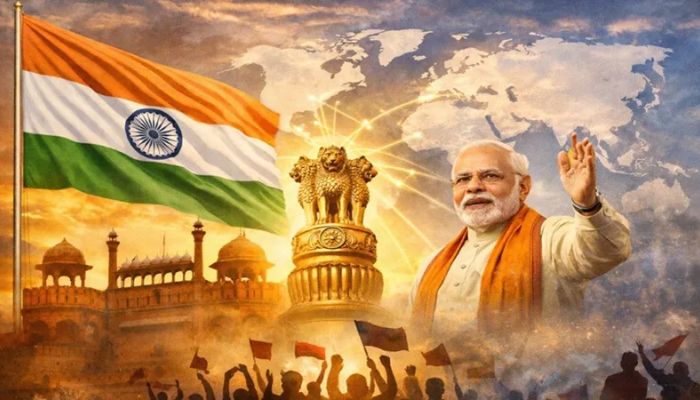
2026: India’s year of leadership, resolve and direction

As we enter another Gregorian New Year, two historical moments come to mind. One, Gopal Krishna Gokhale’s statement that “What Bengal thinks today, India thinks tomorrow.” Second, Sushma Swaraj’s bold declaration in the Lok Sabha, “Yes, we are communal because we advocate singing Vande Mataram….”

While the Gregorian New Year may not have any spiritual significance in the Sanatan tradition, it is no longer merely a calendar change in the global sense of time. Some years are truly turning the course of history. 2026 is one such year.

For decades, India has been expected to provide “clarifications” on every issue: sometimes on Kashmir, sometimes on the Citizenship Act, sometimes on its religion, culture, and national consciousness.

But in 2026, India had moved beyond that era. Today’s India doesn’t offer explanations. Today’s India provides direction. It shapes the discourse.

This year symbolises the confidence that stems not from mere economic statistics, but from a civilizational consciousness, the same consciousness that has sustained India for millennia.

Message for New Year 2026: India – Not a Rising Power, but a Decisive Power

India will assume the presidency of BRICS from 1st January, 2026. This is not just a diplomatic formality, but a moment to take the centre stage of global discourse.

India in today’s world order;

  • The Global South has a natural voice
  • It is the centre of balance between East and West.
  • A vibrant confluence of democracy, technology and culture

While America is worried about losing leadership, and Europe is struggling with its identity and energy crisis, India has emerged as a pillar of stability and trust.

Nationalism is no longer an insult; it is a model

There was a time when nationalism was equated with backwardness. India was told that to appear ‘secular and modern,’ it had to distance itself from its roots. The Sushma Swaraj speech I mentioned earlier stemmed from this very anguish.

Her address to the Lok Sabha on 11th June, 1996, was a warning against this distortion. She clearly stated that the country must understand the true nature of secularism and how it had been distorted.

Bengal also suffered the consequences of this distortion. The state that suffered partition after the massacre of Hindus was then subjected to appeasement, leftist violence, and infiltration after independence.

Today, West Bengal once again stands at the crossroads of ideological and social crisis. The 2026 assembly elections are no ordinary political exercise. They are a test of Bengal’s self-realisation and national consciousness. This is the year to stand in alignment with the vision of today’s India. This is the year to return to the glory that inspired Gokhale to say what Bengal, even today, lacks.

The end of secularism, the rise of civilizational nationalism

In 2026, the artificial secular narrative that had transformed a sense of nationalism into a sense of guilt has crumbled. Under Narendra Modi’s leadership, the Bharatiya Janata Party (BJP) has made nationalism respectable and globally acceptable again.

India’s nationalism today;

  • is inclusive
  • is self-confident
  • is conceptually clear
  • Globally accepted

India has proved that self-forgetfulness is not necessary for modernity and sacrifice of sovereignty is not essential for cooperation.

OpIndia’s role: Not just news, but ideological intervention

OpIndia’s role in the New Year 2026 is not limited to just reporting news. It is a platform that stands against the narrative that;

  • India has been consistently held guilty
  • Hindu society is filled with guilt
  • National interest has been put into doubt

OpIndia’s mission is clear – boldness with facts and a clear commitment to the nation.

2026: Whose Year?

This year will not be theirs.

  • Those who do not believe anything without a foreign certificate
  • Those who find doubt in every achievement of India
  • those who shy away from their own civilisation

This year will be theirs.

  • who want to see India lead
  • Those who are not ashamed of history, but are inspired
  • Those who know that progress does not come by cutting off the roots

Resolution for 2026

This New Year, OpIndia wants only one resolution from its readers – stand for the truth, fight myths, and take pride in understanding India.

2026 is not a test for India, but a proclamation. It is the declaration of India that no longer asks, but tells.

Happy New Year 2026!

(This article is a translation of the original article published on OpIndia Hindi.)

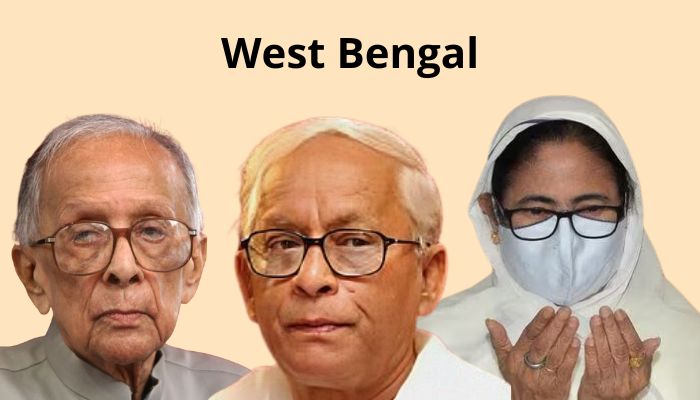
A timeline of 60 years: How West Bengal went from being the 3rd richest State in India to witnessing unprecedented economic downfall

West Bengal, which ranked 3rd in the list of India’s richest States in 1960, is languishing at 24th rank as of today. In the past 80 years, the State has witnessed a drastic and unprecedented economic downfall. This was at a time when other economically backward States were making huge progress.

West Bengal began its journey as an undisputed industrial powerhouse, and through six decades of systematic ideological poisoning, it engineered its own structural relegation.

On Tuesday (30th December), an X handle ‘The Matrix’ posted his analysis of the economy of West Bengal by sourcing state-level per capita income data from the Economic Advisory Council to the Prime Minister (EAC-PM).

The Premium Era: When Bengal Led the Nation

At the dawn of the 1960s, West Bengal was not just another administrative unit. It was the industrial clearinghouse of the Indian Union. In 1960-61, West Bengal’s relative per capita income stood at a staggering 127.5%.

To put that in perspective, the average resident of Bengal earned nearly 28% more than the national average.

This was a state in a weight class shared only by Maharashtra and Delhi. With the Calcutta port, a thriving jute monopoly, and engineering giants like Jessop and Braithwaite, Bengal was the default destination for any capital looking to build capacity in India.

The ‘Death Cross’: Militant Unionism and the Exit of Capital

The decline did not happen by accident. The graph of Bengal’s prosperity shows a steep, unrelenting downward slope starting in the late 1960s.

By 1980-81, the relative income had plummeted to 96.9%. This was the “Death Cross”—the precise historical moment when the average citizen of Bengal became poorer than the average Indian.

While some left-liberal ‘historians’ love to blame external factors like the Freight Equalisation Policy, the primary wound was self-inflicted.

This era saw the rise of militant trade unionism, where the weaponised tool of the Gherao was used to hold industry hostage.

When profit was treated as a “vice” and industrialists were publicly humiliated, capital responded with predictable rationality i.e. it fled.

The ‘animal spirits’ required for innovation were drained out of Kolkata and relocated to Mumbai and Gujarat.

Trapped in an Ideological Time Warp

When India finally broke the shackles of the Licence Raj in 1991, the southern states leaped at the opportunity to build IT parks and court global supply chains.

Bengal, however, remained trapped in an ‘ideological time warp’. This is a classic case of economic hysteresis, where the trauma of the 70s persisted long after the initial shocks were over.

Even as the overt militancy subsided, the state’s reputation for hostility to capital remained entrenched. While Karnataka and Andhra Pradesh compounded their wealth, Bengal languished in a low-growth agrarian equilibrium.

The numbers don’t lie. Between 1990 and 2010, the state’s rank continued its pathetic slide from Rank 15 to Rank 21.

The Singur Standoff: De-Industrialisation 2.0

If the data is the skeleton of this tragedy, Singur is its heart. In 2008, Ratan Tata’s decision to establish the Nano plant in Singur was a potential inflexion point. It was a signal that Bengal might finally be ready to re-industrialise.

Instead, we witnessed a ‘geopolitical event in the corporate world’. The subsequent agitation compelled Tata Motors to move to Sanand, Gujarat, effectively telegraphing to every global investor that land acquisition in Bengal was fraught with unmanageable political risk.

Gujarat absorbed the entire industrial ecosystem, while Bengal suffered De-Industrialisation 2.0. It cemented an anti-industry brand that it has failed to shed for 15 years.

The Audit of 2024: A Structural Collapse

Fast forward to today, and the contrast is sobering. The state that once held the Rank 3 position in 1960 has crashed to Rank 24 in 2024. Today, the average citizen of West Bengal earns 16.3% less than the average Indian.

While Tamil Nadu, which started lower, has surged to a relative income exceeding 150%, Bengal has experienced a complete structural reversal.

This precipitous fall is the cumulative consequence of six decades of policy choices that prioritised political consolidation over capital accumulation.

India’s golden economic year: Read how 2025 delivered high growth, low inflation, falling unemployment and bold reforms under PM Modi

The year 2025 proved to be a golden chapter in India’s economic journey. Despite global trade uncertainties, geopolitical tensions, and fears of an economic slowdown, India, driven by strong domestic demand, visionary policies, and bold reforms, not only maintained stability but also achieved new heights. 

Whether it was India’s growing military confidence reflected in Operation Sindoor or its expanding economic strength, the country continued to move forward steadily under the leadership of Prime Minister Narendra Modi. The year reinforced India’s image as a nation charting its own course, even in a challenging global environment.

GDP growth touches a multi-quarter high 

According to official data, gross domestic product (GDP) growth in the second quarter (July-September 2025) of fiscal year 2025-26 was recorded at 8.2%, the highest in the last six quarters. This is significantly higher than 5.6% in the same quarter last year and 7.8% in the previous quarter.

This strong performance has kept India at the top of the world’s fastest-growing major economies. India’s GDP has now reached US$4.18 trillion, making it the world’s fourth-largest economy, surpassing Japan. 

Economists believe that at the current pace, India could surpass Germany in the next 2.5 to 3 years to become the world’s third-largest economy. Projections suggest that India’s GDP could reach $7.3 trillion by 2030.

Domestic consumption and reforms drive growth 

But the biggest factor has been strong private consumption, continuously acting as the backbone of the country’s economy. With increased income, improved consumer confidence, and lower inflation, household spending has increased.

Meanwhile, the government’s emphasis on capital expenditure along with reforms like GST rationalization and simplification of income tax helped strengthen demand across sectors.

Also, seeing broad-based momentum, the Reserve Bank of India revised upwards its GDP growth forecast for FY 2025-26 from 6.8% to 7.3%.

Global agencies remain optimistic about India

International institutions have also expressed similar optimism over India’s economic outlook. The World Bank projects 6.5% growth for 2026, while Moody’s estimated the country to grow 6.4% in 2026 and 6.5% in 2027, retaining its lead as the fastest-growing G20 economy.

Where the International Monetary Fund IMF had revised its forecast upwards to 6.6% for the year 2025 and 6.2% for 2026, the OECD now sees growth of 6.7% this year, 6.2% next year, whereas S&P Global expects growth of 6.5% this year and 6.7% next year.

The Asian Development Bank (ADB) raised its 2025 projection to 7.2%, and Fitch Ratings upgraded its FY26 forecast to 7.4%, citing strong consumer demand. These projections place India at the top among G20 nations.

Three pillars of growth: Speed, Stability and Confidence

Three key pillars have emerged in this development journey: high growth, stability, and confidence. Amid global trade uncertainties, India’s domestic demand has supported the economy. 

High-frequency indicators such as the Purchasing Managers’ Index (PMI), credit growth, and urban consumption are all showing positive signs. Strong credit flows to the commercial sector and strengthening corporate balance sheets have encouraged investment.

Inflation falls sharply, offering major relief to households

One of the most significant developments of 2025 was the sharp fall in inflation, providing much-needed relief to ordinary citizens.

CPI-based inflation fell from 4.26% in January 2025 to just 0.71% by November, marking a multi-year low. This was well below the RBI’s target of 4% (±2%).

The biggest reason was a drop in food prices, especially vegetables, pulses and grains. Food inflation turned negative at -3.91% in November.

The RBI revised its inflation forecast for FY 2025–26 down from 2.6% to 2.0%. Wholesale price inflation (WPI) also stayed in negative territory at -0.32% in November.

This benign inflation environment allowed the RBI to cut the repo rate by 25 basis points to 5.25%, creating what economists describe as a rare “Goldilocks phase”, strong growth with low inflation.

Lower inflation helped boost household savings, support consumption and gave policymakers greater flexibility.

Unemployment falls to a multi-month low as jobs increase 

Unemployment and the pace of economic activity are two sides of the same coin and complement each other. As growth accelerates, greater production of goods and services increases demand for labor, creating more employment opportunities and reducing unemployment. 

In this context, India’s declining unemployment rate reflects the strength of its economic momentum . Given the sustainability of growth, India’s improving employment outcomes demonstrate a good synergy between sustained growth and job creation.

According to the Periodic Labour Force Survey (PLFS), the unemployment rate for women aged 15 and over fell to 4.8% in November 2025, its lowest level in several months. 

Unemployment declined sharply among women, from 4.0%, in rural women to 3.4% and from 9.7% in urban women to 9.3%, while rural unemployment stood at 3.9% and urban unemployment at 6.5%.

The labor force participation rate (LFPR) reached a seven-month high of 55.8%, while the worker population ratio (WPR) fell to 53.2 %. These figures indicate that more people are joining the workforce and finding employment. 

Agriculture and construction in rural areas and the services sector in urban areas drove employment growth. The increase in female participation is particularly encouraging.

With nearly 26% of India’s population aged between 10 and 24, experts say the country’s young demographic is a major advantage, provided job creation keeps pace.

Exports strengthen, India gains global market share 

India’s external trade also showed strength. Merchandise exports rose to US$38.13 billion in November 2025, marking an increase of over 19% over the previous year.

Engineering goods led the growth with a 23% rise, along with strong performance from electronics, pharmaceuticals and petroleum products. Services exports remained robust, growing 8.65% between April and November, reaching close to $270 billion.

India’s foreign exchange reserves climbed to $686 billion, covering more than 11 months of imports. The current account deficit stayed contained at 1.3% of GDP.

Foreign direct investment also surged, with net FDI inflows jumping 127% between April and September. New trade agreements strengthened ties with countries such as New Zealand, Oman, the UK, Australia and EFTA nations.

Modi government pushes next-generation reforms

These achievements were not achieved without a solid foundation. In his article, Prime Minister Narendra Modi called 2025 the “Year of Reforms,” ​​where India rode the “Reform Express.” The engine of reforms is India’s demographics, youthful energy, and the spirit of its people.

The GST reforms introduced two main slabs (5% and 18%). The tax burden on households, MSMEs, farmers, and labour-intensive sectors has been reduced. This aims to reduce disputes and ensure better compliance. These reforms have boosted consumer sentiment and demand. Sales have increased during the festive season following the implementation of the reforms.

This year, unprecedented income tax relief has been implemented. For the first time, individuals earning up to ₹12 lakh annually will not have to pay any income tax. The archaic Income Tax Act of 1961 has been replaced by the modern and simplified Income Tax Act, 2025. Together, these reforms are moving India toward a transparent, technology-driven tax administration.

Additionally, the government has expanded the definition of “small companies” for MSMEs to turnover up to ₹100 crore. This will reduce the compliance burden and associated costs for thousands of companies. 

The Indian government has permitted 100% foreign direct investment (FDI) in Indian insurance companies. This will boost insurance coverage and protect citizens. As competition increases, people will have access to better insurance options.

Insurance, labour and nuclear energy reforms

The government allowed 100% FDI in the insurance sector, expected to improve coverage and offer better options to citizens.

Labour reforms merged 29 old laws into four labour codes, balancing worker protection with business flexibility. Contract and unorganised workers were brought under ESIC and EPFO, expanding formal employment.

The most significant step this year was the opening up of nuclear energy to private participation through the SHANTI Act. The SHANTI Act is a transformative step in India’s clean-energy and technology journey. It ensures a robust framework for the safe, sustainable, and responsible expansion of nuclear science and technology. 

It helps India meet the growing energy needs of the AI ​​era, such as powering data centers, advanced manufacturing, green hydrogen, and high-technology industries. All of this will lead to greater employment and growth.

The Modi government’s Employment Guarantee Framework for Developing India – GRAMG Act, 2025 has increased the employment guarantee period from 100 to 125 days. This will increase spending on strengthening rural infrastructure and livelihoods. The aim is to make rural work a means of ensuring higher income and better assets.

In the field of education, this year, the Modi government proposed a single education regulator. This would replace several overlapping bodies like the UGC, AICTE, and NCTE with the Vikasit Bharat Shiksha Adhishthan. This move would strengthen institutional autonomy in the country and promote innovation and research.

A strong step towards a developed India 

The year 2025 proved that India can move ahead even amid global challenges. High growth, low inflation, falling unemployment and strong exports gave the economy fresh strength, while reforms laid a solid foundation for the future.

As India moves towards its 2047 ‘Viksit Bharat’ goal, 2025 stands out as a milestone year. The pace of reforms and growth, experts say, is unlikely to slow, India’s economic flight has truly taken off.

The case of unaccounted 328 saroops of Sri Guru Granth Sahib Ji: FIR after 5 years sparks clash between SGPC and Punjab government – All you need to know

0

The case surrounding the alleged disappearance of 328 saroops of Sri Guru Granth Sahib Ji is not a routine criminal case. It revolves around Sikh religious consciousness, institutional authority, and the limits of state intervention, as per the established law.

Sri Guru Granth Sahib is regarded as the eternal and living Guru by the Sikh community. Every physical saroop carries the same spiritual authority and sanctity, something which is exclusive to Sikhism. As a result, any unauthorised printing, mishandling, concealment, or disappearance is seen as a serious religious violation. It is not about administrative or financial lapse but is directly connected to faith.

The issue remained dormant for many years. However, it has now resurfaced with high political intensity as the Punjab Police has registered an FIR in the matter. The FIR came despite the fact that it was decided not to file an FIR in the matter back in 2020, and it is being seen as an attack on the authority of the Sikh leadership in the matter.

The case has resulted in a direct confrontation between the Punjab government led by CM Bhagwant Mann and the Shiromani Gurdwara Parbandhak Committee (SGPC). Notably, the SGPC is the apex Sikh body that manages gurdwaras and prints saroops of Sri Guru Granth Sahib Ji. No printing press can produce a saroop without the permission of the SGPC.

Sikh religious authorities have warned against state interference. On the other hand, the Punjab government has insisted that law and accountability cannot stop at the gates of religious institutions. Interestingly, political parties are divided over the matter, and the courts have already weighed in by rejecting anticipatory bail pleas of the accused named in the FIR registered by the Punjab Police.

What is happening now and why it matters

On 7th December, the Punjab Police registered an FIR at Police Station C-Division, Amritsar. The FIR invoked IPC Sections 295 and 295A of the Indian Penal Code (IPC). These sections deal with acts hurting religious sentiments. Furthermore, Sections 408, 409, 465, and 120B have also been invoked, which are related to criminal breach of trust, forgery, and criminal conspiracy. In addition, Section 5 of the Punjab Jagat Jot Sri Guru Granth Sahib Satkar Act, 2008, has also been invoked. This Act governs the unauthorised printing, handling, and disposal of the Sikh scripture.

The FIR has been lodged against 16 individuals. Most of these 16 people are former SGPC officials and employees linked to the publication, storage, and accounting of saroops at Gurdwara Ramsar Sahib in Amritsar.

On 23rd December, the Punjab Director General of Police (DGP) constituted a Special Investigation Team (SIT) to probe the matter. Within days, several accused approached courts seeking anticipatory bail. These bail pleas were, however, rejected by trial courts in Amritsar.

OpIndia accessed and examined multiple bail orders passed in the case, which provided crucial insight into the allegations, investigation, SGPC’s stand, and more. While rejecting the bail pleas, the court held that the accusations are serious in nature and involve the religious sentiments of the entire Sikh community. The court said that the matter requires custodial interrogation to trace missing saroops, recover forged or destroyed records, and uncover the full extent of the alleged conspiracy.

What the case is actually about

At the heart of the case is the allegation that 328 saroops of Sri Guru Granth Sahib Ji were printed and distributed from the SGPC’s printing facility at Gurdwara Ramsar Sahib during the financial years 2013–14 and 2014–15. These saroops were allegedly not properly recorded in official ledgers.

The SGPC holds exclusive authority to print and distribute Sri Guru Granth Sahib. The process is governed by strict religious and administrative protocols. Each saroop must be serialised, entered into registers, and ceremonially delivered after verification of the place where it will be installed.

According to the findings of the investigating officers, these protocols were bypassed on a large scale. Hundreds of saroops were allegedly printed and issued off the books. The present status of the saroops, their location, or method of disposal cannot be conclusively established.

The case is not limited to the disappearance of physical copies of Sri Guru Granth Sahib. It concerns systematic manipulation of official records. These acts allegedly concealed unauthorised printing and distribution of saroops. Investigators also suspect financial irregularities linked to donations collected for issuing the sacred volumes.

How the issue first surfaced

The case first came to light in May 2020 when an employee of the SGPC, identified as Kanwaljeet Singh, conducted an audit of publication department records as part of his pension clearance process. During this audit, he reportedly found that hundreds of saroops were not properly accounted for in official records. What initially appeared as a discrepancy of 267 saroops later expanded to 328 as further scrutiny was undertaken.

Initially, 267 saroops were believed to be missing. Later, the number rose to 328. As Sri Guru Granth Sahib Ji holds religious significance, even one saroop going missing raises serious concerns among the Sikh community. The scale of mismanagement in the printing and distribution of saroops alerted Sikh activists and organisations. They argued that the matter was significant and should not be brushed aside as clerical negligence.

The Akal Takht-mandated Ishar Singh inquiry

The Punjab Human Rights Organisation was the first to raise concerns in the matter. It is headed by former Punjab and Haryana High Court judge Ajit Singh Bains. They approached Sri Akal Takht Sahib to initiate an inquiry in the matter. A three-member committee was formed, headed by Advocate Ishar Singh. The committee examined the records, spoke to witnesses, and checked the internal processes involved in the printing and distribution of saroops. A report was submitted by the committee on 24th August 2020.

The report confirmed that 328 saroops printed during 2013–15 were indeed missing from official records. It also recorded that around 80 saroops were damaged or destroyed in a fire at the Ramsar Sahib printing press in 2016, but documentation relating to their disposal through prescribed religious ceremonies was inadequate. Notably, the inquiry pointed to deliberate acts of record fabrication, destruction of ledgers and vouchers, unauthorised printing and distribution, and possible misappropriation of donations collected for issuing saroops.

Responsibility was fixed on 16 individuals, ranging from lower-level staff to senior SGPC officials, including the then SGPC chief secretary Roop Singh and chartered accountant Satinder Singh Kohli. The report rejected the suggestion that the lapses were accidental or minor, instead describing them as systematic and serious.

SGPC’s response and the aborted FIR in 2020

In the immediate aftermath of the Ishar Singh report, the SGPC executive committee passed a resolution on 27th August 2020 to initiate action against the guilty and to lodge a police case. However, within days, the SGPC reversed its decision.

On 6th September 2020, the SGPC leadership of that time decided that no FIR would be filed. They decided to deal with the issue internally while citing the autonomy of Sikh institutions and the authority of Sri Akal Takht Sahib.

The SGPC swung into action, and some officers were either dismissed or suspended. The SGPC chief secretary also resigned. A financial recovery case against CA Satinder Singh Kohli was filed before the Sikh Gurdwara Judicial Commission. However, Sikh activists were not satisfied with the decision. They stated that the steps taken by the SGPC were merely damage control and did not establish accountability, especially since no effort was made to trace the missing saroops or involve criminal law enforcement.

Five years of protests and legal inertia

When the SGPC decided not to file an FIR in the matter, several Sikh religious leaders and organisations protested. Most notable among them was Bhai Baldev Singh Wadala. He sat on a protest near the Golden Temple and demanded that the matter be treated as a criminal act.

The protests continued for years. During that time, the Congress-led Punjab government maintained that it would not interfere in the matter. Even in court proceedings, the state filed affidavits suggesting that under the Sikh Gurdwara Act, the SGPC was competent to manage its administrative affairs and that there was no need for government interference.

This position effectively stalled police action and allowed the case to remain in limbo despite persistent public agitation and unresolved questions about the missing saroops.

Why the FIR was finally registered in 2025

In 2025, however, the situation changed. The reason for the shift was sustained pressure from Sikh organisations, fresh litigation, and judicial observations that emphasised the gravity of the allegations.

During a hearing on the matter in the Punjab and Haryana High Court in August 2025, the state told the court that the Home Secretary had written to the Director General of Police directing appropriate action. Though the court did not explicitly direct the registration of an FIR, it disposed of the matter noting that the government had initiated steps.

The Aam Aadmi Party-led Punjab government subsequently registered the FIR in December 2025, arguing that continued inaction risked future sacrilege incidents and that the state had a duty to trace the missing saroops. Chief Minister Bhagwant Mann publicly stated that if unaccounted saroops were desecrated, the police would be blamed for failing to act.

SGPC’s current stand

SGPC President Harjinder Singh Dhami has described the FIR as political interference in Sikh institutional affairs. He argued that the SGPC implemented the Ishar Singh inquiry recommendations fully, punished all guilty employees, and that jurisdiction lies with the Sikh Gurdwara Judicial Commission. Dhami also pointed out that the Punjab government had earlier acknowledged SGPC’s authority in court affidavits and accused the Mann government of acting contrary to its own legal stand.

The SGPC further claimed that registering an FIR amounted to challenging the authority of Sri Akal Takht Sahib, since the inquiry was conducted on its directions. At the same time, the SGPC insisted it is not protecting any accused and continues internal proceedings, including recovery cases.

Punjab government’s position

The Punjab government has maintained that the FIR does not interfere with religious practice but addresses criminal conduct. The Mann government has argued that law enforcement has a duty to trace missing saroops and prevent potential sacrilege. It has accused the SGPC and Akali leadership of using religious sentiment as a shield to protect influential individuals and has repeatedly urged the SGPC to cooperate with the investigation.

BJP’s stand

The Punjab BJP has questioned the SGPC’s explanation and welcomed legal action. BJP Punjab spokesperson Sarchand Singh termed SGPC’s defense as “false, misleading, and a blatant betrayal of the Sikh community”. He said portraying the missing saroops as an “administrative lapse” is a “failed attempt to downplay a serious, criminal, panthic crisis”.

Why Sri Guru Granth Sahib Ji and its printing are sacred

Sikhs regard Sri Guru Granth Sahib Ji as the eternal Guru. Hence, every saroop is considered revered. Sikhs follow strict protocols around the printing, handling, and disposal of every saroop. Only authorised institutions can print and distribute it. There is a well-established protocol that must be followed to dispose of damaged saroops through religious ceremonies. In 2008, the Punjab Jagat Jot Sri Guru Granth Sahib Satkar Act was enacted to prevent unauthorised printing and mishandling of saroops.

The allegation that there are hundreds of saroops that were printed and distributed without record or protocol is a serious issue for Sikhs. It is not just about mismanagement but a breach of trust. Sikhs see it as an attack on their faith and belief system. That is why this case has resonated deeply within the Sikh community. The outcome of this case will have lasting implications for religious institutions, governance, and accountability in Punjab.

Do ethanol factories really cause deadly pollution? Grain-based plants are protected by ZLD technology, but regulations must be followed: Read why there’s an uproar in Rajasthan

When the decision was made to establish grain-based ethanol factories in Tibbi and Sangaria in Hanumangarh, Rajasthan, it seemed Rajasthan would be flooded with such industries. During former Rajasthan CM Ashok Gehlot’s tenure, a Chandigarh-based company announced plans to establish an ethanol factory in Hanumangarh’s rice belt, with an investment of ₹450 crore. The land was acquired, the process completed, but then some local farmers started opposing it.

They alleged that the factory would contaminate the soil, pollute the groundwater, and poison the atmosphere with smoke from the chimneys. Diseases would spread among people, and destruction would occur everywhere in the name of development, they further claimed. Protests continued peacefully for several days, but later turned violent. The factory’s boundary wall was demolished, and a massive uproar ensued.

The Congress party, which is now in the opposition, began leading the violence through its MPs and MLAs. Finally, after repeated protests by farmers, the factory management gave in and decided not to build its ethanol factory in Hanumangarh.

The next day after this incident, a protest erupted over the construction of another upcoming factory in Sangaria, Hanumangarh. Mahapanchayats were convened. Protesters from states like Punjab arrived in Hanumangarh and headed to Sangaria. However, all these facts are stated here to prompt the readers to question: Will the construction of an ethanol factory really cause such widespread devastation as is being claimed by those opposing it?

The question is whether an ethanol factory will actually cause such devastation, or is it simply fearmongering? Three years ago, an ethanol factory in the town of Zira in Punjab’s Ferozepur district was shut down following protests. The Zira plant was initially started as a distillery in 2006 and later converted to an ethanol production unit in 2014. Residents of villages surrounding the plant complained that it was releasing toxic waste, polluting groundwater and soil.

The matter reached the National Green Tribunal (NGT), where the Central Pollution Control Board submitted a report in 2023. The report stated severe groundwater and soil pollution in the area surrounding the industrial unit. The Zira plant was shut down in July 2022 amid growing protests. Now, the ethanol factory is being opposed due to fears of similar pollution.

However, the truth is that the Zira factory was owned by a local Akali leader. His negligence regarding pollution led to such significant losses. Since the damage in Zira has been exposed, people are scared. This leads to the question: are ethanol-producing factories truly as dangerous, or is the Zira case an exception?

Is pollution from ethanol factories deadly?

Ethanol plants (especially those based on grain/rice/corn) are classified as ‘Red Category’ industries by the Central Pollution Control Board (CPCB). This means that if modern technology is not used, they can be extremely hazardous and polluting. It’s worth noting that these factories run on rice, not sugarcane.

Can pollution be prevented?

If we answer this question from a technical perspective, the pollution can be controlled up to 99% with modern technology. Today, the government has mandated ZLD (Zero Liquid Discharge) technology for ethanol plants. This mandates that not a single drop of wastewater be released from the factory. The factory must recycle the water, and the remaining solid waste (Distillers Dried Grains with Solubles, DDGS) is dried and sold as animal feed. To prevent air pollution, chimneys are mandated to install ESPs (Electrostatic Precipitators), which prevent ash particles from entering the air.

Main differences between making ethanol from grains and ethanol from sugarcane

Ethanol is a biofuel produced primarily through fermentation and distillation. In India, it is used as a blend in petrol. Grains (such as corn, rice, and damaged grains) and sugarcane both produce ethanol, but the process, yield, environmental impact, and cost differ significantly.

The difference between raw material and process

The process of producing ethanol from sugarcane: Sugarcane is crushed, and the juice is extracted. Molasses (thick jaggery syrup), B-heavy molasses, or straight sugarcane juice/syrup are used after sugar production. The sugar (sucrose) is directly fermented by yeast to produce ethanol. The process is simple and quick.

The process of producing ethanol from grains: Grains (corn, rice, etc.) contain starch. First, the starch is ground and mixed with hot water, then converted to sugar (saccharification) using an enzyme (amylase). This is followed by fermentation by yeast. This process is lengthy and energy-intensive.

Yield and efficiency: Grains yield more ethanol per ton of feedstock (450-480 litres from rice, 380-460 liters from other grains). Sugarcane molasses yields less, but the bagasse produced during the sugarcane process can be used to generate electricity, which saves energy.

Current Status of Ethanol Production in India: Sugarcane was previously the primary source of ethanol in India, but now more ethanol is being produced from grains (especially corn). By 2023-24, 60% of total ethanol was produced from grains and 40% from sugarcane. Both methods are essential for India’s 20% ethanol blending target (by 2025), but grain-based production is a more sustainable and diversified option. Therefore, the government is now encouraging grain-based distilleries.

Comparison of pollution caused by grain-based and sugarcane-based ethanol production

Rajasthan is planning a rice-based ethanol plant, which falls under the grain-based category. The main difference between the two processes is the level of pollution—the sugarcane-based (molasses) process causes more pollution, especially to water and soil. Grain-based (such as rice or corn) processes are considered less polluting and environmentally friendly.

What causes more pollution?

The biggest risk of water pollution in making sugarcane-based ethanol is the production of spent wash during the process. The ethanol production process produces spent wash, a highly toxic, dark-colored liquid. If left untreated on the ground or discharged into canals, it can pollute groundwater and soil for miles. There are cases of untreated effluent discharge from many sugar mills/distilleries in India, impacting rivers like the Ganga.

Such factories also cause air pollution. Using rice husk or coal to power boilers produces fly ash and smoke. The fermentation process can also create a strange, sour smell within a radius of 2-3 kilometres.

Grain-based plants are less polluting: Less water is used (~2570 litres of water per litre of ethanol from corn as compared to 3000 litres of water per litre of ethanol from sugarcane), and most plants are ZLD (Zero Liquid Discharge), so no liquid waste is released. The solid waste (DDGS) is also useful. Grain-based plants in India are increasingly encouraged by the government because they are better for the environment.

How is waste disposed of?

Sugarcane-based: Spent wash is treated by biomethanation, concentration (evaporation), and incineration. New regulations mandate ZLD, but older plants often discharge untreated waste. Bagasse generates electricity.

Grain-based: Evaporation and drying produce solid (DDGS), which is sold as feed. ZLD is easier to process, with no liquid contamination. It is more suitable for dry areas like Rajasthan.

Overall, rice-based plants are a better option in Rajasthan because of their lower water consumption and pollution. However, local opposition (in Hanumangarh) stems from concerns about water discharge and air pollution despite the ZLD. The government’s commitment to ZLD could mitigate these problems.

What is ZLD technology?

ZLD stands for Zero Liquid Discharge. It is an advanced wastewater treatment technology that treats 100% of industrial wastewater, ensuring no liquid waste is released. All water is recycled, and the remaining solids are safely disposed of.

This technology is mainly used in water-scarce areas, countries with strict environmental regulations (like India) and polluting industries (distilleries, textiles, chemicals, pharma, sugar mills). In India, the CPCB has made ZLD mandatory for many industries, especially ethanol distilleries.

Why is ZLD important?

  • Environmental protection: No wastewater is discharged into rivers, lakes or the ground.
  • Water savings: 95-99% of water is recycled and reused.
  • Resource recovery: Useful substances such as salt, chemicals or fertilisers can be extracted from waste.
  • Legal Compliance: Installation of ZLD plants is mandatory in many states in India.

How can pollution from the ZLD process be reduced?

ZLD systems typically operate in several stages. Slight variations occur depending on the type of wastewater in each industry, but the basic flow is as follows:

Pretreatment: Removal of large particles, oil, grease, or suspended solids from wastewater. This involves filtration, sedimentation, or chemical treatment (such as pH adjustment).

Biological Treatment: Organic matter (BOD/COD) is broken down by bacteria. This stage of the spent wash is crucial in ethanol distilleries.

Membrane Technology (RO/Ultrafiltration): Reverse osmosis (RO) or ultrafiltration removes salts and impurities. This leaves 70-90% of the clean water (permeate) and concentrated brine.

Evaporation: The remaining concentrate is heated, and water is evaporated in a multi-effect evaporator (MEE). This recovers more water.

Crystallisation or drying: The concentrated brine remaining in the final stage is converted into solid salt/solids using a crystallizer or spray dryer. No liquid is left.

Special features of ethanol distilleries: Sugarcane-based distilleries produce highly polluted spent wash, so bio-methanation is followed by MEE and crystallizers. Grain-based distilleries produce DDGS, which provides easy ZLD.

Several companies in India, such as Uttam Energy, Alfa Laval, and Saltworks, manufacture ZLD plants specifically for ethanol plants. ZLD is excellent for the environment, but proper design and operation are essential. It is the perfect solution for ethanol plants in dry areas like Rajasthan.

Closing down industries is not the solution to the problem

Whether it’s an ethanol factory or any other, India’s pollution regulations are very strict on paper, but their implementation depends on many factors. Because the Indian government is heavily emphasising ethanol blending (E-20 petrol), these plants are directly monitored by the Central Pollution Control Board (CPCB).

Nowadays, online monitoring systems (OCEMS) are installed that send data directly to the CPCB. Local authorities sometimes have lax monitoring at night or during heavy rains, allowing some factories a leeway to discharge wastewater. The cost of operating ZLD plants and ESPs (electricity and chemicals) is high. Sometimes, to increase profits, owners turn off these machines.

However, instead of protesting against the factory, there should be a monitoring committee of residents and concerned citizens to ensure that the factory doesn’t discharge sewage and that local youth are prioritised for employment. Closing the industry isn’t the solution, but violating regulations is a crime. True development lies in a balance between the two.

Now that the factory has closed due to Congress’s destructive policies, it’s a major setback for Rajasthan’s development and industry. With the establishment of this one factory, 10 more would have followed. Hanumangarh could have become an industrial hub, but due to Congress’s politics, the entire state of Rajasthan has suffered a setback. With this project gone, many other projects will also be blocked.

(This article is a translation of the original article published on OpIndia Hindi.)

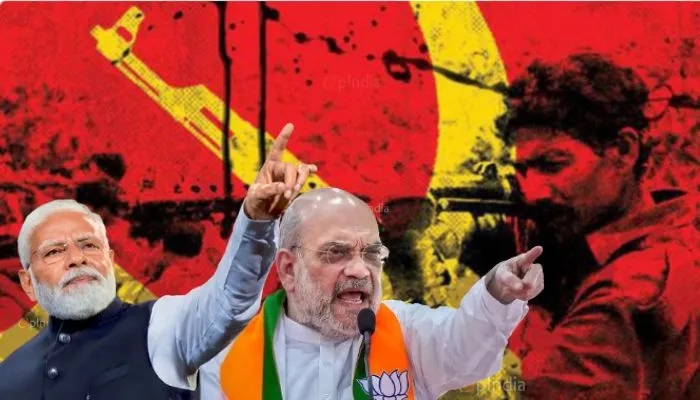
2025 in internal security: When India finally crushed Naxalism and cleansed the blot of Red Corridors from the landscape

When Amit Shah publicly set March 31, 2026, as the deadline to end Naxalism, it was not presented as an aspiration or political slogan. It was presented as a timeline. That distinction matters. Deadlines are announced only when the outcome is already visible on the ground, when the remaining task is closure, not conquest.

The war against Naxalism is not a small chapter in India’s internal security. It is the longest-running internal armed conflict, spanning 5 decades, multiple governments, and vast forested regions once known as the Red Corridor. For years, the state tried to manage it by counter operations, negotiating pauses, and reducing casualties. If victory was discussed at all, it was done so with caution. That caution disappeared in 2025.

This year was more than just increased encounters or routine operations. 2025 marked the decisive shift from managing Naxalism to dismantling it systematically and breaking its organisational, territorial, and ideological back. The movement lost its senior leadership, operational depth, recruitment capacity, and, most importantly, the confidence of its own cadres. Entire districts slipped out of Maoist hands. Hundreds surrendered. Safe zones collapsed.

It would be an understatement to refer to this as “progress.” What India is witnessing is the endgame of an insurgency that once claimed to represent the oppressed and mainly survives by intimidation and force. The assertion that Naxalism is coming to an end is not political messaging. It is a conclusion derived from empirical data that, when considered collectively, go in a single direction. The final announcement may come in 2026. But the war, for all practical purposes, turned irreversible in 2025. Naxalism is done and dusted.

Why 2025 changed everything

India’s fight against Naxalism moved in cycles for decades.  An offensive would follow a major ambush. Talks, a ceasefire, or a political pause would follow an offensive. The objective was containment, limiting casualties, protecting roads and polling booths, and preventing violence from spilling into cities. Naxalism was treated as a chronic condition, not a solvable one. That mindset quietly but decisively broke in 2025.

What changed was not just intensity but intent. The state stopped treating Naxalism as an “area management” problem and began treating it as an organisation that had to be dismantled end to end. The focus shifted away from symbolic presence and towards sustained domination, not for days or weeks, but for months at a stretch. Forests that once functioned as Maoist sanctuaries were no longer entered episodically; they were occupied, mapped, and held. The rejection of ambiguity was equally important. There was no attempt to maintain the appearance of equal conflicting messages on ceasefires, and no parallel track of negotiations operating concurrently with operations. The security establishment’s message was clear that this stage is about completely denying space, not negotiating it.

This clarity had cascading effects. Intelligence quality improved because local populations sensed permanence rather than temporary raids. Cadres began to realise that earlier escape routes no longer existed. Leadership found itself increasingly isolated from foot soldiers. The insurgency’s most significant historical advantage was time that stopped working in its favour.

In earlier years, Naxalism survived by waiting out governments.

In 2025, it ran into an immovable force that was no longer waiting, but kept hammering and crushing like a juggernaut.

Operation Kagar and the new security doctrine

If 2025 sees a change in intent, Operation Kagar will reflect how that intent should be implemented on the ground. This was neither a one-time event nor a headline-grabbing spectacle. It became shorthand for a new operating doctrine, sustained, intelligence-driven, and uncompromising. Operation Kagar focused on controlling the area for extended periods, rather than previous operations that invaded Maoist territory. It conducted confrontations and then departed. Security personnel remained deep within previously unreachable jungle areas. Communication lines were interfered with, arms stockpiles were found, movement corridors were blocked, and hideouts were destroyed. Maoists were routinely refused access to the forests, which were no longer used as makeshift battlegrounds.

A crucial change was the target audience for the operations. Instead of chasing small armed squads after attacks, forces focused on eliminating area commanders, zonal leaders, and senior operatives who held the organisation together. Across Chhattisgarh, Maharashtra, and adjoining regions Maoist strength was never about numbers alone; it was about hierarchy and discipline. Once that spine began to crack, the movement started losing coherence.

Coordination was equally important. Central forces, state police units, and elite jungle warfare teams worked in sync, sharing intelligence in real time. Operations no longer ended due to logistical constraints or political hesitation. Pressure was maintained until results were achieved. Operation Kagar symbolised this new reality that the state was no longer visiting Maoist territory. It was taking it back and staying there.

Leadership decapitation: Breaking the entire top command of the Maoists

What finally pushed Naxalism into a downward spiral was not just territorial loss but the systematic destruction of its leadership structure. For decades, the Maoist movement survived setbacks because its command chain remained intact. Foot soldiers could be replaced, but commanders could not. That equation flipped in 2025.

Sustained operations began eliminating area committee members, zonal commanders, and senior strategists who had operated with near impunity for years. These were not symbolic figures but operational brains, men who coordinated attacks, managed recruitment, handled finances, and maintained links between scattered units. Their removal did not just weaken the movement, but it paralysed it. It had an instant effect. As leadership was wiped out or was on the constant run, the local squads were left with no direction. Supply chains broke down. Intelligence leaks increased.

Cadres no longer knew whom to trust or where to regroup. In several regions, Maoist units disintegrated rather than fight.

Additionally, there was no credible second line ready to take charge. The old leadership had aged, and younger recruits lacked both ideological conviction and battlefield authority. What remained was a hollowed-out organisation with arms but leaderless.

By targeting the command rather than the crowd, the state achieved what decades of firefights could not. It broke the Maoists’ ability to function as a movement.

Surrenders by the hundreds, Govt’s message: Give up arms or die

Encounters show pressure, but surrenders reveal collapse. Furthermore, in 2025, the scale of Maoist surrenders spoke louder than firefights. Across Chhattisgarh, Maharashtra, and adjoining regions, hundreds of Naxal cadres laid down arms, including senior operatives and reward-carrying commanders who had spent years inside the movement.

These were not peripheral sympathisers. Many were trained fighters and organisers who understood the risks of defection. They surrendered not because of a single encounter, but because leadership had been wiped out, jungle sanctuaries were compromised, and escape routes no longer existed. Surrender became a credible exit. Rehabilitation policies and assurances of security made it clear that laying down arms was no longer a trap but a way out. When an insurgency is outgunned, it doesn’t end. When their own cadres start to fall, they come to an end.

When their own cadres no longer think the battle is worthwhile, they come to an end.

The ceasefire noise and why the government ignored It

As pressure began to build and the Maoist structure began to collapse, calls for a “ceasefire” suddenly grew louder. These appeals were amplified by left-leaning activists and sections of civil society that had long argued for talks. But this was not a peace initiative, but a pressure tactic from a weakening insurgency.

Ceasefires have historically allowed Maoist groups to regroup, rearm, and regain relevance. The government’s refusal to pause the operations shows confidence. Negotiations are tools of resolution, not rescue mechanisms for collapsing movements. By rejecting ceasefire demands, the state made its intent unmistakable: this phase was not about managing Naxalism’s decline, but it was about finishing it.

2026 will be the formal announcement, the war is over

In March 2026, when the government publicly declares an end to Naxalism, it will be an administrative milestone rather than the actual moment of victory. The decisive shift has already taken place. By 2025, the insurgency had lost its leadership, territorial depth, recruitment capacity, and ideological momentum. These are the four pillars that allow such movements to survive. What remains are scattered remnants, not a coherent force. The Red Corridor no longer exists as a continuous operational zone. Forests that once functioned as sanctuaries are under sustained security presence. The Maoist narrative of revolutionary inevitability has collapsed under the weight of its own irrelevance.

This does not mean the work ends with the silencing of guns. Post-conflict regions demand governance, development, and long-term political engagement. The vacuum left by violence must be filled by the state permanently and visibly to prevent relapse.

But one conclusion is now challenging to dispute: India is not witnessing the decline of Naxalism, but it is witnessing its closure. The announcement may come in 2026, but the end in every meaningful sense arrived in 2025.

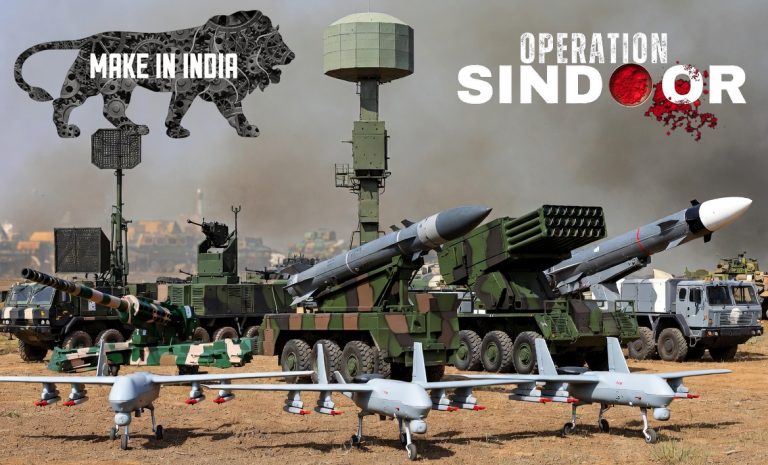
The year when India’s defence manufacturing got battle-proven: Operation Sindoor marked victory for Made In India weapon systems in 2025

2025 proved to be memorable for India in various respects. The economic growth, advancements in infrastructure, and new accomplishments in space and technology narrated the country’s significant success stories chronicled in the year. The dark spectre of Pakistan-backed terrorism loomed over the nation while the country celebrated extraordinary achievements. India endured a profound anguish when the beautiful landscapes of Pahalgam were marred with the blood of innocent Hindu tourists by jihadis.

However, the nation rallied together during this trying time and reaffirmed its commitment to countering Islamic terrorism, delivering a strong response to its foes. “Operation Sindoor,” which commenced on 7th May, exemplified not only the valour and strength of the country’s defence forces but also showcased the capabilities and prowess of its defence systems in subduing the enemy and protecting the nation from malicious designs.

Notably, the “Made in India” weapons played a crucial role in the operation, which not only demonstrated the might of the nation’s indigenous manufacturing to the world but also provided an additional impetus to the domestic defence industry. These weapons ranked among the top performers during the military action, illustrating the extent of India’s progress in self-reliance in defence under the Modi government.

India’s implementation of sophisticated electronic warfare methods, including decoys, signal suppression and radar jamming, rendered Pakistan’s air defence system vulnerable while massive terror infrastructure was dismantled deep within its territory.

“Made in India” weapon systems stand out during “Operation Sindoor”

India used SkyStriker drones, otherwise known as Loitering Munition Systems (LMS) or Low-Cost Miniature Swarm Drones, and unleashed a barrage of fire in Pakistan during the pivotal operation. These were initially added to the Indian Army’s inventory following the Balakot Air Strikes and are produced in Bengaluru by Adani’s Alpha Design in association with Elbit Systems of Israel.

Skystriker Drone

The Skystriker drone is a fully autonomous, disposable unmanned aerial vehicle (UAV) that can follow and engage with a target that the operator designates. Loitering munitions have considerably improved the military capabilities of the armed services by allowing them to destroy a target with pinpoint accuracy without necessitating direct troop engagement.

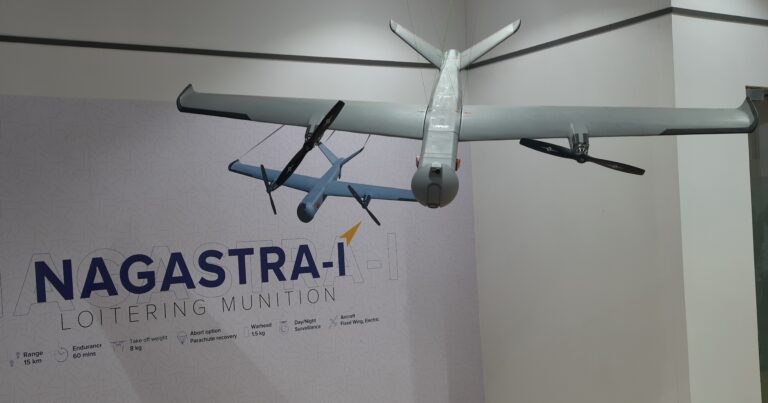
The Nagastra-1 man-portable loitering munition, which is a suicide drone, similarly penetrated inside Pakistan to get rid of the country’s terrorist bases. It is created by Solar Industries under the Defence Research and Development Organisation (DRDO) and has a 15-20 kilometre range.

Nagastra-1

With a 1 to 2 kilogram warhead for precise hits, Nagastra-1 can persist up to 60 minutes. It can be stopped in midair and retrieved, in contrast to conventional missiles.

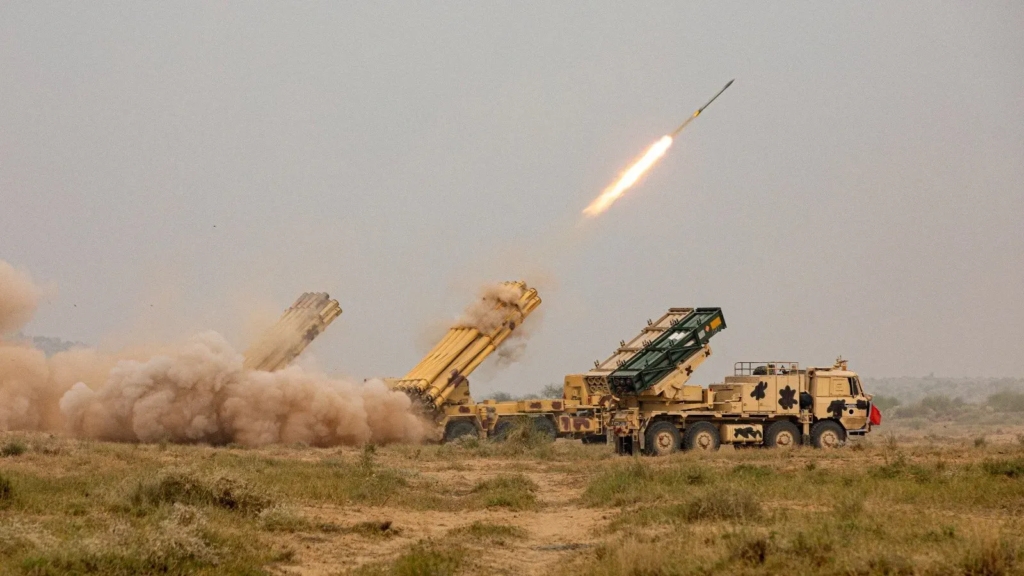
The Pinaka Multi Barrel Rocket Launcher (MBRL) is a long-range artillery weapon developed by the Defence Research and Development Organisation that is recognised for its fast response and accuracy. It was also used during the operation because of its precise and indigenous firepower.

Pinaka‘s multi-barrel launcher, placed on a high-mobility vehicle, is its key feature. Its makers, Munitions India and Tata Advanced Systems, have said that the launcher is able to saturate a target area before relocating by firing a salvo of 12 rockets in 44 seconds. Its efficacy on the battlefield is largely dependent on its shoot-and-scoot capability, which, when combined with auto levelling or stabilisation, decreases its susceptibility to counterbattery fire.

Pinaka Multi Barrel Rocket Launcher

The Pinaka family has grown substantially over time, as early models (Mk-I) had a range of about 38 kilometres, but Pinaka Mk-II models can reach up to 60 kilometres, according to Munitions India. Official sources attest to measures to increase reach well beyond 75 kilometres, with plans to approach the 120-kilometre class.

Brahmos flattens Pakistan’s air bases

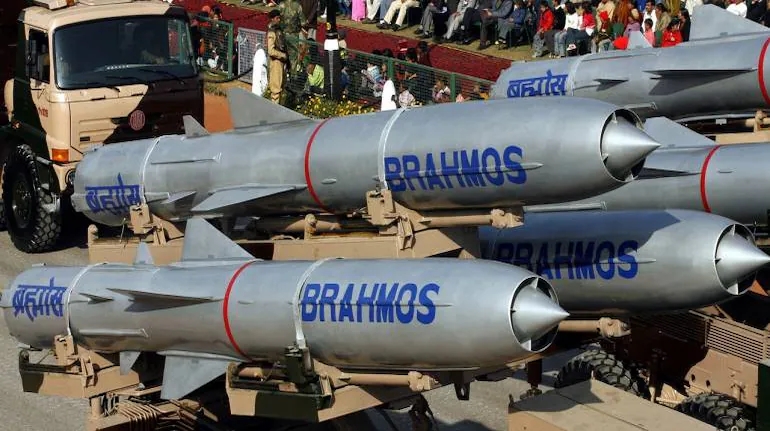
Islamabad’s feeble attempt to take revenge after being humiliated led to even more disgrace for the nation. BrahMos, which is a joint venture between India’s DRDO and the Russian Federation’s NPO Mashinostroyeniya, made its debut during the conflict.

In the early hours of 10th May, India reportedly orchestrated concentrated strikes on Pakistani military targets and launched the BrahMos supersonic cruise missile in a live fight for the first time. The Indian Air Force hit several important facilities, including Rafiqui, Murid, Nur Khan, Rahim Yar Khan, Sukkur and Chunian, in retaliation for attempts to breach the nation’s airspace and attack civilian areas.

Brahmos Missile

There were reports of further damage to the airfields in Skardu, Bholari, Jacobabad and Sargodha. Radar sites in Pasrur and Sialkot were also impacted. The BrahMos missile was likely one of the weapons deployed along with Scalp and Hammer munitions. Interestingly, the initial syllables of two significant rivers, the Brahmaputra in India and the Moskva in Russia, are combined to form BrahMos.

Pakistan had claimed to have obliterated BrahMos and the Adampur Air Base. However, in a comical twist, Prime Minister Narendra Modi made an appearance at the location on 13th May and was captured in a photograph standing right before the intact S-400, thereby dispelling the juvenile propaganda.

Akashteer Air Defence System: India’s own “Iron Dome”

Nearly 15 places in northern and western India, including Srinagar, Jammu, Amritsar, Bathinda and Chandigarh, were under attack by a coordinated drone raid by Pakistan. These locations are strategically important due to their proximity to vital defence facilities. However, India immediately activated its multi-layered air defence network.

The armed forces replied effectively to the Pakistani attack by deploying S-400 Sudarshan Chakra ADS and India’s own “Iron Dome” Akashteer Air Defence System (ADS), which was critical in organising and carrying out India’s forceful response to thwart the efforts to target Indian civilian populations.

Akashteer Air Defence System

Akashteer is designed, developed and manufactured by Bharat Electronics Limited (BEL) in partnership with the Defence Research and Development Organisation as well as the Indian Space Research Organisation (ISRO). It is a sophisticated Air Defence Control and Reporting System (ADCRS) known as Akashteer for the Indian Army.

The system’s gradual enlistment in the Indian Army started in 2024. On the western front, it has been applied to create an advanced defence over the Line of Control (LoC) and International Border (IB).

This air defence system creates a live web of real-time data to accurately identify aerial threats by integrating inputs from radar sources such as ground-based radars and early-warning systems. Every missile fired by the Islamic Republic was intercepted and neutralised by with the aid of the Akashteer.

Counter-Unmanned Aircraft System/D-4 Anti-Drone Systems 

The D4 Anti-Drone System is a domestic drone detection and neutralisation system created by the Defence Research and Development Organisation (DRDO), which is employed by India to stop Pakistani drone attacks. The Indian Air Force destroyed the enemy’s projectiles via an integrated counter-Unmanned Aircraft System (UAS) grid, anti-aircraft weapons and surface-to-air missiles. Drones and other approaching threats, such as missiles, were eliminated by the same.

Counter-Unmanned Aircraft System

This grid locates, recognises, and tracks possible airspace threats using a variety of technologies, comprising radar and radio frequency sensors. The system uses a variety of non-explosive countermeasures involving jamming radio signals and explosive countermeasures, including launching an interceptor projectile, once a threat is discovered. India brought in C-UAS against Pakistan.

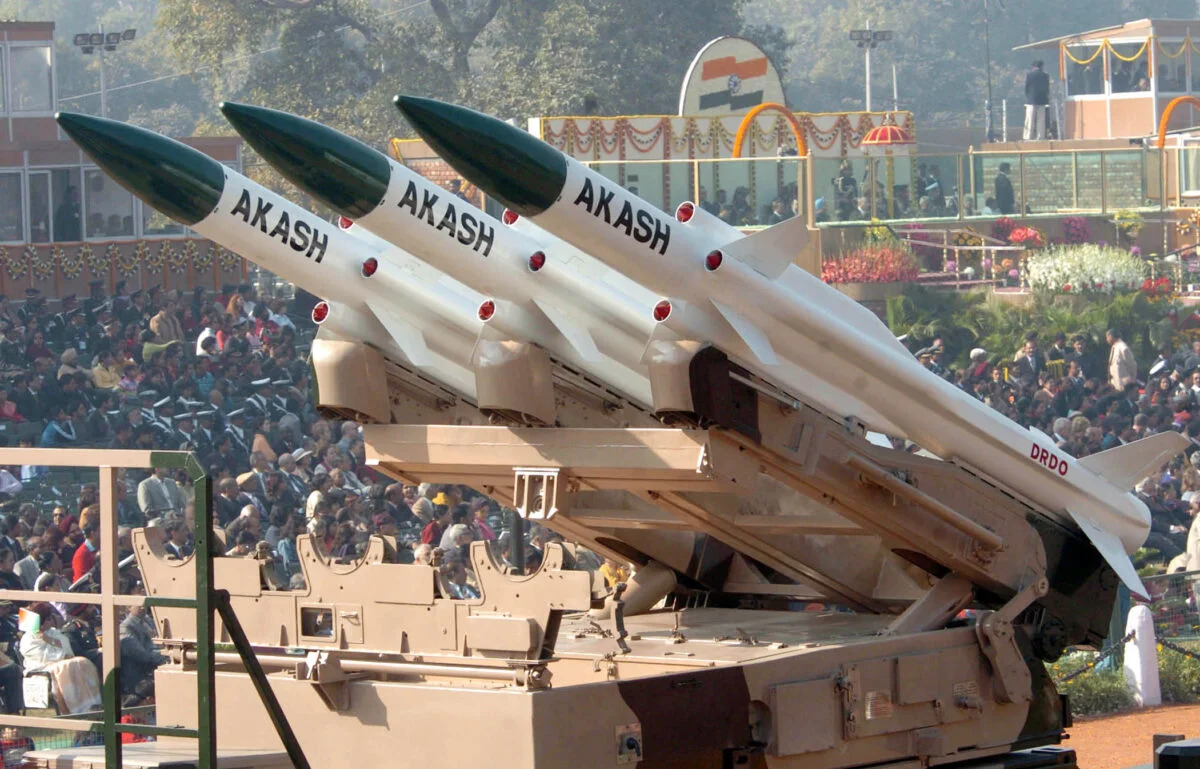
Akash Missile System

An excellent display of the Akash Missile System occurred in India’s answer to Pakistan’s assault on Indian cities, holy sites and military installations. The system is fully operational in both the Indian Army and Air Force. It can be used on tracked or wheeled vehicles for rapid response and is effortlessly mobile.

Akash Missile System

The system is a medium-range surface-to-air missile system with a range of 25 to 30 kilometres and the capacity to engage targets at an altitude of more than 20 kilometres. It is developed by DRDO and produced by Bharat Dynamics Limited (BDL) to intercept and destroy a variety of aerial threats, including fighter jets, drones and cruise missiles. This system has mobile launchers and an indigenous Rajendra radar. It has the ability to simultaneously monitor and annihilate several targets.

“Initially, the Indian Army showed no interest in Akash, but we designed it to intercept high-speed threats like drones, missiles, helicopters, and even supersonic F-16 fighter jets flown by Pakistani pilots,” mentioned Dr Prahlada Ramarao, a former DRDO scientist who oversaw the system’s development. He added, “This is the happiest day of my life to see the missile I helped build strike enemy aerial targets with such precision and elegance.”

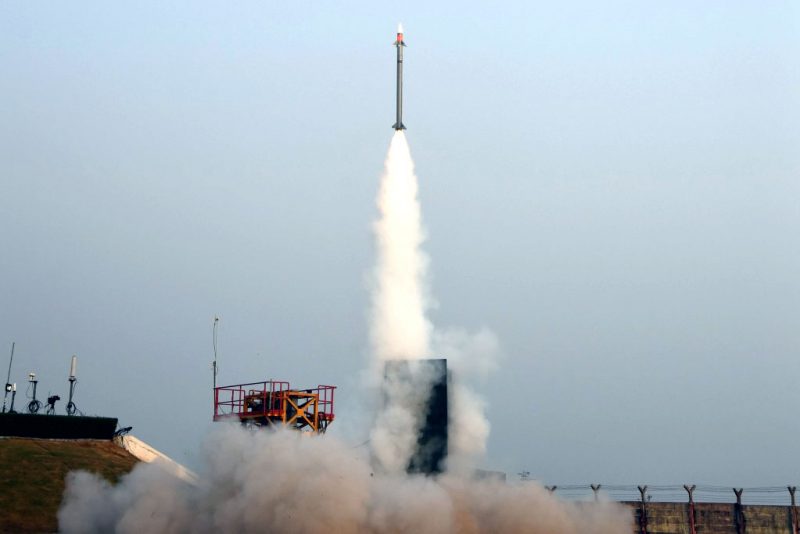
MRSAM (Medium Range Surface to Air Missile) system

India also used the MRSAM system to teach a tough lesson to the terror state. It is a surface-to-air missile (SAM) system and can hit targets farther away than Akash. The system is developed by DRDO in cooperation with Israel and is composed of supersonic missiles. It can destroy targets up to 70 kilometres away.

Medium Range Surface to Air Missile

The Indian Air Force and Navy use the system. It is installed on ships and can be fitted on trucks and has reportedly also been employed at Indian Air Force bases. The system instantly detonates any aerial danger entering its 2000-kilometre coverage area. 2021 saw its induction into the Air Force, and efforts are being undertaken to advance MRSAM.

L-70 and MGS-23 anti-aircraft guns

India also shot down Pakistani drones using L-70 anti-aircraft weapons. It was created by the Swedish business Bofors and Larsen & Toubro produces it in India. India has 1000 of these anti-aircraft weapons.

L-70 anti-aircraft gun

India has improved them on a number of other technical fronts, such as radar. Large-scale drone attacks can now be prevented by the L-70 anti-aircraft gun. Its range is approximately 4 kilometres and jams hostile drones in addition to shooting them down by firing at them.

Modular Gun Sight (MGS)-23, an upgrade of Zu-23-2, was stationed in certain regions during the operation, where it successfully repelled many drone-based attacks and responded to ceasefire violations across the MoC. Tonbo Imaging, a defence optics company with headquarters in Bengaluru, introduced a crucial system improvement to one of the Army’s long-standing anti-aircraft systems.

Targets can be engaged at night with the employment of a user-friendly display system and thermal imaging weapon sight (TWS). The TWS operates at 50 Hertz, enabling the user to see fast-moving aerial targets without any distortions or latency. A mounting kit is included for easy and rapid integration with the Zu-23 gun platform, and the entire package is self-sufficient. It even withstands shock and challenging combat circumstances on land, in the air, or at sea.

Conclusion

“Operation Sindoor” served as a significant blow to Pakistan and exhibited India’s indigenous weaponry alongside its capacity to crush any global threat. Consequently, the aftermath resulted in a substantial spike in domestic manufacturing within the defence sector. IdeaForge Technology Limited, a drone technology company of India, in June obtained an order from the Indian Army for hybrid small unmanned aerial vehicle systems valued at around 137 crore under emergency procurement.

More importantly, the Rafale fuselage, an indigenous jet engine and the Hammer weapons system are set to be produced in India. Moreover, the Adani Group recently announced to invest 1.8 lakh crore, particularly for the development of advanced guided missiles and unmanned and autonomous systems.

The government, industry giants and various companies have united to advance the ambitious “Make in India” initiative and ensure that the country attains complete self-reliance in the defence sector. “Operation Sindoor” has driven India’s efforts to enhance manufacturing within the nation, promoting self-sufficiency, minimising imports and expanding exports.

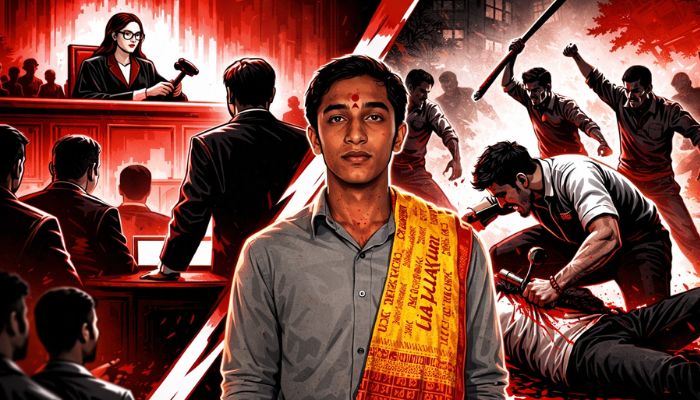
Nobody killed Vishal Kumar: Read what reasons the court gave to acquit all 20 accused in ABVP activist murder case in 2012

0

On 30th December, the Additional Sessions Court in Mavelikkara acquitted all 20 adult accused in the 2012 murder of ABVP activist Vishal Kumar. The court stated that the prosecution failed to prove its case beyond reasonable doubt. The verdict was delivered by Judge P P Pooja. OpIndia accessed the copy of the judgment in the matter.

While the verdict did not dispute that Vishal was murdered, it concluded that the State could not legally establish who did it, or how a large group could be fastened with collective liability for the crime. The prosecution said that it would challenge the verdict in the High Court.

The judgment came as a second injury for the victim’s family, not because courts are expected to convict without proof, but because the reasons cited for the acquittal exposed a deeper institutional failure. The judgment pointed out that the investigation that began the day Vishal was killed could not preserve the basics, a reliable first version, prompt procedure, credible identification, clean recoveries, and consistent witness testimony.

The system allowed gaps and contradictions to grow so large that a murder in a busy campus setting ended in a legal conclusion that no one could be punished. It left behind an uncomfortable headline that almost wrote itself, a young ABVP activist was stabbed to death, and 13 years later, nobody killed him.

The campus murder of July 2012

Vishal was only 19 years old when the incident happened. He was a first year BSc student at NSS College, Konni, and an ABVP activist from Chengannur. On the morning of 16th July, he was at Christian College to welcome freshers as part of ABVP activities. The prosecution’s case was that Campus Front members arrived at the college, abused the ABVP group, got into an altercation, and it spiralled into a violent attack with a knife and other objects. Vishal, who tried to alleviate the situation, was stabbed. Two other ABVP members, Vishnuprasad and Sreejith, were also injured.

Vishal was rushed to the government hospital in Chengannur and was then shifted to Kottayam Medical College Hospital. He succumbed to his injuries in the early hours of the next day. This was not a crime that happened in a private space or in isolation. It took place in a politically charged campus atmosphere, outside the college gate, where hundreds of students were present.

This detail mattered because the judgment repeatedly returned to the central theme that in a situation like this, the prosecution must either produce strong independent corroboration, or it must present an unimpeachable, consistent account from its key witnesses. The court stated that nothing of this sort was present in the prosecution’s arguments.

Who were the accused, and why this case carried a wider political shadow

The 20 individuals who were acquitted by the court were described as members of Campus Front of India (CFI), which was the student wing of the Popular Front of India (PFI). PFI was banned by the Government of India in September 2022. One more accused was a juvenile at the time of the offence. His case was separated for proceedings before the Juvenile Justice Board in Alappuzha.

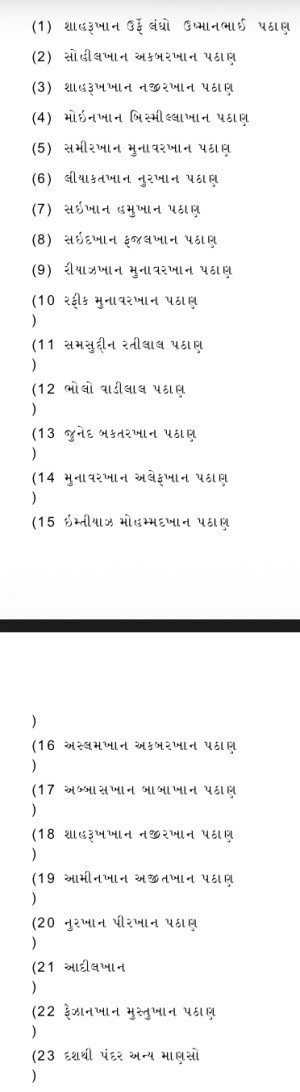
The list of acquitted accused, as reported at the time of the verdict, included Ashiq, Shafeeq, Ansar Faisal, Shafeeq, Asif Muhammad, Nasim, Sanuj, Althaj, Shameer Rawther, Safeer, Afsal, Abdul Wahab, Shibin Habeeb, Shahjahan Maulavi, Nawaz Sherif, Shameer, Sajeev, and Saleem.

They faced serious charges including murder, unlawful assembly armed with deadly weapons, rioting, wrongful confinement, and allied provisions, along with conspiracy. Some of them were also booked for harbouring the accused. The defence position was that the case had been inflated to rope in many, and that only one person stabbed the victim while the others were made to stand trial on a broad political narrative.

In substance, the court’s verdict leaned towards a similar conclusion, not necessarily by accepting every defence claim, but by finding that the prosecution could not meet the strict threshold required for conviction.

This is where the victim centric lens matters. Even if courts must acquit when evidence does not cross the legal threshold, the question that remains is why the evidence did not cross it. The judgment pointed to avoidable gaps, and those gaps, in turn, pointed to avoidable failures by the police and prosecution.

A thirteen year journey, and the cost of delay

The case was first investigated by the local police, later handed to the Crime Branch, and a chargesheet was filed against 20 individuals including the juvenile. During the trial, the prosecution examined 55 witnesses and produced 205 documents, and the case was handled over time by multiple officers.

Long timelines corrode cases in predictable ways. Memories fade, witnesses turn hostile, and early investigative omissions become impossible to cure later. But the troubling part in this matter was that key weaknesses were not merely the product of time. Some were present from the first hours and days, the handling of the first information, the lack of proper identification procedures, and the way search and seizure material was documented and presented.

The judgment must be studied as a manual on how reasonable doubt grows, not because the crime is unclear, but because the case construction was not disciplined enough to survive cross examination.

The court’s first major finding, the first version itself was suspect

One of the most damaging parts of the judgment for the prosecution was the court’s conclusion that the first information and related documents appeared to have been antitimed, and possibly even antedated.

In its judgment, the court noted that the prosecution’s claim that recording of the first information began at 11.45 am could not be relied on. Furthermore, the court said that there was merit in the defence contention that the first information and the connected document were antitimed. The court also noted that the endorsement showed the documents reached the court office only at 10.45 am on 17th July 2012, the day after the incident, and recorded that there was merit in the defence contention that the documents were antitimed and may have been antedated as well.

This was not a minor technicality. In criminal trials, a prompt and reliable first version anchors the narrative. When the first version becomes doubtful, the entire prosecution story begins to look like a product of later stitching, particularly when later testimonies add names, roles, and motive details that were missing at the start.

The court went further and pointed out that even claims about when information was received at the police station, and how that was recorded, did not inspire confidence. When a court places the first version under suspicion, every later improvement becomes easier to dismiss as embellishment.

The court’s second major finding, the prosecution ‘suppressed the genesis’ and presented a ‘one sided story’

A key portion of the judgment addressed the context of the clash and the presence of other student groups at the spot. The court stated that the prosecution suppressed the genesis of the crime and projected a one sided version of the ABVP members, creating doubt regarding the entire prosecution story.

This line was particularly significant because it was not merely about a witness contradicting himself. It was a judicial finding that the prosecution narrative was incomplete in its portrayal of what led to the incident, who all were present, and how the confrontation unfolded.

In a politically charged campus environment, courts look for neutrality and corroboration. If multiple groups were present, the court expects either independent witnesses, or at least a credible attempt to capture and present the wider scene. The court’s criticism suggested that the investigation and prosecution did not sufficiently grapple with this basic expectation.

Eyewitness testimony, when ‘injured witness’ was not enough

The prosecution relied heavily on the injured eyewitnesses, Vishal’s companions who were themselves wounded in the incident. Ordinarily, injured witnesses carry weight because they are presumed to have been present and to have little reason to falsely implicate random people while sparing real attackers.

But courts still test credibility, consistency, and procedure. Here, the judgment repeatedly noted omissions in early statements, later improvements, and contradictions, especially on whether several accused were already known to the witnesses.

The court observed that if certain accused were known to the primary witness as later claimed, he should have stated that fact in the first information itself, and the absence of those details created doubt about their identity, their presence, and their complicity. The court also noted that claims about several accused being known previously did not find place in the first version, and the later expansion created doubt.

This was where the tragedy of delay and poor documentation merged. If a witness truly knew several accused, the case needed to capture that clarity immediately. If he did not know them, then the investigation needed a proper identification procedure.

The prosecution appeared to have ended up in the worst of both worlds, claiming familiarity later without recording it early, and failing to properly identify unknown accused through robust legal procedure.

The fatal procedural gap, no reliable test identification parade

One of the most repeated themes in the judgment was the weakness of identification evidence. The court noted that identification not preceded by a Test Identification Parade could not be safely relied on in the facts and circumstances of the case, especially when improvements from prior statements made a witness unreliable.

For at least one accused, the judgment noted that he was not identified by any witness through a test identification parade. The court also noted that the prosecution had no case that several accused were identified by the witness through a test identification parade or otherwise.

This was not a small lapse. When accused persons are not previously known, test identification is a basic step, not a luxury. It preserves the evidentiary value of recognition before memories fade and before witnesses are exposed to photographs, media reports, or informal police cues. When that step is skipped, dock identification years later becomes vulnerable to the argument that the witness was merely pointing to the person he knew was the accused, not the person he genuinely remembered.

In a mass assault case where the prosecution wants the court to apply unlawful assembly and common object principles, identification becomes even more critical. If individuals cannot be firmly placed at the scene with credible identification, the entire architecture of group liability collapses.

Motive and later improvements, the ‘love jihad’ claim that did not exist at the beginning

The prosecution side suggested that Vishal faced hostility because he had opposed “love jihad” activity and that this contributed to motive. The judgment, however, highlighted that such a claim did not appear in the earliest statements, and it recorded admissions by witnesses that they had not given statements to that effect at the initial stage.

When motive is introduced late, courts treat it with caution. Motive is not always necessary when there is direct evidence, but when direct evidence becomes shaky, motive becomes the glue that holds the narrative. If the glue itself looks like a late addition, it weakens the structure further.

The larger point was not about whether that motive was true or false in the real world. It was about case building. If the State wanted motive to matter, it needed to record it early, corroborate it, and present it consistently. The court found that did not happen.

Search and seizure, when a missing witness and late documentation became reasonable doubt

The judgment also flagged significant issues in the way searches and seizures were handled, particularly around a search in the house of the accused described as the alleged stabber. The court noted that the officer who conducted the search in the house of that accused was neither cited nor examined before the court. It also noted that while the search memo showed the search proceedings, the search memo reached the court only on 25 July 2012, even though the search was stated to have occurred on 17 July 2012.

A search memo reaching the court late, coupled with failure to examine the searching officer, is a gift to the defence in any serious trial. It invites the argument that the recovery is tainted, that documentation was created later, or that the chain of custody is uncertain. Courts do not need to declare evidence fabricated to still find that the manner of proof is unreliable.

Forensics did not rescue the case, and the judgment said so

Where eyewitness testimony becomes contested, forensic corroboration can often rescue the prosecution. Here, the judgment indicated that it did not.

The court noted, for instance, that a material object contained blood insufficient to ascertain origin and group. It also noted that certain clothing items contained human blood but the group could not be ascertained, and it added that these circumstances alone were insufficient to prove guilt beyond reasonable doubt.

This is again a familiar pattern in failed prosecutions. Forensic results that do not conclusively link the weapon or clothing to the victim, or do not establish blood group match, do not provide the kind of hard corroboration that courts prefer when other parts of the narrative are under doubt.

This does not mean forensics disproved the prosecution. It means it could not strengthen it enough to cross the criminal standard of proof.

Conspiracy and harbouring, the add on charges that could not stand without a strong core

Once the court found the core murder case unproven beyond reasonable doubt, the add on charges, conspiracy and harbouring, had little chance of surviving unless independently established. The judgment indicated that the prosecution could not convincingly prove that particular accused sheltered offenders as claimed, or that a conspiracy was established in a manner the law requires.

This was not merely a technical outcome. It revealed how the prosecution appeared to have built a wide net, but without reinforcing the foundation that would allow the net to hold.

In politically sensitive cases, the temptation is often to charge broadly, to show seriousness, to bring in common object and conspiracy, and to present the incident as an organised attack. The risk is that if identification and procedural proof are not airtight, the breadth becomes a weakness. Every additional accused becomes another point of doubt, another gap to exploit, and another reason for the court to hesitate.

What comes next

The prosecution has said it intends to appeal. The High Court will examine whether the trial court’s view was a plausible view of the evidence, whether key evidence was misread, whether legal principles were wrongly applied, and whether an acquittal can be overturned. Appeals against acquittals are possible, but they are not easy, because appellate courts are cautious about reversing a finding of reasonable doubt unless there is a clear error.

Meanwhile, the human truth remains unchanged. Vishal Kumar was 19. He died from a stab injury after an attack outside a college gate. He did not return home. His family has lived with a thirteen year wait that ended in a verdict that offers no closure.

If the system wants to avoid more such verdicts, it must learn from what this judgment flags, not by attacking the court for applying the law, but by forcing accountability on investigation and prosecution for failing to do what the law requires from the beginning.

Because when the first information is doubted, identification is not secured, witnesses improve, key officers are not examined, and forensics do not corroborate, the courtroom outcome becomes almost prewritten. The accused walk free, the victim is buried again, and the public is left with a brutal line that should never become normal in a civilised society.

Nobody killed Vishal Kumar, not because the crime did not happen, but because the State could not prove who did it.

You can read the judgment here.

Trouble in Arabia: Traditional oil kingdom allies Saudi Arabia and UAE come face to face in Mukalla port of Yemen. Read what caused this

Tensions boiled in the Middle East after the Saudi Arabia-led coalition force conducted an airstrike on military vehicles and cargo at the port of Mukalla in the Hadramout Al-Mahra in Yemen. The Saudis claimed that the UAE sent the shipment, and it contained weapons for separatist forces, in violation of UN resolutions. The Saudis alleged that the UAE’s military support to separatist forces in Yemen threatens regional stability.

Why did Saudi forces strike the UAE shipment they claimed was sent for separatists in Yemen?

What triggered Saudi Arabia to carry out the bombing was the United Arab Emirates’s backing of the Yemeni separatist forces, particularly the Southern Transitional Council. The STC extended open support to the UAE’s presence in Yemen.

In early December, the Southern Transitional Council, a separatist group which seeks southern Yemen’s independence again, launched a swift military offensive. The STC captured important areas in the oil-rich Hadramout (also spelt Hadramaut), and then moved into the neighbouring Al-Mahra province.

Interestingly, the STC captured these areas without much fighting as most Saudi-backed government forces and local outfits either withdrew or posed almost no resistance. In a matter of days, the UAE-backed STC took control of major cities, oil fields, export facilities, and ports that used to be under the official Yemeni Presidential Leadership Council government’s control.

This was a historically significant episode, as before 1990, when Yemen united, there was a southern state called the People’s Democratic Republic of Yemen. By seizing control of major provinces in the southern Yemen, the STC essentially controls almost all the land that was once officially part of the southern state of Yemen, including the oil-rich areas and key ports.

The STC and UAE pulled off a massive power move to manufacture facts on the ground for a future independent southern Yemen. However, this move did not sit well with Saudi Arabia, which wants Yemen to remain united under one government, of course, a pro-Saudi one.

Consequently, the Saudi forces launched an airstrike on Tuesday targeting the alleged UAE weapons shipment destined for the STC. The Saudi airstrikes marked the first direct attack against UAE-linked assets in a restive Yemen. Saudi Arabia declared the UAE’s actions in Yemen as “extremely dangerous”. Riyadh accused Abu Dhabi of backing the activities of Yemeni separatist groups that could divide Yemen further.

The episode stoked apprehensions that the long-simmering Saudi-UAE rivalry will escalate into open friction.

Saudi Arabia accuses ‘brotherly’ UAE of pressuring STC to conduct military operations in Hadramout and Al-Mahra near Saudi borders

In a statement issued on 30th December, Saudi Arabia’s Ministry of Foreign Affairs echoed the Yemeni Presidential Leadership Council’s claim that the UAE sent ships carrying weapons and armoured vehicles from the port of Al-Fujairah to the port of Al-Mukalla, “without obtaining official approvals of the Coalition Joint Forces Command.”

Saudi Arabia called the STC’s takeover of Hadramout and Al-Mahra a “threat to the Kingdom’s national security, and the security and stability of the Republic of Yemen and the region.”

“The Kingdom of Saudi Arabia expresses its disappointment by the actions taken by the brotherly United Arab Emirates, pressuring the Southern Transitional Council’s forces to conduct military operations on the southern borders of the Kingdom in the governorates of Hadramout and Al-Mahara, which is considered a threat to the Kingdom’s national security, and the security and stability of the Republic of Yemen and the region,” the Saudi Foreign Ministry said.

“The steps taken by the UAE are considered highly dangerous, inconsistent with the principles upon which the Coalition to Restore Legitimacy in Yemen was established, and do not serve the coalition’s purpose of achieving security and stability for Yemen.

In this context, the Kingdom stresses that any threat to its national security is a red line, and the Kingdom will not hesitate to take all necessary steps and measures to confront and neutralize any such threat,” it added.

UAE denies sending weapons to the separatist group in Yemen

After Saudi Arabia remarked that it views the UAE’s arming of the STC as “a red line for its national security”, the UAE’s Foreign Ministry claimed that it is not a part of any regional effort to undermine Saudi Arabia.

The UAE categorically rejected the claims of the Coalition Forces that the UAE is fuelling conflict in Yemen. Abu Dhabi claimed that the shipment attacked by the Saudi forces did not include weapons, adding that the vehicles were not for the use of any Yemeni party but for UAE forces active in Yemen. The UAE also expressed surprise over the Saudi airstrike.

“With regard to the statement issued by the military spokesperson of the Coalition Forces concerning the military operation at the Port of Mukalla, the Ministry of Foreign Affairs affirms its categorical rejection of claims alleging the fueling of the Yemeni conflict, noting that the referenced statement was issued without consultation with the Coalition member states,” the UAE foreign ministry said.

“The Ministry confirms that the shipment concerned did not include any weapons, and that the vehicles unloaded were not intended for any Yemeni party, but were shipped for use by UAE forces operating in Yemen. The Ministry stresses that the allegations circulating in this regard do not reflect the nature or purpose of the shipment, and underscores that there was high-level coordination regarding these vehicles between the UAE and Saudi Arabia, along with an agreement that the vehicles would not leave the port. Nevertheless, the UAE was surprised by the targeting of the vehicles at the Port of Mukalla,” it added.

UAE announces voluntary troop withdrawal from Yemen: Abu Dhabi prioritising peace, or is it a tactical retreat?

While Yemen’s UAE-backed Southern Transitional Council declared open support to the UAE amidst escalating tensions on Tuesday, the Saudi-backed Presidential Leadership Council issued a 24-hour ultimatum to the UAE forces, asking them to withdraw all military and fiscal support to separatist Yemeni factions.

After calling for “restraint and wisdom” and disputing Saudi Arabia’s allegations, the UAE suddenly announced that it will withdraw its remaining troops in Yemen. However, it remains unclear if the UAE-backed separatist factions will relinquish control over the territories they recently captured.

The UAE’s fast bend in the face of rising tensions comes across more as a tactical retreat to avoid direct confrontation with a large and powerful former ally, Saudi Arabia, than a complete discontinuation of support for separatist groups in Yemen.

Not to forget, the UAE has significantly reduced its direct military presence in Yemen since 2019, only to shift to proxies like the STC. The UAE has invested in Southern Yemen’s infrastructure, and Abu Dhabi knows that any broader conflict can disrupt its trade and energy projects there. However, the UAE’s announced troop withdrawal does not essentially mean a full disengagement.

The future course of action

On the face of it, the things between the UAE and Saudi Arabia seem to be cooling down, given the former’s announcement of voluntary troop withdrawal from Yemen. However, the rift will not end that easily, and this UAE-Saudi rift may weaken the anti-Houthi front, allowing the Iran-backed outfit, which now controls western Yemen, to consolidate gains.

Furthermore, if the dispute fails to reach a diplomatic resolution, it could lead to an economic fallout, which could bring volatility in the oil markets, given that both Saudi Arabia and the UAE are decision-making players in the Organisation of the Petroleum Exporting Countries (OPEC). Saudi Arabia’s accusation that the UAE is attempting to undermine its security could stir up tensions in the Gulf Cooperation Council relations as well, leading to broader implications. Pakistan, which has been dependent on both KSA and UAE for financial aid and defence partnerships, could face a dilemma if Saudi-UAE friction refuses to ease.

The prolonged civil war in Yemen has killed over 3 lakh people, and the local populace grapples with famine. If a fresh UAE-Saudi conflict, be it directly or via proxies, escalates, the already wounded Yemen will bleed further.

After this episode, it is expected that Yemen will witness a power realignment, with Saudi Arabia trying to consolidate control over the anti-Houthi camp, and pushing for a unified state, while the UAE will intensify indirect influence in southern Yemen. It remains to be seen whether the fragile UN-led peace talks will yield peace, or Yemen’s fragmentation, power tussle and bloodbath will continue.

Old enmity, attack on a Hindu family and stone-pelting: FIR filed against a mob including Shah Rukh — what happened in Kalana village of Sanand?

There has been an atmosphere of tension in Kalana village of Sanand taluka in Ahmedabad for the past two days. The situation deteriorated after some history-sheeters from the Muslim community allegedly attacked a Hindu family due to an old rivalry, eventually leading to stone-pelting. Some videos related to the incident have also gone viral on social media, showing stones being hurled. Following the incident, the police registered FIRs based on complaints from both sides. Police and CRPF teams have been deployed in the village.

OpIndia has accessed a copy of the FIR. Based on a complaint registered at the Sanand GIDC police station on 29 December, an FIR was filed against 22 Muslim individuals, including Shah Rukh Khan, Moin Khan, and Liaqat. The FIR was lodged on the complaint of a 17-year-old minor from Kalana village.

What does the complaint say?

According to the complaint, about a year ago there was a minor altercation between members of the Hindu Thakor community and some members of the Muslim community in the village. After prolonged tension over the issue, community elders from both sides had arrived at a compromise around a month ago.

As per the complaint, on the day of the incident, the minor complainant was sitting on the outskirts of the village with a friend when Shah Rukh Khan arrived and began arguing. When Shah Rukh started abusing him verbally, the minor took out his mobile phone and began recording a video. Enraged by this, Shah Rukh allegedly snatched the phone from the minor’s hand, slapped him, and threatened to kill him before leaving the spot.

After returning home, the minor narrated the entire incident to his family members. Some of his relatives and other villagers then went to speak to Shah Rukh to resolve the matter. However, it is alleged that Shah Rukh’s family members, including some women, abused them instead.

The complaint further alleges that Shah Rukh, along with around 20–25 Muslim individuals armed with sticks and batons, then attacked the Hindu family. The mob later resorted to stone-pelting and vandalism. Elderly members and women of the Thakor family sustained injuries and were subsequently shifted to a hospital for treatment.

FIR registered against the accused

After the police arrived, the situation was brought under control. Based on the complaint, the Sanand GIDC police station registered a case against Shah Rukh and others under Sections 115(2), 352, 351(3), 189(2), 191(2), 190, 194(2), 324(2), and 125(a) of the Bharatiya Nyaya Sanhita, and further investigation was initiated.

Meanwhile, a Muslim woman from the other side has also filed a complaint alleging assault by some members of the Thakor community, and the police are taking action in that case as well.

The entire incident occurred on the night of Monday (29 December). On Tuesday, both groups again came face to face, leading to fresh stone-pelting. Subsequently, a large police contingent reached the village and carried out combing operations. Fearing arrest, the accused reportedly fled their homes and hid in nearby fields, from where they were tracked and arrested using drones. It is learnt that the police have arrested 42 people in connection with the case.

Considering the situation, police and CRPF units have been deployed in the village. At present, the situation in Kalana village remains peaceful.