Home Blog Page 1608

DGCA flags ‘Spoofing’ and ‘jamming’ threats following reports of planes losing GPS signal over the Middle East, issues advisory to airlines

0

On 24th November (Friday), the Directorate General of Civil Aviation (DGCA) issued an advisory to all Indian airlines. The advisory highlighted measures to deal with the emerging threats from “jamming” and “spoofing” of the Global Navigation Satellite System. The advisory comes in the wake of recent reports of “interference” with the aircraft’s navigation system over parts of Middle-Eastern airspace. 

As a result of these “interferences” by ways of spoofing and jamming, there were increasing reports that aircraft lost GPS signals and several civilian flights had been navigating blindly over the Middle Eastern region. 

The DGCA circular is for aircraft operators, pilots, air navigation service providers, and air traffic controllers. It states, “The aviation industry is grappling with uncertainties due to new threats and reports of GNSS (Global Navigation Satellite System) jamming and spoofing.”

The circular takes note of “increasing reports of GNSS interference over the airspace in the Middle East in the recent past”. It has called for the development of contingency measures so that it can deal with the jamming of navigation systems. Further, the DGCA has also sought the creation of a threat monitoring and analysis network. 

Notably, in late September, there were multiple reported incidents where Indian civilian aircraft had to divert from Iranian airspace due to a snag in the navigation system. Reports underscored that multiple commercial flights near Iran deviated from their planned routes when their navigation systems experienced disruptions and they went blind while flying over the region. In one particular case, a flight came close to entering Iranian airspace without permission after it became a victim of spoofing. 

On 4th October, India’s highest civil aviation regulatory body, DGCA constituted an internal committee based on these reports of interferences with the GNSS over the Middle East. 

Based on the committee’s report, DGCA has issued this advisory which provides comprehensive mitigation measures and an action plan. The circular has also been issued to the Airports Authority of India (AAI) which is the country’s air navigation service provider (ANSP), and all air traffic controllers come under it.

The DGCA circular is about the development of contingency procedures with support from equipment manufacturers and assessing operational risk by conducting a safety risk assessment.

Emerging threat of ‘Spoofing’

GPS spoofing and jamming are actions where someone intentionally transmits false signals to disrupt the regular operation of GPS systems. Spoofing occurs when a transmitter sends a misleading GPS signal, causing navigation failures for the receiver antenna. In contrast, jamming involves blocking authentic GPS signals, leaving the aeroplane to navigate ‘blindly’ without guidance. Although jamming is more common, spoofing is a more serious threat that can lead to significant mishaps.

Reportedly, a group of professional pilots, flight dispatchers, schedulers, and controllers named OpsGroup had also flagged the issue.

As per media reports, the planes flying in the Middle Eastern airspace initially receive a “spoofed” GPS signal which is aimed at fooling the aircraft’s in-built system. This leads it to believe that the planes are flying miles away from their intended route. In many cases, the signal is strong enough to compromise the integrity of the aircraft’s system.

Subsequently, the inertial reference system (IRS) of the plane becomes unstable and it often loses all navigation capability. 
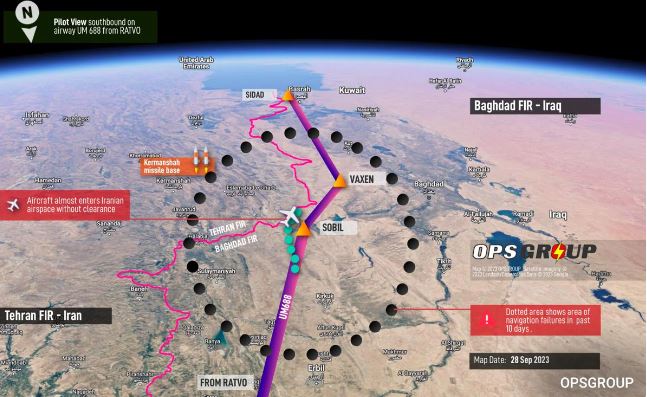
(The dotted area shown reported incidences of navigation failures, as per Opsgroup, Image Source – Opsgroup/NDTV)

The main cause for concern lies in the busy air corridor situated in Northern Iraq and Azerbaijan, with several reported incidents, particularly near Erbil. By September, a total of 12 distinct incidents had been reported, with the latest occurrence near Ankara, Turkey on November 20.

Although any culprit remains to be unidentified, it is believed that the occurrence of jamming and spoofing might be linked to the deployment of military electronic warfare systems in regions experiencing heightened regional tensions.

‘Whenever opposition has abused PM Modi, the public has responded by voting for BJP’: Amit Shah on Rahul Gandhi’s ‘Panauti’ remark

Union Home Minister Amit Shah responded to Congress leader Rahul Gandhi’s ‘Panauti’ comment against Prime Minister Narendra Modi while holding a press conference in Hyderabad on 25 November. He asserted, “People have reacted in a special way whenever low remarks have been passed against PM Modi. People of Telangana will vote for BJP. All corruption scams will be investigated in Telangana after the BJP government is formed here.”

He noted, “Whenever they have abused PM Modi the public has given them an answer by voting for the Bharatiya Janata Party.” He expressed optimism for the BJP’s performance in the forthcoming state elections, the results of which will be revealed on 3 December. “I am confident that we will form a government in Madhya Pradesh, Chhattisgarh and Rajasthan and do extremely well in Telangana.”

The BJP remarked, “It is a good thing that they gained the knowledge even if it was late,” when asked about the temple hopping of Congress leaders on election day. He also attacked Chief Minister K. Chandrashekar Rao’s government of Telangana. He stated that this election was important for the people of Telangana and the state which was formed after a long struggle. Telangana pride was an important issue and 10 years ago, the revenue was in surplus while now it is in debt.

He charged, “One lakh jobs were promised but the paper was leaked. KCR’s party Bharat Rashtra Samiti (BRS) has done nothing but corruption in ten years and many scams have been perpetrated. Simultaneously, the BJP has kept all of its promises, including those regarding Article 370, Ram Mandir and triple talaq. KCR, on the other hand, solely engages in appeasement politics.”

Will end Muslim reservation

According to the Home Minister, the chief minister grants 4 per cent religious reservation, which is unconstitutional. Muslim reservations would be terminated and transferred to Scheduled Castes, Scheduled Tribes and Other Backward Classes. He conveyed, “KCR told the media not to publish the name of a Muslim accused if he is caught in communal violence. Petrol will become cheaper if the BJP government is formed in Telangana. We will arrange a trip to Ram temple and Kashi.”

Vote for Congress and Owaisi means support for KCR

“If you vote for Owaisi, it will go to KCR. Every time Owaisi’s MLAs win, they support KCR,” he forewarned and added, “It is the same with the Congress. A Congress vote is a vote for KCR. Congress MLA went and joined BRS. BJP vote is for BJP. BJP and BRS can never be together.” The assembly election is scheduled to be held on November 30 in Telangana.

Rahul Gandhi’s ‘Panauti’ remark

On 21 November Congressman Rahul Gandhi blamed Prime Minister Narendra Modi for India’s loss in the ODI Cricket World Cup Final. He contended that PM Modi whom he described as “Panauti” (bad omen/unlucky charm) caused the Indian cricket team to lose the final match of the esteemed tournament. He claimed, “Modi comes on TV and says ‘Hindu- Muslim’ and sometimes goes to a cricket match. It is a different matter that the match was lost. Panauti.”

He added, “Our boys were almost winning the World Cup, but the ‘Panauti’ made them lose.” PM Narendra Modi was accompanied by Australian Deputy Prime Minister Richard Marles, which was a scheduled event as part of India’s reformed ‘Cricket Diplomacy.’ Indian side which remained undefeated throughout the championship lost by six wickets in the final encounter with Australia on 19 November in Narendra Modi Stadium in Ahmedabad.

After Rashmika Mandanna, deep fake video of actress Alia Bhatt goes viral on social media

After deepfake videos of Rashmika Mandanna, Katrina Kaif, Aishwarya Rai Bachchan, Kajol, Sara Tendulkar, and industrialist Ratan went viral online, a deepfake video of actress Alia Bhatt is doing rounds on social media.

In the viral video, Alia Bhatt’s face has been edited on the video of another woman making obscene gestures. However, with little attention, one can notice that the woman seen in the video is not Alia Bhatt. Amidst the ongoing debate over threats the deepfake technology poses, the deepfake video of Alia Bhatt has sparked outrage.

This comes just days after a deepfake video of actress Rashmika Mandanna surfaced online. Earlier this month, Rashmika Mandanna expressed distress over a deep fake video using her face on the video of another woman that went viral on social media. She highlighted the urgent need to address technology misuse and emphasised potential harm, particularly for vulnerable individuals. She also called for community action against such incidents.

The video in question featured Instagram model Zara Patel with Mandanna’s face superimposed using deep fake technology. The post sparked calls for legal frameworks against such incidents in India. Bollywood veteran actor Amitabh Bachchan also endorsed the call for legal action in the matter.

Soon after the incident, the Ministry of Electronics and Information Technology of India (MeitY) issued an advisory to the social media companies to tackle the deep fake menace. he ministry reaffirmed the existing guidelines. Three main laws and guidelines are in place for such fake videos. The first is Section 66D of the Information Technology Act, 2000 and the second is Rule 3(1)(b)(vii) of IT Intermediary Rules 2021, and the third is Rule 3(2)(b) of the IT Intermediary Rules 2021.

It was recently reported that the probe into the deepfake case of Rashmika Mandana has hit a dead end as social media platforms have shown their inability to give any information about individual(s) who have allegedly made the deepfake profiles.

The surge in deepfake videos of celebrities surfacing online caught Prime Minister Narendra Modi’s attention as well. Earlier this month, PM Modi highlighted the threats of deep fakes in new-age digital media content and said that it was important to understand how Artificial Intelligence (AI) works since they could be used to purposefully spread false information or have malicious intent behind their use. “I recently saw a video in which I was seen singing a Garba song. There are many other such videos online,” PM Modi said.

Deep fakes are AI-manipulated photographs or videos that can convincingly depict events or statements that never occurred. Some apps use machine learning and face-swapping technology to create these forgeries by superimposing one person’s image onto another. The end results are often realistic and hard to detect. An OpIndia explainer on Deepfakes can be read here.

‘Convicted’ without investigation being concluded: Indian High Commissioner to Canada dismisses claims of India’s involvement in terrorist Hardeep Singh Nijjar’s killing

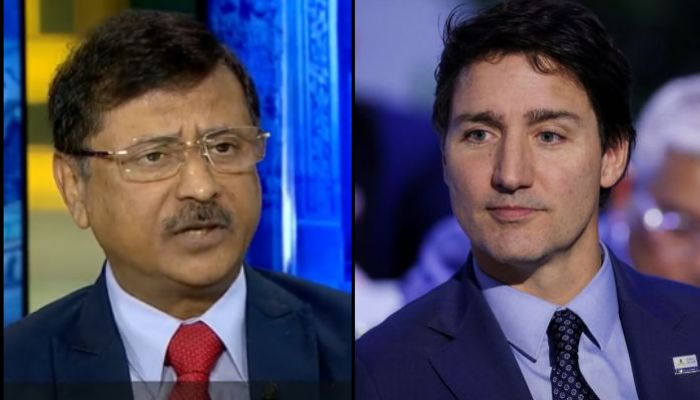
Indian High Commissioner to Canada, Sanjay Kumar Verma, has dismissed claims by the Canadian government of India’s involvement in the killing of Hardeep Singh Nijjar.

During an interview with journalist Vassy Kapelos of CTV News, he clarified that India is willing to look into any relevant and specific evidence (if any) regarding the assassination of the Khalistani terrorist.

On being asked about India’s non-cooperation in the investigation process, Sanjay Kumar Verma stated, “There are two points on that. One is that even without investigation being concluded, India was convicted. Is that a rule of law?”

“How was India convicted?” asked the CTV News journalist. The Indian High Commissioner to Canada emphasised, “In typical criminal terminology, when someone asks to cooperate, it means you have already been convicted and you better cooperate.”

“So we took it in a very different interpretation but we always said if there is anything specific and relevant and communicated to us, we will look into it,” Verma concluded.

It must be mentioned that the Canadian government has so far not provided any specific proof, which could remotely point fingers at India’s role in the killing of Hardeep Singh Nijjar.

In fact, British Columbia Premier David Eby has gone on record to say that briefings provided to him by CSIS (Canadian Intelligence Agency) about the killing of Hardeep Singh Nijjar were ‘open source’ and based on material available on the internet.

Justin Trudeau evades question about investigation progress

On 10th November, Canadian Prime Minister Justin Trudeau shrewdly evaded the question about the probe into the killing of Khalistani terrorist Hardeep Singh Nijjar.

During a ribbon-cutting ceremony in Sault Ste. Marie city in Ontario province of Canada, a reporter asked him a specific question about the status of the investigation process. Instead of responding to the question, Justin Trudeau went on a tirade against India.

“From the very beginning when we learned of credible allegations that agents of the Indian govt were involved in the killing of a Canadian citizen on Canadian soil, we reached out to India to ask them to work with us in getting to the bottom of this matter,” he was heard saying.

“…If bigger countries can violate international law without consequences, then the whole world gets more dangerous for everyone,” he brazened it out.

“Think about it from our perspective, we have serious reasons to believe that agents of the Government of India could have been involved in the killing of a Canadian citizen on Canadian soil,” Trudeau claimed.

Melaine Joly dodges question about evidence sharing with India

On 19th October, Canadian Foreign Minister Melaine Joly failed to answer a direct question on whether her country shared evidence with the Indian government about the latter’s supposed involvement in the killing of Khalistani terrorist Hardeep Singh Nijjar.

During a press briefing, a reporter asked Melaine Joly, “Can you clarify (whether) have you shown them the evidence you are basing your claim on and have you walked them on how Canada reached this conclusion?”

The Canadian Foreign Minister initially fumbled but later said, “We had numerous conversations with India before Prime Minister (Justin Trudeau) went in front of the House and made his declaration. This was not a surprise to the Government of India. “

On being pressed about the ‘evidence’, she dodged the question and said that India was made aware of ‘credible allegations’ through ‘conversations.’

“And so based on that, India has decided to take their own decisions which are precedent-setting and revoking the diplomatic immunity of 41 diplomats is not only unprecedented but also contrary to international law. So in that sense, this is unprecedented and would put so many countries, and different diplomats around the world in danger. We decide not to reciprocate,” Melaine Joly went on a tirade.

The reporter pointed out that the Canadian Foreign Minister did not answer the question about ‘evidence’ being shared with the Indian authorities. In her defence, Melaine Joly said that there were meetings and ‘information’ was shared.

‘Congress killed our children’ posters appear in Telangana before Rahul Gandhi’s visit for assembly election campaign

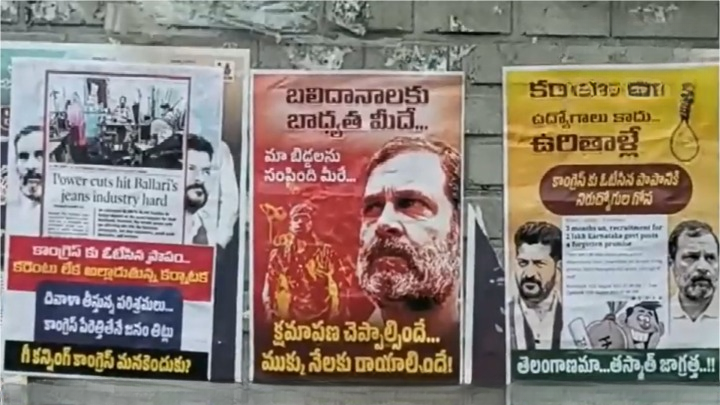
In anticipation of Congress leader Rahul Gandhi’s upcoming visit, posters have surfaced in Nizamabad and Bodhan, Telangana, displaying images of Gandhi and state Congress chief Revanth Reddy. The posters allege that “Congress party killed our children”. These posters explicitly demand an apology from the Congress party.

These posters read, “You are responsible for the sacrifices. You are the one who killed our children, you have to apologise. You have to rub your nose on the ground. Electricity problems in Karnataka. No jobs. Gallows. Unemployed for the sin of voting for Congress.”

As the electoral process wraps up in Mizoram, Madhya Pradesh, and Chhattisgarh, and is ongoing in Rajasthan, Telangana stands as the sole state yet to cast its votes this year. Congress leaders Mallikarjun Kharge, Rahul Gandhi, and Priyanka Gandhi Vadra are scheduled to address public gatherings in Telangana with the objective of unseating the BRS government led by Chief Minister KCR. Voting will take place in Telangana on 30th November. The counting of votes will take place on 3rd December.

Muslim appeasement has been the only resort to Congress and BRS in the state. Nizamabad and Bodhan have a significant population of Muslims. Many surrounding districts in Telangana were part of the Nizam state – an Islamist province in pre-independence India. AIMIM has a hold on Muslim votes here, especially in Hyderabad.

In his move to appease the Muslims, BRS president Telangana chief minister KC Rao promised an IT park for Muslims in Hyderabad. On the other hand, Union Home Minister Amit Shah on Friday claimed Chief Minister K Chandrasekhar Rao did nothing in his 10-year rule other than indulging in corruption for his son and state minister KT Rama Rao. This rally also took place in Armoor city in the Nizamabad district.

Nizamabad made it to the news when the National Investigation Agency (NIA) arrested a master weapons trainer associated with the Popular Front of India (PFI) in Karnataka. This arrest is linked to the Nizamabad terror conspiracy case, which involves a criminal plot devised by PFI leaders and members to recruit and radicalize young Muslim individuals. The objective of this conspiracy was to provide arms training to these individuals, encouraging them to carry out terrorist activities and ultimately establish Islamic rule in India.

Uttarkashi tunnel rescue: Vertical drilling team ready and on standby mode as horizontal drilling through debris continues to hit hurdles

0

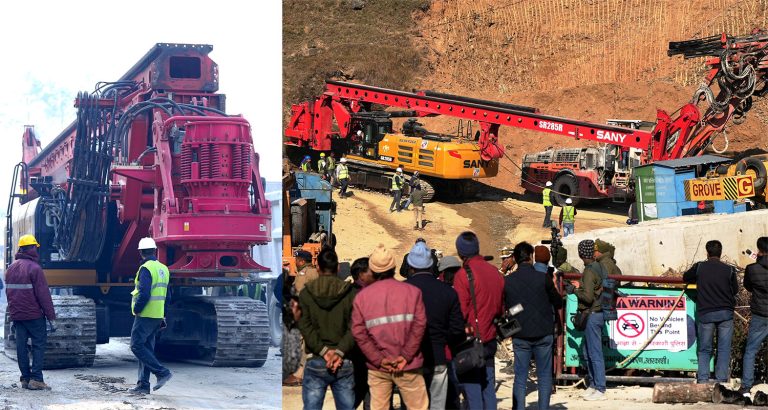
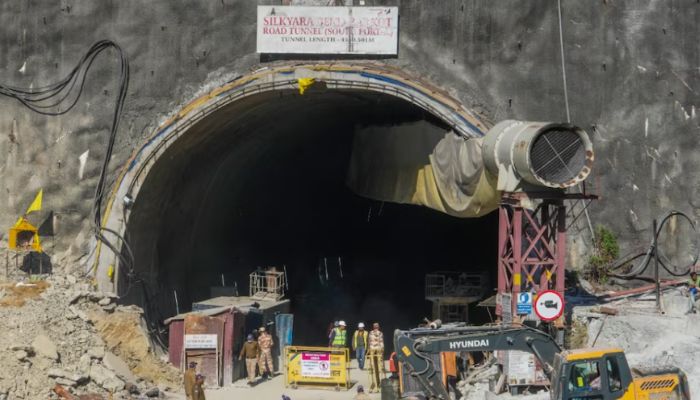
A team from Sutlej Jal Vidyut Nigam (SJVN) is now on standby mode to initiate vertical drilling from top of the Silkyara-Barkot tunnel to rescue to reach the 41 labourers trapped inside the under-construction tunnel for the past 14 days.

This comes amidst the heavy-duty auger machine repeatedly hit obstacles as as it drilled through the rubble. On Friday evening the rescue efforts were suspended as the auger machine faced another hurdle a short while after drilling resumed.

The 12 member team of SJVN Limited is awaiting the nod to initate the vertical drilling process. The workers are trapped in an area that is 8.5 metres high and 2 km long in the built tunnel portion. This 2 km portion of tunnel is complete including concrete work that provides safety to the workers.

On November 20, the Ministry of Road Transport and Highways said that the first machine of SJVNL for the construction of the Vertical Rescue Tunnel had reached the tunnel site and operations had commenced post completion of access road by the Border Roads Organization. Machinery for vertical boring are being mobilized by Oil and Natural Gas Corporation (ONGC) from the US, Mumbai and Ghaziabad, a statement read.

A final decision on the vertical drilling option is likely to be taken by Sutlej Jal Vidyut Nigam (SJVN) and the Oil and Natural Gas Corporation.

An SJVN official said, “We have given a proposal to the administration to do vertical drilling in 5 to 6 days; our team has done the survey for drilling; and apart from this, their drilling machine has also reached the spot to do the drilling. We are just waiting for the order to come.”

“The vertical drilling will be done from the top of the tunnel and about 85 to 90 metres will have to be drilled, which will take about five to six days. When drilling from inside the tunnel When the work of building the rescue tunnel gained momentum, the plan of doing vertical drilling was put on hold, but now, due to the hurdles we are facing, we have once again come into standby mode to see if the administration needs vertical drilling. We will start our work immediately after receiving the order,” added the SJVN official.

The official said that his team works on hydroelectric projects and thermal power projects and his company has a lot of experience in tunnelling; hence, the team has been called here.

Surveyor Ajit Pal of Parsan Overseas Pvt. Ltd., Delhi, who conducted the survey of vertical drilling, told ANI that his team had done an ERI (Electrical Resistivity Imaging) survey in which the land was examined for the safety of the drilling operation.

“We have done this survey from the top of the tunnel; rods are placed every 10 meters and then this survey is done by passing the current, after which we send the data to our company. After this, we analysed it and identified the place that would be safe for vertical drilling. Our survey found that it would be safe to do vertical drilling from above the tunnel at 320 metres from the start of the tunnel; for this, we need to do 80 to 90 metres. Drilling will have to be done so that we can take out the people trapped inside the tunnel from above.

Equipment for the vertical drilling has been mobilized from Gujarat and Odisha through Railways as the 75-tonne equipment could not be airlifted.

According to Ministry of Road Transport and Highways, the ONGC, having expertise in deep drilling, had also started initial work for vertical drilling from Barkot end.

The Border Roads Organzsation (BRO) team personnel have been instructed to transport machines to enable vertical drilling on the tunnel through the approach road they recently built to access the top of the hill, officials said on Saturday.

Officials earlier today said that manual drilling will begin soon to cut through the rubble that separates rescuers from the 41 trapped workers in the collapsed portion of the Silkyara tunnel.

According to officials, manual drillers will get to work once the US-made, heavy-duty Auger drilling machine is removed from the pipeline through which the trapped workers are to be brought out.

Manual drillers will work to cut through the remaining rubble that separates the rescuers from the workers and enable the insertion of the pipeline through the further few metres that are yet to be covered.

The ongoing operation to rescue workers, who were trapped after a portion of the tunnel collapsed on November 12, entered its 14th day on Saturday.

Success could soon be achieved in taking the Auger driller out of the pipeline, officials informed further, adding that the heavy-duty drillers could now be moved back by 22 metres.

Speaking to ANI, a senior official involved with the rescue operation said manual drilling could start soon.

He added that the remaining debris, extending approximately up to 6 to 9 metres, which stands between the rescuers and the trapped workers, will be removed through manual drilling.

Elaborating on the reasons why the officials involved in the rescue operation have decided to remove the Auger from the pipeline, the senior official told ANI, “While drilling with the US-made Auger machine, if we hit an obstruction every two to three feet, we have to remove it. And, every time we hit an obstruction, we have to roll Auger back 50 metres (up to which the pipeline has been laid). After running repairs, the machine has to be pushed back up to 50 metres, which takes about 5 to 7 hours. This is the reason why the rescue operation is taking longer than it should.”

“The rescue team has now decided that the pipeline will now be extended further through manual drilling over small distances. Even if we hit an obstruction further up, the issue could be resolved manually and the pipeline could be extended further without losing out on precious time,” the official added.

He informed further that after drilling up to a further 5 metres, the rescuers will reach the final few metres that separate them from the trapped workers.

However, the officials refrained from quoting a timeframe within which the rescue mission could be completed, saying that they were hopeful of a positive outcome once the manual drilling starts on Saturday.

Earlier, a team of experts, who came to conduct a survey at the tunnel site, informed that there were no heavy objects up to 5 metres inside the tunnel.

The team from Parsan Overseas Pvt Ltd Delhi used the ground-penetrating radar (GPR) technique to examine the rescue tunnel.

Ground Penetrating Radar, also known as GPR, Georadar, Subsurface Interface Radar, or Geo-probing Radar, is a totally non-destructive technique to produce a cross-section profile of the subsurface without any drilling, trenching or ground disturbances.GPR profiles are used for evaluating the location and depth of buried objects and to investigate the presence and continuity of natural subsurface conditions and features.

After examining the rescue tunnel, geophysicist and GPR survey team member B Chendhoor said they were called to the scene after the Auger driller hit an obstruction.

After a portion of the tunnel caved in on November 12, the debris falling in the 60-metre stretch on the Silkyara side of the tunnel trapped 41 labourers inside.

The workers are trapped in a 2 km-built portion, which is complete, including concrete work, which provides them safety. 


(This news report is published from a syndicated feed. Except for the headline, the content has not been written or edited by OpIndia staff)

Pakistan: Hinglaj Mata Mandir in Sindh and UNESCO-recognised site Sharda Peeth Temple demolished

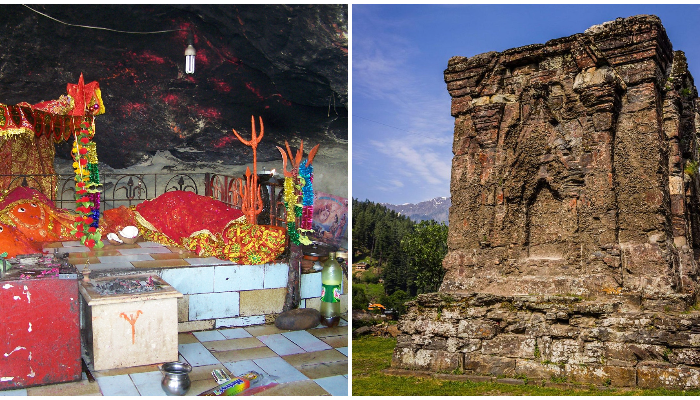
Pakistan continues to eliminate the final remnants of Hinduism from the country as the authorities now have attacked two prominent Hindu places of worship, a report published in CNN News18 said. The assault on religious minorities claimed the existence of the Hinglaj Mata Mandir (temple) in Sindh province where officials in the Tharparkar District demolished the holy place in the city of Mithi under the pretext of a court decision. 

Furthermore, the Sharda Peeth Mandir, which is another Hindu shrine along the Line of Control (LOC) has been destroyed. The anti-Hindu action transpired notwithstanding a permanent Supreme Court judgment meant to safeguard the temple. Notably, the temple is recognised as a United Nations Educational, Scientific and Cultural Organization (UNESCO) site, but even that has not helped to protect the place from Pakistani crackdown. There are accounts that a coffee shop is being established next to the religious site with an opening planned for November of this year.

Top official sources admitted that there are regular occurrences of crimes against Hindus in Pakistan. The marginalised religious minority has consistently had to endure issues like murders, targeted violence and land invasions. Local participation in these shocking activities which is frequently accompanied by official government approval has been a consistent trend.

The action against Sharda Peeth casts doubt on the region’s ability to preserve its rich cultural and religious legacy as well as runs counter to global preservation initiatives. These incidents serve as a reminder of the ongoing discrimination that Hindus suffer in the Muslim-majority nation.

Hinglaj Mata Mandir

Hinglaj Mata also known as Hinglaj Devi, Hingula Devi and Nani Mandir is a Hindu temple in Hinglaj, a town on the Makran coast in the Lasbela district of Balochistan and is in the middle of the Hingol National Park. It is one of the 51 Shakti Peethas in the Shaktism denomination of Hinduism. It is one of the three Shakti Peethas in Pakistan, the other two being Shivaharkaray and Sharada Peeth.

It is a form of Goddess Durga or Devi in a mountain cavern on the banks of the Hingol River. Over the last three decades, the place has gained increasing popularity and become a unifying point of reference for Pakistan’s many Hindu communities. Hinglaj Yatra is the largest Hindu pilgrimage in Pakistan. More than 250,000 people take part in the Hinglaj Yathra during the spring.

Sharda Peeth Mandir

Sharda Peeth is a ruined Hindu temple and ancient centre of learning located in the Neelum Valley of Pakistan-occupied Kashmir (PoK). It was one of the most renowned temple institutions in the Indian subcontinent from the sixth to the twelfth centuries CE. Its library is especially well-known and scholarly accounts describe researchers traveling great distances to access its texts. It played a key role in the development and popularisation of the Sharada script in North India, which led the script to be named after it and Kashmir to acquire the moniker “Sharada Desh” meaning “country of Sharada.”

Hindus believe it to be one of the Maha Shakti Peethas which signify the spiritual place of the fallen right hand of the goddess Sati. Sharda Peeth together with the Martand Sun Temple and the Amarnath Temple is one of the three most sacred places for Kashmiri Pandits to make pilgrimage to.

Sharda Peeth is located approximately 150 kilometres from Muzaffarabad, the capital of PoK and 130 kilometres from Srinagar, the capital of Indian Kashmir. It is 10 kilometres away from the Line of Control, which divides the former princely state of Jammu and Kashmir. It is situated 1,981 metres (6,499 ft) above sea level along the Neelum River in the village of Sharda in the valley of Mount Harmukh and Kashmiri Pandits believe it to be the abode of Lord Shiva.

PM Narendra Modi takes a sortie in Indigenous fighter aircraft Tejas in Bengaluru

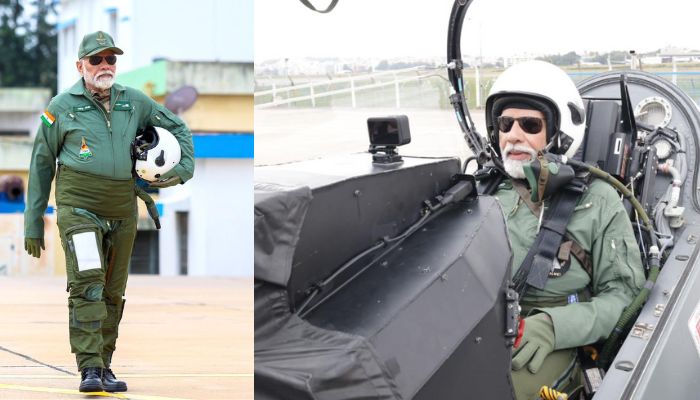
On 25th November (Saturday), Prime Minister Narendra Modi undertook a sortie in the Indigenous fighter aircraft Tejas in Bengaluru. According to the sources, PM Modi took the flight for nearly 45 minutes in the light combat IAF aircraft. With this, he has become the first Indian Prime Minister to have flown in an indigenous fighter aircraft.

Following his sortie in Tejas fighter aircraft, PM Modi congratulated the Indian Air Force, DRDO and HAL. He also expressed “immense pride” and asserted that India’s self-reliance in defence hardware is second to none.

He tweeted, “Successfully completed a sortie on the Tejas. The experience was incredibly enriching, significantly bolstering my confidence in our country’s indigenous capabilities, and leaving me with a renewed sense of pride and optimism about our national potential.” 

Currently, Pm Modi is on a visit to the Hindustan Aeronautics Limited (HAL) site in Bengaluru, Karnataka. During his visit, PM Modi is also slated to review the manufacturing facility of HAL, including the facility for Tejas fighter jets. 

Additionally, the timing of this visit is crucial as it coincides with the Indian Air Force’s recent tender to HAL for the procurement of 12 advanced Su-30MKI fighter jets. Dr. Samir V Kamat, the Chief of DRDO, announced a significant development for India’s Defence sector. He revealed that the engines for the LCA Mark 2 and the inaugural two squadrons of the indigenous Advanced Medium Combat Aircraft (AMCA) will be produced domestically. This collaborative effort will involve HAL, and GE from the US, jointly manufacturing these engines at a facility in India.

The Central government led by Prime Minister Narendra Modi has been an ardent supporter of indigenous technology. Under Make-in-India and Atmanirbhar Bharat initiatives, Defence Manufacturing has seen a major boost with top government functionaries putting their weight behind the safety and resilience of Indian defence hardware. PM Modi’s sortie in indigenous aircraft serves to emphasise the safety and endorse the capabilities of Indian defence equipment.

Notably, numerous Union Ministers, including Defence Minister Rajnath Singh and Finance Minister Nirmala Sitharaman, who has previously held the position of India’s Defence Minister, have flown in Indian fighter aircrafts. 

Tejas has been developed by the state-run aerospace giant Hindustan Aeronautics Ltd (HAL) and it is a fourth-and-a-half generation light combat aircraft.

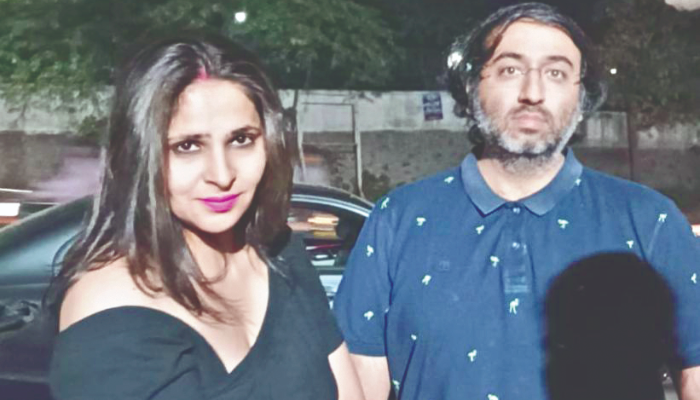
Pune shocker: Woman punches husband to death for not taking her to Dubai for her birthday and not getting satisfactory gifts on anniversary

A horrifying incident claimed the life of a 36-year-old man who received a blow on the nose from his wife when he refused to take her to Dubai for her birthday celebrations. The instance happened on 24 November afternoon in Wanawadi’s upscale Ganga Satellite Housing Society in Pune.

The deceased Nikhil Khanna was a businessman in the construction industry and had a love marriage with Renuka Jakhar Khanna (36 to 38 years old) six years ago. They were living with his parents. He was taken to the Sassoon Hospital after the incident and died there while receiving medical attention. The cops have taken the accused woman into custody.

The cops reported that Jakhar Khanna wanted to celebrate her birthday on 18 September in Dubai, but her husband Nikhil Khanna could not fulfil this wish. As a result, she was furious with him. Then on their wedding anniversary on 5th November, she was not happy with the celebrations, as she was not given expensive gifts, and had a fight with him over it. Moreover, she wanted to attend her niece’s (brother’s daughter’s) birthday celebrations in Delhi in December, but Nikhil didn’t give a favourable response, angering her further.

The altercation escalated on Friday and it led to a clash between the two. During the fight at around 1.30 pm, Renuka punched her husband in the face which resulted in his death. The impact of the punch was so hard that Nikhil’s jaw broke, some teeth fell out and he fell to the ground due to the force of the impact. He also lost his consciousness. She attempted to rouse him from his unconscious state in a panic, but could not. His parents were not present there at the time.

She then called her father-in-law and he rushed home. He dialled for help, took his son to the hospital and reported the event to the police. The woman has been apprehended by the police pending further inquiry after they filed a complaint against her under Indian Penal Code Section 302 (punishment for murder).

Police stated, “The incident occurred on Friday afternoon. As per the primary investigation, it has been revealed that the couple had a fight because Nikhil did not take Renuka to Dubai to celebrate her birthday and did not give her expensive gifts on her birthday and anniversary. Renuka was also upset with Nikhil for not giving a favourable response to her wish to go to Delhi to celebrate the birthdays of some relatives.”

However, they suspect that she might have attacked him with a blunt object and have been intoxicated. “We suspect that Renuka was under the influence of alcohol. It could be a hard punch or an assault by a blunt object. The blood may have accumulated in the air channel and blocked breathing. We are investigating the matter,” informed Sanjay Patange, senior police inspector at Wanwadi police station. He added that they were awaiting the post-mortem report.

The police officer said that they could not obtain Renuka’s version of the events as she is not in a mental state to talk. At present she has been kept in local up.

The victim is a realtor who is also the owner of a school in Nana Peth and his father, Pushkaraj Khanna is a doctor. Pushpraj Khanna said that his son married Renuka in November 2017. It was a love marriage but the couple used to quarrel often which started soon after the marriage.

“We used to counsel them but Renuka’s behaviour did not change. She used to fight with the domestic workers as well which had made it difficult for us to retain any house help,” Dr Pushpraj said in his complaint. He added that they had a physical fight on the day of the anniversary on 5th November too.

“They marked their wedding anniversary on November 5 but she was unhappy as Nikhil did not give her a gift to her liking. She had assaulted him at that time as well. We had managed to pacify them,” Pushpraj said in the complaint. According to the victim’s father, the matter reached a peak over the woman’s plan to go to Delhi to attend her niece’s birthday. “She was angry that Nikhil was not confirming the travel plans nor arranging her flight tickets. This was leading to fights between them,” he added in the complaint.

Dr Pushpraj said that on Friday he got a call from Renuka asking him to rush home because she had a fight with Nikhil. “I rushed home and when I was parking, I received another call from Renuka where she told me: It’s very urgent, Papa. Come quickly!’…When I entered the room, I saw that my son was lying on the floor naked and blood was coming out from his nose and mouth,” Pushpraj said in his police statement.

Dr Pushpraj said he removed the blood clots from Nikhil’s mouth and tried giving him CPR. However, as he was not getting a response, he took Nikhil to the hospital with the help of security guards, but his son was declared dead.

Uttarakhand Tunnel Rescue Operation resumes on the 14th day after drilling was halted on Friday over technical snags in Auger machine

0

On Saturday (25th November), the ongoing rescue mission aimed at evacuating 41 workers trapped inside the collapsed Silkyara tunnel in Uttarakhand’s Uttarkashi district entered its fourteenth day. Drilling operations were once again suspended on Friday night due to another malfunction encountered by the auger machine deployed in the Uttarkashi tunned rescue operations.

Various obstacles continue to impede the progress of the auger machine, preventing it from drilling further and laying steel pipes through the rubble to create an escape route. In light of this, rescuers are contemplating the possibility of resorting to manual drilling; however, it is acknowledged that this alternative method is time-consuming.

A senior official who is part of the rescue operation said, “As soon as after the auger drilling machine is brought out of the tunnel pipeline, manual drilling work could be started in the last 6-9 meters.”

Why is the Auger machine stuck?

During the drilling on Friday evening, a mesh of rods came in front of the machine, due to which the blades of the Auger machine got stuck in the mesh of the rods. The front part of the Auger machine is badly stuck in the iron pipe inside. This is the biggest difficulty in the operation of this machine so far. It is becoming very difficult to remove the blade of the Auger machine from there and at the moment the agencies have no way to cut the net and bring the machine back.

The Auger machine has the capacity to press the pipe and move it across the debris. However, due to the mesh of rods, this path has also been closed. Rescue teams are now preparing for vertical drilling.  They have reached the hill above the Silkyara tunnel. The machine for vertical drilling has been fully prepared. Now there will be preparations to take the machine up. The Border Roads Organisation has already prepared a road to transport the machine to the vertical drilling site.

The sources of the rescue teams said, “The auger machine has stuck inside the pipe. At least 30 meters of the machine has been stuck inside the pipe. Some part of it has been taken out manually. Around 20 meters of it is still stuck. The ground-penetrating radar readings that were given have been proven wrong. The GPR predicted that there would be no metal pieces in the next 5.4 meters, hence the rescuers started drilling with force and speed. However, another girder was found in just 2.2 meters. The 800-meter pipe has again got damaged.”

PM Narendra Modi took stock of the situation

Prime Minister Narendra Modi called Chief Minister Pushkar Singh Dhami on Friday to discuss the situation of the 41 workers and their families trapped in the Silkyara tunnel. The Chief Minister shared that the making of the escape route is progressing using the New Austrian Tunneling Method. The presence of steel objects in the tunnel has caused some issues for the auger machine, but repairs are underway.

The Prime Minister was briefed by the Chief Minister on the status of the trapped workers inside the tunnel, as well as the supplies of food and daily essentials being delivered to them. He also inquired about the well-being of the labourers engaged in relief and rescue efforts, along with the safety measures implemented for them. Stressing the importance of maintaining high standards, he directed the Chief Minister to provide updates on the ongoing rescue efforts and ensure effective coordination among different agencies.

Updates on Uttarakhand from the chief minister

The Chief Minister shared that a temporary camp office has been set up in Matali, Uttarkashi, specifically for monitoring the relief and rescue operations at the ground level in the Silkyara tunnel. This arrangement aims to enhance the oversight of the entire operation.

The Chief Minister updated the Prime Minister that following the successful installation of a six-inch diameter pipeline, an alternative lifeline has been established. This pipeline is utilised to deliver freshly cooked meals, fruits, dry fruits, milk, juice, and essential daily items such as disposable plates, brushes, towels, small clothes, toothpaste, soap, etc., packed in bottles to the workers stranded in the tunnel. Additionally, the pipeline serves as a means for regular communication with the workers through the communication setup of the State Disaster Response Force (SDRF). Conversations are facilitated not only with the workers but also with their family members.

As per the Chief Minister’s update, healthcare professionals at the makeshift hospital in Silkyara are consistently overseeing the well-being of the workers. Comprehensive arrangements, including ambulances and 41 dedicated beds in the nearby hospital, have been put in place for the workers. Additionally, mental health professionals are conducting regular counselling sessions for those trapped in the tunnel.

The Uttarakhand Tunnel Collapse

At approximately 5:30 AM on 12 November, a terrible incident transpired in the Himalayan region. A large amount of debris collapsed as a part of a tunnel that was being built on the Yamunotri National Highway in Uttarkashi district in Uttarakhand succumbed to the powerful forces of nature. Forty-one workers were trapped within the tunnel as the ceiling of the still-under-construction structure caved in and put their lives in danger.