Home Blog Page 1953

NIA files supplementary chargesheet against 4 PFI members in a special court in Patna for anti-national activities

Four individuals were charged with further crimes by the National Investigation Agency (NIA) on 3 August in connection with illegal and anti-national actions by the outlawed Popular Front of India (PFI) in Patna. The fresh chargesheet has been filed in a special NIA court in Bihar’s Patna district against Md Tanweer, Md Aabid, Md Belal and Md Irshad Alam, all residents of the East Champaran district.

According to the NIA, the four PFI cadres were involved in planning violent crimes by procuring weapons and ammunition and spreading their organisation’s extremist ideology and dangerous agenda. They are facing prosecution under various sections of the Indian Penal Code, Unlawful Activities (Prevention) Act, 1967, and Arms Act, 1959.

A total of 15 perpetrators, including the four mentioned in the chargesheet, have been apprehended thus far for encouraging the outfit’s unlawful operations and directing illicit cash from abroad to its members and the accused parties in the case.

Investigations conducted by the agency revealed that Md. Irshad Alam is part of a criminal racket that, along with other PFI workers plotted to attack and murder a young person from a particular community in order to sow the seeds of terror and communal animosity.

The statement read, “Md Tanweer and Md Abid had already terror hardware for carrying out the hate crime and had handed over the same to one of the arrested accused, Yaqub Khan. Yaqub is a PFI master trainer of weapons and tactics and had conducted multiple arms training sessions for furthering the banned outfit’s violent and unlawful activities.”

The initial case was lodged against 26 people on 12 July of last year at the Phulwarisharif Police Station in Patna. On 22 July the same was taken over and again registered by NIA. The NIA issued a chargesheet against four people in the case on 7 January. The inquiry is still underway.

Notably, on 22 September 2022, the NIA with other probe agencies conducted a large-scale midnight operation termed “Operation Octopus” on the premises of PFI across the country, on charges of terror funding and money laundering. The raid resulted in the detaining of at least 100 of its leaders and activists.

On 28 September the Government of India declared the outfit an “unlawful association” and temporarily banned it for five years under the UAPA Act. The former reasoned that the latter was “prejudicial to the integrity, sovereignty and security of the country” and cited its connection with terror groups like Students Islamic Movement of India, Jamat-ul-Mujahideen Bangladesh and Islamic State of Iraq and Syria.

Supreme Court stays Rahul Gandhi’s conviction, says he used inappropriate language but questions maximum punishment resulting in disqualification

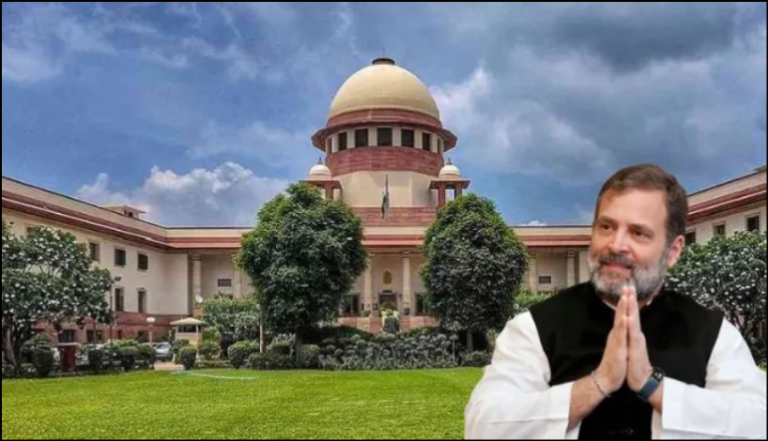
The Supreme Court August 4 (Friday), stayed Congress leader and Former Wayanad MP Rahul Gandhi’s conviction in a 2019 criminal defamation case over his Modi surname remark. The apex court also restored his status as a member of Parliament.

While pronouncing the judgement, the 3-judge bench observed that the utterances of Rahul Gandhi were not in “good taste” and said that a person in public life ought to have been more careful while making public speeches. However, questioned why the maximum sentence was given, which led to his disqualification.

A three-judge bench of Justices BR Gavai, PS Narasimha, and Sanjay Kumar was hearing Gandhi’s plea challenging the Gujarat High Court’s refusal to stay his conviction in a criminal defamation case over ‘Modi thieves’ remark.

Purnesh Modi, a former minister in the Gujarat government, had filed a criminal defamation case in 2019 against Gandhi over his “How come all thieves have Modi as the common surname?” remark made during an election rally at Kolar in Karnataka on April 13, 2019. Rahul Gandhi was convicted and sentenced to two years in prison in a defamation case by a Surat court on March 23. The conviction led to his subsequent disqualification from Lok Sabha.

Senior advocate Mahesh Jethmalani appearing for complainant Purnesh Modi read out Rahul Gandhi’s 2019 speech and argued that the entire speech spanned over 50 minutes and there was a plethora of evidence and clipping of the speech attached to the Election Commission of India’s record.

Jethmalani said that Rahul Gandhi’s intention was to defame every person with the surname Modi just because it is the same as that of a Prime Minister, adding that the Congress senior leader “defamed an entire class out of malice.”

Meanwhile, Abhishek Manu Singhvi, who represented Congress leader Rahul Gandhi at the Supreme Court, said, “No one was named by Rahul Gandhi in his speech.”

The trial court cited 13 cases, but where are the convictions? Where are the criminal anecdotes, he told the apex Court.

He added, ‘Rahul Gandhi has lost two Parliament sessions. He has been silenced for 8 years. For no other defamation cases, 2 years of suspension were pronounced’

Singhvi also questions, Is it Rahul’s last chance to get acquittal?

Responding to the arguments, SC said the conviction is also affecting the constituency.

“Had the judgment of the SC may come earlier, the petitioner would have been more careful and expressed a degree of restraint over the alleged defamatory remarks. We are of the considered view that the ramifications of the ruling are wide and affect the rights of his constituency’s electorate. Considering the aforesaid and particularly that no reasons have been given by the trial judge for a maximum sentence which has incurred disqualification, the order of conviction needs to be stayed pendency of proceedings. Pendency of appeal would not come in the way of the appellate court in deciding an appeal in accordance with the law. Trial proceedings are to be conducted expeditiously,” said the apex court.

It added that it wants to know why the maximum sentence was given. Had the judge given a sentence of 1 year and 11 months, then he (Rahul Gandhi) would not have been disqualified, observed Supreme Court.

Rahul Gandhi refused to apologise

On Wednesday, the 2nd of August, Congress leader and Former Wayanad MP Rahul Gandhi filed a rejoinder affidavit in the Supreme Court in relation to his appeal against his disqualification from the parliament. In the affidavit, he reiterated that he will not apologise for his Modi surname remark that led to his conviction by the lower court and subsequent disqualification from Lok Sabha. He submitted that if he had to apologise for his remarks, he would have done it earlier. 

In the 63-page affidavit, Gandhi claimed that he has not committed any serious offence and there is no defamation case made out against him. He has argued that criminal defamation is not a serious offence involving moral turpitude. The affidavit further states that defamation is only one of the 22 offences under the IPC that attracts only simple imprisonment and not rigorous imprisonment.

Rahul Gandhi has requested the Supreme Court to stay his two-year suspension in the defamation case so that he can attend the ongoing parliament session and the sessions in future.

The case

The case pertains to 2019 criminal defamation case against Congress leader Rahul Gandhi. In his election speech in Koral, Karnataka, Rahul Gandhi had mocked an entire community by saying, “Nirav Modi, Lalit Modi, Narendra Modi… how come they all have Modi as a common surname? How come all thieves have Modi as a common surname?”

After the court trial, on the 23rd of March, 2023, a magisterial court in Gujarat convicted Rahul Gandhi in connection with his Modi surname remark. The court sentenced him to  

two-year imprisonment which subsequently lead to his disqualification as a Lok Sabha MP. 

According to the Representation of People’s Act (RPA), a conviction of two or more years immediatedly leads to disqualification from the Parliament or state assemblies. 

Later on 20 April, the sessions court rejected his plea for a stay on his conviction. Subsequently, the Gandhi scion moved to the Gujarat High Court which cited his stature as an MP and said he should have been more careful in his comments. 

After hearing the matter, on the 7th of July, the high court affirmed the lower courts’ order and rejected his revision application seeking a stay on his conviction. 

Supreme Court dismisses PIL challenging appointment of Arun Goel as election commissioner

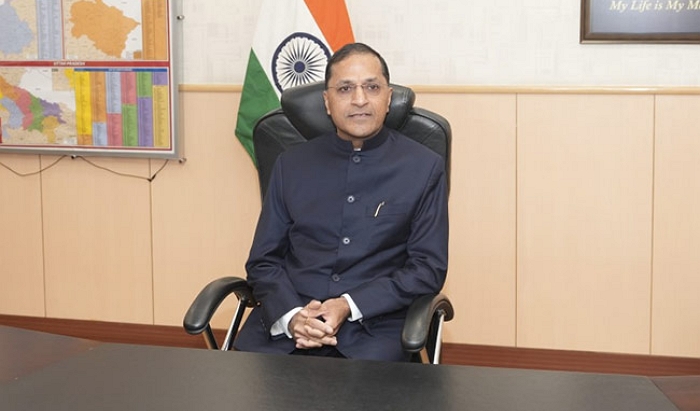
The Supreme Court on Friday dismissed a public interest litigation (PIL) of NGO ‘Association for Democratic Reforms challenging the appointment of Arun Goel as Election Commissioner. 

A bench headed by Justice Sanjiv Khanna said a Constitution bench had perused the file on the appointment of Goel but refrained from quashing his appointment and the issue cannot now be re-examined.

“We find the Constitution bench did not pass any order on the appointment. We are not inclined to issue notice, accordingly, the matter is dismissed,” the bench said.

Solicitor General Tushar Mehta appearing for the government said that the constitution bench could have quashed the appointment but it did not.

Advocate Prashant Bhushan appearing for the NGO submitted that the appointment was done arbitrarily and the whole process was mala fide. 

He said the selection process adopted by the government was questionable. 

The plea said that there were 160 officers who belonged to the 1985 batch and some of them were younger than Goel. 

However, without any explanation as to why the officers were younger in age than Goel and who would have a full tenure of six years as mandated by Section 4 of the Election Commission (Conditions of Service of Election Commissioners and Transaction of Business) Act, 1991 were not empanelled, the government appointed Goel as Election Commissioner, it added. 

(This news report is published from a syndicated feed. Except for the headline, the content has not been written or edited by OpIndia staff)

Toilet cleaning for ISIS level up: Modi haters issues clean chit to terrorists in advance if they attack Ram Temple at Ayodhya

With the 2024 general elections just months away, the ISIS toilet cleaners or the leftwing luminaries have upped their ante in floating conspiracy theories, gaslighting their followers, and shielding Islamists in advance for carrying out attacks ahead of the Lok Sabha polls. While they have been routinely providing cover fire to the Islamists for their nefarious activities, as witnessed during the Nuh violence recently, they have gone a notch higher this time, giving a clean chit beforehand to Islamists if they decide to attack the soon-to-be-completed under-construction Ram Mandir in Ayodhya.

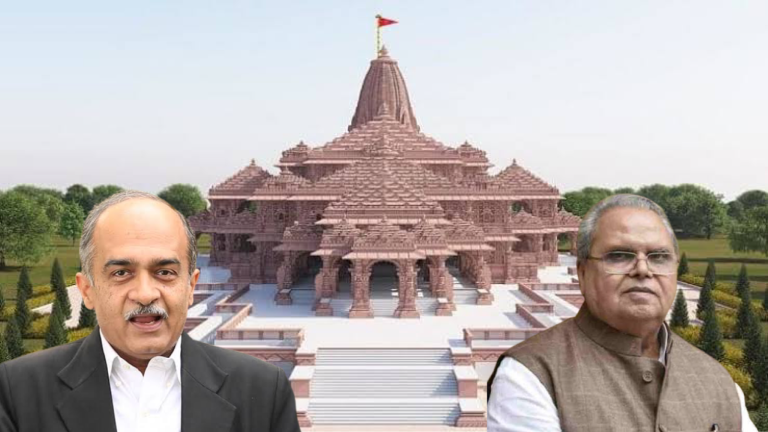
Days after former governor of Jammu & Kashmir Satyapal Malik ‘predicted’ that there would be a terrorist attack on Ram Janmbhoomi Temple that is being built in Ayodhya, now supreme court lawyer Prashant Bhushan has repeated the same conspiracy theory. Both of them have tried to further the theory that such an attack will be carried out by the Modi government to create a wave to win the upcoming 2024 Lok Sabha elections.

Earlier this week, Malik pushed a raft of wild conspiracies, alleging that the BJP govt at the Centre could orchestrate an attack on Ram Mandir ahead of the Lok Sabha elections. “I have many apprehensions. They will do something or the other before the (2024 general) elections. It is their nature. They have done it in Gujarat and the country. They might hurl a grenade at the Ram Mandir. They might get a big BJP leader killed. There might also be an orchestrated conflict with Pakistan.”

Now, Supreme Court lawyer and inveterate fake news peddler Prashant Bhushan have also jumped on the bandwagon in scaremongering about a possible terror attack on Ram Temple to target the Centre and absolve Islamists responsible should the attack happens. Bhushan built on the conspiracy theory floated by Satyapal Malik, stating that if not such a terror attack on the temple, there could be a limited war with Pakistan to reclaim Pakistan Occupied Kashmir (PoK) purely for the sake of creating a narrative to win the 2024 general elections.

In a recent video that has gone viral, Bhushan says, “Multiple sources have informed me, and that too reliable ones, that Pulwama 2.0 and Balakot 2.0 are on the cards. Pulwama 2.0 will take place on Ram Mandir in Ayodhya and Balakot 2.0 will take place in the form of a ground incursion in Pakistan-occupied Kashmir, as per what I have heard.”

In addition, Bhushan also questioned the authenticity of the Balakot airstrikes in which the Indian Armed Forces destroyed a Jaish-e-Muhammad-terror camp operated in Pakistan, claiming that nobody knows if the bombs achieved their stated goals and if anything was destroyed in Pakistan. 

“Just like they tried to show that they had acted against Pakistan after the Pulwama attack, regardless of where the bombs were dropped, if they destroyed anything or not, a similar operation would be undertaken, not to capture Pakistan-occupied Kashmir but just to give an impression that India is acting against Pakistan,” Bhushan claimed.

Both Satyapal Malik and Prashant Bhushan have offered no proof in support of their conspiracy theories but have used weasel words like “credible information” and “reliable sources” to further the theories.

The conspiracy theories of an orchestrated Pulwama-like attack on Ram Mandir in Ayodhya, pushed by Prashant Bhushan and Satyapal Malik, are not only an insult to the memory of martyred CRPF soldiers but they also seek to encourage terrorists into executing their attacks, knowing fully well that the blame would be shifted on the Modi government.

The preposterous utterances of Prashant Bhushan and Satyapal Malik betray their mentality of analysing every occurrence from an electoral perspective

What is remarkable is that while both of these men have tried to “expose” the Modi government as an entity that can go to any length to win elections, in this process they have betrayed their mindset where they see every event from the lens of electoral politics. It is part of an observed phenomenon since 2014 where self-styled ‘liberals’ have analysed the legality or morality of any development purely from the point of view of how the said event can strengthen or weaken the Modi government.

So even a grim event such as a terror attack against India becomes an instrument for people like Prashant Bhushan, Satyapal Malik and the insufferable ‘liberal’ gang to further their hatred of Modi, which they deviously attribute to the current dispensation, misleading their followers with conspiracy theories that any attack on the sovereignty of the country and the government’s prompt retaliation is all a part of the regime’s efforts to strengthen its electoral prospects.

An absurd and hilarious manifestation of this phenomenon was seen in 2015 when ‘liberals’ wished that India failed to win the ICC Cricket World Cup as it could strengthen ‘nationalistic’ feelings and thus could strengthen the Modi government. Now the same mindset has corrupted itself to a much more vicious and sinister form, where ‘liberals’ have wished India was ‘crushed’ by China in a war and are now issuing clean chits to Islamic terrorists in advance if they happen to attack Ram Temple at Ayodhya.

Another aspect worth noting here is that by pushing conspiracy theories of false-flag operations, propagandists like Prashant Bhushan and Satyapal Malik are trying to sweep under the rug the UPA government’s impotent policies in dealing with terror attacks on India and alleging that the underlying aim of giving a befitting response to a terror attack is reaping electoral dividends.

What such behaviour does is that it glorifies inaction against terrorists and defames punitive strikes action terrorists. It is notable to mention that India faced scores of terror attacks under UPA rule, the Congress-led government remained soft on Islamists, as evident from former Prime Minister Manmohan Singh’s meeting with terrorist Yasin Malik or their inaction against Pakistan following the 26/11 attacks in Mumbai.

Leftwing ‘intellectuals’ provide cover fire to Islamists for attacking Ram Mandir

It should be noted that Islamic terrorists have indeed attacked Ram Temple at Ayodhya earlier. On 5 July 2005, Islamic terrorists attacked the makeshift Ram Temple at Ayodhya which was built after destroying the disputed structure known as Babri Masjid. Two people lost their lives and the death toll could have been worse but the security forces stopped the terrorists from advancing further.

BJP did not benefit from this incident electorally and Congress continued to rule India for the next 9 years, thus it is absurd to suggest that the party will try such a stunt to win elections. However, the likes of Satypal Malik and Prashant Bhushan still further such conspiracy theories because they, especially people like Prashant Bhushan, are predisposed to whitewash crimes by Islamists by giving them intellectual and legal cover fire.

Now such folks have taken up this predisposition to the next level where they are whitewashing the crimes even before they have happened. Their statements would be music to the ears of terrorist groups like ISIS who can now plan to attack the temple, knowing that the blame would fall on the doors of the Modi government. In such a scenario, the security agencies must be extra alert and they must question every person peddling such theories

Editor’s note: ‘Toilet cleaners’ refers to those Indians who had fled to Iraq/Syria to join the Caliphate but were deemed worthy of only cleaning toilets by the Islamists. It also refers to their intellectual defenders in India, who would go to any extent to defend their violent tendencies. It doesn’t stand for janitors and others, who make an honest living.


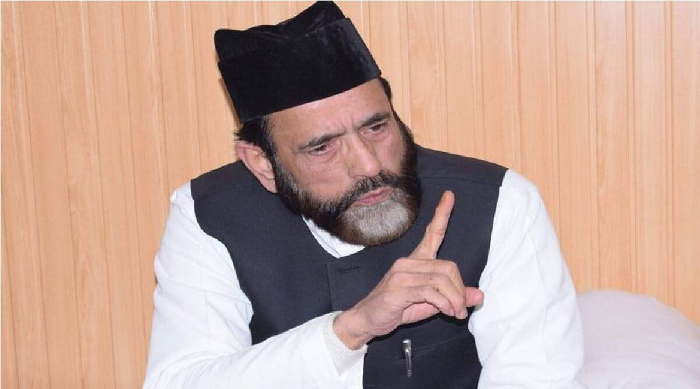
‘If you think it is a Shivling, every big mosque in India has such a Shivling’: Maulana Tauqeer Raza on ASI survey of Gyanvapi structure

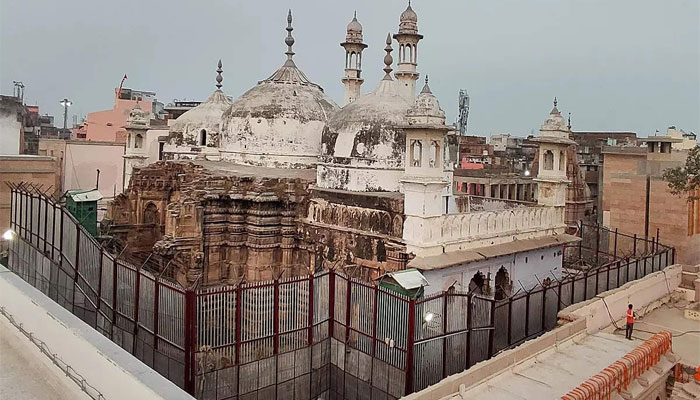
Ittehad-e-Millat Council (IMC) chief Maulana Tauqeer Raza has said that every big mosque has a fountain just like the one found in the disputed structure at the Gyanvapi complex in Varanasi, claiming that the Shivling in the Gyanvapi structure is just a fountain. He made this statement on Friday, 4th August 2023 when the Archeological Survey of India started surveying the disputed structure as per the orders of the Allahabad High Court situated at Prayagraj in Uttar Pradesh.

After the High Court’s decision rejecting the Muslim side’s plea objecting to the survey of Varanasi’s Gyanvapi structure, the ASI survey started today even though the Muslim side has approached the Supreme Court opposing it. Now different statements are coming out from all sides regarding this matter. The Hindu side is welcoming this decision of the High Court, while the Muslim side is standing in opposition. Meanwhile, IMC president Maulana Tauqeer Raza has also made a statement in which he said about the Shivling found in the Wazukhana of the disputed structure that such a fountain is seen in every big mosque.

Maulana Tauqeer Raza said, “The decision that the High Court has given according to its understanding, Anjuman has decided to go to the Supreme Court against it. We understand that the Supreme Court will take the right decision. There is talk of some artefacts in it. You think that there is a Shivling inside that wazu tank, such a Shivling will be found in every big mosque in India, in which there is a wazu tank. Because every mosque has such a fountain.”

Maulana Tauqeer Raza added, “I had said this earlier also. This can be folly. This is an attempt to forcibly capture it and spread riots. I hope that the Supreme Court will give the verdict which is right in this case.”

It is notable that a team from the Archaeological Survey of India (ASI) on Friday morning arrived at the Gyanvapi structure premises adjacent to Kashi Vishwanath Temple in Uttar Pradesh’s Varanasi and started a scientific survey of the complex amid tight security. 

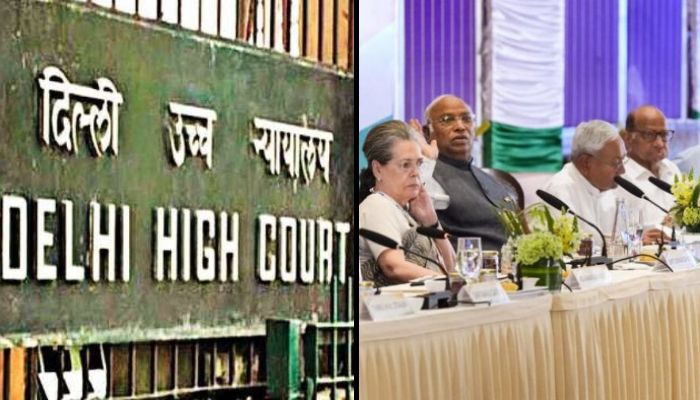
Delhi High Court issues notice to Centre, EC over petition challenging use of acronym ‘I.N.D.I.A.’ by Opposition

The Delhi High Court on Friday issued notice to the Centre, Election Commission of India (ECI), and Several opposition political parties on a Public Interest Litigation (PIL) for direction to opposition political parties to prohibit the use of the acronym I.N.D.I.A. (Indian National Developmental Inclusive Alliance) for their political alliance.

The bench of Justice Satish Chander Sharma and Justice Amit Mahajan on Friday sought the response of the Centre Government through the Ministry of Home Affairs (MHA), the Ministry of Information and Broadcasting, and the Election Commission of India (ECI) and listed the matter for hearing on October 31, 2023.

Meanwhile, the Court refused to grant an earlier date for the next hearing and also refused to pass any interim order to restrain the said political parties from using the acronym I.N.D.I.A.

However, in the matter, the court also sought the responses of opposition parties named on the petition, including the Indian National Congress, TMC, RLD, JDU, Samajwadi Party, DMK, Aam Aadmi Party, JMM, NCP, Shiv Sena (UBT), RJD, Apna Dal (Kamerawadi), PDP, JKNC, CPI, CPI (M), MDMK, Konganadu Makkal Desia Katchi (KMDK), Viduthalai Chiruthaigal Katchi, Indian Union Muslim League, Revolutionary Socialist Party, Communist Party of India (Marxist-Leninist) Liberation, All India Forward Bloc, Kerala Congress (Joseph), Kerala Congress (Mani), and Manithaneya Makkal Katchi (MMK).

Petitioner Girish Upadhya, through Advocate Vaibhav Singh, stated that several political parties are using India’s national flag as the logo of their alliance, which is a further strategic move to attract and gain the sympathy and votes of innocent citizens and as a tool to give a nudge or a spark that may lead to political hatred, which eventually will lead to political violence.

I.N.D.I.A. is an acronym for Indian National Developmental Inclusive Alliance, which is an opposition front announced by the leaders of 26 parties to take on the BJP in next year’s elections, stated the petitioner.

The plea alleged that political parties are using the acronym India with malicious intent, which will only act as a factor in diminishing the goodwill of our great nation, i.e., India (Bharat), not only in our country but also on various international platforms.

The plea stated that if the term I.N.D.I.A. will be used by the Indian and International Media as an acronym but not in its full form (Indian National Developmental Inclusive Alliance), it will create a sense of confusion among innocent citizens.

If the alliance, i.e., I.N.D.I.A. (Indian National Developmental Inclusive Alliance), is defeated or loses the general election of 2024, then it would be projected as India as a whole is defeated, which will hurt the sentiment of innocent citizens of the country again which may lead to political violence in the country.

The acts of these political parties may adversely affect the peaceful, transparent, and fair casting of votes during the upcoming general election of 2024, which may expose the citizens to unwarranted violence and also affect the law and order of the country, the plea added.

(This news report is published from a syndicated feed. Except for the headline, the content has not been written or edited by OpIndia staff)

As ASI begins scientific survey of Gyanvapi structure, read how archaeologists determine age and other aspects of ancient buildings and sculptures

The Archaeological Survey of India (ASI) team arrived at the Gyanvapi mosque premises adjacent to the Kashi Vishwanath Temple in Uttar Pradesh’s Varanasi on Friday morning and began a scientific assessment of the complex amid tight security after Allahabad High Court gave the go-ahead for the survey. While the nation has its eyes set on what the findings of the ASI will reveal, let’s understand how the archaeologists determine the age, time and style of sculptures as well as what methods ASI will be using at the Gyanvapi survey site in Varanasi. 

It is notable that ASI has assured the court it will be a non-invasive survey, and there will be no digging at the site and no damage would be caused to the structure by the methods used.

Stone sculptures can be dated by style, strata and other traits. Several methods such as relative dating are employed by archaeologists for the same. 

Relative Dating 

The relative dating method is a technique for determining the chronological sequence of artefacts without knowing their actual age. It refers to the stratigraphic or archaeological age of a specimen or formation. These archaeology dating techniques can be used to assess the relative ages of fossils or artefacts in a collection without knowing their exact absolute ages. 

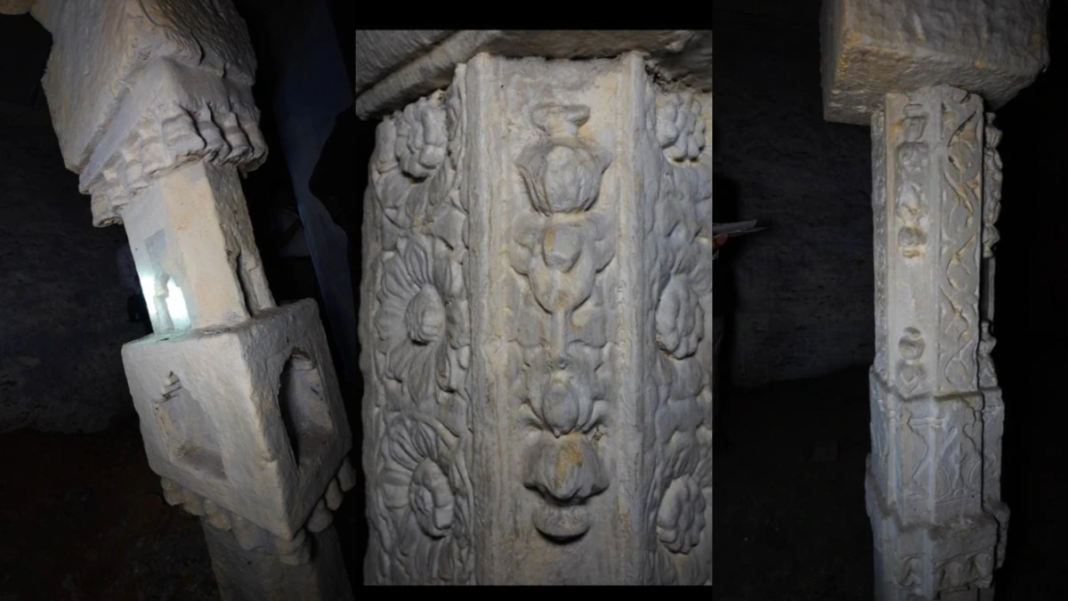
A pillar at Gyanvapi disputed site (Image via IndiaToday)

Seriation

Seriation is another method that examines variations for certain forms of objects found at a site. A chronology is established on the concept that one ethnic design would gradually replace an old style over the period. It is used in situations where absolute dating methods like radiocarbon cannot be applied. Seriation can be used to date stone tools, pottery fragments etc.

The method basically arranges various objects found at a site in chronological order. While this method does tell the exact age of an object, it can identify the older and newer objects at a site.

Carbon 14 dating 

It is notable that the Hindu plaintiffs in the Gyanvapi case in their plea had sought permission for carbon dating of the Shivling found on the disputed Gyanvapi compound, walls and other structures on the premises. In this context, it is important to understand, what carbon dating is and how it works.

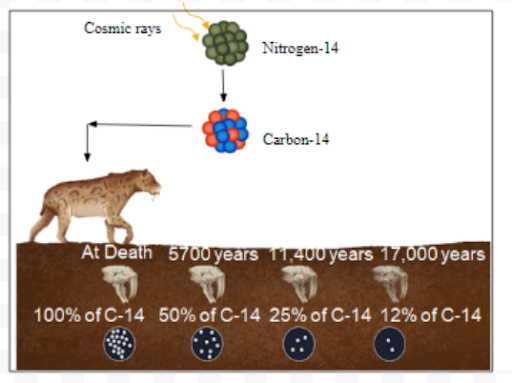
Radiocarbon dating, often known as carbon-14 dating, is a scientific process that can establish the age of organic materials as old as 60,000 years. Willard Libby invented the approach in the late 1940s at the University of Chicago. The carbon-14 dating method is based on the idea of radiative decay of Carbon-14 isotopes over thousands of years. 

Graphics representing how carbon-14 dating works (Image via Byjus)

Carbon dating cannot be used in all situations. It cannot be used to establish the age of non-living things such as rocks.

Carbon-14 dating is one of the many techniques under a broader term Radiometric dating. 

Radiometric dating is a method of determining the age of anything based on the presence of a radioactive isotope within it, such as a wooden object, a rock, or a fossil. Radiometric dating uses a short-lived radioactive element to establish the age of geologic materials. Carbon-14 and potassium-14/argon-40 dating procedures are the most advanced.

The basic premise of radiometric dating is that by comparing the presence of a radioactive isotope in a sample to its known abundance on Earth and its known half-life (rate of decay), one can compute the age of the sample.

One of the method’s shortcomings is that it cannot date a sculpture. That is why, geologists employ materials with longer half-lives. For example, the half-life of potassium-40 decaying to argon is 1.26 billion years, and the half-life of beryllium-10 decaying to boron is 1.52 million years. Geologists use the abundance of these radioisotopes to date rocks.

Ground Penetrating Radar 

A GPR survey, or ground penetrating radar survey, is a geophysical imaging radar technique that uses radio waves to obtain photographs of entities below ground level without digging up the soil. The things that need to be photographed should not be too deep in the ground (no more than tens of metres below ground level). The ASI team will be conducting a GPR survey at the area below the three domes at Gyanvapi disputed site to determine if the Gyanvapi ‘mosque’ is constructed over a pre-existing structure of a Hindu temple.

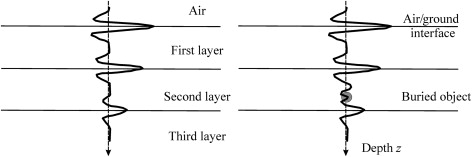
GPR Surveys are used to determine the exact location of natural or man-made objects underneath, natural elements, or to identify changes in their position. It takes pictures by sending high-frequency (50 – 1,500MHz) electromagnetic pulses into the ground. The transmitter and the antenna are the two most important pieces of equipment in GPR systems. The transmitter, which would be near the ground, would deliver radar signals to the earth, and the antenna would detect the reflected signals. The received signals would be analysed and shown on a graphic recorder. 

Effect of a buried object on the radar signal reflection (Image via ScienceDirect)

A good GPR survey yields data lines that reflect a segment image of the earth’s subsurface. All of the lines collected in a given area would be combined and utilised to create a 3D depiction of the surveyed area. Ground Penetrating Radar signals may identify and capture images of concrete, plastic, natural materials, metal, and other materials.

While the Archaeological Survey of India (ASI) surveys the Gyanvapi complex in Varanasi, the Anjuman Intezamia Masjid Committee has appealed the Allahabad High Court ruling to the Supreme Court. The Masjid Committee’s counsel sought that the Supreme Court rule against a high court order allowing ASI to conduct the survey. However, Supreme Court says it will look into the issue.

Bulldozer to the rescue: Haryana BJP demolishes houses of over 200 illegal Bangladeshi immigrants, rioters who unleashed violence in Nuh

Days after Islamists unleashed violence in the Nuh district of Haryana, the BJP-led State government cracked down on the illegal encroachments of over 200 rioters on Thursday (August 3).

While adopting Yogi Adityanath’s signature bulldozer system, the local administration in Tauru in Nuh bulldozed 250 houses of illegal immigrants. Reportedly, many of them were part of the recent rioting in the Mewat region.

The encroachments had cropped up on Haryana Shehri Vikas Pradhikaran (HSVP) land in the past 4 years and were mostly inhabited by illegal immigrants from Bangladesh.

The demolition drive was carried out on Thursday (August 3) by the Nuh district authorities in the presence of a heavy police force. Citing sources, The Tribune reported that the majority of the rioters lived in the shanties that were demolished.

The police identified the rioters and their houses using CCTV footage and videos on social media. A similar drive will also be carried out at Nalhar village, where Islamists attacked a Shobha yatra on July 31, 2023.

While speaking about the matter, SP (Nuh) Varun Singla stated, “Demolition was carried out by relevant agencies and we provided police support.” Officer on Special Duty to Additional Director General of Police Mamta Singh, Narender Birjaniya, added, “We have carried out demolitions and principally, these structures were illegal. You cannot have an illegal structure and use it to hamper law and order.”

Earlier, gau rakshak Bittu Bajrangi had demanded Uttar Pradesh CM Yogi Adityanath-style bulldozer action against the miscreants. He opined that the miscreants involved in Nuh violence should be killed in an encounter. 

“They killed our officers, they killed Ram bhakts. What was their fault? Should we not take Shri Ram’s name in this country? We had taken out a peaceful yatra, with our women and children,” he had said.

Nuh Shobha Yatra attack

On Monday (July 31), tensions gripped several parts of Haryana when stones were pelted at the Jalabhishek Shobha yatra in the Muslim-majority region of Mewat. The procession was taken out to mark the auspicious occasion of Shravan Somwar.

In several videos of the clashes, a mob charging in a hostile way at the yatris could be heard raising “Allahu Akbar” and indulging in riotous activities.  6 people have been killed so far.

To stop the spread of misinformation and rumours, internet services were suspended in the region. Following the violence at Nuh, VHP president, Alok Kumar issued a video statement urging the police and administration to quickly rescue the devotees stuck at several locations including Nuh temples, chowk, and near the police station. He stressed that the yatra is an annual affair and this year it was targeted in a pre-planned and organised attack

Meanwhile, the Union government deployed 20 companies (about 2000 personnel) of Central Armed Police Forces (CAPF) to bring the law and order situation under control. It is worth noting that Haryana’s Mewat has been under the spotlight for the last few years for the increase in terror activities, cow smuggling, and forced conversions.

Delhi: Man murders married male friend over sexual favours, dumps body in drain, arrested after making ransom calls

A man has been arrested by the Delhi Police on charges of killing his friend and disposing of the body in a city drain in the Dwarka neighborhood. The deceased is identified as 32-year-old Yogesh Kumar who was shot dead by a 27-year-old MBA student Shashank Singh.

Yogesh Kumar resided in the Madangir neighborhood of south Delhi with his wife, 2-year-old daughter, and parents. He was an unemployed graphic designer looking for work, according to his spouse. He reportedly rejected the culprit’s attempts for sexual favours.

The victim had gone missing on 9 July in south Delhi and his body was discovered on 2 August. The case’s inquiry commenced when his father reported him missing to the Ambedkar Nagar police station on 10 July. The complaint stated that his son left for a job interview but never returned. In addition, he revealed that he received a call demanding Rs 20 lakh in ransom in exchange for his release.

The police took notice of the complaint and opened a probe to find him. A kidnapping for ransom case was filed under section 364A of the Indian Penal Code. The ransom was eventually lowered to Rs 15 lakh and the accused gave the complainant directions to Palika Bazar in Connaught Place and gate number 2 of the Great India Place (GIP) Mall in Noida.

Both attempts to trade the money for the victim, however, were unsuccessful because the caller did not appear at either location. Deputy Commissioner of Police South, Chandan Chowdhary informed that further investigations disclosed the ransom calls originated in Supaul, Bihar and the caller’s location was Noida. This act was done to mislead the investigation. CCTV footage from the Plaza Mall in Dwarka Sector-16 offered a crucial lead throughout the probe.

It confirmed that Yogesh Kumar left a Swift car after buying a pizza with another person. The cops tracked down the offender after spotting a distinctive mark and word on the gasoline tank lid of the vehicle. After examining the technical evidence, police learned that he had last been seen with his friend Shashank Singh, and as a result, the latter was arrested.

Shashank Singh was located in east Delhi’s New Ashok Nagar. Police unveiled, “In the early hours of Wednesday, we picked up the suspect from his home. He first tried to mislead us, but later confessed to the crime.”

The murder confession

Shashank Singh admitted under questioning that he and the deceased were initially acquainted at a party in Delhi and had since started meeting for work-related reasons. He was helping the latter who was out of job to find employment. They met on 9 July in Moolchand and the perpetrator then took him to a remote area in Dwarka Sector 14. He had called Yogesh Kumar to schedule an alleged job interview and told him to bring his resume with him.

The DCP mentioned, “Both were searching for jobs and became friends after meeting at a party. The two would also attend LGBTQ parties, and the accused asked the victim to give him his resume to help him find a job.”

Afterward, an argument over a request for sexual favors resulted in him fatally shooting the other individual after which he put the dead body in a suitcase and discarded it in a sewer not far from Dwarka Sector-14B. He cleaned the automobile and dumped blood-stained car sheets, the murder weapon, and other items into the Yamuna River in an effort to hide his traces.

He bought a bogus SIM card and dialed the relatives of the dead man for ransom in an effort to sabotage the inquiry. It was also found that he had purchased the pistol from an acquaintance in Noida so that he could impress people at social functions. Yogesh Kumar’s family eventually contacted the police after they searched for him and received ransom calls.

The distraught mother even remembered their final conversation before he went out to meet his supposed friend. She cried, “He left with his resume at 10.30 am. I called him around 12.40 pm to ask if he had lunch. His phone was switched off.” His brother accused, “The police told us that he was an adult and would eventually return home. If they had searched for him properly, he could have been saved.”

However, according to the police, Yogesh Kumar was murdered the day he left his home. They maintained that he and his friend had met in Moolchand, travelled to Dwarka, purchased pizza and beer, and then arrived at a quiet area in Sector 14 of the vicinity. The senior official proclaimed, “When he realized that the disappearance has become a police case, the accused made ransom calls to the victim’s family.”

Another police official, not wishing to be named, has reportedly said, “The accused held a grudge against the victim over seeking sexual favours. The accused, who was carrying a gun with him, shot the victim dead. There was the angle of sexual demands in the murder. But who was pressuring who is yet to be ascertained.”

The first call was made on the evening of July 14, the official elaborated, “The caller demanded Rs 20 lakh, but the victim’s father negotiated for Rs 15 lakh. In the subsequent calls, the caller would disconnect before the family could seek evidence that the victim was alive.”

Yogesh Kumar’s two ATM cards were used to withdraw Rs 27,000 on 12 July in Noida, according to her. He was fully disguised, wearing both a mask and a helmet.

Sweden: Violent clashes erupt during cultural event after two groups of Eritrean immigrants come face to face in Stockholm, dozens injured

On Thursday, August 3, an Eritrea theme cultural festival organised in a Stockholm suburb turned into a war zone after thousands of anti-Eritrea government protestors stormed the event. The incident left more than 50 people injured, out of which, eight are said to be seriously injured. About 100 people were detained by the Swedish police.

A significant police presence is still at the scene and investigations are underway, media has quoted Swedish police spokesperson Daniel Wikdahl as telling The Associated Press. He added that “between 100 and 200 people have been detained.”

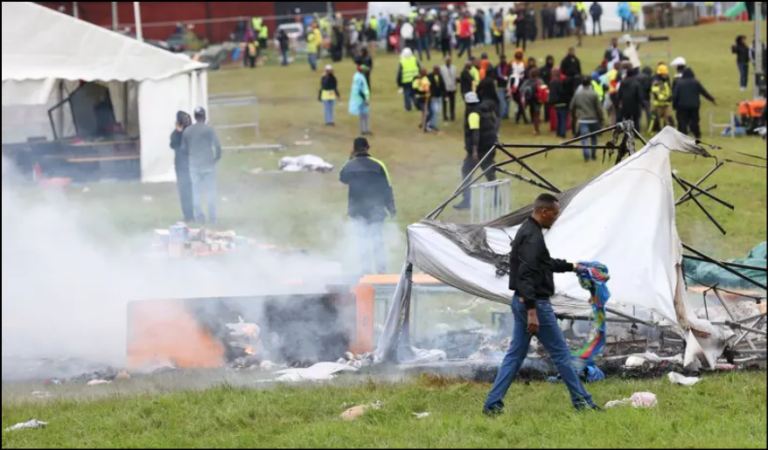
The riots broke out after thousands of anti-Eritrea government protestors who were holding a protest nearby broke through a police barrier and stormed the Eritrean pro-government festival being held in Jaervafaeltet in Stockholm. The protestors tore down festival tents and used tent spikes as weapons against police. They also pelted stones at the people participating in the cultural event and the police.

A group of Eritreans also blocked the E 18 road toward Oslo. Public transportation was halted in the nearby Rinkeby district.

Videos from the scene showed cars and at least one tent on fire, sending large clouds of black smoke into the air.

A police spokesman told local media channel SVT that three police officers were also injured in the violence. The police have launched investigations into violent riots, arson and serious sabotaging of the emergency services, he added.

Sweden is home to tens of thousands of Eritrean immigrants. According to Swedish media, the festival celebrating Eritrea’s cultural history is held annually since the 1990s, but it has drawn criticism for supposedly acting as a publicity stunt and a source of income for the African country’s government.

Protester Michael Kobrab told Swedish television station TV4, “This is not a festival, they are teaching their children hate speech.”

Meanwhile, a festival participant, Emanuel Asmalash, also spoke to TV4 and accused the protesters of being “terrorists” from Ethiopia.

Eritrea is one of the most oppressive nations in the world. The two major religions in Eritrea are Christianity and Islam. Eritrean President Isaias Afwerki has been in power since the nation won independence from Ethiopia some 30 years ago, without having ever held an election.

Eritrea is sometimes dubbed the ‘North Korea of Africa’ because of its ultra-repressive regime. The Eritrean Defense Forces were responsible for widespread and serious human rights abuses, including execution, rape, and torture of civilians. Independent media have been banned since 2001 in the country.

In 2014, Human Rights Watch called Eritrea “among the most closed countries in the world” and pointed to “indefinite military service, torture, arbitrary detention, and severe restrictions on freedoms of expression, association, and religion.

Hundreds of thousands of Eritreans have left their country, fleeing religious persecution, arbitrary arrests and indefinite national service, considered forced labour by human rights organisations.