Home Blog Page 2287

Godhra: One Mohammed Kasim molests a Hindu woman on a bus in darkness, booked and nabbed

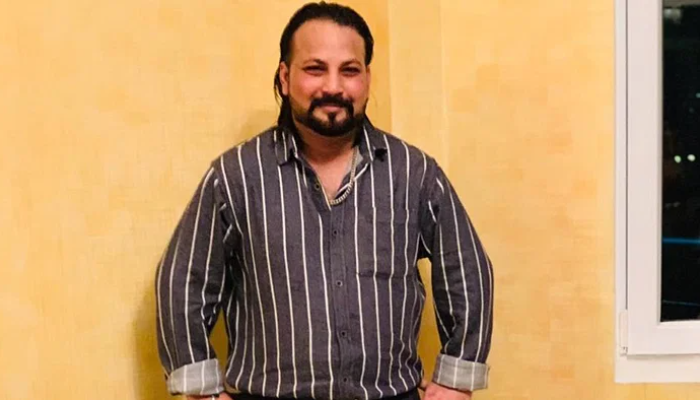
The Gujarat Police on Thursday booked a man named Mohammad Kasim after he molested a Hindu woman who was travelling to Godhra from Halol in a bus in Gujarat. As reported by Desh Gujarat, the woman filed a complaint against the man after which the Police took swift action in the case.

According to the complaint filed by the Godhra woman, the event took place when the bus’s lights were switched off. She sensed a fellow passenger (Kasim) continuously stroking her shoulders in the dark, so she requested him to stop (which sparked an altercation). Later, the accused repeatedly caressed the area below her thighs with bad intentions.

She then called her husband and requested him to meet her at the Godhra bus station. Meanwhile, she also asked another co-passenger to click the pictures of the accused’s actions and transmit them to her husband.

At 9.30 p.m., the bus arrived at the Godhra bus station, and the victim immediately called the police and informed them about the incident. She also stopped the accused passenger, Mohammad Yayman Kasim, 48, who lives in Rata plot, Vejalpur Road, Godhra from leaving.

A crowd of people had gathered in response to the woman’s screams and also stopped the accused as he attempted to leave. The offender was then captured and taken to the police station by the wife’s husband and other individuals.

‘Asad Ahmed was planning to attack police convoy to free his father Atiq Ahmed’, reveals UP Police

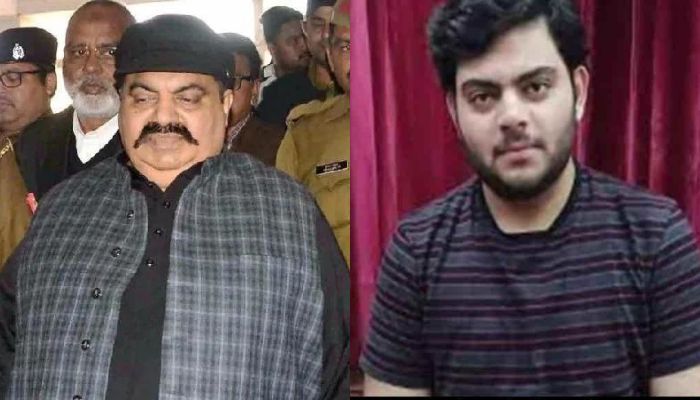
Asad Ahmed, son of the mafia Atiq Ahmed, who was killed in an encounter with the Uttar Pradesh police Special Task Force, was planning to get his father out of police custody. Prashant Kumar, Special Director General, Law and Order, Uttar Pradesh Police, shared this information on 13th April 2023.

SDGP Prashant Kumar said, “The government has adopted a zero-tolerance policy against the mafia. The result of this policy is before everyone today.”

Asad Ahmed was plotting to get his father Atiq Ahmed out of police custody. For this, he was also planning to attack the police convoy. Asad Ahmed wanted to execute his plans when Atiq Ahmed was being brought to UP, the SDGP said.

SDGP Prashant Kumar said, “We had information that to help the accused Atiq and Ashraf escape there could be an attack on the police convoy bringing them back to UP in the case (Umesh Pal murder case). In view of this information, teams of civil police and special forces were deployed.”

The UPSTF killed Asad Ahmed, son of gangster Atiq Ahmed, and one of his associates Mohammed Ghulam in an encounter in Jhansi on Thursday 13th April 2023. Prashant Kumar said, “Asad and Ghulam, wanted in the Umesh Pal murder case in Prayagraj, were miscreants with a reward of Five lakh rupees each. Both were killed in an encounter with the STF in Jhansi. The Uttar Pradesh STF team involved in the encounter was led by Deputy Superintendents of Police Navendu and Vimal. State-of-the-art foreign weapons have been recovered from the accused killed in the encounter.”

Notably, the encounter took place on the same day when Atiq Ahmed – who was taken to Prayagraj by road from Gujarat’s Sabarmati jail – and his brother Ashraf both were produced before the chief judicial magistrate’s court in connection with the Umesh Pal murder case. After Umesh Pal’s murder, Asad and Ghulam were on the run. Several teams of STF were deployed to nab the two.

According to the police officials, on Thursday, when an STF team stopped Asad and Ghulam, who were trying to escape on a motorcycle in Jhansi, both the miscreants opened fire on the STF team. Asad and Ghulam were killed in the STF’s retaliatory action. Umesh Pal, the prime witness in the murder case of Bahujan Samaj Party (BSP) MLA Raju Pal in 2005, and Umesh Pal’s two security guards were shot dead in Prayagraj on February 24, 2023.

Pakistan: Former PM Imran Khan and Bushra Bibi’s nikah was not according to Islamic Sharia, says Mufti Saeed who solemnized it

Former Pakistan Prime Minister Imran Khan’s marriage to Bushra Bibi did not adhere to Islamic Sharia law, according to Mufti Saeed, the cleric who conducted the nikah (wedding). The cleric stated at a hearing in Islamabad court on a petition filed by Muhammad Hanif that the nikah was not in conformity with Islamic Sharia law.

The cleric revealed that the wedding occurred during Bushra Bibi’s iddat period, which is a waiting period practised by Muslim women following the death of their spouse or divorce. Muslim women are not allowed to marry another man throughout this period since it is considered a grieving phase for women.

The iddat period varies based on circumstances, but generally, it is three lunar months or around 89 days. Bushra Bibi was in November 2017, and her marriage with Imran Khan took place on 1 January 2028, which means three lunar months were not completed after the divorce.

According to reports, the cleric stated that he was taken to the Defence Housing Authority Lahore in 2018 to perform the marriage and that he only conducted the ceremony when a lady who identified herself as Bushra Bibi’s sister gave him the go-ahead. Mufti Saeed said that the woman told him that all requirements for the marriage under the Shariah were complete. The event took place on January 1, 2018.

Khan’s friend Zulfi Bukhari and former party leader Awn Chaudhry were witnesses to the marriage solemnised by Mufti Saeed in Lahore.

While speaking before the court, Mufti Saeed informed that Imran Khan approached him in February 2018 and requested him to re-conduct their wedding because Khan believed that Sharia law had been violated the first time. By this time, the iddat period was over.

Mufti Saeed also told the court that both Imran Khan and Bushra Bibi were aware of the situation, but Imran Khan believed that the marriage would help him become Prime Minister. Reportedly, there was a “prediction” that the PTI chairman will become the prime minister of Pakistan if he married Bushra Bibi.

On the 324th anniversary of Khalsa creation, a look back at why it was formed by Guru Gobind Singh

0

People around the world are celebrating Baisakhi, the festival of harvest. On this auspicious day, the tenth Guru of Sikhs, Guru Gobind Singh Ji, laid the foundation of Khalsa. The aim behind the formation of Khalsa was to create ideal people who would be perfect in every way including devotion (Bhakti) and strength (Shakti). Furthermore, the idea of charity (Deg) and sword (Tegh) was embedded in the image of Sikhs to show that Sikhs will behave as per the situation.

The Khalsa is supposed to be a combination of a saint, a soldier, and a scholar. A Khalsa has high morals and excellent character. Both men and women belonging to Khalsa are trained to be strong, courageous, learned, and wise.

The word Khalsa means ‘pure’. It is derived from the Arabic word Khalis which literally means ‘pure’ or ‘unsullied’. Khalsa word appears only once in Shri Guru Granth Sahib Ji in Bhagat Kabir’s vani. It reads, “Kahu Kabir jab bhaye Khalsa prem bhagat jih jaani”, which means, Kabir says those people who know the Lord’s love and devotion are the purest.

The term was once used in one of the Hukumnamas (the written orders) of Shri Guru Hargobind Singh Ji, where he described the Sangat (group of devotees) of the eastern region as ‘Guru Ka Khalsa’ or ‘Guru’s own’. Later, it was used in a similar sense by Shri Guru Tegh Bahadur Ji in one of his letters to the Sangat of Patna.

The eternal bond between Sikhism and the term ‘Khalsa’ was established after Shri Guru Gobind Singh Ji introduced the new form of initiatory rites ‘Khande di pahul’ or ‘rites by the double-edged sword’ in 1699. He brought Sikhs under the umbrella of Khalsa, the people of Waheguru or the Supreme Lord. From that day, Waheguru Ji Ka Khalsa, Waheguru Ji Ki Fateh (Hail the Khalsa belongs to the Lord God! Hail the Lord God to whoever belongs the victory!!) became an integral part of Sikhism.

Death of Shri Guru Tegh Bahadur Ji

It was the death of Shri Guru Tegh Bahadur, the ninth Guru of Sikhs, that led to the formation of Khalsa. Shri Guru Tegh Bahadur Ji became the ninth Guru on April 16, 1664, after the death of his grand-nephew and eighth Guru of Sikhs, Shri Guru Har Kishan Ji. In 1675, Hindus of Kashmir approached Shri Guru Tegh Bahadur Ji and sought his help against the forced conversions initiated by the Mughal emperor Aurangzeb.

Shri Guru Tegh Bahadur Ji went to Delhi with a delegation to meet Aurangzeb, where he challenged him that if he could convert Guru Tegh Bahadur Ji to Islam, all the Hindus in Kashmir would convert as well. Aurangzeb ordered his disciples to convert Shri Guru Tegh Bahadur Ji at any cost. They used every possible torture to force him to convert but failed. Shri Guru Tegh Bahadur Ji was eventually tortured to death.

Three other Sikhs, Bhai Mati Das, Bhai Sati Das, and Bhai Dyal Das, who were part of his delegation, were also executed by Aurangzeb before beheading Shri Guru Tegh Bahadur Ji. Gurudwara Sis Ganj and Gurudwara Rakabganj in Delhi mark the place of the beheading and cremation of Guru Tegh Bahadur in Delhi on the order of Aurangzeb.

The Birth of Khalsa

After the execution of Shri Guru Teg Bahadur Ji, his son Shri Guru Gobind Singh Ji (formerly known as Gobind Rai) became the tenth and last Guru of Sikhs. At that time there was a feeling of darkness and unhappiness due to the continuous atrocities of the Mughals. He vowed to turn Sikhs from “Sparrows to Hawks”. His famous words “Chidhiya naal mai baaz ladaawan, Geedadan toh main sher banawaan, Sawa lakh se ek ladawan, Tabe Gobind Singh naam kahaawan!” literally means “I shall make sparrows fight the hawk, I shall make lions out of jackals, I will teach one man to fight 1.25 lakh, Only then will I be called Gobind Singh”.

Guru Gobind Singh Ji commanded Khalsa to use the sword only in extreme circumstances. That means, a Khalsa can draw a sword only when all peaceful methods have failed. The sword can be drawn only for self-defense and the protection of the oppressed.

When Guru Gobind Singh Ji became the leader of the Sikh community, it was shaped by three levels of authority that were Masands, Guru, and the Revealed Word. The Masands or the Guru’s deputies were responsible for local congregations. The Reveal word was the recorded scriptural text of Sikhism that served as the symbolic base. The Guru was the active central authority. Guru Gobind Singh Ji ended the authority of Masands. They were asked to either become regular members of the community or leave the fold. The idea was to embrace equality among all.

Several months before the formation of Khalsa, Shri Guru Gobind Singh Ji had sent an invitation to all his followers to come to Anandpur Sahib on Baisakhi in 1699, which fell on March 30. Thousands of devotees gathered at Anandpur Sahib for the auspicious event.

Notably, Shri Guru Gobind Singh Ji had not detailed his intentions to formulate Khalsa in the invite but mentioned a religious congregation. Shortly before Baisakhi, Shri Guru Gobind Singh Ji abolished the institution of masands. They were basically intermediaries of Guru’s agents. Every Sangat of a different region had its own sand. In the hukumnamas of Shri Guru Gobind Singh Ji, the de-recognition of masands was mentioned. With the abolishment of the Masand system, a direct relationship between the Sangats and the Guru was formed.

On the day of Baisakhi, many came as a sign of respect to the Guru, and the rest came out of curiosity. Shri Guru Gobind Singh Ji addressed the mass with the most memorable oration in Sikhism. He informed them about his mission to restore faith and preserve Dharma or righteousness.

After his address, he flashed his naked sword in the air and asked, “I need one head. Is there anyone among you who is ready to die for his faith?” The people present in the congregation were speechless. Some of them left the congregation, and others looked at each other in confusion and amazement. A few minutes later, Daya Ram, a Sikh who came to attend the congregation from Lahore, stood up and offered his head to the Guru. Guru Gobind Singh Ji asked him to follow him in a tent. After a short while, he came out with blood dripping sword. Everyone thought Daya Ram was sacrificed.

The demand was repeated four more times by Shri Guru Gobind Singh Ji. The second Sikh who sacrificed his life was Dharam Das. The Third was Mohkam Chand, followed by two others, Sahib Chand and Himmat Rai. Everyone outside could hear the sound of ‘Thud’ from inside the tent as if their heads had fallen on the ground.

There was pin-drop silence all around. A few moments later, Shri Guru Gobind Singh Ji came out. There was no sword in his hands. Five Sikhs, who were believed to be sacrificed, came out wearing decorated robes. Guru Ji announced that they were Panj Pyare or the Five Beloved Ones. They were baptized as the first five Khalsa with the administration of Amrit. He said, “From now on, the Khalsa shall be baptized with Amrit created with water stirred with a double-edged sword – Khanda while the words of Gurbani are uttered.” Today, if someone wants to get baptized in Sikhism, he or she follows the process known as ‘Amrit Chakhna’.

The Five Ks

Every Khalsa must follow Panj Kakka, or the Five Ks that, are Kesh, Kanga, Kaccha, Kara and Kirpan.

Kesh: A Khalsa is not allowed to cut the hair as it represents the natural appearance of sainthood.

Kanga: A small comb to maintain Kesh.

Kaccha: It does not specifically mean the undergarment, but it denoted the short trousers of the warrior. It also denotes celibacy.

Kara: The steel bangle represents the dedication toward the Guru. Shri Guru Gobind Singh Ji had said by wearing Kara, all the fears in Khalsa would disappear.

Kirpan: The sword for defence. The word comes from Kirpa, the Sanskrit word for kindness and Aan, the Persian word for self-respect. It is the symbol of power, courage and dignity.

According to the basics of Sikhism, a true Khalsa does not discriminate or see anyone as a demeaned soul. He or she will rise in defence of the oppressed and will do charity to help the needy.


Asad Ahmed and Mohammed Ghulam killed in police encounter: Here is their role in the Umesh Pal murder

On 13th April 2023, Asad Ahmed, son of gangster turned politician Atiq Ahmed, was killed in a police encounter at Jhansi. Asad Ahmed was wanted in the Umesh Pal murder case. Along with Asad, his associate Ghulam Muhammad was also killed in the encounter with the Uttar Pradesh Police STF.

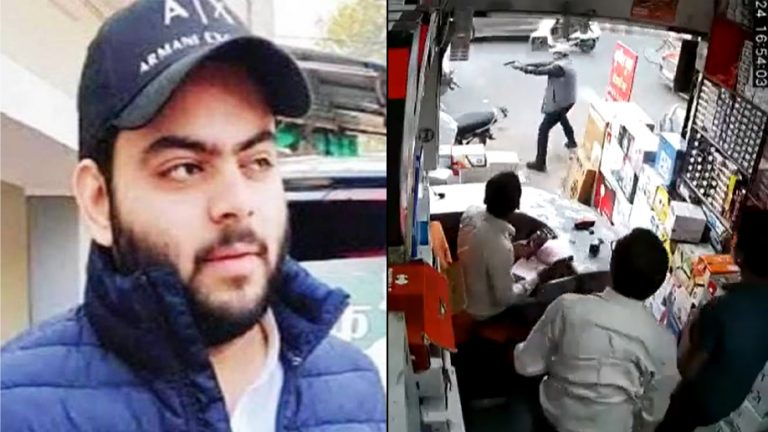
In the CCTV footage of Umesh Pal’s murder, Asad Pal was seen chasing and attacking Pal with a pistol. Muhammad Ghulam, son of Maksudan, was a gunman who fired shots during the Umesh Pal murder. Both were carrying bounties of ₹5 lakhs after their involvement in the Umesh Pal murder came to light.

Atiq Ahmed, his wife Shaista Prveenm, their sons Asad and Ashraf, their associates Guddu Muslim and Muhammad Ghulam, and nine others were named in the complaint filed by Umesh Pal’s wife Jaya Pal after the murder of Umesh Pal. Earlier two other men, Arbaaz and Vijay Chowdhary alias Usman, who were involved in Umesh Pal’s killing, were killed in encounters with police on February 27 and March 6 respectively.

Asad Ahmed is the third son of the mafia Atiq Ahmed. Asad Ahmed operated the gang from Lucknow. His father Atiq Ahmed is lodged in the Sabarmati Jail and his uncle Ashraf Ahmed is locked in the Bareilly Jail. Asad Ahmed completed his schooling in Lucknow. His two elder brothers are also arrested by the police in various cases. According to media reports, Asad Ahmed wanted to get further education abroad, but because of the criminal background of his family, his passport was not cleared by the authorities.

Till 24th February 2023, Asad Ahmed did not have any case against him. On 24th February 2023, he led Atiq Ahmed’s gang in the murder of Umesh Pal. He was seen in the CCTV footage as he stepped down from the vehicle and approached Umesh Pal and shot him from point-blank range. Umesh Pal ran to the adjacent lane to save his life. Asad Ahmed followed him in the lane and fired bullets at Umesh Pal. Asad Ahmed was one of the key conspirators of this murder and he led the gang on the day of the murder.

In the last one and a half months, Asad Ahmed went on to become the most wanted criminal in the state. The police had declared a reward of Rs. 5 lakhs on his head. When he was surrounded by the STF team of the UP Police, he was asked to surrender. But Asad Ahmed fired at the police. He and his associate Mohammed Ghulam both were shot dead in the cross firing. Asad Ahmed reportedly wanted to become a lawyer, but ended up being encountered as a gangster.

Mohammed Ghulam was one of the shooters involved in the Umesh Pal murder case. There were 7 assailants in the gang that killed Umesh Pal. One of them was tasked with attacking with explosives. Others were shooting with pistols. Mohammed Ghulam was one of the pistol shooters. He too fired rounds at Umesh Pal.

Last month, the house of Ghulam was demolished by the Prayagraj administration. The Prayagraj Development Authority (PDA) had issued a notice regarding illegal construction, after which the house was demolished after completing the necessary legal requirements. Earlier Ghulam’s girlfriend was arrested after it was found that she was in regular contact with him while he was absconding after Umesh Pal’s murder. She was allegedly giving him details to avoid getting caught and was reportedly aware of the murder plot. After her arrest, she gave important leads to the police during the interrogation.

Muhammad Ghulam’s brother Rahil Hassan was the chief of the district minority cell of BJP in Prayagraj. He was sacked from the post after his brother’s name appeared in the murder case. Rahil had said that he has no links with his brother and said that if Ghulam is killed in an encounter, he will not go to collect the body.

Umesh Pal was the prime witness of the murder of BSP MLA Raju Pal, who was killed at the behest of Atiq Ahmed in 2005. Raju Pal became MLA by defeating Ashraf Ahmed. The election was held as Atiq Ahmed vacated his MLA seat after he became the MP.

After two encounters, now Guddu Muslim has been surrounded by police: Here is who he is and his role in Umesh Pal murder

On Thursday, April 13, hours after Atiq Ahmed’s son Asad Ahmed and gunman Ghulam Muhammad were killed in an encounter, Guddu Muslim, another accused in the Umesh Pal murder case, has been surrounded by UP Police. Guddu Muslim was the accused who threw the bombs during the murder of Umesh Pal. Some unconfirmed reports are suggesting he has also been killed in encounter while others are suggesting he is taken into custody.

The Police confirmed the incident to Zee media news and stated that the Uttar Pradesh STF has been working rigorously since Februry 24 on this case to nab the accused named in the Umesh Pal murder case. He has been surrounded by police force and an encounter was underway.

Guddu Muslim is born in Allahabad and began participating in illicit activities at the age of 15. Initially he egaged in robberies and extortions but later positioned himself in the criminal underworld by the mid-1990s.

Guddu Muslim is infamous for his skill in making hand grenades, even while riding a pillion on a moving motorcycle. Police sources claimed earlier that Guddu was quite unusual in the way he put together a bomb and could manage it in just 4-5 minutes.

He would assemble the bomb while on the road and would carry the raw materials, nails, shards, gunpowder, jute twine, etc., in separate packs to avoid being discovered. He learned how to make bombs from a professional in Nepal’s underground. The Police officers further revealed that Guddu developed his skills in making crude bombs in the early 1990s.

The accused is said to have hurled crude bombs in February’s shootout where Umesh Pal was shot dead. CCTV footage captured Guddu Muslim hurling crude bombs at Pal and his police gunners.

Guddu has worked for several dons including Mukhtar Ansari, Abhay Singh, and Dhananjay Singh. He had spent the last ten years working with Atiq Ahmed. His name was also connected to the infamous Peter Gomes murder case in Lucknow. He was also detained in connection with a bombing that occurred close to a Lucknow police station.

On the basis of a complaint lodged by Umesh Pal’s wife Jaya Pal, a case was registered against Atiq Ahmed, his brother Ashraf, wife Shaista Parveen, two sons, aides Guddu Muslim and Gulam and nine others.

The Police earlier killed one of the prime accused, shooter, Mohammad Arbaaz, 24, in an encounter in Prayagraj, three days after the murder. The Police also killed Asad Ahmed, son of gangster turned politician Atiq Ahmed and Gulam today. Both of them were wanted in Umesh Pal murder case and carried a reward of Rs 5 lakh each.

The Uttar Pradesh STF team led by Dy SP Navendu and Dy SP Vimal at Jhansi confirmed the killings and said that sophisticated foreign made weapons were recovered from the spot after the encounter.

Samajwadi Party declares Asad Ahmed’s encounter fake, Akhilesh Yadav makes a strange claim of ‘bhaichara weakening’ due to police action

On Thursday, hours after the Uttar Pradesh Police STF killed Asad Ahmed, son of gangster turned politician Atiq Ahmed and Ghulam Muhammad, both accused in the Umesh Pal murder case, the Samajwadi Party (SP) slammed the ruling Bharatiya Janata Party (BJP) and claimed that the recently announced police encounters were fake.

Asad Ahmed and Gulam Muhammad, both wanted in the Umesh Pal murder case were killed in a police encounter at Jhansi today. In the CCTV footage of Umesh Pal’s murder, Asad Pal was seen chasing and attacking Pal with a pistol. Ghulam Muhammad, son of Maksudan, was a gunman who fired shots during the Umesh Pal murder.

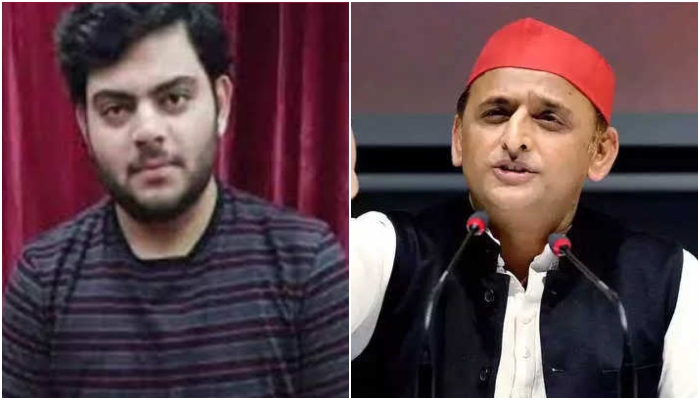
SP’s Akhilesh Yadav meanwhile claimed that this encounter along and all recently announced encounters were fake and that the BJP was trying to divert the public attention from real problems by executing fake encounters. He also demanded an investigation into the case and said that the culprits should not be spared.

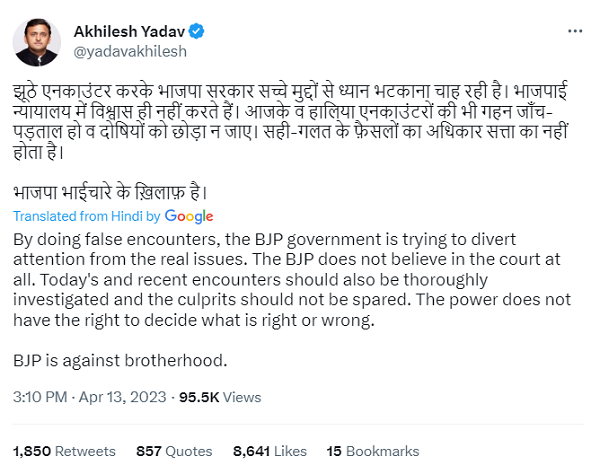
“By doing false encounters, the BJP government is trying to divert attention from the real issues. The BJP does not believe in the court at all. Today’s and recent encounters should also be thoroughly investigated and the culprits should not be spared. The government does not have the right to decide what is right or wrong. BJP is against brotherhood,” he tweeted.

Screenshot from Twitter

As per reports, Asad and Ghulam were constantly moving around to avoid capture by police and had reached Jhansi to meet someone, in preparation for leaving the state. UPSTF received information about the same and launched an operation. They had been tracking the two for 3 days before they were encountered today.

Reportedly, the UP STF has launched another massive encounter to nab Guddu Muslim, another accused named in the Umesh Pal murder case. Guddu has worked for several dons including Mukhtar Ansari, Abhay Singh, and Dhananjay Singh. He had spent the last ten years working with Atiq Ahmed. The accused is said to have hurled crude bombs in February’s shootout where Umesh Pal was shot dead. CCTV footage captured Guddu Muslim hurling crude bombs at Pal and his police gunners.

On the basis of a complaint lodged by Umesh Pal’s wife Jaya Pal, a case was registered against Atiq Ahmed, his brother Ashraf, wife Shaista Parveen, two sons, aides Guddu Muslim and Gulam and nine others.

The Police earlier killed one of the prime accused, shooter, Mohammad Arbaaz, 24, in an encounter in Prayagraj, three days after the murder. The Uttar Pradesh STF team led by Dy SP Navendu and Dy SP Vimal at Jhansi confirmed the encounters meawhile and said that sophisticated foreign made weapons were also recovered from the spot after the encounter.

Earlier, UP CM Yogi Adityanath had said that SP was harbouring criminals and mafia in the state. As the key accused in the Raju Pal murder case are SP leaders, CM Yogi Adityanath accused the party of patronising criminals, evoking a strong reaction from Akhilesh Yadav on February 23.

Further talking about the Umesh Pal murder, the CM had asked, ‘these criminals and these mafias, after all, who harboured them? Is it not true that the mafia against whom the FIR was filed by the victim’s family was made MP by Samajwadi Party?’

Also, OP Singh, the former DGP of UP Police had stated that he could have ended the terror of gangster mafia Atiq Ahmed long back, however, he could not do so due the political pressure imposed upon him back then. He said that he had an opportunity and that he wanted to arrest Ahmed and his gang in 1989–1990 but was ordered to make no arrests. Though Singh avoided to take direct names in the case, it is pertinent to note that during the time period mentioned by the former UP Police DGP, Mulayam Singh Yadav was the chief minister of Uttar Pradesh.

Pakistan: Hindu man Akash Ram, marketing head of BOL News, abducted in Karachi

A Hindu man in Pakistan was abducted from outside his residence in Karachi. Akash Ram, the marketing director of Bol News, was kidnapped In the early hours of Tuesday, which was captured on CCTV cameras. He was driven away in a silver car that was frequently spotted in front of the Karachi headquarters of the media organisation.

Akash Ram was abducted along with his security guard and two other servants. The CCTV cameras installed nearby were found to be destroyed.

His mother is seen constantly pleading with police for her son’s safe return in a video that has gone viral online. She revealed that she was sleeping when her younger son informed her about her elder son’s abduction.

The elderly mother added that there is no information regarding his location and pleaded that her son is innocent and she wants him back. “I just want to see my son again, I just want him back, nothing else,” she begged.

She also mentioned her son’s significant contributions to Pakistan and his continuous assistance to the underprivileged people of the state.

Last month, an unidentified motorist gunned down a Sikh businessman, Dayal Singh, who was in his 40s, in Peshawar city of Pakistan’s Khyber Pakhtunkhwa province in broad daylight. The killing was reported a day after a Hindu ophthalmologist Dr Beerbal Genani (62) was murdered in a targeted attack in Karachi.

Hindu shopkeepers in Pakistan’s Punjab region were beaten for ‘violating the Ramzan Ordinance’ by preparing meals for delivery.

The international community and human rights organisations are extremely concerned about the rapidly declining status and the continuously diminishing numbers of minorities, particularly Hindus, in the country.

They are regularly harassed and their women, including minors, are abducted, raped and forcefully converted under the watchful eyes of the Pakistan government. A recent Human Rights fact sheet exposed the appaling situation and the hateful propaganda against minorities, especially Hindus, in the country.

UK: Arif Patel and Mohamed Jaffar Ali found guilty of committing 150 million pounds worth of designer clothing scam

0

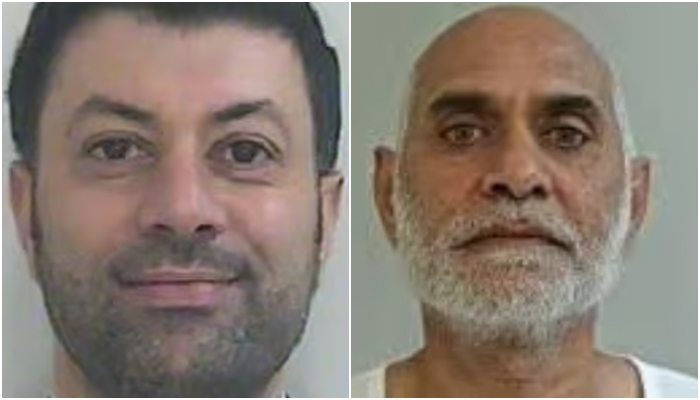
One of the largest known carousel tax scams in the UK has been orchestrated by Arif Patel and Mohamed Jaffar Ali. Arif Patel, a 55-year-old Preston sock maker, and his criminal group attempted to steal 97 million pounds by claiming VAT reimbursement on bogus exports of textiles and mobile phones. 

Additionally, they imported and marketed fake clothing that, if it had been real, would have cost at least 50 million pounds. Through the use of offshore bank accounts, the money was utilized to purchase real estate in Preston and London.

Arif Patel was found guilty on Tuesday, April 11, of false accounting, a conspiracy to defraud the public revenue, the further sale of counterfeit apparel, and money laundering following a combined investigation by HM Revenue and Customs (HMRC) and Lancashire Police.

Co-accused Mohamed Jaffar Ali, 58, of Dubai, was also convicted of money laundering and conspiracy to defraud the Revenue. The verdict was delivered following a 14-week trial at Chester Crown Court. Patel left for Dubai in 2011 and did not come back. He was found guilty on April 11 in his absence.

With the lifting of reporting limitations, it is now possible to publicly declare for the first time that 24 members of the criminal organisation were found guilty in five trials between 2011 and 2014 and sentenced to a combined total of more than 116 years in prison. The gang’s UK assets have also been frozen by HMRC, and legal action is currently being taken to reclaim these cash for the public coffer.

Richard Las, Director of the Fraud Investigation Service confirmed the matter and said, “These guilty verdicts close a significant chapter in one of the biggest tax fraud cases ever investigated by HMRC. For more than a decade HMRC and our partners have worked tirelessly and together to bring this gang to justice. Arif Patel lived a lavish lifestyle at the expense of the law-abiding majority.”

Las added that tax fraud is not devoid of victims, and fraudsters like these two rob the money that NHS and other essential public services rely on. “Our task is not done yet. The gang’s UK assets total more than 78 million pounds, and we have started the process to reclaim all of those criminal gains,” he stated.

Several lieutenants, including professional enablers, were essential to Arif Patel’s criminal organisation throughout the UK. Anil Hindocha, 69, and Yogesh Patel, 66, from Aylesbury, two chartered accountants from a Preston-based firm, were earlier implicated in this case. After being found guilty of fraudulent accounting, conspiring to defraud the public revenue, and money laundering in 2014, Anil Hindocha was sentenced to 12 years and 10 months in prison and Yogesh Patel was sentenced to five years in prison.

Arif Patel left for Dubai in July 2011 and never came back to the UK. He was found guilty on all counts, on April 11, 2023, following his trial at Chester Crown Court while he was not present.

Mohamed Jaffar Ali was found guilty of conspiracy to defraud public revenue and money laundering on Tuesday, April 11, 2023. He participated in the majority of the trial, but on March 27, 2023, he skipped court and a warrant for his arrest was issued. Next month, he will also receive a sentence. Meanwhile, Munaf Umarji Patel and Faisal Patel, brothers of Arif Patel, are still wanted by Lancashire Police.

China using Uyghur Muslim spies to catch others in the community who are violating ban on fasting during Ramzan: report

Chinese authorities are intensifying their campaign of repression against Uyghur Muslims by employing spies to ensure that they are not fasting during the Islamic holy month of Ramzan, according to a report by Radio Free Asia.

The report states that the spies that Chinese officials refer to as ‘ears’ are recruited from regular civilians, police officials, and members of neighbourhood committees, citing a police officer from a region close to Turpan, or Tulufan in Chinese, in the eastern Xinjiang Uyghur Autonomous Region.

“We have many secret agents,” the police officer told Radio Free Asia. As part of broader attempts to denigrate Uyghur culture, language, and religion, China started arbitrarily imprisoning Uyghurs in ‘re-education’ camps in 2017 and also prohibited them from fasting throughout Ramadan.

In 2021 and 2022, the prohibition was partially removed, allowing those over 65 to fast, and police decreased the frequency of house inspections and patrols of the streets.

However this year, irrespective of age, gender, or occupation, the government has outlawed fasting, according to a political officer at Turpan City Police Station. “No one is allowed to fast in this Ramzan,” which this year takes place from March 22 to April 20.

A policeman from Turpan City Bazaar Police Station found that 54 of the 56 Uyghur locals and former inmates who were called in for questioning during the first week of Ramzan had broken the rule by fasting. He and the other policeman at the station were unwilling to talk about what happened to people they found to have breached the diktat.

Two or three agents from each hamlet have been hired by the police stations in the region to keep an eye on locals who have been released from prison and people who have been imprisoned and interrogated in the past for Ramzan fasting.

The police officer from a neighbourhood close to Turpan remarked, “Our ‘ears’ came from three fields, the regular inhabitants, the police, and the neighbourhood committees.” 

“We hired Uyghurs to monitor other Uyghurs due to linguistic issues,” she explained and added, “70 to 80 Uyghur police officers work directly as ‘ears’ or supervise other civilian ‘ears’ at my place of employment.” One of the local policemen revealed that some communities even had four or five spies.

Authorities claimed to have even infiltrated the police force with spies to monitor whether Uyghur police officers were fasting in observance of Ramzan.

According to the police officer from a region close to Turpan, her station has 286 policemen, most of whom are Uyghurs. Nonetheless, due to the language barrier, her ‘comrades,’ or the Chinese police, found it challenging to spy on the Uyghur population there.

She noted that instead, Uyghur police personnel were sent out into the community to keep a close check on Uyghur citizens, or they were appointed as chiefs of the spy networks. She warned that both individuals who plan to fast and those who have in the past broken the law by doing so would be the subject of an investigation.

She pointed out that surveillance of the elderly and teens were necessary because ‘older people have rigid ideas and will not transform easily,’ and youngsters ‘are easy to confuse’ and vulnerable to the words of adults.

A staff member of the Turpan Prefecture Police Bureau proclaimed that the local government hired spies to monitor the police forces to determine whether Uyghur employees were fasting from dawn to night and then presented the findings at weekly political gatherings.

She shared, “We have our upper-level officers and internal agents watching the behaviour of Uyghur policemen,” including those officers put their Uyghur coworkers to the test by giving them fruit to eat. They haven’t yet found any cops who are fasting, she further said.

In addition to house searches, street patrols, and mosque searches, are also covered under this year’s policy as per a police officer from a station in Turpan City. Chinese officials consider eating before sunrise and having a meal together after sunset to be infractions of the law. Hence, the police on patrol interrogate Uyghur Muslim families to find out if they are doing this.

“When we search the houses, we check if they have carried out illegal religious activities and if there are security threats,” he affirmed. Violators would face legal education for minor offences and jail time for serious ones.

For years, Chinese authorities have imposed harsh restrictions on Uyghur Muslims in the north-western region of Xinjiang. More than a million Uyghurs and other ethnic minorities, who are primarily Muslim, have reportedly been interned in camps, according to the UN.