Home Blog Page 23

Is FCRA Amendment Bill anti-Christian? Debunking the lies and setting the record straight

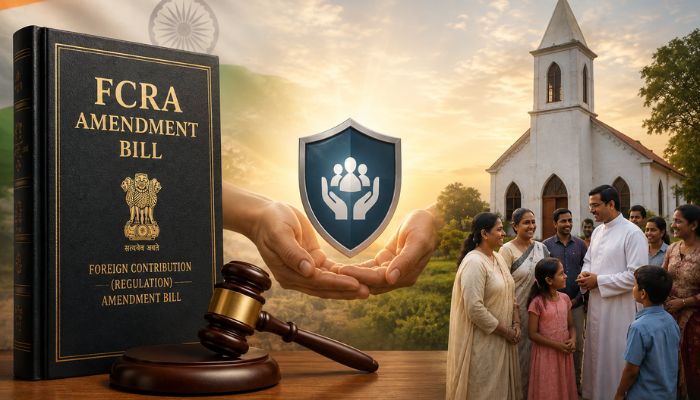
On Tuesday (4th August), US Republican Congressman Riley Moore attempted to peddle mass hysteria and panic about India’s Foreign Contribution (Regulation) Amendment Bill, 2026.

He claimed that the Modi government is eyeing to persecute Christians by taking over the Churches and religious charities.

The MAGA Christian nationalist brazened out, “India’s Parliament is considering amending Foreign Contribution Regulation Amendment (FCRA) rules to permit government takeovers of churches and religious charities.” He continued, “This is a clear attack against Christians. If this bill proceeds in this way, it would be a point of major concern in our bilateral relationship with India.”

While it was clear that the social media posturing was meant to placate a resentful MAGA voter base (given the state of affairs in the US and the ongoing war with Iran), his fearmongering has the potential to create chaos in India.

His statements misrepresent both the statutory text of the legislation and the broader regulatory objective of India’s Foreign Contribution (Regulation) Amendment Bill. In reality, it is religion-neutral and aims to improve accountability, financial transparency and prevent fund diversion by all NGOs operating in the country

Debunking the anti-Christian myth

The disinformation surrounding FCRA Amendment Bill is that it empowers the Indian government to arbitrarily takeover churches and religious institutions. A direct reading of the statutory text demonstrates that this narrative is factually inaccurate.

The proposed legislation explicitly protects all Places of Worship from government conversion, secularisation or repurposing.

Notwithstanding anything contained in sub-section (6), the Designated authority shall, where any asset permanently vested in it or portion thereof is a place of worship, entrust the management or operation of such asset or portion thereof to such person, in such manner and on such terms and conditions as may be prescribed and ensure that the religious character of such place of worship is maintained.”
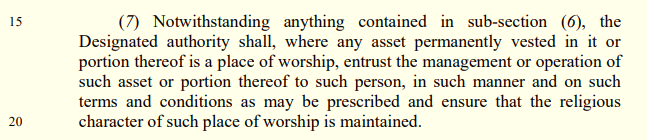
Screengrab of an excerpt from the FCRA Amendment Bill of 2026, image via PRS India

This clause ensures that even if a Church loses its foreign contribution license, its physical place of worship cannot be dismantled or closed. Religious practice will remain completely unaffected.

The role of the Designated Authority is strictly restricted to managing foreign-funded commercial or developmental assets when an FCRA registration is cancelled, surrendered, or allowed to expire. The objective is to ensure continuity of public services.

Moreover, any order passed by the Designated Authority remains subject to administrative review and judicial appeal before a District Judge.

At the same time, state-level agencies are barred from initiating local prosecutions without prior approval from the Cente. This provides safeguard against arbitrary local action.

Setting the record straight

It is clear from the reading of the proposed law that it does not prohibit foreign funding for any religion including Christianity. As such, churches and other places of Worship such as temples, mosques and gurudwaras can continue to receive foreign donations for genuine religious work.

It is only when the funds recieved from abroad are not utilised in the manner that it was declared in the first place can an organisation lose its FCRA registration. But even if such a case, the organisation’s place of worship cannot be taken over or used for any other purpose.

A legal recourse is also available in the court of law. An organisation whose FCRA licence is cancelled can challenge the decision of the Union government in the court. This applies to those involved in religious and charitable work.

Even if an organisation which ran a Church loses its licence, the locals can continue to pray at the Church without any government intervention (which basically punctures the lies being peddled about FCRA Amendment Bill being anti-minority).

Assurance by the Modi govt

The Modi government has actively engaged with all stakeholders to address concerns and reaffirm that the bill applies uniformly without religious bias.

In July this year, Union Home Minister Amit Shah met the Meghalaya Chief Minister Conrad K. Sangma and a delegation of senior church representatives such as the Presbyterian Church of India, the Garo Baptist Convention, and the Roman Catholic Church.

In the same month, the Union Home Minister met representatives from the Catholic Bishops’ Conference of India (CBCI) and informed them that the FCRA Amendment Bill will not affect the operations of law-abiding Christian organisations receiving foreign funds.
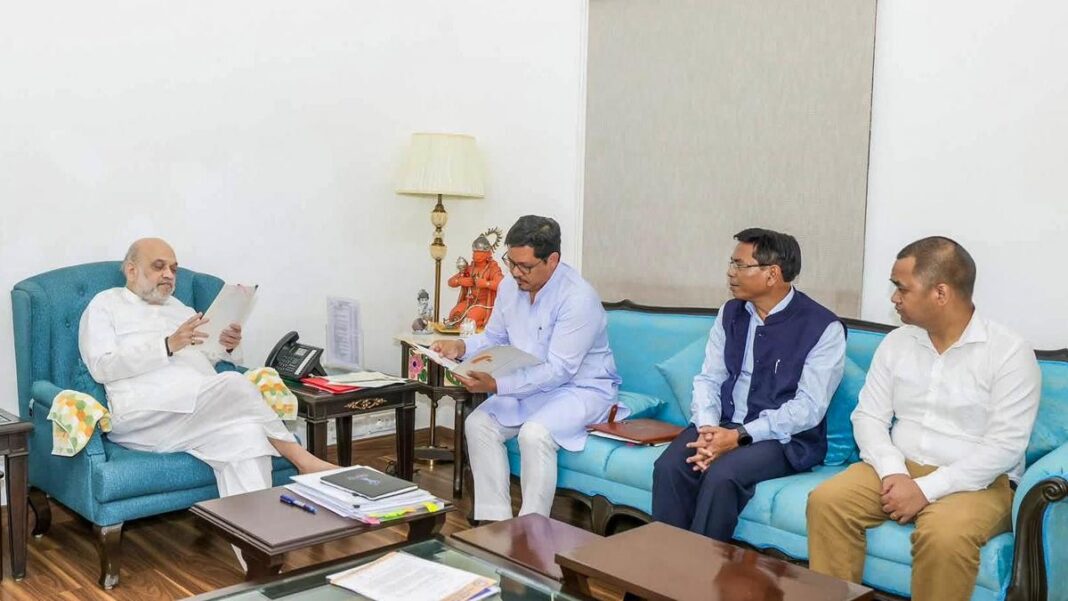
Amit Shah meets Conrad K. Sangma and Christian Delegation, image via ANI

It was also assured that the proposed legislation is non-discrimantory in nature and cannot be applied retrospectively. Union Minister for Minority Affairs Kiren Rijiju has highlighted in March this year that the FCRA Amendment Bill will not affect any religious organisation.

He had stated, “There are rumours being spread by the Congress Party and the Communist Party in Kerala that the Government of India is bringing changes to the FCRA to curb the activities of various religious organisations. This is completely false, fabricated, and misleading.”

Rijiju added, “Certain funds enter the country illegally and are used against the national interest. Therefore, this legislation is aimed at safeguarding national interest and security by ensuring proper regulation of foreign funds.”

Congress had earlier supported FCRA

It is interesting to note that the Congress party during the UPA era had supported the implementation of FCRA.

In 2012, former PM Manmohan Singh had said, “There are NGOs, often funded from the United States and Scandinavian countries, which are not fully appreciative of the development challenges that our country faces…”

The atomic energy programme has run into difficulties because these NGOs… don’t appreciate the need for our country to increase energy supply,” he had added.

Even ex-Home Minister P. Chidambaram had made similar statements during the Kudankulam anti-nuclear protests:“Investigation reveals that there appears to be diversion of funds. Therefore, under the Foreign Contribution Act, we have decided to register cases.”

Interesingly, the UPA govt revoked licenses of 4000 NGOs during its tenure.

Conclusion

While the US is attempting to interfere in India’s internal affairs and fearmongering about the plight of Indian Christians, it must be noted that the North American nation also regulates foreign contributions to ensure transparency. The United States enforces the Foreign Agents Registration Act (FARA), which requires individuals and organisations representing foreign interests to disclose political activities and funding sources.

The FCRA Amendment Bill is crucial to maintaining Indian sovreignity and integrity. It mandates the preservation of places of worship, reduces criminal penalties, establishes clear judicial recourse, and enforces uniform transparency across all non-governmental entities.
India to roll out plastic currency notes: Why is RBI switching to polymer banknotes?

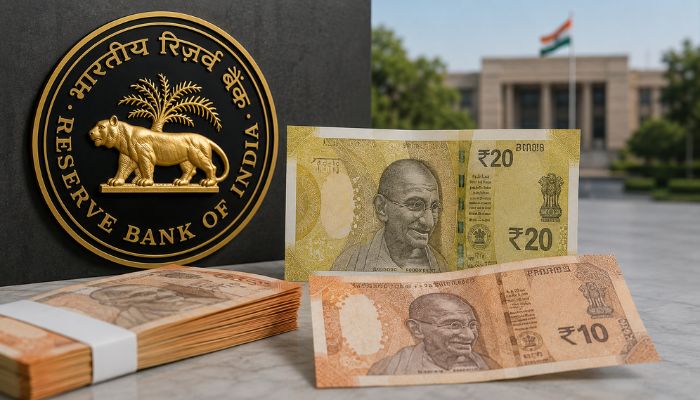
India could soon see plastic currency notes in everyday use, as the Reserve Bank of India (RBI) is planning to introduce polymer banknotes on a trial basis, with the first ₹10 and ₹20 notes likely to enter circulation at the beginning of the next financial year if ongoing field tests are successful.

RBI Governor Sanjay Malhotra shared the update during the media briefing after the Monetary Policy Committee (MPC) meeting on 5th August 2026. He said the central bank is moving ahead with field trials and is aiming to introduce the notes at the start of the next financial year, provided everything goes according to plan.

Why is the RBI introducing plastic currency?  

According to Malhotra, the main reason is durability. Lower-value notes such as ₹10 and ₹20 change hands much more often than higher denominations. As a result, they wear out faster and have to be replaced frequently.

Polymer notes are expected to last much longer than the cotton-based paper notes currently used in India. International experience shows that they can remain in circulation two to four times longer, making them more suitable for notes that are used regularly.

The RBI governor also said the move will help increase India’s currency printing capacity as the economy continues to grow and the demand for cash rises.

Modi government approves RBI proposal to print plastic currency notes

The Modi government has approved the RBI’s proposal to print one billion polymer ₹10 notes and one billion polymer ₹20 notes for field trials. These notes will be tested under Indian weather conditions and in the country’s existing cash-handling system.

The RBI has clarified that this is only a pilot project. A decision on wider circulation will be taken only after studying the performance of the notes during the trial phase.

The government has made it clear that there is no plan to replace all paper currency with polymer notes. If the trial is successful, polymer ₹10 and ₹20 notes will circulate alongside the existing paper notes. Both will remain valid legal tender.

Polymer currency notes and their benefits

Although they are often called “plastic notes”, polymer banknotes are not made from ordinary plastic. They are printed on a specially designed polymer substrate that is much stronger than conventional cotton-based paper.

Unlike paper notes, polymer currency absorbs much less moisture, dirt and sweat. This helps the notes stay cleaner and remain usable for a longer period.

The biggest advantage is a longer lifespan. Since polymer notes last much longer, fewer replacement notes need to be printed, transported and distributed. While they cost more to manufacture initially, the overall cost of managing currency comes down over time.

Another major benefit is security. Polymer notes can include advanced anti-counterfeiting features such as transparent windows, colour-changing designs, detailed microprinting and complex security elements that are much harder to copy.

The RBI has also pointed to environmental benefits. As fewer notes need to be printed and transported, the overall carbon footprint of currency production can be reduced.

Drawbacks of plastic currency

Polymer or plastic currency notes also come with a few challenges. They are more expensive to produce at the beginning, may feel slightly slippery compared to paper currency and can lose their shape if exposed to very high temperatures for long periods. Recycling them also requires specialised facilities.

However, many central banks that have adopted polymer notes believe these disadvantages are outweighed by the longer life and lower replacement costs.

Why is the RBI testing them first?

Calling it a pilot project, Malhotra said the RBI wants to see how polymer or plastic currency notes perform in India’s climate and day-to-day conditions before taking a final decision.

The central bank will study how the notes handle heat, humidity and regular public use. It will also assess whether any changes are needed before expanding the programme.

How is the RBI preparing for the rollout?

To support the trial, the RBI’s printing arm, Bharatiya Reserve Bank Note Mudran Private Limited (BRBNMPL), has issued a global tender seeking suppliers for polymer substrate sheets with advanced security features.

Companies bidding for the project must meet strict eligibility conditions, including government security clearance, restrictions related to China- and Pakistan-linked operations and raw materials, and previous experience in supplying polymer banknote material to central banks.

Why is the shift being considered now?

India has withdrawn nearly ₹50 trillion worth of soiled currency over the past decade. Reports also indicate that since FY17, around 71 damaged notes have been removed from circulation for every 100 fresh notes issued.

Annual spending on currency security features is estimated to be around ₹5,000 crore. At the same time, counterfeit currency continues to remain a concern.

The RBI believes longer-lasting and more secure polymer notes could help reduce replacement costs while making fake notes more difficult to produce.

In a written reply in the Lok Sabha, Minister of State for Finance Pankaj Chaudhary said the RBI has informed the government that international studies show polymer banknotes have a significantly longer lifespan than paper notes.

He also said the project is still at a preliminary stage, and its impact on digital payments can be assessed only after regular issuance begins. The minister reiterated that polymer notes are proposed to be introduced along with paper notes, not as a replacement.

Many countries use polymer notes

More than 60 countries have already adopted polymer currency, including Australia, the United Kingdom, Canada, New Zealand, Singapore, Malaysia, Thailand, Vietnam, Romania, Mexico and Nigeria.

Australia became the first country to introduce polymer banknotes in 1988. Since then, many central banks have switched to the technology because of its durability, lower replacement costs and better protection against counterfeiting.

Studies from countries such as the UK and Canada show that polymer notes remain in circulation much longer than paper notes. The Bank of England has also reported a significant decline in counterfeiting after switching to polymer currency.

For now, the focus remains on field testing. If the polymer ₹10 and ₹20 notes perform well in Indian conditions, the RBI is expected to move ahead with their regular issuance from the beginning of the next financial year.

The move marks a major step in modernising India’s physical currency while ensuring that cash remains cleaner, more durable and more secure for millions of people who continue to rely on it every day.

From ‘Mile Mulayam Kanshi Ram, Hawa Ho Gaye Jai Shri Ram’ to ‘Pandit is also PDA’: Akhilesh Yadav and SP’s election-season reinvention

As Uttar Pradesh heads towards the 2027 Assembly election, Samajwadi Party (SP) chief Akhilesh Yadav appears to be attempting one of the biggest political image makeovers of his career. After years of projecting himself as the face of backward caste politics under the ‘PDA’ (Pichhda, Dalit, Alpsankhyak) banner and routinely accusing the BJP of practising divisive politics, Akhilesh has suddenly discovered a new constituency that he now claims has always been part of his social justice formula: Pandits.

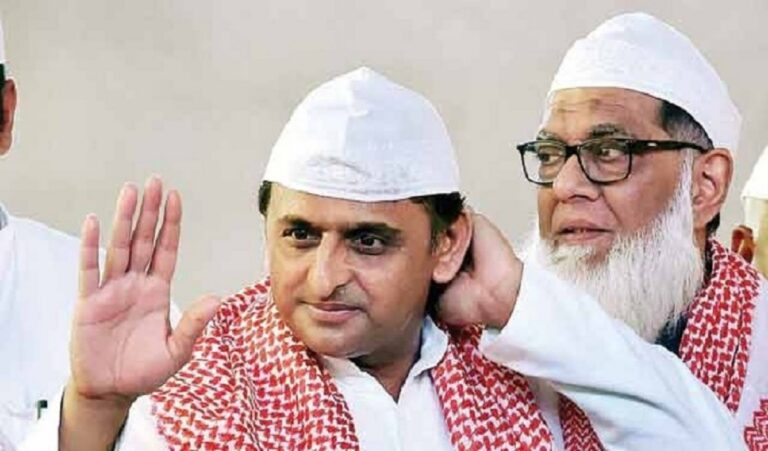
Addressing a Brahmin/Prabuddh Varg Sammelan in Lucknow on August 5, Akhilesh declared that the “P” in PDA also stands for “Pandit”, accused the BJP of victimising Brahmins, invoked Swami Avimukteshwaranand, and even alleged that the BJP had “stolen” offerings made to Lord Ram at the Ayodhya Ram Mandir.

For a politician whose party has long been associated with antagonising Hindu sentiments and whose politics revolved around minority consolidation, the sudden embrace of Brahmins and overt Hindu symbolism is difficult to miss. It raises an obvious question: what changed?

The answer appears less ideological than electoral.

The mathematics behind the makeover

Political analysts view Akhilesh’s outreach as a recognition of changing electoral realities in Uttar Pradesh. Brahmins constitute roughly 10-14% of the state’s population and have traditionally voted overwhelmingly for the BJP. Winning even a fraction of this vote could significantly improve the SP’s prospects in a closely fought election.

The PDA slogan itself was unveiled only in 2023, replacing the SP’s earlier emphasis on Yadav-Muslim arithmetic with a broader coalition of backward classes, Dalits and minorities. The formula helped the SP improve its performance in the 2024 Lok Sabha election.

Now, however, Akhilesh appears to believe that the coalition alone may not be sufficient against a BJP led by Chief Minister Yogi Adityanath, whose popularity among Hindu voters remains strong. Hence, the latest attempt to reinterpret PDA by retrospectively adding “Pandit” to it.

The timing is hardly accidental.

A remarkable departure from the SP’s political legacy

The outreach also sits uneasily with the Samajwadi Party’s own political history.

The party’s founder, Mulayam Singh Yadav, remains synonymous with one of the most contentious episodes in the Ram Janmabhoomi movement. In October-November 1990, as Chief Minister, Mulayam ordered police firing on kar sevaks attempting to reach the disputed site in Ayodhya.

The official death toll stood at 16, although several organisations have disputed that figure over the years. Mulayam later expressed regret over the firing but continued to defend the decision, arguing that it was necessary to reassure the Muslim community.

That episode earned him the political nickname “Mullah Mulayam” among his critics.

The political messaging did not stop there.

Following the demolition of the disputed structure in 1992, the SP-BSP alliance famously campaigned in the 1993 Assembly election with the slogan:

“Mile Mulayam Kanshi Ram, Hawa Ho Gaye Jai Shri Ram.”

The slogan explicitly positioned itself against the Ram Janmabhoomi movement and the BJP’s mobilisation around it.

Today, however, Mulayam’s son invokes Lord Ram in nearly every election campaign.

Akhilesh’s own record

The ideological shift is not confined to Mulayam’s era.

During Akhilesh Yadav’s tenure as Chief Minister, his government banned the Vishwa Hindu Parishad’s proposed 84-Kosi Parikrama in 2013, citing law and order concerns. The decision drew sharp criticism from Hindu organisations, which accused the SP government of selectively restricting Hindu religious activities.

Over the years, the SP leadership repeatedly portrayed the BJP’s emphasis on Hindutva as communal politics while simultaneously cultivating Muslim vote banks through identity-based mobilisation.

Even after launching PDA in 2023, the formulation itself conspicuously referred only to Pichhda, Dalit and Alpsankhyak, backward classes, Dalits and minorities. This was around the same time that Rahul Gandhi was strutting around demanding “Jiski Jitni Aabadi, Uska Utna Haq” and a caste census. Mr Yadav perhaps thought of cashing in on the sentiments and launching his own initiative to reach out to the Dalits and the minorities.

So predictably, there was no mention whatsoever of Brahmins or Pandits back then.

Three years later, Akhilesh has suddenly declared that Pandits were always part of PDA.

The reinterpretation appears less like an ideological evolution and more like political improvisation.

Why the change now?

The answer lies in the transformation of Indian politics over the past decade.

The Ram Mandir movement has culminated in the consecration of the Ayodhya temple. Public celebration of Hindu identity has become increasingly mainstream across caste lines. Even parties historically uncomfortable with overt expressions of Hindu religiosity now routinely invoke temples, festivals and Hindu icons during election campaigns.

The Congress has already undergone its own version of this transformation, with Rahul Gandhi frequently highlighting temple visits and describing himself as a “janeu-dhari Hindu.”

Regional parties now appear to be following the same trajectory.

A political observation often attributed to Vinayak Damodar Savarkar was that if Hindus united politically, parties opposing Hindutva would eventually be compelled to display their Hindu credentials openly to remain electorally relevant.

Whether one agrees with Savarkar’s politics or not, the present political landscape increasingly resembles that prediction.

Tactical adjustment, not ideological conversion

Akhilesh’s latest statements about Brahmins, Lord Ram and Hindu religious figures should therefore be viewed in their broader political context.

His outreach comes after years of identity politics centred around caste and minority consolidation. It comes months before a crucial Assembly election. It comes at a time when the BJP continues to enjoy significant support among Hindu voters in Uttar Pradesh.

None of this necessarily proves insincerity. Politicians are entitled to evolve, revisit old positions and broaden their appeal.

But genuine ideological shifts are usually accompanied by sustained changes in political conduct, introspection about past positions and consistency over time.

So far, Akhilesh’s latest embrace of Brahmins appears driven more by electoral arithmetic than philosophical transformation.

The SP’s sudden attempt to redefine PDA by inserting “Pandit” into a slogan that originally stood for backward classes, Dalits and minorities is less a reinvention of ideology than an acknowledgement of political reality.

In today’s Uttar Pradesh, no party can afford to appear indifferent or hostile to Hindu sentiment.

That, perhaps, is the most significant political message behind Akhilesh Yadav’s latest reinvention.

Abaan Ahmed, son of slain gangster-politician Atiq Ahmed, dies in road accident: Read about his criminal history

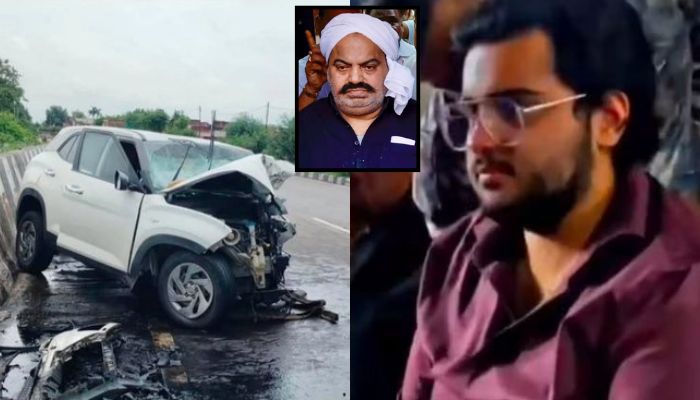
Abaan Ahmed, the 21-year-old youngest son of slain gangster-turned-politician Atiq Ahmed, died in a road accident in Uttar Pradesh’s Jhansi while he was travelling to meet his jailed brother on 6th August 2026.

The accident took place after the speeding car he was travelling in crashed into a road divider. His friend, identified as Sonu, also lost his life in the crash.

According to police, the impact of the collision was so severe that both Abaan Ahmed and his friend died on the spot. Preliminary findings suggest that overspeeding may have caused the driver to lose control of the vehicle.

The police, however, have launched a detailed investigation to ascertain the exact cause of death.

Who was Abaan Ahmed?

Abaan Ahmed was the fifth and youngest son of slain gangster-politician Atiq Ahmed and his wife Shaista Parveen. Although he largely remained away from public attention, he entered the national spotlight after the sensational murder of lawyer Umesh Pal in Prayagraj in February 2023.

At the time of the Umesh Pal murder, Abaan and his elder brother Mohammad Ahzam were minors. Following the killing, both brothers were taken into police custody and lodged in a juvenile home. Their mother, Shaista Parveen, had moved court alleging that the police had not informed the family about the whereabouts of her sons before shifting them to a child reform home.

The two brothers spent more than seven months in the Rajrooppur Children’s Home after police found them wandering alone in Prayagraj’s Chakia area following the massive crackdown on the Atiq Ahmed gang.

After attaining adulthood, they were released into the custody of their aunt, Parveen Qureshi, in October 2023. Soon after their release, they visited the graves of their father Atiq Ahmed and uncle Ashraf Ahmed before reportedly moving to a relative’s house in Prayagraj’s Hatwa area.

How Abaan Ahmed first came under the police scanner

Abaan Ahmed first came under the police scanner after the murder of Umesh Pal, the main witness in the 2005 murder case of Bahujan Samaj Party (BSP) MLA Raju Pal.

On 24th February 2023, Umesh Pal was shot dead outside his residence in Prayagraj by armed assailants. CCTV footage showed multiple attackers firing at him while others hurled crude bombs to ensure he could not escape. Two government-appointed security personnel accompanying Umesh Pal were also attacked, and one later succumbed to injuries.

The killing triggered a massive investigation by the Uttar Pradesh Police. Umesh Pal’s wife, Jaya Pal, lodged an FIR naming Atiq Ahmed, his wife Shaista Parveen, brother Ashraf Ahmed and several others. The FIR also named Atiq’s sons, including Ahzam and Abaan.

Police constituted multiple special teams to investigate the conspiracy behind the murder and launched a statewide crackdown on members of the Atiq Ahmed gang.

Later, the Uttar Pradesh Police’s chargesheet revealed that Abaan Ahmed and his elder brother Ahzam Ahmed had attended meetings related to the conspiracy while they were still minors.

According to investigators, they were present during meetings held in a Muslim hostel before the murder and were also part of the reconnaissance (reki) carried out three days before Umesh Pal was killed. 

The chargesheet further revealed that they accompanied Atiq’s son Asad Ahmed during the surveillance of the victim and were linked to the broader conspiracy surrounding the attack. These allegations form part of the police investigation and legal proceedings in the case.

FIR over controversial social media reel

Abaan again found himself in controversy in 2025 after a video recorded during a wedding function surfaced on social media. The reel featured him travelling in a convoy of luxury vehicles while a background track carried threatening dialogues and provocative lyrics glorifying violence.

Police said that the video attempted to create fear and spread intimidation in society. An FIR was registered at Prayagraj’s Dhoomanganj Police Station against Abaan Ahmed, his associate Hamza and several unidentified persons under provisions of the Bharatiya Nyaya Sanhita (BNS) relating to statements likely to disturb public peace.

The viral video sparked sharp reactions online, with many social media users claiming that despite the deaths of Atiq Ahmed and Ashraf Ahmed, members of the family were still attempting to project an image of power and intimidation. Police also began investigating who created the video and whether it was uploaded with the intention of threatening people.

Brother Asad Ahmed was a key accused in the Umesh Pal murder case

Abaan’s elder brother, Asad Ahmed, was one of the main accused in the Umesh Pal murder case and was considered a key member of the conspiracy. The Uttar Pradesh Police accused Asad of coordinating the attack and maintaining communication with members of the gang before the murder.

He was carrying a reward of ₹5 lakh when he was killed in an encounter by the Uttar Pradesh Special Task Force (STF) near Jhansi in April 2023. His death came just days before Atiq Ahmed and Ashraf Ahmed themselves were shot dead while in police custody.

Atiq Ahmed’s evil empire built on crime and fear

The story of Abaan and his brothers is inextricably tied to the broader history of Atiq Ahmed’s criminal syndicate, known in police records as Inter-State Gang 227. Atiq Ahmed’s entry into the underworld began in 1979 with a murder charge. Over four decades, he built a terrifying empire across Prayagraj, Kaushambi, Lucknow, and Noida, eventually accumulating over 100 criminal cases that ranged from land grabbing, extortion, and kidnapping to murder.

He successfully translated his local muscle into a political career, serving as a five-time MLA from the Allahabad West constituency and winning a Lok Sabha seat from Phulpur in 2004 under the Samajwadi Party. 

However, his political standing began to unravel following the daylight murder of BSP MLA Raju Pal in 2005, a crime in which Atiq and his younger brother Khalid Azim, alias Ashraf, were the prime accused. 

Ashraf himself had over 40 criminal cases registered against him. Over the years, the family’s extensive properties, valued at well over ₹150 crore, were attached by state authorities under the Gangster Act.

Today, the family’s criminal footprint has left its remaining members either dead, incarcerated, or facing ongoing legal action.

Atiq’s eldest sons, Mohammad Umar and Mohammad Ali, remain in separate high-security prisons, while his wife, Shaista Parveen, continues to evade law enforcement as an absconding suspect in the Umesh Pal conspiracy.

The killing of Atiq Ahmed 

The long reign of Atiq Ahmed came to a dramatic and violent end in April 2023, just two days after his son Asad was killed in the STF encounter. On the night of 15th April, 2023, Atiq Ahmed and his brother Ashraf were being escorted in police custody for a routine medical examination at a hospital in Prayagraj.

While the brothers were responding to questions from reporters on live television, three assailants posing as journalists suddenly pulled out firearms and shot both Atiq and Ashraf at point-blank range. The assailants surrendered to the police immediately on the spot. The televised killing marked the end of a gangster who had once dominated politics and crime in eastern Uttar Pradesh

With Atiq dead, Asad killed in an encounter, Umar and Ali behind bars, Shaista Parveen absconding, and now Abaan Ahmed losing his life in a road accident, the family that once dominated the criminal landscape of eastern Uttar Pradesh has steadily disintegrated. What was once considered one of the state’s most feared criminal empires has now largely collapsed under sustained police action, legal proceedings and a series of violent tragedies.

Sonam Wangchuk fasted for 26 days to revive Rahul Gandhi’s political career: Here is how it was squandered away because of his petty ego and false grandiose

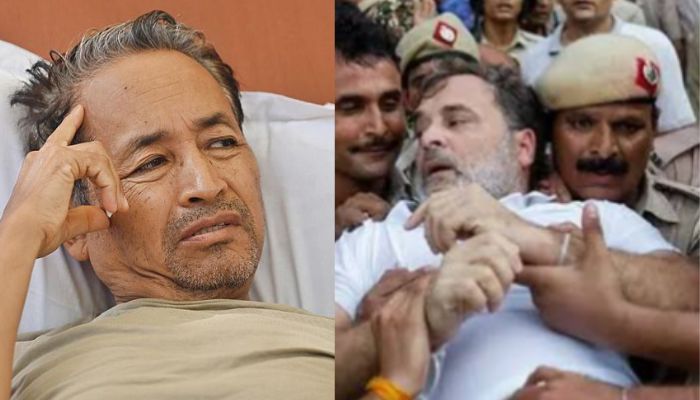
Sonam Wangchuk, the climate activist and education reformer who gained national attention for his 26-day hunger strike at Jantar Mantar during the Cockroach Janta Party (CJP) protest in July, has said he wanted Leader of the Opposition (LoP) Rahul Gandhi to end his fast unto death. Sonam Wangchuk said that his wife Geetanjali Angmo pursued Rahul Gandhi to break his fast. However, the Congress leader gave no positive response.

Speaking to India Today, Sonam Wangchuk said, “Actually, we were pondering on breaking my fast through the Leader of the Opposition, Rahul Gandhi, and Geetanjali was working on that. She was not against Rahul. She was working hard to see if Rahul Gandhi could break my fast. She didn’t get a positive response.”

The Ladakh-based activist said that giving this context of Rahul Gandhi’s nonchalance towards efforts to get him on board to end his hunger strike was important, since Geetanjali Angmo was brutally trolled by Congress supporters over her later criticism of the Congress leadership.

It must be recalled that Sonam Wangchuk ended his hunger strike on 24th July 2026, at Medanta Hospital in the presence of Union Ministers JP Nadda and Jitendra Singh.

Sonam Wangchuk wanted to hand over the political momentum to Rahul Gandhi?

Sonam Wangchuk has maintained that he has no political ambitions and that his hunger strike was only an act of civic responsibility to seek accountability from the government. However, Wangchuk was concerned and invested in the political optics surrounding the end of his hunger strike.

The climate activist said that he wanted the end of his hunger strike framed as a joint effort involving figures from the ruling dispensation, the Opposition, and student leaders.

It is apparent that there is no way Rahul Gandhi could have delivered the demands Sonam Wangchuk had raised, be it resignation of Dharmendra Pradhan as Education Minister, or compensation for students who allegedly committed suicide over NEET paper leak, etc, since Gandhi is not a part of the ruling dispensation.

Logic says Wangchuk’s fast could have only ended if he voluntarily gave up, was force-fed, or if the government agreed to consider his demands. Neither any student leader nor the LoP could have made this possible.

Beyond the missed ‘joint effort’ framing that Sonam Wangchuk is now talking about, a question arises here: Did Sonam Wangchuk want to hand over the political momentum of the CJP-Wangchuk protest to Rahul Gandhi and secure a heroic off-ramp?

As Sonam Wangchuk talked about a Ladakhi custom, which says that the person who offers water, juice or soup, or formally breaks the fast, signals acceptance, moral endorsement or a shared ownership of the outcome.

Rahul Gandhi preferred manoeuvring to hijack the CJP protest momentum rather than sharing credit with Sonam Wangchuk

While Sonam Wangchuk may have pursued an off-ramp that linked the resolution with cross-party validation, such anti-status quo optics are unattractive to a leader like Rahul Gandhi, whose brand depends primarily on being the main face of the Opposition.

It is perhaps for this reason that Rahul Gandhi did not respond positively to Geetanjali Angmo’s efforts to get him to end Sonam Wangchuk’s fast. Instead, Rahul Gandhi treaded the path of a parallel protest at the right moment.

Sonam Wangchuk began his hunger strike over the NEET paper leak issue on 28th June 2026; weeks passed, but he received no major political support beyond the online rhetoric. It was only when the Monsoon Session of the Parliament neared that key Opposition leaders, including Samajwadi Party’s Dimple Yadav, Azad Samaj Party’s Chandrashekhar Azad, and Aam Aadmi Party’s Arvind Kejriwal, began flocking to Jantar Mantar.

Rahul Gandhi has proven to be a disappointment in elections while he and his party continue to seek out fresh or controversial platforms in the hope of a miracle that will transform him into a real “JanNayak” and not merely in their social media campaigns.

However, Rahul Gandhi remained distant from the CJP protest throughout and extended only performative support. Instead of joining or visibly amplifying the ongoing CJP protest as a supporting force, Rahul Gandhi deliberately pursued a parallel track. The Congress party launched a “Chhatron Ki Goonj” student outreach program, and pressed the overlapping demand for Dharmendra Pradhan’s resignation from its own platform.

The Congress party had even faced criticism from the anti-BJP ecosystem for choosing a measured separation rather than fully integrating into the CJP momentum. On 20th July, when the CJP proceeded with its announced “Chalo Sansad” march to Parliament, Rahul Gandhi and Congress leaders staged a parallel protest over the same demands the CJP raised.

The timing of Rahul Gandhi’s ground protest was interesting. While Congress supporters argue that Gandhi waited for the Parliament session to begin to escalate his demands for Pradhan’s resignation, Congress’s protest was staged a protest outside Prime Minister Narendra Modi’s residence.

If Congress had to protest near PM Modi’s house only, they could have done it way earlier. However, Congress and Rahul Gandhi apparently waited for the CJP protest to build momentum, earn wider public support against the Modi government and hijack the political momentum when it reached its peak on 20th July.

The choice of location was deliberate as Congress did not want to play a supporting role in the CJP protest, which clearly had the participation of workers of Samajwadi Party and other anti-BJP parties.

Following Sonam Wangchuk’s revelation that he wanted Rahul Gandhi to break his fast and that the Congress leader purportedly refused, many opined that Gandhi missed a golden opportunity to naturally become the political hero of the CJP-Wangchuk-led protests that enjoyed wider youth attention if not support.

However, Rahul Gandhi does not operate this way. Throughout his career, Rahul Gandhi has undergone numerous failed relaunches, and none of these relaunch manoeuvres has ever involved Gandhi relying on support from outside elements or by playing a supporting role in an anti-Modi government show pulled off by someone else.

Rahul Gandhi’s whole idea behind attempting to hijack the CJP protest was to avoid credit-sharing, knowing that the protests have peaked to a point that the Central government will have to give concessions, if not fully capitulate before the CJP’s violent street veto.

The Congress party has long itched for a Nepal-like violent regime change in India. And perhaps, Congress did not want to be completely absent from the theatre when there was a possibility of its dream coming true.

Call it petty ego or political selfishness, Congress and Rahul Gandhi would always prefer to sit back and wait for an anti-government agitation to grow big and eventually hijack, rather than play a supporting role and share credit. For Congress, playing a supporting role in a protest orchestrated by CJP, the B-team of the Aam Aadmi Party, would have meant an admission that the party failed to raise the issue concerning youth, and is only backing it for political mileage.

Being a national party that still positions itself as the main opposition to the BJP despite three consecutive setbacks in general elections, Congress cannot afford to lose this ‘principal opposition’ status, for the party will then be at risk of losing its relevance fully.

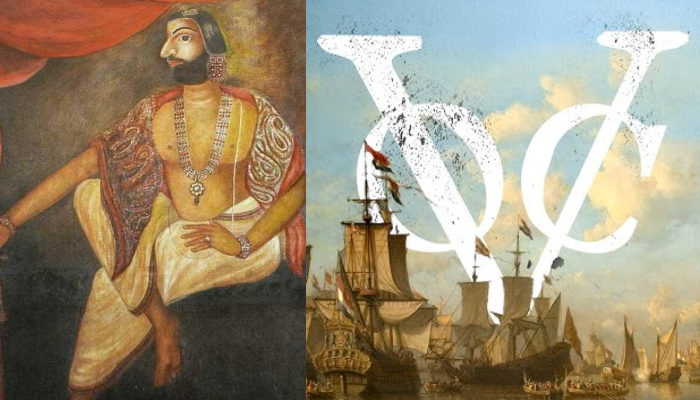
When Travancore king Marthanda Varma challenged the Dutch monopoly on the Malabar Coast spice trade

The Malabar Coast’s pepper, cardamom and cinnamon trade made the region enormously valuable to European powers. After Vasco da Gama reached Calicut in 1498, the Portuguese established a direct maritime route to India, followed by other European competitors. The Dutch East India Company, or VOC, founded in 1602, eventually sought to expand its control from Ceylon and secure monopolies over the Malabar spice trade.

Travancore emerged as a major obstacle to those ambitions under Marthanda Varma, who ascended the throne in 1729. Kerala was then divided among numerous small kingdoms and competing royal houses. Varma consolidated Venad, subdued neighbouring territories and captured strategically important areas such as Kollam and Attingal, bringing major pepper-producing regions and ports under Travancore’s control.

His expansion directly threatened Dutch commercial interests. Travancore refused to honour monopoly agreements the VOC had previously signed with territories that Varma had absorbed and allowed their spices to reach other traders. Between 1733 and 1734, the annexation of Maruthurkulangara, Eledattu Svarupam and Peritally further damaged Dutch procurement. Varma’s dealings with the British East India Company added to Dutch concerns.

Dutch officials first tried diplomatic pressure. Commander Julius Valentyn Stein van Gollenesse demanded that Travancore respect earlier monopoly agreements, while Governor of Ceylon Gustaaf Willem van Imhoff attempted to restrain Varma’s territorial expansion. By 1739, van Imhoff was advocating military action, warning that Travancore’s rise endangered Dutch trade. During negotiations, he threatened war if Dutch demands were rejected. Varma refused to retreat.

The confrontation turned into war in November 1739. The Dutch allied with kingdoms including Deshinganad, Kayamkulam and Kochi and initially scored several successes against Travancore. They captured artillery, advanced towards Attingal and Varkala, and reinstated the ruler of Elayadathu Swarupam. Travancore also faced pressure from Chanda Sahib, forcing Varma to fight on multiple fronts.

But the Dutch-led coalition suffered heavy losses, while reinforcements from Batavia were delayed. The British East India Company supplied Travancore with 150 soldiers, weapons and ammunition, and the Dutch were eventually compelled to withdraw. Their early victories nevertheless convinced them that Marthanda Varma could still be overwhelmed, setting the stage for the confrontation at Colachel that would transform the balance of power on the Malabar Coast.

Read the full article on Chapter One Magazine.

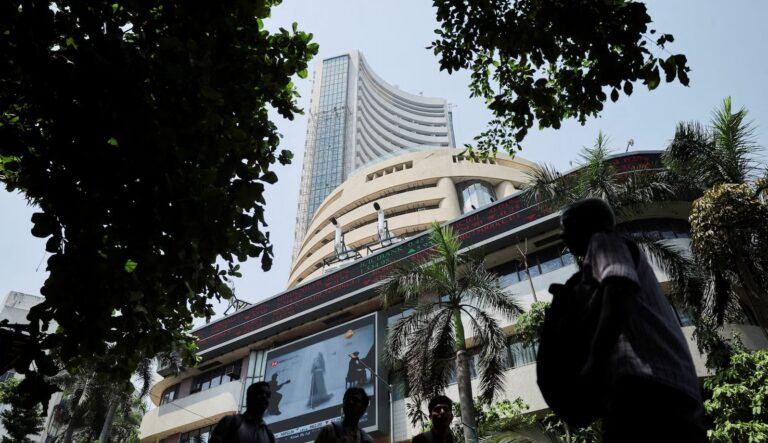
Why did the Stock Market suddenly reverse on Wednesday? Inside SEBI’s new closing auction system that has traders on edge

India’s benchmark indices looked set for another day of gains on Wednesday.

Crude oil prices had softened, easing concerns over inflation. The Reserve Bank of India (RBI) kept the repo rate unchanged at 5.25 per cent, a move that reassured investors. The Sensex climbed nearly 450 points in early trade, and optimism appeared to be building.

Then, the rally disappeared.

Within hours, the Sensex had slipped into negative territory while the Nifty also lost momentum. The abrupt reversal puzzled many investors because there was no major geopolitical shock or disappointing economic data to justify the sell-off.

The answer lay elsewhere. It lies in a new trading mechanism introduced just two days earlier.

A major overhaul in the way India’s official closing prices are determined has unsettled traders, triggered unusual movements in benchmark indices and exposed market participants to risks they had never encountered under the old system.

What exactly changed?

Beginning August 3, the Securities and Exchange Board of India (SEBI) rolled out the Closing Auction Session (CAS) for the cash market of stocks that have futures and options (F&O) contracts.

It may sound like a technical change, but it fundamentally alters how India’s markets behave during the final minutes of trading.

Until last week, the official closing price of an F&O stock was calculated using the Volume Weighted Average Price (VWAP) of trades executed during the last 30 minutes of continuous trading. Since prices kept updating until the closing bell, traders had a fairly good idea of where the market was likely to settle.

That is no longer the case.

Under the new framework, continuous cash trading in eligible stocks ends at 3:15 pm. From there, exchanges shift to a dedicated 20-minute auction, during which orders are collected rather than executed immediately. Once the auction concludes, the exchange determines a single equilibrium price, the level at which the highest number of buy and sell orders can be matched. That becomes the official closing price.

In other words, the closing price is no longer an average of trades. It is now a price discovered through an auction.

Why did SEBI change a system that was already working?

The old method had long attracted criticism from institutional investors and market regulators.

Large passive funds that track benchmark indices often have to buy or sell shares near the market close so that their portfolios mirror the index. Under the VWAP system, these sizeable transactions could themselves move prices while they were being executed, making it harder for funds to replicate the index accurately.

There was another concern.

Since futures and options contracts are settled using official closing prices, concentrated buying or selling during the last few minutes of trading had the potential to influence settlement values. Even small price changes could significantly affect derivatives positions worth thousands of crores.

The auction system seeks to reduce that vulnerability by gathering all orders first and matching them together at one equilibrium price instead of executing them one after another.

Several developed markets, including the New York Stock Exchange and the London Stock Exchange, already use similar closing auction mechanisms.

How does the new closing auction work?

For F&O stocks, the last 25 minutes of the trading day now follow a completely different sequence.

Between 3:15 pm and 3:20 pm, continuous cash trading ends, and the market transitions into the auction session.

From 3:20 pm to 3:25 pm, traders can place both market and limit orders.

Between 3:25 pm and 3:30 pm, only limit orders are accepted. The exchange randomly closes order entry sometime during the last two minutes to prevent traders from attempting last-second manipulation.

Finally, between 3:30 pm and 3:35 pm, the exchange matches all orders and discovers a single equilibrium price, which becomes the official closing price.

Meanwhile, trading in stock and index futures and options continues until 3:40 pm, allowing derivatives traders a short window to respond after the cash-market closing price has been determined.

Importantly, the new mechanism applies only to the cash market of F&O-eligible stocks. Shares that do not have derivatives contracts continue to follow the old VWAP-based closing system until 3:30 pm.

Why are traders suddenly nervous?

The issue is not that the auction is inherently flawed.

It is that traders are adjusting to a market where they no longer know with certainty where prices will settle.

During continuous trading, investors can monitor bids, offers and executed trades in real time. During the closing auction, however, orders are merely collected until matching takes place. Although indicative prices are displayed, the final settlement price can still change before the auction concludes.

That uncertainty matters enormously because the official closing price is used to:

  • Settle futures and options contracts.
  • Calculate benchmark index values.
  • Value mutual fund portfolios.
  • Determine mark-to-market gains and losses for institutional investors.

A stock that appears comfortably profitable during regular trading can end up settling at a significantly different price after the auction, changing the economics of an entire derivatives position.

Why did the Nifty and Sensex suddenly stop moving together?

One of the biggest surprises after the rollout has been the unusually large gap between India’s two benchmark indices.

Traditionally, the Nifty and Sensex move almost in tandem because they share most of their constituent stocks.

This week has been different.

The reason lies in the auction itself.

The National Stock Exchange (NSE) and the Bombay Stock Exchange (BSE) conduct separate closing auctions using separate order books. As a result, the same company can finish at different prices on each exchange.

Heavyweights such as Reliance Industries, ICICI Bank and Infosys have already recorded noticeably different closing prices on the NSE and BSE under the new mechanism.

Those differences become more visible because the Nifty contains 50 stocks, while the Sensex tracks 30, and the weight assigned to common stocks also differs between the two indices.

The result has been a rare divergence in benchmark performance that has surprised even experienced market participants.

Who has been winning, and who has been losing?

The biggest beneficiaries have been arbitrage traders.

Temporary pricing gaps between the cash and derivatives markets have created opportunities that sophisticated funds have been quick to exploit.

Retail traders, however, have had a tougher experience.

Many entered positions based on prices visible during the regular trading session only to find that the official closing price used for settlement differed materially once the auction concluded.

The resulting swings in options premiums and futures settlements caught many participants off guard, particularly around derivatives expiry.

Other changes traders should know

The new auction has also changed several everyday trading practices.

Open Stop-Loss (SL), Stop-Loss Market (SL-M) and Iceberg orders do not carry forward into the auction session for eligible stocks. Traders therefore need to manage such positions before continuous trading ends.

Similarly, market orders are accepted only during the initial phase of the auction. After 3:25 pm, only limit orders can be placed.

Intraday traders using MIS products should also verify revised auto square-off timings with their brokers, as broker cut-off times may now differ from the old market schedule.

Will the confusion last?

Probably not.

Most analysts believe the current volatility reflects a market adjusting to a fundamentally new closing mechanism rather than a permanent structural problem.

As institutional participation in the auction increases and traders become more familiar with the process, liquidity is expected to improve, and pricing anomalies should reduce.

SEBI, too, appears confident that the transition period will smooth out over time and is not expected to revisit the framework immediately.

What’s the crux of the matter?

Wednesday’s market reversal was less about the economy and more about market mechanics.

Strong macroeconomic cues had initially lifted investor sentiment, but uncertainty surrounding SEBI’s new Closing Auction Session ultimately overshadowed those positives.

The reform is intended to make India’s closing prices more transparent, improve price discovery and reduce opportunities for manipulation. Yet, like many structural market reforms, it has produced short-term disruptions before participants have had time to adapt.

For now, the familiar assumption that the market effectively ends at 3:30 pm no longer holds true for F&O stocks. In India’s new trading landscape, the most important price of the day is no longer discovered during continuous trading; it is determined only after the closing auction ends.

Meta’s PM Modi video controversy explained: What is Safe Harbour and how Facebook, Google could lose their protection?

The parliamentary committee has asked Meta owner Mark Zuckerberg to apologise within three days over Prime Minister Narendra Modi’s video being removed from Facebook for a few hours. The committee has said that if Zuckerberg does not apologise within the given time, Facebook’s safe harbour protection could be revoked.

In fact, Meta, Google and other platforms are no longer limited to playing the role of mere intermediaries. They have gone beyond this by taking actions such as blocking and promoting content. This also increases their accountability.

The PM Modi Video Case

The Information and IT Committee has warned that if its direction is not followed within three days, the government could consider withdrawing Facebook’s safe harbour protection. This could expose Facebook officials to criminal prosecution, as FIRs could be registered against company officials if this protection is removed.

The controversy began over a video released by PM Modi late at night on July 23, 2026. PM Modi had posted it on Instagram, and it was later shared on Facebook. The video was made in a selfie-style format. It had disappeared from Facebook for five hours.

In this case, an Information and IT Committee was formed under the chairmanship of BJP MP Nishikant Dubey. The committee held a meeting with officials of Meta, X, Google and other digital platforms. Meta officials admitted that PM Modi’s video had disappeared from the platform for some time because of a technical error. The officials expressed regret over it, but the committee and the government considered this expression of regret insufficient.

The Information Technology and Communications Committee called the removal of the PM’s video an ‘attack on democracy’ and said that Meta should take action against the officials responsible for it. Apart from this, Zuckerberg himself should apologise, and that too within three days.

What is Safe Harbour?

Safe harbour protection is a legal protection under which internet platforms (Intermediaries) are not automatically held responsible for content posted or activities carried out by their users. In India, this protection is provided under Section 79 of the IT Act, 2000.

This does not mean that platforms are above the law. It means that if they are only platforms and follow the law, they cannot be held responsible for every action of every user. In other words, safe harbour legally protects websites and platforms from liability so that they are not held responsible for content shared by users.

In fact, this was introduced in the early years of the internet to encourage online navigation, so that platforms could avoid unnecessary legal troubles. Safe harbour protection is therefore quite important because of this. It means that sites cannot face criminal action simply because of material posted by users.

In the United States, safe harbour was included under Section 230 of the Communications Act of 1934. It was added with a new provision in 1996, while in India it was included under Section 79 of the Information Technology Act, 2000.

According to this, if companies follow the rules set by the Indian government and courts, they cannot be held responsible for illegal posts made by users, and no case can be filed against them. However, India has become strict about removing objectionable and deepfake content through the amendments to the new IT Rules, 2021, and 36 hours are given for this in certain cases.

What is the difference between a publisher and an intermediary?

A publisher is someone who selects, edits and publishes content. For example, a news channel or newspaper creates its own news, edits it and then shows or publishes it. In such a situation, it is responsible for that content. Therefore, if false news is published or shown, the publisher is responsible for it.

On the other hand, the role of an Intermediary is different. It only provides a platform, such as Instagram, Facebook, Google, X, YouTube, Telegram and other platforms used by users. In other words, intermediaries do not create content. They host content uploaded by users. This is why they receive safe harbour protection.

Now the question is, when companies give preference to specific content through algorithms, promote it and make money from it, do they still remain only intermediaries or do they become like publishers?

What are the rules in India?

In India, safe harbour can also be removed. If a platform does not take action even after being informed about illegal activity, its safe harbour protection can be removed. If it does not follow an order of the court or government, or promotes cybercrime, its safe harbour protection can be ended.

This can be decided on the orders of the government or a court. Apart from this, if a platform itself starts controlling content in the way publishers do and makes money from it, its safe harbour protection can be removed. In such a situation, the platform can lose its “legal shield”.

Under the IT Rules, 2021, large social media platforms have been given several responsibilities in India. Platforms are required to appoint a governance officer. If a complaint is filed, it has to be dealt with on time. They are required to cooperate with law enforcement agencies and remove content when required. They are also required to provide information related to major cybercrimes.

A platform cannot be held guilty simply because a crime started on Instagram, Facebook or another platform. For example, if a person meets someone on Instagram and later commits fraud offline, the primary responsibility will remain with the accused person. But if the platform does not take action even after receiving a complaint, or repeatedly allows fake accounts to operate, legal action can be taken against it. The same applies if it ignores a court order.

This is not the first time that the Indian government and a digital platform have had a dispute. There have been several disputes with X, WhatsApp, Google and Meta in the past as well. These disputes have involved orders to remove objectionable content, fake news and matters of national security. Questions have also been raised over content related to Shaheen Bagh and the farmers’ protest. There have been several disputes over compliance with the IT rules issued by the government.

In the case of alleged AI-generated and morphed videos of Prime Minister Modi being circulated on social media, Hyderabad Cyber Crime Police registered an FIR in July 2026 against Meta India head Arun Srinivas and several social media users. The police are now investigating what Meta did to stop such deepfake and misleading content. They are also examining why a content moderation system was not in place on the platform.

A similar thing happened in the case involving Union Minister Nitin Gadkari. AI-generated deepfake videos were made involving his family and claims about them benefiting from E-20 petrol. He has approached the Bombay High Court over this. The Bombay High Court allowed Gadkari to file a case against Meta, X, Google and all other platforms. The court also ordered these platforms to remove all such links.

In several cases, companies have approached courts, while the government has said that every platform operating in India must follow Indian laws.

Safe Harbour Has Become A Global Controversy

The controversy over safe harbour has grown across the world. Under US law, Section 230 gives internet companies safe harbour protection. But over the past few years, Meta, Google and X have faced allegations of allowing fake news to spread, not stopping content that could influence elections and not taking sufficient action against hate speech. Because of this, both Republicans and Democrats have demanded changes to Section 230 for different reasons.

The European Union had introduced the Digital Services Act. Through this, large platforms were given responsibilities such as maintaining transparency in algorithms, quickly removing illegal content and ensuring the safety of children. This means tha,t along with safe harbour, their responsibilities are also significant.

There was also a dispute between the United States and the European Union under a Safe Harbour agreement over controlling data transfers. European countries had objected that US agencies could easily access the data of European citizens, which meant that they could potentially be spied on. Cases were also filed in the European Union’s court over this issue. During this period, the court also held that US laws did not protect the misuse of the personal information of European citizens. After these disputes, Europe cancelled the Safe Harbour agreement in 2015.

Australia told Meta and Google that if they make money from news content, they should pay media organisations for it. After this, Meta stopped news sharing on Facebook for some time. The dispute arose because if a platform is an intermediary, how can it make money from content like a publisher?

After this, Australia proposed that platforms should either pay local media organisations for news content or pay a 2.5 per cent tax on digital advertising. Companies would have to enter business agreements with at least six local publishers to avoid this. These rules would apply to platforms whose annual income is more than 250 million Australian dollars.

Canada introduced the Online News Act in 2023. After it came into effect on June 22, 2023, Meta largely stopped making news available on Facebook and Instagram. In fact, through this law, platforms such as Meta and Google were required to pay media outlets for news content shared on their platforms.

After this, these platforms stopped sharing news content altogether. Google agreed to pay money after reaching an agreement with the Canadian government, following which restrictions on Google were avoided. But Meta continues to face a ban on news content in Canada.

The entire world is now struggling with the question of whether these platforms should continue to get safe harbour protection. Social media platforms are no longer playing only the role of intermediaries because of their algorithms and content recommendations. They have gone much further and have started playing the role of publishers as well.

If they remain mere intermediaries, they should get safe harbour protection. But when questions arise about what content will be shown, who will see it, what will be promoted and what will make money, their responsibility should also increase. The removal of PM Modi’s video from Facebook for a few hours is also a case of this kind.

Who is SDPI leader Riyaz Farangipete, sentenced to jail for the 2015 ‘PFI will slaughter cows, sell beef’ hate speech case

A Principal Civil Judge and JMFC Court in Karnataka’s Belthangady has sentenced Mohammed Riyaz Farangipete, the National General Secretary of the Social Democratic Party of India (SDPI), the ‘political’ front of the outlawed Islamic terror group, Popular Front of India (PFI), to six months in jail in a 2015 hate speech case. The court has also imposed a fine of ₹10,000.

Mohammed Riyaz Farangipete delivered ‘PFI will slaughter cows’ hate speech

The case against Mohammed Riyaz Farangipete stems from a speech he delivered on 23rd July 2015 at a PFI protest meet near the Belthangady Taluk Office.

The police chargesheet said that Riyaz Farangipete had said that “If assaults of Muslims in the name of cows continued, PFI workers will slaughter cows in public and, on Bakrid, we will sell beef in front of the Belthangady bus stand.”

He also threatened to “teach a fitting lesson” to anyone who tried to stop PFI jihadis.

The police had registered a case against Riyaz Farangipete, who remains an active politician in Karnataka’s Dakshina Kannada, under Sections 153A and 295A of the IPC.

In a 33-page judgment delivered on 4th August 2026, the court held that Farangipete’s speech had the potential to disturb communal harmony even though no violence occurred. The court noted that the SDPI leader’s offence cannot be dismissed as trivial.

From inciting anti-Hindu Delhi Riots, to defending pro-Pakistan sloganeering: Islamist activities of Riyaz Farangipete

Serving as the National General Secretary of the Islamist outfit SDPI, Riyaz Farangipete has been embroiled in many controversies, and has several police cases against him.

During the violent 2020 anti-Citizenship Amendment Act (CAA) and National Register of Citizens (NRC) protests in Mangaluru in December 2019, Riyaz Farangipete and another SDPI leader were accused of inciting people via WhatsApp messages despite the imposition of Section 144. Police subsequently registered cases against them under IPC sections for sedition (Section 124A) and promoting enmity between different groups on grounds of religion.

Back in September 2022, the National Investigation Agency (NIA) had raided Farangipete’s residence in Mangaluru. The raid was linked to a case involving a conspiracy to create disruption during Prime Minister Narendra Modi’s rally in Bihar in July 2022. Riyaz Farangipete was serving as the SDPI in-charge for Bihar at the time. The NIA interrogated him for hours and seized certain documents and mobile phones.

Back in July 2022, the NIA had raided his houses in connection with the Phulwari Sharif terror module case busted by the Bihar police. In 2023, Farangipete contested the election from Mangaluru (Ullal) on an SDPI ticket and also lost the deposit, receiving little over 15,000 votes.

Farangipete also has a record of defending pro-Pakistan sloganeering by SDPI members in 2021. In January 2021, during the vote counting for local panchayat elections in Dakshina Kannada, certain SDPI members were accused of raising pro-Pakistan slogans. Defending the members at the time, Riyaz threatened the police that his supporters would create unrest if the arrested members were not released.

In mid-July 2026, Riyaz Farangipete was peddling disinformation about the Special Intensive Revision (SIR) exercise. In a video posted from the SDPI’s official account, Farangipete incited people not to trust the SIR process and claimed that the BJP was “using it” to win elections. He claimed that voters’ names were being deleted from Bihar to Bengal and alleged that the BJP was not winning elections through democratic means.

Riyaz Farangipete has seven criminal cases against him registered at Belthangady, Mangalore South, Konaje, Mangalore North, Mangalore East police stations, and one case in Delhi. His alleged crimes range from promoting enmity between religious groups to waging, or attempting to wage war, or abetting waging of war, against the Government of India.

The charges against him have been filed under sections 153A, 295A, 143, 147,332, 341, 353, 427, 504, 149, 511, 124A, 121A, among others.

SDPI: The political front of the banned Islamic jihadist group PFI

Founded in 2009, the SDPI is active in electoral politics. However, the activities of the PFI’s political front are not confined to just politics. Several SDPI leaders and workers have been involved in various crimes, ranging from Islamic terrorism, murder of Hindus, to love jihad.

In 2018, SDPI Jihadis hacked an ABVP worker, Shyama Prasad, to death. Prasad was a student of Kakkayangad ITI and also served as the mukhya sikshak of the RSS shakha at 17th Mile in Kannavam, was murdered on the evening of January 19, 2018, under the limits of the Peravoor police station. Later, police arrested four SDPI activists, Parakkandam native Muhammed, Minikkol Salim, Neeveli Ameer, and Palayod native Shahim, in connection with the murder. 

Earlier, the SDPI had fielded Shafi Bellare as its election candidate. Bellare is an accused in the brutal murder of BJYM leader Praveen Nettaru in Karnataka.

In 2025, the Enforcement Directorate (ED) had revealed that the Social Democratic Party of India (SDPI) relied on the banned organisation Popular Front of India (PFI) for its daily operations, policy decisions, and candidate selection for election campaigns. 

The revelation came after the authorities arrested SDPI President Moideen Kutty K, alias MK Faizy, from Delhi’s Indira Gandhi International (IGI) Airport under the provisions of the Prevention of Money Laundering Act (PMLA), 2002.

The ED said they raided premises linked to the arrested SDPI and recovered some documents that provided insight into the true objectives of the PFI, describing it as an organisation committed to advancing an Islamic movement in India by “endorsing the principles of Jihad in all forms.”

“It positions itself internally as an Islamic movement and externally as a social movement. To achieve these goals, the PFI has established SDPI and several front organisations.

Several copies of minutes of meeting and handwritten documents revealing evidence of PFI funding elections contested by SDPI, approval by the National Executive Council (NEC) of PFI for SDPI to collect funds in Gulf countries, and PFI covering legal expenses for SDPI members accused in criminal cases registered by the police which have seized during the searches conducted at Unity House, Kozhikode (PFI’s Kerala State HQ). It also emerged that  PFI had funded SDPI to the tune of Rs 3.75 crore for election-related purposes.

While the PFI was outlawed by the Modi government in September 2022 under the Unlawful Activities (Prevention) Act (UAPA), the Islamic jihadist outfit is furthering its agenda of converting a Hindu-majority India into Dar-ul-Islam, or an Islamic country, by 2047 through various violent and non-violent methods executed via its various fronts, including the SDPI.

OpIndia reported earlier about how the PFI had a long-term plan, code-named “India 2047”, which aimed at establishing Islamic rule in the country. The agenda was discovered during an earlier investigation by the Delhi unit of the investigating agency into a case first registered in Phulwari Sharif of Bihar in 2022. A six-page document outlining the plan was recovered from accused Muhammed Jamaludheen.

The NIA asserted that the murder of RSS leader Sreenivasan in Palakkad was not an isolated act but part of the broader conspiracy aligned with the India 2047 goal. Audio clips and witness testimonies reportedly confirm the dissemination of the plan among PFI cadres. The PFI had prepared a hitlist comprising hundreds of names, mainly of prominent Hindu leaders.

The PFI believed that even 10% of India’s Muslim population would suffice to “subjugate” the majority Hindu community. The PFI had chalked a phased roadmap which involved uniting Muslims under PFI and providing arms/physical training; selective use of violence to exhibit strength and terrorise Hindus. It also pushed for infiltration of institutions and outreach to SC/ST/OBC groups to create divisions among the Hindu community. Through the SDPI, the PFI aimed to establish beneficial political alliances and electoral gains. The PFI wanted to assert its dominance, filling key institutions with loyalists, declaring a new constitution based on Islamic principles, and eliminating remaining adversaries.

Red Fort blast-linked Al-Falah case: Delhi court rejects every plea by accused Jawad Ahmed Siddiqui, refuses ‘sterling documents’, and ED records demand

Jawad Ahmed Siddiqui, an accused in the money laundering case linked to the Al-Falah Group, which came into the spotlight after the Red Fort blast, has suffered a setback from Delhi’s Saket Court. The court has dismissed two separate applications filed by him.

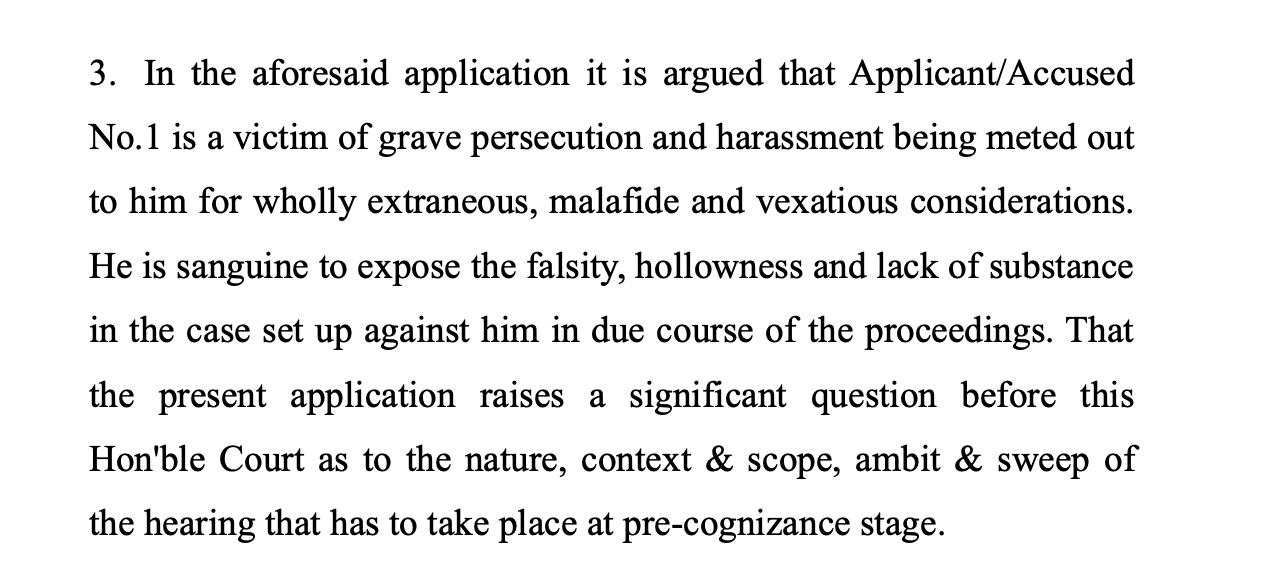
In the first application, Siddiqui had sought permission to place certain documents on the court record, describing them as being of “sterling quality” and of an “unimpeachable character”. Jawad had argued that examining these documents was extremely necessary for arriving at a just decision. In the second application, he had sought a list from the ED of those documents collected during the investigation on which the agency was not relying for its case (unrelied documents).

Additional Sessions Judge Sheetal Chaudhary Pradhan dismissed both applications in a 48-page order passed on August 4, 2026. The court said that at the stage at which the matter is currently pending, the court primarily has to examine the ED’s prosecution complaint and the material filed along with it and determine whether a prima facie case is made out against the accused.

Understand the Stage at Which the Case Is

The case is being pursued under Sections 3 and 4 of the Prevention of Money Laundering Act (PMLA). The ED has filed a complaint under Section 44(1)(b) of the PMLA. However, the court has not yet taken cognisance of the complaint.

In simple terms, it is still to be decided whether, upon examining the ED’s complaint and the material placed along with it, the court finds a case sufficient to initiate further criminal proceedings against the accused or not.

The present order dated August 4, 2026, is mainly concerned with the manner and extent to which the accused can be heard before cognisance is taken. The court also noted that arguments on the question of cognizance from the ED’s side had already been completed, while arguments from the accused’s side were yet to be made. In the meantime, these two applications were filed, and it was necessary to decide them first.

Siddiqui is facing a case under the Prevention of Money Laundering Act (PMLA) involving approximately Rs 415 crore. His institution has also been accused of providing shelter to those accused in the Red Fort blast that took place in November 2025.

What Had Jawad Ahmed Siddiqui Sought?

The basis of both applications filed by Siddiqui was a provision contained in Section 223(1) of the BNS, under which a court cannot take cognisance of an offence without hearing the accused.

In the first application, Siddiqui told the court that certain documents related to his business had come from official sources. These were stated to include documents connected with various Indian government authorities and banks. Siddiqui described them as being of “sterling quality” and of an “unimpeachable character” and asked the court to take them on record.

Siddiqui argued that examining these documents would help the court understand the alleged contradictions in the ED’s allegations and would make the hearing taking place before cognisance more effective and meaningful.

Siddiqui’s second demand was that the ED be directed to provide a list of unrelied documents, that is, documents which the investigating agency had obtained during the course of the investigation but had not relied upon in its case.

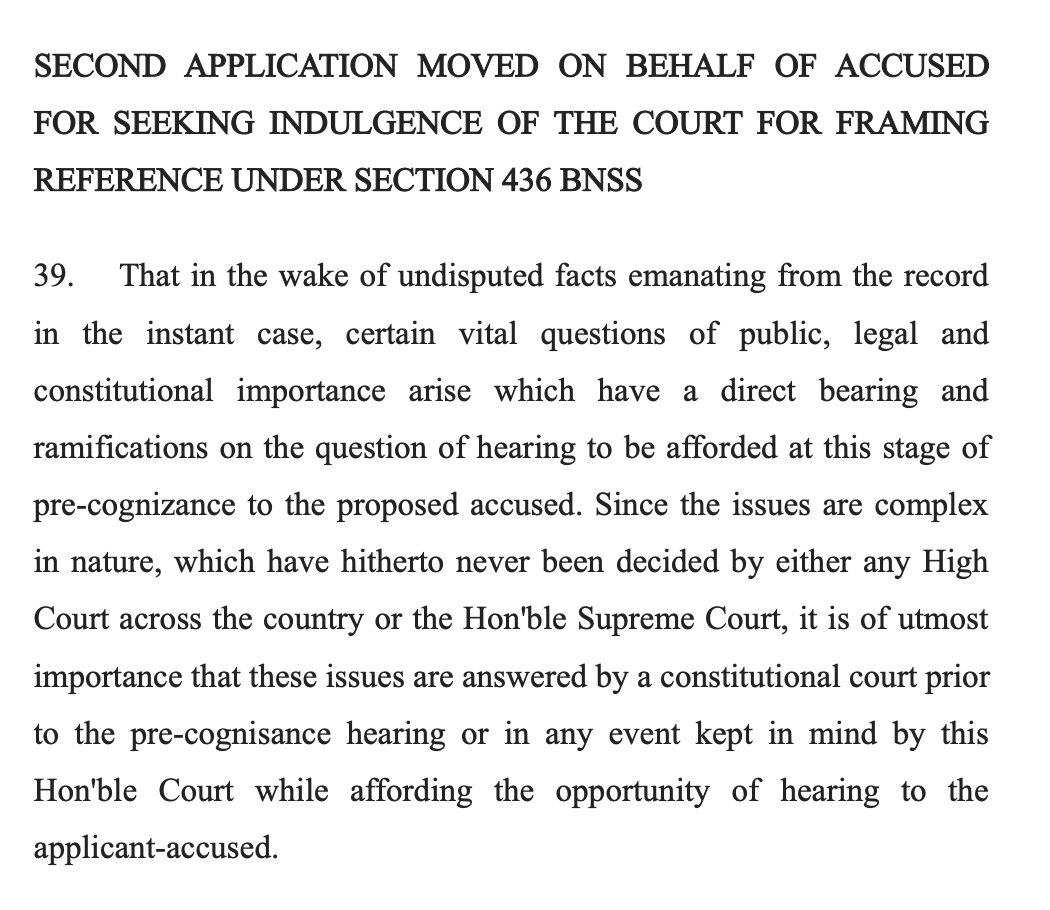
In the second application, Siddiqui had sought that important questions of law arising in the matter be referred to the High Court under Section 436 of the BNSS. His main argument was that the first “proviso” to Section 223(1) is a new provision that gives the accused a right to be heard before cognisance is taken, but the “limits, nature and scope” of such a hearing are not yet completely clear.

The court’s order states, “In view of the facts emerging from the record of the present case, certain important questions concerning public interest, law and the Constitution arise. These questions have a direct bearing on the manner and extent to which a proposed accused should be afforded an opportunity of hearing at the stage preceding the taking of cognisance of the case.”

It further states, “Since these issues are complex in nature and have so far not been decided by any High Court in the country or by the Hon’ble Supreme Court, it is of utmost importance that these questions be resolved by a constitutional court before the hearing preceding cognisance takes place. Or, at the very least, these important questions may be kept in mind when this Hon’ble Court affords the applicant an opportunity of hearing.”

What Are Relied, Unrelied and Sterling Documents?

When an investigating agency seizes a large quantity of documents, devices, bank records and other material during raids or searches, it presents only some of these before the court along with its complaint/chargesheet. These are called “relied upon documents”, meaning documents on which the prosecution is relying.

The remaining documents which the agency does not submit along with the complaint are called “unrelied upon documents”. The accused side has always maintained that these “unrelied” documents may contain material that could be helpful to the defence and, therefore, at least a list of such documents should be provided to the accused.

Meanwhile, by “sterling quality documents”, the accused meant those documents that were already in the possession of the accused himself and which he wanted to place before the court himself.

What Arguments Did Jawad Ahmed Siddiqui Make?

According to the court order available with OpIndia, the defence initially claimed that Siddiqui was being subjected to serious harassment and persecution for completely baseless, malicious and irrelevant reasons, and that he was confident that in the further proceedings he would expose the hollow foundation of the case.

Through this application, an important question of law was also raised as to what exactly would be the nature, context, scope and limits of the hearing to be afforded to an accused before the court takes cognisance of an offence.

On behalf of Siddiqui, it was argued that a Magistrate cannot take cognisance of an offence without giving the accused an opportunity of hearing. The defence argued that the Supreme Court and various High Courts across the country have already interpreted this provision and that it is now an established legal position that an opportunity of hearing cannot be merely a formality. The accused must be given an effective, purposeful and meaningful opportunity to put forward his case.

The defence also said that when the law gives an accused an opportunity of hearing, it cannot mean merely that the accused should be allowed to appear before the court and be heard. It argued that in the interests of justice, the court should adopt a procedure through which the accused gets a real and effective opportunity to present his case.

It was argued that unless the accused knows how much material the investigating agency has withheld and what kind of material it is, he cannot properly prepare his defence. It was also said that such withheld material may contain evidence that favours the accused and may directly affect or weaken the allegations. The prosecution cannot be given the liberty to select only the material that establishes the guilt of the accused and keep back material that may assist the defence.

Attempt to Prolong the Proceedings: ED

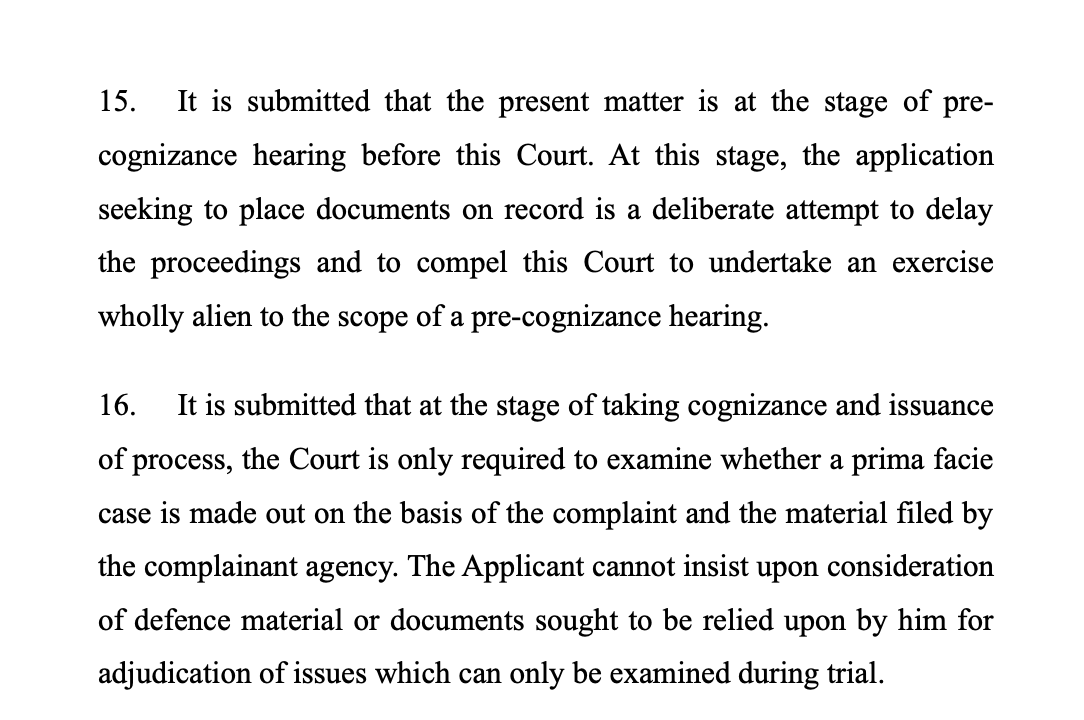
The ED strongly opposed Siddiqui’s demands before the court. The ED described the entire application as a calculated attempt to deliberately delay the proceedings. According to the ED, the accused wanted to compel the court to undertake an inquiry that was completely outside the scope of a hearing preceding cognisance.

The ED argued that at the stage of taking cognisance and issuing process (summons), the court only has to see whether a prima facie case is made out based on the complaint and the material filed along with it by the prosecution. At this stage, the accused does not have the right to demand consideration of his defence material.

The ED also informed the court that a detailed order had already been passed on March 27, 2026, in the same case regarding Siddiqui’s demand concerning unrelied documents. In that order, the court had said that at the stage preceding cognisance, it was not necessary to provide a list of unrelied documents. The court had also held that the investigation was still underway at that time and that providing such a list could affect the ongoing investigation. On this basis, that application had been dismissed.

The ED said there was no need to refer the matter to the High Court. The agency also described the demand under Section 436 as incorrect and premature. According to the agency, the questions that Siddiqui wanted to have referred to the High Court were not necessary for deciding cognisance in the present case. They were broad questions of law and had no direct connection with the limited hearing currently taking place.

Regarding the ED’s arguments, the court order states, “This application is an abuse of the process of law and its sole purpose is to delay the consideration to be undertaken on taking cognisance of the case. For this purpose, the proceedings are being diverted towards other issues which have no connection with the limited proceedings to be undertaken by this Court at the stage preceding the taking of cognisance.”

The ED said that the scope of the hearing under the provisions of Section 223(1) of the BNSS is limited. The purpose of this hearing is not to examine the merits of the case in detail, decide disputed questions relating to facts, examine the defence arguments or give a final decision on questions of law.

The ED argued that Article 228 does not confer upon a subordinate court the power to invoke this provision or direct the Hon’ble High Court to exercise its jurisdiction under it. The power to exercise jurisdiction under Article 228 is vested only in the Hon’ble High Court. Its exercise entirely depends on whether the High Court is satisfied that an important constitutional question exists which requires determination.

According to the ED, there is no basis for referring the matter under Section 436 of the BNSS or invoking Article 228 of the Constitution of India. Article 228 does not confer upon a subordinate court the power to refer a case to the High Court or direct the High Court to exercise its constitutional powers under the provision.

What Did the Court Say in Its Order?

In her order, Judge Sheetal Chaudhary Pradhan said, “The demand made by the accused for providing a list of unrelied documents has already been decided by the Court in its detailed order dated March 27. The issue as to when and at what stage such documents should be provided to the accused has already been decided by the Supreme Court. The demand made by the accused is without any legal basis and is not liable to be accepted.”

The order further states, “At the stage of taking cognisance, the Court has to look only at the material placed by the complainant. The purpose is only to ascertain whether a prima facie case is made out, based on which process may be issued for summoning the accused before the court. There is no legal basis for permitting the documents in the possession of the accused to be taken on record.”

While dismissing both applications filed by Siddiqui, the court said, “Section 436(2) of the BNSS provides that a Sessions Court trying a case may, if it thinks fit and the case does not fall under sub-section (1), refer any question of law arising during the trial of such case for the decision of the High Court. However, in the facts and circumstances of the present case, the alleged questions of law raised by the accused are neither invalid nor ineffective.”

The court said, “The interpretation of these provisions has already been made in several judgments of the High Courts and the Supreme Court. Therefore, there is no need for the present Court to refer the matter to the Hon’ble High Court for its opinion on these questions. Accordingly, there is also no legal basis in the application filed by the accused.”