In a shocking incident, a 62-year-old man Rayappan was killed by his neighbours in the Dindigul area of Madurai district in Tamil Nadu on Thursday, January 19, for referring to their pet dog as a ‘dog’ rather than by its actual name. The police arrested the accused Daniel, his brother Vincent and their mother Nirmala Fatima Rani, who had fled after the incident, in connection with the murder on Friday, January 20.
According to the police, Nirmala Fatima Rani and her sons Daniel and Vincent had warned their neighbour Rayappan several times not to refer to their pet as a dog.
The issue reached a tipping point on Thursday when Rayappan asked his grandson Kelvin to turn off the water pump that was running on their neighbouring farm. He instructed Kelvin to carry a stick because the dog might be around. Daniel became infuriated when he heard this and punched Rayappan in the chest. Rayappan collapsed and died immediately.
Daniel and his family promptly fled the scene. The Tamil Nadu police, however, apprehended the trio on Friday.
Recently, in another incident, a delivery agent for Swiggy died from injuries sustained in a fall from the third floor of a building while trying to flee an alleged attack by a pet dog in Hyderabad. Rizwan, a delivery agent for Swiggy, was killed after he was attacked by a pet dog while making a delivery. He fell from the third floor of a building while attempting to flee the attack.
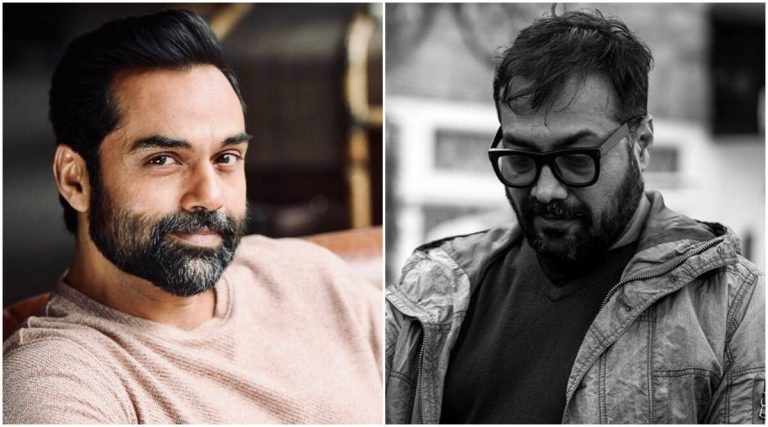
On Saturday, Bollywood actor Abhay Deol said that Film Director Anurag Kashyap is a liar and a toxic person who spread lies about him in the media. The duo had worked together in the 2009 hit film ‘Dev D’.
The actor who has been promoting his web series ‘Trial By Fire,’ said in an interview with Mid-Day that Anurag Kashyap told many lies about him to the media, one of which was that the actor had demanded a room in a 5-star hotel during the shooting of the film Dev D. Deol added that it was Kashyap who asked him not stay with the film’s unit since he is a ‘Deol’.
“Anurag went in public and told a lot of lies about me. One lie was that I demanded a five-star hotel room during the shoot of Dev D. He had actually come up to me and said, ‘Listen you can’t stay with us, you are a Deol. So, I want to put you up in a hotel room.’ He literally told me that. What he told the media was that I demanded it,” Deol said.
Notably, Anurag Kashyap in a 2020 interview with Huffpost had claimed that Abhay Deol wanted to do artistic films but also wanted to enjoy mainstream benefits, specifically the benefit of being a ‘Deol’.
“Abhay wanted to do artistic films but also wanted the mainstream benefits. The benefits and luxuries of being a ‘Deol’. He would stay in a five-star hotel while the entire crew stayed in Paharganj for a film that was made on a very tight budget. Also, a reason why many of his directors went away from him,” Kashyap had said.
Abhay Deol further said, ”I had my heart on my sleeve, and all that is great — but you get taken advantage of, and then you get reactive. So, he (Kashyap) was a good lesson. Because I don’t need toxic people in my life, I simply avoided him after that. Life is too short, and there is still so much to explore. But Kashyap is definitely a liar and a toxic person. I would also warn others about him.
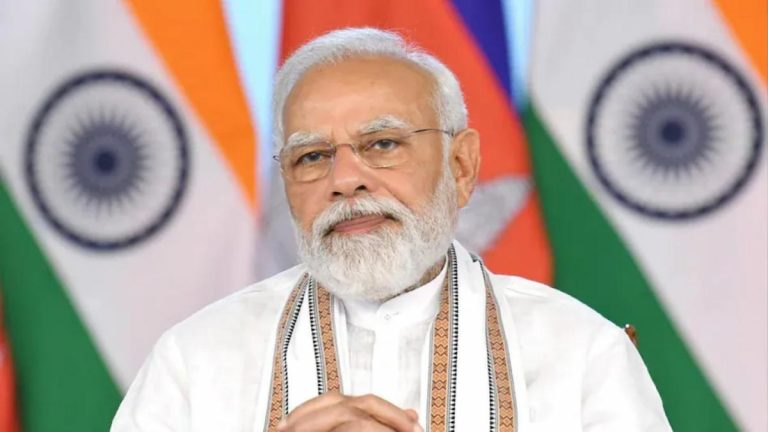
Notably, Anurag Kashyap has been more in news for his controversial statements rather than his films. The director recently claimed that PM Modi’s advice to BJP leaders to avoid making controversial comments about Bollywood movies will have no impact as the ‘mob’ has gone out of control now.
“It would have mattered if he had said this four years ago. Now, I don’t believe it will make a difference. It was about controlling their own people. Things have gone out of hand now. At the trailer launch event for his upcoming film “Almost Pyaar with DJ Mohabbat,” Kashyap said, “I don’t think anybody will listen to anyone.”
Kashyap who has also been the subject of multiple tax evasion and sexual harassment investigations went on to address the audience as a ‘mob’ saying that it went out of control. “When you stay silent, you empower prejudice and you empower hatred. It has now got so much empowered that it is a power in itself. The mob is out of control now,” Kashyap asserted.
Reacting to this, The Kashmir Files director Vivek Agnihotri questioned if the audiences for Anurag Kashyap have become ‘mob’.
“Audience is ‘mob’ now? Wow! Wow! Wow!,” Agnihotri tweeted.
It is notable that Anurag Kashyap had last year remarked that he hopes The Kashmir Files, a film about the ethnic cleansing of Hindus from the Kashmir valley by Islamists, should not be nominated for the Oscars.
During the interview, the controversial filmmaker had said, “India might actually have a nomination in the final five if RRR is the film that we pick. I don’t know what film anybody is going to pick. I hope not Kashmir Files.”
In an effort to topple Prime Minister Narendra Modi in the general elections of 2024, both the administration and the BJP think that the deep state and western Left-Liberal media would work as a force multiplier for what they consider to be a weak opposition, a media report said.
The Narendra Modi administration is unfazed by the BBC’s rehash of the 2002 Gujarat riots and thinks that more such political hit pieces are in the works to target India and the PM personally as New Delhi prepares to host the G-20 and SCO summits this year as well as the QUAD summit in January 2024.
The Modi government is expected to face the challenge of what they refer to as white left-liberal forces in the run-up to the general elections in 2024. As External Affairs Minister S. Jaishankar made it very clear in the US in September that India’s reputation will not be decided by a newspaper in New York or even in Washington. The party and the government think that the Anglo-Saxon left-liberal media will attempt to stir up additional political controversies in support of the ostensibly feeble political opposition to Prime Minister Modi and that they want a compliant regime in India by 2024 that does not hold them accountable.
“The old school political elite of India along with the western media thought PM Modi’s 2014 victory was a fluke and hence they pitched full support to Rafale fighter purchase and demonetization in 2019 elections but lost again. This time the Anglo-Saxons will be out in full strength to ensure that PM Modi does not come to power the third time. We believe that they along with the resident left-liberal ecosystem in India will throw all muck at the government and the party to discredit them in the run-up to the polls. The BBC documentary was the first instalment in what will be a series of hit jobs to undermine India before the G-20 and the 2024 elections,” said a senior government and party functionary.
While UK Prime Minister Rishi Sunak rebutted the outrageous remarks of a BBC documentary levelled by a British MP of Pakistani descent in Parliament, the Modi government is aware that Britain still harbours the delusion that it is a global power player and meddles in the Indian subcontinent as an heir to the Imperial Raj. In Indian national security circles, it is well known that the British deep state supports Sikh separatist organizations in the UK. India hasn’t forgotten how the British’s blatant disregard for the rights of Afghan minorities, particularly women, contributed to the Taliban’s seizure of power on August 15, 2021.
The report further added that it is not surprising that the BBC once again brought up the Gujarat riots issue using the former foreign secretary Jack Straw. The former diplomat previously served as a representative for Blackburn, which has one of the largest Muslim populations in the UK, with a sizable portion of its residents hailing from Mirpur in Pakistan-occupied Kashmir. The same Jack Straw attempted to act as a peacemaker after the horrific slaughter of women and children by Lashkar-e-Toiba terrorists at the Kaluchak Army camp in Jammu in May 2002 and the Jaish-e-Mohammed attack on Parliament in 2001 that almost pushed India and Pakistan to the brink of war. Despite the fact that innocent people were skinned alive by Pakistani terrorists at the Kaluchak camp, Straw, playing the part of a chorus boy for the US, preached diplomacy and dialogue to India without holding the then-military dictator of Pakistan, Pervez Musharraf, accountable or designating the Islamic Republic as a state sponsor of terrorism.
A Union Cabinet Minister said, “The western Left-Liberal angst against new India is that it does not take unsolicited advice from any third country be it on Ukraine war or dialogue with Pakistan or Covid vaccines or China. For Modi, India comes first.”
Reports claim Centre has directed Twitter and YouTube to remove posts on controversial BBC documentary
According to reports, the Modi govt has blocked the propaganda BBC documentary on the 2002 riots from YouTube and Twitter. Although BBC India did not make the video available in India, certain YouTube channels seem to have published it to advance an anti-Indian agenda.
The media reports claim Centre has ordered the blocking of YouTube videos that broadcast the first episode of the Prime Minister Narendra Modi BBC documentary, though it is yet to be confirmed if the Centre had indeed asked the social media organisations to remove content related to BBC Documentary on Gujarat Riots 2002. The companies may well have removed it of their own volition as the documentary was not available outside the UK and sharing it on social media without the explicit permission of the producer is a patent copyright violation.
Senior officials of the Union home minister, external affairs ministry, and information and broadcasting ministry examined the documentary amid controversy over it, which the ministry of external affairs refers to as a propaganda piece, and discovered that it was an attempt to cast doubt on the legitimacy and authority of the Supreme Court of India.
The sources stated, that it was determined that the documentary threatened India’s sovereignty and integrity and had the potential to harm both the nation’s good relations with other countries and its internal public order.
“The documentary produced by British Broadcasting Corporation, UK’s Public Broadcaster, has been earlier called by the Ministry of External Affairs (MEA) a propaganda piece that lacks objectivity and reflects a colonial mindset. While it was not made available in India by BBC in India, some YouTube channels appear to have uploaded it to promote an anti-India agenda. It is reported that YouTube has also been instructed to block the video if it is again uploaded on its platform. Twitter has also been directed to identify and block the tweets containing the link to the video on other platforms,” revealed Arandim Baghchi, a spokesperson for the MEA, during a weekly press briefing.
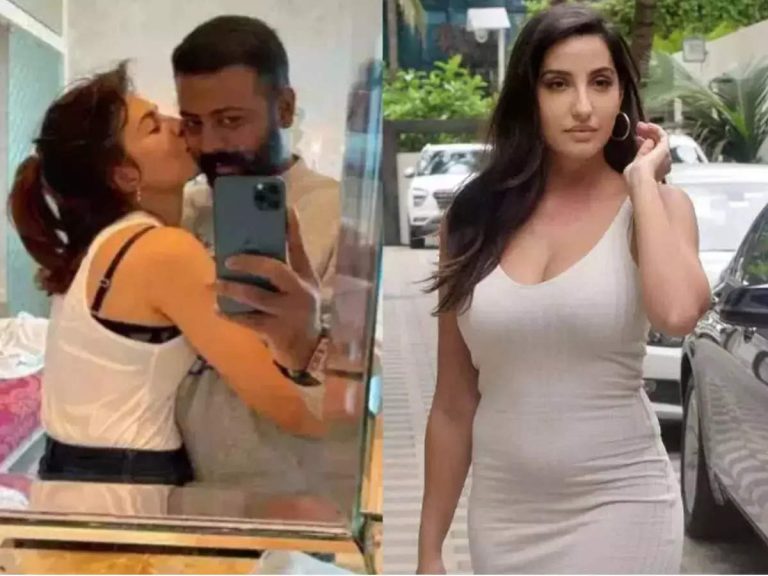
In a recent development, where Economic Offences Wings of Delhi Police has filed a supplementary chargesheet in connection with the Rs 200 crore extortion case, alleged conman Sukesh Chandrasekhar on Saturday claimed that Bollywood actor Nora Fatehi has always been jealous of Jacqueline Fernandez.
Sukesh in a press statement issued through his lawyers Anant Malik and AK Singh stated that Nora Fatehi always brainwashed him against Jacqueline, so she wanted him to leave Jacqueline and start dating her.
“Nora used to try calling me at least 10 times a day and if I don’t answer the call she used to keep on calling me,” Sukesh claimed.
“As I and Jacqueline were in a serious relationship, I started avoiding Nora, but she kept irritating me by calling and also, asking me to help bobby (Nora’s relative) in setting up a music production company which I did. She also kept sending me multiple pictures of Hermes bags and jewellery that she wanted, which I obliged by giving her, which she was using till date, ask her to produce one bill of Hermes bags that she has, she can never produce as she does not have, as the bags are worth more than Rs 2 crores”, claims Sukesh.
He also stated that Nora first gives a different statement before ED u/s 50 PMLA which is admissible in court and also is evidence, later, now before EOW and a magistrate, the entire statement is changed and new stories are made by her, and the same can be very well be verified and compared with the charge sheet of ED and now the EOW. This clearly shows how Nora is being manipulated and afterthoughts and ideas are implemented by her only with a mala fide mind of hers.
He also stated that actors and models Nikki Tamboli and Chahat Khanna, with these women in his association, were only professional as they were supposed to act in his production under the LS film banner.
“I had no romantic association as news alleged by them, as their statement before the Enforcement Directorate, nine months ago was completely different which can be seen by media to certain if I am lying. So this new statement given by them before EOW is only to save their skin and to grab publicity in the media, I have no fear to agree with the truth, but this new story is very funny after 9 months, I appeal to the media to verify the ED charge sheet statement and now new EOW charge sheet statement which will clearly show how these two Nikki and Chahath are lying,” he said.
Sukesh also stated that “I have to this very minute maintained dignity and respect for all those women and I don’t want to stoop down to this cheap level of putting out all the chats, and screenshots in the open which would expose the truth in open, and which will assassinate their characters, but if this circus goes on then I have face to show, as they know, what all they have spoken or have had knowledge about.”
“The statement given by the so-called witness actresses in the supplement chargesheet filed by the EOW, I am sure everyone has perceptions after reading the statements published on media, but, I would also mention a few things in my press statement here which will show how the so-called witness actress have lied and abused the process of law,” Sukesh said in a press statement issued on Saturday.
(This news report is published from a syndicated feed. Except for the headline, the content has not been written or edited by OpIndia staff)
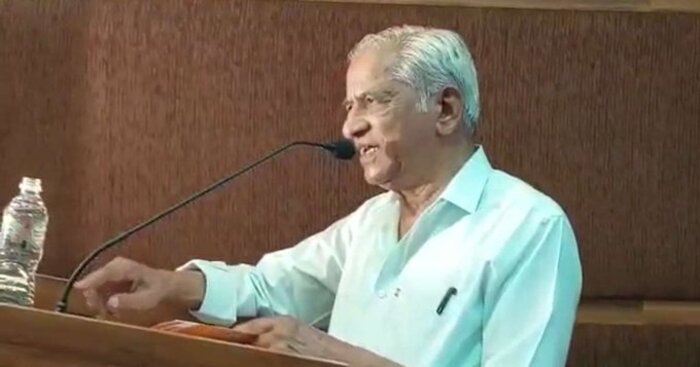
On Friday, January 20, alleged Rationalist, and writer, KS Bhagwan sparked outrage after making controversial comments about Lord Rama and Goddess Sita. KS Bhagwan claimed that the Valmiki Ramayana, in Uttar Kaand, states that Lord Rama used to drink wine with Sita every afternoon.
Rama’s main activity in the afternoon was to sit with Sita and drink wine. the author was heard saying that this is what the documents state. KS Bhagwan made the comments while speaking at an event in Mandya, Karnataka.
This is not the first time that the writer has expressed objectionable opinions about Lord Ram. In December 2018, he stirred up a controversy after claiming that according to Valmiki Ramayan, Lord Ram used to drink ‘intoxicants’ and made Sita consume them too. In his book “Rama Mandira Yake Beda,” he made these comments.
Following his comments, some Hindu organisations launched a protest against KS Bhagwan and tried to hold a puja outside the controversial writer’s residence in Kuvempunagar.
Back then, KM Nishant, a member of a Hindu rights group had told the Times of India that the Uttar Kaand was added later on in the Valmiki Ramayana and that it was not composed by Sage Valmiki.
“In his book Rama Mandira Yake Beda, KS Bhagwan quotes verses from Uttar Kaand, the concluding chapter of Valmiki’s Ramayana. However, Bhagwan should be aware that Hindus disagree with Uttar Kaand because we believe Valmiki did not write the chapter. There is no mention of Uttar Kaand in any of the 24,000 slokas that make up the Ramayana,” Nishant told Times of India.
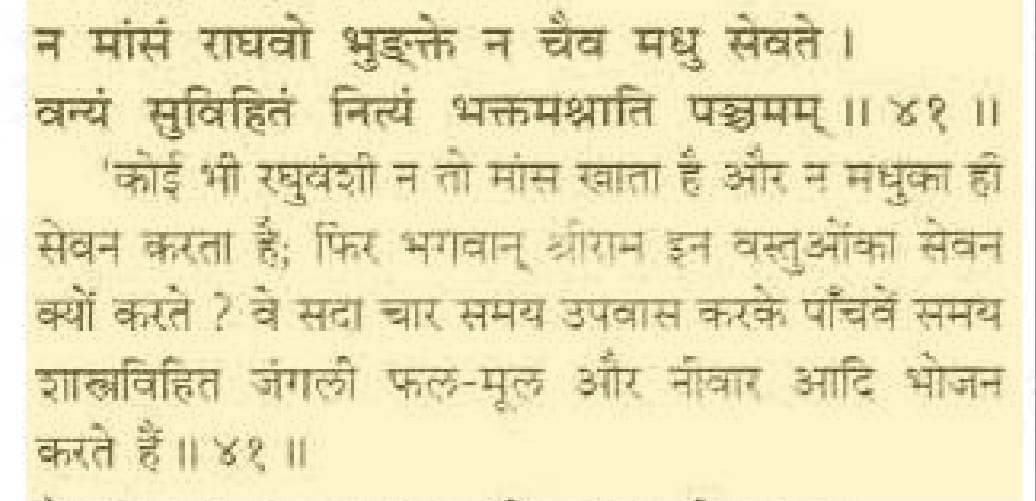
It is notable that those arguing that Lord Rama used to consume meat and liquor often quote this shloka from Valmiki Ramayana’s Sundarkand:
Those claiming that Lord Rama used to consume alcohol and meat interpret this shloka as He (Lord Rama) is not eating meat anymore, nor indulging in liquor (not even spiritual liquor) and he is just eating the fruits available from the forest.
Valmiki Ramayana, Gita Press publication (Image via social media)
However, the Gita Press publication clarifies that the shloka actually means that it is a sin for any Raghuvanshi (including Lord Rama) to consume meat or alcohol. Then why would Lord Rama consume these things? Lord Rama in accordance with the Shastras used to eat fruits available in the forest.
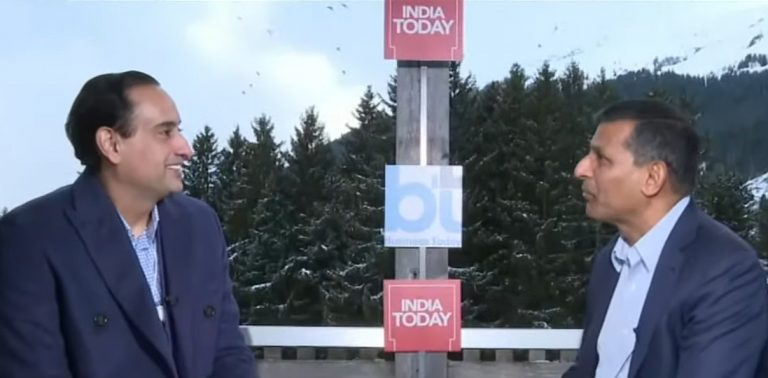
On the sidelines of the ongoing World Economic Forum meeting in Davos, India Today’s Rahul Kanwal talked to former Reserve Bank governor Raghuram Rajan. A video clip of the interview has gone viral, where Raghuram Rajan gets a befitting reply from Kanwal for his criticism of the Modi government’s handling of the economy.
The controversial former RBI governor, who is close to the Congress party, tried to raise several points to attack the economic policies of the Modi government, but he was effectively countered by Rahul Kanwal. The India Today anchor cited several global examples to show that what the Indian govt is doing is not unique, and it is in line with what other global powers are also doing.
When asked about his views on the Modi government’s handling of the economy, Rajan said that while the government is doing in areas like infrastructure, like the building of roads, he said that the performance is not satisfactory in the ‘soft infrastructure point’. He cited raising tariffs as one example, saying that ‘if we are to become a global player, we have to recognize that a tariff is not just preventing imports but also preventing exports. But Rahul Kanwal countered that by saying that reason for it is that it has become a global trend, and it is happening not just in India.
However, Rajan said that as India is trying to make its way into the global supply chain, India should lower tariffs even though other countries are not doing so.
Kanwal then moved on to the astronomical rise of electronic manufacturing in India under the Modi government, which was negligible during the UPA rule. He said that hardly anything was produced during the UPA govt, but now India is producing electronic devices not only for the domestic market but also has become an export centre. But Raghuram Rajan directly dismissed this achievement, saying that the rise in domestic production is only because of the incentives offered by the government.
He said that the mobile plants in India are importing large amounts of parts and are just assembling the final products in India. According to Rajan, it is not a big achievement, and he also claimed that assembly plants do not generate much employment. He added that there is no value addition in assembling the phones. He also claimed that around ₹5000 in subsidy is paid by the govt for every phone made in India.
Rajan also claimed that manufacturers are looking to come out of China, and asked whether they will come to India without subsidy. ‘Somehow it seems the only way we get mobile Manufacturing in India is to subsidize that final output, pay 5000 rupees per cell phone that is manufactured or whatever the final number is regardless of how much value is being added,’ he said, criticising the Production Linked Incentive (PLI) scheme of the union government.
Rahul Kanwal countered it by saying that the government is doing what it can do to bring manufacturing to India. He added that India is not the only country offering incentives to companies to bring in manufacturing, giving the example of how the US has announced a $280 billion initiative to move chip manufacturing from countries like Taiwan, China, Thailand etc to the USA.
However, when Kanwal showed how the USA is also giving incentives to manufacturing, Raghuram Rajan changed track, virtually saying USA’s incentive is good but India’s incentive is bad. He criticised the $10 billion incentive announced by the Modi government for semiconductor manufacturing in the country, saying it will generate only 1000-1500 jobs.
It is notable that just 5 minutes earlier, he was criticising incentives for phone assembly plants, saying it is worthless if there is no manufacturing of parts in India. But then he moved to criticise the manufacturing of semiconductors, saying it does not generate much employment.
Raghuram Rajan then turned from an economist to a pure leftist, saying that instead of giving $10 billion to the semiconductor industry, the money should be used to start new universities and give to existing universities. According to him, giving money to universities will result in the flourishing of technological abilities.
He also doubted the capabilities of the companies which have announced semiconductor plants in India under the PLI scheme. He was referring to Vedanta, which is setting up a ₹1.54 lakh crore semiconductor plant in Gujarat, as Vedanta has no experience in the sector. But he conveniently forgot that it is a 60:40 joint venture with Taiwanese giant Foxconn, the world’s leading electronics manufacturer.
Rahul Kanwal countered his ‘build universities instead of manufacturing plants’ by saying that it will take years, while the semiconductor plants will start manufacturing in a couple of years. And now, Rajan had a problem with the semiconductor plants in India, saying they will make ‘run of the mill semiconductors.’ According to him, the semiconductor plants coming up in India are worthless because they are not making chips that power modern computers, smartphones and other top-end devices.
Rahul Kanwal effectively countered it by saying that it is a chicken and egg situation, and the country has to start with low-end chip making and then move up the value chain. Raghuram Rajan wants India to directly start making top-end chips, which is not possible, and Kanwal effectively pointed out this, forcing Rajan to again move off track. He said that China already has such chip-making facilities, but it has not acquired the capabilities to move up.
Kanwal again effectively countered him, saying that in China everything is under government control, and without democracy and freedom, there is little incentive to move up the value chain. He said that the Indian start-up sector has already shown that the chances of innovation in India are higher than in China. He said that China is not catching up because it’s essentially a state-run society.
Raghuram Rajan disagreed with him, saying there are several successful private tech companies in China, and there have been innovations in China like TikTok. However, he agreed that India’s democracy gives it strength in terms of innovation if that is allowed. But he added that we also need to spend on human capital, and need to have world-class universities.
He said that India should open up manufacturing but there is no need to give to subsidies to the industry. He kept on stressing building more ‘human capital’, saying it should get priority over manufacturing and logistics etc.
In an attempt to criticise the Modi government, Raghuram Rajan ended up saying only the higher-end semiconductor industry matters, which is not correct. While only computers and phones come to mind when talking about chips, actually today chips are everywhere, and there is a huge demand for lower-end chips in the world.
The automobile industry was facing a crisis recently due to a shortage of supply of chips, as each vehicle contains several chips to control various aspects of the vehicle. Today most appliances and electronic products contain semiconductors, which are not made by the likes of Intel.
With the expansion of smart and Internet of Things (IoT) devices, the global chip demand is set to explode, and by venturing into the sector, India will be able to capture a part of the market. By the end of the decade, the semiconductor market for the automobile sector will be $150 billion, while the semiconductor market for consumer and industrial electronics is set to be $220 billion. Therefore, the $10 billion bet by the government of India is worth it to enter this highly coveted sector with only a few players.
Even in computers, phones, gaming consoles etc that need top-end chips, there are several lower-end chips and other semiconductor products apart from the main CPUs and GPUs, and the upcoming plants in India can supply those parts.
Moreover, entering the low-end chip market will be crucial to moving to high-end chips to compete with the likes of TSMC, Samsung and Intel. No new player in a sector can’t enter the top end directly, it has to start at the bottom and gradually move up the value chain.
It is also important to note there is no such thing as ‘run of the mill semiconductors,’ as claimed by Rajan. While the chips used in devices are lower-end compared to CPUs and GPUs of computers and phones, the ‘low end’ semiconductors are still highly complex products which are made by only a small number of companies in the world. It is a niche but high-value industry with a few players that manufacture at a large scale, and the industry produces mone of the most complex products ever designed by mankind.
Rajan is also wrong in saying that the Vedanta-Foxconn plant may not be a success as it has no experience in chip making. But the fact is, Foxconn is actually a major electronics component maker While Foxconn is mostly known for manufacturing iPhones and other consumer electronics devices of several companies, the company also makes a huge number of components that go into phones and other devices. Moreover, the company has forayed into chip manufacturing in recent years, has acquired chip fabrication plants, and therefore has the knowhow to operate a semiconductor plant.
Also, given the scale of operation of Foxconn and the financial muscle of the joint venture, it will not be difficult for them to acquire the required expertise.
While saying that China has not been able to move up the value chain in semiconductors from being an assembler, Raghuram Rajan ignored several factors. The first is that China focused on becoming the manufacturing hub of the world, while India is focusing on both assembling devices and making chips from the begining.
Also, China has a big hurdle in making it big in semiconductors because of US sanctions. The Semiconductor industry involves a global supply chain of several countries in various countries including the USA, and several American companies hold crucial IP rights needed for the sector, and due to the sanctions, the Chinese semiconductor industry can’t access them.
Raghuram Rajan also conveniently ignored the US subsidy program to bring the chipmaking industry to the country when Rahul Kanwal mentioned it. In the recently introduced CHIPS and Science Act, the United States government has announced more than $50 billion in tax breaks and other subsidies for manufacturers, while the total value of benefits in the scheme is set to be $280 billion.
Therefore, India is not the only country to offer incentives to bring manufacturing to the country, even an economic superpower like USA is also doing the same.
Raghuram Rajan also claimed neither assembling nor manufacturing in the electronics sector generates employment in large numbers. First, he contradicted himself, as he attacked the phone assembly plants, saying they all use imported parts, then he criticised the semiconductor industry saying it will only produce low-end chips. He also said assembly plants do not generate much employment, and the chip plant will hardly generate 1000-1500 jobs.
He is wrong on multiple fronts on this aspect too. While he is correct that semiconductor manufacturing is not employment intensive, it’s a big industry that will support lots of ancillary industries, which will generate much more jobs. Semiconductors are made in highly specialised fabrication units, and a small number of highly skilled workers are needed to operate them. But like all such industries, they also require a large number of products and services to operate, therefore they can generate much more indirect employment.
Raghuram Rajan’s claim that phone assembly plants do not generate much employment is plainly wrong because it is actually one of the most manpower-intensive industries. Single campuses of Foxconn in China employ lakhs of employees, because, the process of assembling various parts to build a phone or a similar device requires a lot of manpower. The phone assembly units operating in India also employ large numbers of people.
For example, in 2020 around 30,000 people worked in several Xiaomi plants in India that manufacture phones and other devices of the Chinese giant. The company has been adding capacities since then, and therefore the number must have gone up. Foxconn is reportedly increasing its manpower in India to 70,000 in the next two years. These plants also generate lots of indirect employment, and therefore they are large employment generators, unlike the claims of Rajan.
Raghuram Rajan’s suggestion that $10 billion should be used to build universities instead of promoting industry is similar to the a familiar leftist rant every time the government announces big industry of infrastructure projects. They always claim govt should build schools and hospitals instead of building roads, railways, ports etc. While the requirement for top-end universities can’t be denied, there is no reason why it should be at the cost of the semiconductor industry. The government has budgets for different sectors, and the money is spent accordingly.
The complete interview of Raghuram Rajan with Rahul Kanwal can be viewed below, where they talked about several other subjects, like Rajan saying that Rahul Gandi is not a Pappu.
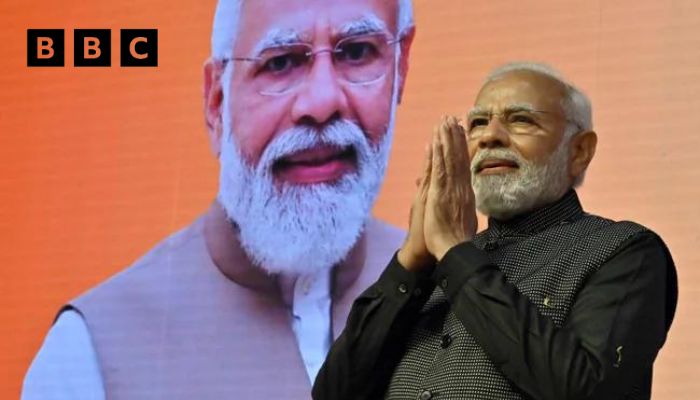
On Saturday (January 21), Indian civil society came forward to slam the United Kingdom’s national broadcaster, British Broadcasting Corporation (BBC), over its propaganda documentary on Indian Prime Minister Narendra Modi.
A total of 133 retired bureaucrats, 156 retired armed officers, and 13 retired judges have written an open letter, wherein they dubbed the BBC documentary as ‘delusions of British Imperial resurrection.’ They warned, “Not this time. Not with our leader. Not with India. Never on our watch!”
“So now we have the archetype of British past imperialism in India setting itself up as both judge and jury, to resurrect Hindu-Muslim tensions that were overwhelmingly the creation of the British Raj policy of divide and rule,” they further stated.
They emphasised, “Not only is the BBC series, judging from what we have seen of it so far, based on delusional and evidently lopsided reporting, but it presumes to question the very basis of the 75-year-old edifice of India’s existence as an independent, democratic nation, a nation which functions according to the will of the people of India.
Retired judges, retired bureaucrats and retired armed forces veterans co-sign a statement rebutting the BBC documentary ‘Delusions of British Imperial Resurrection?’ pic.twitter.com/XCFROpYzPl
The group of retired bureaucrats, army officers, and judges further said, “Glaring factual errors apart, the series – which uses the words ‘allegedly’ and ‘reportedly’ repeatedly, (not ‘factually”) – reeks of motivated distortion that is as mind-numbingly unsubstantiated as it is nefarious.”
“This is demonstrated most vividly by its completely sidelining the core fact: that the apex judicial institution of India, the Supreme Court of India, has unambiguously ruled out any role of Shri. Modi in the Gujarat violence of 2002, while firmly rejecting allegations of complicity and inaction by the then Gujarat State government headed by Chief Minister Modi,” they added.
They questioned the sinister motives of the BBC for dismissing the verdict of the supreme court. “Prime Minister Modi’s active engagement with every Indian citizen, be it in housing or health or education, is only worthy of approbation and emulation,” they emphasised.
The retired officials also hailed the Covid-19 relief package of the Modi government, besides the abrogation of Article 370 and facilitating the empowerment of Muslim women through the criminalisation of instant Triple Talaq.
“The series claims to examine policies ‘in the context of rising tensions in India’. Not only is this a serious waste of the audience’s time, patience and intelligence, it actually calls into question BBC’s own journalistic and ethical principles,” the letter read.
“This documentary is not a neutral critique, it is not about exercising creative freedom, it is not even about a divergent, anti-establishment point of view. It is in fact a visibly motivated charge sheet against our leader, a fellow Indian and a patriot,” it further noted.
The Background of the BBC controversy
Recently, BBC aired a two-part documentary attacking PM Narendra Modi’s tenure as Gujarat Chief Minister during the Gujarat riots of 2002. India has denounced the controversial program as a “propaganda piece” that is designed to push a discredited narrative.
One of the nefarious objectives behind the documentary was to whitewash the role of Islamists in the Godhra train carnage, which claimed a total of 59 Hindu lives. It further used the already discredited statements of Sanjiv Bhatt and RB Sreekumar to attack the Indian Prime Minister. BBC even used the boasts of Babu Bajrangi and Haresh Bhatt, who have accepted that they were reading the script given by a journalist, to try and declare PM Modi guilty.
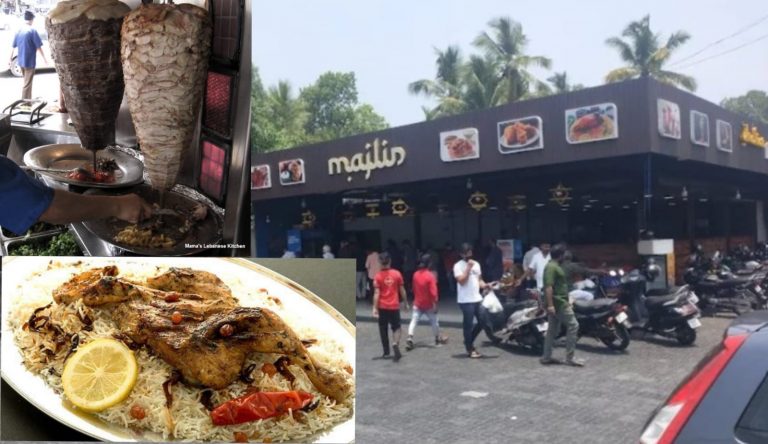
On Tuesday, January 17, at least 70 students were admitted to various hospitals in Ernakulam district in Kerala after having food at an eatery, Majlis Hotel, in the district’s North Paravoor area. According to reports, these students suffered severe food poisoning after they consumed Arabic dishes- Kuzhimanthi, Alfaham and Shawai from this hotel the night before. They were rushed to the hospital after developing symptoms like vomiting, diarrhoea, body pain and uneasiness.
As per reports, twenty-eight out of these affected people, including two children, were admitted to Paravur Taluk Hospital, and 20 to private hospitals. Two people were later shifted to Ernakulam medical college hospital after their condition deteriorated. Those who have eaten from here have sought treatment in other districts as well.
Later, authorities closed down a hotel in the town from where the food was ordered. The head cook of Majlis Hotel, named Hasainar (50) was arrested and later remanded by the court. The police said that he had gone into hiding after the incident came to the fore. Local media outlet Matrabhumi, reported that the FIR filed by the Ernakulam police in the case did not mention the name of the licensed owner of the hotel in question.
The State health minister Veena George has informed that the restaurant’s licence has been revoked. Action was taken based on a report submitted by the food safety commissioner. It further read that a case has been registered against the owner of the restaurant and an investigation is on.
The license of the Majlis Hotel in Paravur suspended after several people fell ill after having food at the eatery.
Food Safety Commissioner was instructed to conduct an immediate inspection & submit a report. Action has been taken based on the report: Kerala Health Min (17.01) pic.twitter.com/Vlh42lKLgq
Speaking on the mishap, North Paravur municipal chairperson V A Prabhavati said the hotel was shut down and health authorities have collected enough samples before it was closed down. “Most of the affected were students of the arts and science college in the town as it was the last day of examination and they ordered food together as part of their celebration. In most cases symptoms are similar. We will step up our checks on all eating joints in view of this,” she said.
This is not the first case of food poisoning reported from the state of Kerala; in recent months, several other persons have died in various parts of the state as a result of acute food poisoning, most of which occurred after consuming Arabic and Arabian culinary preparations.
Kerala women dies from food poisoning after consuming Arabic dishes ‘Kuzhimanthi’ and Al Fahm’
Earlier this month, a 20-year-old woman died after consuming ‘Kuzhimanthi’, a variety of biryani allegedly ordered from a local hotel. Police said that Anju Sriparvathy, a resident of Perumbala, had consumed Kuzhimanthi, which she ordered online from a restaurant called Romancea in Kasargod, on December 31.
Then too, State Health Minister Veena George initiated an investigation into the incident. George told reporters in Pathanamthitta that the Commissioner of Food Safety has been instructed to submit a report on the matter. She stated that under the Food Safety and Standards Act, hotels accused of food poisoning will have their licences revoked (FSSA).
Prior to Anju Sriparvathy’s death, a nurse at Kottayam Medical College died allegedly after consuming food from a Kozhikode eatery. Nurse Reshmi Raj (33) had ordered the Arabic chicken dish ‘Al Fahm’ from a restaurant called Hotel Park here. Her health deteriorated after consuming the food. She was taken to the hospital in severe condition and died there. Later, the health of 20 more people who ate from the same hotel deteriorated, and they were hospitalized in various hospitals.
In the same district, nearly 100 people had fallen sick after eating food served at a baptism ceremony.
Similarly, a 9-year-old child died of food poisoning in December last year after consuming ‘Kuzhimanthi’ from a fast-food outlet in Kattangal, Kerala.
Likewise, in May last year, a 16-year-old girl named Devananda had died following acute food poisoning at Cheruvathur in Kasaragod district. Not only Devananda, but around 30 people, mostly schoolchildren, who had eaten the same food – chicken wrap or shawarma, an Arabic cuisine – were hospitalised at the same time with signs of acute food poisoning.
Kerala | A student dies after consuming rotten shawarma in Kasaragod district. A total of 18 students have been admitted to the district hospital. The shop has been closed, cook taken into custody. Food poisoning may be the primary reason for this: M Rajagopalan, MLA Trikaripur pic.twitter.com/LKYdZo30oN
‘Kuzhimanthi’ (mandi) is a Lebanese dish similar to biryani that is extremely popular throughout the Middle East. Manthi has been immensely popular in Kerala in recent years, resulting in the emergence of several Manthi restaurants throughout the state.
According to food experts, the main deterrents in Shawarma and Manthi-related food poisoning instances are undercooked meat and mayonnaise, which spoils quickly.
Rotten ‘Tsunami chicken’ and stale oil used to prepare Arabic dishes seized by authorities
Amid the rising number of deaths due to the food poisoning incidents in Kerala, the Kerala Food Safety Department took action and closed 40 hotels, fined 62, and warned 28 others. Besides, more than 500 hotels and eateries around the state have been raided. During one such raid conducted on January 12, the authorities sized around 500 kg of rotten ‘Tsunami chicken’ kept for distribution to halal hotels from Ernakulam.
The rotten meat was confiscated from a rented house at Kaipadamugal near the defunct Kalamassery HMT Machine Tools Ltd.
Additionally, 150 kg of stale oil that looked like bitumen used in road construction was also seized during the inspection.
The health officials said that the stored stinking meat was supposed to be sold to restaurants and wayside eateries in Kochi.
Accoridng to reports, both the rotten meat and stale oil are being used to make Arabic dishes like Shawarma, Alfaham and Mandi, the consumption of which has lately been causing the fatalities in the state.
Local residents, who were no longer able to bear the stench of rotting flesh intimated the authorities, following which the rais was conducted. The authorities stated that unlicensed establishment belonged to Junais, a native of Mannarkkad on the Malappuram-Palakkad border.
Over 50 eateries procured ‘rotten’ meat from accused supplier
According to reports, over 50 hotels and restaurants operating in various parts of Ernakulam district had procured meat from the aforementioned supplier.
“We recovered bill books and registers from the house. The bill books has details of hotels and retailers who procured the chicken meat. After going through the seized documents, it is revealed that the accused persons were the main supplier of chicken meat to hotels in Kochi and other parts of the district,” P R Santhosh, Station House Officer, Kalamassery Police Station said.
“They were supplying meat to hotels in Aluva, Angamaly, Kalamassery, Edappally and Thrikkakara area. They called it as ready-to-cook chicken. They supplied the meat at a 50% discount to the retail price of chicken. Junais procured these chicken from Hyderabad and transported it to Kochi by train,” a police officer said.
Kerala HC seeks report from govt amid rising number of food poisoning cases in the state
With the rising number of food poisoning incidents reported from various parts of the state, the Kerala High Court took judicial notice of the situation on Wednesday, January 18 and demanded a report from the state government on the steps taken by them to tackle the issue.
A bench of Chief Justice S Manikumar and Justice Shaji P Chaly stated that several incidents of food poisoning have occurred recently and directed the Secretary of the Health and Family Welfare Department to “file a detailed report setting out the occurrences, steps taken against the perpetrators, etc.”
Owing to several such cases reported in the span of few months, the State Government has made health cards mandatory for all hotel employees. Any hotel or restaurant found employing staff who do not take health cards would be prohibited from operating beginning February 1, 2023, according to State Health Minister Veena George.
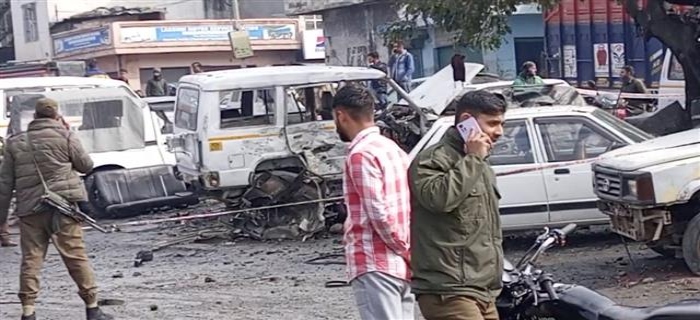
Two explosions struck the Narwal area of Jammu city on Saturday in a 15-minute period resulting in at least seven injuries on Saturday. The first blast happened at around 10.45 am. An eyewitness named Jaswinder Singh informed that the initial explosion happened in a car that was being repaired at a shop.
It is suspected that high-intensity IEDs were used for the blasts, and the modus operandi seems to be that of the terror group Lashkar-e-Taiba. The blast took place at a transport yard in the Narwal area of Jammu.
The first blast took place in a Mahindra Bolero sent to a workshop for repairs.
News agency ANI posted a video of one of the explosions, presumably the second one.
#WATCH | J&K: Twin explosions occurred in the Narwal area of Jammu today, injuring at least 6 people.
The area was cordoned off by the police after the blasts. A forensic team reached the site and collected samples for the investigation into the blast. A bomb disposal squad was also sent to check for any more bombs in the area.
According to Singh, chief of the Motor Spare Parts Association, the second explosion occurred fifteen minutes after the first one. It left the entire area covered in debris. He stated that the first detonation hurt five persons, while the second injured two more.
Additional director general of police for the Jammu zone, Mukesh Singh, confirmed the incident. He said that six people were injured in the incident. However, according to hospital sources, seven patients were admitted with splinter wounds. All are stable at the moment.
According to reports, the injured persons have been identified as Suhail Iqbal (35), Sushil Kumar (26), Vishav Pratap (25), Vinod Kumar (52), Arun Kumar, Amit Kumar (40) and Rajesh Kumar (35).
Reporters talked to the Deputy Mayor of Jammu who said that the officers told him they wouldn’t be able to determine if the explosions were unintentional or related to terrorism until they had completed their investigation. He added, that there might be a terrorist component to it, so that they can resurrect the secessionist movement, which is declining in Kashmir.
There could be a militancy angle. They (terrorists) did something in Rajouri. Republic Day is approaching. Bharat Jodo Yatra is marching ahead. They want to do something to defame J&K so that they can revive the militancy that is taking its last breaths: Jammu Deputy Mayor pic.twitter.com/U7Ut48mA5K
DIG, Jammu, Shakti Pathak also gave a statement to the media.
J&K | Two blasts occurred and we are carrying out the investigation. We will share the facts with you. The blast occurred here in Narwal, and the second blast occurred about 20 minutes after the first: Shakti Pathak, DIG Jammu pic.twitter.com/UpnSnC239O
Manoj Sinha, the J&K LG, was given a situational briefing. He urged swift action to find the guilty parties and punish them. A compensation of Rs 50,000 per injured person was also announced by him. He promised that the administration will provide the afflicted with the finest care and assistance available.
J&K LG, Manoj Sinha has strongly condemned the blasts in Narwal, Jammu this morning. Senior police officials briefed the Lt Governor about the blast and on the state of investigation. He called for urgent steps to identify and take action against those responsible.
The bombings in Narwal’s transport yard were set off by alleged terrorists at a time when the region’s security services are on high alert due to the Congress’s current Bharat Jodo Yatra and the forthcoming Republic Day celebrations.
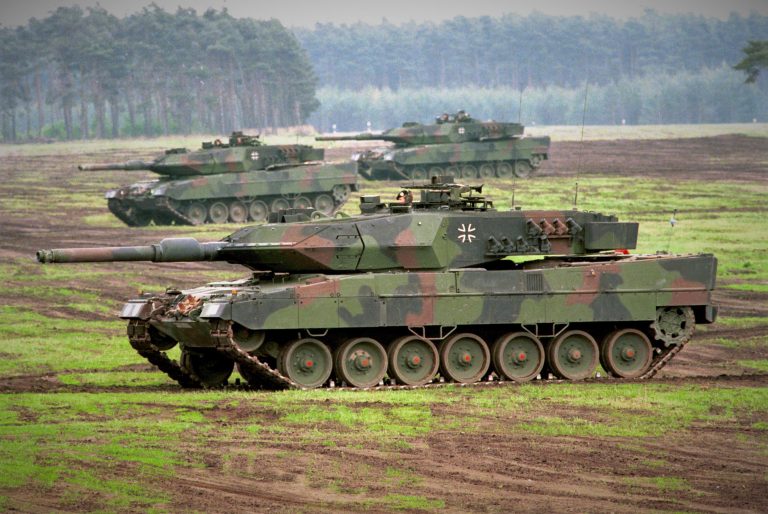
The United States and its allies have not reached any agreement on supplying German-made Leopard 2 tanks to Ukraine as Russia issued threats that the war could escalate in Europe, Al Jazeera reported.
NATO and defence leaders from about 50 countries met at the American Ramstein Air Base in Germany on Friday, the latest in a series of arms-pledging conferences since Russia invaded Ukraine 11 months ago. At the meeting, European leaders pushed Germany to give a green light for the delivery of Leopard 2 tanks to Ukraine in order to drive back Moscow’s forces. No decision was, however, made.
According to Al Jazeera, failure to provide the tanks may indicate growing division within NATO over supplying such weapons.
Germany’s defence minister Boris Pistorius denied claims that Berlin was unilaterally blocking the delivery of the Leopard 2 tanks to Ukraine, but said his government was ready to move quickly on the issue if there were consensus among allies, Al Jazeera reported.
“There are good reasons for the deliveries and there are good reasons against, and in view of the entire situation of a war that has been ongoing for almost one year, all pros and cons must be weighed very carefully,” Pistorius said.
There is pressure on Berlin to provide tanks to Kyiv that Ukraine sees as key in its war against Russia.
Pistorius said that there is a view that Germany is standing in the way. “There are many allies who say we share the view that I have put forward here,” he said.
Pistorius said that while there was no decision yet on whether to send the Leopard tanks, “We will make our decisions as soon as possible,” he said, as quoted by Al Jazeera.
“I am very sure that there will be a decision in the short term but … I don’t know how the decision will look,” he said. Leopard tanks are seen as especially suitable as they are widely in use, meaning several countries could each chip in some of their tanks to support Ukraine.
The US on Thursday (local time) announced a massive new package of USD 2.5 billion in new weaponry, and munitions for Ukraine as the country prepares for a new stage of the war against Russia.
The package does not feature battle tanks requested by Kyiv but includes 90 Stryker armoured personnel carriers, an additional 59 Bradley Infantry Fighting Vehicles, Avenger air defence systems, and large and small munitions, according to a Pentagon statement.
(This news report is published from a syndicated feed. Except for the headline, the content has not been written or edited by OpIndia staff)