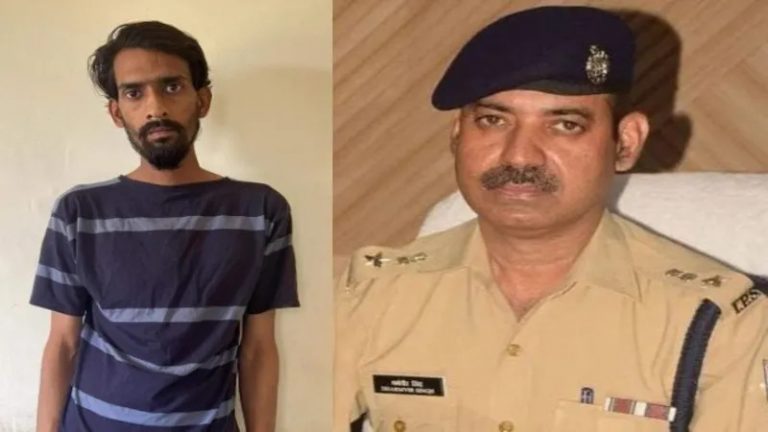
On Sunday (July 31), the Madhya Pradesh police arrested the primary accused in the violence orchestrated by Islamists during the Ram Navami procession in Khargone.
As per reports, the accused has been identified as 30-year-old Shamiullah Khan. After evading the law enforcement authorities for over 112 days, Shamiullah was nabbed from the border of the Khargone-Dhar district on the basis of specific intelligence inputs.
पुलिस अधीक्षक श्री सिंह ने बताया कि समीर उल्ला पर पुलिस द्वारा 10 हजार रूपये का इनाम घोषित किया गया था। आरोपी को खरगोन जिले की सीमा खलटाका-बालसुमंद से पुलिस की विशेष टीम द्वारा रविवार को गिरफ्तार किया गया।
Besides his involvement in the Ram Navami violence, Shamiullah is wanted for abduction, attempt to murder and attacks on government officials. He also had a bounty of ₹10,000 on his head for masterminding large-scale arson attacks during Ram Navami processions on April 10.
कलेक्टर श्री कुमार ने एसपी के प्रतिवेदन के आधार पर राष्ट्रीय सुरक्षा अधिनियम 1970 की धारा- 3(2) में कार्यवाही करते हुए आरोपी समीर उल्ला को तीन माह के लिए निरूद्ध कर केन्द्रीय जेल इंदौर में रखने का निरोध आदेश जारी किया है।
Reportedly, Shamiullah Khan has now been booked under the stringent National Security Act (NSA). He has been moved to a jail in Indore. While speaking about the development, SP (Khargone) Dharnaveer Singh said, “He has been arrested in connection with the NSA warrant issued against him and has been sent to jail.”
“The Khargone police will seek his police remand and grill him in connection with the April 10 arson and violence case registered against him as well as his possible linkages to other cases pertaining to the Ram Navami communal violence,” he added.
On April 10, a Ram Navami procession that began in the Talab Chowk area of Khargone had to be abandoned midway after it came under a volley of stones. Several vehicles were set on fire.
The cops resorted to firing tear gas shells to bring the situation under control. During the orgy of violence, a total of 24 people were injured (including 6 police personnel). Even the Superintendent of Police (Khargone) had sustained bullet injuries. Keeping in mind the volatile law and order situation, a curfew was imposed in the area.
In the aftermath of the curfew, residents of Khargone city have been asked to only step out of their houses in case of a medical emergency. The district collector has warned against posting objectionable messages on social media, which could further aggravate the law and order situation.
All examinations in the city, which were to be conducted on Monday (April 11), have been postponed until further notice. DIG ( Nimar Range) Tilak Singh remarked, “The situation has been under control after 2 am today and no complaint has been received. Police patrolling is on. A search operation was carried out and more than 70 people have so far been rounded up.”
Days after being released from jail on a slew of charges, including hurting religious sentiments with Hinduphobic posts, Alt News co-founder Mohammed Zubair is back to what he does best: gaslighting people and attempting to manipulate public opinion by spinning spurious narratives.
And this time around, the motivation is even stronger: to scrub clean his image of being an agent provocateur who painted a target behind Nupur Sharma and stirred an Islamist furore that not only threatened to sabotage India’s diplomatic missions in the Middle East but also led to the killings of at least X Hindus residing in India, most notably Kanhaiya Lal in Udaipur and Umesh Kolhe in Amravati.
Far from being apologetic about the storm kicked up by his dog-whistling and the attendant deaths, Zubair seems determined to double down on his path, as evidenced by his recent attempt at whitewashing the murder of a Hindu boy and his recent proclamations in interviews with unctuous far-leftist propaganda portals for whom redeeming Zubair’s public perception is of paramount importance than demanding accountability over the murders of Hindus by frenzied Islamists.
Mohammed Zubair, whose old Hinduphobic posts on Facebook and Twitter mocking the pantheon of Hindu Gods and Goddesses had gone viral on the internet, and for which Delhi Police had arrested him in June this year, recently watered down the murder of Nishank Rathore who was found dead after his father got ‘Sar Tan Se Juda’ message from his phone, presumably for his support to former BJP spokesperson Nupur Sharma.
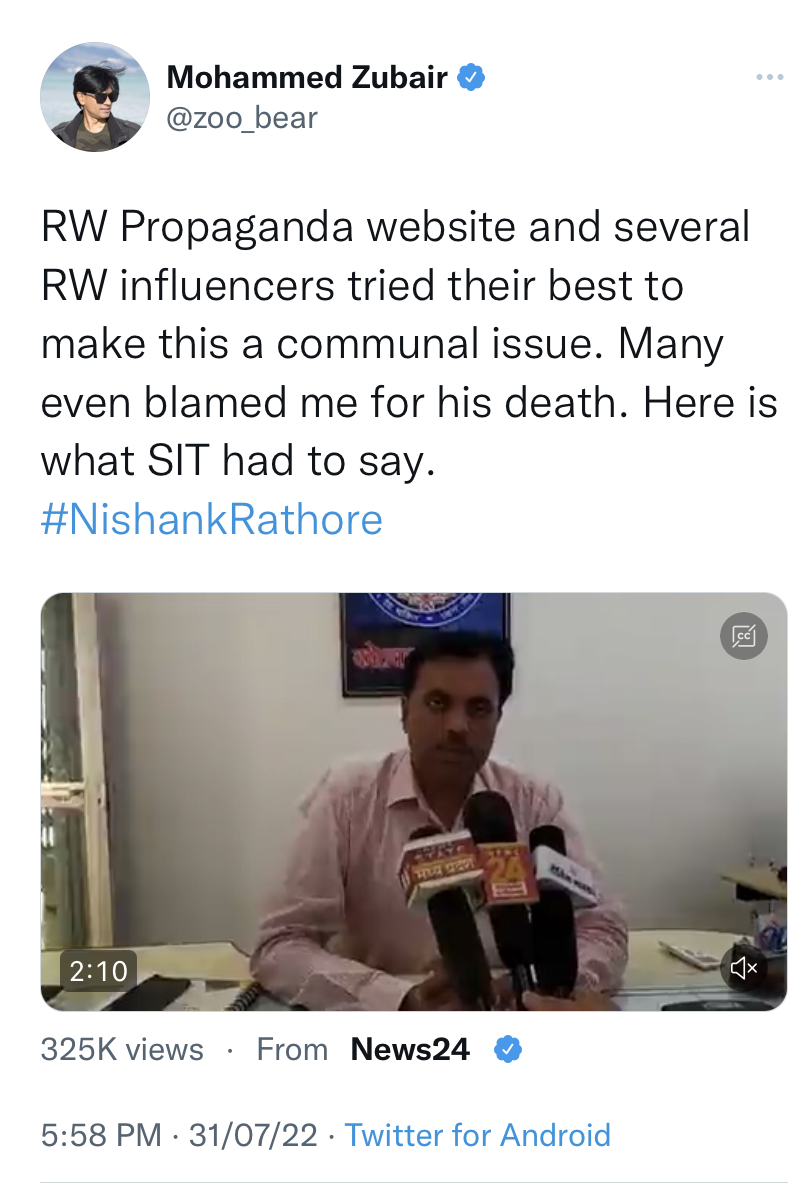
Notwithstanding the loopholes pointed out by experts, Mohammed Zubair leaned on the SIT statement that concluded Nishank’s cause of death was suicide and tried to play the victim card for being “wrongly” blamed for the boy’s death. In a tweet sharing the video of the SIT findings, Zubair took a swipe at the non-left, alleging that the Nishank Rathore case was given a communal spin, with many blaming him for his death.
Source: Twitter
Despite the glaring shortcomings of the SIT findings, along with Nishank’s family’s explicit denial that their son may have committed suicide, Mohammed Zubair conveniently lapped up the report by a government body constituted by a BJP-led government in Madhya Pradesh, something which he and his ideological brethren resolutely opposed just a few days ago during the arrest of the Alt News co-founder.
When the UP government ordered a formation of a Special Investigation Team (SIT) to probe over half a dozen cases filed against Mohammed Zubair, the Alt News co-founder’s lawyer argued against it while his sympathisers in the media vilified a routine governmental procedure as a political “witch hunt” aimed at suppressing “dissenting” voices.
A few weeks later, Zubair and his supporters exhibited unmatched alacrity in co-opting an SIT report from another BJP-ruled state because its findings reinforced their efforts at shielding Islamists and whitewashing the Alt News co-founder’s role in instigating violence in the name of blasphemy.
This, in a nutshell, is the quintessential leftist way of gaslighting the masses, something which Alt News has mastered over the years. Selectively trashing and hailing governmental agencies for either “submission” or “defiance” has become a hallmark of propaganda-peddling leftist ideologues, who display no compunction in co-opting findings of a government-appointed agency if that serves to bolster their propaganda.
While Zubair leaned on the findings of the MP government-appointed SIT to downplay the murders of Hindus by Islamists instigated by him, he has maintained a deafening silence since his release from the prison on the killings of other Hindus such as Kanhaiya Lal and Umesh Kolhe, brutally murdered by Islamists for merely extending support to beleaguered ex-BJP leader Nupur Sharma.
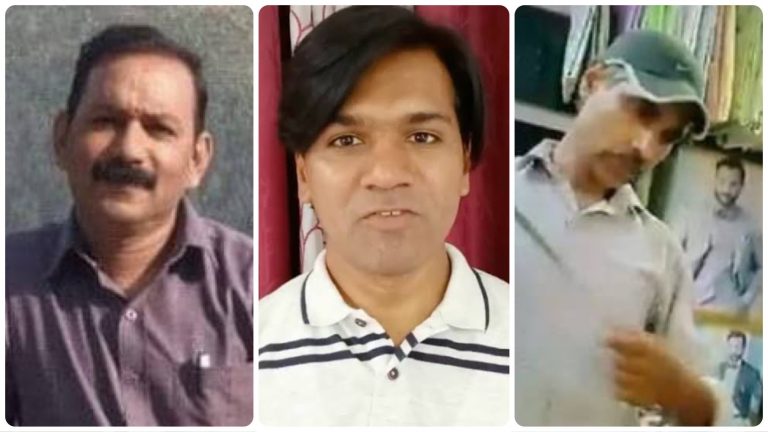
Kanhaiya Lal was murdered on June 29 by two radical Islamists named Riaz and Ghous Mohammed. The duo disguised as customers and entered the tailoring shop of the deceased. While Kanhaiya Lal was busy taking the cloth measurements, one of the accused attacked him with a long sharp knife, videos which had gone viral on the internet.
According to the post mortem report, he was stabbed 26 times on his body from his neck to shoulder. Kanhaiya Lal was killed for uploading a social media post in support of ex-BJP spokesperson Nupur Sharma.
A similar fate befell Umesh Kolhe, a chemist living in Maharashtra’s Amravati, who was murdered by four Muslim assailants while he was returning from his pharmacy on the night of June 22. Kolhe, too, was murdered for his social media post supporting Nupur Sharma, who was hounded by Islamists egged on by the likes of Mohammed Zubair for her comments defending her faith on a TV news debate where a fellow Muslim panellist was mocking Shivling discovered inside the premises of the contentious Gyanvapi mosque compound.
Like Kanhaiya Lal and Umesh Kolhe, there are other Hindus too who were attacked and who sustained injuries for simply supporting Nupur Sharma. But Zubair has consciously refrained from condemning their killings, carried out by Islamists in the name of blasphemy.
However, by relying on SIT report that said Nishank Rathore committed suicide, Zubair is trying to project himself as innocent and insinuate that previous murder of Hindus had nothing to do with blasphemy. This is a classic Alt News hack that they routinely employ, where they selectively carry out “fact checks” to undermine the prevailing narrative.
Alt News and Mohammed Zubair showed no zeal in carrying out “fact-checks” of whether Kanhaiya Lal and Umesh Kolhe were murdered by Islamists for supporting Nupur Sharma, for that would have directly implicated Mohammed Zubair for dog whistling against Islamists, seeking out response from prominent Muslims in the Gulf, and touching off a violent spate of riots and “Sar Tan Se Juda” rallies across the expanse of India.
Apparently, Alt News, which is always itching to carry out “fact-checks”, has been uncharacteristically quiet on what Nupur Sharma spoke on the Times Now debate, a snippet of which was used by Mohammed Zubair to dog whistle Islamists against her, resulting in the deaths of at least 3 Hindus, including Kanhaiya Lal, Umesh Kolhe. The “fact-checking” portal that preens itself on debunking fake news has displayed no desire to check if what Nupur Sharma said during the debate about Prophet Muhammad jibes with what is said in the Islamic texts.
Instead, propagandists at Alt News, spearheaded by Mohammed Zubair, and their supporters among the left ecosystem, instantly hunkered down to the task of painting a target behind Nupur Sharma and instigating Islamists against her. When the fire of their hatred assumed epic proportions, consuming innocent Hindus, Zubair and his allies are relying on the long-hone skill of “selectivity” to absolve themselves and insinuate that the killings of Hindus have no connection to blasphemy murders.
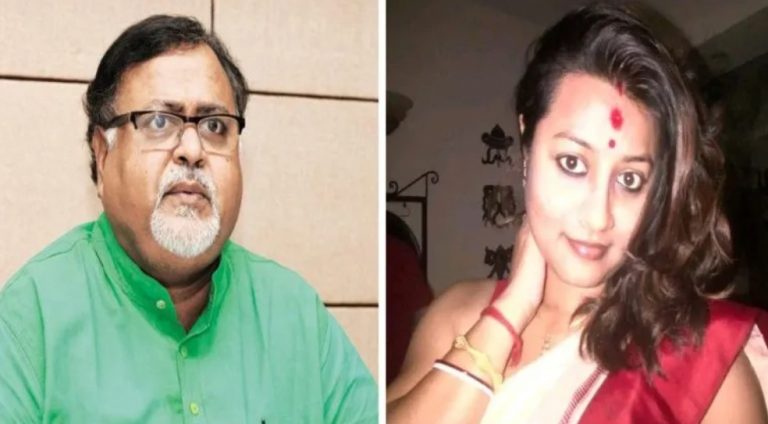
In an exclusive interview with Hindi daily Dainik Bhaskar, ex-TMC leaders and the former General Secretary of West Bengal College and Universities Professor’s Association (WBCUPA), Baisakhi Banerjee revealed that apart from Arpita Mukherjee, Partha Chatterjee was also in a relationship with Monalisa Das. She said that she had evidence to support her claims.
Former Bengal minister Partha Chatterjee, and his ‘close friend’ Arpita Mukherjee have been making headlines for their involvement in the multi-crore SSC recruitment scam case. The Enforcement Directorate has recovered over Rs 50 crores in cash and Rs 4.31 crore worth of gold from multiple locations linked to Arpita Mukherjee. The duo are now under ED’s custody.
While a lot of news has been surfacing about the duo, recently, another name, that of Monalisa Das, has also cropped up in the case. Monalisa Das is a university professor who is being touted as another close associate of Partha Chatterjee.
During the ED raids, it has been found that Partha Chatterjee owns a large number of flats, many of which he has gifted to his ‘close aides’ including Arpita Mukherjee and Monalisa Das. Arpita Chatterjee has told the ED that Partha Chatterjee used her flat as a ‘mini bank’. It is suspected that the flats gifted to Monalisa Das also were used for the same purpose. Reportedly, 10 flats have been found in the name of Monalisa.
Monalisa Das is a Bengali professor at the Kazi Nazrul University, Asansol.
‘Partha Chatterjee was in a relationship with Monalisa Das’: ex-TMC leader Baisakhi Banerjee
Baisakhi recalled how once, during her tenure as the WBCUPA General Secretary, the wife of the vice-chancellor of the college where Monalisa Das was an assistant professor had complained to her about the latter. Banerjee told the media house, “the vice chancellor’s wife once rued before me ‘Parth Chatterjee’s girlfriend Monalisa is having an affair with my husband. She is destroying my home. You know them; pls take some action’. I asked her on what basis was she making such a strong allegation against Partha Chatterjee. The wife of the vice-chancellor then sent me some chats between Partha and Monalisa. From which it was clear that both are very close. I still have this chat, but since it is her personal matter, I will not share it with anyone,” said the former TMC leader Baisakhi Banerjee.
Baisakhi Banerjee further said that after she received the evidence, she had advised the wife of the vice-chancellor to write a letter to WB CM and TMC supremo Mamata Banerjee apprising her of the matter. She wrote to the CM, but Mamata Banerjee, in turn, sent the letter to Partha Chatterjee, who was the State Education Minister then.
Chatterjee called up the vice-chancellor of the college to apprise him about the letter his wife wrote to the CM and threatened him with dire consequences for getting his name in between.
“I was astonished to hear these things. I realised that Partha Chatterjee has two sides to himself. One what he pretends to be in front of me and the other is his real self which I got to know from other people,” said Baisakhi Banerjee, adding that later, the wife of the vice-chancellor, who worked as a counsellor in a government college was terminated from her job.
“The woman eventually gave up. She didn’t fight for herself. Going to the CM also didn’t help,” lamented Banerjee.
‘3-4 girls used to keep hovering around and wiping Partha Chatterjee’s sweat in his office’
Giving more insights about Partha Chatterjee’s personal life, Baisakhi Banerjee said that though Partha Chatterjee has never given her the “romeo” vibes, she herself has seen how the ex-TMC leader has always been surrounded by women. “I have seen many girls with Partha Chatterjee. 3-4 girls used to keep hovering around and wiping Partha Chatterjee’s sweat in his office,” said Banerjee adding that “he used to come to the office only once or twice a month. No one knows where he lived the rest of the time. Now it is being learned from the media that he used to go abroad.”
Calling Partha Chatterjee’s close aide Arpita Mukherjee a ‘C’ grade actress, Baisakhi Banerjee said that she had not even heard her name until she learnt that Partha Chaterjee was having an affair with her.
‘Partha Chatterjee knew of corruption in the State’s education department but turned a blind eye’
Baisakhi Banerjee said that Partha Chatterjee knew of massive corruption in the education department but he did not take action. He said that she herself had protested against Partha Chatterjee many times because of whish she was transferred. “I resigned as soon as I was transferred, while I had 22 years of job left,” rued the former WBCUPA General Secretary.
While speaking to India Today also, Baisakhi Banerjee called Partha Chatterjee a “vindictive man.”
Narrating a 2017 incident, Baisakhi went on to allege that Partha Chatterjee made a deal with the governor, who was the chancellor at the time he was the education minister. Partha Chatterjee made certain that his corruption activities were not investigated while the governor was chancellor.
‘Chatterjee was averse to the idea of Mamata Banerjee becoming Chancellor of state-run universities’
Partha Chatterjee, according to Baisakhi, did not want Chief Minister Mamata Banerjee to become Chancellor of state-run universities. Baisakhi Banerjee cited Chatterjee as saying, “Am I mad that I will let Mamata Banerjee become the Chancellor?”
According to Baisakhi, suspended minister Partha Chatterjee was opposed to the plan since it would jeopardise his position.
Who is Baisakhi Banerjee
Baisakhi Banerjee served as General Secretary of the TMC’s professor’s cell, known as the West Bengal College and Universities Professor’s Association (WBCUPA). She served as the association’s General Secretary from the end of 2016 to the end of 2017. She had served in the TMC until joining the BJP in 2019. She also quit the BJP in 2021.
In the wee hours of Saturday (July 30), a 22-year-old engineering student was detained by officials of the Intelligence Bureau (IB) over his connections to the dreaded Islamic terror outfit ISIS.
As per reports, the accused was identified as Meer Anas Ali. He was nabbed from his residence in Ambur in the Tirupattur district of Tamil Nadu. His house was searched and electronic gadgets, phones and a laptop were seized by the IB officials.
The operation was conducted at around 4 am by a joint team of domestic internal security and counter-intelligence agency of the Intelligence Bureau. Ali was quizzed over his social media activity at Vellore’s Anaicut police station, which is located at a distance of about 65 km from his residence.
Reportedly, the accused stays with his mother and is a third-year engineering student at a private college in Ranipet. He came under the radar of the Intelligence Bureau after sharing pictures and posts that were posted by proscribed Islamic outfits on their website and social media profiles.
A 22-year-old engineering student has been arrested for allegedly having links with #IslamicState (IS) and planning a terror attack.
Ali was interrogated for several hours to determine his role in supporting such organisations. It has come to light that the accused was using his mobile phone and social media apps such as Instagram and Telegram to communicate with ISIS.
Reportedly, he was conspiring to kill an unnamed public figure, carry out terror attacks and instill fear among non-Muslims. On the basis of the preliminary investigation, a First Information Report (FIR) was filed against Ali.
The accused was booked under Indian Penal Code (IPC) Sections 121 (waging war against Govt of India), 122 (collecting arms), 125 (waging war against any Asiatic power) and relevant provisions of the Unlawful Activities (Prevention) Act.
Meer Anas Ali was held in Vellore Central Prison and remanded in judicial custody.
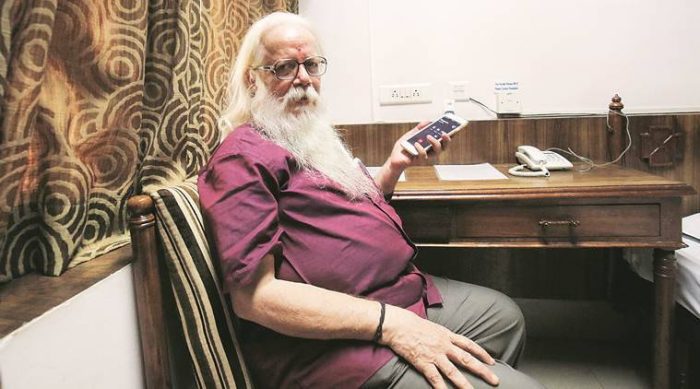
R Madhavan starrer ‘Rocketry: The Nambi Effect’ has been a great success at the box office. Depicting the story of the scientist Nambi Narayanan, the film shows how one of India’s finest minds was subjected to pain, suffering, and utter humiliation at the hands of authorities by implicating him in a false espionage case. However, the film’s success has displeased quite a few people as well.
From motivated reviews criticising the film, to critics having problems with Nambi Narayanan being shown as a Hindu despite being a Hindu, the film faced some ludicrous comments. Evidently, the film hasn’t gone down well with the leftist propaganda website The Caravan as well, as they try to slander Nambi Narayanan one more time.
In the wake of the film’s success and people appreciating the story, Caravan decided to replug its article from the magazine’s November 2020 edition which portrays Narayanan as a spy who sold Indian secrets to foreigners.
Replug | “Have you seen Nambi?” Sasikumaran asked @nileenams.
“Nambi looks like a European with his long beard and like Einstein and all.” He added, “He is, however, a kallan”—loosely translated as thief or someone driven by extreme self-interest: https://t.co/pL7hkQnaGPpic.twitter.com/75oE7RuvVx
In its article, Caravan once again dredges up the allegations of espionage against the ISRO scientist which were found to have no basis in reality by the CBI probe. The role of the Intelligence Bureau and Kerala Police in the initial investigation had also come under question.
However, Caravan goes on to cast aspersions on the entire CBI probe which found Nambi Narayanan innocent. It further goes on to imply that the then Prime Minister PV Narasimha Rao was personally responsible for scuttling the CBI probe since the bureau reported directly to him. It is another matter that the chief judicial magistrate approved the CBI report in 1996, and even when CPM government in Kerala tried to initiate a new probe, the esteemed Supreme Court of India struck down the request in 1998 seeing no merit in the case.
In an article full of hearsay, insinuations, and wild conclusions, Caravan not only tries to portray Nambi Narayanan as guilty in the ISRO espionage case but also casts aspersions on his entire professional career in ISRO. The article repeatedly attempts to run down Narayanan’s competency as a scientist and his contributions to ISRO throughout his career.
It is interesting that Caravan had decided to bring up these allegations again despite Nambi Narayanan being vindicated every step of the way, from the CBI probe to the Supreme Court and even in the National Human Rights Commission. In fact, a Supreme Court-appointed committee had even pointed a conspiracy by Kerala Police to frame Narayanan and others in the ISRO espionage case last year. Based on the committee’s report, FIR was lodged against 18 Kerala Police officers. Despite that, the success of the film ‘Rocketry- The Nambi Effect’ doesn’t seem to have gone down well in the Caravan office for some reason.
How Nambi Narayanan was framed in the ISRO espionage case
In 1994, ISRO scientist S Nambi Narayanan was arrested by Kerala police with some of his fellows including D Sasikumaran, K Chandrashekhar, and a few others on the charges of selling classified information about India’s cryogenic engine program to Russia and Pakistan’s ISI. The Kerala police had launched the case on the basis of input received from the Intelligence Bureau (IB). However, when the case was soon handed over to the CBI, the CBI found that the case was fabricated and the defendants were being falsely accused by the Kerala police. The CBI probe revealed that there was no case within a month of their apprehension. However, the matter lingered on because of its involvement with Kerala politics.
The role played by IB had come into question, as the so-called evidence of spying had come from the agency, based on which the police had acted.
The CBI eventually informed the chief judicial magistrate in May 1996 that the espionage case was untrue and that there was no supporting proof. The report was approved by the court, and all of the accused were cleared. However, the newly elected CPI(M)-led government chose to play by its own rules and ordered more investigations until, in May 1998, the Supreme Court struck down Kerala’s request for a new probe.
Since then, the Kerala government has shielded the corrupt cops and delayed paying the compensation that was mandated by the High Court and the National Human Rights Commission. In order to begin criminal procedures against the police officers who allegedly falsified evidence against him, Narayanan filed a petition in April 2017. RB Sreekumar, who was recently arrested with Teesta Setalvad on 25th June 2022 for his false testimony in the Gujarat riots case, was one of those police officers.
Based on the petition of Narayanan, the Supreme Court appointed a three-member committee to look into the matter. After the D.K. Jain Committee report pointed out a conspiracy by Kerala police and others to frame the scientist, the apex court ordered CBI to probe the case last year. Accordingly, CBI conducted an in-depth investigation and filed an FIR against several police officials based on the committee report.
In the FIR filed by the CBI, RB Sreekumar was one of the 18 accused named in the case, along with the then Kerala police chief Sibi Mathew. Sreekumar was on deputation to IB when the espionage case against Narayanan was started. While he had denied any link with the case, Narayanan had named him as one of the conspirators.
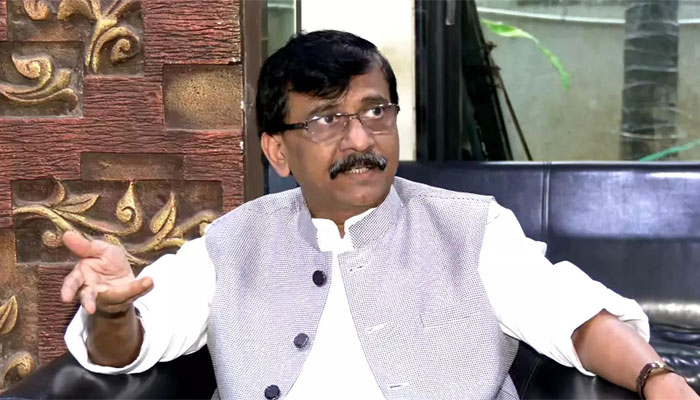
On July 31, Shiv Sena leader Sanjay Raut was arrested by Enforcement Directorate (ED) in connection to Patra Chawl Land Scam Case. ED initially detained Raut following the raid on his residence in Mumbai. Notably, two summons were issued against Raut.
The central investigation agency has summoned him multiple times in relation to the case. On July 1, Raut appeared before the agency to record his statement. Later, Raut skipped the summons twice, stating he was busy with his duties as a member of the Parliament and could join the investigation only after August 1. The most recent summon issued on July 27. On July 28, ED questioned him for the second time. On July 31, they conducted a raid at his house and eventually arrested the Shiv Sena leader.
To understand why he was arrested, it is essential to learn about the Patra Chawl Land Scam. The alleged scam finds its roots dating back to 2007. Patra Chawl, also known as Siddharth Nagar, is a locality in North Mumbai’s suburb Goregaon, spread over 47 acres. In 2007, Maharashtra Housing and Area Development Authority (MHADA) and Guru Ashish Construction Pvt Ltd (GACPL) signed an agreement to provide new houses to the 672 tenants of the chawl. Furthermore, GACPL was in agreement to develop 3,000 flats for MHADA. The remaining area of the chawl was marked to be sold to private developers.
Contrary to what was signed in the agreement between the tenants’ society, GACPL and MHADA in 2007, nothing was built for the residents of the chawl on ground. All the development mentioned in the agreement allegedly remained limited to the papers, and for the past 14 years, the residents have been seeking possession of the promised houses.
Sanjay Raut’s close aide’s owned GACPL and sold land marked for houses.
As per the agreement, the construction company GACPL was supposed to provide 672 houses to the tenants of the chawl. There was a provision for flats for MHADA as well. Only the remaining part was supposed to go to the private developers. However, the investigation agency ED alleged that Pravin Raut, a close aide of Sanjay Raut, and other directors of GACPL did not fulfil the agreed terms.
GACPL did not build even a single house for the displaced tenants of the chawl. Furthermore, the land (Floor Space Index or FSI) marked for their houses was sold to nine private developers for the price of Rs 901.79 crores. GACPL also launched its own project named The Meadows, for which the company took bookings from flat buyers that clocked close to Rs 138 crores.
There was a clause in the agreement under which GACPL was supposed to pay the rent to the tenants till they gave possession of the houses. For seven years, they paid the rent, but in 2014-15, the rent payments stopped. As the project was still pending and tenants were not getting the promised rent payments from the company, they started complaining. During that period, they came to know that GACPL had already sold the marked land to nine private developers without building a single house for them.
Following the update in the matter, MHADA decided to terminate the agreement with GACPL in January 2018, citing non-payment of rent and several other irregularities. The project again faced another obstacle as the nine buyers who bought the land from GACPL challenged the notice in the Bombay High Court.
In 2020, a single-member committee led by retired chief secretary Johnny Joseph was formed by the then-Maharashtra government. The aim was to study and recommend possible solutions for the rental payment and rehabilitation of the 672 tenants who were moved out of the chawl with a promise of new houses.
In June 2021, the project was reapproved by the then-Maharashtra government. In February 2022, the construction of the project restarted following the orders signed by then-chief Minister Uddhav Thackeray. As per the orders, MHADA itself is working on the entire project as a developer, including the houses for the 672 tenants. It will hand over 306 flats to those who won them in the lottery in the building once they are completed.
Indian Express had quoted an MHADA official saying, “MHADA itself will now be working on the entire project as a developer and will be providing 650 square feet carpet area flats to the 672 tenants through the redevelopment project.”
The details of ED’s case
Enforcement Directorate has filed a case against GACPL, stating the illegal activities of the company allegedly amount to Rs 1,039.79 crores. During the investigation, the agency found that Pravin Raut had received Rs 100 crores from HDIL. ED further added that the money was diverted to different accounts owned by his family members, business entities and close associated. Some of the money was transferred to the accounts allegedly linked to Shiv Sena leader Sanjay Raut as well.
Furthermore, the agency said that Varsha Raut, wife of Sanjay Raut, received an amount of Rs 83 lakhs directly or indirectly from Madhuri Raut, wife of Pravin Raut, which translates to criminal proceeds. The money was allegedly used by Varsha Raut to buy an apartment in Dadar.
Following the investigation initiated by the ED, Rs 55 lakhs were transferred from Varsha to Madhur. ED said in its report, “During the said period, eight plots of land at Kihim beach in Alibaug were also purchased in the names of Varsha Raut and Swapna Patkar, wife of Sujit Patkar, a close associate of Sanjay Raut. In this land deal, apart from the registered value, cash payments were made to the sellers. On identification of these assets and other assets of Pravin Raut, a provisional attachment order attaching all these assets of Pravin Raut and his associates has been issued.”
It is noteworthy that recently audio has gone viral on social media platforms in which Sanjay Raut was allegedly hurling abuses at Sujit Patkar’s wife, Swapna Patkar.
During the investigation, ED attached properties linked to Raut in Alibaug and Dadar. The agency wanted to question Raut about the connection with Pravin Raut. Another part of the questions included details about the dealings his wife was involved in. According to the sources, Raut did not cooperate in the investigation during the raid on his house.
Pravin Raut, one of the accused in the case, was arrested in February 2022 by the ED. He is currently in judicial custody.
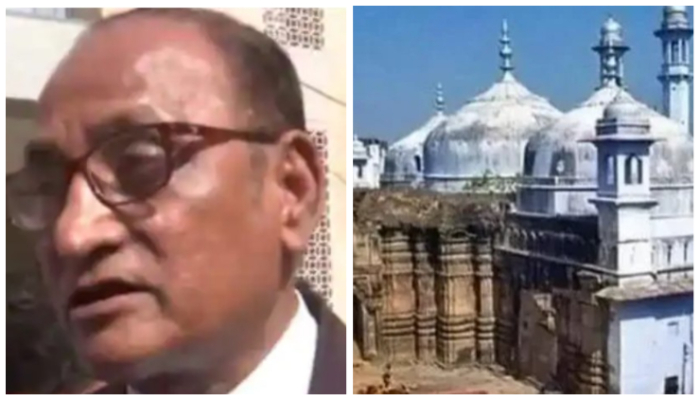
Senior lawyer Abhay Nath Yadav, representing the Muslim side in the Gyanvapi case passed away on Sunday, July 31, because of a cardiac arrest. According to reports, Yadav died in a hospital on Maqbool Alam Road in Varanasi.
Notably, Yadav was representing Anjamun Intejamiya Masjid, the management committee of the Gyanvapi mosque in Varanasi, in the ongoing case over the disputed Gyanvapi structure.
Speaking about the sudden demise of Abhay Nath Yadav, senior lawyer of Banaras Bar Association Nityanand Rai informed that Yadav got a major heart attack around 10:30 pm on Sunday night and was rushed to Trimurti Hospital where doctors declared him dead.
After that, Yadav’s family took him to Shubham Hospital in Varanasi, where the doctors also confirmed his death.
As per reports, on August 4, a response from the Muslim side in the ongoing Gyanvapi case was due, and Abhay Nath Yadav’s involvement would have been crucial.
Pertinently, the Anjuman Intejamia Committee which manages the affairs and upkeep of the disputed structure often referred to as Gyanvapi ‘mosque’ and is representing the Muslim side in the case, has challenged the maintainability of a suit filed by five Hindu women seeking permission for daily worship of the Shringar Gauri Sthal in the disputed Gyanvapi complex of Kashi Vishwanath.
The legal dispute over the Gyanvapi temple
Moreover, the Muslim side had also opposed the Varanasi Civil Court’s order to allow the videography and survey of the disputed Gyanvapi structure. It had filed a petition opposing the survey inside the mosque and demanding the removal of the advocate commissioner Ajay Kumar Mishra leading the survey team alleging that he is biased.
In fact, even after the survey was conducted the Muslim side asked the court not to make public the video of the same.
It may be recalled that the Hindu side claimed that the 11-hour survey has found ample evidence of a pre-existing temple in the Gyanvapi mosque. After listening to both parties, the court ruled that the survey report and the videography report will be handed over to both sides on the 30th of May. However, the Gyanvapi Mosque Committee on May 27 requested the court not to allow the photos and videos of the survey to become public. On the other hand, the Hindu side welcomed the court’s decision for the same.
In the month of May, a Shivling was found submerged in the wuzukhana, the place where people who offer namaz, the Islamic prayer, clean their dirty hands and feet and gargle water as a cleansing ritual, inside the complex where the disputed structure called ‘Gyanvapi mosque’ is situated. The mosque was constructed after destroying the Hindu temple of Kashi Vishwanath. The centuries-old Nandi inside the new complex right next to the disputed structure also points toward the place where the Shivling was found in the wuzukhana.
Upon discovery of the Shivling, the judge ordered the sealing of the complex and forbade those offering prayer in the masjid from cleaning their dirty feet and hands where the Shivling has been found. It also ordered to allow the videography and survey of the disputed Gyanvapi structure, which the Anjuman Intejamia Committee vehemently opposed.
Meanwhile, as per the latest reports, the Supreme Court will be holding a hearing in the Gyanvapi case in the month of October. The Supreme Court bench had said that the matter is currently being heard in the lower court. The bench of Justice Chandrachud, Justice Suryakant and Justice Narasimha is hearing the matter.
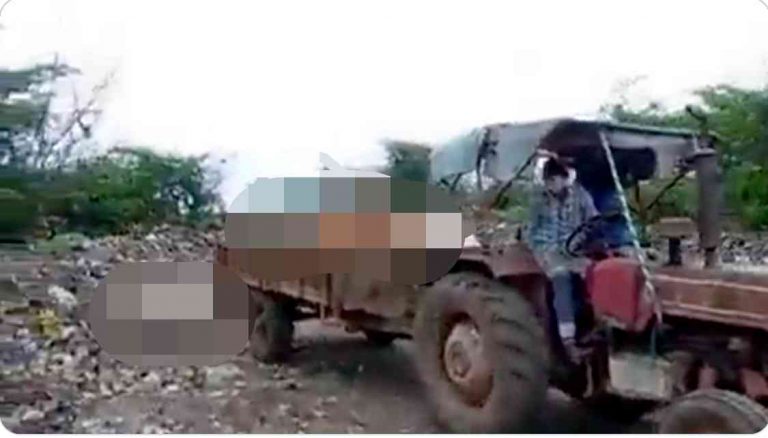
On Sunday, Congress leaders and its assorted sidekicks on Sunday took to social media to take jibes on Gujarat state government and claimed that the cow carcasses are brought to dumping yard in tractors and dumped. Congress spokesperson Rohan Gupta tweeted a video and questioned where are the gau rakshaks.
हिंदुत्व का ढोंग करने वाली भाजपा के कुशासन में गौमाता की यह दुर्गति हो रही है।
भुज के डंपिंग यार्ड में मरी हुई गायों को ट्रॉली में लाकर गिराया जा रहा है।
Gau rakshaks are those who work for protection of cows and rescue and save them from illegal slaughter. Congress has time and again used cows as a jibe to mock Hindus because Hindus believe cows to be holy.
However, the fact is that this is exactly how cattle carcasses are disposed off across India. Due procedure is followed by administration for their proper disposal so that it does not result in spread of diseases. Further, this is also a dumping ground for cattle that is suffering from the lumpy virus disease that has claimed lives of many animals in the state.
Visited Nagor Dumping Yard of Bhuj NP. 1. यह Bhuj NP का एक regular and open dumping yard है जो कि regular disposal ke liye use hota hai.
2. All cattle ( lumpy and normal death ) have been properly disposed as per the procedures. pic.twitter.com/Z3vUJhoOje
— District Development Officer (DDO) : Kutch (@KutchDdo) July 31, 2022
Kutch District Development Officer (DDO) tweeted on Sunday that he visited the Nagor dumping yard in Bhuj and that acts as a regular and open dumping yard for cattle carcass. All cattle dead bodies, including regular as well as those suffering from lumpy virus, have been properly disposed off after following the regular procedures.
In fact, before Congress leader shared the video, one Kaushik Kanthecha, a journalist associated with Aaj Tak had shared similar video where in cow carcasses were lying on the ground. He had even claimed the cows had lumpy virus and questioned administration on steps taken to arrest the spread of disease.
Kaushik Ji, आप वीडियो में भी साफ़ साफ़ सुन सकते हैं कि “यह पुरानी है,Lumpy की नहीं है”और देख भी सकते हैं कि lumps नहीं हैं उन पर.
फिर भी, यह 4 दिन पहले का है जब बारिश (जो कि वीडियो में भी दिख रही है)की वजह से proper disposal नहीं हुआ जो कि अब हो चुका है.
— District Development Officer (DDO) : Kutch (@KutchDdo) July 30, 2022
The Kutch DDO had clarified that that the video is old and the cattle is not suffering from lumpy virus. He added that since it was raining few days prior, the proper disposal of the cattle had not taken place. However, the same was being done later.
Kutch administration has been taking proactive steps to vaccinate the cattle and stop the spread of lumpy virus.
— District Development Officer (DDO) : Kutch (@KutchDdo) July 25, 2022
As of now, the lumpy skin disease has spread over 17 districts in Gujarat claiming lives of 1200 cattle. The state government has started widescale survey, treatment and vaccination of cattle for the prevention of the disease. The officials have also considered banning cattle festivals. As per official data, 1240 cattle have died due to disease while 5.74 lakh cattle have been vaccinated against the same. Maximum cattle in Saurashtra region are infected by the disease.
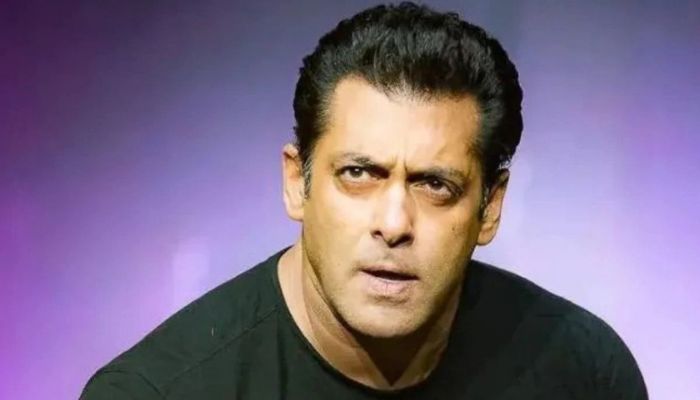
Days after Bollywood actor Salman Khan received threats to his life, he was issued a gun licence by the Mumbai police.
The development was confirmed to Hindustan Times by an IPS officer anonymously. He said, “We issued the arms licence to the actor after completing all formalities.” The firearms licence was handed over by the Mumbai police to a representative of Salman Khan.
Social media users did not leave the opportunity to take a dig at the actor. “I hope he doesn’t use it on blackbucks,” wrote one user while referring to the 1998 black buck poaching case where the actor was caught killing wild animals in Rajasthan.
Salman Khan had applied for the gun licence after receiving a threat letter from gangster Lawrence Bishnoi on June 5. As per the Arms Rules of 2016, a gun licence can be issued to individuals who are vulnerable to attacks due to their fame and wealth.
Given that the actor fell in the category, he was issued gun licence following verification by the office of the Deputy Commissioner on police. Salman Khan had earlier met Mumbai Police Commissioner Vivek Phansalkar to discuss the matter.
“Actor Salman Khan applied for a weapon license for self-protection at the Mumbai Police, after he recently received a threat letter,” the Mumbai Police had informed then. The threat letter warned that Khan would reach the same fate as singer Sidhu Moosewala, who was killed by the gang members of Lawrence Bishnoi.
The letter was discovered outside the residence of the actor near the Bandra Bandstand promenade. Reportedly, the actor’s father Salim Khan goes for morning jog in the area. After the matter had come to light, the Mumbai police provided additional security outside the residence of the actor.
Salman Khan had received threats from Lawrence Bishnoi in 2018 for his involvement in the 1998 Blackbuck poaching case. The black buck (chinkara) is considered sacred to the Bishnois, the community to which the dreaded gangster belongs.
The actor was convicted to five years in prison by a Jodhpur court in April 2018 for murdering two blackbucks in October 1998. The actor has appealed his conviction. Khan was first detained in the Jodhpur jail in connection with the case but was subsequently transferred to the Bharatpur jail.
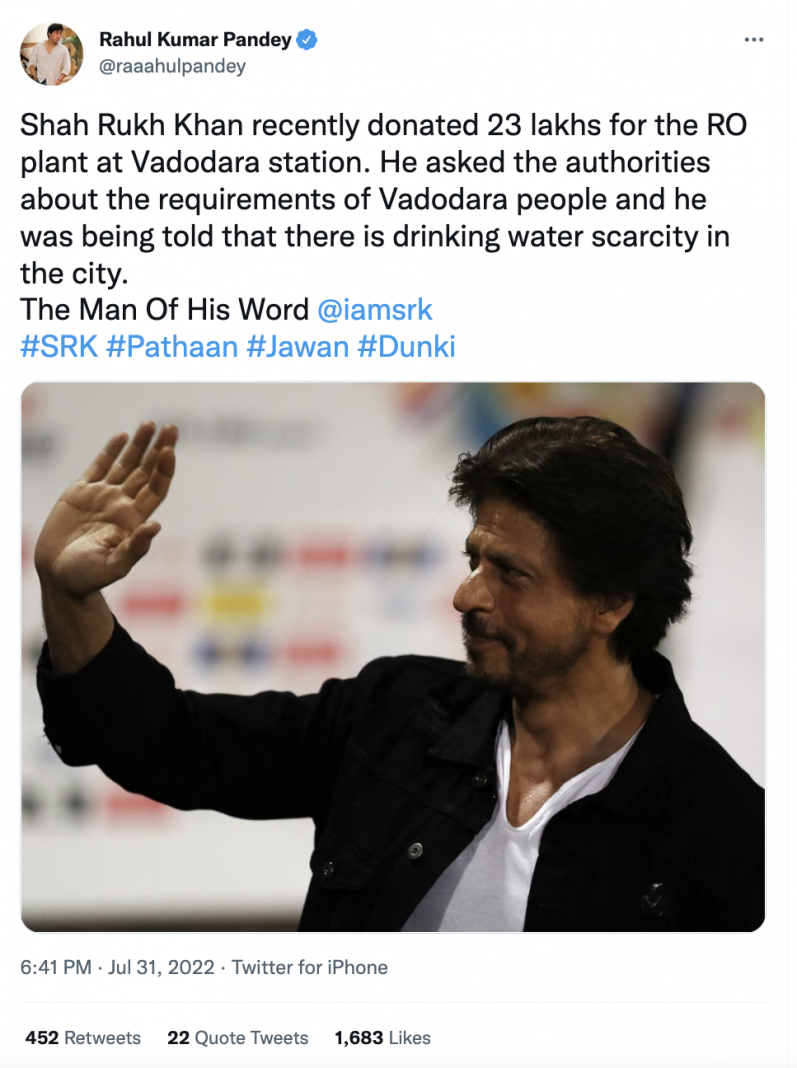
On Sunday, many tweets were going viral with the claim that Bollywood actor Shah Rukh Khan has ‘donated’ Rs 23 lakh for an RO (reverse osmosis) plant at the Vadodara railway station. Many verified Twitter accounts, too, were tweeting the same.
Times Group’s Bombay Times was one of the first to tweet that Shah Rukh Khan has spent Rs 23 lakh for an RO plant at Vadodara Railway Station.
However, soon it was picked up by others who claimed he had ‘donated’ the money.
SRK ‘donated’ Rs 23 lakh for RO plant, claimed a tweet
One Rahul Kumar Pandey, a verified Twitter handle, tweeted how Khan got in touch with authorities in Vadodara and when he was informed about ‘water scarcity’, he decided to donate an RO plant at the railway station.
Other SRK fan accounts, too, joined in.
Shah Rukh Khan spends 23 LAKHS for RO PLANT ( water supply ) in Vadodara, Gujrat.
This shows how great @iamsrk is , he doesn’t do charity while his films release, he does it from his heart for the betterment of the society, just like his character from swades. pic.twitter.com/NYfU8SgF02
— SRK Universe Pakistan ?? (@SRKUniversePK0) July 31, 2022
However, this does not seem to be the case.
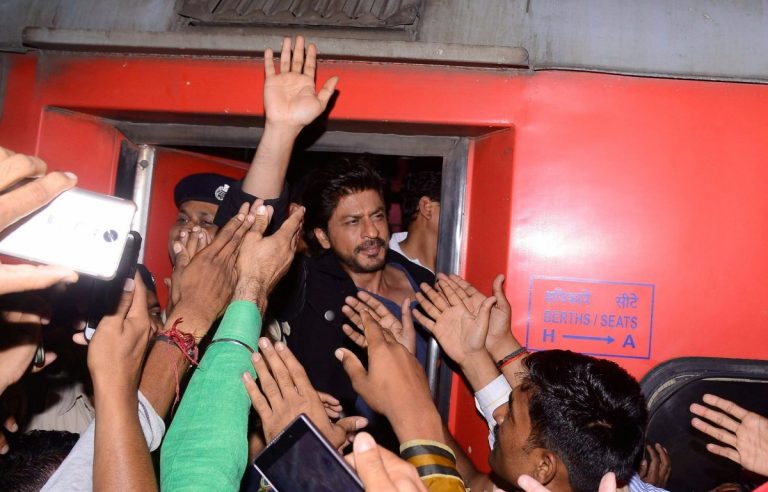
In March 2022, Gujarat High Court had proposed to Shah Rukh Khan’s lawyer that the actor can consider installing an RO plant at Vadodara railway station where an case was registered against him when a stampede occurred during film promotion of Raees in January 2017. One person was killed and two policemen were injured when the actor arrived at Vadodara railway station and halted for 10 minutes. The fans who had come to meet him went into tizzy and police had to resort to mild lathicharge to control the crowd.
When the train started to move, fans started running along the train. One person lost his life due to breathlessness and two policemen were injured. Along with Khan, cricketers Irfan Pathan and Yusuf Pathan had also arrived at the station to meet the superstar.
Subsequently, a case was registered against him, and the court issued summons to him under the Railways Act for rash and negligent act that cause grievous hurt and endangered lives of others. Later, Khan approached the High Court to quash the FIR against him. In March 2022, an elaborate hearing took place at magisterial court in Vadodara. Vadodara High Court judge, while hearing the case on quashing the FIR, opined that this act of throwing soft balls and tshirt to fans was not act done rashly or negligently but that of overenthusiasm.
The judge then asked Khan’s lawyer if he would be open to setting up an RO plant on station to mitigate damages that can help people for years to come. The lawyer had agreed.
As of now, it is not yet clear whether the said RO plant that was suggested by the court has been operational on Vadodara Railway station, but it is unlikely the actor ‘donated’ the money for the RO plant ‘out of goodness of his heart’ since he has been suggested to do so by the court itself.