Home Blog Page 326

After Pakistan’s Chinese weapons failed against India, China relies on propaganda in foreign media to save face, gets the same lie about its weapons published everywhere

On May 7, 2025, India attacked terrorist camps in Pakistan under ‘Operation Sindoor’. Pakistan’s Chinese Air Defence System was a moot spectator as India targeted terror sites in Pakistan at will. After this, the Pakistani army tried to target the Indian Military sites, however, it failed miserably.

The main reason for the failure of the Pakistani army was its reliance on untested weapons from China. Be it Chinese fighter jets, air defense systems or drones made by it, all failed miserably against India. Now China, frustrated by this, has resorted to propaganda to defend the quality of its weapons.

To hide the failure of its weapons, China is now doing PR through global media portals. Reports praising Chinese weapons have been published in all these portals around the world.

There is an attempt to show the Chinese weapons, which have proved to be junk on the battlefield, as effective. Clickbait headlines are being used for this. This Chinese propaganda is being fueled by foreign media organizations like Bloomberg, FRANCE24, and The Guardian.

The American media organization Bloomberg was among the first to give a platform to this Chinese propaganda. It published a report on May 13, 2025. Its headline was, ‘Chinese weapons gain credibility after India-Pakistan conflict’.

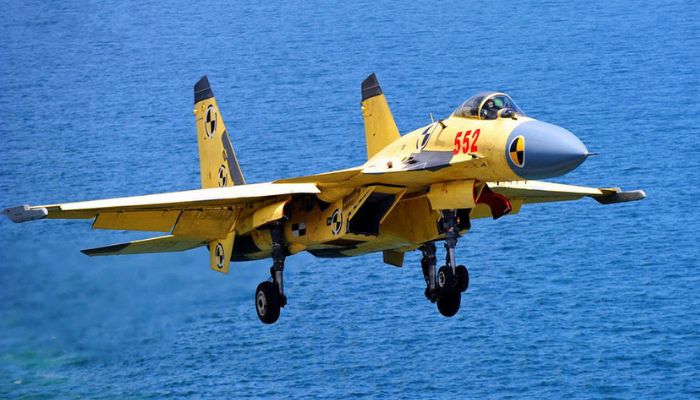
In this report, the topic of Chinese weapons was discussed. The main focus of the report was on the Chinese made fighter aircraft J-10C and PL-15 missile. In the entire report, it was claimed that Pakistan successfully used the Chinese made J-10C aircraft against India.

Bloomberg also claimed that this fighter aircraft shot down 5 fighter jets of India. It cited statements of Pakistan’s Foreign Minister Ishaq Dar. It did not confirm anywhere on its own whether something like this happened or not. As reported on OpIndia earlier, nobody has ever given any proof of these 5 aircrafts getting shot down.

The truth is that Pakistan has not been able to show any debris of an Indian aircraft. Its Defense Minister had to face public humiliation on TV due to this claim. The Pakistani army also made such fantastical claims in its press conference and did not show any evidence.

Bloomberg ignored this information and declared the Chinese plane the winner. It also praised the Chinese missile PL-15, which fell like a pack of cards after landing in India. This missile was recovered in Hoshiarpur without hitting anything.

The wording of this piece itself makes it clear that this is a propaganda article. Bloomberg also gave proof that it is a propaganda article through its actions. When this news was published on May 13, 2025, the names of Josh Xiao and Yian Li were visible as its authors.

Both of them are probably journalists who promote Chinese propaganda. When people raised questions about the baseless claim, Bloomberg quietly removed one name from the report on May 14, 2025, and added an Indian name Sudhi Ranjan Sen. This move of Bloomberg clearly appeared to be an attempt to save credibility.

Not just Bloomberg, but organisations like FRANCE24, The Eurasian Times, The Guardian and Reuters also contributed to this Chinese propaganda. FRANCE24, despite being a French government media organisation, was seen raising questions on the Rafale jets manufactured in the same country.

FRANCE24 also wrote something similar to what was written in Bloomberg’s article. FRANCE24 also furthered China’s propaganda about J-10. However, in this article, it also listed the shortcomings of China’s HQ-9 and HQ-16 air defense systems. This air defense system could not stop the Indian attack.

Similarly, the British news agency The Guardian also published a report, in which the headline itself described the Chinese-made J-10 and PL-15 missiles as effective. In this too, the opinion of the same experts was taken, with whom Bloomberg or other organizations had talked about Chinese weapons.

In all these articles, claims of the effectiveness of Chinese weapons have been made based on sources from Pakistan and China. The same tone, language, and similar claims in all media institutions cannot be a happy coincidence anyway.

Apart from this, China has been accused of infiltrating Western media institutions in the past as well. In such a situation, their simultaneous statements about Chinese weapons show that this is a Chinese propaganda and not an honest assessment of its military capabilities.

The truth about Chinese weapons and their actual capabilities has already become clear during the Indian attack. Pakistan has purchased military equipment worth about ₹40 thousand crores from China in the last few years. This includes drones and planes like JF-17.

China’s drones also could not enter India and were shot down. The fact is that Indian weapons have shown amazing performance during the recent tension while Chinese weapons have proved to be junk, its effect is likely to be seen in the international arms market in some time.

The damage done to Chinese weapons during this war will affect their sales, while there is a great possibility that many countries will come forward to buy Indian weapons. In such a situation, it cannot be denied that China is doing this to reduce its economic losses.

The original OpIndia Hindi report can be read here.

Supreme Court allows UP govt to use funds of Vrindavan’s Banke Bihari Temple to buy land around it for corridor development, acquired land to be registered in deity’s name

0

The Supreme Court on Thursday permitted the Uttar Pradesh government to utilise funds from the Shri Banke Bihari Temple in Vrindavan to purchase five acres of land around the temple for corridor development.

A bench of Justices Bela M Trivedi and Satish Chandra Sharma ordered that the acquired land shall be registered in the name of the deity.

It also allowed the use of Sri Banke Bihari Ji Temple Trust’s fixed deposits after taking into note state government’s Rs. 500 crore development plan for the corridor.

The apex court modified the order of the Allahabad High Court, which had prohibited the purchase of land around the temple using its funds.

“The State of Uttar Pradesh has undertaken to incur costs of more than Rs.500 Crores to develop the corridor. However, they propose to utilise the Temple funds for purchasing the land in question; which was denied by the High Court vide order dated November 8, 2023. We permit the State of Uttar Pradesh to implement the Scheme in its entirety. The Banke Bihari Ji Trust is having fixed deposits in the name of the Deity/Temple. In the considered opinion of this Court, the State Government is permitted to utilize the amount lying in the fixed deposit to acquire the land proposed. However, the land acquired for the purposes of development of the temple and corridor shall be in the name of the Deity/Trust,” the apex court stated in its judgement.

The top court took into note the records placed by the government regarding the proposed scheme for development for the Temple.

“Upon a perusal of the recods and the consequent assessments, it has been ascertained that five acres of land around the temple is to be acquired and developed by constructing parking lots, accommodation for the devotees, toilets, security check posts and other amenities. As observed by the High Court vide order dated November 8, 2023, the acquisition of land around the temple and the consequent development project is crucial to ensure the safety of the pilgrims,” it further stated.

The apex court’s approval to the state government’s development plan for the Shri Banke Bihari Temple Corridor came particularly in light of incidents such as the 2022 stampede at the Banke Bihari Temple.

“It pains this Court to take notice of the fact that the temple was a site of an unfortunate stampede in 2022, caused due to the lack of infrastructure that can support the large crowd of devotees that visit the temple brimming with bhakti to offer their prayers,” it further stated.

The top court also took note of maladministration in temples in the Braj region and emphasised that effective temple governance is not only a legal requirement but also a matter of public and spiritual welfare.

It further directed the Civil Judge (Senior Division), Mathura to appoint a Receiver having relevant adequate administrative experience, historical, religious and social background preferably belonging to the Vaishnav Sampradaya.

“It is an established fact that the historical temples are old structures; they require proper upkeep and other logistic support, and added to the fact is that in a large number of temples, Receivers have been appointed for decades now which was originally intended to be a stop-gap temporary measure. It is unfortunate that while appointing Receivers, the concerned Courts are not keeping in mind that Mathura and Vrindavan, the two most sacred places for Vaishnav Sampradayas and, therefore, persons from Vaishnav Sampradayas should be appointed as Receivers. This will give true meaning to the High Court’s directions pertaining to persons who are having adequate administrative experience, historical, religious, social background and not advocates to be appointed as Receivers,” the judgement added.


(This news report is published from a syndicated feed. Except for the headline, the content has not been written or edited by OpIndia staff)

Apple reassures investment plans in India after Trump asked the company not to manufacture in the country, GOI downplays his comments

After US president Donald Trump said that he asked Apple to not manufacture its devices in India, the company has reportedly assured the government that there is no change in Apple’s investment plans in India. As per reports, the Indian government has downplayed Trump’s remarks, saying that Apple has assured that is will make India a major manufacturing base for its products.

“There is no change in Apple’s investment plans in India,” sources in the govt told the media. The sources said that India now has a manufacturing ecosystem that is good for global smartphone companies, and companies like Apple will see the competitiveness of the same. ‘If companies recognise the value of manufacturing in India, they will continue on that path’, the sources said.

Moreover, sources in Apple has indicated that the company has no plan to change its plans for investments in India based on Trump’s comments. Company executives told news agency PTI that the proposal to set up a major manufacturing facility in the country will go ahead as scheduled.

Earlier today, During his Doha visit, Donald Trump said that he told Apple CEO Tim Cook that he does not want the company to build (manufacturing plants) in India. He said, “I had a little problem with Tim Cook yesterday. I said to him, my friend, I am treating you very good. You are coming up with $500 billion but now I hear you are building all over India. I don’t want you building in India.”

He had added, “You(Apple) want to build in India, if you want to take care of India. India is one of the highest-tariff nations, it is very hard to sell in India. And they have offered us a deal where there is literally no tariff. So from the highest tariff, we are going to almost no tariff. So I said to Tim, we put up with all the plants you built in China for years, but we are not interested in you building in India can take care of themselves very well.”

Notably, last month Apple said that it is planning to shift the assembly of all iPhones sold in US to India as soon as next year, amid the US-China tariff war. Apple device maker Foxconn is looking to acquire up to 300 acres of land parcel in Uttar Pradesh for a new plant. Another $2.6 billion plant by Taiwan’s Foxconn is under construction in Bengaluru, Karnataka.

Tata Electronic is also doubling iPhone casings capacity to one lakh, and its new plant in Tamil Nadu has started production of iPhones.

Rajnath Singh asks what is on everyone’s mind – Are nukes safe with a country like Pakistan that uses terrorists as part of its state policy

On 15th May Union Defence Minister Rajnath Singh visited the Badami Bagh Cantonment in Jammu and Kashmir, amid the ongoing India-Pakistan tensions. The Indian Defence Minister launched a scathing attack at Pakistan a couple of days after Prime Minister Narendra Modi said that India would not tolerate “nuclear blackmail” from Islamabad. The former additionally urged for global intervention regarding Pakistan’s nuclear arsenal.

“The world knows that our army’s aim is accurate and when they hit the target, they leave the counting to the enemies. How strong is India’s pledge against terrorism today, it can be known from the fact that we did not even care about their nuclear blackmail. The whole world has seen how irresponsibly Pakistan has threatened India. Today, from the land of Srinagar, I want to raise this question whether nuclear weapons are safe in the hands of such an irresponsible and rogue nation,” Rajnath Singh said.

He added, “I believe that Pakistan’s nuclear weapons should be taken under the supervision of the International Atomic Energy Agency (IAEA).” The defence minister arrived at the 15 Corps Headquarters of the army in Srinagar and engaged with military personnel during his inaugural trip to the valley following “Operation Sindoor“.

Pakistan – Terror’s breeding ground where terrorists are heroes

The ties between Pakistan and terrorist organizations are not a secret. From former President General Pervez Musharraf to the current Defense Minister Khawaja Muhammad Asif, senior Pakistani officials have consistently acknowledged their ties to terrorists which are strategically leveraged as assets of foreign policy by the country.

“In the 1990s, the freedom struggle began in Kashmir. At that time, Lashkar-e-Taiba and 11 or 12 other organisations were formed. We supported them and trained them as they were fighting in Kashmir at the cost of their lives. The Kashmiri freedom fighters including Hafiz Muhammad Saeed and Zakiur Rehman Lakhvi were our heroes at that time,” Musharraf disclosed in an interveiw with Dunya News in 2015.

Pakistan’s president conceded that Kashmiris were trained and backed by Pakistan as Mujahideen to oppose the Indian Army in Jammu and Kashmir and stated, “Kashmiris who came to Pakistan received a hero reception here.” He further remarked that dreaded terrorists including Osama bin Laden, Ayman al-Zawahiri, Jalaluddin Haqqani and others were celebrated in Pakistan.

“In 1979, we had introduced religious militancy in Afghanistan to benefit Pakistan and to push the Soviets out of the country. We brought Mujahideen from all over the world, we trained them and supplied weapons to them. We trained the Taliban, sent them in. They were our heroes. Jalaluddin Haqqani, Osama bin Laden and Ayman al-Zawahiri were our hero. Then the global environment changed. The world started viewing things differently. Our heroes were turned into villains,” he expressed with much disappointment.

Osama bin Laden was declared a martyr (shaheed) even by former Pakistan Prime Minister Imran Khan Niazi. “For Pakistanis across the globe, it was an embarrassing moment when the Americans came and killed Osama bin Laden at Abottabad, martyred him,” he bemoaned in the country’s parliament in 2021.

“It’s all over social media” fame Khawaja Asif, the defence minister of Pakistan, recently admitted that the nation has a history of supporting, training and financing terrorist organizations, referring to it as “dirty work” for Western interests. “We have been doing this dirty work for the United States for about three decades, you know, and the West, including Britain,” he stated in an interview to Sky News.

Bilawal Bhutto-Zardari, the former foreign minister of Pakistan, also accepted the country’s history regarding the funding of radical outfits, reflecting recent statements from the defence minister. “I don’t think that it’s a secret that Pakistan has a past as far as extremist groups are concerned. We’ve gone through wave after wave of extremism. We went through the Islamisation and militarisation of our society,” he outlined while talking to Sky News.

Pakistan has publicly recognized its history of harboring terrorists, but it also strives to cast itself as a victim of terrorism. However, the facts tell a different story.

Caught in bed with their proxies

Pakistan may persist in its denial and offer justifications, yet the reality is that the nation employs a policy of “bleeding India by a thousand cuts” through its terrorist proxies. The terrorist attacks in India, including the tragic 26/11 attack in Mumbai in 2008, 2019 Pulwama attack and the recent assault in Pahalgam, are indicative of Islamabad’s involvement. In fact, Pakistan boasts about its role in perpetrating terrorism against India, as indicated by its leaders.

“Humne Hindustan ko ghus ke mara hai wahaan pe. Pulwama main jo humari kamyabi hai, woh Imran Khan ki leadership mein is Qaum ki kamyabi hai (We entered India and killed. Our success in Pulwama, under the leadership of Imran Khan, is a victory of our community),” Former Minister of Information and Broadcasting of Pakistan Fawad Chaudhry announced in the country’s national assembly in 2020. “Uske hissedar aap aur hum sab hai (all of us are party to it),” he added with pride.

Air Vice Marshal Aurangzeb Ahmed of Pakistan had described the Pulwama attack as a demonstration of tactical brilliance. “If Pakistan’s land, skies, or waters are threatened, there will be no compromise. We tried to convey this with our tactical brilliance in Pulwama, and now we’ve shown our strategic skills too,” he commented while addressing media during the recent India-Pakistan conflict.

The Director General of Inter-Services Public Relations for the Pakistan Army, Lieutenant General Ahmed Sharif even asserted that jihad is fundamentally embedded in their policy. Notably, the Pakistan Army has historically aligned itself with Islamic principles and functions under the motto “Iman, Taqwa, Jihad fi Sabilillah” (faith, piety and fight in the name of Allah).

The declaration from the DG-ISPR reaffirms the military’s position that jihad is fundamental to its operations. Interestingly, terrorists maintain that they are also waging jihad against India. The resemblance between the two integral parts of the Islamic Republic and their operational methods are fairly obvious.

India continues to expose Pakistan

High-ranking officials from Pakistan joined the funeral of terrorists who were neutralised during India’s precision strikes on 7th May under “Operation Sindoor.” The Pakistan Army’s senior brass attended a funeral for terrorists killed in Muridke (base of Lashkar-e-Taiba) and Bahawalpur (headquarters of Jaish-e-Mohammed), according to the defense ministry.

Lieutenant General Rajiv Ghai, Director General of Military Operations (DGMO), Air Marshal AK Bharti, Vice Admiral AN Pramod and Major General SS Sharda spoke at a press conference on “Operation Sindoor” in New Delhi and released the names of prominent army officials of Pakistan who were observed at the final rites of the eliminated terrorists.

  • DGMO showcased a photograph of Lieutenant General Fayyaz Hussain Shah who was spotted at the gathering. He was named Commander of the Pakistan Army’s IV Corps in Lahore. He was granted the second-highest civilian honor, the Hilal-e-Imtiaz (Military), which is bestowed by the government on both civilians and military officers.
  • Major General Rao Imran Sartaj, a member of the Corps of Artillery who was assigned to command 11 Infantry Divisions (GOC 11 Inf Div) at Lahore was seen mourning the terrorists.
  • Brigadier Muhammad Furqan Shabbir, commander of the 15th Hybrid Mechanized Brigade of the Pakistan Army in Lahore was also in attendance. 
  • Dr Usman Anwar who serves as Punjab’s Inspector-General of Police from 2023 was also present. He was previously deployed to Punjab as an Additional Inspector General Special Branch, in addition to his roles as District Police Officer (DPO) Okara and DPO Sargodha.
  • There was also Malik Sohaib Ahmed Bherth, a member of the Punjab Provincial Assembly who serves as the Minister of Works and Communication and also has the position of Minister of Law.

India raises valid concerns

The fact that Pakistan, a country infested with terrorism, possesses nuclear weapons has alarmed several world leaders. There are an estimated 170 nuclear weapons in Pakistan. Pakistan’s nuclear weapons and the potential for them to end up in the wrong hands have been a source of anxiety for the country’s own leaders.

In 2011, Shah Mehmood Qureshi, the former foreign minister, stated that President Asif Ali Zardari’s administration was not trustworthy with regard to Pakistan’s nuclear weapons. Former President Pervez Musharraf created the Nuclear Command and Control Authority (NCCA) in February 2000 to mitigate Western fears that the country’s nuclear weapons could fall into the hands of extremists.

Dr. AH Nayyar, a physics professor at an Islamabad university, criticized the move in an Al Jazeera report, stating that it was uncertain if NCCA would actually reduce the likelihood of a “accidental launch.”

Former United States President Joe Biden called Pakistan “one of the most dangerous nations in the world” in 2022 because of its nuclear weapons and lack of cohesion. He was expressing long-standing fears about the possibility of internal instability jeopardizing Pakistan’s nuclear assets.

Former US National Security Advisor John Bolton also expressed fears that terrorists would seize control of Pakistan’s nuclear weapons as a result of the Taliban’s return in Afghanistan. He asserted that nuclear security is seriously threatened by unrest in the region.

Tom Cooper, world renowned military historian from Austria, recently stated that Pakistan’s failure to defend its nuclear storage sites during the Indian bombings exposed serious security flaws. He underlined that these vulnerabilities generated substantial reservations about Pakistan’s ability to protect its nuclear weapons from any threats, both internal and external, including India.

The US emphasized the importance of maintaining open lines of communication with Islamabad in 2011 due to worry that Pakistan’s nuclear weapons and technology could end up in the hands of terrorists. “It’s a country with an awful lot of terrorists on that border. Things that I fear in the future, it’s the proliferation of that technology, and it’s the opportunity and the potential that it could fall into the hands of terrorists, many of whom are alive and well and seek that in that region,” Mike Mullen Chairman retired admiral and US Joint Chiefs of Staff pointed out.

A senior US official in 2017 unveiled that the Trump administration had been concerned that nuclear weapons and materials in Pakistan might wind up in the control of terrorist organizations and the development of tactical weapons only contributed to it. According to the senior Trump administration official, the nuclear threat in the area was one of the primary subjects that constantly came up for discussion during a comprehensive assessment and is crucial to the US.

At a political rally in 2023, Captain Muhammad Safdar, a Pakistani politician and the son-in-law of former Prime Minister Nawaz Sharif, stated that Pakistan’s nuclear weapons were meant for the “whole Muslim world.” This statement was perceived by Indian intelligence agencies as a sign of negligent management of nuclear assets, implying that they were in “unsafe and irresponsible hands.”

Furthermore, concerns have been exacerbated by the threatening remarks of Pakistani leaders. Sheikh Rasheed Ahmad, former Railway Minister of Pakistan in 2020 warned that Islamabad had, “very small, calculated and perfect bombs to target India all the way up to Assam, but in a way that Muslims are not harmed.” A year earlier he claimed, “Pakistan has as small as 125-250-gram atom bombs also, which may hit (and destroy) a targeted area.”

This illustrates the comprehension and gravity with which a prominent Pakistani minister speaks in regard to such a critical subject. They try to employ it as a strategy to threaten India, but ultimately disclose the fragility of their nuclear arsenal under the control of such irresponsible leaders.

Moreover, Pakistan has consistently referred to its nuclear weapons as the “Islamic bomb.” During General Musharraf’s regime, Pakistan was implicated in the sale of this technology.

Pakistan frequently threatens New Delhi with nuclear action in response to retaliatory measures following terrorist attacks. Prime Minister Narendra Modi has now stated that such nuclear blackmail will not be tolerated. However, it is crucial to acknowledge that the existence of such a formidable and devastating weapon in the possession of Islamabad, a rogue entity, indeed endangers the safety, security, and future of the world.

Therefore, should not the global community unite to defang the snake, allowing the world to breathe freely without the constant fear of nuclear warfare? Pakistan might not feel as empowered to commit acts of terrorism in the absence of free access to its nuclear weapons. Would it not create a significantly safer environment for all, including Pakistan?

Rajnath Singh’s statement hold significant value and it has become very important for the world to take his words into consideration.


‘Dummy’ aircraft, Brahmos, Crystal Maze: The night the IAF destroyed Pakistan’s air defence and targeted its air bases

0

 Following the Pakistan-backed terror attack in Pahalgam on April 22nd, which killed scores of Indian citizens on the basis of their religion, India responded with precision strikes on Pakistani terror camps in places like Muridke and Bahawalpur on May 7th.

Following the commencement of Operation Sindoor, India’s kinetic action against terror assets finding safe shelter in Pakistan, swarms of drone and missile attacks were launched on the Indian civilian population and military bases.

Subsequently, Round 2 of India’s major counter-offensive would go down in the annals of South Asian military history as one of the most daring and tactically ambitious counter-offensives ever witnessed between the two nuclear-powered arch rivals.

ANI has pieced together the sequence of events by talking to multiple sources involved in the operation. Due to the sensitivities involved in an ongoing operation, their identities have been kept anonymous for this report.

On the intervening night of May 9th and 10th, the Indian Air Force with active support of other forces struck 11 out of 12 Pakistani Air Bases spanning the length and breadth of the country and in the process also, crippled their Chinese supported Air Defence systems.

The missiles that led to the most destruction of the Pakistani air fields were caused by the BrahMos supersonic cruise missiles, along with the Scalp missiles fitted on the Rafale fighter jets. India had unleashed its most potent tactical weapons on an adversary that was completely blindsided by the dramatic and unanticipated escalation.

Around 15 BrahMos missiles were fired by the Indian Air Force to target the Pakistan Air Force base with an aim of disrupting their ability to launch aircraft and other operations, sources in the Defence establishment told ANI.

The strikes on the air bases, which required an air campaign, were started first by sending dummy pilotless target aircraft, which were camouflaged to look like fighters on enemy radars.

Once the enemy radars and air defence network got activated to take down the Indian ‘incoming aircraft’, Indian forces launched the loitering munitions high, including the Israeli-made Harops, targeting Pakistan’s air defence radars and command and control systems, sources added.

The Pakistan Air Force mobilised its entire set of HQ-9 air defence missile system launchers and radars to different locations, and some of them were deployed at new locations but were detected after being activated.

The Indian Air Force then followed up with the long-range missile attacks on the Pakistani air bases, which included the BrahMos and Scalp missiles. Around 15 BrahMos missiles and Scalp, Rampage and Crystal Maze missiles were launched in the offensive.

The aircraft packages for the missions were controlled mainly from the Western Air Command and the Southwestern Air Command area of responsibility. The aerial attacks launched by the Pakistani Air Force using land attack ballistic missiles, air-launched cruise missiles, and unmanned combat aircraft were mainly thwarted by the combination of the Russian S-400, MRSAM, and Akash air defence missile units, along with other old systems.

The attacks on Pakistani air bases resulted in the Pakistani Air Force shifting its aircraft to different bases in the rear, they said. The Pakistan Air Force could have lost a significant number of long-endurance UAVS and an airborne early warning and control aircraft during a missile hit on a hangar at a Pakistani air base in the Sindh area of Pakistan.

This is the first time that the BrahMos missile system has been used in an active conflict, and it showcased the immense capability of the supersonic cruise missile.

Sources told ANI that the strikes on its air bases were so intense that the Pakistani side dropped all plans for a counter to the capitulation of their air defence system and urgently requested DGMO talks to arrive at an ‘understanding’ with India to put a pause to all military action going forward.

(This news report is published from a syndicated feed. Except for the headline, the content has not been written or edited by OpIndia staff)

NSA will be invoked against land brokers who settle encroachers in tribal belt: Assam CM Himanta Biswa Sarma

On Wednesday (14th May),  Assam Chief Minister Himanta Sarma issued a strict warning to brokers who are settling encroachers in Assam if they continue their activities. The chief minister said this during his visit to the proposed site for establishing the 10th Assam Police Battalion. This battalion is currently situated at Kahilipara, in Sonapur, on the outskirts of Guwahati.

CM Sarma said that around 1,000 bighas of land were cleared from encroachment at Kachutoli under the Sonapur revenue circle. “Once the battalion is set up here, the evicted land will be protected,” he said, while advising those evicted not to settle there again.  The construction of the battalion camp will  start within the next six months and will take around three years to complete.

The Chief Minister further stated that his government will ensure all necessary arrangements and amenities to enable the battalion to function effectively and fulfil its mandate.

CM Sarma said, “There are a few brokers who bring people from different places and settle them here on the govt land at Kachutoli. Earlier, we arrested a few. But now, we will arrest these land dalaals, particularly those misleading people into settling illegally in tribal belts, will now face indefinite detention under the NSA. Only then will they learn that this state won’t tolerate such activities. We want to protect the land, which we freed from encroachment.”

As per media reports, the eviction process was conducted in September 2024 at Kachutoli, wherein a clash took place between the villagers and the police and administration, during which two persons were allegedly killed in police firing. However, the police said that they opened fire after hundreds of villagers, armed with sharp weapons and sticks, attacked the police and other officials.

Over 22 government officials and 13 other people were injured. Under the Sonapur revenue circle, 122

Out of 145 villages that fall under the tribal belt in Assam, three villages, namely Kachutali Pathar, Chamata Pathar, and Barni, have been encroached by those belonging to the non-protected class.

Former CJI DY Chandrachud joins National Law University Delhi as distinguished professor, to collaborate in creation of dedicated Centre for Constitutional Studies

National Law University (NLU) in Delhi on Thursday announced that former Chief Justice of India Justice DY Chandrachud has joined the university as a Distinguished Professor. According to a press release issued by NLU, Justice Chandrachud with collaborate in the establishment of a dedicated Centre for Constitutional Studies in the university.

The press release said, “We are profoundly honoured to welcome Dr. Justice D.Y. Chandrachud, former Chief Justice of India, as a Distinguished Professor at National Law University Delhi. This historic association marks a transformative chapter in Indian Legal education, bringing one of our most progressive jurists to mentor the next generation of legal minds. This marks a pivotal moment in legal academia as one of India’s most visionary jurists joins us to shape future generations of lawyers, scholars, and changemakers.”

It further added, “Prof. G.S. Bajpai, Vice Chancellor, NLU Delhi, shared that this collaboration will see the establishment of a dedicated Centre for Constitutional Studies, where Justice Chandrachud will guide pioneering research. “Justice Chandrachud’s legacy in constitutional morality, transformative constitutionalism, and dynamic interpretation of fundamental rights offers unparalleled empirical and doctrinal material for academic inquiry,” Prof. Bajpai said.

NLU also said that it will launch a lecture series titled “In the Spirit of Justice: The DYC Distinguished Lecture Series” from July 2025. The series will create a platform for engaging with contemporary legal challenges through Justice Chandrachud’s visionary lens. 

The press release added, “From landmark judgments on privacy, LGBTQ+ rights, and gender justice to his pioneering work on digital freedoms and judicial reforms, his presence will profoundly enrich our academic ecosystem. Now, his wisdom will directly fuel NLU Delhi’s mission to build a more just and equitable legal system.”

Allahabad HC says Muslim men who have multiple wives can’t be punished under Bigamy laws if marriage conducted under Sharia law: Details

The Allahabad High Court has observed that the a Muslim man cannot be punished for bigamy for having more than one wife if his marriage is conducted under the Muslim law. Noting that the religious provision is being misused by Muslim men. a single bench of Justice Arun Kumar Singh Deshwal said that the legislature should consider enacting the Uniform Civil Code.

There were historical reasons for polygamy, says the HC

The court pointed out that polygamy is mentioned in the Quran only once and that too for a fair historical reason. There was a time in history when a large number of women were widowed, and children were orphaned in primitive tribal tussles in Arabs. The Muslims suffered heavy casualties in defending the nascent Islamic community in Medina. It was under such circumstances that the Quran allowed conditional polygamy to protect orphans and their mothers from exploitation,” the court observed. 

“It is clear that the Quran asks men first consider taking care of the orphans and only when they think they may not be able to do justice to the orphans’ interests while staying in isolation, should they consider marrying their widowed mothers, on the condition that the new family would be dealt with justly on par with the existing one,” the court added asserting polygamy in law is conditional.

Freedom of religion not absolute: HC

However, the court clarified that the offence of bigamy would be attracted against a Muslim man on keeping more than one wife if his first marriage was not conducted as per Islamic law. The court said if a man has conducted his first marriage under the Special Marriage Act, Foreign Marriage Act, Christian Marriage Act, Parsi Marriage and Divorce Act, or the Hindu Marriage Act, and he performs a second marrige after under the Muslim law after converting to Islam, then the offence of bigamy will be attracted.

The High Court said that the religious freedom under the Article 25 of the Constitution is not absolute and is subject to other provisions of Part-III including public order, morality and health. “This Court would further like to observe that Article 25 of the Constitution of India gives religious freedom to profess, practice and propagate, which also includes external overt acts of individual as per his religious faith, but this right is subject to public order, morality and health and other provisions of Part-III of the Constitution. Therefore, religious liberty under Article 25 is not unfettered and can be regulated by the State,” the court said.

India set to retaliate against Turkey after they supported Pakistan during ‘Operation Sindoor’: Deals worth billions on the chopping block

As the calls for boycotting Turkish products and tourism gain momentum across the country, India is mulling to review its multi-billion-dollar trade ties with Turkey who brazenly supported Pakistan against India during recent military conflict between the two countries.

The Indian government is reportedly conducting a systematic review of Turkey’s involvement in India’s infrastructural projects and strategic sectors such as the ongoing metro project in Lucknow, Pune and Mumbai and manufacturing in Gujarat. The government is reviewing both active and completed Turkish-linked projects and assessing their impact. While no official terminations have been made yet, the Indian government is seems to be considering a gradual and economic disengagement with Turkey.

India-Turkey trade engagements

During Apr-Feb 2024-25, India’s exports to Turkey amounted to $5.2 billion, forming about 1.5% of India’s total exports. On the other hand, India’s imports from Turkey during the same period stood at $2.84 billion accounting for 0.5% of India’s total imports.

According India Brand Equity Foundation (IBEF) report 2025, trade between India and Turkey reached $10.4 billion during FY2023-24. Between April 2000 and September 2024, India received around $240.18 million in FDI from Turkey. India’s exports to Turkey include exports oil, mineral fuel, electric equipment, chemicals, pharma, tanning and dying items, plastic, rubber, cotton, man-made fibres and filaments, iron, steel, auto and its components. Marble, fresh apples, gold, vegetables, lime, cement, mineral oil, chemicals, natural or cultured pearls, iron and steel are among the items that India imports from Turkey.

Turkish companies have worked in partnership with Indian companies in several key sectors including, metro rail, tunnel construction, airport services, education, media and cultural cooperation. The Atal Tunnel project also had the involvenment of Turkish firms which worked on the electromechanical components of the tunnel. A number of Turkish firms have made investments in different states of India including, Gujarat, Maharahstra, Uttar Pradesh, J&K and Delhi.

Boycott calls against Turkey

Turkey provided drones and personnel to Pakistan during the military hostilities that ensued between India and Pakistan after India struck terrorist bases in Pakistan in retaliation for the Pahalgam terror attack. Turkey’s repeated interference on the Kashmir issue and the revent support for Pakistan have adversely affected its bilateral ties with India.

As a result, the trade ties between India and Turkey took a hit after people in India boycotted Turkish products and cancelled travel bookings for Turkey. Online travel platforms like EaseMyTrip and Ixigo urged people to avoid visiting Turkey while MakeMyTrip discontinued all promotions and offers on its platform to discourage tourism to the country. Yesterday (14th May), India’s Jawaharlal Nehru University cancelled an agreement with Turkey’s Inonu University. Recently, the All India Cine Workers Association (AICWA) boycotted Turkey for film shootings and cultural collaborations.

Fruit vendors in Maharashtra and Uttar Pradesh also boycotted apples imported from Turkey and opted for apples from Himachal Pradesh, Uttarakhand and Iran. The Confederation of All India Traders (CAIT) has urged traders across the country to boycott trade with Turkey.

Turkish aviation company under scrutiny

Turkey’s aviation firm, Celebi, which is partially owned by the daughter of President Erdogan, is also under the scanner. Celebi Aviation is a Turkish joint-venture company that handles high-security tasks at eight Indian airports, including Delhi, Mumbai and Chennai. The company is responsible for managing passenger services, load control, flight operations and ramp services which provide it access to sensitive areas of the airport causing a national security concern amid the current circumstances.

Turkey under the leadership of President Recep Tayyip Erdogan has consistently been hostile to India in complete disregard for the deep-rooted trade arrangements between the two countries. During the 2023 earthquake that ravaged Turkey, India was among the first countries to respond with relief material. India launched Operation Dost to provide assistance and relief materials in the aftermath of the massive earthquake.

However, this time around, the Indian government government is planning to pay back to Turkey in the same coin.

EAM S Jaishankar clarifies that no trade deal with US has been finalised, warns against premature judgement amid Trump’s claims that India offered zero tariff

External Affairs Minister S Jaishankar on Thursday said that trade talks between India and the United States are ongoing, with negotiations still underway. He emphasised that any trade deal must be mutually beneficial and work for both countries.

“On the trade remarks. Let me say this that look between India and US trade talks have been going on, negotiations have been going on. In fact, we have, I think our team is just going at this point. These are very complicated negotiations. They are very intricate, intricate,” he said.

He added that no decision has been made yet and cautioned against premature judgments. “Nothing is decided, you know. But any trade deal, any trade deal has to be mutually beneficial. Any trade deal has to work for both the countries, and I think that would be our expectation from the trade deal and until that is done, I think any judgement on it would be premature,” he said.

Earlier in the day, US President Donald Trump claimed that India had offered the US a nearly no-tariff deal on a reciprocal basis.”They have offered us a deal where we’re basically they’re willing to literally charge us no tariff,” President Trump said while addressing a news conference in Doha.

Trump also addressed Apple CEO Tim Cook’s manufacturing plans, urging him to increase production in the US instead of India.”I had a little problem with Tim Cook yesterday. I said to him, my friend, I am treating you very good. You are coming up with $500 billion, but now I hear you are building all over India. I don’t want you building in India. You can build in India, if you want to take care of India because India is one of the highest tariff nations in the world, so it is very hard to sell in India,” Trump said.


(This news report is published from a syndicated feed. Except for the headline, the content has not been written or edited by OpIndia staff)