Home Blog Page 327

Darbhanga administration to take action against Rahul Gandhi for his allegations that Bihar Police stopped him from reaching Ambedkar hostel

0

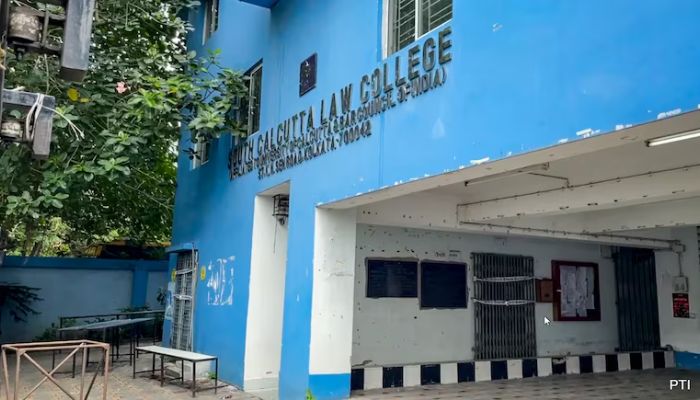
After Congress MP and Lok Sabha LoP Rahul Gandhi alleged that Bihar Police tried to stop him on his way to Ambedkar Hostel, Darbhanga district administration on Thursday said that they will take action against him for the violation of Section 163 of the Code of Criminal Procedure (CrPC).

The District Magistrate of Darbhanga told ANI, “Darbhanga district administration to take action against Lok Sabha LoP and Congress MP Rahul Gandhi for violation of CRPC 163.”

Earlier today, calling the NDA government in Bihar a “Double Engine Dhokebaaz Sarkaar”, Congress leader Rahul Gandhi alleged that the Bihar Police stopped him on his way to the Ambedkar hostel in Darbhanga.

“The Bihar Police tried to stop me. But they could not stop me because your power (minority community) is watching over me. We told PM Narendra Modi that you have to conduct a census… Under your pressure, PM Narendra Modi announced a caste census in the country. Scared of your pressure, he placed the Constitution on his forehead. But their government is against democracy, the Constitution, and the minorities. This is the government of Adani-Ambani and not yours,” Rahul Gandhi said, addressing the gathering in Darbhanga.

“I guarantee that the moment our government forms in India and in Bihar, and implements everything that you deserve,” he added.

In a post on X, Rahul Gandhi, following his allegations, asked Bihar Chief Minister Nitish Kumar since when the dialogue became a “crime in the state.”

“NDA’s “Double Engine Dhokebaaz Sarkaar” in Bihar is preventing me from interacting with Dalit and backward students in Ambedkar Hostel. Since when has dialogue become a crime? Nitish ji, what are you afraid of? Do you want to hide the state of education and social justice in Bihar?” the Lok Sabha LoP said.

Rahul Gandhi’s car was allegedly stopped by the Police from going to the event at Ambedkar Hostel in Darbhanga, before he got on foot to attend and address the students at the event at the hostel.

“India is a democracy, it is run by the Constitution, not by dictatorship! No one can stop us from raising our voice for social justice and education,” the Congress leader posted on X.

Rahul Gandhi is in Bihar to launch ‘Shiksha Nyay Samvad’ in Darbhanga today.

Earlier Bihar Congress protested against the NDA government and alleged that the Darbhanga District Administration had tried to stop Gandhi’s programme at Ambedkar Hostel in Darbhanga.

Darbhanga Deputy Mayor, Nazia Hasan, said that cancelling the permission at the last minute was a part of a “pre-planned conspiracy.”

The Bihar Legislative Assembly election for all 243 constituencies is scheduled to be held in October or November this year. The last assembly elections were held in October-November 2020.


(This news report is published from a syndicated feed. Except for the headline, the content has not been written or edited by OpIndia staff)

How Bloomberg, Reuters, NYT and others have been running non-stop Pakistani and Chinese propaganda without a shred of evidence, but a loop of lies from dubious sources

When you cannot win militarily, run propaganda so robust that would make the world believe your lies, defying all facts, evidence and logic with impunity. Pakistan suffered startling damages and killing of numerous terrorists, and personnel due to India’s Operation Sindoor which targeted terrorist camps and military infrastructure inside Pakistan. However, the hostile neighbour living up to its reputation of dressing falsehoods as facts to hide its failures has found allies in the international left-leaning media to amplify its lies.

In this vein, Bloomberg published an article on 13th May, headlined: “Chinese Weapons Gain Credibility After Pakistan-India Conflict”, wherein the propaganda outlet amplified Pakistan’s claims of shooting down five Indian fighter jets including Rafale. It, however, failed to provide any evidence for these audacious claims.

“Pakistan hailed the use of its Chinese J-10Cs to shoot down five Indian fighters, including French-made Rafale aircraft, last week in response to Indian military strikes. Although the reports haven’t been confirmed, and India hasn’t commented, the jet’s maker saw its market capitalization soar by over 55 billion yuan ($7.6 billion), or more than a fourth, by the end of last week,” the Bloomberg piece reads.

While Bloomberg pushing anti-India narrative is not surprising as OpIndia has on numerous occasions exposed Bloomberg’s bias, this propaganda piece heaping praises on Chinese defence system based on Pakistani lies is penned by two Chinese authors Josh Xiao and Yian Lee.

As Indians started calling out Bloomberg and raising questions over its credibility, Bloomberg quietly mentioned one Sudhi Ranjan Sen as one of the authors alongside the Chinese duo. This, apparently, was done to use their brown sepoy to lend credence to the blatant Chinese propaganda. Sen’s name was inserted later, and the archived version of the Bloomberg piece shows only Josh Xiao and Yian Lee as the authors of the article in question.

Indian social media users have been calling out the shameless propaganda by Bloomberg.

Lauding the fictional success of Chinese J-10Cs, the Bloomberg piece suggested that Chinese weapons may have attained or even surpassed the levels of US air defence systems. The article also suggested that Taiwan should be “very scared” after the so-called success of Chinese defence systems used by Pakistan. It also hailed Chinese air-to-air PL-15 missiles fired by Pakistan, even though Indian air defence shot down the Chinese missile proving India’s defence capabilities.

Not just that, Pakistan’s China-made air defence system was reduced to a joke by India all through Operation Sindoor, because India not only pounded terrorist infrastructure in Pakistan, but India’s retaliatory drone and missile strikes hit Pakistani air bases, and radars without much hindrance. And these are facts backed by satellite imagery, not random claims by unknown sources and social media rumors.

However, for China and its media stooges, PL-15 being shot down by India and failing to cause any significant damage is success. After allying with Pakistan, China too has become shameless in running face-saving PR campaigns, although it has always been a master of Goebbelsian propaganda.

New York Times admits India’s success of Operation Sindoor, though not without downplaying it

The New York Times, another left-leaning media outlet earlier amplified  Pakistani lies of having shot down five Indian warplanes, including three Rafale fighter jets, one MIG-29 fighter aircraft, and one Su-30 fighter jet. While Pakistan has failed to provide any substantial proof, including visuals of the wreckage of the supposedly downed Indian fighter jets, NYT decided to take ‘expert’ opinion of John E Pike, the director of Global Security, who speculated that those five aircraft and the drone could have been downed by surface-to-air or air-to-air missiles. Because “Pakistan has both”. There was no evidence to back Pakistan’s claims, zero visuals despite the flood of visuals of India’s successful target hits inside Pakistan, but the New York Times went with a baseless claim anyway.

However, as India published satellite imagery, elaborate and undeniable evidence of the damage inflicted on Pakistani terror and military establishments in the precision strikes conducted under Operation Sindoor, NYT changed tunes though not without downplaying Indian success.

In an article published on 14th May, headlined: “India and Pakistan Talked Big, But Satellite Imagery Shows Limited Damage”, The New York Times said that while both India and Pakistan used hundreds of drones and missiles to test each other’s air defenses and deliver hits on military facilities, India inflicted the maximum damage on Pakistani facilities.

“But an examination of satellite imagery indicates that while the attacks were widespread, the damage was far more contained than claimed — and mostly inflicted by India on Pakistani facilities,” the NYT reported.

While NYT choosing to publish facts over pro-Pakistan propaganda came as a surprise to many, the newspaper did not disappoint those aware of its anti-India biases. The NYT report amplified Pakistani claims of having shot Indian fighter jets saying that officials and diplomats say that at least two Indian jets were downed. NYT should answer, which officials and diplomats? Pakistani? Well, one can judge the credibility of Pakistani claims from the fact that when asked for proof of downing Indian fighter jets, Pakistani Defence Minister Khwaja Asif said: “It’s all over the social media”.

Source: Maxar and Planet Labs

However, the New York Times report analyses satellite imagery of military infrastructure targeted by both India and Pakistan, and it emerges that Pakistan failed to cause any significant damage, while India successfully damaged runways of Rahim Yar Khan airbase, Nur Khan airbase, as well as Sargodha airbase.

Udhampur airbase, with no significant damage (Source: Satellite image by Planet Labs/NYT)

France24 transforms into China’s PR as Chinese weaponry fails to protect Pakistan against India’s Operation Sindoor

While media’s job is to report facts and analysis, France24 prefers declaring one-sided verdicts and coming across as a PR agency of a country in serious need of false praises to coverup failures. Amplifying Pakistan’s false claims of downing Indian Rafale fighter jets, France24 asserted that Pakistan giving a ‘robust response’ to India’s attacks, with Chinese J-10 fighter jets is a ‘victory for China in terms of perception’. France24, like many other western news outlet interpreted India’s refusal to either confirm or deny loss of fighter jets as inadvertent lending of credence to Pakistani-Chinese claims. However, India’s silence was due to the fact that Operation Sindoor was not over.

The article further does a PR job for the CCP, Presient Xi Jinping, his leadership in modernising Chinese defences. France24 cited Chinese or pro-China ‘experts’ to establish an apocryphal narrative that somehow Indian defences are not as effective as compared to the Chinese, even though India rendered Chinese defence systems in Pakistan defunct for a limited time period during the strikes and destroyed China’s carefully crafted image of ‘invincibility’.

Reuters claimed Pakistan downed Indian fighter jets citing ‘Pakistani sources’

On 7th May,  Reuters put out a report with the headline, “Three fighter jets crashed in India’s Jammu and Kashmir, local govt sources say”. In this article, Reuters cited ‘local sources’ to claim that three Indian fighter jets crashed in India’s Jammu and Kashmir territory. The news outlet quoted a Pakistani military spokesperson who claimed that PAF shot down Indian fighter jets.

Similarly, on 9th May, Reuters decided to recycle the Pakistani falsehoods of downing Indian fighter jets. Reuters claimed that two US officials told the publication on the condition of anonymity that Pakistan used Chinese fighter jets to shoot down two Indian military aircrafts. Which US officials? Why this anonymity? It is evident that the western media is complicit in pushing pro-China and pro-Pakistan narrative despite facts and evidence being on the favour of India. An interesting thing to note about this Reuters report headlined: Pakistan’s Chinese-made jet brought down two Indian fighter aircraft, US officials say, is authored by Idrees Ali and Saeed Shah, both journalists from Pakistan. Too much for the credibility, isn’t it.

You see, Pakistan claims it shot six Indian fighters, Reuters goes from three to two, Frane24 claims 3 and CNN on 7th  May cited Pakistani ‘military sources’ to claim that PAF shot down five Indian fighter jets. CNN also claimed that Indian aircraft had crashed in Jammu and Kashmir despite it being clear from the visuals themselves that the wreckage was not that of fighter jets but of a drop tank. All these foreign news outlets created a warp and weft of lies and propaganda based on what? Pakistani and Chinese sources.

Al-Jazeera peddling debunked lies about Indian fighter jets

 Al-Jazeera, the Qatari Islamist propaganda outlet cited CNN report to claim that two Indian jets crashed including one Rafale, although CNN had cited Pakistani military sources, which unsurprisingly failed to provide any proof.  “Photos taken by AP news agency photo journalists showed debris of an aircraft in the Pulwama district in Indian-administered Kashmir,” Al-Jazeera reported ignoring the fact that photos in question showed that the object that crashed onto the ground is actually an external fuel tank, not a fighter jet. Basically, it is media outlets citing each other as source and treating Pakistan’s claims as facts without any evidence.

Beyond propaganda, what neutral defence experts said about India’s Operation Sindoor?

John Spencer, a military veteran and the head of Urban Warfare Studies at the Modern War Institute in New York, has called India’s Operation Sindoor a decisive victory. In multiple social media posts and his popular podcast, Spencer has said, “After just four days of calibrated military action, it is objectively conclusive: India achieved a massive victory.”

In a detailed article shared on X, Spencer wrote, “Operation Sindoor met and exceeded its strategic aims—destroying terrorist infrastructure, demonstrating military superiority, restoring deterrence, and unveiling a new national security doctrine. This was not symbolic force. It was decisive power, clearly applied.”

Spencer’s article mentions the Pahalgam attack on April 22, and adds, “unlike previous attacks, this time India didn’t wait. It didn’t appeal for international mediation or issue a diplomatic demarche. It launched warplanes.”

Calling Operation Sindoor a swift and precisely calibrated military campaign, Spencer added, Prime Minister Narendra Modi made the new doctrine unmistakable: “India will not tolerate any nuclear blackmail. India will strike precisely and decisively at the terrorist hideouts developing under the cover of nuclear blackmail.”

A review of over 24 satellite images and aftermath videos found that the strikes heavily damaged three hangars, two runways and a pair of mobile buildings used by the air force. Some of the sites that were hit by India were as deep as 100 miles inside Pakistan.

Walter Ladwig, a senior lecturer in international relations at King’s College London and an expert in South Asian security issues, told the Washington Post that the strikes marked “the most extensive Indian air attacks on Pakistani military infrastructure since the 1971 war.”

William Goodhind, a geospatial analyst at Contested Ground, a research project that uses satellite imagery to track armed conflict, said “high-profile targets were hit in precision strikes with the aim of severely degrading Pakistan ‘s offensive and defensive air capabilities,” The Washington Post reported.

Christopher Clary, an associate professor at the University at Albany and author of a book on the India-Pakistan rivalry, told the Post, “The satellite evidence is consistent with the claim that the Indian military inflicted meaningful — though in my view not devastating — damage on the Pakistan air force at a number of bases across eastern Pakistan. After reviewing satellite imagery, Goodhind said that two mobile control centres were destroyed at Nur Khan air base in Rawalpindi just outside Islamabad. Video from a nearby parking lot showed smoke billowing from the damaged site. The Nur Khan air base, one of the most important in Pakistan is in close proximity to the Strategic Plans Division, the unit responsible for safeguarding the country’s 170 nuclear warheads, stored in facilities across Pakistan.

Clearly, while Pakistani ‘Aand Forces’ have provided nothing but communally charged rhetoric and ‘centre of gravity’ gobbledygook, India on the contrary, has provided satellite imagery, proper before-after impact visuals and technical details of Operation Sindoor. While the pro-Pakistan propaganda machinery may have initially managed to take the world for a ride, the eventually is coming out and establishing the fact India inflicted damages to Pakistani terror and military infrastructure beyond the imagination of Pakistani military and political establishment.

Aligarh: Salman pretends to be Hindu youth Shubham to rent a room, runs away with minor daughter of landlord

A case of love jihad has emerged in the Gabhana police station jurisdiction of Aligarh in Uttar Pradesh, reported Dainik Bhaskar. A Muslim individual rented a room under false name and moved in with his parents into a Hindu family’s residence approximately one and a half months ago. He used the Hindu name Shubham to identify himself to the landlord.

The landlord’s request for the Aadhar card was met with his persistent delays. During this time, he cultivated a friendship with the former’s 17-year-old daughter. On the morning of 8th May, he took her with him, to everyone’s shock. The mother of the victim filed an FIR (First Information Report).

The offical complaint read, “My daughter is missing since 4 am on 8th May. I suspect she might be with Salman, who is also untraceable. His mobile phone is also switched off. He used to rent a place in the vicinity and is a resident of Bhujpura (Rorawar Police Station). I kindly request that you locate my daughter and take necessary measures against the perpetrator. I would be extremely grateful for your assistance.” OpIndia has a copy of the FIR.

On 14th May, members of Hindu organizations arrived at the office of the Superintendent of Police (SP) City. They charged that the local police had failed to take appropriate action.

A Hindu activist disclosed, “We are from Bharatri. The accused and his mother requested to rent an accommodation. He inroduced himself as Shubham. The two claimed to be in a desparate situation and hence the family rented the room. He started to stay there and lured their youngest daughter in his trap after he took her away.”

He added, “He persistently refrained from providing them with his Aadhar card, citing unfinished work and expressing concerns.”

A case has been filed regarding the issue under sections 87 and 137(2) of the Bharatiya Nyaya Sanhita (BNS). SP City Mrigank Shekhar Pathak assured the demonstrators that the suspects would be apprehended soon and the girl would be rescued.

The official mentioned that the circumstances will only be elucidated after the youth’s arrest. The police are actively investigating the matter and further sections could be added to the case as the probe moves forward.

Indian state of Tamil Nadu overtakes Pakistan in terms of GDP, Maharashtra miles ahead of the bankrupt Islamic country

Tamil Nadu’s GDP for 2025, estimated around $341 billion, has reportedly surpassed that of Pakistan with around one-third of the population of the terrorist country. In 2023-24, the GDP of Pakistan stood at approximately $373.08 billion and the GDP of Tamil Nadu for the same year was estimated to be around $329 billion, however, now, Tamil Nadu has raced ahead of Pakistan. Another Indian state Maharashtra also left Pakistan far behind with an approximate GDP of $490 billion during the financial year.

As per the International Monetary Fund, Pakistan recorded a growth of 2.6% during the preceding financial year. At the same time, the GDP of India, one of the fastest growing economies in the world, surpassed $4 trillion. The two Indian states, Tamil Nadu and Maharshtra, have surpassed Pakistan with their industry-driven growth. The states are important industrial and automotive hubs of the country.

Samir Bikhchandani, the founder of Naukri.com advised Pakistan to get rid of its obsession with militant Islam, Kashmir, and urged them to stop supporting terror groups for the better of its people. “TN GDP is now greater than the GDP of Pakistan. And the population of Pakistan is more than thrice that of Tamil Nadu. In other words the average resident of TN is more than 3X better off than the average resident of Pakistan. To the govt and military of Pakistan – focus on education, infrastructure and economic development. Forget this obsession with militant Islam, Kashmir and being anti India. And stop supporting terror groups. The people of Pakistan will be better off,” Bikhchandani wrote on X.

Despite such poor economic growth, Pakistan continues to boost its defence expenditure. In 2025, Pakistan hiked its defence budget by 16.4% amounting to $7.37 billion approximately. Foreign debt of Pakistan, which recently received $1 billion financial aid from the IMF, is about 42% of its GDP. About 82% of the country’s military imports between 2019 and 2023 reportedly came from China.

Islamists threaten Hindu influencer with calls for beheading, rape and murder after her social media response to a Pakistani troll, AIMIM spokesperson joins in targeting her too 

On 14th May 2025, an online Muslim mob unleashed a barrage of death, rape and ‘Sar tan se juda’ threats against a Hindu influencer named Sharmishta after a video of her mocking a Pakistani troll went viral. The said Pakistani troll had denied the persecution of Hindus and the brutal massacre of Hindus in Pahalgam, where Muslim terrorists confirmed religious identity before shooting the victims point blank, and in response, Sharmishta had lost her cool.

The Islamists claim that Sharmishta insulted the Prophet Muhammad.

Islamists on social media are widely sharing Sharmishta’s video wherein she mocked the Pakistani who denied the religious profiling and brutal killing of Hindus in Pahalgam.

“How did you confirmed that Pakistani opened fire your country? You country started war without any valid reason?,” the Pakistani Instagram user asked.

This blatant denial of the role Pakistani terrorists in killing Hindus in Pahalgam came even as it is confirmed by the Indian security forces that a former Pakistani Army official Hashim Must, along with jihadis belonging to The Resistance Front, an offshoot of Pakistani terror outfit Lashkar-e-Taiba killed 26 innocent people after confirming their non-Muslim religious identity.

In response to this, Sharmishta mocked the Pakistani woman and criticised the Islamic idea of 72 hoors and their prophet. She added that the Pakistani woman thinks that India started a war without any reason and asked if the Pakistani woman had heard of the Pahalgam attack, and other Pakistan-sponsored terror attacks in the past. Sharmishta further asked if Indian forces should just sit and do nothing about these terror attacks. 

The video contained abusive words and charged tone, however, it was in response to a Pakistani national and mockery of the beliefs of Jihadi terrorists who draw joy from killing kafirs assuming that doing so would confirm their ticket to Jannat and stay with Hoors. 

However, Indian Islamists living up to their reputation of taking things out of context and outraging over it, began circulating the said video with claims that the Hindu influencer insulted the Islamic prophet. The Islamists began hurling abuses and Sar tan se juda threats against Sharmishta on her social media accounts.

In this vein, one Mohammad Shadab Khan threatened to file a police complaint against Sharmishta and said, “Insult to the Prophet Muahmmad (SAW) Will Not Be Tolerated, Action Must Be Taken!  An Social Media Influencer named @Sharmishta__19  has made a vile and hateful remark against our beloved Prophet Muhammad (SAW) under the guise of targeting Pakistan. Let it be clear, no political agenda justifies blasphemy. We strongly demand that  @KolkataPolice immediately register a case and initiate strict action against this hate-monger. Tomorrow, a formal complaint will be sent to both the Chief  Minister’s  @MamataOfficial Office and the  @BengalGovernor demanding accountability.”

Meanwhile, The Observer Post, an Islamist propaganda portal often involved in peddling false Muslim victimhood narrative, said: “A Twitter user named @/Sharmishta__19 has made repeated hateful comments against Prophet Muhammad. Netizens are demanding immediate legal action against her under relevant BNS sections.” 

Amidst the demands for police action and threats of beheading of the Hindu social media influencer, All India Majlis-e-Ittehadul Muslimeen (AIMIM) leader Waris Pathan also jump the bandwagon and demanded legal action against her, while instigating Islamists. “This is  @Sharmishta__19 who has used very derogatory words about our Prophet (pbuh), which no Muslim will tolerate. 

When the entire country is standing together  at this time, by speaking such language, she is trying to spread communal tension in the country. We request the Home Minister of India  @HMOIndia  to immediately take her into custody and take strict legal action,” Pathan said. 

This controversy comes across as a redux of the 2022 Nupur Sharma episode wherein then BJP spokesperson Nupur Sharma made comments about Prophet Mohammad and his marriage. Although factual, her remarks made in response to a Muslim leader’s highly derogatory comment on Shivling during a TV news debate program, were taken out of context. An edited clip of Sharma’s remarks was circulated online by the likes of AltNews’s Mohammed Zubair and from there on, the sequence of online threats of killing, beheading and rape not only to Sharma but to her family as well. 

Now Sharmishta is facing same threats from Islamists. Hindus were killed in the Pahalgam attack by Pakistani Jihadis who checked and confirmed that they were non-Muslims before killing them. A Pakistani woman denies the killing of Hindus and Pakistan’s role in it, to which a Hindu influencer responds angrily, but ultimately who becomes the victim? Muslims. Islamists have mastered the art of making up excuses to victimise the Hindu who spoke against the victimisation of Hindus by Muslims.

Sharing screenshots of the worst forms of abuses and threats coming her way on social media, Sharmishta wrote in an X post, “ I’M SORRY… Dear Indians, I have been trolled, threatened to be attacked and to be rap*d, murdered and taught a lesson for venting my anger towards Radical Pakistani terrorists who killed my innocent countrymen in the horrificPahalgam terror attack. Mene wo sab saha, kyunki mere liye mera desh pehle aata hai.”

Amidst the threats, Sharmishta has issued an unconditional apology saying that she did not intend to hurt anyone’s sentiments. “I do hereby tender my UNCONDITIONAL APOLOGY whatever was put are my personal feelings and i never intentionally wanted to hurt anybody so if anybody is hurt I’m sorry for the same. I expect co-operation and understanding. Henceforth, i will be cautious in my public post. Again please accept my apologies,” Sharmishta said. 

Axiom Space mission to be piloted by Group Captain Shubhanshu Shukla delayed till 8 June, 4 astronauts to reach ISS using Space X Dragon capsule on Falcon 9 rocket

0

Indian Air Force Group Captain Shubhanshu Shukla-piloted private astronaut ‘Axiom Mission 4’ launch to the International Space Station (ISS) has now been delayed to no earlier than June 8 this year.

Houston-based private space company Axiom Space announced that it is now targeting “no earlier than June 8 for the launch of the Ax-4 mission to the space station aboard a Space X Dragon capsule on a Falcon 9 rocket from the Kennedy Space Centre in Florida, US.

The American space agency NASA also shared an update on the rescheduling of Ax-4 mission.

“After reviewing the Space Station flight schedule, NASA and its partners are shifting launch opportunities for several upcoming missions. The schedule adjustments provide more time to finalize mission plans, spacecraft readiness, and logistics.” It said that the mission will be no-earlier than at 9:11 a.m. EDT, Sunday, June 8 (6.41 pm India Standard Time).

Earlier, NASA had announced that the mission will lift off ‘no earlier than May 29, 2025 at 10.33 pm India Time’.

Once docked at the ISS, the private astronauts plan to spend up to 14 days aboard the orbiting laboratory, conducting a mission comprised of science, outreach, and commercial activities.

Shukla is set to become the first astronaut from the Indian Space Research Organisation (ISRO) to visit the station as part of a joint effort between NASA and the Indian space agency. He will also be India’s second national astronaut to go to space since 1984. Rakesh Sharma earned the distinction of being the first Indian to go to space on board Russia’s Soyuz spacecraft in 1984.

The IAF pilot who is among the astronauts chosen for ISRO’s Gaganyaan mission, India’s first human space flight was promoted to group captain in March 2024. He has 2,000 flight hours on various aircraft, including the Su-30 MKI, MiG-21, MiG-29, Jaguar, Hawk, Dornier, and the An-32.

Meanwhile, apart from Shukla, the Ax-4 mission also carries two mission specialists – European Space Agency (ESA) project astronaut Slawosz Uznanski-Wisniewski of Poland and Tibor Kapu of Hungary to stay aboard the space station. Peggy Whitson, former NASA astronaut and director of human spaceflight at Axiom Space, will command the commercial mission.

IAF Group Captain Prasanth Balakrishnan Nair has been designated an astronaut, as part of the backup pilot of the Ax-4 if Group Captain Shukla is unable fly.

Shukla and his three other crewmates will carry nearly 60 science investigations from 31 countries worldwide during their stay aboard the ISS, which is expected to last about two weeks.

ISRO is spearheading transformative research on Axiom Mission 4 (Ax-4), in collaboration with NASA and the European Space Agency (ESA).

Scientifically, the studies will contribute to understanding biological processes in microgravity, leading to developments in life sciences. Technologically, developing resources for long-duration space missions will enhance India’s capabilities in space exploration, positioning the country as a leader in cutting-edge space technology. The studies also play a crucial role in inspiring the next generation of Indian scientists and engineers, while reinforcing India’s commitment to global scientific progress and its influential presence in the international space community.

One Ax-4 experiment focuses on how astronauts interact with electronic displays in microgravity.

Partnering with NASA and Voyager, ISRO aims to understand the physical and cognitive impacts of using computer screens in space. This research will delve into how tasks like pointing, gaze fixation, and rapid eye movements are affected in microgravity, and how these changes might influence stress levels. The findings could inform the design and interaction of future spacecraft computers, making them more user-friendly for astronauts, the Houston-based company said.

ISRO has a strong portfolio of life science experiments. In collaboration with NASA and Redwire, the “Space Microalgae” project investigates the impact of microgravity on the growth, metabolism, and genetic activity of three strains of edible microalgae. These tiny organisms could become a sustainable food source for long-duration space missions, thanks to their rich protein, lipid, and bioactive components.

Another project, in partnership with ESA, examines cyanobacteria, aquatic bacteria capable of photosynthesis. By comparing two strains of cyanobacteria, ISRO aims to understand their growth rates, cellular responses, and biochemical activity in microgravity. This research could pave the way for integrating these bacteria into spacecraft environmental control systems, enhancing life support for future missions.

The “Effect of Metabolic Supplement on Muscle Regeneration Under Microgravity” project, conducted with NASA and BioServe Space Technologies, seeks to uncover the pathways responsible for muscle dysfunction in space. By identifying molecular mechanisms and potential interventions, this research could help prevent muscle atrophy in astronauts during long missions. The findings might also have significant implications for treating muscle-related diseases on Earth.

ISRO is also exploring the potential of growing crops in space. The “Sprouting Salad Seeds in Space” experiment, in collaboration with NASA and BioServe Space Technologies, investigates the germination and growth of crop seeds in microgravity. By studying the effects on genetics, microbial load, and nutritional profile over multiple generations, this project aims to ensure are reliable food source for future space explorers.

In partnership with NASA and Voyager, ISRO is studying the resilience of tardigrades, tiny creatures known for their ability to survive extreme conditions. This experiment will examine the revival, survival, and reproduction of tardigrades on the International Space Station, comparing gene expression patterns between space-flown and ground control populations. Understanding the molecular mechanisms of their resilience could inform future space exploration and lead to innovative biotechnology applications on Earth.

“ISRO’s research on Ax-4 is a testament to India’s dedication to advancing space science and technology. These experiments not only promise significant scientific advancements but will also inspire the next generation of scientists and engineers. As India strengthens its presence in space, it continues to contribute to global scientific progress, paving the way for a future where humanity can thrive beyond our home planet,” the Axiom Space said in a statement.

The forthcoming mission is the fourth private astronaut mission to the station of the space company.

Axiom Mission 1, lifted off in April 2022 for a 17-day mission aboard the orbiting laboratory. The second private astronaut mission to the station, Axiom Mission 2, which was also commanded by Whitson was launched in May 2023 with four private astronauts who spent eight days in orbit. The most recent private astronaut mission, Axiom Mission 3, launched in January 2024 with the the crew spent 18 days docked to the space station.

Meanwhile, India’s first human Space mission “Gaganyaan” programme has entered its final phase, with the first human spaceflight now scheduled for the first quarter of 2027.

Union Minister of State for Science and Technology Jitendra Singh in an earlier media interaction in New Delhi provided detailed updates on the mission’s current status, technological progress, and the broader economic dividends emerging from India’s cost-effective space programme.

Terming it a “historic mission,” the minister underlined that the Gaganyaan programme “represents India’s rise as a global space power built on indigenous technology, fiscal prudence, and visionary political leadership.”

He also recalled that Prime Minister Narendra Modi had clearly laid out India’s long-term ambitions in space, including setting up the Bharatiya Antariksha Station by 2035 and sending the first Indian to the Moon by 2040.


(This news report is published from a syndicated feed. Except for the headline, the content has not been written or edited by OpIndia staff)

Rogue communication devices found in Chinese-made solar power inverters exported to the US

Unidentified communication equipment was discovered within several Chinese-made equipment that are essential to renewable energy infrastructure in America, reported Reuters. The development prompted the United States energy regulators to reevaluate the risk they pose.

Globally, power inverters, which are primarily made in China, are used to link wind turbines and solar panels to electrical networks. Electric car chargers, heat pumps and batteries also utilize them. The utility companies that employ inverters usually install firewalls to block direct communication back to China, even though the devices are designed to allow remote access for upgrades and maintenance.

However, according to sources, US experts who disassemble devices connected to grids to look for security flaws have identified rogue communication devices in certain Chinese solar power inverters that are not mentioned in product documentation.

Cellular radios and other unreported communication devices have also been found in several batteries from various Chinese suppliers within the last nine months, according to one of them.

Power grid instability, energy infrastructure damage and extensive blackouts could result from using the rogue communication devices to circumvent firewalls, remotely turn off inverters, or alter their settings, according to experts. One person warned, “That effectively means there is a built-in way to physically destroy the grid.” 

According to consulting firm Wood Mackenzie, Huawei is the world’s biggest provider of inverters, making nearly 29% of exports worldwide in 2022. It is followed by Chinese competitors Sungrow and Ginlong Solis. However, 1Komma5, a German solar producer, stated that it steers clear of Huawei inverters due to the brand’s reputation for security issues.

The United States has prohibited Huawei from using American technology since 2019. A regulation prohibiting remote Chinese access to solar, wind and battery systems larger than 100 kW was passed by the Lithuanian government in November which automatically limits the usage of Chinese inverters.

Kaupo Rosin, the director general of Estonia’s foreign intelligence service, warned that if the nation did not outlaw Chinese technology in vital sectors of the economy, including solar inverters, it may face Chinese blackmail.

Notably, the European Solar Manufacturing Council (ESMC), representing the interests of European manufacturers, has expressed significant concern regarding the report on concealed devices, urging the European Commission to create and implement a “toolbox” for enhancing inverter security.

Donald Trump poses with Syrian President al-Sharaa who just months back had a $10 million bounty on his head by US govt, displaying the West’s ‘rules-based international order’

On 14th May, President Donald Trump of the United States held a meeting with Ahmed Hussain al-Sharaa, the interim president of Syria, in Saudi Arabia, exemplifying the hypocrisy of the West when it comes to dealing with global terrorism. The interaction occurred on the sidelines of the former’s engagement with leaders of the Gulf Cooperation Council.

This recent development followed an unexpected declaration that his administration would remove sanctions imposed on Syria, currently under the government led by Ahmed Hussain al Sharaa. Additionally, he encouraged the Syrian leader to establish normalised relations with Israel, their long-standing adversary.

According to Trump, al-Sharaa stated that he might eventually be open to joining the Abraham Accords, a 2020 deal mediated by the United States that saw normalization of relations between Israel and the United Arab Emirates, Bahrain and Morocco. “I told him, ‘I hope you’re going to join when it’s straightened out and he replied, ‘Yes, But they have a lot of work to do’,” the US president stated.

He commended al-Sharaa, referring to him as a “young, attractive and tough guy.” He described him as a “fighter” and noted that he possesses a “strong past, very strong past.” Additionally, he remarked that al-Sharaa had a “real shot at holding it together.”

The two leaders were accompanied by a beaming Mohammad bin Salman, the Saudi Crown Prince as Turkey’s President Recep Tayyip Erdogan joined them over the phone. Donald Trump admitted that these two leaders were responsible for persuading him to remove the tough sanctions the US had placed on Syria.

Who is Ahmed al-Sharaa

Trump’s remarks are not entirely unfounded, as the Syrian President is indeed a “fighter” with a “strong” background, though this services and past are tied to dreaded terrorist organizations, including Al Qaeda and ISIS (Islamic States of Iraq and Syria) which the United States has been declaring war against for decades.

Not long ago, Ahmed al-Sharaa was commonly known by his war name Abu Mohammad al-Jawlani (which might also be spelled al-Golani or al-Joulani). He was designated as a terrorist by the US and proscribed by the UN (United Nations). His $10 million US bounty was only lifted in last December. He played important roles in international terrorist groups such as Al Qaeda and ISIS for the past 20 years.

He was declared a global terrorist in July 2013 for “participating in the financing, planning, facilitating, preparing, or perpetrating acts of terror,” according to the “ISIS and Al Qaeda Sanctions Committee” of the UN Security Council. He was also found guilty of “supplying, selling or transferring arms” and “recruiting for” Al Qaeda and ISIS, according to the UN Security Council sanctions committee. He also engaged in combat against American forces in Iraq.

He worked closely with Aiman al-Zawahiri, the leader of Al Qaeda and Abu Bakr al-Baghdadi (also known as Ibrahim Awwad Ibrahim Ali al-Badri al-Samarrai), the leader of ISIS at the time. During the 2011 Syrian revolt against the Bashar al-Assad administration, Abu Bakr al-Baghdadi issued instructions to him to create a local presence to create a front for Al Qaeda in both Iraq and Syria.

He established the Al-Nusrah Front (officially Jabhat Fatah al-Sham), also known as Jabhat al-Nusrah, in 2012. This UN-designated terrorist organization was formally recognized as Al Qaeda’s Syrian arm. According to the US State Department, his objective was “to the overthrow of the Syrian regime and the institution of Islamist sharia law throughout the country.” It stated that the group’s suicide attacks “killed innocent Syrian civilians” and also cited the group’s “violent, sectarian vision.”

The Jabhat Fatah al-Sham switched its name to Hayat Tahrir al-Sham, or HTS, in 2017. It was primarily focused on establishing an Islamic Caliphate and toppling the Bashar al-Assad administration. Over time, the Syrian revolution evolved into an armed conflict that gradually spread throughout the nation until intensifying into a full-fledged civil war.

HTS led a swift and extensive onslaught in November 2024 which shortly cost the Assad administration significant territory, including its stronghold cities. Bashar al-Assad escaped to Russia on 8th December 2024 as his family’s dictatorship fell after 53 years of dominating the nation.

After al-Sharaa took control of Syria in January, the country was rife with revenge killings as his Sunni hardliner supporters targeted minority groups including Alawite (Bashar al-Assad’s community) and Christians. People were forced to escape to ensure their survival. The death toll reached 1,000, including 745 civilians, with thousands injured during al-Sharaa’s administration. Alawite women were paraded in the streets without clothes by his security personnel.

Trump’s new policy and the glaring hypocrisy

The West, which often delivers moral lectures to the rest of the world, including India, has once again failed to practice what it preaches. This pattern is characteristic of the United States, which tends to modify its ethical standards, however low they might be, to serve its own objectives. This inconsistency is similarly observed in its approach to Pakistan, where, while publicly denouncing terrorism, it supplies the main incubator of terrorists with arms and resources.

However, netizens did call out the blatant hypocrisy of the United States. Mike Benz, the Executive Director of the Foundation for Freedom Online, also ridiculed the newly found camaraderie between Trump and al-Sharaa. He remarked that the Syrian president only needed to change his name for the United States to accept him.

Nioh Berg wrote that al-Joulani was adept at rebranding himself and shared two images: one depicting him with the US reward of 10 million dollars, and another showing him in a suit, proposing to the US President to constuct Trump Tower in Damascus.

A user pointed out that a US-supported revolution in Syria resulted in the overthrow of Assad and the rise of a radical government in the country. “Never ever trust US, they will claim to mediate for peace, and then support jihadi leaders,” the person added.

An individual highlighted that the United States maintained a $10 million bounty on al-Sharaa’s head until a short time ago and mocked that he took the opportunity to meet Trump in person and secured much more than the amount.

A netizen stated that in 1983, Ronald Reagan held a discussion with the Afghan Mujahideen in the Oval Office and now Trump has met with al-Sharaa in Riyadh, outlining the consistent policy of Washington to legitimize Islamist groups and terrorism to meet its strategic goals.

The encounter between Trump and al-Sharaa has certainly taken many by surprise on a global scale. However, individuals familiar with the duplicity of the United States understand that the country operates solely for its own interests, devoid of any principles or standards. This has been repeatedly showcased by arming jihadi groups in Afghanistan and other parts of the world, supporting Pakistan and now engaging with the leader of Hayat Tahrir al-Sham. Osama bin Laden and Abu Bakr al-Baghdadi must be turning in their graves over the lost chance.

Nonetheless, the United States would not cease its rhetoric to other nations about secularism, tolerance, peace and whatnot even as it openly backs and legitimizes Islamists for its personal gains. More importantly, the discourse surrounding a “rules-based global order” from the US and Western nations seems directed at other countries, as they readily adjust the same to their advantage, without a moment’s pause.

President Droupadi Murmu sends 14 questions to the SC asking to explain the Constitutionality of Judges setting a timeline for the President and Governors

Exercising the President’s power to consult the Supreme Court under Article 143(1) of the Constitution, President Droupadi Murmu has referred a list of 14 questions to the Apex Court seeking its opinion on them. This comes after the Supreme Court delivered a controversial verdict last month prescribing deadlines on the Governor and the President for deciding on state bills in exercise of their powers under Articles 200 and 201 of the Constitution.

The President highlights that Article 200 of the Constitution of India delineates the powers of the Governor and the procedures for granting or withholding assent to Bills, as well as reserving a Bill for the President’s consideration. However, Article 200 does not specify any timeline for the Governor to exercise these constitutional options.

Similarly, Article 201 outlines the President’s authority and process for assenting to or withholding assent from Bills, but it does not impose any deadlines or procedures for the exercise of these constitutional powers. Moreover, the Constitution recognises various instances where the President’s assent is required before a legislation can take effect in a state.

Specifically, the president has also questioned the apex court’s direction that in case of failure to decide on bill withing 3 months by the President or Governors, it will be deemed to be assent. In the Indian Constitution, there is no concept of deeped concept in case of non-decision by President and governor within a timeline.

Here is the list of questions on which President Murmu has sought the opinion of the Supreme Court-

  1. What are the constitutional options available to a Governor when presented with a Bill under Article 200?
  2. Is the Governor bound by the advice of the Council of Ministers in exercising these options available with him when a Bill is presented before him under Article 200 of the Constitution of India?
  3. Is the exercise of constitutional discretion by the Governor under Article 200 of the Constitution of India justiciable?
  4. Is Article 361 of the Constitution of India an absolute bar to the judicial review in relation to the actions of a Governor under Article 200 of the Constitution of India?
  5. In the absence of a constitutionally prescribed time limit, and the manner of exercise of powers by the Governor, can timelines be imposed and the manner of exercise be prescribed through judicial orders for the exercise of all powers under Article 200 of the Constitution of India by the Governor?
  6. Is the exercise of constitutional discretion by the President under Article 201 of the Constitution of India justiciable?
  7. In the absence of a constitutionally prescribed timeline and the manner of exercise of powers by the President, can timelines be imposed and the manner of exercise be prescribed through judicial orders for the exercise of discretion by the President under Article 201 of the Constitution of India?
  8. In light of the constitutional scheme governing the powers of the President, is the President required to seek advice of the Supreme Court by way of a reference under Article 143 of the Constitution of India and take the opinion of the Supreme Court when the Governor reserves a Bill for the President’s assent or otherwise?
  9. Are the decisions of the Governor and the President under Article 200 and Article 201 of the Constitution of India, respectively, justiciable at a stage anterior into the law coming into force? Is it permissible for the Courts to undertake judicial adjudication over the contents of a Bill, in any manner, before it becomes law?
  10. Can the exercise of constitutional powers and the orders of/by the President / Governor be substituted in any manner under Article 142 of the Constitution of India?
  11. Is a law made by the State legislature a law in force without the assent of the Governor granted under Article 200 of the Constitution of India?
  12. In view of the proviso to Article 145(3) of the Constitution of India, is it not mandatory for any bench of this Hon’ble Court to first decide as to whether the question involved in the proceedings before it is of such a nature which involves substantial questions of law as to the interpretation of constitution and to refer it to a bench of minimum five Judges?
  13. Do the powers of the Supreme Court under Article 142 of the Constitution of India limited to matters of procedural law or Article 142 of the Constitution of India extends to issuing directions /passing orders which are contrary to or inconsistent with existing substantive or procedural provisions of the Constitution or law in force?
  14. Does the Constitution bar any other jurisdiction of the Supreme Court to resolve disputes between the Union Government and the State Governments except by way of a suit under Article 131 of the Constitution of India?

With these questions, the President seeks clarity on the constitutional boundaries of executive and judicial authority, reinforcing the need for judicial interpretation in matters of national significance. The Supreme Court will now have to set up a Constitution Bench for answering the reference of the president.

The verdict, passed in The State of Tamil Nadu v The Governor of Tamil Nadu and Anr, drew flak on the ground that the Supreme Court prescrbed a time limit for the exercise of the powers of the President and the Governor, when the provision does not contain such a time limit. Therefore it amounts to amending the Constitution, which is clearly out of the purview of the Supreme Court.

The judgment arose out of a long-standing tussle between the Tamil Nadu government and the Governor, wherein the latter had reserved 10 Bills passed by the state legislature for the assent of the President. A division bench of the Supreme Court, comprising Justices B Pardiwala and R Mahadevan, examined the concerned provisions and prescribed some time limits to be followed by the President and the Governor in exercise of their powers under Articles 200 and 201. The Supreme Court ordered that the governors and the president have to decide on bills sent to them within 3 months.

Vice President VP Dhankhar had also questioned the Supreme Court after the verdict for giving direction to the President of India. He reminded the Supreme Court that its power is limited to interpreting the Constitution.

Questions raised on Turkish company Çelebi handling high security areas and cargo at multiple Indian airports after Operation Sindoor

An anti-Turkey sentiment has been building in India in the aftermath of the recent military hostilities between India and Pakistan, in which Turkey openly supported Pakistan and provided military assistance to it.

After the boycott of Turkish products by Indian vendors and the mass cancellation of trips to Turkey by Indian tourists, now a Turkish joint-venture company, Çelebi Aviation, that handles high-security tasks at eight Indian airports, including Delhi, Mumbai and Chennai, is facing the heat.

The Turkish company is likely to come under the scanner as the Indian government is reportedly reviewing its financial relations, which are directly linked to national security, as per reports.

On Tuesday (13th May), Shiv Sena leader Murji Patel reportedly led a delegation to Mumbai International Airport Limited (MIAL), urging that their association with Celebi NAS Airport Services should be terminated. Celebi entered the Indian landscape in 2008 through a joint venture at the Mumbai International Airport, where it provided ground handling services. In a year, Celebi officially registered its operations in India under two entities- Celebi Airport Services India for ground handling and Celebi Delhi Cargo Terminal Management India for cargo services at New Delhi International Airport.

Celebi manages around 58,000 flights and 5,40,000 tons of cargo in India annually. The company has access to the most sensitive areas of the airport since it manages practically everything from passenger services and load control to flight operations and ramp services. It also handles general aviation services, cargo and postal services, warehouses and bridge operations. Though the company is registered in India and its staff members undergo background checks, its Turkish roots and the extent of its hold on Indian airports and the associated possibility of a national security threat have become a cause of concern for India in light of Turkey’s role in the India-Pakistan military conflict.

Erdogan’s daughter partially owns Celebi

Furthermore, part of the company is reportedly owned by Sumeyye Erdogan, the daughter of Turkey’s President Recep Tayyip Erdogan. Sumeyye Erdogan is married to Selçuk Bayraktar, whose company produces Bayraktar drones, which were used by Pakistan against India in the latest military confrontations. Celebi Delhi Cargo Terminal Management India at New Delhi International Airport reportedly overlooks the VVIP technical area where electronic intelligence aircraft are stationed. Besides, the Prime Minister’s VIP aircraft also reportedly comes into its vicinity.

Celebi granted security clearance under the UPA after the 26/11 attacks

According to Aviation consultant Sanjay Lazar, Celebi was given security clearance after the 26/11 Mumbai terror attacks under the UPA government. “The Turks were granted security clearance, ironically at the peak of post 26-11 events, when the UPA govt was in power. Many Aviation trade unions affiliated to the Shiv Sena, under late Balasaheb Thackerayji, had vigorously opposed the entry of Celebi Nas as ground handlers at airports across India, being sensitive in nature. We even had morchas, etc, at CSMIA back then. The then UPA Govt & their famous Aviation Minister ignored all the protests & allowed them in as one of the listed operators at Mumbai airport. Since then, whenever the issue has surfaced due to India-Turkey problems, they have tried to cover up their Turkish ownership by talking about the parent being owned by Private equity companies,” Lazar wrote on X.

Under the leadership of President Recep Tayyip Erdogan, Turkey’s relations with India have spiralled down. Even though India provided relief material, personnel assistance and medical supplies to Turkey under Operation Dost after a massive earthquake ravaged the country in 2023, it chose to side with Pakistan against India during the recent military hostilities between the two countries by providing drones and personnel. Not just Turkish drones, but Turkish personnel were also present on Pakistani soil, providing technical help, during Pakistan’s drone attacks against India between May 7 and 10.

Celebi Aviation Holdings reportedly conducts 25% of its business with Indian airlines and the remaining 75% with foreign airlines. The company has been attempting to expand its operations in India; as a result, in 2016, it expressed interest in acquiring Air India’s ground handling unit, the Air India Airport Services Limited (AIASL).