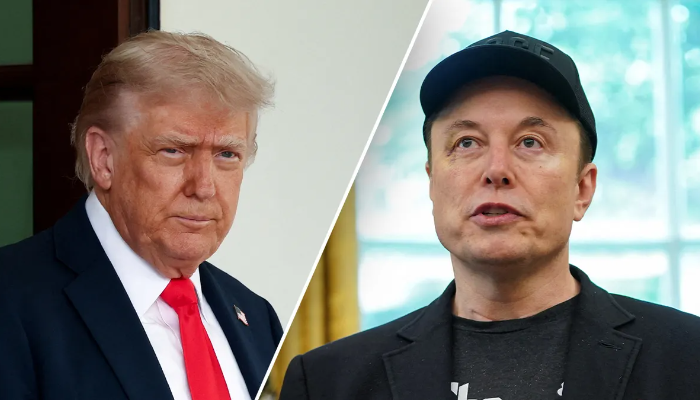
The fued between the United States President Donald Trump and his former bestie billionaire Elon Musk over the flagship spending legislation, “The One Big Beautiful Bill,” has once again emerged as a prominent issue in current American politics due to its continued criticism by the latter.
Trump attacked Musk and threatened to curb government funding for his corporations. He added, “Elon may get more subsidy than any human being in history, by far, and without subsidies.” He then mocked that the South African-born tech entrepreneur would “probably have to close up shop and head back home” if his administration reduces subsidies provided to his enterprises, including SpaceX and Tesla.
“No more Rocket launches, satellites, or electric car production, and our country would save a fortune. Perhaps we should have DOGE take a good, hard, look at this? Big money to be saved,” he challenged.
“Elon Musk knew, long before he so strongly endorsed me for president, that I was strongly against the EV mandate. It is ridiculous, and was always a major part of my campaign. Electric cars are fine, but not everyone should be forced to own one,” the Republican leader asserted.
Predictably, Musk also retaliated and dared the president to keep his word and eliminate the subsidies provided to his businesses. Musk, who chaired the government’s Department of Government Efficiency (DOGE) until May and was Trump’s presidential advisor, had a heated public spat with him last month over the proposal.
He reiterated his scathing objection and his demands for the creation of a new political party when the senate convened to vote on the bill.
Musk reshared the results and claimed that 80% people voted for a new political party on his social media poll, last month and remarked, “Vox Populi Vox Dei” which is a Latin phrase meaning “the voice of the people is the voice of God.”
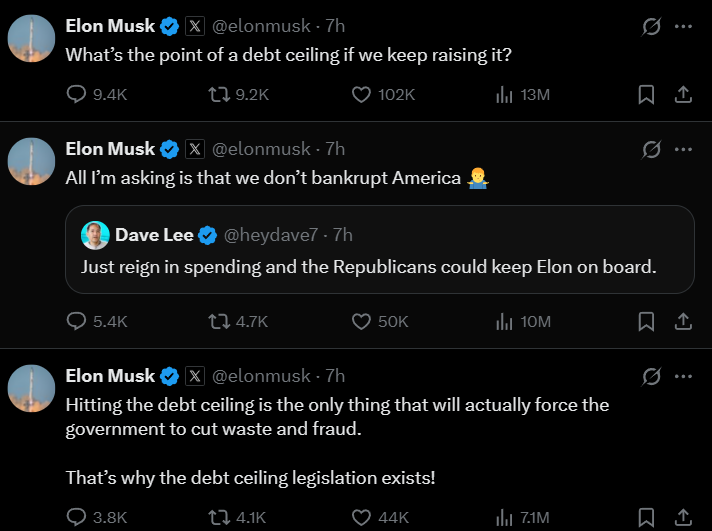
Furthermore, Trump announced that he will be furious with any Republican member of Congress who opposes his massive tax and spending plan while Musk has promised to take on any Republican who endorses the legislation. He repeatedly outlined that the United States is heading towards bankruptcy as the debt ceiling is continuously raised.
Background of the dispute
Musk’s public split from Trump started in early June when he denounced the latter’s spending plan and budget as a “disgusting abomination,” citing the soaring deficit and reductions in EV tax credits. The tycoon also slammed the Trump administration with new opposition, calling the bill “utterly insane.” Furthermore, he suggested that the discontent with Democrats and Republicans would lead to the creation of a third political party.
Trump reacted aggressively and voiced his displeasure in the White House and then threatened to revoke billions of dollars in federal contracts and subsidies for Musk’s companies. Musk retorted by accusing Trump of being inconsiderate, declaring that he “would have lost the election” without his backing.
Musk even hinted that he would decommission SpaceX’s Dragon spaceship which plays a key role in NASA’s (National Aeronautics and Space Administration) operations. He even suggested that Trump should be impeached. He claimed that Trump’s name was in the infamous Epsteins files but later withdrew his charge, expressed regret and even deleted the accusatory post.
The “One Big Beautiful Bill,” which would strengthen border security and prolong Trump’s first-term tax cuts that are about to expire at a cost of $4.5 trillion is an attempt to cement his legacy. According to the Congressional Budget Office (CBO), the amendment to the bill would boost spending by around $3.3 trillion over the next ten years, surpassing the version taken by House of Representatives by almost $1 trillion.
However the program, might reportedly deprive millions of the poorest Americans of health care and increase the national debt by more than $3 trillion. It has divided Republicans as they prepare for the 2026 midterm congressional elections. On the other hand, the wealthiest person in the world, Musk, charged Republicans with encouraging “debt slavery” as legislators started voting on the plan on 30th June.
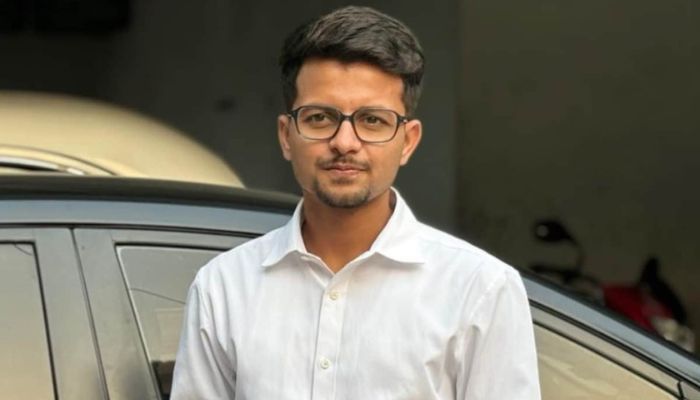
A chilling account of unchecked campus terror has emerged following the arrest of Monojit “Mango” Mishra, the prime accused in the gang rape of a 24-year-old student at the South Kolkata Law College.
While speaking anonymously to NDTV, students detailed how Mishra, an alumnus-turned-contractual employee, wielded fear for years with impunity due to political patronage.
“Nobody dared to touch him,” one student stated, capturing the institutional paralysis that enabled his crimes.
She said, “There was an atmosphere of intimidation on the campus. He used to click photos of female students, morph them and circulate them on WhatsApp groups. He also sexually harassed them. There was so much intimidation that students were scared to attend classes.”
A student named Vaagmi Trivedi told The Times of India that the TMC leader behaved inappropriately with girls during a picnic in Oct 2023.
A drunk Monojit demanded that she sing for him and his friends. Trivedi recounted that he sat on the lap of a female student during an auto ride and later instructed the victim to sit on his lap.
“He went and sat on her lap. Shocked, we told him to sit in front. He did go but asked my senior to sit on his lap,” she added. Another student informed that the TMC leader molested a 1st year girl in her room and then intimidated her into silence.
A female student named Rokeya Dasgupta narrated, “We stopped coming to college for this (disturbing gaze).”
Mango Mishra: a symbol of terror
A student revealed that there were hardly any female students left on the college campus who had not faced him at some point or another. He had, in a way, become synonymous with terror. The college students used to call him “Mango Mishra.”
A 4th year student stopped going to college since September 2025 after being assaulted by Monojit Mishra for not including him at the Teacher’s Day event. He was forced to relocate to New Town and undergo several months of treatment.
Monojit Mishra was a former student of this college and had used his influence in the Trinamool Congress (TMC) to get himself appointed as a temporary employee at the same college. His word was law within the college. Everyone feared him. Even the teachers could not say anything against him.
Protected by TMC
Trinamool Congress had made him so politically secure that no one dared to touch him. The opposition has accused that with the support of the ruling party, antisocial elements like Monojit commit crimes and escape.
The main accused in the rape case, Monojit, along with co-accused Pramit Mukhopadhyay and Jaib Ahmed, have been arrested.
The victim, a 24-year-old law student, has informed that she was raped on campus on June 25th, and the other two later recorded video of this heinous act to blackmail her.
Multiple complaints filed with the Police
According to the report, atleast 11 cases are registered against Monojit Mishra with the police and four of them include molestation. He was out on bail in these cases.
The charges against him include: tearing the dress of a Kolkata Law College student in July 2019, stealing a music system, perfume, and sunglasses from a friend’s house in December 2019; molesting a woman and attempting to murder a man on Swinhoe Lane in March 2022 (in this case, he was also arrested in April 2017).
Additionally, he is accused of assaulting a college guard and damaging college property in May 2024.
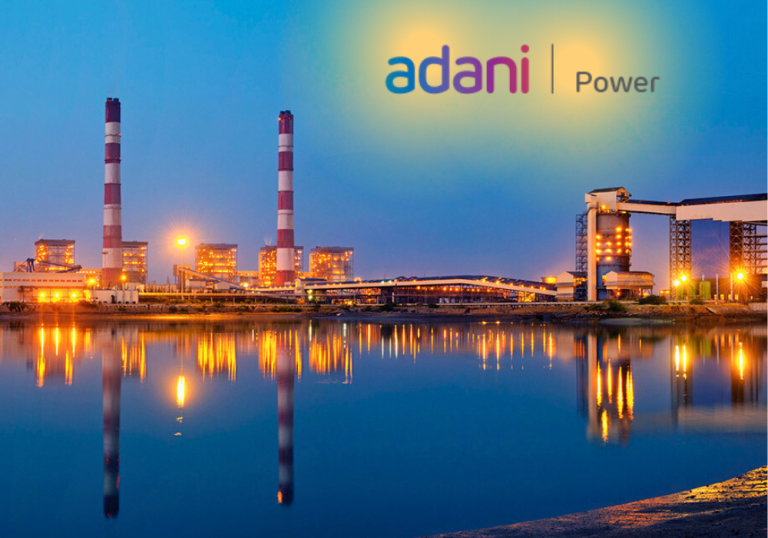
In a significant development for regional energy cooperation, Bangladesh has cleared its pending dues amounting to USD 437 million to Adani Power, marking the single largest payment made under the bilateral power supply agreement.
Sources familiar with the matter confirmed that payments include outstanding bills, carrying costs, and charges linked to the power purchase agreement (PPA) signed between Bangladesh and the Indian conglomerate in 2017.
The development comes after months of uncertainty in power supply from Adani’s 1,600 MW Godda power plant in Jharkhand, which supplies electricity exclusively to Bangladesh. Supply had been reduced last year due to payment delays, a consequence of Bangladesh’s worsening financial situation amid rising energy import costs following the Russia-Ukraine conflict and domestic political instability.
However, according to officials aware of the developments, Bangladesh has now regularised its payments over the past few months, consistently paying USD 90-100 million per month. The June payment of USD 437 million has effectively cleared all outstanding dues. As an added financial safeguard, Bangladesh has implemented Letters of Credit (LCs) covering about two months’ worth of billing and extended sovereign guarantees for all dues, providing additional security to Adani Power.
Earlier last year, Bangladesh’s Power Minister Muhammad Fouzul Kabir Khan told Reuters that the country could cope without Adani’s power supply, citing increased domestic generation capacity, though he admitted not all domestic units were operational. Despite that claim, mounting power shortages and strained infrastructure appear to have forced a course correction.
With financial issues resolved, Bangladesh has requested Adani Power to resume full electricity supply from both units of the Godda plant, as per the Bangladesh Power Development Board’s (BPDB) schedule. The plant meets approximately 10% of Bangladesh’s electricity demand.
Concerns regarding the PPA, which had attracted criticism from opposition leaders and activists in both countries, were also subject to review by Bangladeshi authorities. Sources stated that no adverse findings emerged from these investigations, with officials reaffirming the project’s importance for Bangladesh’s energy security. Data from BPDB indicates that electricity supplied by Adani Power is among the most competitively priced sources available to Bangladesh, although critics have previously questioned the broader terms of the agreement.
Adani Power has also undertaken corporate restructuring to merge the Godda unit with its parent operations, aimed at improving financial and operational efficiency. Industry analysts suggest that these developments may bolster Adani Power’s credit rating, with expectations of an upgrade from AA to AA+, potentially lowering borrowing costs for the company.
The 2017 power agreement has often been the subject of political debate, with critics raising concerns over pricing, transparency, and dependence on imported coal-based power. Proponents argue that the Godda plant has provided Bangladesh with reliable and competitively priced electricity, helping to address chronic power shortages.
The recent financial settlement reflects Bangladesh’s efforts to stabilise its energy sector and fulfil its contractual obligations. With payments back on track and supply fully restored, stakeholders on both sides are cautiously optimistic about the stability of the arrangement moving forward.
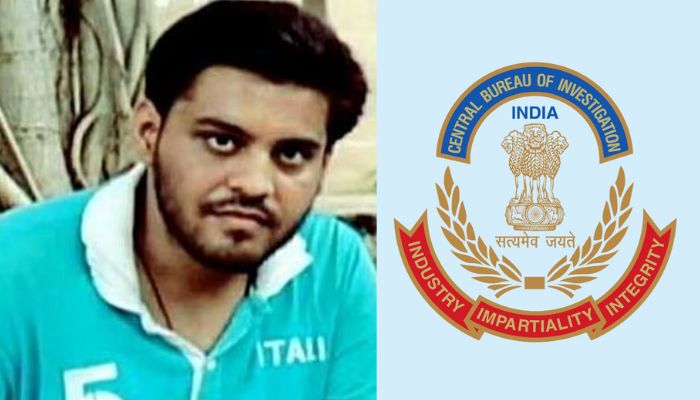
On the 30th of June 2025, Delhi’s Rouse Avenue Court accepted the closure report filed by the Central Bureau of Investigation (CBI) in the JNU student Najeeb Ahmed’s missing case, who had gone missing in October 2016.
This case was transferred to the CBI. The agency filed a closure report in 2018. His mother, Fatima Nafees, had challenged the closure report.
Additional Chief Judicial Magistrate (ACJM) Jyoti Maheshwari accepted the closure report filed by the CBI.
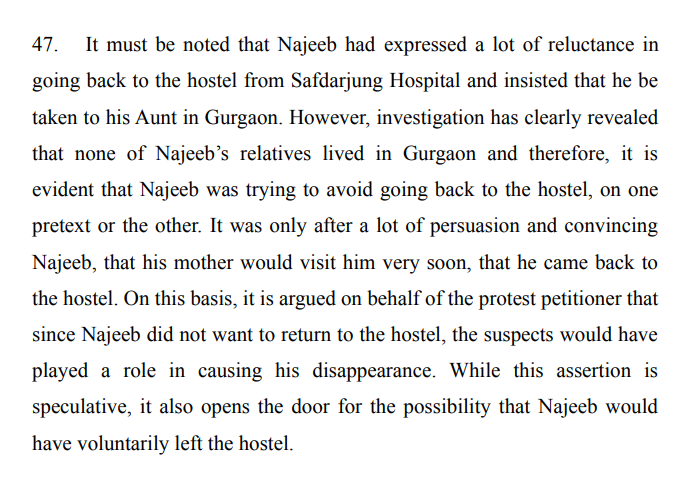
“The CBI is at liberty to reopen the case if any evidence is found in connection with this case,” ACJM Maheshwari said orally while pronouncing the order.
Earlier, the Investigation Officer (IO) had also informed that the statements of Najeeb’s mother, Fatima, his friend from Jamia, Qasim, and the hostel warden at JNU were recorded.
Najeeb’s mother, Fatima Nafees, had moved a protest petition against the closure report of the CBI. The Delhi High Court has transferred the case from the Delhi police to the Central Bureau of Investigation (CBI) to probe the case.
It was alleged that Najeeb had gone missing after an altercation with some students. Initially, an FIR was lodged by the Delhi police. The case was transferred to the CBI on May 16, 2017. Thereafter, an FIR was registered by the CBI in June 2017. The CBI had filed a closure report in 2018.
Left loonies and Islamists peddle lies about Najeeb Ahmad’s disappearance
While the court has accepted CBI’s closure report, the Islamo-leftists are peddling lies and twisting facts to concoct a narrative that somehow the CBI and the whole ‘system’ deliberately shielded those supposedly behind Najeeb Ahmad’s disappearance. Their rhetoric essentially asserts that concrete action was replaced with a deliberate cover-up simply because of Najeeb’s Muslim identity and ideology that opposed Hindutva.
In this vein, TMC MP Saket Gokhale claimed that Najeeb was ‘assaulted’ by ABVP members, and that the CBI ‘protected’ the culprits, insinuating that the BJP and its student wing were behind Najeeb’s disappearance.
“About 10 years ago, JNU student Najeeb Ahmed suddenly disappeared. Just before this, he was assaulted by ABVP goons (student wing of the BJP). Today, the CBI closed the case without solving it. Who did they protect? The answer is clear. It’s a SHAME that this case was quietly buried,” Gokhale said.
About 10 years ago, JNU student Najeeb Ahmed suddenly disappeared.
Just before this, he was assaulted by ABVP goons (student wing of BJP).
Islamist propaganda outlet Maktoob Media and its Founding Editor Aslah Kayyalakkath also furthered the narrative that Najeeb and his mother have been denied justice, and that ABVP students Najeeb allegedly had a scuffle with were behind his disappearance.
“These agencies failed my aspirations and the idea of justice, but I believe that he is still alive and among us”, said Najeeb Ahmed’s mother Fatima Nafees earlier.https://t.co/LhqXLd7WOOpic.twitter.com/lHbfWTKCdF
Another known Islamist Mohammad Shadab Khan also insinuated that ABVP-linked students may have been behind Najeeb’s disappearance saying that Najeeb has ‘heated argument’ with ABVP students , even as the CBI investigation made no such revelations. Khan also asserted that somehow the CBI and even the judiciary somehow
“In 2016, Muslim student Najeeb Ahmed, who went missing from JNU’s Mahi Mandvi Hostel, remains untraced to this day. Now, a Delhi court has accepted the closure report submitted by the CBI, and no “negligence” has been acknowledged in the investigation. But this case is not just about a missing person; it has become an example of the collective failure of Indian democracy, the functioning of investigative agencies, and the safety of a minority student. For 8 years, the country’s largest investigative agency could not locate a student, even though early investigations had revealed that, just before his disappearance, he had a heated altercation with some ABVP students,” Khan wrote.
“Today, when the court says that the CBI made its “best efforts,” the question is inevitable: Are the state’s efforts determined by a citizen’s religious and ideological identity? Does a student with an “unacceptable ideology” deserve to “disappear” in this country?” he added.
8 साल बाद भी नजीब का कोई सुराग नहीं, अदालत ने CBI की क्लोज़र रिपोर्ट स्वीकार की।
2016 में JNU के माही मांडवी हॉस्टल से लापता हुए मुस्लिम छात्र नजीब अहमद का आज तक कोई पता नहीं चला, अब दिल्ली की अदालत ने CBI द्वारा पेश की गई क्लोज़र रिपोर्ट को स्वीकार कर लिया है, और जांच में किसी… pic.twitter.com/f9doPZmy2c
Over the years and even now, the Islamo-leftist cabal projects Najeeb Ahmed as holier than thou, and a victim of the imaginary ‘Hindutva fascism’ by asserting that he disappeared after a scuffle with ABVP students. However, none of them ever mention that it was Najeeb Ahmed who started the scuffle by slapping a Hindu student, mocking his Kalava (sacred thread) and abusing him.
Claims made by Najeeb Ahmed’s mother in the protest petition against CBI’s closure report
In its order dated 30th June 2025, the court said that despite investigation, no information regarding Najeeb could be unearthed to date, and consequently, the present closure report has been filed.
In her protest petition, Najeeb Ahmed’s mother, Fatima Nafees, contended that the stance of the CBI that Najeeb Ahmed left the premises of JNU voluntarily is demonstrably false. CBI has primarily relied on the statement of the Hostel Warden, Arun Srivastava, as per which he saw Najeeb Ahmed passing by his house at around 11:30 am on 15.10.2016, where he boarded an auto-rickshaw, which took a U-turn, and he went away, never to be seen again. However, the petitioner argued that the statement of Arun Srivastava was false and an afterthought.
Najeeb’s mother also claimed that the CBI failed to appreciate that the events on the preceding night, i.e 14.10.2016, show that Najeeb was assaulted and threatened by some persons and thus, these 9 persons had a clear motive to cause harm to Najeeb, but their role in the disappearance of Najeeb has not been properly investigated by the CBI.
In addition, it was also claimed that the CBI ‘exaggerated’ Najeeb’s mental condition to conclude that he was suffering from recurrent depression and to establish their theory of voluntary disappearance.
The CBI filed a reply to Fatima Nafees’s protest petition stating that all the mentioned grounds are “not applicable in the present case and the protest petition deserves to be dismissed.”
Najeeb Ahmed started the scuffle with students on the night preceding his disappearance, slapped a Hindu student for seeking his vote
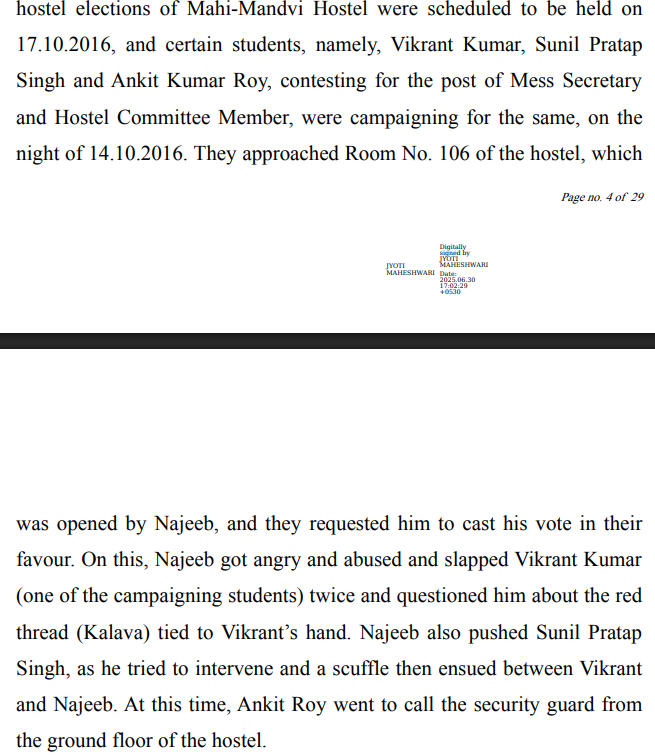
The court noted that Najeeb Ahmed, a M.Sc. Biotechnology student at JNU slapped a student named Vikrant Kumar on 14.10.2016, who, along with Ankit Kumar Roy and Sunil Pratap Singh, had approached the room where Najeeb was to request him to cast his vote in their favour. The trio were campaigning for the elections of Mess Secretary and Hostel Committee Member.
Najeeb got angry after the Hindu students requested him to vote for them, he slapped and abused Vikrant Kumar twice and also questioned him about his Kalava (sacred thread tied on Vikrant’s wrist. Moreover, Najeeb also pushed Sunil Pratap Singh, as he tried to intervene, and a scuffle then ensued between Vikrant and Najeeb. At this time, Ankit Roy went to call the security guard from the ground floor of the hostel.
As the matter escalated with a crowd of students gathering at the spot, Najeeb first bolted his room from inside but later moved to the washroom. While hostel authorities, including wardens and supervisors, arrived at the spot, Vikrant Kumar and his supporters raised slogans against Najeeb Ahmed.
Meanwhile, Najeeb was brought to the office of the Warden, with the help of a security guard and an emergency meeting was held in the Warden’s office, on the intervening night of 14.10.2016 and 15.10.2016.
The court noted that Najeeb orally admitted that he had Vikrant without any provocation and also pleaded “sorry”. The hostel authorities asked Vikrant and Najeeb to submit in writing about the incident, and Vikrant gave a complaint, mentioning that Najeeb had slapped him, while Najeeb wrote a one-line submission, “I don’t remember”, and handed over the same to the Senior Warden. Upon being asked whether he had been beaten up by anyone, Najeeb replied that he did not remember anything. Najeeb was initially expelled from the hostel; however, an order in this respect was later withdrawn by the wardens.
Contrary to the insinuations furthered by Islamo-leftists that somehow the ABVP students Najeeb had a scuffle with may have been involved in what caused Najeeb’s disappearance, Najeeb was active on WhatsApp and interacted with his friends till 09:59 am on 15.10.2016 and was in touch with his classmates, but he did not express any sort of threat or apprehension to his life from anyone.
However, when Najeeb’s mother, along with her other son, Mujeeb Ahmed, reached the hostel from Badaun, Najeeb was not there and his mobile phone and laptop were lying in the hostel room itself.
The court detailed the course of investigation and also highlighted efforts undertaken by the CBI during their investigation. The court noted that the CBI examined around 560 witnessess, including inter alia, the family members of Najeeb, his classmates, Hostel administration, the doctors treating Najeeb, security guards and students at JNU, members of the Proctorial Enquiry Committee, and the officials of Delhi Police involved in search of the JNU premises and other neighbouring areas.
The court order mentions an elaborate list of the efforts made by the CBI to trace Najeeb Ahmed and noted that from scrutinising CDRs of suspects, analysing visitor registeres of JNU hostels and transit houses, examining 116 auto dirving plying in and around JNU campus and 61 drivers operating around Jamia Milia University, seeking information from taxi and cab drivers, railways, checking with airlines to trace if Najeeb took any flight, scrutinising Najeeb’s bank accounts for recent transactions, retrieving phone data from CFSL, issuing Yellow Notice through Interpol, seeking information about Najeeb though External Affairs Ministry, announcing Rs 10,00,000 rewards for proving information about the missing man, taking help of DGPs of all state police for seeking details of unidentified dead bodies if they had any resemblance with Najeeb, seeking details from hospitals across Delhi, Agra and Bareilly for mental illness patients, contacting prison authorities to check if he was lodged in any jail, contacting Delhi Waqf Board regarding burial of dead bodies, monitoring ZIPNET portal, visiting Dargahs of Delhi and other states to find any clue of Najeeb, to whatnot, the CBI make every possible effort.
However, despite all the painstaking and persistent efforts, Najeeb Ahmed’s whereabouts could not be traced. Thus, a closure report was filed by the probe agency in 2018, with an option to reopen the investigation if any credible information emerges.
What did the Delhi court say while accepting the CBI’s closure report in Najeeb Ahmed’s case?
In its analysis of the grounds raised in the protest petition moved by Najeeb’s mother, the court said that the petitioner’s contention that the contradictory statements of LW-4 Arun Srivastava and LW-18 Mohd Qasim show that the voluntary disappearance of Najeeb Ahmed is an afterthought and is liable to be rejected is not valid.
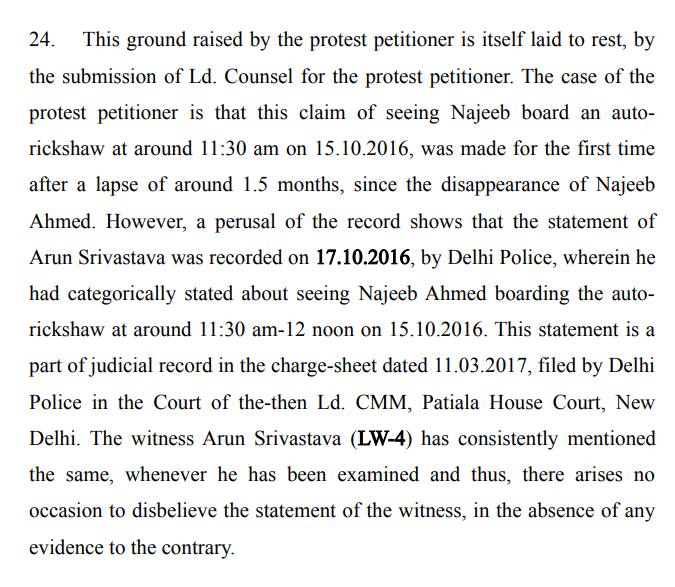
The court said that the case of the protest petitioner is that this claim of seeing Najeeb board an autorickshaw at around 11:30 am on 15.10.2016, was made for the first time after a lapse of around 1.5 months, since the disappearance of Najeeb Ahmed.
“However, a perusal of the record shows that the statement of Arun Srivastava was recorded on 17.10.2016, by Delhi Police, wherein he had categorically stated about seeing Najeeb Ahmed boarding the autorickshaw at around 11:30 am-12 noon on 15.10.2016,” the Additional Chief Judicial Magistrate Jyoti Maheshwari of the Rouse Avenue Court noted.
Further dismantling the protest petitioner’s argument disputing Arun Srivastava’s testimony and its consistency, the court said, “This statement is a part of the judicial record in the charge-sheet dated 11.03.2017, filed by Delhi Police in the Court of the-then Ld. CMM, Patiala House Court, New Delhi. The witness Arun Srivastava (LW-4) has consistently mentioned the same, whenever he has been examined, and thus, there arises no occasion to disbelieve the statement of the witness, in the absence of any evidence to the contrary.”
The court further stated that the claim made by Mohammad Qasim (Najeeb’s friend) that Najeeb b was in his room at around 11:30 AM, contrary to Srivastava’s testimony, is “not worth delving into and appears to be an argument made only for the sake of it.”
Addressing the protest petitioner’s argument that the CBI did not properly investigate the case, the court pointed out that the petitioner’s counsel relied on the scuffle that took place on the preceding night, wherein Najeeb Najeeb had admittedly slapped another hostel resident, Vikrant.
The protest petitioner’s counsel cited statements of several students who claimed that Najeeb was assaulted and also received threats from those protesting against him after the scuffle. Based on these testimonies, the petitioner argued that Vikrant Kumar and his supporters were among the mob that assaulted Najeeb and also threatened to kill him; however, the CBI did not properly investigate the alleged incriminating role of these individuals.
However, the court pointed out that the CBI made elaborate mention of the physical violence of the preceding night and how the matter escalated. The investigating officer (IO) had submitted that a probe was conducted to find the exact location of these 9 suspects at and around the time, when Najeeb had gone missing and all possible efforts were made to find out, about any foul play or involvement of these 9 suspects or any other person in the disappearance of Najeeb Ahmed, however, “no fruitful result could be achieved.”
“It is further submitted that the movement of 9 suspects was checked, their CDRs were scrutinised, digital foot-printing of their CDRs was conducted and the mobile phones seized from them, were forensically examined by the CFSL experts. However, they could not be linked with the disappearance of Najeeb Ahmed,” the court order reads.
While the protest petitioner insinuated that the students Najeeb had a scuffle with, may have been behind his disappearance, the court noted that the digital foot-printing report of the CDRs and the CFSL reports confirm that suspects Vikrant Kumar, Vijendra Thakur, Aishwarya Pratap Singh, and Abhijeet were in the JNU stadium for a cricket match between residents of Mahi-Mandvi Hostel and Lohit Hostel and remained there, from the morning of 15.10.2016 till lunch time, when the match got over.
Meanwhile, another suspect, Pushpesh Jha, went to the library along with Deepak on 15.10.2016 at around 10:30 am and was not found in the vicinity from where Najeeb had gone missing. Similarly, another suspect, Ankit Kumar Roy, had gone to attend the School of Language on 15.10.2016, in the morning and returned to the hostel at 1:30 pm, the court order reads.
It also refuted the protest petitioner’s contention that the CBI did not corroborate the claims made by the suspects about their whereabouts on 15.10.2016; however, CDR locations of the suspects showed otherwise. “There is no basis to assume that this electronic evidence is not reliable,” ACJM Maheshwari stated.
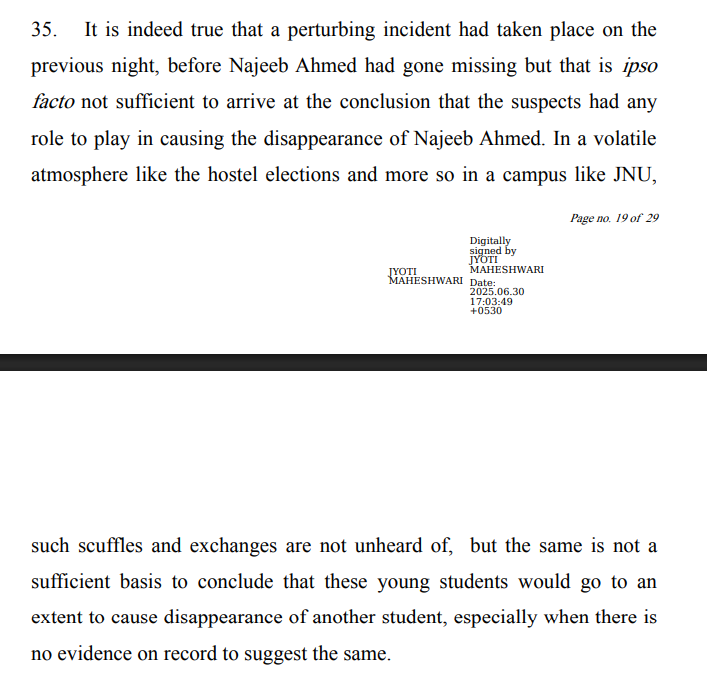
The court, however, noted that a “perturbing incident had taken place on the previous night, before Najeeb Ahmed had gone missing, but that is ipso facto not sufficient to arrive at the conclusion that the suspects had any role to play in causing the disappearance of Najeeb Ahmed.”
The court stated that scuffles and exchanges during hostel elections on campus, like JNU, however, the “same is not a sufficient basis to conclude that these young students would go to an extent to cause disappearance of another student, especially when there is no evidence on record to suggest the same.”
Moreover, the CBI had even filed an application to conduct the polygraph test of the nine suspects; however, it was dismissed by the then ACMM, Patiala House in 2017, since the suspects did not consent to the same. It must be noted that a polygraph test cannot be conducted without the consent of the respondent.
Thus, the court stated, “Merely because the investigating agency had not arrested the suspects and conducted their custodial interrogation, the same is not a ground for alleging improper investigation, more so, when sufficient evidence has been collected on record, which shows the absence of any incriminating role of the suspects.”
Regarding the claim made by the protest petitioner that the CBI made exaggerated claims about Najeeb’s mental health, the court noted that Najeeb’s psychiatrist Dr. Premlata Chawla and even his mother, Nafis Fatima, also confirmed that Najeeb indeed suffered from recurrent depression, was undergoing treatment for the same and also had sleeping issues.
Najeeb’s friend Qasim also testified that Najeeb did not sleep the whole night after the scuffle and stared at the ceiling despite taking medicines. The court also highlighted that when Najeeb complained of neck pain and was taken to Safdarjung Hospital, he was not medically examined there as he suffered no serious injuries. While returning, Najeeb was constantly insisting on being taken to Gurgaon to meet his aunt there; however, it turned out that Najeeb had no aunt or any relative residing in Gurgaon.
While the protest petitioner contended that since Najeeb was reluctant to return to the hostel, the suspects may have been involved in causing his disappearance, however, the court noted that Najeeb’s reluctance to return to the hostel also “opens the door for the possibility that Najeeb would have voluntarily left the hostel.”
The court also noted that the protest petitioner’s contention that Najeeb’s mental health was not such that he would voluntarily leave the hostel stands speculative and conjectural as well as devoid of any factual merit.
“There is no evidence of any scuffle or exchange of Najeeb with any person, on the day/ morning of his disappearance, once he returned to the hostel, and thus, it cannot be said that Najeeb’s disappearance was caused by any suspect or any other person at JNU,” ACJM Maheshwari observed.
The court further highlighted that even the Delhi High Court had in 2018 observed that the investigation was meticulously carried out by the CBI.
The court sympathised with Najeeb Ahmed’s mother, but refused to mindlessly villainise the CBI
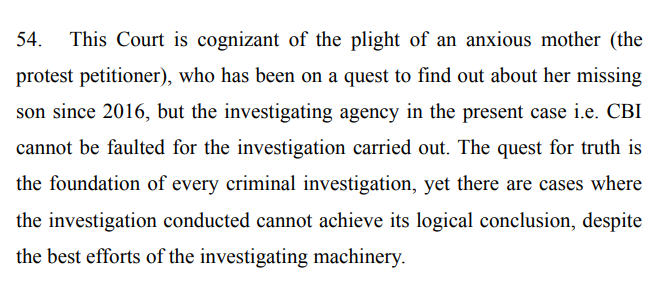
While the court took cognisance of the plight of Najeeb’s mother, who has been making efforts to trace her son since 2016, the court stated that the CBI “cannot be faulted for the investigation carried out. The quest for truth is the foundation of every criminal investigation, yet there are cases where the investigation conducted cannot achieve its logical conclusion, despite the best efforts of the investigating machinery.”
The court, thus, accepted the closure report filed by the CBI and also hoped that Najeeb Ahmed would be traced soon, adding that while the case is ending with a closure report, Najeeb’s mother is yet to get a closure.
“Therefore, upon a comprehensive assessment of the facts and circumstances, this Court is of the considered opinion that CBI has investigated all plausible avenues available in the present case and the present closure report stands accepted. As a parting note, the Court also earnestly hopes that Najeeb Ahmed shall be traced soon. This Court expresses its regret that while the proceedings in the present case end with this closure report, a closure for Najeeb’s mother and other loved ones, still eludes us,” the court stated.
Conclusion
The Islamists and their leftist allies are pushing a false and sinister narrative that Najeeb Ahmed’s case was mishandled by the CBI due to his Muslim identity or to shield ABVP-linked students. However, contrary to their lies, the court noted that the CBI conducted a thorough investigation to trace Najeeb and, despite their best efforts over the years, Najeeb Ahmed could not be found.
After taking over the case, the CBI examined hundreds of documents and witnesses, analysed multiple investigative avenues, yet no evidence linking the students Najeeb clashed with on the preceding night, to his disappearance could be found.
Moreover, claiming that the CBI did a deliberate cover-up to shield those supposedly behind Najeeb’s disappearance is a deliberate disregard of the court’s ruling that the CBI exhausted all options and found no foul play, and despite this, the court has granted liberty to reopen the case if new evidence is found.
However, those who have a penchant for making heroes out of riot-accused persons and anti-elements, be it Umar Khalid or Sharjeel Imam, have no qualms in using a person’s disappearance to further their false narrative of Muslim victimhood.
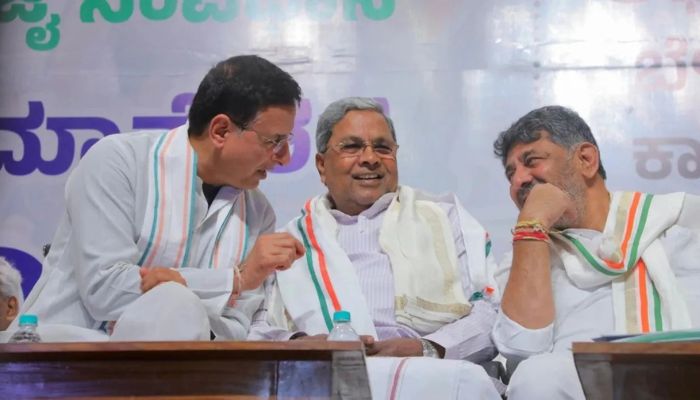
In a decisive move to stamp out simmering dissent, the Congress high command firmly shut down speculation over replacing Karnataka Chief Minister Siddaramaiah on Tuesday, 1st July. Senior party leader Randeep Singh Surjewala declared that there would be “no change in leadership” and tried to restore order to party’s fractured state unit.
The public endorsement, delivered with Deputy Chief Minister D.K. Shivakumar conspicuously seated beside Surjewala, aimed to project unity even as the party grapples with open rebellion from MLAs, corruption allegations, and a deepening power struggle that threatens its hold on Karnataka.
Congress High command’s unequivocal stand
Surjewala, the All India Congress Committee (AICC) general secretary in-charge of Karnataka, arrived in Bengaluru as a troubleshooter after days of intense political turbulence. Flanked by both Siddaramaiah and Shivakumar at a press conference, he issued a categorical denial: “There is no plan for leadership change. There has been no discussion on it. No opinions are being sought on this either.” His mission, he stressed, was purely organisational, reviewing governance delivery and party performance, not entertaining “figments of imagination” about ousting the CM. The message targeted restless MLAs and external critics alike, asserting Siddaramaiah’s position was non-negotiable “for now”.
Roots of the rebellion
Beneath the orchestrated display of unity, however, lays palpable discontent. The crisis erupted into public view when Congress MLA Iqbal Hussain boldly claimed that “nearly 100 legislators” backed Shivakumar for the top post, arguing the deputy CM deserved his chance after tireless efforts to rebuild the party.
Hussain warned bluntly that without a leadership change, Congress risks losing power in the 2028 state elections. His remarks amplified a chorus of grievances from other MLAs, including Kagwad legislator Raju Kage and Aland MLA BR Patil, who lambasted the government for “collapsed administration,” delayed development funds, and unresponsive ministers, even threatening resignation.
Simmering tensions boiled over with serious corruption allegations targeting Housing Minister BZ Zameer Ahmed Khan, a Siddaramaiah loyalist. Patil’s leaked audio accused the Rajiv Gandhi Housing Corporation of taking bribes to allot homes to the poor, prompting fellow MLA Belur Gopalakrishna to demand Khan’s resignation pending investigation. The scandals compounded frustration over stalled projects, with Kage alleging sanctioned funds vanished because officials “suspected non-payments of bribes”.
High command’s dual strategy: Unity and discipline
Facing dual fires factionalism and governance failures the high command executed a multi-pronged containment strategy:
Public Solidarity Rituals: Siddaramaiah and Shivakumar staged a symbolic hand-holding act in Mysuru, with the CM declaring his government “solid as rock” for five years. Shivakumar, though ambitions simmered, fell in line, denying leadership talks and warning MLAs against airing grievances publicly.
Private Grievances Venting: Surjewala held closed-door meetings with disgruntled MLAs from Bengaluru, Mysuru, and other regions, focusing on welfare scheme implementation, fund allocation, and organisational issues, not leadership. “We are asking: what work has been done? Do MLAs have difficulties?” he framed the outreach.
Disciplinary Warnings: Shivakumar issued a notice to Hussain for defiance and threatened action against others like HC Balakrishna and BR Patil if they spoke to the media, signalling a crackdown on dissent.
Unresolved fault lines
Despite the forceful denials, sources indicate the truce remains fragile. The 2023 power-sharing compromise, where Shivakumar accepted the role of deputy CM after delivering the state election victory. It continues to fuel the resentment among his supporters, who believe a “rotational CM agreement” was breached. Meanwhile, Siddaramaiah loyalists dismiss Shivakumar’s camp as impatient and destabilising. With Surjewala confirming that both the CM and the deputy CM assured him of “sufficient funds for development,” the party now faces pressure to translate unity rhetoric into tangible governance fixes.
The Karnataka crisis underscores Congress’s perennial struggle to manage competing regional ambitions. While the high command has temporarily enforced discipline, the embers of dissent over corruption, resources, and Shivakumar’s future remain dangerously alive. For Siddaramaiah, survival today offers little comfort; his authority now depends on delivering results to MLAs whose discontent, if bottled up too long, could erupt anew.
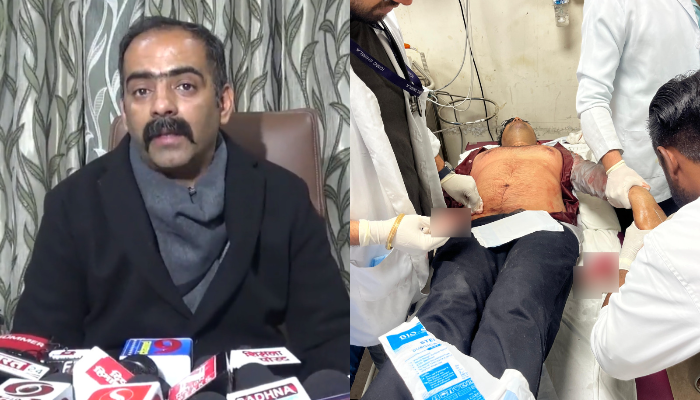
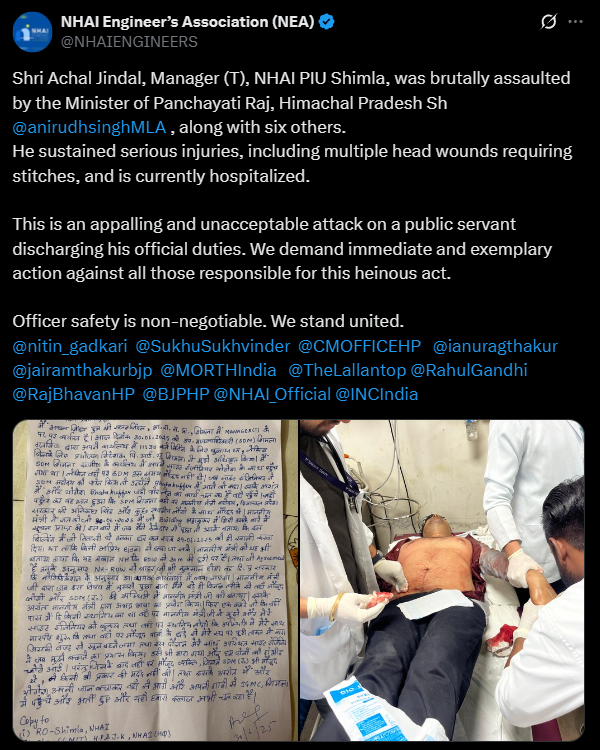
Barely three months have elapsed since the Congress government in Himachal Pradesh faced criticism following the demise of the General Manager and Chief Engineer at the Himachal Pradesh Power Corporation (HPPCL). Nevertheless, the state government has again drawn attention after Rural Development and Panchayati Raj Minister Anirudh Singh reportedly abused and assaulted an engineer from the National Highways Authority of India (NHAI) who has been posted in Shimla.
Achal Jindal stated that on 30th June while doing a site inspection, he and another officer were attacked by the minister after which they were taken to the Indira Gandhi Medical College & Hospital (IGMC) in Shimla. A case has also been registered at the Dhalli police station.
The engineer revealed that Sub-Divisional Magistrate (SDM) Shimla convened a meeting in his office at 11:30 am and Project Director PIU (Project Implementation Unit) Shimla authorized him to attend it. He arrived at the office along with his site engineer, Yogesh. However, the SDM was not present at that moment and asked them to proceed to Bhattakufer when they contacted him. The two went to the area where the four-lane construction work is underway.
They reached at the spot and discovered that the minister was also present there with the official and several locals. Singh was informed about the building collapse in Bhattakufer (Chamiana) in the wee hours of 30th June. When Jindal inquired with the contractor, he told him that the residents of this building were already evacuated in the evening of 29th June to prevent any unfortunate incidents.
The Congress leaders was also made aware that the structure situated 30 metres away from the NH (National Highway) ROW (Right of Way). According to the agreement, any damage occurring outside the area has to be compensated in accordance with the notification issued by the Government of Himachal Pradesh. The minister asked the engineer about the same and he replied politely, however, the former used abusive language.
Singh then called Jindal and Yogesh to a room owned by a resident, where he began to assault the former in front of the people. He struck the engineer’s head with force using a water pot, causing blood to flow from his wound. The site engineer attempted to intervene but he was also attacked. Both of them received serious injuries at the hands of the minister and had to run away from there to save their lives. They then reached the hospital via their car where they were admitted and are currently undergoing treatment.
BJP slams Himachal’s Congress government
Leader of the Opposition Jai Ram Thakur launched a scathing attack on the ruling party and charged that officials from the National Highways Authority of India (NHAI) were beaten at Bhattakufer before a minister. According to him, Singh should be removed from the cabinet by Chief Minister Sukhvinder Singh Sukhu, according to a report in “The Tribune.”
He stressed, “This type of anarchy will not be tolerated in the state under any circumstances.” The act was deemed shameful and unacceptable by Thakur, who added that two NHAI staff were beaten in a private room after being summoned to the location in presence of the minister, police and administration officials.
The most embarrassing feature of the assault, the Bharatiya Janata Party leader asserted, was that it took place in attendance of a senior administrative officer and police personnel but the victims were not even transported to a hospital. He declared, “The attack on the NHAI officers is an example of declining law and order in the state.”
Additionally, Union Road Transport Minister Nitin Gadkari has been requested by the Central Engineering Services Officers Association “to take up this matter with the highest authorities in the country.” They have urged for an “immediate and exemplary action against all those responsible for this heinous act.” On the other hand, authorities have also begun a probe into the instance.
HPPCL engineer dies under mysterious circumstances
Vimal Negi, the General Manager and Chief Engineer of the Himachal Pradesh Power Corporation (HPPCL), recently passed away inexplicably, sparking a huge row in Himachal Pradesh. His body was found ten days in a lake after he vanished on 10th March. His coworkers and family had previously expressed concerns about the pressure at work.
They asserted that senior officials who were shielded by the state administration were involved and called for a Central Bureau of Investigation (CBI) investigation because they suspected foul play. The deceased’s wife, Kiran Negi also wrote a letter to the chief minister demanding the same, but the state government rejected their plea.
However, the high court granted the family’s appeal. After taking over the inquiry, the agency submitted a First Information Report (FIR) against the managing director and HPPCL’s suspended director (electrical), Desh Raj.
Meanwhile, the state police’s Special Investigation Team (SIT) was unable to shed any light on Negi’s whereabouts between 10th and 14th March. Omkar Chand Sharma, the Additional Chief Secretary (Home), sent the state government a 66-page fact-finding investigation report on 8th April.
When the Secretary (Power) suggested that the report include the response of the three officers who were accused, he declined to consider it. The SIT probe also developed mistrust due to the contradictory affidavits provided by Director general of police Atul Verma and the Shimla Superintendent of Police.
Afterward, the Congress government undertook a significant bureaucratic reshuffle as the backlash grew and it tried to protect its falling reputation.
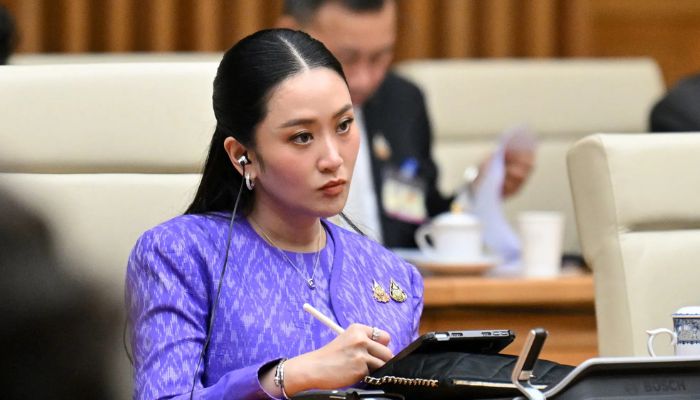
On 1st July, Thailand’s Prime Minister Paetongtarn Shinawatra was suspended from office by Thailand’s Constitutional Court. This decision marks a dramatic escalation in the country’s political crisis.
The suspensionstems directly from a leaked diplomatic phone call with former Cambodian leader Hun Sen amid rising tensions along the border. The scandal exposed the fragile interplay between domestic politics, historical rivalries, and great-power competition in Southeast Asia.
The Immediate trigger: A diplomatic call gone wrong
The court suspended Paetongtarn pending an investigation into whether she violated constitutional ethics during a 15th June phone conversation intended to defuse military clashes with Cambodia. In the leaked recording, Paetongtarn referred to Hun Sen as “uncle” invoking her family’s ties and criticised a Thai army commander as an “opponent” seeking to “look tough”. She assured Hun Sen, “If there is anything you want, I will take care of it,” which critics interpreted as subordinating national interests. The call was leaked by Hun Sen himself. He shared the call with 80 Cambodian officials, amplifying domestic outrage in Thailand.
The backdrop: Thailand-Cambodia border tensions
The call occurred amid the worst Thailand-Cambodia tensions since 2011, ignited by a deadly border clash on 28th May,
• Roots in Colonial History: The 817-km-long border remains disputed due to unclear maps from the French colonial era. The Preah Vihear Temple (awarded to Cambodia by the ICJ in 1962) is a symbol of unresolved claims. • Tit-for-Tat Escalation: Following the clashes, Cambodia banned Thai media, produce and fuel imports. Thailand barred tourists from crossing the land border and threatened to cut off Cambodia’s electricity. • Diplomatic Divergence: Cambodia sought ICJ intervention, while Thailand insisted on bilateral talks, refusing third-party mediation.
Domestic politics: The Shinawatra curse strikes again
Paetongtarn’s suspension fits a pattern of judicial interventions against her family.
• Military-Monarchy Nexsus: Her criticism of the army crossed a “red line” in Thailand, where the military holds kingmaker power. Conservatives accused her of treason. • Fragile Coalition: The scandal caused a key ally party to quit, reducing her government to a razor thin majority. Her approval rating plummeted from 30.9% to 9.2%. • Paraller Family Crisis: Her father Thaksin—still the government’s “driving force” faced trial the same day for royal defamation, facing up to 15 years in prison.
Global Dynamics: ASEAN Weakness and Great-Power Games
The crisis reveals Southeast Asia’s vulnerability to external manipulation:
• ASEAN Paralysis: The bloc’s principle of non-interference has prevented mediation. Unlike 2011, no regional diplomat (like Indonesia’s then-Foreign Minister Marty Natalegawa) has stepped in. • China’s Strategic Play: Cambodia’s reliance on Chinese military aid (including the Ream Naval Base) emboldened its stance. Beijing benefits from dividing ASEAN to consolidate its influence. • U.S. Limitations: Washington retains ties with Thailand but lacks leverage in Cambodia, now firmly in China’s orbit.
What comes next: Scenarios for Thailand and the region
The suspension opens a period of profound uncertainty:
• Paetongtarn’s Fate: The court has 15 days to review evidence. If removed, her deputy, Suriya Juangroongruangkit will become caretaker PM. • Border Flashpoints: Military clashes could recur, especially near smuggling zones. Cambodia’s ICJ bid risks further isolating Thailand. • Democratic Erosion: With Thaksin potentially jailed and Paetongtarn ousted, Thailand’s conservative establishment could regain full control, extending a cycle where no Shinawatra completes a term.
The unlearned lesson: When personal diplomacy backfires
Paetongtarn’s attempt to leverage her family’s bond with Hun Sen, a tactic that worked for Thaksin, ignored Thailand’s transformed political landscape. In an era of hyper nationalism fueled by social media, informal diplomacy carries existential risks. Her suspension underscores a brutal reality: in Southeast Asia, where colonial borders, great-power ambition, and military clout collide, domestic survival often trumps regional peace.
As deputy PM Suriya Juangroongruangkit takes temporary charge, Thailand’s democracy hangs in the balance and the thud of Paetongtarn’s fall echoes beyond its borders, a stark warning to leaders navigating the fault lines of history and power.
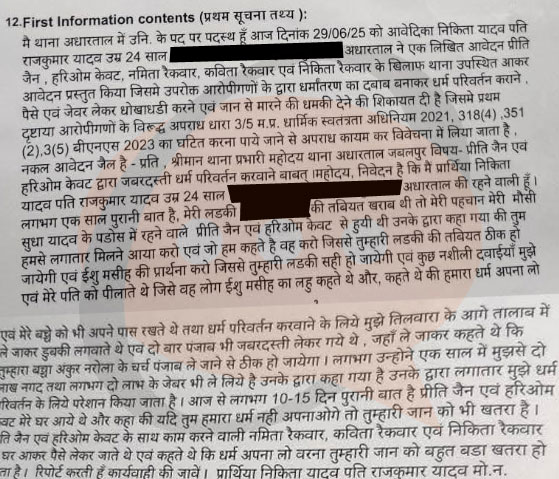
On 29th June, Jabalpur police registered an FIR against five persons named Preeti, Hariom, Namita Raikwar, Kavita Raikwar and Nikita Raikwar on the complaint of a Hindu couple for pressuring them to convert to Christianity in exchange for a promise of curing their ailing daughter. The complaint has been filed by Nikita Yadav at Adhartal police station. The couple also alleged that the accused took away jewellery and Rs 2 lakh during the process.
Content of the FIR
OpIndia accessed a copy of the FIR. The FIR has been registered under Sections 318(4), 351(2) and 3(5) of Bharatiya Nyaya Sanhita and Sections 3 and 5 of Madhya Pradesh Freedom of Religion Act. In her complaint, Nikita said that around a year ago, her daughter fell ill. During that time, she came in contact with Preeti and Hariom who live near her maternal aunt’s house. They told her to keep visiting them regularly and follow their instructions to ensure their daughter recovered properly.
Source: VHP
They asked the couple to pray to Jesus Christ and claimed that their daughter would be healed through this. They also gave the couple some suspicious medicines and referred to them as the “blood of Jesus”, which they made both her and her husband consume.
Nikita further added that they kept the child with them at times and took them to a pond beyond Tilwara to forcibly immerse them as part of religious rituals aimed at conversion. They even took the couple to Punjab twice against their will, claiming that Nikita’s daughter would recover if taken to Ankur Narula’s church in Punjab.
Over the course of a year, the accused took Rs 2 lakh in cash and jewellery worth another 2 lakh. They have been continuously pressuring the couple to convert. Around 10–15 days ago, Preeti and Hariom came to their house and threatened that if they did not accept their religion, their lives would be in danger.
Their associates Namita Raikwar, Kavita Raikwar and Nikita Raikwar also visited the victim’s house to collect money and repeated threats regarding their safety if they did not convert.
VHP protests at police station
When members of Vishwa Hindu Parishad (VHP) and Bajrang Dal came to know about the incident, they staged a protest outside the Adhartal police station on 30th June and demanded the immediate arrest of the accused. They asserted that there is a pattern of targeting financially vulnerable Hindu families by offering them fake treatment, medication and monetary inducements in exchange for religious conversion.
The matter is under investigation and police have assured that appropriate legal action will be taken against those found guilty.
Ankur Narula ministry and its missionary activities in Punjab
Ankur Yoseph Narula was raised in Jalandhar by a Hindu Khatri business family. He was profoundly influenced by sermons of South African preachers. Narula claims that Jesus invited him to become a Christian in a dream. In 2008, he established his ministry and had just three adherents. With over 100,000 Sunday attendees and lakhs of global memberships, it is one of the largest churches in Punjab.
On YouTube, he has over 2.7 million subscribers, a whopping one million increase in just three years. Narula calls himself a faith healer and asserts that he has the power to cure any illness, including cancer, arthritis and even the dead. Although he likes the word “Apostle”, his fans refer to him as “Papa”.
Narula has been known for controversies for a long time. In 2020, a complaint against him was filed for alleged FCRA violation. The complaint was filed against the Spiritual Welfare Society by Legal Rights Observatory with the Union Home Ministry seeking cancellation of the FCRA licence over allegations of money laundering and religious proselytisation. The organisation was linked to Narula.
In 2021, VHP alleged that a local warehouse was converted into a church overnight in Dwarka, Delhi. A VHP spokesperson alleged that pastors linked to Narula’s church were paying Rs 3 lakh per month allegedly for forced conversion. When the locals came to know about it, the owner of the warehouse cancelled the agreement. The locals drove away the ‘healers’.
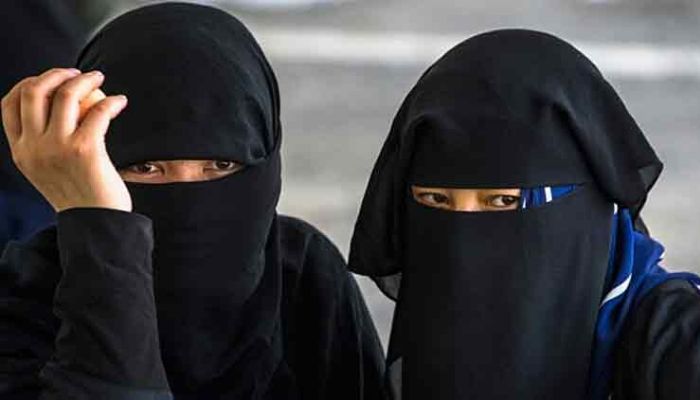
Kazakhstan’s President, Kassym-Jomart Tokayev, has signed a law banning the wearing of clothing in public that conceals an individual’s face. The new law allows exceptions only in limited circumstances, which are clearly defined within the legislation.
According to local media reports, the Kazakh parliament had passed the bill, which was subsequently forwarded to the president for final approval. The legislation prohibits any form of face covering in public spaces. However, face-covering garments are permitted in specific cases, such as when required by law, for official duties, medical purposes, protection from extreme weather, or during participation in sports and cultural events.
Local authorities argue that face-covering veils hinder law enforcement’s ability to identify individuals, posing a threat to public safety. As per media reports, the move aligns with Kazakhstan’s commitment to secularism. It aims to strengthen national identity while distancing the country from religious practices considered “foreign.”
In March 2024, President Tokayev described the niqab as an outdated form of clothing imposed on Kazakh women by newly radicalized groups. He emphasized that it contradicts the country’s traditional values.
Previously, the government had banned hijabs in schools in 2017 and again in 2023, targeting both students and teachers. In 2023, the decision sparked protests, with many schoolgirls refusing to attend classes in opposition to the hijab ban.
“This principle must be strictly observed in all spheres, including education. School is, first and foremost, an educational institution where children come to gain knowledge. Religious beliefs, on the other hand, are a choice and a private matter for each citizen,” President Tokayev was quoted as saying by The Times of Central Asia.
The decision follows a similar move by neighboring Kyrgyzstan, which passed a law in January 2025 banning the niqab—a face-covering veil worn by some Muslim women—in public spaces. Kyrgyz lawmakers justified the law by arguing that such attire impedes identification in government buildings and other public areas. In the months following the ban, authorities conducted raids in several cities to enforce the law.
Other countries in the region, such as Uzbekistan and Kyrgyzstan, have also implemented bans on face-covering veils, in 2023 and 2025 respectively.
While Islam is the dominant religion in Kazakhstan, the country is not a wholly Muslim state like Saudi Arabia or Iran. The constitution guarantees freedom of religion, and Kazakhstan officially upholds secularism, maintaining a clear separation between religion and state institutions.
In the last eleven years, India’s Northeast, a region historically considered remote, disconnected, and underdeveloped, has undergone a transformational journey powered by railway connectivity under Modi government. Once known for its challenging terrain, insurgency, and lack of infrastructural growth, the region is now emerging as a beacon of development through unprecedented rail expansion.
Backed by the central government’s sustained focus on “Act East” and infrastructure-led growth, major railway projects like the Bairabi–Sairang line in Mizoram, the Dimapur-Zubza line in Nagaland, the Sevoke-Rangpo project in Sikkim, and the engineering marvel Bogibeel Bridge in Assam connecting to Arunachal Pradesh have brought tangible progress to the Seven Sisters & one brother of India.
A strategic push: Vision and policy
Since 2014, the Indian government has been trying hard to integrate Northeast India with the rest of the country. The government is developing the infrastructure, especially railways, as the core lever to bring socio-economic upliftment and national integration, under Prime Minister Narendra Modi’s vision of “Vikas through connectivity”. This vision was further fueled by policies such as the PM Gati Shakti National Master Plan and the North East Special Infrastructure Development Scheme (NESIDS), aimed at bridging the connectivity deficit in the region.
The result is the rapid pace of railway project execution, enhanced allocation of funds, technological innovation, and a commitment to overcoming geographic and logistical challenges. According to the Ministry of Railways, the capital outlay for rail projects in the Northeast has increased by over 370% from FY 2014-15 to FY 2023-24. This financial boost has translated into action on the ground, with new railway lines, gauge conversions, electrification, and doubling of tracks across various states.
Dimapur-Zubza railway line: Nagaland’s window to wider India
For decades, Nagaland remained without a railway network. The Dimapur-Zubza (Kohima) railway line had been on the drawing board for years. It saw accelerated work during the last decade. The project is estimated to cost ₹6,663 crore. This 82.5 km long line is not just a link between Dimapur and the capital, Kohima; it is a symbol of integration, ambition, and economic potential. The construction is being carried out in three phases. It includes more than 21 tunnels and 16 major bridges, and it passes through extremely difficult hilly terrain.
Once this line is operational, it will reduce travel time and significantly boost the logistics chain for agricultural produce, traditional crafts, and tourism. Kohima, which is still not on the railway map, is poised to become Nagaland’s next major rail hub by 2026. This project is empowering thousands of tribal communities through access to education, healthcare, and employment.
Sikkim’s first railway: Sevoke-Rangpo Line
Sikkim, a brother of the seven sisters, is finally set to join the national railway network. The Sevoke-Rangpo railway line, a 44.96 km long strategic project, is currently in advanced stages of construction. Passing through the dense forested and mountainous region of the Darjeeling and Kalimpong districts in West Bengal before entering Sikkim. The project has required extraordinary engineering due to landslide-prone zones and sensitive ecological surroundings. It includes 14 tunnels and 28 bridges, and is slated for completion in 2027.
The railway line will bring Rangpo, a border town near Gangtok, just four hours away from Siliguri, to the Indian railway network. Eventually, this project is expected to be extended to Gangtok, further cementing Sikkim’s role in India’s strategic northeast frontier. The line will also benefit the Indian Army for movement near the Indo-China border, apart from giving a huge boost to tourism and horticulture-based industries.
#WATCH | Darjeeling, West Bengal: The construction of the first railway project of Sikkim, from Sevoke to Rangpo, is underway. pic.twitter.com/74sEDXUAxs
Bogibeel bridge: Assam to Arunachal on steel and resolve
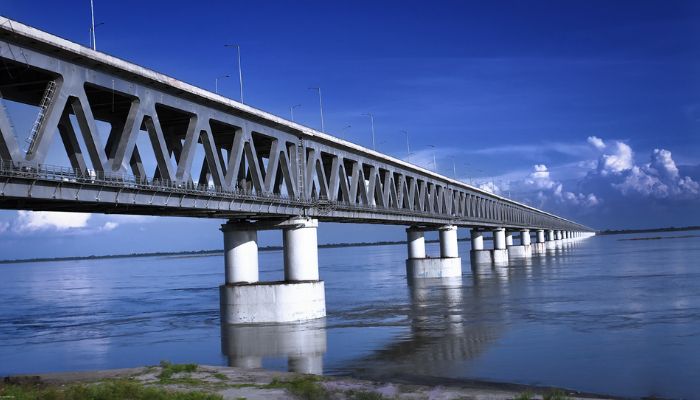
Perhaps the most iconic and publicly visible symbol of Northeast’s railway revolution is the Bogibeel Bridge, India’s longest rail-cum-road bridge, over the mighty Brahmaputra. Completed in December 2018, this 4.94 km long structure links Dhemaji on the north bank of Assam with Dibrugarh in the south, and indirectly connects to Arunachal Pradesh, significantly reducing travel time between Assam and Arunachal Pradesh.
Before the bridge, people traveling from Dibrugarh to Itanagar would spend 24 hours via road detours; now, the journey takes just 6 hours. The bridge has strategic military significance as well, enabling fast troop and logistics movement towards the Line of Actual Control (LAC). Electrified double-line tracks over the bridge have transformed regional connectivity, benefiting over five lakh people in adjacent districts.
Arunachal Pradesh: rail to the eastern horizon
Arunachal Pradesh had no rail link till 2013. The Naharlagun Railway Station, inaugurated in 2014, marked a historic moment as the first major railway station in the state, just 15 km from Itanagar. Since then, intercity services from Naharlagun to Guwahati and Delhi have not only reduced travel time but also symbolised national integration. Work is ongoing to extend railway lines to Tawang, the strategically sensitive district near the China border.
The Bhalukpong-Tawang railway line, covering about 200 km, has received in-principle clearance and is currently undergoing detailed project report (DPR) formulation. Once completed, it will bolster defense preparedness and open up a hidden Himalayan paradise to responsible tourism and commerce.
Meghalaya and Mizoram: From isolation to integration
The capitals of Meghalaya (Shillong) and Mizoram (Aizawl), although important administrative centers, lacked railway connectivity for decades. That is now changing. While the Teteliya-Byrnihat line is expected to eventually connect Shillong to the Indian Railways network, Mizoram’s railway dreams are coming true faster.
The Bairabi–Sairang railway line, a 51.38 km project being implemented by Northeast Frontier Railway (NFR), will directly link the state capital Aizawl with the rest of India. It is one of the most challenging projects in the region, featuring 55 major bridges, 87 minor bridges, and 23 tunnels. Despite tough geography and high rainfall, significant progress has been made, and the project is now nearing completion, with final touches ongoing in 2025.
Once operational, Aizawl will no longer depend on long and difficult road journeys for essential goods, student migration, or medical emergencies. Farmers and weavers from Mizoram will have a direct connection to Guwahati, Kolkata, and Delhi markets, transforming the state’s economic fortunes.
HUGE : In a significant development in North East, PM Modi to inaugurate 51 km Bairabi-Sairang Rail line connecting Aizawl, project of National importance.
Post 2014, Tripura was one of the first northeastern states to witness the growth of the railway network in the region. The Agartala-Akhaura rail project connects India to Bangladesh. It is set to transform cross-border trade and is likely to be completed in 2025.
In Manipur, the Jiribam-Imphal railway line is under construction. The line, over 111 km long, will link Imphal to the national network for the first time, enabling Manipur’s capital to receive goods and tourists with equal ease. Once completed by 2026, the line will pass through tunnels that make up over 70% of the track, with high-speed, safe, and weather-proof rail services. It also has tremendous strategic importance due to Manipur’s proximity to Myanmar.
Economic and strategic payoffs
The combined impact of these projects is multi-dimensional. Tourism, trade, horticulture, education, and healthcare are expected to expand dramatically. Local products like oranges from Nagaland, pineapples from Meghalaya, and bamboo handicrafts from Mizoram will have national markets through efficient logistics. Additionally, railway stations in the region are being modernized under the Amrit Bharat Station Scheme, bringing airport-like amenities to rural towns.
Strategically, improved connectivity enhances India’s military logistics across the Northeast’s sensitive borders with China, Bhutan, and Myanmar. The railways also act as cultural integrators, unifying distant regions with the rest of India.
Conclusion: Tracks of transformation
For over a decade now, the real story of railways reshaping Northeast India isn’t just steel tracks or new tunnels. Honestly, it’s deeper than the trains themselves. What is unfolding touches people directly, restoring dignity and genuinely opening doors for folks who felt forgotten for too long.
Think about it, each fresh rail connection becomes a lifeline. Students get better access to education, farmers find new markets closer to home, women starting businesses gain reach, and tribal communities finally see tangible links to the wider economy. As India pushes towards that massive $5 trillion economy goal, hooking the Northeast firmly into the national rail grid means something powerful. It means the “Eight siblings” aren’t just getting linked up on a map; they’re gaining real agency, real power.
And the momentum builds. With dedicated economic corridors taking shape, logistics hubs getting serious upgrades, and truly smooth connections between road, rail, and river transport… well, that long-held vision starts to feel real. The dream of knitting India together, truly united, all the way from the southern tip of Kanyakumari to the far eastern outpost of Kibithu, is finding its footing. It’s being built, quite literally, on these determined stretches of track and sheer human will.