Earlier this month, the United Kingdom government announced that the new head of MI6 will be Blaise Metreweli, the first woman to head the British External Intelligence agency. Metreweli joined the Secret Intelligence Service in 1999, and will become its head in September this year, when the incumbent chief Sir Richard Moore retires. However, before she takes charge, a disturbing fact has been reported, that her grandfather was a Nazi spy chief.
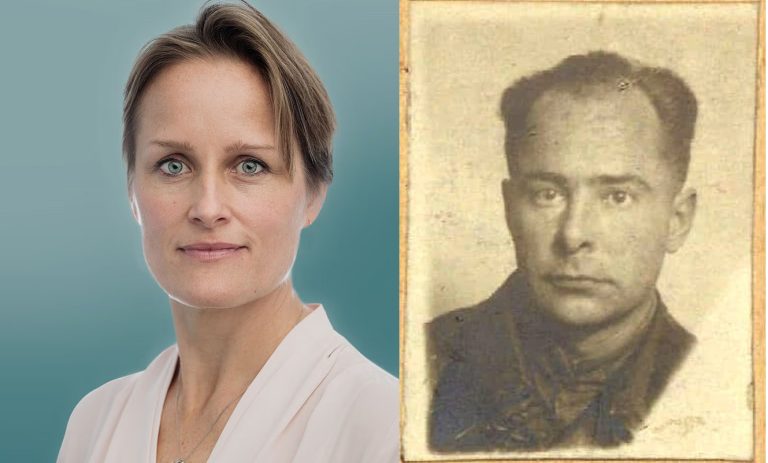
Citing German archives, The Daily Mail reported that Blaise Metreweli is the granddaughter of Constantine Dobrowolski, a notorious Nazi collaborator who spied and killed for Adolf Hitler’s Germany.
As per the report, the new MI6 chief’s paternal grandfather Dobrowolski was a Ukrainian national who had defected from the Red Army and had become the chief informant in the region of Chernihiv in Ukraine. He was known as ‘The Butcher’, the report stated.
He remained in Nazi-occupied Ukraine while the rest of his family fled after the Soviet army liberated the region from the Germans.
As per a family tree posed by Daily Mail, Blaise Metreweli is the daughter of Constantine Dobrowolski Jr. alias Constantine Metreweli, son of Constantine Dobrowolski and Varvara (Barbara) Andreevna.
As per the archives accessed by the media house, Dobrowolski was known as ‘Agent No 30’ by Wehrmacht commanders, and he had vowed revenge against the Russians after “they slaughtered his noble land-owning family, plundered their estate and seized Ukraine after the 1917 Bolshevik Revolution.”
The archives show that Soviet Union had put a bounty on Dobrowolski of 50,000 roubles – worth about £200,000 now – and called him “the worst enemy of the Ukrainian people”. The report states that he signed off a letter with ‘Heil Hitler’.
It further mentions that he boasted to German commanders of ‘personally’ taking part ‘in the extermination of the Jews’ and killing hundreds of Ukrainian resistance fighters. There are even accounts of him looting the bodies of Holocaust victims and laughing at the sexual assault of female prisoners, the report says.
Notably, Blaise Metreweli never met her grandfather, as the family fled Ukraine but he remained there after the Red Army’s liberation of the region in 1943. Moreover, she can’t be judged for the acts of her grandfather. But this fact again shows how Ukrainians collaborated with Nazis.
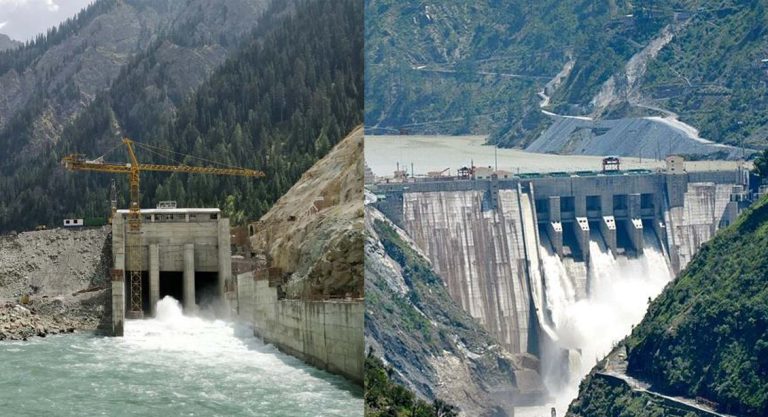
Government of India on Friday dismissed a Court of Arbitration under the 1960 Indus Waters Treaty as illegal, and rejected its recent rulings over Kishenganga and Ratle hydroelectric projects in Jammu and Kashmir. A statement issued by the Ministry of External Affairs said that the court was formed in brazen violation of the treaty. MEA called it a charade at Pakistan’s behest, saying it is another attempt by Pakistan to escape accountability for its role as the global epicenter of terrorism.
The statement said, “today, the illegal Court of Arbitration, purportedly constituted under the Indus Waters Treaty 1960, albeit in brazen violation of it, has issued what it characterizes as a “supplemental award” on its competence concerning the Kishenganga and Ratle hydroelectric projects in the Indian Union Territory of Jammu and Kashmir.”
Supplemental award issued by the Court of Arbitration refers to a follow-up decision specifically on whether the tribunal has the legal authority to hear the case about India’s Kishenganga and Ratle projects. The award was not on the projects themselves, but on the court’s jurisdiction over them.
MEA added that “India has never recognised the existence in law of this so-called Court of Arbitration, and India’s position has all along been that the constitution of this so-called arbitral body is in itself a serious breach of the Indus Waters Treaty and consequently any proceedings before this forum and any award or decision taken by it are also for that reason illegal and per se void.”
Reiterating India’s right to suspend the Indus Waters Treaty, the statement said, “Following the Pahalgam terrorist attack, India has in exercise of its rights as a sovereign nation under international law, placed the Indus Waters Treaty in abeyance, until Pakistan credibly and irrevocably abjures its support for cross-border terrorism. Until such time that the Treaty is in abeyance, India is no longer bound to perform any of its obligations under the Treaty. No Court of Arbitration, much less this illegally constituted arbitral body which has no existence in the eye of law, has the jurisdiction to examine the legality of India’s actions in exercise of its rights as a sovereign.”
India, therefore, categorically rejects this so-called supplemental award as it has rejected all prior pronouncements of this body, MEA added in the statement.
Calling it a charade at Pakistan’s behest, the ministry said, “This latest charade at Pakistan’s behest is yet another desperate attempt by it to escape accountability for its role as the global epicenter of terrorism. Pakistan’s resort to this fabricated arbitration mechanism is consistent with its decades-long pattern of deception and manipulation of international forums.”
Notably, earlier in January this year, before the treaty was suspended by India, a World Bank-appointed neutral expert declared that it has the authority to resolve the disputes between India and Pakistan regarding two hydropower projects in Jammu and Kashmir under the terms of the Indus Waters Treaty of 1960. It was also the stand of India.
The Permanent Court of Arbitration situated in The Hague, Netherlands also endorsed the Indian government’s stand and ruled that the World Bank-appointed neutral expert ‘is competent’ to decide on the design and water usage by the Kishenganga and Ratle hydroelectric projects in India. The court had issued the order responding to a petition by Pakistan against the projects.
According to the Indus Waters Treaty’s Annexure F, paragraph 7, a neutral expert will decide a matter if the Permanent Indus Commission is unable to reach a consensus.
India’s current account recorded a surplus of USD 13.5 billion (or 1.3 per cent of GDP) in the January-March quarter of 2024-25 as compared with USD 4.6 billion (or 0.5 per cent of GDP) in the same quarter of 2023-24, RBI data showed Friday.
Reportedly, the country’s current account posted a surplus for the first time in four quarters.
In the October-December quarter of 2024-25, the current account was in a deficit of USD 11.3 billion (1.1 per cent of GDP).
Merchandise trade deficit, at USD 59.5 billion in Q4 2024-25, was higher than USD 52.0 billion in Q4 2023-24. However, it moderated from USD 79.3 billion in Q3 2024-25.
Net services receipts increased to USD 53.3 billion in Q4 2024-25 from USD 42.7 billion a year ago. Services exports have risen on a year-on-year basis in major categories such as business services and computer services.
Net outgo on the primary income account, primarily reflecting payments of investment income, moderated to USD 11.9 billion in Q4 2024-25 from USD 14.8 billion in Q4 2023-24.
Personal transfer receipts, mainly representing remittances by Indians employed overseas, rose to USD 33.9 billion in Q4 2024-25 from USD 31.3 billion in Q4 2023-24.
In the financial account, foreign direct investment (FDI) recorded a net inflow of USD 0.4 billion in Q4 2024-25 as compared to an inflow of USD 2.3 billion in the corresponding period of 2023-24.
Foreign portfolio investment (FPI) recorded a net outflow of USD 5.9 billion in Q4 2024-25 as against a net inflow of USD 11.4 billion in Q4 2023-24.
In the entire year 2024-25, India’s current account deficit, at USD 23.3 billion (0.6 per cent of GDP) was lower than USD 26.0 billion (0.7 per cent of GDP) during 2023- 24, primarily due to “higher net invisibles receipts.”
Net invisibles receipts were higher during 2024-25 than a year ago on account of services and personal transfers, RBI said today.
Aditi Nayar, Chief Economist and Head – Research and Outreach, ICRA Limited, said, “While the current account balance expectedly reported a seasonal surplus in Q4 FY2025, the size of the same overshot our expectations, amid a surprise dip in primary income outflows in the quarter. This led to the unexpected narrowing in the CAD to 0.6 per cent of GDP in FY2025 from 0.7 per cent in FY2024.”
“Amid expectations of a widening in the merchandise trade deficit as well as a moderation in the services trade surplus in Q1 FY2026 vis-a-vis Q4 FY2025, we expect the current account to revert to a deficit in the ongoing quarter, printing at 1.3 per cent of GDP. We foresee India’s current account deficit to average 1 per cent of GDP in FY2026, assuming an average crude oil price of USD 70/barrel for the fiscal, which is eminently manageable in spite of the prevailing global uncertainties,” added Nayar.
In another news, the Reserve Bank of India, in consultation with the State Governments/Union Territories (UTs), announced today that the quantum of total market borrowings by the State Governments/UTs for the quarter July – September 2025, is pegged to be Rs 2.86 lakh crore.
(This news report is published from a syndicated feed. Except for the headline, the content has not been written or edited by OpIndia staff)
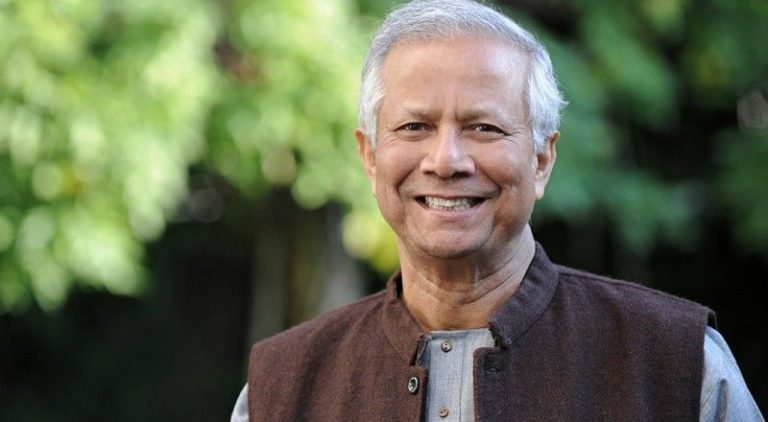
Amid tensions over brazen attacks against minorities, the Muhammad Yunus-led government of Bangladesh has shamelessly attempted to justify the demolition of a Hindu temple in Dhaka under the flimsy pretext of “removing unauthorised structures.”
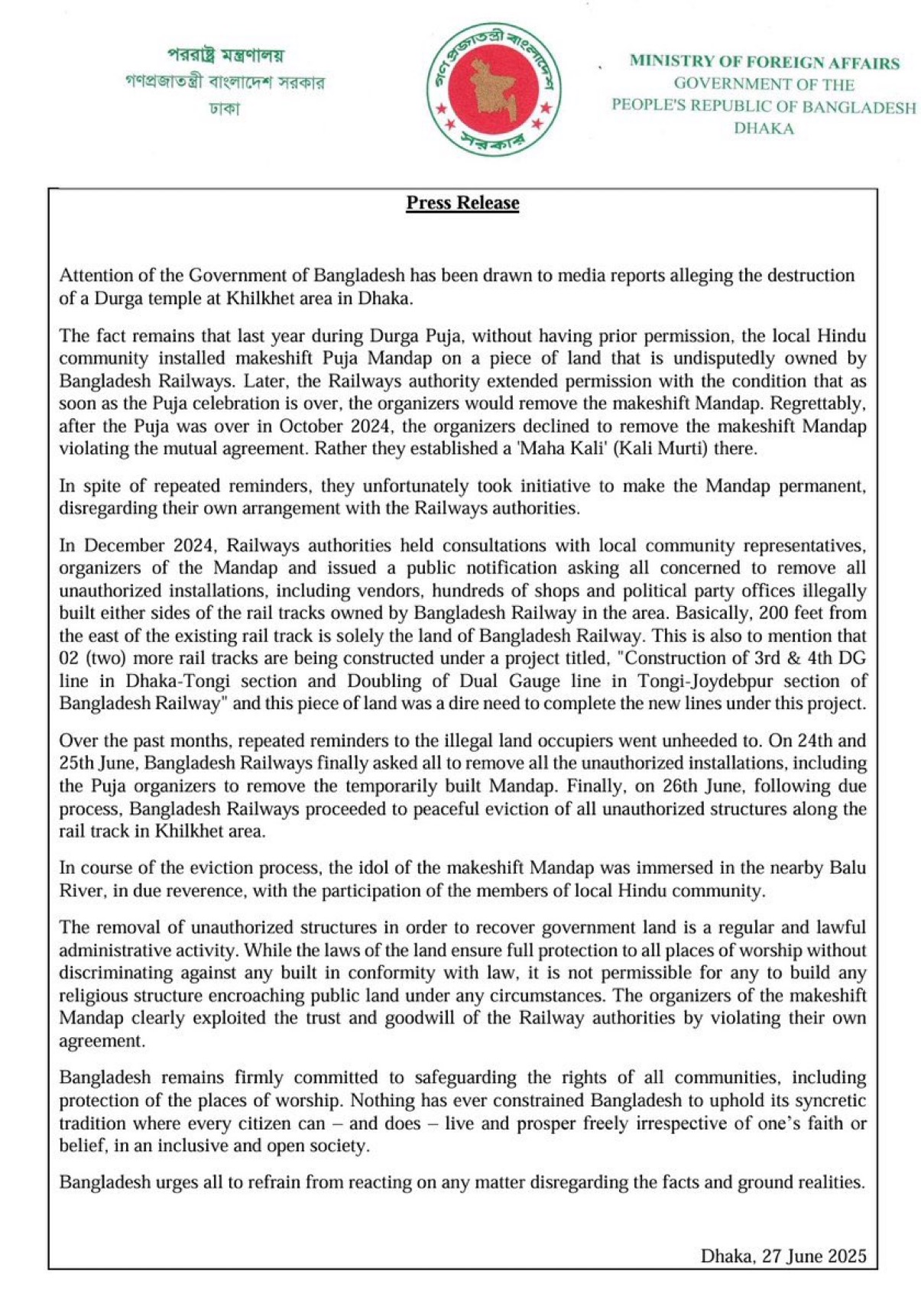
A press release issued by the Ministry of Foreign Affairs on June 27 reads less like an explanation and more like a propaganda sheet designed to gaslight both domestic minorities and the international community.
Yunus govt released a statement defending the demolition of Hindu Temple in Dhaka
The statement comes hot on the heels of the recent destruction of a Durga temple in the Khilket area of Dhaka that has sparked concerns of security of the religious minorities in Bangladesh, a nation that has spiraled into an abyss of volatility and unrest following the undemocratic ouster of PM Sheikh Hasina last year.
The Yunus government has defended the demolition, arguing that the temple was initially a makeshift Puja Mandap established during Durga Puja 2024. However, the temple was razed down despite repeated pleas from the local Hindu community for its preservation.
Citing bureaucratic technicalities, which has often been employed to defend the untenable, the government claims the temple stood on “undisputed Railway land” and was only permitted temporarily. But the same press release conveniently admits that hundreds of illegal shops, political party offices, and other encroachments have long existed on the same stretch of Railway land.
Yet, it was the religious symbol of the harrassed minorities—Hindus—a community that has long been at the receiving end of fanatics sheltered and encouraged by the Yunus regime. The temple in demolition in Dhaka was satisfy the bloodlust among the Islamists who want to purge the country of its Hindu and Christian minorities, evident from the spate of attacks faced by the minorities under the Yunus administration.
Even more shocking is the government’s proud declaration that the Kali idol from the demolished temple was “immersed in the Balu River with participation of the Hindu community.” In reality, this so-called “participation” was under the shadow of state machinery dismantling their place of worship, which could hardly be branded as a voluntary or respectful act.
However, this pattern of betraying Hindus and attacking their faith is nothing new. Under Yunus’s leadership, attacks on temples, desecrations of idols, and land grabs from Hindus have escalated unabated, all while the government hides behind the veneer of “lawful administrative activities.” The claim that Bangladesh “remains firmly committed to safeguarding the rights of all communities” is nothing but a diplomatic smokescreen, easily contradicted by the growing insecurity faced by Hindus in the country.
The demolition at Khilkhet follows a worrying trend where temples and minority religious structures are targeted under the pretext of clearing encroachment or land regularisation. However, structures affiliated with politically connected groups or the majority community somehow escape this legal scrutiny, exposing the jarring hypocrisy of the system.
Perhaps, the most insulting is the press release’s arrogant call for the public to “refrain from reacting on any matter disregarding facts.” But the facts are already clear: a Hindu temple was demolished, idols desecrated, and the government’s response reeks of apathy, justification, and victim-blaming.
As the Yunus regime parades its so-called commitment to religious harmony before the world, the reality for Bangladesh’s Hindus is one of fear, erasure, and institutional betrayal.
A UK F-35B aircraft is currently awaiting repairs at the Thiruvananthapuram International Airport after experiencing an engineering issue, a British High Commission spokesperson confirmed.
“A UK F-35B aircraft is awaiting repairs at the Thiruvananthapuram International Airport after developing an engineering issue. The UK has accepted an offer to move the aircraft to the Maintenance Repair and Overhaul facility at the airport. The aircraft will be moved to the hangar once UK engineering teams arrive with specialist equipment, thereby ensuring there is minimal disruption to scheduled maintenance of other aircraft,” the spokesperson said.
The aircraft is expected to return to active service after the necessary repairs and safety checks are completed. In a statement, the British High Commission added, “Ground teams continue to work closely with Indian authorities to ensure safety and security precautions are observed. We thank the Indian authorities and Thiruvananthapuram International Airport for their continued support.”
British authorities on Thursday expressed gratitude to India following the emergency landing of the British F-35B fighter jet at Thiruvananthapuram airport nearly a fortnight ago. “We are working to repair the UK F-35B at Thiruvananthapuram International Airport as quickly as possible. We thank the Indian Authorities for their continued support,” the spokesperson said.
The UK aircraft was unable to return to UK Aircraft Carrier HMS Prince of Wales due to adverse weather conditions. Prioritising safety, the aircraft diverted to Thiruvananthapuram International Airport in India, where it landed safely.
While on the ground, the aircraft developed an engineering issue that precluded its return to the Carrier. Engineers from HMS Prince of Wales assessed the situation and determined that assistance from a UK-based engineering team was required.
According to the UK High Commission, the aircraft will be relocated to a space in the maintenance repair and overhaul facility hangar once the necessary equipment and personnel arrive.
Throughout this diversion incident, the UK has worked in close coordination with Indian authorities. “Throughout this diversion incident, we have worked closely with all Indian authorities, including the Indian Air Force, Indian Navy and Thiruvananthapuram International Airport and are extremely grateful for their support,” the High Commission said.
The statement further highlighted the continued security and organisational support provided by India, underlining the growing cooperation and strong relationship between the armed forces of both nations.
Earlier, the Indian Air Force (IAF) confirmed that a British Royal Navy F-35B fighter jet made an emergency landing at Thiruvananthapuram airport on the night of June 14.
In a post on X, the IAF stated, “A Royal Navy F-35B fighter recovered off an emergency landing at Thiruvananthapuram International Airport on the night of 14 June 25. Operating from UK Aircraft Carrier, HMS Prince of Wales, it was undertaking routine flying outside Indian ADIZ with Thiruvananthapuram earmarked as the emergency recovery airfield.”
“On having declared a diversion off an emergency, the F-35B was detected and identified by the IAF’s IACCS network and cleared for the recovery. IAF is providing all necessary support for the rectification and subsequent return of the aircraft,” the IAF added.
(This news report is published from a syndicated feed. Except for the headline, the content has not been written or edited by OpIndia staff)
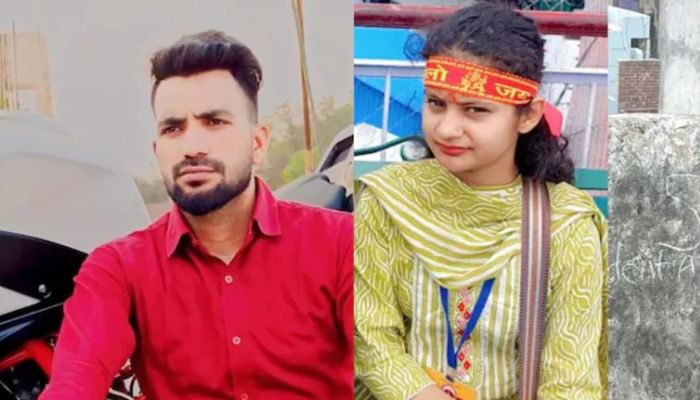
“She had big dreams. She just wanted to get a good job and support her family”, Neha’s elder sister, was drowning in tears, as she remembered her younger sister. 19-year-old Neha was murdered at 7:30 am on Monday (June 23, 2025) in Ashok Nagar, North-East Delhi after she was thrown off the 5th floor of her building. Taufiq, a daily wage labourer living near their house, killed her.
OpIndia’s team reached Neha’s house and talked to the family members about this murder. The family members gave detailed information about Taufiq and his intentions.
Neha tied a rakhi to Taufiq, yet he killed her
Taufiq, after making an emotional case that he doesn’t have any sister, apparently treated Neha as his sister. The elder sister of Neha said that she used to tie Rakhi to him on Rakshabandhan. However, after three years, Taufiq proposed marriage to his ‘Rakhi sister’.
After this, Neha’s mother refused to let Taufiq come to the house. According to Neha’s mother, Taufiq was very angry after this. On June 23, at 7:30 in the morning, he came to Neha’s building and sneaked into the building wearing a burqa.
Taufiq knew that Neha would be washing clothes on the terrace at that time so he went straight to the fifth floor terrace. Meanwhile, Neha’s father also came to the terrace. Following an altercation, Taufiq threw Neha from the terrace into an empty plot and ran away.
Taufiq used to come to Delhi from Moradabad for work
People living nearby told OpIndia that Taufiq came to this area of Delhi from Moradabad three-four years ago. About fifteen Muslim boys from Moradabad used to work with him in the nearby wholesale market. A labourer’s daily income in the market was about one thousand rupees. Shopkeepers said that they used to provide food and accommodation to the labourers.
Neha’s neighbours, while talking to OpIndia, said that Taufiq came to this locality for the first time about three years ago, and used to live alone.
Some people in the neighbourhood fed Taufiq in the beginning. However, since it did not seem right to feed a stranger every day, they stopped.
After that, Taufiq eyed a five-storey house built at the intersection of the neighbourhood. On the first floor of this house, he saw the family of Rakesh (name changed). The family had three daughters and two sons.
The family saw Taufiq as just a hapless labourer living away from home. Initially, he would come sometimes to eat food. Then he started coming regularly during the day to ask for water and other things.
Gradually, Taufiq established himself in their house, and during Rakshabandhan, one of the daughters, Neha, tied a Rakhi to Taufiq. This relationship continued for the next three years. However, during that time period Taufiq’s views changed, he now wanted to make Neha his wife.
Taufiq killed Neha because he wanted to make his ‘rakhi sister’ his wife
Neha always treated Taufiq as her brother. However, a few months before the murder, Taufiq proposed marriage to Neha. This proposal was shocking for both, Neha and her family. But Taufiq had made up his mind that he wants to marry his sister.
Neha’s mother had even banned Taufiq from coming to the house, but he kept meeting Neha secretly. Neha did not expect that this game of hide and seek would result in her death.
Neha was the second girl among the siblings. Taufiq knew that she goes to the roof of the house to dry clothes every morning. She went to wash clothes on the fateful morning as well where she met her demise.
Taufiq confessed to the crime and said, “That day I was already present on the roof. I was waiting for Neha to come. Neha comes to the roof at seven thirty.”
Neha was thrown from the fifth floor of the building in front of her father
Neha’s father said, “They were shouting at each other. Hearing the noise, I went to the terrace, and to my shock, Taufiq was strangling Neha with her dupatta. I rushed to save my daughter but Taufiq pushed me as well. By the time I could get up, he had thrown Neha down from the terrace. Before I could understand anything, he started running down the stairs. Neha had fallen on a pile of bricks. She was screaming, I also shouted for help.”
People from the neighbourhood put her in an auto and took her to a hospital. However, Neha died after about five hours of treatment.
Neha lost her life because her family offered water to a thirsty man
When OpIndia team reached Neha’s house, there was a crowd of policemen outside. On the ground floor, the elder sister was sitting inconsolable. Some relatives and media people had surrounded her. Neha’s father was present on the first floor., lying on the bed.
There were pictures of many Hindu gods and goddesses including Ram and Ganesh on the door. Neha’s younger brother was watching the news of his sister’s murder on TV.
Crying, the little boy said that he did not know that Taufiq would turn out to be such a butcher.
We could see the regret in the tears coming out of his eyes. Regret about why he could not recognize Taufiq in time? History tells us that never feed milk to snakes, but now giving water to a thirsty man can also result in such a tragedy.
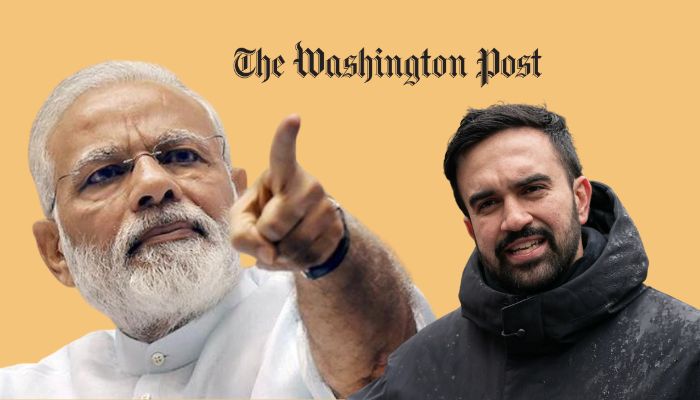
On Thursday (26th April), The Washington Post made a glaring case of narrative distortion in a propaganda piece downplaying anti-Hindu rhetoric of Zohran Mamdani as ‘harsh criticism’ of PM Modi.
Mamdani is a New York State Assembly member of Indian-Ugandan origin, has now become a so-called voice in progressive and anti-establishment political circles. His recent mayoral primary win in NYC has been celebrated by many media outlets, but his remarks on the Indian Prime Minister have drawn widespread attention in India.
Zohran used the terms ‘war criminal’ and “mass slaughter of Muslims” for Prime Minister Modi, but his vision suggests something else. The Amercian daily ‘The Washington Post has tried to frame this solely as ‘criticism of Modi,’ but it is more the intent which is politically bent and reflects a deeper anti-Hindu propaganda.
At a candidature forum last month, Mamdani referred to Modi as a “war criminal,” in the same manner as Israeli Prime Minister Benjamin Netanyahu. This statement underlined his criticism of the war in Gaza. Interconnecting it, he dated back to history, recalling the Gujarat riots and blamed Modi for the deaths of Muslims during the violence while he was serving as Chief Minister of the state. Zohran’s personal hatred toward Hindus was seen as politically oriented, rooted in his long-standing animosity toward the Hindu religion.
At one such protest outside the Indian Consulate, Mamdani accused the Ram mandir temple inauguration of being a “celebration of the destruction of a mosque” and a “tool of oppression.” Such language deliberately erases the decades-long legal and democratic process that led to the Ram Mandir verdict by India’s Supreme Court. It also insults millions of Hindus worldwide who see the temple not as a political symbol, but as the restoration of sacred heritage.
However, his stance on Indian politics extends far beyond democratic dissent. In January 2024, Mamdani co-organized and endorsed protests in New York City that condemned the consecration of the Ram Mandir in Ayodhya, branding the event as “Hindutva extremism.” The temple—revered by Hindus as the birthplace of Lord Ram—was not just criticized as a political symbol but denounced as a project of “fascism,” equating Hindu religious aspirations with violent majoritarianism.
A video, shot in August 2022, surfaced on social media, showing Mamdani leading a hate mob against the Hindu community at Times Square. Citing “Who are the Hindus? Harami (Bastards),” the mob was heard yelling. Mamdani remained unflinching despite the dehumanization of the Hindu community by his supporters. He instead began spewing vitriol against the Ram Mandir.
The Washington Post’s unsupported claim, in a recent tweet referencing Abhishek Manu Singhvi, that described “the decades-long enmity between Hindu-majority India and Muslim-majority Pakistan,” is a completely flawed and vulnerable act—directly harming and assassinating the internal harmony of Indian communities. This highlights this is not just anti-Modi rhetoric; this is anti-Hindu propaganda masquerading as secular concern.
A person responded to this on X by writing: “As an Indian, this should’ve been a moment of pride—the mayoral primary victory of Zohran—but I can’t support Mamdani for spreading lies [about] India to gain sympathy, such as ‘there are no Gujarati Muslims left.’”
“Mamdani is a terror sympathizer. A Hindu-hating bigot,” Sreemoy Talukdar, an editor at Firstpost, an Indian media outlet with ties to the Hindu right, wrote on Wednesday on X.
Zohran Mamdani and The Washington Post downplay the anti-Hindu propaganda of NYC’s Zohran Mamdani as ‘criticism of Modi’. A bomb blast in Malegaon, a town in Maharashtra, in September 2008, killed six people and injured dozens. What made this case stand out was that, unlike most terror attacks in India until then—which were often attributed to Islamist terror groups—this attack led to the arrest of individuals linked to right-wing Hindu organizations. The Washington Post report published on November 24, 2008, titled “In India, controversy over Hindus’ arrests,” used the phrase “Hindu terrorism,” connecting it with how members of India’s Hindu majority were implicated.
In addition, Mamdani’s alignment with radical groups such as the Indian American Muslim Council (IAMC), which has been accused of spreading anti-Hindu disinformation in the U.S IAMC has previously amplified claims that Hindu groups in America are exporting “Hindutva terror,” often without substantial evidence, fostering a climate of fear and mistrust against Indian-American Hindus.
It is this selective framing by media outlets like The Washington Post that contributes to a broader problem: delegitimizing Hindu concerns while sanitizing hate under the convenient banner of political dissent. The paper’s failure to distinguish between reasonable critique and bigoted activism reflects a worrying trend in Western media—where the complexities of India’s socio-religious landscape are flattened to fit their ideological preferences.
By branding anti-Hindu actions as mere anti-Modi expressions, publications not only ignore the lived experiences of Hindus but also embolden voices that conflate Hindu identity with extremism. True dissent in a democracy must allow space for critique without indulging in cultural erasure. The burden lies with responsible journalism to make that distinction clear.
In a significant observation during a bail hearing, the Allahabad High Court commented on the concept of live-in relationships. The court stated that live-in goes against the “established laws” of middle-class society. The court also expressed concern over the rising number of cases involving the exploitation of women under the guise of false marriage promises.
Justice Siddhartha of the Allahabad High Court was hearing the bail petition of accused Shan-e-Alam. Alam faces charges under multiple sections of the IPC and the POCSO Act. The allegations state that Alam established a physical relationship with a young woman after promising marriage, but later refused to marry her.
Court critiques live-in relationships
While granting bail, Justice Siddhartha made strong remarks about live-in relationships. He observed that the “concept of live-in relationships is against the established laws of middle-class society.” Furthermore, the court stated that such relationships disproportionately harm women.
“The men move on and even marry after such relationships end, but women find it difficult to find a partner after a breakup,” the court noted, highlighting the perceived societal imbalance in consequences.
During the hearing, the victim’s lawyer argued that the accused’s actions had “ruined the woman’s entire life” and that “no one would be willing to marry her now.” After taking note of these arguments, the court observed that live-in relationships have had the “greatest impact on the younger generation” and that their “adverse consequences are evident in existing cases like the present one.
Previous judgements given by the courts
In 2024 in a judgement, The Bombay High Court quashed a rape FIR against a 73-year-old man, ruling his 31-year sexual relationship with the complainant was consensual. The court noted she participated willingly, knew he was married, and never alleged he promised to divorce his wife.
This aligns with established Supreme Court precedents (Deepak Gulati, Dhruvaram Sonar, Uday) and recent High Court rulings (Orissa, Kerala, Karnataka, Calcutta). Courts consistently distinguish between:
•Consensual sex between adults, even based on a genuine but later broken marriage promise, which is not rape. •Rape via deception, occurring only if there was a deliberately false promise from the outset made solely to obtain sex.
False accusations after relationship breakdowns are seen as misuse of law, causing harassment and undermining genuine rape cases. Consent, freely given without force or initial fraud, is paramount.
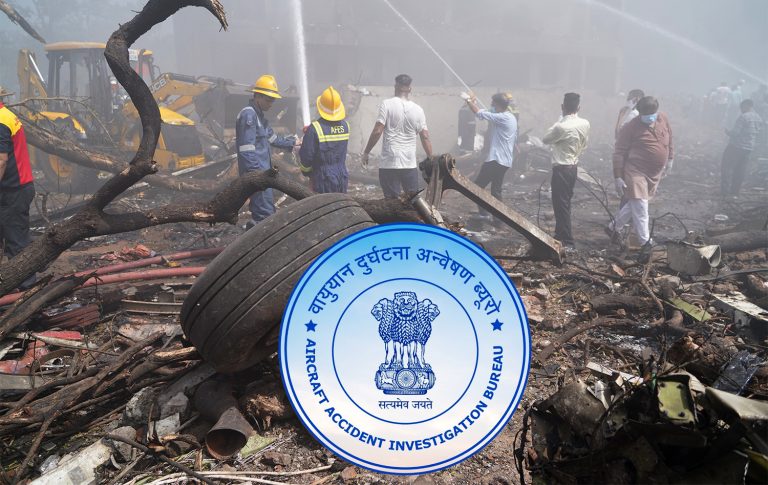
The Aircraft Accident Investigation Bureau (AAIB) Lab in New Delhi, is currently working intensively to examine data retrieved from the black boxes of Air India Flight AI-171, which crashed in Ahmedabad earlier this month.
According to the Ministry of Civil Aviation, the Crash Protection Module (CPM) from the front black box was safely retrieved, and on June 25, 2025, the memory module was successfully accessed and its data downloaded at the AAIB Lab. Sources familiar with the process told ANI that an identical black box, referred to as a “golden chassis,” was used to confirm whether data could be accurately recovered from the black boxes. One black box was recovered from the rooftop of a building at the crash site on June 13, and the other from the debris on June 16.
The investigation is being led by AAIB officials and includes technical members from the Indian Air Force, Hindustan Aeronautics Limited (HAL), and the National Transportation Safety Board (NTSB) from the United States, which is the official investigative agency of the country of the aircraft’s design and manufacture. The Director General of AAIB is heading the probe. An aviation medicine expert and an Air Traffic Control officer have also been included in the investigation team. Sources confirmed that the NTSB team is currently stationed in Delhi and working closely with Indian authorities at the AAIB Lab. Officials from Boeing and GE are also present in the national capital to assist with the technical process.
India, as a signatory to the ICAO Chicago Convention of 1944, is following all international rules and procedures as per ICAO Annex 13 and the Aircraft (Investigation of Accidents and Incidents) Rules, 2017. The investigation is being conducted in a fully transparent and time-bound manner, in line with global norms.
Before the crash of Air India Flight AI-171, AAIB used to send black boxes of damaged aircraft and, in some cases, even helicopters to overseas decoding centres in countries like the UK, USA, France, Italy, Canada, and Russia. Indian labs earlier lacked the equipment and dedicated facility to retrieve black box data from serious aviation accidents. That has now changed, and the AAIB Lab in Delhi is fully equipped to decode both Cockpit Voice Recorders (CVR) and Flight Data Recorders (FDR) within the country.
A source told ANI that although AAIB was formed in 2012 to investigate major aviation accidents, it remained under-equipped and limited in its functioning until 2017. It was only after the Central Government, under Prime Minister Narendra Modi’s Aatmanirbhar Bharat initiative, pushed for the development of home-grown technology in defence, aviation, and other strategic sectors that AAIB began to receive advanced tools and technical upgrades. As a result, India is now decoding black boxes of a major air crash within the country for the first time.
In earlier crashes, black box decoding was mostly done abroad. In the 1996 Charkhi Dadri crash, black boxes were decoded by IAC in Moscow and the CVR in Farnborough, UK. In the 2010 Mangalore crash, recorders were repaired and decoded by the NTSB in the US. In the 2015 Delhi crash, decoding was done at the engineering lab of Canada’s Transportation Safety Board. In the 2020 Kozhikode crash, the CVR and FDR were downloaded at DGCA’s flight recorder facility, but the data was processed with help from the NTSB.
Such dependence often led to concerns about delays and the credibility of investigations. But now, with the AI-171 crash investigation being carried out entirely in India, supported by international cooperation and equipped with advanced tools, this marks a major milestone in India’s aviation safety journey. Officials believe this will lead to faster, more transparent investigations and strengthen public trust in India’s ability to handle major air accidents independently.
(This news report is published from a syndicated feed. Except for the headline, the content has not been written or edited by OpIndia staff)
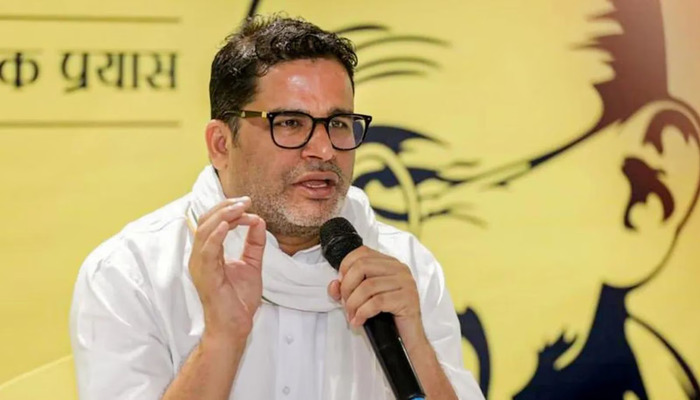
Election strategist and the founder of the Jan Suraj Party, Prashant Kishor, recently claimed in an interview with ANI, that industrialisation of Bihar will not stop migration of locals seeking employment opportunities in other states. Ironically, to back his statement, Kishor cited countries like Finland, Sweden and Norway, claiming that these countries do not have any major industries and yet they have highly developed economies. “Industrialisation will not prevent migration,” Kishor claimed.
“In an economy like Bihar, no big industrial parks can be set up. Firstly, we are landlocked, and, secondly, we have more population density. In the first phase, we have to boost up our education and service sectors, we have to provide good education to kids, and we have to provide more resources in the hands of people so that people are able to do something on their own. People here (in Bihar) are industrious and hard working,” Kishor added implying that industries can only be set up in coastal states.
He claimed that setting up a few industries will not solve the problem of migration in Bihar. “Migration from Bihar will stop when people have access to education along with resources and a conducive environment to work,” said Kishor, adding that this is the idea of a welfare economy. He didn’t say where the jobs are to come from, if not from industries.
When prodded by the interviewer, Kishore offered a bizarre logic. He said, In Delhi, most workers doing construction work are from Bihar. When Bihar has money, these people won’t have to come to Delhi, they would do building fittings, plasterings and other work right there in Bihar.
At this point the interviewer Naveen Kapoor interrupted Kishore, highlighting that not just construction workers, but many high level professionals in every company are also from Bihar. However, Kishore was fixed in his narrative. He insisted that an Adani putting up a factory in Bihar won’t help the people, because there will only be a limited number of jobs available. Instead, the state should focus on education and agriculture, as per Kishore. But he offered no explanation as to where would the jobs come from to employ all these ‘educated’ people.
Why Kishor is wrong about industrialisation in Bihar
While Kishor rightly pointed out the problem of migration in Bihar, his argument that industrialisation of Bihar will not be able to prevent migration does not hold water. Bihar’s migration problem directly arises from the lack of employment opportunities in the state which has resulted from decades of neglect and throttling of local small-scale industries by previous Congress and RJD governments.
Younger generations, who have known Bihar only as a labour exporting state, might find it hard to believe that the state once had numerous local industries, which not only generated employment but were hubs of local crafts and products. The lack of coastal advantage did not stop Bihar from being one of the most industrialised states of the country a few decades back.
To name a few, there was a thriving muslin industry in Madhubani, clothes industry in Dulalganj and paper industry in Kishanganj. Darbhanga was once the main production centre for ivory products. Areas like Khagaria and Kishanganj were known for brass and bronze utensils. Bhagalpur was famous for silk and Munger for horseshoes, stoves and shoes. Purnia was famous for vermilion production and export along with tent house products. Besides, there also existed glass, cement, tobacco, paper and pulp, blanket, and utensil industries in various districts of the state.
According to a data, out of 6982 registered factories across the whole country in 1951, 455 were in Bihar, which accounted for 6.51% of the registered factories in the whole of India. After independence, there were 56 sugar mills in the whole country. Out of these, 33 were in Bihar in areas including Sakri, Rayam, Lohat.
However, the during the Congress regime in the state, local industries in Bihar gradually died due to adverse policies of the government. The Congress government’s policies like the Freight Equalisation encouraged industrialists to use Bihar’s mineral resources and set up industries outside. The situation worsened during Lalu Prasad Yadav’s Jungle Raj when he openly declared that the agenda of his government is not development but ‘social justice’. The cumulative effect of the policies of the Congress and the RJD governments was that the local industries in the state were entirely uprooted, pushing the state into a dark unending period of poverty.
The primary reason for the migration of people from Bihar is the lack of jobs in the state. Poverty and lack of education further aggravate the problem. Since most of the locals migrating from the state are not educated, they are compelled to work as unskilled, or semi skilled labourers in other states. The scale at which employment generation is required to prevent the outflux of locals from Bihar is only possible through establishment of industries. Therefore, Kishor’s claim that industrialisation will not prevent migration from Bihar is not right. Besides, his logic behind Bihar not being conducive for industrialisation because of being ‘landlocked’ is preposterous as a coastal boundary is not a prerequisite for all kinds of industries. In this age of modern transports, railways and waterways, there is no reason a ‘landlocked’ state should give up on industrialisation and stay undeveloped.
Kishor’s proposal for the development of Bihar was that people should be provided education and ‘resources’ so that they can “do something on their own”. However, he did not explain how his proposed plan is to be implemented and how people with no resources will suddenly have resources to ‘do something on their own.’
The industry-driven economies of Norway, Sweden, Finland and others
To back his argument that industrialisation is not required for creating employment opportunities in Bihar, Prashant Kishor cited the examples of countries like New Zealand, Norway, Sweden, Finland and others. He claimed that none of these countries have any major industries and yet these countries are highly developed. Kishor’s claims about these countries not having major industries are entirely false as these countries have thriving industries contributing considerably to their GDPs.
Though none of the countries mentioned by Kishor are comparable to Bihar in terms of population as well as geography, let’s take a look at industrial and manufacturing sectors in these countries and their contribution in their respective economies:
Finland
Finland has highly industrialised economy having a variety of industries like agriculture, manufacturing, refining, and services. Other major sectors in the Finnish industry are chemicals, metal, biotechnology and cleantech. The electronic industry of the country is a key contributor in its economy. Nokia was born in Finland. The country invests generously in research and development which has hugely benefited its electronic industry. Besides, Finland also has robust shipbuilding, motor and chemical industries. Finland’s industry sector contributed to around 24% in the country’s GDP in 2023.
Norway
Norway, which is among the top five countries with highest per capita income, has a variety of major industries, including petroleum/oil production, hydro-power, aquaculture, shipping and tourism. Norway’s industry sector, including manufacturing and construction, contributes approximately 39% to the country’s Gross Domestic Product (GDP). After the Middle Eastern countries, Norway is one of the largest oil and gas producers in the world and this industry accounts for almost half of the country’s total exports. Norway also houses some of the biggest names in the shipbuilding and shipping services industry. Companies like Wilhelmsen and DNV are top global players in maritime transport, Norsk Hydro and others are major names in aluminium and renewable energy while Telenor is a major name in the Telecommunications industry.
Sweden
Sweden, one of the richest countries in Europe, is largely dependent on manufacturing. It has diverse industries including agriculture, tourism, and finance. Sweden’s industrial sector, including manufacturing, mining and utilities contributes approximately 18.57% to the country’s GDP in 2023. The country has an export-oriented manufacturing. Automotive sector is the largest sector of manufacturing industry in Sweden, which accounts for about half of the industrial value-added. Swedish automakers like Saab and Volvo are globally recognised. The country also has a developed aerospace sector. Swedish exports of finished goods include engineering products like telecommunication equipment, hydroelectric power plant equipment and cars. Sweden is also a global leader in production of specialty steel and mining, with companies like SSAB and LKAB.
New Zealand
Even though service sector accounts for a large part of New Zealand’s GDP, the country has industries, including agricultural and horticulture sector, mining, and fishing. New Zealand has a rich natural reservoir of natural resources, including deposits of iron ore, silver, coal, gold, and limestone. The important industries in New Zealand, include food processing, metal fabrication, wood and paper products, and aluminium production, apart from a major construction sector. In recent years, New Zealand’s manufacturing industry has accounted for 8-14% of its GDP. Moreover, New Zealand’s population is a mere 5.5 million. Bihar has over 13 crore people, 25-30 times more than New Zealand. Hence, to claim that Bihar does not need industrialisation is not only callous and careless misinformation, but hints at another political campaign based on hollow ideas of ‘socialism’ under the garb of ‘new’ politics.