Home Blog Page 340

Communist parties, their leaders, Urban Naxals outrage after killing of terrorist Basavaraju alias Keshav Rao in encounter, portray the mastermind of multiple massacres as a hero

The entire urban naxal ecosystem is in deep shock after the killing of the dreaded naxal leader Nambala Keshav Rao alias Basavaraju in an encounter with the security forces on May 21, 2025. He was among the 27 naxal terrorists killed during a fierce gunbattle with the security forces in the in Abujhmad area of the Narayanpur district of Chhattisgarh. Basavaraju, who had a bounty of ₹1.5 crore on him, was the general secretary of the banned CPI(M). He was the brain behind several lethal attacks on politicians and security forces, including the 2010 Chintalnar massacre of 76 CRPF jawans and the 2013 attack in Jhiram Ghati wherein several Congress leaders were killed.

The CPI(ML) Liberation issued a statement condemning the killing of the Basavaraju terming it a “cold-blooded extra-judicial killing”. “…it is clear that the state is spearheading Operation Kagar as an extra-judicial extermination campaign and taking credit for killing citizens and suppressing Adivasi protests against corporate plunder and militarisation in the name of combating Maoism,” read the CPI(ML) Liberation statement.

The CPI(M) called the government’s action against naxal terrorism as a “policy of killing and annihilation”. Ironically, the Maoist party which the supports armed revolution, accused the government of having a mindset that celebrates taking of human life.

CPI General Secretary D Raja also expressed his anguish on the killing of Basavaraju. “CPI strongly condemns the cold-blooded killing of a senior Maoist leader along with several Adivasis in Chhattisgarh. It is yet another instance of extrajudicial action carried out under the guise of counterinsurgency operations. The repeated use of lethal force instead of lawful arrest raises serious concerns about the State’s commitment to democratic norms and the rule of law,” he wrote on X.

Riled up urban naxals, who reject the idea of a democratic state, are quoting the Constitution and the state law to condemn the state action against naxal terrorism that has plagued several parts of the country for decades and has deprived the local communities of the opportunity to join the mainstream. They are now portraying Basavaraju, who masterminded several brutal massacres, as a ‘hero’ who was fighting for the rights of poor Adivasis.

Urban naxals wrote open letter urging government not to act against naxal terrorists

After the Modi government launched Operation Kagar at the beginning of the year to eradicate the roots of Naxalism, the urban naxals tried to negotiate with the government on behalf of the naxal terrorists. In March, the central committee of the CPI(M) expressed its willingness to engage in peace negotiations with both the central and state governments, provided they cease the Operation Kagar. This was followed by an open letter by the so-called ‘activists’ who urged the government to stop the war on ground in the name of the interests of Adivasis.

Union Home Minister has declared to eradicate Naxalism by March 2026. As of 2015, approximately 106 districts across 10 states were classified as naxal-affected. This number was reduced to 38 by 2024 and further to 18. Out of these, 12 were considered the most impacted by naxal activities, yet this figure has now fallen to just 6.

Earlier, the security forces conducted ‘Operation Black Forest’ near Karreguttalu Hill (KGH) at the Chhattisgarh-Telangana border as part of counterinsurgency. The 21-day-long operation was carried out by the joint forces of the Central Reserve Police Force (CRPF) and state police between April 21 and May 11. In the operation, the security forces neutralised 31 Naxals carrying a bounty of Rs 1.72 crore. A total of 214 Naxal hideouts and bunkers were destroyed in the operation and a total of 450 IEDs, 818 BGL shells, 899 bundles of was recovered.

PM Modi inaugurates Rising North East Summit at Bharat Mandapam, says from merely a Frontier Region, now North East is emerging as the ‘Front-Runner of Growth’

Prime Minister Narendra Modi inaugurated the Rising North East Investors Summit 2025 at Bharat Mandapam, New Delhi today. Extending a warm welcome to all the dignitaries to the event, the Prime Minister expressed pride, warmth, and immense confidence in the future of the North East region. He recalled the recent Ashtalakshmi Mahotsav held at Bharat Mandapam and emphasized that today’s event marks a celebration of investment in the Northeast. The Prime Minister highlighted the significant presence of industry leaders at the summit, underscoring the enthusiasm surrounding opportunities in the region. He extended his congratulations to all ministries and state governments, acknowledging their efforts in creating a thriving investment-friendly environment. Conveying his best wishes, Prime Minister lauded the Northeast Rising Summit, reaffirming his commitment to the region’s continued growth and prosperity.

Underscoring India’s status as the world’s most diverse nation, Shri Modi said, “the Northeast is the most diverse region of our diverse nation”. He emphasized the vast potential spanning trade, tradition, textiles, and tourism, stating that the region’s diversity is its greatest strength. He remarked that the Northeast is synonymous with a thriving bio-economy and bamboo industry, tea production and petroleum, sports and skill, as well as an emerging hub for eco-tourism. He further noted that the region is paving the way for organic products and stands as a powerhouse of energy. He affirmed that the Northeast embodies the essence of Ashtalakshmi, bringing prosperity and opportunity. With this strength, he stated, every Northeastern state is declaring its readiness for investment and leadership.

Emphasizing the critical role of Eastern India in achieving a Viksit Bharat, the Prime Minister underscored the Northeast as its most vital component. “For us, EAST is not just a direction but a vision—Empower, Act, Strengthen, and Transform—which defines the policy framework for the region”, he stated, highlighting that this approach has placed Eastern India, particularly the Northeast, at the center stage of India’s growth trajectory.

Prime Minister highlighted the transformative changes witnessed in the Northeast over the past 11 years, emphasizing that the progress is not merely reflected in statistics but is tangible on the ground. He stated that the government’s engagement with the region goes beyond policy measures, fostering a heartfelt connection with its people. The Prime Minister underscored the over 700 visits made by Union Ministers to the Northeast, demonstrating their commitment to understanding the land, witnessing the aspirations in people’s eyes, and translating that trust into development policies. He stressed that infrastructure projects are not just about bricks and cement but serve as a means of emotional connectivity. He reaffirmed the shift from Look East to Act East, stating that this proactive approach is yielding visible results. “While the Northeast was once regarded merely as a frontier region, it is now emerging as a front-runner in India’s growth story”, he added.

Underlining that robust infrastructure plays a key role in making the tourism sector attractive and instilling confidence among investors, Shri Modi highlighted that well-developed roads, power infrastructure, and logistics networks form the backbone of any industry, facilitating seamless trade and economic growth. He remarked that infrastructure is the foundation of development and that the government has initiated an Infrastructure Revolution in the Northeast. He acknowledged the region’s past challenges but asserted that it is now emerging as a Land of Opportunities. He stated that thousands of crores have been invested in enhancing connectivity, citing projects such as the Sela Tunnel in Arunachal Pradesh and the Bhupen Hazarika Bridge in Assam. Shri Modi also highlighted key advancements in the past decade, including the construction of 11,000 kilometers of highways, extensive new railway lines, a doubling of airport numbers, the development of waterways on the Brahmaputra and Barak rivers, and the installation of hundreds of mobile towers. He further noted the establishment of a 1,600-kilometer-long Northeast Gas Grid, ensuring a reliable energy supply for industries. Shri Modi underscored that highways, railways, waterways, and digital connectivity are all strengthening the Northeast’s infrastructure, creating a fertile ground for industries to seize the First Mover Advantage. He affirmed that over the next decade, the region’s trade potential will multiply significantly. He further pointed out that India’s trade volume with ASEAN currently stands at approximately $125 billion and is expected to exceed $200 billion in the coming years, positioning the Northeast as a strategic trade bridge and gateway to ASEAN markets. He reiterated the government’s commitment to accelerating infrastructure projects to enhance regional connectivity. Stressing the importance of the India-Myanmar-Thailand Trilateral Highway, which will provide direct access from Myanmar to Thailand, strengthening India’s connectivity with Thailand, Vietnam, and Laos, Shri Modi highlighted the government’s efforts to expedite the Kaladan Multimodal Transit Project, which will link the Kolkata Port to Myanmar’s Sittwe Port, providing a crucial trade route through Mizoram. He stated that this project will significantly reduce the travel distance between West Bengal and Mizoram, enhancing trade and industrial growth. 

Highlighting the ongoing development of Guwahati, Imphal, and Agartala as Multi-Modal Logistics Hubs, the Prime Minister noted that the establishment of Land Custom Stations in Meghalaya and Mizoram is further expanding international trade opportunities. He emphasized that these advancements are positioning the Northeast as a rising force in trade with Indo-Pacific nations, unlocking new avenues for investment and economic growth. 

Underscoring India’s vision of becoming a Global Health and Wellness Solution Provider, the Prime Minister stated that the Heal in India initiative is being developed as a worldwide movement. He highlighted the Northeast’s rich biodiversity, natural environment, and organic lifestyle, describing it as a perfect destination for wellness. The Prime Minister urged investors to explore the Northeast as a critical component of India’s Heal in India mission, reaffirming that the region’s climate and ecological diversity offer immense potential for wellness-driven industries.

Shri Modi highlighted the rich cultural heritage of the Northeast, emphasizing its deep-rooted connection to music, dance, and celebrations. He noted that the region is an ideal destination for global conferences, concerts, and destination weddings, positioning it as a complete tourism package. He stated that as development reaches every corner of the Northeast, its positive impact on tourism is evident, with visitor numbers doubling. He remarked that these are not just statistics—this surge has led to the rise of homestays in villages, new employment opportunities for young guides, and the expansion of the tour and travel ecosystem. Underscoring the need to elevate Northeast tourism further, he pointed out the vast investment potential in eco-tourism and cultural tourism. Reaffirming that peace and law and order are the most crucial factors for any region’s development, Shri Modi stated, “Our government has a zero-tolerance policy against terrorism and insurgency”. He noted that the Northeast was once associated with blockades and conflict, which severely impacted opportunities for its youth. He outlined the government’s consistent efforts toward peace agreements, stating that over the past 10-11 years, more than 10,000 young individuals have abandoned arms to embrace peace. He emphasized that this shift has unlocked new employment and entrepreneurial opportunities within the region. Shri Modi further highlighted the impact of the MUDRA scheme, which has provided thousands of crores in financial support to lakhs of youth in the Northeast. He further noted the rise of education institutes, helping young individuals develop skills for the future. He stated that the youth of the Northeast are not just internet users but emerging digital innovators. He emphasized advancements such as over 13,000 kilometers of optical fiber expansion, 4G and 5G coverage, and growing opportunities in the technology sector. “Young entrepreneurs are now launching major startups within the region, reinforcing the Northeast’s role as India’s digital gateway”, he added.

Emphasizing the critical role of skill development in driving growth and securing a better future, the Prime Minister stated that the Northeast provides a favorable environment for this advancement, with the central government making substantial investments in education and skill-building initiatives. The Prime Minister highlighted that over the past decade, ₹21,000 crore has been invested in the Northeast’s education sector. He noted key developments, including the establishment of over 800 new schools, the region’s first AIIMS, nine new medical colleges, and two new IIITs. Additionally, he cited the creation of the Indian Institute of Mass Communication campus in Mizoram and nearly 200 new skill development institutes across the region. He further remarked that India’s first sports university is being developed in the Northeast, with significant investments under the Khelo India program. He pointed out that eight Khelo India Centers of Excellence and more than 250 Khelo India Centers have been established, fostering sports talent across the region. The Prime Minister assured that the Northeast now offers top-tier talent across various sectors, encouraging industries and investors to leverage the region’s immense potential.

Shri Modi stressed on the growing global demand for organic food, stating that his vision is for an Indian food brand to be present on every dining table worldwide. He highlighted the Northeast’s pivotal role in realizing this dream. He said that over the past decade, the scope of organic farming in the Northeast has doubled, with the region producing high-quality tea, pineapples, oranges, lemons, turmeric, and ginger. He affirmed that the exceptional taste and superior quality of these products have led to rising international demand. He also encouraged stakeholders to capitalize on this growing market, recognizing the Northeast’s potential as a key driver of India’s organic food exports.

Underscoring the government’s commitment to facilitating the establishment of food processing units in the Northeast, the Prime Minister stated that while enhanced connectivity is already supporting this initiative, additional efforts are being made to develop mega food parks, expand cold storage networks, and provide testing lab facilities. He highlighted the launch of the Oil Palm Mission, recognizing the Northeast’s soil and climate as highly suitable for palm oil cultivation. He noted that this initiative offers a strong income opportunity for farmers while reducing India’s dependency on edible oil imports. He further added that palm oil farming presents a major opportunity for industries, encouraging stakeholders to tap into the region’s agricultural potential.

“Northeast is emerging as a key destination for two strategic sectors—energy and semiconductors”, stressed Shri Modi, highlighting the government’s extensive investments in hydropower and solar power across all Northeastern states, with several thousand crore worth of projects already approved. He noted that beyond investment opportunities in plants and infrastructure, there is significant potential in manufacturing, including solar modules, cells, storage solutions, and research. He underscored the importance of maximizing investment in these areas, stating that greater self-sufficiency today will reduce dependence on foreign imports in the future. Shri Modi further remarked on the growing role of Assam in strengthening India’s semiconductor ecosystem. He announced that the first Made in India chip from a Northeast-based semiconductor plant will soon be introduced, signaling a major milestone for the region. He affirmed that this development is unlocking opportunities for cutting-edge technology and solidifying the Northeast’s position in India’s high-tech industrial growth.

“Rising Northeast is more than just an investors’ summit—it is a movement and a call to action”, emphasised the Prime Minister, stating that India’s future will reach new heights through the Northeast’s progress and prosperity. The Prime Minister expressed full confidence in the business leaders present, urging them to unite in driving growth. Concluding his address, he called upon stakeholders to work together in transforming Ashtalakshmi—the symbol of Northeast’s potential—into a guiding force for a Viksit Bharat. He expressed confidence that by the next Rising Northeast, India would have propelled way ahead. 

The Union Minister for Development of North Eastern Region, Shri Jyotiraditya M. Scindia, Governor of Manipur, Shri Ajay Kumar Bhalla, Chief Minister of Assam, Shri Himanta Biswa Sarma, Chief Minister of Arunachal Pradesh, Shri Pema Khandu, Chief Minister of Meghalaya, Shri Conrad Sangma, Chief Minister of Mizoram, Shri Lalduhoma, Chief Minister of Nagaland, Shri Neiphiu Rio, Chief Minister of Sikkim, Shri Prem Singh Tamang,  Chief Minister of Tripura, Shri Manik Saha, Union Minister of State for Development of North Eastern Region, Dr. Sukanta Majumdar were present among other dignitaries at the event.

Background

With an aim to highlight the North East Region as a land of opportunity, attracting global and domestic investment, and bringing together key stakeholders, investors, and policymakers on a single platform, Prime Minister Shri Narendra Modi inaugurated the Rising North East Investors Summit at Bharat Mandapam, New Delhi today.

The Rising North East Investors Summit, a two-day event from May 23-24 is the culmination of various pre-summit activities, such as series of roadshows, and states’ roundtables including Ambassador’s Meet and Bilateral Chambers Meet organized by the central government with active support from the state governments of the North Eastern Region. The Summit will include ministerial sessions, Business-to-Government sessions, Business-to-Business meetings, startups and exhibitions of policy and related initiatives taken by State Government and Central ministries for investment promotion.

The main focus sectors of investment promotion include Tourism and Hospitality, Agro-Food Processing and allied sectors; Textiles, Handloom, and Handicrafts; Healthcare; Education and Skill Development; Information Technology or Information Technology Enabled Services; Infrastructure and Logistics; Energy; and Entertainment and Sports.


Press release by Prime Minister’s Office

Delhi-Srinagar IndiGo flight: Pakistan rejects pilot’s request to use its airspace amid deadly turbulence

In a dramatic turn of events earlier this week that should knock some sense into the ‘Aman Ki Asha’ brigade if Operation Sindoor hadn’t already, the pilots of IndiGo’s Delhi-to-Srinagar flight found themselves trapped in a fierce hailstorm—after being denied permission to reroute around the weather by Lahore’s Air Traffic Control. The startling revelation came from the DGCA on Friday, May 23.

What began as a routine flight from Delhi to Srinagar turned into a harrowing ordeal for 222 passengers aboard IndiGo Flight 6E 2142 on Wednesday evening, as the aircraft was violently caught in a hailstorm and severe turbulence near Pathankot. Startlingly, the Lahore’s Air Traffic Control had denied the pilots’ desperate requests to deviate from their course to avoid the impending weather threat, according to a DGCA statement released Friday (May 23, 2025).

Though no injuries were reported and the Airbus A320 landed safely at Srinagar International Airport, the flight left many visibly shaken—including five Trinamool Congress MPs onboard. The aircraft itself wasn’t so lucky. Its radome, or nose cone, was severely damaged by the hail, forcing the plane to be grounded for inspection and repairs.

“This was a near-death experience. I thought my life was over,” said Trinamool MP and journalist-turned-politician Sagarika Ghose, ironically one of the most vocal peaceniks consistently advocating for thawing of relationship between India and Pakistan. “People were screaming, praying, panicking. Hats off to the pilot who brought us through that nightmare. When we landed and saw the nose of the plane blown apart, it hit us how close we came to disaster.”

According to the DGCA, the incident unfolded after the crew attempted to return to Delhi upon detecting a thunderstorm cell ahead. But boxed in by restricted military airspace and a closed Pakistan corridor, they had little choice. The IAF first declined permission to reroute toward the international border, and Lahore ATC refused a similar request shortly after. With the storm fast approaching, the pilots made a split-second decision to proceed through the weather system rather than risk circling back. “The crew chose to maintain heading to exit the turbulence via the shortest path to Srinagar,” read the DGCA’s summary.

Dramatic videos shot mid-flight have since flooded social media, showing visibly terrified passengers clinging to seats, some whispering prayers, others breaking down as the aircraft violently shook and dipped.

IndiGo confirmed the incident in a statement Thursday, assuring the public that all passengers were safe. “Flight 6E 2142 encountered a sudden hailstorm and landed safely. The aircraft is undergoing maintenance and will return to service once cleared.”

The timing of the event adds a layer of geopolitical complexity. Following the Pahalgam terror attack that killed at least 26 people and India’s audacious Operation Sindoor to bring the perpetrators of terrorism to justice, airspace between India and Pakistan remains mutually shut—leaving civilian pilots with fewer emergency options in northern sectors. The MPs onboard were en route to visit victims of cross-border shelling along the LoC, highlighting the thin line separating diplomacy from danger in this high-stakes region.

Rising North East Summit: Gautam Adani says a new chapter in growth story is unfolding in the region, announces ₹1 lakh crore investment in the next decade

The Rising North East Investors Summit was inaugurated by PM Modi at Bharat Mandapam in Delhi on Friday morning. The two-day summit has been organised to highlight North East Region as a land of opportunity, attracting global and domestic investment, and bringing together key stakeholders, investors, and policymakers on a single platform.

Inaugurating the event, PM Modi said that India is known as the most diverse nation in the world, and the North East is the most diverse region within India. “The Northeast is the most diverse part of our diverse nation… From trade to tradition, from textile to tourism, the diversity of the Northeast is its strength. Northeast means bio-economy, bamboo, tea production, petroleum, sports, skill, an emerging hub of eco-tourism, and a new world for organic products. Northeast is the powerhouse of energy. Northeast is ‘Ashta Lakshmi’ for us,” PM Modi said.

Union Minister for Communications and Development of North Eastern Region, Jyotiraditya M Scindia, emphasized the government’s commitment to the region’s development. He said that union govt has increased budgetary allocation for the region significantly, aimed at attracting both global and domestic investors, sought to spotlight the immense economic potential of the North East. Scindia also lamented that in the seventy years following India’s independence, the region had remained neglected and in the shadows.

Addressing the summit, Adani Group chairman Gautam Adani hailed PM Narendra Modi for his “Act East, Act Fast, Act First” policy, saying the PM gave the northeast its wake-up call. He said, “Over the past decade, in the hills and valleys of the Northeast, a new chapter in India’s growth story is unfolding. A story rooted in diversity, resilience, and untapped potential. This region is now a source of our cultural pride, economic promise, and strategic direction.”

Adani noted how PM made 65 personal visits to the region, and noted the investment of $6.2 lakh crore since 2014, doubling of road network to 16,000 kms and doubling the number of airports to 18. The Adani Group chairman emphasised the group’s commitment to the development of Northeast India.

Gautam Adani announced that Adani Group will invest ₹50,000 crore in the northeastern region over the next 10 years. This will be over and above the investment of ₹50,000 crore announced in the recently held Advantage Assam 2.0 summit. Therefore, the group has now committed ₹1 lakh crore investment commitment for Assam and the broader Northeast region over the next decade.

Gautam Adami said, “Three months ago, in Assam, we pledged an investment of ₹50,000 crore. Today, once again, humbled and inspired by your leadership, I announce that the Adani Group will invest an additional ₹50,000 crore across the Northeast over the next 10 years.”

He said that the company’s focus will be on green energy — including smart-meters, hydro, pumped storage, power transmission, roads & highways, digital infrastructure, logistics, as well as capacity-building through skilling and vocational training centres. Adani further added, “But more than infrastructure, we will invest in people. Every initiative will prioritize local jobs, local entrepreneurship, and community engagement.”

Assuring the company’s cooperation in the Vikshit Bharat 2047 vision of PM Modi, Gautam Adani said, “Hon’ble Prime Minister, we will walk — in step with your vision. Hon’ble Chief Ministers, we will hold hands with your people. Hon’ble Minister of Northeast, we will echo your mission.”

A statement issued by the company said that the investment announcement positions the Adani Group as a key private sector player in the Northeast’s economic transformation, promising long-term impact across energy, connectivity, and livelihoods.

Operation ‘Push-back’: How India is getting rid of illegal Bangladeshi immigrants and Rohingya infiltrators, one step at a time

On Thursday (22nd May), the Ministry of External Affairs (MEA) has called upon Bangladesh to help expedite the deportation of their citizens, who are illegally staying in India.

Spokesperson Randhir Jaiswal was heard saying, “We have a large number of Bangladeshi nationals in India who are required to be deported. We have asked the Bangladeshi side to verify the nationality. We have a pending list of more than 2360 cases of people required to be deported.”

“Many of them have completed the jail process. In many cases, the nationality verification process has been pending since 2020,” he emphasised.

For decades, India has followed established protocols to deport Bangladeshi infilitrators and Rohingyas to their home country.

The process has been slow (pending trial in courts), cumbersome (because Bangladesh government and Bangladesh Border Guard often refuse to acknowledge their own citizens) and has failed to attain success.

The situation has been exacerbated due to continued illegal immigration through the porous India-Bangladesh border with the help of agents and brokers but not enough deportations year-on-year.

Screengrab of the data on Bangladeshi nationals deported to their home country

For the unversed, there are more than 2 crore Bangladeshis living illegally in India (2016 data).

Following the undemocratic ouster of Sheikh Hasina and the hostile attitude of the Yunus-led interim government, the deportation protocol has been rendered useless by Bangladesh.

Forced by circumstances, the Indian government has now resorted to what is being unofficially referred to as ‘Operation Push-back.’

What is Operation Push-back

The Indian government has devised a new strategy to get rid of Bangladeshi infiltrators and Rohingyas who are caught red-handed at the Eastern border as well as living in India illegally for several years.

Instead of going through the hassle of handing them over to the police, registering a FIR, producing them before the court, continuing trials for years and then sending them back through established protocols, the Indian security forces are now increasingly pushing-back the infiltrators to the other side almost instantenously.

‘Operation Push-back’ has been in motion since April 2025. Assam Chief Minister Himanta Biswa Sarma was quoted as saying –

“Infiltration is a big issue. We have now decided we will not go through the legal process. Earlier, decision was to arrest a person and then bring him to the Indian legal system… Earlier also we used to arrest 1,000-1,500 foreigners…they must be sent to jail and then they are produced before a court of law. Now, we have decided that we will not bring them inside the country, we will push them. This pushing back is a new phenomenon. Every year, 5,000 people enter the country and because of pushback this number will become minimise now.”

In cases where Bangladeshis are nabbed from different cities of India (far from the Eastern borders), they are first flown to either Tripura, Assam or West Bengal and then pushed over to Bangladeshi side.

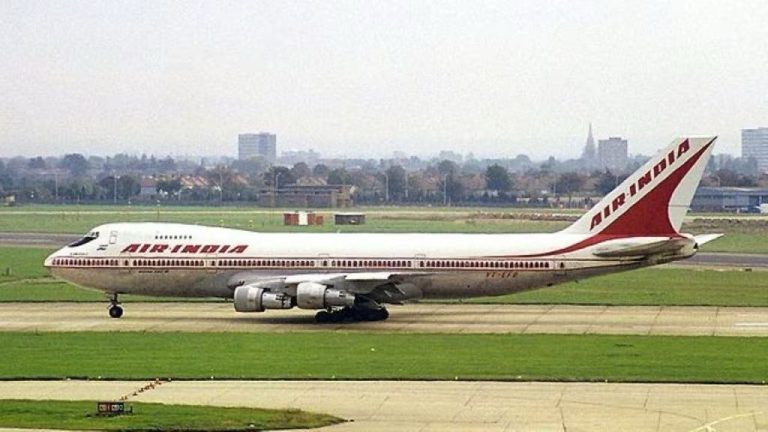
One such case was reported on 4th May this year. Two Air India flights carrying 300 Bangladeshis landed in Agartala from Gujarat. The illegal immigrants were deported via the land border.

On 14th May, Rajasthan BJP Minister Jogaram Patel informed that 148 Bangladeshis were transported to Kolkata from Jodhpur and thereafter deported to Bangladesh. Prior to being taken to Kolkata, the illegal immigrants were housed in a make-shift detention centre.

Several States in India have stepped up the process of identification of illegal immigrants. Odisha Law Minister Prithiviraj Harichandan stated that a Special Task Force (STF) has been formed to nab Bangladeshis living in the State.

“The government has taken a tough stand. No foreign national without valid legal status will be allowed to stay in Odisha. The identification process has already begun and will be carried out meticulously in all districts…Different engineering departments of the state government have been asked not to engage any Bangladesh or foreign nationals without valid documents,” he pointed out.

According to the data shared by Tripura police, a whopping 816 Bangladeshis and 79 Rohingyas had been apprehended while illegally entering India through the State between 1st January 2024 and 28th February 2025.

Tripura has deported 1,746 Bangladeshis between 2022 and 31st October 2024. It shares a 856-km-long border with Bangladesh on 3 sides, and some parts of the border are still unfenced owing to local disputes.

The impact of crackdown on infilitrators have been successful so much so that some Bangladeshis are now ‘voluntarily returning‘ to their home country.

Yunus regime taken aback by India’s swift action against illegal Bangladeshis

The interim government of Bangladesh, led by ‘chief advisor’ Muhammad Yunus has been rattled by India’s paradigm shift in strategy at dealing with infiltrators.

On 8th May, his Foreign Minister wrote to India to raise concerns over ‘people being pushed into the country and urged New Delhi to adhere to established repatriation mechanisms.’

“For the sake of peace and stability along the Bangladesh–India border, such push-ins are unacceptable and should be avoided,” it claimed.

In the meantime, the Indian Ministry of Home Affairs (MHA) has set a 30-day deadline for verification of the credentials of illegal Bangladeshis and Rohingyas, following which they would deported (mostly through Operation Push-back).

Brazil: Indigenous Amazon tribe that got painted as porn addicts after New York Times story sues the American newspaper

An Indigenous tribe from the Brazilian Amazon has sued the American newspaper The New York Times, saying the newspaper’s reporting on the tribe led to its members being shown as technology-addled and addicted to pornography. The Amazonian tribe is absolutely furious about its depiction in the New York Times report and the reactions to it.

The Marubo Tribe of the Javari Valley, which is suing New York Times, is a community of about 2,000 people in the Amazonian rainforest. The defamation lawsuit has been filed in a court in Los Angeles.

The lawsuit also names TMZ and Yahoo as defendants, saying that their stories amplified and sensationalized the New York Times reporting and smeared the tribe as well.

The tribe is living in communal huts among 20 different villages scattered over hundreds of miles along the Ituí River in Brazil, and most of its is inaccessible. They live in one of the most remote places in the world in the Amazon forest.

However, all that changed when Elon Musk’s Starlink arrived, and following that, came a New York Times reporter 2 years later named Jack Nicas. The tribe received 20 Starlink antennas, worth about $15,000 apiece, which gave the isolated tribe a high-speed connection to the outside world. The American newspaper’s journalist Jack Nicas thought it would be a great story to cover, however, his story portrayed the tribe as mostly porn addicts, as per the lawsuit filed by the tribe.

As per the tribe, the New York Times report portrayed the Marubo people as a community unable to handle basic exposure to the internet, highlighting allegations that their youth had become consumed by pornography.

The lawsuit further added, “These statements were not only inflammatory but conveyed to the average reader that the Marubo people had descended into moral and social decline as a direct result of internet access. Such portrayals go far beyond cultural commentary; they directly attack the character, morality, and social standing of an entire people, suggesting they lack the discipline or values to function in the modern world.”

Meanwhile, the New York Times has said they intend to defend against the lawsuit. A spokesperson for the paper said, “Any fair reading of this piece shows a sensitive and nuanced exploration of the benefits and complications of new technology in a remote Indigenous village with a proud history and preserved culture. We intend to vigorously defend against the lawsuit.”

Delhi Police books syndicate facilitating illegal immigrants; 5 questioned

0

In a crackdown on illegal immigration, Delhi police have registered an FIR at Narela Industrial Area Police Station against the syndicate facilitating unlawful entry into the country.

The case was registered under Sections 336(2), 336(3), 340(2), 61(2) of the Bharatiya Nyaya Sanhita (BNS) and Sections 14 and 14C of the Foreigners Act, 1946,

The police said that five people, who allegedly rented accommodations to illegal immigrants, had been interrogated.

One individual has been issued a notice under Section 35(3) of BNS (earlier 41(A) CrPC). The investigation is also focused on tracing the origin of fake documents such as electric meter connections, Aadhaar cards, and voter IDs obtained by illegal immigrants.

Relevant departments have been given notices, and legal action will be taken against all those found involved, said the police.

Meanwhile, the police said that 121 illegal immigrants have been identified, and after completing the legal procedure, the Foreigners Regional Registration Office (FRRO) has ordered their deportation.

Earlier this month, Delhi Police’s Crime Branch detained 13 Bangladeshi nationals, including five children, for allegedly residing in India without valid documentation. The individuals were apprehended from village Auchandi in the national capital.

According to DCP Crime, Aditya Gautam, “The detained individuals entered India through unfenced agricultural fields along the India-Bangladesh border and later reached Delhi via Cooch Behar railway station. They reportedly worked as casual labourers in a brick kiln in Kharkhoda, Haryana.”

Meanwhile on May 21, the Vigilance Unit of Delhi Police arrested two traffic police personnel posted at Mahadev Chowk in the Samaypur Badli Traffic Circle for allegedly accepting a bribe of Rs 30,000. The accused, Assistant Sub-Inspector Vijay Kumar and Head Constable Surender, were caught red-handed while taking money from a complainant in exchange for illegal protection to commercial vehicles from traffic challans in the area, as per the Delhi police.

According to Delhi police, the complainant approached the Vigilance Unit on May 21, reporting that the traffic officers were demanding money to allow commercial vehicles to operate without being penalised. Taking swift action, a trap was laid by a dedicated Vigilance team. Around 5:30 PM, ASI Vijay Kumar contacted the complainant and asked him to come to Mahadev Chowk.

The complainant was then taken in a private car driven by HC Surender, with ASI Vijay Kumar also present. The vehicle proceeded to a secluded spot in Sector-30, Rohini, where the exchange was to take place.Acting on a pre-determined signal from the complainant, the Vigilance team intercepted the vehicle. A search led to the recovery of the bribe amount from ASI Vijay Kumar.

(This news report is published from a syndicated feed. Except for the headline, the content has not been written or edited by OpIndia staff)

Delhi University objects to Rahul Gandhi’s unannounced visit, says NSUI members misbehaved with some students and the area was cordoned off for an hour

Delhi University on Thursday objected to Congress leader Rahul Gandhi’s unannounced visit to its North Campus, and expressed hope that this does not happen in future. The university in a statement called it breach of institutional protocol and a disruption of student governance operations.

In its official statement, Delhi University further alleged that Rahul Gandhi has done this for the second time, coming to the University without any prior intimation and information to the University of Delhi. Notably, Gandhi had visited a men’s hostel at Delhi University in May 2023, and the university had objected to it calling it unauthorised visit.

“Today Shri Rahul Gandhi came to University of Delhi without any information to the authorities. He stayed in the DUSU Office for almost one hour. During this time, the DUSU was cordoned by security cover. Shri Rahul Gandhi has done this for the second time for coming to the University without any intimation and information to University of Delhi,” said the statement issued on Thursday.

The university further added, “There were some students inside the DUSU Secretary’s room who were locked in her room and later were misbehaved by NSUI members. The DUSU Secretary was outside. She was not allowed to enter in her office and was not let in by NSUI students. The University condemns such action and hopes that this does not happen in future. Strict action will be taken against students who were involved in this.”

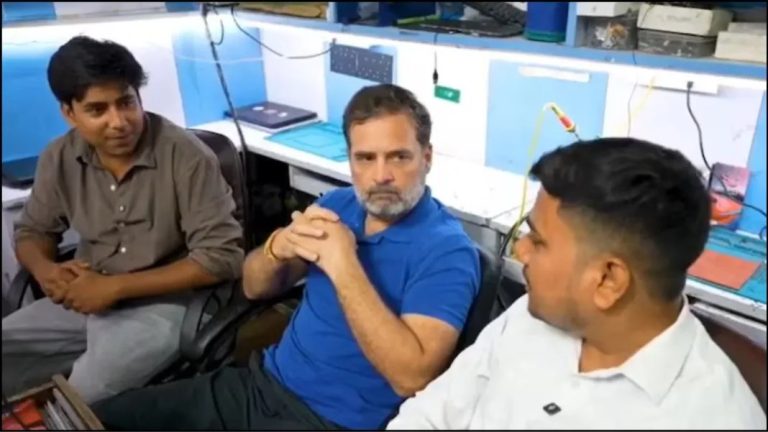
Earlier in the day, the leader of opposition in the Lok Sabha interacted with students from Scheduled Castes, Scheduled Tribes and Other Backward Classes at the DU’s North Campus. Congress party posted a video of the visit on its official ? account.

He talked on issues of representation, equality and academic justice. The discussion was held at the office of the Delhi University Students’ Union (DUSU) president. During Rahul Gandhi’s stay at the campus, the area was cordoned off by his security personnel, and no one was allowed to enter.

Every province in Pakistan wants freedom from the Army’s tyranny: Why Balochistan, Sindh, and Gilgit-Baltistan may separate from the Islamic Republic in future

The Islamic Republic of Pakistan, which recently triggered military hostilities with India after sponsoring cross-border terrorism that resulted in the Pahalgam terror attack, is grappling with growing calls for independence coming out of its different provinces. The country, which also struggles with an acute economic crisis, is finding it difficult to curb secessionist tendencies at home.

The Sindhi, Baloch and Pashtun minorities communities in Pakistan have long been demanding freedom from Pakistan and the creation of their respective independent states. These minority communities have long faced persecution and systematic discrimination by the Pakistan’s military establishment.

Amid recent military confrontations between India and Pakistan, the Baloch Liberation Army (BLA) reignited their freedom movement against Pakistan’s government and declared independence. This was followed by calls of freedom from the Sindh province of Pakistan. The Jeay Sindhu Freedom Movement (JSFM), political group that demands the creation of separate country of Sindhu Desh by liberating the Sindh province from Pakistan, has also intensified its freedom movement against the Pakistani government.

In addition to that, voices demanding a separate country of Pashtunistan have emerged from the areas historically comprising the Pashtun homeland, including parts of Khyber Pakhtunkhwa and northern Balochistan.

Balochistan Freedom Movement

Amid the military hostilities between India and Pakistan, the Baloch Liberation Army (BLA) declared independence from Pakistan and urged the United Nations to recognise the Democratic Republic of Pakistan. Balochistan, which has a rich reservoir of natural resources, is a sparsely populated area inhabited by the Baloch ethnic group. The region has been struggling with militancy for a long time.

Historically, Balochistan was an independent entity under the Khan of Kalat. However, it acceeded to Pakistan in March 1948 under coercion following the British withdrawal. An instrument of accession was signed by the Khan of Kalat under pressure and against his own will and the will of the Baloch people. Prior to that, a Standstill Agreement was signed between Kalat and Pakistan on August 11, 1947, under British supervision, recognising Kalat as an independent state. Kalat was the name given to what is now known as Balochistan. However, in 1948, Pakistan forced the Khan to merge Balochistan into Pakistan. Pakistan wanted Balochistan to be merged into its federation. 

Since the merger, five major insurgencies—1948, 1958, 1962, 1973-77 and the ongoing conflict since the early 2000s, have erupted, driven by grievances of the Baloch people over political marginalisation, violent and torturous suppression and resource exploitation. The Baloch freedom movement is now being led by the BLA which has been brutal suppression at the hands of the Pakistani regime which has been killing their leadership and members under its ‘Kill and Dump’ policy that began in 2009.

Demands for a separate state of Sindh

The calls for freedom of the Sindh province of Pakistan are being spearheaded by the Jeay Sindhu Freedom Movement (JSFM) which has been advocating for the formation of a separate state of Sindhu Desh. It has been a long-standing demand of the people of Sindh to have a separate, independent state of Sindh. The minority Sindhi community has accused the Islamic state of Pakistan of erasing their local culture through systematic oppression such as the imposition of Urdu language and land grabbing. Several pro-freedom activists have been killed, tortured and forcibly disappeared by the military establishment of Pakistan over the years.

Pashtun homeland of Pashtunistan

Pashtuns are the second-largest ethnic group in Pakistan after Punjabis. They form 15% of the total population of Pakistan. The community has been demanding an independent state because of state-backed discrimination and persecution. The Pashtun community lives in the Pashtunistan region which partly falls in Pakistan and partly in Afghanistan. Both Pakistan and Afghan Pashtuns have opposed and rejected the 1893 demarcation known as the Durand line.

In recent times, the freedom movement of the Pashtun community has been spearheaded by the Pashtun Tahafuz Movement (PTM). The PTM, formed as a civil rights movement, emerged as a response to State-enforced terrorism and human rights abuses of Pakistan’s army and intelligence agencies in the Pashtun Belt of Pakistan including enforced disappearances, extrajudicial killings. 

Resistance in Gilgit Baltistan

The Pakistani military regime has been facing resistence from the ethnic communities living in Gilgit-Baltistan which forms part of the PoK. The region, blessed with natural geographical beauty, has been neglected by the Pakistani government. Gilgit Baltistan is a strategically significant region as it is surrounded by Afghanistan’s Wakhan Corridor to the north, China’s Xinjiang Uighur autonomous region to the north-west, Ladakh to east, and Kashmir to south. 

However, the people living in the region are forced to live a life full of hardships due to the negligence of the Pakistani government. The region lacks basic facilities as well as development. The locals have accused the Pakistani Army of illegally occupying their lands.

The Islamic Republic of Pakistan which was created after dividing India on religious grounds, has numerous faultlines which have become prominent over time. The various ethnic communities living in its four provinces have face consistently suffered oppression as the country is not run by a representative government but by its military which is guided by rigid Islamic principles.

Facing the real threat of extinction at the hands of the Pakistani Military, a sizeable chunk of all these ethnic communities be it Sindhi, Baloch, Pashtun, or those in the FATA region or in Gilgit Baltistan, have taken up arms against the Pakistani army to fight for their rights and seek freedom for these regions. The Pakistan military regime has a history of suppressing the culture and language of ethnic minorities and imposing a made-up Islamic indentity. Similar oppressive measures were implemented by the Pakistani regime against the Bengali people living in the East Pakistan which led to the 1971 Bangladesh Liberation War and the formation of and independent country of Bangladesh. With the rising calls for independence emerging from different provinces of Pakistan, history might repeat itself soon.

India expects Turkiye to strongly urge Pakistan to end its support to cross-border terrorism and take verifiable actions against terror ecosystem: MEA

India expects Turkiye to strongly urge Pakistan to end its support to cross-border terrorism, said Ministry of External Affairs (MEA) spokesperson, Randhir Jaiswal during the weekly briefing on Thursday.

“We expect Turkiye to strongly urge Pakistan to end its support to cross-border terrorism and take credible and verifiable actions against the terror ecosystem it has harboured for decades. Relations are built on the basis of sensitivities to each other’s concerns,” Jaiswal stated.

MEA spokesperson mentioned that the Celebi matter has been discussed with the Turkish Embassy.

“Celebi matter has been discussed with the Turkish Embassy here. But I understand that this particular decision was taken by the Civil Aviation Security,” he said.

Turkish ground handling firm Celebi Airport Services whose clearance for ground handling at various Indian Airports were recently revoked by the Bureau of Civil Aviation.

Meanwhile, Celebi Airport Services India Pvt Ltd, the Indian arm of Turkish firm Celebi Aviation, has filed a plea in the Delhi High Court against the Indian government’s decision to revoke its security clearance, citing national security concerns.

The company, which provides airport ground handling services across India, argued that the move will jeopardise thousands of jobs and threatens investor confidence.

The revocation reportedly stems from growing concerns over Turkey’s support to Pakistan in the India-Pakistan conflict. However, Celebi maintains that its operations in India are independent and professionally governed, distancing itself from any political affiliations.

In response to the Pahalgam attack, Indian Armed Forces launched Operation Sindoor in the early hours of May 7, targeting nine terror sites in Pakistan and Pakistan-occupied Jammu and Kashmir (PoJK), leading to the death of over 100 terrorists affiliated with terror outfits like the Jaish-e-Mohammed (JeM), Lashkar-e-Taiba (LeT) and Hizbul Mujahideen (HM).

Following the attack, Pakistan retaliated with cross-border shelling across the Line of Control and Jammu and Kashmir as well as attempted drone attacks along the border regions, following which India launched a coordinated attack and damaged radar infrastructure, communication centres and airfields across airbases in Pakistan.

During the press briefing on May 9, Colonel Sofiya Qureshi revealed that 300 to 400 drones were deployed across 36 locations, with several being shot down by Indian forces using both kinetic and non-kinetic methods. Initial investigations suggest the drones were Turkish-made Asisguard Songar models.

On May 10, India and Pakistan reached an understanding on the cessation of hostilities.


(This news report is published from a syndicated feed. Except for the headline, the content has not been written or edited by OpIndia staff)