Home Blog Page 3400

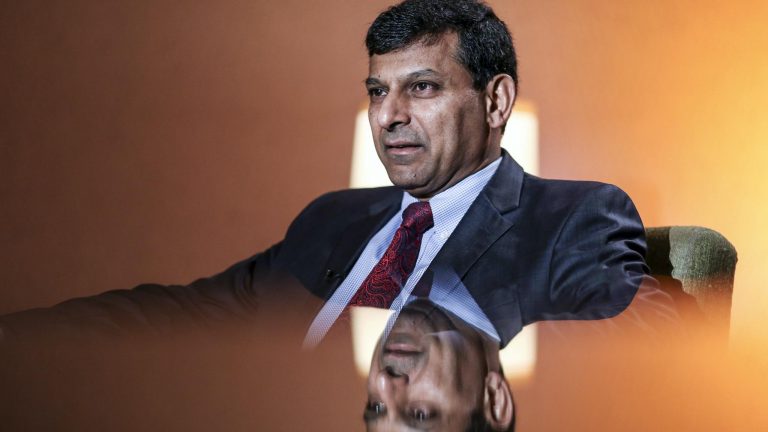
Raghuram Rajan: The establishment man, who descends on India when the weather is pleasant, now lies about PLIs helping Ambanis and Adanis

India is blessed with lots of Nobel laureates, economic experts and academic geniuses that mostly reside abroad and that too mostly in the Anglo-Saxon world. They drop by and visit us when the weather is good and give us gyaan on how to solve poverty. Of course, these days everything is in the cloud so we get wisdom from the cloud too. Physical visits are not necessary especially since many of them find “this is not the India I grew up in”.  That gravy train derailed in 2014. 

Don’t expect them to do any serious introspection on why, despite being part of the establishment all these years, they did not turn India into another America with their expertise, so they could sit here and give gyaan to Mozambique or Mongolia on poverty alleviation. And not have to lecture us from New York or Boston. Unless their case is that a highly developed, fully employed, healthy and prosperous advanced nation was handed over to Modi in 2014 and he ran it to the ground. If you are a cynic, you can almost believe that Nobels, Bookers and Magsaysay’s are handed out not for what they have done but for how much they can do.

Raghuram Rajan is one of these experts. Go over his track record, you will find he was very much part of the establishment for years. He was our economic advisor from 2008, taking over as CEA from Kaushik Basu in 2012. Basu is yet another economic superstar who considers a day as wasted if he does not attack Modi in at least a dozen tweets. Such was the brilliant job Rajan did as CEA that MMS promoted him as RBI Governor in 2013. He stayed on until Modi refused to give him a second term. 

Since his return to academia Rajan has been focused on telling us how wrong we were in electing Modi. That is if he is not too busy applying an intellectual coat of paint to dynast Rahul Gandhi. Unfortunately, that paint needs a new coat every other month. As a wag puts it, he successfully predicted six of the last two recessions. Quite often he will be on TV channels, predicting gloom and doom. And our “fearless” journalists will interview him like some freshman kid interviewing a Nobel laureate professor with a reputation for a short temper, for the student’s magazine.

He can confidently talk to our “speaking truth to power” media because none of them will ask him about the increase in bad loans, loans given to connected cronies, coal blocks and other resources allocated to pals of the ruling elite without auctions and the loot of national resources that was the overarching theme of the UPA era. All under his watch as advisor and RBI governor, a position from which he should have known exactly what was going on. No sir, he did not resign in disgust or do any “Award waapsi”.  

However, once Modi came to power, he started offering anti-establishment soundbites to the durbari media that had morphed into “fearlessly independent, speaking truth to power journalism”. In May 2014, when UPA was already voted out and just days before leaving office RBI changed the gold import scheme, according to CAG resulting in windfall gains of Rs.4,500 cr to select businesses. When you hear lectures on the “idea of India” remember incidents like this. Rajan justified this as a “reform”. Pity other “reforms” were not done in such great haste. Ever heard any “journalist” ask him about this?

Latest pearl of wisdom from Raghuram Rajan: PLI helps Ambani

The latest wisdom from Rajan is that PLI (production linked incentive scheme) only helps “well-connected” firms. To make his point clear he names the very same industrialists that have been demonised and abused on daily basis by corrupt dynasts – Ambani and Adani. For good measure, he added Tatas. You see, if Adani studied African studies or sociology at JNU and become an activist, living off donations from George Soros, he will be the toast of our left-liberals. Since he is committing the horrendous sin of creating jobs, paying taxes and making money, he can be abused without any evidence. By the way, in whose era did the humble unknown cloth retailer aka Dhirubhai Ambani become a crorepati industrial tycoon? Was it the era when even to visit the loo you need a license or permit from Delhi? And another permit before you can button up? Don’t ask too many inconvenient questions – you will be labelled a troll.

Clearly the old order is rattled by the success of PLI in attracting investments – that too in making electronic and manufactured products – where China enjoys a near-total monopoly. Mobile phone exports have shot up 32-fold to about $6b and sure someone is losing market share. Its very potential is its enemy. And what better way to attack it than use the same language his own student uses day in and out? That should earn extra brownie points from the “woke” left too.

But let us turn to facts.

Firstly, is the allegation that “well connected” firms only get PLI incentives anywhere near the truth? Obviously not. After all, you are not handed over a cheque. You must invest first. Look at the list of companies – Hyundai, Apple, Samsung, Foxconn, and many others. Dozens of them. If all of them are “well connected” then we must congratulate Modi and Sitharaman for having such a large number of global blue-chip connections. After all, in the UPA era, we only had the royal damaad and his Bhandari friends.

Secondly, why is RR commenting on a matter he knows very little about. Firstly, PLI is not just about electronics. It is being implemented in 15 sectors ranging from steel to pharma to textiles to IT hardware. On top of that electronics is not all $10-$20b chip factories. There is enough action in the middle and lower end. Intel and TSMC etc makes chips that are at 7nm or even lower. The semiconductor plants India is attracting are in the 28-65nm range where there is a global demand surge and shortage as well. These chips are used in a myriad of applications, even if they are not the latest high-end mobile phones or laptops. For example, media players, refrigerators, security alarms to cars. They don’t need $20b. It is not wrong to start small or at the lower end and move our way up. 

Thirdly, are allocations made on “connections”? Perhaps Rajan saheb still thinks we are in the UPA era. No sir. Bids are invited. For example, for the battery storage initiative, as many as 10 bids. Four were selected. OLA and Hyundai got the lions’ share and Reliance and Rajesh Exports got a small share. Similar bids have been invited for making drones. It is likely many medium-sized companies and startups will apply because they dominate the sector. The PLI scheme for textiles attracted as many as 67 applications, not all Ambanis. Under this scheme, those investing Rs.300 crores get 15% – which means they must bring in 85%. Most other schemes too have similar up-front commitments. No one gets a free lunch.

Fourthly, RR should know very that offering incentives to job creators and investors is a global practice, whether we like it or not. The stampede of ministers and officials that follows Elon Musk is not just an extreme case. Practically every country, especially our major Asian rivals like the Philippines, Vietnam, Indonesia, Malaysia and others dangle carrots of various sizes and shapes. Sadly, even first world rich nations not desperate for jobs, offer billions in incentives. We have to play the game the way it is played, without, of course, going overboard. Given our socialist era babudom, rampant unionism, infra bottlenecks etc., we need more, not fewer incentives to get over some of the other drawbacks we suffer from.

No one can deny Rajan his right to vote Congress or pray for Rahul Gandhi to be our PM. MMS served Sonia Gandhi and maybe Rajan wants to do the same with Rahul. Even if he gives up on his Indian passport, that is very much his right as an Indian origin person. That people like him and MMS, though personally clean, have become the biggest enablers of dynastic corruption and fascism is a sad fact we have to live and deal with. But to make statements like this attacking PLI, simply for the sake of opposing Modi, not only reduces his own image, and academic credentials, it makes all his other possibly meaningful statements sound suspect and agenda-driven.

But then, it is practically impossible to nail down our leftist intellectuals even if they are caught lying through their teeth or spreading fake news. Because if a rabbit has three warrens these liberals have dozens of ways to escape. Goalposts are mounted on motorised wheels to be shifted at will. They are usually “selectively quoted”, we should “read the entire speech”, and it “doesn’t matter if the picture is fake or statement is false, it is the overall point I am trying to make” etc. etc. 

Doctor saheb, go for a cure!
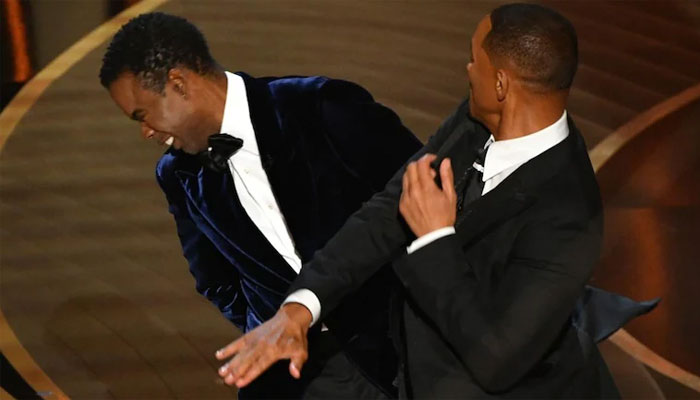
Oscars 2022: Meme war erupts on Twitter after Smith slaps comedian Chris Rock for mocking his wife

On March 28, the microblogging platform Twitter erupted with memes after Hollywood actor Will Smith slapped comedian Chris Rock for mocking his wife. Smith evidently got irked after Rock mocked his wife’s health condition. While on stage to present the best documentary award, Chris Rock said, “Jada, I love you. GI Jane 2, can’t wait to see you.” A reference to Jada’s bald head due to alopecia. The comment upset Smith so much so that he rushed on to the stage to physically punch the comedian.

Twitter user Babu Raowl said it was Hollywood’s revenge on Bollywood for stealing ideas. He shared image of Delhi CM Kejriwal getting slapped, assuming it looked similar to what happened at the Oscars.

Another Twitter user Byomkesh wondered how it would have been if Ashutosh Gowarikar had slapped comedian Sajid Khan after Khan insulted him during a joke at an award ceremony.

In 2009 when Sajid Khan was hosting the Screen Awards, Ashutosh Gowarikar won the award for Best Film for Jodha Akbar. And while Gowarikar did not slap Khan, he did scold him on stage, leading to some awkward moments.

Yo Yo Funny Singh said, “Patiala Police has taken suo motu cognisance and filled an FIR against Will Smith.” He was referring to the recent FIR registered by Patiala Police against BJP’s Tajinder Pal Singh Bagga for allegedly insulting Delhi CM Kejriwal.

Twitter user Dane Moore said comedians would not roast Smith anymore as it could turn into a slap-fest.

Mia Medina Vargas mocked Chris’s face after the slap as it looked a little dented.

Pilar L Davis said he would not take Simth’s wife’s name after seeing the incident.

Other users turned the slap-shot into memes.

Later in the night, Will Smith went on to win the Oscar for his performance as Richard Williams in ‘King Richard”. During his acceptance speech, he did apologise to the academy and fellow nominees.

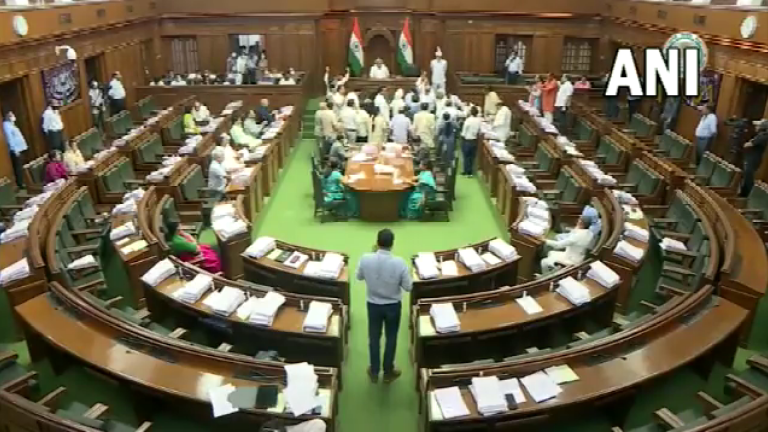
Delhi Assembly: Three BJP MLAs dismissed after AAP legislators create a ruckus over allegedly derogatory remarks against CM Kejriwal

0

Three Bharatiya Janata Party MLAs, Anil Bajpai, Jitender Mahajan, and Ajay Mahawar, were forcibly removed from the Delhi Legislative Assembly for the day for protesting against Aam Aadmi Party MLAs who were seeking an apology from the BJP for allegedly making disrespectful statements about Chief Minister Arvind Kejriwal.

News agency ANI shared the news in a tweet with a video of Assembly Speaker Ram Niwas Goel expelling the three BJP MLAs for the day. The tweet reads, “Delhi: BJP MLAs Anil Bajpai, Jitender Mahajan & Ajay Mahawar dismissed from the House for the day for raising slogans while standing on benches; House was adjourned for 15mins. AAP MLAs protested demanding apology from BJP over alleged derogatory remarks on CM Kejriwal.”

It can be seen in the video that a ruckus was created with AAP members shouting slogans against the BJP for the alleged disrespectful statements about Chief Minister Arvind Kejriwal. The three MLAs of BJP stood up on the bench in a bid to oppose the AAP slogans.

The news follows the filing of an FIR against Tajinder Pal Singh Bagga, the National Secretary of the Bharatiya Janata Party’s youth wing after he condemned Kejriwal for his callous statements about the film The Kashmir Files. The FIR was filed in the city of Patiala in Punjab, a state ruled by Aam Aadmi Party.

Arvind Kejriwal, the Delhi Chief Minister, sparked a stir last week when he utilised valuable Delhi assembly time to attack and mock Vivek Agnihotri’s film ‘The Kashmir Files.’ In response to calls for Kashmir Files to be tax-free in Delhi, Kejriwal urged the director to make the video available for free on YouTube. He then went on to attack the BJP for promoting the film, even referring to it as a “Jhoothi film” (film full of lies).

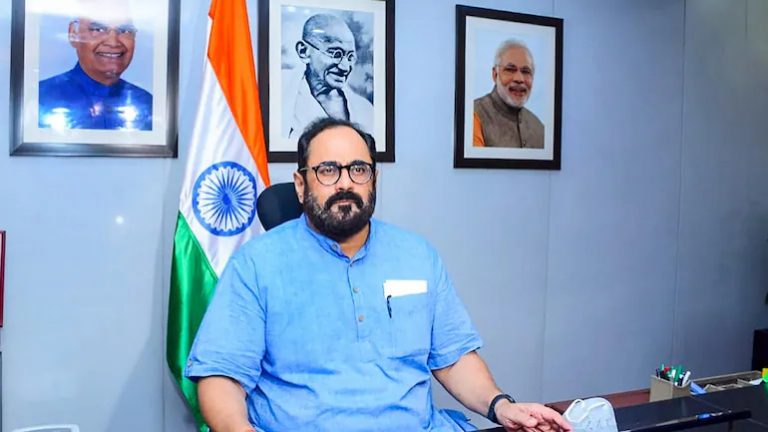
‘We need Aatmanirbhar Internet, have to make it difficult for Big Tech to be weaponized against India’: MoS Rajeev Chandrasekhar

Rajeev Chandrasekhar, Minister of State for Electronics and Information Technology, remarked in an interview with The Indian Express that there is a need to rethink local laws in order to de-risk Indian internet and make it harder for Big Tech businesses to be weaponized in any circumstance.

This remark comes in the wake of Big Tech companies and their subsidiaries declaring partial or complete service interruptions for Russia and its people soon after the war between Russia and Ukraine began.

Here are some of the important queries which were responded to by Rajeev Chandrasekhar.

The Russian Invasion of Ukraine and the Internet

When asked about his thoughts on the recent events in Russia and Ukraine in relation to internet companies, Rajeev Chandrasekhar noted that the recent events in Ukraine and Russia have drawn attention to the power of platforms on the internet, the power of some governments to direct platforms on the internet to make political decisions, and effectively what can be called the weaponisation of the internet.

“Two phenomena are very visible. One is the weaponisation of the internet, of which we were aware in some sense as we discussed user harm etc in the past. The second is what I call the phenomenon of the splinter-net. The internet is now increasingly being splintered driven by the power of some western countries,” he stated.

He maintained that regulations and rules were never considered since the internet was never intended to be used for anything other than the collective benefit. But currently, the perception of the internet has shifted from being solely for the public benefit to also including user damage. As a result, jurisprudence and law must adapt to handle this.

In his words, “These platforms have become so big, the power of these platforms and therefore the power that they represent on the internet is so dominant, that in the event of a conflict between two sovereigns, these platforms are playing roles and therefore are being weaponised.”

The fundamental principles of net neutrality, which is the openness of the internet, which was the founding idea of the early days, where the telecom service providers could not become internet gatekeepers, are now manifesting in the form of these large intermediaries becoming internet gatekeepers, as per Chandrasekhar. He emphasised that, while the pipelines may be diverse and uncontrollable, the platforms are now regulating internet access in a variety of harmful ways.

He noted that these platforms are completely susceptible to sovereign control, which may lead to their being weaponized against or for another country.

“It is clear today that we need Aatmanirbhar internet which says that don’t depend only on these platforms that have now demonstrated during the Russia-Ukraine war that they are not removed from state influence for all of the narratives they put out,” he added.

What does a relook at our legislative and jurisprudential framework mean?

It entails the formation of a national data governance framework, the adoption of some legal standards, the definition of the function of these intermediaries, including the nature of the interaction between the intermediaries and the consumer, according to him.

“We must define what should be the consumer rights…the jurisprudential legal principles have to be built on that before we go on saying that we need to come up with this law or that,” he stated. “We have to de-risk our Indian internet and that de-risking urgency has, in a sense, been amplified by what we are seeing in Ukraine-Russia,” he went on to add further.

Stressing on the originality of the approach, he said, “… we are now planning an architecturally-built cyberspace jurisprudence, rather than doing it piecemeal and a catch-up mode. Our approach now is exactly in keeping with the Aatmanirbhar Bharat principles and the success we have had in the fintech space and replicating it in other areas.”

According to Chandrasekhar, India is not opposed to Big Tech, but it must be ensured that the norms and regulations in India do not allow Big Tech platforms to be weaponized intentionally, wittingly, or inadvertently by any other force. “We cannot allow our cyberspace and digital economy to ever be undermined by anybody or any force outside our borders. That is the point of Aatmanirbhar internet,” he said.

Concerning the symmetry between the ease of doing business and the clampdown on digital weaponization

“There is no clamping down. Nobody clamps down on such weaponisation,” Chandrasekhar said. “I use the phrase weaponisation to understand the implication if you do not create an Aatmanirbhar Bharat and cyberspace. That is a real issue today that all policymakers should be concerned about,” he further added.

The Minister noted that public policymakers are concerned about the weaponization of the internet and the usage of the internet when the largest and most dominant platforms are of an external jurisdiction. He explained using the example of cryptocurrency legislation in India. He remarked that the Reserve Bank must govern this because otherwise, a mess would be created without a good grasp of how those will be controlled or how the exchange controls will be addressed.

Rajeev Chandrasekhar went on to explain that the internet is currently in a state of turmoil. This is because governments all around the globe have long permitted them to pretend to be innovators. All public officials must perceive the internet as both an innovator and a startup on the one hand, and as an area that requires extensive public policy interventions to assure user safety and non-weaponization of the internet on the other.

How prepared are we now for such weaponization?

“Our neighbours and state actors are actively using the internet against us. Kargil War was televised,” he responded. “Russia-Ukraine is now becoming a conflict where the internet is actively weaponised by both sides…What I am saying is that when two nations have gone head-to-head in conflict, they have, in addition to using tanks, bombs, jets and drones, actively used the internet,” Chandrasekhar further added.

He stated that, unlike in the past, when regulations lagged behind innovation, the law, in this case, should be in sync with innovation.

“The domestic laws must make it very difficult for the intermediaries who are jurisdictionally present in India, to be weaponised against the interest of India and its citizens. That can only be done through laws,” he said.

According to Rajeev Chandrasekhar, preventing the weaponization of the Internet and splinter networks, as well as preventing huge influence, monopolisation, and cartelization, is an equal public policy priority, and we need the “policy to keep pace rather than play catch up.”

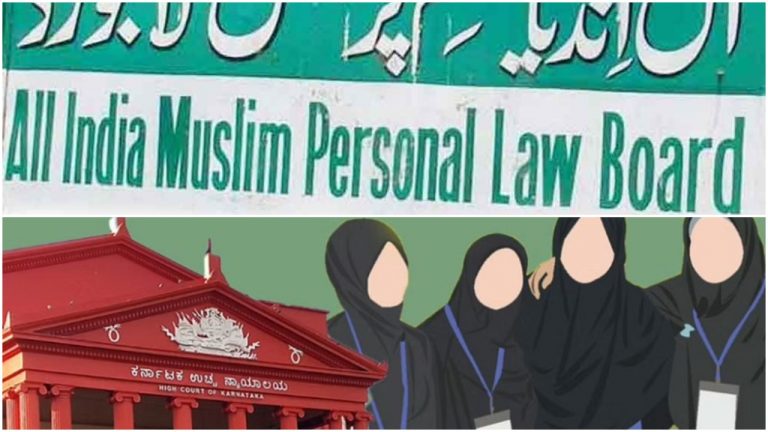
AIMPLB moves SC challenging the Karnataka HC verdict upholding the hijab ban in educational institutes

0

The All India Muslim Personal Law Board (AIMPLB) Monday petitioned the Supreme Court for special leave to appeal the Karnataka High Court’s decision on the hijab dispute, which had effectively upheld the state’s ban on wearing hijab in educational institutions.

On March 15, the Karnataka High Court had upheld a government order (GO) that empowered college development committees of government colleges in the state to ban all religious attires inside the college premises and mandate uniform dress codes.

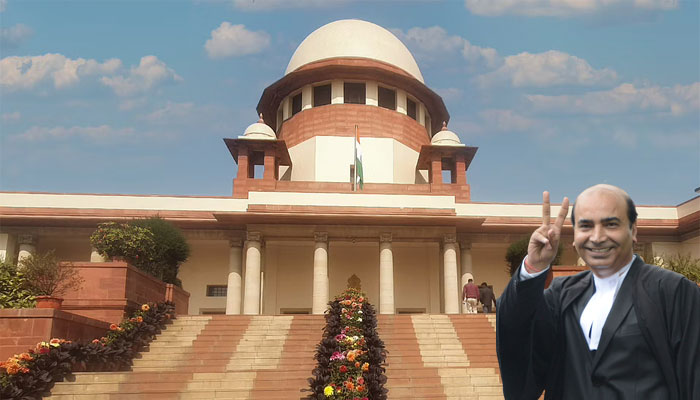
A three-judge Bench of Chief Justice Ritu Raj Awasthi and Justices Krishna S Dixit and JM Khazi had held that the hijab was not an essential religious practice and hence the constitutional articles that grant religious freedom cannot be used to violate the uniform dress code rules mandated by respective educational institutions.

The Muslim organisation moved the Supreme Court through its Secretary, Mohammed Fazlurrahim along with two other petitioners namely, Munisa Bushra and Jaleesa Sultana.

Besides, AIMPLB, Samastha Kerala Jem-iyyathul Ulama, an Islamic clerics’ organisation has also filed a special leave petition in the Supreme Court against the Karnatak an HC ruling on the hijab issue.

The organisation claims that the High Court’s decision is based on an incorrect interpretation of the Holy Quran and Hadis, as well as a misunderstanding of Islamic laws.

‘Don’t sensationalise’, Supreme Court refuses early hearing of appeal against Karnataka HC’s Hijab verdict

It may be noted that last week, the Supreme Court had refused an early hearing of the appeals against the Karnataka High Court verdict that effectively upheld the ban on wearing hijab in educational institutions in the state.

On March 24, Thursday, the Supreme Court declined to give any specific date for the hearing of the hijab pleas challenging the Karnataka high court order.

Senior advocate Devadatt Kamat argued before the Supreme Court, citing exams, and requesting that the appeal be heard on an expedited basis. According to Advocate Kamat, the students’ exams started on March 28, and if they were not allowed inside the classroom without their hijab, they would lose a year.

However, Chief Justice NV Ramana said, “Exams have nothing to do with the issue. Don’t sensationalise.” The court noted that it would hear the case in due course.

Earlier, the apex court had refused to hear the appeal urgently and had posted the matter after the Holi break. 

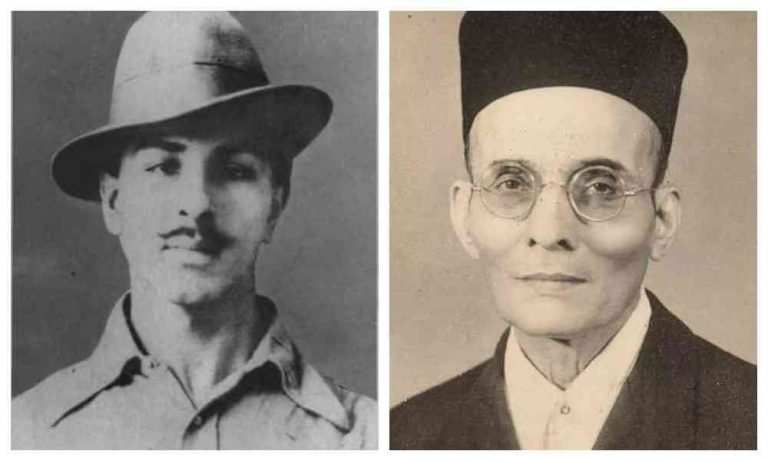
Bhagat Singh and Savarkar: Did they really hate each other as we are made to believe

The leftists have often ran with the story that Bhagat Singh hated Savarkar. A dispassionate reading of the history tells us that there are many problems with this theory.

One is that we refuse to give context to our heroes because a detailed understanding of their personality, thoughts and the society they lived in must be considered. It is important to take the tone and tenor and map them with facts from the times. Another problem is caricaturisation, where in the heroes of the past are picked and only those dimensions of their multidimensional personalities are picked which suites one narrative or the other.

Since, we feel that current leadership is too dwarf to contest the ideas propounded by those heroes from the past, we often find the heroes of the past being made representatives of one camp or another. Savarkar has been the biggest sufferer of this. Mostly, to my mind, because he continued to live post-independence and merely by virtue of his long legacy where in he inspired people towards Indian independence, fought and suffered for it, longer than most post-Independence Congress leadership who were desperately tried to acquire some sort of monopoly over freedom movement.

Bhagat Singh, an exceptional young twenty-three year old who changed from Hinduism to Aryasamaj to Atheistic Communism has been used to attack Vinayak Damodar Savarkar, mostly for reasons mentioned above and additionally because, one, Bhagat Singh’s atheism suited the cult of Nehru more than Gandhi’s spirituality or the Dharmik leanings which leant towards great men of Congress- Lal-Bal-Pal. Secondly, in their zeal to promote a competitive secularism against a theocratic Islamic formation created in the name of Pakistan, post-independence, downgrading Hinduism became a trend. As post-Emergency, Leftists gained more and more control over the process of building the narratives in the intellectual world by capturing the academic world, the incentives to amplify the lies increased.

It is true that Bhagat Singh towards the end of his life became an atheist, and often quoted Lenin, Trotsky, Marx and others to justify the same, mostly because he felt that this could be a way to counter communal disharmony which was hurting India then and which he felt will hurt India even later, post-Independence. Without any disrespect to Bhagat Singh, I would mention that while a genius for his age, he still was a man in early twenties who had till then lived a life somewhat protected and prosperous compared to other revolutionaries like Bismil and Azad who lived a more difficult and complex life through poverty and hunger.

He was very young and in his short life, he had leaning towards Sikhism first, Hinduism then and atheism in the end. Even in the prison, when the Ghadarite leader, Bhai Randhir Singh refused to meet Bhagat Singh because he had cut his hair against the tenets of Sikhism, what Bhagat Singh wrote to him is slightly confusing although much in line for a boy in his early twenties. He wrote – I believe in the Sikh tradition of sacrifice where body parts are cut down. I have only got one part of my body cut, that too not for the self rather for the Nation, and will soon lose my neck for it. But I will always be sad about this shortsighted and narrow-minded view of Sikhism.’ (Bhagat Singh Aur Unke Saathiyon ke Dastavez, 1986, Edited by Jagmohan Singh and Chaman Lal)

If one were to note, one could see that he does not say that I have got my hair cut not because I am no longer a Sikh, rather, he contests, that because I am better Sikh than most Sikhs. I am not placing this particular quote of Bhagat Singh here to contest his own ardent and open claim that he was an atheist towards the end. He thought he was an atheist and we must respect that. I am only putting forth a point that we, as students of history, must offer him at least this much indulgence as a boy of barely twenty three.

While Bismil, Lahiri and Ashfaqullah Khan did not get the advantages of studying and life as much as Bhagat Singh, I find their views more mature and deeper on the matter of faith and nationalism. The views of those who walked to gallows with Shlokas from Hindu scriptures like Bismil and Lahiri and with Quran like Ashfaq, would not appeal to the Communist intellectuals or Nehru worshippers because they did not imagine a faithless, Godless society of Marx’s dreams and their faith did not stand counter to their patriotism, rather propelled it. 

In fact, Bhagat Singh even justifies a quasi-military force under the political force even after independence to occasionally fight for socialist principles shows a youthful maybe immature leaning towards the Cuban Communist model of constant violence that modern communists often advocate and endorse. Let us grant him that unlike septuagenarian of JNU who ruin young lives to pursue their teenage dreams, Bhagat Singh did not have the advantage of experience when he wrote that.

Bismil, on the other hand, while walking towards the gallows, advised the youth to denounce violence and intellectually revolutionise the rural population. Before the left pounces on Bismil like they do on Savarkar, let me remind here, that Bismil walked to the gallows shouting- ‘Down with the British Rule’ without a bit of fear or repentance. In fact, Ashfaq while respecting Socialist principles, denounced the Communists for being driven by foreign ideas and being cut-off from the realities of India.

I once again repeat that this is not to denounce Bhagat Singh but only to respect him, and to request modern intellectuals not to weaponise his supreme patriotic sacrifice to attack their ideological opponents. Bhagat Singh not only respected the views of his seniors in HRA, Bismil’s last letter was published in Kirti through Bhagat Singh where Bismil urged the youth to shun violence till such time that they are all well educated and intellectually mature enough to hand the responsibility of holding a gun.

A lot is made up trying to create some sort of animosity between Savarkar and Bhagat Singh. Since they cannot find a Communist party leader of stature to counter Savarkar and all that he represented as a Hindu nationalist, they use and misuse Bhagat Singh. I have not able to find even one disrespectful quote of Bhagat Singh against Savarkar. Forget angry word, not even a word of angst or frustration against Savarkar. In fact, Bhagat Singh’s words against Lala Lajpat Rai were much harsher and unforgiving. But then Lalaji was not a challenge to Nehru and also denouncing him would have been in a way denouncing the Congress, so it isn’t often spoken about. It is another matter, after the death of Lala Lajpat Rai, when the challenge was thrown at the youth by Shrimati Basanti Devi, wife of Shri CR Das, when she famously asked – So, Lala ji is killed by the British, what are we going to do about it?

On Gandhi, Bhagat Singh had written that Gandhi is a kind humanitarian, but social changes do not happen with such kindness. In another essay on 2nd February, 1931, he wrote – Gandhiism is unique and novel, but its ideas are of no use to helpless people. Gandhiism will not give permanent followers to the saint of Sabarmati.

Bhagat Singh was struggling with the questions of faith till his end but what goes to his credit that at such a young age he was deliberating with the questions of language, literature and cultural heritage of India. In an essay Bhagat Singh submitted to Punjab Hindi Sahitya Sammelan in 1924, he wrote on the question of language. He wrote-  Among the Muslims there is a lacking in the sense of Indianness, that is without appreciating the significance of Indianness they promote Persian Language and Arabian Fonts. They do not understand the significance of one language that too Hindi and keep repeating about Urdu and sit aside isolating themselves.

Coming to Savarkar, Bhagat Singh referred to him twice in his writing and both were salutary references. In an essay titled ‘Vishwa Prem’ or Universal Love, published on 15th of November, 1924, under the pseudonym of Balwant Singh, he wrote – The Universal lover is that person who we shamelessly refer to as a violent revolutionary, and a hardcore anarchist- the same Veer Savarkar,  who would stop walking over the grasses lest the soft blades of grass might get crushed under his feet.

Other reference, and I think only reference to Savarkar in writings of Bhagat Singh comes in an article on Shri Madanlal Dhingra in Kirti, in 1928. He mentions about the impact of the movement of self-rule which resulted in the opening of India House by Savarkar. Madanlal Dhingra attended a meeting of revolutionaries in India House but later parted ways. Bhagat Singh writes that when the students of India House got angry with Madanlal for this, it was Savarkar who calmed them down that we must remain thankful to Shri Madanlal for all his support to our movement.

Bhagat Singh reflects on the world of those times when after assassination of Curzon Wyllie on 1st of July, 1909, whole world rose against him and almost abandoned him. Even his father, Shri Ditta Mal Dhingra, a senior official in the British Government, released public proclamation disowning him. He was hanged on 19th of August, 1909, a month and half after the the assassination. Gandhi wrote in The Indian Opinion on 14th of August, 1909, condemning Madanlal Dhingra- India can gain nothing from the rule of the Murderers- no matter whether they are black or white. Under such a rule, India will be utterly ruined and laid waste.

In his published diaries, Wilfred Scawen Blunt (My Diaries, Published 1932, Page no. 678) writes about the man here called murderer by Gandhi- No greater fortitude was ever shown by a martyr of any faith. With such men to love her, the Mother India must succeed. Again not to denounce Gandhi only to bring home the point of multidimensional nature of historic characters who reacted differently to different events owing to the forces of times in which they lived. Bhagat Singh, aghast, wrote- Indians organised big meetings, made big speeches. Many big resolutions were passed. All condemning Madanlal Dhingra. But at that time, it was only Veer Savarkar who openly supported Madanlal Dhingra. Bhagat Singh then vividly describes a meeting headed by Bipin Chandra Pal where Savarkar started speaking in favour of Madanlal Dhingra and was attacked by a British and was then attacked by Indians there. The essay, Bhagat Singh ended with salute to the Martyr Madanlal Dhingra, writing- Salute to the invaluable diamond of a dead nation!

In another essay, Bhagat Singh’s associate supposedly Bhagvaticharan Vohra wrote  in April, 1928, on the uprising of 1857, when Bhagat Singh was editor of Keerti, we find the reference of Savarkar. He wrote ‘Reading current histories, given to us, we do not get good feelings about those heroes who fought in 1857, because they are presented as murderers, dacoits, fanatics and such… the reason being that the all the histories on the Independence struggle of 1857 have been written by either the British or their sycophants. There is only one independent account written about this war of Independence, which was written by Barrister Savarkar. This history was very painstakingly written, with references to the libraries of the India Office, and proved that 1857 was a National struggle and was fought for the liberation of India… We have been crushed so much that we did not even celebrate this war of 10th May, 1857…As we know for the first time, this day was celebrated in England by Abhinav Bharat under the leadership of Barrister Savarkar.

We can see here that there was much respect towards Savarkar among the revolutionaries including Bhagat Singh, contrary to the claims made by cottage Congress Historians. In their zeal to propagate an ideology and crush another, they have worked overtime to malign Savarkar. Reams and reams of papers have been written to claim that a mutual animosity existed between Savarkar and Bhagat Singh. Many fake historians to please their political masters claim a coldness between the two, mutually reciprocated, claiming Savarkar did not even recognise the martyrdom of Bhagat Singh.

Truth is, on learning about the shameless and clandestine hanging of Bhagat Singh, Sukhdev and Rajguru (others weren’t atheist so leftist usually do not mention them)  and cruel process of hiding their dead bodies, Savarkar wrote a poem in Marathi, Ha Bhagat Singh, Haye, haa, loosely translating as – Woe is me, O Bhagat Singh, Oh/ for us today, you walk to the gallows/ Woe is me, Oh Rajguru, Oh/ Down you go fighting for the nation/ In sadness, but I congratulate you/ for from this defeat, our victory shall rise.

The letter of Gandhi to the British Viceroy, seeking pardon for Bhagat Singh remains woefully ambiguous though almost like Gandhi wrote it merely under public pressure. He started his letter with- It seems cruel to inflict this letter on you, but the interest of peace demands appeal…Popular opinion ‘rightly or wrongly’ demands commutation. Karachi Session of Congress in 1931 happened barely six days after the barbaric execution of the three revolutionaries. On the way to the convention, Mahatma Gandhi was shown black flags and Congress passed resolution condemning the execution while disassociating itself from the violence and demanded end of capital punishment. The session is however, mostly remembered for adoption of charter of fundamental rights.

The Hindu finally realises violent undertones of “Khela Hobe” after Muslims start getting killed in Bengal: How BJP lives did not matter to them

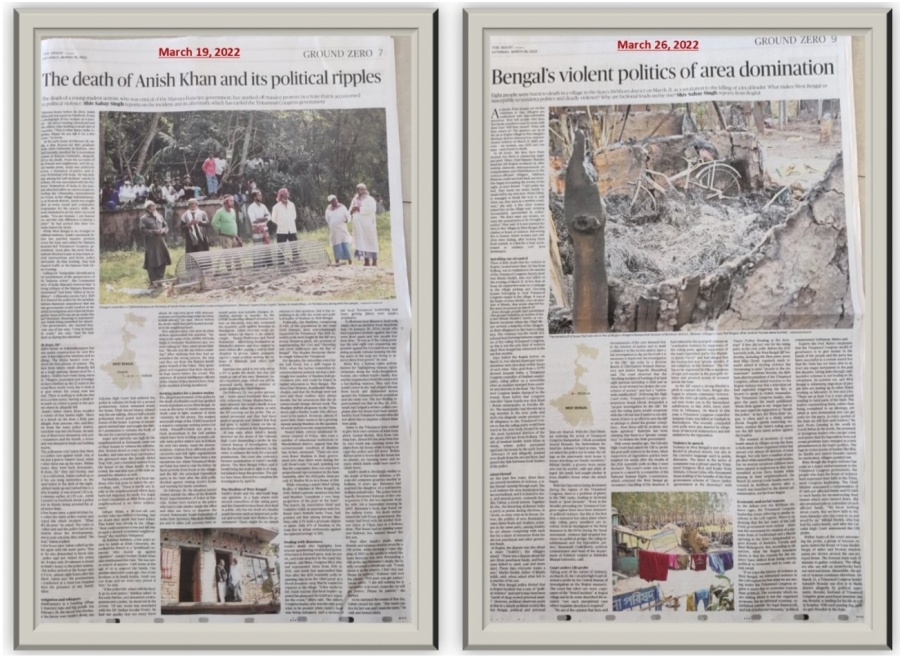
Every Saturday, The Hindu runs a full-page section called “Ground Zero”. Every week, a new issue gets a full-page analytical report, often coupled with proficient language to make the article sound impactful. Perhaps, for the first time since they rolled out this “Ground Zero” section, they discussed the same topic in consecutive weeks – the violence in the state of West Bengal.

The Hindu edits

Both the articles have a word count of over 5000 words. The first article wanted to focus exclusively on the death of one Communist “student activist”. The second article wanted to focus on the Bogtui village massacre in which 8 people were charred to death. While you would assume that the articles would detail the gory murders under the watchful eye of the beacon of peace and free speech, mysteriously though, The Hindu thought it absolutely fit to have a section titled – “Violence in Speech”! 

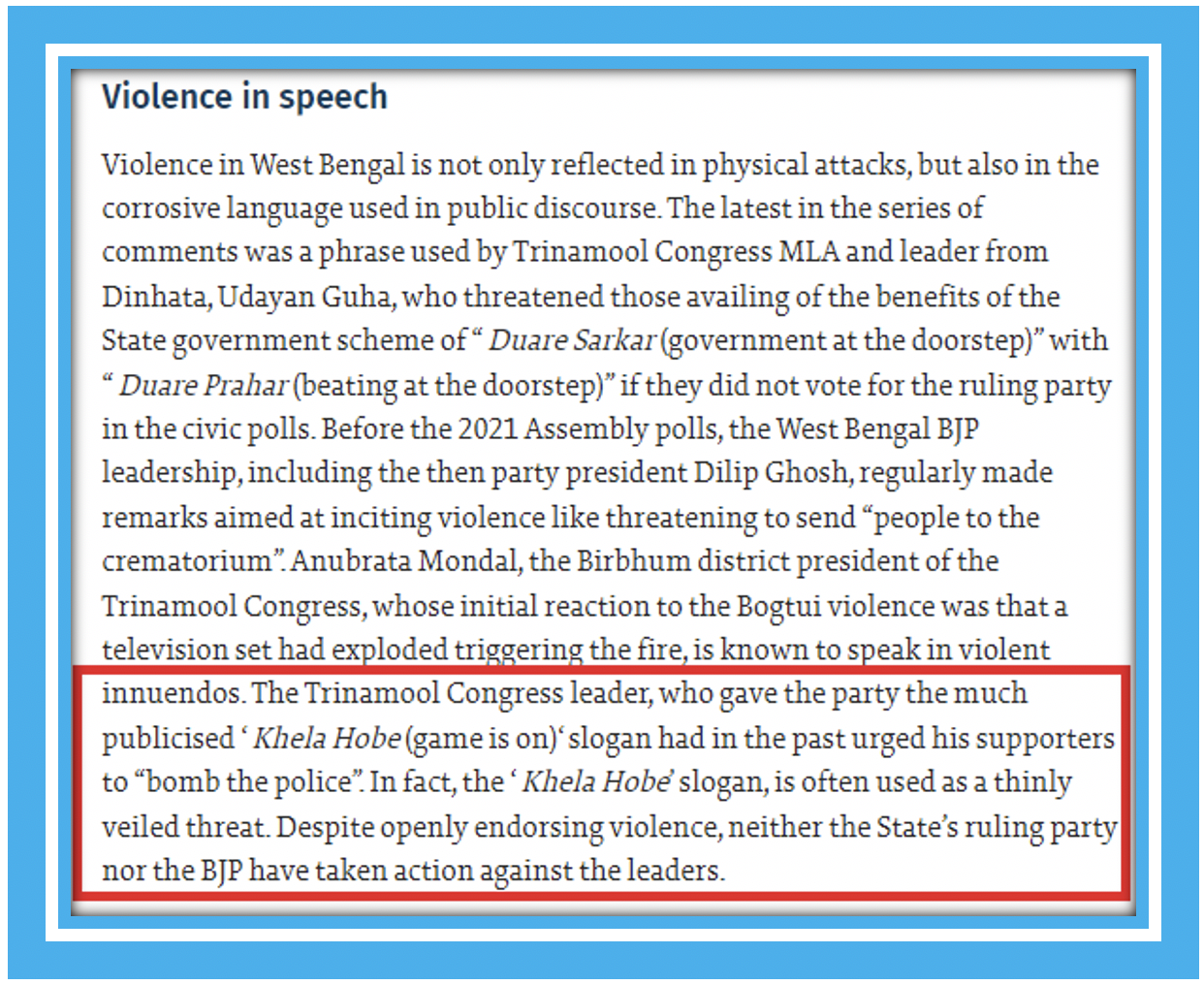
What The Hindu wrote

We are told that the TMC leader who coined the famous “Khela Hobe” slogan is known for “violent innuendos”. Now, you will begin to wonder why we were not told about this antecedent before the elections in May 2021 or at the same time when the slogan was coined and was being made popular. Because The Hindu was also hand-in-glove with Mamta Banerjee to popularize this violent slogan. Wait, did I say violent slogan? Technically I didn’t, because it is The Hindu which is now telling us that “In fact, the ‘ Khela Hobe’ slogan, is often used as a thinly veiled threat.” 

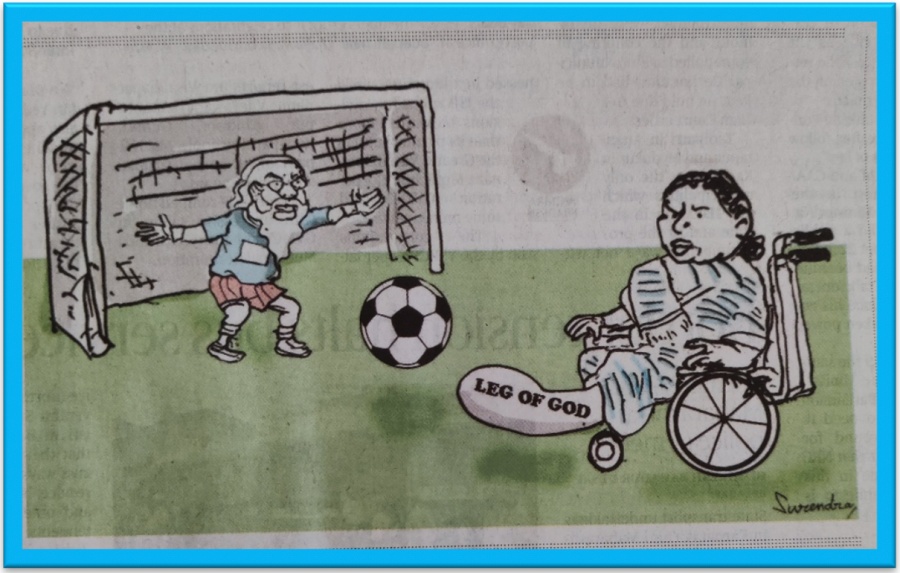
My mind immediately went back to the cartoon that The Hindu published, to support the “Khela Hobe” campaign of Mamta Banerjee. 

The Hindu cartoon during West Bengal elections

“Leg of God” it seems! Should we now assume that this not-so-thinly veiled reference to “Khela Hobe” by The Hindu was actually a call to endorse the violent methods of the ruling TMC? Or is it too difficult a question to answer? In fact, one can never forget how the whole English media went bombastic with the plastered leg of Mamta Banerjee and the “Khela Hobe” slogan – were they all complicit in encouraging violent methods of the TMC? 

The “Ground Zero” on March 16th was about “The death of a young student activist, who was critical of the Mamata Banerjee government, has sparked off massive protests in a State that is accustomed to political violence.” One can never get around to this constant commentary that the state is “accustomed to political violence”. The doyens of our English media are desperately seeking to normalize murder just because one of their icons is at the helm of the state.

According to the article, the student activist, Anish Khan was “popular among the Left students’ unions in Kolkata” and his murder has created “ripples in the state”. 100s of brutal killings of the BJP cadre are often sought to be normalized with the ludicrous comment that the state is “accustomed” to it, but the killing of the cadre of Communist parties suddenly creates “ripples in the state”! Strong adjectives like “massive” were used to describe the campaigns organized by the nearly defunct Communist parties.

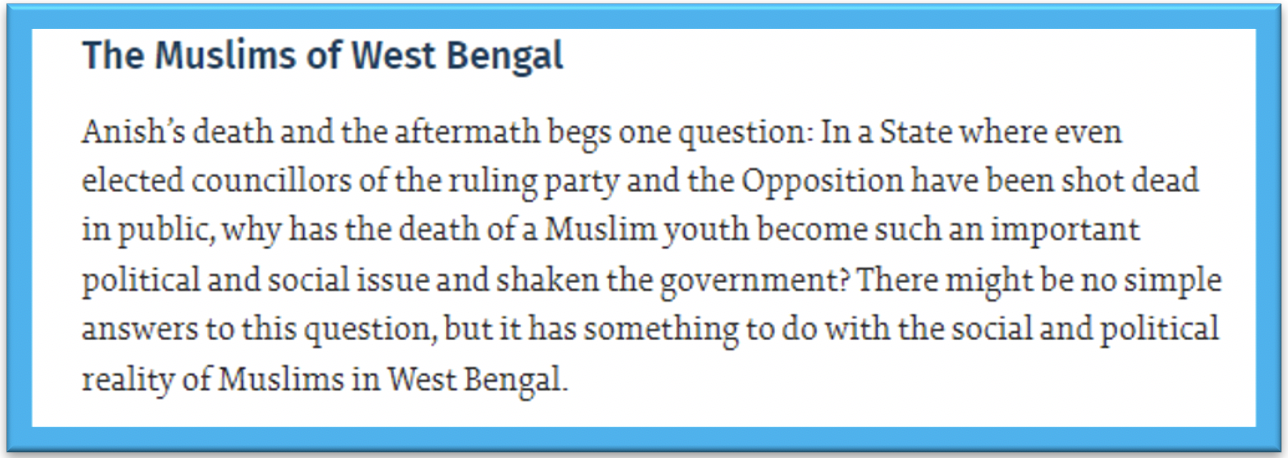
In fact, the only other violent incident that The Hindu referred to in this nearly 3000-word article is yet another arrest of 16 “Left activists”! Reading the article felt that the political murders in the state are still happening between the TMC and the Left parties until you come to the section titled “The Muslims of West Bengal”. The Hindu innocently wonders the following: 

What The Hindu wrote

For the entire first half of the article, we are told about how brave a Communist, comrade Anish Khan was. And then suddenly his Muslim identity takes centre stage, and we now digress to the “social and political reality of Muslims in West Bengal”! In 5 paragraphs, we are told that though nothing changed in their economic conditions and yet they threw their weight behind Trinamool because “The 2021 Assembly polls were fought by the BJP on a strong Hindutva pitch”!

I, for one, was relieved after reading this statement because I was beginning to get worried why, nearly 2000 words into the article, the BJP was not yet blamed for this situation! In fact, the first 2000 words focused exclusively on the murder of one communist cadre. And then suddenly The Hindu chooses to brush all other murders into one bracket – “Opposition”. 

We are also told that “Anish’s death is shockingly similar to the death of Rizwanur Rehman, a 30-year-old computer graphics teacher in Kolkata, 15 years ago.” So, in the 15-year period in which massacres have happened; the murder of 100s of political cadre have happened; dissent was stifled mercilessly – The Hindu could yet again think of only the murder of another Muslim? 

With the editors now realizing that they have accomplished their main task of generalizing this with religion and blaming the BJP even though they had to digress, they come back to the issue at hand by now telling us about how “Anish’s death also highlights how anyone questioning established power structures is frowned upon, kept an eye on, and even attacked in the rural hinterlands.

The TMC is in power for nearly 11 years. Before that, the Communists were in power for nearly 35 years. Why couldn’t The Hindu just bring itself to name these parties as the main cause for the violent culture of politics in West Bengal? Why make this sound like the murders are an act of God in which Mamta Banerjee is merely a pawn executing the orders coming from above? 

The second “Ground Zero” report titled “Bengal’s violent politics of area domination” was a mere extension of these arguments. The premise of the article was the horrific massacre in Bogtui district where 8 people were charred to death. The Hindu innocently asks us “What makes West Bengal so susceptible to vendetta politics and deadly violence?”

After establishing the sequence of events that led to this massacre, The Hindu gives us another example of how a Congress councillor and a TMC councillor were also brutally murdered a few days back. In both the articles, that amounted to nearly 5000 words – not a single case of the murder of a BJP cadre was mentioned by The Hindu. We were told about the Communist cadre being murdered, the Congress cadre being murdered and even the TMC cadre being murdered, but not even a squeak on the murder of the BJP cadre. If I were not active on social media and my only source of Bengal violence was articles such as these from “Ground Zero”, I would simply believe that the poor Congress and Communist cadre along with cadre from other sundry opposition parties are being mercilessly killed in Bengal. 

Whenever a reference needed to be made for BJP, The Hindu faithfully generalizes it to the entire Opposition with sentences such as these – “when supporters of Opposition parties were targeted for weeks after the results of the 2021 Assembly polls on May 2 were declared.” And of course, faithfully doesn’t forget to insert the one line that is everyone’s favourite – “As the BJP raised a strong Hindutva pitch to capture the State, Bengal also began to witness communal violence.” Neither the context of any article nor the relevance of any topic matters to The Hindu when it comes to blaming the BJP. 

The essence of these 5000 words in The Hindu and these 50 words by known serial commentator Shekhar Gupta is the same – Bengal is known for being violent and therefore it is normal for BJP cadre to be killed. The essence of either 50 or 5000 words is that Mamta Banerjee is one of the best tyrants to have ruled in the landscape of political India. Every time a massacre or violent incident happens (that doesn’t involve the killing of BJP cadre of course), we are treated to editorials that tell us about the stifling of dissent and the violent nature of the TMC in West Bengal. Crass generalizations of violence and murder by terming them as “commonplace”, just to make Mamta Banerjee look good, have now become the norm in our English media. 

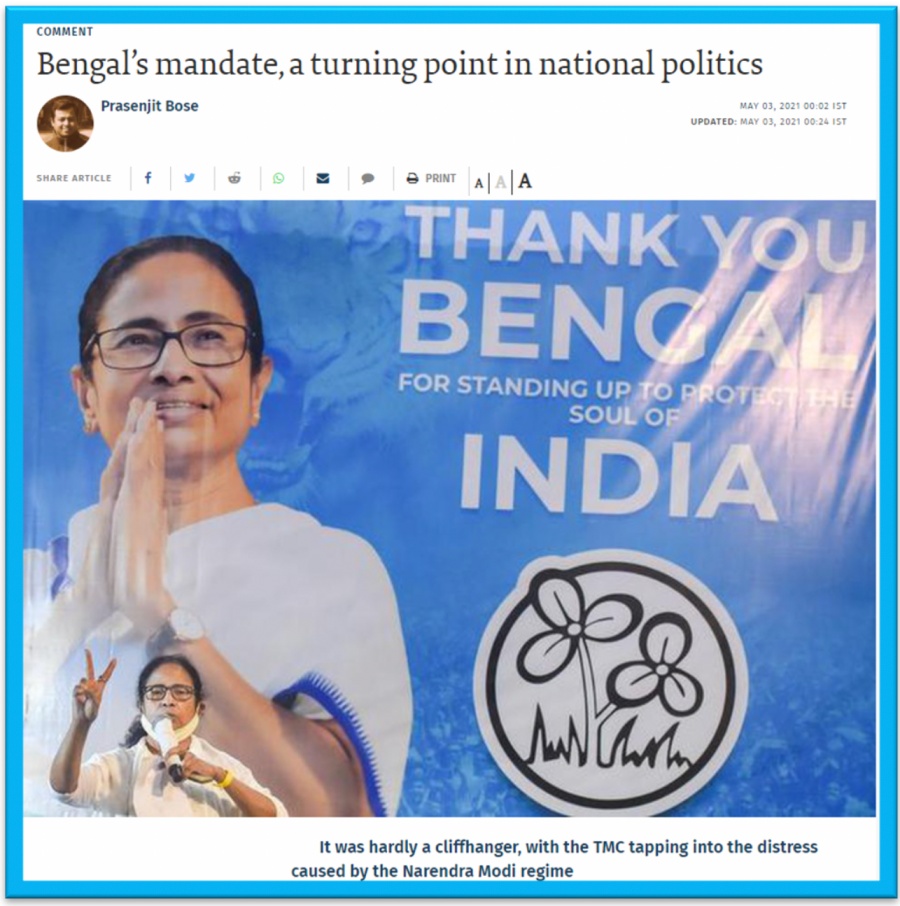
The TMC and Communists have ruled the state for nearly 45 years. It doesn’t take a genius to figure out who is responsible for “political violence becoming commonplace”. There are examples galore of Mamta Banerjee’s staggering intolerance towards dissent. Yet, we are also continuously bombarded with propaganda that despite being the antithesis of everything that a free society believes in (Free speech, Non-violence etc)  – Mamta Banerjee is the hope of this nation. Don’t believe me? See this snapshot of what The Hindu published in May 2021. 

What The Hindu wrote during West Bengal elections

It will really take a genius to decode this unlimited hypocrisy exhibited by newspapers like The Hindu where they normalize violence and murder as “commonplace” when it happens under the watch of leaders opposed to Modi. The blind hatred for Modi is that much real! 

‘States can consider giving Hindus minority status if they are not in majority in their jurisdictions’: Centre tells SC

On March 27, in an affidavit to Supreme Court, the Centre said that the states have the right to give minority status to Hindus if they are not in majority in their jurisdictions. Notably, the Supreme Court had earlier refused to give minority status to Hindus in states like Mizoram, Nagaland, Lakshadweep, Jammu and Kashmir, Manipur, Punjab and Arunachal Pradesh.

This time, the Supreme Court accepted the petition filed by advocate Ashwini Upadhyay in August 2020 and gave the Centre multiple chances to file an affidavit, but it failed. Eventually, SC had imposed a fine of Rs 7500 on the Centre in January this year for failing to file the affidavit.

In the petition, Upadhyay had demanded minority status for the Hindus in states where other communities like Muslims or Christians were in the majority based on the principle laid down by the Supreme Court in the TMA Pai ruling of 2002. In that ruling, the apex court had stated that the rights of the minorities to administer and establish educational institutions have to be considered state-wise.

OpIndia accessed the affidavit submitted by the Government of India. In the affidavit, signed by Shubhendu Shekhar Shrivastava, Under Secretary, Union Ministry of Minority Affairs, on behalf of the Union of India, it was mentioned that the state governments could declare a religious or linguistic community as a ‘minority community’ within the state.

The onus is on the states

The Centre, in its affidavit, said the petitioners’ argument that the followers of Judaism, Bahaism, and Hinduism, who are “real minorities” in Ladakh, Mizoram, Lakshadweep, Kashmir, Nagaland, Meghalaya, Arunachal Pradesh, Punjab and Manipur, cannot establish and administer educational institutions of their choice “is not correct” since states can also “certify institutions as being minority institutions as per the rules of the said state”.

It said, “Religious and linguistic minorities are spread all over the country and are not related or restricted to any single state/Union Territory of India. A religious group that is in the majority in one state may be in the minority in another state.” It added, “In view of the provisions in the Constitution of India, the Parliament and the State Legislature have the concurrent powers to enact a law to provide for the protection of minorities and their interests.”

The Centre also mentioned that the Government of Maharashtra had notified Jews as a minority community in 2016. Furthermore, Karnataka had notified Urdu, Telugu, Tamil, Malayalam, Marathi, Tulu, Lamani, Hindi, Konkani and Gujarati as minority languages. “The states have the right to certify institutions as being minority institutions as per the rule of the said state,” the affidavit read.

It added, “Matters such as declaring the followers of Judaism, Buddhism and Hinduism who are in minorities in Ladakh, Mizoram, Lakshadweep, Kashmir, Nagaland, Meghalaya, Arunachal Pradesh, Punjab and Manipur can establish and administer educational institutions of their choices in the said state and laying down guidelines for identification of minorities at State level may be considered by the concerned State Governments.”

The timeline of petitions by Ashwini Upadhyay

In 2017, Ashwini Upadhyay moved to Supreme Court seeking minority status for Hindus in several states where other communities were in the majority. The apex court asked him to approach the National Commission of Minorities. The Commission said it did not have the jurisdiction to deal with the petition and states under Section 2(c) of the NCM Act, only Central Government has the power to declare a community as a minority.

He again approached SC, and the petition was listed by then-Chief Justice of India Ranjan Gogoi. He had sought the assistance of Attorney General KK Venugopal. However, by the time the case got listed, CJI Gogoi had demitted the office. CJI SA Bobde dismissed the plea without giving any reasons.

Upadhyay did not step down and filed a fresh plea in August 2020. He challenged the constitutional validity of Section 2(c) of the NCM Act. The SC accepted the plea and issued notice to the Central Government to file a counter-affidavit. Multiple reminders were sent, but the Centre did not respond. Finally, on January 31, 2022, the Supreme Court fined the government of Rs 7500 for not submitting the affidavit. It gave the final four weeks to submit the response.

From witchcraft to Djinns: As Imran khan’s government stumbles and shakes, rumours about his wife ‘Pinky Peerni’ resurface

Bushra Bibi, Pakistan’s Prime Minister Imran Khan’s enigmatic wife, has once again made headlines for her efforts to rescue the country’s political system. Reports claim that Imran Khan’s wife Bushra Bibi, who is also known as ‘Pinky Peerni’ has resorted to ‘Black Magic’ and sorcery to save his government.

In an interview with a Pakistani news station, Shahbaz Sharif, brother of former Prime Minister of Pakistan Nawaz Sharif, made an explosive claim against Imran Khan. According to Shahbaz Sharif, lots of flesh is being burned at Imran Khan’s Banigala home for witchcraft. 

“I am saying this with full responsibility. This is the situation but even after this, the Prime Minister is giving statements about Riyasat-e-Madina,” Shahbaz stated. Shahbaz Khan was referring to Imran Khan’s wife Bushra Bibi alias ‘Pinky Peerni’.

Shahbaz Sharif said in a conversation with a private TV channel that people are dying for food, children are begging for milk, but chicken is being burnt for witchcraft in Banigala.

There have been many reports on the supernatural claims of Bushra Bibi including some which reported that Bushra Bibi’s images don’t reflect in a mirror. However, Pakistan media had later clarified that her reflection can indeed be seen in the mirror.

‘Bushra Bibi is a descendant of a Hindu King’

Bushra Bibi, 41, is reportedly a descendent of Hindu monarch Jaisal, the founder of Rajasthan’s Jaisalmer region, according to media reports. Bushra hails from the Wattoo clan, which is well-known in Pakistan’s southern Punjab.

The Wattoo are a notable Rajput tribe in the Sutlej Valley, and they are closely related to the Bhati Rajputs. Baba Fariduddin is reported to have converted its members to Islam. According to sources, the conversion took place in the 14th century under the reign of Firoz Shah Tughlaq. The Wattoo tribe of Bahawalpur claims to be the 8th generation of Raja Jaisal’s dynasty, the founders of Jaisalmer. 

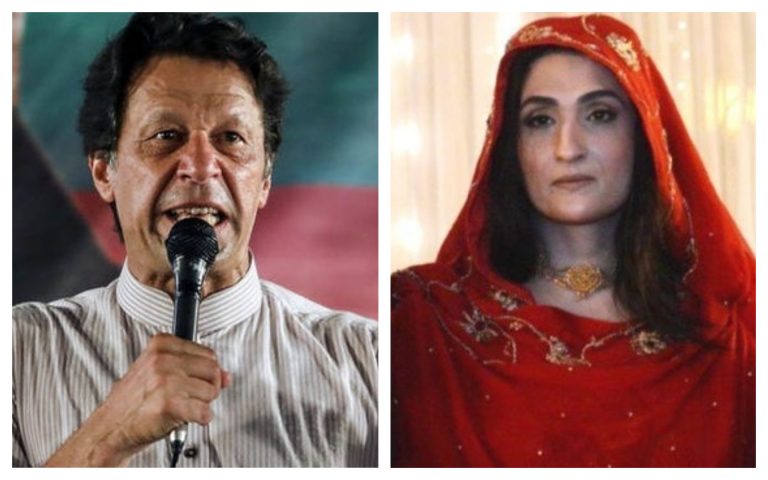
Imran Khan and Bushra Bibi

Imran Khan, who is said to be superstitious, married Bushra Bibi in 2018, a semi-religious cult-like figure. Bushra bibi has five children from a previous marriage. Khan was married for the third time. It’s worth noting that Bushra Bibi is the subject of many supernatural claims and rumours in Pakistan. She is also known as ‘Pinky Peerni,’ a living saint with supernatural abilities. Her family members from the Wattoo tribe in Pakpattan, Pakistan, are followers of the ‘Baba Farid’ shrine.

According to a report in Vanity Fair, Imran Khan sought spiritual counsel from Bushra Bibi before becoming Prime Minister, and he used to pay her two vats full of cooked meat as a fee. According to the report, the meat was for Bushra Bibi’s two djinns (Jinns).

Bushra Bibi had dreamed years ago that Imran Khan would one day become Pakistan’s Prime Minister provided he married the ‘right woman.’ She allegedly sought to marry Khan to her sister and her daughter before concluding that she was the ‘right woman’ for him. Notably, Khan married Bushra Bibi in a secret wedding six months before becoming the Prime Minister.

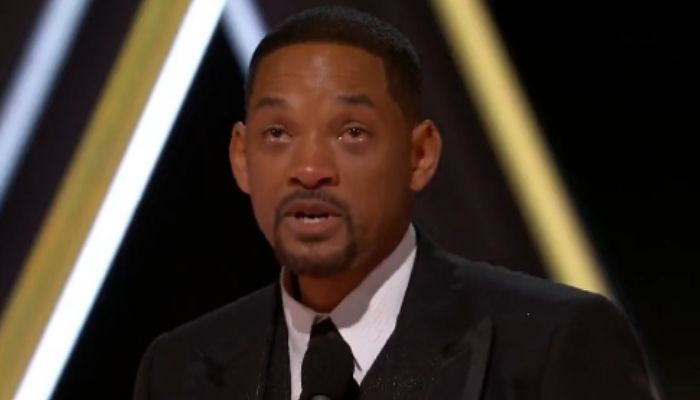
“Love will make you do crazy things”: Will Smith says in a tearful best actor speech, apologises to Academy

Hollywood actor Will Smith won the ‘best actor award’ for his 2021 movie ‘King Richard’ at the 94th Academy Awards. The movie is a biographical sports film, which is based on the life of tennis star Serena William’s father Richard William.

While accepting the coveted award, the actor made a heartfelt speech and broke down into tears. He said, “Richard Williams was a fierce defender of his family. In this time in my life, in this moment, I am overwhelmed by what God is calling on me to do and be in this world.”

“…I’m being called on in my life to love people. And to protect people and to be a river to my people. I know, to do what we do, we got to be able to take abuse. You gotta be able to have people talk crazy about you. In this business, you gotta be able to have people disrespecting you and you gotta smile and pretend like that’s OK,” he added.

Will Smith also thanked the Williams family, including tennis stars Serena and Venus Williams, for trusting him with the biographical sports drama. He also apologised to the Academy for a brief physical altercation with comedian Chris Rock.

He emphasised, “I want to be an ambassador of that kind of love and care. I want to apologize to the Academy, I want to apologize to all my fellow nominees. This is a beautiful moment and I’m not crying for winning an award.”

“It’s not about winning an award for me, it’s about being able to shine a lot on all the people…Art imitates life. I look like the crazy father, just like they said about Richard Williams! But, love will make you do crazy things,” he concluded his acceptance speech.

Will Smith punches comedian Chris Rock

The acclaimed actor had punched stand-up comedian Chris Rock for making fun of his wife Jada Pinkett’s appearance during the 94th Academy Awards. While on stage to present the best documentary award, Chris Rock said, “Jada, I love you. GI Jane 2, can’t wait to see you.”

The comment upset Smith so much so that he rushed on to the stage to physically punch the comedian. After returning to his seat, the ‘King Richard’ star yelled, “Keep my wife’s name out your f**king mouth.” 

Smith’s wife Jada Pinkett was seen sporting an emerald green gown at the Oscars. Although it remains unclear whether the ‘assault’ was in jest, a Twitter user (@Rocio2026) pointed out that Pinkett has been suffering from an autoimmune disease, leading to loss of hair.

“This joke is of bad taste,” she pointed out. In 2021, Pinkett had opened up about alopecia, an autoimmune disease that leads to the loss of hair in clumps. Last year, she also posted a picture on Instagram with a shaved head after being inspired to speak out about her hair-loss journey.

Another Twitter user explained the connection between the 1997 movie ‘GI Jane’ and comedian Chris Rock’s comment. The lead character in the movie, Demi Moore, played the role of ‘bald-headed Lieutenant Jordan O’Neil.

Although there has not been a sequel to the movie, the comedian suggested that a ‘bald’ Jada Pinkett can feature in ‘GI Jane Part 2’. Given that the hair loss of Jada Pinkett is due to the autoimmune disease of Alopecia, many social media users found Rock’s remarks as ‘insensitive.’