Home Blog Page 3463

Karnataka burqa row: 13 Muslim girls boycott preparatory exams, say will quit school if not allowed to wear hijab to classes

On Tuesday, February 15, thirteen girl students from the Government High School in Shivamogga district in Karnataka refused to take the SSLC (Class 10) preparatory examination after the teacher urged them to remove their hijab before entering the school.

Teachers at the Government Public School in Shivamogga district stopped the Muslim girls and requested them to remove their hijab. The students, on the other hand, simply refused to remove their headscarves and demanded that they be allowed to write their exams in their Islamic attire, in violation of the High Court order.

School gives an option to sit in a separate room without hijab, students stage walk-out boycotting exams

As per the ABP News report, teachers and school administration attempted to persuade them by encouraging them to write exams in a separate room where they would not be required to wear a hijab. The students, on the other hand, turned down the offer and decided to skip the exam. Parents of the girls who arrived at school there also supported their children and brought them home, stating that they could not attend courses unless they wore hijab.

Aliya Mehat, a student who boycotted the exam for hijab, said: “The court is yet to give an order, whatever it is we will not take off the hijab. It is okay if we don’t write exams. Exams are not important for me, religion is important. We will not come to school if the hijab is not made mandatory. My parents have asked me to come back home if asked to take off my hijab,” she said. 

As the news spread, DDPI Ramesh hurried to the school and attempted to persuade the students, but they refused to listen and walked out. According to the DDPI, the School Development Monitoring Committee and parents will meet by the end of the day to discuss the problem and find a solution.

The DDPI stated: “As the students have boycotted exams, after the meeting we will again arrange exams for them to take up”.

 Petitioners in the ongoing hijab row in Karnataka seeks adjournment in the hearing till February 28 

Meanwhile, one of the petitioners in the ongoing hijab row in Karnataka has sought adjournment in the hearing till February 28 claiming that the arguments are being used by political parties and groups ‘for ulterior gains’ in the ongoing elections in six states.

The Islamist group Popular Front of India (PFI) and its students’ wing, Campus Front of India (CFI), are supporting these protests demanding that hijab/burqa be allowed on school campuses, despite school uniform rules. Another Islamic organisation, Jamiat Ulama-e-Hind, has also backed it up.

It is notable here that the Karnataka HC had ordered that until their verdict in the case, the educational institutes must not allow any religious attire inside the campus.

Samajwadi Party leader shames Jain monk for addressing Haryana Assembly back in 2016, Islamists refer to Hindus as ‘l*nd bhakts’

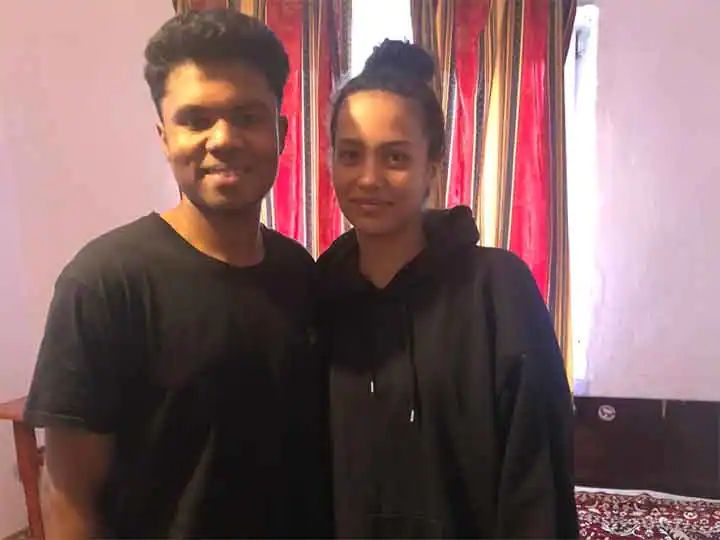
Abu Farhan Azmi, a Maharashtra-based Samajwadi Party politician, posted a photo of Jain monk Tarun Sagar on Instagram and ridiculed him for addressing the Haryana legislative assembly naked. He maintained that if a “Hindu” is permitted to be nude at a public ceremony, why can’t a Muslim lady wear a headscarf to school in Karnataka?

The post made by Farhan reads “This Hindu Monk delivered a sermon inside a Legislative Assembly, Naked!! & not a single Muslim demanded that he put on some clothes then who the hell is the Karnataka Govt or anybody to rewrite the Rights of Indian Muslims. Do whatever you want ????#WeWontGiveupHijab ♥️??”

The post made by Farhan Azmi.

The Digambar Jain monk had addressed the Haryana Assembly back in 2016. The monks of the community do not wear clothes.

The comments on the post were much more mocking than the post itself. Though there were tweets clarifying that he is not a Hindu but a Jain, other Islamists mocked the Jain monk in solidarity.

A user having username Saqib Shaikh (saqiiiib__1y1) wrote “Sab l*nd bhakt hai bro?????” (character omitted due to obscenity).

Comments on Abu Farhan Azmi’s post

Another user named Moviz Shaikh (moviz_shaikh) wrote “Fuc* their life.”

Comments on Abu Farhan Azmi’s post

Amir Hamza Shaikh (_amirsaik) posted a comment “Sir we understand this is not about Hijaab it’s about islaam and Muslim Now no Muslim leader like Salahuddin ayyubi everyone is working for their benefit…. and now we are more attache with allah”

Comments on Abu Farhan Azmi’s post

The photo which Farhan Azmi has shared is of Jain monk Tarun Sagar addressing the Haryana assembly. Tarun Sagar was a Jain monk of the Digambar community and these monks do not wear clothes. Back in 2019, there were cases filed against music composer Vishal Dadlani and Robert Vadra’s brother in law Tehseen Poonawalla for hurting religious sentiments by mocking the Jain monk.

Who is Farhan Azmi?

Farhan Azmi is the son of Maharashtra Samajwadi Party chief Abu Azmi. In June last year he had called for arrest of Yoga guru Baba Ramdev for criticising the name Allahabad. In 2020, Azmi had threatened Shiv Sena leader Uddhav Thackeray just ahead of his visit to Ayodhya. He had also vowed to build the Babri Masjid at the Ram Jamnabhoomi.

His father is well-known for making divisive sexist remarks and has frequently followed an orthodox Islamic line in politics.

Azmi insulted PM Modi’s centenarian mother, Heeraben Modi, last month. On January 4, while speaking at a political gathering in Unnao, Uttar Pradesh, Azmi said, “Modiji, show me the certificate of your mother, where she was born?” During his address, Azmi was also observed spreading the fallacy that the CAA and NRC endanger Indian Muslims’ citizenship status.

Last year in November, Azmi insulted Bollywood actress Kangana Ranaut. The SP leader said that Kangana Ranaut “ek talve chatne vali aurat hain, use jail bhej dena chahiye” (she is a bootlicker, she should be sent to jail). Without mentioning the BJP by name, Azmi claimed Kangana Ranaut adores the party, which she claims delivered true independence to India after 2014.

Farhan Azmi is also the husband of Bollywood actress Ayesha Takia. According to his website, he is a restaurateur and entrepreneur who owns and operates profitable hospitality businesses. Farhan previously ran for Maharashtra in the 2014 Lok Sabha elections but was unsuccessful.

Gujarat: Kundan Kothiya becomes sixth AAP councillor of Surat to join BJP, cites ‘harassment and insult’ in party

On Monday, Surat’s Aam Aadmi Party councillor Kundan Kothiya joined BJP alleging that she was being harassed by other AAP members in the city. Kundan Kothiya who was elected from ward 4 in the February 2021 elections, donned the saffron scarf in Gandhinagar in the presence of Gujarat BJP general secretary Pradipsinh Vaghela and said that she had to face severe harassment and insult from the other AAP councillors.

According to reports, this is the sixth incident that an AAP corporator from ward 4 Surat has switched to BJP within a year of being elected. Earlier, AAP’s Vipul Movaliya, Bhavna Solanki Jyotika Lathiya, Ruta Kakadiya and Manisha Kukadiya had joined BJP. Kothiya is said to have switched the political party after she was suspended from AAP’s primary membership on the allegations of indiscipline.

AAP’s city unit president Mahendra Patel claimed that Kothiya was involved in anti-party activities. He accused her of recording important calls of the party and circulating them to deliberately defame AAP in public.

“She was being watched due to her behaviour. It was confirmed that she would join BJP after she went unreachable on Sunday. Hence, she was issued a show-cause notice on Sunday itself”, Patel was quoted adding that Kothiya must have received a huge amount to shift the party.

Meanwhile, Kothiya said that AAP was levelling false allegations against her and that she was a committed party worker. “I was falsely accused of circulating an audio clip. AAP leadership did nothing when I complained to them about harassment by another AAP corporator. Instead of justice, I received insults in the party,” she said.

In February last year, 27 of the AAP candidates were elected to the Surat Municipal Corporation elections. However, amid the rumours that one more AAP woman corporator was planning to leave the party, AAP sought public confirmation from its 21 incumbent members that nobody would quit the Arvind Kejriwal-led party from Surat.

Greta Thunberg’s ‘Fridays For Future’ attacks Pune’s ambitious Mula-Mutha Riverfront Project: Here is all you need to know

Environment and activist groups from Pune have been criticising the much sought-after Riverfront Development Project which aims to create a continuous public space across the rivers Mula, Mutha and their confluence which run across the city. Recently, The Pune wing of Fridays for Future – a climate change advocacy group by activist Greta Thunberg has levelled multiple allegations concerning the ecological prospects of the project.

The news came when The Mula-Mutha Riverfront Development project (RFD) was all set to roll out in March, 5 long years after its announcement in 2017. However, a section of city-based activists, residents including Fridays for Future Pune (FFF) have started targeting the concerns of the project. The organisation has alleged that the project encourages concretization of the river banks and reduces the width of the river channel which poses threat to the ecology and local ecosystem.

Activists part of the Fridays for Future outfit led an agitation on Friday, on the Bhide Bridge which crosses the river. Terming the bridge as ‘heritage’ and a ‘flood indicator’ FFF activists opposed the deconstruction of the bridge while calling the project an exercise in superficial beautification. However, The Detailed Project Report (DPR) prepared by Pune Municipal Corporation and Architect and Urban Designer Bimal Patel’s HCP has a different story to tell.

What is the Mula-Mutha Riverfront Development Project about?

The Riverfront Development Project in Pune entails creating a continuous public realm and flood treatments across a 44 km stretch of the three rivers in the city – namely Mula, Mutha and their confluence Mula Mutha. The river rejuvenation and cleaning project aims to reduce the risk of flooding and at the same time enhance the connection of the city with the river. The project team after thorough geological and social surveys has prepared a draft in which cleaning the river and avoiding pollution remain the primary concerns.

The project aims to integrate heritage structures, dynamic activity precincts like parks, gardens and temples, etc in the vicinity to create a common shared identity of the city. It is said that the project is based on the Sabarmati Riverfront in Ahmedabad – one of the first successful projects exploring the possibility of riverfronts in India. A team of renowned architects and urban designers led by Bimal Patel’s HCP is leading the project.

The Riverfront Development Project (RDF). Credits: TOI Pune

Despite its varied features, the project has been caught up in a controversy where activists are pointing out that the PMC is blatantly ignoring suggestions and studies by local experts and is moving forward with the project that will destroy river ecosystems. A sudden reaction from the environment and activists groups is however not stopping the ruling BJP to ask for votes over the ambitions of the project. The stoked-up criticism may also suggest political motives since municipal elections are around the corner. Meanwhile, the PMC has given a green signal to the project after the completion of a series of urban development projects concerning footpaths and road engineering in the city.

Debunking Myths peddled by Fridays for Future

Contrasting to certain facts, the groups of activists have made claims which find no ground in the DPR so prepared. One of the many allegations Fridays for Future has put is that the development of the riverfront is not being done with respect to the lay of the land and existing ecological conditions. A post on the Instagram page by FFF Pune says, “RFD is a plan to channelize river of Pune into canals, by building high concrete walls/embarkments along both the banks.”

According to the project report prepared by HCP, the embankments across the river banks will help reduce water entering into the city areas in cases of flooding. Embarkments not only dictate the flow of water but also create levels with varying degrees facilitating interaction between the river and the citizens. The slanting embankment covered with greens enhances the river bed section into a shape of a funnel and thus is able to contain water in a greater capacity to remove the risk of flooding.

Existing and Proposed Embankments along the river bed. Credits: HCP Design
Section showing segregation of sewer lines from the river body. Credits: HCP Design

The claims of brazen concretization of the riverfront have been refuted by Pune-based architect and urban enthusiast Vedant Vyas, who has previously submitted an alternative proposal for the riverfront as a thesis. Talking to OpIndia, he said, “It is ideal that most of the green cover is being retained on the sloping embarkments which will not result in a gain of latent heat in the ecosystem. The only intervention is the creation of pathways and cycle tracks that will allow the residents to connect with the river better.” While it is amply clear that existing gardens and parks which earlier had no connection with the river have been opened up on the riverfront by planning many activities such as yoga courts, recreational areas across the banks.

While talking about the commercialization of the Riverfront, Vyas added, “The provision of existing eateries, shops near the Z bridge is to be shifted away from the river and it will only help to boost the local economy of the region.”

Another point raised by the environmental organization was about ‘wasting taxpayers money’ over the project which seems to them a mere action in ‘beautification’. The activists have also opposed the idea of increased human footfalls in the vicinity of the river, which will supposedly threaten the aquatic ecosystem. In this case, it must be understood that riverfront projects, anywhere in the world aim to reclaim neglected urban spaces near water bodies while aiming at overall rejuvenation of the river. The DPR of the present RFD has made sure that the existing ecological features are not being comprised, and rather being elevated to suit newer purposes.

Proposed riverfront designs

Increased human intervention in existing environmental contexts does not necessarily affect the ecosystem, but can also in turn make citizens aware of it. Through projects like riverfronts, urban development helps people connect with the existing flora in the city and make them aware of the nature of the river flowing through the city, which earlier was dying in neglect.

The riverfront project has also addressed social and cultural concerns by linking existing heritage structures like ghats, temples across the river by adapting them to suit the new development. Inventive interventions like building kunds for Ganapati Visarjan, connecting the Omkareshwar Mandir to the riverside by building stepped ghats have been charted out. The project, in this way, promotes social cohesion and paves way for traditions to continue as they contribute to the identity of the city.

View in front of Omkareshwar Mandir. Credits: HCP Design
Artist’s Impression of the Ganpati Visarjan festival taking place on the new riverfront. Credits: HCP Design

What is Fridays for Future?

Fridays for Future is an environmental advocacy group started by Greta Thunberg which claims to fight for climate change issues across the world. The outfit has been flagged many times in the country during farmer agitations in North India. Greta Thunberg was caught red-handed when she was seen sharing a ‘tool-kit‘ document revealing a global campaign with a move to incite violence before the Republic Day riots on January 26 last year. The website of Fridays for Future India was banned after they spammed the mailbox of the then Environment Minister Prakash Javdekar.

The same organisation is also trying to stall the Bengaluru Metro project.

In the guise of environmental activism, activist groups and their connected networks often prove to be roadblocks on which infrastructure projects continue to stumble upon. From the ‘Narmada Bachao Movement’ to brazen propaganda against the Central Vista Project in New Delhi, the repetitive attempt to stop infrastructure projects suggest coming from a similar toolkit. Every time an urban development project is initiated, overarching allegations on the supposed threat to ecology, alleged wasteful expenditure and mythical propaganda about the stake of people in the project are activated. Mired in conspiracy, agenda and politics, the cabal of such activists somehow forgets to read the policy drafts, design proposals every time before the next agitation is planned.

While Punekars await for the riverfront to see the light as soon as possible, the dire attempts to stop the project cannot be ignored. Even though their dumbfound activism is relegated to the fringes, the pattern to stand as a roadblock in the development of the nation continues.

Pakistan: Lahore High Court acquits ‘convicted’ murderer brother of social media star Qandeel Baloch

On Monday (February 14), the Lahore High Court (LHC) acquitted the murderer of Qandeel Baloch, Muhammad Wasim, of all charges. Baloch (real name Fouzia Azeem) was a model and social media star who was drugged and strangled by her own brother Wasim on July 15, 2016, under the pretext of ‘honour.’

As per reports, Wasim was convicted and sentenced to life imprisonment in September 2019 by a Multan model court. It must be mentioned that the perpetrator had confessed to his crime on record before a special magistrate and expressed no remorse for killing his own sister for allegedly bringing disrepute to the family.

After spending less than 6 years in jail, Wasim has now been acquitted by the LHC. The development was confirmed by Sarderr Mahoob, the advocate for the perpetrator. Wasim was acquitted after his parents had pardoned him for killing his sister and the witnesses retracted their statements.

While speaking about the matter, advocate Saderr Mahboob claimed that the Multan trial court had ‘wrongly’ exercised its power in convicting his client. He pointed out that the perpetrator was convicted under Section 311 of the Pakistan Penal Code (PPC), which is invoked after an accused is pardoned by the complainant/victim.

It must be mentioned that Wasim was pardoned by the deceased’s parents in August 2019, even though it was his father Muhammad Azeem Baloch who had initially lodged the murder case against Wasim and his 2 sons, Aslam and Arif.

The advocate for the murderer of Qandeel Baloch said that the Multan trial court relied primarily on Wasim’s confession, although most prosecution witnesses were cops and that it was not admissible under the existing law. The trial court had disregarded the ‘pardon’ of Wasim’s parents and had gone ahead with the conviction.

Prior to her death in 2016, Qandeel Baloch had talked about feeling unsafe and receiving death threats to The Express Tribune. She had plans to settle abroad with her parents after Eid-ul-Fitr of that year. The victim was married and had a young son.

Canada: ‘Liberal’ PM Trudeau invokes rarely used Emergencies Act to curb truckers protest, accounts of protestors to be suspended

0

On February 14 (local time), Canadian Prime Minister Justin Trudeau invoked the Emergencies Act to curb the ongoing truckers protest. The Act that has been invoked for the first time in 50 years would give the Trudeau-led Canadian government additional powers to curb the ongoing truckers blockades and protests against Covid-19 pandemic restrictions.

‘It is harming economy’

During his remarks after invoking the Emergencies Act, PM Trudeau said the protests happening in the country were not peaceful, and they were harming the economy. He said, “Families and small businesses have been enduring illegal obstruction of their neighbourhoods. Occupying streets, harassing people, breaking the law: this is not a peaceful protest. At the borders in different places in the country, the blockades are harming our economy and endangering public safety.”

He further claimed the protests had disrupted the critical supply chain making it difficult for the people to procure essential items. He said, “With each illegal blockade, local law enforcement agencies have been acting to keep the peace within their jurisdiction. Despite their best efforts, it is now clear that there are serious challenges to law enforcements’ ability to effectively enforce the law.”

PM Trudeau said the Emergencies Act had been invoked after consulting with all the central and state government stakeholders. He further claimed, “The scope of these measures will be time-limited, geographically targeted, as well as reasonable and proportionate to the threats they are meant to address. Canadians safe, protecting people’s jobs and restoring confidence in our institutions.”

Police and financial institutes to have more powers

He said the Act would provide Police additional powers to take action against those who were allegedly indulged in illegal activities such as “protesting and blocking the road”. The financial institutes have been granted additional powers to curb financial support to the protesters.

The Emergencies Act in Canada is defined as a temporary measure to manage an urgent and critical situation that “seriously endangers the lives, health or safety of Canadians and is of such proportions or nature as to exceed the capacity or authority of a province to deal with it.”

‘If you support the protests, your accounts will be frozen’

Deputy Prime Minister of Canada, Chrystia Freeland, said the protests were causing “serious harm to our economy, to our democratic institutions, and to Canada’s international standing.” She added that the government had broadened anti-money laundering and terrorist financing rules to include crowdfunding platforms and payment services. “These changes cover all forms of transactions, including digital assets such as cryptocurrencies,” she said.

All financial institutes, including the payment gateways, have to be registered under the Financial Transactions and Reports Analysis Centre of Canada, or FINTRAC that allows the government to follow the money trail.

The financial institutes now have the power to temporarily block providing financial services to accounts, both personal and corporate, that might have been providing assistance to the blockades. The financial institutes have been asked to review their relationship with anyone who is involved in the blockades and report to the agencies.

Freeland added, “A bank or other financial service provider will be able to immediately freeze or suspend the account of an individual or business affiliated with these illegal blockades without a court order. In doing so, they will be protected against civil liability.”

If anyone’s truck is being used in the blockade, his/her corporate accounts will be frozen. She said, “We are today serving notice: if your truck is being used in these protests, your corporate accounts will be frozen. The insurance on your vehicle will be suspended. Send your semi-trailers home. The Canadian economy needs them to be doing legitimate work, not to be illegally making us all poorer.”

PM Trudeau claimed invoking an emergency would not affect the right of people to protest ‘peacefully’. He said, “We are not using the emergencies act in order to deploy the military. We will not be suspending fundamental rights, as articulated in the charter of rights and freedoms. We are not limiting the right to peacefully protest or assemble. What we want to do is protect Canadians, protect their jobs and reinstate confidence in our institutions.”

Canadian trucker protests

The Canadians started protesting against vaccine mandate and Covid restrictions on January 29 in the national capital. Later, it spread across the country. For several days, the truckers have been blockading Ottawa and the US-Canada border.

On the government’s orders, the online fundraising platform GoFundMe had removed the fundraiser campaign for the platform over alleged violation of ‘terms of service’. The platform had withheld over 9 million dollars donated to the protesting truckers in Canada after the Public Safety Committee had voted to bring GoFundMe to testify about the fundraising for the truckers on their platform.

Karnataka burqa row: Hijab petitioner now thinks HC hearing citing Quran and Sharia may impact elections in other states, seeks adjournment till Feb 28

One of the petitioners in the ongoing hijab row in Karnataka has sought adjournment in the hearing till February 28 claiming that the arguments are being used by political parties and groups ‘for ulterior gains’ in the ongoing elections in six states.

While it is heartening to see the younger generation, especially minors, being so politically aware, it is important to point out that these protests demanding hijab/burqa be allowed on school campus defying school uniform rules are backed by the Islamist group Popular Front of India (PFI) and its students’ wing, Campus Front of India (CFI). It has also received support from Jamiat Ulama-e-Hind, another Islamic group.

The students were not wearing any hijab till December 2021. In October 2021 they got in touch with CFI which has since been consulting the girls on how to carry out the protests demanding hijab be allowed. The girls have been protesting while wearing burqa, full veil.

During the hearing in the High Court, the petitioners also demanded restricting media from reporting the arguments and social media discussions claiming the same may affect the ongoing elections. However, the High Court said that they would consider restricting media if the Election Commission approaches. However, the live streaming of the hearing was indeed suspended.

Their lawyer, Congress leader Devadatt Kamat, has been citing Quranic verses and other provisions of Sharia to make case for allowing the hijab. Kamat arguing over the absoluteness and relativity of Article 25 of the Constitution of India which talks about freedom to practice, propagate religion. He cited verses from the Quran justifying the use of headscarves in Islam.

During previous hearings, Adv. Kamat had argued that wearing a hijab is a fundamental Islamic practice mandated by the Quran. Kamat then proceeded to read a few verses from the Quran. “It is not correct for a woman after she starts menstruating to show her hands and face to strangers” Kamat quoted referring to Hadith mentioned in a Kerala HC judgment. However, many feel that if the secular judiciary follows Sharia, it may make the space unsafe for non-hijabi women.

TMC did not contest in UP for “larger interest”, did not want to weaken Akhilesh Yadav in any seat, says Mamata Banerjee

Mamata Banerjee, the Chief Minister of West Bengal and the leader of the Trinamool Congress, has stated that her party decided not to contest elections in Uttar Pradesh in “the larger interest”. Mamata visited UP last week to campaign for Akhilesh Yadav’s Samajwadi Party.

She made the statement while was speaking after TMC gained leads in the West Bengal Municipal Corporation Elections. Mamata Banerjee congratulated the people and thanked them for voting TMC and having faith in Them.

She reportedly said that “the TMC did not field any candidate in UP as I did not want Akhilesh Yadav to get weak in any seat.” “In the first phase, I am hoping Akhilesh’s party will win 37 of 57 seats,” she added. She further stated that she would return to UP on March 3 to hold a rally in Varanasi.

While Mamata Banerjee is busy backing Samajwadi Party chief Akhilesh Yadav in the ongoing Uttar Pradesh Assembly elections, BJP leader Suvendu Adhikari had earlier advised the people of UP not to be deceived by Mamata Banerjee’s deceptive propaganda. He reminded the people that the woman on a “propaganda peddling tour” has “blood on her hands.”

Suvendu posted many videos that highlighted the TMC’s brutality in West Bengal during and after the elections. Suvendu posted many recordings of post-poll violence in which locals who disagreed with the TMC were assaulted mercilessly.

The BJP leader Tweeted on February 8: “I would like to remind the respectable people of UP, that, the lady on propaganda peddling tour preaching democratic values, has blood on her hands. Blood of 55 @BJP4Bengal karyakartas including WB Vidhan Sabha election candidate Manas Saha. History would depict her as a tyrant.”

Suvendu Adhikari added: She unleashed such terror that lakhs of Bengali Hindus fled their homes. Those couldn’t, got beaten up. Many of them haven’t returned back yet out of fear. Their properties got looted or destroyed. Homes burnt. Women raped & molested. Please don’t get swayed by her hollow words.”

In a Tweet thread, the BJP leader posted a few videos to back up his claim. In the first video, a severely injured guy laments being attacked by TMC goons for favoring the BJP in the West Bengal elections in 2021.

Men can be seen in the following video viciously striking a teenager with batons while the latter falls motionless on the road.

Similarly, in another video posted by the BJP leader. Men beat up a man sitting nude on the side of the road while he cries in agony and begs to be rescued.

Suvendu Adhikari also put out a video in which a lady was made to perform sit-ups while holding both ears as punishment for not adhering to the Trinamool Congress’ principles and instead of displaying support for the BJP party in the state.

Likewise, the BJP representative produced many recordings of TMC goons putting BJP workers and supporters to terrible human rights violations, empowered by Mamata Banerjee’s assistance.

Though Mamata Banerjee has come out in support of the Samajwadi Party, the post-poll violence in West Bengal is not concealed from anyone. Following the TMC party’s victory in the assembly elections, more than two dozen BJP workers were killed in post-election rioting and arson.

MP police arrest Raveen and Waris from Rajasthan, who blackmailed BJP MP Sadhvi Pragya Thakur using obscene videos on WhatsApp

0

Madhya Pradesh police have arrested two youths for sending obscene messages and videos to Sadhvi Pragya Singh Thakur, a member of Parliament from Bhopal, reports Hindi daily Dainik Bhaskar. The youths have been detained from Sikri in Bharatpur, Rajasthan and are being brought to Bhopal on transit remand.

It is a case of cybercrime, said Bharatpur IG Prasanna Kumar Khamesra, adding that the suspects were apprehended in Rajasthan and handed over to the Madhya Pradesh Police. About 8 days ago, the MP had filed an FIR in TT Nagar, Bhopal, alleging conspiracy to defame her and spoil her image.

The police said that though the accused Raveen (23) and his brother Waris (21) are uneducated, they specialise in carrying out cybercrime. On Monday afternoon, Bhopal Sub Inspector Devendra Sahu and his team arrived at Sikri police station. The cyber cell was deployed to track down both the accused. The police were aware of the accused’s movements based on phone records. At around 3 pm, police from Bhopal and Sikri arrived at Chanda Ka Bas Banni hamlet and detained the duo.

Pragya Thakur had filed a complaint with the city police on February 7, alleging that she is a victim of an ongoing nude video call blackmailing racket that has victimized a number of people across the country. Thakur claimed she received a video call on her WhatsApp on February 6 at 7 pm. According to her complaint, a woman who video called her took off her clothes, after which the MP disconnected the call.

Thakur went on to say that after some time, she received a call from a different number demanding ransom and threatening to make the video of the MP’s conversation with the girl go public if she did not pay the money. She claimed that the online group used the ‘nude video call’ tactic to try to extort money from her.

Following the incident, the BJP MP informed the TT Nagar police in Bhopal saying that the call and videos were part of a conspiracy to defame her and spoil her image.

Police had registered a case against the accused under the Indian Penal Code’s sections 354 (sexual harassment), 507 (criminal intimidation by an anonymous communication), and 509 (word, gesture, or act intended to insult the modesty of a woman).

Uttar Pradesh polls: BJP accuses poll officials of not checking the identity of burqa-clad women at polling booths, two such women arrested for fake voting

The BJP unit of Uttar Pradesh has written to the Election Commission, accusing poll officials of failing to confirm the identification of burqa-clad women before allowing them to cast their vote in the second phase of voting in Uttar Pradesh on Monday, February 14.

The BJP has accused polling booths of facilitating fake voting by burqa-clad women and has requested that the identities of burqa-clad women be thoroughly vetted by female police constables. The party also requested that women constables be stationed at all polling stations to monitor the voting process. The letter signed by UP BJP’s general secretary JPS Rathore urged the EC to stop the elections till arrangements are made for verifying the identity of women in veils.

Reportedly, two burqa-clad women were arrested from Azam Khan’s constituency Rampur for casting fake votes. A total of six persons were arrested in Rampur for casting fake votes, including four women. Two of the women, caught in Raza Degree College, are mother and daughter, and both were wearing burqas. They had already cast fake votes, and were trying to cast more votes in other women’s names.

It may be noted that the areas that went to the polls in this phase have a sizeable Muslim population influenced by religious leaders of Barelvi and Deoband sects. Jailed SP leader Mohammad Azam Khan is contesting the polls from his stronghold Rampur.

Notably, Azam Khan, who has been lodged in jail since February 2020 in connection with a fake birth certificate case, faces Haider Ali Khan, the Nawabs of Rampur’s heir, who is contesting on a ticket from Apna Dal (Sonelal), a BJP ally. Haider Ali Khan is the grandson of former MP Noor Bano.

Rampur is a stronghold of the Samajwadi Party, especially Azam Khan, who has been elected 9 times from the said constituency. In 2017, when BJP swept Uttar Pradesh, Khan had managed to retain his Rampur seat by defeating Shiv Bahadur Saxena of BJP by 47,000 votes.

Assembly elections in UP

The first phase of Assembly elections took place on February 10. The second phase of polls happened on February 14. The remaining five phases will be over by March 10. The results of Assembly polls in UP and the other four states will be announced on March 10.