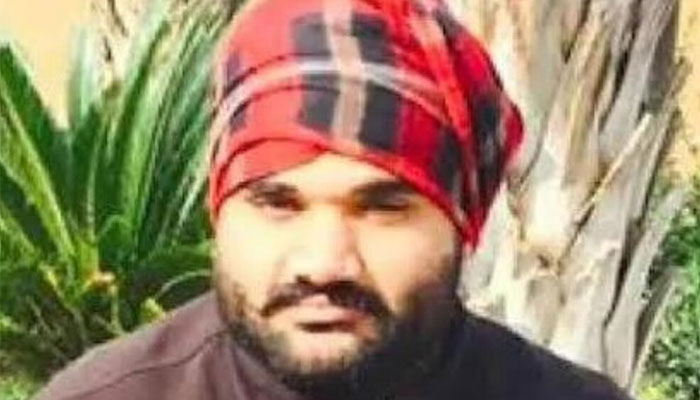
The National Investigation Agency (NIA) has filed a chargesheet against five accused, including designated individual terrorist Goldy Brar, in the 2024 case relating to bomb attacks at two clubs in Gurugram, Haryana, according to an official statement from the agency.
NIA has charged Canada-based Satinderjit Singh @Goldy Brar, along with Sachin Taliyan, Ankit, Bhawish and US-based Randeep Singh @Randeep Malik, under various sections of the Bharatiya Nyaya Sanhita (BNS), Arms Act, Explosives Substance Act, and UA(P) Act. Barring Goldy Brar and Randeep Malik, all others have been arrested in the case.
NIA had found the accused to be involved in conspiracy to target Warehouse Club and Human Club in Sector-29, Gurugram with bombs, as part of the Babbar Khalsa International (BKI) larger conspiracy to spread communal disharmony and disrupt peace in the state of Haryana and neighbouring regions by unleashing violence.
The attack, perpetrated by members and cadres of the proscribed BKI terror outfit, took place on December 10, 2024. NIA investigations later revealed that the deep-rooted terror conspiracy was hatched by Goldy Brar and his associates.
As per NIA investigations, the terror syndicate is actively involved in extorting money, raising terror funds, procuring explosives and arms and ammunition, and promoting terror amongst the common people to threaten the integrity, security (including economic security) and sovereignty of the country.
The anti-terror agency is continuing with its probe into the case.
(This news report is published from a syndicated feed. Except for the headline, the content has not been written or edited by OpIndia staff)
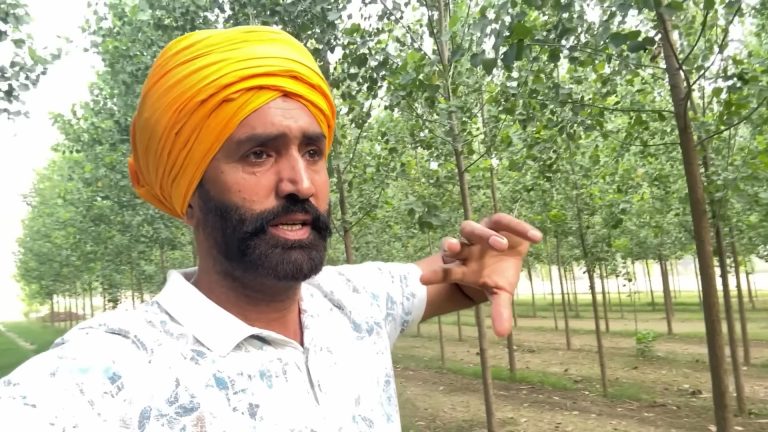
YouTuber Jasbir Singh, who was arrested in Punjab on charges of spying for Pakistan on June 4, was produced in the Mohali court on Saturday. During his interrogation, police have obtained vital information regarding the Pakistan’s espionage network in India using Indian YouTubers and other social media influencers. Jasbir Singh runs a YouTube channel called “Jaan Mahal.”
As per police, Jasbir Singh was associated with a Pakistani intelligence operative (PIO) named Shakir, who also uses the alias Jutt Randhawa. Shakir is reportedly part of Pakistan’s terror-backed espionage network.
#WATCH | Punjab: YouTuber Jasbir Singh, who was arrested on espionage charges on June 4, produced in the Mohali court.
As per police, Jasbir Singh, who operates a YouTube channel called “Jaan Mahal,” has been found associated with Pakistani intelligence operative (PIO) Shakir… pic.twitter.com/dYr1eEr7cn
Jasbir was also in close contact with Haryana-based YouTuber Jyoti Malhotra, who was earlier arrested for spying for Pakistan, and with Ehsan-ur-Rahim alias Danish, a Pakistani national. Danish was working in Pakistan High Commission in Delhi, but he was expelled from India in May after his role in the espionage activities were revealed.
Earlier, it was reported that Jasbir Singh revealed the involvement of a former Pakistani police officer in the espionage racket. As per reports, Jasbir disclosed during the interrogation that Nasir Dhillon, a former sub-inspector of the Pakistan Police, was one of the masterminds behind the spying operation in India.
Dhillon is now Pakistani YouTuber, and he used this cover to contact Indian YouTubers and groomed them into spying for Pakistan. He allegedly introduced Jasbir to ISI officers in Lahore during his visit to Pakistan.
Notably, Jasbir has revealed that he and Jyoti Malhotra had travelled to Pakistan together, and they stayed in Lahore for 10 days. During their stay in Lahore, Nasir Dhillon introduced them with Danish, the ISI handler who was working at the Pakistan High Commission in Delhi.
“After initial onboarding, Nasir would connect Indian YouTubers visiting Pakistan with high commission official Danish and others who would then assign them espionage tasks and invite them as guests to the Pakistan High Commission in Delhi,” said an investigator, Times of India reported.
Following this, Danish started to assign espionage activities to them, along with other Indians who were included in the racket, and also invited them to the High Commission to attend events as guests. Jasbir had attended the Pakistan National Day program held at the Pakistani Embassy in Delhi on Danish’s invitation.
Jasbir Singh visited Pakistan three times, and several Pakistani numbers were found on his phone. After Jyoti Malhotra’s arrest, he tried to erase the traces of his communications with Pakistani officials to avoid detection, as per police.
Nasir Dhilon’s partner in the activity is Naushaba Shehzad aka Madam N, who has been tasked by ISI to nurture Indian influencers as assets. She runs a travel agency targeting Hindu and Sikh visitors from India.
In a unique judgment, Kerala High Court allowed a transgender couple to be referred to as ‘parents’ in the birth certificate of their child instead of ‘mother’ and ‘father’. Transgender couple Zia Paval and Zahad had filed a writ petition before the High Court seeking to be officially recognised as parents of their child on the birth certificate.
Ziya, a transwoman and Zahad, a transman, together had a biological child in 2023. They wanted to be represented as parents on their child’s birth certificate instead of being referred to as mother and father based on their genders assigned at the time of birth. The initial birth certificate named Zahad, an assigned female at birth, as the mother and Ziya, an assigned male at birth, as the father. The trans couple approached the High Court contending that the registration process violated their fundamental rights.
Hearing the petition, a single bench of Justice Ziyad Rehman described the case as fit for “social justice adjudication” or “social context adjudication”. The court said that the concerns raised by the petitioners were valid because the birth certificate in the prescribed form would cause serious difficulties to the child in future. It added that the law must evolve with the changing concepts of society and human life. “When a statutory provision on a particular point is not in line with such societal changes, the Court must intervene to address the genuine grievances of the parties concerned,” the court said.
Exceptional cases require exceptional remedies: HC
The court observed that if the certificate sought by the petitioners advances their interests arising out of Constitution, and does not offend the rights of third parties, then it can be issued. “If a certificate as sought by the petitioners, advances the welfare, interests and the rights of the petitioners or the class/category they fall in, particularly when their rights originate from the Articles of the Constitution of India, without offending any of the rights of the 3rd parties and without doing violence to any statutory provisions, this court need not hesitate to step in and to issue appropriate directions to issue a certificate to the petitioners,” the court said.
The court explained that the purpose behind creating birth certificates as per the Registration of Births and Deaths Act, 1969 and the Rules is to maintain the records regarding the births and deaths. It said that necessary modifications can be made in appropriate cases where the interests of transgender persons are involved. “I am of the view that, reading down of the provisions is not necessary, as the case at hand is a rare and exceptional case, and the facts and circumstances of such a case, cannot be a reason to interpret the validity of the statutory stipulations in the Act and Rules referred to above,” Justice Rehman said adding that this being an exceptional case, exceptional remedies are to be explored and exceptional reliefs are to be granted.
The High Court allowed the petition and directed the concerned authority to issue a birth certificate with modifications by removing the columns for mother and father and mention the names of the peitioners as parents without referring to their genders.
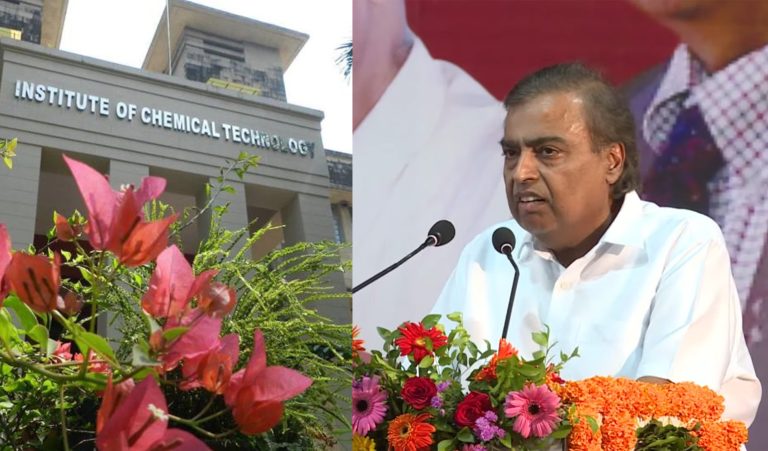
Mukesh Ambani, Chairman and Managing Director, Reliance Industries announced an unconditional grant of Rs 151 crore to the Institute of Chemical Technology, Mumbai, from where he graduated in the 1970s.
Ambani spent over three hours on Friday at the institute (ICT), which back then was called the University Department of Chemical Technology (UDCT). He was there to attend the function to publish Professor MM Sharma’s biography titled ‘Divine Scientist’.
He also reminisced how the first lecture he attended at UDCT by Professor Sharma motivated him and how Prof. Sharma later played a role of quiet architect of India’s economic reforms.
#WATCH | Mukesh Ambani, Chairman and Managing Director, Reliance Industries, announced an unconditional grant of Rs 151 crore to the Institute of Chemical Technology, Mumbai, from where he graduated in the 1970s. pic.twitter.com/cHyu9ds8QU
Prof. Sharma impressed upon the policymakers that the only way for India to grow was to unshackle Indian industry from license-permit-raj which will allow Indian players to build scale, reduce dependence on imports and compete globally.
“Like my father Dhirubhai Ambani, he had a burning desire to change Indian industry from scarcity to global leadership,” said Ambani.
He further added, “These two bold visionaries believed that science and technology, in alliance with private entrepreneurship, would open the floodgates of prosperity.”
Crediting the rise of Indian chemical industry to Prof Sharma’s efforts, Ambani in his speech also referred him as ‘a Rashtra Guru – a Guru of Bharat’.
When speaking of ‘Guru Dakshina’, Ambani announced the unconditional grant of Rs 151 crore to ICT according to the instructions of Prof. Sharma.
“When he tells us something, we just listen. We don’t think. He told me ‘Mukesh you have to do something big for ICT, and I am very pleased to announce that for Prof Sharma,” Ambani said while referring to the grant.
(This news report is published from a syndicated feed. Except for the headline, the content has not been written or edited by OpIndia staff)
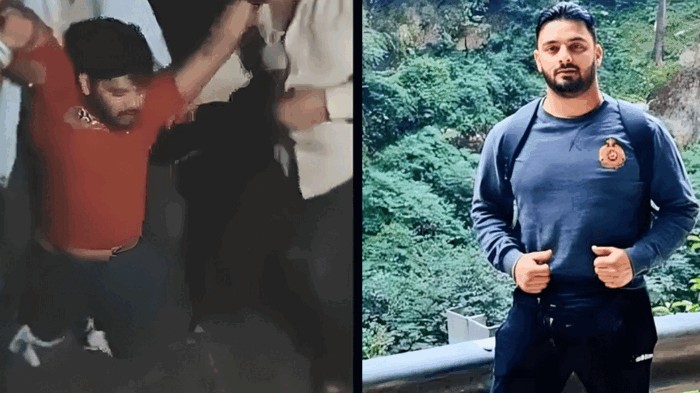
Uttarakhand police on Thursday (5th June) arrested accused Azhar Tyagi and his accomplice Ayush Kumar alias Sikandar in connection with the murder of local BJP leader Rohit Negi. The accused were nabbed by the police after an encounter that took place near Muzaffarnagar-Manglaur border late night on Thursday, June 5. Azhar was shot thrice, in both his legs and on one arm.
Rohit Negi was former Mandal President of BJP Yuva Morcha, and was killed on May 3 by Azhar.
As per reports, the police had received information about their location through sources. SSP Ajai Singh said that the two accused were spotted near Manglaur from where they were planning to move to Muzaffarnagar in Uttar Pradesh. When the accused reached Purkazi, they realised that they were being followed by police. Azhar and his accomplice Ayush opened fire at the police and tried to flee. However, they sustained injuries in retaliatory firing by police and were arrested. Azhar Tyagi reportedly received gunshot wounds on both legs and one arm while Ayush Kumar sustained injuries on both knees. They were taken to CHC, Gurukul Narsan, from they were referred to AIIMS Rishikesh.
Rohit Negi had confronted Azhar for misbehaving with his female friend
The Uttarakhand Police was on a lookout for the accused ever since former Mandal President of BJP Yuva Morcha Rohit Negi, was shot dead on 3rd May.
On the day of the incident, Negi was reportedly at a party with his friends when Azhar called Negi’s female friend Anya Khan and started misbehaving with her over the phone. Since the phone was on speaker, Rohit Negi also heard Azhar abusing Anya Khan. Negi then confronted Azhar after which a heated argument took place between the two on the phone.
Azhar threatened Negi and asked him to meet at DBIT Chowk. Negi and his friends reached the location in their cars. Azhar along with Ayush was already present at the location waiting for Negi. As soon as Negi arrived, Azhar opened fire at him and a bullet hit his neck. Negi was rushed to hospital where he was declared dead.
A case of murder was filed against Azhar and Ayush by Negi’s friend at Premnagar police station. Several teams of police were deployed to nab the culprits.
US President Donald Trump on Friday (local time) again claimed credit for brokering a cessation of hostilities between India and Pakistan, adding that he used trade as a weapon, leading to both countries stopping the war immediately.
Trump pointed out that a war between India and Pakistan could have gone nuclear if the US had not intervened between the two countries.
“You know, I did something that people don’t talk about, and I don’t talk about very much, but we solved a big problem, a nuclear problem potentially with India and with Pakistan. I spoke to Pakistan, I spoke to India, they have really great leaders, but they were going at it, and they could have gone at it nuclear,” Trump told reporters on Air Force One.
Lauding the leadership of India and Pakistan, Trump said, “Both nuclear countries, strong nuclear countries, and I talked about trade and said, ‘We’re not doing trade if you guys are going to be throwing bombs at each other.” They both stopped, and I stopped that war immediately. It was going much further, and hopefully, it would not go to nuclear, but it might have gone to nuclear. In fact, it might have gone to nuclear in the next round, but we stopped it, and I’d like to commend the leaders of both countries, Pakistan and India.”
The issue stands as a bone of contention between the US and India, as on Friday, Aide to Russian President Vladimir Putin, Yury Ushakov, endorsed US President Donald Trump’s claim of having brokered a cessation of hostilities between India and Pakistan. Ushakov said that the India-Pakistan conflict was resolved with ‘personal’ involvement of US President Donald Trump, as was discussed in a telephonic conversation between Trump and Russian President Vladimir Putin.
“The Middle East was discussed, as well as the armed conflict between India and Pakistan, which has been halted with the personal involvement of President Trump,” he said.
Earlier, All-Party Delegation Leader and Congress MP Shashi Tharoor said that the delegation, during their meeting with US Vice President JD Vance, cleared the air around US President Donald Trump’s claim of mediating between the India-Pakistan crisis.
“The meeting with Vice President Vance was outstanding, very good, very clear. I think we made our position amply clear on this question of mediation, and Vice President Vance fully understood our points,” he said.
US President Donald Trump has repeatedly claimed credit for stopping hostilities between India and Pakistan after New Delhi’s effective response to Islamabad’s aggression following precision strikes on terror infrastructure.
India had conducted Operation Sindoor early on May 7 and hit terror infrastructure in Pakistan and PoJK in response to the Pahalgam terror attack. India effectively responded to subsequent Pakistani aggression and pounded its airbases. India and Pakistan agreed to stop military action following a call made by Pakistan’s DGMO to his Indian counterpart.
(This news report is published from a syndicated feed. Except for the headline, the content has not been written or edited by OpIndia staff)
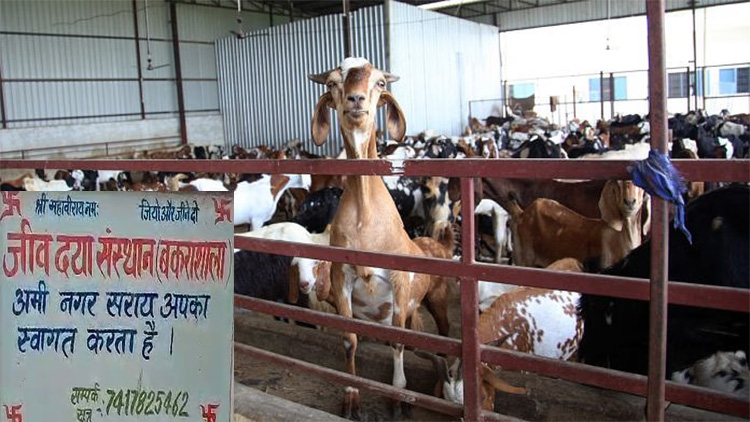
People from the Jain community, once again, saved the lives of hundreds of goats ahead of Bakrid by purchasing them at higher prices in Uttar Pradesh. The saved goats were kept in a goat shelter called Jeev Daya Sansthan in Aminagar Sarai of Baghpat. The community also donated money for the maintenance of the goats.
Jeev Daya Sansthan was started in 2016 by people from the Jain community with the objective of protecting goats meant for sacrifice. Hundreds of goats, meant to be sacrificed on Bakrid, were brought into the shelter from Baghpat and nearby districts by people from the Jain community who purchased them by paying more than the market value. Around ₹20 lakh was spent on purchasing the goats.
Hundreds of goats taken care of at the shelter
Manoj Jain, President of Jeev Daya Sansthan, patron Satyabhushan Jain, and General Secretary Manoj Jain said that every year before Eid, people of Jain community across the country buy goats from different places and save them from sacrifice. All the goats saved from sacrifice have been kept in the goat shelter. More than 800 goats are currently sheltered at Jeev Daya Sansthan which has the capacity of housing 1800 goats.
Goat shelter operators, Saurav Jain, Mayank Jain, Dinesh Jain, said that all the goats brought to the shelter had a red thread tied around their necks which indicated that they were to be sacrificed by the Muslim community on Eid. It was told that people from Delhi also saved the lives of 101 goats and brought them to the town. The goats are being taken care of here.
Jain monk inspired people to open the shelter
Sachin, who is associated with the shelter, said that 10 years ago Jain monk Rajshree Rajendra Muni visited the area and told people that goats should die a natural death. He expressed the desire for a goat shelter like cow shelters. That’s how Jeev Daya Sansthan came into existence. A year ago, the Sansthan was expanded by adding around 5000 square feet of land.
Another person connected with the Sansthan, Dr. Shashikant said that the sheter follows Lord Mahavir’s message which sayd ‘live and let live’. He said that goats are taken care of like children at the shelter. Sick goats also receive treatment.
Jain community saved goats on Bakrid last year
During Bakrid, last year, people from the Jain community, saved more than 100 goats by purchasing them and keeping them in a temple premises, Chandni Chowk. Chartered accountant, Vivek Jain, who was part of the initiative, said that a group of people from the Jain community dressed as Muslims and visited goat markets in Old Delhi. They bought the goats and kept them at Naya Jain Mandir in Dharampur area to protect them on Eid.
This presents a remarkable social contrast where one community kills vulnerable animals for celebration on its festival, while the other community spends huge amounts of money for saving these voicless animals.
On 10th June, India will make history as Indian astronaut Group Captain Shubhanshu Shukla will pilot the Axiom-4 mission to the International Space Station (ISS). Shukla’s journey to space will put an Indian astronaut in space four decades after Rakesh Sharma’s historic 1984 voyage. It is not just a moment of national pride, but this mission represents a strategic leap forward for India’s human spaceflight ambitions and scientific outreach.
A new dawn for India in space exploration
If the weather permits, on 10th June 2025, a SpaceX Falcon 9 rocket will lift off from NASA’s Kennedy Space Centre in Florida carrying four astronauts on a two-week journey to the International Space Station (ISS). Among them will be Group Captain Shubhanshu Shukla, a distinguished pilot from the Indian Air Force, representing India’s return to crewed space missions after 41 long years.
The mission has been named Axiom Mission 4 (Ax-4). It is being spearheaded by Axiom Space, which is a Houston-based private company that has rapidly established itself as a key player in low-Earth orbit operations. Shukla will be the first Indian astronaut on the ISS, making it a milestone moment.
What is the Axiom-4 mission and why does it matter
Axiom-4 is the fourth crewed mission by Axiom Space in partnership with NASA and SpaceX. It is a private, commercially operated spaceflight designed to conduct over 60 scientific experiments across disciplines such as human physiology, Earth observation, material science, and space agriculture.
It is significant for many reasons. It demonstrates the success of public-private collaboration in space and extends human presence aboard the ISS. The mission allows countries like India, Poland and Hungary, absent from human spaceflight for decades, to re-establish their space credentials.
Furthermore, it is a stepping stone for the company’s ambitious plan to build the world’s first commercial space station. The temporary ISS-based research mission offers hands-on operational experience that will provide crucial information for the company’s future orbital infrastructure, which is expected to be launched by the end of the decade.
A highly qualified international team on board
There are four distinguished members who are part of the Axiom-4 mission.
Commander Peggy Whitson (USA): A NASA legend, former ISS commander, and America’s most experienced astronaut with over 675 days in space and ten spacewalks to her name.
Pilot Shubhanshu Shukla (India): Fighter pilot, test pilot, and one of the four astronauts shortlisted for India’s Gaganyaan mission.
Mission Specialist Sławosz Uznański-Wiśniewski (Poland): A CERN engineer and ESA reserve astronaut with a background in radiation science and high-energy physics.
Mission Specialist Tibor Kapu (Hungary): A mechanical engineer trained under the Hungarian HUNOR astronaut programme, specialising in space radiation and life sciences.
Together, they represent a new generation of global cooperation in space exploration.
Meet Group Captain Shubhanshu Shukla – The man who carries a billion hopes
Shubhanshu Shukla was born in 1985. He joined the Indian Air Force in 2006 and quickly rose through the ranks to become a Group Captain. He has over 2,000 hours of flying experience across fighter jets and transport aircraft. Shukla was handpicked by ISRO for the Gaganyaan mission and underwent rigorous training in Star City, Russia.
Now, as the pilot of Ax-4, he holds a critical role, second-in-command to the mission commander, responsible for navigation, docking, and emergency manoeuvres.
Shukla, emotional yet composed, recently told the press, “As I go into space, I carry not just instruments and equipment, I carry hopes and dreams of a billion hearts. I request all Indians to pray for the success of our mission.”
From Gaganyaan to ISS – Why Shukla’s role is strategic for ISRO
India has invested Rs 500 crores in securing Shukla’s seat. It is not merely symbolic, but a tactical move to ensure ISRO’s Gaganyaan mission, which is scheduled for 2025–2027, benefits from real-time international exposure and operational readiness.
According to ISRO Chairman V Narayanan, “The benefit we will get from this mission is phenomenal in terms of the training, exposure to the facilities and the experience of jointly conducting experiments in space.”
Shukla will bring back critical insights on microgravity adaptations, international mission protocols, and space station operations. These will feed directly into ISRO’s preparations, which will help India to execute its first crewed space mission using indigenous hardware confidently.
The value of Ax-4 for India goes beyond optics. It serves as a live testbed for Gaganyaan and India’s larger ambitions to establish its own space station by 2035 and land an astronaut on the Moon by 2040.
India’s scientific contribution – Experiments that could change how we live and eat
Out of Ax-4’s 60-study suite, India will be conducting seven experiments. Each of these experiments is designed to address critical questions about sustaining life in space and on Earth. One experiment will study six varieties of crop seed to understand their adaptability in microgravity. The aim of the experiment is to advance the possibilities of space farming while also contributing to the development of climate-resilient crops on Earth. Another experiment will analyse three strains of microalgae to assess their potential use as food, fuel, or life-support components in long-duration space missions.
Researchers will also examine the resilience of tardigrades, micro-animals known for surviving extreme conditions. The experiment will help to understand how biological life might be protected in hostile space environments. A separate study will focus on muscle atrophy in zero gravity and will investigate rehabilitation methods that are crucial for the health of astronauts on extended missions. Another experiment will assess how screen interaction in microgravity affects eye movement, stress levels, and mental alertness. The findings could inform future spacecraft interface designs to support astronaut wellbeing.
A timeline to launch – When and how will Ax-4 lift off
Ax-4 has already been delayed due to adverse weather conditions twice. It is now scheduled to launch on 10th June at 8:22 AM EDT or 5:52 PM IST from Launch Complex 39A at Cape Canaveral, Florida.
The four astronauts will ride aboard a brand-new SpaceX Crew Dragon capsule, boosted by a Falcon 9 rocket. Once separated, the capsule will autonomously dock with the ISS at approximately 12:30 PM EDT on 11th June.
The crew will remain aboard for up to 14 days, conducting scientific experiments and outreach events. They will return via splashdown off the California coast, where SpaceX recovery teams will retrieve the capsule.
About Axiom Space
Axiom Space was founded in 2016 by former NASA leaders Michael T Suffredini and Kam Ghaffarian. It has positioned itself as a disruptor in the New Space economy. Apart from operating full-service missions to the ISS, the company is also developing Axiom Station, which is a commercial successor to the ISS. It is expected to be launched before 2030.
Axiom’s previous missions included the first private Israeli astronaut and sent Saudi astronauts to space. The company conducted joint missions with the EU and has proven that privatised international missions are viable and valuable.
What it means for India – National pride, global relevance
For a generation born after 1984, the idea of an Indian astronaut has lived in nostalgic black-and-white frames of Rakesh Sharma’s flight. As Shukla is now heading to space, that memory will turn into a living, breathing 4K reality.
ISRO has confirmed that Shukla will conduct interactive sessions from space with Indian students as part of the outreach programme to inspire the next wave of engineers, astronauts, and dreamers. His journey is not just a mission but a message that Indian talent can match global standards. India’s tryst with space has only just begun, and the cosmos is not out of reach.
On Saturday (7th June), Congress MP Rahul Gandhi wrote a misleading opinion piece in The Indian Express, wherein he desperately tried to dub the party’s loss in the 2024 Maharashtra Vidhan Sabha election as the result of ‘industrial-scale rigging.’
The article was titled ‘Match-fixing Maharashtra.’ At the very onset, Rahul Gandhi claimed, “The scale of rigging was so desperate that, despite all efforts to conceal it, tell-tale evidence has emerged from official statistics, without reliance on any nonofficial source, revealing a step-by-step playbook.”
How to steal an election?
Maharashtra assembly elections in 2024 were a blueprint for rigging democracy.
My article shows how this happened, step by step:
Step 1: Rig the panel for appointing the Election Commission Step 2: Add fake voters to the roll Step 3: Inflate voter… pic.twitter.com/ntCwtPVXTu
To substantiate his outrageous claims, the Congress dynast suggested that the BJP government ‘rigged the panel for the appointment of umpires.’
He pointed out how the government removed the Chief Justice of India (CJI) from the panel to appoint the Election Commissioners and ensured its 2:1 majority.
Rahul Gandhi insinuated that this was somehow an attempt to remove a ‘neutral arbiter’.
It must be mentioned that since the first election in 1951-1952 to until March 2023, the appointment of Election Commissioners were always made by the President of India on the recommendation of the Union Cabinet (100% in control of the ruling party).
Following the enactment of the 2023 Election Commissioners Appointment Act, at least 1/3rd of the selection panel has a representative from the Opposition (which did not exist during all elections that were won by Rahul Gandhi’s Congress party).
The legislation introduced by the Modi government put a halt to arbitrary judicial activism and sent a strong message to the Judiciary about the powers vested in the Executive and the Legislature. Not only that, the amendment by the Modi government actually ended the brute power that the ruling party had in the appointment of the election commissioners – a luxury that Congress gave itself for the decades it was in power. Earlier, as explained, the party in power at the centre could arbitrarily decide the election commissioners, it was the Modi government, which diluted its own power (a power Congress enjoyed in power) by including the leader of opposition in the process as well.
While Rahul Gandhi criticises the Modi government for making the process fair, he must also remember that when Congress was in power, Sonia Gandhi, the Super PM, appointed the Election Commissioners despite not holding any constitutional post and power to do so. It is often said that those who have a lot to hide accuse others of what they themselves are guilty of – this adage seems to be an appropriate one for Rahul Gandhi and the Congress party.
Misleading claims of inflated voter registration
Rahul Gandhi also misled the readers of The Indian Express about ‘inflated registration of new voters. He falsely claimed that the number of voters in the 2024 Maharashtra election were higher than the total number of adults in the State.
He had alleged, “Election Commission (EC) data show that the number of registered voters in Maharashtra in the 2019 Vidhan Sabha elections was 8.98 crore, which rose five years later to 9.29 crore for the May 2024 Lok Sabha elections. But a mere five months later, by the November 2024 Vidhan Sabha elections, the number had leaped to 9.70 crore. A crawl of 31 lakh in five years, then a leap of 41 lakh in just five months.”
If we look at the historic data on the number of voters added between the past 5 Lok Sabha and Vidhan Sabha elections—without considering the results—the percentage increase in the number of voters between Lok Sabha Elections and Assembly Elections has remained almost the same four times, at around 4%.
Source: Election Commission of India
It can be attributed to the table above. As it is evident, while 4.26% of voters increased in 2024, 1.31% increased in 2019, 3.48% in 2014, 4.13% in 2009 and 4.69% (more than 2024) in 2004.
Further, when these allegations were dismissed by the Election Commission of India right after Rahul Gandhi had made the exact same noise post the election, it was made clear that Congress was involved in the voter registration process and had access to the lists. No objections were raised at the time.
The EC had emphasized that all political parties, including Congress, had access to the voter lists. In fact, the process was overseen by 97,000 Booth Level Officers and 1.03 lakh Booth Level Agents, including 27,099 appointed by Congress itself.
If Rahul Gandhi truly believes that the voter registration numbers were inflated, he should perhaps question the 27,099 booth level agents appointed by his own party why they didn’t catch it. Or more pertinently, was it them who “inflated the numbers” that Rahul Gandhi imagines as inflated?
As such, the desperate attempt by Rahul Gandhi to link higher voter registration to fraud falls flat.
Rahul Gandhi lies about ‘inflated’ voter turnout
The Gandhi scion alleged fraud in the voter turnout on the election day.
He claimed, “The polling turnout at 5 pm was 58.22 per cent. Even after voting closed, however, turnout kept increasing more and more. The final turnout was reported only the next morning to be 66.05 per cent. This unprecedented 7.83 percentage point increase is equivalent to 76 lakh voters — much higher than previous Vidhan Sabha elections in Maharashtra.”
The Election Commission had debunked this repetitive lie of the Congress party back in November 2024.
In Maharashtra, Voters were in queue at 6 pm in many of the polling stations. In Jharkhand, there are less than thirty thousand polling booths. In Maharashtra there are more than one lac polling booths. (2/2)
Maharashtra Chief Electoral Office S. Chockalingam had pointed out back then that the increase in voter turnout after polling hours was not unusual and based on standard procedures.
“In Maharashtra, voters were in queue at 6 p.m. in many of the polling stations. Even in 2019, the percentages were 54.43% (approx) at 5 p.m. and 61.10% at final [count]. In urban and semi-urban areas, which constitute a large chunk in Maharashtra, a large number of voters come in the evening,” he had stated.
“It is important to note that two-hourly voter turnout information on the day of polling up to 5 p.m. is based on oral telephonic communication only. On the other hand, Form-17C which is given at the ‘Close of Poll’ to polling agents, matches with the final percentage and votes counted. Information in Form-17 C is matched by Candidate’s counting agents while counting,” the Chief Electoral Officer further emphasised.
The ECI had also clarified that the average voting rate is that of 58 lakh votes per hour – which means that up to 1.16 crore votes could have been cast in the final two hours. In the elections that Rahul Gandhi is trying to discredit, 65 lakh votes were recorded in the final two hours – which can actually be considered below average. Despite these pointed clarifications, Rahul Gandhi continues to lie.
Rahul Gandhi deliberately conflates Lok Sabha and Vidhan Sabha results
The Gandhi scion tried to rationalise the Congress party’s disastrous performance in the Maharashtra Vidhan Sabha election by conflating it with the results of the 2024 Lok Sabha elections in the State.
“The BJP bagged 132 out of the 149 seats it contested in the 2024 Vidhan Sabha elections, a strike rate of 89 per cent, far beyond what it has scored any time or anywhere. In comparison, the BJP’s strike rate in the Lok Sabha elections only five months earlier had been 32 per cent,” he alleged by making a selective list of booths where Congress performed poorly.
It is a known fact that electorates vote differently during Lok Sabha election and Vidhan Sabha election. A case study can be drawn from the 2019 Lok Sabha election in Odisha and the Vidhan Sabha election, which was carried out simultaneously.
But the results were starkly different. While the BJP secured 38% of the seats (8 out of 21) in the Lok Sabha poll in Odisha, it won only 15.6% of the seats (23 out of 147) in the Vidhan Sabha election.
As pointed out earlier, the polls were conducted together. In Maharashtra’s case, there was a difference of 5 months between the two elections.
A deliberate attempt was thus made by Rahul Gandhi to paint differential voting pattern across two different elections as evidence of ‘rigging.’
Lies about hiding ‘evidence trail’
The Congress party has a habit of peddling lies and then conveniently shifting goalposts, when met with criticism and facts.
It started out by casting aspersions about Electronic Voting Machines (EVMs), then voter turnouts and even addition/ deletion of electoral rolls (which have been debunked by the Election Commission from time to time).
Rahul Gandhi tried to demonise the Election Commission by claiming, “The EC has met all Opposition queries with silence and even aggression.”
In reality, the nodal electoral body has been upfront about addressing concerns raised by the Congress party about the Maharashtra election from the start.
The Gandhi scion further alleged, “It summarily dismissed requests to make available voter rolls with photos for the 2024 Lok Sabha and Vidhan Sabha elections.”
As a matter of fact, detailed information on voters for each constituency in Maharashtra is publicly available on the Chief Electoral Officer (CEO) Maharashtra’s website.
Rahul Gandhi did not stop here but also suggested collusion between the ruling BJP government and the Election Commission in ‘concealment of evidence.’ The Indian Express published his litany of lies without any verification or fact-checking.
Did BJP win in “most of the seats” voters increased?
Rahul Gandhi in his Indian Express article claims, “There are about 1 lakh booths in Maharashtra, but most added voters were targeted in only about 12,000 booths across 85 constituencies in which the Bharatiya Janata Party (BJP) had performed poorly in the last Lok Sabha elections. That’s an average of over 600 voters at each booth after 5 pm. Optimistically assuming that each voter needs a minute to vote, voting would need to continue for 10 hours. Since this never happened, it begs the question — how were the extra votes cast? Not surprisingly, the National Democratic Alliance (NDA) won most of these 85 seats”.
First and foremost, one has to marvel at the infinite capacity of Rahul Gandhi to spin yarns that defy all logic. Gandhi claims that it would take 10 hours (600 minutes) for 600 people to cast their vote and therefore, the voter turnout numbers were “inflated” because that would be an impossible feat. Maybe Rahul Gandhi votes in some other country as well and conflated the calculations, but in India at least, it certainly does not take 1 minute to cast a vote. Once a person’s turn comes, it takes a maximum of 30 seconds perhaps to walk up to the machine, wait, vote, see the VVPAT slip and leave. Further, Rahul Gandhi assumes that each booth would have only 1 polling room and 1 voting machine. That too, is not the case. Each polling booth has multiples rooms and therefore, multiple people actually vote simultaneously in the same booth.
Further, Rahul Gandhi’s claim that BJP won most of the 85 booths which recorded an increase in voter registration is also wildly false. There are several seats – 53 of them – where there was an increase in voter turnout and the seat was not won by BJP, but opposition parties.
Take Mumbadevi for example. There was an increase of 5,730 voters here from 2024 Lok Sabha to 2024 Vidhan Sabha. Congress won this seat with a margin of 36,566 votes, which is 6 times the increase in voter registration.
Palus Kadegaon too was won by Congress. Here, the increase in electors was 8,291 and Congress won by a margin of 30,064 votes.
In Nagpur North, the increase in electors was 23,421 and Congress won with a 28,467 margin.
In Dharavi, the increase in electors was 8,653 and Congress won with a margin of 23,459 votes.
In total, there were 16 seats which recorded an increase in voters and Congress won those seats. In 37 other seats which clocked an increase in electors, other opposition parties won.
One has to wonder – is it Rahul Gandhi’s argument that BJP “rigged” the elections only to ensure that 53 seats were won by its opposing parties? Either that, or Rahul Gandhi, as usual, is lying through his teeth.
Conclusion
Towards the end of his vicious, falsehood-ridden opinion piece, Rahul Gandhi who himself have been casting aspersions on the Election Commission suggested ‘public apprehensions’ about the conduct of 2024 Maharashtra Vidhan Sabha election.
“There is apprehension that this election rigging playbook has been in play for years. Doubtless, the examination of records will also throw up the modus operandi and the cast of complicit characters. However, the Opposition and the public are blocked at every turn from accessing these records,” he alleged.
Instead of self-introspection and course correction, the Congress party is back at its usual blame game tactics, conspiracy theories, and outlandish claims of institutional corruption (wherever it fails to win elections).
The development comes at a time when India is fighting Pakistan as part of ‘Operation Sindoor’ meant to avenge the killings of innocent civilians (primarily Hindus) in the Pahalgam terror attack.
While the Modi government has sent multi-party delegations to keep India’s narrative forward, Rahul Gandhi is busy beating the dead horse of 2024 Maharashtra election.
It is crystal clear that the drubbing faced by the Maha Vikas Aghadi (of which the Congress party is an ally) in the Maharashtra elections, conducted 7 months earlier, still haunts the Gandhi scion.
In a tragic incident, a teenage girl in Arizona, United States lost her life while performing the ‘dusting challenge’, the new online trend. 19-year-old Renna O’Rourke, went into cardiac arrest while attempting the deadly viral social media trend called the ‘dusting’ or ‘chroming’.
The dusting challenge is a viral social media trend in which the participants are required to record themselves sniffing keyboard cleaning spray to get high and gain views on their profiles and posts. As per reports, Renna O’Rourke was trying this challenge when she went into cardiac arrest. She was rushed to the hospital where she remained for a week before being declared brain dead. She died of sudden sniffing syndrome.
Her parents had no idea
Grieving parents of Renna O’Rourke heard about the dusting challenge for the first time after their daughter fell victim to it. Her father, Aaron O’Rourke, recalls how she used to tell him that she would get famous one day. “She always said, ‘I’m gonna be famous, Dad. Just you watch. I’m gonna be famous,’ and unfortunately, this is not under the most optimal of circumstances,” said the heartbroken father.
Renna’s mother, Dana O’Rourke said that the challenge is easily accessible to youngsters as it requires no ID proof. “There’s no ID required. It’s odorless. It’s everything kids look for. They can afford it, they can get it, and it doesn’t show in mom and dad’s drug test,” the mother said.
After losing their child to the dangerous social media challenge, the parents are now trying to spread awareness about the social media trend to prevent other children from falling victim to it.
How the trend is threatening the lives of youngsters
Describing the dangers of the social media trend, Dr Randy Weisman, the head of the Intensive Care Unit at HonorHealth Scottsdale Osborn Medical Centre, said that the trend is “extremely concerning”. He said that when the participants inhale the chemicals while trying the challenge, the oxygen in their lungs and bodies is replaced by the chemicals. This can make them feel high for a few minutes but it causes irreversible and fatal damage to their bodies.
“When they inhale these chemicals in the gas it will actually replace the oxygen within their lungs and within the rest of their body,” the doctor explained adding that it can lead to failure of liver, heart or lungs.
“She’s not the only one that this has happened to. Several other teenagers have succumbed to this same disorder,” the doctor said.
This is not the first time that a dangerous social media trend has resulted in loss of life. Several similarly dangerous social media challenges have emerged over the last few years which have resulted in the death of naive youngsters. One such challenge called the Blue Whale Challenge surfaced in 2016. It was an online game which involved performing 50 tasks over a period of 50 days which ultimately ended in the participants committing suicide. Several youngsters are said to have lost their lives due to this game.
How to protect teenagers from this dangerous trend
The very obvious step is to have regular interactions with your child and educate them about the risks involved with following these dangerous online trends. Making them aware about the dangers is the very first step.
Social media companies can also play a major role in this. This dusting challenge has gone viral thanks to videos shared on TikTok and other social media apps. These apps can take note of the content being shared on their platforms, and can censor or remove these dangerous challenges that they know jeopardise the health of immature kids who don’t know any better than following the latest trend.
Another area that can be looked at is bringing in new laws. Making sure that minors can’t buy the substances that can be dangerous to them and can be used for self-harm is another step that can be taken. In fact, Renna’s parents are planning to advocate for this measure so that another teen doesn’t lose their lives like their daughter.