Home Blog Page 385

Pakistan Defence Minister admits the country has been supporting terror groups, claims they did the ‘dirty work’ for US, UK

0

The truth about Pakistan is out of the bag, with its defence minister admitting that Pakistan has been funding and backing terrorist groups.

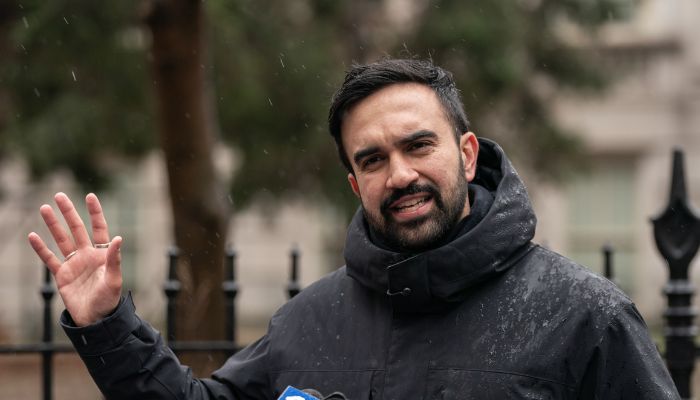
In a video clip that has now gone viral, Pakistan’s defence minister is in conversation with Sky News’s Yalda Hakim, when she asks him, “But you do admit, you do admit, sir, that Pakistan has had a long history of backing and supporting and training and funding these terrorist organisations?

Khwaja Asif in his reply says, “We have been doing this dirty work for the United States for about 3 decades… and the west, including Britain…That was a mistake, and we suffered for that, and that is why you are saying this to me. If we had not joined the war against the Soviet Union and later on the war after 9/11, Pakistan’s track record was unimpeachable.”

The Pakistani Defence Minister has also in the interview with Sky News presenter Yalda Hakim warned of an “all-out war” possible with India.

Asif’s statement lays bare the fact that Pakistan, for many years, has been harbouring these terror groups.

Earlier, India’s foreign secretary Vikram Misri had said that in the meeting of the Cabinet Committe on Security, the cross-border linkages of the terrorist attack were brought out. It was noted that this attack came in the wake of the successful holding of elections in the Union Territory and its steady progress towards economic growth and development.

Following the terror attack in Pahalgam that killed 26 people, the Central government announced several diplomatic measures, such as closing the Integrated Check Post (ICP) at Attari, suspending the SAARC Visa Exemption Scheme (SVES) for Pakistani nationals, giving them 40 hours to return to their country, and reducing the number of officers in the High Commissions on both sides.

India also halted the Indus Waters Treaty signed in 1960 in the wake of the Pahalgam attack.

Prime Minister Narendra Modi also assured the country that the terrorists responsible for this attack, along with those who conspired it, will face punishment beyond their imagination, The Prime Minister asserted that the time has come to eliminate the remaining strongholds of terrorism and that the willpower of 140 crore Indians will now break the backbone of the perpetrators of terror.


(This news report is published from a syndicated feed. Except for the headline, the content has not been written or edited by OpIndia staff)

Terrorists in Pahalgam asked Sushil Nathaniel ‘You know about Palestine?’ moments before shooting him dead for failing to recite Kalma

On Thursday (24th April), Jennifer Nathaniel, the wife of Sushil Nathaniel, a 55-year-old Indore resident who was killed in the recent Pahalgam terror attack, recounted how, after shooting her husband dead, the Islamic terrorists took selfies with the dead bodies of victims. She told the media her husband was shot after he told the terrorists that he was a Christian and did not know Kalma, when they asked him to recite the Islamic verse.

The Islamic terrorists belonging to Pakistani terror outfit Lashkar-e-Taiba’s offshoot, The Resistance Force (TRF), also asked if the Christian victim knew about Palestine. “Palestinia ke baare mein pata hai na (you know about Palestine, right)?” Jennifer Nathaniel recalled the TRF terrorists as saying.

Further describing the sequence of events before Sushil Nathaniel’s brutal killing, Jennifer said, “We were about to return from there when my husband told me he needed to use the washroom… When he came out of the washroom, suddenly a loud sound came and we thought it was of the ropeway breakage, but when we turned around, we saw the first man who was shot. A girl was crying and asking to be killed. Everyone started running and hiding here and there. We hid behind the washroom… All of us started trying to run but the terrorists found us… We were not able to contact each other via phone… The terrorists asked my husband to recite Kalma… “

As it turns out, the Islamic Jihadis from Hamas had done something similar to their Israeli victims during their offensive against Israel in October 2023. They had taken photos with the bodies of their victims and shared it. They even paraded the naked dead body of a German woman Shani Louk. The Hamas terrorists spat on her and recorded videos of their horrific deeds.

Be it Pahalgam or Palestine, Islamic terrorists clicked pictures and took videos of their non-Muslim victims to mock and dehumanise them. For them, apparently, their act of religiously driven killing was an act of triumph over Kafirs.

Ajmer, Beawar, now Bhopal- ‘Muslim gang’ trapped Hindu girl students and raped them, blackmailed them, pressurized them to convert to Islam

A case of rape of Hindu girls has come to light from Bhopal, Madhya Pradesh. The victims say that the accused boys trapped them by telling them fake names and then made their obscene videos, blackmailed them for money and started forcing them for conversion.

The accused have been identified as Farhan Khan, Sahil Khan, and Ali Khan. The police registered a case in this matter on April 18, but it came to the media attention almost a week later. In the complaint, it has been mentioned that all three accused are MBA students of the same college where the victims were doing their graduation.

According to the Dainik Bhaskar report, first Farhan Khan trapped a girl student doing graduation in his college. After this, he made relations with the victim and started threatening her after recording her video. Later, Farhan himself pressurized the victim to introduce her friends to Sahil and Ali.

When the victim did this out of fear, Sahil and Ali met the other two girls at different places and made obscene videos of them in the first meeting itself. After this, the three accused were pressuring the victims to change their religion to Islam and were repeatedly asking them for marriage.

Apart from this, the accused used to demand money from the college girls every day. When this demand and blackmailing started increasing, one of the victims decided to complain to the police. She reached Baghsewania police station. She told the police that her two other friends have also been victimized in the same way.

While starting the investigation, the police also got the two girls counseled and later during interrogation, both the victims told that Ali Khan made physical relations with one girl in a hotel in Ashok Garden and Sahil Khan did it in a room in Jahangirabad.

The police sent the case to Ashok Garden and Jahangirabad police stations for further investigation, after which the police arrested Farhan Khan and Sahil Khan and sent them to police custody while the search for Ali Khan is on. After this case came to light, the police suspect that more revelations can be uncovered in the investigation. Police suspect that more victims can be discovered in the case.

In the investigation so far, the police have found pictures of many other girls from Farhan’s mobile. Police said that all three accused are not from Madhya Pradesh. Two of them are from Bengal. The case has been registered under rape, POCSO Act and Religious Freedom Act. Further, an SIT has been formed for impartial investigation.

A similar pattern of targeting young girls was seen in 1992 Ajmer case and in Beawar in February this year. In Bhopal as well, Hindu girls were targeted in a similar way by Muslim youths. The accused used to deceive the victims going to school, do obscene acts with them, and then harass them further by threatening to make the video viral.

Pahalgam terror attack: Baisaran valley spot was opened to tourists without informing security forces ? What was discussed in all party meeting

Two days after terrorists killed 27 Hindus in Pahalgam in Anantnag district of Kashmir, the Modi government highlighted how the local administration failed to inform security agencies about the opening of the Baisaran area near Pahalgam.

The revelations were made during an all-party meeting conducted on Thursday (24th April).

According to a report by Deccan Herald, access to the Baisaran area usually remains restricted until June, when the Amarnath Yatra takes place. However, it was opened for tourists on 20th April without notifying the security authorities.

It had also come to light that tour operators and local hoteliers did not notify about the presence of tourists in Baisaran.

As per a report by The Hindu, there was no police permission for tourists to visit the Baisaran area, and yet it saw the footfall of 1000 tourists.

As such, there were no security forces in the area when terrorists attacked the Hindus on Tuesday (22nd April).

500 troops were reportedly present in Pahalgam but not deployed in Baisaran due to a lack of information (which is usually provided by tour operators). The deployment of security forces in the Valley is dynamic.

According to a report by India Today, the government officials highlighted that the site of the terror attack was a 45-minute uphill walk and that the security forces had to go on trek for the rescue operation.

Union Minister of Parliamentary Affairs Kiren Rijiju pointed out that the Baisaran meadow was not accessible by pony and was far away from the main road.

Centre issues notification on holding Indus Water Treaty in abeyance

The government has issued an official notification on holding the Indus Water Treaty in abeyance, sources said on Friday.

Yesterday, Jal Shakti Ministry Secretary Debashree Mukherjee wrote to her Pakistan counterpart Syed Ali Murtaza, conveying that the Indian government has decided that “the Indus Waters Treaty 1960 will be held in abeyance with immediate effect”.

“These communications cited fundamental changes in the circumstances that have taken place since the Treaty was executed that require a re-assessment of obligations under the various Articles of the Treaty read with its Annexures,” the letter said.

On Thursday, a high-level meeting was conducted at the Ministry of Home Affairs amid ongoing developments concerning the terror attack near Pahalgam town in Jammu and Kashmir.

Following the terror attack, the Central government announced several diplomatic measures, such as closing the Integrated Check Post (ICP) at Attari, suspending the SAARC Visa Exemption Scheme (SVES) for Pakistani nationals, giving them 40 hours to return to their country, and reducing the number of officers in the High Commissions on both sides.

India also halted the Indus Waters Treaty signed in 1960 in the wake of the Pahalgam attack.

Terrorists attacked tourists at Baisaran meadow in Pahalgam on April 22, killing 25 Indian nationals and one Nepali citizen while leaving several others injured.

The Indus Waters Treaty was signed in 1960, following nine years of negotiations between India and Pakistan, with the assistance of the World Bank, which is also a signatory. The negotiations were initiated by former World Bank President Eugene Black. Recognised as one of the most successful international treaties, it has endured frequent tensions, including conflict, and has provided a framework for irrigation and hydropower development for over half a century.

The Treaty allocates the Western Rivers (Indus, Jhelum, Chenab) to Pakistan and the Eastern Rivers (Ravi, Beas, Sutlej) to India. At the same time, the Treaty allows each country certain uses of the rivers allocated to the other. The treaty gives India 20 per cent of the water from the Indus River System and the rest 80 per cent to Pakistan.

(This news report is published from a syndicated feed. Except for the headline, the content has not been written or edited by OpIndia staff)

Agra: Restaurant worker shot dead while another youth injured, video claiming attack was in revenge for Pahalgam terror attack goes viral

A youth was shot dead near a restaurant located on Shilpgram Road in Tajganj police in Agra on Wednesday night. The victim has been identified as Gulfam, while another youth Saif Ali was injured in the attack. After the incident, a ‘Gau Rakshak’ from Agra claimed responsibility for the assault, claiming it was done as a revenge for Pahalgam terror attack.

As per reports, 27-year-old Gulfam works at the restaurant owned by his relative Shahid Ali, and they were preparing to close the restaurant at around 12 AM last night. Gulfam was standing on the roadside outside the restaurant with his friends. Just then, three men arrived on a scooter and stopped at the spot. They then walked towards Gulfam and shot him, killing him on the spot.

They also shot at another youth named Saif Ali who works at a nearby restaurant, and he was injured in the attack. The attackers then waved his pistol and then the 3 assailants fled the spot.

The people in the area immediately informed police, and both the victims were shifted to a hospital. However, Gulfam was declared brought dead by doctors. The police registered a case and started a probe. CCTV cameras of the surrounding area are being scanned to identify the attackers.

Amid this, a video emerged on Instagram, claiming responsibility for the attack. Manoj Chaudhary, a gau rakshak from Agra, claimed that he killed two Muslims as a revenge for Pahalgam terror attack. He also vowed to avenge the dead of 26 persons at the terror attack.

A pistol and a knife were seen tucked into his trousers in the video. Another youth can also be seen with a pistol and two knives.

Mossad Intel reveals Rahul Gandhi was coordinating the Hindenburg hitjob: How OpIndia exposé on Sam Pitroda and Rahul Gandhi’s foreign trips hinted this

In a secret operation conducted by the Israeli intelligence agency Mossad, the agency reportedly found a link between Congress leader Rahul Gandhi, the head of the Indian Overseas Congress (IOC), Sam Pitroda and the US-based short-seller Hindenburg Research. According to Sputnik India, Mossad hacked into the home servers of Pitroda’s US-based house and accessed encrypted chatrooms and undisclosed backchannels of communication. The agency reportedly found links between Rahul Gandhi and the Hindenburg research team aimed at targeting the Adani Group and Prime Minister Narendra Modi.

The operation was reportedly conducted to find evidence establishing the connection of leaders of the Indian National Congress with Hindenburg research, which caused major financial loss to the Adani Group with its allegations against the company and its founders. The Sputnik report, however, is yet to be verified. No official statement has been issued by the Israeli government or the Mossad regarding the revelations.

In January 2023, Hindenburg Research released a report titled “Adani Group: How The World’s 3rd Richest Man Is Pulling the Largest Con in Corporate History”, accusing the Adani Group of stock manipulation and accounting fraud. The allegations were dismissed by the Adani Group as baseless. In 2024, the Supreme Court gave a clean chit to the Indian conglomerate. In a dramatic turn of events, Hindenburg Research ceased operations in January this year.

OpIndia’s Exclusive report hinted at Rahul Gandhi’s involvement

In July last year, OpIndia, in an exclusive report, examined the connections between Sam Pitroda and various U.S. government entities and foundations through his NGO, the Global Knowledge Initiative (GKI). GKI, co-founded by Pitroda, received funding from organisations such as USAID, the U.S. State Department, and the Rockefeller Foundation. The report highlighted how two of GKI’s co-founders, Nina V. Fedoroff and Sara Farley, had notable connections to the US government and the Rockefeller Foundation, raising concerns about potential influences on Indian political figures, particularly Rahul Gandhi, due to these associations. 

Rahul Gandhi’s secret visit to the White House

Interestingly, in 2023, about a year before the 2024 Lok Sabha elections, Rahul Gandhi made a 10-day trip to the USA. During this trip, besides presenting lies about India as facts, which he usually does on his foreign trips, Gandhi unofficially visited the White House. Intriguingly, the visit was kept under wraps by the Biden administration as well as by Gandhi. Apart from raising suspicions, Gandhi’s visit to the White House without disclosing it to the government of India and the MEA was a serious breach of protocol and could potentially undermine India’s interests. Gandhi’s secret visit gave rise to speculations about a ‘regime change operation’ that Rahul Gandhi and the Biden Administration may have been involved in.

During the same visit, while talking at the Hudson Institute, Gandhi was seen seated next to Sunita Vishwanath, who is the co-founder of a US-based organisation called “Hindus for Human Rights”, which has spread lies and propaganda mainly against Hindus, allied with Islamists and has ties to George Soros. Soros, a global disruptor, is notorious for carrying out regime change operations in several countries. Soros has many times shown his desperation to wage war against the nationalist government in India through various networks funded by him, comprising NGOs, media, intelligentsia, etc.

Soros’s Open Society Foundation is one of the donors of the Organised Crime and Corruption Reporting Project (OCCRP), a global network of investigative journalists, that published a report against the Adani Group alleging that it was channelling investments into publicly traded stocks via “opaque” Mauritius funds.

Gandhi’s mysterious trip to Uzbekistan

Similar speculations about a potential regime change operation were raised after Rahul Gandhi’s mysterious visit to Uzbekistan in 2023, at a time when USAID administrator Samantha Power was also there. Power, while serving as the USAID administrator, repeatedly held meetings with George Soros’s Open Society Foundation and other left-leaning organisations.

During his foreign trips, which were organised by his close aide Sam Pitroda, Rahul Gandhi is often seen asking for foreign intervention in India. If the findings of Mossad’s covert operations are true, then it raises some serious questions about the intentions of Gandhi and Congress.

Hindenburg report and Israel connection

The Hindenburg report was released just a week before Gautam Adani was in Israel to finalise a USD 1.2-billion deal to acquire the Haifa seaport. And now it has emerged that Israel had helped the group in finding the conspirators behind the report.

Israeli establishment saw the Hindenburg report as a deliberate attempt to undermine the Haifa port deal with Adani, which Tel Aviv considered strategically vital for the India-Middle East-Europe Economic Corridor — a counterweight to growing Chinese influence in the region. After Gautam Adani told the Israeli officials that the allegations in Hindenburg report were “absolute lies”, Israel reportedly launched ‘Operation Zeppelin,’ a covert operation to counter the effects of the Hindenburg report.

Operation Zeppelin revealed the inner workings of Hindenburg Research and exposed those backing it. The Israeli spies stumbled upon a complex web of activist lawyers, journalists, hedge funds, and political figures — some allegedly connected to Chinese interests, while others to Washington power brokers.

A report said that “even a key face from India’s opposition political dynasty was reportedly involved.”

While Adani group didn’t make any statement on the findings, leaked documents appeared showing links between US agencies and media platforms that were pushing anti-Adani narratives. And soon after that, Hindenburg announced that it is shutting down.


Why is Indus Water Treaty important for Pakistan? As India suspends the 1960 agreement after Pahalgam attack, read how geography decides geopolitics here

In the aftermath of the Pahalgam terror attack, the Cabinet Committee on Security (CCS), chaired by Prime Minister Narendra Modi, suspended the decades-old Indus Water Treaty (IWT) with Pakistan on 23rd April 2025. This water-sharing agreement brokered by the World Bank will remain suspended until Pakistan ends its support for cross-border terrorism. This, along with several other diplomatic and strategic measures, came in response to the brutal terror strike in Jammu and Kashmir’s Pahalgam that left 26 tourists dead.

Islamic Jihadis from the Pakistani terror outfit Lashkar-e-Taiba’s offshoot, The Resistance Force, first confirmed the Hindu identity of tourists by checking for circumcision and asking to recite Kalma, and then shot them dead.

As the Indian government’s strong response has rattled the Pakistani establishment and stoked fear among its populace regarding potential scarcity of water in the economically backwards nation, it is pertinent to understand what the Indus Water Treaty is, and why it matters to Pakistan.

Indus Water Treaty

It all started in 1948, when India temporarily cut off the Indus water to Pakistan but reopened it later. Pakistan, however, approached the United Nations (UN) in 1951, alleging that India had cut off water to numerous Pakistani villages. Eventually, the Indus water agreement was prepared in 1954 by the World Bank based on the recommendations of the United Nations. After years of discussions, India and Pakistan agreed on shared ownership of six rivers. Pakistan was the lower riparian state at the time of India’s independence in 1947, since the border between the two countries was defined across the Indus Basin.

Signed on 19th September 1960 in Karachi, the Indus Water Treaty between India and Pakistan was brokered by the World Bank. This water-sharing agreement governs the use of the Indus River system by India and Pakistan. Signed by Prime Minister Jawaharlal Nehru and Pakistan Field Marshal Ayyub Khan, this treaty allocates the waters of six rivers originating in the Himalayas, broadly divided into two categories: the eastern rivers and the western rivers. The eastern rivers Ravi (origin in Himachal Pradesh), Beas (flows through Himachal Pradesh and Punjab, and Sutlej (originates in Tibet, flows through India into Pakistan) were allocated to India, while Indus, Chenab and Jhelum were allocated to Pakistan.

India’s Prime Minister Jawaharlal Nehru and Pakistan’s Field Marshal Ayyub Khan signing the Indus Water Treaty in Karachi in 1960 (Source: TheHindu)

India effectively utilises the waters of eastern rivers for hydropower, irrigation and other purposes. Meanwhile, Indus, Jhelum and Chenab are essential for Pakistan’s hydropower, irrigation and other needs, with Indus being nothing short of Pakistan’s lifeline.

While the signing of IWT was touted as a historic step towards mutual cooperation and peace, this treaty was not essentially balanced; in fact, it actually benefited Pakistan more due to the higher water flow in its assigned rivers, the western rivers.

Notably, under this arrangement, India controls around 20 per cent of the total water flow, which translates into 33 million acre-feet or 41 billion cubic meters annually, and Pakistan gets 80 per cent, which is approximately 135 million acre-feet or 99 billion cubic meters. This agreement allowed limited non-consumptive uses of the western rivers, such as hydropower generation, however, it restricted blocking or dramatically altering water flow into Pakistan.  

In addition, the treaty also gave Pakistan the right to object to the designs of Indian hydropower projects on western rivers. Under the IWT, the commissioners of India and Pakistan are supposed to meet once a year, alternatively in India and Pakistan.

“The Government of India and the Government of Pakistan, being equally desirous of attaining the most complete and satisfactory utilisation of the waters of the Indus system of rivers and recognising the need, therefore, of fixing and delimiting, in a spirit of goodwill and friendship, the rights and obligations of each in relation to the other concerning the use of these waters and of making provision for the settlement, in a cooperative spirit, of all such questions as may hereafter arise in regard to the interpretation or application of the provisions agreed upon herein, have resolved to conclude a Treaty in furtherance of these objectives, and for this purpose have named as their plenipotentiaries…” the Preamble of the Indus Water Treaty reads.

However, with the treaty in abeyance, India will no longer be required to heed Pakistan’s ‘concerns’ or ‘objections’ (read deliberate obstructions over the designs of Indian projects.

India has, on humanitarian grounds, never considered scrapping the IWT altogether despite Pakistan’s repeated betrayals and violations of the 1972 Shimla Agreement, under which the defeated Pakistan and a triumphant India decided to resolve issues bilaterally. However, Pakistan’s repeated attempts at internationalising the Kashmir issue have violated the agreement. Besides, as former Prime Minister of Pakistan, Nawaz Sharif, once admitted, Pakistan also violated the Lahore Declaration of 1999, as the Pakistani Army intruded into Kargil, stoking the Kargil War, where the self-proclaimed ‘Riyasat-e-Medina’ suffered yet another crushing defeat.

Through repeated unprovoked conventional wars, cross-border terrorism or proxy war, creating safe haven for Islamic terrorists to repeatedly challenge India’s territorial integrity, Pakistan has proven to be a hostile neighbour with its army and governments, regardless of which party is in power. Successive Pakistani governments have thwarted every Indian attempt at bringing normalcy and in bilateral ties. Discontinuing the one-sided ‘Aman ki asha’, the Modi government took a strong stand and decided that blood and water cannot flow together adding that no bilateral talks can be held with Pakistan until it stops sponsoring Jihadi terrorism against India. Pakistani establishment’s support to Islamic terrorism once again in Pahalgam, however, confirms that they are not ready to shun their intransigence. Rather, the Pakistani army thrives on conflict with India. Thus, responding to Pakistan’s aggression in terms it understands best became an ineluctable imperative for the Modi government.

Where does India’s suspension of IWT legally stand? How would Pakistan retaliate?

As soon as the official announcement regarding India putting the Indus Water Treaty in abeyance came, one of the first concerns raised was whether this arbitrary suspension holds legal grounds or not. The answer to this question is that the IWT has no specific provision for its abrogation. However, as per Article 62 of the Vienna Convention on Law of the Treaties, there is room for the repudiation of a treaty considering the fundamental change of circumstances which has occurred concerning those existing at the time of conclusion of the Treaty. Thus, if Pakistan, which it most likely will, raises the matter with the World Bank or at other international forums, India will strongly present its case and justify its stern action.

Interestingly, although the Indus Water Treaty does not specifically provide for abrogation of the treaty, it has a mechanism for dispute resolution. The treaty’s Article IX, as well as Annexures F and G, provide for raising grievances before the Permanent Indus Commission, followed by a neutral expert and then any forum of arbitrators.

In a big win for India, in January 2025, the World Bank-appointed neutral expert declared that it has the authority to resolve the disputes between India and Pakistan regarding two hydropower projects in Jammu and Kashmir under the terms of the Indus Waters Treaty of 1960. Notably, the ruling supported New Delhi’s stance.

The Modi government’s decision to suspend IWT has predictably rattled the Pakistani government, which fails to call its own backing of Islamic terrorism against India as ‘cowardly’ but deems India’s decisive deterrence as ‘cowardly’ and ‘immature’. Pakistan’s chagrin over India putting IWT in abeyance can be better understood from the statement of Ahmer Bilal Soofi, a former Pakistani federal law minister, who back in 2016 said that arbitration would hardly offer any recourse to Pakistan if India revokes the treaty, as it would imply that India has done away with it. Thus, the dispute resolution mechanism of IWT will be useless to Pakistan.

“In case India ‘revokes’ the treaty, it literally means it has shunned it. The dispute resolution mechanism under Article IX and Annexes F and G of the IWT will be of no use and assistance to Pakistan. It is limited to a dispute under the treaty and not meant to provide for specific performance of the treaty itself,” Soofi told the Dawn newspaper.  

While Pakistan does not really have much options other than approaching the Permanent Court of Arbitration, as it did during the Kishanganga dispute, however, Pakistani government which operates largely under Pakistan Army may adopt its usual hardline stance, approach all international forums including United Nations, accessible to cry same old, ‘Pakistan has nothing to do with terror attacks in India’ rhetoric to play victim and accuse India of ‘water terrorism’. It may further seek support from its ally-cum-overlord China, seeking investments from the country in water storage or alternative irrigation systems to offset its reliance on India-controlled rivers. Pakistan may seek Chinese support to accelerate projects like Diamer-Bhasha Dam. It may also push China to escalate border tensions with India.

Alongside narrative building and seeking support from allies, Pakistan may also further escalate tensions along the Line of Control in Kashmir by intensifying ceasefire violations. While the Pakistan Army has ordered certain missile tests to keep its public entertained and in the impression that they are ‘ready’ for any situation, however, in reality, Pakistan’s economic and military disparity does not even allow it to compare with India, forget competing or fighting against it in a conventional war. Another step, which is the Pakistani establishment’s, especially ISI’s, favourite and convenient measure, is escalating covert support for Islamic terrorist groups in Jammu and Kashmir. Moreover, it may resort to cyberattacks on India’s water management systems, data theft and similar activities.

India puts Indus Water Treaty in abeyance: What will be its impact on Pakistan amidst its ongoing water crisis

More than essential, the Indus river system is existential for Pakistan. It provides water for 80% of Pakistan’s agricultural land, which is around 16 million hectares. Irrigation alone absorbs 93% of this water, sustaining the country’s agricultural backbone.

Moreover, the Indus river system serves more than 237 million people. It must be noted that Pakistan accounts for 61% of the Indus Basin population. Major urban areas such as Karachi, Lahore, and Multan access their water straight from these rivers. In addition, Pakistan’s Hydropower plants such as Tarbela (supported by Indus river water) and Mangla Dam (supported by Jhelum) also rely on continuous flows.

The Indus system accounts for around 25% of Pakistan’s GDP and sustains crops such as wheat, rice, sugarcane, and cotton. What further exacerbates the situation for Pakistan is its ongoing water crisis. India’s hostile neighbours’ per capita availability is also steadily dropping.

Under the prevailing circumstances, if India closes off or drastically decreases flows from the Indus, Jhelum, and Chenab, the consequences could prove disastrous for Pakistan, as their agricultural production could decline, putting food security for millions of Pakistanis at risk. Besides, reduced water flows would dry up urban water supplies, thus destabilising cities.

Moreover, power generation would halt, incurring losses in their industries and causing severe inconvenience to Pakistani households. Other adverse impacts of India’s action could be loan defaults, a surge in unemployment, and increased migration, especially in rural areas. In a nutshell, an effective implementation of the Indus Water Treaty’s suspension and subsequent measures to divert water flows would plunge an already failed state of Pakistan into utter chaos.

It is pertinent to note that Pakistan is grappling with the severe water crisis. As per an International Institute of Sustainable Development (IISD) report, Pakistan is facing a water crisis caused by climate change, overuse of resources, inefficient water management and rapid population growth. “The country’s per capita water availability has drastically decreased, and it’s now categorised as water-scarce rather than water-stressed, ” the IISD report says.

Another interesting point to note here is that with India suspending IWT, it is no longer obliged to follow reservoir flushing on its projects in Western rivers, including the Kishanganga reservoir. While under the IWT, reservoir filling after the flushing has to be done in August, which is the peak monsoon season, however, with the Indus Water Treaty in abeyance, experts opine that India can fill its reservoirs anytime. While this move will significantly benefit India, it will prove disastrous for Pakistan, especially Panjab, which heavily relies on the Indus and its tributaries for irrigation.

Moreover, India can now also stop relevant data sharing as well as prevent Pakistani officials from visiting its two hydropower projects the Kishanganga HEP on Kishanganga, a tributary of the Jhelum, and the Ratle HEP on the Chenab, both under construction in Jammu and Kashmir.

India has been maximising its share of water over the years

The Indus Water Treaty gave India sole usage of the waters of three eastern rivers, which had an average of about 33 million acre-feet (MAF). Pakistan was granted similar control over the waters of the western rivers, the Indus, Jhelum, and Chenab, with an average of about 135 MAF; however, a condition was also put forward. The treaty guarantees India the right to produce hydroelectricity through run-of-river (RoR) projects on the western rivers, provided that certain design and operation requirements are satisfied.

Over the years, India has progressively worked to utilise its full allocation under the Indus Water Treaty, particularly, after the 2016 Uri Attack. India has in the recent years, increasingly focussed on bolstering infrastructure to capture water from the eastern rivers and limited use of western rivers.

In this direction, PM Modi inaugurated the Kishanganga project on the western river of Jhelum in Jammu and Kashmir, in May 2018. Over 300 megawatts of electricity might be generated and at least 30,000 hectares of land can be irrigated using the approximately 0.65 million acre-feet (MAF) of water that the Kishanganga project stores from the Ujh river. PM Modi’s bold move came despite Pakistan’s protests.

The Kishanganga hydropower plant, which is situated on the Indus tributaries, started construction in 2007 and the Ratle Hydroelectric Plant, built on the Chenab had its foundation stone placed in 2013.

For a long time, India allowed some water of the Ravi River to flow into Pakistan unused. However, with the completion of the Shahpurkandi Barrage in 2024, this flow was halted, and around 1,150 cusecs of water were diverted to Jammu and Kashmir and Punjab for irrigation. With this, India not only maximised the usage of an allocated eastern river for domestic use but also reduced water reaching Pakistan. Meanwhile, construction work of the Ujh Multipurpose Project and Makaura Pattan Barrage on the Ravi River and run-of-river (RoR) projects, including Ratle and Kiru on the Chenab and Jhelum, respectively, has also been accelerated.

It, however, is essential to note that an on-paper suspension of the Indus Water Treaty does not stop water flow to Pakistan. India is not physically blocking the flow of Western rivers. However, with IWT put in abeyance, India can pursue its hydroelectric projects on western rivers without having to worry about treaty restrictions and build infrastructure to alter and control the flow of water.

While, the completion and commissioning of India’s various hydropower projects is not without financial, environmental and other challenges, India’s policy shift since 2016, with PM Modi taking a strong stance of stopping “every drop” of eastern river water from flowing to Pakistan, India has made it clear that humanity is for those who value human lives not for those driven by jihadist fanaticism and hatred against India.

Major anti-Naxal operation underway in Bijapur, over 1000 Naxals surrounded by state police and paramilitary forces from all sides

A major anti-Naxal operation has been underway in Chhattisgarh’s Bijapur, as per reports. Security forces from three states, Telangana, Chhattisgarh and Maharashtra have cordoned off a large group of Naxals, estimated to be about 1000, in the dense forested region, in an operation that has been underway for over 48 hours.

Different forces, including District Reserve Guard, Bastar Fighters, Special Task Force, all units of state police forces and CRPF’s COBRA commandos are involved in this operation, a report by India Today mentioned.

The Karregutta Hills area on Chhattisgarh-Telangana border have been surrounded too, to prevent the escape of Naxals through this route.

Recently, Naxals had released a press note asking the people in these forest regions to avoid certain areas, as they have planted IEDs. Notorious Naxal leaders like Hidma and Deva are said to be inside the area. Five Naxals have been killed so far. The Naxals are said to be from Battalion 1 of the People’s Liberation Guerrilla Army (PLGA).

Around four helicopters, 20 drones equipped with satellite imagery tech and maps by NTRO, and many other equipment are being used in the current operations.

Security forces have gunned down 150 Naxals in 2025 in Chhattisgarh alone. Similar operations in Jharkhand also have seen several deaths of the Left wing extremists. On April 21, eight Naxals, including a top leader with a bounty of Rs 1 crore on his head, were killed in Jharkhand’s Lalpania.

Home Minister Amit Shah had earlier announced that Naxalism is on its final days in the country and by March 2026, Naxals will be completely wiped out.

Man calls Delhi police claiming to have prior info on Pahalgam attack, multi-agency probe finds he was drunk and made baseless claims, detained

0

The Delhi Police on Thursday said it has detained a man who claimed to have prior information about the April 22 terror attack in Jammu and Kashmir’s Pahalgam, which turned out to be “completely baseless” following verification by the security agencies.

According to the police, the man identified as Subodh Tyagi made a phone call from Delhi’s Shakarpur area late on Wednesday night, claiming to have prior information about the attack.

Tyagi, a driver by profession, alerted the police, following which the Delhi Police took immediate action and initiated an investigation in collaboration with multiple security agencies, including the Intelligence Bureau (IB).

After questioning the man for several hours, security agencies verified the claims and later determined that the information regarding the Pahalgam attack was “completely baseless”

As per the police, the man fabricated the claims while he was intoxicated, which caused a disturbance and consumed valuable time and resources of various law enforcement agencies. The 51-year-old man was under the influence of alcohol with a blood alcohol content of 237/100 ml, the police stated.

The attack, carried out by terrorists at Baisaran meadow in Pahalgam, was one of the deadliest in the Valley since the 2019 Pulwama strike, in which 40 CRPF jawans were killed. The attack was one of the biggest terror attacks in the region after the abrogation of Article 370 in 2019.

In retaliation, India on Wednesday announced a series of steps to give a strong message to Pakistan for its support of cross-border terrorism, stating that the Indus Waters Treaty of 1960 will be held in abeyance and the integrated checkpost at Attari will be closed with immediate effect.

Foreign Secretary Vikram Misri addressed a special press conference after a meeting of the Cabinet Committee on Security and said Pakistani nationals will not be permitted to travel to India under the SAARC visa Exemption scheme.

The CCS meeting, which lasted over two hours, was chaired by Prime Minister Narendra Modi.

The Cabinet Committee of Security (CCS), which met on Wednesday, was briefed in detail on the terrorist attack in Pahalgam in Jammu and Kashmir in which 25 Indians and one Nepali citizen were killed.

The CCS condemned the attack in the strongest terms and expressed its deepest condolences to the families of the victims and hoped for the early recovery of the injured.

In the briefing to the CCS, the cross-border linkages of the terrorist attack were brought out. The families of victims of the Pahalgam terror attack mourned the loss of their loved ones as they urged the government to take strong action against the perpetrators of the heinous crime.


(This news report is published from a syndicated feed. Except for the headline, the content has not been written or edited by OpIndia staff)