Home Blog Page 401

Tamil actor and TVK president Joseph Vijay files petition in the Supreme Court challenging the Waqf Amendment Act

0

Tamilaga Vettri Kazhagam (TVK) president and actor Vijay has filed a petition in the Supreme Court challenging the Waqf (Amendment) Act 2025.

Several petitions were filed in the apex court challenging the Act, contending that it was discriminatory towards the Muslim community and violated their fundamental rights.

The Rajya Sabha passed the Waqf (Amendment) Bill, 2025, on April 4 with 128 votes in favour and 95 against. The Lok Sabha had earlier cleared the Bill following a lengthy debate, with 288 members voting in favour and 232 opposing it.

President Droupadi Murmu gave her assent to the Bill on April 5, making it a law.

Among those who have moved the court against the Waqf (Amendment) Act are All India Majlis-e-Ittehadul Muslimeen (AIMIM) MP Asaduddin Owaisi, Congress MPs Mohammad Jawed and Imran Pratapgarhi, AAP MLA Amanatullah Khan, and Azad Samaj Party chief and MP Chandra Shekhar Azad.

Others include Samajwadi Party MP from Sambhal Zia Ur Rehman Barq; Maulana Arshad Madani, President of Jamiat Ulema-i-Hind; the Kerala-based Sunni scholars’ body Samastha Kerala Jamiatul Ulema; the Social Democratic Party of India; the Indian Union Muslim League; and the NGO Association for Protection of Civil Rights.

The All India Muslim Personal Law Board (AIMPLB) has also challenged the Act, saying it strongly objected to the amendments passed by Parliament for being “arbitrary, discriminatory and based on exclusion”.

Rajya Sabha MPs Manoj Jha and Faiyaz Ahmad from Bihar’s Rashtriya Janata Dal (RJD) have also challenged the Waqf (Amendment) Act, 2025, arguing that it facilitates large-scale government interference in Muslim religious endowments. RJD MLA from Bihar Muhammad Izhar Asfi also challenged the Act.

Tamil Nadu’s ruling party DMK has also joined the legal challenge. Its MP A Raja, who was a member of the Joint Parliamentary Committee on the Waqf Bill, has approached the apex court.

Intervention applications have been filed in the Supreme Court in support of the Waqf (Amendment) Act, 2025, stating that the amendments are in consonance with the scheme of the Constitution of India, and that there is no violation of any right of any member of the Muslim community.

The Waqf (Amendment) Act, 2025, seeks to focus on improving the management of waqf properties, empowering relevant stakeholders, improving the efficiency of survey, registration, and case disposal processes, and developing waqf properties.


(This news report is published from a syndicated feed. Except for the headline, the content has not been written or edited by OpIndia staff)
India joins the Star Wars League: Uses Laser weapon developed by DRDO to shoot down aircraft, missiles and drones

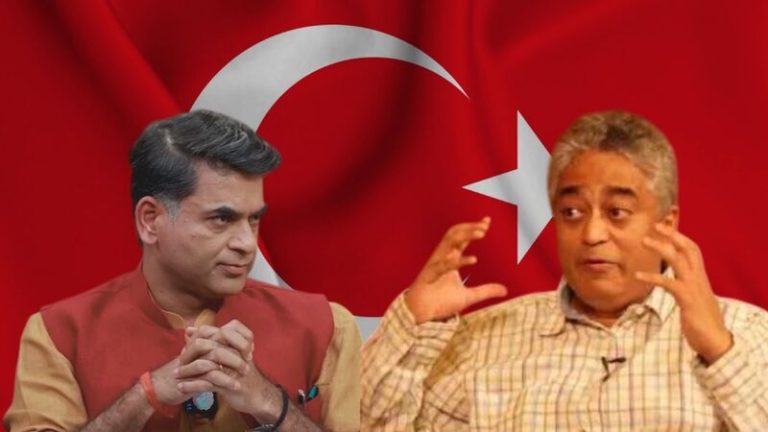
Laser weapons are no longer the stuff of science fiction—they’ve stepped off the silver screen and into real-world defense arsenals. Once imagined in intergalactic wars in movies and TV shows, including the epic Star Wars, directed-energy weapons are now being developed and deployed by some of the world’s most advanced militaries. India has joined an elite group of nations—alongside the United States, China, Israel, and Russia—that have successfully developed laser weapon systems capable of disabling or destroying drones, missiles, and even aircraft.

In a major breakthrough in the field of defense technology, India has developed a laser weapon system capable of shooting down fixed-wing aircraft, missiles and drones. The 30-kilowatt Mk-II(A) laser weapon system has a range of 5 km. It has advanced electronic warfare capabilities, including blocking communication and satellite signals and is capable of neutralising unmanned aerial threats. The system is adapted for ground-based as well as shipborne applications. It is equipped with a 360-degree Electro-Optical/Infrared (EO/IR) sensor, which enables it to locate its target with precision.

With this accomplishment, India has joined the league of the United States, China, and Russia, which have been able to develop this technology. The Mk-II(A) Direct-Energy Weapon (DEW) is developed by the combined efforts of the different centres of the Defence Research and Development Organisation (DRDO) including Centre for the High Energy Systems and Sciences (CHESS), Electronics and Radar Development Establishment (LRDE), Instruments Research & Development Establishment (IRDE), Defence Electronics Research Laboratory (DLRL), academic institutions and industries. The system, which was successfully tested at the National Open Air Range (NOAR) in Kurnool, Andhra Pradesh, is now ready for production and deployment in military platforms.

“As far as I know, it is the United States, Russia and China that have demonstrated this capability. Israel is also working on similar capabilities, I would say we are the fourth or fifth country in the world to demonstrate this system, ” said DRDO Chairman Dr Samir Kamat. He said that the organisation is working on scaling the capabilities of the system and trying to reduce the size of the equipment to make it suitable for airborne applications.

“This is just the beginning of the journey. The synergy that this lab has achieved with other DRDO labs, industry and academia, I am sure we will reach our destination soon… We are also working on other high-energy systems like high-energy microwaves, electromagnetic pulses. So we are working on a number of technologies that will give us Star Wars capability. What you saw today was one of the components of Star Wars technologies,” said Dr Kamat.

Indigenously designed and developed Mk-II(A) DEW system was demonstrated in its entire spectrum of capability by engaging the fixed-wing drones at long range, thwarting a multiple drone attack and destroying enemy surveillance sensors and antennae. The lightning speed of engagement, the precision and the lethality delivered to the target within few seconds made it the most potent Counter Drone System.

Once detected by a radar or by its inbuilt Electro Optic (EO) system, laser-DEW can engage targets at the speed of light and use an intense beam of powerful light (Laser Beam) to cut through the target, leading to structural failure or more impactful results if the warhead is targeted. This type of cutting-edge weaponry has the potential to revolutionize the battlespace by reducing the reliance on expensive ammunition while also lowering the risk of collateral damage.

The proliferation of unmanned aerial systems (UAS) and the emergence of drone swarms as asymmetric threats are driving the demand for directed energy weapons with counter-UAS and counter-swarm capabilities. The DEW will soon be replacing traditional kinetic weapons and missile defence systems due to its ease of operation and cost-effectiveness. The requirement for cost-effective defence solutions to offset the low-cost drone attacks is driving the adoption of DEWs by military organisations worldwide. The cost of firing it for a few seconds is equivalent to the cost of a couple of litres of petrol. Therefore, it has the potential to be a long-term & low-cost alternative to defeat the target.

The DRDO is also working on developing more powerful laser weapon systems, like the 300-kilowatt laser weapon system, which will have a range of 20 km.

DRDO has also developed Laser Ordnance Disposal System (LORDS), which is designed for remote disposal of unexploded ordnances, surface-laid mines, IEDs and other explosive threats located above ground. It is a self-contained system along with all its support system integrated on TATA-LSV vehicle for stand-alone operation.

‘Houses burnt, livelihoods destroyed, rape threats and more’: 12 videos where Hindus narrate the horror unleashed by Muslims in Murshidabad

The Hindu community has suffered unspeakable atrocities at the hands of radical Muslims in the Murshidabad district of West Bengal since Friday (11th April).

OpIndia has reported in detail how Hindus were selectively targeted, including their homes, shops and temples. The carnage began soon after Jumma Namaz in the name of ‘protests’ against the new Waqf law and continued till Saturday (12th April).

The situation had become so grim that 1000s of Hindus had to flee their homes in Murshidabad to the nearby Malda district via boats, thereby bringing back dark memories of the 2021 and 2023 West Bengal post-poll violence. Here are 12 videos where Hindus have narrated in detail about what transpired in Murshidabad.

Manju Bhagat, the wife of a Hindu trader, told Aaj Tak, “They (Muslim mobs) tried to enter through the front gate. When they failed, they attempted to enter through the back gate.”

“They broke the bike, vandalised our home, and looted everything from chairs, mattresses, TV to expensive household items,” she added.

“Our whole family was praying to God. We were risking our lives and hiding on the terrace. We were chanting the name of God and praying that the mob would leave the house. What would I have done if something had happened to my daughter at that time? My husband was stuck in the shop,” she narrated her ordeal.

A Hindu shopkeeper broke down in tears, realising that her livelihood had been destroyed. “Everything, including tea, biscuits, and cigarettes that I sold here, is gone. The police did not show up,” the woman informed.

Another man named Narayan Saha, whose shop was closed at the time of the attack, was vandalised and looted as well. “I do not know what to say or do. There is no safety or security here,” he added.

“They (Muslims) warned that it is a trailer. The cinema is yet to come,” another Hindu man named Sujit Prasad informed.

While breaking down in tears, the Hindu owner of a sweet shop said, “I had a sweet shop here.” He then pointed towards his now-destroyed ‘Subha Smriti Hotel.’

“They took away all our belongings. including cash kept inside the shop…There is nothing left. How will we eat now?” the owner’s wife was heard saying.

“All houses and shops have been burnt down. Everything has been looted. You can look around and see for yourself. This was their objective – Assault and loot the Hindus,” a man named Manoj Ghosh informed news agency ANI.

He added, “We want a permanent Border Security Force (BSF) camp here to restore peace. There was no police for 4 hours when mobs were carrying out destruction here.”

“The police station is at arm’s length (someone suggested less than 200 metres) but they did not come to our rescue,” Ghosh lamented.

“They have destroyed and torched bikes, looted our belongings and set shops on fire,” another Hindu victim of the Murshidabad carnage narrated to ANI.

“I couldn’t sleep at night. We were awake and in fear. There was no police force when violence was being carried out here. The cops were running for their lives…Let us see if the government gives us compensation,” he added.

A Hindu man, who has been victimised in the mayhem unleashed by Muslim mobs, told ANI, “We want President’s rule here. There is only anarchy and hooliganism.”

“After Friday Namaz, they take out processions and spread terror,” he added.

A middle-aged Hindu woman was heard saying in a viral video that Muslims have poisoned water tanks belonging to the Hindu community. “We couldn’t drink water as it had been laced with poison,” she said.

In the video, it could be seen that several Hindu women have escaped from Murshidabad with young kids, even infants as old as 6 days.

In visuals shared by BJP leader Arjun Singh on X, hundreds of Hindus were seen leaving Dhuliyan on a boat across the Ganga river to the town of Par Lalpur in Kaliachak III subdivision of Malda district.

An elderly woman could be seen weeping and narrating how she left her hometown to save her life. “They (Muslim mobs) have burnt down everything”, another woman lamented. Hindu men and women alike could be seen breaking down in tears.

“Nothing happened to Muslim homes…Only Hindu houses were selectively set ablaze,” one woman informed. All the Hindu victims were reassured of their safety and security by the locals of Par Lalpur.

One Hindu woman said that bombs were being hurled in Murshidabad, prompting her to flee her home. Another woman said, “They told us that Modi passed the Bill (Waqf Amendment), and so we will not allow any Hindus to live here.”

“They (Muslims) are talking about raping mothers of Hindus, vandalising and looting our houses. They have taken away our gold ornaments and other valuable and set our houses on fire,” she pointed out.

“They have burnt every single Hindu house in the area. Muslims are supporting this arson. Our children are starving, women are being threatened with weapons, Muslims are committing atrocities.”

“They (Muslims) are committing unspeakable atrocities on us. They are setting homes on fire. The atrocities do not seem to have an end…We have nowhere to go,” a Hindu man, who fled to Malda, stated in a viral video.

A woman standing behind him narrated, “Our houses have been burnt. We have nothing left.”

“We have come here with a lot of pain… We do not have a house or a roof over our heads. Everything has been set on fire. They (Muslims) doused our house with petrol, held a knife to our throats and poisoned our water tanks. How do we survive now,” a destitute woman who has now fled Murshidabad told ABP Ananda.

One Hindu man recounted how he returned home to find his house turned into ashes. “I couldn’t take out anything…I do not have anything anymore,” he said as he broke down in tears.

The Hindu man pointed out that the attackers are locals and that they have destroyed over 150 vehicles.

An eyewitness confirmed to India Today that Muslims set fire to an ambulance and assaulted the driver of the vehicle.

“We were scared and sitting inside our homes. I had kept my parents, wife and children at home,” he narrated. The Hindu man pointed out that the attackers were local Muslims and not outsiders.

It is worth noting that under the Trinamool Congress Party’s rule, West Bengal has witnessed a deteriorating law and order situation.

Mamata Banerjee’s government has been unsuccessful in containing the escalating violence against the Hindu community.

Her appeasement politics have emboldened radical Muslims to the extent that they do not fear orchestrating violence, vandalism and arson against Hindus living in West Bengal.

“Sipping tea while Bengal burns,” BJP criticises Trinamool MP Yusuf Pathan for his social media post amid unrest in Murshidabad

BJP has lashed out at Trinamool Congress MP Yusuf Pathan for posting photos of him sipping “good chai (tea)” in “calm surroundings”.

BJP National Spokesperson Shehzad Poonawalla alleged that at a time when Bengal was burning the actor-turned politician was rejoicing.

Poonawalla said, “Mamata Banerjee has picked up a cricketer named Yusuf Pathan from somewhere and gave him a ticket and the vote bank made him win in Baharampur and today when Bengal is burning, Hindus are being selectively killed, Yusuf Pathan is enjoying sipping tea…This is the priority of TMC that Pathan sahab will drink tea and enjoy whereas Bengal is burning and the Das family is being killed.”

Pathan had on Saturday posted on his Instagram handle three photos, one of which showed him sipping tea. He titled the post, “Easy afternoons, good chai, and calm surroundings. Just soaking in the moment.”

Union Minister Sukanta Majumdar also took to X to post, “Priorities? TMC MP yusuf pathan is posting picture of him sipping tea and soaking in the moment while Hindus are getting slaughtered in Malda-Murshidabad region! This is what happens when imports are fielded to represent Bengalis. Shameful!”

Earlier today BJP Spokesperson CR Kesavan said West Bengal Chief Minister Mamata Banerjee’s “brutal communal politics of appeasement” was turning West Bengal into Jallianwala Bagh.

Speaking to ANI, Kesavan said, “Mamata Banerjee’s brutal communal politics of appeasement is turning West Bengal into Jallianwala Bagh… While people are being massacred and killed in Murshidabad, TMC MP Yusuf Pathan is sipping tea and posting on social media. This reflects the intolerant mindset of TMC.”

Kesavan said that while people are being killed in Murshidabad, TMC MP Yusuf Pathan is busy posting pictures of himself sipping tea on social media. He called this a sign of the Trinamool Congress’s “intolerant mindset.”

Violence erupted in West Bengal’s Murshidabad district and Jangipur during protests against the Waqf Amendment Act, with clashes between demonstrators and police resulting in stone-pelting and torched police vehicles.

After the Calcutta High Court order, BSF has deployed five companies to support state police operations, IG South Bengal Frontier Karni Singh Shekhawat said on Saturday.

Three people were killed on Friday night in Murshidabad in the aftermath of mob violence in the district, West Bengal Police said.


(This news report is published from a syndicated feed. Except for the headline, the content has not been written or edited by OpIndia staff)

Kerala: Pathanamthitta District Court sentence Noufal to life imprisonment for raping Dalit COVID patient in ambulance

On 11th April, the Pathanamthitta District Court sentenced an ambulance driver named Noufal to life imprisonment for raping a Dalit Covid patient in 2020. The case had sparked widespread outrage during the early days of the Covid-19 pandemic. Twenty-nine-year-old Noufal had raped a 19-year-old Dalit woman who was being transported to a Covid care facility. He was found guilty under various sections of the Indian Penal Code and the Scheduled Castes and Scheduled Tribes (Prevention of Atrocities) Act. The court also imposed a fine of ₹2 lakh on the convict. Noufal had remained in custody throughout the five-year-long trial.

Rape occurred during first Covid wave

Noufal was working as a driver with the Kerala state health department at that time. The incident took place on 5th September 2020. The victim had tested positive and was being transported from Adoor General Hospital to the Covid ward at Archana Hospital in Pandalam. Another patient was also present in the same ambulance.

Noufal did not take the victim directly to the hospital and detoured to Kozhenchery, which was 26 km away, and dropped off the other patient. On the return journey, he stopped the ambulance at a deserted spot and raped the survivor inside the vehicle. After committing the heinous crime, he proceeded to drop her at the hospital and fled.

Details of the case

Noufal was booked under Sections 366, 342, 323, 354, 354(B) and 376 of the Indian Penal Code and Sections 3(1)(w)(i), 3(2)(v) of the SC/ST Act. While the judgment in the case is yet to be uploaded, OpIndia accessed related court documents.

The incident took place between 12:09 AM and 12:19 AM. The court noted that Noufal, who belongs to the Muslim community, intended to kidnap and sexually assault the victim. He took her to an unoccupied property on the Aranmula–Pandalam public road, got out of the driver’s seat, and entered through the back door. He wrongfully restrained the victim, forcibly grabbed her, closed her mouth, and slapped her on the cheek. He kicked her in the abdomen and made her lie on the ambulance seat to rape her.

Shockingly, when the rape was committed, the victim was in her menstrual period. The incident caused her mental trauma, and a hospital psychiatrist provided counselling over the phone. According to medical documents, she also suffered vaginismus, a painful condition caused when the vagina suddenly tightens up if someone tries to insert something. During the medical examination, she was non-cooperative due to trauma, and the psychiatrist had to counsel her to convince her to undergo the examination.

The victim also tried to commit suicide due to the mental trauma. During the bail hearing of the convict, the victim herself strongly opposed bail. The prosecution pointed out that the sexual molestation incident destroyed the entire psychology of the victim and pushed her into a deep emotional crisis.

Victim’s courage and evidence helped secure conviction

When the victim reached the hospital, she immediately informed her mother and medical staff about the incident. Her mother was admitted to the same hospital for Covid treatment. The hospital administration swiftly swung into action and called the police. Noufal was apprehended the next day.

The victim showed courage following the incident and had recorded Noufal’s apology on her mobile phone. The convict had apologised and pleaded with her not to reveal the incident soon after committing the crime. His appeal was captured on record and presented as evidence in court.

Prior record and sentencing

While announcing the judgment, the Pathanamthitta Principal Sessions Court noted the gravity of the crime, particularly in the context of the pandemic and the victim’s vulnerability, before awarding the life sentence. Notably, Noufal was already facing charges in a separate attempted murder case that was registered in 2019.

The judgment sentenced him to life imprisonment and imposed a fine totalling ₹2 lakh. ₹1.08 lakh was imposed under IPC provisions, while the remainder was under the SC/ST Atrocities Act.

Muzaffarnagar: Muslim mob disrobes a burqa clad girl, attempts to molest her inside a shop for being with Hindu boy

Recently, in a disturbing incident in Muzaffarnagar, Uttar Pradesh, a group of Muslim men brutally assaulted a burqa clad woman. In a viral video of the incident, a group of men can be seen pulling at the burqa and clothes of the woman inside a shop as she struggles to save herself. The men who are trying to disrobe her are also recording the video on their mobile phones. The woman was reportedly accompanied by a Hindu male friend who was also thrashed by the mob.

As the video went viral on the internet, people demanded action against the culprits. The police have registered a case in the matter and are looking for the culprits.

“In the related case, a case has been registered under relevant sections at Khalapar police station, and the accused will be arrested soon. Further legal action is being taken by the local police,” the police said.

A few days ago, in a similar incident in Bengaluru, Karnataka, a Muslim woman sitting in a park with her Hindu male friend was assaulted by a group of Muslims. Such attacks on interfaith couples, involving Muslim women and Hindu men, have been justified by Islamists in the name of ‘Bhagwa Trap’.

‘Bhagwa love trap’ conspiracy theory and its aftermath

Bhagwa Love trap’ is a baseless theory about Hindu outfits, supposedly training Hindu youth to lure, and entrap Muslim women and turn them into non-Muslims. OpIndia has reported that an Islamic cleric by the name of Sajjad Nomani has been making such outrageous claims since 2021.

The conspiracy theory soon took the form of a social media hashtag, which Islamists used to share videos of random hijab-wearing Muslim women and their male Hindu friends/ acquaintances and partners without their consent. The posts are often accompanied by emotional messages and seek public help in identifying the couples. Soon after, social media was rife with videos of Islamist mobs ambushing random Hindu-Muslim couples. This would then be followed by heated arguments, physical assault on Hindu men, and even molestation of Muslim women. The victims have been targeted on roads, restaurants, eateries, and even hotels.

Based on local reports and social media videos, OpIndia has compiled several cases (herehere and here) where Hindu men and Muslim women were attacked by extremists under the pretext of the ‘Bhagwa love trap.’ OpIndia has also published an investigative report, highlighting how Islamists are using WhatsApp groups to target Hindu-Muslim couples.

Supreme Court prescribes time limit on Constitutional powers of the President and the Governor, here are four reasons why the verdict is problematic

The recent Supreme Court verdict rendered in The State of Tamil Nadu v The Governor of Tamil Nadu and Anr is being widely criticised for alleged judicial overreach or a judicial attempt to effectively amend the constitution. In its ruling, the Supreme Court interpreted the two significant Constitutional provisions, viz. Articles 200 and 20,1, which have been at the centre of the tussle between governments and Governors in many states.

The present judgment arose out of a long-standing tussle between the Tamil Nadu government and the Governor, wherein the latter had reserved 10 Bills passed by the state legislature for the assent of the President. A division bench of the Supreme Court, comprising Justices B Pardiwala and R Mahadevan, examined the concerned provisions and prescribed some time limits to be followed by the President and the Governor in exercise of their powers under Articles 200 and 201. A critique of the judgment was published in the Verdictum, in which the legality of the ruling was questioned on certain grounds.

The issue could have been dealt with by a larger bench

The Verdictum article argues that the issues raised before the Supreme Court regarding the ambit of the powers of the President and the Governor should have been dealt with by a Constitutional Bench since the issues involved a significant question of law. It questioned the validity of the judgment delivered by a division bench based on Article 145(3). It pointed out that matters involving the interpretation of the provisions of the Constitution, which can have far-reaching effects, should be dealt with by a larger bench of the Supreme Court so that diverse and larger judicial opinions could be included in that.

Does the verdict amend the Constitution?

The judgment is also being questioned on the ground that since the Supreme Court has prescribed time limits to be read into the concerned provisions, which do not contain clear timelines, does this amount to an amendment of the Constitution? The article reminds that the Supreme Court is empowered to interpret the existing provisions of the Constitution and cannot amend them by adding words to them. The power to amend the Constitution lies with the Parliament under Article 368 of the Constitution. It argues that by adding specific time limits to be followed at different steps of the procedure provided under Articles 200 and 201, the Supreme Court has transgressed the limits of its power, has stepped into the shoes of the central legislature and has amended or modified the Constitutional provision. This would amount to a violation of the principle of separation of powers.

“Through the present Judgment, the Apex Court has added a time limit and a provision for deemed assent in Articles 200 and 201. The Constitution of India does not provide for the amendment of the Constitution in a manner other than through Article 368 of the Constitution. In the present case, the incorporation of the additional terms to Articles 200 and 201 assumes the nature of an amendment to the Constitution,” the article says.

Rule of interpretation

Invoking the rules of interpretation, the article says that every word used in the Constitution has a definite purpose and meaning. Therefore, if the concerned provisions did not originally have any express time limit, the Constitution makers would have intended so. Articles 200 and 201 are part of the Constitutional features that provide the unitary hue to the governance system. The purpose of these provisions is to keep a check on the powers of state legislatures and to prevent them from passing any laws that might threaten the unitary nature of the system of governance. Therefore, before adding to or modifying the provision, the court should have carefully examined what the intent of the constitution makers was behind creating the provisions.

Violation of Artcile 361

In its judgment, the Supreme Court ruled that if the President or the Governor fail to comply with the time limits fixed by the court, then the concerned state government can approach the Supreme Court and seek the issuance of the writ of mandamus. “Where the President exhibits inaction in making a decision when a bill is presented to him for assent under Article 201 and such inaction exceeds the time limit as has been prescribed by us in paragraph 391 of this judgment, then it shall be open to the State Government to seek a writ of mandamus from this Court,” the Court said.

The article says that the Supreme Court has violated Article 361(1) in making the actions of the President and the Governor under Articles 200 and 201 subject to judicial review. Article 361 (1) provides that the President or the Governor shall not be answerable to any court for the exercise and performance of the powers and duties of his office.

In the concluding remarks, the article highlights how the judgment could have significant implications for centre-state relations. It adds that the verdict could result in the creation of two categories of legislations-one assented by the Governor or the President, and the other created by court intervention.

Muslim population in Karnataka increased by 5.16% in 4 years, reveals survey by the state govt

On 12th April, the Socio-Economic and Educational Survey (SES) report was tabled in the Karnataka Assembly. The survey was conducted in 2015. According to the data accessed by various media houses, Muslims constitute 18.08% of the total population of the state, up from 12.92% reported in the 2011 Census. This marks a significant 5.16 percentage point jump within just four years, a trend that has the potential to influence both political decisions and reservation policy in the state.

The Karnataka State Backward Classes Commission conducted the 2015 SES, covering 5.98 crore people. At that time, the total estimated population of the state was 6.35 crore. The delay in tabling the data has added to its political sensitivity.

Muslims dominate OBC numbers, push for higher quota

According to media reports, Muslims are the largest group among the Other Backward Classes (OBCs). Their population in the state stands at 75.25 lakh. Muslim OBCs fall under Category 2B of Karnataka’s OBC classification. Based on these numbers, the Commission has recommended doubling the reservation for Muslims from 4% to 8%. The overall OBC reservation is also proposed to be increased from 32% to 51%. The Commission has justified the move, stating that OBCs form 69.60% of the total population in the state.

Interestingly, Congress leader Rahul Gandhi recently claimed that his party is in favour of breaking the “wall” of 50% reservation set by the Supreme Court of India. The Commission has argued that the Indra Sawhney judgment is “not operational” in today’s context and cited examples of Jharkhand and Tamil Nadu, which have already exceeded the limit with 77% and 69% reservation respectively.

Urban stronghold and demographic dominance

Out of the total population of Muslims in the state, 44.63 lakh reside in urban areas. Only 32.36 lakh Muslims live in rural Karnataka. It indicates a strong urban concentration of the community. The urban presence not only reflects a demographic shift but also suggests a potential tilt in the socio-political dynamics of the cities in Karnataka.

Notably, the 2011 Census pegged the Muslim population at 78.93 lakh, making it 12.92% of the total population. The SES report not only shows a significant change in the percentage but also highlights how Muslims may have outpaced several traditional dominant castes in terms of growth, visibility and representation.

Split data and community reclassification stir debate

Reports suggest that Muslims are also the single largest community if viewed as a homogenous bloc. It surpasses Vokkaligas and Lingayats in numbers. One aspect of the population number that needs to be considered is that Hindus and other communities chose to register under sub-castes during enumeration. However, the Muslim population was not split into sects or schools, further amplifying their numerical weight as a consolidated group.

Cabinet meeting on April 17 to decide implementation

On 17th April, a cabinet meeting chaired by Chief Minister Siddaramaiah will be held, during which it will be decided which recommendations are feasible. This data may well reshape how political parties frame their backward class narratives ahead of elections.

Hindus shrunk by 8%, Muslim grew by 43%

In May 2024, the study titled, Share of Religious Minorities – A Cross-Country Analysis (1950-2015) was released. According to that report, the population share of Hindus in India declined sharply by 7.8% which Muslim share grew by 43.15%. According to the study, the share of Hindus in India’s population saw a decrease from 84% in 1950 to 78% in 2015, while that of Muslims witnessed an increase from 9.84% to 14.09% in the same period.

Murshidabad violence: Hindus demand President’s rule, permanent BSF camp, say police didn’t help when their houses and shops were vandalised by Muslim mob

After violence in West Bengal’s Murshidabad following the amended Waqf law, locals have demanded President’s rule in stating that their homes and shops were vandalised which has left them them feeling unsafe and unprotected.

Speaking to ANI, a local, Manoj Ghosh said, “They burnt shops and vandalised houses. We want BSF presence here permanently if things are to be peaceful… A police station is very close to here, but they didn’t come.”

Another local said, “We want President’s rule here. There’s chaos and hooliganism everywhere.”

A local vendor from Murshidabad said, “We want security, nothing else. Our shops were vandalised… Where will we go, we have children and women in our families. They entered our houses and vandalised everything.”

People in Murshidabad are scared and upset after violence broke out, while some of their homes and shops were attacked, and they are asking for more security. Some want the BSF (Border Security Force) to stay in the area permanently, while others are asking for President’s Rule, claiming that the police did not help during the violence.

On Saturday, a special bench of Calcutta High Court ordered the deployment of Central forces “immediately” in Murshidabad. And after that BSF has deployed five companies to support state police operations, IG South Bengal Frontier Karni Singh Shekhawat said on Saturday.

The high court also instructed both the Mamata government and the Centre to submit detailed reports on the situation. The matter is scheduled for further hearing on April 17.

Three people were killed on Friday night in Murshidabad in the aftermath of mob violence in the district, West Bengal Police said.

The Waqf (Amendment) Act, 2025, came into force on April 8. After a 12-hour discussion, the Upper House cleared the bill with 128 members voting in favour, whereas 95 members voted against the legislation.


(This news report is published from a syndicated feed. Except for the headline, the content has not been written or edited by OpIndia staff)
Tahawwur Hussain Rana described as a ‘religious man’ by officials, offers Namaz 5 times a day in NIA custody, given Quran, pen and paper as per request

Tahawwur Hussain Rana, recently extradited from the United States for his alleged involvement in the 2008 Mumbai terror attacks, is currently under the custody of India’s National Investigation Agency (NIA). As per NIA sources, Rana has requested religious items, including a copy of the Quran, and is observed offering Namaz five times daily in his cell.

As per the request, a copy of the Quran has been provided to Rana by the authorities. Described by officials as a “religious man,” Rana has also asked for pen and paper, which have been provided under strict supervision to prevent any misuse. An officer said, “He requested for a copy of Quran which we provided. He is seen offering Namaz five times in his cell.” He has not made any other request, the official said.

He is being held in a high-security cell at the NIA headquarters at CGO complex in New Delhi, with round-the-clock monitoring.​ As per reports, Tahawwur Rana is being treated as any other arrested person with no special treatment.

As per court directives, Rana is allowed to meet a lawyer provided by the Delhi Legal Services Authority (DLSA) every alternate day, and will undergo medical examination every 48 hours. Rana was shifted to the NIA headquarters early Friday morning after a Delhi court granted 18-day custody to the probe agency.

The NIA is conducting intensive interrogations to uncover the extent of Rana’s involvement in the 26/11 attacks. Investigators are focusing on his connections with David Coleman Headley, a key conspirator in the attacks, and are examining communications and contacts that may shed light on the broader conspiracy.

Rana’s extradition follows a decision by the U.S. Supreme Court to reject his plea against extradition, clearing the way for Indian authorities to bring him to trial. The Indian government has assured U.S. officials of Rana’s safety and the provision of necessary facilities during his detention.​