Home Blog Page 45

Crying ‘hate speech’ ahead of Eid after Islamists lynched a Hindu man on Holi: How Harsh Mander-linked APCR’s PIL seeks to shift focus from Tarun’s murder to Muslim victimhood

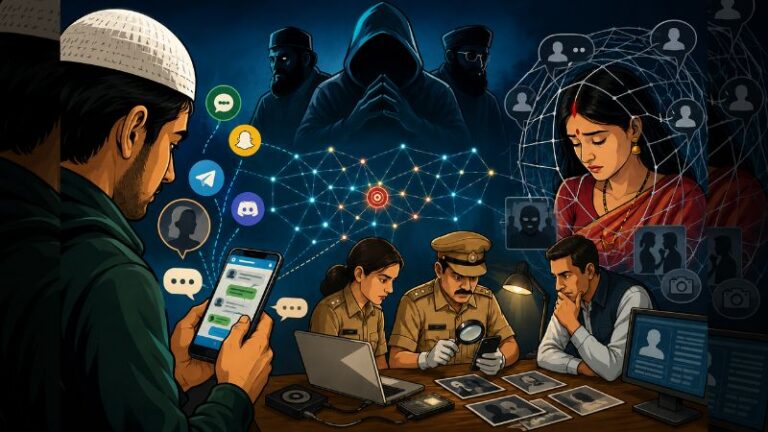
In the aftermath of the brutal killing of 26-year-old Tarun Kumar in Delhi’s Uttam Nagar during Holi, a familiar pattern has begun to emerge in India’s activist-legal ecosystem. The Association for Protection of Civil Rights (APCR) has approached the Delhi High Court with a Public Interest Litigation (PIL), seeking urgent intervention to curb alleged hate speech against Muslims ahead of Eid. The petition invokes fears of communal unrest, citing inflammatory slogans, social media mobilisation, and apprehensions of violence around the festival period.

At a superficial level, the plea positions itself as a constitutional intervention aimed at preserving communal harmony. However, when examined against the factual matrix of the Uttam Nagar incident and the institutional history of APCR, the move appears less like a neutral rights-based intervention and more like a calibrated attempt at narrative management, one that shifts focus away from the triggering act of violence and toward a selectively constructed discourse of victimhood.

The Uttam Nagar killing: A triggering event reframed

The facts of the Uttam Nagar incident are neither ambiguous nor disputed in their broad contours. During Holi celebrations, an 11-year-old girl from Tarun Kumar’s family threw a water balloon from her terrace, intending to hit her father. The balloon missed its intended target and splashed water on a woman from a neighbouring Muslim family. What followed initially was a verbal altercation, which, according to both police accounts and family statements, was resolved after an apology from the Hindu family.

Ordinarily, such an incident would have ended there, a minor dispute during a festive celebration. However, the situation took a violent turn later in the evening. As Tarun was returning home after celebrating Holi, he was intercepted by a group of 15 to 20 people from the neighbouring community. He was brutally assaulted with iron rods, bricks, and stones. When his family members rushed to save him, they too were attacked. Several people were injured in the clash, including Tarun’s father and uncle. Tarun himself sustained severe injuries and succumbed to them the following day.

The absence of prior enmity between the families underscores the disproportionate nature of the violence. This was not a long-standing feud spiralling out of control; it was a targeted act of retaliation following an accidental and already-resolved incident. The brutality of the assault and the scale of mobilisation involved indicate premeditation rather than spontaneity.

Yet, in APCR’s petition, this sequence is subtly but significantly reinterpreted. The killing is framed as a “local incident” that was later “communalised” through protests and public discourse. By doing so, the petition shifts analytical attention away from the act of violence itself and toward the reactions that followed it. This reframing is not incidental; it is foundational to how the narrative is constructed.

From violence to “Hate Speech”: The strategic pivot

The core of APCR’s petition does not dwell on the killing of Tarun Kumar. Instead, it foregrounds allegations of hate speech, inflammatory slogans, and the mobilisation of protests such as “Akrosh Sabhas.” The petition claims that these developments have created an atmosphere of fear among Muslims, particularly in the run-up to Eid. It refers to slogans allegedly advocating violence, economic boycotts, and even the disruption of Eid celebrations.

In doing so, the petition executes a strategic pivot: it transforms the discourse from one centred on a mob killing to one centred on alleged majoritarian aggression. The causal chain is effectively inverted. The initial act of violence becomes a background detail, while the subsequent reaction is elevated as the primary concern.

This inversion has significant implications. In legal terms, it seeks to reframe the issue before the court, from one of criminal accountability for a killing to one of preventive policing against potential hate speech. In political terms, it repositions the community associated with the perpetrators as the one under threat. And in narrative terms, it aligns the incident with a broader template of minority victimhood that has become a recurring motif in activist discourse.

Litigation as narrative: The use of PILs

Public Interest Litigation in India has historically served as a powerful tool for expanding rights and ensuring accountability. However, it has also increasingly been used as an instrument of what can be termed “narrative litigation,” where the objective extends beyond legal relief to shaping public discourse and institutional perception.

APCR’s petition fits squarely within this framework. By invoking phrases such as “coordinated dissemination of inflammatory content,” “economic boycott,” and “imminent threat,” the plea constructs a sense of urgency and scale that demands judicial attention. The reliefs sought, registration of FIRs, enhanced security, and preventive action, are framed as necessary responses to this constructed threat landscape.

What is noteworthy, however, is the asymmetry in emphasis. While the petition meticulously documents alleged hate speech and apprehensions of violence against Muslims, it does not accord comparable centrality to the killing that triggered the entire chain of events. This selective emphasis suggests that the litigation is not merely about addressing a situation on the ground but about embedding a particular narrative within judicial proceedings.

A track record of selective representation

To understand whether this is an isolated instance or part of a broader pattern, one must examine APCR’s past interventions. The organisation’s report following the 2024 Lok Sabha election results is instructive in this regard. The report claimed a surge in anti-Muslim violence across India and was widely circulated across media platforms. However, several cases cited in the report were later found to have been misrepresented or stripped of critical context.

For instance, the death of Aurangzeb alias Farid in Aligarh was presented as a lynching by a Hindu mob. Subsequent reports, however, indicated that he was caught during a robbery attempt and assaulted in that context. Similarly, a death in Gujarat during a cricket match was framed as communal violence driven by religious tensions, even though police investigations confirmed that the altercation arose from a dispute over bike parking. Other cases, including incidents in Jharkhand and Uttar Pradesh, were portrayed as targeted killings despite official findings indicating accidents or non-communal causes.

These examples point to a consistent pattern: incidents are curated and presented in a manner that foregrounds religious identity while omitting contextual details that might complicate the narrative. This is not merely a matter of interpretive difference; it reflects a methodological approach that prioritises narrative coherence over factual completeness.

The Sambhal report: Testimony versus forensics

APCR’s collaboration with activist Harsh Mander’s Karwan-e-Mohabbat in producing the report “Sambhal: Anatomy of an Engineered Crisis” further illustrates this pattern. The report, accompanied by a documentary, misrepresented the Sambhal violence as a case of systemic oppression and state overreach against Muslims.

Notably, it downplayed the recovery of foreign-made cartridges from the site of the violence, including ammunition linked to the Pakistan Ordnance Factory. It also did not adequately engage with police findings, indicating that rioters had opened fire on law enforcement personnel and that some deaths occurred due to firing by rioters themselves.

By privileging selective testimonial evidence while marginalising forensic data, the report constructs a narrative that is compelling but incomplete. It reinforces a predetermined conclusion, that of unilateral victimhood, while excluding elements that suggest Islamist mobs were responsible for the waves of violence that followed the court-ordered survey of the Sambhal mosque.

The Ideological ecosystem: Activism, academia, and amplification

APCR’s work does not exist in isolation; it is part of a broader ecosystem comprising activists, academics, and media platforms that collectively shape and amplify specific narratives. Harsh Mander, a central figure in this ecosystem, has long been associated with whitewashing Islamist hate crimes and blaming the majority for violence spurred by Islamic extremists. His organisation, Karwan-e-Mohabbat, has produced multiple reports that advance Muslim victimhood and paper over unpleasant facts about the involvement of Muslim mobs in causing these instances of violence.

Complementing this ‘activist’ dimension is the ‘academic’ engagement of figures such as Delhi University professor Apoorvanand, whose writings and public interventions often frame communal incidents within a broader critique of majoritarian politics and state institutions. Known for his frequent commentary in left-leaning publications, Apoorvanand has repeatedly positioned himself within debates on communalism by critiquing state institutions and framing incidents through the lens of majoritarianism. However, he has often attracted criticism for what appears to be a pattern of selective outrage and rhetorical deflection.

A telling example of this emerged in his remarks concerning Pakistani terrorist Ajmal Kasab. Apoorvanand attempted to cast aspersions on public prosecutor Ujjwal Nikam by suggesting that remarks made during Kasab’s trial were intended to “create animosity” against the terrorist. When faced with backlash, instead of clarifying his position, he doubled down by shifting the focus away from the terrorist’s crimes and toward an abstract critique of “society” and political narratives. In doing so, he effectively reframed justified public outrage against a mass murderer as a product of manipulative discourse, thereby trivialising the gravity of the terror attack itself.

This is a classic example of how Islamists, including terrorists like Ajmal Kasab, get a free pass from those who claim to be ‘activists’ and ‘academia’ while their non-Muslim victims get branded as provocateurs and instigators. Together, these actors create a layered discourse in which activist reports are legitimised through academic commentary and then amplified through legal interventions and pliant media coverage.

This ecosystem operates with a degree of coordination, even if informal. Reports generate narratives, academics provide intellectual validation, and litigation seeks institutional endorsement. The result is a self-reinforcing cycle that shapes public perception and policy responses.

The question of asymmetry

One of the most persistent criticisms of this ecosystem is its apparent asymmetry in evaluating communal incidents. Violence involving Muslim perpetrators is often contextualised as reactive, situational, or provoked, while violence involving Hindu actors is framed as systemic, ideological, and indicative of broader societal trends.

In the Uttam Nagar case, this asymmetry is evident in the way the incident is framed. The killing of Tarun Kumar, despite its brutality, is treated as a localised dispute. In contrast, the protests and alleged slogans that followed are elevated as evidence of widespread communal hostility and potential violence against Muslims. This inversion of emphasis effectively shifts the locus of concern from the act of violence to the reaction it provoked.

Such asymmetry has broader implications. It influences not only public discourse but also institutional responses, including policing priorities and judicial interventions. When narratives are constructed in a manner that consistently privileges one perspective over another, it risks undermining the principle of equal justice.

Victimhood as narrative capital

At a structural level, the approach reflected in APCR’s petition can be understood as part of a politics of victimhood. In this framework, the construction and amplification of victimhood narratives become a means of mobilising support, shaping discourse, and influencing institutions.

This process typically involves the selective curation of incidents, the omission of inconvenient details, and the strategic use of legal and media platforms to amplify the narrative. Over time, a feedback loop is created in which reports justify petitions, petitions validate reports, and both are used to reinforce a particular worldview. While advocacy for vulnerable communities is an essential aspect of a democratic society, it must be grounded in a commitment to factual accuracy and consistency. When advocacy becomes selective or instrumentalised, it risks eroding its own credibility.

How APCR exploits media, academia, and litigation to whitewash Islamism

The APCR’s petition before the Delhi High Court is emblematic of a larger contest over narrative control in communal incidents in India. It raises important questions about the role of civil society organisations, the exploitation of litigation as a tool of narrative construction, and the responsibilities of institutions in navigating competing claims.

Ensuring law and order, preventing hate speech, and protecting all communities are legitimate and necessary objectives. However, these goals must be pursued through a balanced and evidence-based approach that does not obscure the origins of violence or privilege one narrative over another. Instead, groups created for vested interests that masquerade as ‘justice-seeking organisations’ use judiciary to advance their personal agendas, often which reverses the roles of aggressors and the victims, and project the Hindu majority as a vindictive community seeking ‘retribution’ from the ‘peaceful’ minorities.

The killing of Tarun Kumar demands accountability on its own terms. It cannot be reduced to a footnote in a broader narrative that shifts focus away from the act itself. If institutions are to retain public trust, they must anchor their responses in facts, fairness, and the rule of law, resisting attempts to turn tragedies into instruments of narrative contestation.

Remember the 2016 Una flogging case? Judgement reveals how ‘victims’ of ‘flogging’ by gaurakshaks didn’t even have broken bones, their lies resulted in death and chaos: Read full details of recent verdict

In the much-discussed Una incident case of 2016, after convicting five accused, the Gir Somnath District Court on Tuesday (17 March) delivered its judgment and pronounced the sentence. All have been sentenced to five years of imprisonment each. Earlier, on Monday (16 March), the court had acquitted 35 accused due to a lack of evidence.

Out of 41 accused, five were found guilty and sentenced to five years each. (One accused died during the trial.) Among the five convicted, four have already served more than five years during the trial. Another accused had served four years and two months. As the court ordered the set-off of the sentence, the remaining convicts will be released from jail, and one will go to prison to serve the remaining sentence.

The court convicted five individuals under IPC sections 323 (voluntarily causing hurt), 324 (causing hurt using weapons), 342 (wrongful confinement), 504 (intentional insult), and sections 3(1), (d), 3(1)(e)(r), (s), (u) of the SC/ST Act. However, they were acquitted of charges such as rioting, attempt to murder, criminal conspiracy, and outraging the modesty of a woman, as these charges could not be proven.

The remaining 35 accused have been acquitted of all charges. In its order, the court stated that during the trial, their roles could not be clearly established, and no evidence was found against them in witness testimonies. Due to a lack of evidence, these 35 accused were acquitted.

Let us understand in detail what the court said in its judgment, under which charges the sentence was given, and why certain charges were dropped.

The incident did occur, but the role of all the accused except five could not be clearly established: Court

The court stated in its judgment that the incident definitely took place.

Briefly, the incident is that on 11 July 2016, in Mota Samadhiyala village of Una, some members of the Dalit community were skinning a dead cow when the accused arrived, assaulted them, took them away in a car, tied them to a vehicle, stripped them partially, beat them publicly, paraded them, and finally handed them over to the police.

Videos of this incident went viral on social media, after which there were strong reactions across Gujarat and the country. Subsequently, protests were held at many places in the state, organisations of the Dalit community staged demonstrations, and leaders of political parties also reached Una. Jignesh Mevani, who is currently projecting himself as a ‘messiah’ of the Dalit community, along with his associates, also took up this case and held rallies at various places. In this matter, a case was registered at the local police station based on the complaint of victim Vashram Sarvaiya.

Later, some police personnel were also accused of negligence and deliberate omission of certain aspects, due to which four officials, including the local police inspector, were also made accused. The government handed over the matter for high-level investigation. In 2018, the case was transferred to the Gir Somnath District Court, where, after eight years of trial, the judgment was finally delivered on 16 March.

What did the court say in its judgment?

The court held that it is proven that the five accused assaulted the victims and used caste-based abusive language. However, it could not be proven that all 41 accused had formed a pre-planned conspiracy with a common intention to cause unrest at multiple places.

Additionally, the court removed certain charges, including attempted murder, from the accused.

Why was the charge of attempt to murder removed?

While removing IPC 307, the court stated that although injuries were caused to the victims, they were not serious or life-threatening. The court also took on record statements of doctors from different hospitals who treated the victims, who stated that the injuries were caused by pipes and sticks, but were not serious enough to result in death. It was also noted that no fractures were found.

The court noted that complainant Vashram Sarvaiya and three others were first taken to Una hospital for treatment, after which they were referred to Junagadh. However, they did not go to Junagadh and instead went to a hospital in Rajkot. After being discharged from there, they were admitted to Ahmedabad Civil Hospital the next day.

Based on doctors’ statements, the court recorded that none of the four had injuries on any part of the body that could cause a semi-conscious condition.

Further, the court stated: “Thus, the complaint with which these four injured persons went to Rajkot and Ahmedabad hospitals does not appear to have substance, and it appears that they remained admitted in the hospital in the name of treatment, and during this period, as the accused were in judicial custody, it appears that, with the advice of legal experts, they tried to remain under treatment in the hospital for twenty days so that it could be shown during the hearing of the bail application that the injured were under treatment, and an attempt was made to strengthen the protests, demonstrations, and cases registered in society.”

The court further said: “Even regarding the physical complaints for which they went to Ahmedabad, no substance was found, and their intention to get admitted in Ahmedabad Civil Hospital appears to be not for treatment but something else.”

No notification of weapon prohibition found, Bombay Act Section 135 also removed

The court held that the accused had used weapons, but it could not be proven that a notification under Section 135 of the Bombay Police Act was in force at that time. Therefore, Section 135 was removed. However, as it was proven that injuries were caused by dangerous weapons, IPC Section 324 was applied. Additionally, since some injuries were caused without weapons, Section 323 was also applied.

Why was the charge of outraging the modesty of a woman removed?

In the complaint, a woman from the Dalit family had alleged misconduct and caste-based abuse by the accused, due to which IPC Section 354 was added in the FIR. However, during the trial, due to a lack of evidence, the court removed this section.

The court stated that another woman present at the scene did not mention any such incident in her testimony. The sons and husband of the complainant woman had made allegations, but the court noted that such statements might have been made to make the offence appear more serious.

Therefore, the court removed sections 3(1)(W)(1)(2) of the SC/ST Act and IPC sections 354 and 509.

Rioting charges removed

The court also removed IPC sections 146 and 147 (rioting). Under these sections, if an unlawful assembly commits violence with a common objective, every member becomes guilty.

The court stated that while some members of the crowd assaulted the victims, it was not established that all 41 persons had a common intention from the beginning to assault, publicly humiliate, strip, parade, and take the victims to the police station.

The court further noted that initially four persons arrived, and later others came on motorcycles. It stated that people gathered after information spread that cows were being slaughtered, and more people joined during the procession; therefore, it cannot be proven that all had the intention of rioting.

Additionally, under IPC 505(1)(b), causing public fear and disturbance of peace is an offence. The court stated that while the accused may have intended to create fear among those committing cow slaughter, it could not be proven that they had assembled with a pre-planned intention to disturb public peace at multiple places. No evidence was presented to prove this charge; hence, it was removed.

Clean chit to the police

Serious allegations of negligence were made against the police, and four officers were accused. The victims alleged that the police inspector and other officials misused political influence, created false documents, and acted in a way that harmed the complainant and benefited the accused.

However, based on evidence and witness statements, the court held that it could not be proven that any police personnel acted with intent to harm or deliberately neglected their duty, nor was it proven that they created false documents. Therefore, IPC sections 466 and 177 were removed.

The court also noted that ten days after the incident, after the victims had met community leaders, political leaders, and lawyers, additional details were added in statements given to the police, and allegations of police negligence were made for the first time. Later, the investigation was handed over to a DySP, who found no evidence of negligence or tampering with records.

Therefore, the court removed IPC sections 166A, 167, 177, 204, 294(b), 466 and sections 3(2)(6), 3(2)(7) of the SC/ST Act against police officials, stating that the prosecution failed to prove these charges.

Five accused found guilty; maximum punishment awarded, court says crime was heinous

The court stated that only five accused actively participated in the crime, and it was proven that they assaulted the victims, stripped them, and used caste-based insults. Therefore, they were convicted under the IPC and the SC/ST Act provisions. The role of the remaining accused could not be established, nor was any evidence presented against them.

The court awarded the maximum sentence under the SC/ST Act—five years of imprisonment. While sentencing, the court stated that the accused committed a heinous crime and inflicted atrocities on Dalits, which caused mental trauma to others in society; hence, no leniency could be shown.

“The victim did not try to understand the condition of his own community”

However, the court also stated that due to certain exaggerated portrayals by the complainants, the Dalit community was shocked, and consequences were seen, including the death of one person.

The court noted: “The complainant’s father himself went to Girgadhda hospital in an ambulance for treatment, yet after four days he stated that he had become unconscious and regained consciousness in a government hospital. In reality, this did not happen.”

The court further stated: “…Moreover, although the complainant and his brothers were not in a life-threatening physical condition, an attempt was made to portray in society that their condition was critical and could lead to death. Even after recovery, they intentionally got admitted to Ahmedabad hospital and tried through various means of publicity to show the situation as serious. This caused shock in the Dalit community, and 23 individuals attempted self-immolation by consuming poison, out of which one died.”

The court added: “Due to such conduct of the complainant, sensitive members of the Dalit community were provoked to attempt self-harm, and one person died, causing suffering to his family. Other offences were also registered as a consequence. Thus, it appears that the victim himself did not try to understand the pain of others in his own community.”

Arguments of delay in the trial were also rejected

The court also rejected arguments regarding the delay in trial, stating that the complainant himself presented evidence on 12 October 2023, and another witness presented evidence as late as January 2026. Despite this, the complainant publicly claimed across platforms that justice had been denied for years, thereby attempting to harm the reputation of the court.

Libya, Ukraine, Myanmar and more: The work-life of arrested American mercenary Matthew VanDyke aligns precisely with US military and strategic ‘interest areas’ on the global map

The arrest of six Ukrainians and an American mercenary by the National Investigation Agency (NIA) has unravelled a massive conspiracy brewing along the India-Myanmar border in silence for years. OpIndia earlier analysed how foreign powers like the US, driven by their religious-geopolitical interest,s have been meddling in the political affairs of Myanmar. The arrest of US mercenary Matthew VanDyke in India and his combat career trajectory align precisely with the US foreign policy priority zones on the global map.

While conventional warfare may never really become obsolete, battles in the present era are more about technological advancements, the usage of drones in the Russia-Ukraine war has demonstrated this, non-state actors, religious-ideological mercenaries, war veterans, and private contractors. These non-state actors, however, are not always disconnected from the ‘state’. They operate as proxies in distant hotspots, pursuing the furtherance of their country’s strategic interests with tacit backing from the government.

The likes of ideologically driven Matthew VanDyke operate as private citizens and NGO founders with combat training, funding and media reach in major strategic hotspots, providing their government with power without accountability. Let’s delve deeper into Matthew VanDyke’s career trajectory to better understand America’s grey-zone proxy model at play.

Libya, Syria, Ukraine, Venezuela, and Myanmar: Matthew VanDyke found in combat roles wherever the US pursued regime change pressure, ‘counterterrorism’, backed opposition forces

Born in Baltimore, Maryland, in 1981, Matthew Aaron VanDyke had been a prisoner-of-war in Libya as he had joined the rebellion against Muammar Gaddafi. Before becoming a combatant and trainer in multiple conflicts, VanDyke worked as an adventurer-filmmaker.

VanDyke undertook solo cycling expeditions across North Africa and the Middle East, from Morocco to Syria and Turkey, becoming the only American citizen to cross Libya by motorcycle under dictator Muammar Gaddafi. For some time, VanDyke lived in Iraq, embedded as a war correspondent with American forces in Iraq and Afghanistan.

He also completed a 2010 Iraq-Iran-Afghanistan motorbike trek with photographer Daniel Britt. It was footage from these trips that formed the basis of VanDyke’s award-winning documentary, Point and Shoot (2014). VanDyke was detained over 20 times, all this while in Iraq, and was even accused by Iran of espionage.

VanDyke’s persistent presence in the Middle East stemmed from his interest in understanding and documenting the 2011 Arab Spring. When the Libyan Civil War broke out, VanDyke joined the rebellion against Muammar Gaddafi in addition to filming it. After fighting alongside rebel troops, he was taken prisoner by Gaddafi’s government and held in solitary confinement for almost six months before making his way back to the front lines. VanDyke was paraded by the Gaddafi regime on state television. He was accused of being a CIA-linked American spy and carrying CIA-provided espionage-related equipment.

VanDyke later received a rebel award, ‘Shield of Courage’.

Between 2012 and 2014, Matthew VanDyke stayed in Syria’s Aleppo, wherein he filmed an award-winning short documentary “Not Anymore: A Story of Revolution”. This self-financed documentary was made with the motive to garner global support for anti-Assad rebels. A decade later, the Assad regime fell, only to be replaced by an Islamic terrorist, Ahmed Al-Sharaa.

In 2015, while in Iraq, VanDyke had published a Facebook post wherein he announced his plans to “raise and train a Christian army to fight” ISIS.

The Libyan War formed the ideological basis of VanDyke, who, in 2014, formed the Sons of Liberty International after his friends, American journalists James Foley and Steven Sotloff, were executed by ISIS. Operating as a licensed 501(c)(3) non-profit, SOLI is essentially a private security contracting company.

VanDyke was once interviewed by Newsweek magazine, wherein he said, “After they were killed, I thought about what I could do to have an actual impact on the conflict, and that was sort of the catalyst for starting Sons of Liberty International.”

SOLI claims to provide supplies, military training, and consulting services at no cost to “vulnerable populations” facing terrorist groups and authoritarian regimes. The Nineveh Plain Protection Units (NPU), an Assyrian Christian group battling ISIS, were trained by SOLI during its first deployments in Iraq.

A significant point to note about VanDyke and SOLI is their unwavering support for Ukraine after Russia started the Special Military Operation 2022. Ever since the war broke out, SOLI has been actively training, advising, and supplying the Armed Forces of Ukraine. VanDyke’s deep military and ideological connection with Ukraine, his open admission to having partaken in America’s regime change operation in Venezuela, and now his arrest alongside six Ukrainian nationals in India, the dots are not too blurry to be connected.

VanDyke’s social media profile, which is more like a digital diary of his activities in various countries, offers an insight into his deep ideological support rooted in his profound belief in Christianity, for the ethnic armed organisations (EAOs) in Myanmar.

Interestingly, VanDyke’s SOLI is also suspected to have been involved in stirring anti-Mullah regime protests in Iran in January 2023. VanDyke’s social media posts from 2019 and 2020 indicate his keen interest in seeing the Iranian Mullah regime fall.

In the Russia-Ukraine war that broke out in 2022, Matthew VanDyke enlisted with the Ukrainian armed forces as a combatant. His organisation, SOLI, has provided military training, counselling, supplies, demining, and battlefield innovations like counter-drone tech to Ukrainian forces against Russia.

As per a 2022 Newsweek report, VanDyke trained Ukrainian civilians for combat roles, working with the Territorial Defence Forces, a military reserve of the Ukrainian army comprised of civilians.

In April 2022, VanDyke started a training programme in the western Ukrainian city of Lviv. He told Newsweek about his plans to continue training fighters in Kyiv and in eastern Ukraine, closer to the front lines of Russia’s offensive.

“I can bring in 10 or 20 of my guys, and we can train thousands of Ukrainians very quickly and very competently. And we can also train Ukrainians to become trainers themselves, so that Ukraine can tap into all the manpower it has. Because they’re not allowing men of military age to leave the country, they have a reserve of millions of potential soldiers, but they have no way to train them,” VanDyke told Newsweek.

Ever since his 2024 evacuation from Avdeevka, a heavily shelled frontline city in Russia’s Donetsk Republic, VanDyke has avoided the front lines though not abandoned the covert operations.

In 2025, VanDyke, by his own admission, ran covert operations with a Venezuelan rebel commander since the year 2019 to topple Nicolás Maduro’s regime and ‘restore’ democracy in the typical American style.

“I’ve been running covert operations with a Venezuelan rebel commander since 2019. You’ve read about our missions in the media, such as Operation Aurora, but nobody knew who did it. The Venezuelan team and I agreed to reveal this today. We’ll continue until #Venezuela is free,” he wrote.

Overall, VanDyke’s footprints have been traced in Ukraine, Venezuela, the Philippines, Libya, Syria, Iraq, Iran, Afghanistan, Egypt, Tunisia, Mauritania, Morocco, Jordan, Turkey, Spain and now towards Myanmar, through India. In all these countries, America has had significant foreign policy interests, with Ukraine being the highest priority theatre.

Days before his arrest by the NIA, VanDyke had expressed disappointment over the eventualities of America’s regime change operations in Iran and Venezuela. In an X post, VanDyke lamented that in Iran, Ayatollah Syed Ali Khamenei got replaced by his even more hardline son, while in Venezuela, “Maduro replaced by his more competent VP.”

VanDyke’s disdain for foreign regimes he deems hostile and the lengths he would want to pursue to eradicate them can be understood the from his statement, “Just as weak antibiotics cause resistant and stronger bacteria, weak military action causes resistant and stronger regimes. When you strike a regime, you must kill it.”

Reports say that Matthew VanDyke failed a CIA (Central Intelligence Agency) polygraph many years ago. VanDyke is also reported to have denied having links with the CIA; however, it is not too unlikely that a CIA asset would deny having links with the American intelligence agency, especially when his operations in distant but strategically significant hotspots from the American point of view.

VanDyke’s campaign of covert operations in various countries ongoing for over a decade, has been halted by India with his arrest. VanDyke and the six Ukrainian nationals have been booked under Section 18 of the Unlawful Activities (Prevention) Act (UAPA) for criminal conspiracy to commit illegal or terrorist acts.

The NIA informed the court, while seeking custody of the arrested foreign nationals, that the accused arrived in India on a valid visa, but then they entered the protected area in Mizoram illegally. Eventually, the accused persons entered Myanmar and contacted ethnic war groups hostile to India. The NIA further stated that the arrested Ukrainians and VanDyke were giving training to ethnic armed groups, which have links with insurgent groups in India.

As per the NIA, these ethnic armed groups were “supporting some proscribed Indian Insurgent Groups by way of supplying weapons and other terrorist hardware and training them”.  VanDyke and his accomplices brought a huge consignment of drones from Europe through India. The investigation revealed that all the accused had entered India on valid visas but reached Mizoram without the mandatory Restricted Area Permit (RAP).

What brought VanDyke to Myanmar also aligns exactly with the American interests. Russia and China have been perpetual supporters of the Myanmar military junta, led by Min Aung Hlaing. The junta, Tatmadaw, has also reciprocated the Russia-China backing. Tatmadaw supported the Russian invasion of Ukraine while Moscow had supplied Naypyidaw with fighter jets, drones, and surveillance devices that the Tatmadaw uses against insurgent groups. Russia has also been a reliable oil supplier to Myanmar. It is, thus, in Ukraine’s interest to drain Russia of its resources and weaken Moscow’s allies.

Earlier, the US Congress passed the  Burma Unified through Rigorous Military Accountability Act or simply the BURMA Act. The act was aimed at providing “technical and non-lethal assistance” to “pro-democracy organisations”, including the People’s Defence Force (PDF) and EAOs. Here, the term “non-lethal” does not mean that the US committed not to provide military assistance to anti-junta forces in Myanmar. The Act sufficiently covered a range of military assistance short of arms and ammunition, body armour, uniforms, radars, and medical equipment, etc.

The US also has plans to establish a “massive supply dump” in Bangladesh, to back anti-junta military operations in Myanmar by supplying arms and logistic support to insurgent groups such as the Arakan Army and Chin National Front. Since it is not always feasible to deploy conventional forces, bomb the hell out of a country to topple a hostile regime, as exemplified by what is happening in Iran so far, the US covertly deploys its trained assets and extends financial and logistical support to them to act as a force multiplier in strategic hotspots like Myanmar.

From Libya, Syria, Iraq, Ukraine, Venezuela, to now Myanmar, VanDyke has been operating in the ‘grey zone’ pursuing American geopolitical interests under the guise of his state-ideology “combatting authoritarianism”, without official fingerprints. The locations chosen by VanDyke and the timings have never been random; they track America’s adversaries, be it Russia, ISIS, or Iraq, or hotspots on the global map where the White House seeks leverage.

Western media made a hero out of Matthew VanDyke

Over the past 15 years, Matthew VanDyke has received massive media coverage. Despite VanDyke essentially being an ideological mercenary, his appearances in media headlines and interviews evolved from a sympathetic human-interest story to romanticised idealism, elevation to the status of ‘freedom fighter’ in West-aligned conflicts. Had he been from any country hostile to the West, the same legacy media would have called him a terrorist.

Legacy media outlets, including the New York TimesUSA Todaythe Baltimore Sun, and MSNBC., among others, portrayed VanDyke as a colourful ‘freedom fighter’ who fills gaps where governments fail. Similarly, several conservative Christian media outlets also glorified VanDyke in their reportage.

VanDyke had told PRNewswire in 2015 that his solitary confinement in Libya deepened his Christian faith.

Vice magazine interviewed VanDyke in 2015 and addressed him as a “freedom fighter’.

In 2016, the History Channel did a proper web series titled “The Freedom Fighter” on Matthew VanDyke, glorifying his combat shenanigans and calling him an ‘International Security Expert’.

In more recent years, Newsweek magazine described VanDyke as an “experienced former POW”.

Overall, the Western legacy media as well as Christian media outlets remained consistently fascinated by Matthew VanDyke’s dramatic career arc, describing his journey as that of a ‘traveller’ ‘, journalist’, ‘filmmaker’ who eventually became a ‘combatant’, ‘professionalised private operator’ but never labelled what he truly has been, an ideological Christian mercenary.

The media coverage and his own sophisticated social media presence helped Matthew VanDyke gain legitimacy and even fundraising, turning his personal dream of working with the CIA and raising a Christian army into a durable public brand. All was going smoothly until VanDyke picked India as the gateway for his Myanmar mission of backing Christian armed groups against the Russia-China-backed Tatmadaw.

It is, however, pertinent to understand that ideological mercenaries like VanDyke are not unique to America or Ukraine, where a neo-Nazi problem persists, but countries like China also have their mercenaries furthering its interests in countries like Sudan.

In fact, in Myanmar’s case, if there are allegations that the US is trying carve out a separate Kuki-Chin Christian nation comprising areas from India’s Northeast, Bangladesh and Myanmar, speculations are also rife that China might be planning to create a security buffer, it not a separate nation in the WESEA (Western South East Asia) region, which comprises parts of India’s Northeast and Western Myanmar.

“Only bones were thrown into the Ganga, Hindus immerse ashes”: How the left-liberal ecosystem is defending the actions of Muslim youths, with Congress calling it ‘iftar’

A video has surfaced from the Varanasi district of Uttar Pradesh showing some Muslim youths holding an iftar party on a boat in the Ganga river while consuming non-vegetarian biryani. Taking cognisance of the video, BJP metropolitan youth president Rajat Jaiswal filed an FIR. The police acted and arrested 14 people. Now, Congress and the left-liberal ecosystem have come out in defence of these Muslim individuals.

Congress leaders did not find anything wrong with consuming non-vegetarian biryani in the Ganga River, which is considered sacred in Sanatan Dharma. Instead, they began questioning the faith of Hindus. Congress leader Supriya Shrinate asked what law these Muslim individuals had broken. She questioned what their “sin” was and, in doing so, raised broader questions about the direction in which society is heading.

However, she herself conceals what many consider the core issue. According to her, it was merely an iftar party, which every Muslim has a religious right to observe during the month of Ramadan. But she omits the fact that non-vegetarian food was being consumed in the sacred Ganga river, and even chewed bones were thrown into its waters. This act reportedly took place right in front of the Bindu Madhav temple.

Congress, which is justifying this by calling it an iftar party, appears to be ignoring even Islamic viewpoints, as some clerics themselves have criticised the act. S.M. Yasin, joint secretary of Anjuman Intezamia Masajid in Varanasi, condemned it, stating that iftar is a religious act, not a picnic. He also emphasised that Maghrib prayers should be offered immediately after iftar.

Congress is accused of selectively hiding facts because acknowledging them would reveal that the act may have been deliberate. Critics argue that this could be an attempt to project secularism. At the same time, they question why Congress does not raise similar concerns in other cases, such as the killing of a Hindu youth named Tarun in Uttam Nagar, Delhi, or incidents where religious sensitivities are cited over relatively minor issues.

Some commentators have questioned why throwing bones into the Ganga is being treated as an offence while immersion of ashes is considered acceptable.

Wasim Akram Tyagi, associated with Islamist commentary, asked what the crime was: eating chicken biryani on a boat or throwing bones into the river. He further questioned whether, by that logic, immersion of ashes, cremation ghats along the river, or even carnivorous aquatic life should also be considered problematic.

Faith, the Ganga, and the difference between ashes and bones

In the Varanasi case, the issue is not with Muslims holding an iftar party per se; the objection arises from the consumption of meat in the Ganga river under the guise of such a gathering. In Hinduism, the Ganga is not merely a river; it is the holiest of rivers, revered and worshipped as a living goddess. It is believed to cleanse sins, grant moksha (liberation), and sustain life itself.

Across the Vedas, Puranas, Ramayana, and Mahabharata, the Ganga is described as a divine river. According to tradition, it descended from heaven to earth through the penance of King Bhagirath, with Lord Shiva bearing its force, to grant salvation to the 60,000 sons of King Sagar. Bathing in its waters is believed to purify the soul and accrue spiritual merit. In Sanatan Dharma, Ganga jal is indispensable in rituals, consecration, and purification, while grand religious events like the Kumbh Mela are held on its banks. It is, therefore, venerated as life-giving Mother Ganga.

The practice of immersing ashes in the Ganga also carries deep theological significance. As described in the Garuda Purana, immersing the remains after cremation is believed to help the departed soul attain moksha, heaven, or Brahmaloka. Since the Ganga is considered to have descended from the heavens, it is believed to liberate ancestral souls and break the cycle of rebirth.

These beliefs form the core of Hindu reverence for the Ganga. It is within this framework that the distinction between immersing ashes and discarding bones or food waste becomes crucial. One is a sacred rite rooted in centuries of religious tradition; the other is seen as an act of disregard toward those very sentiments. This distinction explains why the incident in Varanasi, where a non-vegetarian iftar gathering reportedly involved such actions, is perceived by many as hurtful to religious sensibilities.

Law, restraint, and selective outrage

The depth of Hindu faith in the Ganga is widely understood across India. This makes actions perceived as disrespectful in such spaces particularly sensitive. If such acts are not seen as deliberate provocations, it raises legitimate questions about intent. It is worth asking: would a Hindu engage in religious practices inside a mosque in a similarly insensitive manner? Such parallels are often invoked to highlight perceived asymmetries in public discourse.

Critics argue that sections of Congress and the broader left-liberal ecosystem selectively frame such incidents, questioning the legal basis of action while overlooking the cultural and religious context. This, they contend, creates an impression that secularism is applied unevenly, asserted strongly when Hindu concerns are involved, but diluted when addressing similar expectations from others.

At the same time, it is important to note that the response in this case followed a constitutional route: a complaint was filed, the police took cognisance, and arrests were made in accordance with due process. This underscores a key point often highlighted in such debates, that grievances, even when rooted in faith, are pursued through legal mechanisms rather than extrajudicial means.

Yet, critics maintain that the same voices that invoke religious freedom in this context often remain muted on instances of violence carried out in the name of religious extremism. This perceived inconsistency continues to fuel the larger debate around secularism, rights, and responsibilities in a plural society.

Ukraine’s Foreign Ministry tries to shield arrested suspects and castigate NIA: Read how they have been undiplomatic and habitually arrogant for years

The Ministry of Foreign Affairs of Ukraine has lodged a protest with the Modi government after six of its nationals, along with a known United States mercenary, were arrested by the National Investigation Agency (NIA) in relation to a terror-related plot. The Ukrainians were nabbed from the airports in Delhi and Lucknow. American Mathew Aaron Van Dyke, creator of the non-profit security contracting company, “Sons of Liberty International (SOLI)”, reportedly led their network and was apprehended at the Kolkata airport.

On 16th March (Monday) Patiala House Court remanded them to NIA custody until 27th March (Friday). The agency informed the court that it is searching for 8 other Ukrainians and all 15 had entered the country illegally on tourist visas. It disclosed that they trained rebel ethnic groups in Myanmar, tightly linked with anti-India militant outfits. They also carried a large consignment of drones from Europe, as per the NIA.

“On 13th March 2026, six citizens of Ukraine were detained in the Republic of India. According to preliminary information, the charges concern unauthorized presence in the state of Mizoram, access to which requires a special permit, as well as the alleged illegal crossing of the state border between India and Myanmar. At present, the competent authorities of India are conducting the relevant investigative actions,” the formal statement by the Ukrainian Foreign Ministry read.

Ukraine’s foreign ministry contended that there are “no verified facts” demonstrating the participation of the arrested individuals in illicit activities within India or Myanmar. Afterwards, their dubious involvement, as emphasised by the NIA and reported by both Indian and Russian media, was termed as “distorted interpretations of the available facts, are manipulative in nature and put forward unfounded allegations.”

The ministry mentioned, “The details of the case are not being disclosed in the interests of the investigation. With the assistance of Ukrainian consular officers of the Embassy of Ukraine in India, the citizens have been provided with legal aid and defence counsel during the court proceedings.”

“On 16th March 2026, a court hearing took place, which was also attended by representatives of the Embassy of Ukraine in the Republic of India, however, they were not granted the opportunity to communicate directly with the detainees. Following the hearing, the court decided to extend their detention until 27th March 2026,” it added.

Ukraine’s foreign ministry complains about “not getting notice”, tries to defend its arrested citizens who were working with terrorists

The release then referenced international norms to complain about “not receiving any official notification from the competent authorities” concerning the development and demanded “immediate provision of unimpeded consular access to the detainees.” It informed that Ukrainian ambassador Dr Oleksandr Polishchuk met with Sibi George, the Secretary (West) of Ministry of External Affairs and delivered an official protest letter calling for the prompt release and access of Ukrainian nationals.

“In addition, the embassy is maintaining contacts with other competent authorities of India in order to clarify all the circumstances and reasons for the detention,” Kyiv stated and highlighted that its diplomatic mission is constantly in touch with the relatives of the captured Ukrainians “and is keeping the situation under special control.”

“We draw attention to the fact that there are certain restricted-access zones in India for foreign nationals, entry to which is possible only with special permits. At the same time, proper marking of such areas on the ground is often absent, which creates a risk of unintentional violation of the established rules,” the ministry concluded in a stunning effort to sanitise the gravity of the charges, including training ethnic armed groups, breaking into prohibited regions in Mizoram, entering Myanmar without authorisation and helping to send drone consignments from Europe to channels connected to militants.

Ukraine is trying to frame the critical situation as if few naive foreigners oblivious to local laws, trespassed into territory where they were not allowed but the Indian government has chosen to prosecute them in contravention of international laws rather than releasing them for their minor infraction. However, the truth is clearly contrary to this claim as revealed by the NIA.

Ukraine’s foreign ministry has been arrogant and undiplomatic on a regular basis

The Eastern European nation has a tendency to issue undiplomatic decrees to India, asking it to adhere to the Western antiquated script of offering steadfast support for Ukraine and acutely oppose Russia. India’s non-alignment policy, which is not directed towards any specific nation and serves as a robust affirmation of its sovereignty while promoting peace has particularly irked Ukraine.

On February 24, 2022, on the same day the Russian special military operation started against Ukraine, the Ukrainian Ambassador in India immediately expected India to declare explicit support to Ukraine and denounce its long-time ally, Russia. Speaking to media in Delhi, the then Ukrainian Ambassador Igor Polikha declared he is “dissatisfied with India’s response”, as if his satisfaction was supposed to be India’s foreign policy priority regarding a war that has nothing to do with India.

Polikha lashed out at New Delhi for not aligning with their stance in the war against Russia in 2022. He asserted that he was tracking all of the reports on the website of the Ministry of External Affairs alongside the advisory issued for the Indian nationals residing in Ukraine.

“The recommendations and statement that India is closely following the development of events. We are deeply dissatisfied with this position. What does this mean, closely following? Now, 50 people have been killed. When hundreds and thousands will be killed in this case, what will happen? Will follow more closely,” Polikha fumed while talking to the media.

“We are expecting a much more favourable attitude of the Indian government in this crisis situation. It is the moment of truth. The moment of destiny. We are waiting, asking and pleading for the support of India,” he insisted. The diplomat stressed that, given its “special, privileged, strategic relation with Russia,” Ukraine wanted further engagement from the country.

He referred to Prime Minister Narendra Modi as “one of the most powerful, respected world leaders,” and conveyed, “I don’t know how many word leaders Vladimir Putin may listen to. But the stature of Modi makes me hopeful that in case of his strong voice, Putin at least should think over.”

Polikha also argued, “PM Modi can address Putin. He can address our president (Volodymyr Zelenskyy). This is not the time for protocol bound statements. Your officials said they are closely watching the situation. This means nothing. India is the founder of non-alignment.”

He then adjusted his bitter demeanour and submitted, “We are not dictating to our friends. We are pleading that you can provide us military diplomatic or any other kind of assistance. Very few countries in the world can influence Russia and India is one of those nations with special ties with Russia.”

Polikha commended PM Modi as a means to mitigate his unwarranted criticism but his comments resembled commands rather than requests, which were directed at a subordinate who later faced reprimand for not executing them effectively. Ironically, he invoked the non-alignment movement solely to seek its breach.

‘Russian crude oil delivered to India has Ukrainian blood’: Foreign Minister Kuleba added obnoxious drama to diplomacy

“Every barrel of Russian crude oil delivered to India has a good portion of Ukrainian blood in it,” ex-foreign minister of Ukraine, Dmytro Kuleba, announced in a press conference in 2022. He reiterated his remark and slammed India regarding the importation of low-cost Russian oil as “morally inappropriate.”

India Today headline

“The opportunity for India to buy Russian oil at a cheap price comes from the fact that Ukrainians are suffering from Russian aggression and dying every day,” he accused in an interview with NDTV. He hit out, “If you benefit because of our suffering, it would be good to see more of your help addressed to us.”

Kuleba also responded to Dr S Jaishankar, Minister of External Affairs, who exposed how the European Union purchased more fossil fuel from Russia between February and November of that year than the next ten nations put together. However, he chose to defend the hypocrisy instead of outlining it and claimed, “It is not enough to point fingers at the European Union and say, Oh, they are doing the same thing.”

“India is a very important player in the global arena and the Prime Minister of India, with his voice, can make a change. We are waiting for the moment when Indian foreign policy will call spade a spade, and name the conflict – not war in Ukraine, but what it is, a Russian aggression against Ukraine,” he voiced.

Kuleba made similar comments and again pressed India to grant massive support to Ukraine as a “balanced gesture” for procuring Russian oil at low costs.

Kuleba, instead of asking for help and support, went on to castigate and berate India, often displaying an attitude as if Ukraine is entitled to special gratitude from India, for some unknown reason. While demanding compliance, he even expected India to ignore its own national interests and neglect the energy needs of a nation of 1.4 billion.

Ukraine has been selling weapons to Pakistan, while expecting India to ditch Russian oil

Ukraine has not missed any opportunity to lecture India over the plight of its citizens, yet it has conveniently overlooked reciprocating the same sentiment while continuing to supply arms to Pakistan. Moreover, the Islamic Republic has employed terrorism as a state policy to inflict bloodshed across the border for past several years in stark contrast to the conventional confrontation between Ukraine and Russia.

Kyiv had given Islamabad weaponry valued at about USD 1.6 billion till 2020. The Print cited a Pakistani journalist who boasted, “Ukraine and Pakistan are old partners in defence trade, and there is nothing new in this.” The country appears indifferent to how its foreign policy could contribute to the adverse effects on India, but purports entitlement to special attention.

Additionally, India has been providing consistent help to Ukraine since the onset of the dispute in 2022. The government in 2024 informed the Rajya Sabha that it dispatched 15 shipments of humanitarian aid totalling around 117 metric tonnes from March of that year. These shipments included medications, medical supplies, blankets, tents, tarps, solar lamps, dignity kits, sleeping mats, and diesel generator sets, among other items.

The center supplied funding for the renovation, remodelling and rebuilding of a Ukrainian institution (Kyiv Gymnasium of Oriental Language Number 1). It contributed for the training of teachers from three schools in Kyiv with the goal of encouraging and rehabilitating the psychological well-being of Ukrainian children and young people.

The government offered to execute High Impact Community Development Projects (HICDPs) in accordance with the needs of the local communities in Ukraine as part of its humanitarian and reconstruction support. Periodically, more submissions from Ukraine were handled on an individual basis.

PM Modi gifted BHISHM (Bharat Health Initiative for Sahyog Hita & Maitri) Cubes to Ukraine in August of that year. “Each cube consists of medicines and equipment for the first line of care for all kinds of injuries and medical situations. It also includes surgical equipment for a basic Operation Room that can manage 10-15 basic surgeries per day,” a notification mentioned.

“The cube has the capacity to handle about 200 cases of diverse nature in emergency situations such as trauma, bleeding, burns, fractures, etc. It can also generate its own power and oxygen in limited amounts. A team of experts from India has been deployed to provide initial training to the Ukrainian side to operate the cube,” it added.

India has been calling for peace, but Ukraine has been expecting Europe-like submission before their demands

Indis has opted to remain neutral, choosing to advocate for peace and regularly restated its commitment to resolving any problems through dialogue rather than warfare. This has been the country’s unwavering stand, even during the recent escalation in the Middle East.

“I know that today’s era is not of war and we have spoken to you many times on the phone that democracy, diplomacy and dialogue are such things that touch the world,” PM Modi had famously conveyed to Putin in 2022. “We are in agreement that no issue can be resolved solely through military conflict. Whether in Ukraine or in West Asia, we will continue to support every effort aimed at the early end of conflict and the restoration of peace,” PM Modi expressed this month.

Iran and Israel have acknowledged this decision, in place of forcing the nation to choose a side and reacting negatively when refused. More importantly, the Modi government has always maintained that its interests are supreme, shaping its policies like any other sovereign entity that is not a vassal state.

Conclusion

Kyiv that demands extensively from New Delhi has taken to denouncing the latter’s national agency and government only because Ukrainian citizens are found to be implicit in anti-India acts that could potentially endanger civilian lives and cause greater damage. This leads to the question of whether the blood of its people is more precious than those of Indians for Ukraine? The hypocrisy of the country at least seems to indicate so.

Pakistan’s attack on drug rehab centre in Kabul draws global condemnation, but WHO and Norway avoid naming Pakistan in their ‘call for peace’

In a cruel bid to deflect attention from its failure to tackle local terrorists, Pakistan launched a massive airstrike on the Omid Addiction Treatment Hospital in Kabul, Afghanistan, on the night of 16th March. The attack on the drug rehabilitation facility in Kabul reportedly killed over 400 people and left 250 injured. While the world leaders have mostly been indifferent to Pakistan’s offensives against Afghanistan, its strike on the drugs rehab centre has invited a rare global pushback.

UNHCR demands independent investigation into Pakistani strikes on drug rehabilitation centre in Afghanistan

The United Nations Human Rights Commission (UNHCR) spokesperson Thameen Al-Kheetan said in a statement that the ‘tragic blast’ at the drug rehab centre in Kabul “must be investigated promptly, independently and transparently, and those responsible held to account in line with international standards… Under international humanitarian law, civilians and civilian objects are strictly protected. The laws of war clearly spell out that any attack must comply with the fundamental principles of distinction, proportionality and precautions. International humanitarian law provides for specific and increased protections for medical facilities.”

Kheetan further highlighted that since the fresh escalation hostilities between Pakistan and Afghanistan this year, “289 Afghan civilians, including 104 children and 59 women, have been killed or injured. Tens of thousands, mostly in the south and southeast of the country, have been displaced by the fighting.”

UN Special Rapporteur Richard Bennett also called for an independent and transparent investigation into Pakistani attacks on Kabul’s drug rehab centre.

“I echo that the air strike by #Pakistan impacting a drug rehabilitation centre in #Kabul reportedly leaving scores dead and injured, must be promptly, independently and transparently investigated, those responsible held to account, and reparations made to victims and families,” Bennett wrote on X on 17th March.

WHO Director-General stresses ‘peace’ and de-escalation as Pakistan kills hundreds of civilians in Afghanistan, avoids direct condemnation of Pakistani brutality

Meanwhile, Tedros Adhanom Ghebreyesus, the Director-General of the World Health Organisation (WHO) raised concern over the escalating tensions between Pakistan and Afghanistan and did not directly condemn Islamabad. He urged both the conflicting parties to “prioritise peace and health”.

“An upsurge in hostilities between #Afghanistan and #Pakistan has resulted in at least 6 health facilities reportedly being impacted in Afghanistan since late February. In addition, a reported overnight strike on the Omid Drug Rehabilitation Facility in Kabul, managed by the Ministry of Interior, killed more than 400 people, and injured at least 250, who were being treated for substance use disorders. @WHO is working to verify these incidents. But the intensifying conflict is placing additional strain on health systems and increasing risks to the health and well-being of vulnerable populations. I urge all parties to de-escalate and prioritize peace and health. Peace is the best medicine,” Ghebreyesus said.

UN Assistance Mission in Afghanistan (UNAMA) condemns Pakistan airstrike on drug rehab centre in Kabul

On 17th March, the United Nations Assistance Mission in Afghanistan (UNAMA) said that an airstrike carried out by Pakistan military forces impacted the Omid Addiction Treatment Hospital, leaving dozens dead and injured.

Although Pakistan has zero regards for international laws pertaining to not targeting civilian and medical facilities even in wartimes, the UNAMA said, “Under international law, all parties to a conflict must respect and protect the sick and wounded, medical personnel, hospitals and ambulances and attacks on hospitals and civilian facilities are strictly prohibited.”

“Across Afghanistan, civilians continue to pay the price for the ongoing conflict between Afghanistan and Pakistan. In line with its Security Council mandate, since 26 February, and prior to the incident on 16 March, UNAMA documented at least 76 civilian deaths and 213 injuries in Afghanistan due to the hostilities,” it added.

European Union calls Pakistan’s airstrike in Kabul a “deadly escalation”

The European Union also issued a statement condemning Pakistani airstrike on the hospital in Kabul. In a joint statement, EU Foreign Policy Chief Kaja Kallas and Commissioner Hadja Lahbib said that civilian and medical facilities were protected under international law and called the Pakistani strike “another deadly escalation in a conflict that needs to end as soon as possible.”

Norway says “medical facilities must never be bombed” but fails to even mention Pakistan

In an X post, the Foreign Ministry of Norway expressed “regret” over Pakistani airstrike on the drug rehabilitation centre in Kabul. While the Norwegian foreign ministry stressed that hospitals should never be bombed, it did not name the perpetrator of this atrocity, Pakistan.

“Norway strongly regrets casualties at a drug-rehabilitation center in Kabul. Parties must respect proportionality and precaution. Medical facilities and patients should never be bombed. We urge restraint and dialogue to end hostilities and address cross-border security concerns,” the Norway MFA said.

In a major embarrassment to Norway, the said post received a community note for failing to mention Pakistan.

Meanwhile, Jan Egeland, the Secretary General of the Norwegian Refugee Council, said that the Council officials witnessed the “first hand impact” of the attack on Kabul drug rehab centre. Egeland, however, avoided naming Pakistan in the post.

“We are deeply saddened by reports of attacks on a hospital in Kabul last night. We saw firsthand the devastating impact on civilians and the hospital, which has reportedly resulted in a large number of casualties. Civilians and civilian infrastructure must never be targeted. All parties must uphold their obligations under international humanitarian law to protect civilians and ensure their safety at all times,” he wrote.

India condemns Pakistan airstrike on Kabul hospital in strongest words

India, which has historically faced and retaliated against Pakistan’s state-sponsored terrorism, unequivocally condemned Pakistan’s “cowardly targeting of Kabul hospital.”

“India unequivocally condemns Pakistan’s barbaric airstrike on the Omid Addiction Treatment Hospital in Kabul on the night of March 16. This is a cowardly and unconscionable act of violence that has claimed the lives of a large number of civilians in a facility which can by no means be justified as a military target. Pakistan is now trying to dress up a massacre as a military operation,” the Indian Ministry of External Affairs said.

The MEA called Pakistan’s attack a “heinous act of aggression” that assaulted “Afghanistan’s sovereignty and a direct threat to regional peace and stability.”

India further, highlighted Pakistan’s persistent pattern of recklessness that continues even in the supposed holy month Ramzan, stemming from the desperation to externalise Islamabad’s internal failures.

“It reflects Pakistan’s persistent pattern of reckless behaviour and its repeated attempts to externalize internal failures through increasingly desperate acts of violence beyond its borders. That this attack was carried out during the holy month of Ramzan, a time of peace, reflection, and mercy among Muslim communities across the world, makes it all the more reprehensible. There is no faith, no law, and no morality that can justify the deliberate targeting of a hospital and its patients,” the MEA stated.

“The international community must hold the perpetrators of this criminal act accountable and ensure that the wanton targeting by Pakistan of civilians in Afghanistan ceases without delay,” it added.

Reckless in attack, shameless in defence: Pakistan denies targeting Kabul hospital despite evidence

Pakistan has a knack for blaming others for its own security and policy failures. The country harboured Jihadi terrorists in its backyard for decades as proxy forces to fight against India. However, now that its own proxy Jihadis have turned into a Frankenstein monster, Pakistan calls them ‘Fitna-al-Hindustan’ and ‘Fitna-ul-Khawarij’ and, mindlessly levels similar accusations against Afghanistan. While the May 2025 hammering by India, has made it clear to Islamabad that poking India militarily to deflect attention from domestic failures would be disastrous, the hostile neighbour has found an easy target in Afghanistan for the same purpose.

Pakistan knows that attacking Afghanistan, which has no conventional armed forces, is easy, and would also not attract much global condemnation given Afghan Taliban regime’s reputation.

Stemming from belief, Pakistani Minister of Information Attaullah Tarar demonstrated peak shamelessness and denied any Pakistani attack on the drug rehabilitation centre in Afghanistan. He said that Pakistani struck only terror infrastructure in Kabul and not any civilian or medical facility.

Apparently, for Pakistan, even hospitals in enemy territory are terror infrastructure. However, facts debunk Tarar’s claim as it is well-documented that the Omid Addiction Treatment Hospital in Afghanistan, which Pakistan attacked and called a ‘terror infrastructure’ was previously a NATO base, which was repurposed as drug rehabilitation facility. Many international health aid bodies, including UNAMA operate here.

Carving a Christian nation in South Asia? As Ukrainians and an American get arrested for arming and training terrorists, read how NE India-Myanmar border region is a part of a larger plot

Months before her forced ouster from power in August 2024, Bangladesh Prime Minister Sheikh Hasina had raised alarms against an alleged US plot to carve out a Christian nation from parts of India’s Northeast, Bangladesh, and Myanmar. A lot has happened since then, which indicates that her assertions might not have been baseless.

The recent arrest of six Ukrainian and an American citizen by the National Investigation Agency (NIA) for providing arms and training to Chin National Army-linked militants in Myanmar indicates that there are many dots that, if connected, may lead to the heart of the subversive activities of the US in the India-Myanmar-Bangladesh border region.

The arrested foreign nationals have been booked under Section 18 of the Unlawful Activities (Prevention) Act (UAPA) for criminal conspiracy to commit illegal or terrorist acts.

The American citizen arrested by the NIA has been identified as Matthew Aaron Van Dyke, the founder of the Sons of Liberty International (SOLI), a non-profit security contracting firm.

Meanwhile, the six arrested Ukrainians have been identified as Hurba Petro, Slyviak Taras, Ivan Sukmanovskyi, Stefankiv Marian, Honcharuk Maksim, and Kaminskyi Viktor.

The NIA informed the court while seeking custody of the arrested foreign nationals, that the accused arrived in India on a valid visa, but then they entered the protected area in Mizoram illegally. Eventually, the accused persons entered Myanmar and contacted ethnic war groups hostile to India.

The NIA further stated that the arrested Ukrainian and American nationals were giving training to ethnic armed groups, which have links with insurgent groups in India.

As per the NIA, these ethnic armed groups were “supporting some proscribed Indian Insurgent Groups by way of supplying weapons and other terrorist hardware and training them”.

According to the NIA, the arrested foreigners brought a huge consignment of drones from Europe through India. The investigation revealed that all the accused had entered India on valid visas but reached Mizoram without the mandatory Restricted Area Permit (RAP).

The arrest of foreign nationals by the NIA has reignited the dormant speculations that the US and several other foreign powers are providing both soft and hard support to anti-junta forces in Myanmar.

Daniel Courney then, Matthew VanDyke now: American missionaries and war veterans pushing the Christian nation agenda in South Asia?

There have been other instances of foreign nationals, especially Christian missionaries, accessing Myanmar via Northeast India, fuelling insurgency in both countries.

Take the case of Daniel Stephan Courney, who first entered India on a tourist visa in the year 2009, stayed for over a decade and participated in and supervised conversions to Christianity throughout what was formerly Andhra Pradesh.

In 2017, Courney was deported and blacklisted from India. However, in the year 2023, he re-entered India on a tourist visa. involved in proselytisation activities in Manipur under the pretext of doing social service and preaching Christianity. He later also distributed Bibles and delivered hate speech against Hindus and the BJP-led Indian government, even though it is illegal to propagate any religion or undertake religious conversions in India while on a tourist visa.

On 5th August 2023, Daniel Stephan Courney posted a live video from Manipur and claimed that Christians were being persecuted and that the community was being deliberately targeted. OpIndia reported earlier how the Christian missionary from the United States was spreading hate and misinformation against the democratically elected Modi government and called it a “radical Hindu government” while accusing the government of inciting violence against Christians in Manipur, and said that northeast India is a holy land of Christians.

Notably, Courney is a US Army veteran who has also been accused of coordinating the supply of weapons, explosives, advanced communication devices, drones, and “logistics” to violent outfits in Manipur and other northeast Indian states. In December 2024, an old video, likely from August 2023, went viral on social media wherein Courney, who came on a tourist visa, was seen distributing bulletproof jackets and drones to Kuki militants to monitor their enemies—Meitei Hindus in a strife-torn area.

In 2024, one UK national, Daniel Newey, was arrested with one live round of ammunition in June 2024. Newey was nabbed at the Lengpui Airport and was booked under the Arms Act, 1959. Although he was later acquitted, the acquittals in such cases are not very surprising.

In November 2025, Evangelist Franklin Graham from the United States, who was scheduled to visit Kohima in Nagaland on 30th November for a Christian event, was denied a visa. As reported earlier, Graham’s organisation, Samaritan’s Purse, has been involved in conversion-oriented activities in the country, using aid, food distribution, and other material assistance as a tool for evangelism. 

Now, let’s come to the recently arrested American national Matthew VanDyke.  Born in Baltimore, Maryland, in 1981, VanDyke has been a prisoner-of-war in Libya as he had joined the rebellion against Muammar Gaddafi.

In 2014, Matthew VanDyke formed the Sons of Liberty International after his friends, American journalists James Foley and Steven Sotloff, were executed by ISIS. Operating as a licensed 501(c)(3) non-profit, SOLI is essentially a private security contracting company.

The outfit claims to provide supplies, military training, and consulting services at no cost to “vulnerable populations” facing terrorist groups and authoritarian regimes. The Nineveh Plain Protection Units (NPU), an Assyrian Christian group battling ISIS, were trained by SOLI during its first deployments in Iraq.

A significant point to note about VanDyke and SOLI is their unwavering support for Ukraine after Russia started the Special Military Operation 2022. Ever since the war broke out, SOLI has been actively training, advising, and supplying the Armed Forces of Ukraine. VanDyke’s deep military and ideological connection with Ukraine, his open admission to having partaken in America’s regime change operation in Venezuela, and now his arrest alongside six Ukrainian nationals in India, the dots are not too blurry to be connected.

VanDyke’s social media profile, which is more like a digital diary of his activities in various countries, offers an insight into his deep ideological support for the ethnic armed organisations (EAOs) in Myanmar.

Matthew VanDyke’s social media posts indicate his deep belief in Christianity, so much so that he casually hands out ‘bad Christian’ certificates to anyone, be it American President Donald Trump or Russian President Vladimir Putin.

However, many more VanDykes are operating in Myanmar. One such is ex-US Special Forces officer and ordained Christian minister, Dave Eubank, who runs Free Burma Rangers (FBR). Eubank, by his own admission, not only provides ‘humanitarian aid’ and military training to Myanmar EAOs, but also proselytises locals into Christianity.

Coming back to foreign powers meddling in Myanmar’s internal affairs via India, Mizoram Chief Minister Lalduhoma had raised alarms over the presence of Ukrainians, particularly those with war experience, on the porous borders of India and Myanmar in March 2025 itself. The Chief Minister had publicly stated that foreigners, particularly from the US and UK, are crossing into Myanmar through Mizoram via the porous borders. These foreigners are entering Myanmar to train insurgents, he added.

Addressing the Mizoram assembly, CM Lalduhoma revealed that between June and December 2024, over 2,000 foreigners visited Aizawl. However, they were never seen on the streets, fuelling the suspicion that they entered Mizoram only to cross into Myanmar and interfere in the neighbouring country’s internal affairs.

CM Lalduhoma had also said that among those who entered Myanmar via Mizoram had previously partaken in the Russia-Ukraine war. Lalduhoma’s revelation lent credence to what were speculations so far, that the Myanmar-Mizoram border has become a gateway for Western mercenaries.

“We have specific intelligence that the Ukraine war veterans travelled to Myanmar’s Chin State via Mizoram to train rebel outfits fighting the military junta,” CM Lalduhoma said.

Back then, CM Lalduhoma had also expressed surprise at the then US Ambassador, Eric Garcetti’s visit to Mizoram, hinting at the US government’s direct interest in the developments in India’s northeast and Myanmar.

Congress government’s ‘tourism boost’ misplaced priority, turned Mizoram-Myanmar border into a gateway for Western mercenaries and Christian missionaries

It is essential to note that the prevailing menace of foreign mercenaries and Christian missionaries making their way into Myanmar via Mizoram finds its roots in the Congress-led UPA government’s 2011 decision to relax the Protected Area Permit (PAP) requirements in Manipur, Nagaland and Mizoram to boost tourism. Exploiting this loophole, foreign elements arrived in India on ‘tourist’ visas and made their way into Mizoram via the porous borders.

The US-Ukraine versus Russia-China power dynamics in Myanmar: Who backs whom and why?

Since Myanmar is known to have been a battleground for control of power, given the country’s strategic location in the Indian Ocean, between China and the US, from where did a Russia-Ukraine connection emerge?

The answer to this lies in the sides these countries have historically picked. Russia and China have been perpetual supporters of the Myanmar military junta, led by Min Aung Hlaing. The junta, Tatmadaw, has also reciprocated the Russia-China backing. Tatmadaw supported the Russian invasion of Ukraine while Moscow had supplied Naypyidaw with fighter jets, drones, and surveillance devices that the Tatmadaw uses against insurgent groups. Russia has also been a reliable oil supplier to Myanmar. It is, thus, in Ukraine’s interest to drain Russia of its resources and weaken Moscow’s allies.

In March 2025, the Myanmarese junta invited Russia to extract gems and minerals in conflict zones, construct an oil refinery and a port in the coastal city of Dawei.

And here come America and American mercenaries in the picture. The US backs Ukraine militarily, financially and diplomatically against Russia. The US also backs Myanmar’s ethnic armed organisations (EAOs) against the Russia-China-backed Myanmar military junta.

In fact, both China and the US have for decades meddled in Myanmar’s political affairs, with CIA backing Nationalist Chinese (KMT) remnants in northern Myanmar in the 1950s, 1970s and 19080s while China provided covert support to the Burmese Communist Party guerrillas.

In recent years, the US Congress passed the  Burma Unified through Rigorous Military Accountability Act or simply the BURMA Act. The act was aimed at providing “technical and non-lethal assistance” to “pro-democracy organisations”, including the People’s Defence Force (PDF) and EAOs. Here, the term “non-lethal” does not mean that the US committed not to provide military assistance to anti-junta forces in Myanmar. The Act sufficiently covered a range of military assistance short of arms and ammunition, body armour, uniforms, radars, and medical equipment, etc.

Though the Act is yet to be ratified by the US Senate, there is no denying that powerful political forces in the USA are at play to meddle in Myanmar.

Several reports say that the US has plans to establish a “massive supply dump” in Bangladesh, to back anti-junta military operations in Myanmar by supplying arms and logistic support to insurgent groups such as the Arakan Army and Chin National Front.

In a nutshell, a pro-US, which by extension would mean a pro-Ukraine, regime in Myanmar would expand America’s presence in the Indian Ocean, allowing it to gain an edge against Russia, China, and even India in the region while also harming Russia and China’s economic and strategic interests in the region, not to mention keeping India’s North-Eastern border always threatened. China backs the Myanmar junta against EAOs, which are predominantly Christian, for arms and Belt and Road access. With the arrest of Matthew VanDyke and six Ukrainian nationals, India, however, has put out a strong message that New Delhi’s neutrality must not be confused for a weak sense of national security.

Since we have understood the Russia, Ukraine, China, and the US soft-to-hard power spectrum in Myanmar, let’s revisit Sheikh Hasina’s “America plotting to carve out a Christian nation in South Asia” allegation.

Sheikh Hasina’s 2024 ‘Christian nation’ warning turning out not to be just a desperate political statement but a warning of the unfolding reality

Back in June 2024, then Prime Minister of Bangladesh, Sheikh Hasina, made a sensational claim that a plot was being hatched to carve out “a Christian state like East Timor,” from parts of Bangladesh and Myanmar.

Interestingly, the US had declared open support for the Bangladesh Nationalist Party (BNP) and the Islamist political outfit, Jamaat-e-Islami, both of which eventually backed anti-Hasina protests and played a key role in illegally ousting Hasina from prime ministership, and now enjoy power in the country. The US has also faced allegations of orchestrating the regime change in Bangladesh.

Map of proposed Zo state ‘Zalengam’ comprising areas of Bangladesh, Myanmar, and Mizoram. (Image via Swarajya)

The Awami League leaders had confirmed that Sheikh Hasina was talking about a conspiracy to create a Christian nation “Zogam” for Zo people, also known as Zomi, Chin-Kuki-Mizo.

It is said to be on the lines of “Zalengam” [land of freedom], a proposed Kuki State. This separate nation would comprise large parts of Sagaing Division and the Chin state of Myanmar, the Indian state of Mizoram, and Kuki-inhabited areas of Manipur, and the Bandarban district and adjoining areas of Bangladesh’s Chittagong division.

These people find their historical origins in the Chin Hills of Myanmar and the adjoining areas of Manipur, Mizoram, and Nagaland in India. During the British colonial period, the Zo people came into significant contact with Christian missionaries. The early 20th century saw a widespread conversion to Christianity, which resulted in profound changes to their socio-cultural fabric.

Post independence, this community got divided by national boundaries, with India recognising them as Scheduled Tribes, which provided certain constitutional safeguards. In Myanmar, several militant groups, including the Chin National Front’s armed wing Chin National Army, the Chinland Defence Force (CDF), and the Chin National Defence Force (CNDF) is engaged in an armed conflict against the Myanmar junta. In Bangladesh, the Kuki-Chin National Front (KNF) has been carrying out killings and lootings in the Chittagong Hill Tracts (CHT).

In Mizoram, the ruling Zoram People’s Movement (ZPM), the opposition Mizo National Front (MNF), and Congress alike are reported to be in favour of the unification demand made by the Mizoram-based Zo Reunification Organisation (ZRO), whose main objective is the unification of all Zo-inhabited areas in the three countries. It has been reported that church bodies, particularly the US-based Baptist Church is instigating this “Zo-unification” demand. OpIndia has earlier highlighted how these church bodies are reported to be closely linked to the US’s Central Intelligence Agency (CIA).

OpIndia has consistently raised alarms over the activities of the US-based World Vision International. The Christian NGO received funding from the now-defunct USAID, which had a record of funding anti-India and anti-Hindu outfits and individuals. With activities confined not just to Northeast India, World Vision pretends to be a humanitarian organisation; in reality, it is a Christian fundamentalist organisation that allies with other Christian fundamentalists to convert unsuspecting Hindus, especially children and women, for seven decades, as the Nehru government gave the Christian fundamentalist outfit a free hand.

In 1972, the Indira Gandhi government even allowed World Vision’s Billy Graham to visit Nagaland, much to Graham’s own surprise, since at that time, due to instability, foreigners were not getting permission to visit the Indian state. World Vision openly ran its conversion activities to harvest thousands of Hindu souls for Christianity under Indira Gandhi’s watch.

It was only in 2024 that the Modi government revoked its FCRA license, denting its conversion activity in India. OpIndia earlier reported how US-based Christian outfits like the World Council of Churches, the World Evangelical Alliance and World Vision rallied against anti-conversion laws.

In September 2024, Mizoram CM Lalduhoma met members of the Chin community during an official visit to the United States. Despite being the Chief Minister of a bordering Indian state, he called for the unity of the Zo (Chin-Kuki-Mizo) community spread across Myanmar and Bangladesh based on ethnic and religious lines.

I would like to take this opportunity to address the elephant in the room and convey my apprehension that there is a real danger of our religion becoming a source of disunity and division, rather than being one that shepherds the flock and transforms the church into a united, strong and impenetrable fortress, which it should be,” the transcript of his speech read.

Lalduhoma said, “I want to let everyone here know that the primary reason I accepted the invitation to visit the United States is to seek a path towards unity for all of us. We are one people, brothers and sisters, and we cannot afford to be divided or apart from one another…While a country may have borders, a true nation transcends such limitations. We have been unjustly divided, forced to exist under three different governments in three different countries, and this is something we can never accept.”

In response to a backlash in India, CM Lalduhoma defended his statement, saying that he advocated for ‘cultural unity’ and not challenge India’s territorial integrity.

In June 2023, the World Kuki-Zo Intellectual Council (WKZIC) submitted a memorandum to the United Nations and Israeli Prime Minister Benjamin Netanyahu seeking their intervention to carve out a separate Kuki state from the hilly regions of conflict-hit Manipur. 

Wherever there is some ethnic conflict anywhere in the world, somehow the US government finds ways to insert its shadow-network roots there.

Attempts are being made to stir a religion-based conflict in the Indo-Myanmar-Bangladesh border region, while some militant Kuki-Chin groups have already established opium and drugs trafficking networks, joined forces with Islamic terror outfits like Jama’atul Ansar. It was already seen in Manipur how the Christian Kuki-Chin militant groups started a conflict with Meitei Hindus. The locals in Manipur and Mizoram have often raised concerns that Myanmarese infiltrators have outnumbered them in many areas. The Indian authorities have continuously been exposing a racket of issuing counterfeit Aadhaar and voter ID cards to illegal immigrants in Manipur. In many cases, Myanmarese nationals have been found to be residing in Mizoram and Manipur on counterfeit Aadhar cards.

The Modi government has been making efforts to expand border fencing on the India-Myanmar border areas. In 2024, Union Home Minister Amit Shah announced the decision to set up a fence along the 1,643 km-long India-Myanmar border. On 8th February 2025, Shah announced the decision to suspend the FMR agreement with Myanmar in the interest of internal security and preserving the demography of the Northeast states.

However, several Naga and Kuki Christian outfits often rise in opposition. In January 2025, the United Naga Council (UNC), Mizo Zirlai Pawl (MZP), a student body in Mizoram, and other such local outfits demanded that the Centre discontinue the Indo-Myanmar border fencing project as a ‘sinister design’ by the government of India to alienate the Naga people from their ancestral lands by imposing ‘artificial boundaries’. On the contrary, the Meitei Hindus had welcomed the fencing project, saying that it would curb the crisis in Manipur, which, they attributed to infiltration and narco-terrorism from Myanmar.

Conclusion

Clearly, from the Manipur crisis to the Myanmar conflict, foreign elements, particularly those with military and Christian missionary backgrounds, are active and operating in the Northeast India-Myanmar-Bangladesh border regions, waging asymmetric proxy wars with geopolitical objectives rooted in the idea of establishing a Christian nation, or, to be more precise, a conflict zone that can be easily manipulated through Christian puppet strings. However, in the interest of its national security and territorial integrity, India will never allow such nefarious designs to succeed, and the recent arrests of American and Ukrainian Christian insurgency enablers are the corroboration of the same.

When the Portuguese held the Strait of Hormuz: A century of rule, controlling trade routes from Arabia to India, until British and Persia joined forces

The rising tension between the United States, Israel, and Iran has evolved into a major threat to stability and peace in the Middle East, with repercussions extended beyond the region, threatening to draw other nations into the conflict. It has had a profound impact on the global supply chain, disrupting the flow of crude oil and gas, as a potential energy crisis looms over other economies.

The current predicament has developed after Tehran closed the “Strait of Hormuz,” with the intention of inflicting a heavy toll on Washington and Jerusalem in response to the assassination of its Supreme Leader, Ayatollah Ali Khamenei. The country has taken over the passage since the 1979 Iranian Revolution, which overthrew the American-backed Shah monarchy and established the Islamic Republic. 

The 104 miles or 167 kilometres strait, which is only 20 miles wide at its narrowest point and links the Persian Gulf to the Gulf of Oman and the Arabian Sea, is a geographical “choke point” for tankers transporting 20 million barrels of oil a day from Gulf nations including Saudi Arabia, Iran, Iraq and Kuwait. It provides access from the Indian Ocean to the Persian Gulf’s waters and beyond, along with serving as a crucial location for international maritime commerce.

The area has been a source of longstanding historical interest as a key hub of thriving global trade, owing to its strategically significant location and has become a battleground for world powers vying to assert their authority over it. Portugal, which opened the door for European colonisation in India, has also left its legacy in relation to the contestation of the strait. 

Portuguese plan in motion

Manuel I, the King of Portugal, who had already sent several armadas to India, decided in 1505 to obstruct Muslim trade in the Indian Ocean by seizing Aden to limit traffic through Alexandria, Hormuz or Ormuz to hinder the route through Beirut and Malacca to regulate the business with China. This plan eventually culminated in the takeover of Hormuz.

General Afonso de Albuquerque, known for the conquest of Goa, commanded two major military operations in 1507 and 1515 and successfully acquired possession of the critical pathway. He tried to gain ownership of the strategic emporia cities of trade throughout the Indian Ocean for his country after achieving a headquarters for the Portuguese Empire of the East (Estado da India) at Goa in 1510 with the aim to dominate commerce and set up a monopoly.

The island of Hormuz existed at a strong site at the confluence of the strait previously called Jarun or New Hormuz after its capital was moved for military reasons around 1296 CE. Albuquerque attacked it in 1507 to create the Castle of Ormuz, which contributed to the territory’s capture. The Portuguese maintained complete influence over trade across the Persian Gulf between Europe and India as a result of this victory.

Portuguese map of Hormuz, 17th century. (Source: Wikipedia)

According to Portuguese reports, the island of Socotra was home to Nestorian Christians and could be helpful in this quest. Thus, two fleets of 16 ships, headed by Tristao da Cunha dispatched from Lisbon in April 1506 to grab the region and build a fort there. Albuquerque, who had been appointed captain-major of the Sea of Arabia and was asked to blockade Muslim shipping in the Red Sea, helped him.

The mission was completed in 1507. Afterwards, a few ships remained under Albuquerque while the majority of the fleet departed for India. However, he recognised that Socotra was unsuitable as a military base and his troops would not be able to take the heavily guarded city of Aden. Hence, he moved to annex the island of Hormuz, defying orders to travel to India.

“When I saw myself this ruined, and the fleet lacking supplies, and a hundred and twenty men sick, lacking whatsoever to feed them, and a hundred men that the king had us stationed there, I was forced to change course, so as not to lose the fleet and the fortress, and discard the journey to Cambay, and seek the Strait of Hormuz to find supplies, and die like knights, rather than starving little by little, till we wrecked the ships,” Albuquerque wrote about their hardships in a letter on 27th October 1507.

The incursion of Oman

Oman’s coastal cities were under the administration of the Kingdom of Hormuz in the early 16th century. On 22nd August 1507, Albuquerque and his crew arrived in Qalhat, a prominent harbour that delivered dates and horses to India.

Its governor chose to negotiate an offer and exchange hostages after learning about Socotra’s fate. However, Qurayyat erected stockades and made an effort to resist, but the town was attacked and overrun. A eunuch and former slave of the monarch of Hormuz ruled Muscat at the time. He submitted to Albuquerque, but the garrison rejected his request, and the town was also sacked.

Afonso de Albuquerque (Source: Heritage History)

Sohar was the only town in Oman with a minor fort, but it opted for capitulation just as the Portuguese landed there. It was spared, presents were traded, and its governor was given a Portuguese flag to fly in exchange for a vassalage vow. He was also permitted to maintain the yearly tribute given to the king of Hormuz. A signed paper outlining the terms of surrender and allegiance was presented by him.

The Portuguese subsequently made their journey to the lucrative strait, which they held for a prolonged period, affording them a notable advantage in world trade and enhancing their status.

The first entry into Hormuz

The Portuguese approached Hormuz’s harbour late on 26th September 1507, appropriately decorated with flags and attacked around the city for 30 minutes. The city was greatly distressed by the news of the invasion of Oman, and there were rumours that they had even consumed people.

A Prospect of the Island of Ormus. (Source: capasia.eu)

Therefore, Albuquerque was not welcomed by any representatives with whom he might form diplomatic ties. Afterwards, he summoned the captain of the biggest ship, an 800-ton Gujarati commerce vessel, to his own and threatened to sink it if the person failed to comply. He claimed that King Manuel had instructed him to bring Hormuz under his authority and protection, but he allowed them an opportunity to surrender peacefully.

The old vizier, a Bengali eunuch, Cogeatar (Hwaga Ata), was in charge of Hormuz instead of the 15-year-old king Seyf Ad-Din. The former was unfazed by the relatively tiny fleet of 6 ships with almost 500 men. However, a plot began to materialise in his mind, and he communicated his willingness to talk and offered to let Portuguese soldiers visit ashore if they desired, a deception designed to give him a notion of their numbers.

Albuquerque directed that a decision be announced by 8 p.m. and declined both the present and his invitation. On the other hand, Cogeatar launched an offensive and issued a directive to apprehend as many Portuguese alive as possible to force them into his service.

The Portuguese were flanked by about 120 and 200 light oarvessels on the sea side and 50 to 60 large armed merchant ships on the land side. Albuquerque did not try to break free from this encirclement and exploited the excessive number of hostile ships to maximise the impact of the artillery.

The Portuguese capitalised on their superior naval armament technology to unleash cannon fire that destroyed the enemy ships and shore defences. Cirne, Albuquerque’s flagship, released fire after an impasse in negotiations at 9 a.m., and the rest of the fleet did the same. They had a definite edge over the natives in the exchange of volleys, and visibility was severely hampered by the formation of thick clouds of smoke surrounding the ships.

Battle at Hormuz. (Source: Wikipedia)

The Portuguese were hit in large numbers by the light-oar ships, which were loaded with mercenary Persian bowmen. However, their gunners found the small group of shallow enemy crafts to be a perfect target, and roughly a dozen of them were sunk, and many more were disabled, obstructing the way of the others.

The ruler of Hormuz accepts his defeat.

The action disoriented and confused the residents as the Portuguese won after merely 6 hours, as they captured or destroyed most adversary ships and ignited fire on the outskirts of Hormuz. Cogeatar signalled the surrender by raising a white flag over the royal palace out of fear of a brutal attack, and a Tunisian ambassador was sent to plead for peace. Albuquerque swiftly embraced the offer since he was afraid of the ramifications of seeking to overrun such a big city with few soldiers.

Albuquerque met with the king, his vizier, and his right-hand man, Rais Nureddin Fali, on 10th October 1507 to sign the conditions, which included a 15,000 ashrafi tribute and an exemption from paying customs duties after protracted talks. Moreover, they were permitted to build a fortress on the island with aid from locals, and the merchants whose ships were taken during the confrontation were restored to them. The agreement was in exchange for Seyf Ad-Din retaining his role under the protection of the Portuguese military.

Albuquerque assigned his soldiers the task of installing the fort on the island’s northernmost point in shifts. The Portuguese reembarked each night before appearing the next morning to conceal their true strength. They showed up every day with a variety of weapons and equipment to trick their hosts. This proved effective because Cogeatar calculated that the Portuguese had 1200 men.

The city and fortress of Hormuz in the 16th century, depicted by Gaspar Correia in Lendas da Índia. (Source: Wikipedia)

On 27th October 1507, the construction commenced, and initially he intended to staff it with a garrison; however, other Portuguese captains disagreed with the decision to stay in Hormuz as the tiring work started to take its toll in the severe climate. Four sailors who had escaped to Cogeatar in December told him about the Portuguese’s actual numbers and the discord within their ranks.

Captains Manuel Teles, António do Campo, and Afonso Lopes da Costa abandoned their ships to move to Cochin after a mutiny at the end of January 1508. Albuquerque was compelled to leave on 8th February after realising his vulnerable position. However, he had pledged not to cut his beard till he seized Hormuz.

The second Portuguese conquest of Hormuz

Albuquerque was elected as the governor of Portuguese India on 4th November 1509. However, he continued to obtain intelligence on Hormuz, swapped embassies and communicated with its viziers. Albuquerque ultimately put together a fleet of 27 ships, 1,500 Portuguese and 700 Malabarese at Goa and the Portuguese anchored before Hormuz in March 1515.

King Turan Shah and Rais Nureddin surprisingly did not challenge him in the hopes that he might act as an ally against Rais Ahmed, even though Hormuz was fortified and equipped for a long battle. The Portuguese flag was finally raised over the island on 1st April 1508 when King Turan Shah authorised Albuquerque to land his forces and officially retake Hormuz without causing any casualties.

He then revealed to Albuquerque that Reis Ahmed had plotted his murder. Interestingly, the expectation of receiving assistance from the Portuguese admiral materialised when he murdered the king’s nemesis in his presence at a palace.

Portuguese fortress of Hormuz. (Source: Wikipedia)

Albuquerque won Hormuz and began to construct the fortress with the aid of his soldiers and locals. It was erected near the northernmost point of the island, with strategic exposures over the city and the harbours on either side. It has seven towers grouped in an irregular pentagon. It was named “Fortaleza da Nossa Senhora da Conceicao de Hormuz” after the religious figure of “Our Lady of Conception.”

Its garrison consisted of 400 Portuguese soldiers. Later, a sizable courtyard was created between the city and the citadel, and a massive pillory was set up in the marketplace. In 1550, architect Inofre de Carvalho restored and expanded the existing castle, creating a larger fortress more suited to the principles of modern gunpowder warfare.

However, a power is absolute only until a greater power replaces it, and the same happened with the Portuguese, who prospered from trade across the Strait of Hormuz for a century. However, a coalition of the English East India Company and Abbas I, the Safavid dynasty’s Shah of Persia from 1588 to 1629, drove them out as their garrison became inundated by the joint Anglo-Persian forces in 1622, resulting in trade between the victorious sides. The English provided the Safavids with naval prowess for beneficial deals, and it entirely altered the global commerce and power dynamics.

Is India’s GDP overstated? As a study claims 20 years of ‘misestimation’, read why it is not that straightforward and all conclusive

India’s economic growth has been based on a simple claim for a long time that it is one of the World’s fastest-growing major economies. But in a recent research report, Arvind Subramanian, former chief economic advisor to India, challenges this story, saying that India’s growth may have been greatly exaggerated over the past 10 years. According to the paper, while official data shows steady growth of around 6% but, the reality may differ. Indicators such as credit growth, exports, and investment have slowed sharply in recent years, raising an uncomfortable question: if the economy is doing so well on paper, why does it not feel as strong in practice?

The current argument centres on the conflict between official data and economic experience. The report has raised a basic question: are we accurately evaluating India’s economy, or do the numbers simply convey part of the story? 

What the Report claims 

According to the research paper titled “India’s 20 Years of GDP Misestimation: New Evidence”, it argues that  India’s economic growth over the past 2 decades has been misestimated. According to official data, India grew at around 6% annually between 2011 and 2023, but the paper estimates that the actual growth may have been closer to 4–4.5%. Over time, these gaps increased, leading to the claim that India’s overall GDP could be overstated by roughly 20%-22% and consumption levels by an even higher margin. Basically, the argument centres on two main issues in the calculation of GDP. First, India has a large informal economy, including small businesses, daily wage workers, and unregistered enterprises, which is not directly measured. Instead, official data often uses trends from the formal sector (large companies) as a proxy.

According to the paper, it became problematic after 2015, when events such as demonetisation, GST implementation, and the COVID-19 pandemic disproportionately affected the informal sector relative to the formal sector, yet the GDP calculations may not have captured this divergence. Second, the paper points to the use of the Wholesale Price Index (WPI) to adjust for inflation. Since commodity prices declined after 2011, WPI inflation remained relatively low, thereby making real GDP growth appear higher. In simple terms, the paper’s core claim is that if the informal economy were weaker than assumed and inflation were underestimated, then India’s reported growth rate may overstate the true pace of economic expansion. 

Where the argument falls short

 While the paper raises important questions, its conclusions are inconclusive and rely heavily on assumptions that are subject to contention. The analysis fundamentally substitutes one set of estimates for another, criticising official GDP calculations for their reliance on proxies, while formulating an alternative estimate based on its own proxies and constrained data. The assertion that GDP is exaggerated is primarily based on discrepancies between GDP and several macroeconomic indicators, including credit, exports, and electricity consumption. But these indicators don’t capture the whole economy, especially in a country like India, where services, digital activity, and structural changes have become more important. A slowdown in some indicators does not automatically imply that overall growth is mismeasured. Moreover, the paper does not adequately account for structural changes in the Indian economy after 2015. It mentions events like demonetisation, GST, and COVID as shocks to the economy, but forgets to mention the formalisation brought by GST, the growth of digital payments, and the shift towards services. According to the report, the main claim that GDP is overestimated by 22 per cent and that the level of real consumption is overestimated by about 31 per cent is also not based on direct measurement but on compounded differences arising from alternative assumptions over time, which introduces significant uncertainty. These limitations suggest that, while the paper highlights potential measurement weaknesses, it does not conclusively establish that India’s GDP growth has been systematically overstated. 

The counter-view: A debate, not a conclusion  

It is important to note that the claims that India’s GDP is overestimated have not gone unchallenged. Although similar arguments have been critically examined in the past. An earlier academic paper by economists Ashima Goyal and Abhishek Kumar titled “Indian Growth is Not Overestimated: Mr. Subramanian You Got it Wrong” disagrees with thi argument and points out the major flaws in the method flaws in the method used to question GDP estimates. Indicators such as exports, credit, and electricity consumption question official growth estimates . Their analysis found that these indicators were not reliable predictors of GDP even before 2011, suggesting that their divergence in later years may reflect limitations of the model rather than evidence of mismeasurement.


The study further showed that when the same methodology is applied to other countries, it produces inconsistent and often implausible results, implying that many economies would simultaneously appear to overestimate or underestimate their growth. This raises concerns about the robustness of such approaches. In addition, the critique highlights issues such as omitted variables, structural differences across economies, and the limitations of using simplified econometric models to replicate a complex statistical exercise like GDP estimation. While this earlier work does not directly respond to the current paper, it underscores a broader point that debates over GDP measurement are not new, and such methodologies have faced substantive criticism before.

Understanding the limits of GDP measurement

At its core, GDP is not a directly observable number but an estimate constructed from multiple data sources, surveys, and statistical techniques. In a country like India, where a significant portion of economic activity occurs in the informal sector, measuring output with precision is inherently challenging. Statistical agencies rely on proxies, periodic revisions, and evolving datasets to improve accuracy over time. Importantly, this is not limited to India; no country measures GDP accurately. All estimates account for trade-offs between data availability and methodological choices, particularly in economies undergoing rapid structural change.

A balanced view

The issues raised in the paper deserve serious attention. It is hard to measure the informal sector, and the choice of inflation measure can change growth estimates. These are legitimate issues that warrant continued scrutiny and improvement in statistical methods. However, moving from these concerns to precise claims of large-scale overestimation requires stronger evidence than what is currently available. While the questions are valid, the certainty of the conclusions may be overstated. But to go from these worries to specific claims of large-scale overestimation, we need stronger proof than what we have right now. While the questions are valid, the certainty of the conclusions may be overstated.

Why this debate matters

The debate over GDP measurement is not merely academic; it has real-world consequences. Economic data shapes government policy, influences investment decisions, and affects how citizens perceive economic performance. If growth is overstated, it may lead to misaligned policy priorities. At the same time, excessive scepticism about official data can undermine institutional credibility and distort public understanding. In a rapidly evolving economy like India’s, ensuring that measurement tools keep pace with structural changes is critical for informed decision-making.

Conclusion

Ultimately, the controversy highlights a deeper issue: an economic measurement is as much about methodology as it is about numbers. The real question is not whether India’s GDP is entirely right or wrong, but whether the methods used to estimate it are keeping pace with a rapidly changing and increasingly complex economy.

Odisha Congress seeks disqualification of own MLAs, targets Sofia Firdous again over Rajya Sabha polls: How the Party has been alienating the State’s first and only Muslim woman MLA

The Congress in Odisha is outraged and fuming over the recent cases of alleged cross-voting in the recently concluded Rajya Sabha polls. The party, reduced to a few MLAs in the state they once ruled, is going beyond suspending the party MLAs and taking steps towards disqualification. This comes after three Congress MLAs, Sofia Firdous, Ramesh Jena, and Dasarathi Gomango, reportedly ignored party orders and chose to vote for BJP-supported Independent candidate Dilip Ray in the polls.

The Congress move has raised questions not just about internal discipline but also about the party’s shrinking strength in Odisha and its repeated confrontations with emerging leaders like Sofia Firdous.

Cross-voting upends Opposition strategy

In the Rajya Sabha elections held in Odisha on 16th March, there was a dramatic collapse of the Opposition coalition. The Congress and the Biju Janata Dal (BJD) had joined hands to support a common candidate, Datteswar Hota, with the aim of gaining an extra seat and restricting the BJP’s entry into the Rajya Sabha.

With the BJD holding around 48 MLAs (excluding suspended members) and Congress having 14, the alliance appeared comfortable enough to secure two seats. However, the situation changed when at least 11 Opposition MLAs cross-voted. These included eight from the BJD and three from Congress. This change resulted in an unexpected victory for Dilip Ray, as the BJP-backed candidate was able to win the fourth seat. The result was a disruption of the expected arithmetic victory for the Opposition alliance.

Congress cracks down on its own leaders

Within hours of the results, the Odisha Pradesh Congress Committee (OPCC) suspended the three MLAs involved. The party leadership has now decided to take it a step further by seeking their disqualification under the Tenth Schedule of the Indian Constitution, which deals with anti-defection.

The OPCC president Bhakta Charan Das confirmed that the party will approach Assembly Speaker Surama Padhy to initiate the process. According to the law, if an MLA is seen as voluntarily giving up party membership or going against the party whip, they can be disqualified. Das strongly criticised the MLAs, calling their actions a betrayal of party trust.

Sofia had expressed her displeasure over Congress functioning, stated Party being misled, weakened by some leaders

It is notable here that days before the Rajya Sabha elections, Sofia had expressed her displeasure over the Congress Party’s functioning in the state, adding that some leaders in Congress are trying to sideline her. She had also rejected the notions of Congress MLAs being ferried to Bengaluru, and added that she is an elected representative of her constituency, and she does not need to go anywhere.

Speaking to media, Sofia had also added that the state Congress leadership kept her in the dark, and did not ask for her opinion about the candidate to be supported by the party.

BJP accused of using influence

Alongside disciplinary action against its own MLAs, the Congress has also accused the BJP of using money and influence to engineer the cross-voting. Bhakta Charan Das claimed that efforts were made to reach out to Opposition MLAs and persuade them to switch sides during the election.

Similar concerns were raised by BJD leader and former Chief Minister Naveen Patnaik, who accused the BJP of horse-trading. However, Chief Minister Mohan Charan Majhi dismissed these remarks, calling them inappropriate and defending the legitimacy of the outcome.

A risky move by a shrinking Congress

What makes the Odisha situation more striking is the Congress party’s limited strength in the state. With just 14 MLAs in the Assembly, the party is already struggling to remain politically relevant against stronger players like the BJD and BJP.

In such a scenario, moving to disqualify three of its own MLAs could further weaken its presence. If the disqualification goes through, the party’s strength in the Assembly would drop even further, raising questions about whether such strict action could end up hurting the party more than helping it.

For a party trying to rebuild its base in Odisha, losing sitting MLAs even over disciplinary issues could have long-term consequences.

Sofia Firdous in the spotlight again

Among the three MLAs, Sofia Firdous has drawn the most attention both because of her political profile and her background.

She represents the Barabati-Cuttack constituency and is widely seen as one of the emerging young faces of the Congress in Odisha. She is also notable for being the only Muslim MLA in the state and the first Muslim woman MLA from Odisha.

Her political journey is closely linked to her father, veteran Congress leader Mohammed Moquim, who had earlier won the same seat in 2019. Sofia stepped into electoral politics in 2024 and secured a victory despite a strong campaign by top BJP leaders.

However, her relationship with the party leadership has been under strain for some time. Her father was expelled from the Congress after he wrote a letter to Sonia Gandhi highlighting internal issues within the party and calling for major reforms. That episode had already brought Sofia into the spotlight, with discussions around internal divisions within the party.

Now, with the cross-voting controversy, she finds herself at the centre of another political storm.

Sofia, however, is immensely popular with her voters and a favourite of the media for her calm demeanour and consistent presence in the Assembly, raising relevant issues. She is also known to visit all over her constituency to meet people and address complaints. For a Congress that has been struggling to find its footing in the state, Sofia can be a promising young leader who will resonate with the youth. But Congress has been known to actively alienate and attack any promising young leader who dares to challenge the old guard and develop independent thinking.

Repeated targeting raises questions

Within political circles, there is growing chatter that Sofia Firdous has been repeatedly singled out by sections of the party leadership. Despite being seen as a young and energetic leader who connects well with voters, especially the youth, she has faced criticism and pressure from within her own party.

Her rise as a new-generation leader has not been smooth, and the current action against her has added to the perception that internal rivalries continue to shape the Congress’s decisions in Odisha.

Supporters point out that she has been active in the Assembly, raising issues and maintaining a visible presence on the ground. Yet, the party’s strong reaction against her in this episode suggests deeper tensions.

Internal rifts continue to haunt Congress

The developments in Odisha reflect a larger problem that has affected the Congress across states internal disagreements, leadership challenges, and difficulty in managing dissent.

From expulsions of senior leaders to disciplinary action against sitting MLAs, the party has often struggled to balance internal debate with unity. The Odisha case now adds another chapter to that ongoing story.

As the Congress prepares to move forward with disqualification proceedings, the bigger question remains: can the party afford to lose more of its already limited strength in a key state?

For now, the focus is on the Speaker’s decision and the legal process ahead. But politically, the episode has once again exposed the fragile state of the Congress in Odisha where even a handful of votes can change the outcome, and internal divisions can prove just as damaging as external challenges.