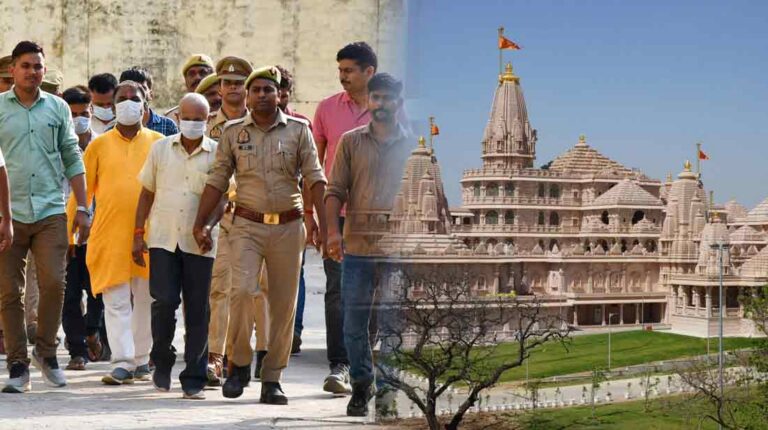
In the ongoing probe into the Ram Mandir donation embezzlement case, eight persons named in the FIR were arrested by the police on Friday morning (26th June). The arrestees have been identified as Avinash Shukla, Anukalp Mishra, Lavkush Mishra, Manish Kumar Yadav, Karunesh Pandey, Ramashankar Mishra, Subhash Srivastava and Ramshankar Yadav alias Tinnu. The accused have been remanded to judicial custody till Monday and will be produced before the Special Court under the Prevention of Corruption Act on that day, as the court was not sitting today.
All of them were involved in the process of counting, sorting and bundling cash and valuables received as donations at the temple. A total of ₹79,85,493 has been recovered from them, except from Subhash Srivastava, as confirmed by the police and prosecution officials. The arrests come a day after an FIR was registered under Sections 306, 316(5), 317(4), 317(5), 61, and 3(5) of BNS following directions from the Uttar Pradesh government.
The FIR was lodged based on a complaint filed by a member of the Shri Ram Janmabhoomi Teerth Kshetra Trust and the preliminary findings of a three-member Special Investigation Team (SIT) constituted by the Yogi government earlier this month.
Meanwhile, Ram Janmabhoomi Teerth Kshetra Trust general secretary Champat Rai and trustee Anil Mishra resigned from their posts earlier today on moral grounds. However, neither of them has been named in the FIR. Rai initially denied the allegations of theft of donation funds but later welcomed the SIT probe, which led to the arrests.
Let’s take a look at the details of the eight persons arrested in connection with the case:
Ram Shankar Yadav alias Tinnu Yadav– He used to work as the driver of the Trust’s general secretary, Champat Rai. He was also associated with VHP’s Karsevakpuram, who used to count donations. He is a prominent face among all the accused arrested in the case. As per reports, Yadav kept the keys of the donation boxes with him. Yadav reportedly gained influence within the temple’s internal management system because of his proximity to the members of the Trust. According to investigators, Yadav exercised significant control over the security, counting and transportation of donations collected at the temple.
Tinnu Yadav was an autorickshaw driver in Ayodhya who later joined the VHP and became the personal driver of Champat Rai. As per claims, he has amassed properties worth over ₹50 crore by embezzling cash, gold, silver, and diamond offerings of devotees. However, Yadav claims that he had no role in handling the donations, and he purchased the land propetry worth ₹50 crore in 2008 from income generated by driving auto-rickshaws.
Manish Yadav– He is the nephew of Tinnu Yadav and was also involved in the donation counting process. The stolen money was recovered from his house as well.
Ramashankar Mishra, alias Ravi Mishra– He was involved in the donation counting process. He is accused of siphoning off the donation money in coordination with other employees. He was seen taking part in the cash- sorting process on a CCTV camera. Investigators have claimed that Mishra bypassed established financial protocols over an extended period to facilitate the alleged theft. He got his son, Anukalp Mishra, and son-in-law, Lavkush Mishra, involved in the work of handling donation money at the temple.
Anukalp Mishra– He is the son of Ramashankar Mishra and was involved in the work of counting donations. Anukalp Mishra is also a relative of Trustee Anil Mishra and brother-in-law of co-accused Lavkush Mishra. He is a resident of Basawan village in Ayodhya’s Milkipur area. Police recovered stolen money from his residence.
Lavkush Mishra– He is the son-in-law of Ramashankar Mishra and was also involved in the process of counting donation money. The allegation against him is that he and Anukalp Mishra were actively involved in siphoning off funds. His actions were captured on CCTV footage, and around ₹12 lakh was also recovered from his house.
Avinash Shukla– He worked as an attendant of the temple and was part of a team responsible for handling and counting cash and valuables received as offerings. An amount of ₹5 lakh was recovered from his bank account.
Subhash Shrivastava– He is a former bank employee who was in charge of the cash-counting staff. He was entrusted with supervising the entire donation counting process due to his banking background.
Karunesh Pandey– He was part of a team that handled the donations. He is accused of manipulating financial records related to incoming donations.
Among the 8 accused, two are linked to Champat Rai, who resigned as the General Secretary of the trust. They are Rai’s driver Ram Shankar Yadav alias Tinnu Yadav, and his nephew Manish Yadav. On the other hand, three accused are linked to trust member Anil Mishra, who also resigned today. They are Ramashankar Mishra, his son Anukalp Mishra and son-in-law Lavkush Mishra. This means 5 out of 8 accused are linked to the two members of the Shri Ram Janmabhoomi Teerth Kshetra Trust.
As per reports, the theft was discovered after the Mandir committee installed hidden cameras in the area used to count and arrange cash after discrepancies were found between cash received at donation boxes and cash deposited at the bank. The hidden camera footage showed that the accused were standing in front of the regular CCTV cameras while pocketing some of the cash while handling the money. Sometimes they also inserted extra notes in bundles, and took out the extra notes on the way to the bank.
Apart from cash, some jewellery donated by devotees was also stolen by the accused staff members. However, claims that they also stole 200 kg of silver donated to the Mandir were found to be baseless. The tota
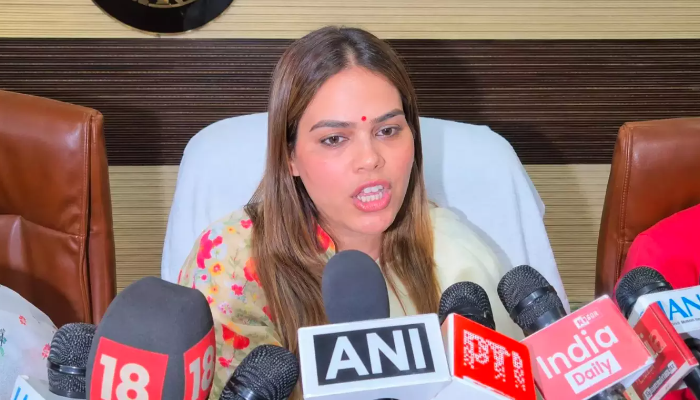
A fresh controversy has erupted revolving around social media influencer and activist Nazia Elahi Khan. She has been accused of making objectionable statements about Prophet Muhammad and his third wife Aisha during a podcast hosted by Divya Singh. The video went viral on social media and soon triggered agitations, legal complaints and demands of strict action against her by the Muslim community, its religious leaders and outfits.
Nazia has been declared “Gustakhe Rasool,” someone who disrespects Islamic prophet, by them and is being subjected to character assassination, vile abuses and death threats, including beheadings under the guise of “blasphemy.”
The agitation in Kolkata
Large Muslims mobs were observed on the streets of Kolkata, raising religious and inflammatory slogans and swarming to multiple police stations to file complaints against the 41-year-old influencer in various areas. Similar incidents occurred in Kasai Basti of Narkeldanga, where numerous members of the community, accompanied by the clerics of local mosques went to the police station and a zero First Information Report (FIR) was lodged.
They also protested and demanded her immediate arrest. They asserted that the cops assured them that all details will be collected from other police stations and an inquiry is going to be initiated at Lalbazar, headquarters of the Kolkata Police. The demonstrators threatened a wider agitation if the authorities fail to take action against her.
A huge crowd of Muslims gathered outside Narkeldanga Police Station in Kolkata to register an FIR against BJP supporter Nazia Elahi Khan for alleged Gustakh-e-Rasool If they just wanted to file a complaint, a single person could have done it this is pure muscle flexing pic.twitter.com/e5sKwYrv0B
— Hindavi Swarajya(Bengali Hindu) (@harcoresanatani) June 25, 2026
Another complaint was submitted by Congress leader Rukhsana Begum at Narkeldanga police station who was accompanied by several of her fellow believers. She referred to Nazia as a pig-faced woman and wanted her to be executed. Afterwards, she appealed for the latter’s arrest and the harshest punishment to make an example out of her.
Begum insisted that Muslims are being unfairly targeted. She insisted that Nazia should be expelled from the BJP and then accused the government of exploiting her as a tool for its political agenda. Begum argued that she is using her Muslim identity to gain money and recognition, aware that the community is generally accommodating while Hindus would not accept her.
Similar remarks were made by others, trying to tarnish Nazia’s reputation amid persist calls to apprehend her. The crowd also shouted Islamic slogans in the name of protest.
Members of the Muslim community led by clerics likewise reached Shibpur police station in Howrah. They asserted that stringent measures must be taken against Nazia to maintain communal harmony and peace, as she insulted Prophet Muhammad and his wife, who is revered as their mother, thereby violating religious sentiments. She was also told to hold her tongue.
They added that Nazia is from Kolkata and hence a campaign has been commenced to file complaints against Nazia in different police stations of West Bengal to ensure she is strongly penalised and does not dare to utter such statements in the future.
A group of Muslims arrived at the Ekbalpore police station to register an FIR against Nazia stated that they have been promised action against her after a report was forwarded to the cyber cell. They charged that she consistently voices disparaging comments against Islam, but this time she has gone too far and pronounced her as “Gustakhe Rasool,” demanding severe penalty.
Furthermore, they criticised Prime Minister Narendra Modi and Bengal cabinet minister Dilip Ghosh, expressing that the two have made anti-Muslim remarks. Afterwards, late Rahat Indori’s controversial poetry was referenced to contend that India does not belong to any single individual or community, and Muslims, like the tyrant Tipu Sultan and Veer Abdul Hamid have sacrificed their lives for the nation.
The complainants expressed that a straightforward comment is considered “hate speech” if the person is Muslim but ignored otherwise. They then moaned about how their “tolerant community” has been quietly abiding by the rules and regulations before threatening, “Do not assume you can act as you wish simply because we are treating you with leniency.”
Muslims hailing from separate neighbourhoods of Kolkata converged at their respective police stations as part of a purposeful drive against Nazia for alleged blasphemy.
Similar complaints in other parts of India
The complaints and aggressive demonstrations were not restricted to any single state but across the country. The representatives of the notorious “Raza Academy” went to the Pydhonie police station in Mumbai, asking for legal action against Nazia.
“Gustakhe Nabi ki ek hi saza, sar tan se juda” (Those who speak against Prophet Muhammad must be beheaded) were raised inside Kalyan’s Bazarpeth Police Station in Thane during a protest by members of the Muslim community including women.
Beheading calls inside a police station but why?
The video is from Bazarpeth Police Station, Kalyan, Thane, Maharashtra.
While protesting against Nazia Elahi, women are shouting, “Gustakh-e-Nabi ki ek hi saza, sar tan se juda.”
The Meghwadi Police Station in Mumbai received a complaint from a group of Muslim women who called upon others, including politicians irrespective of their affiliations, to follow suit if they hold any love for Prophet Muhammad.
Adnan Ansari, a resident of Bhiwandi submitted an FIR at the Shanti Nagar police station after consulting his co-religionists. The JJ Marg police station in Mumbai also recorded a zero FIR, which was scheduled to be sent to Bengal for probe.
Muslims flooded the streets of Uttar Pradesh’s Moradabad carrying posters against Nazia and chanting slogans. They announced that the situation will only deteriorate as the community will not rest until their demands fulfilled. They gave a memorandum to the authorities asking for an FIR and her arrest. Nazia was instructed to apologise and retract her statements or face consequences, outlining, “We can endure anything but any insult to our Prophet.”
Muslim organisations along with AIMIM (All India Majlis-e-Ittehadul Muslimeen) conducted a demonstration in Baheri of Bareilly and presented a memorandum addressed to the President at the Tehsil complex, pushing for Nazia’s arrest and an FIR against her.
A group of attorneys in Prayagraj delivered a memorandum for PM Modi via the District Magistrate, pressing for legal action in the issue. According to the document, Nazia’s comments have upset Muslims and, if overlooked, could have an impact on communal harmony.
A throng of Muslims arrived at the IS Sadan Police Station in Hyderabad. They hit out at her with derogatory terms such as pig and accused her of trying to disturb the harmonious atmosphere in India.
A memorandum addressed to the President was handed over to the district administration on behalf of the Muslim community making similar demands in Madhya Pradesh’s Rewa.
What is brewing behind the protests in Bengal
The Islamists in Bengal are facing a significant crisis following the removal of All India Trinamool Congress (AITC or TMC) from power in last month’s election, attributed to their prolonged history of appeasement, corruption and discriminatory policies against Hindus. Former chief minister Mamata Banerjee went so far as to declare that she caters to the community due to their electoral support, even expressing her willingness to accept “a kick from a cow that gives milk.” With the TMC’s loss, the Islamists have effectively lost their access to political power in the state.
The TMC government slapped limitations on Hindu festivals, including Durga Puja, to facilitate Muslim processions, closed temples, paid less salary to Hindu priests than Muslim clerics, refused to act against rampant Muslim crowds attacking Hindus and whatnot, all the while relegating Hindus to the status of second-class citizens in their homeland.
Mamata openly pandered to her favorite community, which included those who entered the state illegally from Bangladesh. The TMC clashed with the centre over matters of national security and interests such as Citizenship Amendment Act (CAA) and National Register of Citizens (NRC), advocating for the intruders while reflecting animosity towards Hindus. Leaders of her party even bragged about how they assisted those who crossed the border unlawfully.
The TMC fostered and supported criminals such as Sheikh Shahjahan and Jahangir Khan, who enjoyed a free rein and terrorised the Hindu community. The fanatics were shielded while their vulnerable victims, including women, were persecuted. Mamata ingratiated herself with the Muslims to such an extent that she threatened how Hindus would be wiped out within moments by them if she were to be thrown out of power.
The TMC regime was absolutely fixated on prioritising Muslim appeasement while Hindus suffered in silence. However, the era of pampering, influence and preferential advantage has come to an end after the downfall of that government. Now, it is the time for equal treatment for all citizens without any bias.
These are undoubtedly very hard times for both TMC and those who have grown accustomed to mollycoddling over the years and are reluctant to relinquish their earlier position of political clout and favouritism.
Of course, the constitutional right to protest against Nazia and her statements is afforded to Muslims just like any other Indian citizen. Nevertheless, the concerted effort to lodge complaints against her in multiple police stations with major turnouts points to a calculated move to restore their lost political ground in the state.
The Islamist leaders are employing this pressure tactic to showcase that they continue to wield the authority awarded to them by the Mamata government for her vote bank politics, even under the saffron government. Essentially, they are desperate to reclaim their political status and convey that a change in government will not alter their dominance as a community in the state.
Violence and street power veiled in constant victimhood
India has been an unfortunate witness to how protests, which commence in response to purported blasphemy and wounded religious feelings rapidly transform into a disturbing display of violence time and again. A particularly notable example occurred when Muslims mobs were unleashed following former BJP spokesperson Nupur Sharma‘s factual response to an extremely demeaning anti-Hindu remark made by fellow panellist Tasleem Ahmed Rehmani during a television debate.
This incident resulted in the brutal murders of Hindu men, including Kanhaiya Lal, who was beheaded by Islamists merely for supporting her. Meanwhile, Sharma was forced to quit her public life and spends her days under continuous protection due to the threats made on her life, after the dog-whistling by AltNews’s Mohammad Zubair.
“Gustakhe Nabi ki ek hi saza, sar tan se juda” echoed in the streets at that time as jihadis hunted for her blood and ultimately claimed lives of innocent Hindus to fulfill their monstrous cravings.
The strategy is the same, whether it pertains to a Facebook post in Karnataka, a poster in Uttar Pradesh or a rally against Mughal despot Aurangzeb in Nagpur. Islamists illustrate a conspicuous pattern of hiding behind the allegations of “blasphemy” after denigrating non-Muslims and their faith as well as engineering unrest.
Their overtly fragile religious sensibilities are always on edge, prepared to be affronted at the slightest incitement and even when none exists, which subsequently leads to escalating tensions as fundamentalists wreak havoc in the country.
This is the reason hundreds and thousands of them gather at a police station for just a complaint to serve as an audacious exhibition and reminder of their strength and volatile antics. The primary aim is to intimidate and bend the rules through numbers while showcasing street power. The strategy is also utilised against the opposing party, including those in uniform, after committing a crime or wrongdoing.
Therefore, even a genuine reaction to their relentless attacks or mockery of other belief systems, especially Hinduism, can jeopardise the life and safety of the person.
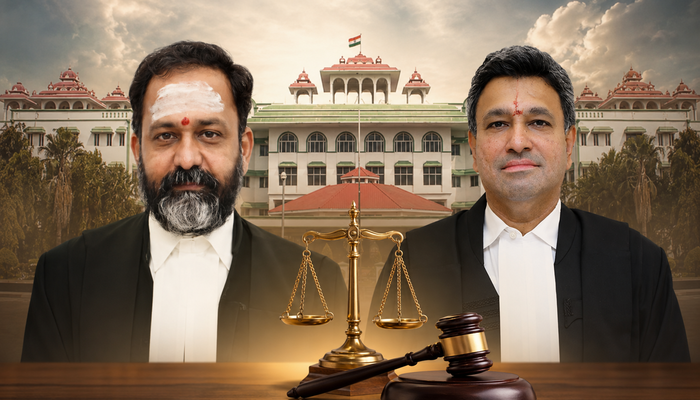
The Madurai Bench of the Madras High Court recently struck down a Tamil Nadu government order that allowed a Hindu man from Backwards Classes, Most Backwards Classes, Denotified Communities, or Scheduled Castes to avail reservation benefits even after converting to Islam. A Division Bench of Justices GR Swaminathan and PB Balaji rebuked the Tamil Nadu government for passing an unconstitutional and arbitrary order with the intention of overriding the law as laid down by a previous judicial decision.
The decision was passed by the High Court on Thursday (25th June) in a petition seeking a writ of Mandamus filed by a Muslim convert named Sameer Ahamed (formerly Paramasivam). The man was born into a Hindu family in the Thoothukudi district in April 1993 and had converted to Islam in September 2015. He was issued a certificate of conversion by Sunnath Jamath, Kayathar. Subsequently, he filed an application before the Tahsildar, Kayathar, seeking to be certified as ‘Muslim Lebbai’, a community of Muslims eligible for reservation benefits in the state. However, his application was rejected, prompting him to file a writ petition before the High Court.
The petitioner relied on a Tamil Nadu government order dated March 3, 2024, which allowed a convert to Islam from Backward Classes (BCs), Most Backward Classes (MBCs), Denotified Communities (DNCs), or Scheduled Castes (SCs) to be treated as BC (Muslim) for availing the benefit of reservation. As per the order, such a convert could avail the reservation benefits meant after obtaining a community certificate certifying that he belongs to either of the notified communities. In other words, the government order provided that converts who enjoyed reservation benefits before conversion to Islam can continue to avail reservation benefits after conversion.
So, the broader legal and constitutional question for consideration before the High Court was whether a person belonging to a Backward community can claim reservation benefits available to specific notified Backward Class Muslim communities in Tamil Nadu upon conversion to Islam. As pointed out by the High Court, the petitioner’s counsel admitted that the petition filed in 2022 became legally arguable only after the 2024 government order. The High Court, therefore, examined the constitutional validity of the government order.
After examining the record of the case and the judicial precedents in detail, the High Court concluded that the Tamil Nadu government order was unconstitutional. The court said that the judicial position was clear that a reservation cannot be granted merely based on religion because the Constitution permits affirmative action only for socially and educationally backward classes and specified constitutional categories.
A Hindu converting to Islam becomes just a ‘Mussalman’: HC
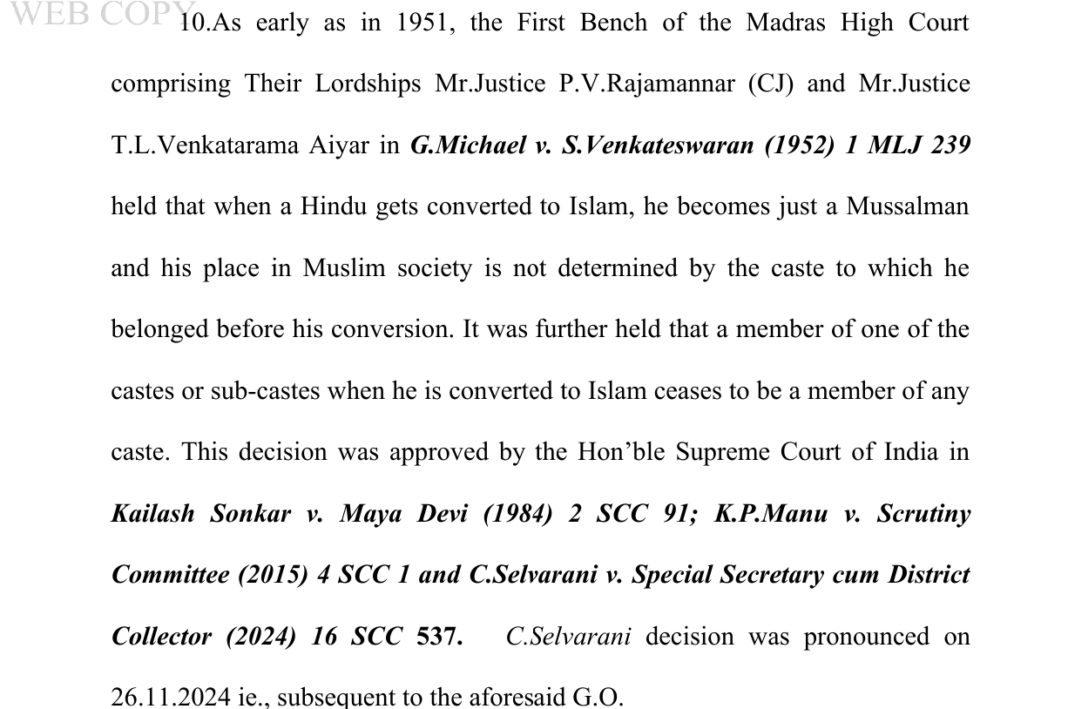
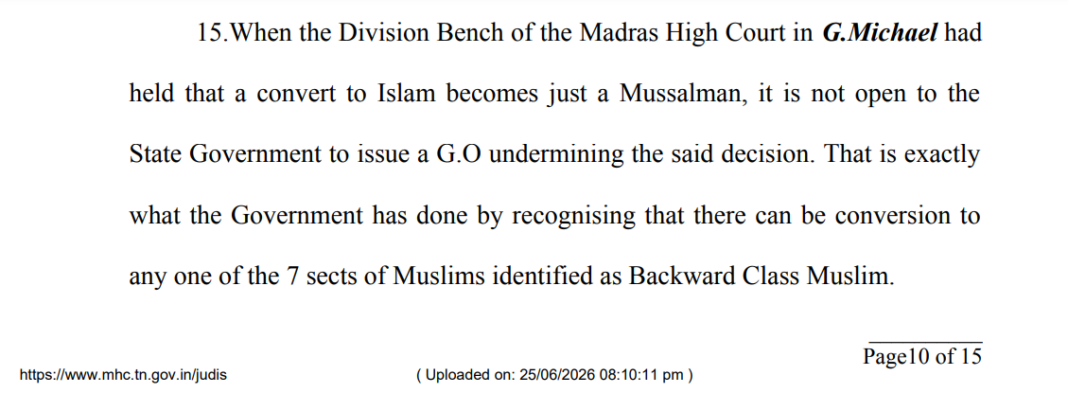
Citing judicial precedents, the court said that if a person converts to Islam, he becomes a Muslim, and his place in Muslim society is not determined by the caste to which he belonged before his conversion. “…when a Hindu gets converted to Islam, he becomes just a Mussalman and his place in Muslim society is not determined by the caste to which he belonged before his conversion. It was further held that a member of one of the castes or sub-castes, when he is converted to Islam, ceases to be a member of any caste,” the High Court cited a precedent.
The High Court explained that the seven Muslim categories recognised for reservation are historically identified communities and membership in those communities is ordinarily determined by birth, not conversion. “As a corollary, we hold that a convert to Islam cannot claim the status of Backward Class Muslim. He is only a Muslim, and that’s all there is to it,” the High Court held.
The order was passed to give reservation benefits to converts to Islam: HC
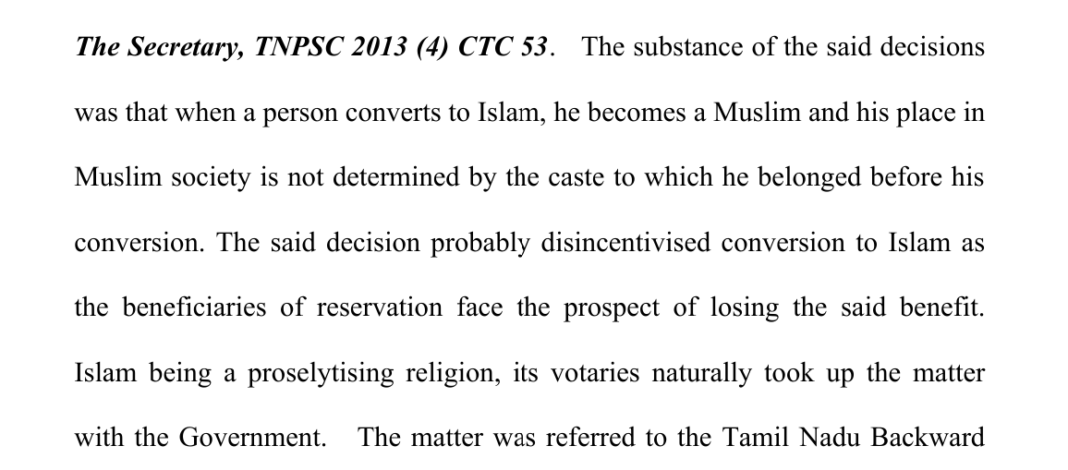
Regarding the Tamil Nadu government order, the Division Bench observed that the Tamil Nadu government came up with the order just to override the judicial precedents prohibiting reservation benefits for converts to Islam, as they disincentivised conversion to Islam. This would not have sat right with the Muslim community as Islam is a proselytising religion, and thus the government passed the order to extend reservation benefits for converts to Islam.
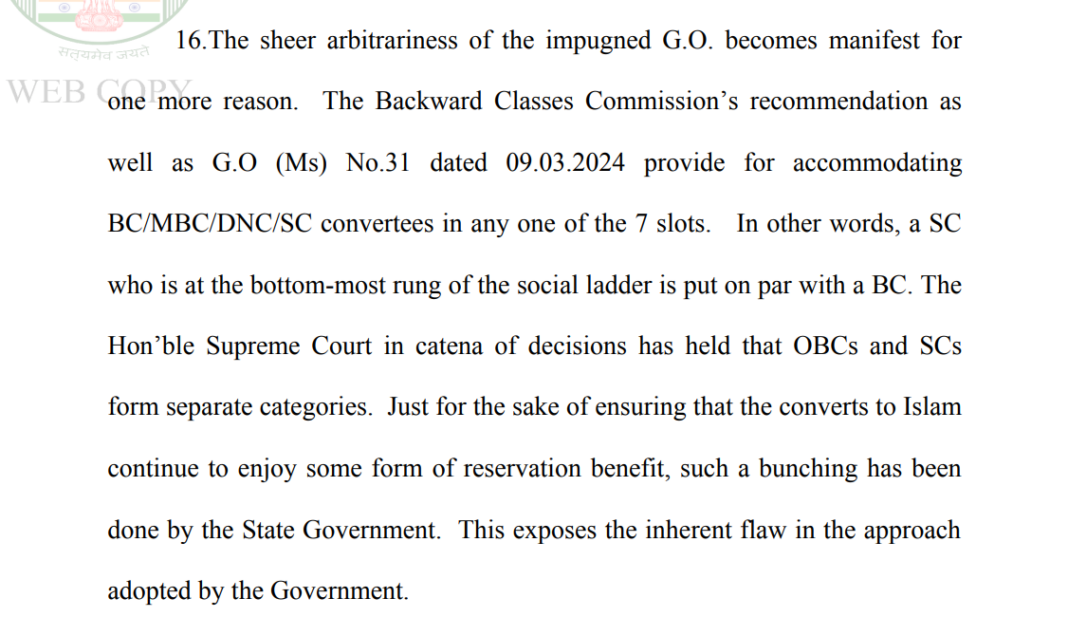
Criticising the government order, the court said that it grouped persons belonging to BCs, MBCs, DNCs, and SCs into a single Muslim Backward Community upon conversion, disregarding the fact that these categories are given distinct constitutional treatment for sociological and historical reasons.
“In other words, a SC who is at the bottom-most rung of the social ladder is put on par with a BC. The Hon’ble Supreme Court, in a catena of decisions, has held that OBCs and SCs form separate categories. Just for the sake of ensuring that the converts to Islam continue to enjoy some form of reservation benefit, such a bunching has been done by the State Government. This exposes the inherent flaw in the approach adopted by the Government,” the High Court sternly remarked. The court pointed out that the order was passed merely for the purpose of extending reservation benefits for converts to Islam.
The government order was meant to undo judicial precedent: HC
Striking at the validity of the government order, the High Court said that the legislature cannot declare a binding judicial precedent void or ineffective. “The legislature cannot declare any decision of a court of law to be void or of no effect. A court’s decision must always bind unless the conditions on which it is based or so fundamentally altered that the decision could not have been given in the altered circumstances,” the High Court stated.
The court further reasoned that the executive does not have the privilege to pass an order overriding a final judicial decision. “While the legislature has the power and competence to make a validating law, the executive has no such privilege. It can never go against the final judgment of a court,” it added.
Muslim preachers have been attracting converts by claiming that Islam is egalitarian: HC
The Division Bench further noted that the government order was not only unconstitutional and arbitrary but also opposed to the ideology of Islam. The court noted that preachers of Islam have long effected conversions by claiming that their religion is free from hierarchies and is egalitarian, unlike Hinduism. Considering this, the government order goes against the values and principles of Islam.
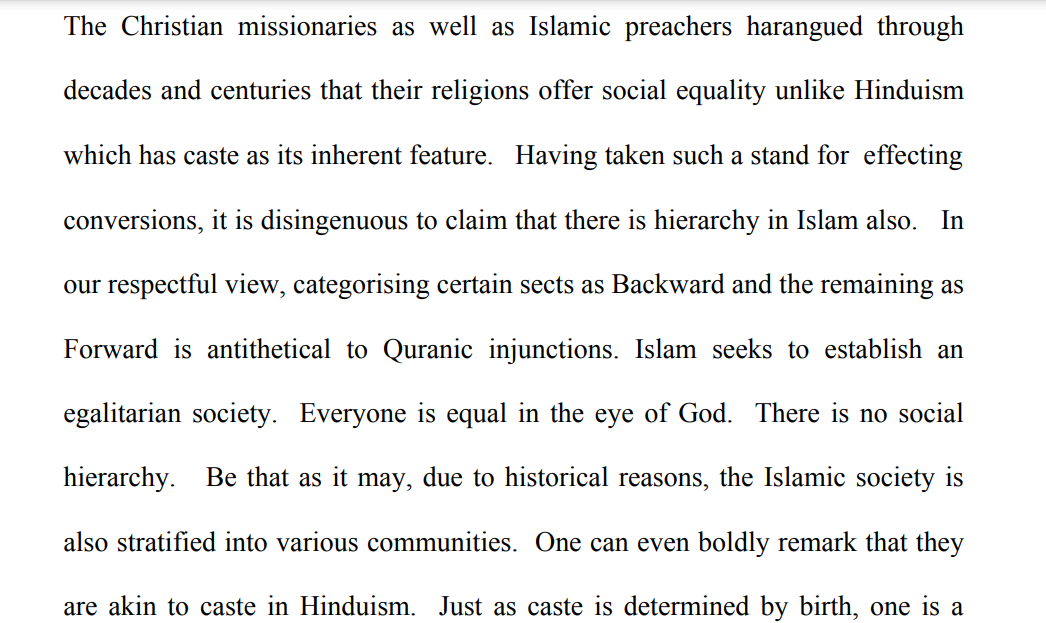
“The Christian missionaries, as well as Islamic preachers, harangued through decades and centuries that their religions offer social equality unlike Hinduism, which has caste as its inherent feature. Having taken such a stand for effecting conversions, it is disingenuous to claim that there is hierarchy in Islam also. In our respectful view, categorising certain sects as Backward and the remaining as Forward is antithetical to Quranic injunctions. Islam seeks to establish an egalitarian society,” the court stated.
“We have no option but to conclude that, only to undo the judgments of this Court, has the Government come out with an innovation that is not only unconstitutional but also un-Islamic,” the High Court said, striking down the government order and upholding the order of the Tahsildar, Kayathar.
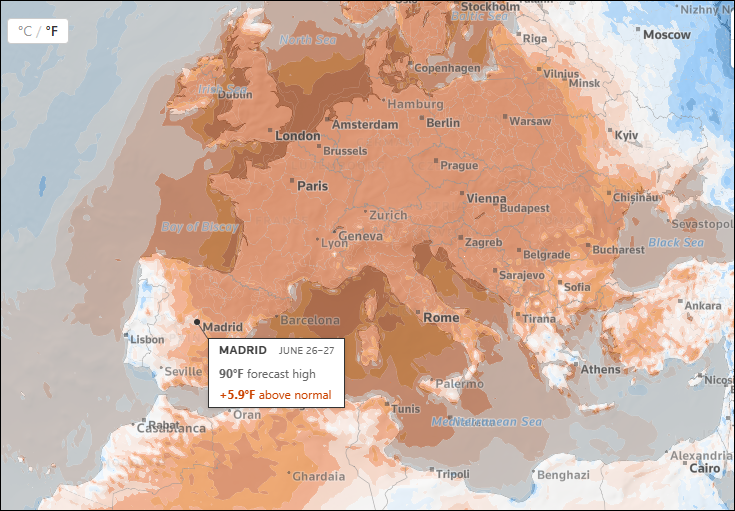
Europe is experiencing a severe heatwave with temperatures exceeding 40°C in some countries. Since 17th June, a more intense phase began due to a persistent Omega block weather pattern trapping hot air. However, Europeans are finding it difficult to seek relief from the scorching heat through air conditioning.
Europe grapples with scorching heatwaves
In France’s Pissos, around 44.3 °C (111.7°F) was recorded on 23rd June. This was the hottest day since records began in 1947. Meanwhile, Paris hit a June record of 40.9°C. In Spain and the United Kingdom, temperature record highs. In parts of Italy, Germany, Belgium, and elsewhere in Europe, temperatures are exceeding 38–40°C.
The impact of the Omega block is so severe that around 282 people have lost their lives, with 209 deaths reported in Spain, 58 in France, and around 15 in the UK. There are reports of additional heat-related incidents, including cardiac arrests.
At least 40 people have drowned in France while swimming in unsupervised areas to seek relief from a heatwave gripping the country and other parts of Europe. Forecasters warn that the extreme heat is likely to persist through the week.
The heatwave has led to an increase in emergency visits, leaving children and the elderly the most affected.
source: Reuters
In France and some other European countries, schools have been either closed or had their timings adjusted to avoid peak daytime heat. Thousands of households in France are suffering power outages due to high demand and infrastructure stress.
In the UK, railway services have been suspended in several places as intense heat has deformed the rail tracks. In areas where the services are still running, trains are running slowly due to the effects of heat on rails, overhead power cables, signalling etc. Extreme heat cause rails to expand and buckle, and as a result, trains have to run slowly on such tracks.
People have been advised to stay indoors if travelling is not necessary, and have been advised to travel before midday if possible. Consumption and sale of alcohol in public has been banned in Paris due to the heatwave, to ease pressure on the city’s hospitals.
With rising temperatures, electricity prices are also increasing. However, the obvious resort to relief in peak summers, Air Conditioners are not that easily available in Europe.
EU regulations, high costs and a low historical usage: Why air conditioners remain a luxury in Europe
Historically, Europe has had a lower air conditioning penetration, with only 20% of European households having AC units. Europe has usually witnessed milder temperatures in what they describe as peak summer heatwaves compared to other parts of the world. In the UK, if the temperature reaches or exceeds 26°C, the authorities declare a heatwave and take necessary measures. In South Asia, a temperature of 26°C is considered a rather pleasant day.
Even to tackle milder summers, Europe had in place effective passive cooling methods, ranging from thick walls, shutters, small windows, especially in southern Europe, natural ventilation, etc.
In Europe, buildings were never designed with a view to tackling extreme heat, since the region hardly ever witnessed extreme heat. There was never really a need for mechanical cooling. The houses on the continent are designed to combat intense winter, not summer. Most houses in European nations are connected to centralised heating systems, and they never felt the need for a cooling system. During the summer, fans are generally effective.
Moreover, the high electricity prices make running ACs expensive; thus, Europeans usually avoided air conditioning until recently. However, with climate change amplifying the frequency, intensity, and duration of heatwaves in Europe, the region is warming faster than the global average.
With European summers moving from being milder to harsher, the cultural view of ACs is changing in the region from luxury to necessity.
Brian Motherway, head of the Office of Energy Efficiency and Inclusive Transitions at the International Energy Agency (IEA), told CNN, “In Europe… we simply don’t have the tradition of air conditioning… because up to relatively recently, it hasn’t been a major need. We haven’t been in the habit … of thinking about how we stay cool in the summer. It really is a relatively recent phenomenon.”
Although the European Union rules do not ban the purchase of air conditioners, the revised F-Gas Regulation, which came into effect in 2024, makes AC purchases a bit difficult in the region where governments already view air conditioning with caution.
The EU’s F-Gas regulation, which heavily taxes or bans refrigerants with high global warming potential, causes shortages of AC units.
The European Union has imposed strict mandates to phase down hydrofluorocarbons (HFCs) by 95% by 2050. The revised F-Gas regulations ban the sale and installation of certain domestic systems and restrict refrigerants like R-410A and R-134a, due to their high climate-warming impact. This requires the HVAC industry to shift to climate-friendly alternatives.
This has temporarily constrained supply and driven up prices. Although compliant models using low-GWP alternatives like hydrocarbon R290/propane, CO₂, or certain HFOs are already on the market and scaling up, it will take time to change the cultural view of ACs, and since demand is high and supply is limited, prices are higher.
The EU countries have stricter rules on minimum efficiency (SEER/SCOP), standby power limits, and design requirements. Only compliant units can be placed on the EU market, directly restricting inefficient or noisy models available for domestic installation. Cheaper, inefficient models cannot be sold in the zone.
Reports say that in the UK, the authorities also reject applications to install AC based on the visual appearance of the outdoor condenser unit, especially in conservation areas or on listed buildings. While a separate planning approval is not required for installing domestic AC units in UK in general, the city council may not allow certain AC units considering factors such as visual impact, effect on neighbours, noise, environmental considerations and overall character of the area.
If the noise generated by the outdoor unit disturbs neighbours, authorities may order relocation of the unit or noise mitigation measures. In London, the visual impact factor is important, and if it is considered that the impact is overwhelming, the authorities may not allow it.
European nations insist on passive cooling, and building designs must incorporate measures to cool the houses through better insulation, shading, and ventilation, without using ACs. What further adds to the troubles is Europe’s pledge to become “climate neutral” by 2050. The installation of AC units on a mass scale would prevent the fulfilment of Europe’s self-imposed imperative.
Overall, building and planning rules, high AC purchase, installation and electricity bills, demand spikes, and grid strains are exacerbating Europe’s heatwave crisis.
However, AC sales have increased in the region despite these hurdles. And as Europe is not a traditional AC market, Asian AC manufacturers are taking most of the benefits of the new high demand in the region. Korean, Japanese and Chinese AC makers are enjoying a boom in sales in Europe, and have increased their shipments.
Two powerful earthquakes rocked Venezuela on Wednesday (24th June), causing massive destruction in Caracas and the coastal state of La Guaira. The earthquakes measuring 7.2 and 7.5 were followed by at least 20 aftershocks ranging between 4.9 and 6.4 magnitude. The jolts triggered tsunami warnings across parts of the Caribbean.
Horrifying visuals of the earthquakes captured by people stuck in the calamity emerged on social media, showing swarms of people running around in panic to save their lives.
Inside a shopping mall at the exact moment the powerful 7.1 and 7.5 magnitude earthquakes struck Venezuela pic.twitter.com/hWhO4Dh3hh
The moments of earthquakes showing people running for safety from the building collapsing around them seemed straight out of a movie.
Video captured the first moments of two powerful earthquakes striking Venezuela, triggering panic as people fled for safety as buildings collapsed around them. pic.twitter.com/ZadZ6VNrNo
The scale of damage and devastation caused by the earthquakes could be guessed from the images of high-rise buildings that had collapsed and turned into debris.
WATCH: Magnitude 7.1 earthquake destroys apartment building in Caracas, Venezuela. Number of casualties unknown. pic.twitter.com/eTVroUH5St
While around 100,000 people are feared dead after the earthquakes, which are said to be the deadliest earthquakes of the century, many were saved by Google’s Android Earthquake Alerts System, which sent a warning to people’s Android phones after sensing seismic activity.
Some users on X said that they received Google’s warning moments before the earthquakes struck the South American country. The system detected early signs of the earthquakes and alerted people before the major tremors arrived.
Recibí mi primera alerta de sismo en el móvil. Magnitud 6.2.
Lo interesante: la alerta llegó porque mi teléfono forma parte de un sismógrafo distribuido global.
Android Earthquake Alerts usa el acelerómetro como sensor sísmico de bajo costo. pic.twitter.com/p8Xq4VNtup
— Jesús Morán | AI Infra (@jamoran1356) June 24, 2026
What is Google’s Android Earthquake Alerts System?
Google’s Android Earthquake Alerts System is an example of how modern technology has evolved to not only assist humans but also save lives by strengthening disaster preparedness. The system relies on motion sensors built into Android phones for detecting the slightest ground vibrations.
Modern Android phones are fitted with accelerometers, which support the phone’s screen rotation system. But an accelerometer has another important use, which is to detect and measure vibrations. Android phones with accelerometers act as a distributed sensing network for the Android Earthquake Alerts System to detect seismic waves, which constitute an earthquake.
To estimate an upcoming earthquake, the system initially detects P-waves (Primary waves), which are weaker seismic waves and travel faster than the S-waves, which travel slower but are capable of causing damage. If the system detects P-wave signals from enough Android phones in an area, it combines the signals to assess the earthquake’s location and magnitude, and sends alerts to nearby users before the damage-causing S-waves arrive. The signals from Android phones travel at the speed of light, which allows the system to gather signals from phones in the area and estimate an earthquake.
This early detection of P-waves gives a tiny but crucial window before the disaster hits that can save lives. This is how several Android users in Venezuela received warning messages from the Android Earthquake Alerts System before the earthquakes hit the region.
A similar alert was sent by the Android Earthquake Alerts System to users during an earthquake that hit India’s northeastern region in September last year. The earthquake measured around 5.8 on the Richter Scale and had its epicentre near Udalguri town in Assam.
Around 2 billion Android phones are part of this network, making it the largest distributed seismograph (earthquake detector) in the world. This system marks a key shift taking place in disaster management from post-disaster measures to pre-disaster measures.
The Islamo-leftist ideological circles have always antagonised Hindus overtly or in subtle ways. From villainising the army for its anti-terrorist operations and heavy presence in Kashmir historically to mindlessly alleging pro-Hindu politicisation, Islamo-leftists have consistently targeted the Indian Armed Forces for not fully adhering to their idea of ‘secularism’. In a fresh such rant, leftist propaganda outlet The Wire platformed a ‘strategic analyst’, Ali Ahmed, who ‘warned’ the Indian Army over its supposed “newfound love for Hindi and Hindutva”.
The Wire claims that the Indian Army is undergoing Hindisation and Hinduisation driven by Hindutva: Ali Ahmed concocts 2H to vent out his inner 2H—Hindu hate
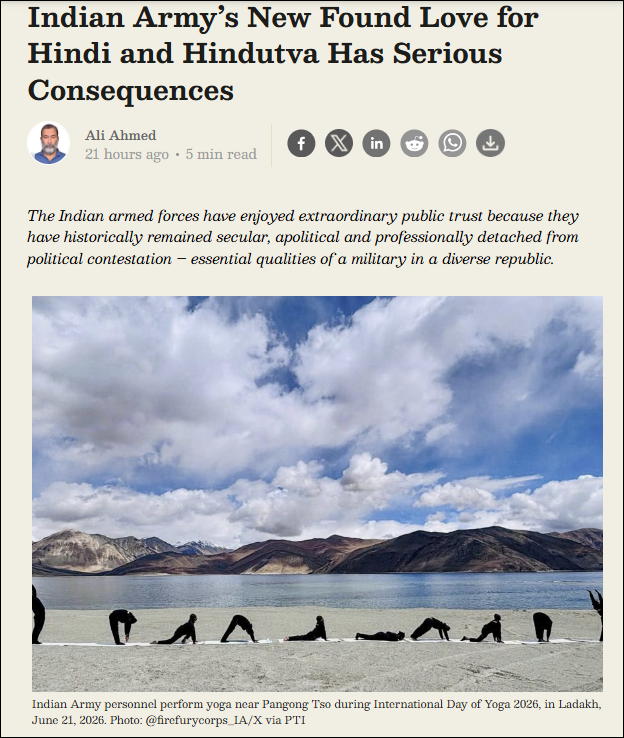
Published on 24th June, the article titled, “Indian Army’s New Found Love for Hindi and Hindutva Has Serious Consequences”, framed the use of Hindi language by the Indian Army in its communications and institutions, as a “sign of political control over the military.”
Author Ali Ahmed claimed that the supposed self-imposition of Hindi in the Indian Army is happening alongside the complementary Hinduisation agenda.
Amusingly, Ali Ahmed cited an op-ed written by Lieutenant General Harcharanjit Singh Panag (retired), who claimed that the Indian Armed Forces enjoy extraordinary public trust because “they have historically remained secular, apolitical and professionally detached from political contestation.”
While the professionalism, detachment from political contestation of the Indian Armed Forces, has been appreciated by the Indian people, it is not ‘secular’ in the sense Islamo-leftists describe secularism. For this Hinduphobic lot, the peak of secularism is when non-Hindu, particularly Islamic, beliefs, traditions, or symbolism are inserted in a public institution or government policy. Insertion of Hindu religiosity in any form into defence or political entities is declared as outright death of secularism and democracy, crushing of ‘minorities’ and all that jazz.
Not to forget, HS Panag is the same ex-army official who, back in 2019, endorsed a coup against the government of India if Prime Minister Narendra Modi was elected to power again.
Panag’s disdain for Modi and Hindutva, especially in the context of the Indian Army’s functioning, has found expression online on many occasions. Back in September 2021, he posted a video of the Army Band playing Hindu Aarti music during the Beating Retreat ceremony with a sarcastic and misleading title insinuating that the Modi government is imposing Hindu religious traditions in Army events, even as the Arti tradition was way older.
Coming back to the “2H in Indian Army” propaganda by Ali Ahmed. The first H, Hindi, has not been recently imposed by or ordered to be aggressively incorporated into the Indian Army’s official communications, parlance, in academies and memorials. Hindi in Devanagari script is the official language of the Indian Union under Article 343 of the Constitution, although the continued use of English is also authorised for all official purposes.
Hindi was introduced in the Armed Forces as the medium of instruction or for official purposes right after India achieved independence from British Colonial rule. From 1951, the Indian government, not led by a Hindutva-subscribing party, mandated Hindi in the Devanagari script across the services. In fact, officers had to pass Hindi tests and ranks learned the Devanagari script.
From March 1951 onwards, the Army Education Corps Centre and School started special courses to teach Hindi to all Corps personnel and unit instructors.
Back in 1952, an expert committee comprising officers from the he Indian Army, Navy, and Air Force, and noted educationists was formed as part of the decision to introduce Hindi as the official language.
The embrace of Hindi, the language spoken and written by a large section of Indians, in a linguistically diverse India, was a part of deliberate Indianisation and national integration to shake off British colonial influence, where English dominated.
The Modi government has indeed taken several measures to shed colonial-era traditions and symbolism in the Armed Forces; however, the so-called Hindisation of the Indian Army is not a new, Hindutva-driven policy shift, as Ali Ahmed and The Wire portray it as.
Hindi is used as a working language in most units for communication, training, and cohesion among soldiers, who hail from diverse linguistic backgrounds. This does not mean that the Indian Army hates languages other than Hindi or bans communication in regional languages altogether. The Hindi language is a link language, essentially a unifier.
The policy of using Hindi as a unifying language predates the current Modi-led ruling dispensation by decades. The use of Hindi has not only simplified the functioning of the armed forces but also strengthened unity.
Some obvious questions arise here: Why do Islamo-leftists oppose the use of Hindi in the Indian Armed Forces? What is wrong with Hindisation, even if it is assumed to be a coordinated campaign? Is Hindi not an Indian language? Don’t around 43% of Indians speak Hindi?
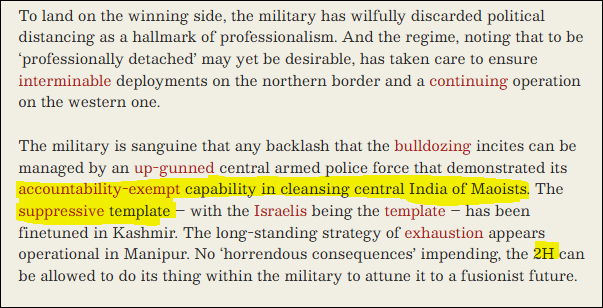
The answers to these questions about one “H” are to be found in the other “H”. The Wire claimed that Hindisation is rooted in Hinduisation, which is the agenda of Hindutva.
This essentially means that the Islamo-leftists view Hindi as a Hindu language, and thus, its use in the armed forces becomes Hinduisation. Hindi is undeniably rooted in the Sanskrit language; Sanskrit is associated with Hinduism, even though not all Hindus, be it in ancient times or modern, spoke Hindi or Sanskrit and still remained Hindus.
Ali Ahmed here played a tried and tested tactic of communalising language to sow divisions. This “Hindi is a Hindu language, Urdu is a Muslim language” tactic finds its roots in the 19th-20th century Hindi-Urdu controversy.
In the 19th century, the Muslim elite in the North-Western Provinces, especially Sir Syed Ahmed Khan, the one who coined the two-nation theory that resulted in the bloodied partition of India on Islamic lines, began opposing Hindi/Devanagari in courts and administration, pushing for Urdu with the Perso-Arabic script (Nastaliq), arguing that Urdu was linked to Muslim identity and the medieval era Muslim rule. The use of Hindi in the Devanagari script in official work was portrayed as a “Hindu” push.
In response, Hindus promoted Hindi in Devanagari with Sanskritised vocabulary as an indigenous and accessible language for the majority community. The Muslim assertion of linguistic superiority added to communal divisions.
The trouble began in 1837, when the British replaced Persian with Urdu written in Nastaliq script as the official vernacular language for courts and lower administration in northern India. Since the existing Muslim-educated elite was familiar with Urdu, the change in language policy suited them.
However, the Hindu-educated elite and growing middle class obviously felt disadvantaged due to little to no familiarity with Urdu in Nastaliq script. While the British policy suited the Muslims of the United Province, even though they were in a lesser population than Hindus, the Hindu community in Varanasi and soon in the entire region rose in resistance. They demanded the replacement of Nastaliq with Devanagari.
By 1867, Syed Ahmed Khan began believing in and propagating the idea that Hindus and Muslims cannot co-exist peacefully and that Muslims need a Muslim-exclusive country.
Although later in 1900, the British colonial government issued an order granting symbolic equal status to both Hindi (Devanagari script) and Urdu (Perso-Arabic script), the issue was never just about languages.
Muslims weaponised Urdu to assert their religious dominance and retain an edge in the administration, while Hindus sought recognition for the language they could read and write. Even MK Gandhi’s secular blend of Hindi and Urdu, which he called Hindustani, could not satiate the conflicting sides.
Before partition, the Muslim leadership communalised languages to advance the two-nation theory. After partition, the Islamic Republic of Pakistan adopted Urdu as their national language as a marker of Muslim identity, even as Punjabi should logically have been its national language, while India adopted Hindi as its official language.
Hindi has its roots in Sanskrit, and in the 19th century, it emerged as a Hindu response to the Muslim erection of Urdu as a part of Muslim identity; however, Hindi is not a Hindu language or an exclusively Hindu language.
North India houses a significant Muslim population, among them, the educated ones can largely speak, read and write in Hindi alongside Urdu, without any imposition. Thus, there is no way Hindi is a Hindu-exclusive language, and its adoption in any institution, be it any state department or the Indian armed forces, does not amount to ‘Hinduisation’.
The Wire also has a problem with the Army Chief Upendra Dwivedi visiting temples.
“The temple visits of General Dwivedi show a conscious lending of an epauleted shoulder to the national reset. It is moot whether this was for personal gains, now that he departs into the sunset. Precedent set, his successor cannot but be expected to conform,” Ali Ahmed wrote.
“However, what if brass hats are instead driven by a sense of their mandate, handed to them tacitly by the regime? What if the military leadership believes that the way to go for the military is to keep step with the pronounced and unmistakable turn in the social and political spheres?” he added.
It is amusing how the same Islamo-leftist lot does not invoke violation of secularism or Islamisation when the army officers perform Namaz in Kashmir as a part of social outreach. Quite conveniently, namaz offering becomes everything about peace and harmony, but the army chief’s visit to Jagannath Temple becomes Hinduisation of Armed Forces, pivot to majoritarianism, and whatnot.
If there was actually a Hindutva-based Hinduisation of armed forces going on, Ali Ahmed, a Muslim, would have been consigned to prison for casting aspersions on the integrity of the sitting army chief and attacking his right to practice his religion and visit a temple.
Unsurprisingly, The Wire article proceeded to attack the Rashtriya Swayamsevak Sangh (RSS), falsely claiming that RSS considers itself synonymous with Hinduism. Ali Ahmed invoked ‘unity in diversity’ to claim that the RSS is pushing for “unity sans diversity”.
Lamenting the BJP’s electoral successes, Ali Ahmed cried, “The military has pragmatically cast the weight of its authority and respect it commands on the side of the majoritarian enterprise. In the secular era, in which democratic alternation between parties was feasible, the military was secular and apolitical. Now, the multifarious idea of India that accompanied the concept of being secular is potentially redundant. With a single party set to dominate even the regional political space, the idea of being apolitical, too, is irrelevant. In an era of one nation, one party, one election, to belabour these two would amount to landing offside the political masters.”
Audaciously, Ali Ahmed has also questioned the Indian military’s apolitical stance and professionalism due to his sheer hatred for the supposedly pro-Hindu ruling dispensation.
The whole point of the word salad Ali Ahmed served in his article is that the Indian Armed Forces, are through its top officials visiting temples, imaginary new found love for Hindi, and ‘embrace’ of Hindutva-driven Hinduisation, is discarding its secular character.
India is unique country, where its modern nation-state character is secular, that too solely because the majority community is Hindu, the country’s consciousness is rooted in Hindu Sanatan Dharma. Hinduism can and should never be separated from the political or military establishment of the country. Indian Armed Forces do not ask about the religion of Indians before defending from foreign attacks and enemies, even though the enemies are almost always Muslims and the victims are largely Hindus.
Secularism is not discarding Dharma; secularism is not letting one’s religious belief hinder their official duty. The Indian Army uses Urdu and local Kashmiri for public outreach. Does that mean our armed forces are getting Islamised under the so-called Hindu hardliner Modi?
Indian Army Regiments have longstanding war cries and mottos invoking Hindu deities and Sikh Gurus. And no, these are ‘Hinduisation agenda’ impositions under the Hindutva-driven government.
There are numerous examples of war cries where the Indian soldiers invoke their respect for the Gods to boost their morale. Some of the examples include:
Rajputana Rifles – Raja Ramchandra Ki Jai
Rajput Regiment – Bol Bajrang Bali Ki Jai
Dogra Regiment – Jawala Mata Ki jai
Sikh Regiment – Jo Bole So Nihal, Sat Shri Akal
Garwal Rifles – Badri Vishal Lal Ki Jai
Kumaon Regiment – Kalika Mata Ki Jai
Jammu and Kashmir Rifles – Durga Mata Ki Jai
It won’t be surprising if, in the near future, Ali Ahmed or The Wire raises questions over why there are no war cries in the Army Regiments after Allah.
There are several examples where Hindu traditions are being followed by the soldiers religiously. One of the best examples that one may recall is the story of Tanot Mata Mandir in Rajasthan, which has been maintained by the Border Security Force (BSF) since 1965.
As per the story, the temple that is located on the Indo-Pak border was untouched by the heavy shelling done by Pakistan during the 1965 and 1971 wars. The shells that fell in the premises of the temple failed. Those shells are still placed on display in the temple’s premises. Our soldiers still perform Aarti there.
The Sikh Regiment celebrates Baisakhi. Sikh soldiers partake in celebrations, carrying the Guru Granth Sahib Ji on their heads as a mark of respect, and do paath. Indian Army bands also play ‘Abide By Me’, which is a traditional Christian hymn.
The Indian Army also recruits religious scholars or teachers from every religion to provide spiritual guidance to the soldiers whenever needed. These scholars include Pandits, Maulvis, Granthis, Monks, Priests and more. None of these practices has been banned by the Modi government nor the military leadership, which Ali Ahmed claims has “pragmatically cast the weight of its authority and respect it commands on the side of the majoritarian enterprise”, has abandoned these practices to accommodate the supposed Hindutva agenda.
What Ali Ahmed described as ‘politicisation’ of armed forces is actually an increased cooperation and bonhomie between the military leadership and the political leadership of India. And this shift is driven not by a quest for any material gains, but rather by the sheer difference in approach of the BJP-led government from the cowardly Congress-led UPA government that did nothing even after Pakistani terrorists killed dozens of Indians in the Mumbai 26/11 attacks.
Like it or not, a nationalist government will naturally better understand the aspirations of the military and fulfil them efficiently, and will have both will better tuning. This is not politicisation; this is how professional armed forces and elected government operate in a healthy and functional democracy.
However, those who attach religious labels to languages and decry unapologetic expression of the army chief’s Hindu religiosity to malign the image of the Indian Army cannot fathom that India is shunning the liberal-favourite ‘secularism’ wherein Hindu religiosity is suppressed, and expression of other faiths is accepted as secular, peace, harmony, and the idea of India.
The Advanced Medium Combat Aircraft (AMCA) project, India’s flagship fifth-generation stealth fighter programme led by the Aeronautical Development Agency (ADA) under DRDO, is facing a massive engine dilemma that threatens to impact its development timelines and overall strategy. While it was expected that lessons had been learned from the much-delayed Tejas project and AMCA will be completed as per schedule, now this project is also staring at potential delays.
The aircraft was originally designed around the GE F414 engine to meet performance requirements for prototypes and initial production lots, allowing the stealth platform to proceed with a proven powerplant while indigenous options matured. However, the GE deal is now mired in commercial uncertainty over sharply escalated costs, and the programme is facing the consequences of this early design choice, even as work on indigenous development of an engine capable of producing at least 120 kN (kilonewton) of power progresses slowly.
The GE engine partnership covers both the F404 and F414 turbofans, serving as critical powerplants across India’s indigenous fighter programmes. For the Tejas Mk1 and Mk1A variants, India has relied on the GE F404-GE-IN20 engine with approximately 80-85 kN thrust with afterburner. These have largely been procured through direct imports under contracts supporting the initial fleet and the 83 Mk1A aircraft, with only limited local assembly or component manufacturing handled by HAL.
However, persistent supply chain disruptions and delays in deliveries from GE have repeatedly slowed production rates, forcing the imposition of liquidated damages on the American company and contributing to postponed squadron inductions for the Indian Air Force.
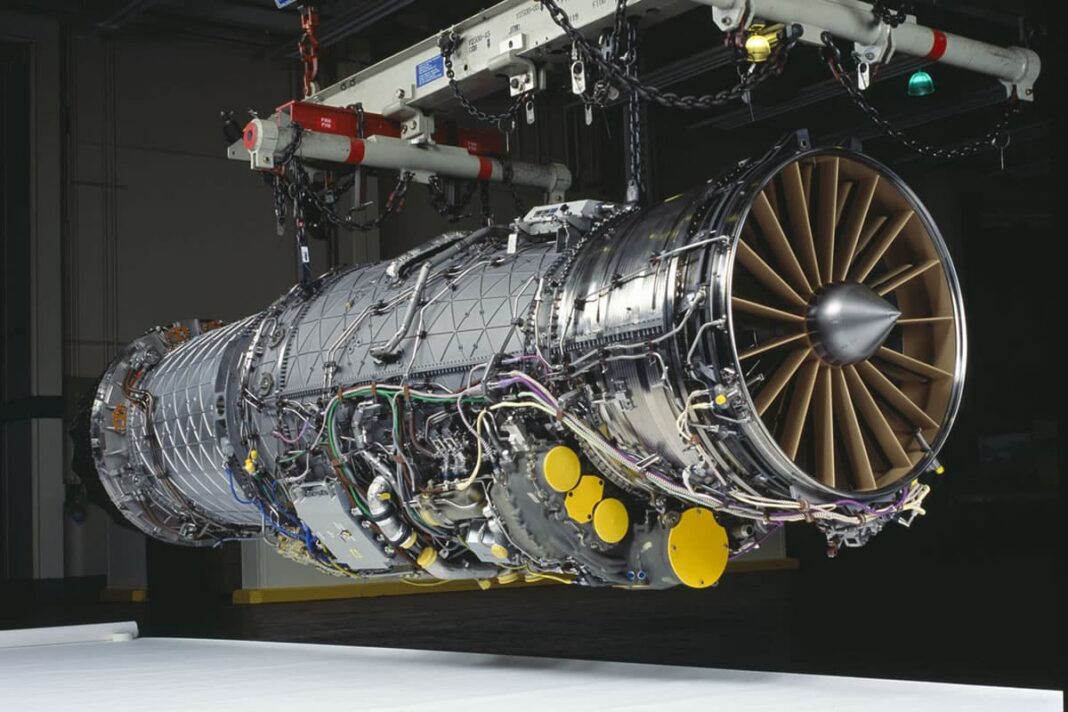
For the more powerful Tejas Mk2, the HAL Twin-Engine Deck-Based Fighter (TEDBF), and the initial AMCA Mk1 including prototypes and early production aircraft, the GE F414-INS6 with around 98 kN thrust was selected. Technical negotiations for co-production and technology transfer, targeting around 80 per cent indigenisation in manufacturing, assembly, testing, and overhaul capabilities in India, have made substantial progress. The goal has been to induct the first locally manufactured F414 engines by the late 2020s.
HAL and ADA have been handling the negotiations for the F414 engine separately for the Tejas Mk2 and AMCA programmes. The two organisations are negotiating separately for the same engine because their requirements are different. Full import options remain available for early aircraft to maintain momentum, while the long-term vision emphasises progressive localisation to build domestic expertise and reduce reliance on foreign supplies. GE has also committed support for prototype development, testing, and certification of the AMCA.
AMCA model, image via X/ Ministry of Defence
Commercial Negotiations Hit Deadlock
Despite these advancements on the technical front, commercial negotiations have stalled due to a dramatic increase in costs, which have risen by around 300%. What was initially discussed in the range of ₹70-80 crore per engine has reportedly surged to over ₹200 crore per unit, accompanied by additional demands running into several thousand crores for establishing dedicated production lines, infrastructure, and related facilities. As per reports, this figure has reached around ₹6,000 crore.
As AMCA is a two-engine jet, ₹200 crore for an engine means ₹400 crore in engine cost alone for the jet, which makes the fifth-generation fighter very expensive. As per reports, ADA is negotiating for the procurement of 15 F414 engines for the five AMCA prototypes. Two engines are needed for each aircraft, while one is needed as a spare. Therefore, if GE’s price is accepted, India is looking at paying around ₹3,000 crore for engines for five prototypes only.
GE F414 Fighter Jet Engine
Besides the prototypes, the F414-INS6 turbofan engine has also been planned as the interim powerplant for AMCA Mk1, before an indigenous engine is developed with the collaboration of a foreign partner. With this massive hike in price, whether the AMCA project will go ahead with the GE F414 engine has become uncertain, unless there is a breakthrough in price negotiations.
Three private consortia, Tata Advanced Systems, the L&T-BEL-Dynamatic group, and the Bharat Forge-BEML-Data Patterns combine, have been shortlisted for prototype development and eventual production responsibilities, with one expected to be selected. HAL has been kept out of this core airframe effort. As soon as the private partner is selected, prototype development will begin, and the engines will be required for that for integration with the airframe.
Design Before Deal
This engine uncertainty has placed the AMCA project in a difficult position, as the aircraft’s design parameters were set with the F414’s characteristics in mind well before the deal for the engine with GE was finalised. The AMCA design is locked to the GE F414 engine, which means replacing the engine becomes very difficult. The fact that the design for the jet was finalised before the deal for engine was finalised creates question on the decision.
Any prolonged delays or cost escalations now risk cascading effects on prototype flights targeted for the late 2020s and subsequent induction timelines around the mid-2030s, at a time when the Indian Air Force urgently needs to bolster its squadron strength. If a different engine is chosen, it will also mean some redesign of the jet and a delayed production schedule.
Unreliable Supplier
Apart from the increased cost, GE remains an unreliable supplier of engines. It has not been able to supply the F404 engine for the Tejas Mk1 and Mk1A, delaying the production of the indigenous 4.5th-generation fighter by the Indian Air Force. The Indian Air Force has yet to receive a single Mk1A despite ordering 83 aircraft in 2021, due to the failure of GE to supply the engines. After ordering 83 Tejas Mk1A in 2021, the IAF placed a repeat order for 97 more jets in 2025, and not a single jet has been delivered.
HAL is supposed to deliver 16 jets per year, and 180 deliveries are planned by 2032-33. But while HAL has made some Mk1A airframes, they are not flying because there are no engines. The American company has delivered just 6 engines under the new contract, all of which have been used in Tejas Mk1 jets.
Moreover, only 8 F414 engines have been delivered by GE for testing and prototype development of Tejas Mk2.
Indigenous Engine
Amid this situation of unviable cost and supply delays, New Delhi is reportedly actively examining alternative options. Notably, the defence ministry is already in talks with major engine makers for producing engines locally for future versions of AMCA and the planned sixth-generation fighter plane. This is as per the original plan, which included using GE engines for Tejas MK2 and AMCA initially, and then move towards an indigenously developed engine with a minimum of 120 kN thrust.
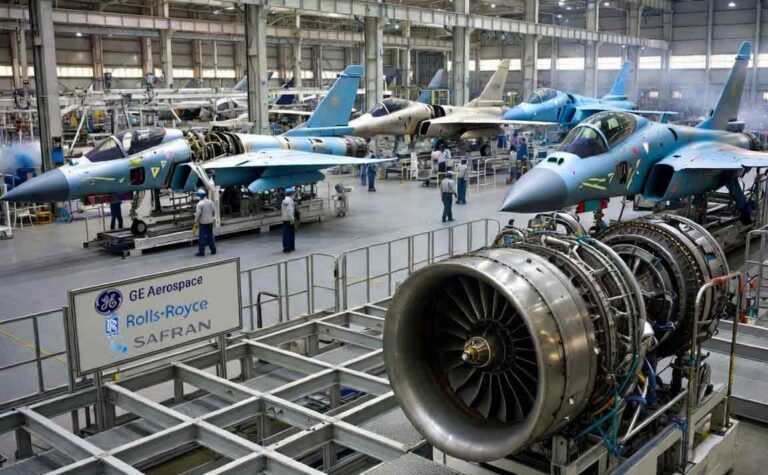
French engine maker Safran and British company Rolls-Royce are the two major contenders for partnering with India in developing and manufacturing the engine.
While it is already decided that India will develop an engine in collaboration with Safran or Rolls-Royce for later versions of Tejas Mk2 and AMCA, it needs to be seen whether the defence ministry decides to drop the GE engine altogether for these projects due to cost escalation and delays in deliveries.
If the GE engine is dropped, the projects will get further delayed, and the govt will have to accelerate the process of selecting the foreign partner and start work on the development of the engine as soon as possible.
Rolls-Royce offer
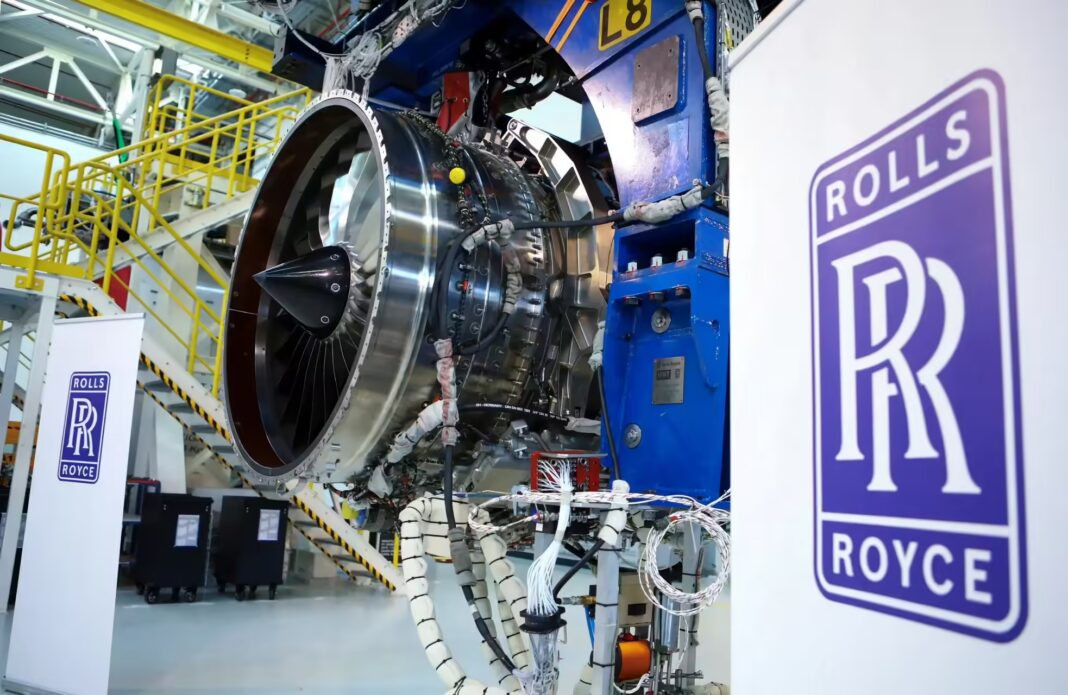
In this challenging backdrop, Rolls-Royce has put forward a robust and detailed pitch for a comprehensive Made-in-India engine programme tailored to the AMCA’s needs. The British aerospace major has proposed jointly designing and manufacturing a new 120 kN-plus thrust class fighter engine entirely in India. According to their final offer, if the contract is signed by the end of 2026, the engine core could undergo testing by 2030, the first test flight could take place by 2034, and series production could begin by 2036.
The proposal emphasises 100 per cent technology transfer, with all intellectual property developed under the project remaining with the Indian government. Rolls-Royce has outlined plans to establish India as its fourth global propulsion hub after the UK, the US, and Germany, encompassing full-spectrum capabilities in design, development, manufacturing, maintenance, repair and overhaul (MRO), and future upgrades. This ecosystem would support not only military aero-engines but also civil aviation, naval, and other propulsion requirements from a unified industrial base.
Senior executive Sashi Mukundan has stressed the company’s proven track record of independently developing new engines at regular intervals and its commitment to conducting the complete effort, including a fresh design and hot-section work, on Indian soil.
French major Safran has similarly positioned itself with a strong proposal for co-development of an engine with GTRE, focusing on a 120-140 kN class engine with full technology transfer, including critical hot-section technologies, and Indian ownership of intellectual property. Safran’s offer focuses on deep integration with Indian entities for design, testing, certification, and production infrastructure in India, building on their existing helicopter engine manufacturing presence in the country.
Rolls-Royce vs Safran
Both Rolls-Royce and Safran have made compelling proposals for powering India’s Advanced Medium Combat Aircraft (AMCA) with a high-thrust indigenous engine in the 120 kN-plus class, offering full technology transfer, Indian ownership of intellectual property, and a Made-in-India development model. Therefore, the Government of India has a tough job of selecting one company.
India has historically found greater comfort in partnering with Safran and the French defence industry in general due to a long and reliable track record of cooperation. France has been a trusted supplier since the Mirage 2000 era, delivering the Rafale with significant offsets and technology sharing, supporting Scorpene submarines, and collaborating on projects like BrahMos. Safran is already supplying the engines for the Rafale jet.
French partners have generally demonstrated willingness for meaningful ToT without the stringent end-user restrictions or sudden policy shifts often associated with US suppliers. French defence deals are also generally immune from sudden sanctions that US may impose. This history of consistent support, even during geopolitical challenges, makes Safran a low-risk, battle-tested collaborator for a complex programme like the AMCA.
That said, Rolls-Royce’s offer is also highly attractive and competitive. It brings deep expertise in fifth-generation propulsion drawing from programmes like the F-35’s F136 development and a bold vision for building sovereign Indian capabilities through a dedicated propulsion hub.
The comprehensive industrial commitment could accelerate India’s ecosystem beyond just one engine, positioning the country as a global player in aero-propulsion. Both options represent a step forward from previous dependencies, and the final choice will likely balance technical timelines, industrial offsets, and strategic partnership depth. India’s decision will be crucial for achieving true self-reliance in fighter engines while meeting the AMCA’s demanding performance requirements.
Unreliability of the USA as a defence partner
The current situation has once again highlighted that the United States remains an unreliable long-term partner for India in critical defence technologies. While collaboration in certain areas continues, these recurring challenges underscore the risks of over-dependence on any single foreign supplier.
GE engine deal is not the only one to face massive delays, several other defence deals with the US in recent years saw similar fates. The growing strategic partnership between India and the United States has been repeatedly tested by execution delays in major defence acquisitions. While political and diplomatic engagement has strengthened, with India designated as a Major Defence Partner, participation in the Quad, and initiatives like INDUS-X, the actual delivery and sustainment of US-origin equipment have often faced significant hurdles. These delays stem from supply chain disruptions, bureaucratic processes in the US export control system, commercial negotiations, geopolitical factors, and occasional diplomatic leverage.
The Apache AH-64E attack helicopters for the Indian Army serve is prominent recent example. India signed deals for 22 AH-64E Apaches for the Indian Air Force around 2015 (valued at about $2.2 billion), with deliveries largely completed between 2019 and 2020 after some initial slippages. However, the Indian Army’s follow-on order for six more helicopters, contracted in 2020, encountered prolonged delays. Deliveries were pushed well beyond the original 2024 target, and by early 2025, not a single helicopter from this batch had arrived, with Boeing citing supply chain issues.
It is therefore imperative that serious work on fully indigenous engine development for India’s fighter aircraft projects, including the AMCA and future platforms, begins in earnest without further delay. Accelerating efforts through GTRE, private sector participation, and strategic partnerships focused on complete technology absorption and IP ownership will be essential to achieving genuine self-reliance in propulsion, the heart of any modern combat aircraft, and ensuring that ambitious programmes like the AMCA do not remain hostage to external commercial or geopolitical uncertainties.
Kaveri Engine Programme
India is in this situation now because of the decades-long ambitious program to develop an indigenous engine, the Kaveri engine, formally known as the GTX-35VS, failed to produce an engine fit for 4th and 5th-generation fighters. While it was to power the Tejas fighter jet, that plan was dropped because the engine could not produce the desired output.
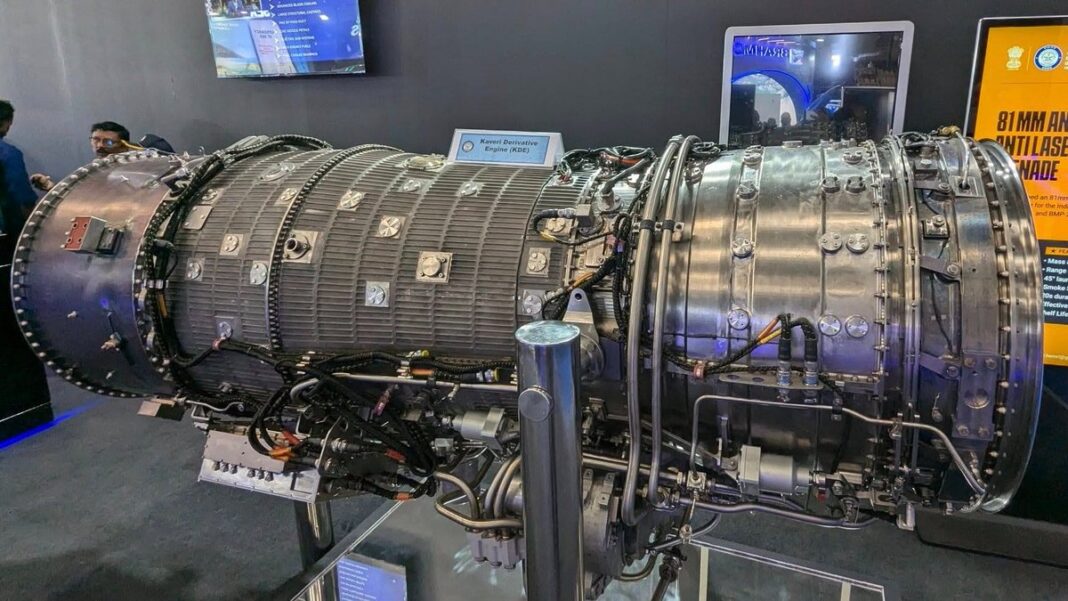
Developed by the Gas Turbine Research Establishment (GTRE) under DRDO, the programme faced technical challenges in the past, particularly in achieving consistent thrust levels and reliability for manned fighter applications. The focus has now shifted to a more practical path through the Kaveri Derivative Engine (KDE), a dry variant without an afterburner optimised for unmanned platforms.
Kaveri Derivative Engine
Godrej Aerospace has delivered the first production-standard unit (D1), with D2 and D3 expected in the first half of 2026. Ground testing, endurance trials, and high-altitude evaluations (including on a Russian Il-76 testbed) have shown steady progress, with only limited flight test hours remaining for certification milestones targeted later in the year.
Recent milestones have boosted optimism around the programme. In February 2026, Defence Minister Rajnath Singh witnessed a successful full afterburner test of an updated Kaveri configuration, highlighting improvements in the hot-section and afterburner design. GTRE is now advancing toward flight trials of an afterburning variant, potentially in the 73 kN range initially, scaling to 80-85 kN with a new afterburner module under development.
Indian test facilities are also being expanded, including a National Aero Engine Test Complex, to reduce dependence on foreign infrastructure for high-altitude and other critical evaluations. While the core Kaveri architecture continues to serve as a vital technology demonstrator, its derivatives are positioned to power stealthy unmanned combat aerial vehicles like the Ghatak UCAV in the near term.
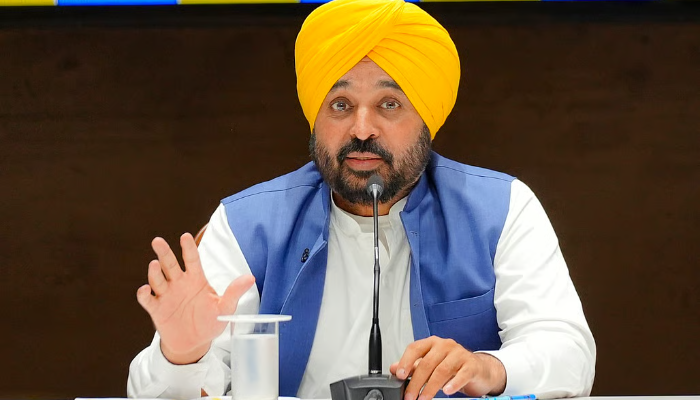
Punjab Chief Minister Bhagwant Singh Mann has found himself at the centre of a massive political and religious controversy triggered by a viral video after which the Aam Aadmi Party issued firm denials, but the matter rapidly escalated into disciplinary action from the highest Sikh authority (Akal Takht), police inquiries, bribery accusations, arrests and further complications.
Moreover, these events have surfaced at a time when the state is on the brink of assembly elections in only nine months, and an aggressive opposition is intensifying the difficulties for the ruling party.
The row erupts after an objectionable video surfaces
The row began in October 2025 when an NRI (Non-Resident Indian) published a video of a man who resembled Mann with a glass of alcohol. He was observed standing in front of images of important Sikh religious figures, including their gurus. The pictures seem to be drizzled with the contents from the glass by him.
The video was denounced by the Shiromani Akali Dal (SAD) and many Sikh religious outfits, who charged that the actions violated the code of conduct and conventions of their faith as well as displayed serious disrespect for the gurus. However, AAP and sources from the Chief Minister’s Office countered their statements, arguing that the footage was a deepfake intended to damage Mann’s reputation and was entirely the work of artificial intelligence (AI).
Meanwhile, the SAD sought a forensic analysis of the clip after the uproar. On the other hand, Mann was summoned by Akal Takht Jathedar Kuldeep Singh Gargaj over the matter and his views regarding various Sikh issues, including the golak (donation box). The latter went to the Akal Takht Secretariat with two black bags that were supposedly filled with relevant documents and proof on 15th January.
Mann was pushed for an explanation, but he insisted that AI was used to produce the video. Both sides consented to a forensic probe, but he repeatedly discredited it as bogus and added that a man named Jagman was spreading it. He was portrayed as a regular drug user with a history of extortion and unpredictable behaviour by the chief minister, who even cited a court judgement which deemed the footage as fictitious in his opinion when questioned about the forensic test.
However, Jathedar Giani Kuldeep Singh Gargaj highlighted that he didn’t see any commands for such an investigation in the verdict. “Akal Takht will have this video examined. If it is false, then it is okay. But if it is true, then it won’t be just about me alone; it would be about the Panth,” he warned. Mann reacted by pointing to the growing popularity of AI and content modification on social media.
On 27th January, he was directed to supply written information about two laboratories that could confirm his claim in a letter, but he never responded. The Sikh body then forwarded the videos to multiple laboratories, including two approved by the Indian government, which came to the conclusion that they were neither fraudulent nor created by AI. However, AAP retorted that it did not prove that the individual in the video was, in fact, Mann.
Akal Takht makes a decision
On 15th June, 5 Sikh high priests (Panj Singh Sahiban) carefully considered the complaint against Mann and reached a decision. “He is heard saying that people steal money from Golak. If he has the courage, he should try taking money from the gurdwara’s collection plate and show it publicly. In a video, he is seen sprinkling alcohol on photographs of Sikh Gurus. He is also shown engaging in disrespectful acts toward pictures of revered saints and sprinkling alcohol on them,” stated Gargaj.
He also rebutted the submissions of AAP and its supporters, emphasising that a detailed forensic examination revealed no signs of tampering, editing or AI-induced manipulation. He also urged the government to use any laboratory of their choice to review the footage in case of any suspicions or doubts in relation to the authenticity.
Gargaj mentioned that Mann lied at the Akal Takht and he was pronounced “Khalsa Panth Virodhi (opposed to the Sikh Panth)” and a “Guru Dokhi (one who disrespects the Guru).”
The Jathedar of the Akal Takht ordered that the entire cabinet and all Sikh MLAs be instructed to present before the religious body on 29th June to discuss the strict anti-beadbi (sacrilege) law, which was passed in April by the government. He accused that the panth was not consulted on the subject.
“It is intolerable for anyone to challenge the guru’s throne. The Punjab government introduced an act without consulting the Sikh community, institutions, or the Shiromani Gurdwara Parbandhak Committee (SGPC). Chief Minister Bhagwant Mann’s government acted obstinately, securing approval from the legislative assembly and the governor. This law will cause a rift within the panth,” Gargaj lashed out, remarking that the state had no power to make such a move concerning Sikhism.
The SGPC passed a resolution demanding Mann’s resignation, stating that he had no moral right to remain in office after the development. On the 27th, its president, Harjinder Singh Dhami, is scheduled to arrange a general house meeting to discuss the topic further before bringing it to the public’s attention. “Our members will hold meetings in every constituency in this regard,” he outlined.
A twist in the tale: AAP presents fresh lab reports
On 8th June, APP declared that Mann and the person in the clip did not match, according to forensic testing conducted by two independent laboratories.
“For several days, Akali Dal leaders had been attempting to inflame public emotions by circulating a fake video and falsely linking it to CM Bhagwant Mann. The entire episode was part of a larger political conspiracy aimed at defaming a popular Chief Minister who has consistently worked for the people of Punjab,” expressed cabinet minister Harpal Singh Cheema and the party’s state media in-charge Baltej Pannu.
Cheema stressed, “Two independent laboratories recognised by the Government of India thoroughly examined the viral video and arrived at the same conclusion. The forensic analysis examined a total of 1,191 frames from the video. Every aspect, including facial features, height, body structure, posture, movement patterns, side profile and back profile, was meticulously analysed. The reports clearly conclude that the person shown in the video does not match Mann.”
He contended that whereas Mann is 5 feet 8 inches tall, the forensic results estimated the height of the man in the video to be roughly 5 feet 10 inches. According to him, notable variations were also spotted in face features, shoulder alignment, body structure and general posture. “These reports are from independent laboratories which are recognised by the government of India, and these are not in Punjab,” Cheema announced.
“The reports clearly establish that neither the face, nor the body structure, nor any physical characteristic of the person seen in the video matches mine,” Mann endorsed the same. He also charged, “I have complete respect for the Akal Takht Sahib. But the people appointed there are political appointees, and they are acting at the behest of Shiromani Akali Dal president Sukhbir Singh Badal.”
“The truth must come out. Who got this video made? On whose instructions was it prepared? Who paid for it? Who is the person acting in the video? All these questions must be answered,” he inquired.
Charge of 10 lakh bribery and arrests add a new layer to the row
The reports referenced to defend Mann have raised controversy after the Gurugram Police arrested two 25-year-olds, Ankit Sharma of Kharak Gagar and Arun Mahendru of Sirsa, on 23rd June. The pair is facing allegations of concocting evidence to substantiate that the video was phoney or artificially manufactured.
They were taken into custody in relation to a case that was filed at the DLF police station in Gurugram. According to authorities, the arrests took place during police operations in the districts of Jind and Sirsa in Haryana.
#WATCH | Gurugram, Haryana: On action in deepfake video case involving Punjab CM Bhagwant Mann, ACP Crime, Naveen Sharma says, “The Gurgaon Police received a complaint…We have taken two individuals into custody; an interrogation is currently underway. One suspect has been… pic.twitter.com/PdsMA6lxJQ
llegations of coercion, bribery, cheating, and electronic record forgery are included in the First Information Report (FIR), reported News18. Forensic expert and whistleblower Jaspreet Singh, alias Jaspreet Jassi, launched a complaint that led to the case’s registration. He has contacts in the Delhi-NCR (National Capital Region) area who could set up the required paperwork.
He was introduced to Sharma and Mahendru, who subsequently provided him with the certificates which were linked to 2 forensic laboratories, Cyberyan and Cypher Sentinel. “Both of these laboratories are fake and non-existent,” informed Naveen Sharma, Assistant Commissioner of Police (crime).
The FIR disclosed that the perpetrators tried to press the staff of the facility into preparing a pre-written forensic paper labelling the video as altered, crafted by AI and deceptive. The complainant divulged that Rs 10 lakh was offered to him by Punjab government officials to pretend that the actor in the video was not Mann and threatened him with repercussions if he did not comply.
He conveyed that the operation included lodging and meetings at a high-end Crowne Plaza hotel in Sector 29 of Gurugram on 15th and 16th June. Jaspreet encountered a senior officer of the Punjab government there, along with another official introduced as “bade sahib.” He was tasked to attest that the video was spawned by AI, and it was unreliable.
He indicated that the material provided by them and the video quality were insufficient for an advanced forensic evaluation that included anthropometric analysis, deepfake detection and facial comparison.
According to police, Mahendru in Panchkula and Sharma in Delhi received pen drives with the video from anonymous state government officials. Draft forensic insights were apparently shared over WhatsApp with a top official, who made suggestions before the final reports were put together.
Investigators stated that CCTV recordings and other evidence gathered from the Gurugram hotel prompted authorities to delve into the involvement of a number of IPS officials from Punjab who could also be summoned to take their statements and identify if they played any part in commissioning, facilitating or discussing the forensic analysis. Police have expanded the scope of their probe as the report has become the focus of a criminal inquiry.
The case involves charges of cheating and falsification or alteration of electronic information. Investigators are looking at digital communications and conversations alongside hotel CCTV footage and visitor records to uncover the course of events and the roles of those responsible.
Police are probing whether the culprits tried to cook up a forensic finding to grant legal and political protection to Mann. They are exploring whether the outcomes made public were manufactured to support a predetermined conclusion or were based on a real forensic assessment. Sharma noted that more arrests cannot be ruled out because the probe is still in its early stages.
Punjab Pradesh Congress Committee chief Amrinder Singh Raja Warring asked Mann to leave his position after he was referred to as a “tankhaiya (found guilty of religious misconduct),” adding, “Mann has lost his moral right. Respecting the supreme authority of Akal Takht and Sikh sentiments, he should immediately resign from the post of chief minister.”
Bharatiya Janata Party has stated that “personnel linked to Punjab Police could be involved in the preparation and circulation of the forged forensic documents.” Moreover, the party questioned the silence of Mann and Arvind Kejriwal, the national convenor of AAP, regarding the developments. It also asked the state police to invoke the anti-sacrilege law against Mann.
The controversy surrounding Punjab Chief Minister Bhagwant Mann’s viral video has taken a serious turn. After being summoned by the Akal Takht and asked to explain the contents of the viral footage, Mr. Mann reportedly claimed that the videos were AI-generated and assured that… https://t.co/uvDFLlPM5E
SAD charged that Mann abused state resources to feign forensic reports to clean his deteriorating image and demanded a CBI (Central Bureau of Investigation) inquiry.
AAP is continuously under attack from the opposition, yet it has audaciously dismissed the mounting assertions. “The chief minister has been saying since day one that the video is fake. Your own recording has now proved that. He never denied an investigation, and rather, he repeatedly said that the video should be examined.” Pannu reacted after the released exchange between Mann and Gargaj.
Mann also alleged that a “dirty politics” campaign was underway to damage his credibility using religion, and it was a political tool to target him. He maintained that the person in the clip was not him.
Mann claimed that the BJP, the Indian National Congress and the Akali Dal have united due to public scrutiny over the deceitful video. They are pressuring lab owners to confess that they were paid for a false report through threats of legal action and torture.
“The lab we used for testing was illegitimate, while the lab they used was authentic? The people can discern who is genuine and who is not. I leave this matter to the judgment of the populace. They can no longer show their faces in Punjab. Thus, they have resorted to using religion to discredit me. I will persist in my efforts. I will keep my focus on electricity, housing, healthcare, and job creation unchanged,” he insisted.
However, the issue does not appear to be resolving anytime soon and is only growing as the polls draw nearer, with new layers consistently being revealed that point to a larger conspiracy.
The Bharatiya Janata Party (BJP)-led government in West Bengal presented its full Budget for the financial year 2026-27 in the state Assembly on 22nd June. While the Budget introduced a series of measures aimed at boosting investment, infrastructure and economic growth, a comprehensive thematic analysis by SBI Research [pdf], published on Thursday, 25th June, suggests that the Budget marks a significant shift towards investment-led development and long-term economic transformation.
The SBI report not only examined the contents of the latest Budget but also placed West Bengal’s economic journey in a broader historical context. The analysis highlighted how the state, once among India’s strongest economic performers, gradually lost its position over several decades and now faces the challenge of catching up with the national average.
SBI report provides important historical perspective
One of the most striking aspects of the SBI Research report is its examination of West Bengal’s long-term economic trajectory.
According to the report, West Bengal experienced strong growth in the early years of the last decade. Nominal Gross State Domestic Product (GSDP) growth touched 13.6% in 2012-13 and climbed further to 14.4% in 2013-14. Like the rest of the country, however, the state suffered a severe setback during the COVID-19 pandemic. In 2020-21, both nominal and real growth rates fell into negative territory as economic activity came to a standstill.
Graph via SBI Research
The state witnessed a strong rebound after the lockdown period. In 2021-22, nominal growth surged to 17.4% while real growth reached 11.6 %. Since then, growth has stabilised. For 2025-26, revised estimates place nominal growth at 9.9% and real growth at 7.6%. The Budget Estimates for 2026-27 project a nominal growth rate of 7.9%.
The report notes that West Bengal’s economy today is primarily driven by the services sector, which contributes 58.3% of Gross Value Added (GVA). Industry contributes 21.6%, while agriculture still accounts for a significant 20.1% share.
However, the most revealing part of the analysis concerns per capita income.
SBI Research notes that in FY78, West Bengal’s per capita income stood at ₹1,266, which was higher than the national average of ₹1,194. At that time, the state ranked fifth among all Indian states.
Over the following decades, however, the state’s relative position steadily weakened. By FY2012, West Bengal had slipped to the 21st position among Indian states with a per capita income of ₹56,693.
The state has recovered slightly since then. In FY2025, West Bengal’s per capita income reached approximately ₹1.81 lakh, improving its rank to 19th. Yet it remains substantially behind the national average of ₹2.35 lakh. The report notes that West Bengal’s per capita income is now around 23% lower than the all-India average.
Between FY2012 and FY2025, West Bengal’s per capita income expanded by 3.20 times, compared to a national expansion of 3.28 times, indicating that the state has continued to lag behind the country’s overall economic momentum.
How West Bengal lost its economic lead
This decline is a combination of political, industrial and structural factors spanning several decades.
At the time of Independence and through the 1960s, West Bengal was one of India’s leading industrial and commercial centres. Kolkata served as a major hub for finance, manufacturing, engineering, tea and jute industries.
The situation began changing during the 1970s and 1980s. Political instability, labour unrest, frequent strikes, gheraos and power shortages created an increasingly difficult environment for businesses. Many major industrial houses shifted operations to states such as Maharashtra, Gujarat and Tamil Nadu.
The report also points out that the Left Front government, which came to power in 1977, focused heavily on land reforms and rural development through programmes such as Operation Barga. While these policies improved agricultural productivity and strengthened rural livelihoods, large-scale industrialisation remained limited.
As a result, West Bengal missed much of the manufacturing boom that transformed several western and southern states.
The state eventually became increasingly dependent on services. While sectors such as banking, retail and information technology grew, they were not sufficient to generate the scale of high-paying employment needed to lift incomes at the same pace as other states.
Dependence on central funds remains high
The SBI report also highlights another important aspect of West Bengal’s finances: the state’s long-standing dependence on funds from the Centre.
According to the analysis, West Bengal has consistently received more than 50% of its revenue receipts from the Union government through tax devolution and grants.
For the 2026-27 Budget Estimates, central taxes are projected to account for 34% of total revenue receipts, while grants from the Centre contribute another 22%. Together, these amount to 56% of the state’s revenue receipts.
The report notes that West Bengal’s own tax revenue has remained largely stagnant over the years. In 2010-11, the state’s own tax collections accounted for 45% of revenue receipts. More than a decade later, the figure stands at 41% in the 2026-27 Budget Estimates.
The situation is even more striking when it comes to non-tax revenue. The state’s own non-tax revenue has remained around 3% of total receipts for most of the period under review.
Total revenue receipts have certainly increased over time. They rose from ₹47,264 crore in 2010-11 to a projected ₹3.2 lakh crore in 2026-27. Yet SBI’s data suggests that the state continues to rely heavily on central transfers while struggling to significantly expand its own revenue base.
Despite receiving substantial support from the Centre for years, West Bengal has continued to face significant debt burdens.
Budget language shows a shift from redistribution to capacity building
One of the most interesting sections of the SBI study involves a thematic analysis of Budget speeches delivered over the past sixteen years.
According to the report, earlier Budget narratives under the Mamata Banerjee-led Trinamool Congress (TMC) government largely focused on welfare-oriented and redistributive policies. Social welfare remained a dominant theme across multiple Budget cycles.
The 2026-27 Budget presented by the current BJP government, however, reflects a notable change in emphasis. SBI describes the shift as a transition from redistribution towards capacity building and long-term economic development.
The strongest evidence of this change comes from the increasing focus on investment. The theme of “investment” reached an all-time high of 4.5% in the 2026-27 Budget speech, significantly above the levels recorded during the previous few years.
Table via SBI Reasearch
Governance and fiscal management have also returned as major priorities. Their share in the budget discourse rises to 2.1 %, indicating renewed attention towards improving public finances and administrative efficiency.
The report further highlights the emergence of several new themes that received limited attention in earlier years.
Tourism and culture reached a record focus level of 1%. Climate and environment rose to 0.8%, the highest in the available series. Education also stood at 0.8%, while healthcare accounted for 0.7%.
Technology and artificial intelligence reached 0.6%, continuing a steady rise over recent years. Entrepreneurship maintained an elevated presence at 0.4%.
According to SBI, these trends suggest a broader developmental narrative centred around economic capability, investment creation and future-oriented sectors.
Most optimistic Budget narrative in the series
The report also conducted a linguistic analysis of Budget speeches using the Bing sentiment lexicon, measuring the balance between positive and negative words.
The results show that the 2026-27 Budget displays the most optimistic language seen in the entire dataset.
According to SBI Research, the latest Budget records the highest net sentiment score since tracking began in 2010-11. Positive words reached their highest historical share, reflecting an expansionary and highly aspirational tone. The analysis shows a clear upward trend beginning in 2021-22 after the disruptions caused by the pandemic.
Graph via SBI Research
The lowest sentiment score in the series occurred during the immediate post-pandemic period in 2021-22. Since then, sentiment has steadily improved year after year, culminating in the record-high optimism reflected in the 2026-27 Budget.
SBI says this suggests that policymakers are increasingly framing the state’s future around growth, investment and long-term transformation rather than crisis management.
Previous reports pointed to economic decline under TMC rule
The SBI findings also come against the backdrop of earlier analyses that raised concerns about West Bengal’s long-term economic performance.
OpIndia had earlier reported that West Bengal’s economy witnessed significant structural deterioration during the years of Mamata Banerjee-led Trinamool Congress (TMC) rule, citing a financial report published by Finskeptics.
That report argued that despite occasional periods of growth, the state’s overall economic position weakened relative to many competing states. It highlighted the decline in industrial competitiveness, slower income growth compared to the national average and the state’s growing dependence on central transfers.
The new SBI Research report does not make the same political conclusions, but its historical analysis similarly documents West Bengal’s slide from being India’s fifth-richest state in per capita income terms in FY1978 to the 19th position today.
At the same time, SBI’s assessment suggests that the 2026-27 Budget represents an attempt to change that trajectory through greater emphasis on investment, governance reforms, technology adoption and economic capacity building.
Whether this shift ultimately succeeds in reversing decades of relative decline will become clearer in the years ahead. For now, the report presents a detailed picture of a state trying to move from a welfare-dominated economic framework towards a growth-driven model while still confronting the challenges created by its long economic journey.
Every day, salt becomes a part of our meals without us giving it much thought. A pinch of salt goes into vegetables, dal, chapatis, and almost every dish cooked at home. But very few people stop to think about where this salt comes from and who works behind it.
Far away from cities and towns, in the vast white deserts of Gujarat’s Rann of Kutch, thousands of families spend months producing the salt that reaches homes across India. These families belong to the Agariya community, a group that has been making salt for generations under some of the toughest conditions imaginable.
Now, this community is once again in the spotlight. This time, the focus is not on salt production but on the education of their children.
The Gujarat government has announced a new initiative called ‘School on Wheels’, under which 28 retired buses are being converted into mobile classrooms. These moving schools are expected to benefit children of Agariya families living in the desert regions of Kutch and North Gujarat-Saurashtra.
At first glance, it may look like a simple education scheme. But behind it lies a larger story about salt production, life in the desert, and the efforts being made to ensure that children from remote communities do not miss out on education.
Who are the Agariyas?
The Agariya community is mainly found in the Great Rann of Kutch and the Little Rann of Kutch in Gujarat. For generations, they have been involved in salt farming and are among the people responsible for producing a large share of India’s salt.
Every year, after the monsoon season ends and the desert begins to dry, thousands of Agariya families leave their villages and move deep into the desert. They stay there for several months to begin the salt-making season.
Life in these areas is very different from life in a village or city. There are no regular markets, no large settlements, and very few facilities. All around them lies an endless stretch of white land covered with salt.
Despite these conditions, Agariya families continue this work year after year because it is not just their livelihood it is a way of life that has been passed down through generations.
The difficult process of making salt
Salt production in the Rann of Kutch is a long and demanding process.
After reaching the desert, Agariya families prepare special salt fields known as agars. They then drill into the ground to extract saline water lying beneath the surface. This water is pumped into the prepared fields where it is left to evaporate under the sun.
The process sounds simple, but it requires constant attention. The water level must be monitored carefully. Changes in temperature and weather can affect salt formation. The families spend months watching over the fields until salt crystals begin to appear.
During this period, temperatures often rise above 45 degrees Celsius. Workers spend long hours under the scorching sun. Continuous exposure to salty water can damage the skin of their hands and feet. Yet they continue their work because salt farming is the foundation of their lives and livelihoods.
The hidden story behind every packet of salt
India is one of the world’s largest salt-producing countries, and Gujarat contributes the biggest share to the country’s total salt output.
When people buy a packet of salt from a shop, they rarely think about the journey behind it. But every grain of salt has passed through months of hard work by families living in the desert.
The contribution of the Agariya community goes far beyond economics. These families have learned how to survive and work in conditions where many people would find it difficult to stay even for a few days.
They face extreme heat, water shortages, health challenges, and isolation from the outside world. Yet they continue to produce the salt that reaches kitchens across the country.
For this reason, many people see them not only as salt producers but also as a community known for its resilience, hard work, and ability to adapt to difficult environments.
Life in the desert is not easy
To understand the Agariya community, it is important to understand what daily life in the desert looks like.
Their day usually begins before sunrise. As the morning progresses, temperatures rise quickly. By afternoon, the heat becomes so intense that standing outside for long periods can be difficult.
Locally, such harsh sunlight is sometimes described as a “black sun” because of its intensity.
The surroundings offer little relief. There are no trees for shade, very few settlements, and often limited access to drinking water. Health services are not easily available, and children have few opportunities for recreation or social activities.
Still, Agariya families have spent generations living in these conditions. What appears impossible to many has become a part of everyday life for them.
How ‘Meetha Khara’ brought national attention to the community
For a long time, the lives of the Agariyas remained largely unknown outside Gujarat.
That changed when folk singer Aditya Gadhvi’s song ‘Meetha Khara‘, released through Coke Studio Bharat, introduced millions of people to the community.
The song was more than just music. It highlighted the lives, struggles, and hard work of the people who spend months in the salt deserts producing one of the country’s most important everyday commodities.
After the song gained popularity, many people learned for the first time about the Agariya community and their contribution to India’s salt production.
Today, the community is once again making headlines. But this time, the conversation is centred around education and the future of its children.
The biggest challenge to education
While salt production remains the main occupation of the Agariyas, one of the biggest challenges faced by the community has been ensuring education for their children.
When families move to the desert after the monsoon, they do not leave their children behind. Entire families relocate together for several months. As a result, many children spend a significant part of the year away from their regular schools.
For a child living in a city or village, attending school may be routine. But for children growing up in the remote salt deserts, access to education becomes much more complicated.
The problem is not simply about the availability of schools. The larger issue is distance and lifestyle. Since families live and work in isolated areas for long periods, regular schooling becomes difficult.
Many children struggle to continue their studies without interruption. Teachers also face challenges in reaching students regularly in such remote locations. For years, finding a practical solution to this issue remained difficult.
When children cannot reach school
Education officials gradually realised that asking children to travel long distances to school was not enough.
The challenge was unique because the problem was linked directly to the community’s way of life. Families had to remain in the desert for work, and children naturally stayed with them. This meant that conventional schooling methods could not fully address the issue.
The question was simple but important: if children could not easily reach schools, could schools be brought to the children? That idea eventually led to the concept of ‘School on Wheels’.
Gujarat’s school on wheels initiative
Under the School Entrance Festival, the Gujarat government has decided to convert 28 retired buses into mobile classrooms. These buses are being designed as fully functional learning spaces that can reach children living in remote desert regions.
રણના અંતરિયાળ વિસ્તારોનું બાળક પણ ભણશે, શિક્ષણ અને કેળવણી સાથે આગળ વધશે !
The buses are expected to include educational resources, study materials, digital learning facilities, smart TVs, and a child-friendly environment that supports learning.
However, the initiative is not limited to infrastructure alone. Teachers will also be associated with the programme because meaningful education depends not only on classrooms but also on interaction between students and teachers.
રાજ્યભરમાં 'શાળા પ્રવેશોત્સવ'નો પ્રારંભ થયો છે ત્યારે નાયબ મુખ્યમંત્રી શ્રી હર્ષભાઈ સંઘવીના વરદ્હસ્તે ગાંધીનગરના પથિકાશ્રમ એસ.ટી. ડેપો ખાતેથી 28 રણશાળા બસનું લોકાર્પણ કરાયું…
અગરિયા સમુદાયના બાળકોના શિક્ષણ માટે ગુજરાત સરકારની અનોખી પહેલ સમાન ‘સ્કૂલ ઓન વ્હીલ્સ’ રણશાળા… pic.twitter.com/KFuyuP6Jse
The idea behind the project is straightforward. Instead of expecting children to leave their families and travel long distances for education, the education system will travel to them.
In many ways, this marks a shift in thinking. Rather than forcing communities to adapt to traditional systems, the system itself is adapting to the realities of the community.
A new future for children growing up in salt pans
The Rann of Kutch is one of India’s most unique landscapes. But while geography shapes people’s lives, it does not limit their dreams. A child growing up in the desert can dream of becoming a doctor, teacher, engineer, government officer, entrepreneur, or anything else.
The challenge has always been ensuring that these dreams are supported by access to education. For years, many Agariya children faced interruptions in their learning because of the seasonal migration of their families.
Initiatives such as School on Wheels aim to change that reality. By taking education directly to children, the programme seeks to ensure that their future is not determined by their location.
Education has the power to transform not just individual lives but entire communities. When one generation gains better access to learning, new opportunities open up for the next.
Recognising the community behind India’s salt
Discussions about the Agariyas often focus on the hardships they face. While those challenges are real, their contribution is equally important.
The salt used by millions of Indians does not appear automatically on store shelves. It is produced through months of labour by thousands of families working in difficult conditions.
The long days spent under the sun, the constant exposure to salinity, and the months spent in remote desert areas are all part of the story behind every packet of salt.
The Agariya community has mastered the art of living and working in one of the country’s most challenging environments. Through their efforts, they continue to play a vital role in India’s salt industry.
In that context, initiatives like School on Wheels represent more than just an educational programme. They can also be seen as recognition of a community whose contribution often goes unnoticed.
A few months ago, ‘Meetha Khara’ helped introduce the country to the lives of the Agariyas. Today, School on Wheels is adding a new chapter to that story.
The children growing up among the salt pans of the Rann of Kutch may no longer have to choose between their family’s livelihood and their education. Just as their parents help bring flavour to meals across the country, access to education can now help bring new opportunities and possibilities to their future. And perhaps that is the most important outcome of all.