Home Blog Page 4739

Congress MP Jasbir Dimpa manhandles a woman journalist, takes away memory card of the camera that recorded the incident

Amidst ongoing farmer protests against Agriculture Laws in and around Delhi, several leaders are trying to take political advantage of the situation. Some Congress leaders are currently lodged at Jantar Mantar in Delhi to support the farmers’ protests. One such leader, Congress MP Jasbir Dimpa, was caught on camera while manhandling a woman journalist Chandanpreet Kaur of Raonuk Punjab Dee TV (RPD 24).

In the video uploaded by RPD 24, it was visible that a slightly tough question irked the legislator, who then tried to snatch the camera from the cameraman and manhandled the female journalist. Kaur, who narrated the ordeal towards the second half of the video, said that Dimpa’s team did not allow them to leave the site without getting access to the recorded video.

What exactly happened at Jantar Mantar?

On December 22, RPD 24 reporter Chandanpreet Kaur went to Jantar Mantar to interview Congress leader Ravneet Bittu, MP from Ludhiana. When she reached the location, Bittu was not available. Kaur said that she asked MP Jasbir Dimpa about Bittu’s whereabouts, to which he replied that she should talk to him first.

Kaur asked Dimpa a straightforward question that could have been answered easily. She asked him that the farmers say that they have no trust left in any political party and everyone is just doing vote politics. According to Dimpa, who is responsible for such mistrust among farmers, she asked. For some reason, Dimpa got irked by the question and asked Kaur to question those who are responsible for the mistrust and not him. Interestingly Kaur did not even allege that Dimpa is anywhere accountable for the mistrust.

Some miscommunication between the reporter and the MP led to a heated argument between them. It got out of hand when Dimpa asked her to lower her volume, to which she countered to use decent language while talking to her. Dimpa got so angry that he got up and snatched the camera from the cameraman. During the incident, a woman supposedly from Dimpa’s team was heard calling the cops. After a few seconds, the camera was cut-off while Dimpa was trying to delete the video.

Kaur has alleged that Dimpa’s team took away the memory card of the camera that had the video and other belongings. She said, “His [Dimpa] team forgot that we are living in 2020 and we might have two cards in the camera.” The cameraman was wise enough to handover one card and kept another that had the video with him to show the world the true colours of Congress leaders.

Interestingly, both Dimpa and Chandanpreet Kaur were cursing the BJP-led central government and abused mainstream media by calling them ‘sold-out’ and ‘godi-media’ but ended up having a heated argument themselves.

MP Dimpa should apologize, says Electronic Media Association

Electronic Media Association took cognizance of the incident and demanded that MP Dimpa apologizes for his behaviour immediately. President of the association Narendra Nandan said that the association would not tolerate such behaviour against the media. He further added that if Dimpa does not apologize, the association would file a complaint at Chief Minister Amrinder Singh’s office.

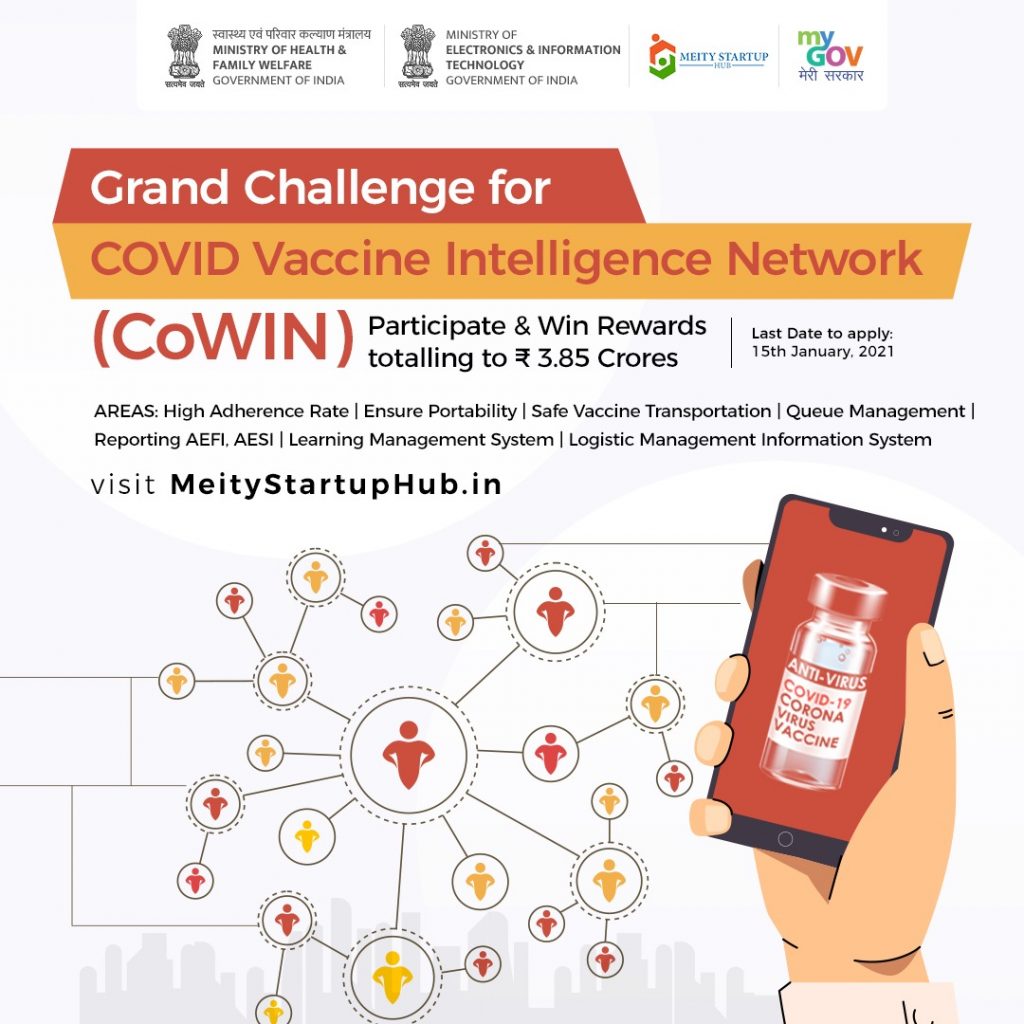
Govt of India launches Grand Challenge for strengthening COVID Vaccine Intelligence Network with Rs 3.85 crore total prize, read details

The Ministry of Health and Family Welfare (MoHFW) along with Ministry of Electronics and Information Technology (MeitY) have announced a Grand Challenge for strengthening the COVID Vaccine Intelligence Network (CoWIN) system, a digitalized platform to be used to effectively roll out and scale up the mechanism of COVID Vaccine Distribution System, nationally. A total of ₹3.85 crore will be distributed as prizes for selected submissions for the vaccine network.

MoHFW throws a challenge for innovators to build a scalable, robust solution for COVID vaccine distribution

The challenge invites participation from innovative startups and emerging technology specialists to augment and scale the CoWIN platform. It is to be launched on the MSH (MeitY Startup Hub) portal, a collaborative platform developed under the aegis of MeitY towards building meaningful synergies in the Indian tech startup space. The participants may register themselves at the MeitY Startup Hub from 23rd December 2020 to 15th January 2021 to take part in the challenge.

Announcing the launch of the program, Union Minister Ravi Shankar Prasad said “India’s innovators have played a crucial role in our fight against COVID19. I invite innovators and startups for grand challenge to strengthen CoWIN platform for roll out of COVID19 vaccination program across India.”

The Ministry of Health and Family Welfare (MoHFW) has identified seven focus areas of technology development to holistically address the likely limitations associated with the complete and effective vaccine distribution system (VDS) and its seamless administration across India.

The notification released by the Press Information Bureau said that the challenge is thrown open to the innovators to address areas relating to infrastructure, monitoring and management, dynamic learning and information systems, constraints of human resources-including technical capacities, vaccine logistics management and tracking enlisted beneficiaries for any adverse event following immunization on a real-time basis.

The participants will have to find solutions to the following seven problems identified in the Covid Vaccine distribution.

  1. How to achieve High Adherence rate from front line Health workers (ANM, ASHA, AWW and any other health workers deployed for line listing) for CoWIN application.
  2. How to ensure portability across the country to account for travel/migration between vaccination sessions and across geography.
  3. How to ensure that Vaccine Transportation is as per the route plan and safe.
  4. How to have system generated Queue management and social distancing at Vaccination session sites.
  5. How to report AEFI (Adverse Event Following Immunization) and AESI (Adverse Event of Special Interest) using a system.
  6. How to have a comprehensive & innovative Learning Management System and dynamic learning support for COVID management.
  7. Development of Logistic Management Information System for end to end logistic, supply chain and inventory management of vaccine.

Monetary rewards for the applicants with promising solutions

The top 5 applicants shortlisted in the challenge will be provided with CoWIN APIs (Application Programming Interface) to prove the efficacy of their solutions for possible integration with the platform. The solutions will be tested for their integration with the platforms through open APIs and for their robustness and scalability.

Each shortlisted applicant stands a chance to win a monetary reward of Rs 2 lakhs covering their logistical requirements. Besides, top 2 applicants will be awarded Rs 40 lakhs and 20 lakhs respectively after their developed solutions are successfully migrated on the cloud on which CoWIN is hosted, apart from their integration with CoWIN.

The detailed implementation mechanism for the Grand Challenge will be as follows:

1. The applications would be scrutinized initially. Based on the initial scrutiny,  top 25 applicants from each thrust area will pitch their solutions before a Jury comprising of experts in the area of IT and Health/ Immunization etc. especially constituted to adjudicate the contestants.

2. The Jury would shortlist the top 05 applicants from each thrust area who will be provided the CoWIN APIs for showing the efficacy of their respective solutions for possible integration with the CoWIN platform. Each shortlisted applicant for the said activity will be rewarded with Rs. 2 Lakh each for covering their Logistical needs.

3. The solutions as integrated with the CoWIN platform through open APIs will again be assessed by the Jury. Prior to this, STQC and iCERT will be entrusted to perform functional/ scalability/security testing of the solutions.

4. Subsequent to the successful migration of the solution on the cloud on which the CoWIN is hosted, in addition to it being successful integration with CoWIN the Jury will select top 2 contestants from each thrust area. Top 2 contestant from initial six areas will be rewarded with Rs. 30 Lakh and 10 Lakh respectively and for 7th thrust area top 2 contestant will be rewarded with Rs. 50 lakhs and 25 lakhs.

The rights for the resultant IPR that is created or developed or otherwise resulting directly or indirectly from the winner of the challenge will rest with the Ministry of Health & Family Welfare Government of India. For further leveraging the solutions, Ministry of Health & Family Welfare will at its discretion can further provision the said IP to any entity/country engaged in distribution or management of Covid-19 related vaccine delivery or handling and treatment of Covid 19 pandemic. The IPR rights for the solution provisioned by the challenge winner(s) will rest with the Ministry of Health & Family Welfare Government of India. However, the base IP on which the dedicated solution for CoWIN has been developed by the challenge winner will still rest with the original winner of the said IP and it can be used for purposes other than covid-19 related applications.

The Indian Tech start-ups, MSMEs, Companies, Limited Liability Partnerships (LLPs) registered in India under Companies Act can apply in this challenge. The entity must have 51% or more shareholding with Indian citizen or person of Indian origin, and the entity should not be a subsidiary company of any foreign corporation. To  encourage  participation  from  academia  and  industry, participating teams not mandatorily registered as Companies/ startups/ MSMEs/ LLPs can also apply  for  the Grand Challenge for Strengthening CoWIN. However, the teams making it to the Stage-2 will be required to apply for registration as Indian Startups/ Company/ MSMEs/ LLPs. It will be expected that by the time of selection at the final stage, necessary registration has been completed.

From murder to bomb blasts to hurling bricks: 8 incidents of violence against BJP in West Bengal in December alone

Politics in West Bengal has long been marred with violence and ever since BJP has gained significance in the state, the ruling Trinamool Congress led by CM Mamata Banerjee has waged a bloody campaign against the party. So much so, that a list of, say, the worst incidents of political violence becomes lost in a haze of plenty. Union Home Minister Amit Shah during his visit to the state on Sunday alleged that political violence has reached its peak in Bengal and around 300 BJP workers have been killed under Mamata Banerjee’s tenure. 

Though the Trinamool Congress has been always been in a denial mode and accused BJP of making false claims, that fact is that BJP karyakartas and leaders have always been at the receiving end in Bengal. To set the record straight, here are 8 such incidents of brutal attacks meted out at BJP workers by TMC goons, solely in the month of December 2020 alone. It is pertinent to note here that these are those few of the many incidents which made it to the mainstream media, and the month of December is not over yet.

December 22: BJP worker Ashok Sardar shot dead in West Bengal’s 24 North Parganas

Minutes after Chief Minister Mamata Banerjee claimed that political murders in the state were declining, a BJP worker named Ashok Sardar was shot dead by bike-borne assailants in the state’s 24 North Parganas on December 22. The incident occurred when men mounted on motorcycles unleashed five bullets at Ashok Sardar in broad daylight in Madhyamgram, 15 kms from Kolkata. Sardar succumbed his injuries. The deceased leader’s family has alleged TMC’s hand in the incident. 

December 20: BJP workers attacked with stones after HM Amit Shah’s rally

Hours after many senior TMC and Congress leaders including TMC stalwart Suvendu Adhikari joined BJP, Bharatiya Janata Party’s workers were allegedly attacked by TMC goons after a massive rally of Union Home Minister Amit Shah in Midnapore. The workers were attacked in the Keshpur area while they were coming back from the rally. As per the reports, their cars were pelted with stones and bricks. Some workers have alleged that petrol bombs (Molotov cocktail) were also hurled on their vans while returning from the rally.

As per reports, as many as 15 BJP workers were injured while 6 had to be hospitalised. Cars were also badly damaged in the attack.

December 13: BJP worker Sukhdev Pramanik was found dead in Bardhaman in West Bengal

On December 13 (Sunday), a BJP karyakarta named Sukhdev Pramanik was found dead in a pool in East Bardhaman’s Purbasthali village. BJP alleged that Pramanik was killed by TMC goons after he took part in protests against the attack on the party chief JP Nadda’s motorcade in Kolkata on December 10. The worker’s family claimed that he had gone missing after he participated in the BJP’s protest rally against the attack on BJP president J P Nadda’s convoy. TMC, however, rejected the charges.

Following the incident, the locals took to the streets, blocking a road for 2-3 hours and burning tyres. They barred the police from taking Pramanik’s body from the spot. The situation was only resolved after police assured the protesters that a “proper investigation” will be conducted.

December 12: BJP booth president Saikat Bhawal hacked to death, six others critically injured

Merely 24 hours before Sukhdev Pramanik’s murder, a BJP booth president named Saikat Bhawal was bludgeoned to death and six others critically injured in Halisahar in West Bengal’s North 24 Paraganas on Saturday evening, allegedly by Trinamool (TMC) goons. They were targeted during BJP’s door-to-door outreach programme ‘Griha Sampark Abhiyan’. Saikat had gone to meet people, as a part of BJP’s public outreach programme, when he was assaulted by Trinamool Congress goons. The BJP has alleged that he was stabbed by sharp weapons.

Bhawal was rushed to the Jawaharlal Nehru Medical College Hospital in Kalyani where he was pronounced dead. No arrests were made in the case.

December 10: BJP chief JP Nadda and Kailash Vijayvargiya’s motorcade attacked in Kolkata, West BEngal

On December 10, JP Nadda, National President BJP, was also attacked allegedly by TMC goons while he was going to Diamond Harbour. Protesters gathered on the streets and attempted to block the road to stop Nadda’s convoy from passing. Protesters also pelted stones at the vehicle. Eight leaders, including Kailash Vijayvargiya, Dilip Ghosh and Mukul Roy, were injured in the incident.

Videos had surfaced where protestors carrying Trinamool Congress flags are seen throwing stones and bricks at Kailash Vijayvargiya’s car, while the state police stood like mute spectators.

Sharing the same video which showed cracked windshields and pieces of bricks hurled at the car he was travelling in, Vijayvargiya called the attack an abject failure of the WB police working at the behest of Mamata Banerjee government.  “In front of the police, near Siracol Bus Stand, the TMC goons hit our workers and threw stones at my car”, wrote Vijayvargiya, furthering that the Bengal police were informed about JP Nadda’s program in advance, still they failed to provide adequate security to the party president.

Not coming as a surprise, instead of condemning the attack on the BJP chief, West Bengal CM Mamata Banerjee had then too called the ambush, staged.

December 9: BJP worker Swapan Das found murdered in Coochbehar, West Bengal

Swapan Das, a BJP booth committee member of Tufanganj assembly, was found hanging from the ceiling on December 9 morning inside a school building in West Bengal’s Coochbehar district. The official Twitter account of BJP Bengal unit posted a tweet, informing about Das’ suspicious death and alleging TMC’s involvement in his death.  

The BJP has alleged that “miscreants” having their allegiance to the Trinamool Congress had murdered Das on Tuesday night and his body had been hanged later. 

According to a local BJP leader, Das’ death was a cold-blooded murder presided over by the TMC. He cited the blood-stains present on the floor and the deceased’ feet touching the ground to allege there was foul play involved in his death. Once again, TMC repudiated the allegations.

December 7: BJP leader Kabir Bose’s car vandalised, confined to his house by 100 TMC workers

In yet another incident of atrocity on BJP workers in the hands of TMC goons, BJP spokesperson Kabir Shankar Bose was held captive in his own house by almost 100 TMC goons who surrounded his house and prevented him from stepping outside. Informing about the incident, Rajya Sabha MP Swapan Dasgupta Tweeted: “West Bengal BJP spokesman & barrister Kabir Shankar Bose has been under siege in his flat in Serampore. The TMC, in collusion with the police, are preventing him from leaving or anyone from entering.”

Dasgupta further stated that Kabir’s car has been vandalised and inquired whether the law and order situation has broken down in the State of West Bengal.

While speaking to Opindia, Kabir Shankar Bose narrated his ordeal. He stated that around 100 TMC workers are outside his house and that he has been under siege.

It was reported how a scuffle broke out between the security personnel of the BJP leader and Trinamool workers after BJP leader Kabir Shankar Bose tried to take his car out of his house. In a video which surfaced, two groups could be seen having a heated argument, followed by pushing and shoving. The BJP leader’s car was vandalised, as evident from the broken glass pane at the back of his car.

Like in all other cases, TMC not only denied involvement but also went a step ahead to make bizarre allegations against West Bengal Governor Jagdeep Dhankhar. Mamata Banerjee’s close aide Kalyan Banerjee had claimed that the BJP leader is a ‘goon’, who has been sent to unleash hooliganism in the area by West Bengal Governor.

December 7: West Bengal police and TMC goons hurl crude bombs, rain lathis, killing senior BJP karyakarta Ulen Roy and injuring several others

On December 7, West Bengal was converted into a battlefield when the police attacked BJP workers during a protest against the WB government at Tinbatti. West Bengal police used batons, tear gas, and water cannons to stop peaceful protesters in two rallies organized by Bharatiya Janata Party. There were reports that TMC goons were also standing with the WB police and hurdled country-made bombs on the protesters. The protest was against the Mamata Banerjee government for ignoring the under-developed North West Bengal. Over a hundred people were injured, and one senior Karyakarta, Sri Ulen Roy, died.

Considering all these incidents happened merely in a span of 22 days, speaks volumes of the grim situation in Bengal where TMC goons, bolstered by political patronage, have turned into nightmares for their political opponents in the state. With West Bengal assembly elections approaching in a few months from now, one wonders how many more BJP workers would fall prey to the wrath of the ruling dispensation which will leave no stone unturned to keep BJP at bay in West Bengal.


Maharashtra: Farmer commits suicide after writing a letter to minister Bacchu Kadu, alleges assault by police and orange traders

Even as farmers’ protests continue along the Delhi border, a farmer in Maharashtra’s Amravati took the extreme step of committing suicide allegedly after being harassed by Sheikh Amin and Sheikh Gafoor, along with Police SI Deepak Jadhav. Ashok Bhuyar, the deceased farmer, left a suicide note addressed to Maharashtra minister Bachhu Kadu before committing suicide by consuming poison.

On Tuesday, Bhuyar was found dead in a field near Ganesh Temple at Borala. The police rushed to the spot after which it was revealed that Bhoyar had consumed poison. His body was patted down by the police officers, who received a note penned by the deceased farmer.

Farmer blames orange traders Sheikh Amin, Sheikh Gafoor, and Police SI Deepak Jadhav in his suicide note

Bhuyar was an orange grower from Dhanegaon in Anjangaon Surji. In his suicide letter, he had alleged that the orange traders—Sheikh Amin and Sheikh Gafoor did not pay him for his agricultural produce and when he insisted them for the payment, they reportedly beat him up. After the incident, Bhuyar approached the police station to file a complaint against the two traders. However, the police refused to cooperate with him and sent him back without filing a complaint.

In despair, Bhuyar wrote a suicide note to the Maharashtra minister, narrating his ordeal and took the extreme step of giving up his life. In his letter, Bhuyar gave an account of injustice meted out to him by the two orange traders and the police inaction against them. He mentioned that he sold his oranges to two traders, Sheikh Amin and Sheikh Gafoor, in Anjangaon Surji. However, the two traders forced Bhuyar to sign the receipt of the payment without paying for the purchase of the oranges. Bhuyar writes in his letter that he was also beaten by the two traders and when he went to the police station on December 18 to file a complaint against them, his request was turned down by the police.

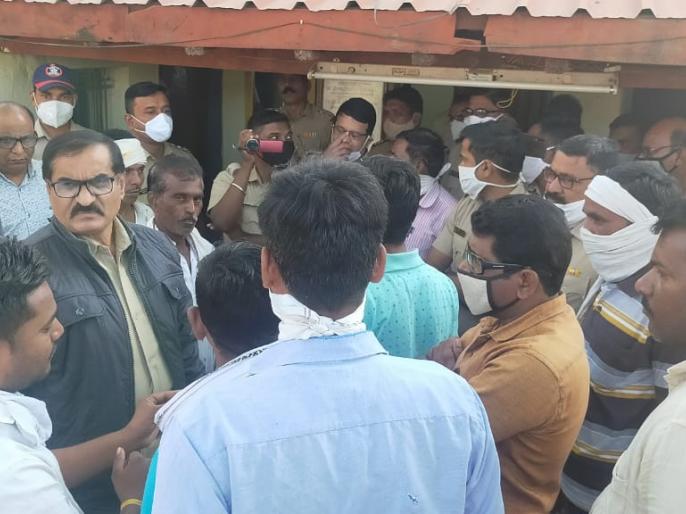
Since the suicide of farmer Bhuyar, tensions are simmering in Dhanegaon. A disgruntled mob of angry villagers stormed the police station demanding action against the Police SI Deepak Jadhav and orange traders Sheikh Amin and Sheikh Gafoor. As per local reports, CCTV footage from December 18 showed that farmer Ashok Bhuyar was beaten by police officers when he had come to file a complaint of fraud against the two orange traders. A case has been registered against Assistant Sub-Inspector of Police Deepak Jadhav and the two orange traders Sheikh Amin and Sheikh Gafoor on a complaint filed by Gaurav Bhuyar, the son of the deceased farmer.

Deceased farmer’s brother dies of a heart attack after his younger brother’s suicide

Ashok Bhuyar’s elder brother, Sanjay Bhuyar, could not bear the shock of losing his younger brother. While returning from his younger brother’s funeral, Sanjay suffered a cardiac arrest following which he was rushed to a hospital. However, his life could not be saved, and he died while undergoing treatment. The loss of two lives from the same family has created a stir in Amravati district.

Bacchu Kadu had threatened Union Minister Raosaheb Danve with assault

It is important to note that the suicide letter was addressed to Bacchu Kadu, a Maharashtra Cabinet Minister who hails from Amravati. Kadu was recently in the news for threatening Union Minister Raosaheb Danve over latter’s comments on farmers’ protest being fuelled by China and Pakistan. Kadu said that earlier when Danve had made such a statement, he had gheraoed his house but this time he would have to enter his house and beat him up.

West Bengal: After Suvendu Adhikari’s exit, four TMC ministers skip cabinet meeting, speculations rife

Days after TMC leader Suvendu Adhikari called it quits, four West Bengal government’s ministers have skipped cabinet meeting called by Chief Minister Mamata Banerjee at the state secretariat on Tuesday. They are Forest Minister Rajib Banerjee, Rabindranath Ghosh, North Bengal Development Minister, Tourism Minister Gautam Deb and Chandranath Sinha, Minister for Fisheries. This led to speculations that they may soon jump the TMC ship to join the BJP.

Covid kept ministers away, they claim

Ghosh was tested positive for Covid-19, and he is currently staying away from administrative activities. At present, Mamata’s latest initiative, ‘Duare Sarkar’ (government at your door-step), is carried out in his constituency, which is said to be another reason for not attending the meeting. Deb, who is from north Bengal, decided not to travel to Kolkata, keeping the Covid-19 situation in mind. Sinha, who is from Bolpur, claimed that he did not attend the meeting as he was busy preparing for CM’s visit in Bolpur on December 28 and 29. He said, “I am very much with the TMC and I will be with the party. There is no question of shifting my political alignment.”

Rajib Banerjee not happy with party’s functionaries

In recent times, Banerjee has stayed away from the party’s activities on several occasions. It is believed that he is not pleased with the functioning of a section of the party functionaries. Though Partha Chatterjee, general secretary of TMC, has tried to pacify the situation and met Banerjee twice, there are rumours that he may soon leave TMC and join BJP. He had said that those who are hardworking and dedicated are not getting importance in TMC. When TMC leaders had reached out to him he had said, “I am not taking back my earlier statement I had made at an apolitical function in Kolkata. I spoke my mind. I will not tell the media if there have been talks with the party.”

Recent shuffle in Party leaders stirred WB politics

Several TMC leaders, including former Cabinet Minister Suvendu Adhikari, have left Trinamool Congress and joined hands with Bharatiya Janata Party. Reports suggest that Home Minister Amit Shah will visit Bengal more often for the preparations of upcoming Assembly elections in the state to be held in April-May 2021. BJP had won only three seats in the last Assembly elections but managed to grab 18 out of 42 Parliamentary seats in the 2019 general elections. Increasing attacks on BJP workers in the state are being seen as an attempt of TMC to curb the popularity of BJP in the state.

Assam: Guwahati now has its own human milk bank, first in Northeast

0

On December 9, the first Human Milk Bank in Northeast was inaugurated in Satribari Christian Hospital (SCH), Guwahati, Assam. It is the 15th such unit in India. The facility can store Human Milk for up to six months to six years.

Dr. Devajit Sarma, a pediatric and neonatal care specialist at SCH, said that breast milk is the best food for newborn babies. It is recommended to start breast milk within the first hour of birth. “To bring down cases of neonatal mortality and mortality below 5 years of age, exclusive breastfeeding for the first six months,” he added.

Sarma further added that in India, there are many cases where newborns cannot get enough milk in the first few weeks as the mother could be sick or have some infectious disease (such as Covid-19) or she is unable to produce enough milk. “The human milk bank will be the best option for such babies,” Sarma said.

The practice of wet-nursing in which someone in the family or an acquaintance breastfeeds the baby in such situations exists in India. However, doctors suggest that there are some drawbacks to the practice. For example, if the breastfeeding woman is suffering from some infection, it can get transmitted to the baby.

Dr. Sarma said that the babies should get pasteurized milk from a donor that has been stored professionally in a milk bank in such cases. “In the milk bank, we will collect milk from lactating women who are willing to donate. It will then be pasteurised and stored in deep freeze. The milk can be stored from 6 months to 6 years,” he added.

The hospital delivers around 100 babies every month. Sarma added that milk could be collected from some of those mothers who are willing to donate. “We will also encourage other lactating mothers to donate to the bank. In coming days, we might even include some incentives for the donors,” he said.

The milk bank was set up with assistance from Rotary Club. Rs 10 was donated by Rotary Club district 3240 to buy required equipment for the human milk bank in the hospital.

Human Milk Banks can improve infants chances of survival

According to the World Health Organization, every year, more than 20 million infants are born under 2.5 KG weight. Over 96% of them are in developing countries. The low-birth-weight (LBW) infants are at risk of retardation, infectious disease, developmental delay and death during infancy and childhood. Though WHO recommends that the infants should be fed by the mother’s own milk, but in case the mother’s milk is not available, the alternatives include breast milk from a donor or formula milk. Evidence has shown that untreated breast milk from a donor decreases the chances of severe gut disorder, necrotising enterocolitis, and other infections during the initial hospital stay after birth.

Theodor Escherich, German-Austrian paediatrician and a professor at universities in Graz and Vienna, after conducting a study for ten years (1902 – 1911) on different sources of nutrition and its effect on newborns, found that the breastfed newborns have significantly different intestinal bacteria compared to those who were fed by other means. During this period, in 1909, he opened the first Human Milk Bank. Another milk bank was opened in the following year in the Boston Floating Hospital, which was the first Human Milk Bank in the United States.

Human Milk Banks around the world

Europe, South Africa, America, Singapore and Australia have Human Milk Banks. Apart from these countries, Brazil has done exponentially good in the field. With over 217 milk banks, it has the most effective Human Milk Bank system in the world. The first such bank was opened in Brazil in 1985. Since then, the country has reduced its infant mortality rate by 73%, and Human Milk Banks have played a major role in it.

Human Milk Banks in India

Asia’s first Human Milk Bank was opened in India in 1989 at Sion Hospital in Mumbai. Since then, Guwahati’s Milk Bank has become the 15th such initiative in the country. Some of the notable milk banks in India include Vatsalya — Maatri Amrit Kosh, at Lady Hardinge Medical College, and “Yashoda” Human Milk Bank in Dr. D. Y. Patil Medical College, Hospital and Research Centre, Pimpri, Pune in Maharashtra.

In 2003, WHO published a paper [PDF] titled “Global Strategy for Infant and Young Child Feeding” in which the organization talked about the benefits of breastfeeding, challenges faced by the mothers and possible interventions of the government and non-government entities to ensure every infant gets human milk for the first six months since the birth. WHO said [PDF] that “every effort should be made to provide mother’s own milk to all newborns, including sick and vulnerable newborns, either directly through breastfeeding or by giving their mother’s expressed breast milk via cup or spoon feeding.”

Why do infants not receive breast milk?

There can be several reasons that can lead to the unavailability of breast milk for the infant. Low milk supply, medical condition, preterm delivery, adoption, surrogacy and unfortunate situations like the death of mother or separation of the infant from mother can contribute to the unavailability of breast milk for the child. In such cases, if a Human Milk Bank is available, the infant can receive professionally stored Human Milk, which will not only save the infant from possible infections but help in proper growth and development.

Lack of awareness of Human Milk Banks

Though India got its first Milk Bank in 1989, there is a lack of awareness around the subject that leaves the parents and families in doubt about the quality and safety associated with donated breast milk. On the contrary, the Indian Government’s National Health Mission has strict guidelines [PDF] in place for the storage and usage of Human Milk in such banks.

In India, Breast Milk Banks are known as Comprehensive Lactation Management Centres (CLMC) and Lactation Management Unit (LMU), depending on the level of health facilities where these units are established. The Indian government has set a target to ensure 70% of infants have access to breast milk by 2025. This target will be increased to 100% with time.

Who can donate milk?

A lactating mother can donate milk for such a bank only after approval from the authorities and proper screening. Any mother who has been approved by the authorities to donate milk should donate only if she has surplus milk after feeding her own infant. It must be done on a volunteer basis.

National health mission has provided a complete set of guidelines on collection, pasteurization and storage of Human Milk in such milk banks. There is a need to make people aware of the availability of such services, and the government should increase efforts to establish more Milk Banks in India to ensure all infants get access to Human Milk.  

West Bengal: Violence breaks out between TMC workers and followers of Suvendu Adhikari; BJP workers also join in

Days after former TMC heavyweight Suvendu Adhikari joined the BJP, clashes erupted allegedly between his followers and the TMC workers. The violence reportedly took place in Ramnagar area of East Midnapore during a rally organised by Suvendu Adhikari.

As per a Times Now report, BJP workers also joined in the clashes between the TMC workers and Suvendu Adhikari’s followers. The cause of the violence is ascribed to unseemly gestures allegedly made by the participants of Adhikari’s rally while they were passing through the TMC office in Ramnagar. This touched off a minor scuffle between the two sides which quickly escalated into full-blown violence.

The report states that stone-pelting, incidents of physical assault and clashes were witnessed during the violence. At least 3 people have reportedly sustained injuries in the violence.

Suvendu Adhikari joins the BJP in presence of Union HM Amit Shah

The clashes between the TMC side and Adhikari’s supporters come just days after the former TMC leader had joined the saffron fold in presence of the Union Home Minister Amit Shah on December 19. Along with Adhikari, 9 MLAs, an MP, and a former MP joined the BJP at a rally in Midnapore.

Suvendu Adhikari, Tapasi Mondal, Ashoke Dinda, Sudip Mukherjee, Saikat Panja, Shilbhadra Dutta, Dipali Biswas, Sukra Munda, Shyamapda Mukherjee, Biswajit Kundu, and Banasri Maity joined the BJP ahead of West Bengal Assembly elections 2021.

West Bengal politics marred with violence against the opposition and dissenting voices

The spate of violence in West Bengal has become a recurrent theme in the political landscape of the state, especially after the BJP won 18 Lok Sabha seats of the total 42 in the General Assembly elections in 2019. Since then, opposition political leaders are targeted by the TMC leaders.

Recently, BJP President JP Nadda’s rally was attacked by the TMC supporters and in which senior BJP leaders were injured. Besides, other opposition political leaders, who have dared to raise opinions at odds with the incumbent TMC regime have also been targeted, with many of them found dead under mysterious circumstances.

Court restraints father of Shehla Rashid and media from publishing defamatory content against her

0

A Small Causes court in Srinagar passed an order on December 21 restraining the father of JNU activist Shehla Rashid from causing interference in her life and publishing any material through media or other means which has the potential to cause harassment, agony or pain to her or is defamatory in nature. The court also directed media from publishing, telecasting or broadcasting anything related to the matrimonial life of Shehla’s mother and father or any material that has the potential to defame her and her mother and sister.

The order was passed by the Small Causes court judge Fayaz Ahmad Qureshi in a suit filed by Shehla, her mother Zubeida Akhtar and sister Asma Rashid seeking a permanent injunction against her father Abdul Rashid Shora and the media. The court asked the media outlets to suspend online links containing any content that is defamatory or violates the right to privacy of the plaintiffs. “The media is also under legal duty to ascertain the truth and abstain from reporting on a matter which has a potential of infringement of right to privacy or other rights of the plaintiff”, the order read.

Shehla, her mother and her sister had contended before the court that Abdul Rashid Shora had made attempts to defame and lower their reputation by levelling false allegations against them that included calling them ‘anti-national elements’. The court said that the conduct of Shehla’s father seemed unjustified and lacking any sound legal basis. The court added that Shora seemed to have approached the media with an intention to create a hype around private matrimonial issues. The court said the Shora violated a previous order of a lower court passed under the Domestic Violence Act that restrained him from harassing the plaintiffs.

The court has allowed the defendants to approach it for modification, alteration or cancellation of the restraining order by the next hearing in the matter scheduled on December 30, 2020.

Rs 10 crore defamation suit against her father

Earlier this month, a Kashmiri businessman and politician Feroz Pirzada had filed a Rs 10 crore defamation suit against Shehla’s father after the latter alleged that his daughter had mysterious financial dealings with Feroz Peerzada, another Kashmiri businessman Zahoor Ahmad Shah Watali and Rasheed Engineer, an ex-MLA. Shora had said that Shehla has been colluding with anti-India forces and getting paid for it.

Shora alleged that he received death threats from Shehla

Last month, Shehla’s father had filed a complaint against her alleging that he was facing death threats from his own daughter. In his letter addressed to has approached the office of DGP, Jammu and Kashmir Police, Shora threw light on her daughter’s “notorious activities” and urged the Jammu and Kashmir police to investigate her bank accounts, the property acquired by her at New Delhi, her email accounts and her mysterious financial dealings.

Uttar Pradesh: 8 people arrested for forcibly converting Hindu girl into Islam, seven for luring people into Christianity

0

The Uttar Pradesh police arrested eight people on Tuesday for forcibly converting of a 21-year-old Hindu girl into Islam and then carrying out her marriage.

According to a report in Times Now, the police have arrested the eight accused, including a woman, from the Agra crossing. On November 17, the girl’s father had registered a complaint alleging that her 21-year-old daughter had gone to the market to buy some items but did not return home. The complainant later got to know that his daughter was abducted by the accused to marry and then forcibly convert her.

As per the police, the girl was missing since November 17, however, her family filed the case on December 17 after receiving a letter from the accused Javed’s lawyer. The lawyer had informed that their 21-year-old daughter had married Javed and converted to Islam in a court.

Javed, who is absconding now, has been accused of ‘kidnapping and unlawfully converting’ a Hindu woman to Islam while eight of his relatives were booked and arrested on December 22. Javed has been booked under the IPC section 366 and the Uttar Pradesh Prohibition of Unlawful Conversion of Religion Ordinance, 2020.

Those arrested are identified as are Ramjani, Aamreen, Mahmood Ali, Mahfooz Ali, Haidar Ali, Antar Hussain, Ansar Hussain and Shahid Hussain.

According to the police, Javed and his four relatives are hiding in Uttar Pradesh while the woman is in Delhi. The cops have announced a reward of Rs 25,000 on each of the five men.

Three arrested in Azamgarh for trying to convert to accept Christianity

In another incident, three people have been arrested for allegedly trying to convert some villagers into Christianity near Deeh Kauthaul village in Azamgarh on Sunday. The accused have been identified as Balchandra, Gopal Prajapati and Neeraj Kumar. They were arrested from Deeh Kauthaul village on Sunday, Deedargaj Station House Officer Sanjay Kumar Singh said.

Reportedly, the three men came to the village and allegedly organised a meeting at Tribhuvan Yadav’s home to convert people by luring them with rewards.

A villager, Ashok Yadav soon informed police, who arrested the three accused under the Uttar Pradesh Prohibition of Unlawful Conversion of Religion Ordinance, 2020, the police have informed.

South Korean national held for forcibly converting people to Christianity

Four persons, including three women, were arrested in Uttar Pradesh’s Greater Noida on Saturday for allegedly luring people to convert into Christianity.

According to the reports, one of the arrested women is a South Korean national. She was staying on rent in Greater Noida and lured people to convert them into Christianity.

The accused lured local people for religious conversion in the past also, Central Noida’s Deputy Commissioner of Police Harish Chander said. The police have registered an FIR against the accused under the Uttar Pradesh Prohibition of Unlawful Religious Conversion Law at the Surajpur police station and further proceedings are underway.

Uttar Pradesh Prohibition of Unlawful Religious Conversion Law

The new anti-conversion law is aimed at preventing forced conversions under the pretext of love, marriage and by coercion. “There were more than 100 incidents reported in which forceful religious conversion was being done. Also, it was reported religious conversions were going on in the state using deceitful means. So to make a law on this becomes an important matter of policy now,” UP Cabinet Minister Siddharth Nath Singh had earlier remarked.

Under the new law, a jail term of 1-5 years is awarded to the accused (extended to 3-10 years in case of SC/ST victims) and a fine of ₹15,000 (₹25,000 in case of SC/STs). Moreover, the offender’s proven guilt for conversion will attract a jail term of 10 years.

Kerala, which does not have APMC, now extends support to Punjab farmers who want to sale through APMC only

The state of Kerala, that does not have any legal framework APMC act, has now decided to jump in support of the protests carried out by a few alleged farmers along the Haryana-Delhi border against the three farm laws passed by the Modi government.

On Wednesday, Kerala Chief Minister Pinarayi Vijayan proclaimed that the state government stood in solidarity with agitating ‘farmers’ against the farm laws. The Kerala Chief Minister said that centre should listen to ‘reasonable demands’ of the farmers as the protest is gaining public support day by day.

The Kerala government’s enthusiasm to support the alleged ‘farmers’ protests against the Modi government comes after the Communists in the state had decided to convene a special Assembly session on December 23 to discuss and reject the three newly introduced Farm Bills that were passed by the Centre in September 2020.

The decision was taken by the Kerala government after a cabinet meeting in which it was decided that the state government will approach the Governor Arif Mohammad Khan to call a special assembly session. However, in a setback to Kerala government, Governor Arif Mohammad Khan refused to grant approval for a special session of the Kerala Assembly.

Ironically, the so-called solidarity by the Kerala government to the farmers who are protesting against APMC reforms does not hold any value as the state of Kerala has no APMC structure, the main a bone of contention for the protesting farmers.

Reacting to these allegations, Kerala Chief Minister said that even though they do not have APMC structure, they will support the demands of the protesting farmers as Kerala is a consumer state and it will have maximum impact if food scarcity hits the country.

No APMC act in Kerala

A few disgruntled farmers from Punjab have camped along the NCR region to protest against the Modi government causing massive inconvenience to the citizens of the national capital. These protests have turned political with opposition parties, far-left protestors, Khalistanis are trying to hijack these protests to further their own political agenda.

Similarly, Kerala too has now joined these protests in demand to repeal laws that reforms the farm sectors, especially the APMCs. However, the catch is Kerala does not have any APMC system as it has not implemented the Agriculture Produce Marketing Committee(APMC) Act of 2003.