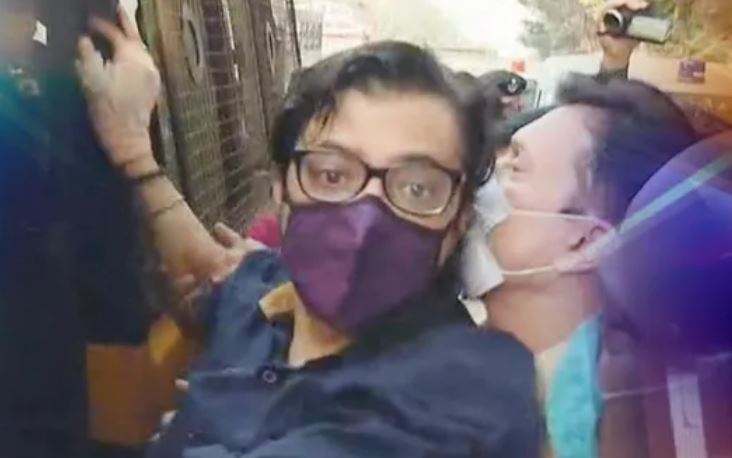
Republic TV editor-in-chief Arnab Goswami on Thursday withdrew his anticipatory bail plea filed in connection with a case registered against him by Mumbai Police for allegedly assaulting a woman police officer.
According to the reports, Republic TV chief Arnab Goswami had moved the anticipatory bail application before a sessions court in Mumbai in November. Goswami had sought pre-arrest bail after an FIR was registered against him at NM Joshi Marg police station in central Mumbai for allegedly assaulting a woman police officer when the police team had barged into his house to assault and arrest him on November 4.
However, lawyer Shayam Kalyankar, representing Arnab Goswami said the anticipatory bail plea has been withdrawn as per Goswami’s instructions.
Along with Arnab Goswami, his wife also withdrew a similar plea for anticipatory bail in the same case. No reason was cited for the withdrawals.
Case against Arnab, family for allegedly assaulting woman cop
On November 4, hours after Mumbai Police had barged into Arnab Goswami’s residence to assault and arrest him in connection with a 2018 suicide case, an FIR was registered against Republic TV chief for allegedly assaulting an on-duty lady police officer. More than 30-40 cops had entered his house forcefully to arrest him in an already close case.
The FIR against Arnab Goswami was registered under sections 353 (assault to deter public servant from discharge of his duty), 504 (intentional insult to provoke breach of peace) and 506 (criminal intimidation) of the Indian Penal Code.
A woman cop named Sujata Tanvade claimed that she was assaulted by Arnab Goswami during his arrest in the morning. Not just Arnab Goswami, FIRs against his wife, son and two others were also registered for allegedly assaulting cops.
Congress General Secretary Priyanka Gandhi Vadra has taken down her Facebook post, which accused the Modi government of privatising Indian Railways by transferring its proprietorship to the Adani Group. The Congress scion was forced to back-pedal on her attempt to fearmonger after Facebook flagged her tweet as “misleading” content.
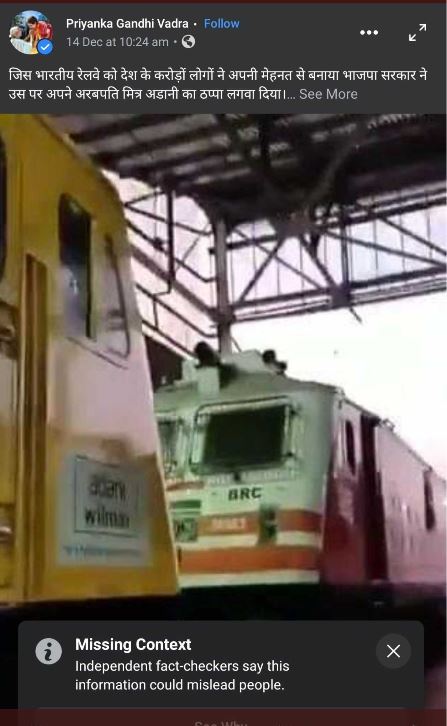
Facebook made Priyanka Vadra’s post unavailable after marking it as “missing content”. It stated that the independent fact-checkers, with whom the social media giant works, have identified and declared Vadra’s post misleading and false.
Facebook marked Priyanka Gandhi Vadra’s post as unavailable calling it ‘misleading’
Moreover, PIB Fact Check, a dedicated platform set up to counter fake news related to government’s policies and scheme, on Wednesday, also flagged claims made by Congress leader Priyanka Gandhi on Facebook and called it “misleading”. In a tweet, PIB Fact Check shared a screenshot of Priyanka Gandhi’s post and said a “false claim” is being spread that a private company’s stamp was pasted on Indian Railways train.
दावा: #फेसबुक पर एक वीडियो के साथ यह दावा किया जा रहा है कि सरकार ने भारतीय रेल पर एक निजी कंपनी का ठप्पा लगवा दिया है। #PIBFactCheck: यह दावा भ्रामक है। यह केवल एक वाणिज्यिक विज्ञापन है जिसका उद्देश्य केवल ‘गैर किराया राजस्व’ को बेहतर बनाना है। pic.twitter.com/vSmK8Xgdis
On December 14, Priyanka Gandhi shared a video showing “Adani Wilmar” written on the engine of a train. “The BJP government has put a stamp of its billionaire friend Adani on the Indian Railway, which was established through hard works of millions of people. Gradually, a large portion of railways will go to Modi ji’s billionaire friends. Farmers are fighting to prevent farming from going into the hands of Modi ji’s billionaire friends,” the Congress leader had posted.
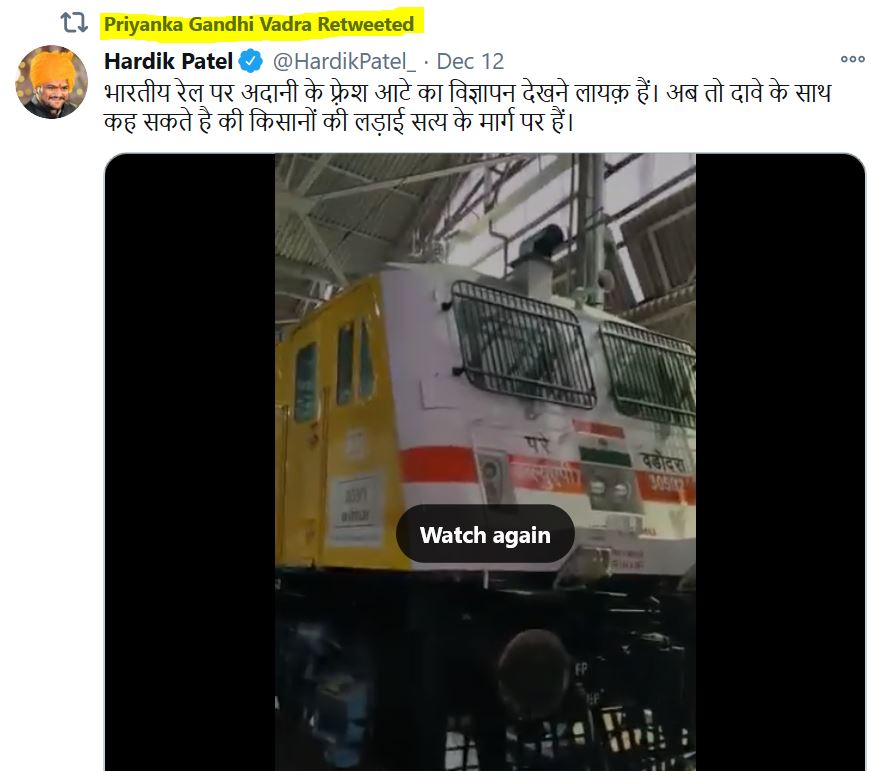
While Priyanka Gandhi Vadra pulled down her tweet from Facebook, she continued to spread the same misleading news on Twitter. She has still not undone retweeting Hardik Patel’s Tweet in which the working President of Gujarat Congress shared the same video saying, “Adani’s fresh flour advertisements on Indian Railways are worth a watch. Now we can say with belief that the farmers’ fight is on the path of truth.”
Here is why Facebook taking down Priyanka Gandhi Vadra’s tweet is a rare incident and how she can continue to lie like her brother Rahul Gandhi without ever getting fact-checked by Facebook
Priyanka Gandhi Vadra had to pull down her tweet because in a rare incident, Facebook had marked the post as misleading information (rightly so, but rare nonetheless). The Congress party has religiously spread fake news almost everyday. Even their scion Rahul Gandhi has almost based his contemporary political career out of spreading misinformation, disinformation and plain fake news on several occasions.
If one notices, these posts have never really been marked by Facebook or its ‘independent’ fact-checkers as ‘misleading info’.
Does this mean that Facebook has suddenly decided to become spectacularly ‘neutral’ and has shifted focus to India well before the 2024 election?
Well, yes and no.
Facebook has not become neutral and suddenly woken up to the lies being spread by Congress, as many would like to believe. They might have shifted their focus to India, just like Twitter did recently, but that is not really why they marked the fake news by Priyanka Gandhi Vadra as misleading.
According to Facebook guidelines, social media does not ‘fact-check’ political speech. Which is to say, that if a politician posts something on Facebook out of his own will, or makes his own video and post on the platform, even if it spreads lies, it will not be ‘fact-checked’ by Facebook or its fact-checkers. The rationale behind this is that political speech should be beyond the ambit of their fact-checkers and there should be no hindrance to the political discussion by those hoping to be elected.
In one recent case where Facebook had indeed marked and fact-checked a politician was Donald Trump. However, they did not label his posts under their ‘fact-checking’ policy. They found a work-around using their ‘community standards’ guideline, which basically says that the posts by Trump could have led to violence or disruption of peace.
To further simplify – while Facebook’s fact-checking program does not apply on politicians as long as they share their own content and don’t re-share fake news by any other page or platform, their posts can be flagged by Facebook if the platform thinks they violate their ‘community standards’. When Facebook does mark posts by a politician for violating ‘community standards’ as they did with Trump, it is not the ‘fact-checkers’ that Facebook collaborates with who do this, but another team of Facebook that is responsible for maintaining community standards.
So what happened in the case of Priyanka Gandhi Vadra?
Well, Priyanka Gandhi Vadra had shared a third-party video that turned out to be fake, and hence, the fact-checkers could mark that tweet was misleading info.
Had she like her brother made her own video peddling these lies, Facebook would have essentially done absolutely nothing since it does not flag fake news by politicians since for them, it comes under the umbrella of ‘political speech’.
Therefore, if Priyanka Gandhi Vadra wishes to continue spreading fake news, she should learn from veterans like Rahul Gandhi and start making her own videos. Luckily for her and her brother, their lies are protected under ‘political speech’ as far as Facebook is concerned. For the public – well – their string of losses indicate otherwise.
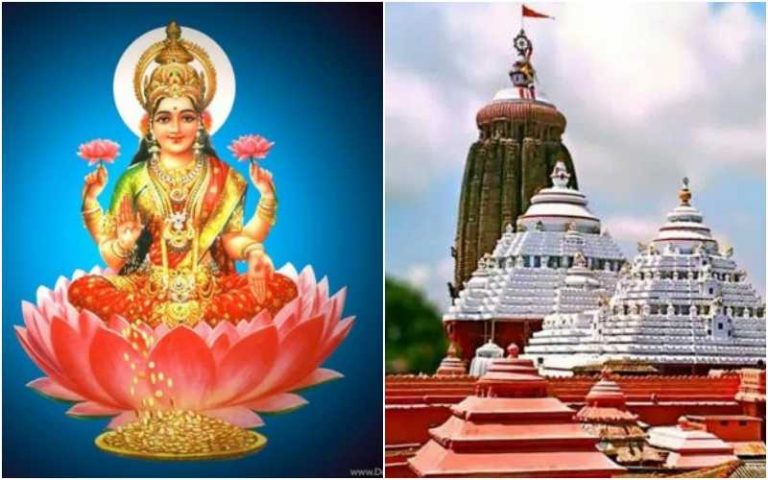
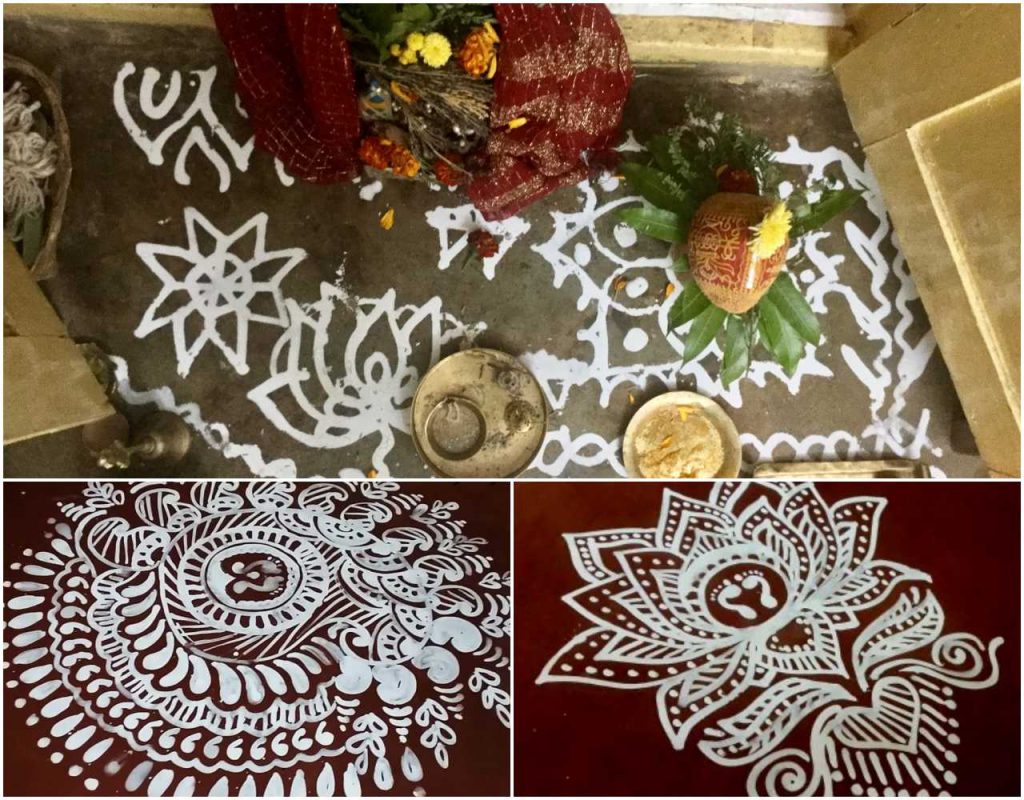
In Odisha, every Thursday of the current Margashira month is a festival. Wherever you go, you will find the front door of every household cleaned, decorated and beautifully adorned with ‘Jhoti-Chita’, designs made with rice paste. The designs are of beautiful floral patterns, mostly lotus and include little pair of feet, drawn with rice paste.
The feet symbolise the auspicious feet of Maa Laxmi, the Goddess of wealth and prosperity. And the ‘Jhoti-Chita’ with little feet of Laxmi means the lady of the house, irrespective of her caste and socio-economic status, is humbly inviting Maa Laxmi inside her home to bless her family.
Images of Jhoti Chita on Laxmi Puja, courtesy: Wikimedia commons, Pinterest and Odishabytes
The phrase ‘irrespective of caste and socio-economic status’ is not used here arbitrarily. It is because the festival of Laxmi Puja on ‘Manabasa Gurubara’ (Gurubara means Thursday in Odia) is performed with the same rituals and fervour by all Odia married women, irrespective of their caste and socio-economic status. For Maa Laxmi has told so, and Maa Laxmi has mandated that she will bless every woman who cleans her home and performs the Puja on Thursdays of the Margashira month. And it is Maa Laxmi’s order that in her kingdom, no one will discriminate on the basis of caste. Intrigued? Read the story behind the festival.
The story of Laxmi Purana
Reciting the Laxmi Purana written by 15th century poet Balrama Das is a part of of the festival. The festival is centered around the story narrated in the book that is a part of every Odia household. The legend goes like this:
Maa Laxmi visits the home of Shriya, a woman of the ‘Chandal’ caste
One Thursday in the month of Margashira, Goddess Laxmi, the deity of wealth and prosperity, was out visiting her kingdom. As she roamed around the city in the morning, she observed that most households are unkempt, dirty, with their inhabitants still in bed. Laxmi was dismayed. She noted that even the women in rich, lavish households in the houses of merchants and powerful men were too lazy to clean their family homes. As she ventured further, she entered in the locality of low-caste ‘Chandals’ in the outskirts of the city.
There, to her surprise, Maa Laxmi discovered that a poor Chandal woman named Shriya has cleaned her hut, drawn Jhoti-Chita on her front door and has performed Laxmi Puja in her poor hut with fruits, flowers and humble offerings. Maa Laxmi was so pleased that she entered into the little hut and accepted Prasad that the poor women offered her. The Chandal woman was overwhelmed, seeing the goddess inside her house and worshipped Maa Laxmi with complete devotion.
Pleased with the habits of cleanliness and devotion of the Chandal woman Shriya, Maa Laxmi blessed her with limitless wealth, health and prosperity. She also said to Shriya that after her death, she will be granted a place in Vaikunthapuram, beside Laxmi and Vishnu.
Laxmi is insulted, driven away by Lord Jagannath at the behest of his elder brother
While Maa Laxmi was accepting the prasad offered by Shriya, Lord Balabhadra, the elder brother of Lord Jagannath, Laxmi’s husband, became aware of the incident. When Maa Laxmi returned to the Srimandira (Puri Jagannath Temple), Lord Balabhadra was outraged. He told Lord Jagannath, “Your wife has entered inside the homes of Chandals. She has eaten their food. She has lost her social status. How can she touch Chandal food? She cannot stay in this holy temple anymore. Laxmi has become impure.”
Lord Jagannath was reluctant. He pleaded with his brother. He tried to convince him, saying that may be the daughter of the Ocean god (Laxmi) was unaware of her grave mistake and asked him to forgive her, promising that he will command Laxmi not to visit the houses of persons of lower-caste in future. However, Lord Balabhadra was adamant. Finally, Lord Jagannath was convinced by his brother. He said to Maa Laxmi, “By accepting food and prasad from the hands of a Chandal woman, you have become a Chandal woman yourself. You can no longer reside in this holy temple. You have to go away.”
Maa Laxmi was angry. She protested. But Lord Jagannath was not to be convinced. Laxmi was insulted. She was angry and hurt. Too hurt to plead any further, she removed all her jewellery and left the Temple. Going away, Maa Laxmi said to Lord Jagannath, “In insulting and driving me away, you are setting a dangerous precedent o Lord. No man should ever insult his wife like this. I curse you that you will starve. You will suffer and unless I command so, you cannot eat again.”
Maa Laxmi is furious, she leaves the Temple and builds her own palace
Leaving Lord Jagannath’s Temple, a furious, hurt Laxmi walks away to the beach. There the Goddess of the universe summons Lord Vishwakarma, the divine architect. She orders him to build her a new palace, which Vishwakarma immediately follows. Laxmi then summoned the ‘Ashta-betaalas’, the spirits. She orders them to go to the Jagannath Temple and wreak havoc. Following Laxmi’s orders, the Betaalas went to the temple, ate up all the food, destroyed all the grains in storage and carried away every single piece of treasure, utensil, and furniture.
Laxmi Devi was not done yet. She summoned Nidra Devi, the goddess of sleep and orders her to compel Lord Jagannath and Lord Balabhadra to sleep for the entire next day. Then Laxmi summoned Goddess Saraswati. She requested her, “O Saraswati. You know what has happened. Let my husband and his brother suffer for the sin they have committed. If they go unpunished, no man on this earth will ever respect his wife. Women will be seen as helpless victims who can be tormented. This should never happen.” Saraswati smiled and nodded.
Lord Jagannath and Balabhadra go hungry, suffer poverty
On the next day, when Lord Jagannath and Lord Balabhadra woke up, they were astounded. Not even a speck of grain or a single broom was to be found in the once lavish, rich Temple. There was no food, no wealth and even no expensive clothes on their bodies. Transfixed, the brothers ventured out in hunger. They begged on the streets, but seeing their condition, the people of the city drove them away, Goddess Saraswati was speaking in the voices of people. “Laxmi-drohi” has no place in the city,” everyone told. They begged from a Sadhu, who was kind enough to offer them water, but Laxmi’s anger worked and the water vanished. They begged from a Brahmin woman, but whatever food the kind woman tried to give, it all vanished. “Laxmi-drohi, Laxmi-drohi” was all they heard.
Finally, the destitute brothers, suffering from days of hunger and thirst, arrived at the very same palace that Laxmi had built. The maids at the palace gate first drove them away. But the brothers assumed the look of two brahmins and started chanting Vedas. Devi Laxmi, sitting in her room, asked the maids to invite the brahmins and offer them food. Laxmi, however, knew. She asked them, “ask the Bhrahmins whether they will accept food from a Chandal woman’s house.”
The brothers, unable to tolerate the hunger anymore, said desperately, “Yes, we will. Give us the grains and wood with some utensils. We will cook our food.” The maids gave the items to them. But Maa Laxmi was not done yet. “Hey Agni Dev, if the Lord and his brother get to eat now, no man will respect his wife on this earth. If humans were to be taught to respect their women and practise equality, these brothers must be taught a lesson” she said.
Agni Devta, the Lord of fire, nodded. And as a result, despite repeated efforts, the brothers could not light a fire. Weakened and utterly dejected from the pangs of hunger and insult, Lord Balabhadra pleaded to his younger brother, “Brother Jagannath. We will surely die now. Let’s go and plead the Chandal woman who owns this palace for some food. Let’s forget caste and differences. We need to survive.”
Lord Jagannath and Lord Balabhadra realise their mistake
Utterly dejected, the starving brothers begged to the maids to give them food. Maa Laxmi was smiling now. She ordered the maids to invite the brothers in and offer them a meal. The maids invited the brothers inside the palace and asked them to sit. Maa Laxmi then entered into the kitchen herself and cooked the dishes that Lord Jagannath loved. She kept sending the dishes as the maids served the brothers. In the end, Lord Jagannath realised that the food tasted like Laxmi’s cooking. The brothers eventually realised that they have walked into Laxmi’s palace. Lord Balabradra then told his brother, “We committed a grave sin by hurting Laxmi. Please go, hold the hands of your wife and plead her for forgiveness.”
Lord Jagannath did as told. Maa Laxmi then told, “You drove me away calling me a Chandal woman. Now you ate the food offered by a Chandal woman, at the Chandal woman’s house.” Lord Jagannath could not bear it anymore. He held Laxmi’s hands and begged her to forgive him. Lord Jagannath and Lord Balabhadra pleaded with Laxmi to come back to the Temple and forgive them.
Laxmi’s promise
Maa Laxmi had made the Lords realise their mistake. She asked them to promise that in their kingdom, there will no caste discrimination. “Promise me, Lord, that there will be no discrimination among our devotees on the basis of caste. I will reside only in the place where people love each other. Where Brahmins and scavengers will happily feed each other and where Chandals, Brahmins, merchants and scavengers will sit together to eat. In our Temple, no devotee will be turned away for his or her caste.” Lord Jagannath said, “So it will be”.
A festival of the masses, a message for humanity
This story of a woman’s will, her power and self-respect, the tale of equality and social harmony has been recited in every Odia household for centuries. Reciting the Laxmi Purana is a compulsory part of the ‘Manabasa Gurubara’ and the story has been depicted in movies, TV serials and devotional videos countless times. The Puri Jagannath Temple does not discriminate on the basis of caste and this legend has been teaching Odia people not just social harmony, but lessons of cleanliness, devotion, love and respect for generations.
This is a popular video where the Laxmi Purana is sung in by the famous Odia singers Namita Agarwal and Gita Dash.
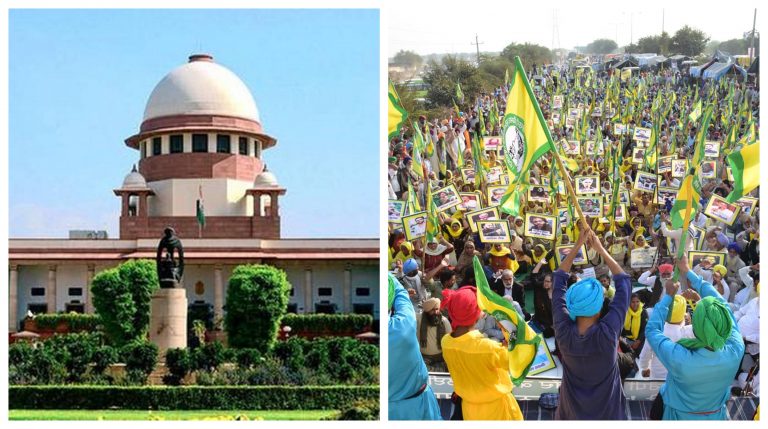
While hearing a petition challenging the farmer protests against the three farm laws on the basis of the fundamental right of citizens to move, the Supreme Court remarked that the right to protest is a fundamental right but it cannot affect the other fundamental rights including the right to life of others. During yesterday’s hearing, the Supreme Court had said that the negotiations between the government did not work and asked the farmer unions to be impleaded so that their side could be heard.
Senior Lawyer Harish Salve said right to protest not absolute
During the oral submissions, senior lawyer Harish Salve appearing on behalf of the petitioner contended that the blockage of roads due to farmer protest, the supply chain has been interrupted leading to price rise in the national capital. He said that no fundamental right is absolute and that the “right to protest cannot be extended to holding a city to ransom”.
Salve : I will tell about the indirect impact. Due to the curtailment of movements of goods, there is price rise. Delhi has a population of 2 million plus which cannot sustain itself. All fruits, vegetables coming from across the borders.#FarmersProtest
Responding to Salve’s submission, Chief Justice of India SA Bobde clarified that the court recognised the fundamental right to protest but it cannot affect other fundamental rights.
CJI : One thing we will make it clear. We recognize the fundamental right to protest against a law. But that cannot affect other fundamental rights and right to life of others.#FarmersProtest#SupremeCourt
Advocate Salve urged the Court that the farmer unions should be held responsible for the acts of the crowds gathered in the protest. He said that the government should put in place a protocol for asking protesting individuals to identify themselves so that they can be held accountable for damages.
Salve :Unions who are organizing large crowds should be held responsible for the acts of crowds.
He refers to the Bombay High Court judgment imposing fines on Shiv Sena for public damages.#FarmersProtest#SupremeCourt
The CJI proposed an independent impartial committee
The CJI said that the purpose of the protest could only be achieved through dialogue. While asking the police to refrain from using force, he proposed an independent impartial committee that could hear both the parties and give its opinion. The CJI said that meanwhile the protests could continue in a non-violent manner and asked the government not to instigate violence. The court named journalist P Sainath to be included in the committee along with BKU and other stakeholders.
CJI : For that, we are proposing an independent impartial committee before whom both the parties can state their case while the protest goes on and that the committee will give its opinion, which we expect the parties to follow.
Responding to the submissions of senior lawyer P Chidambaram, who appeared on behalf of Punjab government, about the farmers being stopped by police, the CJI said that court could not predict whether a mob would turn violent or not. He said that it must be left to the authorities to decide.
CJI : It is not for the court to predict if the mob will turn violent. It depends on intelligence reports based on which the police acts. Whether the mob should be allowed to enter arrest must be left to the authorities to decide and not for the court to decide.
Lawyer appearing for the Bharatiya Kisan Union said that the farmers stopped the starvation of the country and not multinational companies. To this the CJI responded that Delhi would go hungry if farmers blocked the roads. The CJI added that the purpose of the protest would be fulfilled by talking and not by just sitting in protest.
Lawyer for BKU : During lockdown, only farmers stopped the starvation of the country and not multi nationals.
CJI : The grievance is that people of Delhi will go hungry if you block the roads.
The CJI recalled how 1997 farmer protest near Boat Club would have potentially destroyed everything if not for the rift that appeared among them.
CJI remarks that the farmers protest in 1997 near Boat Club had the potential to destroy everything but fortunately nothing happened because there was a rift among the unions.#FarmersProtests#SupremeCourt
The CJI asked the Attorney General whether the central government could give a commitment that the farm laws will not be implemented while the matter was being heard in the court. To this the Attorney General expressed difficulty. The CJI then asked the Attorney General whether the government could assure that no executive action would be taken under the laws in order to facilitate negotiations. The Attorney General said that he could tell only after taking instructions from the government.
The CJI said that the court will pass an order that the parties should be served and that they are at the liberty to move Vacation Bench.
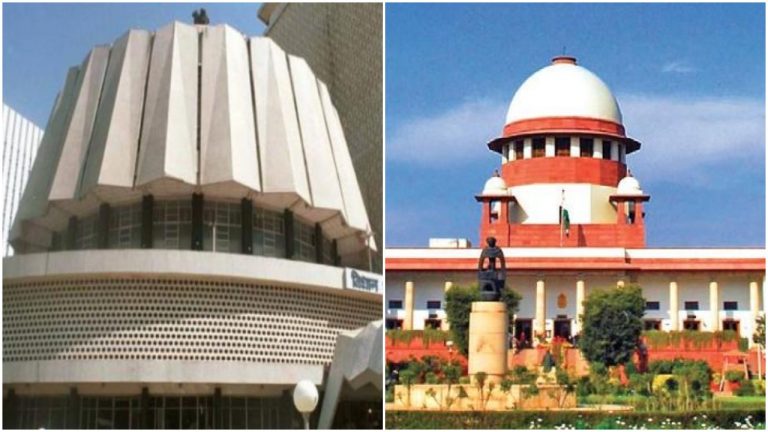
On Tuesday, both Houses of the Maharashtra State Legislature unanimously passed a resolution not to take cognisance of any notice or summons issued by the High Court or Supreme Court in the breach of privilege proceedings initiated against Arnab Goswami by the Upper House of the state Legislature.
According to reports, the pre-emptive resolution comes after Republic TV chief Arnab Goswami had moved to Supreme Court challenging the breach of privilege motion. The apex court had issued a show-cause notice against the Assistant Secretary of the Assembly, Vilas Athawale, for his attempt to ‘intimidate’ Goswami for taking the matter of privilege motion to the court.
The Maharashtra alliance government, anticipating an adverse order from the judiciary, has now passed the resolutions to question the boundaries of the judiciary’s powers to issue notices to the assembly. The proposals stated that replying to such notices would mean accepting that the judiciary can keep a check on the legislature and would be “inconsistent with the Basic Structure of the Constitution”.
The resolution were passed by both the houses on Tuesday, the last day of the winter sessions of Maharashtra assembly.
Both houses pass resolutions, says judiciary cant encroach into legislative territories
In the lower house, the proposal was declared as passed unanimously by Speaker Nana Patole. It stated that Speaker Patole and Deputy Speaker Narhari Zirwal will not be responding to any notice or summons issued by the Supreme Court. Similarly, in the Legislative Council, the proposal was passed unanimously by Chairman Ramraje Naik Nimbalkar.
“The Constitution has set clear cut boundaries for the three organs of the government — the judiciary, the legislature and the executive. Each organ should honour these boundaries. No one should encroach on each other’s territories,” said Speaker Patole.
Meanwhile, Council chairman Nimbalkar said, “The legislature, secretariat, its secretaries and other officers responding to court notices and other correspondence means, in a way, accepting that the judiciary can keep a check on the legislature and it would be inconsistent with the Basic Structure of the Constitution”.
Maharashtra Assembly issued summons to Arnab Goswami asking him to appear
The witch-hunt against Republic TV chief Arnab Goswami began after a Breach of Privilege motion was moved in the Assembly by Shiv Sena’s Pratap Sarnaik on September 8. The Maharashtra government headed by Shiv Sena had used all its political might to harass Republic TV chief Arnab Goswami.
Pratap Sarnaik had accused Goswami of using “derogatory language” and “making baseless remarks” against Chief Minister Uddhav Thackeray and NCP president Sharad Pawar and for frequently insulting ministers, MPs during TV debates.
The Maharashtra Legislative Assembly had served four notices to Goswami and asked him to reach the assembly after he had criticised the Maha Vikas Aghadi government over its inaction in the Sushant Singh Rajput case.
On October 15 at 14:50, Arnab Goswami had got a notice from the Maharashtra Legislative Assembly asking him to appear, in person, at 15:00 hours. Essentially, the state government gave Arnab Goswami merely 10 minutes to make a personal appearance in the Assembly, saying that if he does not, action could be initiated against him.
The Maharashtra legislature secretariat had earlier sought clarification from Arnab Goswami on September 16 over a breach of privilege motion against him during a two-day monsoon session of the state legislature for the alleged derogatory comments against Uddhav Thackeray and Sharad Pawar.
However, Arnab Goswami had challenged the notice served upon him by the state assembly for alleged breach of privilege in the apex court. The Supreme Court had the slammed the Maharashtra Assembly secretary for his letter to Arnab Goswami where he had questioned him on how did he produce the letters sent to him by the Speaker and Privilege Committee with the court since they are confidential in nature.
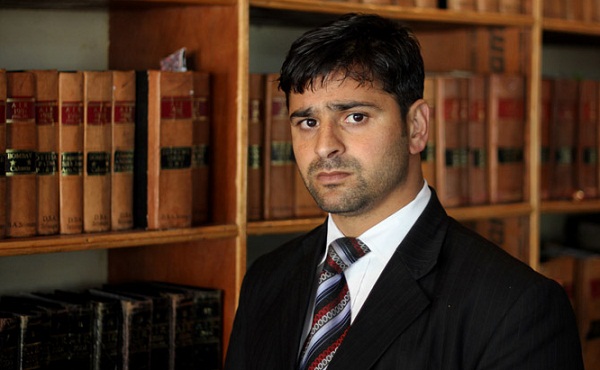
On September 24, terrorists in Srinagar had shot dead Jammu and Kashmir High Court lawyer Babar Qadri. He had been shot at point-blank range at Hawal in Srinagar, killing him instantly. Now, in a major breakthrough, the SIT set up by the Jammu and Kashmir police to probe Qadri’s assassination case, has revealed that orders to kill the lawyer had come from within the Srinagar central jail, reports Times Now.
The SIT had detained three people for questioning. They purportedly told the police that the order for the lawyer’s assassination came from ‘central jail, Srinagar’. The trio had also revealed the names of people who ordered the assassination. Based on this, the SIT arrested two men from the Srinagar central jail and identified them as Muneer Aziz War alias Qari, son of one Abdul Aziz War of Hatmulla Kupwara and Tawseef Ahmed Shah son of Ghulam Mohammad Shah of Parimpora, Srinagar. These two were in jail for a stone-pelting and murder case.
The special Jammu and Kashmir police team are trying to find out how these individuals passed orders from inside the central jail. The police are also investigating if they received orders from someone outside the jail to carry out Qadri’s assassination.
J and K lawyer shot dead at point-blank range
According to the eye-witness accounts, two assailants, on the pretext of consulting over a legal matter had entered Qadri’s house at around 6 PM on September 24 and opened fire at him. The police said that the lawyer was shot at point-blank range, instantly killing him.
Babar Qadri was one of the truculent voices often seen on various Indian news channels debating issues related to Kashmir.
Presciently enough, Qadri had also posted a tweet 4 days before his assassination, alerting the Jammu and Kashmir police about a possible threat to his life.
Babar Qadri accused J&K Bar Association President and his aides of threat on his life
Hours before Qadri was brutally assassinated, the advocate had carried out a Facebook live session, making shocking revelations about the nexus between the state’s political elites, prominent Bar executives, and separatists.
Qadri also made a scathing attack on J&K High Court Bar Association President Mian Abdul Qayoom, alleging him of doing politics based on coercion on threats in Bar Association. It may be noted that Qadri was suspended by the bar association.
JK Bar Association was an extension of Hurriyat: Babar Qadri
Qadri further laid into Mr Qayoom, alleging that the J&K Bar Association President was operated on the basis of religion by him. He also added that Qayoom had rendered Bar Association as a tool of separatist leader Geelani’s politics, effectively making it an extension of Hurriyat.
The now slain advocate raised questions over Mr Qayoom’s commitment to jihad against the Indian government, accusing him of trying to foment unrest in the Valley at the cost of lives of innocent Kashmiri children, while his own children stayed away from the protest and the conflict.
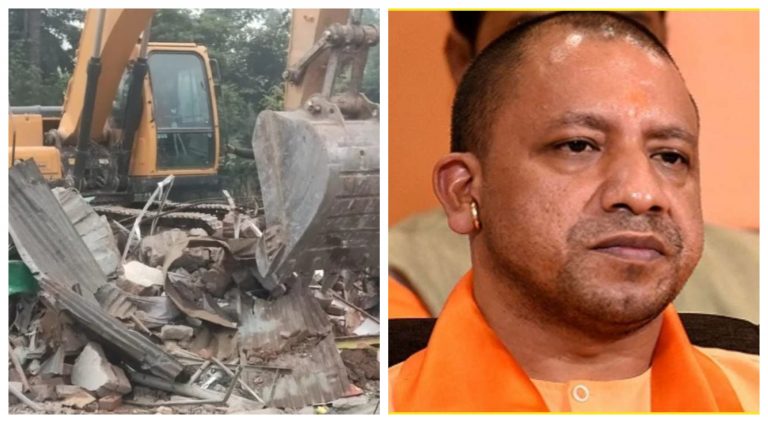
The Uttar Pradesh government on Wednesday razed to the ground the alleged illegal construction on a piece of land registered in the name of Kamla Nehru Trust in Raebareli. The property said to be worth crores is located on Lucknow-Prayagraj NH-30. The matter of the land first went to the High Court after the Trust reportedly sold the land to a BJP leader. The transfer of land was disputed. The High Court decided in favour of district administration and declared it as Nazul land. A Nazul land is basically a land that has no claimants and it is considered to be belonging to government.
According to reports, both the High Court and the Supreme Court had passed eviction orders months ago. After the court orders, the district administration served notice to people encroaching the land and then their electricity supply was cut off but the people did not comply. Finally, the district administration started demolishing all the illegal construction on the land early morning on Wednesday. Some people pelted stones at the police after which police resorted to lathi charge but the demolition continued. Few arrests were also made.
The Kamala Nehru Trust and how it occupied the land
The Kamla Nehru Trust was created forty years ago with the objective of creating an educational society, schools and hospitals. The Kamla Nehru Educational Society was established in 1976 in the Civil Lines area of Raebareli at an annual rent of Rs 1135 from one Kailash Chandra from Sidhauli. The society reportedly took the land on lease for 30 years for the purpose of promoting education for girls. However, nothing was implemented on ground, no construction took place and the land came to be illegally occupied by hundreds of people.
Eight members of the society have passed away including former Delhi CM Sheila Dixit’s father-in-law Umashankar Dixit, former PM Indira Gandhi’s personal assistant Yashpal Kapoor, and former minister Sheila Kaul whose house in Lucknow was recently renovated to accommodate Priyanka Gandhi Vadra. A new committee was reportedly formed in 2003 which included members of Kaul family, former Union Minister Salman Khurshid and senior lawyer Lalit Bhasin. The society converted the land into a freehold property in 2003 and decided to sell it in 2016. For six months, the district administration has been attempting to get the property vacated as per the court orders but the people refused to vacate.
BJP leader Aditi Singh raised the alarm
Last month, BJP leader, who is also former Congress MLA, from Raebareli Aditi Singh had written to the Economic Officer Wing (EOW) demanding an investigation into alleged financial irregularities in the Kamla Nehru Educational Society. Singh had alleged that the society did not serve the purpose it was constituted for. She added that the land should not have been converted into freehold land as there were more than 100 shops that provided daily bread to about 600 people.
In November 2020, Yogi government ordered probe into the allegations of fraud against Kamla Nehru Trust.
Khadi India under Khadi & Village Industries Commission, Government of India, is soon launching Vedic Paint made out of cow dung. Nitin Gadkari, Minister of Road Transport & Highways, Micro, Small & Medium Enterprises Government of India, informed about the upcoming product on his Twitter account. He said,”We are soon going to launch a ‘Vedic Paint’ made of cow dung through the Khadi and Village Industries Commission. It will help in strengthening Village economy and provide additional income to the farmers.”
डिस्टेंपर और इमल्शन में आने वाला यह पेंट इको फ्रेंडली, नॅान टौक्सिक, एंटी बैक्टीरियल, एंटी फंगल और वॅाशेबल होगा और केवल चार घंटे में सुखेगा। इससे पशुधन रखने वाले किसानों को साल में 55 हजार रूपए की अतिरिक्त आमदनी होगी।
Gadkari further added that the eco-friendly, non-toxic, anti-bacterial, anti-fungal and washable paint would be available in distemper and emulsion. It will dry in just four hours. This venture will provide an additional income of up to Rs.55,000 to the livestock farmers.
Cow dung paint has a fascinating history
Though it may sound weird to some, the experts at Kumarappa National Handmade Paper Institute have been developing such paint for years. In August 2019, Giriraj Singh, Minister of Animal Husbandry, Dairying and Fisheries, had informed in a Facebook post that the institute had developed cow dung paint and manufactured it across India. Singh further added that cow dung would be bought at Rs.5 per KG from the livestock farmers for the venture.
A report published in Himachal Abhi Abhi said that the paint will look like the regular paint, and it will cost as low as half of the standard colour while regular paint costs around. Rs.225/lt, cow dung paint will be available at around Rs.110/lt. In October 2020, Hindi Daily Patrika published a report about Organic Cow Dung Paint. In the report, it was mentioned that the Kumarappa National Handmade Paper Institute is developing the paint. This paint can be used on walls, wood and metal.
As per the Patrika report, the paint is consistent with national and international standards. The institute has tested on all aspects, including thickness, smoothness and brushing. It has been reviewed by national and international level government and private labs. It will be available in 2lt to 30lt packing. While talking about the production from raw material, it mentioned that by using 100 KG of cow dung, 30-40 KG paint could be manufactured. That means, if a production unit consumed 500 KG of cow dung daily, it could produce up to 200 KG of paint.
Kumarappa National Handmade Paper Institute is already manufacturing several products using cow dung, including handmade paper, hawan samagri, gift items, carry bags, diyas and more.
Research on cow dung paint was done in VIT
In 2016, five students of Vellore Institute of Technology under supervision of Mrs. Ghamande Manasi, Assistant Professor in Chemistry, published a paper [PDF] on Manufacturing of Cow Dung Paint. The paper pointed out that cow dung plasters are commonly found in many Indian homes in rural areas. It is hailed for its anti-bacterial properties and is believed to be one of the best natural disinfectants. It is not uncommon in any typical Indian Village home to find the entire floor covered with cow dung paste. Cow dung is often mixed with lime to coat the walls of the kuchcha houses.
Benefits of using cow dung in paints
It can improve air quality. It is antiseptic in the nation. Cow dung reduces the need for air conditioning as it acts as an insulator and keeps heat out in summers while holding it inside in winters. Dried cow dung is odourless. The paper further suggested that the paint manufactured using cow dung can be used in pipelines to save water from getting evaporated.
Puttur Doctor paints his house with cow dung
In January 2019, a report was published in Bangalore Mirror that talked about a doctor from Puttur who painted his house with cow dung. Shashishekar Bhat has been experimenting with a paint derived from the dung of indigenous cows and was happy about it. He told BM that traditionally a mix of water and cow dung is applied on the ground in front of the houses as it is believed to be insect repellant. In cold places, it is used to cover walls as it can act as a thermal insulator.
“The work related to our house extension was almost complete and we had also invested more than Rs 1 lakh on the purchase of regular paints and the painting work was in progress. Then an idea struck. Why not use paint derived from cow dung? I hesitated to tell my family, fearing opposition. We all love desi cows and have about 22 of them. After thinking about it for a while, I put this idea before my family and was surprised that nobody opposed it, but all seemed excited about the idea. I told them that I would like my bedroom painted with paint from cow dung – which I have called go-rang,” he said.
Bhat started it as an experiment in one room and later extended it to three rooms in his house. While Khadi India is manufacturing regular-paint-like products, Bhat’s homemade innovative paint is his ‘Do It Yourself’ project that he has been working on.
French President Emmanuel Macron has tested positive for Chinese coronavirus. He took a test after getting mild symptoms. As per his office, he is still in charge and working remotely.
France has seen a huge rise in coronavirus cases in past few weeks. The country has currently imposed overnight curfew to curb the growth of cases. As of now, France has over 25 lakh cases of which over 21.5 lakh are active cases. It is the second worst affected country in terms of active cases after United State of America.
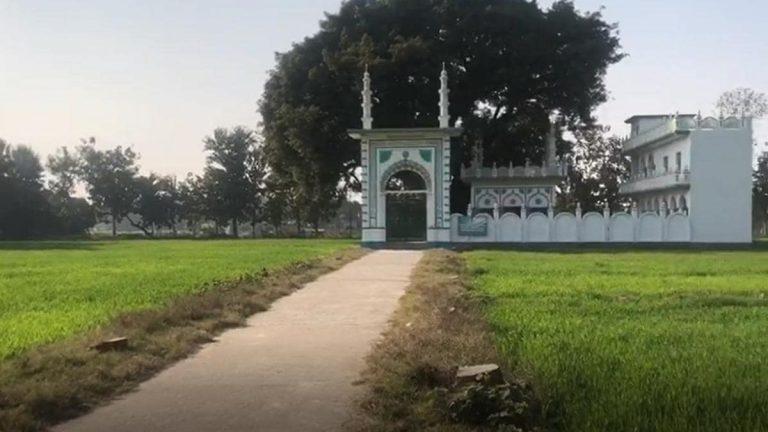
The Indo-Islamic Cultural Foundation (IICF), set up by the Sunni Waqf Board six months ago to build a mosque at the government donated land in Ayodhya district, has informed that the foundation of the mosque on the 5-acre site would be laid on India’s Republic Day. The blueprint of the mosque complex would be unveiled on Saturday, December 19.
“The Trust chose January 26, 2021, for laying the foundation stone of the Ayodhya mosque as on this day our constitution came into effect over seven decades ago. Our Constitution is based on pluralism, which is the leitmotif of our mosque project,” said Athar Hussain, secretary of the Indo-Islamic Cultural Foundation (IICF).
According to reports, the plan for the project has been finalised by its chief architect, Professor SM Akhtar and the blueprint of the mosque complex, which will include a multi-speciality hospital, a community kitchen and a library, will be unveiled by the IICF on December 19.
“The mosque will have a capacity to hold 2,000 namazis at a time, and the structure will be round-shaped,” Akhtar was quoted by PTI as saying.
Sunni Waqf Board accepts alternate 5-acre land to build Mosque in Ayodhya
The Supreme Court had on November 9 last year paved the way for the construction of a Ram Temple at the Ram Janmabhoomi site by awarding the title suit in the favour of Ramlalla Virajmaan. The Sunni Waqf Board has been laying claim to the site for decades, unwilling to let Hindus build a temple on a place where Lord Ram is believed to have been born. The court had also ordered the UP government to grant an alternate site of 5 acres to the Sunni Waqf Board to build a mosque.
After months of prolonged drama whether to accept or reject the Supreme Court’s offer of a 5-acre land to build a mosque at an alternative site, the Sunni Waqf Board had finally decided to accept the allotment of 5 acres of land suggested by the top court in the Ram Janmabhoomi and had also decided to build a Mosque on it.
Earlier, the Board had shown reluctance in accepting the court offer after suggestions poured in from several quarters asking it to reject the offer made by the apex court.