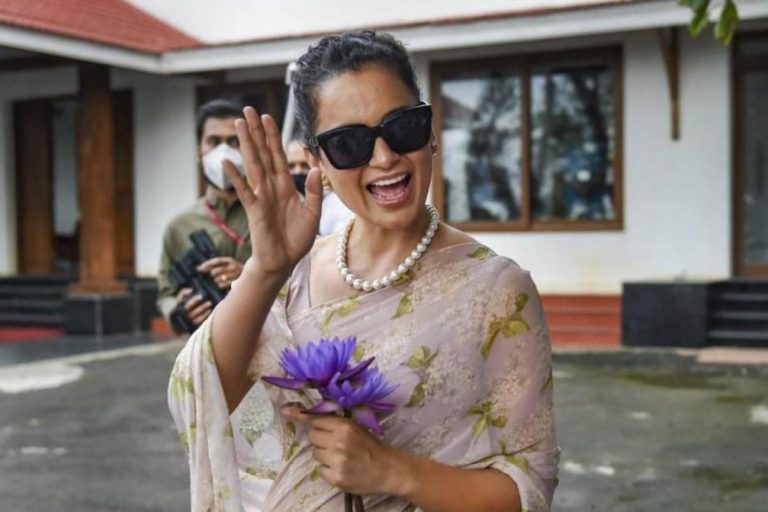
Bollywood artist Kangana Ranaut cannot seem to say much without a case slapped against her. After being hounded by the Maharashtra government for her comments criticising them and several others, another leader has filed a complaint against her for allegedly ‘defaming’ him. It is now being reported that a complaint has been filed against actor Kangana Ranaut in Gaya Civil Court for her alleged remarks on RLSP leader Upendra Kushwaha.
“It’s a crime to make derogatory comments against any leader. So, we’ve asked the court to take cognizance of our complaint,” said Shambhu Prasad, Lawyer, talking to the media about the complaint filed.
Bihar: Complaint filed against actor Kangana Ranaut in Gaya Civil Court for her alleged remarks on RLSP leader Upendra Kushwaha
"It's a crime to make derogatory comments against any leader. So, we've asked court to take cognizance of our complaint," says Shambhu Prasad, Lawyer pic.twitter.com/yAbGHkYQX5
The tweet that RLSP leader Upendra Kushwaha and his followers have taken offence to seems to be rather benign, however. Evidently, the complaint against Kangana has been filed because she laughed a meme that involved a picture of RLSP leader Upendra Kushwaha.
On December 3rd, a meme was posted that used a picture of RLSP leader Upendra Kushwaha where he was marked as ‘Azad Kashmir’, and other leaders, who were squeezing themselves into the frame to get a picture with him were marked as ‘Khalistanis’, ‘Jihadis’, ‘Lutyens Liberals’ etc. The meme was meant to show how every anti-India element is trying to talk about ‘freedom for Kashmir’ for their own political benefits.
Kangana Ranaut had quoted the tweet and added 5 laughing emojis. This seems to have irked RLSP leader Upendra Kushwaha and his supporters even at that time.
@Twitter@TwitterIndia@misskaul@manishm I strongly condemned misusing our Leader Mr. Upendra Kushwaha Election Photo for her vested intrest. Pls take necessary action immediately against Kangna and her team to defaming our leader. Expecting an early reply.
— Fazal Imam Mallick (फ़ज़ल इमाम मल्लिक) فضل امام ملک (@fazalmallick) December 4, 2020
It is pertinent to mention here that RLSP leader Upendra Kushwaha. It was merely a joke that used a picture where leaders were seen trying to squeeze themselves into a frame with him.
However, the social media culture of posting memes seem to be beyond the realm of understanding for political leaders and a complaint was lodged against Kangana Ranaut for simply laughing at the said meme.
Only recently, the Delhi Sikh Gurdwara Management Committee had sent a legal notice to actor Kangana Ranaut over her tweets that allegedly targeted farmers, activists protesting against the new farm laws. The legal notice sent on behalf of Delhi Sikh Gurdwara Management Committee President Manjinder Singh Sirsa said that the actress defamed the farmers, protestors and activists involved in the ‘farmer protests’ against the Modi government.
Similarly, another member of Delhi Sikh Gurdwara Management Committee has also sent a legal notice to Kangana Ranaut for misidentifying an old woman at the farmers’ protest in the national capital as ‘Shaheen Bagh dadi’.The notice was sent by advocate Harpreet Singh Hora on behalf of the committee member Jasmain Singh Noni.
Before that, a writ petition was filed in the High Court demanding that Kangana Ranaut be barred from using her Twitter account. The fact that she called the Uddhav Thackeray govt ‘Pappu Sena’ was also mentioned in the petition.
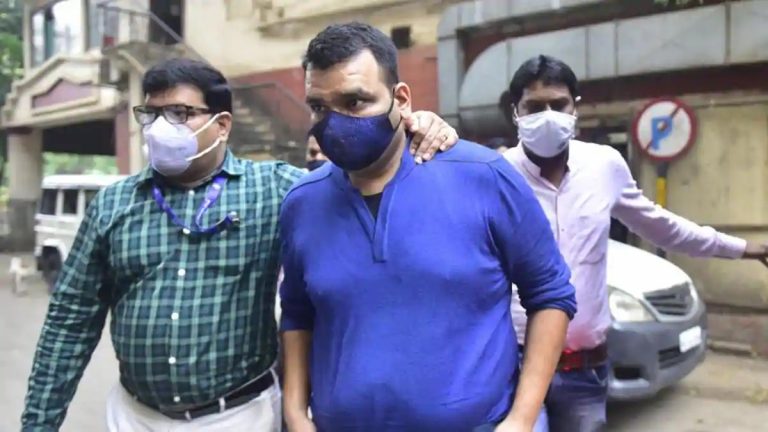
The Mumbai Police on Thursday arrested former chief operating officer (COO) of the Broadcast Audience Research Council (BARC) Romil Ramgarhia in connection with the alleged ‘Fake TRP’ scam, after almost 4 months of his resignation from BARC.
According to the reports, the special investigation team (SIT) of the Mumbai Police Crime Branch arrested former BARC Chief Operating Officer Romil Ramgarhia on Thursday. A team headed by controversial Police officer Sachin Vaze reached Ramgarhia’s residence at Dosti Acres in Wadala on Thursday morning.
The SIT had initially brought Ramgarhia for questioning, however, he was taken into custody on Thursday noon by Vaze’s team.
The SIT later produced him in the metropolitan magistrate court and sought his custody for further interrogation. The prosecutors claimed that Romil Ramgarhia’s custody is necessary as it is essential for them to retrieve data from his laptop in connection with the ongoing investigation into the ‘Fake TRP’ scam.
According to the SIT, Ramgarhia was in contact with the director of Republic Media network and its CEO Vikas Khanchandani through WhatsApp and is “suspected to have passed on information to the channel”. It is, however, unclear what “information” they suspect the BARC COO passed on to Republic TV CEO.
The arrest of former BARC COO comes just days after Mumbai Police had continued its witch-hunt against Republic Media Network and had arrested CEO Vikas Khanchandani from his home in connection with the alleged ‘Fake TRP’ scam case.
Mumbai Police claims BARC COO leaked data to channels
The SIT also claimed before the court that Ramgarhia allegedly leaked confidential information aiding the accused in the case to fix TRPs for some channels. The SIT said that Romil Ramgarhia leaked this information during his tenure with BARC. Ramgarhia was rating agency BARC’s first COO and he remained in that position till his resignation in July 2020.
“While working with BARC, he guided and assisted some TV channels in manipulating TRPs. He was aware of the location of barometers across the country and we suspect that he shared this information too with some channels,” the officer added. The Police also stated that Ramgarhia’s mobile phone has been seized and will be sent to the forensic science laboratory for cyber analysis.
Advocate Mrunmay Kulkarni, representing the former BARC official, argued that custodial interrogation was not warranted as Ramgarhia had already resigned from the organisation months before the alleged scandal broke out and had nothing to do with the alleged ‘Fake TRP’ scam. The defence counsel also argued that Ramgarhia had a very specific role in rating agency BARC and was in no way involved in any illegal activities.
After hearing both sides, the court granted the SIT custody of Ramgarhia till December 19. Romil Ramgarhia is the fourteenth individual to have been arrested by the Mumbai Police in connection with the ‘Fake TRP’ scam, where channels including Fakt Marathi, India Today, Republic TV have been accused of bribing sample households to shoot up their TRPs.
It is rather interesting to note that while the COO resigned on July 31st 2020, it was on June 17th that Hansa Research Group employee Vishal Bhandari had informed to BARC Vigilance Team that he had received a call from one Vinay in November 2019. As per the complaint, Vinay had asked Bhandari to visit 5-panel homes, where bar-o-meters are installed, and convince them to watch India Today news channel for 2 hours every day. He had received ₹5000 to execute the task and was also paid ₹1000 to equally distribute among the 5-panel homes. Bhandari, who had executed the plan on the behest of Vinay, continued it unabated from November 2019 to May this year.
During the 7-month period, Bhandari would meet different people at the Malad railway station to receive his cash reward. During their internal investigation, BARC cross-verified the claims of Bhandari. Several panel homes have admitted to receiving monetary compensation in lieu of watching ‘certain channels’ and ‘influencing the viewership’.
Pertinently, Hansa Research, that has now alleged that they are being forced to implicate Republic TV by Sachin Vaze and others in Mumbai Police had not named Republic TV at all and had only named India Today in their report, based on which an FIR was filed.
Fake TRP scam
In October, Mumbai Police had made some sensational claims against some TV channels saying that they were manipulating TRP ratings. In a press conference, Mumbai Police commissioner Param Bir Singh had said that three TV channels, including Republic TV, were involved in manipulating viewership data of BARC by paying those households where Bar-o-meters, the devices that track TV viewership, are installed.
Param Bir Singh had specifically mentioned that Hansa Research had filed a complaint with the police. Hansa Group is an organisation that regulated the devices to record TRP for BARC. Interestingly, in this FIR that was filed by Hansa Research, Republic TV was not mentioned even once. The channel that was mentioned several times was India Today.
During the investigation, several evidence and witnesses came forward that alleged Mumbai Police have been intimidating them to speak against Republic TV, including Hansa officials. Hansa has also complained that they are being harassed by the Mumbai Police to give statements against Republic TV.
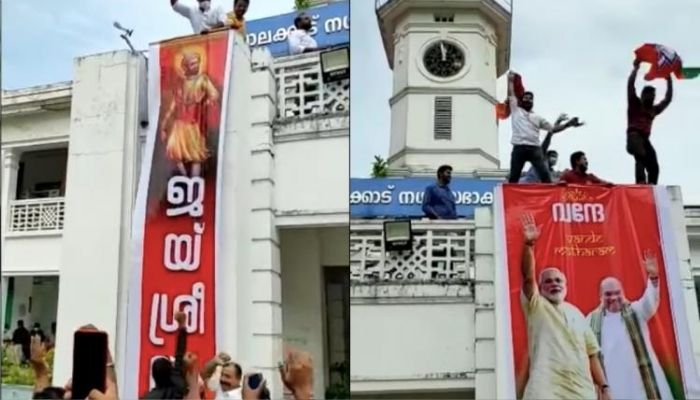
On Thursday, a case was registered against some BJP workers for unfurling banners, carrying the image of Chhatrapati Shivaji Maharaj, PM Narendra Modi, Home Minister Amit Shah and the slogan of ‘Jai Shri Ram’, ‘Vande Mataram’, atop the Municipal corporation building in Palakkad.
As per reports, the incident came to light on Wednesday evening after BJP won the local body polls, securing 28 seats out of 52 in the Palakkad Municipality, Kerala. The party workers were seen unfurling two banners, one carrying the image of Chhatrapati Shivaji Maharaj with the slogan of ‘Jai Shri Ram’ in Malayalam and the other carrying the image of PM Narendra Modi and Home Minister Amit Shah with the slogan of ‘Vande Mataram’.
At the same time, other BJP workers gathered outside the Municipality complex and celebrated the party’s victory in saffron robes and slogans of ‘Jai BJP.’ A complaint was filed with the Palakkad Town South police by the Secretary of the Municipality, Balaram, alleging an attempt to ‘destroy communal harmony.’ Similar such complaints were filed by the Congress party and Communist Party of India (Marxist) leader T K Noushad.
Kerala Police registers case against few BJP workers for allegedly unfurling giant banner with ‘Jai Sri Ram’ written on it from terrace of Palakkad municipal corporation building after party won in recently held local body polls
While speaking about the incident, SP (Palakkad) S Sujithdas informed that a case was registered under Indian Penal Code (IPC) Section 153A (promoting communal disharmony) and that special branch deputy superintendent Krishnan has been asked to file a report. He said, “The special branch deputy superintendent has been asked to file a report with regard to the incident.”
Political reactions on the incident
The Congress party has alleged that the ‘act of rolling down banners’ atop the municipality building was ‘illegal.’ District Congress Committee President, VK Sreekantan, also alleged that the banners contained ‘communal content. He said, “A case has to be registered against those involved. The banners exhibited communal content. If the police hadn’t registered a case because of a lack of complaint, the Congress has lodged one with the district police chief on Thursday.”
CPI(M) leader T K Noushad also alleged that the banners were illegal and that they unfurled by the BJP workers, in collusion with the RSS. However, E Krishnadas, BJP President, had dismissed all such claims. He said that the party leadership was unaware of the actions of the workers. On learning about the incident, the BJP had directed to remove the banners.
He emphasised, “The controversy is much ado about nothing. There were more than 1,500 BJP supporters outside the counting venue. If a few had sneaked to the top of the municipal building, it was without the knowledge of the leadership. The police should have been more vigilant. As soon as the incident came to the notice of the leadership, directions were given to remove the banners. Accordingly, they were removed in a minute.”
Kerala local poll results
The CPIM-led LDF has emerged the largest coalition in gram, block and district panchayats. In a tweet, chief minister Pinarayi Vijayan thank the people of Kerala for reposing faith in LDF. “We are humbled by the trust and the confidence of the people of Kerala. This is a victory for secularism and inclusive development. My warm greetings to all the elected representatives,” he said.
The CPI-M led LDF has won 7263 wards in gram panchayat, 1267 wards in block panchayat, 212 wards in district panchayat, 1167 in municipality and 207 wards in corporation. Gram panchayat has 15962 wards, block panchayat has 2080, district panchayat has 331, municipality has 3078 and corporation has 414 wards.
The BJP has also thanked people for supporting party in the civic polls. In a tweet, BJP General Secretary BL Santhosh said: “You gave us 1182 GP, 37 BP, 2 ZP, 320 Municipality, 59 Corporation wards. 25 GPs and 2 Municipalities ( Palakkad, Pandalam, main opposition in Thiruvananthapuram”
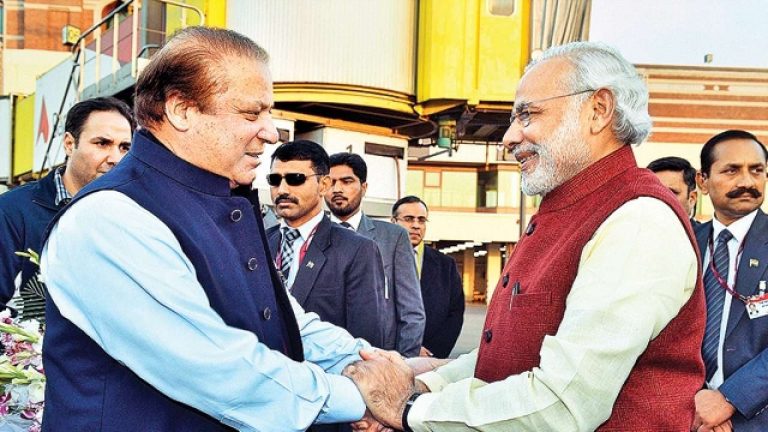
Prime Minister Narendra Modi wrote a letter to former Pakistan Minister Prime Minister Nawaz Sharif to extend his “heartfelt condolences” over his mother’s death on November 22.
Pakistan-based journalist Naila Inayat on Thursday shared the letter on Twitter written by Prime Minister Modi to PML-N chief Nawaz Sharif condoling the demise of Nawaz Sharif’s mother. In the letter dated November 27, Prime Minister Modi also prayed the almighty to bestow strength upon Sharif fand his family to bear the loss.
“Dear Mian Sahib, I am deeply saddened to learn about the demise of your mother Begum Shamim Akhtar on November 22 in London. My heartfelt condolences are with you in this hour of intense grief,” PM Modi wrote in the letter, which was also released by the PML-N on Thursday.
Indian prime minister Narendra Modi wrote a condolence letter to former PM Nawaz Sharif on the demise of his mother. “I recall my interaction with her during my brief visit to Lahore in 2015. Her simplicity and warmth was indeed very touching,” he wrote. pic.twitter.com/CLYBTZjWI7
Reportedly, the letter was forwarded to Sharif’s daughter and Pakistan Muslim League-Nawaz (PML-N) Vice President Maryam Nawaz by the Indian High Commission in Islamabad last week requesting her to convey the message to her father, who is currently residing in London.
Prime Minister Modi recalls interaction with Sharif’s mother
Prime Minister Modi also recalled his interaction with Sharif’s mother during his brief surprise visit to Lahore in 2015. In the letter, PM Modi said, “Her simplicity and warmth was indeed very touching.”
“In this moment of profound grief, I pray to the Almighty to bestow strength upon you and your family to bear this irreparable loss,” he added.
Shamim Akhtar, the mother of Nawaz Sharif, passed away in London on November 22. However, her remains were brought to Pakistan for burial at the family’s estate at Jati Umra in Lahore.
In a separate letter, Indian Charge d’Affaires Gaurav Ahluwalia had sent to Maryam Sharif on December 11 at her Lahore residence requesting her to convey the condolence message to Nawaz in London.
Nawaz Sharif, the three-time former prime minister is accused in a number of corruption cases, is currently residing in London since November last year after the Lahore High Court granted him permission to go abroad for four weeks for treating the heart disease and an immune system disorder.
Recently in September, the erstwhile Prime Minister of Pakistan, Nawaz Sharif addressed the people of Pakistan from London during a multi-party video conference. Sharif, who had been languishing in the jail and had been out of the country for medical treatment, lambasted the Pakistani army establishment for destroying democracy, dismissing elected governments, installing incapable puppets, and so on.
At the very onset, Nawaz Sharif said, “Pakistan has been devoid of a parliamentary system of democracy, even though this is enshrined in our Constitution. But when it is decided (by an external force) as to who should win or lose, it betrays the public mandate…Sadly, Pakistan has become a laboratory for such deceitful experiments. Even if a government is formed democratically, then, it is weakened internally and then dismissed. All of this is done with forethought as to how their actions will lead to trust-deficit amongst people in the country’s institutions.”
Narrating his ordeal, Nawaz Sharif stated, “The Establishment should not arrest a sitting Prime Minister at gun-point…I am pained everytime I remember this. It feels bad when I realise that we have made the country a joke in our eyes and that of the world.” He also called for co-operation and unity amongst the Opposition to put up a rigid fight against the current political and military dispensation.
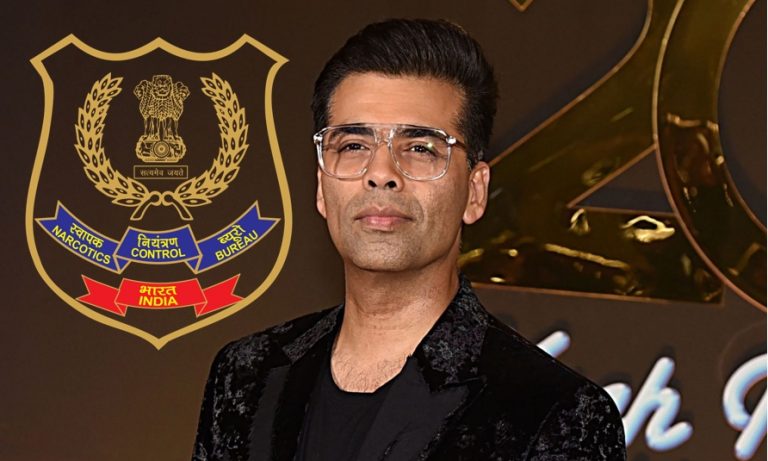
After summoning actor Arjun Rampal in relation to the Bollywood drug nexus, the Narcotics Control Bureau (NCB) has reportedly issued a notice to filmmaker Karan Johar to question in the case. Johar’s interrogation is reportedly linked to the arrest of Kshitij Ravi Prasad who is said to be a close aide of Johar and worked in his production house, who was arrested in connection with the Sushant Singh Rajput’s death case.
Update from @narcoticsbureau: The Bureau has issued summons to Karan Johar for questioning. The enquiry is linked with the arrest of Kshitij Ravi Prasad who had worked with his production house. All of this is linked with investigations following the death of Sushant Singh Rajput pic.twitter.com/qxwRxANVWG
However, some reports claim that Johar has been asked to give explanation regarding the viral video of an alleged drug party held at Karan Johar’s house on July 30, 2019. The NCB had received a complaint from Congress’s Manjinder Sirsa in this regard in September this year.
As per reports, the NCB has issued summons the filmmaker to check the veracity of the video under section 67(B) of the NDPS Act. Under this section, personal appearance is not needed, hence Johar can send his representative to appear before the anti-drug agency to answer the questions. NCB has asked the filmmaker to provide the sought details by December 18.
Actor Arjun Rampal was interrogated by the NCB
Last month, the NCB had raided the house of Arjun Rampal days after his girlfriend Gabriella Demetriades’ brother Agisilaos Demetriades was arrested over allegations of being in touch with drug peddlers. In October the NCB raided Agisilaos Demetriades’ house wherein the agency recovered one strip of Alprazolam tablets. Following this a room in Lonawala was raided by the NCB from where it recovered 0.8 grams of small round shaped black coloured sticky substance purported to be charas. Her brother, who is a South African national, was reportedly in touch with drug peddlers arrested in connection to Sushant Singh Rajput death case.
The NCB had also arrested an Australian national named Paul Bartel in relation to the Bollywood drug probe. Bartel was in touch with Agisilaos Demetriades. The agency found that Bartel used to buy drugs from Agisilaos Demetriades.
Film Producer Firoz Nadiadwala’a wife was arrested
The NCB had arrested Shabana Saeed, wife of film producer Firoz Nadiadwala, on November 8 for possessing drugs. The NCB had raided Nadiadwala’s house and had recovered some amount of drugs after which his wife was summoned for question. She was released a couple of days after her arrest.
Comedian Bharti Singh and her husband Haarsh Limbachiyaa were also interrogated by the NCB last month after drugs were recovered from their residence. The couple was sent to a 14-day judicial custody.
The General Elections of the United States of America 2020 has seen the incumbent – Donald Trump question the electoral process and alleged that there has been widespread fraud. While the legal challenges to the election of Joe Biden are still underway, it broadly seems like the Trump presidency is poised to fold. Closer home, if we were to look at elections in India, the question of electoral integrity is highly important, since free and fair elections are the basis and premise on which democracy is established, in a country of 1.3 billion individuals – making it the largest democracy in the world, in terms of the number of individuals involved.
The electoral procedure in India is organized and overseen by the Election Commission of India. In the 2019 General Elections of India (the results of which are shown in the map below), 900 million people were eligible to vote, making it the largest election ever in the world, with 3.96 million electronic voting machines (EVMs) and 1.74 voter-verified paper audit trail (VVPAT) units used in 10,35,918 polling stations, protected by 2 million state police personnel and 270,000 paramilitary personnel at the various polling booths.
Before this election, the EVM was spoken against by nearly all opposition parties for myriad reasons and the Supreme Court of India kept receiving petitions against the machines. However, in the end, the EVMs functioned tremendously well and there was not one single complaint registered against them. To make the entire process even more secure, the Supreme Court asked the Election Commission to increase VVPAT slip vote counts to five randomly selected EVMs in every assembly constituency – meaning that the Commission had to count VVPAT slips of 20,625 EVMs before it could certify the results!
With the next general elections still four years away, the focus is now on state elections. One of the most closely contested election trail till now has been that of West Bengal, which is about to have its state elections in 2021. Given the infamous history of voter fraud and electoral malpractice in the state, it is only fair to see how moving forward we can assess the best way to ensure best practice in the upcoming state elections. After looking at the history of elections in West Bengal, I shall argue for why the EVMs, and not paper ballots, are the most suitable to ensure free and fair elections in the state in 2021.
History of Elections in West Bengal
The politics of West Bengal has been historically been dominated by the Indian National Congress (INC), Communist Party of India (Marxist) – CPI(M), Trinamool Congress and Bharatiya Janata Party (BJP). The state assembly is unicameral and has 295 Members of the Legislative Assembly (MLAs), with one member being nominated from the Anglo-Indian community. Elections for auxiliary local governments known as Panchayats are held regularly with local affairs being governed by these bodies.
West Bengal contributes 42 seats to the Lok Sabha and 16 seats to the Rajya Sabha of the Indian parliament. What is modern-day West Bengal is actually a conglomerate of sections of British-administered Bengal (with Kolkata having served as the capital of India till 1911), French-administered Bengal (the former French enclave of Chandannagar joined West Bengal in 1955), a past princely state (the princely state of Cooch Behar merged with West Bengal in 1950) and parts of erstwhile Bihar. The Congress-ruled the state from 1947 to 1962 and again from 1972 to 1977, while the United Front ruled from 1967 to 1969.
A peasant uprising broke out in Naxalbari, in northern West Bengal, in 1967 that led to the creation of the Naxalite movement. After the 1971 Bangladesh War of Liberation and the 1974 Smallpox epidemic, state politics saw the emergence of the Left Front as the dominant political entity in the state. The Left Front led by the Communist Party of India (Marxist) won the 1977 state elections and went on to rule the state for the next three decades, in which the well-organized CPI(M) cadre network was able to sustain electoral success in the absence of any significant grassroots-level competition.
Figure: Kolkata in 1947
How they did so is a matter that underlies the culture of violence and electoral malpractice over the decades they ruled, and beyond. The CPI(M) cadre network increasingly resorted to malafide and strong-arm tactics to win elections. This included the intimidation of ordinary people as well as outright fraud and poll rigging. While decentralisation is always good for the self-determination of, and effective administration by, the people of a locale, the decentralised government system in West Bengal degenerated into one of oppression and regressive party control.
Coercion became primary and superseded the free will and consent of people, who were being governed by this oppressive government. While the party professed loyalty to the principle of equality and equity, party loyalty became a sore need of the hour for people in rural West Bengal. The supremum in this steady degeneration of democracy and people’s consent came with the CPI(M)-led attempt at the acquisition of peasant lands in Singur and Nandigram in 2006-2007, with the intent of setting up petrochemical and automobile factories. So much for the ‘communist dream’!
The extent to which the process of democracy and elections degenerated can be gauged by the manner in which the electoral procedure was hijacked by party loyalists and members around the state. There were instances where no opposition polling agents would be present in polling booths, while in other cases, people were either forced to vote for a certain candidate or not allowed to vote at all! An interesting statistics is that the number of uncontested seats in the Panchayat elections since 1978 has kept increasing, with 11% seats going uncontested in 2003.
This trend also continued under the TMC with 34% seats being won uncontested by the TMC in 2018. Violence has been rampant and this has affected leaders, workers and common people alike. Daylight stabbings, intimidation tactics and goons manning booths are some of the things that have been seen in the state over the decades. The exact number of political murders under the CPI-M may be tough to ascertain but one can make a guess from the statement by Buddhadeb Bhattacharjee, former chief minister of West Bengal, in 1997 that 28,000 political murders had been committed between 1977 and 1996. Mainstream, the Leftist weekly, recorded in 2010 that there were 55,000 political murders between 1977 and 2009.
Scientific poll rigging was something that the CPI(M) mastered. In the heydays of the Left Front government in the state, votes were not cast but rather ‘done’. There were reports that cadres, workers and associated hooligans of the party would take over villages and even entire districts using organized violence. With the supervision of local committees – almost omnipresent in that phase, research was undertaken to ascertain those areas that would have voted against the ruling party. The research was thorough. In such areas, the people were intimidated into remaining indoors on polling day and not coming to vote. In their stead, party agents would ‘take care’ of the democratic process.
Ballot tampering and balloting by individuals who were not present in person were widely reported. A prominent member of the Bengali Hindu Adarsh Samiti (BHAS) had shared how there was a time when his ballot was cast in his absence, back in the day! While the violence for Panchayati elections stems for the financial clout of Panchayats and parties bicker about under whose rule violence has been more widespread, the important point in all this is to see how this must be minimized.
In the days of the paper ballot back in the day, these problems were seen to be at their peak. This began right from the electoral rolls, wherein names of opposition supporters were deleted and bogus names were added. Opposition party members were asked to not file their nominations, and upon dissent, force was used. The macabre theatre of the absurd is accentuated by the symbolism, say of sending white saris (worn by widows in Hindu families) to wives of opposition candidates – warning the possible removal of the candidate if they went through with their nomination.
Threats of rape and violence were used against candidates. In the pre-EVM period, when the ballot paper did not carry candidates’ pictures, a very interesting way to confuse voters was to field people with the same names as the primary opposition candidate. On polling day, if there was an awakened citizen who did defy the party diktat to not turn up to vote, they would be faced with the reality of standing in a line of bogus voters who would try to argue with officials and waste time, so that legitimate voters would not be able to vote! If the voter was able to get through to voting, they would find themselves in voting enclosures that were placed near the windows from where agents of the ruling party would either ‘help’ the voter or keep a record of those who had voted against the ruling party.
Digitizing the Electoral Procedure
The Election Commission of India (ECI) has increasingly been regarded as the gold standard when it comes to conducting free and fair elections. With the population across the nation, the conducting of elections using paper ballots can be impractical and prone to tampering and fraud. Over the last 20 years, the ECI has successfully conducted over 100+ state legislative assembly elections and four Lok Sabha elections using Electronic Voting Machines (EVMs). Since September 2013, Voter Verifiable Paper Audit Trail (VVPAT) machines have been used in both state and national elections to enhance credibility, legitimacy and transparency in the voting process. There have been multiple calls to ascertain the security and integrity of the EVM-based electoral procedure, to which the ECI decisively released a statement on 12 May 2017, which the Chief Electoral Officer’s press note on 20 May 2017 highlighted:
all future elections will be mandatorily held with VVPATs. The Commission firmly believes that use of VVPAT machines along with the EVMs in all polling stations, in all future elections, will bring utmost transparency and credibility in the EVM-based voting system. This will enable each voter to see for himself in VVPAT whether his or her vote has gone to the right candidate. After press of button on BU, name and symbol the concerned candidate will appear on the screen of VVPAT machine and paper slip bearing name and symbol will be dropped in a sealed box connected with VVPAT. These slips will serve as audit trial of the vote cast by voter on EVM. Audit trail will enhance confidence and trust of voters. Use of VVPATs with EVMs must conclusively put to rest all misinformed doubts and misgivings regarding EVMs. It will also be a matter of pride that India will become the first country to deploy 100% VVPATs or paper trail in the world, an element that was missing in many countries including Netherland, Germany and Ireland.
Press Note, Chief Electoral Officer – West Bengal (No. ECI/PN/42/2017), released on 20 May 2017
The Commission has repeatedly urged all parties to ensure their qualitative and sustained participation in all the crucial steps during the elections, such as ‘First Level Checking (FLC), randomization of EVMs/VVPATs/polling personnel, EVM preparation and candidate setting, mock poll, EVM sealing and storage’.
The EVMs issued by the ECI are not hackable, since these are stand-alone machines and are not connected to the internet or any other network at point during the polling. The EVMs do not have a frequency receiver or data decoder for wireless communications. Therefore they cannot receive coded signal by a wireless network. Thus, these machines cannot be tampered using external hardware, wireless, Bluetooth devices or Wi-Fi.
Also, the manipulation of the machines at the manufacturing stage is ruled out due to the stringent security protocol regarding the security of software. The results of polling cannot be changed by activating a Trojan Horse using a sequence of key presses since a Trojan Horse can’t be inserted into the software code of the EVM burnt into the microcontroller chip, since this chip is one-time programmable only. The control unit of the EVM activates the Ballot Unit for only one keypress at one time. If one presses any additional key, this is not recognised by the Control Unit.
In the duration of casting the vote, the keys of the Control Unit are also made inactive. The vote cast by the voter is transmitted by the Ballot Unit to the Control Unit in dynamically encrypted form. This is acknowledged, with a corresponding red LED lamp flash, by the Control Unit. The EVMs cannot be tampered physically and the components cannot be changed without anyone noticing.
Earlier generation machines like M1 and M2 cannot have a replacement of microcontroller chip or the motherboard easily, due to robust technical and administrative safeguards. The newer M3 EVMs, which have been produced since 2013, have additional features like Self Diagnostics and Tamper Detection. The tamper detection feature makes the EVM inoperative as soon as anyone tries to open the machine. The Self-Diagnostic feature checks the machine fully every time, trying to see if there has been any change in its hardware or software.
As of the directive of May 2017, Rs. 1900 crore have already been sanctioned to manufacturers to produce 13.95 lakh Ballot Unit and 9.30 lakh Control Unit of M3 units.
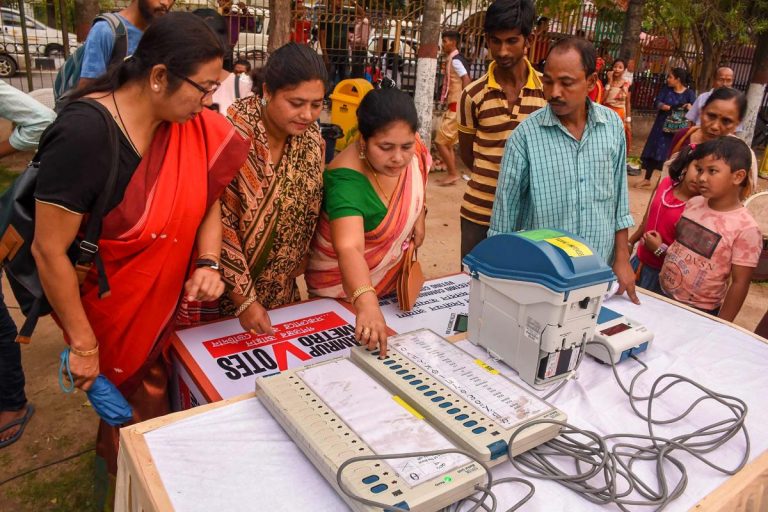
Figure: An EVM consisting a Ballot Unit (on the left) and Control Unit (on right)
The EVMs used in India are not produced abroad but rather indigenously by two PSU manufacturers – Bharat Electronics Ltd (Bengaluru) and Electronics Corporation of India Ltd. (Hyderabad). The Software Program Code is written in-house by the two companies too. All these components undergo stringent security procedures at the factory level to maintain the highest levels of integrity.
The software programme is converted into machine code by the manufacturers and every microchip has an identification number embedded into the memory. Since the producers have their digital signatures on the microchips, the question of their replacement does not arise. This is even more so since the microchips are subjected to functional tests by the manufacturers with regards to the software. Any attempt to replace a microchip is detectable and can make the machine inoperative.
There are also no possibilities of manipulation in EVM during transportation or while storing. At the district headquarters, EVMs are kept in double-lock systems under appropriate security and the safety is periodically checked. No unauthorized person can get access to the EVMs at any point in time. During periods when there are no elections, annual physical verification of all EVMs is done by District Electoral Officers and the report thus compiled is sent to the Election Commission of India.
After voting and before counting, the EVMs are kept in strong rooms with multiple layers of security. Most importantly, representatives of candidates are allowed to remain as guards of the strong rooms. Every time this strong room is opened, it is always in the presence of representatives of all political parties contesting the relevant election.
When it comes to checks and balances that ensure tamper-proofing, there are multiple levels for the same. In the first level checking, authorized engineers of the manufacturer certify the originality of the components after physical and technical examination of each EVM, which is done with representatives of political parties overseeing the process. Defective EVMs are sent back to the factory.
The First Level Checking (FLC) hall is sanitised and entry is restricted. No camera, spy pens or mobile phones are allowed in this area. The mock poll is conducted on each EVM by the election officials in the presence of representatives political parties. This poll is of at least 1000 votes conducted on 5% EVMs randomly selected by the representatives of the political parties, and the result is shown to them. This process is entirely video-graphed.
Another safeguard is the process of candidate setting, which is done after the contesting candidates are finalized. A ballot paper is inserted in the Ballot Unit, which is thereafter sealed with Pink Paper Seal. The Ballot Unit is sealed at this stage. Wherever VVPATs are used, candidates’ symbols are loaded in each of the VVPATs at this stage. After this, the EVMs are again subjected to mock poll, using 5% randomly picked EVMs for 1000 mock poll votes.
EVMs are randomized twice while being allocated to an Assembly and then to a polling booth, ruling out the possibility of any fixed allocation. After the poll, EVMs are sealed and polling agents put their signature on the seal. Candidates or the representatives of political parties can put their own seals on the strong rooms, where the EVMs are stored after the poll. They also camp in front of the strong room, which is guarded 24×7 in multiple layers, with CCTV facilities. The polled EVMs are brought to the counting centres under security, and in the presence of candidates and unique IDs of the EVMs, the signature of the polling agents on Control Unit are shown to the representatives of the candidates before the counting is started.
In Conclusion
The integrity of the electoral process is important for the healthy functioning of the Indian democracy. Given the history of systematic violence during elections and tampering with the electoral procedure in West Bengal over decades, the need for security and safety of the ballot units is crucial. For the first time since the Trinamool Congress government came to power, the party faces a strong opposition in the Bharatiya Janata Party (BJP), which ended up winning 18 of the 42 Lok Sabha seats in West Bengal in the 2019 General Elections.
This emergence of the BJP as the principal opposition in the state is evident from the TMC-BJP tussle in the state, which has seen numerous incidences of violence – from murders to conflict on the streets of cities as well as villages. In this backdrop, it is important to ensure that the state elections are held with the highest possible level of integrity.
Among the possible alternatives, the digital approach – with EVMs – stand out as among the most secure and possibly the only way in which the culture of electoral fraud and coercion can be reduced significantly, if not removed completely. If the 2019 General Elections are a marker for the competence of the Election Commission, we can only hope that the 2021 West Bengal State Elections will see a marked break in the culture of violence and malpractice that has been seen to pervade the politics of West Bengal over the last half a century.
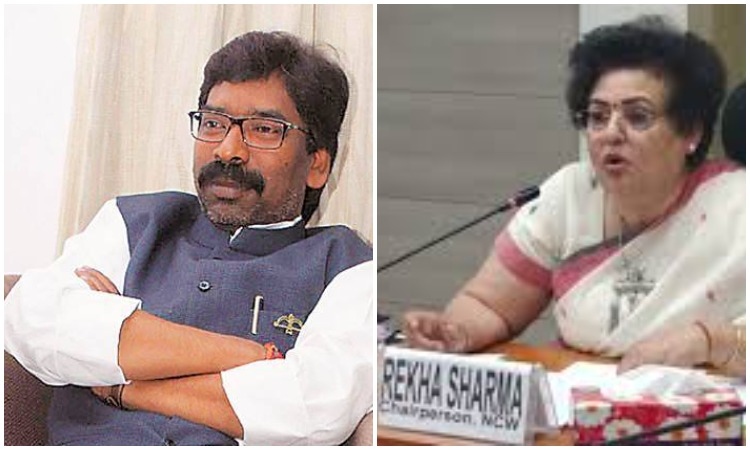
The National Commission for Women (NCW) has taken note of allegations levelled against Jharkhand Chief Minister Hemant Soren by a Mumbai based model where she accused him of raping her and threatening her and her family with life. Narrating the alleged incident in 2013, Mumtaz (name changed) had requested police protection.
The Commission said it has written to the Maharashtra Director General of Police with regard to the case that was registered way back in 2013 and sought a report regarding the same at the earliest.
“NCW has come across a media report regarding a Mumbai-based model who has alleged that she was not only raped by Hemant Soren (Jharkhand CM) and Suresh Nagre in 2013, but she and her family were also constantly threatened against speaking about the alleged incident in public.
“It is also reported that the viral letter, reportedly written by the victim, contains details of incidents that have occurred in the last seven years. NCW Chairperson has written to Maharashtra DGP seeking detailed action taken report of the case which was filed in 2013,” the NCW today said in a statement.
@NCWIndia has come across media report regarding a model who has alleged that she was raped by @HemantSorenJMM in 2013 and she and her family received threats against speaking about the alleged incident in public.
Mumbai based model accuses Hemant Soren of raping her at threatening her with life
Yesterday, a letter had gone viral on social media where a Mumbai-based model Mumtaz (name changed) had requested police protection fearing safety to her life from Jharkhand chief minister Hemant Soren, whom she has accused of raping her. She has recently registered a complaint accusing Soren of not only raping her but also attempting to kill her.
It was reported that the alleged victim had registered a complaint in 2013 against Hemant Soren, however, had later withdrawn it.
In her letter, the model wrote how Hemant Soren had behaved like an animal and a sex maniac to rape her. Thereafter Hemant Soren allegedly asked the complainant to leave the premises in the wee hours of the morning with a threat that if she tells anyone, she’d be killed. The victim said that Soren promised her to help her to launch her film career if she kept quiet.
After the withdrawal of the said complaint, the complainant shifted out her residence and was under constant fear. Under fear of harm to her and the family, the victim stated that she tried to forget the ignominy she had suffered and was trying to lead a peaceful life.
The alleged incident came to light after several netizens took to Twitter on Wednesday to trend ‘JusticeforAyesha’ to demand justice for the victim.
The issue was propped by Godda MP Nishikant Dubey in June this year, who had demanded the reopening of rape and kidnapping case which was lodged by the Mumbai-based girl against Soren way back in 2013.
However, rejecting all allegations, Soren had also filed a Rs 100 crore each defamation suit against Dubey and others, alleging they had published defamatory statements against him.
India Post has issued a warning on its official Twitter handle about a fraudulent SMS that is being circulated. The message that has been sent via SMS ID QP-INPOST with the name ‘India Post’ offered the receiver to open an account in Post Office by sending an email to the given mail ID. The message read, “Open your account in Post Office with Net Banking and ATM. Email:” followed by the email ID.
In the warning message, India Post said that it is a fraudulent message that is being circulated on SMS and requested people to ignore the message.
This is a fraudulent message circulating on SMS. General Public is requested to please ignore this message. pic.twitter.com/oTOgFXkpK0
It has to be noted that India Post has recently launched DakPay, a payment app that users can connect to their Post Office Bank Account or any other bank account and use it to send and receive payments via UPI. As Post Office’s banking system is gaining headlines these days, scammers are trying to leverage it and scam people by luring them into sending their personal details.
What should you do if you receive a possible fraudulent message?
In case you have received a message that asks you to send your personal details to an unverified and unofficial email ID, please ignore the message and inform the authorities. Your personal information, like PAN card, Aadhaar card number, photograph and address details etc., can be used to cause financial losses.
In case you have already sent them the details, make sure to file a complaint with the police and inform the concerning authorities. Keep an eye on your financial transactions, and try to regularly check your CIBIL report to ensure there are no fraudulent loans or credit cards issued in your name.
If you have filled a form by clicking on a link in the SMS or logged in to your bank or email account using a link in a similar message, change your passwords immediately and inform the authorities.
If you notice any fraudulent activity in your bank account, make sure to contact the bank and the police immediately.
Please do not forward such messages, in any case, to ensure no one gets scammed.
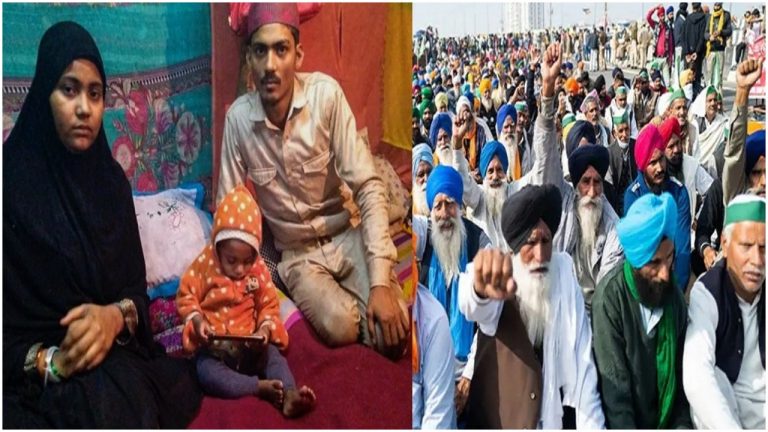
The ‘farmers’ protest that has now continued for 22nd day along the Haryana-Delhi border causing massive inconvenience to the citizens in the NCR has now turned tragic after one of the farmers from Punjab allegedly died due to the cold.
According to the reports, a 37-year-old man was found dead at a site where thousands of protestors have camped along the border to protest against the three farm laws passed by the Modi government. The reason for his death is reportedly that inflicted by the cold weather. The death of the protestor at the campsite comes just days after another protestor, a Sikh priest, allegedly died by suicide near the Delhi-Haryana border. It has now been revealed that a nurse at his dispensary is alleging that Sant Baba Ram Singh was actually killed and could not have committed suicide by shooting himself.
The unfortunate death of protestors at the protest site along the border comes at a time when the so-called protest by the ‘farmers’ that started as a grievance against the farm laws turned political in nature. The protests that have been mostly hijacked by Islamists, radical-left elements and especially Khalistanis backed a few political parties to further their political agenda has now consumed two lives.
Farmers are the ‘scape goat’ for furthering opposition’s political agenda
As witnessed on social media platforms, most of the ‘farmers’ protesting against the Modi government have no clue about the farm laws passed by the centre. Instead, the farmers from Punjab, on the behest of Arhatiyas and opposition parties have camped near Delhi to make unrealistic demands such as repealing of the three laws that intend to bring reforms into the farm sector in the country.
In fact, the political parties and radical-left, along with the foreign-based Khalistani groups have attempted to hijack these protests so that they could create a political narrative over these farmer protests. Unfortunately, the desperation for these political groups to brainwash these innocent farmers to protest against the Modi government on the pretext that they have been at the receiving end of some sort of injustice has now caused the death of two farmers.
The delusions of protest organisers and opposition parties to oust the Modi government using farmers lives have now turned tragic. The so-called farmers protest organisers are now playing with fire and risking lives of thousands of poor farmers at a time when winter is setting in the northern parts of the country.
The farmer’s death at the protest site on Wednesday also reminds of a similar incident that had taken place in 2015 when an alleged farmer identified as Gajendra Singh from Rajasthan had hung himself at a rally in the presence of Arvind Kejriwal during his party’s rally against the Modi government’s land acquisition bill. Singh, who was a part-time farmer had sacrificed his life during the rally to make a political point even as AAP workers stood watching him.
Farmers death reminds oneself the sacrifices of infant at Shaheen Bagh
This dangerous game of proxy-wars against the Modi government by the political class was first seen during the Anti-CAA protests at Shaheen Bagh in the Delhi. Just a year ahead, the Islamists, backed by political parties, had similarly camped at a public road in the national capital causing chaos in the national capital under the pretext of protesting against the Citizenship Amendment Act, passed by the Modi government.
It is pertinent to note that Shaheen Bagh became the site of a heartbreaking tragedy after organisers of the Shaheen Bagh protests had used women and children for the purpose of Islamic zealotry. In doing so, a two-month-old child was sacrificed as it became the victim to the delusions of her parents at Shaheen Bagh. The two-year child had succumbed to poor health due to the harsh weather conditions during winter in Delhi.
A little infant had passed away due to the negligence of her parents, who had thought that her child was a showpiece of the protests at the Shaheen Bagh. To make a political point and garner some limelight, the parents had exposed the child to winters by bringing the child to protest site at chilling cold. The life of a baby was snuffed out by delusions and uninhibited political ambitions of a few.
A similar trend can also be seen at the ongoing ‘farmers protest’ where the political parties intend to use these dead bodies of innocent farmers to further their political agenda.
In recent years, Germany has reportedly witnessed a sharp rise in the cases of injuries caused by female genital mutilation (FGM). According to a report of DW, a women’s rights group has claimed on December 11 that last year almost 2000 patients were diagnosed in Germany who needed treatment for FGM.
The report said that as per the data provided by The TaskForce for effective prevention of FGM, the numbers have shot up 40% this year if compared with 1300 diagnoses following FGM in 2016. A survey was reportedly conducted by The TaskForce of German physician associations which showed that about 200 of these cases were minors, and half of whom were under the age of 12. The survey included only the females who received outpatient care by statutory health insurance providers. It did not include inpatient stays in hospitals or during private medical treatment.
The founder of The TaskForce, Ines Laufer, said that the figures recorded in the survey did not present the complete picture of the situation. “What we see from these figures is only the tip of the iceberg and represents perhaps 2 to 5 per cent of the actual mutilation victims who live in our country, because political leaders do not want complete data collection”, Laufer said. As per the report, the estimate of the women’s rights group said that over 20,000 girls may have undergone FGM because they or their parents came from countries with an FGM rate of above 75%, e.g. Egypt, Ethiopia, Eritrea, Sudan, Mali, Somalia and others.
They attributed such a sharp rise in the FGM cases to the unusually large numbers of migrants allowed into Germany from the Middle East and Africa in 2015 and 2016. Laufer has demanded for the implementation of state protective measures to combat the problem particularly in case of minors. “We call for the implementation of state protective measures, such as regular medical checks and the introduction of mandatory medical reports to the law enforcement authorities if genital mutilation is found in underage victims”, Laufer stressed.
What is Female Genital Mutilation (FGM)
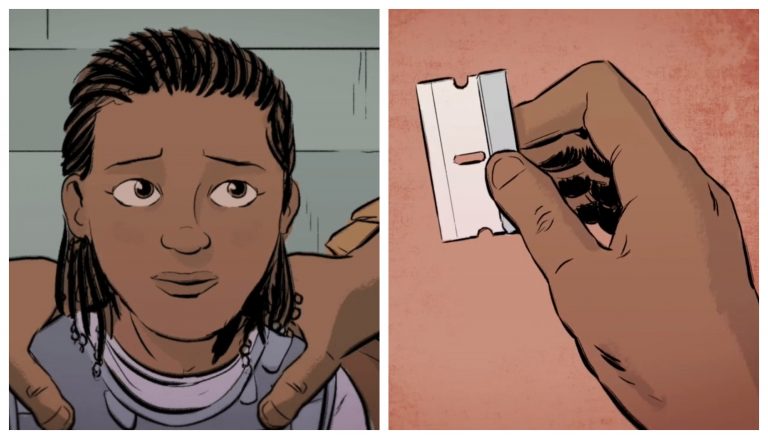
Female Genital Mutilation or FGM comprises of procedures involving partial or total removal of external female genitalia or other injuries to the female genital organs for non-medical reasons. The practice is usually carried out by traditional circumcisers. The process can cause a number of health issues including infections, cysts, infertility and complications in childbirth. It can also increase the risk of newborn deaths.