Home Blog Page 4835

Bihar: Tension in Katihar district after Islamist mob desecrate, vandalise Chhath Puja ghat

Amidst the Chhath Puja festivities on Friday, the Hindu community in the Katihar district of Seemanchal division in Bihar was subjected to consistent harassment by Islamists.

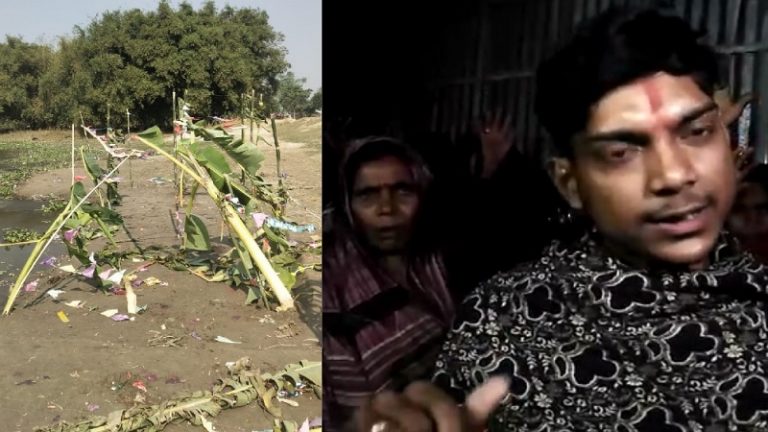
As per locals, a Muslim mob disrupted the Chhath Puja celebrations, and vandalised the ghats, leading to a communally-surcharged atmosphere in the area. Although the Hindus were able to observe Chhath Puja in the evening, there were terrified by the events of the morning when a group of Islamists had stopped them from conducting the rituals. The Muslim mob had initially objected to the use of firecrackers but later resorted to vandalising the Chhath ghat, destroying the paraphernalia, urinating and defecating on the site.

In a video that has now gone viral on social media, the locals have demanded the intervention of Kahtiyar MLA Tarkishore Prasad and police protection to all Hindu devotees in the area. All the men and women, standing in the background, were seen making a desperate appeal to the district administration. A young boy in the said video had called upon other Hindus to make the video viral so that they can get justice.

Locals recount how a fanatic Muslim mob intimidated them

When OpIndia spoke to the people in the area, one local person informed that the son-in-law of a local Islamic cleric was involved in the disruption of Hindu festivities. As such, the district administration has asked the aggrieved Hindus to settle the matter outside the police station. An eyewitness and victim, Devnarayan Uraon, narrated, “As soon as we got there, a group of Muslims started harassing us. They warned us to not celebrate Chhatt else they would throw us off the ghats. When we returned home, they destroyed the decoration and vandalised the site….” He added that following the incident, he and other locals went to Ratora police station to register a case.

Devnarayan informed that the police accompanied the locals to the ghat at 10 pm in the night and found that the ghat was vandalised. While the police provided a sum of ₹500 as monetary help, the Hindus had to spend hours in re-decorating the ghats. Several videos of Hindu activists have now come to light wherein they complained about ill-treatment at the hands of the dominant Muslim community in the area.
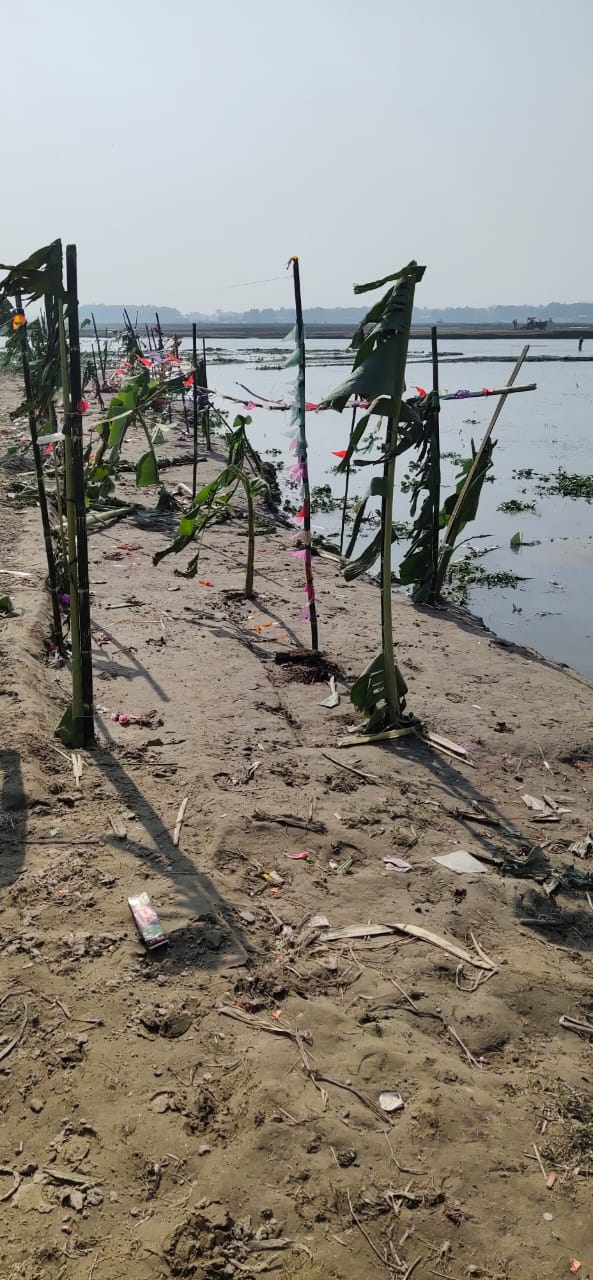
Chhath ghat vandalised by fanatic Muslim mob

Quoting the Muslims in the area, a Hindu woman stated, “They say that they will create more Muslim dominated areas, drive Hindus away and grab their lands.” In a shocking claim, a local Vikas Uranv said that he had witnessed the desecration of the Chhath ghat himself and claimed that miscreants belonging to the Muslim community made videos of Hindu women changing their clothes. He had also lamented about how the same miscreants harass and eve-tease their women on a daily basis.

Police claims situation under control, VHP spokesperson flags concerns about growing fundamentalism

While speaking about the incident, SDPO (Katihar) Amarkant Jha conceded that the desecration was the handiwork of some anti-social elements during the Chhath Puja at Rautara. He stated that the police took immediate action on learning about the incident and ensured that the Chhath Puja rituals went unhindered. Jha further stated that no case was registered as it wasn’t such a big incident and that law and order situation was under control. He added that no arrest has been as the matter has been resolved. He further emphasised that the Station House Officer (SHO) took cognisance of the incident at the earliest and that he was monitoring the situation on the ground.

VHP national spokesperson Vinod Bansal told OpIndia that the Bihar government should pay attention to the concerns of Hindus in sensitive areas such as Seemanchal. While condemning the incident, he urged upon local MLA Tarkishore Prasad to meet the people and listen to their demands. He expressed concerns about the rising Islamic fundamentalism in the area and the threats it posed to the Hindu community.
Jal Jeevan Mission provided tapped water to over 2.6 crore families so far: PM Modi

0

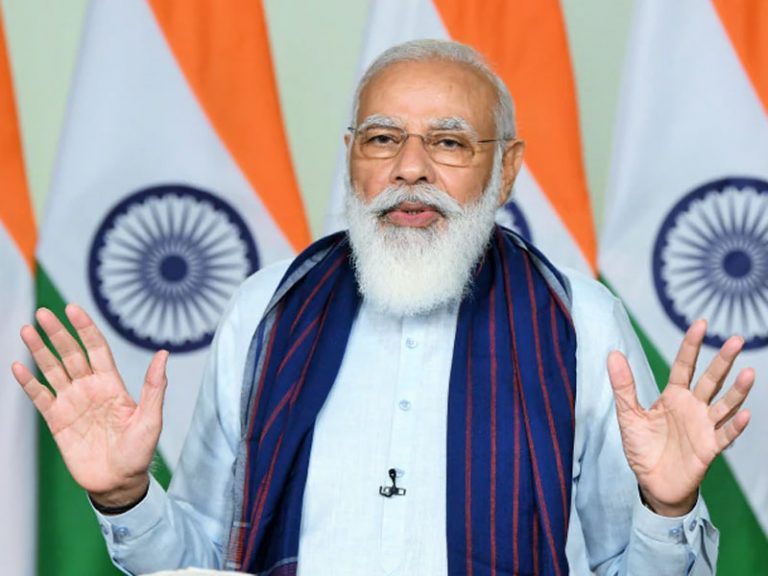
Prime Minister Narendra Modi laid the foundation stone of rural drinking water supply projects in two districts of Uttar Pradesh on November 22. The Jal Jeevan Mission project will provide tapped water connection to houses of 2,995 villages covering 42 lakh population in Mirzapur and Sonbhadra districts of Vindhyachal region. The project’s estimated cost is Rs.5,555.38 crore, and it is expected to be completed in 24 months.

2.6 crore families benefited from Jal Jeevan Mission since its launch

Jal Jeevan Mission was launched around one and a half years ago. Since then, the government has provided piped drinking water collections to over 2.6 crore families across country including Uttar Pradesh.

The health of the region will improve with tapped water

During his address to the people of these regions, PM Modi said that clean tapped water would improve the mental and physical health of the children living in thousands of villages in Vindhyanchal. A significant benefit of this project will be that it will reduce many diseases caused by dirty water, such as cholera, typhoid, encephalitis, and others. He added that it would make it easier for the women of the families as they have to travel long distances to get water.

Irrigation and water scarcity problems will be sorted out

Despite the region being rich in resources, Vindhyachal and Bundelkhand are often considered to be regions of deficiencies. There are several rivers in the region, but the people face water scarcity and droughts. A lot of families have migrated from the region due to the non-availability of water. The upcoming projects will help in dealing with water scarcity and irrigation issues in the region. PM Modi further added that completion of irrigation projects and solar projects on uncultivable land to provide steady extra income to the farmers.

Goa is the only state with a 100% tapped water supply

The government has so far provided 58 million tapped water connections. Around 30 percent of these connections were provided in rural areas. Goa is the only state in India that has achieved its target of 100% tapped water supply in the household. Telangana, Bihar, and Puducherry are expected to have full coverage by 2021. The total estimated cost of Jal Jeewan Mission is around Rs. 3.6 trillion out of which the central government will spend 2.08 trillion on the project.

Canada to return idol of Hindu Goddess Annapoorna stolen over 100 years ago from India

0

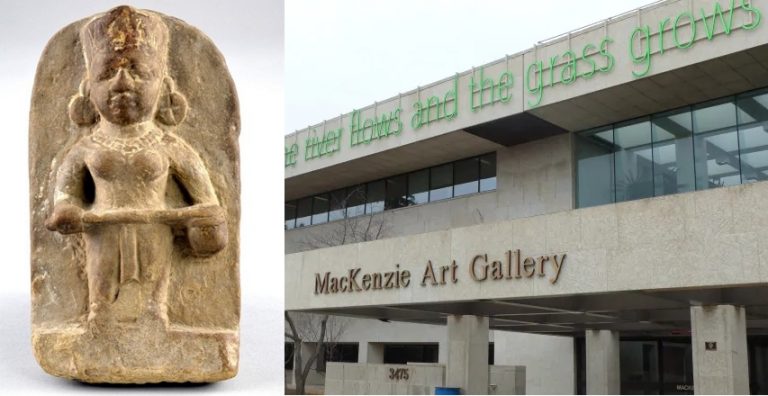
In a positive development, a Canadian University has decided to return an ancient idol of Goddess Annapoorna back to India in a bid to correct historical wrongdoings and the damaging legacy of colonialism. The idol belongs to Goddess Annapoorna, the deity of nourishment and queen of Varanasi. The idol is depicted as holding a spoon in one hand and a bowl of kheer in the other.

As per reports, the idol was stolen from a shrine in Varanasi about a century ago and was kept at the MacKenzie Art Gallery in the University of Regina. In a statement of Thursday, the University said that it was brought to the attention of the varsity by artist Divya Mehra while scourging through the permanent collection of journalist and historian Norman Mackenzie, the art gallery’s namesake. She had pointed out that the idol had caught the eye of Mackenzie during a trip to India in 1913. On learning about his desire to possess the idol, a man stole it on his behest from a shrine near the Ganga river in Varanasi. The University then decided to take the appropriate decision to undo the cultural theft.

University decides to return idol voluntarily

Following a virtual repatriation ceremony on November 19, Vice-Chancellor and Interim President of the University Dr Thomas Chase met Indian High Commissioner to Canada, Ajay Bisaria, to officially repatriate the idol. The ceremony was attended by representatives from Canada Border Services Agency, MacKenzie Art Gallery, and Global Affairs Canada. While speaking on the development, Ajay Bisaria said, “We are delighted that this unique statue of Annapoorna is on her way home. I am grateful to the University of Regina for their proactive engagement for the return of this cultural icon to India. The move to voluntarily repatriate such cultural treasures shows the maturity and depth of India-Canada relations.”

Official statement by University officials

“As a university, we have a responsibility to right historical wrongs and help overcome the damaging legacy of colonialism wherever possible. Repatriating this statue does not atone for the wrong that was done a century ago, but it is an appropriate and important act today. I am thankful to the MacKenzie Art Gallery, the Indian High Commission, and the Department of Canadian Heritage for their roles in making it possible,” Vice-Chancellor Chase stated.

Curator of the President’s Art Collection from the University of Regina, Alex King, stated, “The repatriation of the Annapoorna is part of a global, long-overdue conversation in which museums seek to address harmful and continuing imperial legacies built into, sometimes, the very foundations of their collections. As stewards of cultural heritage, our responsibility to act respectfully and ethically is fundamental, as is the willingness to look critically at our own institutional histories,” said Alex King, Curator/Preparator, University of Regina President’s Art Collection.

J&K: Tunnel discovered near international border, suspected to have been used by terrorists eliminated during Nagrota encounter

0

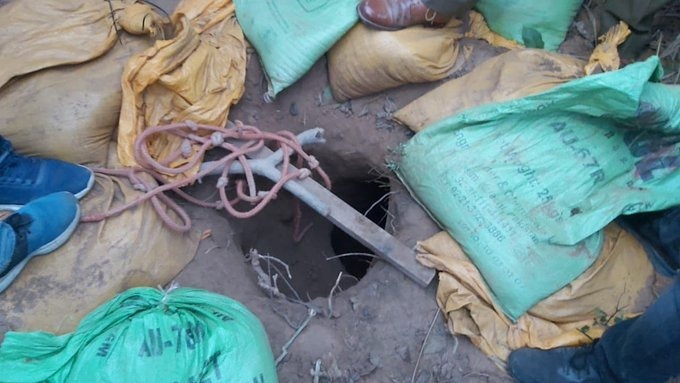
DGP Dilbag Singh said on Sunday that a tunnel was detected near the international border between India and Pakistan at the Samba district of Jammu and Kashmir. The tunnel is reported to be 30-40m long and was reportedly used by the terrorists who were eliminated during the Nagrota encounter.

Sandbags were reportedly discovered with Pakistani markings. It is believed that the tunnel was not for one-time use. Earlier, forces had launched an operation to unearth an underground tunnel that was suspected to have been the route through which the Jaish-e-Muhammad terrorists infiltrated into India. The tunnel was discovered by the BSF and J&K Police.

Nagrota Encounter

The encounter had broken out at the Ban toll plaza in Jammu’s Nagrota where security forces had laid a road block after receiving information that suspected terrorists were hiding at the location. Following a gun-fight that went for several hours, 4 terrorists were killed, while one soldier was injured.

The encounter started after terrorists had open fire on security forces when the vehicles were being checked. After firing on the security forces, the terrorists had fled towards the nearby forest, where the encounter took place.

11 AK-47 Rifles, 3 Pistols, 29 Grenades and other devices were recovered from the slain terrorist. Along with this, medicines with Pakistani markings were also found, proving that the terrorists came from Pakistan. According to a tweet by IGP Jammu, the quantity of weapons and type of medicines indicates that it was a fresh infiltration and the terrorists were suicide attackers.

Based on the materials and document recovered from the terrorists, intelligence analysts have concluded that Jaish-e-Mohammad terrorists were planning a major terror attack on the anniversary of the 26/11 Mumbai attack. Prime Minister Modi held a security review meeting with the top brass over the Nagrota encounter as well.

I am shocked that P Chidambaram is shocked about draconian anti-FOE law by Kerala govt

Former Union Minister P Chidambaram is shocked. As the mercury dipped in the national capital, P Chidambaram took to social media to claim that Kerala government’s order to make ‘offensive’ post on social media punishable by 5 years in prison has shocked him.

This shock experienced by P Chidambaram has shocked me, to put it mildly.

*Cough* Sec 66A of IT Act *cough*

It was in October 2012, when under the draconian section 66A of the IT Act the then Union Finance Minister P Chidambaram’s son got a man arrested for “offensive” tweets against him. Local Crime Branch of CID Police in Puducherry had gone to arrest then 45-year-old Ravi, owner of a plastic packing material factory, for tweeting ‘offensive’ messages to Karti on three occasions from 2011.

Srinivasan had accused Karti of corruption. This is what Karti had tweeted in defence of getting a man arrested for accusing him of corruption.

Eight years down the line, Karti is facing investigation in number of cases including money laundering and having undisclosed foreign assets.

The law was passed by P Chidambaram’s ‘zero loss‘ colleague, Kapil Sibal. Perhaps Congress leaders just did not want the aam janta to question Congress leaders and their family members over allegations of corruption.

Section 66A of IT Act came into force in 2010. Ravi’s arrest based on Karti’s complaint was one of the first incidents of arrest of someone over ‘freedom of expression’. The section was punishable for up to three years in jail over social media posts which are ‘grossly offensive or has menacing character’. Perhaps Chidambaram is shocked that Kerala government put jail time of 5 years, two years more than what they had stated.

That’s not it, though. If you posted any information you knew to be false, but posted only to cause ‘annoyance, inconvenience, danger, obstruction, insult, injury, criminal intimidation, enmity, hatred, or ill will’, a non-bailable arrest warrant awaited you. How dare you cause someone annoyance or inconvenience over social media under non-fascist Congress rule? After all, isn’t Congress synonymous to freedom of speech?

When passing this law, Sibal had claimed he did not intend to censor social media.

Just few days after Karti got the businessman arrested, two girls in Palghar were arrested for questioning the call for Mumbai bandh on death of Shiv Sena founder Bal Thackeray’s death. Again under the Section 66A of IT Act brought in by Kapil Sibal. Thackeray was head of a political outfit. In 2012, Maharashtra had a Congress-run government. Years later, his son, Uddhav Thackeray would join hands with Congress and NCP and form the government in Maharashtra.

Cartoonist Aseem Trivedi was arrested in Mumbai in September 2012, under section 66A of IT Act as well as various other provisions over allegations of ‘insulting’ the national emblem and drawing a cartoon. Speaking of cartoons, another politician who took an offence at her cartoon was West Bengal Chief Minister Mamata Banerjee. A Jadavpur University professor was arrested in April 2012 for circulating ‘anti-Mamata’ cartoons.

And I’m not even beginning to talk about Indira Gandhi imposed Emergency and what it did to freedom of any kind. Apple hadn’t fallen far from the tree as her father, India’s first prime minister, Jawaharlal Nehru got poet Majrooh Sultanpuri arrested for criticism who had to spend good two years in jail.

Hence, when Congress leaders express shock at anyone ‘stifling freedom of expression’, it is nothing short of shocking.

Did Kerala govt hurriedly pass anti-media law anticipating criticism over underreporting of COVID-19 deaths? Read details

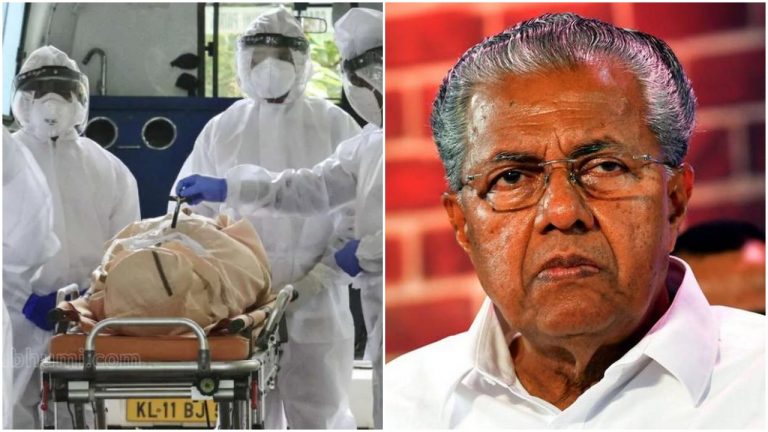
A group of volunteers in Kerala has made a sensational claim accusing Kerala government of fudging their COVID data to show a lesser number of coronavirus deaths in the state. The group recorded every Covid-19 related in the state as per media reports, and found that it is much more than the number of deaths reported by the state govt.

According to a BBC report on the findings of the study, the group of researchers have compiled a list containing names of all the people who succumbed to the Chinese pandemic. These group of researches have put months of painstaking research to record data of these deceased persons, picking up from local papers and news networks to report almost all deaths that occurred in the state due to the pandemic.

A team led by Dr Arun N Madhavan, a general medicine physician, checked the district editions of seven local newspapers and followed five news channels unfailingly every day. These team meticulously recorded every death reported in the news and obituary notices to diligently enter the details into a spreadsheet.

The team has tabulated the entire data into a Google Sheets spreadsheet, that contains names, address of every person from Kerala who died due to the Chinese pandemic, the date of their death, along with multiple sources of the records.

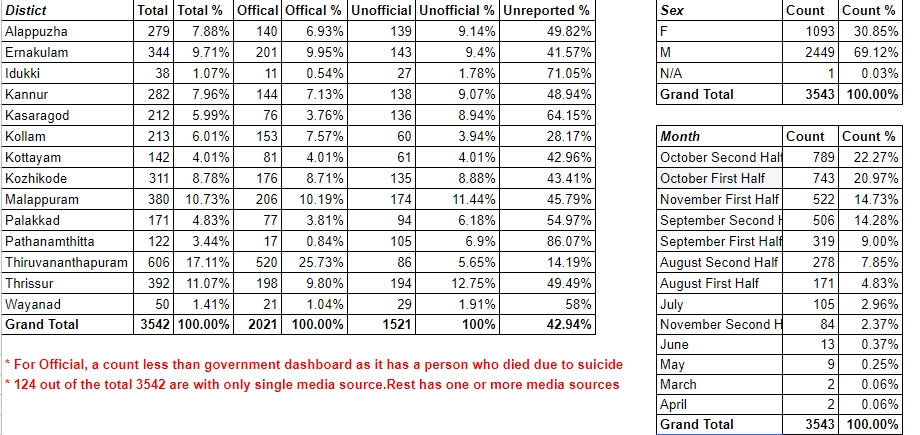
As of now, the volunteers had counted 3543 COVID-19 deaths from Kerala. However, the official death toll from the disease is 2,023 till Sunday. If one goes by the data of recorded deaths by Madhavan and his team, there has been a whopping 43 per cent of underreporting of COVID deaths in Kerala. The sheet also contains 12 deaths with only one source, hence not considered as confirmed until they are reported by a second source.

“We are missing a lot of Covid-19 deaths here,” Dr Madhavan told BBC. According to Madhavan, the Pinarayi Vijayan-led Communist government has recognised a little more than half of the deaths caused by COVID and attributed the rest to underlying conditions or co-morbidities.

Here is a district-wise reporting of COVID-19 deaths put out by the team of researchers that exposes underreporting of deaths by the Kerala government:

High exclusion of deaths in the official data, says researchers

The increasing gap between the official numbers claimed by the government to the actual number of the people who are deceased to the pandemic, as reported by Madhavan and team, comes at a time when the ‘liberal-secular’ media have hailed the so-called Kerala model of handling coronavirus despite the fact that Kerala has been one of the worst affected states in the country.

The main accusation against Kerala, which has claimed data transparency, is that it has been undercounting deaths. Dr Madhavan believes under-reporting of coronavirus deaths in Kerala is rampant.

He says, “Patients who tested negative “just before they died” and did not belong to Kerala were not counted. Three patients – all men, aged between 65 and 78 – came to his clinic with symptoms and died in hospital in October during treatment.”

“Their deaths didn’t come up in the media or the official count. All of us are missing deaths, but the government is missing them the most,” he said.

Bureaucrats admit Kerala fudged numbers by underreporting COVID-19 deaths

Even, Rajeev Sadanandan, a top health bureaucrat who is advising the government on handling the pandemic, admitted to underreporting of numbers saying that there has been “some” under-reporting of deaths in Kerala. Sadanandan added that they did not count cases who were suffering from terminal or renal diseases and were found to be infected with COVID-19.

Sadanandan claimed that Kerala had always prided itself on its transparency of data and it was this that helped the state fight an outbreak of the vicious Nipah virus in 2018. “We have not consciously hidden data. Some districts might not have reported deaths fearing adverse reactions. It is difficult to hide data in a society which insists on total transparency,” the bureaucrat disclosed.

Oommen C Kurian, a researcher in Observer Research Foundation, also believed that the undercounting of deaths in Kerala has been “conscious and systematic, and not because of systemic weakness”. Kurian added that despite all the robust surveillance capacity and a government panel to advise on the matter, “no major reconciliation of deaths has happened yet”.

“The authorities seem to be convinced that by whatever means the state should keep its reputation as a Covid-19 success story,” Kurian said.

Another senior government official also admitted that he estimated that the state had under-reported deaths by at least 30 per cent. Speaking to BBC, he added that even if the official toll was doubled to factor in uncounted deaths, the number would remain well below that reported by most other states.

With such a massive expose by a team of Kerala researchers, the whole fake narrative of ‘successful Kerala model’, that was carefully backed up by the global PR and international awards is out in the open.

Interestingly, the intellectual cheerleaders, who were all along bragging about the sham called ‘Kerala model’ by deliberately hiding the reality of Kerala’s terrible management of coronavirus have now gone silent. The Kerala government, being ditched by its ‘left-liberal’ cheerleaders, seems to be now prepping up for an attack on media and its critics in apprehension that they could now expose its massive coverup.

Did Kerala govt pass anti-media ordinance in anticipation of media expose?

Just yesterday, the Kerala government had hurriedly passed an ordinance that gives arbitrary powers to police to arrest people for expressing their opinion not just on social media but also on mainstream media. According to the new law, the law enforcement authorities can arrest anyone and prosecute them in the name of fighting the increasing incidents of crimes perpetrated through social media.

It is rather intriguing to know whether Kerala government, which is accused of manipulating the coronavirus deaths in the state, was anticipating such an expose and prepared itself with such a draconian law. The Communist Kerala government, perhaps being aware of the BBC report that exposed that their coronavirus data scam, hurriedly came with the idea of promulgating the ordinance.

The Section 118-A of the Kerala Police Act, that was passed in the form of an ordinance by the Kerala government, gives unbridled powers for the law enforcement agencies to curtail the freedom of the press and arrest anybody on the charges of exploiting social media to target individuals, especially women and children.

By pre-empting that a political controversy would erupt, the Kerala government armed themselves with such draconian powers so that they could punish not only the opposition parties but also certain media groups, social media users for exposing their COVID death scam.

Interestingly, the Kerala Government in its official gazette has mentioned that it was satisfied that the circumstances exist currently which render it necessary for them to take immediate action to pass such an ordinance. In fact, it is not yet clear what sort of ‘exigency situation’ had arrived for the Kerala government that prompted them to promulgate an ordinance in just a matter of hours.

Amidst all the serious allegations and severe criticism against the Kerala government, the Pinarayi Vijayan-led administration has chosen to stay silent and are yet to comment on the allegations of massive underreporting of reporting COVID deaths made against them.

Mizoram forces ‘illegally occupying’ Assam territory that could result in Cachar division losing 700 hectares of land, claims forest dept: Read details

0

Tensions are simmering between two states in North East India. Border disputes between Assam and Mizoram have been a cause for concern for quite some time and under current circumstances, it has the potential to create a severe deterioration of relationship between the two states. According to a forest department report quoted by Assam Tribune, Mizoram forces are still within Assam’s territory even after promising to withdraw a couple of weeks earlier.

The report notes, “Unlike the usual incidents of encroachment of forest lands by general public, the recent encroachment and land grabbing by Mizo forces appears to be prompted by the Mizoram government. However, this is not the first instance of incursion by Mizoram forces inside the territory of Assam.”

The report states further, “The personnel who are illegally occupying forest lands inside the territory of Assam have taken a very aggressive position regarding their claim that the recently occupied lands belongs to the territory of Mizoram… these personnel are in no mood to accept the constitutional boundary of Assam & Mizoram or to respect the notification of March 9, 1933 that defines the boundary of the States of Assam and Mizoram.”

“Due to establishment of IR Battalion camps inside the territory of Assam, Cachar Division stands to lose control over nearly 700 hectares of forest land in the Innerline Reserved Forest area,” it added. The report further says that only the Government of India could defuse the border tensions and emphasized on the necessity to resolve the boundary dispute once and for all.

DIG (Southern Range) Dilip Kumar Dey was quoted by Assam Tribune as saying that Mizoram personnel continue to be present at five locations inside two districts of Assam, namely, Cachar and Karimganj. “Sometimes they thin out, but later they again build up,” he said.

Meanwhile, Assam Minister for Forest and Environment, Parimal Suklabaidya has said that truck drivers are hesitant to enter Mizoram due to fear of “harassment” in the name of Coronavirus testing during his visit to the Assam-Mizoram border. Movement of trucks resumed on the 9th of November after a 12-blockade was lifted.

The blockade was begun by residents of Lailapur on the 28th of October demanding the withdrawal of Mizoram forces from what they claimed was Assam territory. “Mizoram will have to retreat eventually and we are not going to budge an inch of our territory,” Suklabaidya said but maintained that the state wants a cordial relationship with its neighbour.

October clashes at Assam-Mizoram Border

Clashes erupted at the Assam-Mizoram border between the people of the two states on the intervening night between the 17th and 18th of October, injuring people and leaving more than 20 temporary bamboo huts incinerated. Seven people were reportedly injured.

According to officials, the flare-up took place as villagers of Lailapur in Cachar district of Assam entered into a brawl with residents of Vairengte in Kolasib district of neighbouring Mizoram. As per reports, the border clashes were a result of the razing down of a makeshift hut used by local volunteers who manned the inter-state border near the Saihaipui ‘V’ village, about 3 km from Vairengte.

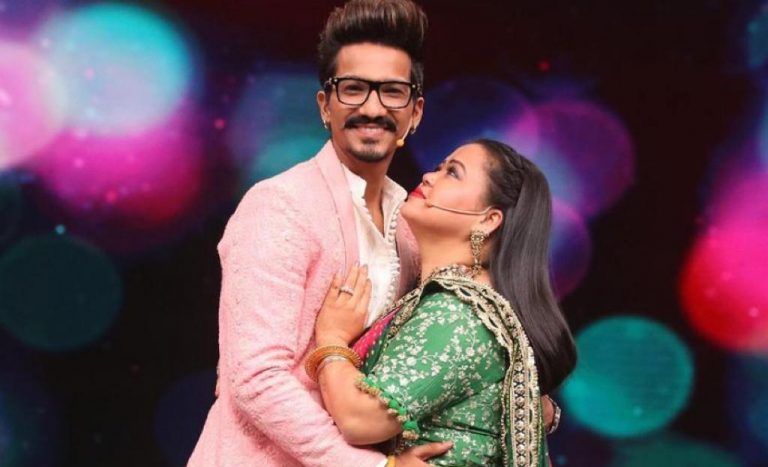
Comedian Bharti Singh and her husband Haarsh Limbachiyaa sent to 14-day judicial custody over drug possession

A day after comedian Bharti Singh and her husband Haarsh Limbachiyaa was detained by the Narcotics Control Bureau (NCB), a Mumbai Court has now sent the duo to judicial custody for 14 days.

As per reports, the duo has been remanded to judicial custody till December 4. Bharti Singh was arrested on Saturday, while her husband Haarsh was arrested on Sunday after questioning him for around 12 hours. The residence of comedian Bharti Singh was raided by the Narcotics Control Bureau (NCB) on Saturday in connection with its investigation into the drug racket in the entertainment industry.

The investigative officials had recovered 86.5 grams of ganja from the office and residence of the couple in Andheri West. While speaking about the case, an NCB official informed that the duo had admitted to the consumption of Ganja. Singh had reportedly stated that Haarsh procured the drug for her from one peddler and kept two bags (one at the office while the other at his residence) for consumption.

According to NCB officials, the amount of drug recovered is considered as ‘small quantity’, and not as ‘commercial quantity’. For Ganja, upto 1 kg is considered small quantity, and the punishment for keeping small quantity of Ganja is upto 6 months of jail and/or fine upto Rs 10000.

NCB Bollywood Drug Racket

Narcotics Control Bureau (NCB) had recently summoned film producer Firoz Nadiadwala in connection to the probe in the high-profile drug scandal surrounding the Hindi film industry. Consequently, his residence in the upscale western suburbs of Mumbai was searched by the narcotics team in connection to the case.

Earlier, it was revealed that NCB has initiated a probe into Shah Rukh Khan, Arjun Rampal and Dino Morea for alleged drug abuse. Till then, the names of only actresses like Deepika Padukone and Sara Ali Khan had come up in the drug abuse probe.

Previously, the NCB officials had impounded mobile phones of Deepika Padukone, Sara Ali Khan, Rakul Preet Singh and Deepika’s manager Karishma Prakash. During the interrogation, the NCB officials had confronted Deepika Padukone with the digital evidence gathered from Jaya Saha’s phone that showed the actor’s chats about procuring ‘maal’ for her. However, as per a report, Deepika had claimed that by ‘Maal’ she meant cigarettes and ‘Hash’ referred to the different brands of cigarettes.

FIR filed against Netflix series ‘A suitable boy’ for hurting Hindu sentiments by filming multiple kissing scenes in temples

A month after controversial Netflix series ‘A Suitable Boy’ was released, BJP leader Gaurav Tiwari has filed a First Information Report (FIR) against the video-streaming platform for the show. Tiwari is the National Secretary of the BJYM (Bharatiya Janata Yuva Morcha). The series, based on a novel by Vikram Seth was released on Netflix on October 23.

In a series of tweets, the BJP leader had confirmed the development. He stated, “In the web series of ‘A Suitable Boy’, Netflix has shown three kissing scenes, in one episode, taking place within the temple premises.” He inquired, “As per the story, a Muslim man is in love with a Hindu woman. But, why were all kissing scenes shot within the temple premises (and not mosque).” Gaurav Tiwari informed that he had filed an FIR in this case at Rewa, Madhya Pradesh.

While speaking to reporters, Tiwari reiterated that his objection was not to the kissing scenes but the act being shot in the temple, with Aarti happening in the background. He questioned, “Can you shoot such scenes during Azaan at a mosque? Do you have such creative freedom? Don’t mistake the tolerance of Hindus as their weakness. This is not just an insult to Madhya Pradesh but to the sentiments of Lord Shiva and his crores of devotees. You need to apologise.”

“Rani Aliyabai Holkar had dedicated the Maheshwar ghat for Shiv bhakts. 1000s of Shivlings from Pashan Yug is its identity,” he stated. Gaurav Tiwari had also slammed Netflix for using the religious site for promoting ‘love jihad’ and hurting Hindu sentiments. “I am uninstalling Netflix from my phone, are you?” he asked.

Hinduphobia of A Suitable Boy

Critical reviews of the show have pointed towards the Hinduphobic overtones of the series. Lata and Kabir share a passionate kiss in temple premises. Characters are shown repeatedly walking around in shoes and sandals near Hindu sacred idols and holy trees. There are many other such examples in the show. Needless to say, ‘A Suitable Boy’ follows all secular tropes very religiously.

As per the series, a good Hindu is a non-religious one, or religiously indifferent, at best. A religious Hindu is always uncivilized or regressive and a Muslim – religious or otherwise – is mostly reasonable and understanding. Most important of all, a Muslim is always a victim – of Hindus or his/her circumstances.

Resentment over Bru refugee settlement, fake news doing rounds and background: All you need to know about the violence in Tripura

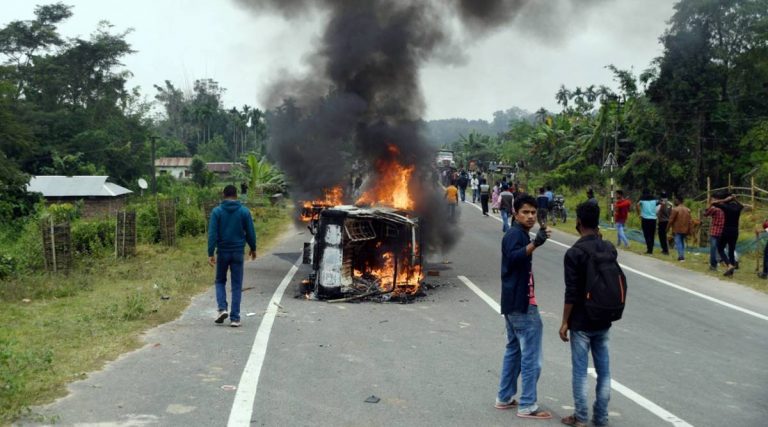
Violence erupted in Tripura on Saturday during protests against the settlement of Bru Refugees in the Kanchanpur sub-division of the state. The violence occurred after protesters’ blocked the National Highway at Panisagar in North Tripura. The protest was called by the Joint Movement Committee (JMC) and as per reports, they have demanded that the Brus be settled equally across the eight districts of Tripura.

Thus far, two individuals have lost their lives in the violence. Srikanta Das, a 40-year-old carpenter, died on the spot during the protests while Biswajit Debbarma, a fire service personnel, who was injured during the protests, passed away on Sunday. The protesters and police accounts differ on what actually started the violence.

According to the Police, they were forced to open fire in self defence and to bring the situation under control. “The crowd had blocked the national highway without permission. We tried to dissuade them and, after they became violent, we tried a mild lathi-charge and blank firing. The crowd became unruly and tried to snatch weapons. Police fired in self-defence,” Additional Director General of Police Rajiv Singh told the Indian Express.

The JMC, on the other hand, claims the Police opened fire on the protesters when they were protesting peacefully. “Our protesters were peaceful. The police opened fire on them without provocation. One person died on the spot and many others were severely injured. We are still unclear on details,” Convener of JMC, Sushanta Baruah, said. The protesters claim that the Tripura State Rifles opened fire without provocation which led to retaliation from the protesters.

Chief Minister Biplab Deb held a meeting with top police officials to discuss the incident and a magisterial inquiry has been ordered. Ratan Lal Nath, state Law Minister, said, “The magisterial inquiry will be conducted by North Tripura District Nagesh Kumar B and the probe report will be submitted within one month.”

Were Bangladeshis or Bangladeshi refugees involved in the protests?

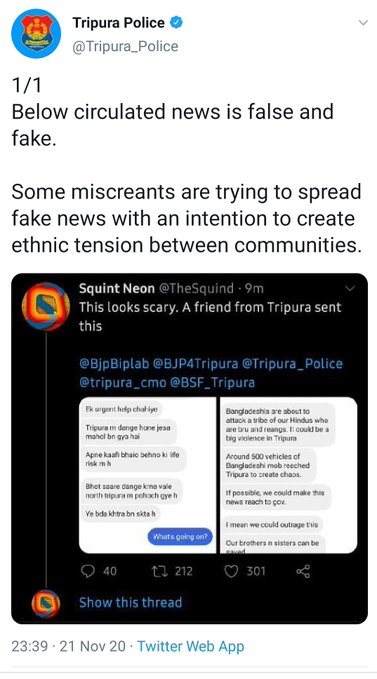
As is quite clear, the violence has nothing do with Bangladeshis or Bangladeshi refugees in any manner, contrary to what certain users on social media have claimed. The JMC, which called the protest, comprises of local Bengalis, Mizos and others. The OSD to the Chief Minister of Tripura and the Tripura Police were quick to dispel these rumours as such rumours have the potential to create much ethnic strife in North East India.

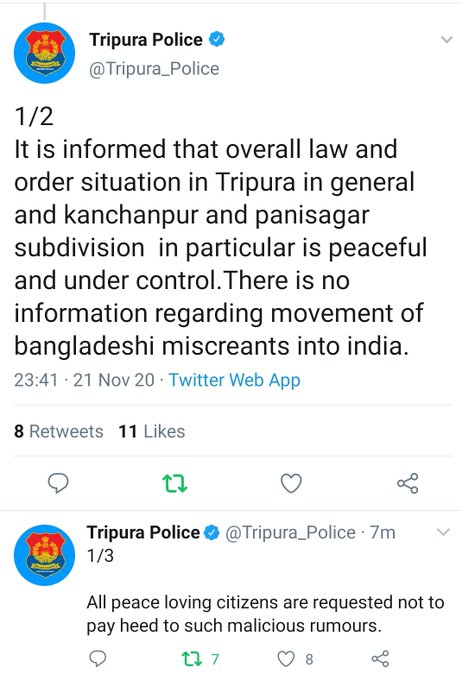
Tripura Police calls out fake news

Tripura Police has further said that there is no information of the movement of any Bangladeshi miscreants in the area. The Police also said that the situation has been brought under control. Furthermore, there is no evidence that the local Bengalis who were involved in the protest were Bangladeshi refugees as has been claimed.

Tripura Police calls out the rumours

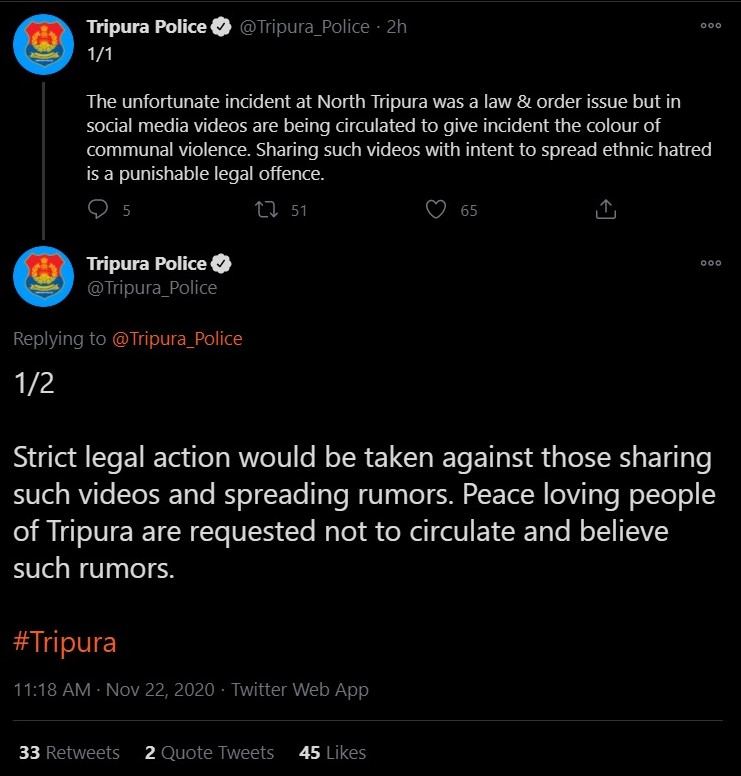
From their social media feed, it is evident that the Tripura Police is taking these rumours very seriously, given the potential for ethnic strife in the North East. The Police warned that videos are being circulated with the intent to spread ethnic hatred which constitutes a legal offence. They made an appeal to the people of Tripura to not circulate such videos.

Tripura Police issues warning

Background to the violence in Tripura

The violence that erupted is related to the recently reached agreement on the settlement of Bru refugees in Tripura. JMC chairman Zairemthiama Pachuau claimed that in contravention of assurances made to them that not more 1500 families will be settled, the numbers are now on the rise. “The government is trying to settle 6,000 families. If they go ahead with this, the entire sub-division will be affected environmentally, ecologically, socially and demographically which is not acceptable,” he said.

The dispute around the settlement of Bru refugees began soon after the community had to flee from Mizoram in 1997 due to ethnic violence by local Mizos. Before the violence began, Mizo organisations were already claiming that Brus are not indigenous to the state. Following the violence, the Brus came to Tripura where they have been living for the past 23 years.

Repatriation began in 2010 and 1600 Bru families were settled, however, Mizo organisations started protesting again and it was eventually stopped. In 2019, the central government decided to settle the Bru refugees in Mizoram but following protests from the refugees themselves, that plan was abandoned as well. Ultimately in 2020, a tripartite settlement was reached between the Union Government and the state governments of Tripura and Mizoram for the settlement of Bru refugees in Tripura itself.

Tensions between locals and Bru refugees

The Nagrik Suraksha Mancha (Citizens Protection Forum) has been alleging that Bru Refugees have been attacking local Bengalis in the area. A couple of days after the settlement agreement was announced in January, the NSM demanded the government’s attention on the alleged persecution of local Bengalis by the Brus. It is not clear whether they participated in the protests in Tripura on Saturday but illustrates the underlying tensions prevailing against the settlement.

“We have no problem with the government’s decision. But, at the same time, we also want to draw the government’s attention on the Bengalis who were subjected to persecution by the Bru refugees” president of NSM Ranjit Nath told reporters on the 18th of January. “Altogether 622 families who use to live in around the six refugee camps of Kanchanpur have been displaced following violent attacks of the Bru refugees. The visible conflicts between the Bru refugees and local Bengali population come into being in the year 2000 and since then many families who have to left their ancestral home due to them,” he added.

It is to be noted that regardless of the veracity of these allegations, the allegations prove that tensions have been simmering for a long time. It is also pertinent to note that the violence comes in the aftermath of the Kanchanpur units of both, the BJP and the CPI-M, declaring their support for the JMC. The CPI-M, which has ruled the state for decades, urged the state government to reach out to the protesters and and formulate an amicable solution to the crisis.

JMC convener Sushant Baruah said, “Today, our movement has the support of the BJP and the Left Front. The top leadership, including former CPIM district council member Lalit Debnath and BJP Mandal vice president Arun Debnath, were present on one stage with us. They made it clear that the JMC’s demand for Bru refugee resettlement was justified, and they are with the JMC.”