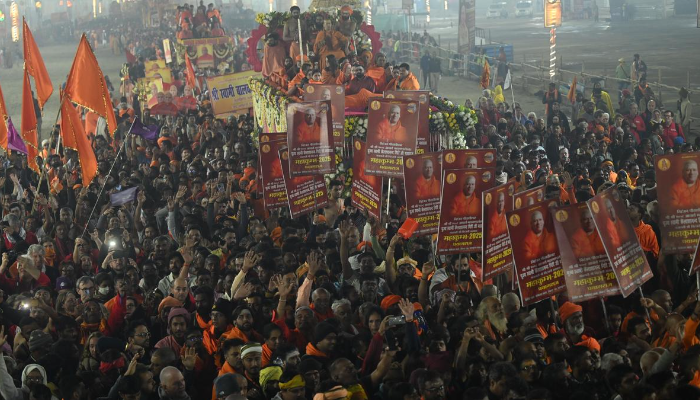
With Crores of devotees from all over the world seeking moksha (spiritual emancipation) with the sacred dip, the Mahakumbh celebrated its third “Amrit Snan,” on 2nd February, on the auspicious occasion of Basant Panchami. Amrit Snan is the grandest and most sacred ritual of the Mahakumbh Mela.
Saints and sages, including Naga sadhus from different akharas, started their ceremonial march towards the Triveni Sangam (confluence of Yamuna, Ganga and Saraswati rivers) at the crack of dawn. The Naga sadhus attracted attraction at the Mahakumbh because of their unique rituals. They demonstrated their proficiency with spears, swords, and tridents while leading several akharas in the holy bathing ritual.
The Mahanirvani and Atal Akharas finished their rituals by 5:40 am, rather than 6:15 am as they did on Makar Sankranti on 14th January, amid mounted police personnel closely monitoring Sangam Nose. They left their camps for the bathing ghats at 4 am. Sadhus of akharas were required to finish their rites by 3:55 pm after arriving at the bathing ghats in processions. Once they departed, regular devotees were permitted to take a dip at Sangam Ghats. The third “Amrit Snan” featured captivating processions led by “Mahamandleshwars” (chiefs) of several akharas.
The mela authorities worked with the senior sadhus of the akharas to determine a bathing timetable in order to guarantee a mishap-free event. Every akhara had a forty-minute window to visit the holy waters, and by 8.30 am, the first procession had finished their rite and headed back to their camps. The akharas and the Uttar Pradesh government advised people not to prioritize reaching the main confluence point, stating that all ghats carry equal importance, following the stampede at the Sangam Nose, which many perceive to have higher spiritual significance.
The akharas of three sects take dip in sequence
According to tradition, the three akharas belonging to Sanyasi, Bairagi and Udaseen sects took the sacred dip in a specific order. According to the timetable made public by the Kumbh Mela officials, the Sanyasi sect’s akharas kicked off the “Amrit Snan,” formerly known as the “Shahi Snan,” at 4 am. Panchayati Akhara Mahanirvani, Shambhu Panchayati Atal Akhara, Taponidhi Panchayati Sri Niranjani Akhara, Sri Panchayati Akhara Anand, Panchdashnam Juna Akhara, Panchdashnam Avahan Akhara and Panchagni Akhara led the revered procession.
The first procession concluded the ritual and headed back to their camps within the 40-minute window that each akhara has been allotted to visit the divine waters. The Bairagi sect’s akharas, whose bathing ritual started at 8:25 am, were next in line. All India Shri Panch Nirvani Ani Akhara, All India Shri Panch Digamber Ani Akhara, and All India Shri Panch Nirmohi Ani Akhara were among the procession. Each group’s turn ended at 12:35 pm and then the last group entered the holy waters.
The Udaseen sect, which consists of Shri Panchayati Nirmal Akhara, Shri Panchayati Akhara Bada Udaseen Nirvana, and Shri Panchayati Naya Udaseen Akhara were the last to conduct the “Amrit Snan.” The ascetics will finish their rituals and head back to their tents by 3:55 pm, after beginning their march towards the river at 11 am.
Witness the divine spectacle of the Amrit Snan at the Triveni Sangam, a confluence of sacred rivers, on the vibrant occasion of Basant Panchami (03 Feb 2025) during the #Mahakumbh2025 in Prayagraj ?✨ pic.twitter.com/aO7EHZtm7n
On the way to the Sangam region (Sector 3) for Amrit Snan, akharas crossed the Ganga from Triveni Marg (Sector 20) via Pontoon Bridge No. 6 Triveni Dakshini and Pontoon Bridge No. 7 Triveni Madhya. Only the Khalsas, Mahamandaleshwars and Acharya Mahamandaleshwars on the list that was provided to the Mela administration were permitted to bathe with the akharas, per the directive. Likewise, the number of locations and cars heading for snan were meant to match the passes that the Mela police have granted.
Bathing was at the designated Sangam Ghat by turning left from Triveni Marg Akhara Marg crossing. Additionally, parking spaces for akhara vehicles was created in the Sangam region. Following their bathing, akharas will head back to Garg (Sector 3), where they will turn right off the Akhara Vapasi Marg, bridge the Ganga across Pontoon Bridge No. 3 Mahavir Ji Dakshini and Pontoon Bridge No. 4 Mahavir Ji Northern, and enter Sector 20 afterwards.
Mahakumbh 2025: More than 6.22 million devotees take holy dip on 'Basant Panchami'
16.58 lakh devotees had taken the holy bath by 4 am and 62 lakh till 8 am, bringing the total number to 34.97 crore (35 crore per other reports) since 13th January. This number included 6.58 pilgrims and 10 lakh Kalpvasis. The administration of Uttar Pradesh expected almost 5 crore pilgrims on 3rd February alone as 1.20 crore people already took part in the ceremony during Basant Panchami, taking the final number to over 6.22 millions. It is anticipated that the overall number will surpass 50 crores with 23 days left in the Maha Kumbh.
Zero-error arrangements for Mahakumbh by state government
Preparations were personally overseen by Chief Minister Yogi Adityanath for the Amrit Snan, who sent additional personnel, medical staff and resources to ensure a “zero-error” event. According to senior Superintendent of Police (SSP) Rajesh Dwivedi, a three-tier structure was put in place to guarantee that the holy event proceeds successfully. On 2nd February, mela police implemented a seven-point special scheme to control the influx of pilgrims and devotees swarming to Ganga ghats to perform rituals and take holy dips, following chief minister Yogi Adityanath’s directives.
A one-way traffic system, a no-vehicle zone in the mela region, restrictions on vehicles entering Prayagraj limits, a diversion strategy using barricades and holding zones, and no ghat crowding were all part of the seven-point special program. The mela police also stationed joint teams of paramilitary and mela police at 28 static locations to control the flow of devotees in order to guarantee the safety and security of the people who flock to the Ganga ghats.
Mela officials asserted that the flow of devotees at all 44 ghats in Parade, Arial and Jhunsi carried on after the beginning of Basant Panchami at 9:14 am. Special 20 teams and Jal police were in charge of controlling the stream of devotees at the ghats. Two senior IAS officers, who were members of the team that successfully carried out the 2019 Ardh Kumbh, have also been deployed by the government.
Mela Adhikari Vijay Kiran Anand has joined Ashish Goyal and Bhanu Chandra Goswami, who have extensive experience in Prayagraj administration, including a thorough understanding of crowd control and inter-agency coordination during the 2019 Ardh Kumbh. The three of them participated in the mega mela six years ago. The Additional Director General of Police, Bhanu Bhaskar, is personally in charge of the crowd control measures in the area.
“A strict surveillance is being maintained at all ghats, including Sangam Nose and Eravat Ghat, and cops are strictly asked to regulate the flow of devotees,” informed Rajesh Dwivedi and added, “With Panchami tithi beginning from Sunday morning, devotees from across the states started thronging ghats and taking holy dips since sunday morning.” He asserted that eloborate security measures are in place for “Amrit Snan.”
Vigilance was focused on Akhara Marg to prevent devotees from entering, and police troops were used to enforce strict barricading. Senior police and administrative authorities are examining arrangements in static sites, such as the city, mela area, and border areas, in addition to keeping an eye on the ICCC’s (Integrated Command and Control Centre) arrangements. 2nd and 3rd February were challenging dates for the mela administration with no VIP protocol to anyone and every preparation was made to ensure Basant Panchami “Amrit Snan.”
After realizing the massive size of the gathering, Mela police are also using the pontoon bridges in a methodical way. Devotees are being urged to take a holy dip at the ghat nearest to their entry point and return from there without traveling towards Sangam Nose. Notably, a total of 44 ghats, totaling 12 kilometers were built. However, mela police are using equipment like ropes, whistles, loudspeakers, roadblocks, barriers, and watchtowers to control the flow of worshipers.
“With millions of devotees continuing to flock to ghats, elaborate security arrangements are in place for Basant Panchami (being celebrated on both Sunday and Monday). A strong posse of 40,000 policemen, including paramilitary personnel and equipped with all modern gadgets, are assigned duties at static locations,” Rajesh Dwivedi conveyed.
He added that no one is permitted to remain or sleep on the ghats and that temporary holding areas, parking lots, and overnight stay arrangements have also been put in place to help control the crowd. Furthermore, to handle the enormous number of devotees, the infrastructure at each of the 44 ghats is being strengthened. There are amenities like river barricading, Jal police, watchtowers, better lighting, conspicuous signage, restrooms, changing areas, and thorough cleaning procedures.
#WATCH | #MahaKumbh2025 | Saints and devotees take a holy dip at Triveni Sangam as flower petals are showered on them from a chopper, on the occasion of Basant Panchami.
The last 'Amrit Snan' of Maha Kumbh 2025 is taking place today on the occasion of Basant Panchami. pic.twitter.com/GbOH68AO0R
Devotees are frequently reminded via the public address system to maintain vigilance, avoid rumors, and swiftly report any issues to the on-duty police officers. A committed crew of traffic police, mela cops, and specialty physicians has been stationed around-the-clock to help devotees in an emergency. At the same time, the SSP urged people to comply with the authorities and should spend less time on ghats and proceed directly to the parking lot or destination after the dip and rites.
Police also asked pilgrims to refrain from jostling and to exercise patience on the pontoon bridges and barricading. There are plans to reduce traffic on the roads leading into and out of the Sangam area. Police encouraged people to avoid obstructing traffic and stopping on roadways rather than in designated holding areas. 2,500 buses have been deployed by the Uttar Pradesh State Road Transport (UPSRTC), which will run from four makeshift bus stops to guarantee the orderly and seamless return of devotees.
The biggest allotment consists of 1,500 buses at Jhunsi, 600 at Bela Kachhar for passengers traveling to Lucknow, 300 at Nehru Park for those traveling to Kanpur, and 100 buses for tourists traveling to Mirzapur and Banda. Devotees will also be transported to the temporary bus stations and important sites close to Maha Kumbh by 550 shuttle buses that will run every two minutes.
Medical arrangements by the government
Chief Minister Yogi Adityanath has ordered all doctors in Mahakumbh Nagar and the whole Prayagraj division to ensure the safety and well-being of devotees, placing the entire medical infrastructure on high alert. An official statement regarding the same was also released.
It read, “Over 1,200 medical personnel are fully prepared in the Maha Kumbh Nagar to provide immediate assistance. The entire medical force will remain stationed at the fairground and will only be relieved after February 6. Additionally, a backup plan has been put in place to address any emergencies. At Swarup Rani Nehru Hospital, 500 staff members have been put on standby, most existing patients have been discharged, and 150 beds have been reserved for emergencies. Sixty resident doctors have been placed on 24-hour alert mode, 30 CT scan machines are ready, along with MRI and ultrasound facilities, ensuring all necessary tests can be conducted. A 200-unit blood bank has also been set up at SRN Hospital, and all facilities are linked to an alarm system for quick response.”
“In case of need, patients will be transferred to Swarup Rani Nehru Hospital or Tej Bahadur Sapru Hospital (Bailey Hospital). Medical teams across Prayagraj, the division, and Mahakumbh Nagar are fully prepared. The chief minister has instructed that no doctor or medical staff should leave their post until February 5. Over 1,200 doctors and paramedical staff have been deployed for the event,” Dr Gaurav Dubey nodal officer for medical services at the Maha Kumbh stated. According to the administration, preparations have been made to provide doctors and medical workers at Swarup Rani Nehru Hospital with lodging and meals in order to guarantee their prompt availability.
Commencing on 13th January, the auspicious occasion that takes place once in 144 years is scheduled to end on 26th February.
As detailed in parts one and two, the kingdom of Portugal and their envoys in India were relentless in thir pursuit of power and absolute dominance over the sea trade in the Western coast of India. Their intention was not only aimed to secure a strong foothold but also underpinned the groundwork for future colonization and takeovers. They also continued to capitalize on the lucrative spice trade and asserted control over it.
On the other hand, for India, a civilisation that had already been enduring multiple hardships posed by Muslim overlords, the arrival of the European expansionists and the subsequent events sparked the beginning of a fresh era of adversity and misery.
The first and second battle (popular as the Battle of Diu) of Chaul not only reinforced the menacing presence of the Portuguese in the Indian subcontinent but also highlighted the indelible impact alongside consequences of their imperialistic ambitions. Meanwhile, India was forced to bear the brunt of their exploitative motives and become a mere witness in its own exploitation.
This article will discuss events that show how the relentless quest for power combined with superior naval tactics and better ship designs employed by the Portuguese not only left India with permanent wounds but also irrevocably changed the subcontinent’s history and perhaps shaped the future of the entire world.
Naturally, many stakeholders were concerned by the Portuguese attempt to get involved in this business following Vasco da Gama’s journey. Local attacks against Portuguese possessions were sparked by Indian traders, specifically the Muslim Marakkar from Kerala and the Banias from Gujarat. Both the Venetians who purchased from the Yemeni traders and the latter who shipped the products to Egypt ran the risk of losing their businesses. Envoys from the Christian Venetians, the Sultan of Gujarat, and the Zamorin of Calicut appealed the Mamluk court in Egypt for help.
Mamluk-Portuguese conflicts
The spice trade from India to Egypt and later Venice was severely disrupted and prices skyrocketed during the Portuguese bombardment of Calicut in 1500-01 by the 2nd Portuguese India Armada. In 1503, the Portuguese pillaged and sank the first Egyptian ship on its way back from India, demonstrating the frontal attack on them. The Portuguese destroyed 14 to 17 Arab ships in the Indian harbor of Panane in 1504. In 1505, the 7th Portuguese India Armada engaged in combat in the Indian Ocean.
The Grand Prior of Saint Catherine’s Monastery was the first person sent to the Pope by the Mamluk Sultan Qansuh al-Ghuri in 1504, warning that he would bring detruction to the Christian Holy Place in the Levant and the Christians residing in his domain if he did not halt the Portuguese assault on Muslims in the Indian Ocean. The Venetians, who were interested in the spice trade with the Mamluks and wanted to get rid of the Portuguese threat if they could, dispatched envoy Francesco Teldi to Cairo in 1504. Teldi encouraged the Mamluks to obstruct Portuguese sailing in an effort to set up some degree of collaboration between the two countries.
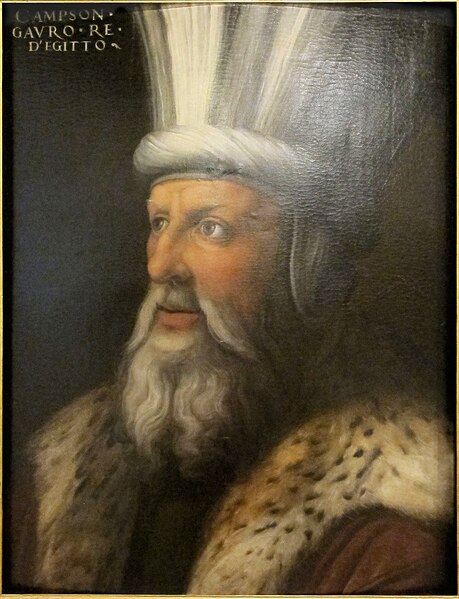
Egyptian Sultan Al-Ashraf Qansuh al-Ghuri (Campson Gavro re d’Egitto) by Florentine painter Cristofano dell’Altissimo, Galleria degli Uffizi. (Source: Pinterest)
The Venetians asserted that they were unable to directly interfere and urged the Mamluk Sultan Qansuh al-Ghuri to act by contacting the Indian princes in Cochin and Kannur to convince them to refrain from trading with the Portuguese and the rulers of Calicut and Cambay (Khambat) to oppose them. As a result, the Venetians and the Mamluks formed an agreement against the Portuguese.
During the League of Cambrai War, there were allegations that the Venetians had given the Mamluks both armaments and expert shipwrights. Nonetheless, the Mamluks had little interest in naval operations. The Mamluks found the battle against the Portuguese, which was mostly a naval conflict, completely foreign and unappealing. The land-minded Mamluk horsemen hated the navy and everything associated with it. However, the Portuguese continued to capture Muslim trading ships and blockade the Red Sea.
The first expedition against the Portuguese was ordered by Qansuh al-Ghuri, the Mamluk Sultan, in 1505. Crews and shipwrights were enlisted from all across the eastern Mediterranean, and the fleet was constructed using lumber and weapons from the Ottoman Empire. Under the leadership of Amir Husain Al-Kurdi, the expedition sailed from Suez to Jeddah in November and fortified the city. The fleet then readied itself for the voyage to Aden. Francisco de Almeida’s 7th Portuguese India Armada was sent into the Indian Ocean at the same time.
After defeating a Muslim fleet in 1506, Afonso de Albuquerque’s second fleet began to invade the Arabian and Horn of Africa shores. The Mamluk-Indian trade nearly collapsed in 1507 when a fleet of roughly 20 Portuguese ships invaded the Red Sea and plundered Indian shipping there. In the same year, the Portuguese made an attempt to use Socotra Island as a base to halt the Mamluk commerce across the Red Sea, but the island was too hostile and ineffectual for that purpose, so they left after only a few months.
The Mamluk fleet of over fifty ships was based at Aden in August and September of 1507, in preparation to sail to India. The Mamluks formed an alliance with the Muslim Gujarat Sultanate, India’s first naval force and they were warmly greeted in Diu.
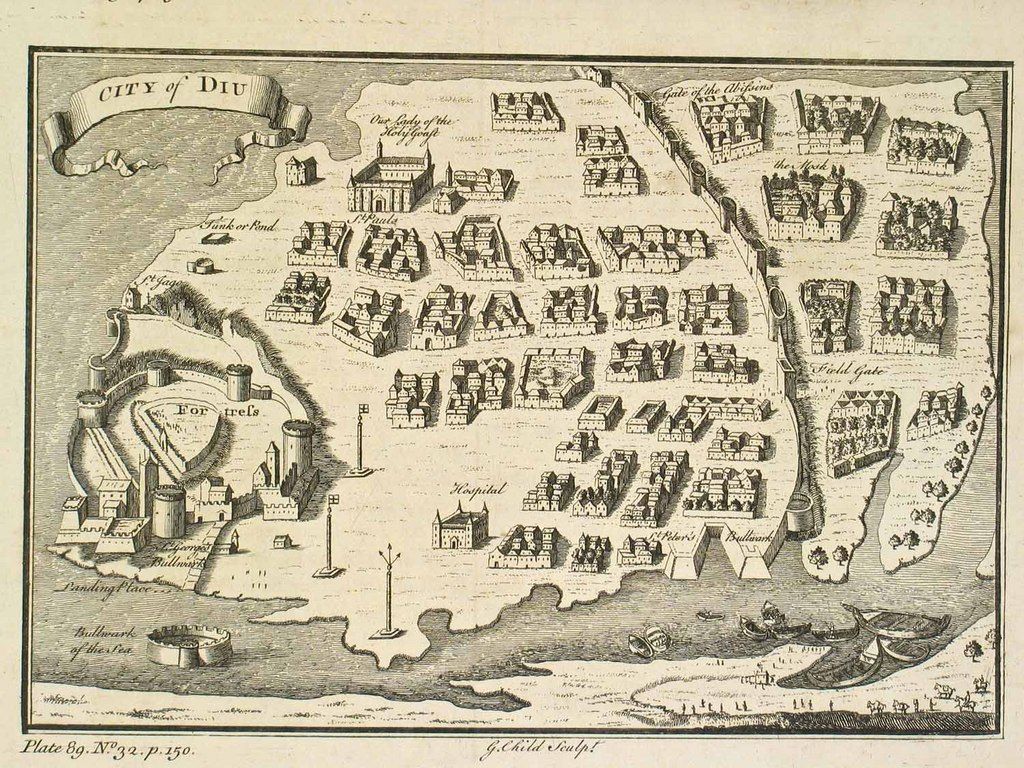
The port of Diu in Gujarat in modern India, image via PV Magazine
1508: Battle of Chaul and the geopolitics of the spice trade
A naval conflict between the Portuguese and an Egyptian Mamluk fleet took place at the Indian harbor of Chaul in 1508. The Mamluk emerged victorious in the battle. The development occurred after a Portuguese garrison successfully repelled an attack by Southern Indian rulers at the Siege of Cannanore. Notably, this was Portugal’s first maritime loss in the Indian Ocean.
Although the Portuguese had previously been primarily active in Calicut, the northern part of Gujarat was even more significant for trade and served as a crucial bridge in east-west trade. The Gujaratis were bringing silk from China and spices from the Moluccas, which they then sold to the Arabs and Egyptians. However, the Portuguese’s monopolizing actions were considerably troubling the Indian Ocean trade, endangering both Arab and Venetian interests as it was possible for the Portuguese to undersell the Venetians in the European spice trade.
The Mamluks and the Venetians, their European trading partners, had amassed fortune by controlling the supply of spices from India to Europe. At the start of the sixteenth century, the Mamluk Sultanate of Egypt was the principal intermediary between the Indian spice-producing regions and the Venetian purchasers in the Mediterranean. The spices were then sold throughout Europe by the Venetian purchasers at a substantial profit. Egypt’s society was primarily agrarian and had minimal connections to the sea. Portuguese engagement in the Indian Ocean was resisted by the Republic of Venice, which severed diplomatic ties with the country.
They recommended swift and covert action against the Portuguese and dispatched an emissary to the Mamluk court. An emissary had also been dispatched by the Zamorin, the ruler of Calicut, requesting assistance in the fight against the Portuguese. Envoys from the Christian Venetians, the Sultan of Gujarat and the Zamorin of Calicut appealed the Mamluk court in Egypt for aide which only fuelled the critical situation.
Mamluk warriors lacked naval combat experience. Al-Ashraf Qansuh al-Ghawri, the Mamluk Sultan of Egypt, hence asked for Venetian assistance in return for reducing taxes to foster competition with the Portuguese. Venice also proposed “rapid and secret remedies” against the common foe. The Mamluks received war galleys and Mediterranean-style carracks from Venice, which were manned by Greek troops. Al-Ashraf Qansuh al-Ghawri, pleaded to Ottoman support as Egyptian Mamluk army lacked naval combat experience and Portuguese raiders frequently assaulted and stole Malabar lumber supply from India.
The Gujarat Sultanate and Calicut received the Egyptian-Ottoman fleet, which the Portuguese referred to as “the rumes.” They first defended Jeddah from a potential Portuguese attack, then proceeded through Aden at the Red Sea’s tip, where the Tahirid Sultan helped them, and finally crossed the Indian Ocean to the port of Diu in 1508.
In November 1505, they departed Suez with 1100 men to oppose Portuguese expansion in the Indian Ocean. Along with quelling rebellion near Suakin and Mecca, they were also instructed to prepare Jeddah against a potential Portuguese offensive. Amir Hussain Al-Kudri, a Kurdish Mamluk and former Jeddah governor, was given command of the expedition. Several Turkish and Ethiopian mercenaries, as well as Venetian gunners, were part of the mission in addition to Egyptians. They arrived in September 1507 in Diu, Gujarat, a city near the mouth of the Gulf of Khambhat.
The battle against the Portuguese was also backed by the Sultan of Gujarat. Gujaratis were the primary long-distance traders in the Indian Ocean and a crucial intermediary in the East-West commerce between Egypt and Malacca, primarily in the sale of spices and textiles, at the time the Portuguese arrived in India. Malik Ayyaz, a former Russian slave, born in Georgia was appointed governor of Diu by the Sultan of Gujarat in the fifteenth century. Ayyaz was a shrewd and practical ruler and transformed the city into Gujarat’s principal port. Amir Hussain Al-Kudri and his expedition arrived in his court in September of 1507. However, contrary to what the Muslim envoys to Egypt had promised, no other Indian subcontinental rulers were prepared to fight the Portuguese, with the exception of the Zamorin of Calicut.
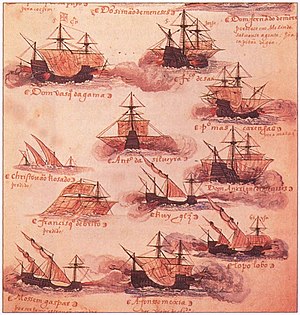
Portuguese ships, 16th century Livro das Armadas. (Source: Wikipedia)
They learned that the Portuguese admiral Lourenco de Almeida had led a convoy to the neighboring port of Chaul while the Muslim armada was resting at Diu. When the Muslim ships arrived in Chaul, Portuguese sailors welcomed them, thinking their contemporary vessels were part of Francisco de Almeida’s fleet. A prudent pilot, however, surveyed the fleet with a telescope and found that their sails were Arab-style, bearing crescents instead of crosses. Before both fleets retreated to their own sides of the river, the Portuguese fleet quickly prepared for battle and successfully repelled the first Muslim onslaught. The Chaul ruler chose to take a neutral stance and support whoever prevailed.
Laurenco, Francisco de Almeida’s son gets killed in the Battle of Chaul, by the Egyptian-Ottoman Muslim navy
Malik Ayyaz and Amir Hussain’s fleet went south in March 1508, when they engaged Portuguese vessels in combat in Chaul’s harbor. The “Battle of Chaul” was won by the Egyptian fleet after three days of combat. The Portuguese commander and captain-major of the Indian seas, Dom Lourenco, was the son of Viceroy Dom Francisco de Almeida. His duties included supervising the loading of allied merchant ships in the Chaul and guiding them back to Cochin. Under his command, the Portuguese had a small force and were outnumbered during the conflict. His body sunk at the entrance of Chaul bay when the battle was renewed. The body of Lourenco was never found.
Technically, the Muslims won after sinking the Portuguese flagship, but the alliance suffered heavily and went back to Diu, while the remainder of the Portuguese fleet managed to escape. The Egyptian navy was too badly damaged to advance on the Portuguese headquarters in Cochin. All that remained for Amir Hussain was to go back to Diu with Malik Ayyaz and get ready for a Portuguese counterattack.
Out of 800 soldiers, he had lost 600 to 700, and the rest of his army now feared European weapons. He declared this battle a huge victory and reported the same to Egypt’s capital, Cairo but gave up on any further initiative on the Indian coast. This fight was defined as a minor skirmish in the “Mirat-i-Sikandari,” a modern Persian history of the Kingdom of Gujarat.
Back in Cochin, Francisco de Almeida vowed to exact revenge for the death of his son and retaliated ruthlessly in the following climacteric encounter. He reportedly stated, “He who ate the chick must also eat the rooster or pay for it,” while grieving alone for three days.
1509: Battle of Diu, where the Portuguese navy clashed with combined forces of Ottomans, Mamluks, Gujarat Sultanate and Calicut
The Portuguese Empire clashed with a combined fleet of the Sultan of Gujarat, the Mamluk Burji Sultanate of Egypt, the Zamorin of Calicut with Ottoman support, the Republic of Venice, and the Republic of Ragusa (Dubrovnik) in a fierce, brutal naval combat on 3rd February 1509, in the Arabian Sea, close to the port of Diu with shots being fired from the Portuguese fleet.
This came to be known as the “Battle of Diu” also called the “Second Battle of Chaul.” Its larger backdrop was a trade conflict for spices, but what drove the Portuguese assault was a grieving Francisco de Almeida’s thirst for revenge. The battle was perhaps one of the most significant events of the 1500s. It not only escalated an already intense power struggle, but the result of the battle was to decide who controlled the trade in the Indian Ocean Region for the foreseeable future.
Diu, and for that matter the coast of Khambat was an important location in the Indian spice trade and this well-defended and profitable trading network would have to be broken in order for the Portuguese to try to establish trade with India. Francisco de Almeida had to wait and have his troops ready as the rainy season began. On the King of Portugal’s orders, Afonso de Albuquerque eventually arrived in Cannamore on 6th December 1508, to succeed him. Desiring retribution, he refused to relinquish control and left for Diu with the Portuguese fleet he had gathered three days later, on 9th December.
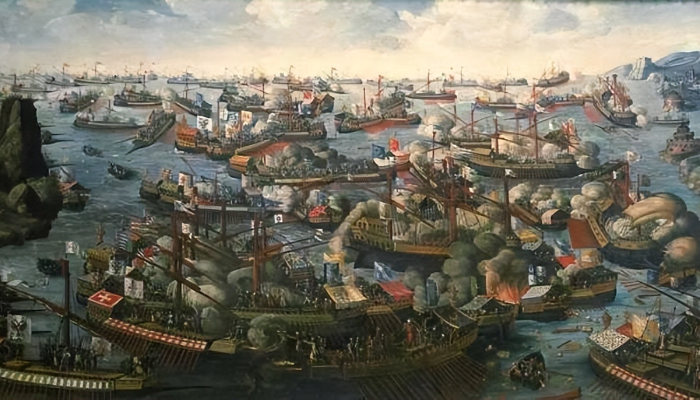
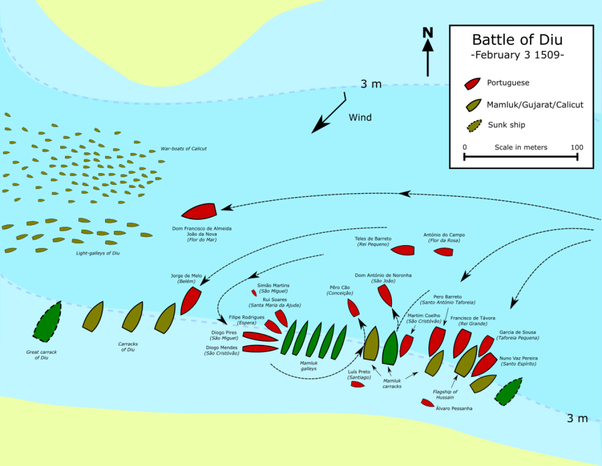
he Battle formations and positions of ships for the battle of Diu. (Source: nadoi)
The Portuguese fleet sailed for Diu on 9th December 1508. They initially assaulted the Konkan port of Dabhol, which was later ruled by the Bijapur Sultans. They killed every resident, including, it is believed, the dogs. They then sacked the crucial port of Chaul and arrived at Mahim, which is now a part of Mumbai, which at that time had been abandoned by its people.
Malik Ayyaz planned his defense and wrote to Francisco de Almeida to pacify him as well as apologise for the death of his son after realizing the impending disaster for his city. He mentioned that he had the captives and that his son had fought valiantly. He also sent a letter from the Portuguese prisoners confirming that they had received good treatment. The Viceroy replied to Malki Ayyaz (known as Meliqueaz in Portuguese), declaring his desire for vengeance and warning them to unite all forces and get ready for battle or he would destroy Diu.
“I the Viceroy say to you, honored Meliqueaz captain of Diu, that I go with my knights to this city of yours, taking the people who were welcomed there, who in Chaul fought my people and killed a man who was called my son, and I come with hope in God of Heaven to take revenge on them and on those who assist them, and if I don’t find them I will take your city, to pay for everything, and you, for the help you have done at Chaul. This I tell you, so that you are well aware that I go, as I am now on this island of Bombay, as he will tell you the one who carries this letter,” reportedly responded.
The Kurdish admiral of the Mamluk-Ottoman fleet believed that the governor of Diu was not entirely dedicated to the cause, creating a trust gap in the Muslim coalition. Leaving Fort Kochi in late 1508, the Portuguese fleet, now consisting of eighteen ships sailed north along the west Indian coast in search of the Ottoman-Mamluk navy. Along the route, they made stops at several ports to either battle adversaries or gather supplies, allowing their warriors to “gain experience.” Mir Hussein Pasha, the Ottoman admiral, anchored his fleet in the port of Diu. He intended to support his fleet from the fort in this harbor, which had its own artillery.
The ruler of Calicut and the Sultan of Gujarat had reinforced the Ottoman-Mamluk navy. These reinforcements were, nevertheless, hardly more than fishing boats, small, shallow-draft craft. The Portuguese navy eventually located the enemy fleet in Diu’s harbor on 2nd February 1509, and was ready to launch an attack the next day. With a dangerously small and shallow channel to negotiate, the Turkish navy was stationed in Diu’s inner port. The Portuguese, however, discovered a native who was around eighteen years old, knew the channel, and promised to assist in return for his release.
The “Battle of Diu” began at approximately 11 am on 3rd February when the incoming tide and the dominant winds were favorable. The Portuguese deployed 18 ships, ranging from a brigantine to five big naus, to go up against up to 200 ships from the Mamluk-Gujarat-Calicut alliance. The Kurdish admiral was in command since the governor of Diu had already moved inland.
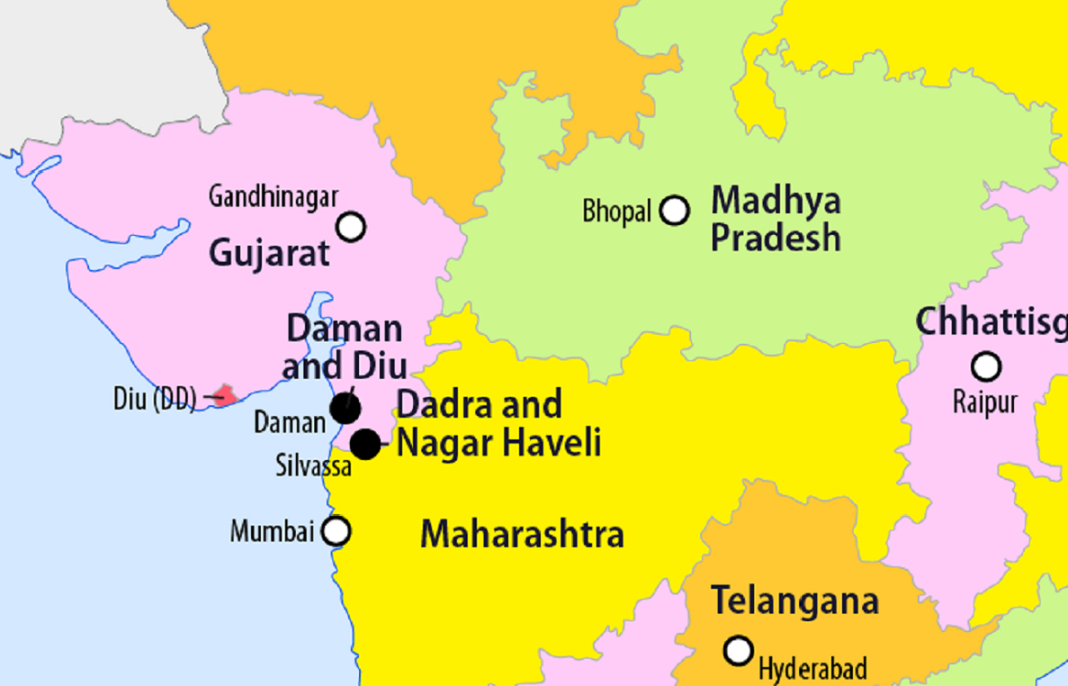
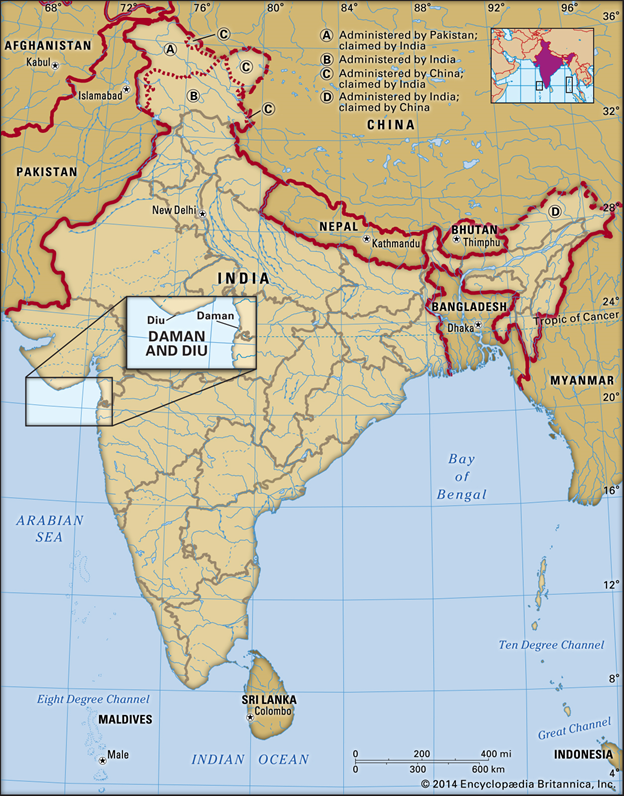
Map shows the location of Diu and its current status. (Source: nadoi)
Francisco de Almeida commanded 18 ships carrying roughly 1,500 Portuguese soldiers and 400 Cochin native fighters. Only twelve of the 100 ships on the Muslim side were large ships while the remainder were modest, shallow-draught craft. The Egyptians chose to exploit the port of Diu and its fort, which had its own cannon, after spotting the Portuguese, who were coming from Cochin to the north as they were intimidated by the latter’s technological supremacy. Therefore, the decision was made to remain anchored in the port and wait for a Portuguese attack.
After launching a major naval bombardment with their onboard cannon, the Portuguese engaged in hand-to-hand combat in Diu’s harbor to begin the conflict. These Portuguese ships were better manned, better constructed, had superior artillery men and cannons of higher quality. The Portuguese naval infantry also had an advantage over the Egyptians since they were experienced, professional seafarers in addition to being well-armed and equipped (arquebuses, armor, and a kind of clay grenade with gunpowder within).
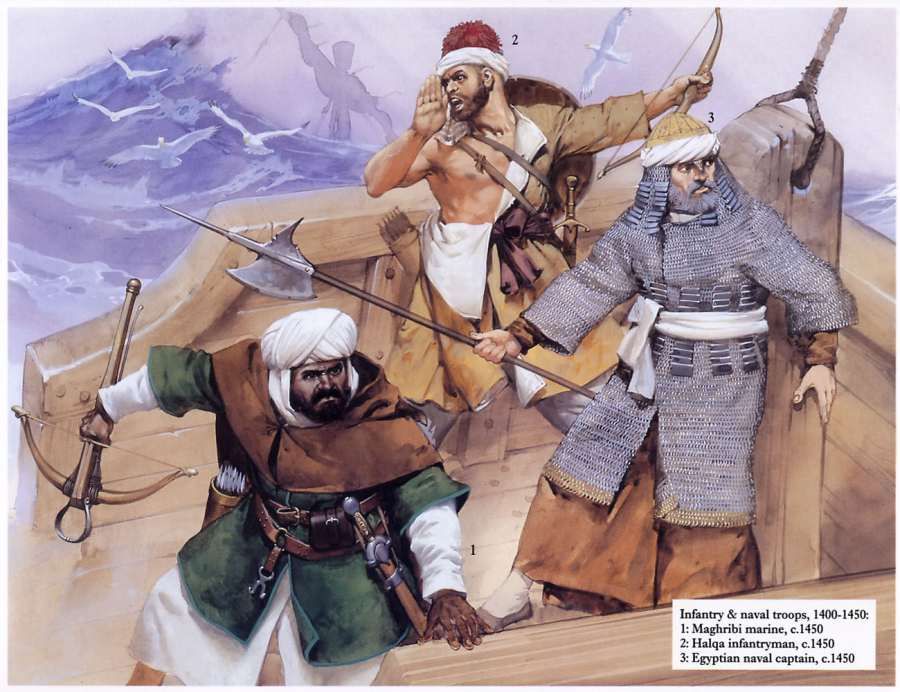
The Portuguese ships were equipped with arquebuses and crude grenades and had a sizable number of combatants who had been trained for maritime combat. The Turkish fleet marines were mostly archers and wore virtually no armor because they were prepared for combat in the Mediterranean. Additionally, it was nearly hard to board the Portuguese ships because they were higher in the sea. Additionally, any enemy vessel trying to approach them for boarding action could be bombarded by their gun.
The Turkish ships and the artillery batteries defending the harbor were heavily bombarded by the Portuguese. The Portuguese then intervened to confront the enemy after the Turkish and Gujarati ships refused to leave the harbor’s “safety,” as Almeida had predicted. During the next six hours, the Portuguese engaged the enemy ships with full broadsides, grappled and boarded them, and captured two Turkish naus, two Gujarati naus, and the two Turkish gales in brutal hand-to-hand combat, demonstrating the superiority of the state-of-the-art European vessels.
Two Turkish caravelas, two Gujarati naus, and two Turkish naus were also sunk. When the wind started to shift at five o’clock, Almeida gave the order for his fleet, which had not lost any ships despite one of his naus suffering significant damage, to depart the harbor with some of its loot.
In the end, the better ships prevailed
During the preceding decades, the robust, multi-rigged Portuguese carracks and smaller quick caravels were equipped with guns and adapted to withstand the Atlantic Ocean’s storms. The coalition of the Zamorin, Gujarat and Egypt fielded smaller Indian Ocean dhows and galleys of the Mediterranean style, but they were no match. The Portuguese ships were able to deter the smaller craft from approaching them by firing their potent cannons. The smaller galleys and dhows were showered from above with small arms, grenades, and lower caliber artillery, and even when they did approach, they were low in the water and hence unable to board the Portuguese ships.
The Mamluk navy was bombarded by the stronger Portuguese cannon. The scales tipped in favor of Portugal when the Portuguese ship Rei Grande collided with Amir Hussain’s flagship. Zamorin’s light oar ships were kept inside the waterway by Hussain so they could launch a surprise attack. However, the Portuguese foresaw this action and blockaded the waterway, making it impossible for the Zamorin’s fleet to escape and making them a prime target for Portuguese artillery. The whole Mamluk fleet was either destroyed or taken prisoner before the end of the day. Hussain Amir escaped inland.
Aftermath of the battle: ‘Those who rule the seas, will rule the lands’
The Gujarat-Mamluk-Khozikode side suffered horrific losses in the conflict, which ended in a Portuguese victory. Despite their valiant efforts, they were unable to defeat a naval force that was unlike anything they had ever encountered. Following the battle, Malik Ayyaz turned over the Chaul prisoners, who were well-fed and clothed. He was surprised when Almeida, who was leaving his position as viceroy, turned down his offer to let a Portuguese castle be built in Diu. The Portuguese soon pursued this offer fervently and he was able to delay it for as long as he remained governor of Diu.
Diu city and the Portuguese fort (British engraving, 1729). (Source: franpritchett.com)
Three royal flags of the Mamluk Sultan of Cairo were among the loot of the battle which were sent to Portugal and are still on display in the Convento de Cristo, spiritual home of the Templar Knights in the town of Tomar.
The remaining members of the Zamorin’s fleet made it to Calicut. After a protracted voyage, Amir Hussain and twenty-two Mamluks rode away from Diu and made their way back to Cairo. The Portuguese navy spent a few days in the region. The troops taken at the battle of Chaul were returned within an hour of Viceroy Almeida’s demand the next day. He also asked for 300,000 gold xerafins (about 180,000 rupees) as restitution. Although he left a force in the city, Almeida declined the Diu ruler’s offer to cede his port to the Portuguese because he believed it would be too costly to govern even if he left a garrison there. Additionally, the Portuguese detainees from the Battle of Chaul were saved.
The Egyptian prisoners, however, were not so lucky. Almedia was not yet done with his revenge for his son
For the loss of his son, the Viceroy ordered the majority of them to be either burned alive, hanged, or tied to the mouths of the cannons and ripped to pieces. “As long as you may be powerful at sea, you will hold India as yours; and if you do not possess this power, little will avail you a fortress on the shore,” Almeida pronounced, almost as a prophecy.
Thankful that the Europeans did not pillage his city, the ruler of Diu sent them a boat nearly every day, full with lavish presents and “sheep, hens, eggs, oranges, lemons, cabbages, and other food items.”
Almeida sent a necklace of pearls and a brocade tapestry home to the Queen of Portugal as gifts from the victory. The Portuguese navy returned south nine days after the fight which resulted in 32 Portuguese deaths and over 300 injuries. An “even larger” number of enemy casualties were reported in addition to the projected 3,000 enemy deaths.
Interestingly, in November 1509, Almeida left for Portugal after giving his successor, Dom Afonso de Albuquerque, the Viceroy’s position, and merely one month later, he was assassinated by the Khoikhoi tribe in the vicinity of the Cape of Good Hope in Africa.
Portuguese dominance over the Indian Ocean would be Almeida’s legacy, particularly after the Ottomans overthrew the Mamluk Sultanate in Egypt in 1517. The Portuguese were followed by the Dutch, English, and French, which some would describe as the beginning of Western European control over the Indian Ocean. The Portuguese-Ottoman rivalry continued after this fight.
A second naval conflict took place thirty years later in 1538 during the Siege of Diu, when the Turks besieged the Portuguese-built fortress with fifty-four ships. The siege was subsequently lifted after the Turks suffered crushing defeats. Ottoman ambitions to increase their power in the Indian Ocean came to an end in 1547 when Suleiman I the Magnificent dispatched his admiral Hussein Pasha to undertake another siege of the fortress at Diu.
The Portuguese victory was crucial because the Mamluks and Arabs withdrew, which made it easier for the Portuguese to control the Indian Ocean and direct trade along the Cape of Good Hope, avoiding the old spice route that the Arabs and Venetians controlled through the Persian Gulf and Red Sea. Key ports in the Indian Ocean, including Goa, Ceylon, Malacca, and Ormuz, were quickly taken by Portugal after the battle, crippling the Mamluk Sultanate of Egypt and the Gujarat Sultanate. This allowed the Portuguese Empire to grow and set up its dominance in trade for nearly a century until the British East India Company won the Battle of Swally in 1612 and the Dutch-Portuguese War.
The “Battle of Diu” also signified the start of European colonization in Asia and marked the extension of the Christian-Islamic power struggle into the Indian Ocean, which at the time was the most crucial area for global trade, from the Mediterranean Sea and the Middle East. The battle of Diu was both political and commercial, and it resulted in the end of the previous global order and the start of a new one. In many ways, it shaped the world that we see today.
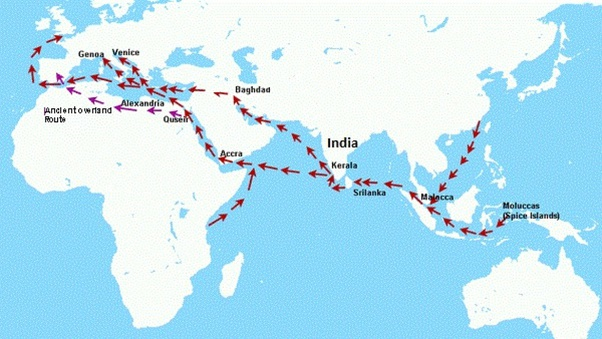
Spice Trade route between India and Europe, through Egypt. (Source: nadoi)
Portugal sold pepper that was bought in Calicut for 4.64 ducats for 80 ducats in Europe. Every middleman profited greatly from the transaction. For example, the pepper that was bought in Calicut for 4.64 ducats was sold for 25 ducats, five times the price, in Alexandria, Egypt, the world’s center of the spice trade. The pepper cost 80 ducats when it arrived in Lisbon, Portugal, after the Venetian traders had sold it for 56 ducats in Venice. Of course, the Portuguese were keen to eliminate all middlemen and establish a direct sea route to India.
However, what began as a trade dispute devolved into a vengeance saga. Dom Francisco even disobeyed Portuguese orders to turn over the charge and return back before finishing his mission. Notably, the battle is just as significant as the Waterloo and Trafalgar battles if not more.
The Portuguese’s superior naval might and weapons were the most crucial factors that guaranteed their victory. Regretfully, the Indian kings had disregarded this, particularly when it came to safeguarding their coastlines and coastal regions, which ultimately cost them dearly.
Indian kings had not thought about naval battles. The Indians at that time, be they Hindus or Muslims, were at a serious tactical disadvantage because they had not developed stronger ships and better cannons. By and large, the Indian cultural narrative was detached from the seas despite having a vast coastline. The same sea that was neglected by generations of kings, eventually was used by European colonisers to rule over us and exploit our lands for centuries to come.
The Portuguese exemplified the exploitation of this vulnerability in such a striking and shocking manner that its repercussions were felt by India for many centuries thereafter. The British East India Company, founded in 1600, also adopted a similar policy and brought the English to India as traders. They first wished to make money in England by trading in tea, opium, cotton, spices, and indigo dye. However, they were also European imperialists who sought to exploit Indian resources to propel their own growth. When they came, they too had better ships and better plans.
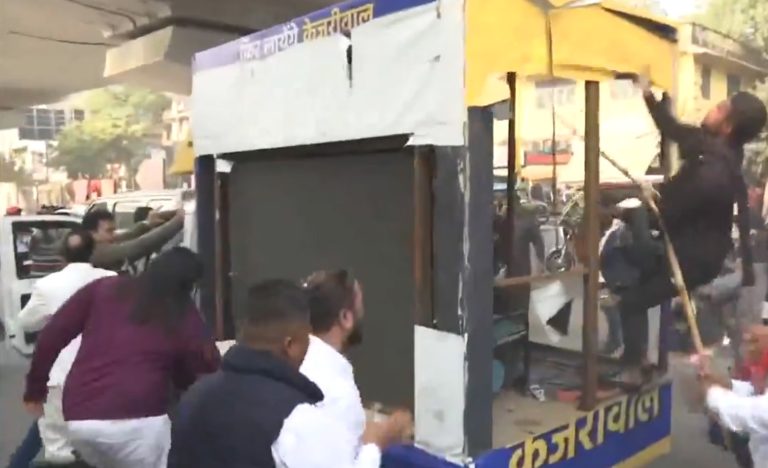
Members of the Valmiki Samaj and Dalit Mahapanchayat held a protest against Aam Aadmi Party (AAP) national convenor Arvind Kejriwal on Sunday, during the protest, AAP’s election campaign van which was passing near the Lady Hardinge Hospital in Delhi was also vandalised by the protestors.
Ashu Pohal, President of Maharashtra Valmiki Samaj, expressed dissatisfaction, stating, “Our Samaj has been looted…False promises have been made to our sisters and daughters to provide money. We will not support the people who did not support our Samaj. We will boycott them. The entire country knows that he (Arvind Kejriwal) has been a fake CM…We will not spare him as he has hurt our Dalit Samaj…The increase in pollution in Delhi is only because of Arvind Kejriwal and Aam Aadmi Party.”
#WATCH | Delhi: Members of the Valmiki Samaj and Dalit Mapanchayat hold a protest against AAP National Convenor Arvind Kejriwal. The protestors also attacked AAP's election campaign van passing from there. pic.twitter.com/tzzd3BkBKY
He further said that the education department assured to send 100 students abroad from the Valmiki Samaj but it was not done.
A van campaigning for the AAP was vandalised by the protesting members.
#WATCH | Ashu Pohal, President of Maharashtra Valmiki Samaj, says "Our Samaj has been looted…False promises have been made to our sisters and daughters to provide money. We will not support the people who did not support our Samaj. We will boycott them. The entire country knows… https://t.co/yw0JMtpxkRpic.twitter.com/SX0PG3GLgG
Taking to X (formerly Twitter), former Delhi CM Arvind Kejriwal posted, “Look at this – Amit Shah’s hooliganism”.
Delhi Commissioner of Police (DCP) New Delhi tweeted, “No PCR call or complaint received in police station. It is requested that a formal complaint be lodged in the Police station and we assure strict legal action.”
AAP National Spokesperson Priyanka Kakkar said, “BJP is heading towards a historic defeat. BJP had earlier got stones pelted on Arvind Kejriwal on January 18. The morale of BJP goons has increased so much that today they are openly attacking the Aam Aadmi Party’s campaign van. There was an LED installed on it, which they broke. The eyes of the Election Commission in Delhi are closed, they are not able to see any of the misdeeds of the BJP. Such hooliganism will not work in Delhi. The BJP should be called out for its misdeeds.”
The Delhi Assembly elections are scheduled to take place on February 5, while counting of votes will be held on February 8.
(This news report is published from a syndicated feed. Except for the headline, the content has not been written or edited by OpIndia staff)
The budget for 2025-26 has provided major relief for the middle class by reducing the income tax burden. Finance Minister Nirmala Sitharaman in her budget speech announced substantial changes to the tax structure and raised the minimum taxable income to ₹12 lakh. This means those with an annual income of ₹12,00,000 don’t have to pay income tax under the New Tax Regime.
This is the first time there has been a major reduction in the income tax rates under the Modi government and every year there were demands to reduce the rates. Although tax exemption limit was increased and slabs were changed to give relief to the taxpayers, those were considered not enough by most people. Therefore, the income tax proposals in 2025-26 budget has been welcomed by all.
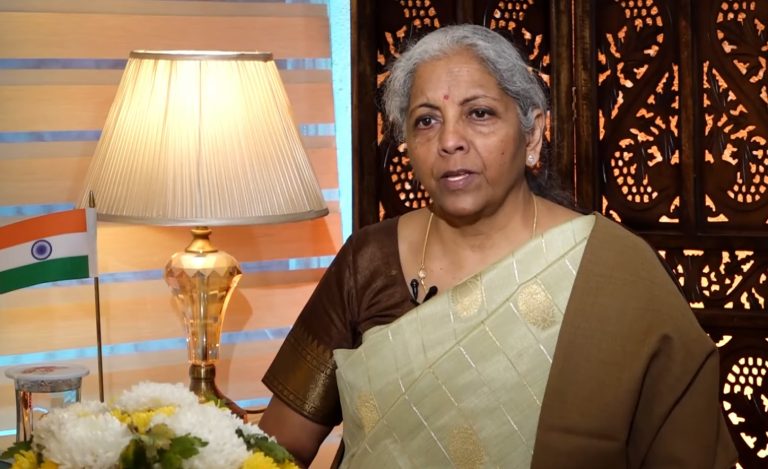
Amid this, Finance Minister Nirmala Sitharaman revealed that PM Modi had readily agreed to cut income tax, but it took some time convincing her own ministry for the same. She said this in an interview with PTI, when asked how much persuasion did it take to get the prime minister on board regarding the cut in income tax.
Finance Minister Nirmala Sitharaman says PM Modi supported the idea to cut taxes but it took time to convince bureaucrats. pic.twitter.com/uHUqc1omU3
To this, Nirmala Sitharama replied, “Your question should be how much did it take for me to convince the ministry.” She said that the PM was very clear that he wanted to do something, but it was for the ministry to have had the comfort level.
The finance minister said that more work was needed to convince the board. When PTI Editor-in-Chief Vijay Joshi said this meant that it was bureaucrats who needed to be convinced, she agreed, adding that they were right, as the officials have to be sure of revenue generation.
Nirmala Sitharama added that once everyone came abroad with the idea, then they brought the proposal to the prime minister.
She added that the reduction in the income tax rates was the first step towards the new Income Tax Bill that her ministry is bringing. In her budget speech, Sitharaman said that a New Income Tax Bill will be announced next week. She added that the new bill will be clear and direct in text, and it will have around half the chapters and words compared to the present law. It will be simple to understand for taxpayers and tax administration, leading to tax certainty and reduced litigation.
‘The Washington Post’, in its latest tirade against India, has attempted to stir conflict in the State of Jharkhand by antagonising Hindus and the tribal communities.
The American newspaper published an article on Saturday (1st February) wherein it accused Hindu groups of carrying out ‘evangelical campaigns’ in Jharkhand to ‘convert’ tribals to the Hindu Faith.
It further alleged that the Rashtriya Swayamsevek Sangh (RSS) and its affiliate organisations were somehow stripping tribals of their ‘culture’ by convincing them they were part of the larger Hindu fold.
“Even in dense jungles, India’s right-wing Hindu movement is pursuing its project of transforming this historically secular country into a Hindu nation, seeking to convince millions of tribal people who have long remained outside mainstream religion that they, too, are Hindu,” the article published in The Washington Post’ read.
The American newspaper attempted to deride the efforts of the Hindu outfits to prevent the cultural practices and customs of tribal communities from becoming extinct.
The resistance offered by these groups at ground zero against evangelical practices by organised religions has seemed to rattle the interests of The Washington Post.
Resistance of Hindu outfits against predatory conversion mistaken as evangelism
Jharkhand was carved out of Bihar to fulfil the longstanding demand of the tribal communities of the region. As per the 2011 Census, 67.8% of the population (majority) in the State identifies as Hindus.
Contrary to the claims of ‘The Washington Post’, Hindu groups are not ‘desperate’ to convert anyone as the Faith already constitutes the majority in Jharkhand.
The focus is rather on thwarting conversion tactics by Muslims and Christian evangelical outfits as they race to amass a large number of new ‘believers.’
The Washington Post targets Vikas Bharti and Vanvasi Kalyan Ashram
The American newspaper appeared miffed with Vikas Bharati, accusing it of ‘dividing tribal communities among Hindus, Christians and nature-worshipers.’ It tried to paint the grassroots-level Hindu cultural organisation in a poor light
An education coordinator with Vikas Bharti, Kumkum Maitra, told The Washington Post, “You can’t force Hinduism. You have to live among them and respect them to create an extended Hindu family.”
Her invite to the local tribals on the occasion of Shivratri was deliberately misconstrued as proselytising ‘nature worshippers’.
Another Jharkhand-based Hindu outfit, which was maligned by ‘The Washington Post’ in its article, was Vanvasi Kalyan Ashram. The paper had accused the organisation of competing with Christian evangelists in the neighbouring Chhattisgarh.
It quoted controversial Nandini Sundar (the wife of The Wire’s Founding Editor Siddharth Vardarajan) to make outrageous claims about Vanvasi Kalyan Ashram.
The Washington Post also accused Vikas Bharti of carrying out ‘ghar wapsi’ of Adivasis, converted by Christian evangelists, and restoring their original status of being Hindus.
The Sarna Code Controversy
As of now, Indian law recognises six religious communities: Hindu, Muslim, Christian, Sikh, Buddhist, and Jain. The Congress-HMM alliance, which denies concerns about infiltration, has promised to implement the Sarna Tribal Religious Code.
In November 2020, the INDIA coalition government convened a one-day special session of the Jharkhand Assembly to unanimously pass a proposal to include ‘Sarna’ as a separate religion in the 2021 Census.
Despite questioning the government’s intentions, the BJP supported this proposal. Subsequently, Chief Minister Hemant Soren wrote to Prime Minister Narendra Modi, reiterating the demand.
While releasing its manifesto for the Jharkhand elections, Union Home Minister Amit Shah stated that the BJP would consider the Sarna Code and make appropriate decisions.
Shivraj Singh Chouhan, the BJP’s election in-charge for Jharkhand, reiterated this stance on several occasions. Assam Chief Minister and election co-incharge Himanta Biswa Sarma went further, promising that the party would implement the Sarna Code if it forms the government.
The Sarna Code recognises tribal society as a distinct religious group. While the BJP has not publicly opposed it, its stance in this election appears softer compared to the RSS’s ideology, which considers tribal society part of Hinduism.
The RSS, through organisations like the Vanvasi Kalyan Ashram, operates in tribal areas with this belief.
Sandeep Oraon, regional coordinator (Bihar-Jharkhand) of the RSS-affiliated Tribal Security Forum, claims that implementing the Sarna Code would create several problems at various levels.
Washington Post rakes up Sarna Code issue
The Washington Post raked up the issue of ‘Sarna Code’ to drive further wedge between Hindus and ‘nature worshippers’, calling it a ‘new flash point’ and ‘challenge’ for the RSS.
The newspaper claimed, “Across Jashpur and Bishunpur, a growing number of tribal people, including some of those who identify as Hindu or collaborate with Hindu missionaries, are advocating for a distinct religious identity.”
It cited the example of a ‘nature worshipping’ tribal nurse working with the ‘Vanvasi Kalyan Ashram’, who alleged that Hindus are forcing her to identify as a Hindu ‘although her community (Sarna) is different’.
The vicious article ended on the note that Hindus are opposed to Sarna code as it somehow hurts the narrative that tribals need protection from foreign religions (which is a fact carved in truth).
“AI will be the most transformative technology since electricity” – said Eric Schmidt, the former CEO of Google. India has definitely been one of the nations to have realized this early on. Under the stewardship of Central gov over past decade, umpteen initiatives like ‘National Strategy for Artificial Intelligence’ and ‘India AI Mission’ have set the stage for bolder initiatives in this space by India, including government, industries, and civil society at large.
During early 2024, Microsoft CEO Satya Nadella during his India visit, spoke of a USD 500 BN ‘AI GDP’ for India by 2025 end, that will be a growth driver for the USD 5T GDP target India has set. GoI has been on top of the game in this regard, with India AI Mission leading the charge. In Mar 2024, Cabinet approved INR 10,300 Cr for this mission. Building on this momentum, Union FM Nirmala Sitharaman unveiled a series of strategic initiatives around new age technology and upskilling in her 8th consecutive budget speech on 1 February 2025, as part of Viksit Bharat 2047 roadmap.
Union budget’s focus around AI and new-age technology can be thought through across a few key areas:
Centres of Excellence for AI in Education – A new CoE in AI for education to be set up with an outlay of INR 500 CR. Online education has seen a rapid growth in India. With a revenue of roughly USD 7.57 BN in 2025, this space is set to see a phenomenal CAGR of 25.77% during 2025-29. AI can be a game-changer in this regard, with personalized learning, AR/VR-enabled modules to facilitate reach and quality of education within India and it’s hinterland a lot more.
ATAL Tinkering Labs – While inaugurating the Indian Science Congress (ISC) 2019, PM had coined a phrase that would unleash a new dimension to India’s growth trajectory. Over and above Jai Jawan, Jai Kisan, Jai Vigyan, he appended ‘Jai Anusandhan’, with the overarching purpose of furthering India’s innate innovation spirit to societal good, including affordable healthcare, housing, clean tech, energy, food processing. FM has built on this by proposing 50,000 ‘Atal Tinkering Labs’ over next 5 years, where children can experiment with robotics, 3D printing, other technology to “cultivate the spirit of curiosity and innovation, and foster a scientific temper among young minds”.
Focus on IITs – In FY 2024-25, INR 10,324.5 CR was allocated to IITs, that has been notched up to INR 11,349 CR in this budget. That is a good 9.92% increase, which will augur well for research and technical education in India. Additional infrastructure in the IITs added after 2014 will facilitate quality education for 6,500 more students. This is in continuance to the focus GoI has had over last decade around enriching quality and efficacy of education at IITs, that saw initiatives like Research Parks, IMPRINT (Impacting Research and Innovation Technology) launched in Nov 2015, UAY (Uchhatar Avishkar Yojana) announced in 2015, and others.
Upskilling youth – A telling observation that came from Economic Survey was that, 53% Graduates5 and 36% Post-graduates were underemployed, below their education skills. While government has been seized of this information already and initiatives like upgrading 1000 ITIs over next 5 years were promulgated in August last year by Ministry of Skill Development and Entrepreneurship (MSDE), FM Sitharaman gave a further push to this by proposing 5 National Centres of Excellence for Skilling in partnership with global experts. This will likely be a game-changer in fructifying India’s vision of ‘Make in India, Make for the World’. This is augmented by FM’s proposal of earmarking INR 1,28,650.05 CR for Education ministry in 2025-26, including INR 78,572.1 CR for school education and INR 50,077.95 CR for higher education.
Cultivating research mindset – Talent seeks financial assistance many a time, else it withers away. In Budget 2018-19, Prime Minister’s Research Fellowship Scheme (PMRF Scheme) was introduced, that helps in admission for PhDs to institutes of eminence like IITs, IISc, and IISERs by granting financial aid via stipends. Giving a further fillip to this, FM announced that 10,000 new fellowships with enhanced aid will be provided over next 5 years. A sizeable portion of this could possibly aid in advancing research in new age technology like AI and Large Language Models.
Gyan Bharatam Mission – In Feb 2003, a National Mission for Manuscripts was established to preserve a priceless collection of 10 million manuscripts, that are repository of rich scripts, calligraphies, and aesthetics bearing a prolific treasure of Indian heritage. Building on the same ethos, FM Sitharaman announced ‘Gyan Bharatam Mission’ for survey, documentation, and conservation of more than 1 Crore manuscripts. The budgetary outlay, while being hiked from INR 3.5 CR to 60 CR, possibly aims at digitization of the priceless ancient records via technology and new age tools.
Eyes on Viksit Bharat
Bill Gates once famously said, “Humanity’s greatest advances are not in its discoveries but in how those discoveries are applied to reduce inequity.” The founding tenets of Antyodaya and Integral Humanism, coupled with ‘cultural nationalism’ (as against West’s idea of nation-state) espouse the essence of what BJP brings forth, and ties closely with the ways India has applied technology to reduce inequity across multifarious facets. Right after assuming office in 2014, BJP government brought in the landmark Digital India programme on July 1st, 2015 – and there has been no looking back since.
And, FM Sitharaman’s Budget 2025 speech adds a further flair to that flourishing route towards an aspirational India’s striding march to Viksit Bharat 2047.
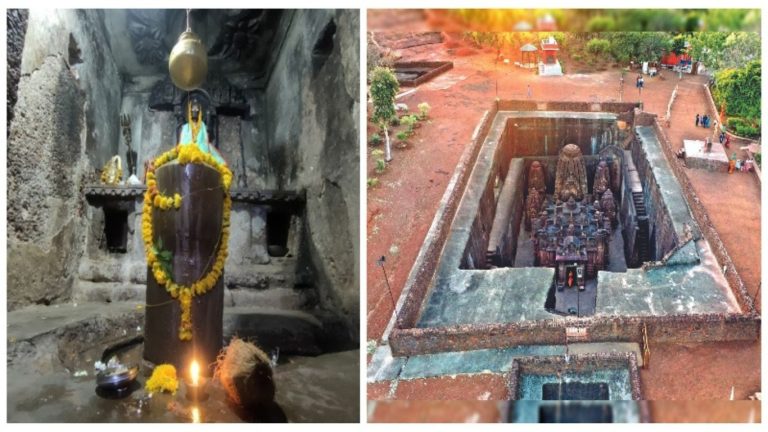
India is the sacred land of civilisational development. Myriad civilisations and cultures emerged and flourished here. Along with them flourished art and architecture. Dexterous sculptors in this land created one amazing sculpture after another including temples, buildings and monasteries. The Kailash temple in Ellora which is carved out of a single rock is among these sculptures. Similar to the Kailash temple, a temple in Mandsaur, Madhya Pradesh has been carved out of a rock. It is the Dharmrajeshwar temple.
The Ellora temples and caves were built by the Chalukyas who were related to the Solanki Kshatriyas. On the other hand, the caves around the Dharmrajeshwar temple and Dhamnar were built by kings from the Pratihar dynasty. According to historians, this temple was constructed in the 8th century AD. A life-size statue placed at the entrance of the temple has an inscription engraved in Brahmi script dating back to the 8th and 9th centuries.
The Dharmrajeshwar temple and its premises has been carved out of a hill which looks like a wonder. It is an excellent example of engineering. It is referred to as the Ajanta-Ellora of Madhya Pradesh. Not only the Dharmrajeshwar temple but the 200 caves surrounding it were carved out of hills.
It is situated in Chandwasa which is 78 km from Mandsaur District headquarters and 22 km from Shamgarh tehsil. It is surrounded by forest upto 3 km. According to the Archaeological Survey of India (ASI), on the lines of Kailashnath temple in Ellora, the Dharmrajeshwar temple is also carved out of a hill from top to down. It is 9 metres below the ground.
Vishnu and Shiv temples
There are seven minor temples surrounding the main temple of Dharmrajeshwa. A 250-foot-long path has also been made to reach the temple. This path is also carved out of a hill. Inside the main temple, an four-armed Vishnu idol and a Shivlinga are placed in the sanctum sanctorum. It has a mandap placed on carved pillars. On the other hand, idols of Varah, Dashavtar, Sheshashayi Vihsnu and Panch Mahadevi are placed inside the minor temples.
In addition to that, a small well was dug on the temple premises. The water of the well is cool and sweet. There are stairs on the left and right side of the temple to reach the first floor. On the first floor, caves have been made by cutting stones for monks to meditate. Historians believe that the Dhammar caves are based on Buddhist philosophy and have a deep connection with the temple.
It is said that the Buddhist monastery was converted into a Vishnu temple and later into a Shiv temple. A Shiva Linga was also established inside the temple. Some historians believe that this temple may have originally been a Buddhist temple or a Jain temple. Most historians describe it as a preaching place of a Buddhist monastery. The idols present in it hint at it. Later on, it was converted into a Hindu temple.
There are many caves on the left side of this temple spread across around 1415 metres in which images of Buddha in different postures are present. His pictures are engraved on the walls at various places. In these cases, in addition to the idols of Lord Buddha, idols of Jain Tirthankars LordHrishabhdev, Lord Neminath, Lord Parshvanath, Lord Shantinath and five idols of Lord Mahavir are also present.
During the Buddhist period, Chandwasa was called Chandan Giri. The temple and the caves were known as Chandan Giri Mahavihara. In 1962, Dr Wakankar discovered a clay seal here. The seal mentioned the name of the place as Chandan Giri Mahavihara. In his basis, Historian Chandavasa says that the ancient name of Chandwasa was Chandan Giri.
Religious Affiliation
It is said that staying here on the night of Mahashivratri ensures Moksha. During sunrise, Sun rays hit the Shivalinga situated in the sanctum sanctorum. Locals believe that the temple was built by the Pandavas. On the other hand, several historians call it a Jain and Buddhist religious place. There are about 200 small and big caves on the lower end of the hill just below the Dharmrajeshwar temple. These were first discovered by the English writer Colonel Todd.
People believe that during the Mahabharata period, the Pandavas spent some time if their exile here. Bhima built the temple during that time. Since, Yudhishthri, the eldest brother of Bhim, was called Dharmaraj, this temple came to be known as Dharmrajeshwar temple. It is said that there is a huge cave here, which opens in the Ujjain temple. The Archaeological Department has closed it.
People believe that during the Mahabharata period, the Pandavas spent some time of their exile here. During that time, Bhima built this temple. Since Bhima’s eldest brother Yudhishthira was also called Dharmaraj, this temple came to be known as Dharmarajeshwar Temple. It is said that there is also a huge cave here, which opens from this temple to Ujjain. The Archaeological Department has closed it.
There is a belief regarding the small well inside the temple. Locals believe that the water from this well can nullify the effect of snake poison and the poison of other poisonous creatures. This water is also given if someone is bitten by a rabid dog. People say that it prevents rabies. People infected by rabies are also given water from this water.
(This article is a translation of an original article published in OpIndia Hindi.
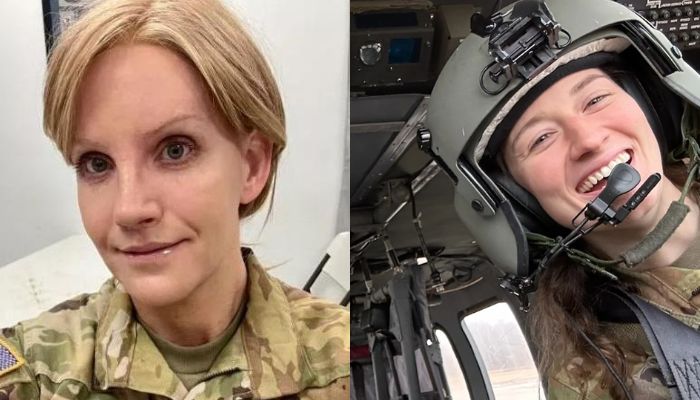
On 31st January, a Virginia-based Army National Guard helicopter pilot, Jo Ellis, broke her silence after she was falsely identified as the pilot of a Black Hawk helicopter that crashed over the Potomac River near Washington DC. The crash involved a midair collision with American Airlines Flight 5342, resulting in the deaths of at least 67 people.
JUST RELEASED VIDEO OF JO ELLIS ALIVE! ?
Rumors that Jo Ellis was the pilot in the DC crash are FALSE. Let's get the facts straight and stop spreading misinformation. pic.twitter.com/QgjOIB0RLe
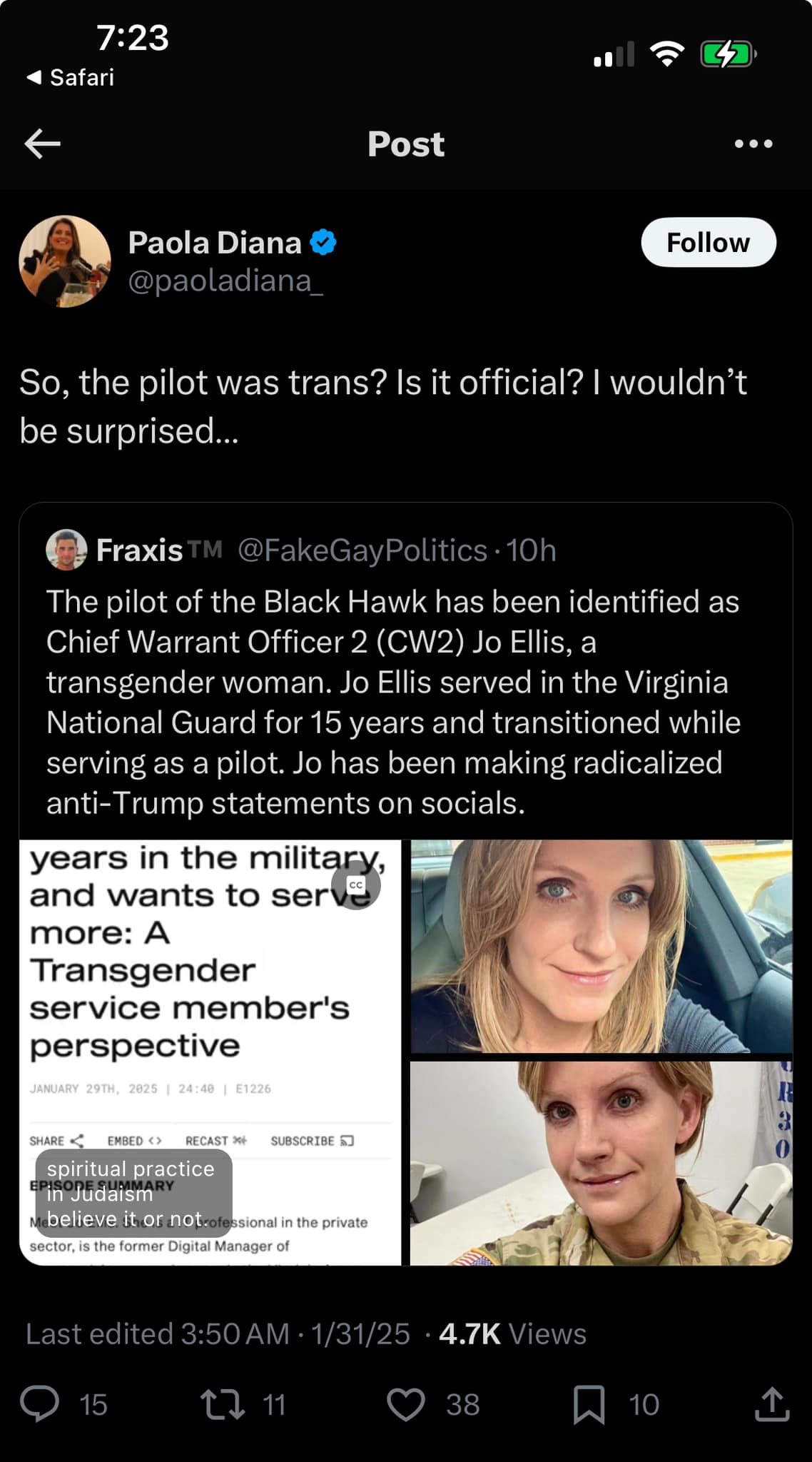
Following the incident, social media posts on X claimed that one of the pilots of the helicopter that crashed into the plane was transgender, Jo Ellis, and accused her of being responsible for the tragedy. The post further alleged that Ellis had attempted to target three other passenger planes before finally hitting the American Airlines flight. The post gained traction not only on X but its screenshots were widely shared on other social media platforms such as Facebook and Instagram.
Source: Jo Ellis/X
With Ellis being accused of the tragedy, hirings under diversity, equity and inclusion (DEI) programmes came under severe scrutiny. Social media users accused the military of compromising safety by hiring personnel through DEI programmes. The accusations gained traction among supporters of President Donald Trump, who had recently imposed a ban on transgender individuals serving in the military.
Jo Ellis addresses false accusations
Responding to the accusations online, Ellis took to Facebook and posted a video message stating she was not involved in the crash. She said, “I understand some people have associated me with the crash in D.C. and that is false.” She added, “It is insulting to the families to try to tie this to some sort of political agenda. They don’t deserve that. I don’t deserve this.”
Pentagon releases names of all three pilots
The Department of Defense has confirmed the identities of two of the three US Army soldiers who were on the helicopter at the time of the tragedy as Ryan O’Hara and Sam Lilley. The third pilot, in fact, was Rebecca M Lobach, who was flying the helicopter. The name, which was withheld previously, was revealed after the US Army coordinated with the pilot’s family. Captain Rebecca M Lobach enlisted in the service in July 2019. She had more than 450 hours of flight time during her service history. She was also the White House social aide in the previous government under Joe Biden.
Army releases name of co-pilot of Blackhawk helicopter: Captain Rebecca Lobach, a star ROTC student who graduated from UNC with top honors and wanted to attend medical school after her Army service. She had 500 hours of flying time, about 250 flights, considered on the high end… pic.twitter.com/NmFtS47vWk
Governor of Georgia, Brian Kemp, expressed condolences on X and stated, “Both of these young Georgians shared a passion for flight and for serving others, and this terrible tragedy is that much more difficult knowing their lives were cut so unexpectedly short.”
There were 60 passengers and four crew members on board Flight 5342. Sixty-seven bodies were recovered from the Potomac River, with zero expectations of any survivors.
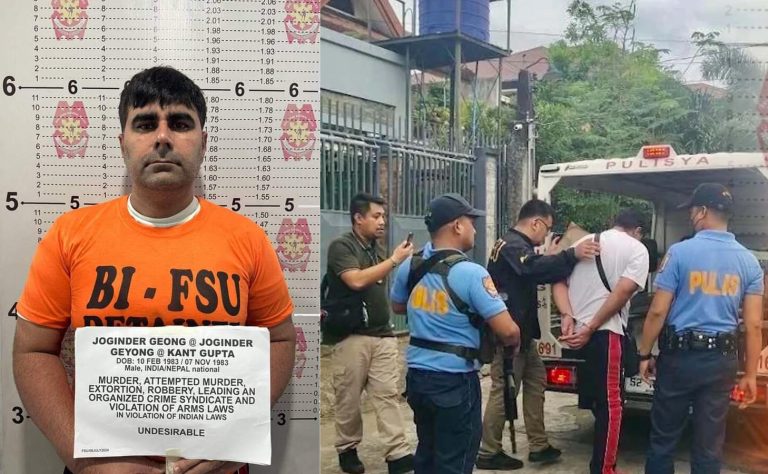
Dreaded gangster Joginder Gyong wanted by Haryana Police for criminal conspiracy and murder was deported from Philippines through Bangkok to Delhi, Central Bureau of Investigation (CBI) said.
The Global Operations Centre of the Central Bureau of Investigation (CBI) has closely coordinated and succeeded in bringing back Gyong, an Interpol Red Notice Subject, the agency said in a statement.
Gyong, who was brought in from the Philippines on February 1, was detained in Delhi where he is also wanted by Delhi Police, the CBI said in a statement. He was handed over to Special Cell, Southern Range, Delhi Police for further action, it said.
Gyong is wanted by Haryana Police in criminal case Registered vide FIR No. 1337 dated 30.12.2017 at Police Station City Panipat, Haryana on the allegations of criminal conspiracy and murder. The gangster is wanted by the Haryana Police in the murder of a victim whom the subject suspected of disclosing real identity and location of his gangster brother Surender Gyong, to the Haryana Police and who died later on in exchange of fire with Police, according to the CBI statement.
According to the statement, the Red Notice subject, to avenge the death of his brother, planned and murdered the deceased. The subject has been allegedly involved in criminal cases in various States and Union Territories of India, including Delhi for the offences of robbery, murder, attempt to murder, putting person in fear of death or of grievous hurt in order to commit extortion and kidnapping for ransom.
On the request of Haryana Police, the CBI had got a Red Notice issued against the subject from Interpol on 25.10.2024 and was circulated to all the law enforcement agencies across the world for tracking of the wanted criminal. On the strength of Red Notice, Joginder Gyong, was deported from Philippines through Bangkok to Delhi.
According to the statement, CBI as the National Central Bureau for Interpol in India coordinates closely with all Law Enforcement Agencies (LEAs) in India for cooperation and assistance via INTERPOL Channels. Since, 2021, more than 100 wanted criminals have been returned to India through coordination via Interpol channels.
(This news report is published from a syndicated feed. Except for the headline, the content has not been written or edited by OpIndia staff)
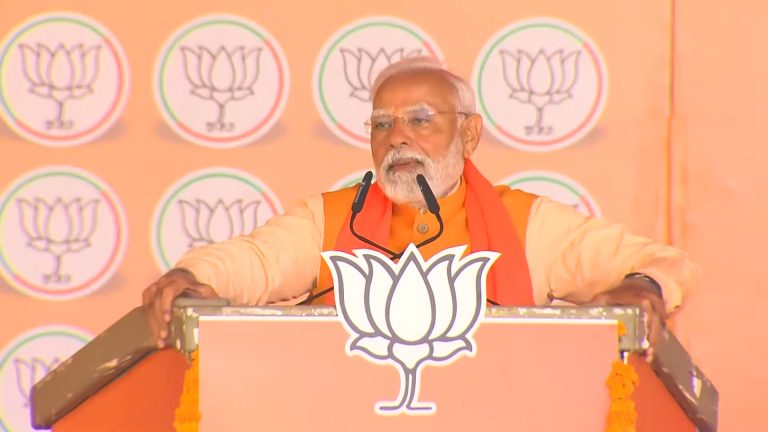
Prime Minister Narendra Modi on Sunday refuted claims the Aam Aadmi Party’s claims and assured that it is the BJP’s guarantee that not a single slum in Delhi will be demolished and the welfare schemes for the public will not be stopped.
Addressing a public rally in Delhi’s RK Puram, the Prime Minister highlighted that for those living in slums and colonies in the national capital, the BJP has guaranteed nutritious meals at just Rs five only.
“A welfare board will be set up for auto drivers and domestic workers, providing them with insurance coverage of up to Rs 10 lakh. The BJP government will also assist with children’s school fees. I give another guarantee: these AAP-Da people are spreading falsehoods, but not a single slum in Delhi will be demolished. The welfare schemes for the public in Delhi will not be stopped,” PM Modi asserted.
On January 12, AAP chief Arvind Kejriwal alleged that the slums of Delhi would be “demolished” in the next five years, rendering people “homeless” if the BJP voted to power.
Further, the Prime Minister emphasized that the people of Purvanchal made him a Member of Parliament and the Prime Minister.
“For decades, people with a jungle raj mentality, from Congress, ignored the people of Bihar. But today, the NDA government is working tirelessly for Bihar. By announcing the Makhana Board, the government has honoured Bihar’s Makhana. Most of the Makhana farming families in Bihar belong to Dalit communities, and when I work for their welfare, these people (Congress) make fun of it,” PM Modi said.
He asserted that the BJP will continue to support the Purvanchali community in every possible way, whether in Delhi, Uttar Pradesh or Bihar.
PM Modi also hailed the Union Budget and mentioned that the BJP is the only party that gives respect to the middle class and rewards honest taxpayers.
“Since the budget was announced yesterday, the entire middle class has been saying that this is the most middle-class friendly budget in the history of India. Every family in India is brimming with happiness and enthusiasm. Our government has completely zeroed income tax on earnings up to Rs 12 lakh. Since independence, no one earning Rs 12 lakh a year has ever received such significant relief from income tax,” the Prime Minister said.
“For a person with a salary of Rs 12 lakh during Jawaharlal Nehru’s time, one-fourth would have gone to tax. If Indira Gandhi’s government were in power today, Rs 10 lakh of your Rs 12 lakh would have gone to the government as tax. Even just 10-12 years ago, during the Congress era, if you had a salary of Rs 12 lakh, Rs 2,60,000 would have gone as tax. But after yesterday’s BJP government budget, those earning Rs 12 lakh will not have to pay a single rupee in tax,” PM Modi highlighted.
Slamming the Congress party, he said as opposed to the previous governments in the national capital which imposed taxes only to fill their own coffers, the BJP government opens up the treasury to provide relief and enhance the capabilities of ordinary citizens.
Highlighting that under the BJP government, medicines at Jan Aushadhi Kendras are already being offered at an 80 per cent discount, PM Modi said that after yesterday’s budget, more than 30 medicines for cancer and serious diseases will be made cheaper.
“Senior citizens in Delhi will greatly benefit from the new budget. Retired government employees will pay less tax and receive higher pensions. The BJP government aims to support senior citizens with these initiatives. The Delhi BJP has announced a pension of Rs 2,500 for senior citizens, along with free medical treatment worth up to Rs 5 lakh per year,” he said.
He also said that in this budget, the sports budget has been increased to nearly Rs 3,800 crore, and Rs 1,000 crore has been allocated for the “Khelo India” campaign.
“The people of Delhi will never forget how AAP and Congress deceived them in the name of sports. The Commonwealth scam’s stain is so deep that Congress will never be able to free itself from it. The AAP party’s actions in the name of the Sports University in Delhi are well known to the people and youth of Delhi. That’s why today’s youth of India trusts the BJP and stands with the BJP,” the Prime Minister emphasized.
(This news report is published from a syndicated feed. Except for the headline, the content has not been written or edited by OpIndia staff)