Home Blog Page 5087

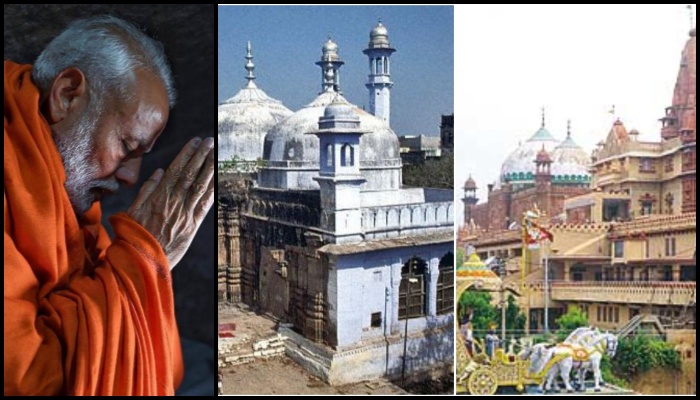
On its first Independence Day since the liberation of Ram Janmabhoomi, India must pledge to return Kashi-Mathura to its true inheritors

The 74th Independence Day celebrations are underway across the country and it is a momentous occasion for the country for more reasons than one. Prime Minister Modi has made it clear in the past that the year 2022 will mark the advent of a New India. Thus, between today and the 75th anniversary of the country’s independence, more decisions of monumental significance are to be expected.

Today is of particular import because the 74th Independence Day is the first since the resolution of the Ram Janmabhoomi dispute. It is the first Independence Day since Ram Janmabhoomi won its independence. Given everything that has happened in the second term of the NDA government thus far, with the abrogation of Article 370, the enactment of the Citizenship Amendment Act, the abolition of Triple Talaq, it can be safely said that New India will be a Hindutva-oriented country.

In that particular regard, one would hope that by the 75th anniversary of Indian Independence, Krishna Janmasthan and Kashi Vishwanath is also liberated from the clutches of Nehruvian secularism. Recently, in the aftermath of the clashes between the Indian Army and China at Galwan Valley in Ladakh, the Prime Minister had remarked that the age of expansionism is over. In that regard, ensuring the independence of Kashi-Mathura from Islamic expansionism is also important.

Seventy-five years is too long a time for the completion of the Reclamation Project with regards to Ayodhya-Kashi-Mathura but as they say, better late than never. It is also of significant import that the Pandit who officiated the Bhoomi Pujan ceremony at Ram Janmabhoomi demanded the liberation of Kashi-Mathura as his Dakshina. Thus, one tends to be hopeful that we will see some action on that front pretty soon.

There are reasons more than merely cultural for the reclamation of Kashi-Mathura. Seventy-three years have passed since the independence of our country and yet, we are not sure of our purpose as a nation. We do not have a Grand Narrative for our country. The Americans have their Exceptionalism, the Chinese have ‘Tianxia’ (All Under Heaven) and for the Japanese, it’s the royal line of Amaterasu which provides them with a grand narrative for their country.

What is India’s purpose in this world? What is the vision that India has for the world? What can India offer in terms of a vision for the world to aspire to? What is the direction that India should lead the world towards? The most obvious answer, which also happens to be the correct answer in this particular instance, is that the sacred duty of India is making the world a safe place for Hinduism and Hindus.

Consistent with that vision, it is of paramount importance that India first makes its own territory a safe place for Hinduism. Hinduism is the last major polytheistic tradition in the world and as the custodian of the Hindu Civilisation, it is India’s sacred duty to ensure its continued sustenance. The reclamation of Kashi-Mathura is one of the most fundamental steps towards that.

Narendra Modi has also made it clear in numerous speeches he has made since his reelection that the second term of the NDA government would seek the resolution of historical disputes that have raged on since independence. The mindset with which the government is working appears to be clear. Age-old disputes which have accumulated like cobwebs over the years have to be first resolved in order to usher in a new era for our country.

Kashi-Mathura are long-running disputes that ought to have been resolved within the first year of independence itself. And yet, here we are. New India cannot afford to carry the baggage of yesteryear. For the prosperity of our nation and the future of our civilisation, it is of principal importance that the sacred sites are reclaimed through government decree if necessary.

There are precisely two years left for 75 years of Indian independence. The vision of New India should be one that recognises that Hinduism is the core of India’s identity, that Hinduism is India’s past, present and future. Obviously, there are other actions that ought to be undertaken for India’s prosperity but the liberation of Kashi-Mathura is one issue that can no longer be ignored.

Concrete steps ought to be undertaken for the implementation of the National Registrar of Citizens as well. Massive land and labour reforms are long overdue to expedite the dream of an Aatmanirbhar Bharat. Reforms in education have to be made as well. All of this must go hand-in-hand and concrete measures will have to implemented now that there are only two years remaining on the clock.

During his speech at the Ram Mandir Bhoomi Pujan ceremony, Narendra Modi drew an equivalence between the Ram Jannmabhoomi Movement and the Movement for Indian Independence. Indeed, there was great truth in his words. If one was a movement for India’s political independence, the other was one for India’s spiritual liberation.

However, that spiritual liberation will not be complete until Kashi-Mathura has been reclaimed as well. Of course, the reclamation Project does not end there either. However, the next phase can begin only when one has been completed. Therefore, on the first Independence Day since the reclamation of Ram Janmabhoomi, India must homage to its spiritual heritage by restoring the rights of Krishna-Mathura to its true inheritors.
Made in India Coronavirus vaccine soon? Here is what PM Modi said in his Independence Day speech

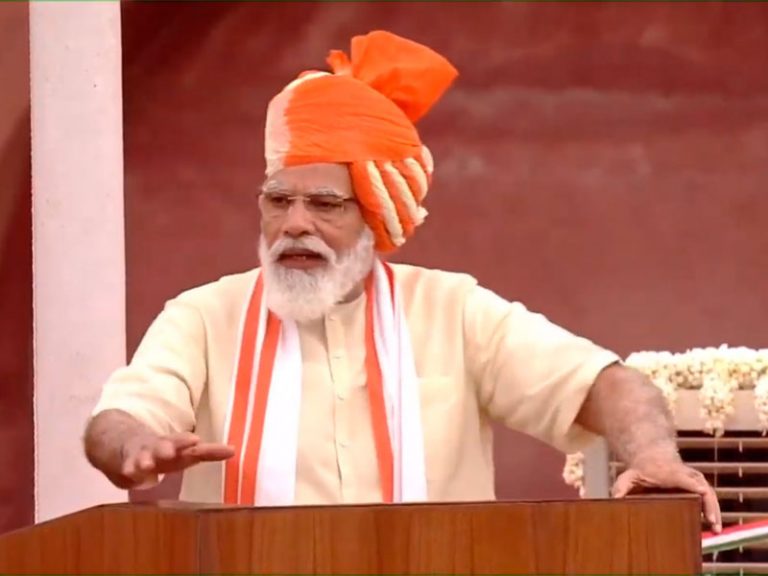
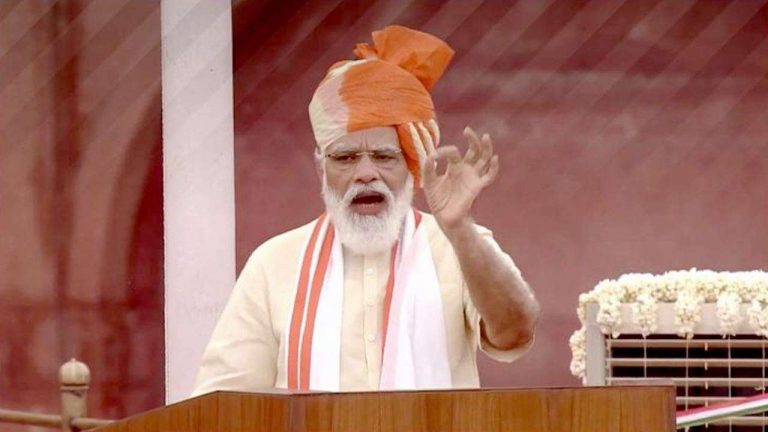
During his address to the nation on the occasion of the 74th Independence Day, PM Modi said that three vaccines in India are being developed for the Wuhan Coronavirus. He said that scientists and researchers are working hard to complete the vaccine development. Once the scientists complete the trials, the mass production of the vaccine will begin. PM Modi in his Independence Day speech said that the government has already formulated the plan to ensure that the Coronavirus vaccine reaches to every citizen of India at the earliest.

In his Independence Day speech, Prime Minister Narendra Modi informed that three vaccines for Coronavirus were in different phases of testing in India and as soon as scientists give a ‘green signal’, the mass production of the vaccine would begin.

While talking about the situations arising due to pandemic, PM Modi said that when the pandemic hit the nation, there was only one lab capable of doing the tests. Now there is a network of 1400 labs for Covid-19 testing. He also informed the nation that in the initial days, India was capable of doing only 300 tests per day, but now the capacity has crossed 7 lakh tests per day and it is increasing as required.

PM Modi also mentioned about the 1500 Covid-19 winners who recovered from the disease and were attending the function as a symbol of the determination of the citizens of India to fight the pandemic and lead the nation as winners.

From Article 370 in 2019 to CAA and Ram Mandir in 2020: How PM Modi used his I-Day speech to talk about promises delivered

On India’s 74th Independence Day, Prime Minister Narendra Modi delivered his 7th speech from the ramparts of the Red Fort. As has been made a tradition by Prime Minister Modi, the Independence Day speech has been changed from a mere hailing of secularism and the spirit of India to talking about the ‘report card’ of the government in the past one year and a brief about what the government aims to achieve in the next one year. 

The Modi government, in general, has been mindful and has displayed utmost seriousness when it comes to delivering the promises that it made to its core voters in its manifesto. Two of the most important promises were the removal of Article 370 and the construction of the Bhavya Ram Mandir in Ayodhya.

In the year 2019, the Modi government delivered on its first promise by abrogating Article 370 and integrating Jammu and Kashmir completely with the rest of the country. In 2020, PM Modi performed the Bhoomi Pujan of Ram Mandir at Ayodhya.

In his Independence Day speeches, Prime Minister Modi often gives a brief about the work that has been done in the past one year and the promises that have been delivered by his government.

In his Independence Day 2020 speech, PM Modi spoke about the contraction of the Ram Mandir and how a long-standing demand had finally been resolved peacefully after centuries.

Prime Minister Modi, from the ramparts of the Red Fort, said, “10 days ago, construction of Ram Mandir work has begun in Ayodhya. A peaceful resolution to Ram Janambhoomi issue is unprecedented. The peace and understanding with which the Nation presented itself is evident and will become an inspiration for us in the future. Peace, unity and harmony are going to become the power of Atma Nirbhar Bharat. This devotion is the foundation of India’s future. It is with this harmony that we need to move forward”.

It is perhaps the first time that a persevering, pervasive and 500-year-long civilisational struggle saw resolution in modern India and was also mentioned from the ramparts of the Red Fort.

Along with talking about the Ram Mandir, PM Modi also spoke about the Citizenship Amendment Act and how, India was successful in forming a policy to give refuge to the persecuted minorities from neighbouring Islamic states.

While in 2020, PM Modi spoke about CAA and the resolution of the Ram Mandir dispute, in 2019, PM Modi had spoken about his government delivering on the promise of abrogating Article 370. PM Modi had underlined decisions like Triple Talaq Bill and abrogation of Article 370 from Jammu and Kashmir were long pending demands of the people which have been fulfilled. He had said Sardar Patel’s long-cherished dreams have been now been realised by his government’s path-breaking moves. “One Nation, one Constitution has now become a reality,” PM Modi said.

“It has been under ten weeks since the new Government was formed but several path-breaking decisions have been taken. This includes decisions for Jammu, Kashmir, Ladakh, the end of Triple Talaq, steps for the welfare of farmers and traders. The old arrangement in Jammu, Kashmir and Ladakh encouraged corruption, nepotism but there was an injustice when it came to rights of women, children, Dalits, tribal communities. The dreams of sanitation workers were incomplete. How can we accept such a situation”, PM Modi had said.

Further, in 2019, PM Modi had said, “We do not believe in creating problems or prolonging them. In less than 70 days of the new Government, Article 370 has become history, and in both Houses of Parliament, 2/3rd of the members supported this step. We want to serve Jammu, Kashmir, Ladakh. Those who supported Article 370, India is asking them – If this was so important and life-changing, why was this Article not made permanent? After all, those people had large mandates and could have removed the temporary status of Article 370. It is always India First for us. Politics comes and goes but steps in the interest of the nation are paramount”.

Every year, Prime Minister Modi and the government led by him deliver on important promises that were made in their election manifesto and the Independence Day speech is seen as an opportunity to speak directly to the nation. To tell the nation that this government believes in keeping its promise.

Breaking taboos from the ramparts of Red Fort: From speaking about open defecation in 2014 to the importance of sanitary napkins in 2020

On India’s 74th Independence Day, Prime Minister Narendra Modi delivered his 7th speech from the ramparts of the Red Fort. As has been made a tradition by Prime Minister Modi, the Independence Day speech has been changed from a mere hailing of secularism and the spirit of India to talking about the ‘report card’ of the government in the past one year and a brief about what the government aims to achieve in the next one year.

However, Prime Minister Modi seems to be using his Independence Day speeches for another crucial task: To break taboos. To talk about certain issues that are far from being drawing room conversations. The uncomfortable truths that hurt the Nation, but are seldom discussed in the corridors of power.

During his speech on Independence Day 2020, Prime Minister spoke about the importance of women’s hygiene and the importance of sanitary napkins. PM Modi said that over 5 crore sanitary pads have been given to poor women at ₹1 each through 6,000 Jan Aushadhi stores.

For a Prime Minister to talk about women’s hygiene and what the government has achieved on that front by ways of making sanitary pads available to rural and vulnerable women is certainly a first.

Menstruation is often regarded as a taboo subject in most homes in India. While it is not considered ‘impure’, as many would have us believe, but it is certainly not a subject that is discussed freely.

By extension, women’s hygiene also is a subject that is not a subject that has come up often in public discourse, especially when one talks about policy formation and government initiatives.

Prime Minister Modi, by talking about Sanitary napkins, the importance of women’s healthcare and what the government is doing to ensure that, has broken a crucial barrier and a taboo that will take India a long way into achieving standards of women’s healthcare that is at par with the rest of the world.

Interestingly, Prime Minister Modi had broken another norm in 2014, when from the ramparts of the Red Fort, the PM had spoken about the problem India faces with open defecation. He had declared that his government’s aim is to ensure that all districts in India become open defecation free.

“We are in the 21st Century and yet there is still no dignity for women as they have to go out in the open to defecate and they have to wait for darkness to fall. Can you imagine the number of problems they have to face because of this?” PM Modi had asked in his 2014 speech.

He further said, “People may criticise me for talking about toilets from the Red Fort. But I am from a poor family, I have seen poverty first hand. For the poor to get dignity, it has to start from here.”

The importance of cleanliness, the all-pervasive dirt in public spaces in India and the lack of basic amenities like toilets in poverty-stricken households was a subject that was seldom spoken about even though India saw decades of politicians promising to make India poverty-free. In a first, from the ramparts of the Red Fort, PM Modi had launched the Swacch Bharat initiative and declared his intention to make India a clean place to live.

Watch: Prime Minister Modi addresses the Nation on India’s 74th Independence Day

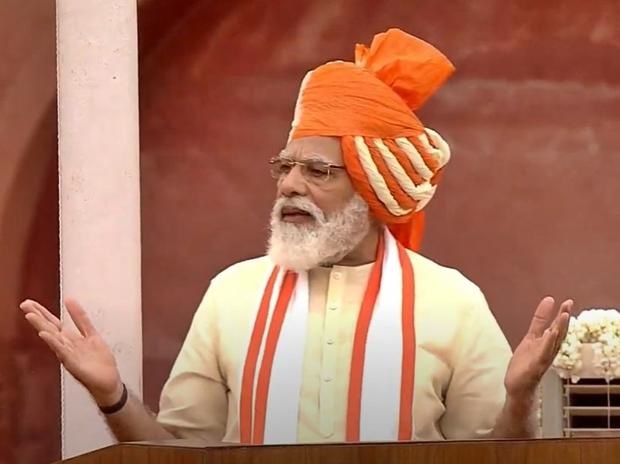
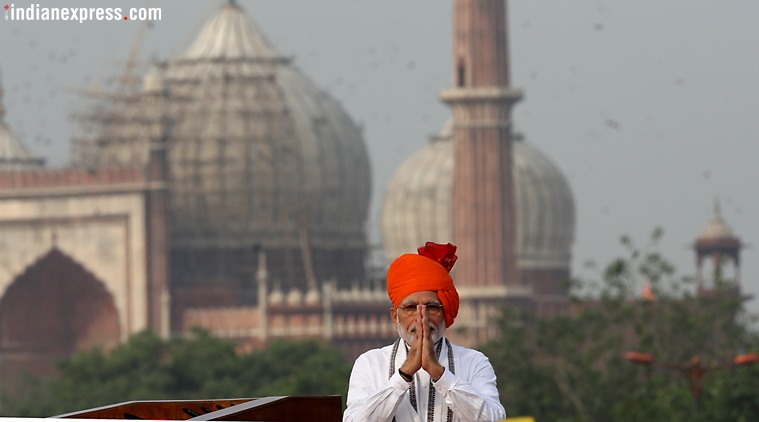
India celebrates its 74th Independence Day today. The Prime Minister of India, PM Narendra Modi, will be addressing the nation and delivering his annual speech from the ramparts of the Red Ford after he unfurls the Indian flag.

You can watch Prime Minister’s address to the nation below:

The unfurling of the flag will synchronise with a 21-gun salute fired by gunners of the 2233 Field Battery (ceremonial), the ministry said. The PM will deliver his address to the nation after unfurling the flag. 

Before that defence minister Rajnath Singh and defence secretary, Ajay Kumar will receive the PM at 7.18 am in front of Lahore Gate of Red Fort. The defence secretary will introduce Lieutenant General Vijay Kumar Mishra, General Officer Commanding, Delhi Area, to the PM. Mishra will then conduct him to the saluting base where a combined inter-services and police guards will present a general salute to the PM who will then inspect the Guard of Honour. 

The Guard of Honour contingent for the PM will consist of one officer and 24 men each from the army, navy, air force and Delhi Police, the ministry statement said. After inspecting the Guard of Honour, the PM will proceed to the ramparts of the Red Fort where he will be greeted by Rajnath Singh and the top military brass.

The GOC Delhi Area will then conduct the PM to the dais on the rampart to unfurl the national flag. It is after the unfurling of the Indian flag would Prime Minister Modi proceed to the ramparts to deliver his speech.

Govt of India announces list of soldiers and police officials who will be honoured with Gallantry awards on Independence Day

Each year on August 15, the day India celebrates its Independence Day, the President of the country honours the sacrifices of brave men and women of the country’s armed forces, along with the law enforcement officials, by awarding them gallantry awards.

While the raging coronavirus outbreak in the country this year has cast a pal on the celebrations of the Independence Day, it did not deter the Indian government from paying respects to the personnel for displaying exemplary courage and valour in discharging their duties.

Home Ministry announces the list of gallantry medal awardees to police personnel

A day before the Independence Day, the Home Ministry announced the list of gallantry medal awardees to police personnel across the country. The awards include Police Medals for Gallantry (PMG), President’s Police Medal (PPM) and Police Medal (PM) for meritorious services.

A total of 80 officers from across the country will be awarded the President’s Police Medal (PPM), 215 personnel will receive Police Medal for Gallantry, while 631 officers will receive the Police Medal (PM) for distinguished services.

Jammu and Kashmir Police tops the list of Police Medals for Gallantry (PMG) with total 81 medals, followed by 51 to the CRPF.

Inspector Mohan Chand Sharma, who died in the Batla House encounter in 2008, has been awarded with a gallantry medal posthumously. Three IPS officers from Jammu and Kashmir- Sandeep (SSP Anantnag), Gurinderpal Singh (SP Kulgam) and Atul Kumar Goel (DIG South Kashmir) – have been awarded with the PMG. DIG Atul Kumar Goel was the one who had caught Jammu and Kashmir DSP Davinder Singh at a checkpost when he escorting two Hizb-ul-Mujahideen in a vehicle on the Srinagar-Jammu highway this year in January.

Three Armed Forces personnel awarded with Shaurya Chakra

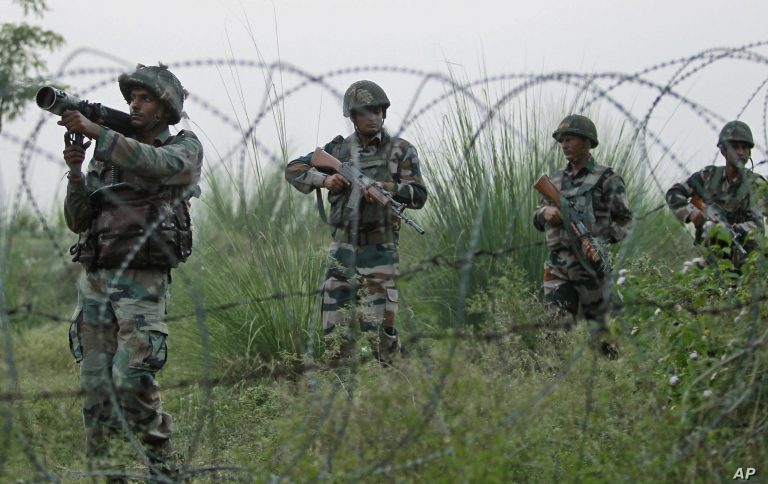
The Indian Army, in its statement on Friday, said that Havaldar Alok Kumar Dubey, Major Anil Urs and Lt Col Krishan Singh Rawat are being awarded the Shaurya Chakra for their bravery in different actions in Jammu and Kashmir. The Shaurya Chakra is awarded for gallantry otherwise than in the face of the enemy.

Havildar Alok Kumar Dubey displayed tactical proficiency in assisting the Company Commander in laying the initial cordon and played an instrumental role in containing the terrorists in an operation on June 22, 2019, in orchards near a village in Jammu and Kashmir. The citation to Major Anil Urs read that he displayed good tactical acumen and strong resolve while laying an ambush for infiltrators in an operation along the LOC. Col Rawat was awarded for engaging the infiltrators in an ambush that lasted for 36 hours in inclement weather and resulted in the elimination of two terrorists.

The President also approved Sena Medal to 60 Army personnel, Nao Sena Medal to four from the Navy and 5 Vayu Sena Medal for the Air Force. 6 Soldiers will be awarded Bar to Sena Medal, which means they were awarded Sena Medal earlier also. For every subsequent Sena Medal awarded to a soldier, a bar is added to the medal. Besides, 19 Mention-in-Despatches have been accorded to the Army personnel for their significant contribution in different military operations which include eight posthumous for ‘Operation Meghdoot’ and ‘Operation Rakshak’.

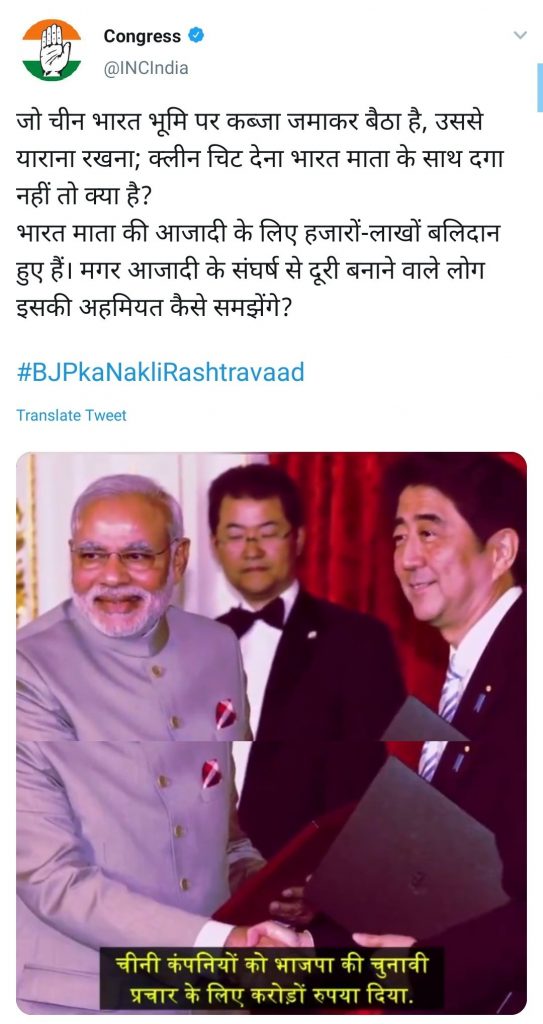
While trying to hide its links to China by targeting the BJP, Congress depicts Japanese PM Shinzo Abe as Chinese President

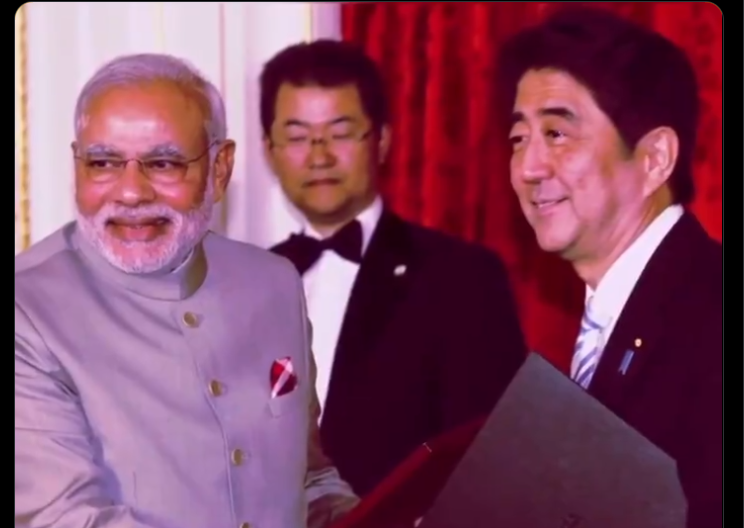
The Congress party, under great scrutiny for its suspicious ties with the Chinese Communist Party (CCP), has been struggling hard to distract attention from itself by accusing the BJP of having ties with China. In their latest attempt, they have depicted Japanese Prime Minister Shinzo Abe as the Chinese President in a video targeting the BJP.

The Congress party in its tweet said that China has captured Indian territory, a claim that has been refuted by people across the board, and claimed that the BJP was buddies with the Chinese government. It further claimed that those who had kept themselves away from the Indian independence movement could not comprehend the sacrifices that have been made for the motherland.

However, the callous approach of the Congress party to issues of great import as foreign policy became evident when they depicted Shinzo Abe as the Chinese President. When Shinzo Abe was on screen, smiling while shaking hands with Prime Minister Narendra Modi, the ticker of the video said that the BJP had given Chinese companies money for election campaigns.

From Congress’ now deleted video

The Congress party has, since then, deleted the tweet. It is not the first time that the Congress party has tripped over while attempting to target the BJP with regards to China. Earlier, Nikhil Alva, Congress leader and son of Margaret Alva, shared an image of Prime Minister Narendra Modi with the President of Kyrgyzstan President Jeenbekov in his bid to demonstrate that the BJP has links with the CCP.

The Congress party landed itself in a lot of trouble after details of the party and their leaders’ proximity to China emerged amidst the India-China standoff at Ladakh. First, it was revealed that Congress had signed an MoU with the Communist Party of China in the year 2008. Then, to make matters worse for the party, it was revealed that the Rajiv Gandhi Foundation headed by Sonia Gandhi got multiple donations from not only the Embassy of China but also the government of China.

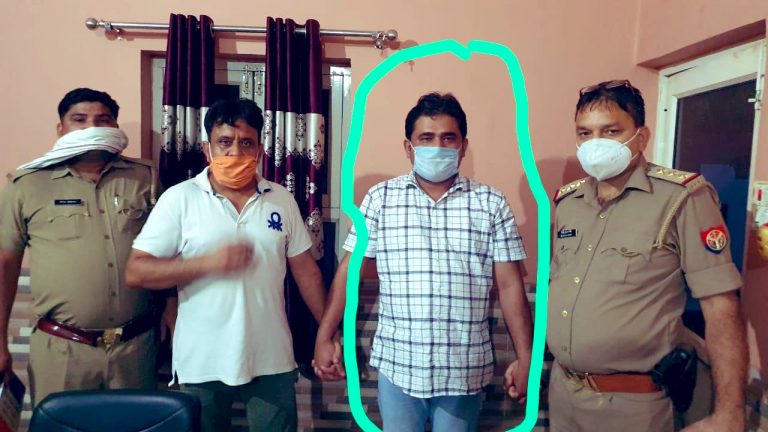
Former SP leader Shahzeb Rizvi arrested by UP police for announcing ₹51 lakh bounty on Dalit youth’s head for ‘blasphemy’

A day after former Samajwadi Party leader and ‘social worker’ Shahzeb Rizvi had announced a bounty of Rs 51 lakh on the head of a Karnataka Congress MLA’s nephew for blasphemy, the Uttar Pradesh police arrested him. Shalabh Mani Tripathi, media adviser to UP CM Yogi Adityanath, informed on Twitter that Rizvi has been arrested.

After the video of Shahzeb Rizvi announcing the bounty of Rs 51 Lakh for anyone who brings the head of P Naveen went viral on social media, Uttar Pradesh police had filed a case against him, and had started to search for him. The FIR was registered under IPC section 153-A (Promoting enmity between different groups on grounds of religion, race, place of birth, residence, language, etc., and doing acts prejudicial to maintenance of harmony) and section 505(2) (Statements creating or promoting enmity, hatred or ill will between classes).

After the video surfaced on social media, Meerut SSP Ajay Sahini had ordered a probe into the matter, and the case was registered.

Earlier in the day, Tripathi had informed that Shahzeb Rizvi was absconding from UP police after announcing the bounty, and was ‘collecting donations for his bail’, an apparent reference to Rizvi’s statement where he had sought contributions from his community members for the bounty amount.

Shalabh Mani Tripathi also posted a video showing Shahzeb Rizvi arrested by police, saying that another video has been made featuring Rizvi. He also informed that Rizvi refused to board the police vehicle, and insisted on going on foot.

The Facebook post by Naveen, nephew of Karnataka Congress MLA R Akhanda Srinivas Murthy, a Dalit leader, had triggered the riots by Muslim mob in Bengaluru on 11th August. It was alleged that Naveen had committed blasphemy against Prophet Muhammad. Following this, Shahzeb Rizvi had posted a video announcing the bounty, asking Muslims to behead Naveen and bring his head in return for Rs 51 Lakh.

Shahzeb Rizvi is former politician from Samajwadi Party, although at present he is not associated with the party. He was the state secretary for the minority cell in the party in Uttar Pradesh. He is a resident of Rasulpur village under Phalauda police station in Meerut. After leaving the Samajwadi Party, at present he identifies himself as a ‘social worker’.

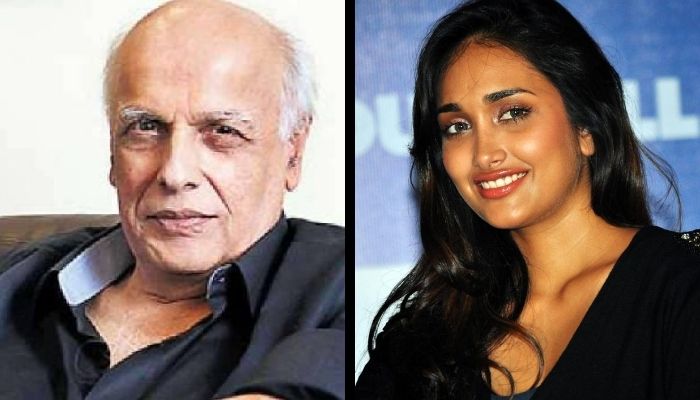
‘Shut up or else, you will also be put to sleep forever’, mother of deceased actress Jiah Khan accuses director Mahesh Bhatt of intimidating her

Rabia Khan, the mother of deceased actress Jiah Khan, has revealed that film director Mahesh Bhatt had tried to intimidate her during the funeral of her daughter, reported India Today. Jiah Khan, the actress of Ghajini fame had died by suicide on June 3 in 2013.

Her death was re-confirmed as a suicide in 2016 following an extensive investigation by the Central Bureau of Investigation (CBI) and a hearing at the Bombay High Court. Khan’s mother continued to claim that Jiah Khan had been murdered by her boyfriend, actor Sooraj Pancholi, leading the prosecution to make a failed attempt to lay charges of murder and sexual assault in 2017. On 31 January 2018, nearly five years after her death, a court in Mumbai charged Pancholi with abetting Khan’s suicide. The case has not yet been settled.

Mahesh Bhatt is Bollywood mafia’s mouthpiece, claims Rabia Khan

Rabia Khan said that Mahesh Bhatt had tried to convince her that Jiah Khan was mentally depressed at her funeral. However, when she refuted his claims, the director said, “Tum chup hojao varna tumhe bhi injection deke sula dege (Shut up or else you will also be put to sleep forever using an injection).” Further accusing Mahesh Bhatt of being a ‘mouthpiece’ of Bollywood mafia, Rabia Khan emphasised, “He is so pathetic that I have no words to express. He was intimidating when my daughter worked for him at the age of 16.”

Rabia Khan hopes for justice, lambasts Sooraj Pancholi

Following the untimely death of actor Sushant Singh Rajput, Rabia Khan had drawn similarities between the death of the actor and her daughter on social media. Hitting out at Sooraj Pancholi, she said, “He used to beat my daughter. The Police were pressurised by the Bollywood mafia so much that a Bollywood icon (referring to Salman Khan) said that don’t interrogate him, leave him alone, we are launching him.”

Rabia informed how Sooraj brainwashed Jiah Khan to return to India, allegedly under the pretext of his operation. “My daughter never lied or hid things from me but after meeting Sooraj, she started hiding things from me,” she added. Accusing the law enforcement of helping the accused, she lamented how talented people were killed in Bollywood. “I feel hopeless that police is supporting the mafia and wrong people…People use money and power to tamper the investigation.”

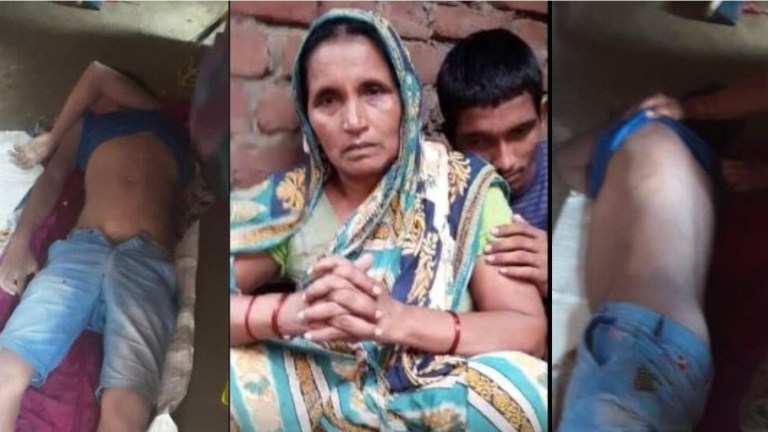
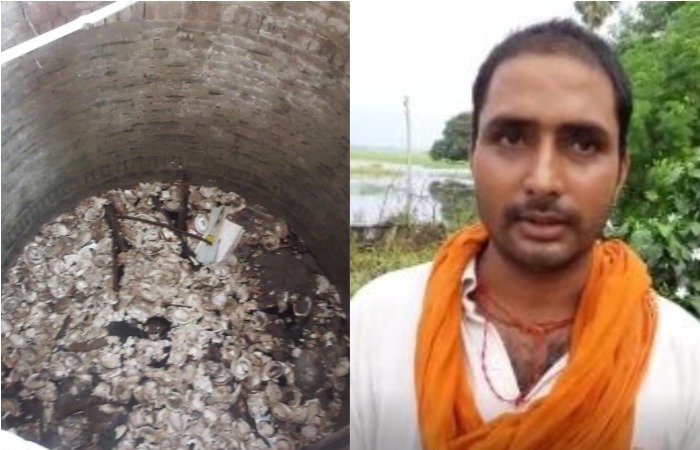
‘Sarajuddin, Istak and Shehenshah killed Rohit and dumped him in a well’: Family in Bihar’s Chhapra alleges police inaction against accused

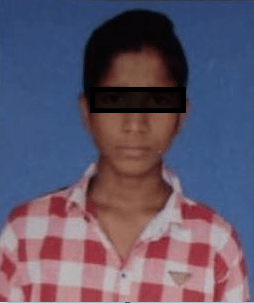
In the Naini village of the Chhapra block in Bihar, a 14-year-old boy named Rohit, the son of widow Urmila Devi was allegedly murdered on July 31, 2020. His mother has levelled serious allegations against the members of another community. She has alleged that the boys from a particular community, who had murdered the boy, had brought Rohit’s dead body the next day on the pretext of searching.

The local police have also been facing serious charges in the case. It is being alleged that the accused have not been arrested yet. A case has also been registered against some BJP leaders for demanding the arrest of the accused.

14-year-old Rohit

Opindia spoke to BJP’s Kisan Morcha Vice President Shailendra Sengar in this regard. A case has been registered against him for the breach of peace. Giving details about the case, Sengar said that despite almost a fortnight since the incident, justice eludes the victim’s family.

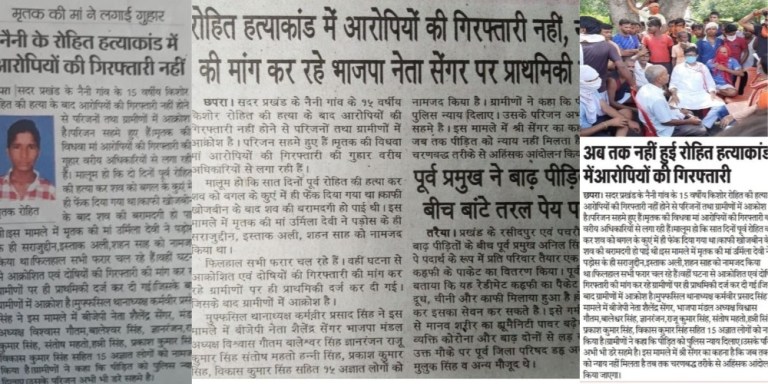
A media report on Rohit murder case

FIR filed against protesters demanding action against Rohit’s murderers

According to BJP leader, the victim’s mother Urmila Devi has filed an FIR against the accused in the case. However, the police are yet to take action against the accused. When they opposed police inaction in the case, an FIR was lodged against them instead. Shailendra also raised aspersions on the post-mortem report of Rohit. He claimed that though the post-mortem has been done, the details have not been revealed yet. Shailendra alleges that the truth is not being revealed to the public and accused the authorities of withholding crucial information.

After talking to Shailendra, OpIndia contacted the local police station to confirm the entire case. However, instead of answering to our questions, the police in-charge hung up on us, saying he would contact us later. The story would be updated if and when the police shares details with us.

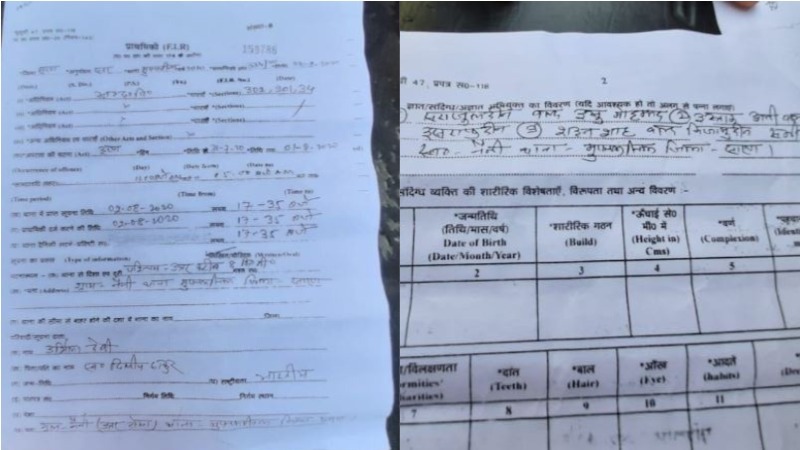
FIR filed by Rohit’s mother mentions Sarajuddin, Istak and Shehanshah as accused

While the BJP leader has accused the police of not acting on the mother’s complaint, Rohit’s inconsolable mother has been demanding justice since her son’s death. She said, “On 31 July, Sarajuddin, Istak and Shehanshah took my son on the pretext of playing with him. However, when he did not return, we started searching for him. We kept searching for him till late in the night. We did not know what had happened to him. They threw him in the well and the next day the same people brought the dead body of my son at our home. Now, all I demand is justice.”

FIR filed by Rohit’s mother Urmila Devi

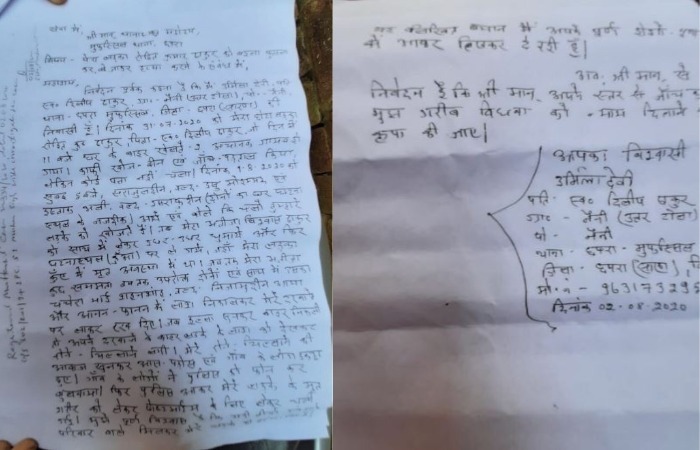
Urmila Devi has filed an FIR against the three accused in this regard and has also provided her written statement to the police. Urmila Devi claims that on August 1, the accused took Rohit’s cousin along with them to search for Rohit. She has alleged in her statement that Rohit’s cousin was shown the body lying in a well. The accused then lifted the body out of the well and brought it to his home. The body was later sent to post-mortem after the police was informed about the incident by the neighbours.

Statement by deceased Rohit’s mother Urmila Devi

Rohit’s maternal uncle has demanded capital punishment for the culprits responsible for death of his nephew. However, the administration has not taken any action in this matter so far. Akash, a local who hails from the same village, assertively claims that Rohit was brutally killed by the Muslim villagers. He said that Rohit’s body was dumped in the well that is present in the courtyard of the Durga Temple. The culprits are still on the loose and a case was filed against the villagers who had demanded action against the accused.

Akash, a local, told that Rohit was killed and thrown into a well in the courtyard of Durga temple.
Akash, a local resident speaks on Rohit’s murder
Eye-witness account of Rohit murder

There is a swelling resentment among members of the Hindu organisations and villagers for the inordinate delay in the matter. The villagers, led by the BJP Kisan Morcha vice-president, had blocked a road to demand the arrest of the accused. Following this incident, a case was registered under various sections for breaching peace on many people including Shailendra Sengar, BJP Mandal President Vishwas Gautam, Baleshwar Singh, Gyanranjan, Raju Kumar Singh, Santosh Mahato, Hanni Singh, Prakash Kumar Singh, Vikas Kumar Singh.