Home Blog Page 5736

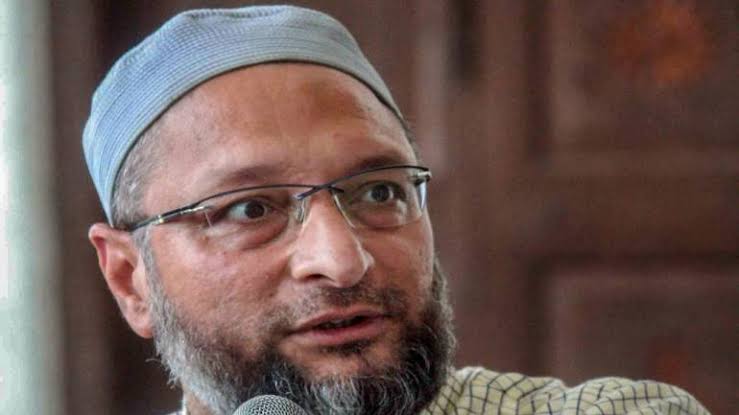
Shaheen Bagh may be turned into ‘Jallianwala Bagh’ after February 8: AIMIM chief Asaduddin Owaisi

AIMIM chief Asaduddin Owaisi has stoked yet another controversy by raising suspicion over government’s intention of clearing the Shaheen Bagh stretch where a protest has been ongoing for over 50 days against Citizenship Amendment Act (CAA) following the Delhi polls.

Speaking to ANI, Owaisi asserted that there are indications from the government that the Shaheen Bagh area will be cleared following the Delhi polls on February 8. “They might as well shoot them and turn Shaheen Bagh into Jallianwala Bagh. This might happen. One of the BJP ministers has asked to shoot the bullets at the protesters. The government should answer as to who is radicalising,” Owaisi said.

Regarding NRC and NPR, Owaisi asked the government to clearly state that the NRC will not be implemented until 2024.


“Government should not beat around the bush and clearly state that they are not going to implement NRC till 2024. Why have they earmarked Rs 3900 crores for NPR? I am a student of history and I know where such acts lead to. During his reign, Hitler too had commissioned census twice and after that, he pushed the jews in a gas chamber. Mussolini too did the same in Italy. I don’t want our country to go in that way,” Owaisi said.

Ever since the enactment of Citizenship Amendment Act, Owaisi has been indulging in fear-mongering about the new law along with the NRC and NPR to continue fuelling misgivings about them amongst the Muslims. Earlier, Owaisi had stated that NPR, which was first carried out by Congress in 2011, is the first step towards NRC, despite Union Home Minister Amit Shah categorically stating that there is no plan for a nationwide NRC as of then.

This is not the first time that politicians have resorted to trivialising Jallianwala massacre to make petty political gains. Earlier, Shiv Sena supremo and Maha Vikas Aghadi chief minister Uddhav Thackeray too likened police action in Jamia to Jallianwala Bagh incident. Thackeray was then at the receiving end of criticism by many for his misplaced comparison of action against anti-CAA rioters, vandals and stone-pelters to barbaric firing unleashed by British troops in Jallianwala Bagh in 1919.

Over 21,000 foreigners granted Indian citizenship in the last decade, including around 15,000 to Bangladeshis due to India-Bangladesh enclave exchange

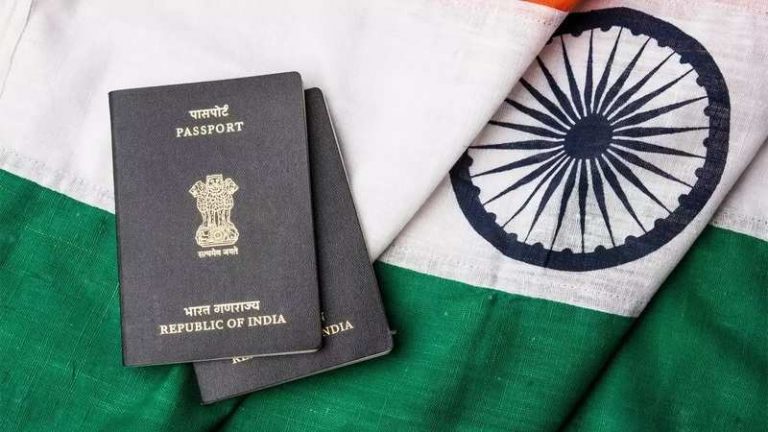
Official statistics reveal that in the last decade over 21,000 foreigners were granted Indian citizenship in the last decade. The details were provided by the Union Home Ministry on Tuesday in a reply to a query in the Lok Sabha. These people were provided with citizenship during the terms of prime minister Manmohan Singh as well as Narendra Modi.

Minister of State for Home Affairs Nityanand Rai said, “In the last 10 years, a total of 21,408 foreign nationals were provided Indian citizenship.” By providing year-wise statistics, he asserted that in the year 2010, 232 people got Indian citizenship while 435 in 2011, 553 in 2012, 563 in 2013, 617 in 2014, and 15,470 persons got Indian passports in 2015. Apart from these Indian government decided to grant citizenship to 1,106 people in 2016, 817 in 2017, 628 in 2018 and 987 in 2019.

Replying to the question, minister of state in home ministry Nityanand Rai also ensured that there will be no change in the process of gaining citizenship.

Read- Muslims refugees can continue to get citizenship as per provisions of Citizenship Act, CAA does not prevent that: Government clarifies in Lok Sabha

Explaining the reason behind the huge number of persons granted citizenship in 2015, the minister added the inclusion of 53 enclaves of neighbouring Bangladesh in India under India-Bangladesh Land Boundary Pact 2015 resulted in 14,864 Bangladeshis given Indian citizenship under Section 7 of the Citizenship Act, 1955.

“All the legal migrants could be provided Indian citizenship irrespective of their religion under the Citizenship Act 1955 after completing all the formalities. There is no change in the current process to obtain the Indian Citizenship”, replying to a query Nityanand Rai said.

The minister also gave data of illegal Bangladeshi immigrants who were living in India illegally and deported later. He said, “Actions were taken to send back the illegal Bangladeshis and 308 people in 2016, 51 in 2017 and 445 in 2018 were deported”.

Shaheen Bagh: Children campaigning for AAP candidate Amanatullah Khan amidst Biryani feast

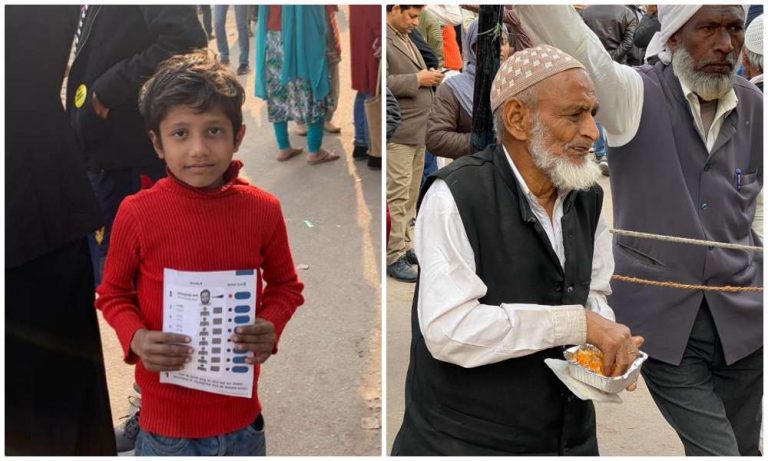
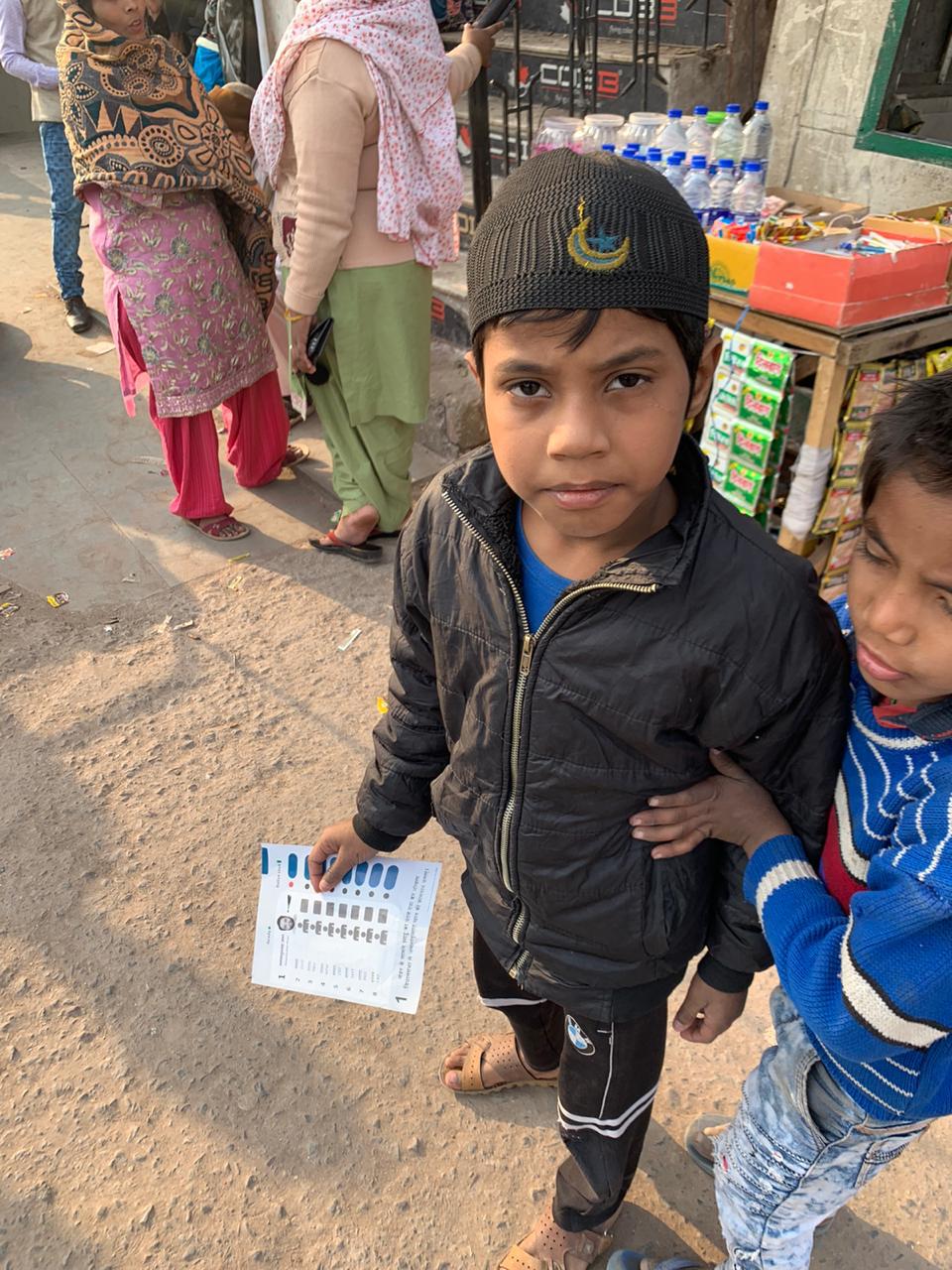
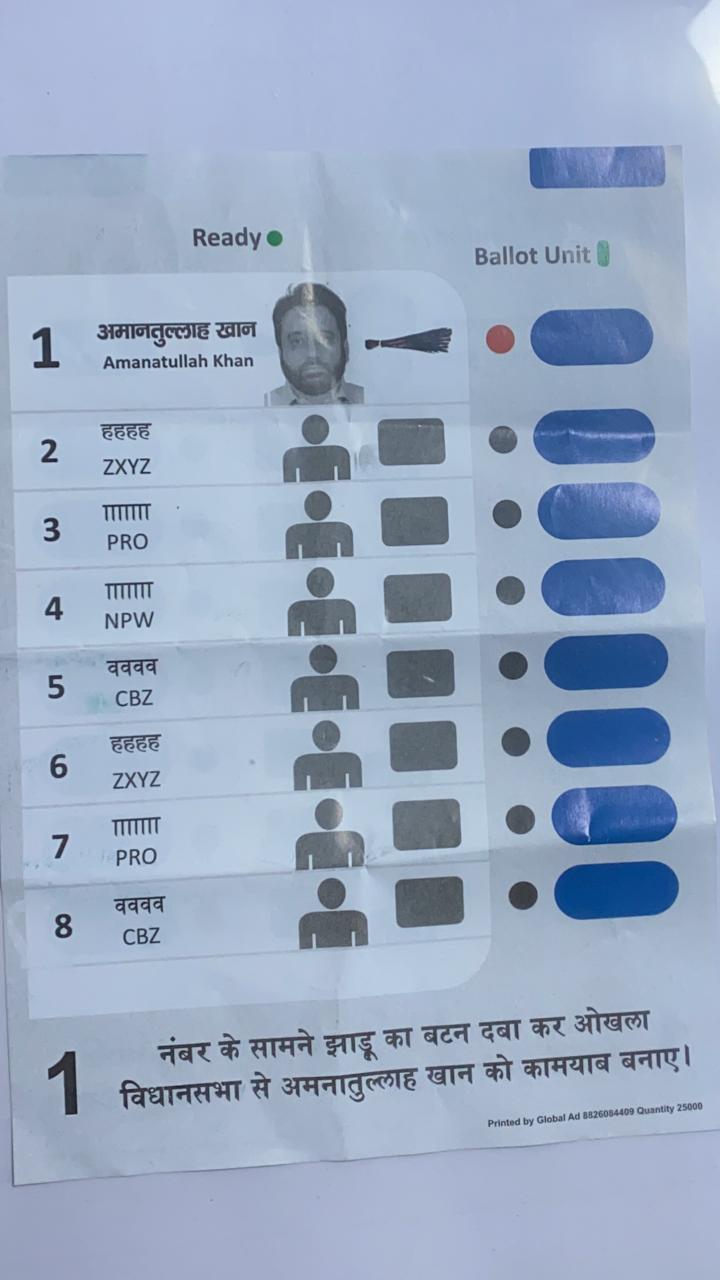
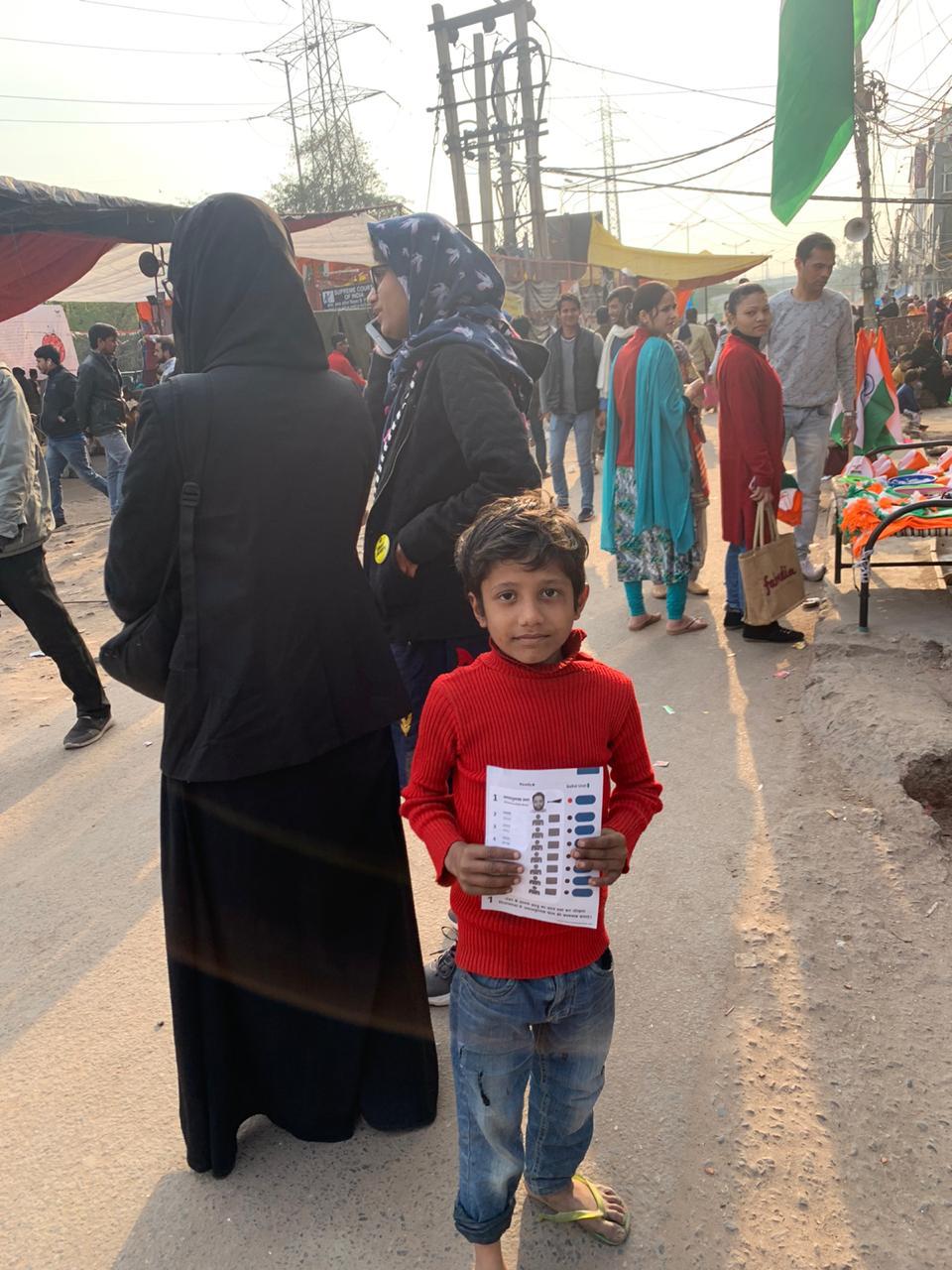
Just days ahead of Delhi State Assembly Elections, little children in Shaheen Bagh were found distributing pamphlets and campaigning for Aam Aadmi Party candidate Amanantullah Khan.

people to vote for AAP candidate Amanatuallah Khan at Shaheen Bagh

A child distributing pamphlets urging people to vote for Amanatullah Khan in upcoming Delhi assembly elections.

Copy of the pamphlet being circulated by these children at Shaheen Bagh

Copy of the pamphlet being distributed by children at Shaheen Bagh.

Little children with pamphlets which ask people to vote for AAP candidate Amanatullah Khan at Shaheen Bagh

Recently, Shaheen Bagh ‘protests’ came under fire after at least one infant lost his life because the parents brought him to the ‘protests’ in the cold. The mother of the child claimed that the child died for his ‘azaadi’ and she would not hesitate to ‘sacrifice’ her other two children for the cause either.

Read: Columnist with Scroll, Hindu, TNM uses an old incident to justify Shaheen Bagh child death, says “he died for a cause”

AAP MLA and current candidate for Okhla constituency, Amanatullah Khan was earlier spotted with Shaheen Bagh mastermind Sharjeel Imam who orchestrated the road blockade. He was earlier also found being part of a mob protesting against CAA which went violent in Jamia Nagar in December 2019. Later, an FIR was also filed against him for instigating violence through social media.

Meanwhile, biryani was also being served at Shaheen Bagh to the ‘protestors’.

OpIndia ground report had earlier talked about biryani being brought in which is then distributed to ‘protestors’ and ‘volunteers’. Along with biryani, there is packaged water, fruit juices and other snacks available. On an average, these protests would cost about Rs 10,00,000 per day.

Delhi is set to go to polls on 8th February while results for the same will be declared on 11th February.

CAA no threat to Indian Muslims, NPR very essential: Superstar Rajinikanth

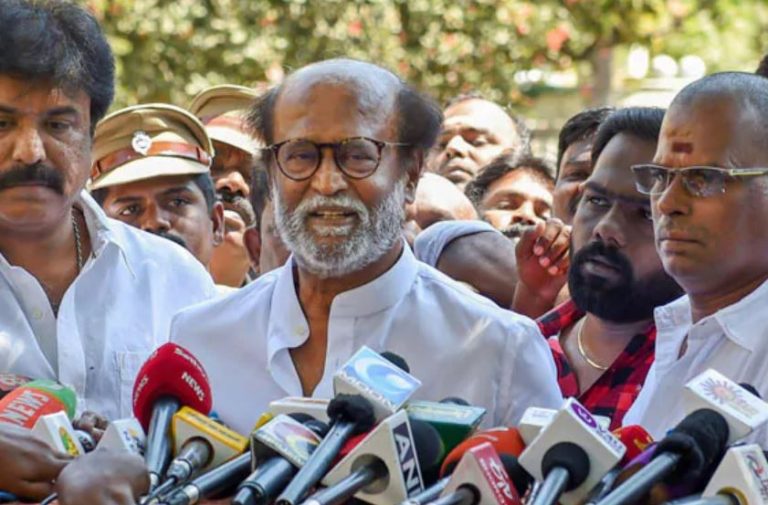
Amidst the brouhaha over the newly introduced Citizenship Amendment Act, the proposed National Register of Citizens (NRC)and National Population Register (NPR), superstar Rajinikanth today put his weight behind Modi government’s decision, asserting that the new Citizenship Law it will not affect Muslims.

As per reports, the Tamil superstar-turned politician said, if the CAA posed any threat to Muslims, he would be the first person to stand up for them.

“Citizenship Amendment Act will not affect any citizen of our country. If it affects Muslims, then I will be the first person to stand up for them, “Rajinikanth said on Wednesday. “How will Muslims who chose to stay back in India following partition be sent out of the country?” Rajinikanth was quoted as saying by news agency ANI.


Calling the support of various religious leaders to the protests ‘very wrong’, Rajinikanth said: “The government has assured that Indian people will have no issues in respect of CAA. Some political parties are instigating people against CAA for their selfish interests.”

Rajinikanth furthered that students protesting against CAA should analyse the issue deeply before getting involved. “Students should analyse the issue deeply before getting into protest. They need to have a word with their professors or elders before getting involved in these protests otherwise, political leaders will try to use them for their own benefit. Also, we will never know how the police will react to a situation. If they file an FIR, the students will lose their life.”

Speaking to reporters in Chennai, Rajinikanth also backed the National Population Register exercise, saying that the drive was ‘very, very essential’. “NPR is a necessity to find out about the outsiders. It has been clarified that NRC has not been formulated yet,” Rajinikanth said also remembering how the Congress-led UPA government had done the exercise in the past.

In December, Rajinikanth had also condemned the violence in various parts of the country over the citizenship law, saying violence and rioting cannot be a way to find a solution to any issue.

“Violence and rioting should not become a way to find a solution for any issue. I request the people of India to stay united and vigilant keeping in mind the nation’s security and welfare,” he had tweeted.

Sri Ram Mandir Tirtha Kshetra: Here is all you need to know about the autonomous trust set up for building the Ram temple in Ayodhya

0

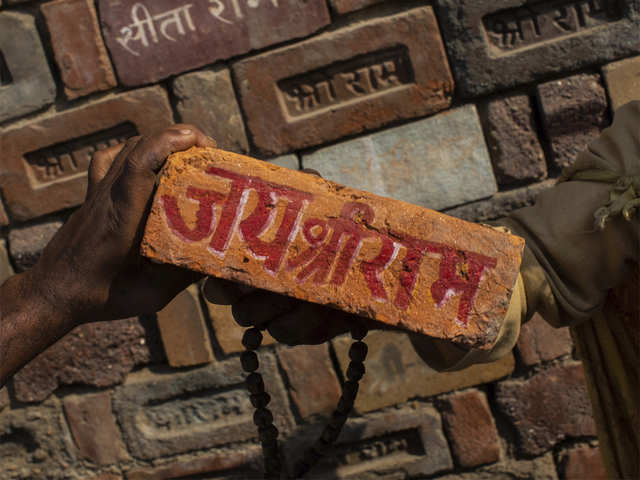
Prime Minister Narendra Modi today announced the setting up of a trust called Sri Ram Janambhoomi Tirtha Kshetra to oversee the construction of the Ram temple in Ayodhya. The PM’s announcement comes four days before the three -month deadline fixed by the Supreme Court to set-up the trust.

Addressing the Lok Sabha, the Prime Minister said, “We have readied a scheme for the development of Ram Temple in Ayodhya. An autonomous trust has been formed, it is called Sri Ram Janambhoomi Tirath Kshetra.”

The entire 67.703 acres of the land will be handed over to the newly formed trust to develop for the benefit of devotees and will be empowered to make all decisions related to building a grand temple at Lord Ram’s birthplace and related matters.

Sri Ram Janambhoomi Tirtha Kshetra, as the Trust is called, will function as an independent body and will have 15 trustees of which 1 will always be from the Dalit community, said Home Minister Amit Shah. Sources say no political party is part of the temple trust.

The Home Minister’s statement comes a little over an hour after Prime Minister Narendra Modi announced in Lok Sabha about the constitution of the trust.

Congratulating PM Modi for the decision that strengthens social harmony, Shah Tweeted: “There will be 15 trustees in the Shri Ram Janmabhoomi Teertha Kshetra Trust out of which one trustee will always be from the Dalit community.”


As confirmed by Supreme Court lawyer Subhendhu Anand, who was one of the members of the team that represented Ram Lalla Virajman, the trust has been registered and the possession has been handed over to Shri K. Parasaran, Sr. Advocate, who will be a Trustee in the newly constituted Trust.

As per reports, the trust has listed advocate Parasaran’s address in Delhi as its address.

It is being reported that the heads of the four peethas established by Adi Shankaracharya will be included as the Sri Ram Janambhoomi Tirtha Kshetra members.

Apart from the four Shankaracharyas, as per a report in Bhaskar.com, Mahant Nritya Gopal Das from Ayodhya, Mahant Suresh Das of Digambar Ani Akhara, Mahant Dinendra Das of Nirmohi Akhara, a Representative from Gorakshpeeth Gorakhpur, a Representative of Udupi Pejawar Math of Karnataka, Om Prakash Singhal from VHP, VHP Vice President Champatarai, late Ashok Singhal’s nephew Salil, Punit Dalmia from the family of the late Vishnuhari Dalmiya, a Dalit representative and a woman representative will also find place amongst the Trustees.

Moreover, the Joint Secretary level officer as the representative of the central government, the DM of Ayodhya as the representative of the state government will also reportedly be also be included in the trust.

Uttar Pradesh CM Yogi Adityanath said that the trust will also be an independent body, capable of making all decisions regarding the construction of the temple.

“Thank you to Modiji for setting up an autonomous trust to build a grand temple at the birthplace of Lord Shri Ram. The ‘Shri Ram Janmabhoomi Teertha Kshetra’ trust will be completely independent and capable of making all decisions related to temple construction. Jai Shree Ram!” Yogi Adityanath tweeted thanking the Narendra Modi government for taking a step closer to building the temple.


“Today is a historic day. The first stone for the construction of Shri Ram Janmabhoomi Temple was laid by Shri Kameshwar Chaupal Ji of Dalit society. Among the 15 members of the ‘Shri Ram Janmabhoomi Tirtha Kshetra’ Trust, one will always be from Dalit society,” Tweeted Yogi Adityanath thanking the Prime Minister for this decision.


Meanwhile, the Uttar Pradesh government had agreed to give five-acres of land to the Sunni Waqf Board as directed by the Supreme Court in the Ayodhya case. UP government spokesperson Shrikant Sharma said the land is in Dhannipur village in Ayodhya on the Lucknow highway, about 18 kilometres from the district headquarters, almost 25 km away from the Ramjanambhoomi complex. The wish of saints to keep the mosque outside the 14-Kosi area of Ayodhya seems to have been met by the Yogi government.

As per reports, the UP government has already issued the allotment letter of the 5-acre land to the Sunni Waqf Board.

Read: Dharma, Deva, Desha: Three phases of Ram Janmabhoomi movement, who decided Babri Masjid had to go and day of reckoning

In a historic judgment on November 9, the Supreme Court had established that the Hindus have a right on the entire 67-acre Ram Janmabhoomi and ordered the construction of a Ram temple by a government trust at the Ram Janmabhoomi site in Ayodhya. It had also granted an alternate 5-acre land to the Muslims to build their Masjid in the Hindu holy town.

As per the November 9 Supreme Court judgment, the central government had been directed to formulate a scheme with necessary provisions for the setting up of trust with a board of trustees to supervise the building of the Ram Temple at the Ram Janmabhoomi site.

The Prime Minister is expected to lay the foundation stone of both the Ram Temple and Ram Statue projects in Ayodhya on Ram Navami on April 2, 2020, and the construction is expected to start soon after.

Earlier, The Vishwa Hindu Parishad had urged the Central Government to adopt the model suggested by the Ram Janmabhoomi Nyas for the proposed Ram Temple in Ayodhya, as this would speed up its construction.

Watch: ‘Afzal tere khoon se inqualab aayega’ slogans raised at an anti-CAA protest in Begusarai

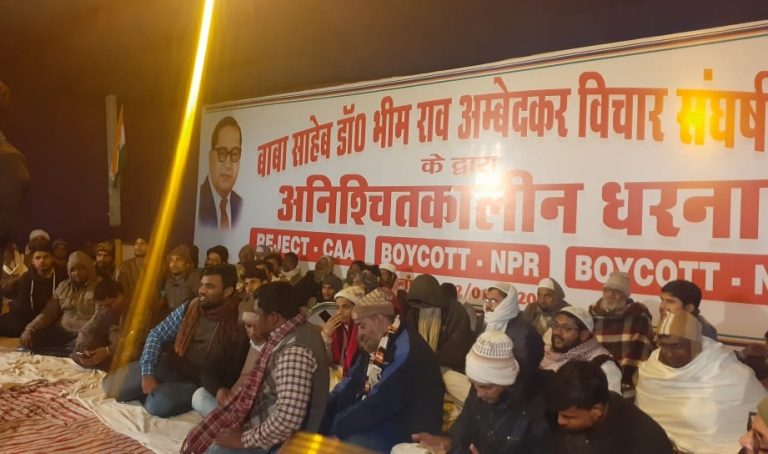
A video has gone viral on social media which shows pro-Afzal Guru slogans being raised at an anti-CAA protest in Bihar’s Begusarai.

In the video, the protestors, at the event organised at Phool Chowk in Lakhminia area of Begusarai district in the state of Bihar, are seen raising various anti-national slogans. “Afzal tere khoon se inqualab aayega” was among the slogans raised by five to seven men on the stage while around 100 women and 30 men repeated the slogan sitting in the audience.

The part of the clip showing the purported slogan being raised was widely shared on Twitter.


In the event, other slogans that were raised were – “JNU tere khoon se inqualab aayega”, “Jamia tere khoon se inqualab aayega”, “AMU tere khoon se inqualab aayega” and “BHU tere khoon se inqualab aayega”, Begusarai edition of Hindi daily Dainik Bhaskar reported on 4th February 2020.

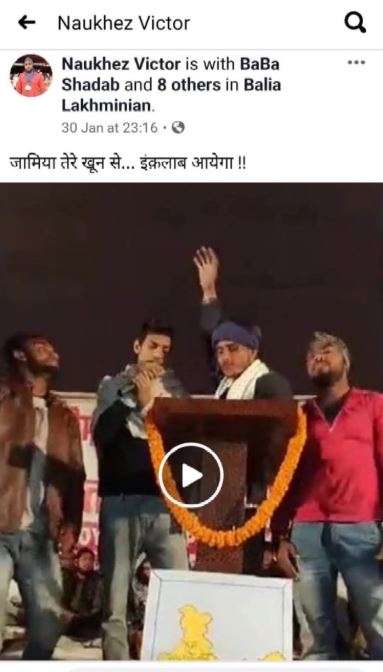
On January 30, a live video from the protest was played from the Facebook account of one Naukhez Victor, which showed the anti-national slogan being raised. The report by Dainik Bhaskar, however, said that the video posted on Facebook was later taken down.

Screenshot of the video posted on Facebook by organisers on January 30 (submitted to the police by Bajrang Dal)

A member of the right-wing organisation Bajrang Dal named Shubham Bhardwaj, who has introduced himself as district convenor of Bajrang Dal, filed a complaint with Begusarai’s Superintendent of Police Awakash Kumar yesterday against the slogans raised at the protest.

According to the complaint, for the last 20-22 days, some people have seen sitting on a dharna against the recently newly introduced Citizenship Amendment Act (CAA) and the proposed National Registrar of Citizens (NRC) at Phool Chowk in Lakhminia area of Begusarai district in the state of Bihar.

The complaint has named five men namely Altaf Rashid, Mohammad Salman Rain, Mohammad Sunny, Mohammad Adil and Mohammad Naukhez. The complainant also submitted a 9-minute 6-second video of the event to the SP.

The SP has, in turn, ordered a probe and entrusted the investigation of the entire case to Ballia DSP Anjani Kumar Singh.

According to the Swarjya report, former Jawaharlal Nehru University students’ union president Kanhaiya Kumar also attended the protest, which is going on for the last 20-22 days, on one of the days.

Meanwhile, the organizers of the event have accused the opposition of making a doctored video viral on social media to discredit the event. Ambedkar Sangharsh Vichar Manch President Md Javed Akhtar said in a press conference that different tactics are being used by the opposition to discredit this movement.

Notably, the Delhi police had booked Kanhaiya Kumar, Umar Khalid, Anirban Bhattacharya and others in a sedition case for raising similar slogans at an event organised in JNU in 2016, supporting terrorist Afzal Guru, a terrorist who had attacked the Indian Parliament.

Allegedly, slogans like ‘Afzal hum sharminda hai, tere kaatil zinda hai” (Afzal we are ashamed that your killers are still alive), and ‘Bandook se lenge Azadi’ (We will snatch freedom from India by the gun) was raised during the event in the JNU campus. Afzal Guru, who had attacked the Parliament was given the death sentence by Indian Courts.

Five Karnataka police officers including 2 IPS officers booked by CBI in the Rs 4000 crore IMA halal investment scam

0

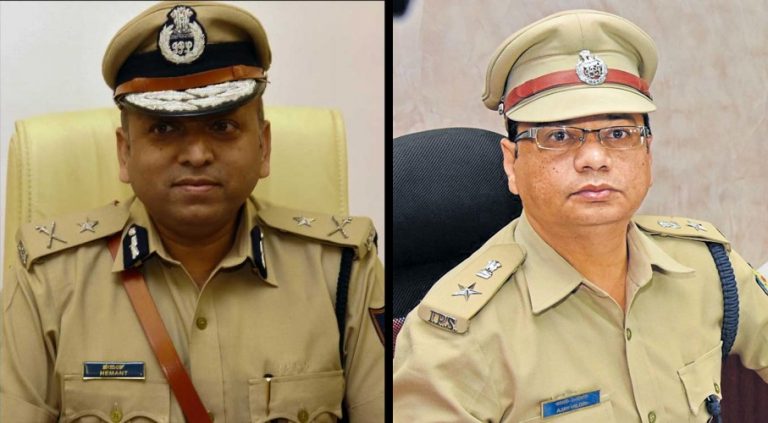
Two Karnataka cadre IPS officers Hemanth Nimbalkar and Ajay Hilori along with three police personnel have been booked by the Central Bureau of Investigation in the Rs 4000 crore IMA scam. They are accused of favouring I Monetary Advisory (IMA) scamster Mansoor Khan in the ponzi scheme scam where more than 50000 people had lost their money.

A case was registered against the Karnataka Police officers after the state government granted approval to investigate the role of both the senior IPS officers. 1998 batch IPS Officer Hemanth Nibalkar is ACP (admin) of the Bengaluru city and Ajay Hilori, a 2008 batch IPS Officer is the Commandant in State reserve police.

The CBI has also booked Gowri Shankar ( sub-inspector with Karnataka Police), EB Sridhara (DSP of CID, Karnataka Police) and M Ramesh (then Inspector with Karnataka police). Apart from these police officials, the CBI also booked Mansoor Khan, chief of IMA and three other office bearers of IMA.

The IMA scam is one of the massive scams to rock the Karnataka state, around 50,000 investors lost their money in this scam. IMA Managing Director Mohammad Mansoor Khan had attracted investors, especially Muslims, by offering an investment scheme that appeared to follow Islamic precepts and provided lucrative returns.

The Special Investigation team affirmed that the investors are defrauded worth INR 4,000 crore. Mansoor khan fled India before the scam broke.

Read- IMA scam: IAS officer arrested on charges of receiving Rs 1.5 crore bribe from ‘halal’ investment group owner

The probe on the IMA scam was conducted under Hemanth Nibalkar. The report submitted by the probe team had given chit to the company stating that was based on the documents and evidence collected. They could not find any corroboration that can show that IMA cheated investors after they promised lucrative returns. The report also stated that the balance sheet of Mansoor Khan and Income Tax Returns of the country were verified.

The probe team led by Hemanth Nibalkar is alleged of deliberate inaction and providing favours to IMA during the investigation.

Puzzled by how a senior officer can give a clean chit to a controversial firm and after a warning by RBI, the state police have directed CID to investigate the matter.

In 2015, an activist had alerted police about the IMA, but he was turned down by the officials. In 2016, despite alerts by RBI the officers had closed the case giving a clean chit stating that the business is being conducted in the purview of the law. Mohammed Mansoor Khan, the main accused in the IMA Ponzi scam, also known as the Halal investment scam, was arrested by the Enforcement Directorate (ED) in New Delhi in July last year.

India’s ambitious Intelligence project NATGRID will be completed by March, to be operational by 2020 end

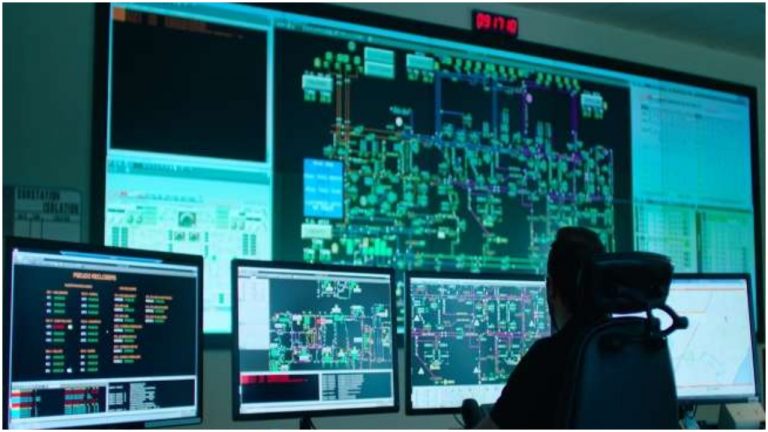
On Wednesday, the Ministry of Home Affairs announced in the Parliament that the much anticipated National Intelligence Grid (NATGRID) Project will be completed by the end of March and will go live by 31st December 2020.

“NATGRID has been created as an IT platform to assist the security and law enforcement agencies for national security. The physical infrastructure of NATGRID Wl be completed by 31 March 2020 and IT solution will go live by 31 December 2020,” said MHA in the parliament.

What is NATGRID?

The National Intelligence Grid or NATGRID is the integrated intelligence grid connecting databases of core security agencies of the Government of India. It collects comprehensive patterns of intelligence that can be readily accessed by intelligence agencies.

NATGRID is a counterterrorism programme, which will use modern technologies like Big Data and various analytics tools to analyse vast amounts of data from key intelligence and enforcement agencies to help track suspected terrorist activities to help prevent attacks.

It will connect, in different phases, data providing organisations and users besides developing a legal structure through which information can be accessed by the law enforcement agencies.

As per a report in The Hindu, NATGRID was conceptualised after the 26/11 Mumbai attacks. It aims to address a vital deficiency of lack of real-time and continuity of information, which was considered to be one of the biggest issues in detecting US terror suspect David Headley’s movement across the country during his multiple visits between 2006 and 2009.

As per a Swarajya report, a master database like NATGRID is especially important in the face of rising Islamic radicalisation and terrorism – the lone-wolf kind, which is hard to predict. The pooled data of various organisations and services in the country will help in identifying, capturing and prosecuting the terrorists and help foil terror plots.

The role:

NATGRID will become a secure centralised database to stream sensitive information from 21 sets of data sources such as banks, credit cards, visa, immigration and train and air travel details, as well as other relevant data from various intelligence agencies.

The database would be accessible to authorised persons from 10 agencies on a case-to-case basis, and only for professional investigations into suspected cases of terrorism. Currently, there are around 70 personnel, drawn from both the government and private sectors, in NATGRID.

In the first phase, 10 user agencies and 21 service providers will be connected, while in later phases about 950 additional organisations will be connected. In subsequent years, over 1,000 additional organisations will be connected.

The combined data shall be accessible by the central agencies namely the Directorate General of Central Excise Intelligence, Central Board of Excise and Customs, Narcotics Control Bureau, Enforcement Directorate, Directorate of Revenue Intelligence, Central Board of Direct Taxes, Financial intelligence unit, Central Bureau of Investigation, the Intelligence Bureau and the Research and Analysis Wing.

An international consulting group named ‘Eurasia Group’ names India under PM Modi as ‘top risk in 2020’. Here is how it it factually incorrect

Ever since Prime Minister Modi returned back to power in 2019, certain western policy influencers and powerful establishments have put considerable efforts to discredit the nationalist government in the country.

In continuance with the trend, an international consulting group named ‘Eurasia Group’ has come up with its latest report in which it has named the Narendra Modi government as the fifth most ‘geopolitical risks’ in 2020.

A report titled “India gets Modi-fied” published by Eurasia Group has made vague claims stating that India’s perception around the globe has taken a hit since Prime Minister Narendra Modi prioritised Hindu nationalist policies over economic reform.

In the report, the authors – Ian Bremmer and Cliff Kupchan have made allegations that Prime Minister Narendra Modi has spent much of his second term on promoting controversial social policies at the expense of an economic agenda. The report went on to make assertions that the impact of such policies will be felt in 2020, with ‘intensified communal and sectarian instability’, as well as foreign policy and economic setbacks. 

The report has not only made unverified claims regarding the historic act of abrogating Article 370, which granted special status temporarily for Jammu and Kashmir but also stated half-truths regarding the National Register of Citizens in Assam.

“They revoked the special status for Jammu and Kashmir and implemented a system to identify illegal immigrants in the northeast, stripping 1.9 million people of citizenship,” the report claimed. “Kashmir is a powder keg, with political leaders still under arrest and internet access cut off,” it noted further.

Targetting the Citizenship Amendment Act, which grants citizenship to the persecuted minorities belonging to six minority communities of the three neighbouring countries – Pakistan, Afghanistan and Bangladesh, the report went on to spread misinformation stating that the Modi government passed a law that, for the first time, makes religion a criterion for migrants from neighbouring countries to formally acquire Indian citizenship. This is categorically untrue as the CAA only fast-tracks Indian citizenship of persecuted religious minorities from three neighbouring Islamic countries. As Government of India today clarified yet again, the legal Muslim immigrants can also be granted citizenship. The CAA is only applicable to persecuted religious minorities in three neighbouring Islamic countries: Pakistan, Bangladesh and Afghanistan.

Holding PM Modi and Home Minister Amit Shah responsible for the alleged ‘sectarian and religious conflicts’ in the country, the report claimed that protests have already spread around India as many citizens feard for the loss of India’s secular identity. 

The report also said that the Modi government will not back down and as the government pursues its new agenda, state-level opposition leaders will directly challenge the central government.

The report further noted, “This focus on the social agenda will also have harmful effects for India’s foreign policy. Its actions on human rights will be under closer scrutiny by many nations, and its reputation will take a hit.”

The report points out the underperformance of the GST and the uncertainty on the fiscal deficit. “The country’s fiscal situation is precarious, as the government faces a ‘widening fiscal deficit’ marked by the underperformance of the goods and services tax,” the author says.

“A weakened economy will, in turn, feed further economic nationalism and protectionism, weighing on India’s troubled course in 2020”, it claimed.

Unsurprisingly, the report has too many factual inaccuracies.

Fact check on Eurasia Group’s claims on Kashmir:

The report stated that the decision to revoke Article 370 – a special status that was granted to Jammu and Kashmir as one of the potential reasons for the sectarian and religious conflicts in the country. The report also claimed that political leaders are still under arrest and internet access cut off. However, the claims are untrue.

It is important to note that the decision to revoke the special status of the Kashmir is an internal matter of the country. The democratically elected government of a sovereign country has every right to take any action that is aligned in the interest of the country.

Further, the Modi government has followed all the principles that are enshrined in the constitution to scrap the controversial special status that was blatantly discriminatory in nature. The controversial Article 370 was in fact responsible for the long age of violence and bloodshed in the valley.

Article 370 was a temporary provision that was part of the original constitution that India had adopted in 1950. This was part of Part XXI of the constitution, which is the Temporary and Transitional provisions. This means the article 370 was deemed to be a temporary provision from the beginning. Hence, the Eurasia group cannot lament over the fact that the Indian government removed one of the temporary provisions in the constitution.

Secondly, the report claims that the political leaders have been arrested and the internet has been cut-off in the region. The claims are untrue as not all political leaders have been arrested. The government of India has taken a few precautionary measures during the abrogation of Article 370 to detain a few controversial leaders, who have a history of stoking chaos in the valley. The restrictions on the internet were also temporary.

As the union territory of Jammu and Kashmir is at near-normal, the restrictions on internet and communications have been eased and most of the political leaders apart from a few influential leaders who could anarchy on the streets have been kept under government accommodation.

Eurasia’s untrue claims on Assam NRC:

The report also claims that the Modi government implemented a system to identify illegal immigrants in the northeast, stripping 1.9 million people of citizenship. However, this is an out-and-out lie being peddled by the so-called Eurasia Group without even comprehending the facts pertaining to the implementation of the National Register of Citizens in Assam.

The most basic fact of the matter that the report missed was the exercise of NRC in Assam was not done by the Modi government rather it was an exercise that was mandated by the Supreme Court. It is in fact the Congress government in 1985 under the leadership of Rajiv Gandhi which initiated such a process to prepare an NRC to curb the problem of infiltration across the border. The whole process was to identify the genuine Indian citizens in the state of Assam.

Further, the Modi government has no role at all in the entire process of the NRC in Assam as the process of updating Assam’s part of NRC started in 2013 was initiated by the Supreme Court of India. In fact, the Supreme Court bench headed by the then Chief Justice of India Ranjan Gogoi and Rohinton Fali Nariman monitored the process continuously.

Misleading reportage on the Citizenship Amendment Act:

The report asserted that the Modi government has also passed a law that made religion a criterion for migrants from neighbouring countries to formally acquire Indian citizenship.

In reality, what the report deliberately ignores to state is that it is not religion the sole criteria for granting citizenship to the minorities of the three neighbouring countries but it is the ‘religious persecution’ that forms the basis of providing citizenship in the country.

Further, the law passed by the Indian parliament does not automatically provide citizenship to any individual or minorities of the three neighbouring countries. The law only provides citizenship for the minorities who are persecuted in the three neighbouring countries and for people who are already residing in India before December 31, 2014. Further, the ‘persecuted minorities’ who have been already residing in the country must also prove their claims of being persecuted in the neighbouring countries.

Further, CAA is a special one-time measure for the religious minorities who have already come to India after facing persecution in the three specified countries. The amendment does not cancel the existing naturalisation laws.

It is an extremely dishonest act by Eurasia group to portray that the new Citizenship Amendment Act is discriminatory along religious lines without even understanding the details of the legislation.


Delhi HC refuses to set aside Patiala Court’s stay on execution; grants 7 days to the convicts to avail their legal remedies

0

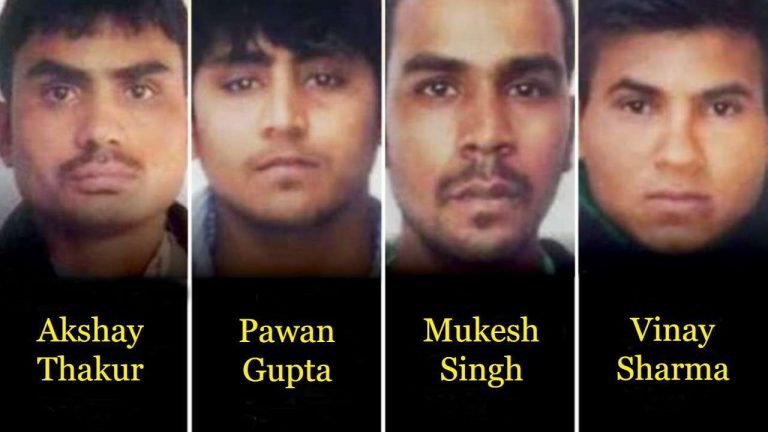
The Delhi High Court on Wednesday, February 5, declined to interfere with the Patiala court’s order staying the execution of the Nirbhaya convicts and maintained that death warrants of all the convicts had to be executed at the same time.


The court has also provided 7 days of time to the convict to exercise all the legal remedies at their disposal, following which it has directed the authorities to act in accordance with the law.

Hearing the petition filed by the MHA challenging the stay on execution, the court observed that the 4 convicts cannot be executed separately. However, the court did not agree with the trial court’s assessment that pendency of mercy petition of even one convict is ground to postpone the executions. “Since their fate is decided by the same order up to the Supreme Court, they should be executed together,” the court said.

Read: Watch: Kangana Ranaut’s befitting reply to Indira Jaising’s ‘forgiveness’ advice to Nirbhaya’s mother

In his judgement, justice Suresh Kumar Kait also admitted that all the convicts employed delaying tactics to evade the punishment for as long as they could. “I have no hesitation in stating that all the convicts waited, for reasons best known to them, to file their review petitions after more than 150 days. Akshay filed his review after more than 900 days. Convicts have adopted delayed tactics. So I hereby direct all the convicts to exercise their legal remedies within 7 days, after which the court expects the authorities to act pursuant to the law,” the court order said.

Of the four convicts, Mukesh Singh has exhausted all his legal remedies, including mercy petition and the challenge against the rejection of mercy. Another convict Vinay Sharma’s mercy petition was rejected by the President on Saturday. The third convict, Akshay Kumar Thakur filed his mercy petition on Saturday while the fourth convict Pawan Gupta is yet to file a curative petition in SC and a mercy plea to the President.