Home Blog Page 6785

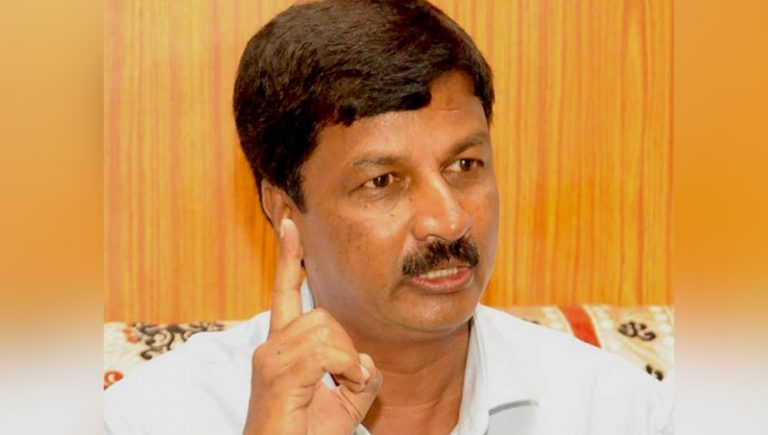
Karnataka: Amidst the rumours of meeting Amit Shah, Congress strongman Ramesh Jarkiholi remains incommunicado

After being axed from the cabinet, Senior Congress leader Ramesh Jarkiholi appears to be giving a hard time for the leaders of the Congress-JDS coalition, as the Congress strongman has kept himself isolated from the party leaders amidst the rumours of him joining the BJP.

Ramesh Jarkiholi, who was disgruntled after being dropped from the HD Kumaraswamy led cabinet last week, has reportedly met BJP President Amit Shah stoking fears in the Congress-JDS camp. Ramesh Jarkiholi reportedly has met senior leaders BJP leaders on Saturday night and he has assured the BJP leaders of bringing at least 12-14 MLAs required from the ruling coalition to bring down the H.D. Kumaraswamy government.

According to the reports, BJP state president BS Yeddyurappa had extended his stay in New Delhi which has led to speculation of BSY arranging a meeting between Ramesh and BJP president Amit Shah to discuss the possible formation of BJP government in the state. It is also being reported that Ramesh Jarkiholi may join the party and contest the Lok Sabha polls on a BJP ticket.

Jarkiholi brothers, who belong to Valmiki community belong to one of the strongest political families of the state. Three out of five brothers are elected MLAs from different political parties and carries huge political clout across the state with a guaranteed cabinet post for one of the brothers. The Jarkiholi brothers representing Belagavi district are considered to be the kingmakers in the state politics because of their ability to control various other leaders of the North Karnataka. Belagavi itself has 18 seats, second next to Bengaluru and over the years Jarkiholi family have patronised many leaders belonging to Belagavi and surrounding areas making them the most influential in the state politics.

Apart from this, the Congress-JDS coalition government has been facing heat from Dalit groups after it removed Deputy CM Parameshwar from Home Ministry to appoint MB Patil, a Lingayat as the new Home Minister. CM HD Kumaraswamy has been battling severe criticism over his failure to implement loan waiver promised before the polls, which has already consumed two lives in the state.

Meanwhile, senior Congress leaders like Ramalinga Reddy has been disenchanted with the coalition government after he was not included in the cabinet. Amidst all these events, the Chief Minister of Karnataka has left the country to enjoy his vacation in Singapore on the occasion of New Year. It has created a lot of anger in the public as CM Kumaraswamy has left the state to enjoy a holiday at a time when the state is suffering from severe drought.

Chief Minister HD Kumaraswamy has also been facing the wrath of the public after he had ordered for an ‘encounter‘ of the accused involved in the murder of a Janata Dal-Secular(JDS) party worker. A complaint has also been registered by an activist against the Chief Minister for ordering to ‘mercilessly kill’ an accused.

Rajasthan: Congress minister declares her first duty is towards her caste

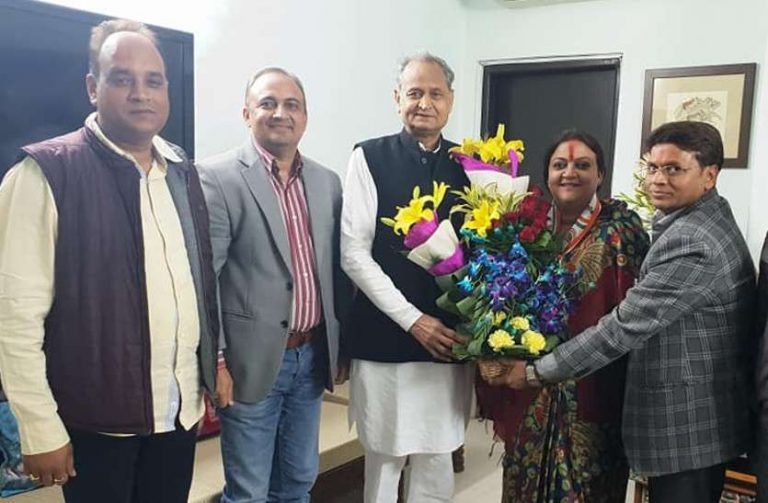
Mamta Bhupesh, the recently sworn in women and child development minister in Rajasthan’s Congress government has declared in a public event that her first duty will be towards her caste.


As per reports, Mamta Bhupesh, speaking in the Bairva Divas event organised in Alwar’s Raini town on Monday, reportedly stated that her first duty will be towards her caste and then towards the larger society. Though she did include that she intends to work for everyone, the assertion by a minister that her first priority is her caste has raised some eyebrows among the masses.

She also added that she will not show her back when the people need her. She later reportedly stated that she meant that every resident of Rajasthan lives a dignified life and she wants everyone to get benefitted.

It is notable here that Bhupesh is the only female minister in the recently formed Congress government led by Ashok Gehlot.

Casteism has been a choice tool for Congress leaders. Just before the recent assembly elections, Congress leader in Rajasthan and former minister CP Joshi had stirred a controversy stating that PM Narendra Modi is from a lower caste and he does not know anything about Hinduism.

Shatrughan Sinha’s VIP facility stands withdrawn from Patna Airport

BJP MP from Patna Sahib Lok Sabha Shatrughan Sinha’s VIP facility stands withdrawn from Patna Airport. Sinha will no longer be able to bring his own car to the tarmac and will be subjected to regular frisking and security checks.

According to Jai Prakash Narayan Airport Director Rajendra Singh Lahauriya, the period for which the facilities were extended to Sinha ended in June this year, following which no new orders were issued.

BJP rebel leader Shatrughan Sinha, who has been attacking the BJP and Prime Minister Narendra Modi recently shared the stage with another BJP rebel leader Yashwant Sinha at an Aam Aadmi Party rally in Noida. Kejriwal also said that Shatrughan Sinha is going to contest elections, but did not mention which constituency he will fight from and which party is offering him a ticket.

Earlier too, Shatrughan Sinha had shared the stage with AAP leaders where BJP workers showed him black flags. The incident had sparked rumours that he may contest the upcoming 2019 general elections on AAP ticket.

It is widely speculated that Sinha may not be given a ticket to contest the upcoming Lok Sabha elections by the BJP.

Decline in gross NPA ratio of commercial banks, may decline further, says RBI in Financial Stability Report

Indicating a recovery of the banking sector in the country, the RBI in its Financial Stability Report (FSR) has stated that the non-performing assets of commercial banks have declined in the current fiscal year and suggested that further improvement in banks’ asset quality would be made in the next fiscal.

The Reserve Bank of India today released the eighteenth issue of the biannual Financial Stability Report (FSR). Analysing the systemic risks in the financial system, the RBI has said that country’s financial system remains stable and the banking sector is expected to show the signs of improvement despite the change in the global economic environment and the other emerging trends in the financial sector.

The asset quality of banks showed an improvement with the gross non-performing assets (GNPA) ratio of SCBs declining from 11.5 per cent in March 2018 to 10.8 per cent in September 2018, RBI stated in its FSR. The RBI also expects a decline in GNPA ratio from 10.8 per cent in September 2018 to 10.3 per cent in March 2019.

“After a prolonged period of stress, the banking sector appears to be on course to recovery as a load of impaired assets recedes; the first half-yearly decline in gross NPA ratio since September 2015 and improving provision coverage ratio, being positive signals,” RBI Governor Shaktikanta Das stated in the foreword to the report.

RBI governor Das has further added that stress test results further indicate an improvement in NPA ratio but its current level remains still high for comfort. He further suggested that there should be more emphasis on ‘diligent, prudent and sound risk management’ practices.

Hailing the Insolvency and Bankruptcy Code (IBC), Das has said that the reform has bridged an important institutional gap to strengthen the much-needed credit discipline. He expressed confidence in resolving specific cases which are lagging behind expected timelines. A time-bound resolution of impaired assets will go a long way in unclogging the credit pipeline thus improving the allocative efficiency in the economy, said Shaktikanta Das.

Will withdraw outside support unless cases dropped in Rajasthan and Madhya Pradesh: BSP threatens Congress

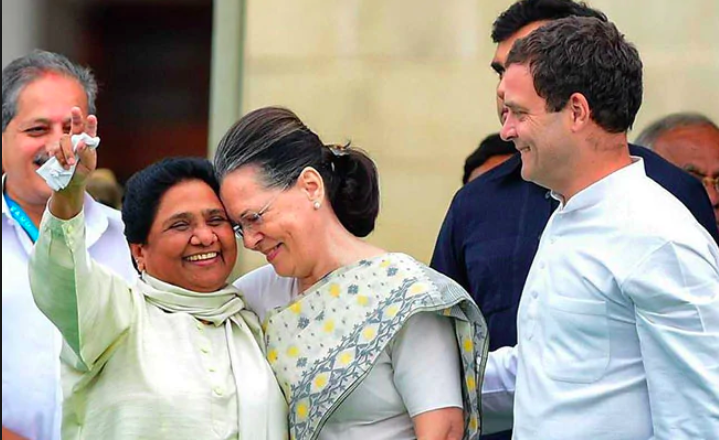
As per ANI, Mayawati’s Bahujan Samaj Party (BSP) has demanded that cases filed against its members for the Bharat Bandh in April in Rajasthan and Madhya Pradesh be withdrawn or it will reconsider its outside support to the newly elected Congress governments in the states.


Earlier, it was reported that the Congress government in Madhya Pradesh will withdraw cases against its own cadre which were called “political vendetta”. “The State government will withdraw cases lodged by the previous BJP government on Congress workers. The government will also implement the journalist protection act in the near future,” Minister of Law and Legal Affairs P.C. Sharma had said.

There has been some friction between the two political parties and the Congress party has found it difficult to reach an agreement regarding a Mahagathbandhan ahead of 2019 General Elections.  We had reported earlier that the BSP had made its intentions clear that it will contest all seats in Madhya Pradesh next year.

Former Bihar CM Jitan Ram Manjhi’s party, Hindustani Awam Morcha (HAM) had also threatened the Mahagathbandhan that it will boycott the elections if their demands are not met. Samajwadi Party supremo Akhilesh Yadav had also expressed his dissatisfaction with the manner in which the Congress party was conducting itself.

The latest demand by the BSP to have cases against its members dropped is a further instance of the power play the party is playing. The party realizes Congress’ weak position ahead of Lok Sabha elections next year and it’s bargaining for more concessions.

The ISIS module accused in India find sympathy in Lutyens’ Media

0

Take time out to read the Indian Express and The Hindu of December 28, 2018. Instead of disgust and horror for the 10 accused arrested by the National Investigation Agency (NIA) on charges of an imminent Islamic State-module inspired operation, the report in these two national dailies could make you cry and hug them in sympathy.

Indian Express, in its second lead on the front page, shows NIA as nothing better than bumbling idiots—a la Inspector Clouseau of Pink Panther movies –through the reactions it managed from the relatives of the accused. So the main accused, Mufti Suhail, in the words of his relatives, was “unlikely” to teach in a madrasa as NIA made him out to be. In the same breath, the newspaper claims that none of Suhail’s relatives and neighbours in Amroha knew much about him since he shifted from Delhi only a month ago. Why quote someone who knows nothing about the subject? Why go to a Doctor of Literature (DLit) when you are suffering from a rectum disorder?

The newspaper then quotes the elder brother of an “accomplice” of Suhail who has also been arrested. The elder brother of Mohammad Irshad says the latter has been arrested just because Suhail’s number was in his mobile. So NIA, for god’s sake, shut up your assertion that Irshad, an autorickshaw driver, was helping Suhail in hideouts to keep the explosives and bomb materials. The man (Suhail) about whom nobody in Amroha knows a thing, has his number with a local autorickshaw-driver but that doesn’t get the newspaper’s antennae up.

And by the way, did the newspaper stop to question itself why a man who had nothing to do with Amroha, who had lived all his adult life in Delhi, was doing in the small town? Why he had rented a house? If he didn’t teach in a madrasa, what really he wanted to do in Amroha where he interacted with no one? Express could’ve asked NIA to name the specific madrasa where Suhail was teaching on the Hakim Mahtabuddin Hashmi Road in Amroha. It could’ve said that NIA hasn’t replied to its question. But no, Sohail and Irshad are given a “clean chit” in the eyes of the readers, through their relatives.

The newspaper supplies the same “whitewash” to most other accused courtesy their relatives. Some were “God-fearing”; some “scared even of monkeys”; some were just working in mosques and not “Imam” of a Jama Masjid in Baksar, Hapur as NIA claimed accused Saqib Iftekhar to be.

The biggest outrage the newspaper has reserved is for NIA’s claim to have recovered rocket-launcher in its mop-up operations. It quotes the father of Raees Ahmed who’s been arrested on the charges for keeping explosives and rocket-launchers in his welding shop: “It’s nothing but a hydraulic jack used in trolleys…The NIA has confused it for the rocket launcher.”

Thus the reputation of NIA, India’s foremost Central Counter-Terrorism Law Enforcement Agency, lies tattered in the eyes of the newspaper’s readers. Never mind that NIA has an enviable conviction percentage of 94.4% in trials. Never mind the extensive swoop which NIA enacted in one go on 17 locations, making 10 arrests related to terrorism planned against political leaders, security and government installations. Or that the raids yielded a dozen pistols, 150 rounds of ammunition, 112 alarm clocks, 91 mobile phones and 134 SIM cards and lakhs of cash. About 25 kg of bomb-making materials for Improvised Explosive Devices (IED) has been seized from the operations. All the readers are left with is an eye-watering account on the innocent, falsely-accused, scared-to-the-bones youths who are now under arrest on terrorism charges.

Let’s turn our attention now to The Hindu which has multiple stories on arrested accused running beyond its front page.  Just take note on these multi-column headlines before we delve into its’ contents: “I believe my son is innocent”; “Sleuths took away inverter batteries, circuits”; “Have more Hindus as friends than Muslims.” Have more Hindu friends than Muslims? I mean what this communal headline has to do with charges of terrorism? So a thousand Hindu followers on Facebook is good enough a character certificate if you’re an accused terrorist?

You have just been told through Indian Express that the “rocket-launchers” were actually “hydraulic jacks” ( in the words of the father of accused Raees Ahmed). The Hindu has another take on it. The counsel for the accused, M.S. Khan says the supposed “rocket-launchers” were actually a tractor’s power nozzles. (Come on, your father and the council. Please be on the same page. Could it be that the bottle through which we launch “rocket fire-cracker” during Deepawali is the one NIA is mistaking for “rocket-launchers?”).

It’s scary the support and whitewashing the dangers to our society receive from those who have access to our ears and mind. So Burhan Wani was the son of a school-teacher; the Bhima-Koregaon activists arrested were not urban-naxals but actually the voice of freedom, equality and dignity in society (never mind the honourable courts keep siding with the police and investigating agencies on the matter). While these propagandists deny the evidence in plain eyesight, they lose little time in dubbing an unfortunate murder—like the one of Gauri Lankesh—as the work of right-wingers even before the agencies have got down to work.

What’s the message that’s being conveyed to these terror tools: Before you start feeling guilty and sheepish, you could flash these newspapers to your detractors about the “frame-up” that’s being perpetrated by the Indian state through its agencies against Muslims. Feel self-justified and triumphant. Or carry a sense of perpetual victimization.

It definitely raises questions why our newspapers are evoking sympathy when the issue is as grave as the advent of Islamic State-like activity on our land which could cause mayhem. What else are family and relatives supposed to say about those arrested on charges of terrorism? Do give space to them but the humane touch must be balanced with sobering reality. Who gains if India loses is a logical puzzle a reader is left with.

Glorifying Aurangzeb and forgetting Guru Tegh Bahadur: The dangers of losing our identity

It is almost surprising that the anniversary of Guru Tegh Bahadur’s martyrdom came and went with an eerie silence, without creating so much as a whiff as opposed to the stir that can be usually seen on, say, anniversaries of prominent politicians’ assassinations. I say ‘almost’, because after all, whether one would feel surprised by such oversight or not depends on which narrative of Indian history one swears by, right? ‘Surprising’, as a qualifier of the unfortunate fact stated above, would be contested and hotly debated by many Indians in our present-day discourses. Hence other qualifiers like ‘almost’ become indispensable when one decides to make an observation about the current behaviour of the mainstream, especially English, media regarding its coverage of things that are predicated on the past – even on such crucial junctures of the course of the Indic Civilisation’s history as this. (To be fair, let us put on record that some Hindi newspapers passingly mentioned the anniversary.)

But the present exercise makes no mystery of its stand on the issue. By using yet another qualifier, viz. ‘unfortunate’, in classifying the fact of shrouding the ninth Guru’s martyrdom with ‘eerie silence’, we think we have made it sufficiently clear which side of the narrative we are on.

Characterisation of strange, surprising or hilarious things as strange, surprising or hilarious apparently creates some serious confusion in the minds of those who have to bear the brunt of getting uprooted from their soil. Not only do such individuals express cynicism about their ancestry, they even go so far as to question the tangibility of the very earth they have been standing upon all these years. But figurative expressions and euphemisms can take us only so far, and thus we are forced to reiterate a (rather short) primer on the pressing need for thorough decolonisation of historiography before we can get to the subject at hand.

Confusions of the sort indicated above are of course to be expected as long as one lives the reality of a self-doubting (and often self-loathing) republic which, at the time of its modern, disfigured, and traumatised caesarean delivery, had tried its best to pretend that it comes out with a ‘clean slate’ as far as its past was concerned. Its leaders and its institutions tried to be rid of the obvious open wounds that had been inflicted upon it by invaders and fanatic murderous cults. That sort of exercise inevitably leads to distortion of facts as revealed to those who have lived those experiences of invasion, plunder, desecration and genocide. Instead of listening to and speaking from the experience of the persecuted, the sanitizers attempted to instil guilt into their psyche – guilt for persisting to live with their uniqueness, guilt for having an obstinate survival instinct, guilt for not allowing themselves to be assimilated to the cult of the universal homogeneity.

And thus, for its ‘official’ account of history, the new-born republic had readily embraced a historical narrative that was manufactured by the very people who had sought to conquer, crush and obliterate the civilisation of which it was but a mutilated fragment. Of course, that narrative was conveniently sanitised of aberrations so as to brush all such historical events, along with their old and new narrations, under the carpet that held the potential to embarrass the inexplicably self-destructive political programme of the regime of the time. This is why figures such as A.L. Basham and D.D. Kosambi became luminaries of Indian historiography, while an R.C. Majumdar or a Will Durant was treated like an academic pariah, their books pushed out of the reading list of university courses in Indian History.  Perhaps the only explanation for such suicidal narrative-building programme is that it sought to accomplish the “unfinished agenda of the partition” of the Indian Subcontinent in a roundabout, long-term manner. The sad truth is that the programme has so far been largely successful. ‘Sad’: there you have another contentious qualifier.

Why would Guru Tegh Bahadur’s martyrdom qualify as a crucial juncture in the course of the Indic Civilizational history? For several reasons; but primarily because it was the one event which truly signalled the beginning of the end of the high and mighty Mughal imperialism. Some of the other equally significant reasons for considering the events of this fateful day in the winter of 1675 as far-reaching are as follows: it was a turning point in the sociocultural history of a most illustrious Indic community, viz. the Sikh community, which stands out in the early modern history of the Indian Subcontinent on account of its unparalleled sacrifices and an empire swiftly built on those sacrifices.

Guru Tegh Bahadur happened to be the ninth, i.e. the penultimate guru of the Sikh people. In his time he was the spiritual guide for the Sikh community and a father figure rolled into one, someone who was approached by people from not just the Sikh community but also from other Indic communities for counsel and help. One needs to keep in mind that this was a particularly difficult period for all Indic communities – the people of dharma – as they were being mercilessly persecuted by the fanatic Mughal emperor Aurangzeb, who took sadistic pleasure in desecrating and destroying Hindu temples. The expression ‘people of dharma’ is being used to refer to Hindus, Buddhists, Jains and Sikhs: communities whose worldviews share a considerable amount of common ground, often fundamentally so, and not just in their particulars. Anyway, the Sikh tradition informs us that it was Guru Tegh Bahadur’s nine-year-old son Gobind – who would soon be forced by the tragic but paradigmatic turn of events to assume the role of the tenth Guru – counselled his father to make the supreme sacrifice that was needed to defend the people of dharma. That child would eventually become Guru Gobind Singh, the tenth Guru of the Sikh people, and more than that, a symbol of resistance against Islamic fanaticism during the Mughal era. He would lead the charge against the atrocious, tyrannical Mughal Empire on behalf of the people of dharma. But that is a saga that needs telling on another occasion. Let’s get our focus back on the ninth Guru.

Here’s an exercise in soul-searching for ourselves: let us try fathoming just how shameful it is for most people in India, especially those belonging to the various aforementioned Indic communities, to forget someone like Guru Tegh Bahadur on that day of the year when he sacrificed his life so that the people of dharma may survive with dignity and freedom. It is like forgetting one’s father who had to lay down his life to ensure a continued dignified existence for his children. Actually, it is worse – it is equivalent to the egregious act of a denial of the existance one’s late father, turning a blind eye to his memorial and not honouring his sacrifice for the children. That too, for the purpose of appeasing the same bigotry that had such a father slaughtered in the first place – that murdered him in the most undignified of manners for not capitulating to its tyranny; to ensure that the ‘tender’ feelings of those who continue to idolize the Mughal tyrant Aurangzeb are unhurt. Such is the disgraceful misfortune of this republic, which should have been a proud torch-bearer of the great Indic Civilisation instead of being an utter sycophant of tyrannical bigotry it presently is, that it cowers in fear and shame from uttering the name of the very father who had laid down his precious (precious on more than one account – a father as well as a holy man) life to protect his children; the father who had shed his mortal coil so that it can cover his children in a shroud of protection, creating a powerful shield of spiritual force and fatherly affection that may defend his children and their holy habitat from the blows of a barbarous usurper.

What was demanded of the ninth and penultimate Guru? That he yield to Aurangzeb’s demand of embracing Islam. The fanatic tyrant specifically demanded him to get converted to Islam because he was convinced that once the famed Guru of Sikhs yields to his unjust demand, his disciples and devotees who had so far been living safely under the Guru’s spiritual and paternal protection would follow suit, for the Guru was indeed a shield of Hind and Hindus – a holy figure who guarded Hind and its inhabitants from all external forces trying to disrupt dharma. Thus, in Aurangzeb’s estimation, the conversion of Guru Tegh Bahadur – his capitulation before Islam – would hasten the Islamization of Hind, and in all probability he was correct.

That Aurangzeb was correct was proven by the martyrdom of Guru Tegh Bahadur, but ironically in inverted order of things. The Guru did not bow down to the pressure and tyranny of the fanatical Mughal emperor, instead, he unflinchingly gave his head. This singular act of the Guru highlighted that the best of the people of dharma would not surrender before non-dharmic tyranny, and it also ensured that the common people of dharma would not have to give in to the Mughal tyrant’s zealous project of proselytization. The Guru not capitulating before the supposedly one true religion meant Aurangzeb’s work would only get tougher. Indeed Aurangzeb had to go to his grave with his dream of Islamizing Hind – a dream he possibly borrowed from the Hadith of “Ghazwatul Hind” – remains largely unfulfilled. Guru Tegh Bahadur had succeeded in protecting dharma in its own land, that of Hind. And thus the Guru became known as Hindi Di Chadar or The Shield of India.

American philosopher Willard Van Orman Quine had once said: “No entity without identity”. This slogan, arising out of investigations into the metaphysics of ‘Being’, is perfectly applicable to our case. As far as the dignified and free existence of Hindus (and all the other Indic communities) is concerned, they can rest assured that there is no true existence for them unless they hold on to their identity, which is unique. Where does one derive their identity from? They may derive it from many sources, but first and foremost it is derived from their parents’, from their long-gone late ancestors’ names and deeds. Sometimes some of those names may reek of ignominy, sometimes some of the deeds of our ancestors may put us to shame. But at most other times, their names and deeds stand for affection, compassion and heroic glory. If nothing else, the very fact of one’s sheer existence speaks volumes of one’s ancestors’ singular achievement in their struggle for survival and the even harder struggle for ensuring the survival of fragile future generations; of how they faced all odds to ensure that their descendants may live in the unfamiliar times to come. That existence is validated mainly by one’s identity derived from past generations and their memory. This is why people create elaborate genealogies, descriptions of their family tree, and sagas of origin, movement and flourishing. As with the individual, so with the nation. The nation creates its own saga of its great victory over natural and supernatural odds, singing the glory of its forefathers and mothers, and oftentimes they even derive the nation’s name from one such illustrious father. So has been the case with Bhāratavarṣa– the land of the children of the blessed Emperor Bharata.

In the case of Hindus and the other Indic communities, the names of their ancestors are hallowed not only because these Indic communities have managed to survive, with their uniqueness more or less intact, up to this point in time against great odds, but because those ancestors had lived heroically and died heroically. The Indic communities have more reason than one to be proud of their heritage, to bask in the glory of their illustrious ancestors – so much so that that glory outweighs any instance of interruption by the inglorious episodes.

It is of little doubt that an individual, who is hesitant of taking her father’s name in solemn remembrance of the action of laying down his life for his children’s sake, is in denial of her own identity. In other words, she is depriving herself of her identity, which is her most natural birthright – an inheritance that no one could possibly rob her off, except for herself. Through that self-destructive, self-denying process, she ends up being a person without an identity. Worse, she loses the personhood, too, for complete personhood implies free agency. As soon as one foregoes her identity, a nihilistic void is created in and around that individual. Another stronger entity may then find it easy to step in and fill that void; and drive the former individual with the new, different and replaced outside agency, essentially turning the individual into a slave. That is the danger of losing one’s identity, which is most intimately predicated upon memory. Wilfully turning one’s back to subjective as well as collective memory only helps in corroding the basis of identity. And, to requote Quine, no entity without identity.


Bhima Koregaon anniversary: Police tighten security, 5000 personnel deployed

0

The Mumbai and Pune police have tightened security as lakhs of Dalits will celebrate the 201st anniversary of the historic Bhima Koregaon battle on January 1, 2019. Amidst this heavy security, there have been reports that Maharashtra police have seized live cartridges and other weapons near Thane.

Keeping the 2018 clashes in mind, about 5,000 police personnel have been deployed in and around Bhima-Koregaon, to maintain the security. Besides, companies of State Reserve Police Force, over 1200 Home Guards are also deployed. Social media is also being monitored.

Last year, the Dalit groups had organised ‘Elgaar Parishad’ on December 31 at Shaniwarwada in Pune to commemorate the 200th anniversary of Bhima Koregaon battle.

This was an event to celebrate the victory of the British East India Company over an army led by Peshwa Baji Rao II of the Maratha empire. 500 Dalit Mahar soldiers had participated in that battle and in the later years it has been propagated as a symbol of ‘Dalit victory over Brahmin Peshwas’.

However, last year this event was marred by serious violence in the Pune district, which resulted in the death of one person, leaving several injured.

Owing to this, the Pune rural police have taken preventive action against 1211 persons under Section 144 of the Criminal Procedure Code (CrPC) of 1973, for providing a safe and secure environment for lakhs of Dalits who are going to visit the victory memorial at Bhima Koregaon on January 1.

Sandip Patil, Pune Superintendent of Police, said that secret cameras embedded in helmets and kept in pockets of the policemen will be used to track down miscreants as a part of heightened security measures around Bhima Koregaon.

Bhim Army president, Chandrashekar Azad, has been detained and has been banned from addressing public meetings in the two cities. Azad has termed it an “undeclared emergency”.

Deccan Herald quoted NCP MLA, Dr Jitendra Ahwad, as saying, “What the government has done is wrong. Azad was prevented even from visiting Chaityabhoomi.”

On the other hand, rural police in Pune has taken a call on not allowing Shiv Prathistan founder, Manohar Bhide and Samantha Hindu Aghadi founder, Milind Ekbote to enter the villages for the next ten days.

A special team of Maharashtra Police has been investigating the Elgar Parishad and the persons behind the violence that took place last year. The police had alleged that the Elgar Parishad had incited violence that gripped the city in the following days.

The Pune Police in a nation-wide crackdown, had raided houses of eight individuals with suspected Maoist links in connection with the Elgaar Parishad and arrested four ‘Urban Naxals’ along with Delhi-based Gautam Navlakha on August 28 under sections of the Unlawful Activities Prevention Act (UAPA) and IPC in the Elgaar Parishad case, alleging that they were part of a larger conspiracy of the banned CPI-Maoist to overthrow the Indian government.

The alleged ‘Urban Naxals’ arrested by the police were reportedly involved in inciting violence in Bhima-Koregaon area on January 1, 2018.

As 2018 comes to an end, here is a reminder of the top 10 lies spread by the media

As 2018 comes to an end, we bring you the yearly roundup of a subject close to our hearts at OpIndia: media lies. This year as well the mainstream media continued to peddle lies and fake narratives even as celebrity journalists showed how their IQ is lower than Delhi’s winter temperature. Topping the list is NDTV (no surprises!).

1. NDTV changed its headline after their dishonesty was caught on Twitter

On 20th November, NDTV had claimed that a BJP leader, Gyan Dev Ahuja was caught distributing money at a rally and was charged with violating the poll code. However, Ahuja had already quit being a BJP member after he was denied a ticket in the Rajasthan Assembly elections. Once the flaw was pointed out, NDTV changed the headline to describe Ahuja as ‘Ex-BJP lawmaker’. But then, almost as if NDTV was acting as Nostradamus, Ahuja ‘rejoined’ BJP three days later on 23rd November. He was also appointed state’s vice president for the BJP. You just can’t make such stuff up.

2. The truth about the origins of Children’s Day

We have grown up believing that Children’s Day is celebrated on 14th November on Jawaharlal Nehru’s birthday as a tribute to him. The popular narrative being he loved children and hence a day to honour him. Except, the real story is far from what media wants us to believe. “Baal Divas” is inspired by “Flag Day”, Queen Elizabeth II’s (surprise, surprise!) birthday on 19th June. The day is observed to raise money for the Save The Child Fund. And that is how we have one more British legacy being celebrated in name of Nehru-Gandhi family.

3. Times Group had to delete a report and apologise to Subramanian Swamy for circulating a misleading quote on Rafale

In July this year, BJP leader and legal activist Subramanian Swamy threatened to initiate legal proceedings against Times Of India after the publication’s digital portal IndiaTimes misquoted his statement on Rafale. In reality, they had used Swamy’s 2015 quote in a 2018 story, without verifying, which left Swamy furious. IndiaTimes later issued an apology and pulled down the story.

4. Molestation accused Vinod Dua maliciously edited a video clip of Nitin Gadkari

Left-wing propagandist Vinod Dua, who is now gainfully employed again at a seemingly obscure media platform ‘HW News’, published an ‘exclusive’ interview with Union Minister Nitin Gadkari. Except, it was maliciously edited to show Gadkari was being critical of the Modi government. On watching the full clip it was clear that the government Gadkari was actually critical of was the former Congress-led UPA government.

5. BBC’s shoddy report on ‘fake news’ which reeked of dishonesty and lack of ethics

BBC’s “Beyond Fake News” report which made the outlandish claim that ‘nationalism’ was driving the spread of fake news. The report was based on dubious data, incorrect interpretations and biased sample. It was almost as if BBC decided the conclusion of their research and then reverse worked their data to suit their conclusion. After being called out for their shoddy journalism, BBC deleted the ‘research’ it had conducted on ‘fake news’, amended the same, uploaded and then deleted again. Amusingly, the fact-checking websites used in the BBC research have themselves either spread fake news or are known for dubious data analysis themselves.

6. The Wire journalist shared communally sensitive fake news, retracted after being corrected

The Wire journalist Arfa Khanum Sherwani tweeted fake news that BJP MP Babul Supriyo had threatened to skin Muslims alive. She retracted her statement partially but later continued to defend her fake news. While Mahesh Hegde of Postcard news had been arrested for posting a tweet with fake news that had communally sensitive content, no such action was taken against Sherwani.

7. Did Modi spend Rs 35 lakh for Yoga Day video shoot?

Short answer, no. Long answer, journalists, politicians, celebrity lawyers shared a link of a soft-porn website which made the above claim, only because it suits their agenda. Months later, they shared a link from the same website which made outlandish claims. Both the times, the news were fake.

8. Pro-Congress troll spreads fake news on his pro-Islamist propaganda website

Abhishek Mishra, a pro-Congress troll, runs fake news and pro-Islamist website and multiple Facebook pages. The pro-Islamist and fake news website has news such as a hen giving birth to puppies instead of laying eggs. He was caught spreading fake news regarding a BJP leader in Rajasthan, during the run-up to Rajasthan Assembly Elections which was actually an old, unrelated clip from 2016.

9. The Wire spun another web of lies, this time to target Piyush Goyal

The leftist propaganda website ‘The Wire’ and its “ace journalist” Rohini Singh have developed a penchant for peddling baseless stories and branding it “investigative journalism”. Their modus operandi is simple. They take unrelated facts, throw in some well-worded insinuations and quote incomplete reports to make the reader believe they have stumbled upon proverbial gold when what they have is worse than ash.

10. Barkha Dutt used the death of a journalist to lie and spread propaganda in an international publication

The unfortunate assassination of Kashmiri journalist Shujaat Bukhari was used by Barkha Dutt to spread propaganda blaming “Twitter fundamentalists” for Bukhari’s death. And as if that wasn’t enough, she went a step ahead and used his death to write a shoddy, lie ridden article in Washington Post, basically using his death to further her own agenda.

And with that, we conclude the top ten lies media spread in 2018. We hope you enjoyed reading our articles as much as we enjoyed writing them. Do keep reading and sharing and supporting us as we enter 2019 and brace ourselves with more media lies to bust.

‘Islamophobic’ Dutch Politician receives death threats on Twitter from Pakistani Muslims for a now cancelled cartoon contest

Last month, the notorious Khadim Hussain Rizvi was arrested by the Pakistani Police along with scores of members of his Islamist party Tehreek-i-Labbaik Pakistan (TLP). Later, it was reported that Rizvi has been booked under charges of sedition and terrorism.

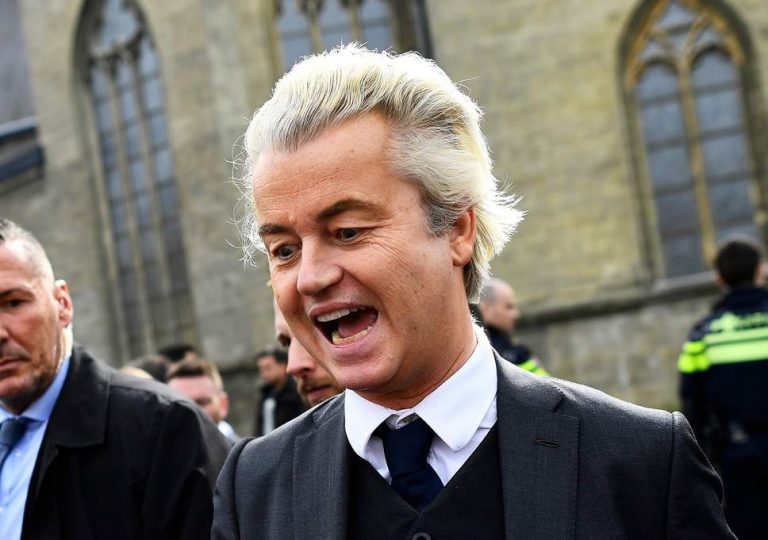
Yesterday, controversial Dutch politician and a Member of Netherlands’ Parliament, Geert Wilders, thanked Pakistani Prime Minister for arresting Rizvi who had put a Fatwa on his head.


Wilders is a known vocal critic of Islam He has been quoted in an interview as saying “I don’t hate Muslims, I hate Islam.” He said in the same interview, “Islam is not a religion, it’s an ideology, the ideology of a retarded culture.”

In June, Wilders had announced Prophet Muhammad cartoon competition to be held at his party’s parliamentary offices. Later in August, he was forced to cancel the event after threats of terrorist violence became too significant.

The events were cancelled after thousands of supporters of TLP took to the streets of Pakistan calling for the expulsion of the Dutch ambassador and for diplomatic ties with the Netherlands to be severed. The Pakistani government, trying to take credit for the cancellation of the event, called it a “great moral victory for the Muslim Ummah” and a that “major crisis” had been averted.

The replies to the tweet by Wilders mentioned above are symptomatic of the constant threat he has been living in ever since he started criticizing Islam. The replies are filled with death threats from Muslims in Pakistan.


Some were even saying that they will be glad to murder him.


Others interpreted Wilders’ cancellation of the event as an affirmation of the strength of the Ummah.


The replies to the tweet showed an overwhelming love for the Islamist leader and a certain dissatisfaction with Imran Khan for having him arrested.

Such threats are often very real, as we witnessed in the Charlie Hebdo massacre, where people were murdered for drawing cartoons of the Islamic prophet.