Home Blog Page 6897

International Energy Agency hails Narendra Modi’s electrification drive, calls it ‘one of the greatest success stories’

The International Energy Agency (IEA) has hailed Prime Minister Narendra Modi’s rural electrification drive as ‘one of the greatest success stories’. The Narendra Modi government had completed the electrification of all villages in April, this year.

“This means that for the first time ever, the total number of people without access fell below 1 billion, according to new data from World Energy Outlook 2018. In particular, one of the greatest success stories in access to energy in 2018 was India completing the electrification of all of its villages,” the IEA said in its assessment in the World Energy Outlook 2018.

Electrification will also boost productivity, spur innovation and enhance well being. “Electricity can increase productive hours in a household leading to positive outcomes on education and economic wellbeing. It can also spur innovation and lead to entrepreneurial micro businesses ventures and, in time, lead to greater agricultural yields. Benefits also flow to the likes of schools, banking and medical services,” the agency said.

Ujjwala Yojana

The agency also lauded the Ujjwala Yojana for providing free LPG connections to poor households. “In India, 50 million free LPG stoves and initial refills have been provided to poor households via the high-profile Pradhan Mantri Ujjwala Yojana since 2015, and the government has set a target of providing LPG connections to 80 million households by 2020,” the agency said.
By October 11th this year, 95% of Indian households had access to electricity, up from 86% in 2017. As per PwC partner Kameswara Rao, “it took a strong political will and diligent work by the utilities to get it done,” as the last 10-15% is the most challenging considering the large population, distances and low affordability.

Kedarnath controversy: After the BJP, Congress raises objections against the movie

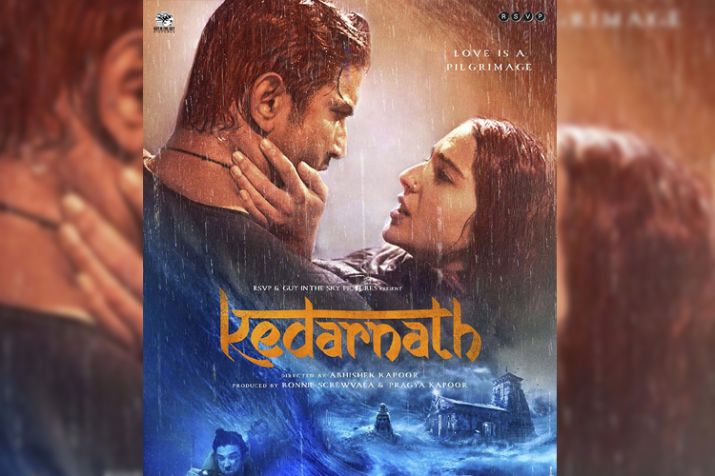
The movie ‘Kedarnath’ featuring Sushant Singh Rajput and Sara Ali Khan has run into troubled waters. The Congress has opposed a kissing scene from the movie and demanded its removal.

The Congress’ opposition to the film

Garima Dasauni, an AICC member, said that authorities should warn filmmakers shooting at Kedarnath not to hurt religious sentiments. “Inviting Bollywood stars to shoot here is a great way of tourism, but also the government should put all the norms in front of them and tell them about the dos and don’ts. No one has the right to violate our beliefs. Char Dham, especially Kedarnath, is the most important and people believe in it,” she told ANI. Reportedly, they will also send a letter to the Prime Minister and the censor board regarding the matter.

“Hurts Hindu sentiments,” says the BJP

Earlier, a BJP leader, Ajendra Ajay, had demanded a ban on the movie as well. Apart from the kissing scene, the leader has objected to the tagline of the movie’s poster which reads “Love is a pilgrimage.” He told PTI, “By setting a romantic love story against the backdrop of a huge tragedy that occurred at the shrine, a centre of faith for crores of Hindus, the filmmakers have shown great disrespect to the followers of the religion.” Ajay said that the movie has caused “acute resentment among teertha purohits” by projecting the holy shrine in such a frivolous manner.

‘Kedarnath’ promotes ‘Love Jihad’ claim Hindu priests

Hindu Priests from Kedarnath in Uttarakhand’s Chardham have also demanded a blanket ban on the movie. “We will launch an agitation if the movie is not banned as we have been told that it hurts the Hindu religious sentiments by promoting ‘love jihad’,” said Vinod Shukla, chairman, Kedar Sabha, an organisation of priests based in Kedarnath. Reportedly, in the film a Hindu heroine is carried by Muslim hero on a palanquin with the shrine in the background.

The Sabarimala debate: Jnana vs Bhakti

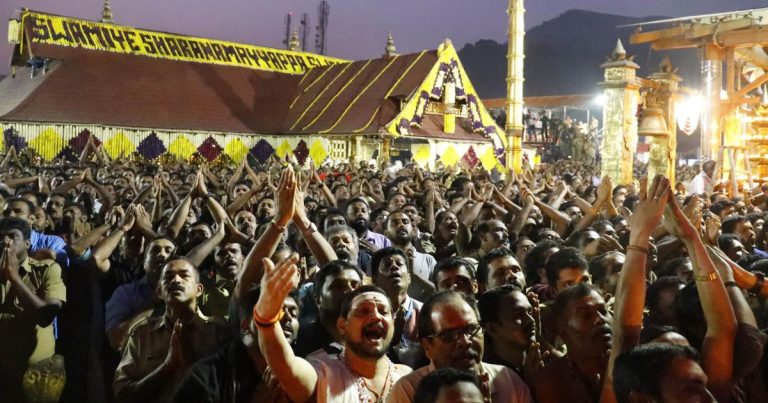
Many catchy phrases have been used to describe the ongoing Sabarimala debate. ‘Tradition vs law’, ‘reason vs faith’, ‘patriarchy vs equality’ etc. However, I feel all these give a very simplistic reading of the situation. There is only one core debate and that is Bhakti vs Jnana, everything else is an agenda wrapped in social concerns.

Jnana relies on logic, Jnana incessantly asks questions and tries to seek answers. The seeker of Jnana does not accept the status quo and is always looking for answers. Bhakti is exactly the opposite. A Bhakt does not have any questions. He has surrendered himself to his diety and abides by what the diety asks him to do. He has unflinching devotion and follows all rules and rituals without fail. The Jnani is trying to evolve by seeking answers to all his questions, the Bhakt is evolving by letting go of all his doubts. Who is right, the seeker of knowledge or the devotee?

In the penultimate chapter of The Gita, Krishna while responding to Arjun says, “The faith of each person is according to what he is made up of..” And he continues to elaborate on this principle by essentially saying ‘to each his own’. If ever there was a liberal mindset, this has to be it. This principle to me is the foundation of what India today looks like. There is no ‘One’ correct way of worshipping or living life, there is no ‘One’ principle or ‘One‘ book or ‘One’ god to worship. The debate of Shraddha vs Jnana has been long settled in this country.

A person inspired by logic and reason can take his path and a person inspired by bhakti can also take his path without interference. ‘All rivers lead to thee..’ is the principle on which an average Indian works, he does not question other’s faith except for academic discussions. We have moved far beyond the silly ideas of right and wrong, good or bad at least at a philosophical level. And this brilliant liberal mindset has given rise to the diverse pool of philosophies. A way of life which is the core Idea of India. One is free to worship shakti or purusha, be a dualist or non-dualist, be an advaitic, mimasic, nyayic. Follow any other path as per his or her guna-dharma.

To profess that there can be only one way of worshipping at all places of worship is not liberalism. It is essentially regressive in nature. The logician and the bhakt can coexist in our ecosystem. As long as this principle is maintained the Idea of India will continue to exist. When the rational imposes his ideas on the devote, he is a fundamentalist and if the devotee insists that everyone should live by his rules, we are fast being swallowed in the narrow-minded quagmire of monotheism.

One should observe how a devotee’s demeanour changes in front of an idol which he worships. The unwavering belief that the deity is actually present in front of him watching over him is enough to transform his conduct. Most of the ritualistic part of Hinduism revolves around this deity’s preferences. Vinayaka is worshipped with a red flower and Durva, Shiva with white flowers and bel leaves. Hanuman, Vishnu, Ram, Krishna Durga, Laxmi, Kali, Saraswati – each have their set of rituals dedicated to them as per their preferences.

Worship is not only about the deity but also geography and form specifically. This is because the mode and style of worship is closely connected to a story, as is the case with Sri Ayyappa Swamy of Sabarimala. We respect the preferences made in our stories. In a way we live the story each day, we keep it alive. Hence Ram Leela is enacted every year, Narkasur and Ravan are killed every year, the audience knows the story but we re-live it every time.

Continuing in the same tradition, Sri Ayyappa of Sabarimala should also be worshipped as per his preferences in his abode where he continues to exist in a non-physical for, at least from the devotee’s perspective. No one is under any obligation to follow this tradition. If you don’t believe, don’t be a prick and don’t go there, it is as simple as this. Cannot deny the story behind the worship. If the story is denied, the method of worship won’t make sense. Similarly, if the method is denied, the story ceases to exit.

At the core of Hinduism is the ego factor. Be it any mode of worship, the aim is to let go of this Ahankar or ego. Bhakti tries to achieve this by complete surrender. For a Bhakt, there are no doubts or questions, just unconditional fondness and love for his chosen deity. Bhakti movement was founded on a deep sense of oneness and self-sacrifice.

But the 21st Century Bhakti movement is totally different. The Bhakti movement can be summed up as follows:

“I don’t understand what you stand for and I don’t believe in you but I will find you and worship you”.

*Swami Saranam Ayyappa*

Twitter cautions Pakistani rights activists over anti-government tweets

According to a Reuters report, Twitter has forewarned two Pakistan rights activists for sharing objectionable content on their Twitter pages. Activist Gul Bukhari and Taha Siddiqui have received the warnings. Bukhari was kidnapped in Pakistan for a short while earlier this year and Siddiqui too had had a close shave with a kidnapping attempt. The move indicates the Pakistani government’s collaboration with the Social Media giant Twitter to curb ‘inconvenient’ free speech online.

Recently, Twitter had also suspended the account of a fundamentalist cleric who had warned the government and the judiciary against the release of a Christian woman charged under blasphemy laws. Defending the freedom of speech of the activists, a civil rights advocate said the activists’ tweets were not the same as those of the hate-mongers since they did not promote violence, supplementing that the complaints seemed to be a part of an attack to squelch well-disposed critique within Pakistan.

In its defense, Twitter said that it informs its users about their government’s disapproval regarding the posts shared by them that are in contravention to Pakistan’s laws. It is interesting to note that Twitter has denied all the 156 requests from Pakistan to remove content from January 2012 to December 2017, according to the company’s global Transparency Report. However, the data for 2018 is yet to be published.

Nighat Dad, a Pakistani lawyer, and internet activist claimed that these warnings illustrate how the Pakistani regime wants to regulate the discourse on Social Media platforms.

In an email exchange, Twitter informed activist Taha Siddiqui that it had received complaints about his account’s violations of Pakistani laws from the government and warned him of further action without specifying it. “Pakistani authorities are pressuring Twitter to take ‘legal’ steps against me,” Siddiqui said. He admonished Twitter for being supporters of a repressive regime.

Pakistan’s Information Minister Fawwad Chaudhry stated that his team is in close coordination with Twitter authorities to restrict hate speech and threats on Twitter. However, he was tight-lipped about the warnings given to the activists, including Gul Bukhari.

Bukhari, known to be critical of Pakistan government, said that in one of her email correspondence, Twitter referred to a tweet that criticized the government’s lack of action against a prominent cleric responsible for the warning. The cleric, Khadim Hussain Rizvi’s account was eventually suspended for threatening the Supreme Court judges who acquitted Asia Bibi in a blasphemy case.

Recently, Twitter has come under fire with activists from different corners of the world accusing Twitter of regulating and controlling thoughts through its shady inherently biased violations policies.

Even Twitter India hasn’t been immune from this contagion. Last week, Twitter India arbitrarily suspended a TV journalist, Jagrati Shukla’s account for echoing Indian Army Chief General Bipin Rawat’s position on the stone pelters in Kashmir. It has also randomly suspended or shadow-banned accounts of right-leaning personalities who were either severely critical of Congress leaders or those who made innocuous spoofs on the Congress President Rahul Gandhi.

If ten parties are ganging up against BJP, this means BJP is stronger, says Rajinikanth

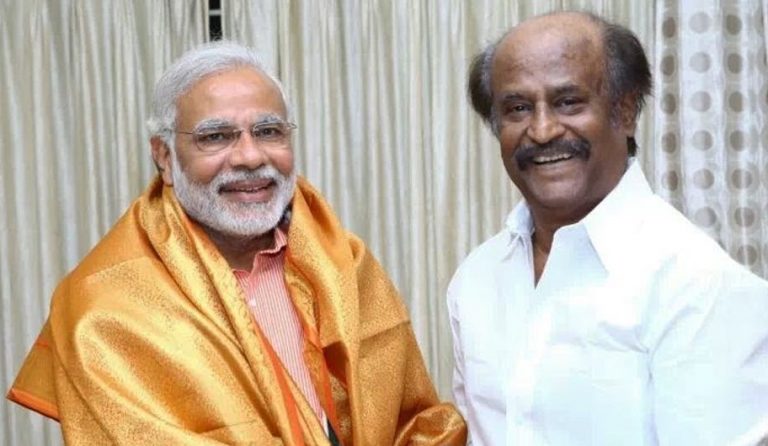
Superstar Rajinikanth has made a significant comment on BJP ahead of Lok Sabha elections. He has said that Prime Minister Narendra Modi is much stronger compared to other political leaders in the country. After he entered politics, there was lots of speculation on whether he will be joining any political alliance. In that context, this comment carries a lot of significance.

Rajinikanth said this while clarifying on a comment he made yesterday. Some media houses had quoted him as saying “if parties here believe BJP is dangerous, then it must be”. He was answering a question about the opposition’s claim that BJP is dangerous.

Rajinikanth had also said yesterday that demonetisation was not implemented properly. He said, “The implementation went wrong, it should have been carried out after a detailed research.” Both his comments had raised speculation whether he is trying to move to the opposition camp.

But today the movie star turned politician has said that he was misquoted by media. Clarifying his statement yesterday, Rajinikanth said that he was not ready to give an opinion on BJP at this moment. But he said, if ten parties are ganging up against one single party, then imagine who is powerful among them. He wanted to mean that BJP is a much stronger party compared to other parties, and his earlier statement was misinterpreted by media.


Rajinikanth is considered to be close to BJP. According to some media reports, he had held several meetings with senior BJP leaders in Delhi in September this year. It is reported that he held around seven meetings with BJP top leaders within a period of five days. This had increased the possibility of Thalaiva joining hands with BJP.

But yesterday’s comments had cast a shadow of doubt over those speculations, as the comments were seen as anti-BJP. However, today’s clarification by Rajini means that he is still closer to BJP, and the possibility of allying with the party remains alive.

That time in 2007 when BJP nearly got banned

These days “Freedom of Expression” is always in the news. Mostly because those who have enjoyed a monopoly over the country all these years find themselves out of power. So democracy is always in danger these days.

A speaker gets dropped from a conference? Democracy in danger. A minor students union leader gets arrested? Fascism is here!

What would actually put democracy in danger? Let’s see. How about shutting down India’s largest opposition party?

So let me tell you about the time that nearly happened. No, I am not going to talk about Emergency. I will tell you about 2007. That’s just 11 years ago. Fascism came that close to becoming a reality in India. And the sad thing is that you probably never heard of this event. That’s how real fascism is done.

In early 2007, the BJP released a campaign CD in the run-up to the Assembly polls in Uttar Pradesh. As you would expect, rival parties were criticizing each other’s campaign material. In this case, some people and some sections of the media said that the material in the BJP’s campaign CD was “communal”. The BJP’s adversaries filed a complaint with the Election Commission.

Still routine stuff, right?

No! This was different. This was not the typical case of parties stepping on each other’s toes.

The BJP was summoned for a derecognition hearing before the Election Commission of India. You read that right. They were not kidding. The threat before the BJP was that of actual derecognition.

This is the sort of thing you expect to hear from Pakistan or North Korea or Venezuela. The state getting ready to shut down the main opposition party!

In 2007, the BJP had over 150 Members of Parliament, half a dozen or so Chief Ministers and hundreds of elected MLAs. Not to mention thousands of elected representatives at all levels of local governments. Would India have remained a democracy in any real sense if the BJP had been banned in 2007?

Not only was the BJP to be subjected to a derecognition hearing, one of the Election Commissioners hearing the case would be Navin Chawla.

At the time, Election Commissioner Navin Chawla was facing accusations that trusts run by him and his wife had received money, favours and cheap land from various Congress leaders and Congress governments.

Untitled.png

That’s not all. The Shah Commission which was set up to probe the horrors of the Emergency had strongly indicted Navin Chawla for acting in a “callous and authoritarian” manner during the Emergency.

Untitled.png

This same “callous and authoritarian” officer later went on to become Election Commissioner of the world’s largest democracy. How wonderful.

So the BJP protested. They repeatedly demanded that as a bare minimum show of fairness, Navin Chawla should not sit in judgement over the BJP during the derecognition hearing.

The BJP’s plea against the presence of Election Commissioner Navin Chawla was duly considered by the Election Commission.

And surprise! Surprise!

The Election Commission decided that the Election Commission is absolutely right.

Untitled.png

Again, the sort of news you would expect to hear from Pakistan, North Korea or Venezuela.

Now, whose instructions could Navin Chawla have been following? This might give us a clue.

Untitled.png

A few years later, Chief Election Commissioner N Gopalaswami wrote a letter to the President requesting the removal of Navin Chawla. One of the allegations was that whenever an important issue came up before the EC, Chawla would excuse himself for a bathroom break and soon after the CEC would get calls from top Congress leaders!

Feeling like some sort of banana republic yet?

So, how did the BJP escape being shut down? They had to resort to a legal technicality, by means of which they argued that the Election Commission doesn’t actually have the power to derecognize a political party.

The exact technicality was drawing some sort of distinction between acts of Parliament and “executive orders”.

Untitled.png

However, the Congress, the Left and the BSP argued that derecognition was actually within the powers of the Election Commission.

Mind you that in 2007, the Cong, the Left and the BSP were all either part of the ruling UPA government or supporting it in the Lok Sabha. All ruling parties united in a demand to ban the main opposition! Definitely not a danger for democracy I guess…

Untitled.png

The derecognition hearing was held, BJP was asked to condemn the CD & submit a compliance report in 15 days.  But the Election Commission made it “clear to all concerned in the matter that the matter is not being closed by the Commission with the present order“.

Untitled.png

Untitled.png

This is a story of Indian liberalism. When not in power, they will protest over angry tweets. When in power, they will try to ban the main opposition.

No liberal back in 2007 said that a ban on BJP would be undemocratic. So what if the BJP had polled 9 crore votes in 2004? Liberals saw no harm in throwing all these votes out of the door and disenfranchising more than a fifth of the Indian electorate.

Today they say that democracy is in danger because too many BJP supporters are posting angry tweets.

Imagine if the same were happening today. Imagine if the Congress Party were dragged to a derecognition hearing before an Election Commissioner that many believed to be a BJP puppet!

Can you imagine the kind of outpouring of rhetoric that would happen if the BJP were doing this to the Congress today?

Let alone the Congress, remember what was said when the BJP government tried to crack down on a few students union leaders from JNU?

The moral of this story is that with Congress in power, Emergency is never too far away. The Emergency nearly came knocking on our doors just 11 years ago. In 2019, the BJP will face a Congress that is much more angry and vengeful than the Congress of 2004.

In Congress’ Madhya Pradesh manifesto, the party has already expressed its ominous intent towards the Sangh Parivar, bringing back memories of multiple bans on the RSS imposed by Congress over the years. What if this Congress gets anywhere near power? Will they hold back on imposing fascism?


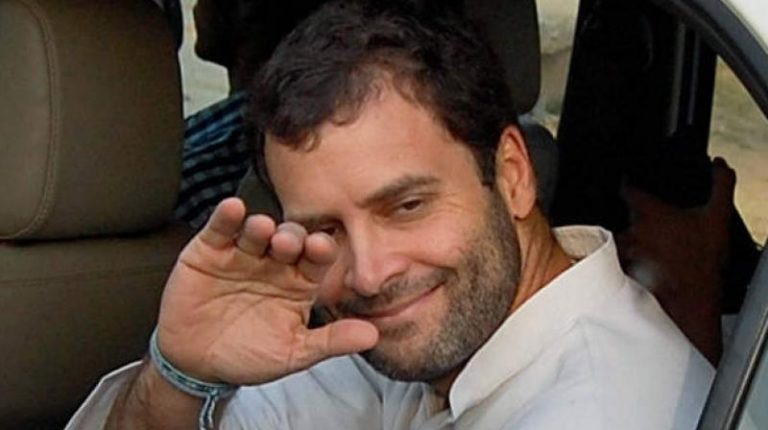
Rahul Gandhi spreads fake news on Twitter, the day he met Jack Dorsey to discuss fake news on Twitter

On 12th November 2018, Rahul Gandhi met Twitter CEO Jack Dorsey to discuss ‘fake news’. This drew a litany of responses from many considering Rahul Gandhi and his party themselves are purveyors fake news and also because Twitter hasn’t been the most unbiased platform lately.

The irony of the matter became even more glaring when on the very day that Rahul Gandhi and the Twitter CEO met to discuss fake news, Rahul Gandhi took to Twitter to spread fake news about Prime Minister Narendra Modi and how demonetisation has led to action against Shell companies.

Congress President Rahul Gandhi took to Twitter and tweeted a ‘barf’ worthy tweet. He asserted that the PM Modi was ‘barfing’ about how demonetisation led to action against Shell firms. He also mentioned a litany of lies against other people connected to BJP.


Rahul Gandhi’s first lie was that demonetisation has not led to action against Shell companies. A shell company is a non-trading company used as a vehicle for various financial manoeuvres or kept dormant for future use in some other capacity.

Prime Minister Narendra Modi, on 8th November 2016 declared that Rs 500 and Rs 1000 notes would be considered illegal tenders. The move had a significant impact on formalising the economy, digitisation of transactions and left-wing terrorism. Following the step, a major crackdown on shell companies was initiated by the Modi government.

In April 2017, ED raided hundreds of locations in 16 cities in order to crack down on shell companies. Various teams comprising of 300 officials raided the premises in cities like Delhi, Chennai, Kolkata, Chandigarh, Patna, Ranchi, Ahmedabad, Bhubaneswar and Bengaluru to name a few.

Some of the companies which were raided had links to prominent politicians like YSR Congress chief Jagan Mohan Reddy, NCP leader Chhagan Bhujbal and a controversial Noida bureaucrat Yadav Singh. Incidentally, Reddy, Bhujbal have been under investigation for money laundering in the past.

In 2017, the government had advised banks to “put restrictions” on the operation of bank accounts of the 2,09,032 companies delisted by the Registrar of Companies. Most of these companies are suspected to be shell companies. In July 2017 itself, the Modi government had de-registered 1 lakh shell firms.

The data received from the banks says that these companies had a meagre balance of Rs 22.05 crore to their credit on 8th November 2016. However, from 9th November 2016 i.e. after the announcement of demonetization, till the date of their being struck off, these companies had altogether deposited a huge amount of Rs. 4,573.87 crore in their accounts and withdrawn an equally large amount of Rs 4,552 crore. With loan accounts, there was a negative opening balance of Rs 80.79 crore. At this time, the government had planned to take massive steps against shell companies.

In September 2017, the Modi government had blacklisted 3 lakh Directors of shell companies.

Then, the MCA had released data in which almost 73,000 companies have been deregistered and have made to deposit more than Rs. 24,000 crore in bank accounts post demonetization. The Ministry document said that there are 68 companies are under investigation. The Serious Fraud Investigation Office (SFIO) is also probing 19 companies while the Registrars of Companies (RoC) are investigating 49 firms, it added. In another report, the data show that the direct tax collection post demonetization has increased by 15.3%, which amounts to the collection of Rs. 9.80 crores of direct tax alone.

In June 2018, the Modi government cracked down on 16,500 confirmed shell companies and initiated investigation of 80,000 suspected shell companies.
Clearly, the action against shell companies has happened post demonetisation. Rahul Gandhi is, as usual, spinning a yarn and throwing muck, hoping something sticks.
Rahul Gandhi also mentioned certain other incidents that he wants to paint as a scam. Rahul Gandhi mentions Jay Shah, BJP President Amit Shah’s son and indicates that he was involved in a financial scam through some shell company. The hit job against Jay Shah was initiated by the leftist propaganda website The Wire. OpIndia had comprehensively debunked the hitjob even before Rahul Gandhi latched on to it. Currently, The Wire is facing a defamation suit for their story. The Wire had also selectively altered their story but to no avail.
Next, Rahul Gandhi mentions Piyush Goyal. The hit jobs against Piyush Goyal too were initiated by The Wire and were comprehensively debunked by us.
When Rahul Gandhi mentions the Anil Ambani’s Airports, we assume he is talking about Dassault buying stack in Reliance Airport Developers Limited, since Rafale is his latest obsession. Rahul Gandhi has often alleged that Reliance is a loss-making company and hence any business with it is a kickback. Today itself, Rafale chief has debunked Rahul’s lies and earlier, Anil Ambani had hit back at Rahul Gandhi for his lies. Earlier, Dassault, the French government and the Modi government had trashed Rahul’s blatant lies. Anil Ambani himself has been sending legal notices to Congress leaders. Anil Ambani had also written a letter to Rahul explaining that he was misinformed, but the lies didn’t stop even then.
It is evident that Rahul Gandhi is throwing muck in the hopes that some allegation of corruption sticks. With lies after lies being debunked by all and sundry, it is evident that Rahul Gandhi is losing the plot.

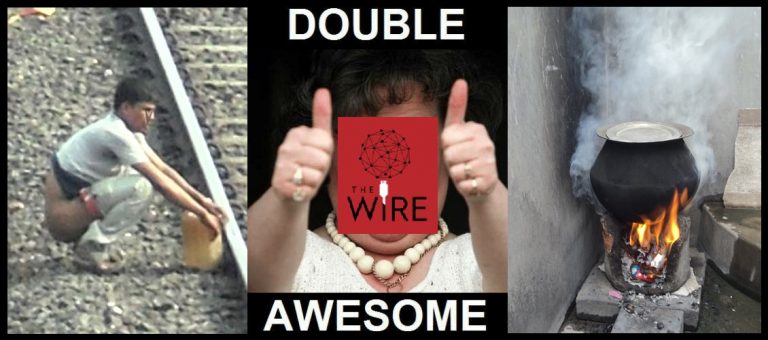
After reporting how villagers were happier defecating in open, The Wire reports how villagers were happier without cooking gas

Showcasing its award winning journalism, the leftist propaganda website The Wire has managed to find fault with Prime Minister Narendra Modi’s Ujjwala scheme, which aims to provide cooking gas connections to rural households. The scheme was launched in May 2016 to safeguard rural women from health hazards, which they are exposed to due to cooking in smoke emitting chulhas.

An article published by The Wire has tried to argue that these attempts to provide LPG connections to rural households did not truly represent “rural development” or “women empowerment”. To further this argument, the article presents case of some families in a village in Tikamgarh in Madhya Pradesh, whose business of selling clay pots suffered after people in the village started using cooking gas.

Since clay pots are to be used with traditional chulhas that emit smoke and particulate matters, villagers stopped buying them after getting LPG cylinders and modern stoves under the Ujjwala scheme. This loss of business is argued in the article as a proof that the scheme doesn’t help in rural development.

Further, since many clay pot makers who lost business were women, the article went on to argue that giving cooking gas connection to rural household was not women empowerment. The article makes the following comment:

As the Pradhan Mantri Ujjwala Yojana burgeons on, promising LPG connections to five crore BPL households in the country, such communities – like this one dependent on selling clay cooking utensils – are not only losing their livelihood but also being sacrificed in the name of “rural development”.

Yes, The Wire’s journalism supports the idea that Ujjwala scheme is “sacrificing” some communities “in the name of” rural development and women empowerment.

For some strange reason, The Wire article doesn’t talk about caste at all. A mention of caste of those whose business of making clay pot suffered would have made it a perfect article as Prime Minister Modi could have been accused not only of being anti-poor and anti-women, but also anti-Dalit. It was a sad day for journalism to see The Wire falter on this front, despite coming up with a brilliant article in run up to assembly elections.

Nonetheless The Wire article has opened eyes of lakhs of urban dwellers who had joined the “Give it up” campaign that was launched to help the Ujjwala scheme. Under #GiveItUp campaign, people were requested to forego subsidies on their LPG connections, so that the same money could be used to provide connections to rural households. The readers must be repenting their decisions as LPG connections to rural India has destroyed the rural economy and rendered women jobless.

Earlier, The Wire had opened eyes of many readers who thought building toilets in rural India was a good idea. The website had published a similar article that highlighted how certain people in a Chhattisgarh village wanted the freedom to defecate in open, and toilets were being “forced upon” them.

In that article, The Wire showed how Prime Minister Modi had taken away the rights of people to take a dump in open through his Swachchh Bharat Abihyan (Clean India Campaign), which was only a sign of rising fascism in the country.

Recently The Wire had also blasted union ministers and BJP leaders Rajyavardhan Rathore and Kiren Rijiju for promoting physical fitness. Both the leaders had started #HumFitTohIndiaFit campaign on social media requesting urban dwellers to take some time out to do simple workouts in offices or homes, which The Wire felt was an “elitist” idea. It goes without saying that The Wire had its share of problems with International Yoga Day too.

Sources say that The Wire will soon publish a news report on how villagers are not liking it at all to be treated in modern hospitals under Ayushman Bharat scheme. Some villagers in Amroha, Uttar Pradesh desperately want to go back to Hakeems and road side quacks, who have lost livelihood due to the elitist medical insurance scheme. Hakeems are usually Muslims and Muslims are living under fear in Modi’s India, sources at The Wire say.

After Saudi Arabia heading UN’s Human Rights panel, Kejriwal’s AAP is planning to fight fake news

Winter is coming. After the pristine air quality of Delhi was brutally devastated by Hindu terrorists busting firecrackers to celebrate their pagan festival, a dark, evil winter is approaching the national capital and it is coming fast.

The Kejriwal muffler has been taken out of the closet. The Hawai chappals have been paired with woollen socks and the order has been given. A long night of cold doubts and misinformation is imminent, for the night is dark and full of terrors. An army is marching. The Lord had spoken in his cough strained voice and the commanders are leading battalions of sombre, slow-walking fighters. Dragging their feet in the frost clad streets of Delhi, chanting their mantra with a rhythm that reverberates the freezing particulate heavy air of Delhi.

Did you just read the above para in Jon Snow’s voice? Did you wonder “but the night king’s army is silent”. Through 7 seasons of Game of Thrones, the dead zombies of the frozen lands have not spoken a word except for shrieks and grunts, then how can they chant some Mantra? This is not the night king’s zombies we are discussing, dear readers, we are discussing Kejriwal’s AAP’s 15,000 ‘social media warriors’. Soon, all your TLs, homepages and WhatsApp are going to be flooded by the Arvind Kejriwal led AAP army’s battle cry, Is this true, Is this true, is this true?

Kejriwal’s AAP is planning a full frontal war of fake news. Sorry, that was a typo. We meant ‘on’ fake news of course. As per a report in Hindustan Times, army commander Ankit Lal has gathered 15,000 volunteers to be active on social media and counter ‘fake news’.

The army is to be battle-ready by mid-December and that is when we all should expect them to strike. After Saudi Arabia is tasked with heading the United Nations Human Rights Commission, AAP’s battle on fake news will be the next legendary event.

Courtesy: Hindustan Times

Fake news is the new ‘intolerance in India’. Our secular liberals use it in abundance to pontificate. When needed, fake news is coated with the ubiquitous ‘is this true’ and is sent out to the universe to morph and spread. Twitter CEO Jack Dorsey met Rahul Gandhi yesterday to discuss the menace of fake news. However, looking at the history of statements by Rahul Gandhi, it was only apt, because, as CEO of Twitter, Jack was not fussing about the menace, he went to confront the menace himself.

Imagine a world where Britain discusses the damages done by colonialism. Tipu Sultan condemns forced conversions. Indian TV serials talk sense. Salman Khan conducts lectures on driving regulations and the clerics of Darul Uloom Deoband hold a conference on women empowerment. Unlikely as they may seem, politics is the realm of infinite possibilities and AAP fits right in.

Kejriwal’s AAP and fake news have known each other for a long time. What better way to combat an enemy if you do not know it well. From claiming PM did not allow Kejriwal to carry his mobile phone to the PM favouring China for import of manjas for kites, AAP has done it all. Covered with the safety helmet of ‘Is this true?’, the little lies and misinformation are shared with the masses, waiting for doubts and confusion to take their course.

AAP has able commanders to lead this army. Equipped with arts of obfuscation, impunity and sharp instincts of blaming Modi for everything under the sun, these commanders are the masters of their art. Be it their IT cell head to their ministers and MLAs, the AAP army is undoubtedly in good hands.

The arts of war come in myriad forms and AAP leaders have mastered all of it. How many people can boast of timing a photograph at the exact nano-second where a tear-drop is dangling precariously on the edge of someone’s lip? Or manage a sly ‘you deserve it’ whenever they hear of a political opponent suffering from a disease? AAP does and it does it in style. AAP leaders are more skilled than the best shapeshifters. They can be EVM engineers one day and defence experts on the next. One day they are economists and just like that they become psephologists.

The days of dharna are over. People have just seen too many dharnas and the images of relaxed men spread over plush sofas demanding ‘justice’ are unlikely to create a mass movement. Those critics who frowned over the sight of Delhi’s CM and two senior ministers lying on sofas of Raj Bhawan for days on end will get their answers as to what ‘work’ was being done when the formidable army of 15,000 AAP volunteers will sweep over millions of smartphones and laptops.

As Kejrwail’s AAP army prepares to march, we Indians must brace ourselves for the onslaught. 2019 general elections are near and by the time the winter is over, the cyberworld as we know it will not be the same. As the reverberating chants of ‘Is this true’ fill over our mind space and awaken us to the universe of alternate realities, we, the social media users can only hope that some Mohalla clinics are left functional. For not all of us can afford trips to Bengaluru.

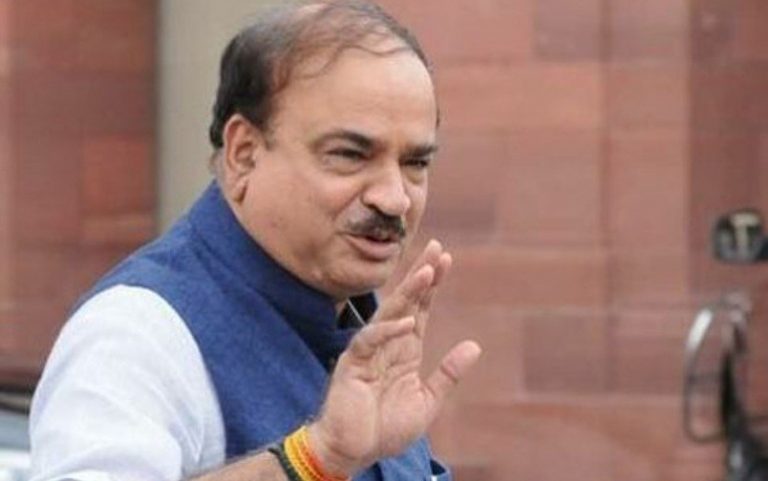
Suo moto case filed against Mangalore Muslims Facebook page for spewing venom on Ananth Kumar’s death

A suo moto case has been filed by Pandeshwar Police against Mangalore Muslims Facebook page for derogatory comments on BJP leader Ananth Kumar’s death.

Veteran BJP leader Ananth Kumar, who was suffering from cancer, passed away yesterday. While the politicians across the spectrum mourned his untimely death, a Facebook page named ‘Mangalore Muslims’ was caught indulging in fanning hatred against him and other BJP leaders like LK Advani and former Prime Minister Atal Bihari Vajpayee.

Through a detailed post on their wall, ‘Mangalore Muslims’ asked fellow Muslims who are grieving the leader’s demise to stop shedding tears on a Brahmin’s death. They said he was responsible for Babri Masjid demolition and also referred to him and other BJP leaders as “convicts” in the Babri demolition case. Branding Ananth Kumar as anti-Muslim, the group hailed his death as an “extermination” of the enemy of Allah. They have also urged their followers to feel “happy” to witness his death.

Casting their ire on former Deputy Prime Minister LK Advani, the post also accused him of being an advocator of Late Ananth Kumar. They accused Advani of being one of the principal leaders responsible for the downing of Babri Masjid and the ensuing riots.

That is not all. Towards the end, the post says Ananth Kumar’s death is a reminder of “cancer” that Atal Bihari Vajpayee was. The group also contended that the deaths of Gauri Lankesh, as well as Siddaramiah’s son, were not covered by the mainstream media. They claimed that the Facebook page admins who dared to comment on their deaths were unlawfully jailed by the BJP government. (There was a Congress-run government in Karnataka when Gauri Lankesh and Siddaramaiah’s son died.)

This is not the first time that this Facebook page has so brazenly indulged in posting obnoxious remarks against the BJP leaders. The page has habitually engaged in twisting and distorting comments made by the BJP/RSS leaders and have used it to incite communal passions. In one of the posts, the group alleged that the BJP supports the rapists who are dressed in saffron clothes.

Moreover, on several occasions, the admin of the page has showered his love for Pakistanis and wishing hate on Indians. On one such occasion, the page praised Pakistani cricketers while expressing its hatred towards Indian Virat Kohli.

Of-late the discourse on social media platforms have descended to deplorable levels. When Goa Chief Minister Manohar Parrikar was diagnosed with pancreatic ailment, Twitter users followed by Congress official account were seen wishing death upon the former defence minister. Not only that, Goa Congress leader had gone a step ahead recently and demanded to see Parrikar in person or asked BJP to conduct his ‘Shraddh’(death ceremony).