Home Blog Page 7419

Read why Yogi Adityanath called secularism the biggest lie since independence

0

(Recently, a statement by Uttar Pradesh Chief Minister Yogi Adityanath was in news where he was supposed to have spoken out against the idea of secularism. However, that statement was in context of a wider range of issues that Yogi was talking about at an event organized by Hindi newspaper Dainik Jagran. The paper had carried an excerpt of Yogi’s statements made at the event that also provides clarity about Yogi’s statement on secularism that is practiced in India. Following is a translation of that excerpt.)

Dharma makes us pro-good-behavior (sadaachaar) and pro-values. Individuals and society both rest on dharma. One cannot link dharma just to rituals of worship, sect or religion. Dharma is one. You can call it human dharma or if you want to give it a broader global look, it’s Sanatana or eternal dharma. Others aren’t dharma, they are sects and cults that don’t come in the league of dharma. Please associate all-pervasive self-implementable (dhaaranaatmak) system to dharma.

Secularism word has caused immense destruction to nation. Secularism term is biggest lie post independence. Any system or setup, when not biased towards any sect or cult, and when it moves ahead by being pro-all sects without bias, only then it is ideal.

Dharma is synonymous with duty, good behavior and moral values. If any system is made devoid of these, it will become non-functional (akarmanya). What is a system without good behavior? It’s bad behavior (duraachaar) only. What is a system without values? Immoral (paapaachaara) only. All movable and immovable things in this universe have their own dharma. If air or water doesn’t abide by its own dharma can any universal system function?

Everyone has own worship rituals and processes. We cannot force our faith on others. I put Tilak, many people may not like it. Many may like it. But I say this karmakaand has scientific basis, and so I wear Tilak.

Three main naadi that balance our bodies Ida, Pingala and Sushmana, the convergence point is on forehead. The place where opposing elements meet – energy gets produced. This energy should be used in right manner, should be channeled inwards, and should be used for social good. Adhyaatmik or spiritual energies get used for spiritual welfare, therefore we wear Tilak.

It is not just an aesthetic symbolic thing, it’s related to our spiritual energies and our karmakaand. One cannot call this superstition. But yes, the orthodoxy and fraud in the name of karmakaand should be stopped.

We grow Tulsi at home. Growing Tulsi is not fraud or show off. There is dengue now, whoever drinks Tulsi concoction daily will stay saved (immunity wise). Many people will object to Tulsi but it’s not fraud or orthodoxy. Many people keep choti, many have problem even with that. But it’s not showing off or fraud. It’s Sanatana tradition and there is scientific basis to it. Why do we tie raksha sutra? It’s not show off. Ayurveda checks vata, pitta, kapha mainly. Any vaidya sees balance of these first. Raksha sutra is related to it. Many people tie it differently based on their understanding.

Our dharma is Sanatana. It’s eternal dharma from the beginning. It is functional since the beginning of universe inherent in all. There cannot be any fanaticism in it. But it is strange to expect that if someone slaps me on one cheek, I forward my other cheek too to him. That is cowardice. If someone slaps, it’s answer should be given in the same language.

Society should aim to be in pursuit of proper goals (aim to be Purushaarthi) and not cowardly. Bhagvan Rama never wanted that there be a war, but he had to pick weapons. Bhagvan Krishna also did not want Mahabharata war to happen. Even after attempts by Duryodhana to arrest, he did not close the doors to negotiations. But Mahabharata did take place and he unwillingly had to take up weapons in that.

How much ever we may want to find solutions to terrorism through peace, but eventually we request and motivate our security forces to pick weapons for our security. We cannot impose it to be taken care by the liberty or liberalism or generosity of Sanatana dharma. Generosity, tolerance, respect is for gentle folks, not for durjana or the vicious folks.

Wicked people are obstructions in the path of social development, they attack national interest, challenge the unity and sovereignty, these folks will never be won over by peace. They need to be made to understand what is right through the ways that they understand.

The goals of politics and dharma are similar. When goals are opposing, one is south pole other north, then that’s problematic. Here (in politics and in dharma) goals of both is to move ahead on the path of social development.

Satta/power is not a thing of enjoyment. Power is a medium of social welfare. As an Acharya of a peetha, I too have joined this development movement. There (in Gorakhnaath peeth) dharma is the medium and here politics is the medium.

Dharma and politics are complimentary, and not contrary forces. We need to understand that dharma is a long term politics and politics is a short term dharma. Both cannot be separated.

Those that accuse Bharata of being intolerant, they sell their intellects and commercialize their knowledge. There is no jati or sect that India did not give shelter to. Prophet Mohammad never came to Bharata, but during his time first mosque was built in Bharata. Hindu kings constructed first Church here. Parsi community got saved by coming to Bharata. Isreal keeps an emotional attachment towards Bharata.

A Communist ex-CM of Kerala had written in a Malayalam magazine that when Communist movement started in Bharata, it was said Bharata is not one nation but a community of many nation states. During 1946-47, when the independence talks were on, communists again said how can ‘one’ Bharata attain independence. Bharatiya have different nationality. But later on, he agreed that when he went to Hindu pilgrimage sites and peetha spread all over Bharata then he thought to himself that ‘I am from the same Kerala from where a sanyasi went and established four peetha in four corners of Bharata’. In the end he agreed that the biggest failure of communist movement has been that they never considered Bharata to be one nation.

Who did not understand Bharatiya civilization, those who lick foreign leftovers to run their homes, they have talked about intolerance, but that talk has failed. Today in Kerala, a Hindu is terrorized. There is goondaism by communists and the scenes of barbarism are chilling. During my padayatra, I met more than a dozen people who lost their hands or legs. How can those people talk about intolerance?

These days CM residence is being cleaned and so people have objections even to that. They see saffron in everything. Rays from Bhagvan Surya also are saffron. Will they be changing the color of the fire they cook their food in?

Vyapam: Congress leader K K Mishra sentenced to 2 years jail in Shivraj Chouhan defamation case

0

Bhopal High Court today sentenced Congress spokesperson K K Mishra to two months imprisonment and imposed fine of Rs. 25,000 in the defamation case against Madhya Pradesh Chief Minister Shivraj Singh Chouhan.


Mishra had accused Chouhan and his wife, Sadhna Singh of using their influence in getting few candidates recruited as transport inspectors.

In June 2014, Chouhan filed a defamation suit against Mishra who had alleged some candidates from Chouhan’s wife’s native Gondia were illegally recruited as constables in the transport department. However, it appears that Mishra realized that he had made baseless allegations and hence, earlier this year he tried to argue that he was only speaking about Vyapam, and not casting aspersions against the CM and his wife, but the High Court rejected his petition. Today, the prosecution said that the unsubstantiated allegations by Mishra had lowered the dignity of a person holding a constitutional post of Chief Minister of a state.

Madhya Pradesh’s Vyapam scam had come into media focus since on the face of it, it just seemed a run-of-the-mill admission and recruitment scam but as and when more and more updates came up, it became more mysterious. News about educational seats up for sale is not new to India, but Vyapam has managed to grab eyeballs for more sinister reason. Although it is a scam which is common in India, it is uncommon to see so many people somehow connected with the scam, die mysterious deaths. Right from middle men, to deans, to students to journalists, all have perished in this case, or at least that’s how people are interpreting many of these deaths.

Similar admission scams were going on in Madhya Pradesh since the 1990s. This is corroborated by the fact that the current Vyapam scam kingpin Dr Jagdish Sagar was arrested for similar charges way back in 2003. But due to police negligence, he got a free hand to continue his activities.

By 2009, more complaints emerged and by 2013, whistleblower Dr Anand Rai, had blown the lid off the scam. To be fair, Madhya Pradesh CM Shivraj Singh Chauhan had begun investigation in 2009 itself by setting up a committee. But as of now, the Madhya Pradesh Government has no role in the investigation.

The probe is currently being monitored by an SIT set up by the Madhya Pradesh High Court, and a Special Task Force which is investigating the matter with them. In October this year, the CBI filed a charge sheet in the Vyapam admission scam case and rejected allegations that computer hard discs seized from an accused purportedly carrying reference of the letters “CM” have been tampered with.

Mainstream media and the lost art of satire

0

It is now a widely accepted fact that the mainstream media’s fact-checking and news reporting skills are unreliable. But who would’ve thought that their comprehension skills would also questionable. And it all started with a tweet. Let me walk you through.

Scientist and columnist Anand Ranganathan, who has been a vocal critic of selective reporting by mainstream media and regularly exposes hypocrisy of politicians and journalists, had put up a satirical tweet about two years back claiming Mysorepak is a Tamilian invention, as endorsed by Lord Macaulay. In the very apparently fake news clip he had posted for fun also quoted Macaulay’s ‘good friend Lord Crinklybottom’.


Somehow, many so-called journalists took the tweet on its face value and credited Lord Macaulay for gifting the sweet to Tamilians. The ‘news’ made it to Times of India (TOI) and to many publications after that.

Ranganathan’s exasperation was evident as he discovered the mainstream publications picking up the tweet and writing ‘factual reports’ around it.


After being called out by Ranganathan, the report was removed from Times of India website. But by then, the word had spread.


For me, personally, the saddest was the one where the Marathi newspaper Loksatta ignored Lord Crinklebottom in their story.


The word has spread far and wide, including the vernacular newspapers, even in the states which ‘claimed’ the sweet as theirs.


Remember Indian states bickering over origin of the sweet Rasagulla? And the misleading tweet by West Bengal Chief Minister Mamata Banerjee which sparked the debate about Indian sweets on Twitter? Of course, we wrote a satire piece that Modiji should take moral responsibility about the mithai mess and resign immediately. But when hate for one man is so strong, it is easy to mistake sarcasm for real.

Shockingly, this is not the first time Ranganathan has been left facepalming for media houses’ inability to understand satire.

Rajdeep Sardesai, who regularly places his prejudice over journalism, also could not understand when someone is being sarcastic to him, especially Anand Ranganathan.


In case you wondered too, the tweet by Ranaganathan was a code word, to be decoded by picking up first letter of every word in his message. Rajdeep failed to get that in a hurry to share any praises he got, while his wife too, who writes ‘satire pieces’ herself, could not understand it:


Earlier, too, Ranganathan’s satire on Indian babudom was taken up seriously on National Museum ‘loaning’ priceless artefacts to journalists, including the Harappan Dancing Girl, was taken as true by many media houses.


Soon the piece got picked up and people started asking ’eminent’ journalists whether it is true.


Tribune ran a major story and interviewed everyone except the one who started it all, Ranganathan, for clarification. The BJP had alleged a scam and the Museum Director had to assure that the Dancing Girl was very much ‘available’ with the authorities and not loaned out.

Perhaps the blame to media houses mistaking satire for real news should go to Rahul Roushan who founded Faking News, one of India’s first satire websites. One of the fake news titled “Unable to attract even a single girl, frustrated man sues Axe” was taken as seriously by mainstream media houses.

Now, if only mainstream media houses has tried to check facts before sensationalising, or even had a sense of humour, we wouldn’t have to spell out sarcasm to them.

After Moody’s rating upgrade, ‘Liberals’ might need a shoulder to cry on

0

Hug a liberal. Because they are having a bad day.

Untitled

After that, don’t forget to show them this headline, but make sure you give them a shoulder to cry on.

Untitled.png

And finally, make sure you head out to the stock market and enjoy the party. Also assure your liberal friend(s) that you will not judge them if they also want to invest and make some money in the Indian growth story being created by Narendra Damodardas Modi.

A few weeks ago, when India jumped 30 places in the World Bank’s ease of doing business to break into the top 100, I had made this simple chart to explain the development to left liberals who were having difficulty reading the writing on the wall.

Untitled.png

Today, with India receiving its first sovereign ratings upgrade in fourteen years, I thought I should make another simple graphic to explain the situation.

Untitled.png

Yes, as the BJP used to say back in the day, Lakshmi comes to us sitting on the lotus. If that causes heartburn in some quarters, so be it.

This sovereign rating upgrade is the latest (and by far the biggest) in a series of disasters for the left liberal brigade that had recently taken to spreading malicious propaganda against the state of the Indian economy. Most of the liberal luminaries who had been shedding tears were the same who had benefitted the most from the (near) Communist Indian economy until the 90s. But back then, the system was working well for them and only for them. During the UPA years, things worked even better for them. As one NDTV anchor would have said, “Baagon mein bahaar thi.”

With the demonetisation and GST causing hiccups in the Indian economy, these classes had begun dreaming again of ‘Achche Din’. These are the people who will be most disappointed to read what Moody’s has to say while explaining its reasoning behind the ratings upgrade.

Untitled.png

Yes, it is almost like the transformation of India from a crony system to a formalized, rule based economy is good news for the country. And bad news for the cronies.

So, we have India, with its sovereign ratings upgrade from Moody’s for the first time in 14 years. We have India jumping 30 places in the World Bank’s ease of doing business index. And IMF boss Christine Lagarde delivering an epic smackdown to an NDTV reporter who was clearly fishing for an anti-Modi headline.

Untitled.png

Moody’s, the World Bank and the IMF. So, who is left? And more importantly, who is right?

It’s only yesterday that liberals were giving out health warnings when the globally respected Pew Research Center published its findings that showed Narendra Modi more popular than ever. Today, left liberals might get some more of that annoying acid reflux.

In all likelihood, liberals will need words of encouragement from an authority figure who knows more about economics than Moody’s, IMF and World Bank combined. Wait until Pidi shows what he can do with a treat.

Twitter starts de-verifying Right Wing Twitter handles as per ‘new guidelines’

0

Last week the micro-blogging platform Twitter announced that it has paused general verification of profiles since people started misinterpreting verified Twitter profile as endorsement by Twitter.


Today morning they tweeted how they are now in the process of de-verification of already verified Twitter profiles where the user’s behaviour does not fall under the ‘new guidelines’.

One of the initial casualties of this this de-verification are Right Wing activists like Tommy Robinson, co-founder and former spokesperson of the English Defence League (EDL), a ‘street protest’ and British Nationalist movement. He left EDL in 2013 and in 2016 he set up Pegida UK, an anti-Islam organisation named after German nationalist party Pegida.


Twitter announced new guidelines for blue ticks, saying users can lose their status if they “promote hate,” harass or threaten people based on “race, ethnicity, national origin, sexual orientation, gender, gender identity, religious affiliation, age, disability [or] disease.”

The rules apply to behavior “on and off” Twitter, meaning users can lose their verification even if they do not violate its rules directly.

Other accounts which were de-verified are allegedly extreme Right Wing commentator Richard Spencer, and and Jason Kessler, who organized a white nationalist rally in Charlottesville.

Twitter users outraged over this selective censorship where activists are ‘de-verified’ but Hollywood celebrities who have been recently accused of sexual harassment by multiple men and women are still ‘verified’ on Twitter.


The change in policy was criticised by Twitter users who thought this is more like policing rather than identity verification.


At a time when Twitter is completely uncooperative when it comes to helping women and men deal with abuse and rape threats and other harassment faced by many of us on a regular basis, these new ‘guidelines’ of policing individual behaviour of verified Twitter handles feels very juvenile.

Why Moody’s upgraded India’s bond rating and how they prove some experts wrong

0

Indians woke up to good news today. International rating agency Moody’s Investors Service upgraded the Government of India’s local and foreign currency issuer ratings to Baa2 from Baa3 and changed the outlook on the rating to stable from positive. Moody’s also upgraded India’s local currency senior unsecured rating to Baa2 from Baa3 and its short-term local currency rating to P-2 from P-3. This also happens to be the first such upgrade, since 2004:


While the conspiracy theories are not out yet, do not rule out some “neutral experts” dishing out various reasons such as “Moody’s is paid”, or “its easy to fix ratings”. Some will also question the timing of the upgrade, since it precedes Gujarat elections, thus raising doubts on the ratings themselves. Some may even question the methodology.

But the real reasons for the upgrade are very clearly, enshrined in Moody’s own press release. Moody’s lauds the ” continued progress on economic and institutional reforms”, which they believe “enhance India’s high growth potential”.

Moody’s then goes into specifics and specifies certain measures which helped them upgrade the ratings (emphasis added):

Key elements of the reform program include the recently-introduced Goods and Services Tax (GST) which will, among other things, promote productivity by removing barriers to interstate trade; improvements to the monetary policy framework; measures to address the overhang of non-performing loans (NPLs) in the banking system; and measures such as demonetization, the Aadhaar system of biometric accounts and targeted delivery of benefits through the Direct Benefit Transfer (DBT) system intended to reduce informality in the economy. Other important measures which have yet to reach fruition include planned land and labor market reforms, which rely to a great extent on cooperation with and between the States.

GST, Action on NPAs, Demonetisation, Aadhaar linking and DBT, these are some of the issues which Moody’s believes are “key elements” of India’s “reform program” which enabled the ratings upgrade. The Indian opposition, and also some “neutral experts” have been targeting the Indian Government exactly on these issues, saying these steps were actually huge mistakes!

Mood’s also believes the above measures will help in formalizing India’s economy and in turn improve India’s fiscal metrics:

….measures which increase the degree of formality in the economy, broaden the tax base (as with the GST), and promote expenditure efficiency through rationalization of government schemes and better-targeted delivery (as with the DBT system) will support the expected, though very gradual, improvement in India’s fiscal metrics over time. 

Nevertheless, Moody’s accepts that the above steps have undermined growth in the near term, but emphasizes that India’s growth potential in the longer term is still intact, and in fact “significantly higher” than other countries in the same ratings level.

Most of these measures will take time for their impact to be seen, and some, such as the GST and demonetization, have undermined growth over the near term. Moody’s expects real GDP growth to moderate to 6.7% in the fiscal year ending in March 2018 (FY2017). However, as disruption fades, assisted by recent government measures to support SMEs and exporters with GST compliance, real GDP growth will rise to 7.5% in FY2018, with similarly robust levels of growth from FY2019 onward. Longer term, India’s growth potential is significantly higher than most other Baa-rated sovereigns.

Moody’s also lauds the efforts of the Government for strengthening various institutions and increasing their transparency. It also acknowledges that inflation has declined markedly (contrary to what Congress just claimed falsely), and forex reserves have peaked:

Government efforts to reduce corruption, formalize economic activity and improve tax collection and administration, including through demonetization and GST, both illustrate and should contribute to the further strengthening of India’s institutions. On the fiscal front, efforts to improve transparency and accountability, including through adoption of a new Fiscal Responsibility and Budget Management (FRBM) Act, are expected to enhance India’s fiscal policy framework and strengthen policy credibility.

Adoption of a flexible inflation targeting regime and the formation of a Monetary Policy Committee (MPC) have already enhanced the transparency and efficiency of monetary policy in India. Inflation has declined markedly and foreign exchange reserves have increased to all-time highs, creating significant policy buffers to absorb potential shocks.

The recent plan of bank recapitalization also earned plaudits, again another step which was vilified by some “neutral experts”:

Recent announcements of a comprehensive recapitalization of Public Sector Banks (PSBs) and signs of proactive steps towards a resolution of high NPLs through use of the Bankruptcy and Insolvency Act 2016 are beginning to address a key weakness in India’s sovereign credit profile.

Moody’s also acknowledges that while much of the above is great, much more needs to be done:

Much remains to be done. Challenges with implementation of the GST, ongoing weakness of private sector investment, slow progress with resolution of banking sector asset quality issues, and lack of progress with land and labor reforms at the national level highlight still material government effectiveness issues.

However, Moody’s remains optimistic that over time these issues, would be resolved:

However, Moody’s expects that over time at least some of these issues will be addressed, resulting in a steady further improvement in India’s government effectiveness and overall institutional framework.

Moody’s has said what it wants to say. Now its up to the media persons to don their “economy expert” hats and pontificate on subjects they have no knowledge of.

Congress caught lying about Bullet Train MoU signed by PM Narendra Modi

Recently, Congress has been talking about the resurgence of Rahul Gandhi, specially on Social Media. However, it was also reported that this resurgence is largely owing to bots that the Congress party seem to be using to increase their Social Media presence. Another interesting trait of the Congress IT Cell is how seamlessly they seem to lie and misrepresent. From the blatant fear mongering and lies during Demonetisation to speaking fake pictures to defame BJP supporters.

One person who specialises in such shenanigans is Gaurav Pandhi who, at least until March 2017, was the Convener of the IT Cell of the Delhi Congress and also works with the Digital Department of the Indian National Congress.

Today, Pandhi was caught on the wrong foot yet again. He attached an RTI response that said no MoU was signed by the Modi government for the Bullet train during the Japan PM’s visit to India in September 2017.


He accompanied that RTI response with a rhetorical statement claiming that no MoU had been signed between Japan and India for the bullet train. His blatant (and rather terribly concocted lie) was immediately called out.


It was clarified that the MoU for the Bullet Train was signed between India and Japan on 11th December 2015 itself and that Gaurav Pandhi’s stark lies and misrepresentations were perhaps the product of frustration born out of fast losing relevance of Congress.

It is surprising that someone who used to convene the IT cell of Congress doesn’t know how to run a basic google search. If he did, he would have found the PIB Press note released in 2015.

Gaurav Pandhi’s tweet can only point towards how the Congress Social Media campaign is being fashioned out of lies considering facts don’t support their cause. Pandhi, however, is in the habit of misrepresenting documents and lying on Social Media.

Pandhi was caught spreading photoshopped images in the name of RSS, spreading communal unrest.


He is also considered and abusive social media troll, who had hurled the worst words on Narendra Modi.


It can be safely concluded, that with such friends, Congress party really doesn’t need enemies.

Journalist claims that pigs in Jammu zoo will outrage Muslims in Kashmir

0

A new zoo is coming up in Jammu and Kashmir, which is expected to become a major tourist attraction in the state. The state has seen tourism being impacted due to recent rise in terrorist incidents, fueled by local terrorists as well as cross-border infiltration.

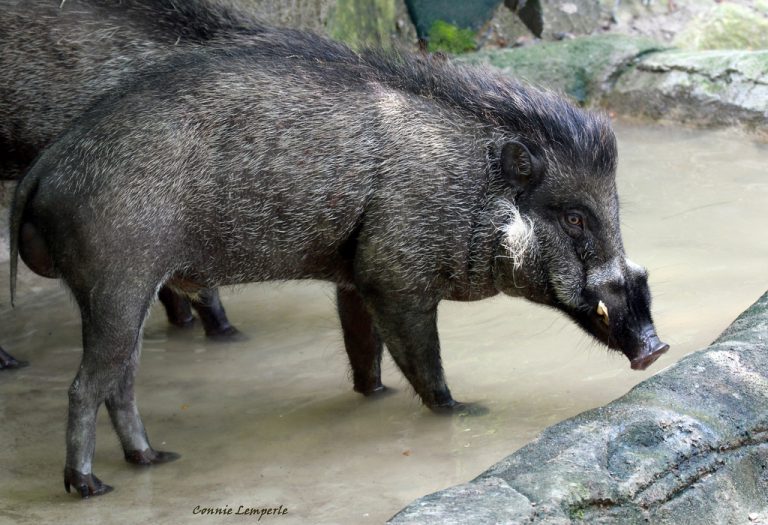
The zoo, named Jambu Zoo, will have various animals, and one of those will be hogs. But if one journalist is to be believed, having hogs, or pigs, in the zoo will be a bone of contention, since pigs are deemed unclean in Islam.

The journalist named Majid Hyderi claims that pigs in the zoo is bound to spark a fresh controversy in the state, especially in the Kashmir valley.

“Pigs are deemed as unclean animals in Islam and hosting them in a zoo will have political consequences,” the journalist writes.

Apart from giving a religious colour to the upcoming zoo, the journalist goes on to give it a political colour by writing “The state is currently ruled by a coalition of the People’s Democratic Party (PDP) and the Bharatiya Janta Party (BJP), which is believed to be extremely unpopular. The introduction of pigs by this government is fraught with risk in a volatile region.”

The journalist, who also writes for mainstream Indian publications like India Today’s DailyO, quotes an anonymous source that claims that the BJP-PDP government sees the pigs as a sign of “good luck”.

“Many fortune tellers close to the corridors of power had advised them to bank on pigs. So it was decided, why not to give this mascot a try when the state is struggling for peace,” an anonymous source is quoted as saying.

It should be noted that consulting fortune tellers is also considered haraam (forbidden) in Islam by many conservative and puritan Muslim groups, and this anonymous quote appears to be an attempt to spark a controversy where there might be none.

There have been no news of any Muslim group protesting against ‘pigs’ yet, though it is true that pigs are considered unclean and to be avoided in Islam. Two years ago, offices of Marathi newspaper Lokmat witnessed angry protests by outraged Muslims, because the paper had printed cartoon of a piggy bank with ISIS seal on it.

Earlier Jammu and Kashmir had seen protests over liquor being sold at Srinagar airport, because liquor is considered haraam in Islam. The move to sell liquor was finally dropped after these protests. Similarly, there have been protests over opening of cinema halls in Kashmir, as many conservative Islamic groups consider moving pictures and music as haraam too.

How media has been finding a new and improved Rahul Gandhi, every year

0

“He had just about enough intelligence to open his mouth when he wanted to eat, but certainly no more.” – PG Wodehouse

Believe it or not, the above quote finds it way into an article published on Firstpost on 3rd November 2017 and no prizes for guessing who it’s about! But the piece is a revelation, informing you, “After several years, brand Rahul Gandhi is in demand again.”

Firstly, one wonders when brand Rahul was ever in demand considering he almost holds a record for the most number of elections lost under his watch. Secondly, it is bizarre that both these statements are being used to describe the same person. It is amusing that the dichotomy isn’t obvious to the author.

Well, the article informs us how “the manufactured novice he appeared to be” has repackaged and rebranded himself, thus “getting both applause and attention”. It almost trashes him first before putting him up on the pedestal, going gaga over his “new and improved, rebooted” avatar. It is hilarious that the ‘intelligentsia’ can believe that because of the selfie with a ‘fan’, he has transformed into the “one politician you would like to bring home, not for a selfie, but a quiet meal with the family.”

Other politicians could learn a thing or two from this. This one selfie earned him brownie points from fans across all media persons. Multiple articles (1)(2) were written praising Rahul Gandhi.

But what these fans probably did not notice is how quickly Rahul Gandhi has learnt from other politicians. Not so long ago, in September 2016, he had remarked that “Narendra Modi is a machine that takes selfies and makes promises,” and boy, did he learn!

Apart from this now famous selfie, he has made very steep promises of all that his party will do if voted to power again. The media very religiously prints every word he says, wisely ignoring questions that arise about why he didn’t do any of this when his party was in power just three years ago.

A very large section of our media simply loves Rahul Gandhi; going by the number of times they have printed articles about how he is the PM-in-waiting. He is compared for similarities with his father, grandmother, great-grandfather, and how he almost “deserves” the throne, if it may be called so!

Let us go back in a time a little.

In August 2010, Economic Times ran an article titled “From Rajiv to Rahul,” wherein it was said, “Nobody would have imagined that Rahul Gandhi would capture the nation’s imagination as he has today.”

In Nov 2017, in the aforementioned Firstpost article, it says “Who would have thought, to rephrase Lady Macbeth, the young man would one day generate so much interest?”

Reminds me of the lines “Old Dog New Tricks!” You can even call it the same old wine in a new bottle! The branding, rebranding and re-rebranding by the media of a “new and improved” Rahul Gandhi, good enough to be Prime Minister now, seems to be a never ending story!

Just like his “coming of age” stories.

India has more chances of getting a “Guinness Book of World Records” entry for the most times one person has been “rebooted, rebranded and remodelled”, especially by the media, to be a Prime Minister, than in any other category!

The media is so desperately waiting for Rahul Gandhi to emerge as a challenge to Narendra Modi, they have been repeating the words “reboot” and “Modi’s challenger” unendingly! India Today (Feb 2016) even quoted Paulo Coelho in this context and said “the political environment of the country also conspired to back him in this mission.”

One fine day, in true “Avatar” style, Rahul Gandhi arrived in a helicopter. Did you just say “So what? Even the ultimate Aam aadmi Arvind Kejriwal travels in choppers now!” Well then, hold your breath, there’s more! In a brief flashback you are reminded that when Rahul Gandhi last visited the area in March 2008, he had said, “For the tribals of Kalahandi, there is a solider in Delhi named Rahul Gandhi.”

You can easily see how the NDTV correspondent must have been inspired enough to add an “India’s Avatar?” to what might otherwise have read “Rahul Gandhi arrives for tribal rally in Orissa”.

In Feb 2016, India Today published an article which was touted as “The inside story of how a Leader in Waiting scripted a remarkable revival for the Congress.”

This article speaks of how Rahul Gandhi did not join the Manmohan Singh cabinet fearing it would undermine the authority of a person he holds in high regard. If only this magazine would also tell its readers which portfolio Mr. Gandhi might have actually been able to handle! This was also said to be the reason he was not able to contribute constructively in the Government.

“Since he joined politics in 2004, his party was in power and he “felt trapped in a strange place” because he could not speak his mind if it contradicted the government’s position.” It is for this reason perhaps, out of extreme respect and regard for his senior party worker – the PM – that Rahul Gandhi, in one of his many avatars, tore away the ordinance of his own Government.

The latest is Rahul’s Twitter avatar which has undergone a makeover. It is full of “witty one-liners”, dog-tricks, selfies, memes and Aikido and surely, all of this, complete with scores of bots, will suffice to revive the Indian economy and bring down the hunger-index as claimed by Rahul Gandhi and his faithful Lutyens media. His speeches are just as hilarious even today, with unintentional phrases like “Is Jawaab ka Sawaal dena hi padega”.

I am waiting for the day some bright spark uses this brilliant quote from P.G. Wodehouse about one of his speeches while explaining his evolution:

“It was one of the dullest speeches I ever heard. The Aged woman told us for three quarters of an hour how she came to write her beastly book, when a simple apology was all that was required.”

The Great Indian ‘Mithai’ Debate!

0

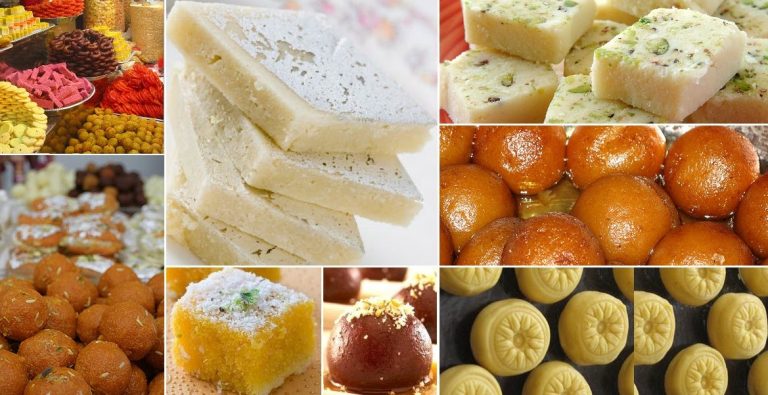
The Indian folks love their sweets. And the war of words between people from across the country as to which ‘mithai’ is better than the other has never ceased. The debate was renewed on Twitter after we reported how Orissa losing the ‘rosogulla’ war was unfounded.

Member of Parliament from BJD couldn’t be happier.


Of course, the war over Rosogulla wasn’t about to stop with just an OpIndia fact check. Panda wasn’t in the mood to let go of the Rosogulla. He was seem demanding a head-to-head tasting contest for the Bangal and Oriya variety


This, however, was just the beginning of the Great Indian Mithai debate. Soon, polls came up wondering which is the most over rated Indian mithai of them all, and Twitter saw some hilarious responses.


Soon, a two years old tweet, that quoted Lord Crincklybottom’s “undisputed” hypothesis of the origins of Mysorepak resurfaced. While Orissa and West Bengal fought over rosogulla, we saw Tamilians and Kannadigas fighting over the origins of Mysorepak.


Mithai enthusiasts from the different parts of the country were seen hating on each other and demanding public shamings. The war had heated up!


While the hate rises, fascist creeps in, divide deepens, we feel that it’s time Modi takes moral responsibility for this National Mithai mess and resigns with immediate effect. In the meantime, we here at OpIndia are closely following the developments while munching on some delicious Gulab Jamun!