Home Blog Page 776

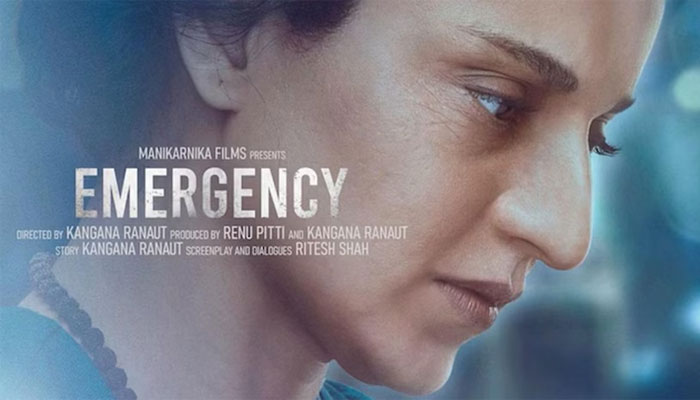
Kangana Ranaut confirms that her movie Emergency has failed to get clearance from Censor Board, won’t release today

Actress, producer and Lok Sabha MP Kangana Ranaut has confirmed that her movie ‘Emergency’ has not been cleared by the censor board and won’t be released today.

“With a heavy heart, I announce that my directorial Emergency has been postponed, we are still waiting for the certification from censor board, new release date will be announced soon, thanks for your understanding and patience”, Kangana posted on X.

The movie ‘Emergency’, based on the life of Indira Gandhi, her tenure as the Prime Minister of India and the Emergency she imposed in the 1970s, was scheduled to release on September 6. The movie’s clearance from the censor board, was stalled amid objections by some Sikh groups.

Kangana Ranaut, a multiple national award-winning actress and the sitting MP from Mandi in Himachal Pradesh, has been facing threats and condemnations from many Sikh groups and political parties over her comments on the farmer protests. The movie Emergency also touches upon the events leading to Indira Gandhi’s assassination, Operation Bluestar and her actions against the Khalistani terrorism in Punjab.

The Shiromani Gurudwara Pravandhak Committee had demanded the removal of Emergency’s trailer from all platforms, a public apology from Kangana and a ban on the film’s release, alleging that the movie hurts the sentiments of the Sikh community. They have also sent a legal notice to Kangana Ranaut.

Financial Times attempts to sour India’s relationship with Ukraine and US, claims Russia ‘secretly purchasing’ critical electronics by using rupees from oil sales

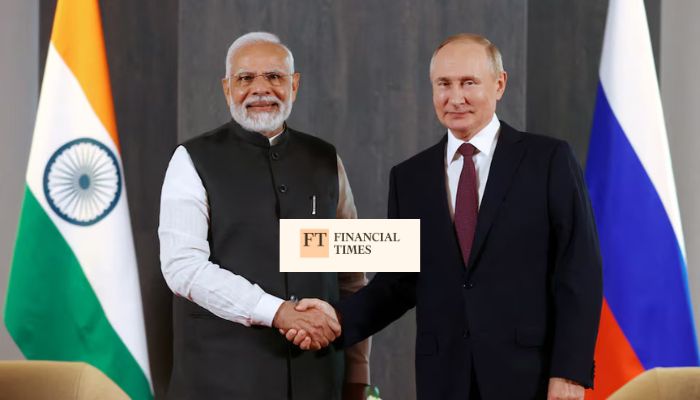
Days after Prime Minister Narendra Modi visited Kyiv and appealed for an end to the Russia-Ukraine war, the ‘Financial Times’ accused India of selling ‘sensitive goods’ to Russia and aiding in the ongoing conflict in Eastern Europe.

In a dubious article titled ‘Russia built covert trade channel with India, leaks reveal’ and published on Wednesday (4th August), the notorious British newspaper alleged that Russia was sourcing ‘critical electronics’ from India using its large reserve of rupees generated from oil sales.

Financial Times, which has a sordid history of peddling anti-India propaganda, claimed that the purchases were kept ‘hidden’ from Western governments and used in its war effort with Ukraine.

The newspaper relied on documents, not accessible to the public, and cryptic ‘sources’ to make its outlandish claims. It alleged, “It (Russia) saw India as an alternative market to source crucial goods “previously supplied from unfriendly countries”.

The purchase of Russian oil has been the bone of contention between India and the United States in particular so much so that the Deputy National Security Adviser for International Economics of the Biden administration threatened India with ‘consequences.’

Unperturbed by the arm-twisting of the West, India prioritised its domestic energy needs and purchased oil from Russia nonetheless.

British newspaper forgets India is a sovereign country

Financial Times attempted to exploit this very fault line in the bilateral relations between the US and India by suggesting the use of ‘oil money’ by Russia to continue the war with Ukraine.

It claimed, “Russia and its Indian partners targeted dual-use technologies — goods with both civilian and military applications — that are subject to western export controls…Moscow even envisaged pumping investment into Russo-Indian electronics development and production facilities, according to the leaked files.”

The British newspaper conceded that it had no idea about the extent of purchases but insinuated that Russia’s relationship with India had “grown deeper in the specific categories of goods.”

Financial Times also failed to specify the names of these sensitive goods or ‘critical electronics’. It also reiterated some of the threats of ‘sanctions’ issued by the US, conveniently forgetting that India is the world’s 5th largest economy and a sovereign nation capable of making policy decisions that suit its interests.

Financial Times whines about India’s purchase of Russian oil

The Indian government has repeatedly clarified since 2022 that the ‘Russian oil purchases’ constituted only a fraction of the total oil imports.

The country’s External Affairs Minister S Jaishankar said once, “We do buy some energy, which is necessary for our energy security. But I suspect looking at the figures. Our total purchases for the month will be less than what Europe does in an afternoon. So, you might want to think about it.”

Despite this, the ‘Financial Times’ was quick to allege that India gave a ‘lifeline’ to Russia following sanctions on it by the the West.

“While Modi has bemoaned the impact on developing economies of the invasion of Ukraine and urged the two sides to make peace, Delhi extended an economic lifeline to Russia after it was hit by western sanctions,” it claimed.

“India has been a major buyer of Russian crude oil and the two countries’ total trade reached an all-time high of $66bn in the 2023-24 financial year, a fivefold increase on the past year before the invasion. Some of the trade has been transacted in rupees, leaving Russia with a surplus of the currency…Russian groups have used rupees to trade gold and purchase goods to evade the sanctions, according to people involved in the trade and western officials,” it added.

Financial Times accuses India of aiding in war against Ukraine, claims don’t add up

In its report, the British newspaper claimed that in October 2022, Alexander Gaponov (Deputy Head of the Radio Electronics Division of Russia’s Industry and Trade Ministry) devised plans to procure electronics for use in drones and missiles from India.

It claimed that Gaponov roped in an organisation with links to Russian security services to purchase ‘dual-use components’ from India using digital financial assets and Indian currency and avoid scrutiny from the West.

Citing leaked documents, ‘Financial Times’ alleged that a capital outlay of ₹100 billion was made to source parts meant for server, telecommunication, and other complex electronic equipment.”

It also alleged that Russia spent funds to strengthen electronics factories in India to ensure a steady supply of its critical resources.

Such claims are hard to believe given that Russia could have easily purchased such ‘sensitive goods’ from China, the arch-rival of the West, instead of ‘investing’ in India which has good ties with the United States and other Western nations.

Given the mass-scale manufacturing potential of China at a fraction of the cost, it is highly unlikely that Russia would depend on India to procure critical equipment for defence.

No ceasefire in sight as West continues to support the Russia-Ukraine war

The news report appears as a concerted attempt by ‘Financial Times’ to tarnish India’s image at a global scale by vilifying the nation as an abettor of war between Russia and Ukraine.

Interestingly, the United States and the West have been prolonging the ongoing conflict in Eastern Europe by pumping in billions of dollars and strengthening the war chest of Ukraine through the supply of arms and ammunition.

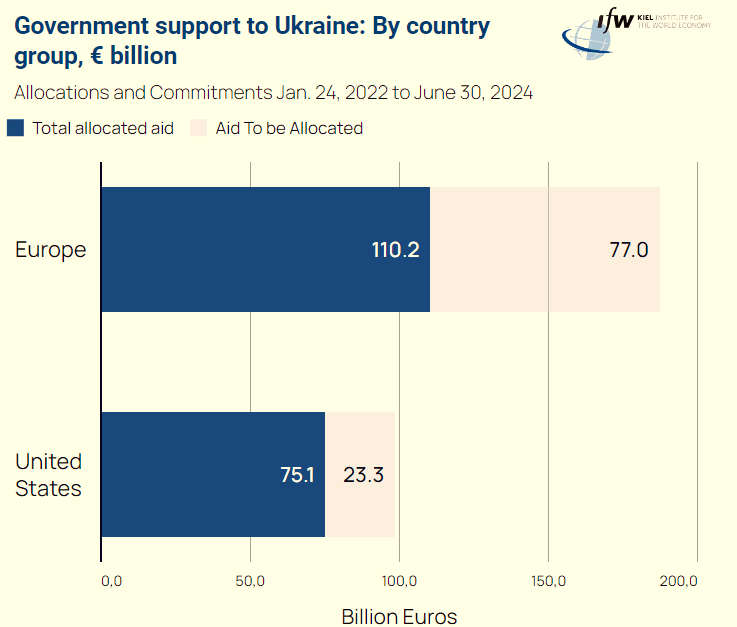
So far, the US has spent €75 billion on supporting the Ukranian side while European nations have cumulatively spent €110 billion.

Graph depicting share of the aid money given to Ukraine by the US and Europe, image via IFW

An additional €93.3 billion worth of military aid is still in the pipeline.

While the warmongers in the West virtue signal India for securing its energy needs, they continue to keep the conflict simmering.

UP: Altaf poses as Akash to lure Hindu woman, rapes her, forces her to convert to Islam in Moradabad, arrested

0

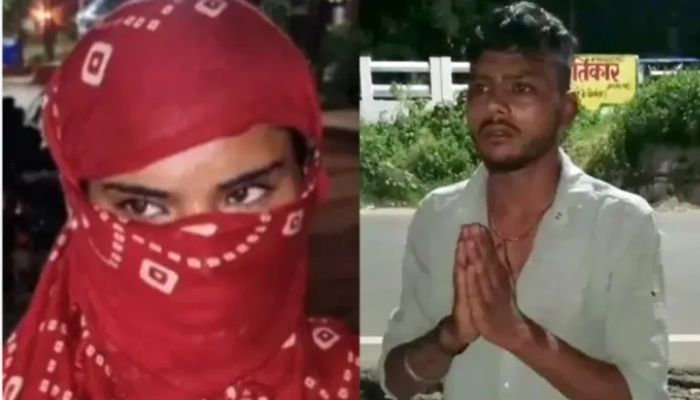
In Uttar Pradesh’s Moradabad district, a woman has filed a case against one Altaf accusing him of pretending to be Akash and sexually exploiting her after initially convincing her into a relationship. The accused later pressured the victim to convert to Islam. However, as the victim refused, Altaf threatened to rape her 4-year-old daughter. The accused has been arrested by the police.

The incident occurred in the Majhola police station area of Moradabad district. According to the victim’s complaint, she lives in the Linepar area of Moradabad. She is married and the mother of a four-year-old girl. She used to travel to Amroha for a job where, she met Altaf, who introduced himself as Akash and befriended her. Altaf gradually trapped her in a relationship under his false identity, the complainant has said.

The victim claimed that one day she was alone at her home in Moradabad when Altaf came to meet her. Finding the victim alone, the accused allegedly raped her. When the victim objected and tried to aeert that she would complain to the police, Altaf under his Akash identity allegedly convinced her that he would soon marry her anyway and she should refrain from it. The victim, however, was left baffled after learning that the man she thought was Akash was in reality, Altaf. In her complaint, the victim said that Altaf had recorded her obscene videos.

She further alleged that Altaf used those obscene videos to blackmail her and separate her from her husband. Subsequently, Altaf forced the victim to reside with him by threatening to make her obscene video viral online. The accused also started coercing the victim to eat meat and wear the burqa. Moreover, Altaf asked the victim to offer namaz five times a day and upon refusing, he used to assault the victim.

“On September 2, 2024, Altaf came to my house and threatened me that I would have to accept Islam. When I refused to do so, he took off the clothes of my 4-year-old daughter. He threatened that if I do not accept Islam, he will rape my daughter. I somehow escaped and reached the police station and informed the police about this,” the victim said.

On the victim’s complaint, Moradabad police have filed a case against Altaf under relevant sections and arrested him. SP City Kumar Ranvijay Singh stated that a case has been registered against the accused Altaf under various provisions, including the POCSO Act. The accused has been arrested and is being questioned.

ED raids residence of former RG Kar principal Sandip Ghosh, PMLA investigation ongoing as per HC order to CBI

0

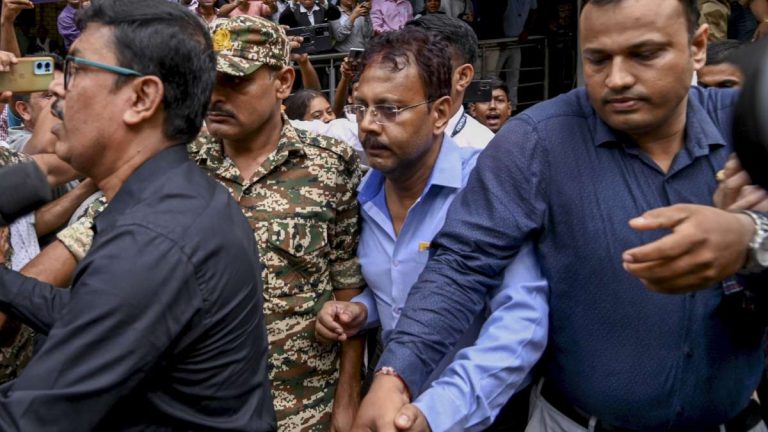
The Directorate of Enforcement (ED) carried out raids at the residence of former principal of RG Kar medical college and hospital, Sandip Ghosh, among othre places in Kolkata in a case pertaining to the financial irregularities in the RG Kar Medical College and Hospital.

ED had registered a case under the Prevention of Money Laundering Act (PMLA) to probe money laundering charges against Sandip Ghosh in the financial irregularities case.

Ghosh is presently in the custody of the Central Bureau of Investigation (CBI).

On Wednesday, Sandip Ghosh filed a petition in the Supreme Court against a Calcutta High Court decision that ordered the CBI to probe into the graft case against him.

His plea has been listed on September 6 before a bench led by Chief Justice of India, DY Chandrachud.

The Anti-Corruption Branch of the Central Bureau of Investigation (CBI) arrested Dr Sandip Ghosh on September 2.

Dr Ghosh was under investigation for alleged corruption and financial irregularities at the college and hospital, following a directive from a single bench of the Calcutta High Court, which ordered the CBI to probe the matter.

He was sent to 8-day police custody on Tuesday.

On August 24, following the orders of the Calcutta High Court, an official FIR was registered by the CBI against Ghosh on the alleged corruption case. The Indian Medical Association (IMA) of Kolkata also suspended the membership of former Sandip Ghosh amid a CBI probe into the corruption case.

Earlier on August 26, the CBI also concluded a second round of polygraph tests on Dr Ghosh as part of their investigation into the rape-murder of a woman doctor at the institution.

The Calcutta High Court has granted the CBI three weeks to submit a progress report on the investigation, which is to be presented on September 17.

The trainee doctor was found dead in the seminar hall of RG Kar Medical College and Hospital in Kolkata on August 9.


(This news report is published from a syndicated feed. Except for the headline, the content has not been written or edited by OpIndia staff)

Arts, science, mathematics, all flourished for a 1000 years, then most powerful republic drowned in ‘caste politics’: Will those doing politics on caste census learn from history

The issue of caste census is quite a popular topic in India right now. The opposition is planning to use Caste Census as a Brahmastra against ruling NDA alliance. Rahul Gandhi has repeatedly threatened that Caste Census will have to be done at any cost. At the same time, Lalu Yadav’s party RJD of Bihar is also trying to link this census with caste identity, which can prove fatal for democracy.

The former RJD-JDU government of Bihar also conducted a caste survey in Bihar and on the basis of that, the limit of caste reservation in Bihar was raised to 65 percent. However, this was rejected by the court. Now, Tejashwi Yadav of RJD and Rahul Gandhi of Congress are asking for this caste census in the entire country.

If caste census is conducted, and on that basis the government makes welfare policies for the people, then it will be a very commendable step for society and democracy. Robert Dahl has also said, “The chances of a stable democracy in a country are better if its citizens and leaders strongly support democratic ideas, values ​​​​and practices.”

However, the way caste calculations are being linked to caste identity to gain power is spreading animosity and bitterness in the society. The way this controversy is being fueled in the country, this step can prove to be dangerous in a country like India. Looking at the ambitions of some politicians at present, it can prove to be a divider rather than an attempt of uniting society.

American politician, lawyer, diplomat, writer John Adams said about 250 years ago, “I do not say that democracy has been more harmful than monarchy or aristocracy overall and in the long run. Democracy has never been and cannot be as durable as aristocracy or monarchy. But, as long as it lasts, it is more bloody than both. Remember, democracy never lasts long. It soon gets ruined, gets tired and kills itself. There has not been a democracy yet that has not committed suicide.”

Although this idea by thinkers like John Adams may be in the context of Western civilization, where the modern democracy or republic emerged only in the 17th century, India is different in this case. India, especially Bihar, where the seed of caste census was sown, had already spread the tree of democracy centuries ago, which is an important part of today’s major global political system. But, in some cases this statement by Adams is accurate.

In India, about 2600 years ago, the Licchavi Republic emerged in the land of Bihar. It was a part of the Vajji Sangha. This republic had plurality like today’s India. This republic flourished a lot, but eventually internal disputes and conflicts for power started increasing among each republic clan and finally it collapsed.

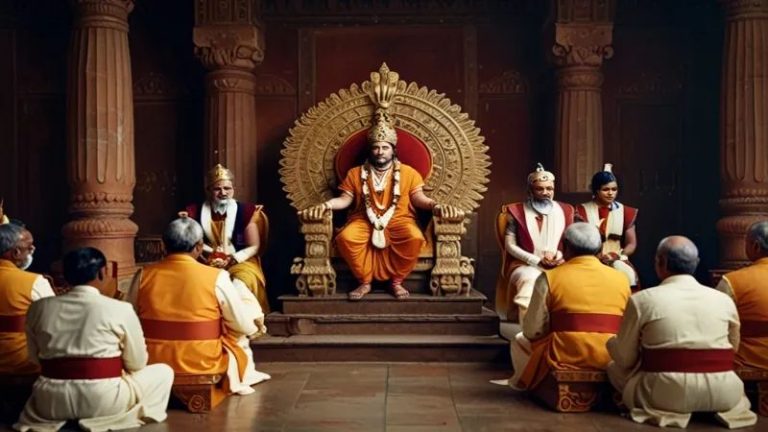
In fact, next to the Magadh Empire was the Licchavi Republic. Its capital was Vaishali (Bihar). The system of governance here was in the form of Gana or Sangha. This union consisted of about 8 clans, which were called Ashtakul. This union was spread as far as Nepal. The chiefs of all these states, which are called Mahajanapadas, i.e. kings, used to participate in it.

There is a detailed discussion about this in the Buddhist religious text ‘Digha Nikaya’. These kings used to gather in the assembly and discuss the economic, social, political, and strategic aspects of the republic and unanimously work for the welfare of the republic. However, all the 16 republics and monarchies including Licchavi, were headed by Kshatriyas (Rajputs). These also include republics of Shakya, Chedi etc.

During that time, the ruler of the Magadh Empire, Ajatashatru, planned to attack the Licchavi republic. He met Lord Buddha to seek advice along with his minister Vassakar. However, Lord Buddha did not allow this. In this way, the Licchavi republic had become so powerful that no state could conquer it even if it wanted to.

Commenting on the future of the Licchavi republic, Buddha had told his favourite disciple Anand, “As long as they (the clan heads of the Licchavi republic) sit together in their assemblies and take decisions, solve problems through mutual consultation, create consensus, respect their elders, their republic will survive.”

This way, this state continued for about 1000 years. During this time, the states included in this union progressed in every field. Art, literature, knowledge, science, Ayurveda, medicine, philosophy, mathematics, etc. developed a lot. The mutual power of small states made the Licchavi republic invincible. However, mutual conflicts later weakened it.

Guruswami writes in one of his articles, “The king or chief of the republic was always a Kshatriya… The Licchavi, who ruled the Kathmandu Valley in present-day Nepal and a large part of North Bihar, were governed by an assembly of about 7,000 family heads.” In the Licchavi Republic, three main officials worked together – the ruling chief, the deputy chief, and the army chief.

The 8 Mahajanapadas of Licchavi, Chedi, Shakya etc. in the form of the Vajji Sangha were very powerful. However, being a republic, their chiefs used to move forward unanimously on matters of national importance like war, but there used to be frequent tussles between them regarding internal politics and system. The story was the same in the Licchavi, Shakya, Chedi republics.

It is said that the Licchavi Republic included the heads of 7000 elite families, which included people from every class, from traders to the elite.

This led to ideological divisions in these republics. Along with ideological divisions, the power struggle also deepened in them. All this was the result of giving importance only to one’s own class instead of the nation. The result was that all these republics including Licchavi started paying special attention to protecting their power. This made their monarchical neighbours like Magadha and Kosala keep a close eye on them.

Licchhavis became weak due to mutual conflicts and struggles. The mother of democracy had now become weak. Eventually, the Licchavi were defeated in the war with the Magadh Empire. Magadha absorbed all the Janapadas and Mahajanapadas one by one. In this way, the Licchavis and the Vajjis were destroyed in 16 conflicts. Later, it was finally destroyed during the Gupta Empire.

The main reason for the fall of other republics, including Licchavi, was that apart from internal power struggles and the attempt by the influential group to control the throne, their commitment to democratic rule decreased over time. The internal power struggle weakened the unity and collective decision making process of the Licchavi. This paved the way for more autocratic and centralized forms of governance.

The Licchavi republic, which gave the world its first democracy, was weakened and destroyed due to power struggle, and preference for own faction over the nation. Today’s modern politics needs to learn from this. The current system needs to learn that the influence of a faction in power makes it autocratic. Discontent arises in an autocratic society and ultimately ensures its downfall.

In today’s politics, there is a power struggle going on between factions in the name of caste census. In this caste census, no leader said that a survey should be done to find out how many families have been left behind in the development process, and their number should be counted. Rich and poor cannot be determined in today’s society on the basis of caste.

No politician said how many such families are there in this country who are not getting two square meals a day. How many families are there who are not getting health-education. Every political party has said only this that caste census should be done so that it can be ascertained what is the population of castes so that reservation system can be implemented in proportion to that.

This demand is impractical and dangerous for integrity. As we have seen that in other republics including Licchavi, when the influence of a clan (caste in today’s context) increased, then it started thinking about the right to power. On the basis of caste census, more reservation is being demanded for backward classes.

At the same time, from time to time there is a demand to add other castes in backward classes. Other castes are also added to these castes for gaining power, but they do not get the benefit of it, because the castes in these classes which have become rich and capable take advantage of it themselves. This creates the danger of increasing mutual differences and conflicts.

There should be caste census, but it should be for the welfare of the people standing at the lowest level. This should be done to find out how many people belong to each caste in the country and what percent of them are poor and incapable, so that the capable and rich people who take full advantage of that class can be excluded to let the poor and needy benefit. Leaders like Rahul Gandhi and Tejashwi Yadav, who call themselves protectors of democracy, should understand its seriousness.


Called me daughter but raped and groomed me to be sex-slave: Malayalam actress Sowmya’s shocking allegations on Tamil director

The slew of claims of sexual assault and rape that have rocked the Malayalam film industry is now reverberating in Tamil Nadu as well. Malayalam actress Sowmya, whose real name is Sujata, has accused a Tamil film director of severe mental, physical, and sexual abuse including sticking a rod into her genitalia for “entertainment.” She described being “groomed as a sex slave” by the director whose identity she has chosen to withhold at this time in an interview with NDTV.

Sowmya stated that the film director, who had approached her with his wife when she was eighteen, had subjected her to mental anguish by referring to her as his “daughter” and expressing that he desired a child with her. She apparently shared the man’s name with the Kerala government’s special police unit, which is looking into other accusations of suspected sexual assault in the Kerala film industry popularly known as Mollywood.

“I was 18 and in my first year of college. I came from a very sheltered background and my parents knew nothing about movies. This opportunity (to act in a Tamil film) came through my college theater contact. As a child I was enamored by the actor Revathy, who lived near my house at that time. I was in a fantasy world. So I went for a screen test with this couple. I was a child, I didn’t know much,” Sowmya recounted.

She said that the director had told Sowmya’s father they had spent a lot of money on her screen test and implied that her family had been coerced into allowing her to act. Then followed Sowmya’s warning signs. “I said I wasn’t comfortable with the man. I said this at my first meeting,” however, she felt “obligated” to perform in the cinematic venture.

“During the first outdoor shoots he didn’t speak to me. The agreement was that his wife would be the director but that was on paper, in reality he was directing the whole movie and so I was under his control. He gave me the ‘angry silent treatment’ like a lot of men are used to doing and because of our conditioning in patriarchy about authority figures, particularly intimidating men who express anger very easily, I was very scared,” Sowmya narrated her distressing experience.

She then disclosed how she was “groomed” by the guy who pretended to be her father and whose own daughter had left after accusing him of sexual assault. Sowmya added, “But they told me she (the couple’s daughter) was lying. So they brought me into their home. I was a teenager who was rebellious at home and suddenly this couple was nice to me, bribing me with good food and milkshakes and telling me good things. That was the grooming process. He knew fully well what he was doing.”

The actress described the horrible events that unfolded later. “One fine day, when his wife wasn’t around, this man while calling me his daughter, kissed me. I completely froze. I was so desperate to tell my friends but couldn’t. I was ashamed, thinking I had done something wrong and that I was obligated to be nice to this man. So I continued going for practice, for dance rehearsals. Every day I went back and gradually, step by step, this man completely used my body to his advantage. At one point, he forced himself on me and he raped me. This went on for close to a year while I was in college”, Sowmya said.

Sowmya maintained that during this period, the man called her his “daughter” on several occasions and conveyed his desire to have a child with her. “He messed with my brain,” she said. In the 1990s, Sowmya starred in three successful Malayalam films. Speaking on the current sexual assault allegations in Mollywood after the Hema committee report was published, she mentioned, “A co-star who sexually abused me has now been named in the Hema Committee report. Directors, actors, and technicians abused me. There were also rights violations. One person spat on me.”

All this happened without her consent. “It took 30 years for me to heal and recover from this sense of shame. I encourage survivors to report all such abuse,” she said.

Accusations of sexual assault and rape, directed towards prominent Malayalam actors and filmmakers such as Ranjith, have been flooding in since the Justice Hema Committee report was made public last month. On 3rd September, Malayalam movie star Nivin Pauly, a film producer and four others, including a woman were booked after a female alleged in a complaint that she was repeatedly sexually abused at a hotel in Dubai last year after the former promised her a role in a film. However, Nivin Pauly dismissed the allegations. Gang-rape and other charges have been mentioned in the First Information report (FIR).

Several lawsuits have been filed against well-known actors, including Mukesh, an actor turned politician who is also an MLA from Communist Party of India (Marxist) party. The executive committee of the Association of Malayalam Movie Artistes (AMMA) was also dissolved and all 17 members of the committee, including president and senior actor Mohanlal submitted their resignation as allegations of sexual abuse and misbehaviour were raised against its members and office-bearers.

For me, Dharavi is not just about urban renewal, it is about restoring dignity to over one million residents: Gautam Adani

0

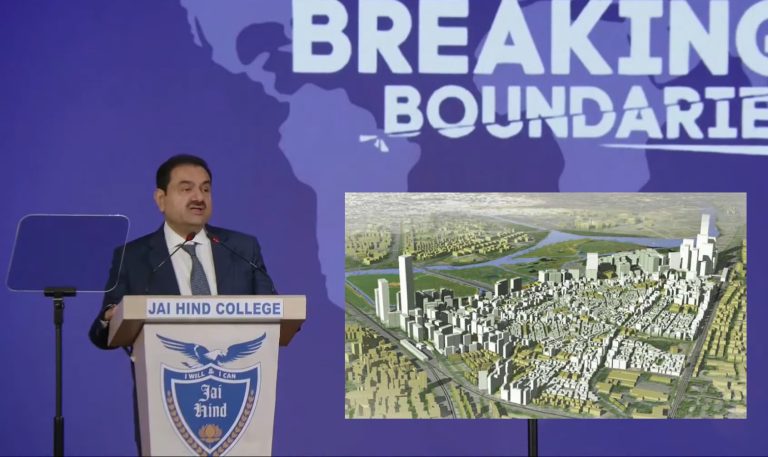
Adani Group Founder and Chairman Gautam Adani on Tuesday mentioned the Dharavi Redevelopment Project during a speech in a Mumbai college and said it is not just about “urban renewal” but “restoring dignity to over one million residents of our country”.

Addressing the students at Jai Hind College, Mumbai, Gautam Adani extended greetings to the teachers on Teachers Day.

“I wish Happy Teachers Day to all the teachers present here…I find it fascinating that 75 years ago, two visionary professors from DJ Sindh College in Karachi laid the foundation for these institutions in two small rooms. Despite the immense challenges and human displacement during the partition of our country, they envisioned a future where the power of education could heal and unite,” he said.

“I stand here today, humbled and thankful, having been invited by Vikram Nankani to share my experiences from this historic platform. Just as Jai Hind College was built on the principle of breaking boundaries and creating new possibilities, the theme of my talk will focus on the inspirations that allowed me to overcome my own boundaries,” he added.

Gautam Adani said that every nation has its transformative years that change the direction of its future.

“Every nation has its transformative years that change the direction of its future. 1947 was about a free India. 1991 was about the liberalisation of our businesses. And in 2014, under the leadership of Prime Minister Narendra Modi, the essence of freedom was further accelerated as reforms and decisive governance took centre stage. All these years stand as turning points, each building on the other in India’s remarkable journey,” he said.

He asserted that the future belongs to those who dare to see beyond the present, who recognise that today’s limits are tomorrow’s starting points.

He talked about the development of Mundra port, the largest commercial port in India with state-of-the-art infrastructure and largest coal import terminal.

“In 1995, the Gujarat government announced its port-led industrial development plan through public-private partnerships. Around that time, we had been approached by the global commodities trader Cargill. It was a proposal to partner for manufacturing and sourcing salt from the Kutch region. While the partnership did not materialize, we were left with about 40,000 acres of marshy land and approval to build a captive jetty at Mundra for the export of salt,” he said.

“What others saw as marshy barren land, we saw as a canvas waiting to be transformed. That canvas is now by far our nation’s largest port! Mundra became my karmabhoomi and made my vision a reality a powerful testimony to the fact what you dream, you create, and what you think, you become. Mundra today hosts India’s largest port, the largest industrial Special Economic Zone, the largest container terminals, the largest thermal power plant, the largest solar manufacturing facility, the largest copper plant, and the largest edible oil refinery. And yet, we’re only about 10 per cent of what Mundra will eventually become. It stands as a living monument to the power of integrated business models and the strategic value of adjacencies challenging the very concept of core competencies that the west advocates,” he added.

Mundra port provides multimodal connectivity and is a deep-draft, all-weather port.

Gautam Adani said over the years he learnt a vital lesson that the “bigger your bets, bigger are the boundaries you break and bigger the boundaries you break, lesser is the competition”.

He spoke of Khavda in Kutch, one of the world’s most inhospitable deserts, now transformed into the world’s biggest Renewable Energy installation, spanning several hundred square kilometres. He then spoke of “world’s most complex redevelopment project” in Mumbai’s Dharavi.

“Khavda is not just another project it is a vision. Already generating more than 3,000 MW of clean energy – and on track to reach 30 GW in the next five years there is no parallel to Khavda today. For us, Khavda is a symbol of national pride capturing the philosophy of everything that the Adani Group as a company stands for,” he said.

“Or consider the world’s most complex redevelopment project in Mumbai’s Dharavi, where we are transforming the world’s largest slum over the next decade to create an unmatched ecosystem of sustainable living. For me, Dharavi is not just about urban renewal. It is about restoring dignity to over one million residents of our country. It is about the possibilities when you dare to dream big and act with purpose,” he added.

Dharavi Redevelopment Project (DRPPL), a joint venture between the Adani Group and the Government of Maharashtra, announced that eligible residential tenements in Dharavi, will get flats with independent kitchens and toilets measuring a minimum 350 square feet (sq ft), which is 17 per cent more and the highest among slum redevelopment projects in Mumbai.


(This news report is published from a syndicated feed. Except for the headline, the content has not been written or edited by OpIndia staff)

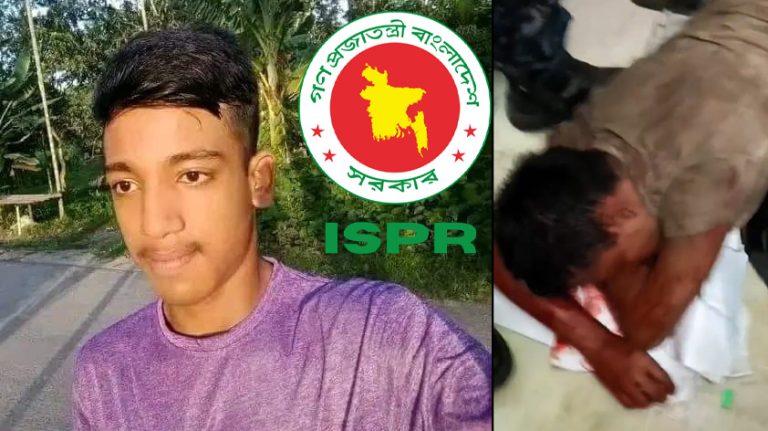
Bangladesh: Police had to declare blasphemy-accused Hindu boy dead to satisfy bloodthirsty Muslim mob, hospitalisation announced after videos went viral

Hindu youth Utsab Mandal, who was beaten by a mob over blasphemy allegations in Khulna in Bangladesh, is alive, said the Directorate of Inter Services Public Relations of the country. A statement issued by ISPR said that Utsab Mandal is being treated at a hospital under army supervision and is out of danger.

It has also been reported that to disperse the bloodthirsty mob, announcements were made from loudspeakers of nearby mosques announcing that the Hindu youth had died, after which the mob retreated.

The ISPR issued the statement after several media houses reported that the college student was killed by the mob after snatching him from the police and the army. The directorate said that Mandal was rescued alive by the efforts of armed forces and then admitted to hospital. The army asked the people to not believe in rumours circulating on social media claiming that the youth was dead.

The statement issued by ISPR states that after Utsab Mandal is released from hospital, he will be handed over to law enforcement agencies as he is booked in a blasphemy case. Referring to the attempt to lynch him by an Islamist mob, the statement said that the Bangladesh army is always committed to preventing extrajudicial killings and upholding the rule of law.

Notably, Utsab Mandal was accused of insulting Prophet Muhammad on social media, and students of Khulna’s Azam Khan Government Commerce College took him to the office of Khulna Metropolitan Deputy Commissioner (South) on 4th September at around 8 PM.

But in the meantime, as the word spread about the incident, a large mob gathered at the spot, demanding that the Hindu boy be handed over to them. The mob of 3000-5000 people surrounded the office, calling for instant justice. Deputy Police Commissioner Tazul said police had assured the mob that a case would be filed against Utsab and that he would be brought to justice through legal means.

But the mob didn’t agree, and assaulted him, leaving him critically injured. Army and Navy personnel arrived at the scene to control the situation. But despite the presence of police, army and navy forces, the mob managed to break into the DCP office and attacked Utsab Mandal who was held by the police.

After the brutal assault, it was assumed that he had died as he was lying on the ground seemingly lifeless. However, the armed forces rescued him and rushed to the hospital. Now ISPR has confirmed that Mandal is out of danger.

As per reports, police got announcements made from mosque loudspeakers that Utsab has died, in an attempt to disperse the violent mob and restore order. That is the reason why initial reports said that he was lynched by the mob. However, later many of the reports by Bangladeshi media were removed from their portals.

However, the Hindu student will still face legal action as a case has been registered against him over the alleged blasphemous social media post against the prophet. ISPR said that legal procedure has been initiated against him for hurting religious sentiments, and he will be handed over to police subject to his health.

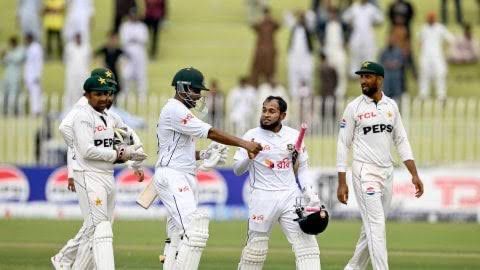
Pakistan, recently humiliated by Bangladesh at home, likely to shift home Test series against England to Sri Lanka or UAE

0

The Pakistan Cricket Board (PCB) is planning to consider alternatives such as Sri Lanka or the United Arab Emirates (UAE) for hosting Pakistan’s Test series against England, according to Geo News.

In Jason Gillespie’s first assignment as Test head coach of Pakistan, the Shan Masood-led team hit rock bottom after enduring a whitewash against Bangladesh on their home soil.

During the two-match Test series, PCB had to shift the second Test to Rawalpindi, which was originally scheduled to be held in Karachi. Due to the ongoing construction work in Karachi National Stadium for next year’s Champions Trophy, it was not viable to host the second Test in Karachi.

As Karachi National Stadium, Lahore’s Gaddafi Stadium, and the Rawalpindi Cricket Stadium continue to go under renovation work for the marquee event; it could be possible that Masood and his side would have to play in Sri Lanka or the UAE.

Pakistan will host England for a three-match Test series, which is a part of the ongoing International Cricket Council (ICC) World Test Championship (WTC) 2023-25 cycle. The first of the three Tests will begin on October 7 in Multan.

The second Test will be played in Karachi, beginning on October 15, and the third red-ball clash is scheduled in Rawalpindi on October 24.
If PCB hosts the three-match Test series in the UAE, Abu Dhabi will be the only option due to the ICC Women’s Cricket World Cup. The cricket extravaganza fest is set to take place in Dubai and Sharjah from October 3 to 20.

Pakistan will be keen to bounce back after their recent slump against Bangladesh. Pakistan dropped to eighth position in the ICC Test rankings, their lowest ranking in the format since 1965, barring the period where they did not have a place in the rankings due to an insufficient number of matches.

(This news report is published from a syndicated feed. Except for the headline, the content has not been written or edited by OpIndia staff)

Austrian youth known as Islamist by agencies shot dead after he opened fire near Israeli consulate in Munich on the anniversary of Munich Olympics massacre

0

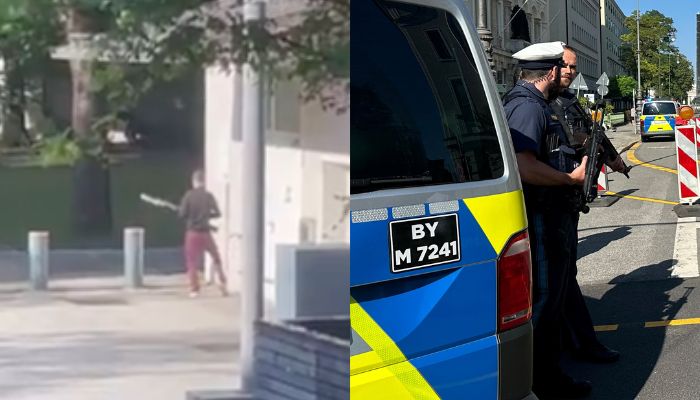
On Thursday (5th September), police in Munich, Germany, shot and killed a man who was carrying a long-barrelled gun after an exchange of fire near a museum dedicated to the city’s Nazi history and the Israeli Consulate. The shooting occurred on the 52nd anniversary of the massacre at the Munich Olympics on the 5th of September 1972. The police said that there were no other suspects in the incident.

The man has been identified by police as an 18-year-old Austrian national, who travelled to Germany recently and lived in the Salzburg area. As per reports, he was known to the security authorities as an Islamist. 

“Police officers spotted a person who appeared to be carrying a firearm. The emergency services used their service weapons and the person was hit and injured,” Munich Police said on X. The suspect was armed with an older long gun when he was shot on Karolinenplatz, a square near the Israeli consulate and a Nazi documentation centre.

Later, the police said that “despite the all-clear, the police operation on site continues. The focus is currently on forensic work in particular. At the so-called witness collection point, colleagues speak to potential witnesses. Therefore, the traffic closures remain active.”

A Munich Police spokesperson said: “It was a male person and we know that he acted here with a long-barrelled gun. Due to the intervention of the police, the perpetrator was stopped and probably died at the scene.”

The incident took place on the 52nd anniversary of the attack on Israeli athletes during the Munich Olympics in 1972. However, no link has been established between the anniversary and the shooting.

According to Israel’s Foreign Ministry, the consulate has been closed for a ceremony commemorating the 52nd anniversary of the 1972 Munich Massacre, in which 11 Israeli athletes were killed by the Palestinian terrorist group Black September during the Olympic Games. No consulate employees were injured in the attack.

Talya Lador, the Israeli Consul General in southern Germany, stated on social media that the occurrence demonstrated the dangers of increasing antisemitism.

“We are very grateful to @PolizeiMuenchen for their actions and cooperation. This event shows how dangerous the rise of anti-Semitism is. It is important that the general public raises its voice against it. Our Consulate General was closed today to commemorate 52 years since the terrorist attack at the Olympic Games,” Lador said.

Notably, in the 1972 Munich Massacre at the Munich Olympics by Palestinian terrorists, 11 Israeli athletes, a West German police officer and five of the Palestinian terrorists were killed.