Home Blog Page 99

MAGA commentator Natasha Chart revives the debunked Cisco’s ‘caste discrimination’ case to demonise Hindus in US Tech: Here’s the truth

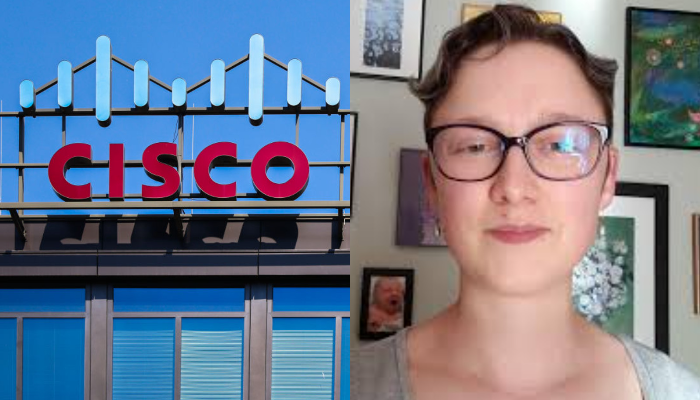
On 15th March (Sunday), Natasha Chart, a self-described “Western civilisation appreciator,” author and supporter of the (Make America Great Again) movement, referenced a fraudulent “caste discrimination” case initiated by the California Civil Rights Department (CRD) involving two engineers of Indian descent from Cisco Systems Inc. in the Superior Court.

Chart claimed that a Dalit engineer at the company was denied promotions, excluded from important projects and ultimately removed. She then added, “Why? He wasn’t from the right caste. Internal messages showed hiring managers actively discussing caste identity and choosing only from their own,” while reacting to another biased social media post, fear-mongering that Indians are taking over significant firms created by Americans.

Notably, the lawsuit brought against Sundar Iyer and Ramana Kompella in June 2020, alleging discrimination against a “self-identifying Dalit,” disclosed as Chetan Narsude by OpIndia, was voluntarily dismissed by the CRD, a California state government agency, on 10th April 2023. It made incorrect assertions about Hinduism and portrayed persons of Indian heritage as “xenophobic.”

The development transpired even though Iyer offered the “victim,” referred to as “John Doe,” an impressive package that included millions in stock grants. He gave up his equity to recruit him and other workers. Moreover, he also employed at least one additional “self-identifying Dalit” in a leadership role at the corporation.

CDR, the largest state civil rights agency in the United States, was fully cognisant of the enterprise’s diversity and of the specific division in which Sundar Iyer served. It was discovered that the scheduled caste person had been recruited for 8 years at the time of the allegation.

Meanwhile, CDR was unable to locate any evidence of harassment against the two Cisco Systems engineers. The Hindu American Foundation (HAF) outlined that the agency relied on deceptive “reports” published by the infamous Equality Labs, disregarded Iyer’s official status as “agnostic” for more than 20 years and wrongly labelled him as a “Hindu.”

It was also revealed that the Dalit man had known him for almost 20 years, dating back to their time at the Indian Institutes of Technology (IIT) Bombay. Predictably, “activists” utilised the case to pass resolutions adding “caste” to nondiscrimination laws in several locations. “The nightmare endured is beyond imaginable and a cautionary tale for what awaits in California over caste,” HAF Director Suhag A Shukla expressed at the time.

The lie, although debunked, has persisted as the racist cabal, who refuse to allow the truth to deter their propaganda, use it to attack the hard-working Indian community.

How CRD intended to trap Sundar Iyer in a fabricated case

Iyer recounted his troubling ordeal with CDR at an event in August of that year. According to him, he was accused of denying the post of head of engineering to the plaintiff at his startup, Candid Systems, because of his caste. On the other hand, the court documents submitted by Cisco highlighted that the latter never asked for or even desired the role.

Iyer stated that, in addition to hiring him despite knowing his caste, he offered all three of the top leadership posts, including the head of engineering, to another person who belonged to the same community. He mentioned that the applicant was the most qualified candidate for the job. He was offered two roles prior to the lawsuit being brought against him.

However, CRD sued Iyer and his colleague in the name of Dalit discrimination. He had awarded the Dalit individual multiple million dollars in compensation without taking any stake in the startup, but rather than taking into account his position, it also held him responsible for salary discrimination only due to his failure to award him a few more thousand dollars during a single cycle of increment in wages in October 2016.

Iyer pointed out that he presented public information during the trial, which substantiated that he was not a devout religious practitioner. However, the agency maintained that he followed Hindu religious customs and purposefully infringed on his religious freedom instead of protecting his civil rights, which is its duty. 

Iyer contended that he was dragged to court, although the agency was aware that he didn’t wear the sacred thread or observe caste. He had even written many short stories criticising the same over the years, but was designated as a Hindu Brahmin. According to him, the civil rights organisations strategically placed him in a caste based only on his last name.

Iyer conveyed that CRD announced his caste to the world after insisting that it was a private subject. The agency also argued that caste causes violence and conspired with the “activists” who created several aggressive stereotypes of Brahmins. Its primary activist partner, Equality Labs, stated on record that Nazis in Europe and Germany are upper-caste Indians.

CDR and Equality Labs orchestrated a vicious campaign against Indian American Hindus

Iyer pointed out that the first incident of state-sponsored casteism occurred on 30th June 2020, when the case was launched against him. Despite strong evidence to the contrary, the CRD spent years looking into the matter and took action against him merely after a 15-minute interview, which breached his right to due process.

It then lodged a case against Iyer for harassment, a major offence that is based on personal behaviour rather than professional conduct. However, the agency did not find any adverse comments made by him concerning the Dalit man during his term of employment. Likewise, Ramana was also charged with harassment based on caste. His most heinous transgression was asking him to submit weekly status reports on the instructions of a White American manager. They were named and humiliated just for carrying out their tasks.

CRD targeted more than 50 Cisco coworkers, along with Iyer and Ramana. Men and women from different racial and ethnic backgrounds from all over the world made up the multicultural and diverse staff, which was portrayed as “entirely upper caste Indians.” It blamed them for propagating the caste system from India in the United States. However, the agency did not adhere to a proper legal procedure.

It robbed them of their humanity and declared that the environment was anti-Dalit, but chose not to speak with the group’s senior member, a Dalit person. CRD and Equality Labs unleashed a torrent of hate on all Hindu Americans. The duo brutally stereotyped and racially profiled them regularly. They were accused of raping and abusing 25% of all Dalits in America without any proof.

However, the irrational singling out was rejected by the judge, who also disregarded each statement made in the unscientific Equality Labs report, which was illustrated as anecdotal rather than factual.

CDR’s effort to demonise PM Modi and Hindus

CRD made outrageous comments such as, “Working under Indian managers is a living hell,” charged upper-caste Indians with bragging about their biological superiority founded solely on informal details, and accused Indian Americans of spitting on Dalits after knowing about their caste.

It even suggested that the election of Prime Minister Narendra Modi was the cause of the rise in casteism in America. However, they downplayed his Other Backwards Class (OBC) origin.

The HAF filed a case against the CRD in January 2021 for repeatedly breaching the country’s Constitution. The deferral equal employment opportunity commission charged it with various ethical violations in September 2021. The chief prosecutor for CRD, who also helmed the Cisco case, was dismissed by Governor Gavin Newsom in April 2022.

A volunteer-run outfit called Castegate.org unveiled extremely unsettling and recurring unethical behaviour in relation to the issue in October 2022. Iyer and others filed a motion to sanction the CRD prosecutors in January 2023 for launching a case without any supporting evidence. The agency dropped the lawsuit against the pair but continued to sue Cisco.

An alarming white paper accusing the CRD of a pattern of dishonest activity against multiple Californian companies, including Tesla and Ride Games, was published in April 2023 by the California Policy Centre, a think tank in Southern California. A volunteer-run engineering organisation called California for Justice criticised the agency for discriminating against Indian Americans in July 2023 and urged Newsom to take immediate action.
Benjamin Netanyahu releases video to debunk claims of his death and AI video: Read how journalist Aditya Raj Kaul was falsely accused of helping Iran in hitting the Israeli PM

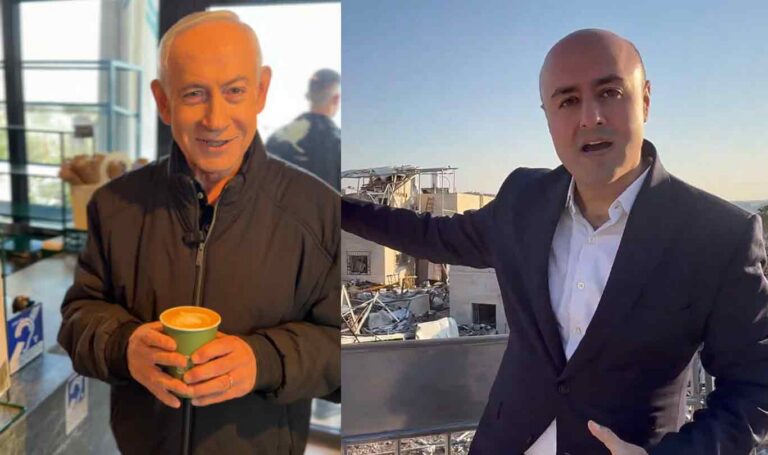
Israeli Prime Minister Benjamin Netanyahu on Sunday released a light-hearted video from a Tel Aviv coffee shop, directly mocking viral social media rumours that he had been killed in an Iranian missile strike and that his previous public address was an AI-generated deepfake. Notably, several Iranian and Pakistani social media users had spread the rumours of the Israeli PM’s death. Moreover, many of them had falsely claimed that Iran hit Netanyahu with a missile after Indian journalist Aditya Raj Kaul, who is in Israel at present, ‘revealed’ the location of the Israeli PM in a live broadcast.

In the one-minute clip posted on X, Netanyahu stands casually at a counter holding a cup of coffee, smiling and chatting with staff. He opens with asking the person making the video, “What did you ask me?”, and the person says, “They are claiming on the Internet that you are dead?”

The Prime Minister responds by saying, “I’m dying for coffee, you know what I mean? I’m dying for my people and how they behave — fantastic!” He then shows both his hands to the camera, saying, “Want to count my fingers?” explicitly addressing claims that an earlier video showed him with six fingers — a supposed tell-tale sign of AI generation. It was being claimed that the ‘AI-generated’ video was used for his address after he died in the Iranian strike.

After being asked what message he wants to give to people who want to go out and get some fresh air, the Prime Minister says, “To those going out, go out, but stay near a protected area. Your support gives strength to me, the government, the IDF, the Mossad, and our institutions. We’re doing things I can’t share right now, but are taking action, hitting Iran very hard, even today, and Lebanon too.”

Netanyahu added, “You ask me to keep going, and say to all of you, keep going as well. Keep following the instructions of home front command and city administrations. Always stay near protected area. We will make it as easy as possible.”

He thanked the shop for the excellent coffee, joking that its calorie content seems to be dangerous to him.

How the death and AI rumours began

The rumours gained traction two days ago after Netanyahu posted a video of a press briefing on the ongoing US-Israel-Iran conflict. At the 0:35 mark, when he raised his hands, a shadow and slight angle created an optical illusion of an extra finger next to his little finger, which some users immediately labelled a “classic AI finger glitch.”

Social media erupted with claims that the video was artificially generated and that Netanyahu must therefore be dead. However, the footage was authentic; the full unedited video shows him with the normal five fingers on each hand, and the apparent sixth finger was merely a lighting artefact.

The speculation intensified further with claims that Indian journalist Aditya Raj Kaul live-tracked and broadcast Netanyahu’s location during a recent Iranian missile barrage. Using Kaul’s coverage of Netanyahu’s visit to a site hit by Iranian missile, social media users claimed that it was a live broadcast and an Iranian missile had struck the exact spot using the coordinates obtained from the video.

This triggered a fresh wave of “Netanyahu missing/dead” posts and even jokes about Kaul “getting Netanyahu killed,” and claims of him being a double agent. Some asked whether Iran should reward Indian ships for the alleged tip-off, while others falsely claimed Kaul had been arrested by Israeli police.

Notably, Kaul covered Netanyahu’s visit to a site damaged by Iranian strike in Bet Shemesh on 2nd March, and the Israeli PM had made several public appearances after that. But the social media users falsely claimed that the broadcast was recent, and Netanyahu was not seen after that.

Israel’s Prime Minister’s Office dismissed the entire narrative as “fake news,” stating Netanyahu was “fine.”

Sunday’s coffee-shop video was designed to end the speculation once and for all, proving he is alive and well, and directly rebutting both the “six-finger AI” claim and the missile-strike conspiracy. However, some people claimed that even this video is AI-generated, saying that the video does not look normal.

However, the Sataf Cafe in Jerusalem, where the video was taken, posted several photos on Instagram showing Netanyahu visiting he cafe and having coffee.

They wrote, “We were very happy to host the Prime Minister and his Staff today”. The cafe added, “And the main thing is that beautiful and quiet days will come! We send from here a big hug to the men and women of the reserves (and their families), the IDF and the Security and Rescue Forces.”

Protest in Gujarat’s Kheda over housing project for Muslims in Matar taluka: Here’s what local Hindus are saying

Tensions have surfaced in parts of Gujarat’s Kheda district after several Hindu residents from villages in Matar taluka staged a protest and reached the Collector’s office demanding government intervention. The protesters urged the administration to declare their areas as “disturbed zones”, expressing concern over a large residential housing project being developed for members of the Muslim community.

Residents submitted a memorandum to the district administration claiming that a major housing project is being developed in villages, including Traj village in Matar taluka. They fear that under the pretext of this project, Bangladeshi infiltrators will be settled in the area and the demography will be changed. Local Hindu organisations are calling this incident ‘land jihad‘. 

However, the organisations have told OpIndia that they have received a positive response from the administration following this incident. The Collector has assured that the district administration team will complete all the necessary investigations in this matter and impose riot control in the area. Hindu organisations said that this issue is not limited to villages only; Muslim builders are setting up such projects in the entire district, and the Hindu population of the entire district is in a state of worry and fear. 

Large housing project being built on converted farmland

Villagers told OpIndia that agricultural land in the village boundary has been converted into non-agricultural land, and construction work for a large housing society consisting of around 200 to 300 houses is progressing rapidly. The project is reportedly being developed by Amjad Khan under the name “Ambar Courtyard”, with the slogan “One dream, our land, our home.”

Residents also said that the houses in the project are intended only for members of the Muslim community and that people belonging to other religions or communities are not being offered properties there. Locals have also questioned how such large pieces of agricultural land were converted for residential use and have demanded an investigation into the process.

“Not limited to one village,” say Hindu organisations

In a conversation with OpIndia, Bajrang Dal coordinator of Kheda-Andan division, Dhavalsinh Jhala, has said that this conspiracy is not limited to isolated villages. But this is being done in almost all the talukas and villages of Kheda. He has also said that large-scale construction of houses is going on in Kheda city, villages and cities of Matar taluka and Mehmedabad under a similar scheme. 

The Hindu organisation suspects that this scheme has been implemented to provide permanent residence to Bangladeshi infiltrators who were evicted from Chandola Lake in Ahmedabad. 

Residents raise concerns over demographic change

In the application, Hindu organisations have put forward three main issues before the administration, in which they have expressed concern about demographic changes. The first issue is the change in the population structure. Locals say that due to the settlement of people from outside, especially from Ahmedabad and surrounding areas, the population structure of the village may be disrupted, and Hindus may become a minority. 

While speaking to OpIndia, Jayrajbhai, a resident of Traj village, said that currently only around 100–150 houses in the village belong to the Muslim community. Despite this, he said, many Hindu residents already feel uneasy about security and social tensions.

He also mentioned an earlier incident in which a Hindu youth was attacked by a group of Muslims after he objected to abusive language being used by Muslims in public. According to residents, even for celebrating Hindu festivals such as Janmashtami and Rath Yatra, police protection has been required in the village for several years.

Villagers argue that if tensions already exist despite the Muslim community being in the minority, bringing a large number of new residents into the area could worsen the situation.

Fear of the settlement of illegal immigrants

The second concern raised by villagers relates to the possibility of illegal immigrants settling in the area. Residents said that people displaced during demolition drives in areas such as Chandola Lake in Ahmedabad might move into these new housing societies.

They expressed fears that some of these people could be illegal migrants from Bangladesh or individuals involved in criminal activities, which they believe could affect local law and order.

Villagers cite past incidents of violence

Residents also referred to past incidents in the region while raising their concerns. They claimed that maintaining peace during religious events has often required heavy police deployment.

In the Garmala village of Matar taluka, another housing project named “Aashiyana Residency” has also reportedly triggered protests. Villagers alleged that a Hindu resident was recently attacked by some Muslim individuals from Ahmedabad, and a police complaint was filed under Section 307 (attempt to murder) in connection with the incident.

Vishwa Hindu Parishad District General Secretary Haresh Patel has said that some anti-social elements gather near the dargah near the ancient temple near Bhalada village, and recently, one night, there was an incident of fire in this ancient temple, while the adjacent dargah is safe. Following this incident, Hindu organisations are opposing any other Muslim settlements. The video of the incident of arson in the temple is available on OpIndia. 

Memorandum sent to several authorities

Residents of villages including Traj, Koshiyal, Pipariya, Machhiyel and Khadiyapura have sent copies of their memorandum not only to the district administration but also to the Prime Minister’s Office, the Chief Minister of Gujarat, the Chief Justice of the Gujarat High Court, the Superintendent of Police and several religious and social organisations.

The villagers have demanded that the housing project be immediately stopped and that disturbed area provisions be imposed across the region.

Locals say the planned settlement of people from Ahmedabad

Some residents claim that Muslims from areas such as Juhapura and Chandlodia in Ahmedabad are being systematically brought to settle in Matar. They say this has created a climate of fear among local Hindus.

Bajrang Dal District Co-Convenor Ronaksinh Parmar, while talking to OpIndia, said that a conspiracy to change the demography is going on in this area as part of a well-planned conspiracy, and in that regard, the villagers have reported the incident by submitting a complaint to the administration. 

Along with this, he mentioned the incident of an attack on a Hindu youth and the setting of a temple on fire. He has demanded that the Disturbed Areas Act be implemented in the entire area to prevent such incidents and to prevent the settlement of Muslims. 

According to Hindu organisations, if local Muslims from the village construct houses, it may be understandable, but they question why people from outside the area are being brought in to settle there.

For now, the organisations say the district administration has assured them that the matter will be investigated and that appropriate action will be taken if required.

(This article is a translation of the original article published on OpIndia Gujarati.)

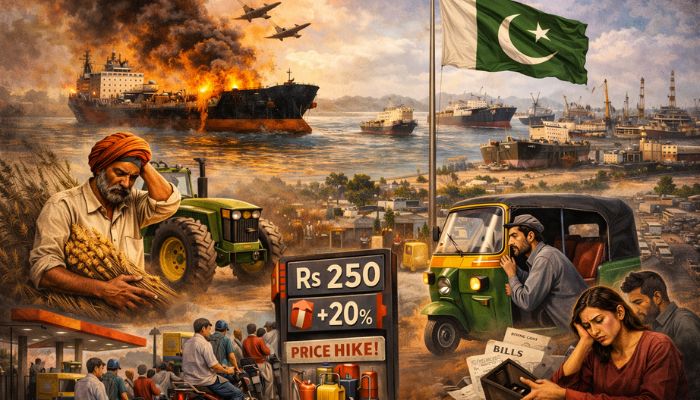
Pakistan faces economic crisis as Middle East conflict disrupts shipping through Strait of Hormuz, fuel prices surge 20% across country

Pakistan is facing a serious economic crisis as the ongoing Iran-US conflict is affecting oil supplies through the Strait of Hormuz, the route through which Pakistan receives most of its fuel imports. With the reduction of oil tankers passing through the Strait of Hormuz due to the attacks on the ships in the Persian Gulf, near the Karachi port, the fuel prices are now affecting daily lives across the country.

The government has already increased the fuel prices by 20% on 6th March to stop the panic buying of fuel. But the results of the increase in fuel prices are already affecting the citizens of the country.

Oil supply disruptions hit Pakistan hard

Pakistan depends heavily on imported energy. More than 85 % of its crude oil is imported from Saudi Arabia and the United Arab Emirates, and most of it is shipped through the Strait of Hormuz.

The current conflict in the region has made that route extremely risky. Since late February, at least 16 ships, including oil tankers, have been attacked in the Persian Gulf. Because of these security risks, Oil tanker movement has slowed down, and several ships are waiting near Karachi, which is a major economic hub of Pakistan.

The disruption has quickly reduced fuel supplies inside the country. To manage the situation, authorities have taken several emergency steps, such as promoting remote work, transitioning some schools to online classes, reducing official travel, and even considering a four-day workweek.

Pakistan has also requested Saudi Arabia to ship oil through its Red Sea ports as an alternative route. On the other hand, the government is counting on local power sources such as solar power to help alleviate the problem caused by the shortage of imported liquefied natural gas (LNG).

Rising fuel prices hit farmers and workers hard

The recent rise in fuel prices has had significant impacts on the lives of both rural and urban populations.

Agriculture forms the most important sector of the Pakistani economy, as the sector contributes more than 23% of the country’s GDP and employs 37% of the national labour force. Farmers plan to gear up for the spring harvest and claim that the rise in diesel fuel prices will add to the cost of operating tractors and other farming equipment, as well as the cost of transporting the crops to the markets.

Aamer Hayat Bhandara, a farmer from the Pakpattan region of Punjab province, stated that most aspects of the cultivation process depend on the fuel required for the farming equipment. City workers are also facing similar problems. The taxi and rickshaw drivers claim that their daily earnings are reducing because the price of fuel is rising, while the demand is unpredictable.

Muhammad Roshan, a rickshaw driver in Rawalpindi, questioned the government’s approach and said Pakistan should have explored alternative oil supplies from countries like Russia.

Inflation and economic growth are under threat

Economists warn that if oil prices remain around $100 per barrel or higher, Pakistan’s economy could face serious consequences. Former finance minister Hafiz Pasha has estimated that Pakistan’s GDP could fall by 1 to 1.5 % if the conflict continues. The biggest pressure on the economy is likely to come from Pakistan’s external sector.

Petroleum imports could increase by 25 to 30 % as global oil prices rise. At the same time, shipping and insurance costs for cargo vessels have climbed sharply due to growing security risks in the region. Together, these factors could add between $12 billion and $14 billion to Pakistan’s external payments over the next year.

Higher oil prices also contribute to increasing inflation. Earlier this year, inflation was around 7%, but it has already crossed 10%. If oil prices go higher in the global market and reach $120 per barrel, as is expected, similar to when there was a conflict between Russia and Ukraine, inflation in Pakistan is expected to reach levels of 30%.

The three sectors that will be most affected by the crisis are transport, industry, and agriculture. Fuel prices will not only lower the demand for transport, but disruptions in LNG supplies will also affect industries such as fertiliser, cement, and textiles.

Pressure on Remittances and Foreign Reserves

Pakistan is also facing a risk of a decrease in remittances. As much as 55 % of remittances received by Pakistan from overseas Pakistanis is contributed by Pakistanis employed in the Middle East countries.

If the economies of countries in the Gulf, which are dependent on oil exports, experience a slowdown because of a decline in exports, overseas workers, including Pakistanis and Bangladeshi workers, are likely to lose jobs or be repatriated to their countries.

Economists believe that this would result in a decline of $2 billion to $4 billion in remittances to Pakistan.

As a result of an increase in import costs, Pakistan’s present deficit of $2 billion is likely to increase to between $6 billion and $7 billion during the next fiscal year. The scenario is likely to repeat itself as it was during the financial crisis of 2021-22, when foreign exchange reserves fell to nearly $4 billion.

Pakistan’s economic stability at present depends heavily on financial assistance from the International Monetary Fund (IMF). Economist Kaiser Bengali says even a $1 billion IMF instalment can make the difference between survival and economic collapse.

Daily life is becoming more expensive

The fuel shock is also affecting the daily life of the citizens of Pakistan.

Many workers who used to share rickshaw fares are now walking long distances to save money. Others who use motorcycles to go to work say the money they receive is no longer enough to cover the cost of petrol.

The retail markets are also experiencing the slowdown of the economy ahead of the Eid al-Fitr celebrations, which is usually one of the biggest shopping seasons of the year.

According to Shabbir Ahmed, who owns a clothing store in Karachi, the festivities are yet to be seen in the markets.

Ali Akbar, an employee at a real estate company in Islamabad earning about $400 per month, said his family has already started cutting expenses. He plans to cancel his usual trip home for Eid and is considering shifting his children to a school closer to home because transportation costs have jumped from $36 to $48 per month within a week.

Online classes have also created problems for many families. Nearly half of Pakistan’s 250 million people live below the poverty line, and many households do not have laptops, tablets or reliable internet connections.

An energy crisis could force policy changes

Experts believe that the crisis may compel Pakistan to reconsider its long-term energy policies.

For every $10 hike in global oil prices, Pakistan’s import bill goes up by an additional $1.5 billion annually. As long as oil prices are higher than the previous rate of $80 per barrel by at least $20, Pakistan’s import bill will go up by an additional $3 billion.

Some economists recommend daily adjustment of fuel prices to respond to global market changes. This would also address the issue of hoarding. Another recommendation is to ration petrol or to increase rail transport to cut down on diesel consumption by as much as 20 %.

Pakistan might have to rely more on its own energy resources, which include hydropower, nuclear energy, local coal, local gas, wind, and solar energy. However, there is a lack of transmission infrastructure to support these resources.

Risk of a larger regional crisis

In addition to the economic concerns, there is also the fear of the larger conflict. Pakistan has defence ties with Saudi Arabia. This may force the country to take a stance if the relations between Saudi Arabia and Iran worsen.

On the other hand, there is the fear of the United States wanting to use the Pakistani bases to launch attacks on Iran. In such a case, the country would be at the mercy of Iran.

For now, the biggest problem is economic survival. With fuel prices on the rise, the already struggling economy of the country is facing one of its biggest challenges.

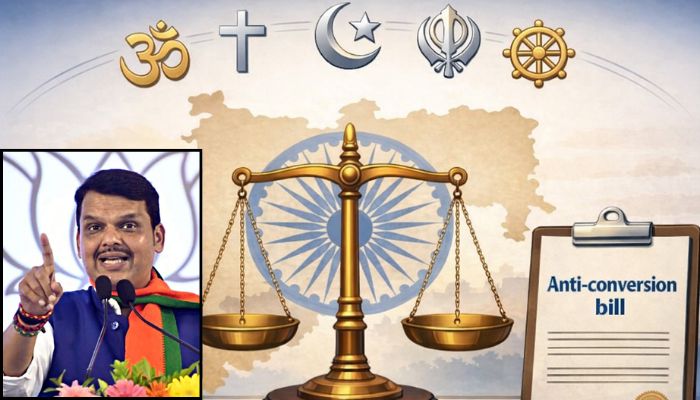
From coercion and fraud to inducement and threats: Maharashtra introduces anti conversion bill with strict punishments, here is what it says

On Friday, 13th March, the Maharashtra government introduced the Dharma Swatantrya or Freedom of Religion Bill, 2026, in the state Legislative Assembly. The proposed law aims to regulate religious conversions and provide strict punishment for conversions carried out through force, fraud, coercion or inducement. The Bill is expected to be discussed during the ongoing Budget Session of the state legislature.

The draft legislation was approved by the state Cabinet last week on 5th March, before being introduced in the Assembly by Minister of State for Rural Development Pankaj Bhoyar. The government has said that the proposed law is meant to address increasing instances of forced religious conversions and to protect citizens’ freedom of religion.

According to the Fadnavis government, conversions in some cases are being carried out in an organised manner by influencing people’s consent or targeting vulnerable individuals. In the “objects and reasons” section of the Bill, the government stated that such conversions are sometimes “forceful, involuntary or caused by influencing the free consent of the citizens”. It further says that these activities are often carried out against “gullible persons” and may lead to “disturbance to public order” while also “affecting social harmony”.

The government has argued that existing laws are not sufficient to address these issues. Because of this, a seven-member committee led by the Director General of Police (DGP) was formed to study legal provisions in other states and recommend a law for Maharashtra.

Definitions under the proposed law

According to the media reports, the Bill provides detailed definitions of what will be considered an “unlawful conversion”. As per the proposed bill, conversion from one religion to another using “allurement, coercion, deceit, force, misrepresentation, threat, undue influence or any other fraudulent step” will be treated as illegal.

It also specifically includes “brainwashing through the medium of education” as one of the methods through which unlawful conversion could occur.

The law also defines “mass conversion” as the forced conversion of two or more people at the same time.

The concept of “allurement” has been described broadly in the Bill. It includes offering gifts, money, material benefits, employment opportunities or free education in institutions run by religious organisations. It also includes promises of marriage, a better lifestyle or claims of divine healing.

The Maharashtra draft law expands the scope of allurement further than many other states. It states that attempts to influence someone by glorifying one religion over another, or by portraying the customs, rituals or practices of another religion negatively, may also fall under the category of inducement.

Similarly, the Bill defines “coercion” as forcing a person, family or group to act against their will through physical force or psychological pressure. It includes threats of bodily harm, threats against property, or even warnings of “divine displeasure” and “social ex-communication” or boycott.

Marriages and children’s rights under the proposed law

The proposed legislation also deals with marriages that involve religious conversion. According to the Bill, if a marriage has been carried out solely for the purpose of unlawful religious conversion, a competent court can declare that marriage null and void.

Either party in the marriage will have the right to approach the court and claim that the conversion was done illegally.

The Bill also introduces a specific provision related to children born out of such marriages. Section 5 states that if a child is born from a marriage that involved unlawful religious conversion, the child will be considered to belong to the religion that the mother followed before the marriage or relationship.

This provision is somewhat different from similar laws in other states. In places like Haryana, the focus has mainly been on the inheritance rights of children born from such marriages. However, the Maharashtra Bill clearly defines which religion the child will legally belong to.

The draft law also states that such children will be entitled to maintenance under Section 144 of the Bharatiya Nagarik Suraksha Sanhita (BNSS). In addition, custody of the child will normally remain with the mother unless a court decides otherwise.

The Bill further states that victims of unlawful conversion may receive assistance from the state government for rehabilitation. They will also be entitled to maintenance and the custody of their children.

Procedure for lawful religious conversion

The proposed law outlines a process to be followed if an individual wishes to change his or her religion legally.

According to the Bill, if an individual wishes to convert to another religion, the individual has to give a prior declaration of intention at least 60 days in advance to the District Magistrate or any other authority appointed by the government.

Similarly, if an institution or a religious body wishes to conduct a conversion ceremony, it has to give a prior notice at least 60 days in advance.

Once the declaration is submitted, the competent authority will display the information about the proposed conversion on its notice board as well as on the notice board of the local authority. The purpose is to invite objections from the public.

The public has 30 days to raise objections to the conversion.

If there are any objections to the conversion, the authority may conduct an inquiry by the police. If the inquiry concludes that the conversion is violating the law, the police may take criminal action.

The law also requires that once the conversion has taken place, the converted individual or the individual who performed the ceremony has to make a declaration within 21 days.

If the individual fails to make the declaration, the law will consider the conversion not to have taken place.

Objections and complaints regarding conversion

The Bill has also specified the kind of individual who has the right to make a complaint if they suspect that an illegal conversion has taken place.

Any individual who has converted their parents, their siblings, or any other relative through blood, marriage, or adoption has the right to make a complaint. Once a complaint has been filed, it has to be registered by the officer in charge of the police station.

The case will then be investigated by a police officer of the rank of at least a Sub-Inspector.

The burden of proof rests on the individual who has performed the conversion. In other words, the individual has to prove that the conversion was done voluntarily.

All offences under the proposed law will be cognisable and non-bailable.

Another notable feature of the Bill is that it allows police officers to take action even without a formal complaint. The draft law grants police the power to take suo motu cognisance if they believe that a conversion has taken place in violation of the Act.

The Bill states: “If the police officer is satisfied that the conversion is made or is being made in contravention of the provisions of the Act, then he/she shall take suo motu cognisance of such contravention.”

The law also widens criminal liability. According to Section 12, individuals who execute, endorse or attest documents connected to an unlawful conversion can also be considered to have aided or abetted the offence and may face punishment.

‘Brainwashing through education’ clause

One of the controversial provisions in the Bill is the inclusion of the phrase “brainwashing through the medium of education”.

The proposed law states that conversions carried out through such means could also be treated as unlawful. This phrase does not appear in many similar laws enacted in other states and has therefore drawn attention.

The Bill also authorises the state government to frame detailed rules for implementing the Act. These rules would cover procedures, forms and administrative requirements related to notices, declarations and other aspects of religious conversion.

Any such rules would have to be placed before both Houses of the state legislature for a period of thirty days. The legislature would have the power to modify or cancel them if necessary.

Punishments and penalties under the law

The proposed legislation prescribes strict penalties for unlawful religious conversions. The key punishments mentioned in the Bill include:

  • Up to 7 years of imprisonment and a fine of ₹1 lakh for carrying out unlawful religious conversion.
  • Up to 7 years of imprisonment and a fine of ₹5 lakh if the offence is committed against vulnerable individuals such as minors, women, persons of unsound mind, or members of the Scheduled Castes and Scheduled Tribes.
  • Mass conversions will also attract up to 7 years in prison and a fine of ₹5 lakh.
  • Repeat offenders, including individuals or organisations involved in such activities, may face up to 10 years of imprisonment and a fine of ₹7 lakh.
  • If an organisation is found guilty, the government may cancel its registration, and the person in charge may face 7 years in jail and a fine of ₹5 lakh.
  • The government may also stop financial aid or grants to organisations involved in unlawful conversions.

Provision to address implementation issues

The Bill also includes a provision that allows the state government to issue orders if any difficulties arise while implementing the law.

According to the draft legislation, the government may issue directions through an order published in the Official Gazette to remove such difficulties, as long as the order does not contradict the provisions of the Act.

However, this power will only remain in effect for two years after the law comes into force. Any such order must also be placed before both Houses of the state legislature.

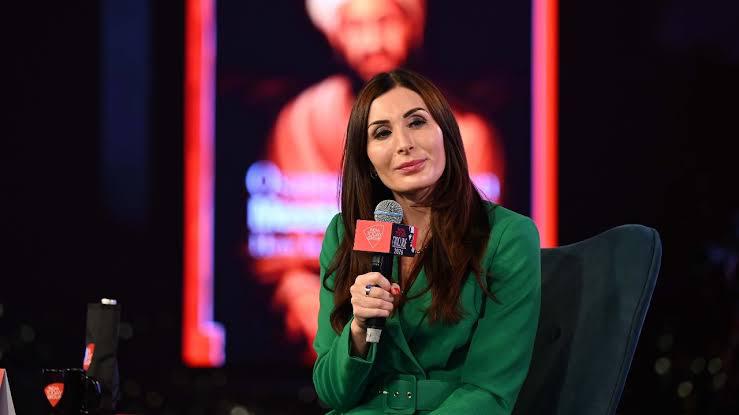
India Today, Laura Loomer and Rajdeep Sardesai: Was the Conclave confrontation a scripted spectacle?

When the India Today Group hosted the India Today Conclave 2026 this week, one particular name in the speaker lineup instantly set off a firestorm: Laura Loomer.

The American commentator, closely associated with the political orbit of Donald Trump and the broader MAGA ecosystem, is hardly an unknown quantity. Loomer has built her reputation on incendiary rhetoric and provocation. What made her invitation particularly controversial, however, was not merely her politics but her long record of racist remarks targeting Indians and Indian-origin individuals.

Once Loomer herself posted on X that she was heading to India to speak at the conclave, Indians quickly dug into her past posts. Screenshots began circulating widely. In those posts, Loomer had described Indians as “third-world invaders,” mocked India’s sanitation practices, and questioned the intellectual abilities of Indians. In another notorious episode, she launched a tirade against Indian-American technologist Sriram Krishnan after he was appointed Senior Policy Advisor for Artificial Intelligence at the White House, questioning why immigrants should occupy influential positions in the United States.

She had also previously mocked the Indian heritage of Kamala Harris with a crude “curry” jibe that triggered widespread outrage. Beyond anti-India rhetoric, Loomer has also courted controversy for promoting conspiracy theories around the September 11 attacks and spreading misinformation during the COVID-19 pandemic. Even Republican Senator Thom Tillis once dismissed her as a “crazy conspiracy theorist.”

Given this background, the immediate question that dominated social media was obvious: why would a leading Indian media platform invite someone who had repeatedly insulted India and Indians?

The backlash was swift and intense. Social media users circulated screenshots of Loomer’s old posts mocking Indian sanitation practices, calling Indians “third-world invaders,” and ridiculing Indian immigrants as supposedly “high-skilled workers” from a country lacking basic infrastructure. Critics described the invitation as astonishing and self-defeating, arguing that providing a prestigious stage to someone with a documented history of anti-India rhetoric risked legitimising exactly the kind of hate speech Indian media houses frequently claim to oppose.

But then came the twist.

During the conclave session, senior journalist Rajdeep Sardesai confronted Loomer over her past remarks. He cited several of her controversial tweets and asked whether she regretted them. “Your remarks are brazenly racist and Islamophobic,” Rajdeep said during his interaction with Loomer. 

Loomer responded by acknowledging that some of her earlier posts had indeed crossed the line.

“I should not have said some of the things I wrote in the other tweets,” she said, adding that she apologised if her remarks had offended Indians. Loomer also dropped a bombshell, stating that it was Twitter that deleted some of her tweets on Indians, and she had no choice but to accept it.

At the same time, she carefully held her ground on other issues. Loomer refused to apologise for her opposition to the H-1B visa programme, insisting that her job as an American activist was to defend American workers. She also tried to soften her stance by claiming she had no hatred toward Indians or Hindus and had spoken out against the persecution of Hindus by radical Islam.

The exchange quickly went viral.

Clips of Sardesai confronting Loomer flooded social media. A section of the online ecosystem cutting across ideological lines, from accounts sympathetic to the Indian National Congress to those who refer to themselves as non-Left, began celebrating the moment as a triumph of journalism. Sardesai was hailed as the journalist who “showed the courage” of “putting a racist in her place,” while Loomer’s partial apology was framed as a narrative victory.

There were others who “thanked” Rajdeep Sardesai for ‘confronting’ Laura Loomer for her disgusting remarks online. 

And just like that, the focus shifted.

The central controversy had originally been about why Loomer was invited at all. Yet within hours, the conversation had moved to how effectively she had been confronted on stage.

Why Rajdeep Sardesai didn’t outrage when India Today invited Laura Loomer for Conclave

One aspect of the episode that raises even more questions is the role played by Rajdeep Sardesai himself.

If Sardesai was genuinely outraged by the vile remarks Loomer had made about India and Indians, one would have expected that outrage to surface well before the cameras began rolling at the conclave.

After all, Sardesai is among the most active journalists on social media. On X, he regularly runs the popular “stories that caught my eye” thread, often amplifying issues he believes deserve public scrutiny. He has rarely hesitated to criticise politicians, institutions, or public figures when he believes something crosses a line.

Which makes his silence in the days leading up to the conclave rather striking.

Once Loomer announced she was travelling to India to speak at the conclave organised by the India Today Group, the backlash was immediate. Screenshots of her past tweets mocking Indians and questioning their place in the United States flooded social media timelines.

Yet Sardesai raised no visible public objection during that phase.

This was precisely the moment when he could have expressed shock or disapproval. As a senior editorial face of the network, he could easily have posted on X, questioning why a media organisation would invite someone with such a track record of insulting Indians.

Instead, Sardesai appeared at the conclave itself and confronted Loomer on stage about those remarks. The exchange unfolded almost like a neatly packaged segment, with questions about the offensive tweets, Loomer acknowledging some of them were inappropriate, and a partial apology delivered before a live audience.

The moment quickly went viral.

But viewed in hindsight, the sequence has the feel of something less spontaneous and more choreographed. The absence of any prior public objection, followed by a perfectly timed on-stage confrontation, raises the possibility that the exchange was always meant to unfold in front of cameras rather than in the messy unpredictability of public debate.

Which brings us back to the larger question.

Because the sequence of events almost reads like a carefully structured script: invite a controversial figure with a record of offensive remarks, allow outrage to build once those remarks resurface, and then stage a dramatic confrontation at the event itself. The confrontation produces viral content, the guest offers a partial apology, and the host network is suddenly repositioned, not as the platform that legitimised the controversial voice, but as the one that held it accountable.

The narrative transforms.

How ‘India Today platforms an anti-India racist commentator’ story was transformed into ‘Look how India Today confronted her’

Instead of “Why did India Today invite someone who repeatedly insulted Indians?” the story becomes “Look how India Today confronted her.”

In effect, the controversy is neutralised through spectacle.

It is therefore difficult not to wonder whether the entire episode, from the invitation to the confrontation and the apology, functioned as a form of narrative damage control, perhaps even narrative laundering.

After all, the outcome appears to have served everyone involved.

Loomer walked away having publicly toned down some of her remarks and projecting a less hostile image toward India. Sardesai enjoyed widespread applause on social media for confronting her. And the India Today Group successfully pivoted the conversation away from the uncomfortable question that had sparked the controversy in the first place.

In the age of viral media spectacles, what looked like a spontaneous clash between a journalist and a controversial commentator may well have been something else entirely, a convenient drama that transformed a reputational crisis into a carefully choreographed moment of accountability.

Why has Bihar’s Saran case turned into a ‘Rajput vs Paswan’ flashpoint? Here’s what has unfolded so far in the gang rape and killing of a minor who was thrown into a well

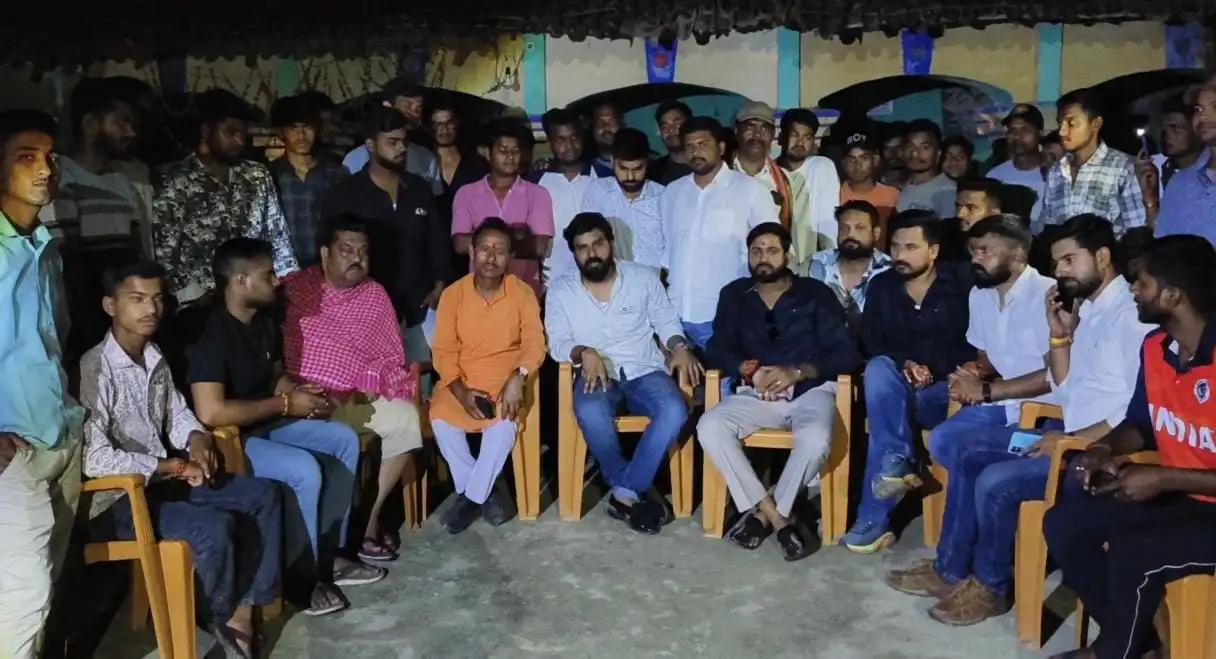
A case of the gang rape and murder of a Class 10 student has come to light in Pattishital village of Saran district, Bihar. In this case, the victim’s mother has accused five youths from the same village, one of whom has already been arrested by the police. It is alleged that the five men gang-raped the girl and then threw her into a well, leading to her death. The incident has also triggered a narrative war on social media because the victim belonged to an upper-caste Rajput family, while the accused belonged to the Mahadalit (Paswan) community.

Police are facing allegations that the swift action expected in such a serious case has not been taken, as not all the accused have been arrested, even three days after the incident. The victim’s family and eyewitnesses have made serious claims, but the police are reportedly reluctant to accept these accounts at this stage. Here is a detailed look at what each side is claiming and the questions being raised about the police response.

What did the victim’s mother say in her complaint?

The victim’s mother filed a complaint at the Derni police station. In the complaint, she said: “My daughter often used to go to our old house to collect belongings. On Wednesday (March 11, 2026), she went there at around 3:00 pm. During that time, five people who were already lying in wait gang-raped her and dragged her to a well and threw her into it, which caused her death.”

Five people have been named as accused in the case: Sachin Kumar Manjhi, Yuvraj Manjhi, Chandan Manjhi, Ajay Manjhi and Vikas Manjhi. The complaint also states that Vikas Manjhi had earlier tried to enter the house and attempted to rape the girl. He allegedly abused the family and threatened them, saying that he would enter the house and kill everyone.

According to the complaint, when the family opposed him earlier, Vikas had warned that the consequences would be very bad. The mother alleges that he eventually carried out the threat on March 11, 2026. She further stated that after committing the crime, the accused abused the family and said that they could buy the police, administration and courts, and that no one would be able to harm them.

The victim’s mother has also accused the police of inaction, claiming that the police came to the spot but left without taking proper action.

What did an eyewitness claim?

According to a report by Dainik Bhaskar, an eyewitness said that the girl was shouting loudly for help during the incident. Hearing her screams, nearby residents and family members rushed toward the spot. Her mother and elder sister were among the first to run there.

However, before they could reach, the accused allegedly covered the girl’s mouth and forcibly dragged her out of the house by her legs. The eyewitness claimed that the accused then took the girl to a well located about 10 meters away and pushed her into it. After committing the crime, they fled toward nearby fields. The eyewitness also said that the main accused had previously harassed and threatened the girl multiple times.

According to the eyewitness, after pushing the girl into the well, the main accused even posted a WhatsApp status lip-syncing to a Bhojpuri song with the line: “Rani hum bana lehab tohara ke dulhaniya… agar koi bola to ghar mein ghuskar sabko maar daalenge” (“I will make you my bride… if anyone speaks, I will enter the house and kill everyone”).

Police have not yet confirmed the gang rape claim

In a statement released on social media, Saran Police did not mention rape or gang rape. The police said that one accused, Yuvraj Manjhi, has been arrested.

According to the police statement, information was received about the suspicious death of a minor girl, after which the police reached the spot and initiated action. The SP and SDPO visited the location, and an FSL team collected evidence from the scene. Police said that raids are being conducted to arrest the other accused.

Saran SSP Vinit Kumar stated that the police were initially informed that the minor girl had died after jumping into a well. He added that a Special Investigation Team (SIT) has been formed and that the police are waiting for the post-mortem report.

Meanwhile, Saran (Rural) SP Sanjay Kumar told OpIndia that the police are taking prompt action in the case and that the remaining accused will be arrested soon.

‘Mahadalit vs Savarna’ narrative emerging on social media

After the incident surfaced, social media has also seen a narrative battle framing the case as Rajput vs Paswan. Many people have questioned the police response and said that the lack of swift action is contributing to rising tensions.

Social media influencer Rana Deepu Singh told OpIndia that he visited Pattishital village with his associates and spoke to locals. According to him, villagers said that five accused were seen at the spot. He alleged that the police response has been indifferent and that only one accused has been arrested while the main accused and others are still absconding.

Rana Deepu Singh visited the village along with his associates.

RJD MLA Karishma Rai from Parsa also visited the site, though she has not issued an official statement about the incident. When asked about the caste narrative, she said the matter should not be seen through a caste lens but that strict action must be taken against the culprits.

Speaking to OpIndia, Rai said the incident was extremely horrific and the accused should receive the strictest punishment. She added that brutality remains brutality regardless of the caste of the perpetrator and that the law must act firmly.

Questions raised by the case

The case has raised several serious questions. On one hand, the victim’s family and eyewitnesses claim that it was a brutal gang rape followed by murder. On the other hand, the police are currently treating it as a suspicious death and are waiting for the post-mortem and forensic evidence before confirming the nature of the crime.

Ultimately, the truth will become clear only after the investigation and medical reports are completed. However, in sensitive cases like this, the speed and transparency of police action become crucial. When the victim’s family and local residents are making serious allegations and all named accused have not yet been arrested, it naturally raises concerns about the administration’s response. This is also why caste-based narratives have begun to spread rapidly on social media following the incident.

The crisis of illegal hoarding? Read how LPG concerns are being fanned while miscreants are hoarding cylinders to sell for high profit

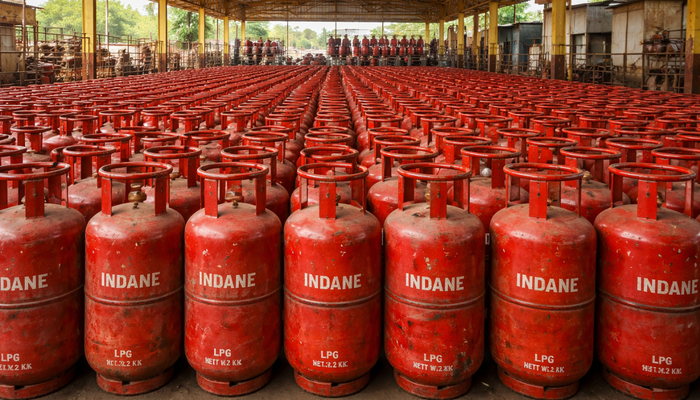
Hoarders and black-marketers are not only fanning the rumours of an LPG shortage but also creating an artificial shortage of the domestic and commercial cooking gas across the country. Feeding on the fears of India’s fuel supply being disrupted due to the ongoing conflict in West Asia and the closure of the Strait of Hormuz, these hoarders and black-marketers have found an opportunity to make undue profits. As consumers are panic-buying LPG cylinders amid rumours of shortage, these hoarders are making huge money by selling the cylinders at double the price.

Many incidents of large numbers of hoarded LPG cylinders being seized by authorities have been reported from across the country in the past several days. This is despite the Union Petroleum and Natural Gas Minister Hardeep Singh Puri, assuring people on Thursday (March 12, 2026) that India’s fuel supply is entirely protected.

Here is a look at some incidents where local authorities busted the hoarding of LPG cylinders in various states of the country:

1,483 locations raided, 20 FIRs lodged against LPG hoarders in Uttar Pradesh

During an action against illegal stockpiling of LPG cylinders in Hapur, Uttar Pradesh, the authorities recently seized 55 filled LPG cylinders from a premises belonging to Abdul Rehan, who is said to be a member of the Samajwadi Party. On receiving inputs about hoarding of LPG cylinders, the local authorities raided the house of Rehan, located in Asaura village in the Hapur district.

Intensifying action against the black-marketing of LPG cylinders, the enforcement teams on Friday (March 13, 2026) conducted surprise inspections and raids at 1,483 locations in Uttar Pradesh. During the raids, the authorities lodged 4 FIRs against LPG distributors and 20 FIR against individuals found engaged in the black-marketing LPG cylinders. Besides, 6 persons were arrested by the police on the spot.

To allay the fears regarding the shortage of LPG supply and to prevent panic buying, the state government assured that delivery of LPG refills will be ensured to consumers through 4,108 LPG gas distributors in the state.

Around 100 LPG cylinders seized during raids at various locations in Punjab

Teams of the District Food and Civil Supplies (DFCS) Department, District Food Supply Officers, Assistant Food Supply Officers and Food Supply Inspectors conducted raids at 42 locations in Punjab on Friday (March 13, 2026). The raids were conducted in towns including Patiala, Nabha, Rajpura, Samana, Devigarh and Patran. During the raids, the authorities seized over 100 illegally stored domestic cylinders being used in commercial establishments.

Over 200 LPG cylinders confiscated in Araria, Bihar

On Thursday evening (March 12, 2026), the district administration officials conducted a raid and found a large quantity of cooking gas cylinders stored illegally in Pokhar Basti (Ward No. 15) of Forbesganj city in the Araria district of Bihar. The Sub-Divisional Administration led by SDO Abhay Kumar raised the house and the shop belonging to one Sabir Ansari and his son Imran Ansari, where a total of 250 LPG cylinders, some filled and others empty, were seized. Around 150 of these cylinders were found inside the house and the remaining were found in the shop.

Over 200 LPG cylinders seized by authorities in Mumbai and Nagpur

In a major crackdown on the illegal stockpiling of cooking gas, the Food Distribution Department recently seized over 100 LPG cylinders from the ‘Suraj Vallabhdas Chawl’ area on Ganpatrao Kadam Road near Worli Naka in Mumbai, Maharashtra. Authorities seized 64 filled 4-kg and 19 filled 12-kg cylinders of Super Gas Company, and 58 empty 5-kg cylinders of HP Gas Company. Additionally, the officials confiscated 25 empty cylinders of different sizes, including 2kg, 4kg and 12 kg.

The Food and Civil Supplies Department launched raids at establishments of 163 gas distributors the Nagpur division. The locations included Gadchiroli (70 distributors inspected), Bhandara (37 distributors), Gondia (17 distributors), Nagpur (19 by district supply officers and three by food distribution officers), Wardha (15 distributors), and Chandrapur (2 distributors). The authorities seized 110 LPG cylinders from the loctions costing around ₹1 lakh.

400 LPG cylinders confiscated near Tirupati in Andhra Pradesh

In a raid conducted by the civil supplies officials in a godown on the outskirts of Tirupati, Adhra Pradesh on Friday (March 13, 2026), nearly 400 LPG cylinders stocked illegally were seized. A team led by Tirupati District Supplies Officer Seshachala Raju raided the premises located in Avilala Panchayat, which was once used as a stock point for a private gas supplier, but its license expired in 2019.

Two arrested under the Goonda Act in Madurai for hoarding 398 LPG cylinders

In the Madurai district of Tamil Nadu, the police on Friday (March 13, 2026) arrested two persons under the Goonda Act for hoarding 398 LPG cylinders for black marketing. The action followed after the police received a tip-off by the Civil Supplies Criminal Investigation Department (CS-CID) about the illegal diversion of subsidised domestic gas cylinders for commercial use. A special team of police raided an open plot in the Kovilpappakudi area, where it seized 100 subsidised domestic cylinders and 109 commercial cylinders. In a separate raid in Anandam Nagar, the officials confiscated 189 cylinders, including 126 commercial units.

381 domestic LPG cylinders seized in Hyderabad, Telangana

The district authorities in Hyderabad, Telangana, confiscated 381 domestic LPG cylinders during raids on commercial establishments across Hyderabad and Secunderabad. The cylinders were stocked for illegal sale. According to a statement issued by Chief Rationing Officer Raji Reddy on Friday (March 13, 2026), the enforcement teams have been conducting raids since March 11, 2026 to prevent the diversion of domestic LPG cylinders for commercial use.

In addition to that, authorities seized around 300 domestic LPG cylinders during raids at various hotels and restaurants in different districts of Telangana, including Nalgonda, Mahabubnagar, and Karimnagar. The culprits have been booked under Section 6A of the Essential Commodities Act, 1955.

Authorities confiscated around 100 domestic LPG cylinders in Madhya Pradesh

In the Chhatarpur district of Madhya Pradesh, 38 domestic LPG cylinders were confiscated as confirmed by the authorities on Thursday (March 12, 2026). The illegally stockpiled cooking gas cylinders were seized during a raid conducted by the authorities as part of efforts to curb hoarding and black-marketing of LPG.

In a separate action, authorities seized around 45 LPG cylinders from two vehicles in Lalghati and Kolar areas of the Bhopal district of Madhya Pradesh. The authorities found the cylinders in a truck belonging to Mamata Gas Agency and an SUV. Apart from this, the authorities also conducted a suprise inspection of gas agency’s godown near Jamboree Maidan in BHEL. During the inspection, the officials found that the number of cylinders in the godown did not match the stock records maintained by the gas agency.

741 LPG cylinders seized from 102 different locations in Chhattisgarh

In a major action against the black-marketing of LPG, authorities in Chhattisgarh seized 741 cylinders from 102 different locations across the state. “So far, 741 cylinders have been seized from 102 places across the state. Raipur district recorded the highest number of seizures with 392 domestic LPG cylinders confiscated, followed by Bilaspur district, where 130 cylinders were seized,” stated an official release on Friday (March 13, 2026).

The state Food Department in coordination in the local district administration has been conducting surprise inspections at suspected locations to curb hoarding of domestic LPG cylinders.

34 domestic LPG cylinders found illegally stockpiled in Visakhapatnam

In a special drive conducted across Visakhapatnam Circle-II areas, including MVP Colony on Thursday (March 12, 2026), the District Civil Supply Department seized 34 domestic LPG cylinders from 14 different commercial establishments.

Apart from the incidents of hoarding of LPG cylinders, some incidents of theft of cylinders have also come to light. In the Chala market area in Keralam’s Thiruvananthapuram, Kerala, a man stole a 19-kg commercial cooking gas cylinder from a hotel in the wee hours of Friday (March 13, 2026). In a separate incident in Kalyan Nagar, Bengaluru, two persons, riding a two-wheeler, stole an LPG cylinder from a residential area.

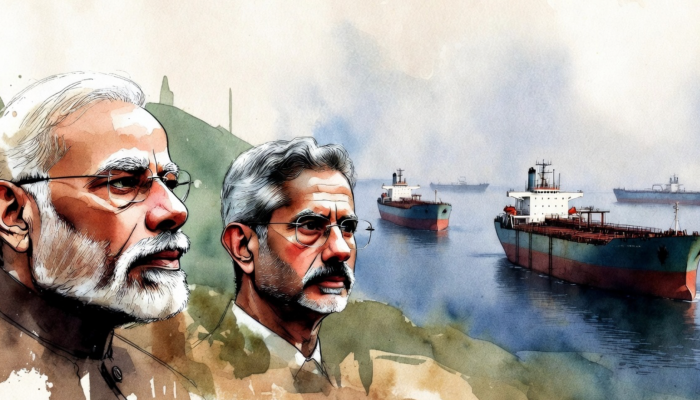
LPG-loaded tankers cross Strait of Hormuz to come to India: PM Modi’s diplomatic outreach in West Asia secures Indian interests, again

On March 14, it was reported that the two Indian flagged LPG-loaded tankers, Shivalik and Nandadevi, have crossed the Strait of Hormuz after PM Modi’s conversation with Iranian Masoud Pezeshkian on March 12. 

Iran’s Ambassador to India, Mohammad Fathali confirmed that Tehran will grant safe passage to vessels bound for India through the Strait of Hormuz, citing the longstanding friendship and shared interests between the two countries amid the ongoing conflict in West Asia.

This is a significant development after the reports of two oil tankers also crossing the Strait, carrying oil from Saudi Arabia and Iraq and reaching Indian ports.

The passage of the ships once again asserts that, despite strategic relations with all sides, PM Modi’s government prioritises the interests of the 1.4 billion people of India and pursues diplomatic and strategic manoeuvres to secure the interests of India even in critical situations like wars.

What the government of India under PM Modi has managed to achieve for India is in sharp contrast to what the leaders of other global powers have done in recent years. Instead of irresponsible leadership that believes in undefined goals and optics to prove in distant wars, jeopardising the interests of its own citizens and triggering economic chaos, the Indian government has pursued a path of astute diplomacy and stable relationships in the world.

The USA, for example, is fighting a war in West Asia where the objective is not clearly defined, the scale and magnitude of the war remain unclear, and there is no exit strategy in sight. The war has resulted in a blockade of the Strait of Hormuz, which threatens the global economies, from South Korea to Europe, and from Japan to China, including India. 

While starting a war in the Persian Gulf, the USA has not only put its own allies in the Arab nations under peril, making them the target of Iranian missiles every single day, it has also caused the endangerment and choking of crucial global trade routes, risking far greater economic woes in the future that may affect billions in Asia and the world.

Asian economies like India, China, Singapore, Japan, and others that need the oil and gas from the Persian Gulf routes are under stress due to Trump’s war with Iran.

In the middle of a critical military and trade crisis, PM Modi’s carefully crafted foreign policy is what is preventing panic and scarcity in the nation. For the Modi government, engaging with partners in West Asia, closer to home, supersedes the game of optics that the Trump administration is currently engaged in. 

Since the war began, PM Modi has spoken to the leaders in Saudi Arabia, Qatar, the UAE, Kuwait, and, most recently, the President of Iran. Peace in West Asia remains India’s top priority. 

The Modi government also did not care for American diktats when it was about purchasing Russian Crude in 2022. Despite sermons from the Biden administration, India ramped up its crude imports from 0 per cent to more than 40 per cent (of its total imports).

The priorities for the Indian government, under the leadership of PM Modi and EAM S Jaishankar, are not guided by theatrics and optics but pragmatism and the pursuit of peace. Securing the economic interests of 1.4 billion Indians is the top objective.

Anti-Indian hate surged on X during US immigration debates, small network amplified racist narratives against Indians: Report

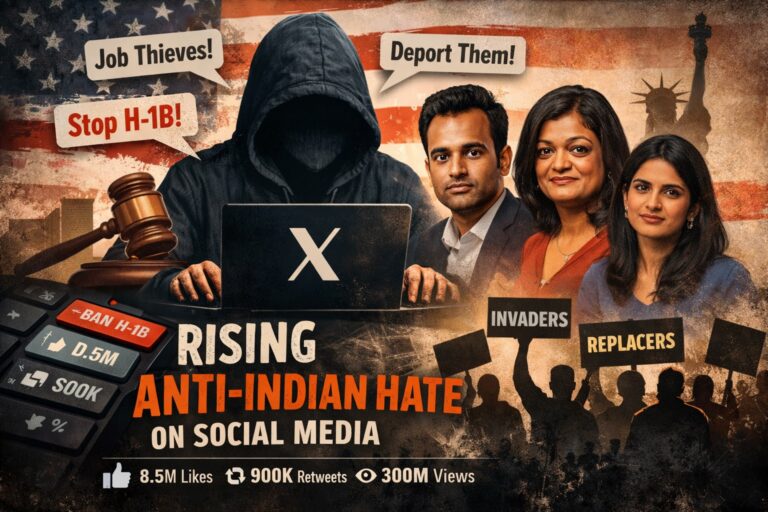
A new report analysing online discourse in the United States has claimed that Anti-Indian rhetoric and anti-Indian attacks against Indians and Indian-origin individuals went up sharply on the social media platform X. Particularly in 2025, during the heated debates in the United States surrounding immigration and the H-1 B visa programme. 

The Network Contagion Research Institute (NCRI) has put out a research report titled “From Policy Drift to Purity Grift: How a Small Network Hijacked the Immigration Debate.” It has analysed thousands of posts on X to study the rise of anti-Indian narrative. 

According to the study,  anti-Indian posts on X generated more than 300 million views in 2025. Moreover, this content has tripled over the year. The institute’s researchers analysed that 24,674 posts came from 14,000 accounts, which collectively received over 8.5 million likes and around 9 lakh retweets, indicating the massive reach of such hostile narratives. According to the report, these posts frequently portrayed  Indians as “invaders”, “job stealers” or demographic “replacers”, particularly in the context of  discussions around the H-1 B visa programme and immigration policies in the United States.  

Indian-Americans’ contribution

The report highlights the economic and social contributions of Indian-Americans in the United States. It is important to note that the community plays a significant role in the country’s technology, business, and academic sectors. According to the report, Indian-Americans number around 5.2 million in the US and have the highest median household income among major Asian-origin groups, with 77% holding at least a bachelor’s degree, far higher than the national average. The study also notes that Indian-origin entrepreneurs represent the largest national-origin group among immigrant founders of billion-dollar startups in the US, highlighting the community’s economic contribution even as online hostility against Indians has grown. 

Report analysed thousands of posts using keyword-based data collection

The researchers used a structured query system to collect posts containing explicit racial slurs or those combining Indian identity markers with negative or exclusionary language. Keywords included derogatory terms and markers such as “India,” “Indian,” “Indians,” “Hindu,” and “H-1B,” paired with terms like “deport,” “ban,” “replace,” “invasion,” “fraud,” and “scam.”
In the report, the dataset is limited to posts published in 2025 with more than 10 likes, ensuring the analysis focuses on content that achieved some level of engagement.  The study also excluded posts originating from India to concentrate on hostility directed at Indians in external discourse. 

Immigration policy debates triggered online hate campaigns.

The report noted that spikes in anti-Indian narrative on social media frequently increased during the debates, mainly on immigration policy developments in the United States in 2025. According to the study, some policy announcements sparked angry online conversations about Indians. These included the US Department of Homeland Security’s new H-1B modernisation rule, visa restrictions on some Indian travel agencies that were thought to be helping people move to the US illegally, and the idea of charging employers $100,000 to file new H-1B visa applications. The report says that after these events, online conversations about immigration moved away from criticising policies and toward more general attacks on Indians as a group. Many posts made Indians look like economic rivals or demographic “replacers.” Some even called for limits on Indian immigration or deportation measures. The study also says that stories about immigration made up most of the dataset. Almost half of the posts were about topics like deportation, immigration restrictions, or “replacement” rhetoric, which together got a lot of engagement.

Shift from explicit slurs to policy-framed hostility.

One of the shocking trends identified from the report is the shift in the nature of the rhetoric over the years. In early 2025, many of the hateful posts relied on explicit racial slurs targeting Indians. However, from mid-2025, this  rhetoric increasingly shifted toward policy-framed narratives related to immigration, labour competition, and alleged abuse of the visa system, which also shows the intensity of hate towards Indians. The researchers suggest that this shift may reflect attempts to avoid content moderation while still promoting hostile narratives, allowing such posts to achieve broader reach on social media. A small network of highly active accounts drove amplification, another finding from the report. A relatively small number of accounts played a disproportionate role in amplifying anti-Indian content. The analysis found that three highly active accounts alone accounted for over 10% of the total likes and nearly 20% of the retweets in the dataset. The accounts are named “NeonWhiteCat”, “MattForney”, and “TheBrancaShow”
According to the report, this suggests that anti-Indian narratives online were significantly shaped by a concentrated group of users rather than representing purely organic discussion across the platform. The study also notes that some of the accounts amplifying anti-Indian rhetoric were associated with extremist or white nationalist online ecosystems, which have previously been linked to other forms of ethnic hostility.

Indian-origin public figures are frequently targeted
 

Further, the report notes that several Indian-origin public figures in the United States were repeatedly targeted in hostile posts. Former presidential candidate Vivek Ramaswamy and lawmakers Shri Thanedar and Pramila Jayapal are among the most frequently mentioned and referenced in discussions surrounding immigration policy.  According to the researchers, individuals associated with immigration debates often became focal points for broader attacks against Indians as a community. It suggested that posts referencing these figures often moved beyond policy criticism and instead included ethnic generalisations about Indians or Indian-origin professionals in the United States. In several cases, this ecosystem framed their positions on immigration policies as part of a larger narrative portraying Indians as responsible for alleged job displacement or immigration-related issues in the US.

Racist attacks on Usha Vance triggered a major spike in hostility.

It also examines the narrative war surrounding Usha Vance, the Indian-origin wife of US Vice President JD Vance. According to the researchers, it is found that hostile posts about Usha Vance remained relatively limited for most of 2025 but spiked sharply toward the end of the year following racially charged remarks by controversial online influencers such as Nick Fuentes and Sneako. According to the study, these remarks spread widely through reposts and reactions on social media, significantly amplifying racist narratives targeting her and her family. 

Report warns against conflating policy debate with ethnic hostility.

While acknowledging that concerns regarding immigration policies and potential misuse of visa programmes constitute legitimate areas of policy debate, the report warns that such discussions often devolve into collective blame directed at Indians. researchers, criticism crosses the line into ethnic hostility when it involves dehumanising stereotypes, sweeping generalisations about Indians, or calls for exclusion based on ethnicity rather than policy considerations. The study concludes that monitoring such online narratives is important, as large surges in ethnic hostility on social media have historically sometimes preceded real-world harassment or discrimination.

Conclusion

The findings of the report highlight how policy debates around immigration in the United States are increasing generalisations and racist stereotypes against Indians and Indian-origin professionals.

It also concludes that the growth of such narratives on social media requires closer monitoring, particularly as online hostility can sometimes translate into real-world targeting of communities. It also calls for greater awareness among platforms and policymakers to distinguish between legitimate policy criticism and narratives that promote ethnic hostility or collective blame against immigrant communities.