Home Blog Page 100

Akhilesh Yadav meets Swami Avimukteshwaranand: Read how Mulayam’s police attacked him during a protest and the anti-Hindu history of his family, Samajwadi Party

Samajwadi Party President Akhilesh Yadav had a meeting with Shankaracharya Swami Avimukteshwaranand Saraswati, which lasted approximately one hour, in Lucknow on 12th March (Thursday). Afterwards, Akhilesh Yadav addressed the media and expressed that it was an honour for him to receive the blessings of the religious figure.

He declared that the period of fraudulent saints in the nation is nearing its end, and true saints lead society towards the correct path. Nevertheless, this event has also acted as a reminder of previous decisions and statements made by his organisation and family. Notably, the Samajwadi Party has historically been accused of disrespecting Hindu beliefs, temples and saints.

The decision to fire upon Karsevaks in Ayodhya under late Mulayam Singh Yadav’s government, alongside provocative comments of Akhilesh Yadav about temples, monks and Hindu traditions, continues to be a part of political dialogue to this day.

Controversial remarks on Deepotsav, temples and Hindu customs

Akhilesh Yadav has repeatedly found himself at the centre of controversies due to his statements on various occasions in the past. He has raised inquiries about the spending on lighting lamps and candles during the Deepotsav celebrations in Ayodhya. He alleged that cities worldwide are adorned with lights for months during the Christmas season, indicating that the government should take inspiration from them regarding the considerable funds allocated for diyas (earthen lamps) and candles.

He claimed that merely placing a stone and hoisting a red flag anywhere is sufficient to constitute a temple while discussing Hinduism at the same time. This remark drew severe backlash from the Bharatiya Janata Party (BJP) and many Hindu groups, who condemned it as an affront to religious sentiments. Additionally, he also insisted that, at one time, idols had been covertly placed there under the cover of darkness while reacting to the dispute surrounding Shri Ram Janmbhoomi in Ayodhya.

Consistently question saints and saffron robes

Akhilesh Yadav, targeting Uttar Pradesh Chief Minister Yogi Adityanath, once commented that simply donning saffron robes does not make one a “Baba” (ascetic). He cited an example from the Ramayana, where even Ravana approached Goddess Sita while pretending to be a “Sadhu” (holy man). Afterwards, several outfits charged that such a comparison was an insult to the legacy of saints and sages.

When blood flew from Swami Avimukteshwaranand’s head

A protest by saints in Varanasi concerning the immersion of Ganesh idols led to the police, under Akhilesh Yadav’s rule, to execute a lathi-charge (baton charge), resulting in injuries to numerous demonstrators, including Swami Avimukteshwaranand. Afterwards, Akhilesh Yadav apologised, accepting that it was a mistake made by his government, during a meeting with saints in Haridwar.

Throughout the period of his party’s governance, instances of conflict involving Hindu religious leaders and saints surfaced regularly. Moreover, concerns were repeatedly raised about the administration’s conduct, with allegations indicating that efforts were made to stifle them rather than treat them with respect.

Mulayam Singh’s background of shedding the blood of karsevaks

The most significant controversy in the history of the Samajwadi Party is widely regarded as being associated with the deadly occurrences of 1990, when directives were given to open fire on Karsevaks during the Ram Mandir movement. Mulayam Singh Yadav served as the Chief Minister of Uttar Pradesh at the time.

On 30th October and 2nd November 1990, a substantial number of Karsevaks assembled in Ayodhya to advocate for the temple when confrontations transpired between them and the authorities, resulting in police gunfire. Official reports mentioned 17 fatalities, although groups linked to the movement asserted that the true number was considerably higher.

Opponents complained that Mulayam Singh Yadav acted against the devotees of Lord Ram in the wake of the incident. This led to him being commonly known as “Mullah Mulayam” for a significant duration. He likewise encountered criticism due to his contentious remarks. He stated that “boys make mistakes” and argued against the imposition of the death penalty in cases of rape during a rally. He even announced that the notion of four men sexually violating a woman did not appear to be “practical” in a separate statement.

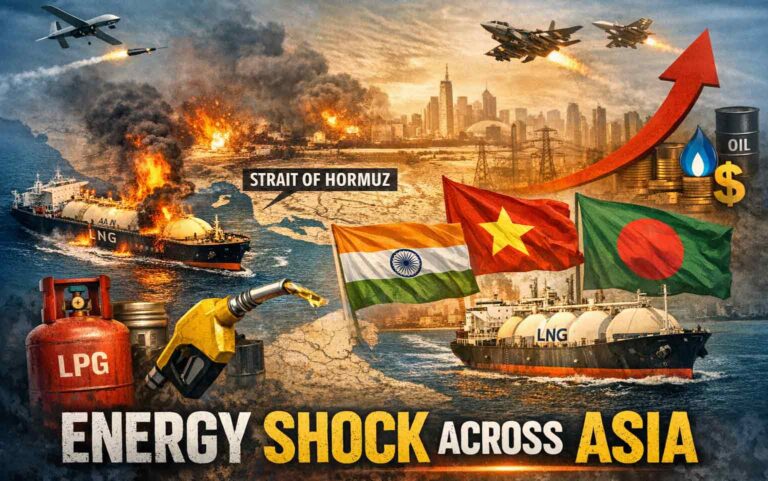
From Pakistan to Vietnam: How the Strait of Hormuz crisis is triggering an energy shock across Asia

The global energy market has been shaken by a rapid geopolitical escalation in West Asia, disrupting one of the world’s most vital energy chokepoints. On February 28, 2026, the United States and Israel conducted combined airstrikes against Iran, which is known as Operation Epic Fury. The strikes led to the assassination of Iran’s supreme leader, Ayatollah Ali Khamenei, resulting in swift retribution from Tehran and sending shockwaves through global supply systems.

In the immediate aftermath of the strikes, Iran effectively closed the Strait of Hormuz, a narrow maritime corridor connecting the Persian Gulf with the Gulf of Oman, through which nearly 20% of the world’s oil and a significant share of global LPG and LNG shipments pass. With the strait shut for nearly two weeks, tankers carrying oil, LPG and LNG from Gulf producers have been unable to move through one of the world’s busiest energy routes, triggering a major supply disruption.

The world’s largest LNG export facility, Qatar’s Ras Laffan industrial complex, was attacked by Iranian drones. The plant, which produced roughly 300,000 barrels per day of LPG in 2025, was forced to halt operations after the attack, removing a substantial portion of global LPG supply from the market at a time when shipping routes were already blocked. As these twin shocks of disrupted shipping and halted production ripple through global markets, countries across Asia and beyond are scrambling to manage fuel shortages, activate emergency reserves and stabilise domestic energy supplies. This growing strain underscores how deeply many nations remain dependent on energy flows passing through a single strategic waterway.

Why the Strait of Hormuz Matters

The Strait of Hormuz is one of the most strategically important energy chokepoints in the world. It is Located between Iran and Oman. The narrow waterway connects the Persian Gulf to global shipping routes and serves as the primary export corridor for oil and gas produced in Gulf countries such as Saudi Arabia, Qatar, the UAE, Kuwait and Iraq. An estimated 20% of the World’s oil supply passes through the Strait every day. In addition to crude oil, the route also carries a significant share of global LPG and LNG shipments, particularly from major Gulf exporters like Qatar.

In 2025 alone, Gulf producers exported roughly 1.5 million barrels per day of LPG along with millions of barrels of refined petroleum products through this route. With Iran effectively closing the Strait following the recent escalation, oil and LPG tanker traffic has been severely disrupted. The sudden halt in shipments has triggered supply concerns across several import-dependent economies, particularly in South and Southeast Asia, where many countries rely heavily on energy imports from the Gulf.

Countries Facing Severe Energy Stress

Energy supplies from the Gulf are slowing, and this is already causing major problems in some countries in South and Southeast Asia. Many countries depend on imported LPG and LNG, particularly given limited strategic reserves. As the Strait of Hormuz is disrupted, it is now the most vulnerable.

India is one of the world’s largest LPG consumers and is facing disruptions that are putting pressure on its LPG market. India imports nearly two-thirds of its LPG requirements, and nearly 90% of those imports usually go through the Strait of Hormuz. There are concerns about the stability of supply nationwide because tanker movements have been disrupted. The reports say that India’s underground strategic storage facilities have enough supplies for about nine days. There are also extra supplies stored at refineries and distribution centres.

In response, the government has directed oil refineries to maximise LPG production for domestic cooking gas while also releasing additional kerosene supplies to states as an alternative fuel. The crisis has also begun affecting businesses that rely heavily on LPG cylinders, particularly restaurants and small food establishments.

Pakistan is facing one of the most immediate impacts of disruption. The country depends heavily on LNG imports from Gulf producers, with Qatar and the UAE accounting for nearly 99% of its LNG supply. With shipments disrupted and energy shortages looming, the government has introduced emergency measures to reduce fuel consumption. These include implementing a four-day workweek, work-from-home policies for government offices and a 50% reduction in fuel allowances for official vehicles.

Nearly 60% of government vehicles will remain off the roads for two months, while federal and provincial cabinet members have agreed to forgo their salaries and allowances during this period. In addition, lawmakers will face salary cuts of up to 25%, and the government has imposed restrictions on non-essential spending and foreign travel. The education sector is also being affected, with universities shifting to online classes and schools closing for two weeks as part of broader energy-saving measures. Pakistan’s finance minister has warned that rising crude prices could push the country’s oil import bill to around $600 million per month, underscoring the economic pressure caused by the ongoing crisis.

Bangladesh is also feeling the heat. It is also struggling to maintain energy supplies amid the conflict in the Middle East, which disrupts LNG shipments. Bangladesh also relies on imports for around 95% of its energy needs. It has to force the purchase of several spot LNG cargoes at significantly higher prices to stabilise domestic supply. Petrobangla, a government-run energy company, has purchased multiple LNG shipments from international traders after some suppliers suspended deliveries amid the ongoing Iran-Israel conflict.

The situation has already triggered fuel rationing for vehicles and restrictions on diesel sales. Several universities have been shut down as the government attempts to reduce energy consumption. Bangladeshi Officials have also warned that if the disruption continues, the country may have to rely even more heavily on the expensive spot LNG market, increasing its import burden and placing additional pressure on power generation and industry.

While Vietnam is not facing an immediate fuel shortage, it is already experiencing the ripple effects of the global energy disruption triggered by the Middle East. Authorities in Hà Nội have said that petrol and LPG supplies in the capital remain largely stable for now, but that market surveillance teams are deployed to prevent hoarding and ensure availability at retail outlets. However, Vietnam has announced plans to procure 4 million barrels of crude oil from non-Middle Eastern sources, but analysts say that the volume covers only about three-sixths of a day’s consumption, while existing reserves are estimated to last around 20 days.

Global price volatility is beginning to affect domestic markets, with fuel prices rising significantly and LPG becoming costlier due to higher transportation and import costs. The government has been closely monitoring supply conditions and encouraging energy-saving measures, including remote work arrangements, to reduce fuel consumption. At the same time, state-run energy company PV Gas has moved to secure additional LNG cargoes to stabilise power generation and industrial supply. Officials have also warned that if disruptions in Middle East shipping continue, sectors such as aviation could face fuel shortages in the coming months, highlighting Vietnam’s vulnerability to prolonged energy supply disruptions.

Across Southeast Asia, disruptions to energy supplies through the Strait of Hormuz are exposing the region’s limited strategic reserves. Many countries in the region maintain relatively small fuel buffers, making them vulnerable if the shipping blockade continues. Despite being an oil-producing country, Indonesia still imports more than one-third of its crude and maintains reserves of only 21–23 days. Thailand has somewhat larger reserves of about 65 days, and the government is attempting to secure an additional month of supply, while the Philippines holds around 50–60 days of reserves, mostly in privately held inventories.

Experts warn that if disruptions persist, countries across the region will struggle to replace Middle Eastern supplies because refinery configurations, shipping distances and limited alternative crude sources make rapid adjustments difficult. The crisis has already forced governments to explore emergency measures, including restricting fuel exports, increasing imports from alternative suppliers, and imposing energy-saving policies to prevent shortages

Conclusion

The ongoing disruption in the Strait of Hormuz has once again highlighted how deeply global energy markets remain tied to a handful of strategic chokepoints. For many countries across South and Southeast Asia, the crisis has exposed structural vulnerabilities where heavy dependence on imported fuel, limited strategic reserves, and few short-term alternatives are needed when supply routes are disrupted. Governments from Pakistan to Thailand have already been forced to impose fuel-saving measures, ration supplies, or seek costly imports from alternative markets.

While some larger economies such as Japan, China and South Korea possess extensive reserves that can cushion the impact for months, many developing Asian economies have far smaller buffers. If the disruption continues, these countries could face rising energy prices, supply shortages and broader economic strain.

The situation underscores a broader lesson for energy-importing nations: geopolitical conflicts far from their borders can quickly translate into domestic economic pressure. As governments scramble to stabilise fuel supplies and protect consumers, the unfolding crisis is also likely to renew calls for stronger energy security strategies, diversified supply chains and greater investment in alternative energy sources.

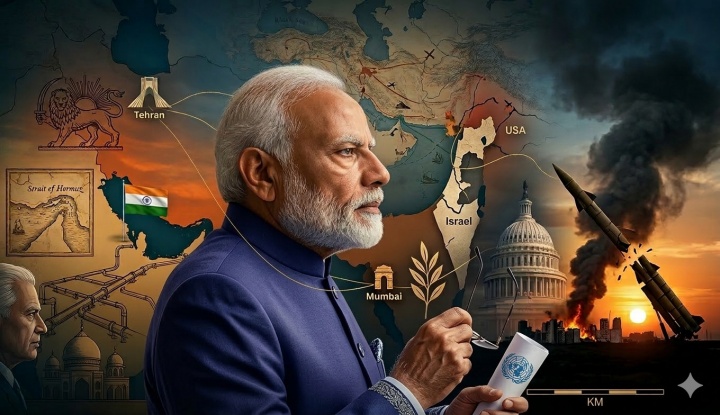
India’s strategic tightrope in the US-Israel war against Iran: As a closed Strait of Hormuz threatens energy supplies, will PM Modi play the peacemaker?

On February 28, 2026, the world awoke to a profoundly transformed geopolitical reality. The joint US-Israeli bombings on Tehran, which culminated in the killing of Iran’s Supreme Leader Ayatollah Ali Khamenei, not only decapitated the Iranian political and religious establishment but also sparked a sweeping, uncontrollable inferno over West Asia. Today, exactly two weeks into what has already been nicknamed the 2026 US-Israel-Iran War, the world is dealing with crippled trade routes, increasing energy costs, and the terrible threat of a protracted regional conflict.

In the middle of the smoke and confusion, all eyes are on New Delhi. India, a developing powerhouse with deep, ancient civilizational ties to Iran as well as a powerful, modern strategic engagement with Israel and the United States, is currently walking the closest diplomatic tightrope of its modern history.

In an important phone call with Iranian President Masoud Pezeshkian on Thursday, March 12, Prime Minister Narendra Modi formally entered the diplomatic contest. While the call focused on India’s fundamental concerns, the safety of its population and the uninterrupted flow of energy, it also raised serious questions about the timing, the changing reality of the war, and India’s unique role as a possible global mediator.

Why did PM Modi wait 13 days?

Prime Minister Modi tagged President Pezeshkian in a post on X (previously Twitter) late Thursday night, marking the first leadership level interaction between New Delhi and Tehran since the war began. The official summary stated that PM Modi expressed ‘deep concern over the escalation of tensions and the loss of civilian lives’ while urging dialogue and diplomacy.

However, in the fast-paced world of world politics, a 13-day delay seems like an eternity. Observers and critics alike have asked, Why so late? A portion of the delay was entirely logistical. As External Affairs Minister S. Jaishankar honestly revealed in Parliament on March 9, reaching Iranian leadership in the immediate aftermath of the attacks was nearly impossible. The Iranian state machinery was stunned, mourning its Supreme Leader and securing its newly elected successor, Mojtaba Khamenei, while unleashing retaliatory drone and missile attacks. 

But there is also a practical, if perhaps cynical, diplomatic truth to recognise. Following the February 28 strikes, New Delhi was taking its time. Despite its long history of non-alignment, Indian diplomacy has clearly shifted in recent years toward a deeper strategic embrace of the United States and Israel. There was a widespread, silent expectation in key South Block corridors that the US-Israel coalition’s overwhelming military supremacy would result in a quick, sharp end to the battle. India waited for the dust to settle to determine which way the wind would blow. However, the dust did not settle. The conflict grew, involving many proxy states and significantly destabilising the region. This initial hesitancy is possibly the single major mistake in an otherwise remarkable demonstration of strategic autonomy. It soon became clear that relying too much on the anticipation of a swift Israeli victory was a mistake. The conflict would not finish overnight, and India’s quiet was starting to cost it leverage.

When geopolitics meets the energy crisis

India’s increased urgency in the Middle East was triggered not just by growing conflict, but also by an urgent and severe threat to its own economic lifeblood. Over alignment with Israel may result in advances in defence technology and agriculture, but it does not fuel Indian homes, drive Indian factories, or power the logistics of a 1.4 billion-strong nation.

Iran used its most lethal tactic, the blockage of the Strait of Hormuz, in response to the attacks. This strategically important waterway is the choke point through which one-fifth of the world’s crude oil and natural gas exports pass. For India, which imports more than 80% of its oil, mostly from Gulf suppliers such as Iraq, Saudi Arabia, and the UAE, the blockade poses an existential economic danger.

The ramifications have been swift and severe. Global crude prices have risen, with predictions that they may reach the disastrous $200 per barrel threshold if the crisis continues. Domestically, India is already feeling the heat. According to reports in Indian media, a rising LPG shortage is affecting the restaurant and hospitality industries, and states such as Karnataka are experiencing huge interruptions in export operations as a result of the problem.

In addition, crucial fuel vessels headed for Indian ports are presently stranded in the Persian Gulf. PM Modi stated during his call with President Pezeshkian that ‘the safety and security of Indian nationals, along with the need for unhindered transit of goods and energy, remain India’s top priorities.’ This was New Delhi acknowledging that it could no longer afford to remain on the sidelines. The energy crisis prompted a rapid reengagement with Tehran, demonstrating that India’s civilizational and economic links to Iran are too important to be overshadowed by modern relationships with the West.

The Khamenei condolence and India’s pro Iran nuance

As the fighting continues, a fascinating narrative has emerged across numerous social media platforms. Geopolitical analysts and internet users have praised India for taking what they see as a ‘pro-Iran, anti-Khamenei’ position. According to the widely held belief, India boldly declined to offer top-level condolences for Ayatollah Ali Khamenei’s passing, indicating a rejection of the hardline clerical dictatorship while continuing to support the Iranian people. While this story presents a picture of a defiant, morally absolute India, it might also have been a miss that needs to be rectified. The reality of Indian diplomacy is significantly more sophisticated and pragmatic than social media screams indicate.

India officially condoled the death of Ayatollah Khamenei. However, it did it with a deliberate subtlety that was nothing short of a diplomatic masterstroke. Instead of a loud, public proclamation or a highly publicised tweet from the Prime Minister, which would have undoubtedly angered the US and Israel, India followed quiet official protocol. Vikram Misri, the Indian Foreign Secretary, visited the Iranian Embassy in New Delhi and signed the official register of condolences. He wrote, ‘Sincere condolences on behalf of the Government and People of India. We pray for peace for the departed soul.’

This captures the essence of India’s diplomatic genius. By having the Foreign Secretary undertake this responsibility, New Delhi honoured the Iranian state’s sovereignty while maintaining its critical bilateral connection with Tehran without politically backing the late Supreme Leader’s philosophy on a worldwide scale. It enabled India to stay technically neutral while leaving the door open for future negotiations. It wasn’t an anti-Khamenei boycott; rather, it was a measured, low-key adherence to the convention that protected India from Western criticism while maintaining Iranian goodwill.

Why is the world looking to PM Modi?

The international community strongly supports Indian diplomacy notwithstanding the delayed phone call and the initial miscalculations about the course of the war. India is the only country capable of ending this war, according to a remarkable chorus that is developing from world political and military circles as the battle grinds to a violent standoff. Many people are suspicious of China, the only other country that has volunteered to mediate. Beijing has strong ties to Iran’s weapons programs which puts them in a dubious position.

India, on the other hand, has a unique and potent geopolitical advantage, both sides trust it.

Earlier this week, this opinion was openly expressed on the international scene. Colonel Douglas MacGregor, a retired US military official, made a startling claim in a widely circulated podcast with conservative pundit Tucker Carlson. ‘To stop the US-Israel-Iran war, we need an intermediary, and preferably, the Prime Minister of India, Narendra Modi,’ MacGregor said, adding that India is the only neutral state that is growing in stature, power, and influence. 

Western military analysts are not the only ones who have this opinion. In an exclusive interview with India Today TV, former UAE envoy to India Hussain Hassan Mirza expressed the same viewpoint. ‘A single call from PM Modi to Israeli Prime Minister Benjamin Netanyahu and Iranian leaders can stop the war,’ Mirza said. The connection between Mr. Modi and Iran is excellent. He is Iran’s biggest oil customer. The issue can be resolved with just one phone call from Mr. Modi.

These endorsements acknowledge India’s multi-aligned foreign policy and go beyond simple flattery. While putting India’s strategic autonomy first and refusing to cut ties with Tehran, Prime Minister Modi has developed a close, personal relationship with Benjamin Netanyahu over the last ten years. With no significant instances of state-sponsored antisemitism or Islamophobia influencing its foreign policy, India is the only major country capable of welcoming Israeli, Arab, Gulf, and Palestinian leaders with equal affection.

Protecting the diaspora: The human core of Indian diplomacy

Beyond grand strategy and energy economics, New Delhi’s activities are driven by a strong human aspect. The Middle East is home to over ten million Indian diaspora. Currently, about 40,000 Indians live in Israel, while approximately 10,000 study and work in Iran. 

When PM Modi spoke with President Pezeshkian, as he had previously with the leaders of the UAE, Qatar, Saudi Arabia, and Israel, his top focus was their safety. India has already launched intricate logistical measures to evacuate its residents from high-risk areas in Iran, with some migrating to neighbouring Armenia and Azerbaijan.

Conclusion

The protracted West Asia War in 2026 has tested world diplomacy’s limitations. Has India responded flawlessly? No. The first quiet and delayed contact with Iranian leadership suggested a momentary lapse caused by an overestimation of Israeli military capabilities and a desire to avoid hurting Western friends.

However, as the crisis has progressed, the underlying strength of India’s multi alignment ideology has emerged. New Delhi has effectively navigated a geopolitical minefield by ensuring its energy interests, discreetly obeying diplomatic norms without seeking attention, and putting the safety of its diaspora first.

Is the US facing an increased domestic terrorism threat while Trump fights a war 7,000 miles away in Iran?

There have been many Islamic terror attacks targeting Jewish people in the West, particularly in the US, since the Israel-Palestine war broke out in October 2023. However, there has been a fresh wave of Islamic terror attacks in the US amidst the ongoing conflict between the US, Israel, and Iran.

Michigan synagogue, Old Dominion University, to Texas University: Islamic terror attacks surge in the US ever since Israel and the US launched attacks on Iran

On 12th March 2026, a vehicle-ramming attack was carried out by a rifle-armed Islamic jihadi named Ayman Mohamad Ghazali, a Lebanese-born naturalised American citizen, at Temple Israel in West Bloomfield Township near Detroit, Michigan.

The Federal Bureau of Investigation (FBI) officials called the attack a “targeted act of violence against the Jewish community”. There were over 140 children present at an attached preschool when the attack was carried out.

On the same day, an ISIS-inspired attack occurred at Old Dominion University in Norfolk, Virginia. The shooting was perpetrated by Mohamed Bailor Jalloh, a 36-year-old naturalised US citizen who came from Sierra Leone. Jalloh killed one person and injured two before he was subdued by students present in the classroom.

 FBI Special Agent Dominique Evans said that 36-year-old Jalloh barged into a Reserve Officers’ Training Corps (ROTC) classroom at the Virginia college, shouting ‘Allahu Akbar’, before opening fire. ROTC instructor, Lt. Col. Brandon Shah, was killed in the shooting, while two people were injured. The US Federal Bureau of Investigation (FBI) is investigating the case as an act of terrorism.

FBI Director Kash Patel said in a statement that the bureau is treating the shooting as “an act of terrorism”.

In another such incident, a deadly shooting outside a bar was reported in Austin, Texas. The authorities said that they are investigating the terrorism angle in the matter.

The shooting occurred around 1:59 a.m. outside Buford’s Backyard Beer Garden, a popular bar in downtown Austin’s nightlife district. According to investigators, the suspect initially fired shots from an SUV before exiting the vehicle armed with a rifle and opening fire into the crowded area. Police officers responded swiftly and shot the gunman within about a minute of receiving the first emergency call.

The suspect was identified as 53-year-old Ndiaga Diagne, a naturalised U.S. citizen originally from Senegal. Authorities said items recovered from the suspect’s vehicle and residence included an Iranian flag and extremist writings. The authorities said that Diagne was wearing a shirt with an Iranian flag design on it underneath a hoodie printed with “Property of Allah,”

As a result, federal investigators from the Federal Bureau of Investigation Joint Terrorism Task Force are examining whether the attack may have been motivated by extremist ideology or whether the suspect had been self-radicalised. Besides those killed, fourteen others were injured in the shooting, several of them students.

On 7th March, two ISIS-inspired suspects hurled homemade explosive devices outside the residence of New York City Mayor Zohran Mamdani near Gracie Mansion. The accused were identified as 18-year-old Emir Balat and 19-year-old Ibrahim Kayumi, who are US citizens from Pennsylvania. The duo was attempting to detonate an improvised explosive device at an ‘anti-Islam’ protest and a counterprotest near Mamdani’s residence.

US wants to eradicate the Iranian “existential threat” to Israel, while a Jihadi threat looms in its own backyard

Ironically, America under President Donald Trump is engaged in eliminating the alleged ‘existential threat’, a nuclear threat, posed by the Ayatollah regime in Iran against the world’s only Jewish state of Israel, yet the phantom of that very same threat looms right in America’s own backyard. Shootings, arson, and a monumental surge in antisemitic incidents in the US have been reported quite frequently since Israel launched a full-fledged military offensive against the Palestinian Islamic terror group Hamas in October 2023. However, these attacks have found a renewed intensity since the day Israel and the US eliminated Ayatollah Syed Ali Khamenei, the Supreme Leader of Iran.

While Donald Trump has been keeping busy with directing US military operations thousands of miles away in Iran, and boasting disputable successes of Operation Epic Fury, during media interactions, the home front is unravelling under a mounting wave of Islamic terrorism.

Recently, it was reported that US intelligence intercepted encrypted communications originating from Iran on 9th March, which have been interpreted as potential “operational triggers” for activating sleeper cells in the US and other countries, hinting at Iran’s strategy of asymmetric warfare. These Islamic terror attacks in the US are occurring even as there was intelligence input that Jewish synagogues could be targeted by jihadists. Clearly, while in Trump’s mind and rhetoric, the US has won the war against Iran, his administration appears to be failing even at the domestic counterterrorism front.

It seems that the ongoing conflict has not only disrupted global energy supplies via Iran’s blockade of the Strait of Hormuz, but also triggered the Jihadi sleeper cells, who, just as parasites, sustain themselves at the expense of their host, exploit American laws to gain citizenship, only to curse the host country and carry out terror attacks against Kafirs.

The US, however, should have known this better, since its wars abroad have always bred new enemies. The Iraq War birthed ISIS, and now the Iran War will also give rise to new militant groups and unite existing Islamist enemies. The US may neutralise the nuclear threat in Iran through its airstrikes. However, no number of airstrikes can eliminate a decentralised and isolated terror threat America is now grappling with, while Israel watches helplessly.

LPG, LNG, and the host of other oil products that run the world: Read the differences and how India acquires them

The ongoing war in the Middle East has raised concerns about the availability of fossil fuel, and several countries are already facing a shortage of fuel like petrol, diesel and LPG. In India, while there is no shortage of most petrochemical items, there have been some shortages of LPG. The government has decided to restrict the sale of LPG to commercial establishments, to ensure that domestic customers are not hampered.

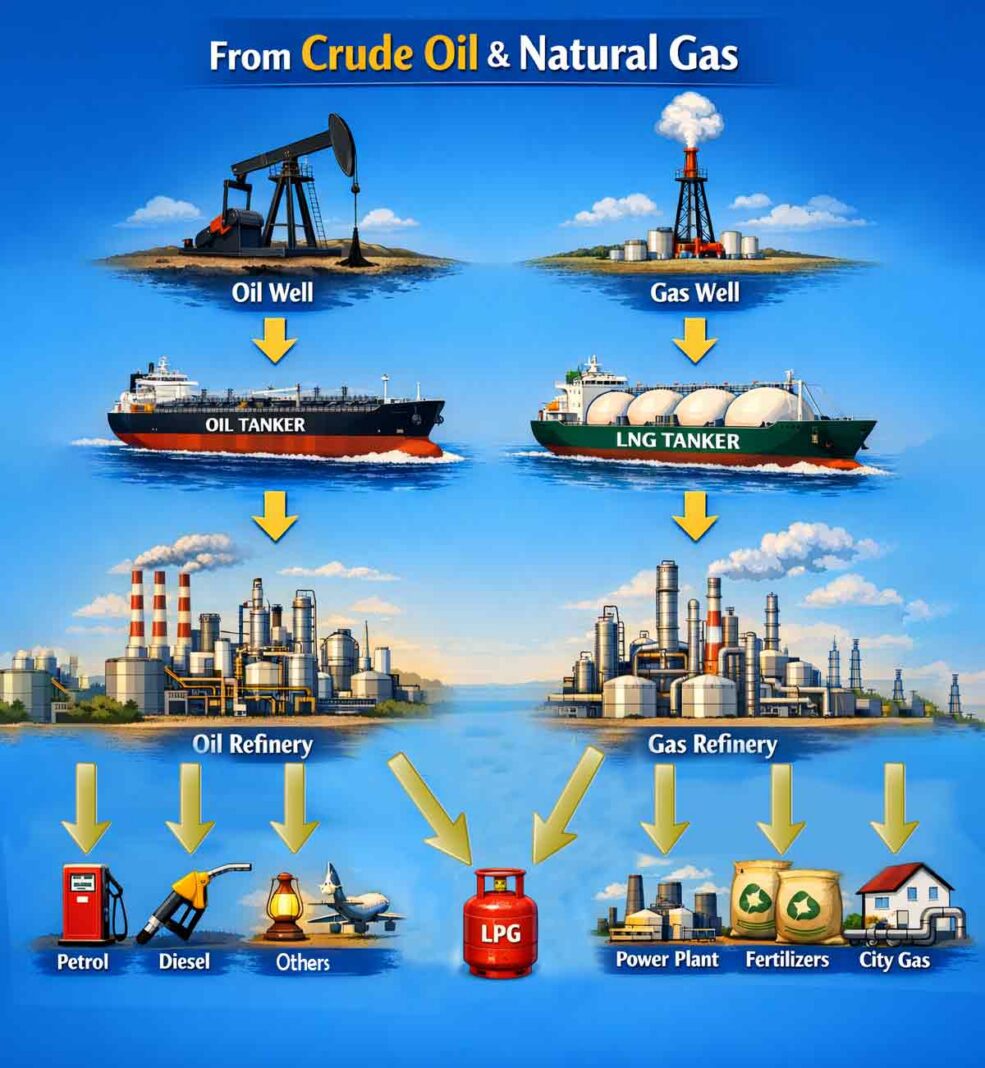
The primary reason for this shortage is that India is dependent on imports for all petrochemical products, including LPG. There are two sources of fossil fuel: crude oil and Natural Gas. While most oil wells produce both oil and gas, some wells produce only gas. These two energy sources are converted to various petroleum products by oil refineries.

LNG vs LPG

During these times, there are lots of talks about LNG and LPG supply. Both of them are gaseous fuels that are transported and stored in liquid form, but they differ fundamentally in composition and origin. Natural Gas is one of the two primary fossil fuels, the other being crude oil. Various petrochemical products are produced from both gas and oil.

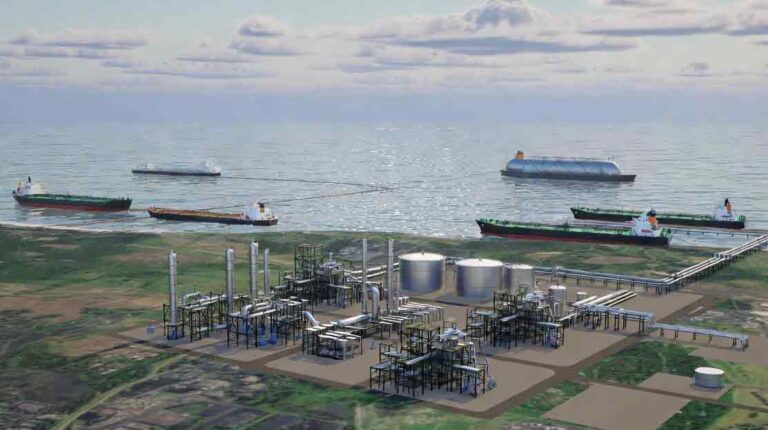
Natural Gas in its normal form can’t be stored or transported via tankers in large quantities, as only a small quantity will fit even in a giant tanker. Therefore, Natural Gas is compressed by cooling it to 161°C, at which temperature it becomes liquid. This is Liquefied Natural Gas or LNG, which can be stored in tanks and transported on LNG tankers in large volumes. Therefore, LNG is not a specific petroleum product; it is Natural Gas liquefied by cooling it. Like Crude Oil, Natural Gas is also refined to produce various hydrocarbon products.

LPG or Liquefied Petroleum Gas is one of the products derived from both crude oil and natural gas. LPG is a mixture of propane and butane gases, and both of them are byproducts of natural gas processing and petroleum refining. Like LNG, this Petroleum gas is also liquefied by compressing for storage, hence it is called Liquefied Petroleum Gas. However, LPG requires much less compression to become liquid.

Most of LNG is methane; the proportion of propane and butane is less, and therefore production of LPG from LNG is less. The majority of LPG comes from crude oil, which contains the entire spectrum of hydrocarbons.

LPG is mainly used as cooking gas in India, but it is also used in small industrial furnaces, heating systems, agricultural drying, and as a petrochemical feedstock in certain industries. LNG, on the other hand, has various uses. After it is regasified at specialised terminals, it becomes natural gas that can be transported through pipelines. In India, natural gas derived from LNG is widely used for electricity generation, fertiliser production, city gas distribution networks, and compressed natural gas (CNG) for vehicles.

Sources of oil and gas for India

India obtains these fuels from a combination of domestic production and imports. Domestic crude oil is produced mainly from offshore fields such as Mumbai High and from onshore basins in Assam and Gujarat, but domestic production meets only a small share of the country’s total demand. The majority of crude oil is imported from countries such as Iraq, Saudi Arabia, the United Arab Emirates and Russia.

India’s LNG imports are also significant because domestic natural gas production cannot meet demand. Qatar is the largest LNG supplier to India, accounting for a substantial share of imports, with additional supplies coming from the United Arab Emirates and other exporters. A large portion of India’s LNG imports transit the Strait of Hormuz, one of the world’s most critical maritime energy chokepoints now blocked by the ongoing war.

Similarly, India produces some LPG domestically through its refineries and gas processing plants, but domestic production is insufficient to meet demand. The country consumes roughly 31 million tonnes of LPG annually, while domestic production is only about 13 million tonnes, making India heavily dependent on imports. Major suppliers include Saudi Arabia, Qatar, the United Arab Emirates and Kuwait, although India has recently begun diversifying imports to the United States and other suppliers.

LPG production within India accounts for about 40 per cent, while the remaining 60 per cent is imported.

Why only LPG shortage

Now the question arises, if LPG is produced from crude oil and LNG, why is there a shortage of LPG in the country while there seems to be no problem with the availability of other fuels like petrol and diesel?

The explanation lies in the nature of refinery configurations and the limited infrastructure for LPG handling. Refineries are engineered for specific crude slates and cannot easily alter the fixed yield percentages of products extracted from each barrel. The proportions of different products that can be extracted from crude oil are largely determined by refinery configuration and the chemistry of the crude itself. It is therefore difficult to rapidly increase LPG production without altering refinery units, a process that requires major investment and long construction timelines.

Propane and butane streams emerge in limited volumes, and boosting them significantly requires diverting intermediates otherwise destined for petrochemicals or expensive hardware changes that take years to implement. Even then, there is a maximum limit that can be extracted from a barrel of crude.

Consequently, even when abundant crude keeps refineries running at or above 100 per cent capacity and generates ample petrol and diesel for transport and agriculture, LPG output stays constrained.

Another reason relates to supply chains and storage. LPG must be stored in pressurised tanks and transported in specialised carriers and cylinders, which limits how much can be stockpiled. In contrast, other naturally liquid petroleum products can be stored in normal tanks. As no pressurisation is required, storage capacities can be increased easily.

The entire system for LPG is optimised for continuous operational flow, unlike strategic reserves of crude oil and auto fuels that cover two months of demand.

Fighter jets, Stratotanker crashing, billion-dollar radars blown up: How US military has lost high-value assets despite its ’superiority’ flexing in a war nobody wanted

On March 12, the US Central Command confirmed that one of their KC-135 Stratotankers, the ‘flying gas station’ aerial refuelling aircraft, has been lost after a collision in the friendly skies over Iraq. Iranian sources have claimed it as a hit, but US insists it was a collision with another KC-135 Stratotanker, not a hit.

Be it a hit or a freak collision, the bottom line is that a giant refuelling aircraft worth over 40 million USD was lost in a collision. Just hours ago, CENTCOM was flaunting the very same Stratotankers, sharing images of an impressive refuelling exercise where one of those flying gas stations was filling up a US Navy F/A-18F Super Hornet midair.

This is not the worst loss the US military has suffered while fighting a war they started, thousands of miles away from their own country. 

After starting the Operation Epic Fury, where the US has been bombing Iran from its aircraft carriers and military bases in the Gulf nations, billions and billions of tax payer dollars have been blown off so far. The USA lost three F-15E Strike Eagles to friendly fire, though the pilots managed to eject and were safe. 

In the early days of Operation Epic Fury, Iran blew up the US’s AN/FPS-132 early-warning radar at Al Udeid base, Qatar. That was worth over $1.1 billion. In subsequent hits, Iran has reportedly hit and damaged several THAAD systems too, though the US has never officially confirmed them. 

At least 11 MQ-9 Reaper drones have been reported hit by Iranian attacks so far. MQ-9 Reapers cost $30 million each. That is over $330 million lost in just Reaper drones.

Here is a tentative list of all the aircraft and MQ-9 Reaper drones lost by the US in 2025 and 2026, including the Alaska incident where an F-35A Lightning II went down. Note that the US has also lost several MQ-9 Reapers to Houthi attacks in the Red Sea. Their exact numbers are unknown and unconfirmed.

Model / Asset NameDate of IncidentLocationEstimated Value
KC-135R StratotankerMarch 12, 2026Western Iraq$39.6 million
F/A-18E Super HornetApril 28, 2025Red Sea (USS Harry S. Truman)$68 million
F/A-18F Super HornetEarly May 2025Red Sea (USS Harry S. Truman)$68 million
F-15E Strike EagleMarch 2, 2026Over Kuwait$94 million each ($282 million for 3, approx)
F-35A Lightning IIJanuary 28, 2025Eielson AFB, Alaska$100 million+
F/A-18F Super HornetOctober 26, 2025South China Sea (USS Nimitz)$68 million
MH-60R SeahawkOctober 26, 2025South China Sea (USS Nimitz)$40 million
MQ-9 ReaperFebruary–March 2026Iran attacks (Operation Epic Fury)$32 million each ($352 million approx total for 11)

Radar systems in the Gulf

An Iranian strike hit and heavily damaged the US Space Force’s AN/FPS-132 (Block 5) Upgraded Early Warning Radar, located near Al-Khor, approximately 95 km north of Al Udeid Air Base, in the early days of Operation Epic Fury. This was a shocking loss of a highly advanced asset that had cost over 1.1 billion dollars back in 2013. After initial claims by the Iranian sources, the hit was confirmed by Planet Labs satellite imagery. The IRGC claimed complete destruction. However, Qatari and US sources confirmed the strike caused major damage.

Planet Labs imagery confirming damage to AN-FPS-132 radar in Qatar

This ultra-high-frequency phased-array system, one of only six worldwide, provides 5,000 km ballistic-missile detection and tracking for the entire region. Its loss sharply reduces CENTCOM’s long-range sensor coverage, compresses missile-defence reaction timelines across the Persian Gulf, and degrades support for allied THAAD and Patriot batteries. Replacement is estimated to take 5–8 years due to the system’s rarity and complexity.

Unsurprisingly, after the loss of the AN/FPS-132 Early-Warning Radar, there were reports of multiple THAAD systems being hit. As per reports, Iran has struck at least three AN/TPY-2 X-band radars, the core sensors of the Terminal High Altitude Area Defence (THAAD) batteries, though the US has confirmed damage to only one. 

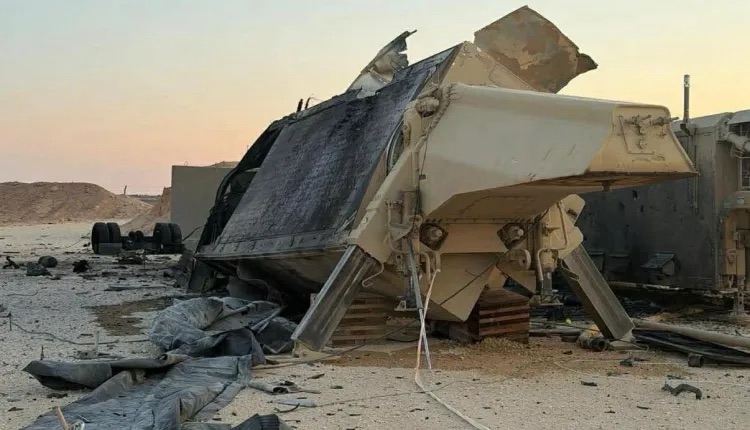
Destroyed AN/TPY-2 radar in Jordan, image via Defence Security Asia

US Army’s AN/TPY-2 at Muwaffaq Salti Air Base, Jordan was hit and completely destroyed by Iran between March 1 and 2. This was confirmed with satellite imagery by multiple independent sources. Additionally, in UAE’s Al Ruwais and Saudi Arabia, Iran has reportedly managed to strike the core AN/TPY-2 radars of the THAAD batteries, essentialy damaging the degrade the entire layered missile-defense network in the Gulf, because without these radars fully functional, the THAAD systems cannot detect, track, or cue interceptors. 

Loss of AN/TPY-2 radars makes the US rely on short-supply Patriot systems. Additionally, only very few AN/TPY-2 radars exist globally, with no immediate spares, meaning that their redeployment or replacement will take years and weaken defences elsewhere.

Aircraft loss from carriers at sea

In April May 2025, the US Navy lost two F-18 Super Hornets in the Red Sea from its aircraft carrier USS Harry S Truman. On April 28, one F/A-18F Super Hornet, worth over 65 million USD, fell off in the Red Sea, along with its towing gear and the tow tractor, while the carrier was turning to evade attack from the Houthis. Days later, another Super Hornet went overboard because the arrestment wire failed to stop it. 

On October 26, 2025, a F/A-18F Super Hornet and a SeaHawk helicopter went down in the South China Sea during routine flying ops just 30 minutes apart. They were both flying from the USS Nimitz. The crew ejected safely, and the aircraft was also later lifted off from the sea depth.

US military’s Hollywood-style superiority vs realities of distant wars in distant lands

The US military’s fabled superiority, endlessly amplified by Hollywood spectacles like Top Gun, video-game franchises, and decades of pop-culture narratives portraying invincible stealth fighters, carrier strike groups, and precision dominance, clashes sharply with the sobering ledger of distant wars.

The consistent loss of dozens of high-value assets, in addition to the loss of personnel lives, illustrates how even America’s most sophisticated assets remain vulnerable to saturation missile barrages, friendly-fire incidents, and operational friction thousands of miles from home.

This pattern repeats the 2021 Afghanistan debacle, when the hurried nighttime abandonment of Bagram Air Base left behind roughly $7.1 billion in tanks, helicopters, armoured vehicles, small arms, and aircraft that fell intact into Taliban hands, an indelible image of retreat that no amount of Hollywood propaganda can airbrush away.

What is baffling is the strange disconnect between the US political posturing and the staggering costs of endless wars in distant lands. The current war with Iran could have been avoided. US aggression in attacking a country thousands of miles away from their shores is choking the Strait of Hormuz, a crucial bridge to global trade, risking millions of people living in the Gulf nations, and destroying infrastructure at an alarming scale. The war started by the US administration is also causing Asian nations like India, Singapore, China, Japan and others to face a supply crunch of fossil fuels, sending markets into crisis and putting healthy economies into peril. However, neither acknowledgement nor remedy is coming from the White House.

The gap between political posturing and the raw arithmetic of strategic and asset loss is also surprising. Washington briefings and news soundbites still frame every engagement as a triumphant assertion of “global leadership,” with officials gloating over dominance, real and imaginary, while conveniently ignoring the multi-billion-dollar holes punched in forward-deployed capabilities, holes that will take years and further taxpayer billions to patch.

Trump and Hegseth have been making big claims, tall promises. But the loss of strategic assets and the global cost of this war with Iran is starting to hurt the whole world. This cannot and should not be allowed to go on. US diplomacy and pressure might force the Gulf nations to endure Iranian missiles on their land, but the economic wounds that are being inflicted on India, China and other Asian nations by risking crucial supply chains is bound to incite some response. Sooner or later, nations around the world, especially Asian powers, are going to step up and ask the US to back off and stop the war. 

Exclusive: JNU ‘scholar’, once charged for sedition in Manipur, is now a faculty member at Jamia Millia Islamia

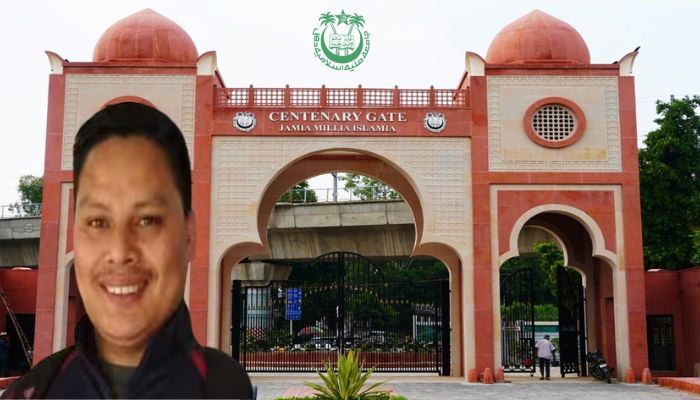
Jamia Millia Islamia has come under the scanner over the recruitment of a controversial man named Chingiz Khan as a faculty member.

The public research university, which is often in the news for the wrong reasons, has now roped in the former JNU ‘scholar’ charged with sedition in April 2020.

Chingiz Khan has recently been appointed as an Assistant Professor at the Centre for Comparative Religions And Civilizations (CCRC) in Jamia Millia Islamia.

Google Scholar profile of Chingiz Khan

While questions remain about the manner of his appointment, it is interesting to note that Khan had co-authored a research paper with Jamia’s Vice Chancellor, Mazhar Asif, in July 2025.

Coincidentally, the paper was titled ‘Tracing the Historical Roots of Muslims Settlement and Migration in Northeast India: A Case Study of Assam and Manipur.

Screengrab of the research paper

Arrest for sedition

In April 2020, the controversial JNU ‘scholar’ was arrested for sedition. He was later booked on charges of promoting enmity, public mischief and criminal conspiracy.

Chingiz Khan had reportedly written a malicious article falsely claiming ‘systematic persecution of Pangal Muslims in Manipur’. Having said that, he was successful in getting bail within 7 days.

At that time, the Chinese Communist Party-funded NewsClick, Islamist propaganda outlet Maktoob Media and AISA (the student wing of the CPI (ML) Liberation) threw their weight behind him.

They had dubbed his arrest a ‘communal witch-hunt’. Former President of JNUSU even posted a tweet in support of Chingiz Khan.

The same controversial man is now teaching at the Centre for Comparative Religions And Civilizations (CCRC) in Jamia Millia Islamia.

TMC moves proposal to ‘impeach’ Chief Election Commissioner before West Bengal election: Read a Bengali’s perspective on how Mamata has mastered the art of political drama and public theatrics

With the West Bengal election just around the corner, the Trinamool Congress (TMC) has floated a proposal to remove Gyanesh Kumar as the Chief Election Commissioner (CEC) of the Election Commission of India (ECI).

The Mamata Banerjee-led political party has received support from the likes of Congress, Samajwadi Party and other allies to bring about an impeachment motion against the CEC under Article 324 of the Indian Constitution.

To this effect, TMC has secured the signatures of 120 MPs and 60 MPs on notices meant to be submitted in the Lok Sabha and the Rajya Sabha, respectively.

Two tools in the arsenal of Mamata Banerjee

But why now? And don’t the Opposition parties, including TMC, know that this ‘impeachment motion’ will not yield any favourable result? After all, the antics of removing Lok Sabha Speaker Om Birla just failed a day earlier.

And herein lies the electoral strategy of Mamata Banerjee, which centres around political drama and public theatrics. As a Bengali, I have seen this pan out multiple times over the political career of the TMC supremo.

Whenever she felt cornered in her career or experienced a sudden stagnancy in her ambitious pursuits, Mamata knew that a public spectacle would bring back the spotlight on her.

You may recall how she used election conspiracy theory and an ill-managed protest march against the CPIM to gain political clout in July 1993. And ironically, it was about making the voting process transparent.

Nonetheless, street fights, public drama and a disruptive style of protests on populist issues have, after all, been her hallmark.

And these have funnelled her career in the right direction, especially considering how the TMC supremo weaponised the Nandigram and Singur episodes to her advantage.

Mamata was successful in convincing the local Bengalis that the economic development brought about by both these projects was somehow ‘bad’ for them.

And by strategically misleading people on such political issues repeatedly, she was indeed successful in gaining power in West Bengal.

The political reality of 2026

Unlike the elections of the past, Mamata Banerjee is faced with a never-before-seen resistance from the people of West Bengal.

The middle-class Bengalis who once sang her praises for giving out economic handouts each month are increasingly questioning her incompetence.

Raging issues such as unemployment, corruption, rampant appeasement politics, lack of safety and security for the majority Hindu community have put the TMC dispensation on the back foot in West Bengal.

With no comeback in sight, Mamata is relying on her age-old strategy of political drama and public theatrics yet again.

This time, she is playing on the fears and ignorance of common people in the electoral process of the country.

With a well-thought-out plan, TMC is running a campaign to convince Bengalis that the Election Commission is an ‘outsider villain’ eyeing to strip them of their voting rights.

At the same time, a counter strategy is employed to portray Mamata as the ‘Banglar meye’ (the daughter of Bengal) fighting for the indigenous rights against external forces.

The political challenge in the run-up to the 2026 West Bengal Vidhan Sabha election is formidable. Mamata and her party cannot afford to leave anything to chance.

And thus, a systematic and strategic targeting of the Election Commission of India, its CEC Gyanesh Kumar and Special Intensive Revision (SIR) of electoral rolls is underway.

Systematic and strategic targeting of SIR and ECI

As soon as the SIR exercise was announced, Mamata Banerjee announced a ‘protest rally’ on 4th November last year with her nephew Abhishek Banerjee. She vowed to create ‘war rooms’ and asked her party members to do ‘man-to-man marking’ of BLOs.

A few days later, she dubbed the SIR exercise a ‘super emergency’ and even directed the ECI to halt it completely. Mamata alleged that it was done intentionally to keep government officials busy and prevent the smooth functioning of the West Bengal government for 3 months.

She also likened SIR to ‘votebandi’ and reiterated unverified claims, which linked SIR to suicides. “So many people have died, not a single condolence message by the Election Commission. You can send me to jail or cut my throat but don’t cut the name of a single genuine voter,” she alleged.

In November 2025, Mamata Banerjee expressed her ‘love for Bangladesh’ while disputing the fact that the purpose of SIR is to remove Bangladeshi nationals from the electoral rolls of West Bengal. She made a bizarre claim, “If your name gets deleted, the central government should also be deleted.”

The TMC supremo also warned about creating anarchy in the country over the SIR exercise in West Bengal. She threatened, “Elections were held in Bihar. Bihar opposition leaders were ‘bechara’; they couldn’t understand the BJP’s game. We understand their game, and we won’t let their game succeed in Bengal. If they try to touch Bengal, we will shake the entire country…

A month later, she assured everyone that no one would be deported to Bangladesh. Mamata Banerjee also encouraged violence against the Election Commission. She urged the women of West Bengal to fight ECI officials with ‘kitchen tools.’

The West Bengal CM laid out the strategy, “Mothers and sisters, if your names are struck off, you have the tools, right? The tools you use during cooking. You have strength, right? You won’t let it pass if your names are cut, right? The women will fight in the front, and the men will be behind them.

In December 2025, Mamata claimed that the SIR exercise was a ‘huge scam’, which was somehow being conducted with the help of artificial intelligence. She also alleged that the people of West Bengal were being ‘tortured’ for SIR.

A month later, the West Bengal CM went on an unhinged tirade against the Election Commission and alleged that the election body would have deleted the name of Rabindranath Tagore from the voter list, had he been alive.

She also spread animosity by claiming that the Election Commission was specially targeting the women voters in West Bengal and deleting their names from the electoral rolls through the SIR exercise.

In the meantime, propaganda media portals (friendly to the TMC dispensation) attributed multiple deaths in the state to the SIR exercise. The unverified claims bore resemblance to tactics employed to create mass hysteria during the 2016 demonetisation exercise.

If this was not enough, motivated political ‘activists’ alleged that the West Bengal SIR would cause the largest disenfranchisement of voters in history. To this effect, multiple petitions challenging the SIR exercise were also filed before the Supreme Court.

How Gyanesh Kumar is becoming the eyesore for the TMC

The Special Intensive Revision of electoral rolls in West Bengal has rattled the TMC ecosystem, starting from the party’s Supreme Leader to the hooligan at the grassroots level.

And the outcome is rather expected. The Election Commission of India deleted a whopping 58,20,899 names from the electoral rolls of the State on account of death, absence, shift, and duplication.

At the same time, a list of 60 lakh ‘doubtful voters’ has been finalised, and their status is now being adjudicated by judicial officers. This certainly creates hurdles for the ruling Mamata government.

In the good old days, Bangladeshi citizens could contest the West Bengal Vidhan Sabha election on a TMC ticket. Bangladeshi nationals, close to the party, could reside and vote in West Bengal. Illegal Bangladeshi nationals even had the opportunity to avail ‘Imam bhata and show allegiance by casting a vote in favour of the government.

In the past, TMC netas have gone on record, promising to help Bangladeshis get voting rights in West Bengal. The SIR has inevitably decimated these nefarious plans of the ruling dispensation.

It doesn’t need a genius to understand why the man at the helm of affairs, Chief Election Commissioner Gyanesh Kumar, has suddenly become an eyesore for the TMC. And it is not limited to the SIR alone.

Recently, during a press conference, Kumar informed that 100% webcasting will be done at all polling stations in West Bengal. This automatically disrupts the sinister agenda of local TMC goons to capture polling booths or steal ballots.

The Chief Election Commissioner did not mince words when assuring a violence-free election in a State, which is infamous for political killings.

No violence will be tolerated. There will be mandatory, absolute non-partisan conduct by every polling personnel throughout the entire election process,” he made it crystal clear

This reminds me of a popular Bengali proverb ‘যত দোষ নন্দ ঘোষ’, which roughly translates to ‘All fault lies with Nanda Ghosh.’

Gyanesh Kumar is the sacrificial ‘Nanda Ghosh’ of Bengal whom the TMC loves to blame for derailing the party’s potential election malpractices and putting a stop to its culture of violence and intimidation.

The final gambit

Given the abrupt cessation of possible fraudulent practices, the TMC has launched its offensive against the Election Commission and the Chief Election Commissioner, Gyanesh Kumar.

Weaponising political drama and public theatrics ahead of the West Bengal election, Mamata Banerjee announced a sit-in protest on 6th March at Kolkata’s Esplanade to protest the deletion of illegal voters from the electoral rolls.

During the demonstration, her party members made outrageous remarks in a desperate attempt to guilt-trip the average Bengali voter.

TMC MP Mahua Moitra brazened out, “I am telling everyone that you cannot be a Bengali if you don’t support TMC. Those who don’t support TMC have no right to identify as a Bengali.

If this was not enough, Mamata Banerjee took the matter into her own hands and delivered a chilling warning –

“We exist, that is why all of you are safe. If we were not here, when a certain community comes together as a group and surrounds you, they would finish you off in one second,” she cautioned.

After putting up the drama for about 114 hours, the TMC supremo called off her ‘dharna’ and proclaimed it a ‘success.’

Having realised that it had no bearing on SIR, she attempted to create a new public spectacle – An attempt to ‘impeach’ CEC Gyanesh Kumar, knowing well that it would be in vain.

Conclusion

As a Bengali, I am habituated to her political antics. There is nothing that can truly surprise me. After all, this has been her playbook all along.

But we must never make the mistake of underestimating Mamata Banerjee. She may get miraculously ‘hurt’ just before the election, as was witnessed during the 2021 Vidhan Sabha and 2024 Lok Sabha polls.

A wheelchair bound TMC supremo may emerge before the public, dogwhitsling with slogans such as ‘Khela Hobe’ and pitting Bengalis against so-called ‘outsiders’. But, we must call out her bluff!

The ‘silent’ majority must pledge to change the political fate of West Bengal and put an end to the reign of political drama and public theatrics in the State, once and for all.


Perplexity launches its ‘always-on AI assistant’ Personal Computer: All you need to know about the persistent digital proxy

Perplexity, known for its AI-powered search engine, has leapt into advanced AI agents with the launch of a new AI system called Personal Computer. The company said in an announcement on 11th March 2026, that Personal Computer operates as an “always-on digital assistant” helping users with tasks like research, writing emails, and creating reports.

“Always-on digital assistant”: How the Perplexity Personal Computer works

The company says that Personal Computer builds directly on Perplexity Computer as it merges cloud-based capabilities with local hardware, for what it describes as a persistent, always-on AI experience.

Contrary to what the name ‘Personal Computer’ might make one think, it is not a traditional PC hardware product; rather, it is an AI Operating System that reimagines the personal computer as more of an autonomous digital worker or an AI employee, a “proxy” of users, requiring their approval. Perplexity’s Personal Computer runs continuously on hardware like a Mac mini, accessing local files, applications, and sessions without requiring the user’s main device to be powered on.

The users can manage it from any device, including a phone or a laptop, through Perplexity’s secure servers. Personal Computer combines Perplexity Computer’s multi-agent workflows with Perplexity’s Comet Assistant for local tasks.

“A traditional operating system takes instructions. An AI operating system takes objectives. Personal Computer gives Perplexity Computer and the Comet Assistant always-on, local access to your machine’s files, apps, and sessions through a continuously running compact desktop. It’s a persistent digital proxy of you. Controllable from any device, anywhere. Every sensitive action requires your approval. Every action is logged. There is a kill switch,” Perplexity said.

Perplexity had opened a waitlist for users interested in getting their hands on the company’s fresh technological advancement. The pricing details regarding the Personal Computer are yet to be announced.

Sharing a demonstration video on X, the official handle of Perplexity wrote, “Announcing Personal Computer. Personal Computer is an always-on, local merge with Perplexity Computer that works for you 24/7. It’s personal, secure, and works across your files, apps, and sessions through a continuously running Mac mini.”

Personal Computer is different from Perplexity Computer launched in February 2026

It is essential to note that the newly announced Personal Computer is separate from Perplexity Computer, which was launched on 25th February 2026.  Perplexity Computer is a cloud-based, general-purpose AI system which unities multiple AI models and tools into one platform, moving beyond simple chatbots. Going beyond the simple tasks of answering questions, Perplexity Computer creates and executes complex workflows.

Personal Computer and ‘always-on AI assistant’ framing is cool, but privacy remains a concern among people

Perplexity’s Personal Computer has perplexed people about privacy. While Perplexity asserts that a Personal Computer is secure and includes user-controlled safeguards, sensitive user data may not be fully safe. The system runs on the user’s hardware; however, it routes several tasks and heavy AI processing via Perplexity’s secure servers, meaning that sensitive user data, including files, sessions, apps, emails, etc., may leave the device for processing. Many opine that, contrary to “personal” computing framing, it is actually “managed” computing with a local endpoint.

Several people are also comparing Perplexity’s Personal Computer with OpenClaw.

Since Personal Computer is designed to function as a persistent digital proxy, it requires ongoing access to a user’s local files, apps, and sessions, creating a high-stakes permission model. Here, one misconfiguration, or any policy change, may expose years of professional or personal or both types of data.

Kharg Island is Iran’s ‘spare heart’: Read why the US and Israel hesitate to strike this tiny island in the Persian Gulf

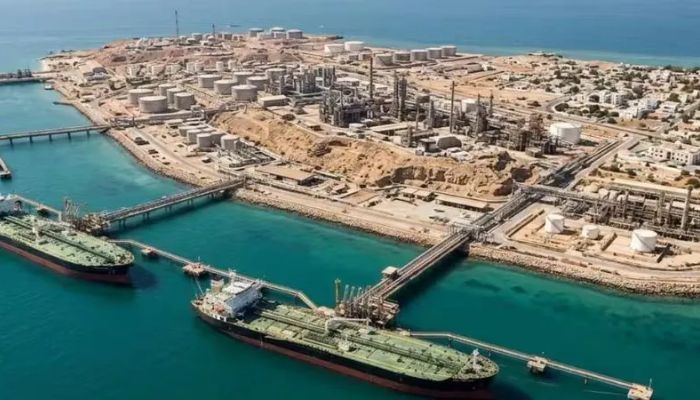
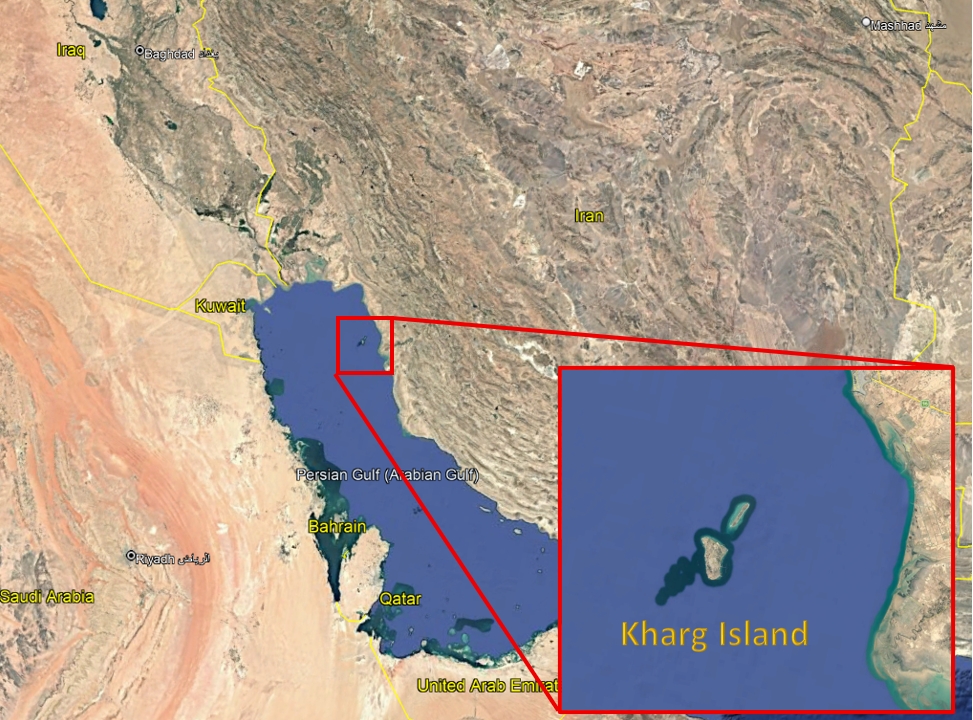
As tensions between Iran, the United States and Israel continue to rise, a tiny island in the Persian Gulf has quietly become one of the most strategically important places on the planet. Kharg Island, a small coral island only a few kilometres wide, sits roughly 25 kilometres off the coast of Iran’s Bushehr province. Despite its size, it plays a huge role in Iran’s economy and the global energy market.

Nearly 90 % of Iran’s crude oil exports pass through this island. There are oil Pipelines from Iran’s major oil fields, including Ahvaz, Maroun and Gachsaran, that transport crude oil to Kharg Island, where it is stored in massive tanks before being shipped across the world. Because of this, it is said that Kharg Island is the “treasury” of Iran, the place where the lifeline of Iran’s economy flows.

Now, as the conflict involving Iran, the United States, and Israel has entered its second week, Kharg Island has become an important topic in military and political discussions. However, attacking Kharg Island could have consequences that go beyond military implications.

Why Kharg Island matters so much

Kharg Island is more than just an oil port. It is essentially the control centre of Iran’s oil exports and a major pillar of the country’s economy. The island contains huge storage tanks that have the capacity to store as much as 30 million barrels of crude oil. From the island, oil tankers carry crude oil to markets for sale across Asia and other parts of the world.

Even though Iran has faced strict international sanctions for years, the country still earned around $78 billion from crude oil sales in 2024. Most of this money was earned through the crude oil sold from the Kharg Island. This money funds government operations, economic programs and also supports Iran’s military projects, including missile and drone development.

Experts say that if the island’s oil terminals were destroyed, Iran’s ability to export oil would collapse overnight. Without that income, the country would struggle to finance many of its operations, including those linked to the Islamic Revolutionary Guard Corps (IRGC).

Former Pentagon adviser Michael Rubin indicated that attacking the Kharg Island would be similar to cutting off the Iranian government’s financial lifeline.

In recent days, Iran has been reported to have increased crude oil shipments from the Kharg Island to almost 4 million barrels per day. This is believed to be a strategy by Iran to raise as much money as it can for the war.

The Strategic weak point in Iran’s system

Military planners often describe Kharg Island as Iran’s most important and vulnerable point. Because so much of Iran’s oil trade passes through this single location, damaging the island could deal a severe economic blow to the country.

This is why some Israeli leaders believe the island should be targeted. Israeli opposition leader Yair Lapid has openly suggested that destroying Kharg could cause the Iranian regime to weaken quickly because it would lose its primary source of income.

The military strategists have also warned that attacking Kharg Island would carry serious risks. Iran considers the island one of its most critical assets, and any attack on it could trigger a much wider conflict across the Middle East.

A target that the US have avoided for decades

The importance of Kharg Island is no new information. American presidents have been well aware of its importance for decades, but none has dared to attack it directly.

During the Iranian hostage crisis in 1979, American President Jimmy Carter was advised to capture Kharg Island to force the Iranian government to release American hostages. However, Jimmy Carter later declined the idea. His advisors were worried that the move could lead to a huge war in the Persian Gulf region.

In the 1980s, during the Iran-Iraq War, Kharg Island was attacked several times by the Iraqi army under Saddam Hussein’s leadership. Iraq launched air strikes on the island, causing significant damage to its oil terminals. But Iran managed to repair the damage and resume oil exports within days.

This history demonstrated how determined Iran is to keep the island operational, even during wartime.

Later, when Iran placed naval mines in the Strait of Hormuz during the Reagan administration, the United States carried out military strikes on several Iranian naval targets. Again, Kharg Island was not attacked.

Over time, Kharg gained a reputation as a sensitive target that many countries prefer to avoid because the consequences of an attack may get out of control.

Fear of a regional energy war

One of the main reasons Kharg Island has remained untouched so far is the fear of retaliation. Iran has already given the message that if its oil infrastructure is attacked, it would respond by targeting the energy infrastructure of the entire region.

This could include the oil infrastructure of countries like Saudi Arabia, the UAE, and the rest of the Gulf countries. Such attacks could disrupt the energy supplies of the entire world and could continue for several months. Kharg Island is also close to the Strait of Hormuz, which is one of the most important routes in the world.

Almost 20 % of the world’s oil shipments pass through this narrow waterway every day.

If the situation becomes volatile in the region around Kharg Island, the oil supply could be severely disrupted. Economists have already warned that if Kharg Island is severely damaged, the price of oil could increase manifold and could trigger an “energy tsunami.” Even minor military action in the vicinity of Kharg Island could push the entire world economy into instability.

Trump’s difficult strategic choice

For US President Donald Trump, Kharg Island represents both an opportunity and a major political risk.

Trump has always been vocal about his “maximum pressure policy” against Iran. He wants to weaken Iran economically in the hope of changing its foreign policy. Cutting off Iran’s oil revenue by targeting Kharg Island could achieve that goal.

Reports from Axios indicate that officials inside the Trump administration have discussed several options involving Kharg Island. These include launching a commando raid using special forces or even seizing control of the island temporarily.

The idea behind such plans is simple: if Iran loses its oil revenue, it may struggle to finance its military programs and continue its conflict with Israel.

The decision is not a simple one.

Domestic politics and rising fuel prices

The second major concern for Trump is the impact that it could have on the fuel prices of the world.

Experts from the Centre for Strategic and International Studies believe that an attack on Kharg Island could immediately push global oil prices up by at least $10 per barrel. There is also the fear that the prices could increase to as high as $100 per barrel if the war escalates.

For the American public, that would mean higher prices at gas stations across the country. With midterm elections approaching in the United States, rising fuel costs could damage Trump’s political support. The president faces a difficult balancing act. On one side, targeting Kharg Island could weaken Iran significantly. On the other hand, it could cause economic problems.

The Nuclear factor

Another dimension to the situation is added by Iran’s nuclear program.  According to reports, Iran currently possesses around 450 kilograms of uranium enriched to 60 %.

The Trump administration is reportedly studying a broader strategy that could include securing Iran’s nuclear material along with crippling its oil exports. Some discussions reportedly involve a plan known as Operation Epic Fury, aimed at neutralising Iran’s nuclear stockpiles while also limiting its economic power.

Trump has publicly stated that “all options are open,” indicating that Washington has not ruled out any strategy, including a potential move against Kharg Island.

A tiny island with global consequences

Kharg Island remains untouched despite the rising conflict. While Israel has reportedly targeted fuel depots in Tehran and Alborz in recent days, Kharg Island has not been touched..

Many defence officials believe that Israel has deliberately avoided Kharg Island. This is because the US Department of Defence believes that if missiles were launched at Kharg Island, there would be unpredictable consequences.

If missiles were launched at Kharg Island, Iran might believe that it has nothing left to lose. This could result in an attack on oil facilities all over the Middle East.

For now, Kharg Island has become a powerful pressure point, not necessarily an attack target. This is because there are unpredictable consequences that could result from an attack on Kharg Island.

As the conflict continues, world leaders are watching closely. Whether Kharg Island remains a shield that continues to protect Iran’s economy or becomes the spark that triggers conflict remains to be seen.