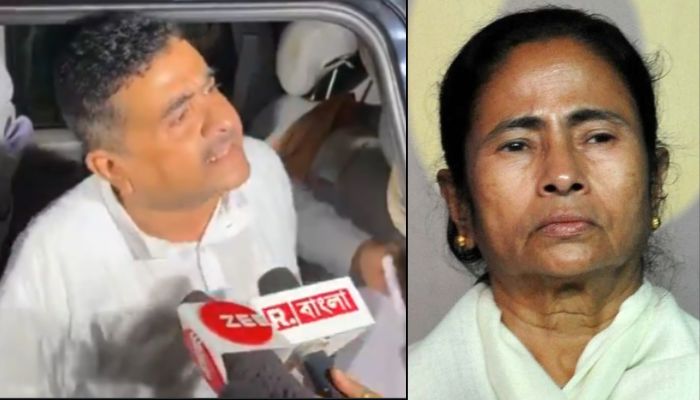
On Tuesday (21st May) afternoon, a large team of West Bengal police conducted raids at the rented house of BJP leader Suvendu Adhikari in Kolaghat in Purba Medinipur district.
The development comes ahead of the 6th phase of the Lok Sabha elections. Reportedly, a team of 70 cops landed at his residence under the pretext of finding an ‘absconding criminal’. They also conducted searches at his home.
On learning about the matter, a furious Suvendu Adhikari left his election campaign rally and went to the Kolaghat thana to object to the police’s high-handedness.
Around 70-80 police raided the rented house of WB LoP @SuvenduWB da at Kolaghat, despite restrictions provided by Hon'ble High Court. There weren't any search warrant, no videographer nor any @ECISVEEP official. (Please note, all of this occurred during Suvendu Adhikary's… pic.twitter.com/R8bsoVndIh
— Keya Ghosh (Modi Ka Parivar) (@keyakahe) May 21, 2024
While speaking to the media, he vowed to move the Calcutta High Court against the raid conducted by the cops at the behest of the ruling Trinamool Congress government.
Adhikari added that the judiciary has granted him protection against any action by the police. He also hit out at TMC MLA Abhishek Banerjee and party supremo Mamata Banerjee.
“Who will be responsible if the police plant some weapons at my home in my absence? The Election Commission must act such frivolous step by the police. I want to know why the raid was done and at the behest of whom. It is clear chief minister Mamata Banerjee is trying to victimise me,” he emphasised.
SHAME MAMATA BANERJEE SHAME.
You can't take me on politically that's why you have resorted to such cheap tricks. In a gross violation of Hon'ble Calcutta High Court's Order; that specifically prohibited Police Authorities from undertaking Raiding activity at my premises without… pic.twitter.com/5BGXpIuVQu
— Suvendu Adhikari (Modi Ka Parivar) (@SuvenduWB) May 21, 2024
Adhikari recounted, “I was told the cops, the circle inspector Tamluk Champak Ranjan Chowdhury and officer-in-charge of Kolaghat police station Saurabh Sinha had entered the bedroom. I spoke with Sinha on the phone and asked if they had taken permission from the Calcutta High Court to raid my premises?”
“How can they search my room in my absence, without videography, without the presence of the media? What if they had planted fake currency notes, arms or drugs? Who would be responsible for that? I told them they could carry out their search only with a valid permission from the court and either in my presence or someone authorized by me,” he inquired.
Suvendu Adhikari assured to take action against Mamata Banerjee and the police. “Which state are we living in? Mamata Banerjee is deliberately targeting me and my family members. I am being victimized…I will complain to the Election Commission. I demand the EC suspend the Circle Inspector and the Officer-in-charge.”
Violence against BJP in Bengal
Earlier this month, goons associated with the ruling Trinamool Congress (TMC) party attacked the convoy of BJP MP Dilip Ghosh. As per reports, TMC goons pelted stones at his vehicle and also raised slogans against him.
The incident took place when Dilip Ghosh reached Rajganj bazar in Bardhaman to meet BJP workers who had received death threats from local TMC goons. It also came to light that BJP’s polling agent was beaten and not allowed entry into the booth by TMC workers.
When BJP MP Dilip Ghosh reached the spot, the TMC goons raised slogans of ‘Joy Bangla’ – a political slogan employed by Mamata Banerjee and her party to counter chants of ‘Jai Shree Ram’ during political events.
On 24th March, a mob of Trinamool Congress goons attacked several BJP workers in Mather Dighi village in Canning subdivision in South 24 Parganas district of West Bengal.
The dead body of a BJP worker, with his hands tied, was discovered in a paddy field near his residence on 23rd March morning. The incident took place in Pingla village in Kharagpur subdivision in Paschim Medinipur district of West Bengal. The deceased was identified as Shantanu Ghorai.
His father has accused the ruling Trinamool Congress (TMC) party of orchestrating the murder. While speaking about the matter to ABP Ananda, Shantanu’s father Chittaranjan remarked, “They were angry at him. He used to speak the truth openly. He had to give his life for being involved with the BJP.
He added that the TMC had previously intimidated Shantanu for speaking against TMC and supporting the BJP. The victim’s father continued, “They used to threaten the boy if they ran into him in the market or neighbourhood. They used to warn him about breaking his bones and killing him alive.”
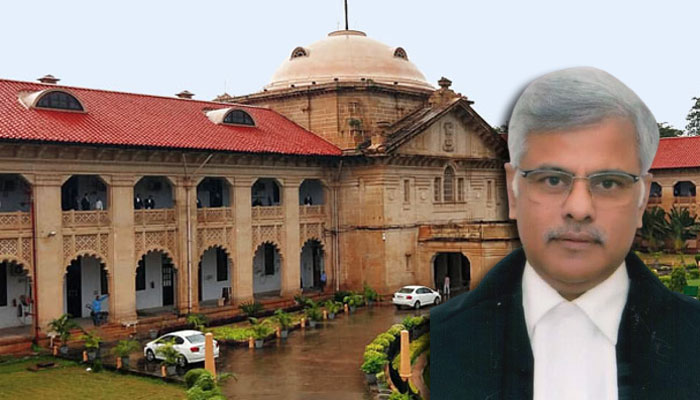
On 15th May, the Allahabad High Court quashed criminal proceedings under the SC/ST (Prevention of Atrocities) Act against a couple. The single-judge bench led by Justice Prashant Kumar highlighted that the act was misused for personal vendetta. The court observed that the government official who filed the case against the couple, identified as Alka Sethi and her husband Dhruv Sethi, exploited the provisions of the Act. OpIndia accessed the judgment in the matter.
Case background and chronology
An appeal was filed by Alka Sethi and her husband Dhruv Sethi under Section 482 of the CrPC seeking to quash the proceedings against them based on a case filed in 2023. The FIR filed against the couple mentioned that they allegedly used caste-based abusive language against a government official identified as Vasudev who went to inspect their land on 18th August 2023. The complainant mentioned that the couple allegedly detained the official and threatened him.
The matter was related to land purchased by Sethis in Saharanpur on 2nd August 2016 from a person named Lokesh Mittal. There were some issues with the land record transfer and the name of the purchaser, Dhruv Sethi, was mutated in the land records. He filed an appeal in the SDM court in 2021 and got a decree in his favour for the demarcation of the land.
Despite getting an order from the SDM court, the process of demarcation was delayed. He filed a complaint suggesting the local land mafia and some officials along with the police hatched a conspiracy to grab his land. After a long wait, the SDM court set the date for inspection on 18th August 2023.
On the date of inspection, the revenue officer called him at the police station and misguided him that the date of demarcation was postponed. However, the couple caught the revenue team red-handed doing demarcation in their absence. The couple recorded the whole incident which agitated the officials present at the scene.
Following the incident, the couple approached SDM court and District Court to file a complaint against Lekhpal Vasudev and others. However, after much persuasion, the complaint could not be filed. They came back to Dehradun, where they lived. On 19th August, they came to know that an FIR under the SC/ST Act was filed against them. The court mentioned in its order that the FIR against Sethis was filed to ensure no complaint was filed against the revenue officer and officials accompanying him.
The couple approached Allahabad High Court to get interim protection in the matter which was granted on 28th October 2023. On 27th November, a chargesheet was filed against Sethis and the trial court took cognizance of the matter issuing summons on 24th January 2024. On 15th May, the case against Sethis was quashed by the court.
Court’s observations
Justice Prashant Kumar observed that the entire case against Sehtis was initiated as a counterblast to the Sethis’ complaints about unauthorized land demarcation and corruption involving local officials and land mafias.
The court observed that there was no evidence against Sethis that they were aware of Vasudev’s caste or used caste-related language against him. The court emphasised that the SC/ST Act, which is designed to protect vulnerable communities, was being misused for personal vendettas and to protect corrupt officials. The court also observed that Sehtis provided video evidence of the incident that was not considered during the investigation.
Quashing the criminal proceedings and the chargesheet against the couple, the court directed the Director General of Police to investigate the conduct of the revenue officers, police personnel, and land mafias involved, ensuring the complaints lodged by the Sethis are properly investigated within four months.
Misuse of SC/ST Act
The judgment in the matter emphasised the misuse of the SC/ST Act for personal revenge. The court noted that the complaint was driven by ulterior motives, undermining the true intent of the legislation designed to protect marginalised communities from discrimination and atrocities.
Judge remarked that there is an increasing trend of misuse of the Act and emphasised the need for a balanced approach to ensuring that the law serves its intended purpose without being weaponized for personal vendettas.
A Hindu college student in the Bareilly region of Uttar Pradesh is receiving threats from Faizal and Ameen to convert to Islam and perform Nikah. The Hindu girl received pornographic films on her WhatsApp number. In addition, it has been reported that an obscene video of the student was created using an AI tool. On the 20th of May, the police filed an FIR on the complaint lodged by the victim’s father and launched an investigation.
This case pertains to the Bhojipura police station in the Bareilly area. In his complaint, the victim’s father mentioned that his daughter attends a local college for her studies. An unidentified number posted a “Hi” message on the victim’s WhatsApp on Tuesday, 7th May. The sender called and tried to speak forcibly when the student did not answer. I like you, the caller said during the conversation adding, “Convert to Islam. I will always keep you happy.”
The victim disconnected the phone upon hearing this. The Hindu student received a message from the same number once more on 19th May. The caller initiated a video call when the girl asked him to identify himself. He began sending her obscene texts and blue films when she did not pick up the phone. The accused threatened to abduct the girl from her home and also hurled abuses when she asked not to send such messages. Additionally, the caller threatened to kill the victim if she informed anyone about it.
The caller allegedly said, “I have the photo on your DP,” which alarmed the complainant’s daughter. I’m going to use an AI tool to create obscene photos and videos of you, and you will not be able to show your face anywhere.”
The victim blocked the caller’s number after reading this and informed her family about the matter. The number turned out to be that of Faizal, who resides in the Bhojipura police station area of Bareilly when the complainant investigated it from his end. Subsequently, the victim’s father went to Faizal’s house to confront him and there he met Faizal’s father Ameen.
प्रकरण के सम्बन्ध में प्राप्त तहरीर के आधार पर सुसंगत धाराओं में थाना भोजीपुरा पर अभियोग पंजीकृत कर विवेचनात्मक कार्यवाही प्रचलित है ।
Instead of acknowledging his son’s offence, Amen began mistreating the girl’s father and issued death threats. The victim has requested severe action against Faizal and his father Ameen in his complaint. In the FIR, Faizal and his father are mentioned by the police. In addition to sections 504, 506, and 354 (c) of the IPC, both of them have been charged under Section 67 of the IT Act. OpIndia has a copy of the FIR. Police are looking into the matter and taking necessary action.
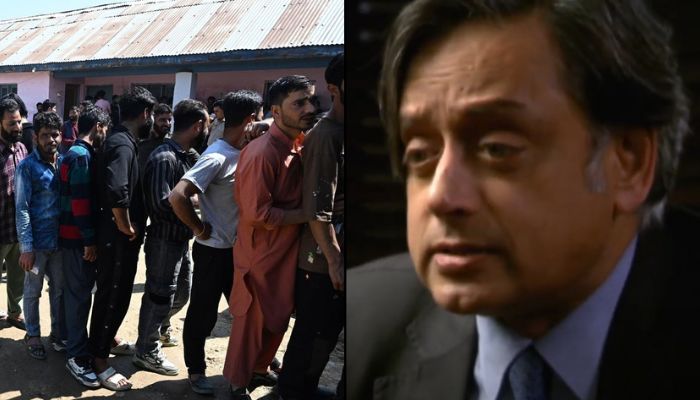
Amid the ongoing Lok Sabha elections in Jammu and Kashmir, an old video of Congress MP Shashi Tharoor admitting to his party rigging 1987 poll results in the erstwhile State has gone viral on social media.
In a video shared by popular political commentator Anand Ranganathan, Shashi Tharoor was seen conceding that fixing the elections in 1987 was a ‘big mistake’.
The contentious video clip is part of a 26-minute-long interview of journalist Tim Sebastian with Shashi Tharoor. It was published on the YouTube channel of DW News on 29th March 2017.
Congress comprehensively rigged the 1987 Jammu & Kashmir elections through ballot stuffing, arrests, curfews, even declaring defeated candidates as winners. Here is Shashi Tharoor himself admitting to the rigging.
— Anand Ranganathan (@ARanganathan72) May 21, 2024
At about 22 minutes into the interview, Shashi Tharoor was heard saying, “I am proud of the fact that free and fair elections have been held despite an ongoing…”
Tim Sebastian intervened, “You had rigged elections. The interlocutors reported that.” The Congress MP from Kerala could not help but concede, “One election rigged in 1987, that’s what they’re referring to.”
On being further pressed about the matter, Shashi Tharoor emphasised, “There have been none since then and no one has suggested that. There have been international observers, even the militant parties have not accused these elections of being wrong.”
He further added, “I am telling you that the elections of 87 were a huge mistake and they were rigged undoubtedly and undoubtedly this was certainly one of the mistakes that sparked off the disillusionment of some young people who then became militants.”
The 1987 Vidhan Sabha elections in the erstwhile State of Jammu and Kashmir were rigged jointly by Congress and its ally the National Conference (NC) to prevent the Muslim United Front (MUF) from coming to power.
The Congress-NC duo worked in tandem and altered the election results through manipulation of votes, and arbitrary arrests of Opposition political leaders. The fixed election is believed to have given rise to Islamic terrorism in the Kashmir Valley.
While speaking about the matter in April this year, People’s Conference leader Sajjad Lone remarked, “It was said that guns came here because of Article 370. The reality is that the gun did not come because of Article 370, it came in 1987 after the rigged elections, while Article 370 was there from 1950 onwards“
The video clip of Shashi Tharoor’s acknowledgement of Congress’ sins has gone viral when the erstwhile State of Jammu and Kashmir is witnessing political stability, negligent insurgency and record turnout of voters. For instance, the Baramulla Lok Sabha constituency in the Kashmir Valley saw a voter turnout of 59% during the 5th phase of elections.
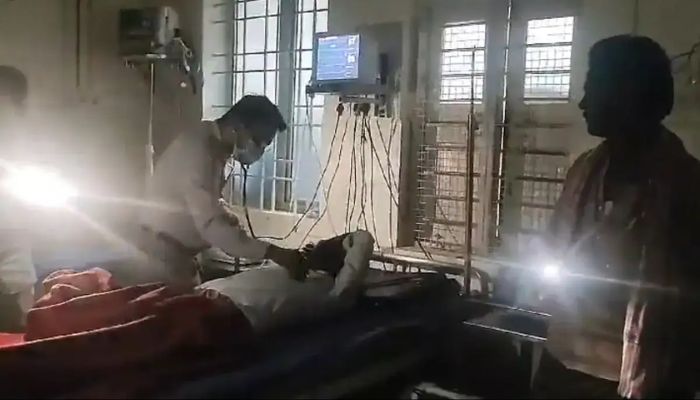
A video from a Karnataka government hospital has surfaced on social media showing a doctor examining a patient in the dim light of a mobile phone’s torch during a power outage. According to reports, the incident occurred at a government hospital in Molakalmuru taluk, Chitradurga district, Karnataka. The lack of adequate healthcare facilities, such as an emergency power backup, prompted the BJP to launch a scathing attack on the Congress government.
Taking a jibe at the Congress government’s ‘Gruha Jyoti’ scheme, the BJP state unit referred to the incident as ‘Darkness Bhagya‘ (destiny of darkness), a dig on the scheme’s name. Under the ‘Gruha Jyoti’ scheme, Congress claims to offer free electricity for up to 200 units to households. Citing the power outage example in the government hospital, the BJP asserted that the Congress government has failed in its ‘guarantee’ on the anniversary of Siddaramaiah’s government.
The video footage shared by the BJP showcases that even the hospital’s medical store is relying on the mobile phone’s flashlight for visibility. The saffron party slammed the Congress-led state government for failing to provide essential services in hospitals and for not providing adequate electricity to state residents.
ಒಂದು ವರ್ಷದ ಗ್ಯಾರಂಟಿ ಕತ್ತಲು ಭಾಗ್ಯ ಇದು ವರ್ಷದ ಸಂಭ್ರಮಾಚರಣೆಯಲ್ಲಿರುವ @INCKarnataka ದ ಉಡುಗೊರೆ!@siddaramaiah ಸರ್ಕಾರ ಇಂದು ಆಸ್ಪತ್ರೆಗಳಿಗೂ ಕರೆಂಟ್ ಪೂರೈಸದಷ್ಟು ಹೀನಾಯ ಸ್ಥಿತಿಗೆ ಬಂದು ತಲುಪಿದೆ.
“One year guarantee ‘Darkness Bhagya’ It’s a gift from the Congress government in Karnataka, which is celebrating the completion of one year in the office! Congress government led by Chief Minister Siddaramaiah has reached such a dire situation that even hospitals are not supplied with electricity. Treasury is empty, and there is no electricity! This is a ‘Chombu’ (round water pot) and ‘Chippu’ (coconut shell) government!”, the BJP said in Kannada in a post on X, as reported by India TV.
According to media reports, the region has been grappling with power cuts for the past week, with the hospitals being no exception.
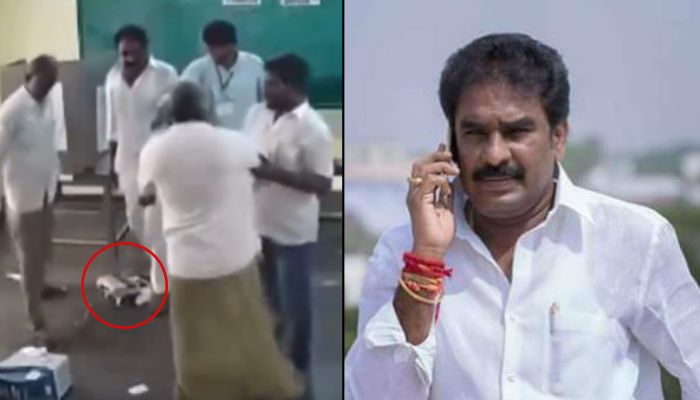
A video of YSRCP legislator, P Ramakrishna Reddy, vandalising Electronic Voting Machines (EVMs) in the Macharla constituency in the Palnadu district of Andhra Pradesh has gone viral on social media.
In the webcam footage, Reddy was seen forcibly entering a polling station, taking control of the voting device and throwing it on the floor. The YSRCP MLA was found stomping on the EVM.
The video is said to have been recorded on 13th May this year when elections were conducted for both Assembly and Lok Sabha elections in Andhra Pradesh.
The Election Commission (EC) took cognisance of the matter on Tuesday (21st May) and directed the Andhra Pradesh Chief Electoral Officer Mukesh Kumar Meena to take criminal action against Reddy.
VIDEO | YSRCP MLA P Ramakrishna Reddy was caught on camera allegedly damaging an EVM in the Macherla assembly constituency during the May 13 polls.
The Election Commission on Tuesday directed the Andhra Pradesh police chief to take strict criminal action against MLA.… pic.twitter.com/vdVHJvc7Ie
In a statement, Meena said, “YSRCP Sitting MLA Pinneli Ramakrishna Reddy was recorded on a web camera during the incident of vandalising EVMs in 7 polling centres, including PS number 202 in Macharla Assembly constituency.”
“Palnadu district election officials handed over the video footage of all such polling stations to the police to assist in the investigation into the vandalism incident. The police stated that the MLA’s name has been included as an accused in the investigation,” he emphasised.
“The EC is taking this matter very seriously and has directed CEO Mukesh Kumar Meena to inform the DGP to take strict action against all those involved in these incidents. Therefore, the EC hopes that no one will dare to commit such misdeeds in the future to conduct the elections peacefully,” the Andhra Pradesh Chief Electoral Officer concluded.
The Opposition has demanded strong action against YSRCP. TDP leader Nara Lokesh said that P Ramakrishna Reddy was afraid of losing elections and hence destroyed EVMs out of frustration.
A case of love jihad recently came to light from Uttar Pradesh’s Mirzapur district. Police arrested Nazim Ansari who is accused of trapping a minor Hindu girl by using a fake Hindu name, Rahul Singh and then taking her to Mumbai. According to reports, he was planning to convert the minor’s religion and marry her in court by altering the date of birth on her Aadhaar card.
However, his plan was exposed when an OTP for an Aadhaar “update” was received on the phone of the victim’s mother. The victim’s family, who had already filed a missing person’s report, informed the police. After conducting surveillance, the police apprehended the accused and rescued the victim on 17th May. They handed over the minor victim to her family.
It is alleged that Nazim’s mother Noorjahan is also involved in this entire conspiracy and she fully supported her son.
The case pertains to the Kotwali Dehat police station area of Mirzapur district. On 7th May 2024, the victim’s mother filed a complaint with the police. In the complaint, the victim’s mother stated that Nazim who used the fake Hindu name Rahul Singh had lured her 16-year-old daughter and taken her away. Nazim, son of Pappu Ali is originally a resident of Bhadohi district in Uttar Pradesh.
According to reports, six months ago, Nazim came to live next to the victim’s house.
He introduced himself to the victim as Rahul Singh to develop a friendship with the minor girl. Later, he trapped the minor in a love affair. On 7th May, with the help of a young neighbour, Nazim managed to run away with the victim. He took the minor from Bhadohi to Mumbai.
After extensively searching for her daughter, when the victim’s mother could not find any trace of her, she filed a complaint with the police. Based on the complaint, the police registered a case under sections 366 and 363 of the Indian Penal Code (IPC).
According to reports, Nazim Ali was planning to marry the victim after converting her to Islam in Mumbai. He was preparing documents to marry the girl in court. For this, he wanted to alter the date of birth on her Aadhaar card.
He also visited an Aadhar card centre in Mumbai. However, the minor’s Aadhaar card was linked to the phone of her mother. During an attempt to “update” Aadhaar card details, an OTP was sent to her mother’s phone. To get OTP, the staff of the Aadhaar card centre called her.
The victim’s mother then approached the Police and informed them about the same. The Police then set a trap to arrest Nazim. On 17th May, they apprehended him when he came to Mirzapur for some work.
After rescuing the minor victim, she was sent to counselling, and her medical examination was conducted. The girl’s statement was also recorded in the court. Based on her recorded statement before the court, the police are taking further action in this case. During the investigation, the police also found the role of Nazim’s mother suspicious. OpIndia has the FIR copy.
Meanwhile, the young neighbour who assisted the accused is still at large, and the police are searching for him.
Additional Superintendent of Police Nitesh Singh said that the young man has been arrested in Mumbai on charges of abducting the minor girl and has been sent to jail. The minor has been handed over to her family, and the matter is under investigation.
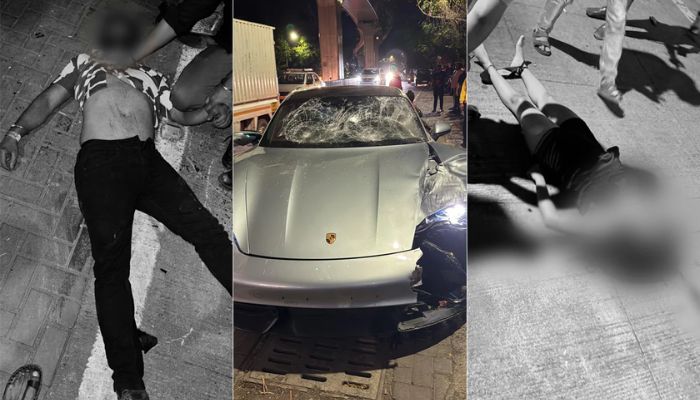
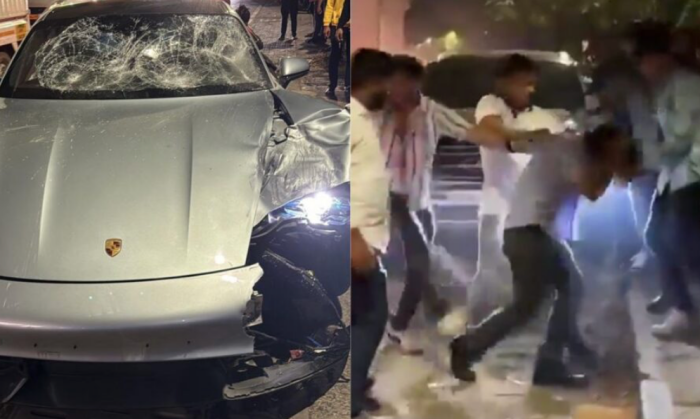
A drunk teenager rams his overspeeding luxury car into vehicles killing two people and the honourable court orders him to write an essay on accidents as ‘punishment’. Does this sound absurd, insensitive and unreal travesty of justice? Well, this is what happened in Maharashtra’s Pune after a 17-year-old teen rammed his Porsche car into a vehicle in an inebriated state and killed two people named Aneesh Awadhia and Ashwini Koshta on the 19th of May. While two innocent people lost their lives, the accused teenager who is the son of builder, Vishal Agarwal of Brahma Realty and Infrastructure, got bail within 15 hours of his arrest.
In the words of the teen’s lawyer Prashant Patil, the court was “kind enough” to grant bail to the accused with certain bail conditions. Now the bail conditions imposed by the court reflect nothing but apathy towards the deceased victims.
The accused who stepped out of a posh bar late in the night before the incident was asked by the Juvenile Justice Board to work with a traffic police official for 2 weeks and attend psychiatric counselling sessions. The teen has also been asked to write a 300-word essay on road accidents and create traffic awareness boards. His father Vishal Agarwal who owns the bar where a 17 years and 8 months old accused was served alcohol has been arrested today after a case was registered at Yerwada Police Station.
Reports say that the minor had tried to flee the spot after the incident, however, the locals caught hold of him and thrashed him before turning him over to the police.
Such is the deplorable state of our society and the judiciary that a rich underage boy without a driving license driving a luxury Porsche Taycan car without any registration since March at its top speed, fails to control the vehicle while drunk and ends up killing two people, booked under IPC section 304A (causing death by negligence) among other sections get bail in a blink of an eye. The unusual bail conditions and the celerity in granting bail have made the public perceive the development as “Bhai paisa ho toh kya nahi ho sakta [When you have money, anything can happen] alongside misuse of power and influence.
Meanwhile, the teen’s lawyer Prashant Patil has already said that the investigation is yet to be concluded on whether his client was indeed driving the car when it hit the deceased victims. Amid criticism over handling the case involving a prominent businessman, Maharashtra Deputy Chief Minister Devendra Fadnavis told Pune Police Commissioner Amitesh Kumar to ensure strict action against the accused.
Where I ask Prashant Patil, lawyer of the underage Porsche kid, why his client shouldn’t be tried as an ADULT: pic.twitter.com/HuRqOy8bkK
Although 304A is a bailable offence, getting bail in just a few hours with such appalling bail conditions raises the concern that the judiciary desperately needs reforms.
Notably, the Modi government brought the new Bhartiya Nyay Sanhita, section 106 of which akin to IPC 304A. However, 106(2) whoever causes death by rash and negligent driving not amounting to culpable homicide and flees without reporting to the police shall be punished with 10 years jail term and a fine. Although the three criminal laws passed by the parliament will come into effect from 1st July, BNS Section 106(2) has been put on hold after the transporters associations protested.
It is pertinent to mention that this is not the first case that exposed the prevalent flaw in our system, the way our law enforcement and the judiciary function.
Jessica Lal murder case that shook the nation
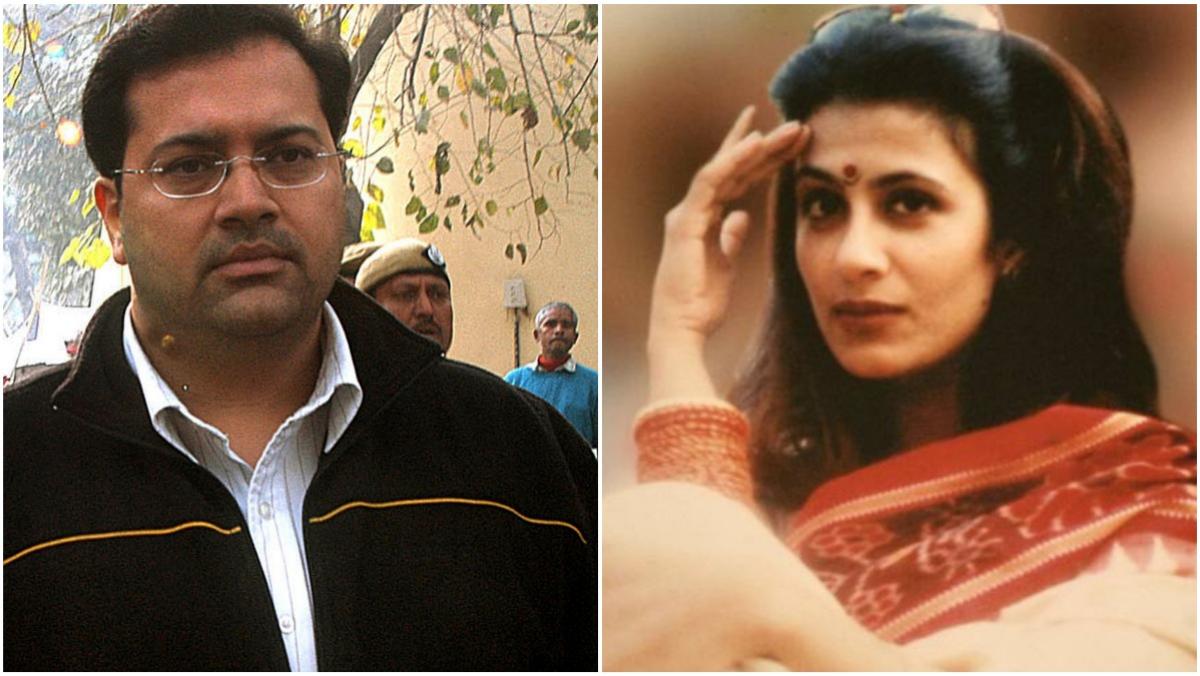
On April 30, 1999, a man named Siddharth Vashishta alias Manu Sharma, shot and killed model Jessica Lal for refusing a drink at a party. At a private party, she was tending an unlicensed bar. When she refused to give Sharma a drink after midnight, Sharma shot her dead. His father, Venod Sharma, is a politician from Haryana with an influential political background.
Manu Sharma (L), Jessica Lal (R) (Source: IndiaToday)
The acquittal of Sharma by a city court in February 2006 sparked nationwide protests. After hearing the matter, the Delhi High Court overturned the ruling. The judgement referred to the fact that the lower court disregarded or misinterpreted material evidence. Sharma was convicted to life imprisonment in December 2006. In 2010, the conviction was upheld by the Supreme Court despite an appeal against the High Court judgement. On 2nd June 2020, Sharma was granted early release by the then-Delhi L-G Anil Baijal on grounds of “good behaviour” after the then-Delhi home minister and now-jailed AAP leader Satyendra Jain recommended the same.
Sanjeev Nanda mowed down six people with his BMW car, faced just two years jail terms and community service as ‘punishment’
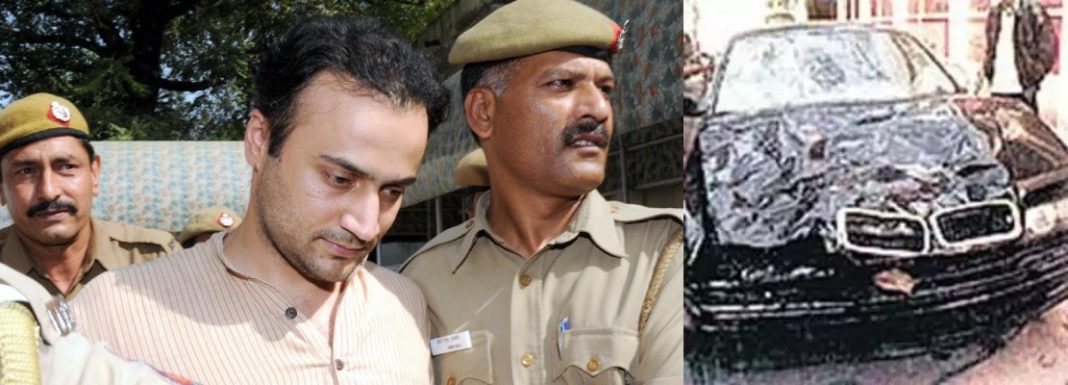
In 1999, Sanjeev Nanda, a businessman and grandson of former Naval Chief SM Nanda hit seven people with his BMW car in an intoxicated state resulting in the death of six people including three police officers at Lodhi Road in Delhi. On 11th January 1999, Sanjeev and his friends were arrested, however, as several witnesses in the case turned hostile, Nanda got bail in October of that year.
Sunil Kulkarni, a witness in the case had said that he gave a different version of the incident under police pressure. In many cases, the powerful people manage to influence, threaten and even bribe witnesses to change their statements with or without the involvement of police officials.
In 2008, Nanda was sentenced to 5 years in jail by the trial court under section 304 (II) IPC. He then challenged the conviction in the Delhi High Court. The High Court then converted his conviction from 304(II) to a lenient 304A reducing the sentence to two years. The court, however, noted that Nanda gave Rs 65 lakh to the families of victims only to get bail and not out of remorse over his crime.
Sanjeev Nanda, his BMW car after the incident (Source: TheHindu, MumbaiMirror)
In 2012, the Delhi Police challenged the modification to Nanda’s conviction and sought an increase in jail sentence, however, the Supreme Court refused to enhance the quantum of punishment of two years jail term already served by Nanda and directed him to do community service for two years in addition to paying Rs 50 lakh compensation to Central government for road accident victims. Six people were killed for no fault of theirs and their killer gets relaxation in jail term, community service as ‘punishment’ and fines/compensation which being a rich person Nanda easily managed to pay. The verdict in the case reminds one of the adage, “If the punishment for a crime is a fine, it means that it’s only a crime when the poor do it.”
Punjab and Haryana HC reduced the jail term of the rash driver evenas one died and two were injured
Back in 2017, the Punjab and Haryana High Court, reduced the sentence from two years to eight months of a car driver Dil Bahadur convicted by a magistrate court in 2015 under IPC section 304A in a 2012 case from 2 years in jail to 8 months considering that he was the sole breadwinner of the family and poor. The incident transpired on 12th January 2012 when an ambulance was bringing a patient Madanlal towards Prabh Ashram in Mohali while another person was also sitting in the ambulance.
At midnight Dil Bahadur who was driving the Mahindra Scorpio SUV rammed the vehicle into the ambulance which consequently overturned. The ambulance driver, patient Madanlal and another person suffered severe injuries. Later, Madanlal succumbed to his injuries. Last year, the Supreme Court overturned the High Court verdict saying that it was a display of “undue sympathy”.
There have been many such cases where either the accused managed to get bail easily, or got their sentences reduced even in murder cases. In one such case the Delhi High Court last year commuted the death sentence of a man who kidnapped and killed a 12-year-old boy in 2009 in Delhi saying the crime was not “rarest of the rare”.
The tragic flaw of the Indian judiciary and the way forward
Interestingly, while the bail conditions in the Pune Porsche case have befuddled the people, there have been many other cases where the murder accused was directed by the courts to plant 10 saplings of either some fruit-bearing tree or neem etc, in some cases even the height of the saplings to be planted was specified. Such bizarre bail conditions demonstrate a lack of sympathy for the victims and also raise a question about the judiciary’s seriousness in ensuring justice.
In a fast-moving world where material gains and luxuries are more valuable than human life incidents of hit-and-run cases in a country like India are sadly, too common. The occurrence of hit-and-run cases is common to such an extent that in 2022, over 30000 people died in such cases while double the number were injured. While the number of cases has been high, the conviction rate in hit-and-run cases has been below 50% in 2022.
The Indian legal system must be reformed to provide justice for all people. Misplaced sympathies and lack of it when needed, delays and inefficiencies in the current system make it more difficult to provide justice to the common people. Transparency and accountability should be improved to ensure timely and deserved justice for the victims. Reforms are required to guarantee prompt case resolution. Judicial reforms and the justice delivery system are desperately needed. In a broader context, a slow-moving legal system marked by lengthy wait times and gradual advancement allows a window for rich and powerful criminals to exploit the loopholes in the law and escape punishment for their crimes.
Fair and prompt trials, appropriate media coverage, and conscientious public outrage can all help ensure justice for the victims—particularly in hit-and-run cases where the likelihood of conviction is remarkably low and obtaining bail is quite effortless.
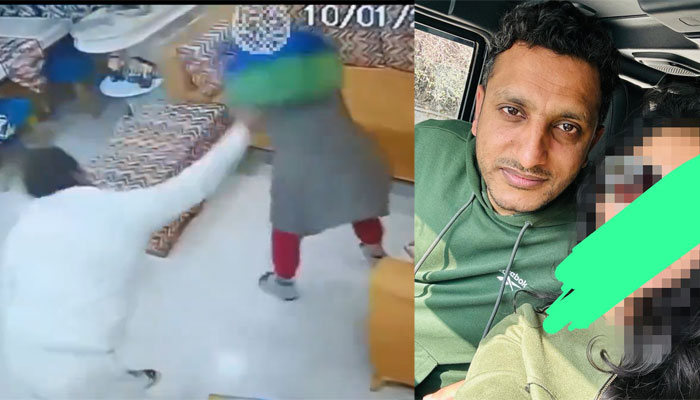
On 20th May, a video of a man beating his wife went viral on the social media platform X. It was revealed that the man in the video was identified as Aquib Mir from Bathandi, Jammu. Upon investigating the case, OpIndia found that Aquib had posed as a Hindu boy to lure the woman he was beating in the video into a relationship. OpIndia accessed the FIR registered against Aquib under Sections 376, 420, 400, 504, 506, and 34 of the Indian Penal Code IPC and talked to the victim for details.
This guy Aqib Mir posed as a BJP supporter just to gain popularity and of course to trap Hindu girls. He was never a Modi fan…
— Mr Sinha (Modi's family) (@MrSinha_) May 21, 2024
As per the FIR, the victim was already married and had a son when she came in contact with Aquib. In her complaint, she said that at that time, she was in a vulnerable position as her husband was suffering from medical issues leading to stress and an emotionally weak situation. Speaking to OpIndia, the victim revealed that her husband was an alcoholic and she had been separated from him. Aquib contacted her on Instagram posing as a Hindu man named Ravi Rajput in 2021. They became friends and slowly came closer.
He was aware that the victim was married. After some time, she installed another social media app, Snapchat, on her phone. She was shocked to see his name as Aquib Mir on the app. When she asked for an explanation, he told her that he posed as a Hindu man to gain her trust and he was in love with her. He claimed that he did not want to give her more stress as she was already in a distressed situation.
By that time, they were already close and he proposed to her to marry. He also promised that he would take care of her son. When she refused, he allegedly threatened to kill her son if she did not marry him. He also threatened her mother that he would kill her grandson if she did not convince her daughter to marry him. The victim said they felt helpless and she was not in a mental condition to think as she was worried about her son’s safety.
One day, he took her son and her mother to his house in Bathandi and told her that he would get everything sorted if she signed some papers. She and her mother allegedly signed the papers that were written in Urdu. Later she came to know that it was Nikahnama. She was shocked and was unable to do anything about it. After 15 days, she sold her jewellery worth Rs 42 lakhs and used 32 lakhs out of it to buy some property to secure her son’s future. The money was paid to the property dealer via Aquib.
The victim accused Aquib of making physical relations forcefully. She alleged that he had physical relations with multiple women which he proudly told her. On 23rd April, she told him to get the papers of a building in her name to which he replied, “Do you think that I am in love with you? I wanted money and that I got. Now shut up otherwise I will kill you”. He also told her, “Stay within your limits. Wear a hijab. Do house chores. Otherwise get out.”
Later she came to know that Aquib Mir and the property dealer planned to dupe her of the money. She added that not only those 32 lakhs, but Aquib also took away 10 lakhs in the name of personal use.
Speaking to OpIndia, the victim said that she had moved out of Aquib’s house. She said that the altercations started between them a few days after the Nikah as he was getting regular calls from other women. One day, she picked up his phone and there was a woman on the other side who informed her that Aquib was with her the previous day. Meanwhile, Aquib started to assault her physically. She said that he was caught only because the incident of beating was recorded on CCTV.
She said that on social media, Aquib claims to be secular but in reality, he was an Islamist. He would tell her not to worship Hindu Gods and wear hijab.
Slowly, his habit of being in a relationship with other women got more frequent and whenever she questioned him, he would beat her. He also forced her to convert. At one point, it was unbearable to be with him and she left his house. The victim said that her earlier marriage took place in 2009. She left her previous husband in 2019 and recently left Aquib’s house.
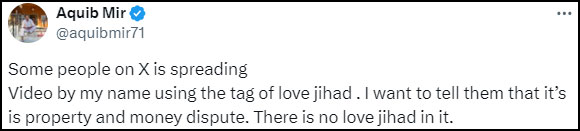
On social media, Aquib has denied the allegations against him and claimed the matter is not related to love jihad but a property dispute.
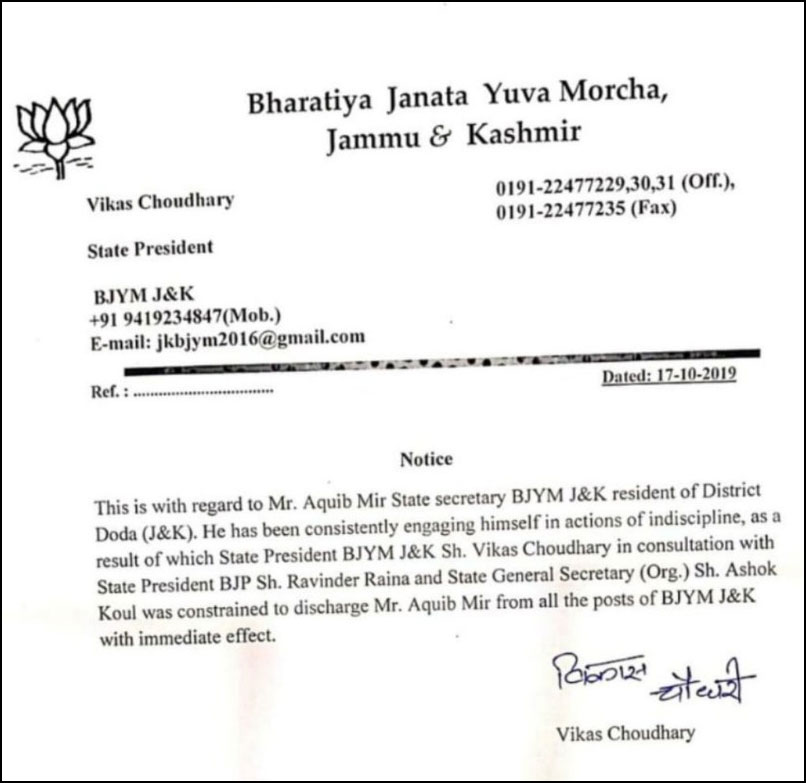
Notably, he was previously linked to the BJP. He was removed from the party’s association after several allegations against him were raised by women on social media.
Source: X/SagasofBharat
The letter of his removal from BJYM in 2019 also went viral on social media.
On 20th May, the Indian Council of Medical Research (ICMR) strongly refuted the claims made by a recent ‘study’ done by researchers at Banaras Hindu University (BHU) where it was suggested that over 30% of the people who received the made-in-India COVID-19 vaccine, Covaxin, experienced side effects. In its statement, ICMR not only labelled the study as “incorrect, misleading and unacceptable” but also demanded that it should be retracted by the publisher, Springer.
More updates in the #Covaxin adverse events study done by the BHU Govt is upset about a paper by BHU on #Covaxin related side effects and is trying to nip Anti Vaxxers in the bud here
The study titled “Long-Term Safety Analysis of the BBVl52 Coronavirus Vaccine in Adolescents and Adults: Findings from One Year Prospective Study in North India” stirred controversy as it reported several adverse effects from the vaccine. The side effects included nervous system disorders, skin disorders, menstrual abnormalities and hypothyroidism. The study was conducted by Dr Upinder Kaur and Dr Sankha Shubhra Chakrabarti of BHU. The sample size of the study was 1,024 Covaxin recipients and the information about the possible side effects was collected via telephonic conversation a year after the vaccination.
Criticising the study for lacking scientific rigour, ICMR Secretary and Director General, Rajiv Bahl, stated that no support was provided by ICMR for the research. Bahl asserted, “The ICMR has been incorrectly and misleadingly acknowledged in the paper. ICMR is not associated with this study and has not provided any financial or technical support for the research.”
Methodological issues highlighted
ICMR, in its statement, pointed out that there were several methodological flaws in the study. For example, there was no control group of unvaccinated individuals which made it impossible to conclude that the side effects occurred due to the vaccination. Furthermore, the study did not provide any baseline information and background rates of observed events. Such information is crucial for assessing any changes in incidents after the vaccination was taken by the recipients.
Dr Rajiv Bahl, Director General, ICMR has written a letter to the authors of the paper and editor of the journal to immediately remove the acknowledgement to ICMR and publish an erratum. He also flagged the poor methodology and design of the study.
Bahl said, “The method of data collection has a high risk of bias. Study participants were contacted telephonically one year after vaccination, and their responses were recorded without any confirmation with clinical records or by physician examination.”
ICMR to take legal action
ICMR has demanded that the university and the authors remove the acknowledgement on behalf of ICMR to be removed from the study with immediate effect. They also demanded a corrigendum to be published by the researchers and the university. The agency warned of potential legal action as the publications used their names without permission previously as well. Please explain why ICMR should not seek legal and administrative action against you,” Bahl’s letter stated.
BHU’s response
Responding to ICMR’s reaction, BHU issued a statement and acknowledged the concerns raised by ICMR about the study. The university emphasised that it is committed to improving its research ecosystem and mentioned that the Institute of Medical Sciences is reviewing the matter. BHU said, “The individuals have communicated their responses to the ICMR. Additionally, the Institute of Medical Sciences is also working on further strengthening and improving its research ecosystem.”
In its study, BHU scholars claimed that 50% of the participants complained of infections during the follow-up period. Adverse Events of Special Interest or AESI included strokes, and Guillain-Barre syndrome that was reported in 1% of the individuals by the researchers. The study involved 635 adolescents and 291 adults.
Bharat Biotech defends Covaxin
The manufacturer of Covaxin, Hyderabad-based Bharat Biotech, responded to the controversy and defended Covaxin. The company stressed that the study done on the vaccine should consider a broad range of data to avoid any bias. The company further added that the researchers should compare the data of vaccinated and non-vaccinated individuals to get accurate results. Bharat Biotech highlighted that multiple peer-reviewed studies have confirmed Covaxin’s excellent safety profile.
The company said, “For such a study in safety to be effective, informative and to avoid investigator bias, the following data points are also required: AESI safety profile of the subjects before participation in the study; Comparison of safety profile of non-vaccinated subjects during the study; comparison of safety profile of subjects who received other vaccines during the study; all study participants should be followed during the study, instead of only a subset; several studies have been executed on the safety of COVAXIN, and published in peer-reviewed journals, demonstrating an excellent safety track record.”
The controversy revolving around Covaxin came at the time when Oxford–AstraZeneca COVID‑19 vaccine, Covishield, which was manufactured by Serum Institute of India for Indian recipients, also came under scrutiny after AstraZeneca admitted in the court again that it may result in severe side effects.
In a recent statement in a UK court AstraZeneca admitted that the AZ vaccine can, in very rare cases, cause TTS. The causal mechanism is not known. “Our sympathy goes out to anyone who has lost loved ones or reported health problems. Patient safety is our highest priority, and regulatory authorities have clear and stringent standards to ensure the safe use of all medicines, including vaccines,” AstraZeneca said in a statement.
Notably, the chances of rare side effects of possible TTS or blood clotting are just 3-4 cases in a million-strong population, and the effects are seen within a few weeks of vaccination, that too after the first dose itself.