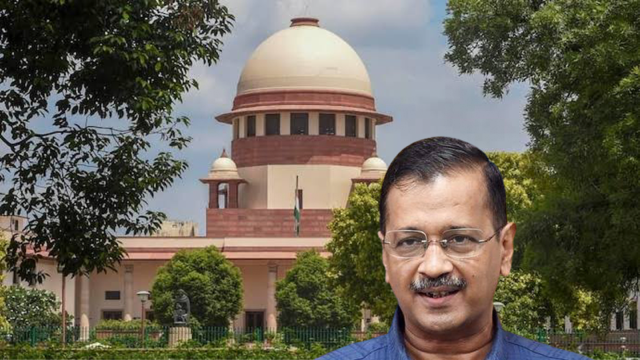
In a significant turn of events, the Enforcement Directorate (ED) informed the Supreme Court today that they have uncovered personal chats between Arvind Kejriwal and hawala operators.
“We have just apprehended the hawala operator. While Kejriwal had destroyed many phones, recoveries have now been made from the hawala operators,” stated Solicitor General Tushar Mehta to a bench consisting of Justices Sanjiv Khanna and Dipankar Datta.
This disclosure occurred when Justice Khanna requested the ED to provide all the material they relied upon following their ruling in the Manish Sisodia case.
“We have now found personal chats between Arvind Kejriwal and the hawala operator,” Additional Solicitor General SV Raju informed the bench.
Senior Advocate AM Singhvi contested the ED’s presentation, arguing, “This is unfair. This information is being disclosed now at 4:30 PM; this constitutes suppression of evidence.”
The ED claims that Kejriwal demanded ₹100 crores during the Goa elections, which was subsequently funnelled through hawala transactions.
On May 10, the Supreme Court of India granted interim bail to Delhi Chief Minister Arvind Kejriwal, permitting him to campaign for the Aam Aadmi Party in the 2024 General Elections.
Yesterday, the Enforcement Directorate (ED) informed the court that after being released on interim bail, Kejriwal made public statements that they described as a “slap on the system.”
During the hearing of Kejriwal’s plea against the ED arrest, the division bench was informed, “The court instructed him not to discuss his role in the case. He is saying, ‘They say I have to go back to jail in 20 days. If you vote for the broom, then I will not have to go to jail…'”
In response, Justice Sanjiv Khanna clarified, “That is his assumption. He will have to surrender. Our order is very clear. We have fixed the timeline for when he must surrender. We are not making exceptions for anyone. What we deemed correct, we have ordered. Let’s stick to the legal issues.”
The interim order specifically stated, “He will not interact with any witnesses or have access to any official files related to the case.”
The granting of interim relief to the Delhi CM faced significant opposition from Solicitor General Tushar Mehta and Additional Solicitor General SV Raju, who represented the ED in court.
The ED also filed an affidavit arguing that under the Prevention of Money Laundering Act, many politicians are currently in judicial custody, and there is no justification for granting special treatment to Kejriwal.
Solicitor General Tushar Mehta strongly opposed the interim bail, arguing that it created an impression that it would be disastrous if Kejriwal were not allowed to campaign.
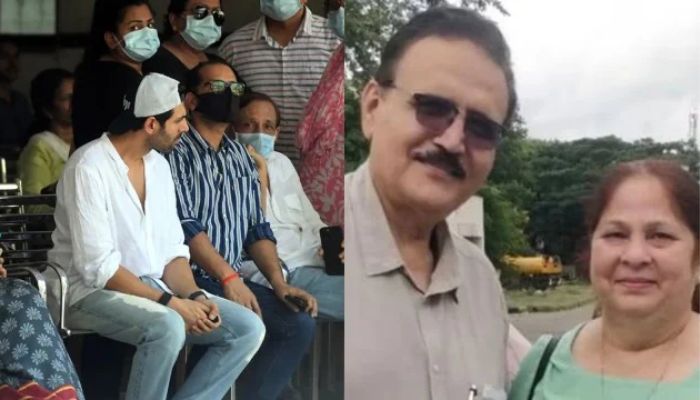
The hoarding collapse in Mumbai’s Ghatkopar area on Monday claimed the lives of sixteen people, including the relatives of actor Kartik Aaryan, Manoj and Anita Chansoria. Their mortal remains were found two days later on Wednesday, in a ‘nearly decayed’ state. The couple was in Mumbai to obtain a visa for the United States, where their son Yash lives. Their bodies were found after their son noticed their phones were out of reach and alerted local friends and police.
Manoj Chansoria, 60, a retired Air Traffic Control manager, and his wife Anita, 59, were in their car when the huge hoarding in Ghatkopar collapsed onto a petrol pump. The duo was one of 90 people trapped under an illegal hoarding that fell on a petrol pump in Mumbai during severe dust storms.
“As soon as he realised that his parents were missing on Monday, their son boarded a flight from the United States. Their final rites were conducted at a crematorium in Sahar on Thursday,” a family friend of the deceased victims told IE.
The couple’s last rites were held in Mumbai. Actor Kartik Aaryan also attended the last rites of the couple. Manoj Chansoria, who retired in March of this year, was posted in Mumbai for a year. Manoj’s colleagues, along with Mumbai Police, could trace down their phone and find out that their last known location was in Ghatkopar, near the Eastern Express Highway.
On the evening of 13th May, when dust storms and unseasoned rains hit the city, an illegal hoarding situated on property owned by the Government Railway Police (GRP) slammed into a gas station in the Chheda Nagar neighbourhood causing death and destruction in the surrounding vicinity. Later, a case was filed against Bhavesh Prabhudas Bhinde for culpable homicide not amounting to murder after the billboard that his company Ego Media erected toppled during the storm in Ghatkopar leaving 16 dead and 74 injured. On Thursday, Bhinde was arrested by the Mumbai Crime Branch from Udaipur.
In the Kakadeo police station area, Faiz Malik created a fake ID on Instagram by the name of Ankit Thakur and befriended a minor girl under the pretence of helping her get a job. He then raped her and pressured her to convert to his religion. When she resisted, he assaulted her and attempted to cut her hand multiple times with a sharp weapon.
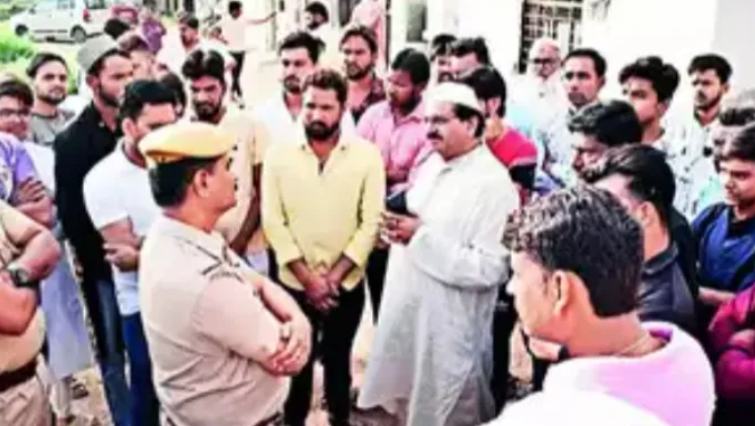
The victim reached the police station accompanied by Bajrang Dal activists. A case was registered under serious sections on the orders of the Police Commissioner.
BREAKING: In Kanpur, UP, Mohd Faiz, posing as Ankit Thakur, befriended a minor orphan Hindu girl on social media, promising her a job.
He then added an intoxicant to her drink, beat, and πaqed her.
A minor resident of Navin Nagar in the Kakadev police jurisdiction reached the police office accompanied by Bajrang Dal activists. She informed the police officers that a year ago, in April 2023, she had a conversation with a youth named Ankit Thakur via Instagram. She mentioned that her father had passed away in 2015 and her mother had left her. Ankit persuaded her, took her along with him, and after giving her a spiked cold drink in his friend’s car, committed the crime. He recorded obscene videos and took photos. Later, it was found out that Ankit’s real name is Faiz Malik.
She alleged that he put considerable pressure on her to convert her religion and when she refused, he physically assaulted her severely several times and attempted to cut her hands with sharp weapons. The accused also threatened to viral videos on social media. He has victimized two other young women as well. Kakadev police station in-charge KP Gaur informed that the accused has been arrested. A case has been registered under various sections including rape, POCSO, coercion for conversion, and IT Act, and an investigation is underway.
Krishna Tiwari, a leader of Bajrang Dal, revealed that cases of rapid conversions are emerging in Kanpur. This case involves a minor girl who was contacted by individuals from a different community via social media. When she got entangled in their trap, the culprits subjected her to physical abuse and pressured her into conversion. Two more young women have fallen into their trap and have already converted. It seems like a whole gang is operating. Bajrang Dal will oppose this.
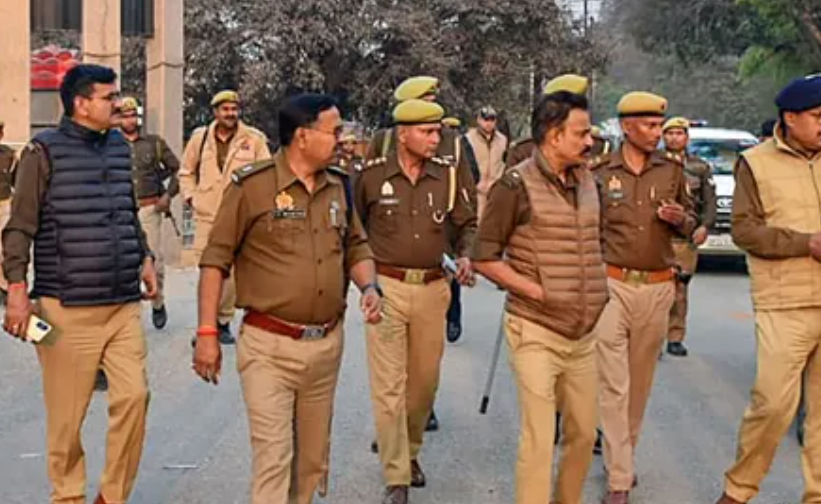
The incident occurred a year ago. A case has been registered at the Kakadev police station, and action is being taken. The accused has been arrested, said RS Gautam, DCP Central.
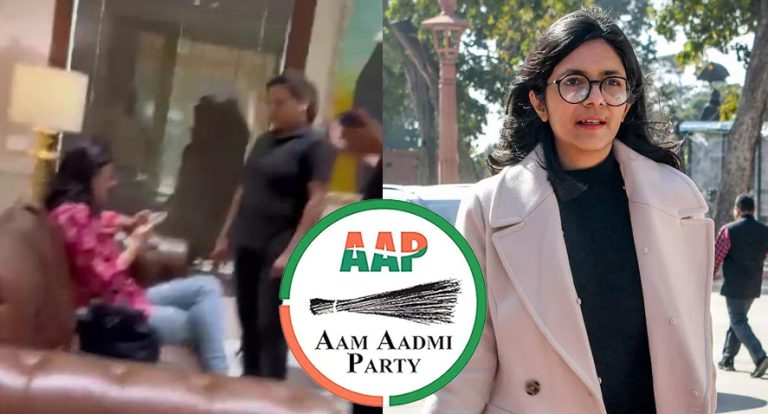
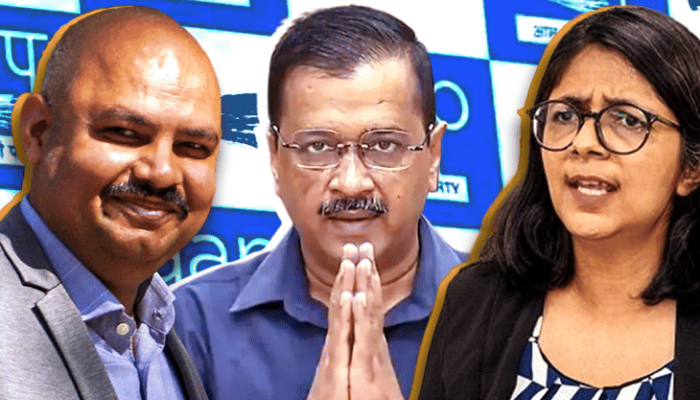
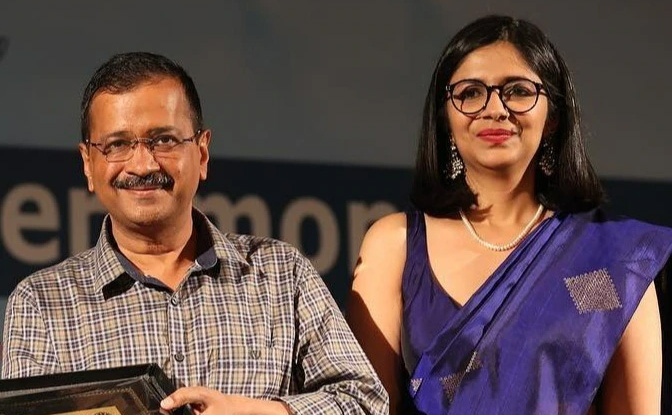
In a fresh twist in the Swati Maliwal assault case, Aam Aadmi Party has attacked its own Rajya Sabha MP over a purported video clip from the residence of Delhi Chief Minister Arvind Kejriwal from the day of the alleged assault.
In a post on social media platform X, AAP stated, “Swati Maliwal ka sach (Swati Maliwal’s truth).” The post refers to a news story with a purported video clip of the Rajya Sabha MP and security personnel at CM Kejriwal’s house on May 13. Delhi Police say that the video is yet to be authenticated by them.
Notably, this is the first time that AAP has taken the stand against Maliwal in the assault case contradicting the earlier stand of the party as AAP MP Sanjay Singh had said that Arvind Kejriwal has taken cognizance of the incident and has directed “strict action” in the incident, adding that the party is “with Swati Maliwal.”
Earlier, in reference to the same video clip, Swati Maliwal attacked an anonymous person dubbing him a “political hitman” and said he had started efforts to save himself.
She also said that the ‘truth’ will be revealed once the CCTV footage of the house and the room is checked.
“Like every time, this time also this political hitman has started efforts to save himself. By getting his people to tweet and play videos without any context, he thinks he can save himself by committing this crime,” alleged Maliwal in a post on X.
“Who makes a video of someone being beaten up? The truth will be revealed to everyone as soon as the CCTV footage of the house and the room is checked. Fall to whatever level you can, God is watching everything. One day everyone’s truth will come out in front of the world,” she added in her post.
Earlier, the Delhi Police filed an FIR in the case based on the complaint of Swati Maliwal and the details of the FIR have revealed shocking details.
In her complaint, Maliwal has alleged that Kejriwal’s personal Secretary Bibhav Kumar “slapped” her “at least seven to eight times” while she “continued screaming” and “brutally dragged” her while “kicking” her in her “chest, stomach and pelvis area.”
According to the Delhi Police FIR, Maliwal described the events of May 13 when she had gone to the Civil Lines residence of Chief Minister Kejriwal.
“I went inside the camp office and called CM’s PS Bibhav Kumar but I could not go in. I then sent a message to his mobile number (through WhatsApp). However, there was no response. I then went inside the residential area through the main door as I have always done in the past year since Bibhav Kumar was not present I entered the residence area and informed the staff present there to tell the CM here to meet him,” the FIR read.
“I was informed that he was present in the house and I was told to wait in the drawing room. I went into the drawing room and sat on the sofa and waited for him to meet me,” Maliwal said.
“He then abused me and asked who are you to not listen to what I say. While saying these words, he came and stood right in front of me. Without any provocation whatsoever on my side, he started slapping me with full force. He slapped me seven to eight times at least while I continued screaming. I felt absolutely shocked and was screaming for help over and over again. In order to protect myself I pushed him away with my legs,” she said.
“I repeatedly told him…that he should please let go of me as I was in unbearable pain. However, he attacked me with full force again and again. I somehow managed to get free. I then sat on the sofa of the drawing room and gathered my spectacles that had fallen on the ground during the assault. I was in a terrible state of shock at this attack. I was deeply traumatised and called the 112 number and reported the crime against me,” Maliwal detailed.
The FIR was filed under IPC Sections 308 (Attempt to commit culpable homicide) /341(Punishment for wrongful restraint)/354B Assault or use of criminal force to woman with intent to disrobe /(506 Punishment for criminal intimidation/509 (Word, gesture or act intended to insult the modesty of a woman).
(This news report is published from a syndicated feed. Except for the headline, the content has not been written or edited by OpIndia staff)
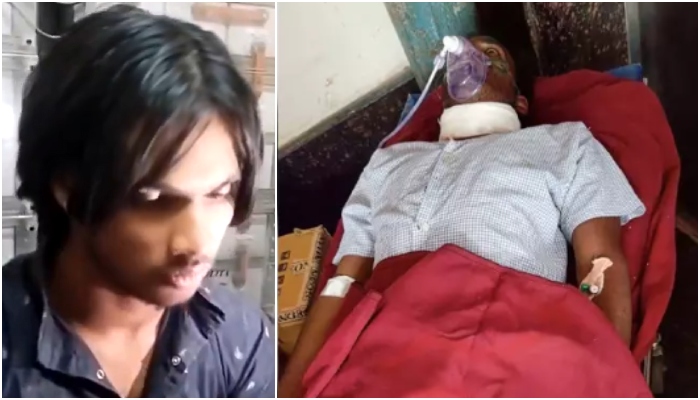
A sensational case of dispute and a brutal attack concerning homosexual partners in Uttar Pradesh’s Barabanki has come to the fore. One of the individuals who said that he was in a gay relationship, attacked his partner with a sharp knife and then tried to commit suicide on 15th May. The accused also was reported fled from the spot. However, his statement has now been obtained by the police amid the ongoing investigation.
BIG BREAKING: Homosexual partner Mohd Zunaid sl¡ts the thrσat of Mohd Saif with a shaπp kn¡fe and then sl¡ts his own veins in Barabanki, UP.
While Saif is in critical condition and has been referred to the Lucknow Trauma Center, Zunaid has been arrested.
According to the reports, the incident is said to have happened on the 15th of May in Rasulpur village of Uttar Pradesh’s Barabanki. The accused identified as Mohammed Zunaid has been in a homosexual relationship with Mohammed Saif for the past two years. On 15th May, Zunaid asked Saif to meet him out of the village. During the meeting, the duo engaged in some verbal brawl which later escalated resulting in the heinous incident.
The accused, Zunaid took out his knife and attacked Saif by slitting his throat. Saif tried to resist the attack and also screamed for help. The accused further attempted to commit suicide and flee from the spot as Saif lost consciousness. Reports mention that Zunaid slit his wrist and ran away from the spot.
The villagers meanwhile heard the screams of Saif who had become unconscious by the time they reached to help him. The villagers saw Saif struggling for life in the pool of blood and immediately took him to the hospital. They also informed his parents about the incident. Saif is alive and is being treated by the doctors who have referred him to the Lucknow Trauma Center.
Meanwhile, based on the complaint filed by the parents of Saif, a police case has been filed against Mohammed Zunaid who was in a homosexual relationship with victim Mohammed Saif. Zunaid is believed to have been arrested by the police and is being interrogated in the case.
There has been a disturbing increase in the incidents of sexual assault and sexual exploitation of minors in religious institutions, including madrasas.
Several Imams and maulvis under the guise of imparting ‘knowledge’ to the minors, abuse them sexually and sometimes the sexual exploitation is long-term, to the point of ‘normalisation’ in that particular institution. It often perpetuates a vicious cycle where the abused may grow up to abuse others in turn.
Sexual abuse of children in religious organizations like Madarsas and Mosques is one of the least publicized subjects, largely due to the triple taboo involved (sex, minors, and religion). However, several such cases have been reported recently by OpIndia and other media houses, showcasing the need for action in favor of justice for the victims. Here is the list of such cases reported from across India that happened in the last 15 days.
Maulana Md Mahir (32) repeatedly rapes a minor, 6 students in Ajmer murder him
The Ajmer police arrested six minor madrasa students on Sunday (12th May) for allegedly murdering Mohammadi Masjid’s imam, Maulana Mohammad Mahir (32), on April 27 in Ajmer, Rajasthan. As per the reports, all the students from Madarsa had been narrating a different story about the murder. The students claimed that three masked men arrived in the Madarsa, killed Mohammed Mahir, and threatened them to be quiet.
Image via: Times of India
Later, the police discovered that six students of Madarsa had murdered the Maulvi for repeatedly raping a minor. “One of the students of the madrasa was sexually abused by Mahir who belonged to the Rampur village of Shahbad, Uttar Pradesh. When the child threatened to reveal everything, Mahir lured him with money. Disturbed by his regular harassment, students decided to murder Mahir. They beat him severely with a stick and strangulated him to death with a rope,” the police said.
As per the reports, two days before the murder, Mahir had returned from his village in Uttar Pradesh. On 26th April, the students purchased sleeping drugs from a medical shop and offered him curd and tablets. After a while, Maulana fell asleep. Students went to the storeroom and retrieved a stick and rope. They hit his head with the stick while he was sleeping. He attempted to stand up, but they wrapped the rope around his neck and strangled him.
The incident came to the fore only after Toshif Ashraf of the Madarsa filed a police complaint.
Madarsa teacher sexually assaults 7-year-old girl in UP Gorakhpur’s Madarsa
On 8th May, the media reported that a 7-year-old girl was sexually assaulted by a Madarsa teacher. The girl, a resident of Tiwaripur region of UP’s Gorakhpur, had gone to the place of Madarsa teacher who stayed in her neighborhood. She along with many other girls used to go to his place to learn Urdu and Arabi. However, on the day when the incident happened, she was all alone in the class.
The accused Maulvi then seeing the girl alone, tried to sexually assault her. However, one of the neighborhood women saw this happening and immediately informed the parents of the victim. The mother of the girl arrived at the spot and saved her daughter. Based on the complaint filed by the father of the girl, the police arrested the accused and began investigations into the case.
19-year-old girl raped in Masjid in Rajasthan’s Pali
On 5th May, an incident of rape in Masjid had come to the fore from Rajasthan’s Pali district. A 19-year-old girl was called to the Masjid by the Maulvi saying that he had some job for her. However, he dragged her to a room in Masjid and brutally raped her.
The parents of the girl who stayed in the same locality began looking for her as she failed to return home late at night. Later, they discovered the girl locked in a room with the Maulvi in the Masjid. The parents then filed a police complaint in the case demanding strict action against the accused.
It had come to the fore that the accused had threatened the girl saying that if she told about the incident to anyone, she would be killed. However, the accused was caught by the police, and action was initiated.
Women raped by Chadar seller at Bade Sarkar dargah in Badaun district
A woman who had come to seek ‘treatment’ through exorcism at Bade Sarkar Dargah of Sadar Kotwali in Badaun district, has filed a case against a chadar seller and faith healer at the Dargah, accusing him of rape and making obscene videos.
The victim, a resident of the Bijnor district, who had come here for ‘treatment’ of mental diseases through exorcism was dragged to a room by Mohammed Rahat in the name of treatment. He then raped the woman in the room and also made a video of the same.
The woman who made the allegation says that Rahat used to take her to his room every day in the name of treatment and rape her. In this connection, a case has been registered against the accused Maulvi Rahat and an investigation is being done.
Maulvi Jabbar arrested for raping a girl for 2 years in UP’s Ghaziabad
On 12th May, the Uttar Pradesh Police arrested one Maulvi identified as Jabbar after he raped a girl for around 2 years in Ghaziabad. The accused also recorded a derogatory video of the incident and threatened the girl to make it viral. The incident, however, came to the fore after the video of the incident was made viral over the internet.
As per the media reports, the victim was a student of the accused and used to go to his place to learn Urdu and Arabi. The accused two years ago caught the girl alone and raped her brutally. He also filmed the incident and used the video to blackmail the girl. He kept on threatening the girl and raping her for two years.
Image- Lallantop
The incident came to the fore after the video of the girl went viral in the village. Later her parents came to know about the incident and filed a complaint against the Maulvi. “Based on the complaint, we have registered an FIR against Zabbar under IPC sections 376 (rape), 328 (intoxicating with intent to commit crime) and 506 (criminal intimidation) and he has been arrested. The police are also trying to find out whether the accused himself shared this video on social media or someone else had uploaded it,” the police said.
According to the reports, the police said that the accused Jabbar was a resident of Sardhana area in Meerut and currently was living in the Loni area of Ghaziabad. A few days after this incident, Jabbar left the mosque and fled from the spot. Police later arrested the accused and found a clip of rape of the girl from the accused’s mobile phone.
Police also said that the mobile phone of the Maulvi had been confiscated and the medical examination of the victim was conducted.
Maharashtra: Aqdas Chandu rapes, tortures a 12-year-old girl in Kalyan Mosque, arrested
Another incident of a young girl being raped in a mosque in the Kalyan district, a satellite town of Mumbai, the state capital of Maharashtra, emerged on 6th May 2024. As per the reports, the rape happened in the mosque when the victim entered the Mosque premise to drink water. The accused person was identified as Aqdas Chandu who has been taken into custody by the police.
The incident happened in the Kalyan area of the Bazarpeth police station. The victim 12-year-old girl who resides in the locality, had gone to some store to purchase a cake. While on the move, she stopped at a local mosque to get some water because she was thirsty. It is then that the nearby fruit seller accused Aqdas Chandu entered the Mosque and raped the girl.
Aqdas gagged the girl and forcefully hugged her from behind before brutally raping her. Following that, he dragged the girl into the mosque’s restroom against her will where he raped her. Reportedly, Aqdas Chandu fled the scene as the victim began to scream for help. The victim got back home eventually and told her family everything that happened.
The girl’s family members have lodged an FIR against Aqdas Chandu at Bazarpeth police station. It has also been mentioned in the complaint that the accused had raped the victim a year ago also. The police are investigating the matter.
Such incidents common in Pakistan and Bangladesh
Not only in India, such incidents are also common in Islamic countries like Pakistan and Bangladesh. Recently, a Maulvi in Pakistan drugged a boy and repeatedly raped him repeatedly inside a mosque. As per the FIR, the incident took place on the intervening night of March 9 and 10 in the jurisdiction of Shaheen Chowk Police Station in Pakistan’s Gujrat.
According to the FIR, Maulvi Mohammad Riaz, the Imam Masjid at the Jamia Masjid Buraq, called the victim and requested him to come to the mosque to seek guidance with Taraweeh prayers during Ramzan.
Soon after, the victim arrived at the mosque, where the accused informed him after the prayers that the Masjid Committee was unavailable for advice on the issue. The accused then requested the boy to stay the night. The victim consented to the Maulvi’s demand. Later in the day, after dinner, the minor performed his prayers and went to sleep. But, when he woke up in the morning at around 8 am, he realized that the accused was allegedly raping him throughout the night.
Conclusion
Recently, OpIndia reported how several adults in Pakistan opened up on social media sharing stories of how they were sexually assaulted by Maulvis in their childhood. On 2nd April, a Pakistani man, Faisal Rafi, asked people on X (formerly Twitter) if they were raped or sexually abused by a Maulvi (Islamic priest/religious teacher). The question went viral quickly, and the number of people, irrespective of gender, who said yes was shocking. Faisal himself said yes to the question. He said the incident happened to him not at a madrasa but at his home.
After this, several persons shared their dreadful experiences revealing the brutality of the Maulvis who teach in Madarsas. The responses made it evident that physical and sexual assault by Maulvis is common in Pakistan, even among Muslims living in the UK. Even in India, such cases have emerged from time to time.
Sexual abuse of children in religious institutions such as Madarsas and Mosques is one of the least discussed issues, owning to social taboos and political bias. Often, such stories even fail to find mention in the mainstream media because the Leftist bias against reporting crimes committed by persons of a particular religion. The Leftist media, which often blames the government of being anti-Muslim, turns a blind eye to the exploitation and harassment of young Muslim women and children at the hands of people associated with religious institutions.
A video that recently surfaced on social media featured the altercation between Aam Aadmi Party Rajya Sabha MP Swati Maliwal and security officials posted at the party’s national convenor and Delhi Chief Minister Arvind Kejriwal’s residence. She was being asked to leave the premises and could be heard declaring, “I will do it and show all of them today. I want to talk to the DCP right now,” but the personnel persisted while stating, “That is your headache but you come with us,” to which she responded with, “I will first talk to SHO Civil Lines.”
He then told her that it was not possible but she insisted that it would have to happen right here and they could do whatever they wanted. She then warned, “I will also make you lose your job if you dare to touch me.” He again requested her and she informed him, “I have called 112 and let the police come. I’ll talk afterwards.” The officials urged, “Police will also stop outside and won’t come here.” However, she argued that the authorities would have to step inside and challenge, “Come pick me up and throw me outside.” The officials then asserted, “We can never do it to educated people like you.” She then proceeded to hurl abuses, “This ganja-saala,” (presumably Bibhav Kumar) and the guards asked her not to do it. Now, police have taken cognisance of the footage.
Swati Maliwal also reacted after the footage started gaining traction on social media and wrote, “Like every time, this time also this political hitman has started efforts to save himself. By getting his people to tweet and play videos without any context, he thinks he can save himself by committing this crime. Who makes a video of someone being beaten up? The truth will be revealed to everyone as soon as the CCTV footage of the house and the room is checked. Fall to whatever level you can, God is watching everything. One day everyone’s truth will come out in front of the world.”
हर बार की तरह इस बार भी इस राजनीतिक हिटमैन ने ख़ुद को बचाने की कोशिशें शुरू कर दी हैं।
अपने लोगों से ट्वीट्स करवाके, आधि बिना संदर्भ की वीडियो चलाके इसे लगता है ये इस अपराध को अंजाम देके ख़ुद को बचा लेगा। कोई किसी को पीटते हुए वीडियो बनाता है भला? घर के अंदर की और कमरे की CCTV…
On 13th May the former Delhi Commission for Women (DCW) chief accused the Personal secretary of Arvind Kejriwal of assaulting her. The media reported that she had unveiled to the police that Bibhav Kumar, Arvind Kejriwal’s PA, had attacked her at the residence of the Chief Minister on his instruction. She has also filed an FIR in the case and revealed, “Without any provocation whatsoever on my side, he started slapping me with his full force. He slapped me 7-8 times at least while I continued screaming. I felt numb and shocked and was screaming for help over and over again. To protect myself, I pushed him away with my legs. At that time, he pounced on me, brutally dragged me and deliberately pulled my shirt up. My shirt buttons opened and my shirt flew up. I landed on the floor while hitting my head on the centre table.”
She further mentioned, “I was constantly screaming for help but no one came. After that, Bibhav Kumar did not relent and attacked me by kicking me repeatedly in my chest, stomach and pelvis area with his legs. I was in extreme pain and kept telling him to stop. My shirt was coming up but he continued to assault me. I repeatedly told him that I was having my periods and that he should please let go of me as I was in unbearable pain. However, he attacked me with full force again and again.”
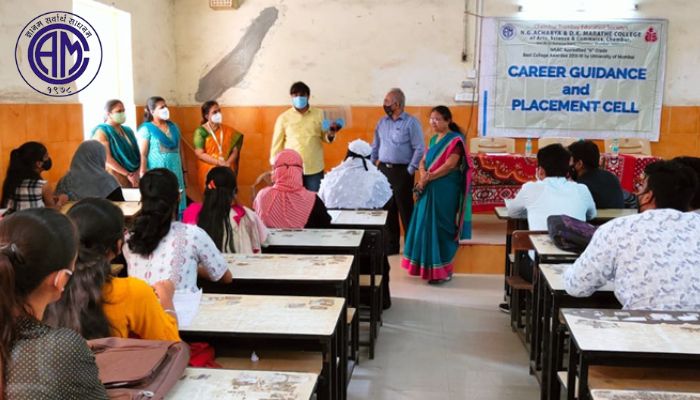
The Acharya Marathe College, which is located in the Chembur suburb of Mumbai, has introduced a new uniform policy for degree college students. It has barred students from wearing hijabs, burqas, niqabs and other religious clothing within the campus.
The dress code will come into force in the academic year starting in June 2024. The development comes a year after a similar uniform policy was enforced for its junior college students.
According to the new rules, students pursuing degrees at the Acharya Marathe College must remove their religious attire in a designated common room located on the ground floor. It is only then that they can join classes on the campus.
Students at Acharya Marathe College in #Mumbai's #Chembur push back against restrictions on religious clothing like #hijab, #niqab, and #burqa.
— Mohd Shadab Khan (@Shadab_VAHIndia) May 16, 2024
Reportedly, the college has not issued any official circular to this effect. However, the new guidelines have been doing the rounds of WhatsApp groups of 2nd and 3rd year degree students.
“Burqas, niqabs, hijabs, or any religious identifiers such as badges, caps, or stoles must be removed upon arrival by visiting the common room on the ground floor before moving around the college,” the dress code read.
The new rules state that all students are required to wear formal attire and dress modestly. Male students are required to wear regular trousers with full or half shirts. Female students have been directed to wear modest Western or Indian clothes.
Acharya Marathe College has banned wearing Burqa in College
After 45 years of existence College has Imposed dress code in College and suddenly banned wearing Burqa in College
As per reports, some Muslim students have appealed to the administration of the Acharya Marathe College to reconsider their decision. In the meantime, Islamists have labelled the decision of uniform policy as ‘Islamophobic.’
“Acharya Marathe College has banned wearing Burqa in College After 45 years of existence College has Imposed dress code in College and suddenly banned wearing Burqa in College This is Islamophobic decision just to target Muslim girls,” wrote one Faizan on X (formerly Twitter).
Acharya Marathe College has banned wearing Burqa in College
Hindus do this then try to debate why muslims are pasmanda in india ???
— Banda_E_Khuda بندۂ خدا (@SaifAhmadSaiif) May 16, 2024
One Islamic extremist compared Hindus to vultures and tweeted, “Acharya Marathe College has banned wearing Burqa in College. Hindus do this then try to debate why muslims are pasmanda in India.”
Another Islamist named Mohammed Sher Ali wrote, “Acharya Marathe College has banned wearing of burqa in the college. This is an Islamophobic decision to target only Muslim girls”
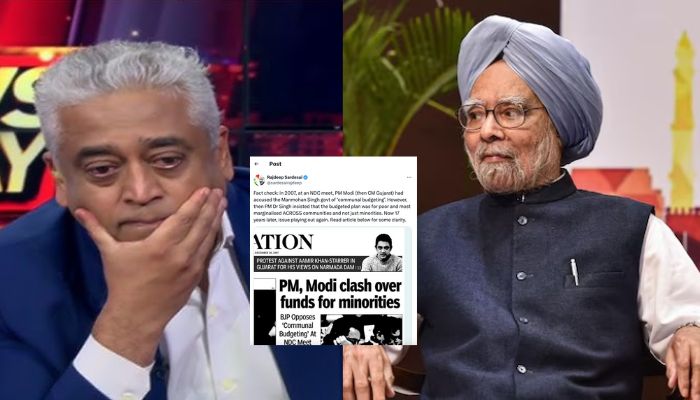
Even before Congress leaders, the party’s media allies come to its rescue every time it faces an attack from the BJP for its policies or statements. On the 16th of May, India Today ‘journalist’ Rajdeep Sardesai attempted to defend the Congress party in the garb of ‘fact-check’ and said that the UPA government’s 15-point programme was for poor and marginalised across communities and not limited to ‘minorities. This came after PM Modi on Thursday raised the issue and said that Congress wanted to allocate 15% of the budget for Muslims.
“Fact check: in 2007, at an NDC meet, PM Modi (then CM Gujarat) had accused the Manmohan Singh govt of ‘communal budgeting’. However, then PM Dr Singh insisted that the budgeted plan was for poor and most marginalised ACROSS communities and not just minorities. Now 17 years later, issue playing out again. Read article below for some clarity,” Sardesai posted.
Fact check: in 2007, at an NDC meet, PM Modi (then CM Gujarat) had accused the Manmohan Singh govt of ‘communal budgeting’. However, then PM Dr Singh insisted that the budgeted plan was for poor and most marginalised ACROSS communities and not just minorities. Now 17 years later,… pic.twitter.com/afLRpFhcVg
— Rajdeep Sardesai (@sardesairajdeep) May 16, 2024
While in his desperation to quickly defend his political masters, Sardesai skipped reading the very same article before advising others to read it “for some clarity”.
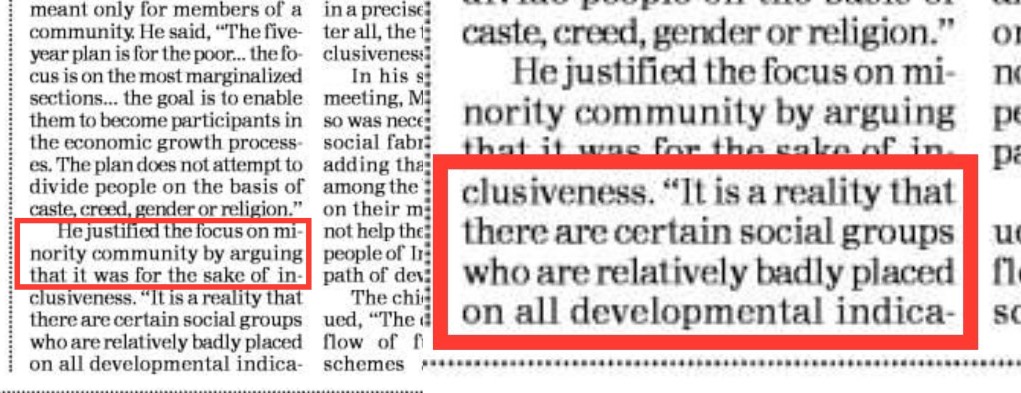
In the news article Sardesai shared titled: “PM, Modi clash over funds for minorities”, it is clearly mentioned that the then-Prime Minister Manmohan Singh had admitted that the ‘minorities’ were focused on the said programme “for the sake of inclusiveness”.
News article titled “PM, Modi clash over funds for minorities” shared by Rajdeep Sardesai
Notably, during election rally in Maharashtra’s Kalyan on Thursday, PM Modi said that Congress if voted to power will make budgets on the basis of religion. “…During Manmohan Singh’s time, there was a plan to make two budgets in which 15 percent of the budget was planned for Muslims, but at that time I was the Chief Minister of Gujarat and I opposed it. But if Congress elected, it will make budgets on the basis of religion…” PM Modi said.
Kalyan, Maharashtra: "If the INDI Alliance government is formed, it will come up with Hindu budget and Muslim budget," says PM Modi pic.twitter.com/ZX3vc4Kxru
Congress government’s 15 Point Programme for Minorities
Back in 2007, the then Gujarat Chief Minister Narendra Modi had strongly opposed the UPA government’s communal budgeting at the meeting of the National Development Council (NDC). He said that the “New 15 Point Programme that focuses on earmarking certain outlays of various developmental schemes and programmes of the government of India amongst the eligible beneficiaries, based on their minority status, should be reviewed in the interest of maintaining the social fabric of the nation.”
The then-Gujarat CM called the Congress-led government’s action “discriminatory” adding that such a step would not help take the people of India together on the path of development.
“Such discrimination, among the eligible beneficiaries, for the flow of funds based on minority status, will not help the cause if taking the people of India together on the path of development,” Modi said adding that taking socioeconomic criteria will be correct for the flow of funds.
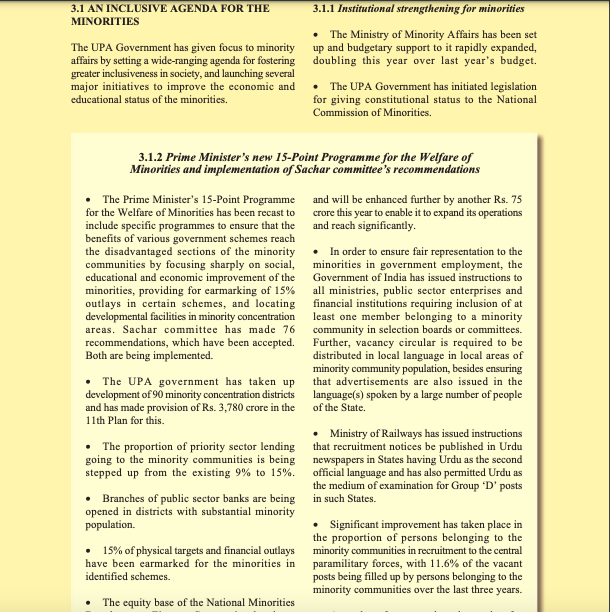
In an official document titled “UPA Government: Report to the People (2004-2008), there is a section “Furthering Social Inclusion”, therein Prime Minister’s new 15-Point Programme for the Welfare of Minorities and implementation of Sachar committee’s recommendations is mentioned. It states that the UPA government earmarked 15% of physical targets and financial outlays for minorities.
Source: UPA Government: Report to the People
The Prime Minister’s 15-Point Programme for the Welfare of Minorities has been recast to include specific programmes to ensure that the benefits of various government schemes reach the disadvantaged sections of the minority communities by focusing sharply on social, educational and economic improvement of the minorities, providing for earmarking of 15% outlays in certain schemes, and locating developmental facilities in minority concentration areas. Sachar committee has made 76 recommendations, which have been accepted. Both are being implemented,” the document reads.
“15% of physical targets and financial outlays have been earmarked for the minorities in identified schemes,” the document adds.
Rajdeep Sardesai does a fact-check by overlooking facts
Moreover, while Rajdeep Sardesai is claiming in his so-called fact check that the programme focussed on marginalised people across communities and not just minorities, the said document mentions that the UPA government took up the development of 90 minority concentration districts and has made provision of Rs. 3,780 crore in the 11th Plan for this.
This list of 90 minority concentration districts was prepared by the Ministry of Minority Affairs, on the basis of the 2001 census data on population, socio-economic indicators and basic amenities indicators.
A press release dated 22nd June 2007 stated that the UPA government had “decided to prepare and implement area/problem specific special development plans for these 90 districts. It has also been decided to ensure that the benefit of programmes of poverty alleviation, education, health and provision of basic amenities etc., reach these districts in a focused manner.”
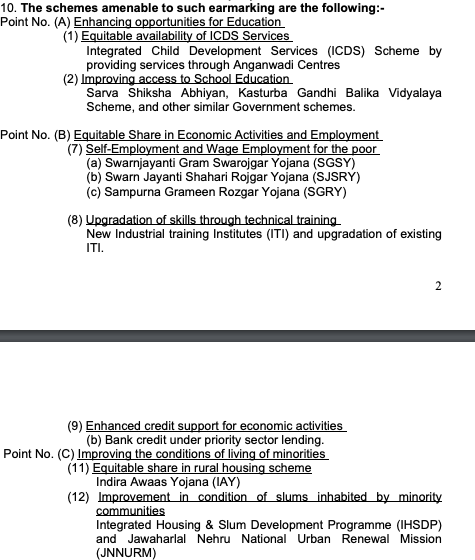
The UPA government had also issued guidelines for the implementation of the Prime Minister’s New 15 Point Programme for the Welfare of Minorities. The guidelines also mention the objective of the programme. “Enhancing opportunities for education. b) Ensuring an equitable share for minorities in economic activities and employment, through existing and new schemes, enhanced credit support for self-employment, and recruitment to State and Central Government jobs. c) Improving the conditions of living of minorities by ensuring an appropriate share for them in infrastructure development schemes. d) Prevention and control of communal disharmony and violence,” the guidelines document reads.
The schemes amenable to such earmarking under the programme included Integrated Child Development Services (ICDS) Scheme, Sarva Shiksha Abhiyan, Kasturba Gandhi Balika Vidyalaya Scheme, Swarnjayanti Gram Swarojgar Yojana (SGSY), Swarn Jayanti Shahari Rojgar Yojana (SJSRY), Sampurna Grameen Rozgar Yojana (SGRY), Indira Awas Yojana, Integrated Housing & Slum Development Programme (IHSDP) and Jawaharlal Nehru National Urban Renewal Mission among others.
Source: minoritiyaffairs.gov.in
In November 2007 PM Singh had also reviewed the implementation of the 15-point programme for minorities.
The question here arises is what backwardness, development and welfare of people have to do with their religion. It clearly suggests that the Congress-led government brought the Programme for its Sine Qua Non minority appeasement in the name of “inclusiveness.” It is essential to note that although the term minorities has been used in political parlance as a generic term while talking about Muslims, Muslims form the second-largest majority in the country.
Conclusion
The Congress party, contrary to Sardesai’s misleading claims indeed undertook communal budgeting and the said 15-point programme focussed solely on religious minorities and not covered other poor and marginalised communities. However, the dedication of Congress’s media allies like Sardesai is such that they jump to defend even the indefensible shamelessly turning. a blind eye to facts evident in their own cited sources.
Aam Aadmi Party’s Rajya Sabha MP, Swati Maliwal, recorded her statement on Friday before a magistrate at Delhi’s Tis Hazari court regarding the alleged assault by Chief Minister Arvind Kejriwal’s aide, Bibhav Kumar. The Delhi Police has already registered an FIR in the case, naming Kumar as the accused.
On Monday morning, Maliwal visited the Civil Lines police station in the national capital, alleging that a member of Kejriwal’s staff assaulted her at the chief minister’s official residence. In her complaint, Maliwal detailed the sequence of events, explaining that she went to the Chief Minister’s house after receiving no response from Bibhav and Kejriwal regarding some work.
In the FIR filed by Ms Maliwal, the Rajya Sabha MP has described in excruciating detail the mistreatment and assault she had to face at the Delhi CM’s residence.
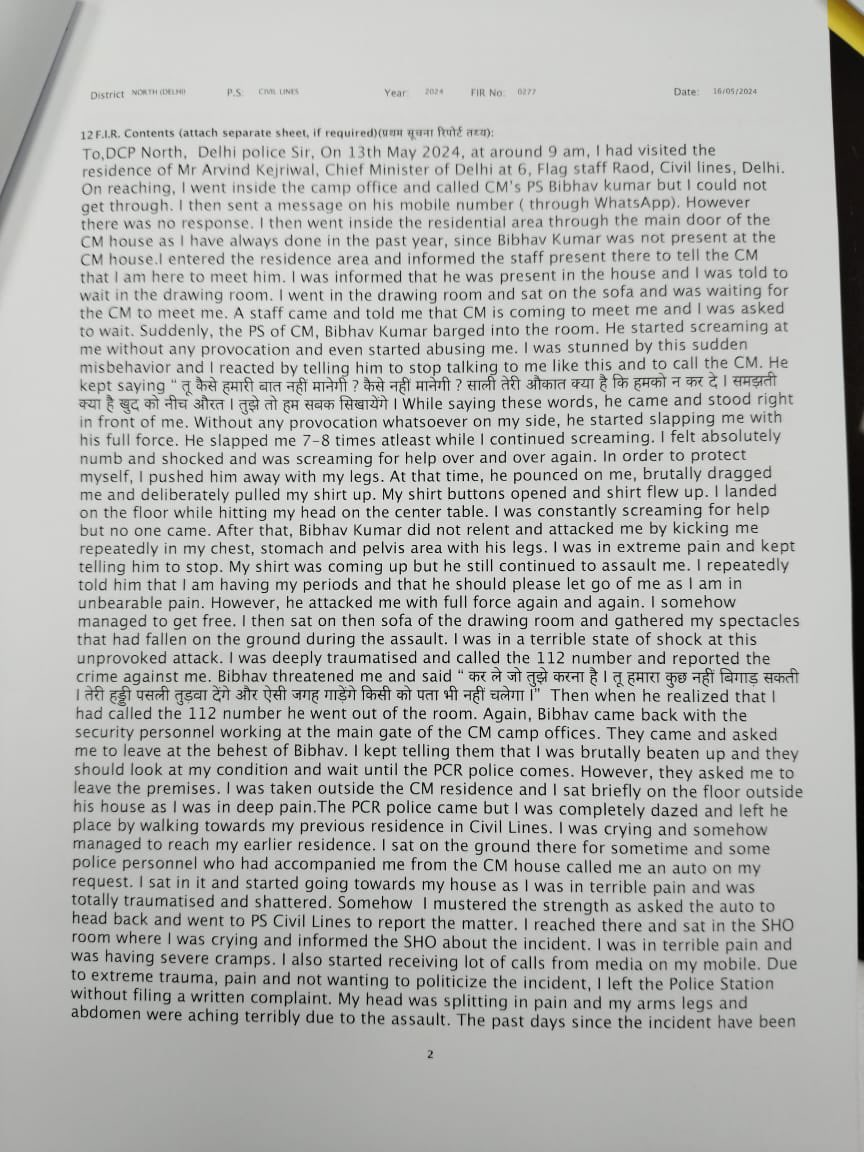
Swati Maliwal’s FIR against Kejriwal aide Bibhav Kumar
“On 13th May 2024, at around 9 am. I visited the residence of Mr Arvind Kejriwal, Chief Minister of Delhi at 6, Flagstaff Raod, Civil Lines, Delhi. On reaching, I went inside the camp office and called CM’s PS Bibhav Kumar but I could not get through. I then sent a message to his mobile number (through WhatsApp). However, there was no response. I then went inside the residential area through the main door of the CM house as I have always done in the past year since Bibhav Kumar was not present at the CM house,” the FIR reads.
Swati entered the residence area and informed the staff present there to tell the CM that she was there to meet him. She was informed that he was present in the house and I was told to wait in the drawing room, the FIR says.
“I went into the drawing-room, sat on the sofa, and waited for the CM to meet me. A staff came and told me that CM is coming to meet me and I was asked to wait. Suddenly, the PS of CM, Bibhav Kumar barged into the room. He started screaming at me without any provocation and even started abusing me. I was stunned by this sudden misbehaviour and reacted by telling him to stop talking to me like this and to call the CM,” the FIR filed by Swati further read.
Describing the assault at the hands of Bibhav Kumar, Maliwal said, “Without any provocation whatsoever on my side, he started slapping me with his full force. He slapped me 7-8 times at least while I continued screaming. I felt numb and shocked and was screaming for help over and over again. To protect myself, I pushed him away with my legs. At that time, he pounced on me, brutally dragged me and deliberately pulled my shirt up. My shirt buttons opened and my shirt flew up. I landed on the floor while hitting my head on the centre table.”
Swati said that Kumar pounced on her, and kept attacking her, kicking her on her chest, stomach, and pelvis region.
“I was constantly screaming for help but no one came. After that, Bibhav Kumar did not relent and attacked me by kicking me repeatedly in my chest, stomach and pelvis area with his legs. I was in extreme pain and kept telling him to stop. My shirt was coming up but he continued to assault me. I repeatedly told him that I was having my periods and that he should please let go of me as I was in unbearable pain. However, he attacked me with full force again and again,” Maliwal said as per the FIR.
As per Swati, Kumar also threatened to beat her black and blue and have her buried in the CM’s residence.
“Then when he realized that l had called the 112 number he went out of the room. Again, Bibhav came back with the security personnel working at the main gate of the CM camp offices. They came and asked me to leave at the behest of Bibhav. I kept telling them that I was brutally beaten up and they should look at my condition and wait until the PCR police came. However, they asked me to leave the premises,” Maliwal said in the FIR.
Explaining how deeply traumatised she was from the assault, Maliwal said,”I was taken outside the CM’s residence and I sat briefly on the floor outside his house as I was in deep pain. The PCR police came but I was completely dazed and left the place by walking towards my previous residence in Civil Lines. I was crying and somehow managed to reach my earlier residence. I sat on the ground there for some time and some police personnel who had accompanied me from the CM house called me an auto on my request. I sat in it and started going towards my house as I was in terrible pain and was traumatised and shattered.”
“Somehow I mustered the strength and asked the auto to head back and went to PS Civil Lines to report the matter. I reached there and sat in the SHO room where I was crying and informed the SHO about the incident. I was in terrible pain and was having severe cramps. I also started receiving a lot of calls from the media on my mobile. Due to extreme trauma, pain and not wanting to politicize the incident, I left the Police Station without filing a written complaint. My head was splitting in pain and my arms legs and abdomen were aching terribly due to the assault,” Maliwal said in the FIR.