The Canadian Police on Wednesday (8th July) debunked the allegations levelled by former Canadian Prime Minister Justin Trudeau linking the Indian government with the killing of Khalistani terrorist Hardeep Singh Nijjar. Speaking to CBC News, the Royal Canadian Mounted Police (RCMP) Deputy Commissioner, Lisa Moreland, said that there is no evidence linking the Indian government with the killing of Nijjar.
“There is no evidence to suggest that through this organised crime syndicate investigation and the charges laid forward that Indian government officials would be charged or involved in this….nothing has come out to link the Indian government,” Deputy Commissioner Moreland told the Canadian TV channel.
No Indian Govt official link found in Nijjar killing, Canadan Authorities
Moreland’s statement comes after the US Department of Justice (DOJ) unsealed three indictments on Tuesday, in which Lawrence Bishnoi was identified as responsible for Nijjar’s killing. According to an unsealed federal indictment, Lawrence Bishnoi, head of the Bishnoi criminal gang, ordered the killing of Nijjar outside a Sikh temple in Surrey, British Columbia, three years ago, on June 18, 2023. The DOJ has also charged Lawrence’s aides Satinderjeet Singh alias Goldy Brar, Rohit Godara, and Sukhraj Singh Kang.
The #FBI is offering a reward of up to $50,000 for information leading to the arrest of Satinderjeet Singh, #wanted for his alleged involvement in the Lawrence Bishnoi Organized Crime Group which is allegedly engaged in a variety of violent acts in Southern California, and across… pic.twitter.com/BdCxmELUKv
“…Bishnoi presided over a sweeping criminal enterprise that spanned multiple continents. Using contraband cellphones and other voice-over internet protocol devices smuggled into his jail cell, Bishnoi personally directed political assassinations, murders, shootings, extortions, kidnappings, drug trafficking, human smuggling, and other crimes committed by members and associates of the Bishnoi enterprise worldwide,” stated the press release by the DOJ.
“To help manage the enterprise’s day-to-day operations, Bishnoi delegated control to trusted lieutenants and regional leaders of the enterprise. These lieutenants and regional leaders included Satinderjeet Singh, 32, a.k.a. “Goldy Brar”, of Punjab, India, the North American leader of the Bishnoi enterprise, Rohit Godara, 37, of Rajasthan, India, the European leader of the Bishnoi enterprise, and Sukhraj Singh Kang, 58, of Punjab, India,” the press release added.
Operation Hard Ball against organised crime
Law enforcement authorities in the United States, Canada and Europe have launched a major crackdown on organised criminal gangs operating in their respective regions. The law enforcement authorities have arrested 24 defendants, 11 of whom are in California, allegedly connected to three India-based transnational organised crime groups. The arrestees have been charged with a litany of criminal acts, including the killing of Nijjar.
“Transnational criminal gangs who spread fear, drugs, and violence will face the full force of justice and the weight of the federal government,” First Assistant United States Attorney Bill Essayli said.
As part of Operation "Hard Ball," the FBI and our law enforcement partners throughout California, other U.S. cities and in Canada, India and Europe collaborated to execute dozens of search and arrest warrants targeting 37 members of violent transnational organizations who are… pic.twitter.com/WXIOk6vALU
The US Department of Justice (DOJ) said that a federal investigation, under the label of ‘Operation Hard Ball’, has been going on into Indian crime syndicates that engage in racketeering, targeted killings, shootings, extortion, the trafficking of bulk quantities of narcotics across international borders, and other crimes whose impact is especially felt in the Indian diaspora.
“In total, 37 defendants, including two defendants who ran their global criminal syndicates while imprisoned in India, are charged across three indictments unsealed today. Those arrested in the United States- 11 in California, one in Indiana, and one in Georgia, are expected to make their initial appearances today in federal court,” the press release said.
Law enforcement partners in the United States, Canada, and Europe have arrested 24 defendants – 11 of them in California – connected to three India-based transnational organized crime groups charged with a litany of criminal acts, including the assassination in Canada in 2023 of… pic.twitter.com/a8akzEuxt5
According to the press release, the law enforcement agencies are looking for 10 fugitives, out of whom seven are in the US, two are in India, and one is in Europe. During the investigation, the agencies seized around 1,000 kilograms of cocaine and 1 kilogram of heroin along with $40,000 in cash and a dozen firearms. “A total of 23 search warrants have been executed in the Sacramento area, and 11 warrants have been executed in the Los Angeles area,” the DOJ said.
India-Canada ties strained after Trudeau’s baseless allegations
Nijjar was shot dead in Surrey in June 2023, after which Trudeau claimed, without evidence, that the Indian government had a role in his killing. Trudeau’s unfounded claims had strained the diplomatic relations between India and Canada. The Indian government had dismissed the allegations as “absurd” and “motivated”.
In the wake of Trudeau’s allegations, India had recalled its High Commissioner to Canada, following which the Trudeau government asked 6 Indian diplomats to leave the country. In a reciprocal move, New Delhi expelled 6 Canadian diplomats, asking them to leave the country.
On 7th July, the Delhi High Court denied bail to Athar Khan, one of the accused in the 2020 anti-Hindu Delhi riots larger conspiracy case. While the denial of bail is significant, it is the secondary part of the judgment. The more important part is that the judgment records material showing that discussions about road blockade and inciting violence were taking place as early as 17th February 2020.
Source: Delhi High Court
This material evidence directly damages the narrative pushed for years by the Left-liberal and Islamist ecosystem that the violence began because of Bharatiya Janata Party (BJP) leader Kapil Mishra’s speech on 23rd February 2020. The judgment, in effect, records that the conspiracy and violent intent existed much before that date, a stand which OpIndia has maintained for the past six years.
The order was passed by a Division Bench of Justice Prathiba M Singh and Justice Madhu Jain in Athar Khan’s appeal against the trial court’s rejection of his second bail plea on 29th January 2026. Khan is an accused in FIR No 59/2020, registered at Crime Branch Police Station in Delhi. The FIR was registered against several accused, including Umar Khalid, in connection with the larger conspiracy behind the anti-Hindu Delhi riots of 2020 under provisions of the IPC, UAPA, Arms Act and Prevention of Damage to Public Property Act.
What was Athar Khan’s role
According to the judgment accessed by OpIndia, Athar Khan had actively participated in the Delhi Protest Support Group (DPSG) WhatsApp group, United Against Hate group and CAB Team. The court referred to the earlier finding that on the night of 22nd February, Khan attended a meeting at Ayaz’s basement in Chand Bagh. The meeting reportedly led to coordinated attacks.
The judgment also recorded that on 23rd February 2020, another meeting took place at Mukhtyar’s house in Chand Bagh. DPSG members, including Khan, attended the meeting. According to the court, there was coordination over the destruction and disablement of CCTVs and mobilisation on a large scale for violent outbreaks.
The High Court noted that Khan’s role was active. He could not be treated as a casual participant. He was stated to have attended various meetings, including those on the intervening night of 23rd and 24th February. The court had also noted that he conspired to destroy government property with other co-accused.
The protected witness statement
One of the most serious parts of the judgment concerns the statement of protected witness ‘Pluto’. The prosecution relied on this statement to argue that Khan was not merely part of a protest network but had a direct role in pushing violence.
As per the judgment, the witness stated that Khan had said, “Puri Delhi ko dahlana hai. Jab tak 100-200 log nahi marenge, 100-200 jagah aagjani nahi hogi tab tak hamara masla hal nahi hoga.”
In English, the statement means that “Delhi had to be shaken and unless 100-200 people died and arson took place at 100-200 places, their issue would not be resolved”. The court treated this as extremely serious material at the bail stage.
The witness statement also referred to preparations involving weapons, petrol and money. Another person, Rizwan, was stated to have said that shooters had been called from Uttar Pradesh and that Delhi had to be destroyed. These are matters that will be tested during trial, but the court made it clear that at the bail stage, the material could not be brushed aside.
17th February chats and the Kapil Mishra narrative
The most important part of the judgment is the 17th February 2020 WhatsApp message. The court held that the protected witness statement was corroborated by messages sent by one Ovais Sultan Khan to Athar Khan.
Ovais Sultan Khan had warned Athar Khan against violence. In a message sent on 17th February 2020 at 3:20 pm, he told Khan that some locals had evidence of what had been discussed the previous night about road blockade and the proposal to incite violence. He then warned, “Don’t play with fire because it will not hurt you. It will hurt us badly. Our protests will remain nonviolent.”
This message was sent six days before Kapil Mishra’s speech on 23rd February 2020. This is why the judgment is significant beyond the bail issue. For years, Kapil Mishra was blamed by the Left and Islamist ecosystem for triggering the riots. However, the court has now recorded material showing that conversations about road blockade and inciting violence existed on 17th February itself.
The court further noted that the message was in response to a 2:47 pm message sent by Khan, where he was stated to have suggested road blockade and other violent steps. On the same day, at 3:34 pm, Ovais Sultan Khan again messaged him and said that violence would not be allowed by him and his friends.
The High Court said these WhatsApp chats confirmed Khan’s intention. It also said the chats supported the statement of protected witness Pluto, where Khan was accused of exhorting others to cause deaths and damage public property.
What the investigators found
The prosecution argued that Khan had instigated violent protests despite opposition from his own group. It relied on WhatsApp chats, protected witness statements and earlier findings against him.
The court said the WhatsApp chats of the DPSG group showed that Khan had repeatedly sent messages and actively participated in the riots. It further noted that some of his messages were extremely incriminating. According to the court, they showed an active role not only in causing riots and destruction of property but also in deaths caused during the riots.
The court also said that any evidence pointing to Khan’s role in deaths during the riots would make him a core conspirator, not merely an executor at the ground level.
This distinction became important because Khan’s defence argued that he was only a local-level facilitator and should get parity with other accused who had been granted bail.
Why parity with other accused was rejected
Athar Khan sought parity with co-accused Shadab Ahmad and Gulfisha Fatima, who had been granted bail by the Supreme Court in the Gulfisha Fatima case. His counsel argued that his role was similar and that he had already spent around six years in custody.
The High Court rejected this argument. It noted that Khan had not challenged the earlier Delhi High Court order of 2nd September 2025 before the Supreme Court. Therefore, his detailed role was not considered by the Supreme Court while deciding the case of other accused.
The court also referred to the Supreme Court’s distinction between core conspirators and field-level operators. In the case of Shadab Ahmad, the Supreme Court had treated him as a site-level executor. In the case of Gulfisha Fatima, the Supreme Court had held that she did not have independent command or strategic oversight.
However, in Khan’s case, the Delhi High Court said the material was different. It noted that the 17th February meeting, the WhatsApp chats and the protected witness statement showed that Khan persisted with violent protests even when others asked him to remain non-violent.
Court rejects bail
The High Court concluded that Khan could not be treated as a mere local-level operator. It said he was one of the main conspirators who conspired to cause deaths during the riots. The court held that his role was clearly distinguishable from other co-accused who were granted bail.
The court also said that if Khan was released at this stage, he could threaten witnesses and disrupt the trial. It added that he was likely to pose a flight risk and influence witnesses whose evidence was yet to be recorded.
The court upheld the trial court order and dismissed his appeal. The court, however, clarified that its observations were only for deciding the bail application and should not influence the trial on merits.
Anti-Hindu Delhi riots of 2020
On 24th and 25th February 2020, the anti-Hindu Delhi riots took place in Northeast Delhi. The violence erupted amid anti-CAA protests. It soon spread across several areas. 53 people lost their lives and over 100 people were injured.
The dead included Head Constable Ratan Lal, Intelligence Bureau official Ankit Sharma, Dilbar Negi, Rahul Solanki, Vinod Kumar and many others. Over 1,500 public and private properties were damaged during the violence. Homes, shops, vehicles, religious places and public infrastructure were attacked.
The riots left large parts of Northeast Delhi under fear for days before normalcy returned. The Crime Branch of Delhi Police registered FIR No 52/2020 to probe the larger conspiracy behind the violence. According to the prosecution, the riots were not spontaneous but part of a deep-rooted conspiracy carried out under the cover of protests against CAA and NRC.
Umar Khalid, Sharjeel Imam, Tahir Hussain, Khalid Saifi, Ishrat Jahan, Gulfisha Fatima, Natasha Narwal, Devangana Kalita, Athar Khan, Safoora Zargar, and others were named in the FIR. The trial in the case is yet to begin as the accused, including Umar Khalid, have used different tactics to delay the trial indefinitely.
A dramatic claim that Chinese troops had advanced nearly 60 kilometres inside Indian territory in Arunachal Pradesh spread rapidly across social media on Monday night, triggering widespread concern and debate. The posts, shared across Instagram, X, Facebook and other platforms, alleged that the People’s Liberation Army (PLA) had entered Indian territory, established new military camps and occupied a significant stretch of land.
Several versions of the claim carried “breaking news” graphics, while others used videos of marching troops and military activity to suggest that a fresh Chinese incursion was underway. Many of these posts garnered hundreds of thousands, and in some cases millions, of views within hours. However, the claim has now been officially debunked.
The claims
The posts alleged that Chinese troops had crossed approximately 60 kilometres into the Taksing sector of Upper Subansiri district in Arunachal Pradesh. According to the viral narrative, the PLA had established camps inside Indian territory and India had either failed to respond or was suppressing information about the incident.
The claim was presented as an ongoing development, with many users urging others to share the videos before they were allegedly “deleted” or “censored.”
Is it true that China has occupied several kilometers of land in Arunachal Pradesh?
If it's true, then why are our fourth pillar (the media) and the government silent about it?
And if it's false, then why doesn't the government come and officially deny these claims? pic.twitter.com/arbOdyGiWk
The Press Information Bureau’s Fact Check unit examined the viral posts and categorically labelled the claim as fake. According to PIB Fact Check, the videos being circulated do not show any recent Chinese incursion into Arunachal Pradesh. Instead, the visuals are either unrelated military footage or videos that have previously circulated online under entirely different contexts.The fact-check noted that the videos had been misrepresented to create the impression of a fresh Chinese advance into Indian territory.
⚠️ Fake News Alert!
🚨Several social media accounts are circulating videos falsely claiming that the Chinese Army has entered 60 km inside India. #PIBFactCheck:
Even before the latest fact-check, the Indian Army had dismissed reports alleging Chinese encroachment and the construction of PLA camps inside Arunachal Pradesh.
Responding to similar claims regarding the Taksing sector, the Army stated that reports of Chinese encroachment and establishment of military camps were “incorrect and without any basis.”
With both the Indian Army and PIB Fact Check rejecting the claim, there is currently no official evidence to support the allegation that the PLA has advanced 60 kilometres into Indian territory.
Familiar pattern of recycled videos
The latest incident follows a pattern seen repeatedly during periods of heightened public interest in India-China relations. Old military footage, unrelated videos of troop movements, satellite images or clips from other countries are often repackaged with new captions claiming a fresh Chinese incursion into Indian territory. The visuals may appear convincing in isolation, but they frequently lack any verifiable connection to the location or event described in the accompanying posts.
In several instances, accounts designed to resemble news organisations or official sources have amplified such content, allowing it to spread rapidly before fact-checks catch up.
Why such claims gain traction?
Border issues involving China evoke strong public emotions in India, making them particularly susceptible to misinformation. A sensational claim suggesting that India has lost territory is likely to generate engagement, outrage and rapid sharing, often long before official agencies have an opportunity to respond. According to the experts on information warfare, it have long noted that false or misleading narratives surrounding sensitive geopolitical issues can spread quickly online, especially when accompanied by dramatic visuals.
The timing
The circulation of these videos has also attracted attention because it coincides with Prime Minister Narendra Modi’s high-profile visit to Indonesia, where India and Indonesia are deepening their strategic partnership in the Indo-Pacific. During the visit, the two countries announced a series of significant defence and strategic initiatives, including agreements on the export of BrahMos cruise missiles, Astra air-to-air missiles, cooperation on critical minerals, and the joint development of Sabang Port, located near the strategically vital Strait of Malacca.
The Sabang Port project holds particular strategic importance because of its proximity to the Strait of Malacca, one of the world’s busiest maritime chokepoints through which a substantial share of global trade and energy supplies passes. For India, greater access to Sabang complements its Act East policy and strengthens its maritime presence close to a sea lane that is also crucial for China’s trade and energy imports.
While there is no evidence linking the viral “60 km incursion” videos to Prime Minister Modi’s Indonesia visit or the agreements announced during it, similar misinformation campaigns and exaggerated border claims have surfaced online during previous periods when India has expanded strategic cooperation with Indo-Pacific partners such as Japan and Indonesia.
Border-related narratives tend to gain traction during such diplomatic engagements because they evoke strong public emotions and can divert attention from developments that strengthen India’s regional partnerships. Whether this is merely coincidence or part of a broader information warfare pattern cannot be established in the absence of concrete evidence. Nevertheless, the timing once again highlights how unverified claims surrounding the India-China border can spread rapidly during sensitive geopolitical moments, underscoring the need to rely on official statements and verified information rather than viral social media posts.
Conclusion
The viral claim that Chinese troops advanced 60 kilometres into the Taksing sector of Arunachal Pradesh has been fact-checked as fake by PIB. The videos circulating online do not depict a recent Chinese incursion, and the Indian Army has also rejected allegations of Chinese encroachment in the area.
As with many viral claims involving sensitive national security issues, dramatic visuals and alarming captions should not be treated as evidence on their own. Official statements, verified reporting and authenticated imagery remain the most reliable sources for assessing developments along the India-China border.
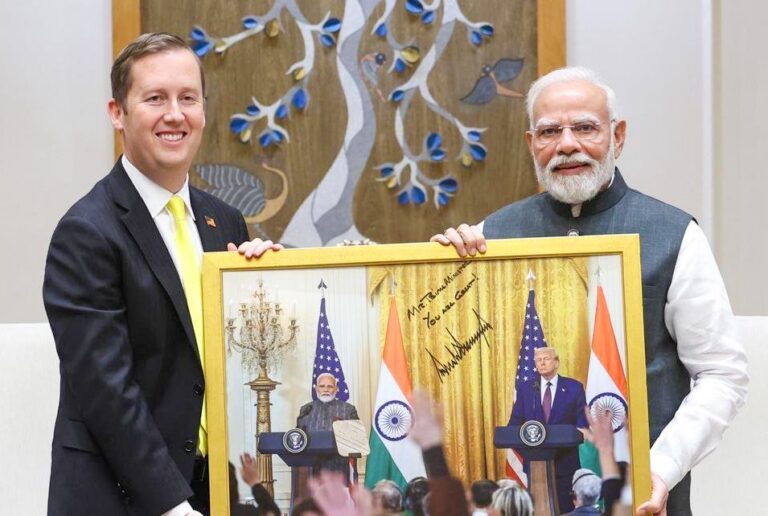
On 6th July (Monday), Prime Minister Narendra Modi arrived in Jakarta for a three-nation diplomatic visit to Indonesia, Australia and New Zealand. The six-day program is a crucial diplomatic move that is designed to strengthen New Delhi’s presence in the Indo-Pacific. However, the Modi government has also introduced heritage diplomacy to reinforce cultural bonds, as India and Indonesia have come together to restore the iconic Prambanan temple complex.
It is Indonesia’s largest Hindu temple site and is present in the Special Region of Yogyakarta in southern Java. PM Modi outlined, “The Prambanan temple, which is more than 1,000 years old, is a symbol of the shared cultural heritage between the two countries,” during a joint press briefing alongside Indonesian President Prabowo Subianto. The two leaders are also going to visit the temple on 8th July.
Jakarta, Indonesia: Prime Minister Narendra Modi says, "Friends, tomorrow I will have the privilege of launching the conservation project of the Prambanan Temple with President Prabowo. The Prambanan Temple, which is more than 1,000 years old, is a symbol of the shared cultural… pic.twitter.com/3OVJ3t3oxV
Last year, a bilateral agreement was established for India to formally support the temple’s renovations. This marvel from the 9th century proudly holds the designation of a UNESCO (United Nations Educational, Scientific and Cultural Organisation) World Heritage Site since 1991.
Originally consisting of 240 large and small temples devoted to the divine trinity in Hinduism- Brahma, Vishnu and Shiva- the complex is regarded as one of the most outstanding masterpieces of Indic architecture outside of India. Its central feature is a towering temple dedicated to Lord Shiva.
The Siwagrha Inscription (856 AD) revealed that the complex was once known as Siwagrha, which translates to “House of Shiva” and was built during the reign of King Rakai Pikatan of the Mataram Kingdom. A stone interlocking method that does not involve cement or synthetic adhesives was employed for its construction.
The temple’s stone reliefs showcase scenes from the Krishnayana and Ramayana, serving as a breathtaking representation of the Hindu epic whose reach has extended across seas and borders. The esteemed Ramayana Ballet in Indonesia continues to bring the revered tale to life even today.
Every stone at Prambanan has a story to tell. This story brings to life the fascinating tale of the demon Kabandha from the Ramayana, as depicted in the temple’s intricate stone carvings.
Beyond their artistic brilliance, these reliefs preserve centuries-old narratives,… pic.twitter.com/UJwnEeZpm6
— All India Radio News (@airnewsalerts) July 7, 2026
Many of the temples suffered damage over the course of centuries due to earthquakes, volcanic eruptions and passage of time but a significant section of the complex was renovated through decades of conservation and repair. However, Indonesia and India are currently starting a new chapter in their shared history to take care of a common cultural legacy for future generations.
India and Indonesia join hands
Indonesian Culture Minister Fadli Zon recently met with an Archaeological Survey of India (ASI) team to finalise the details. The neighbouring Sewu and Plaosan temple complexes are also part of the larger cultural landscape that would be preserved in addition to the main temple.
ASI specialists decided to utillise the anastylosis process for the initiative after a preliminary inspection. It is a conservation technique that reconstructs monuments mostly with their original stones found on the location. New stones are only put in where they are structurally required and for the integrity of the monument, maintaining the historical authenticity.
Thousands of dispersed stone pieces will need to be meticulously catalogued to match stones to particular temples during the difficult procedure in light of the dispersed building blocks around the grounds. Indonesia is also investigating digital technology and artificial intelligence to “help identify and reassemble the temple stone components.”
India has earlier aided to preserve the 9th century Buddhist Borobudur temple which is in Magelang, Central Java. Notably, India has been proactively involved in cultural conservation measures at a number of ancient temples and monasteries from its immediate neighbourhood to Gulf and Southeast Asia. These include Buddhist, Hindu, and mixed-religious architecture in Bangladesh, Vietnam, Myanmar, Laos, Indonesia, Cambodia and other countries.
The aim of the Modi government extends beyond merely strengthening diplomacy. It seeks to reinvigorate the longstanding legacy of the Indosphere and rekindle the country’s civilisational links.
Joy Kali Matar temple and Ramna Kali temple in Bangladesh
India began to rebuild the 300-year-old Sree Sree Joy Kali Matar Temple in the northern Natore district of Bangladesh. The plan was executed with Indian grant support of Bangladeshi Taka 97 lakhs and a total cost of 1.33 crores under the Government of India’s High Impact Community Development Project (HICDP) Scheme following the signing of an MoU (Memorandum of Understanding) in 2016. It is among Bangladesh’s oldest temples, established by Shri Dayaram Roy in the 18th century. He was the prominent Dewan of Rani Bhahani of Natore and founder of the Dighapatia Royal Family.
Dhaka’s Ramna Kali temple which was destroyed by Pakistani forces during their brutal “Operation Searchlight” in March 1971, was inaugurated by President Ram Nath Kovind in 2021. It was reconstructed with India’s assistance after an announcement was made in 2017, when the then-Indian External Affairs Minister launched 15 development projects in Baridhara.
The 400-year-old religious place was reportedly built during the Mughal period by the Hindu saint Haricharan Giri. The temple grew in popularity in the early 20th century, when renowned saint Ma Anandamayi founded her ashram in its premises.
Thiruketheeswaram temple in Sri Lanka
India agreed to provide aide to the tune of LKR (Sri Lankan Rupee) 326 million to restore Thiruketheeswaram Temple in Mannar, Sri Lanka. It is one of the holiest Hindu shrines in the country’s north. Shaivites across the subcontinent regard it as one of the five sacred Ishwarams devoted to Lord Shiva.
Image via Hindu Temples of India
It was closed for 12 years during the armed war and reopened in 2002. ASI and the College of Architecture and Sculpture in Mamallapuram participated in the pivotal assignment after a joint declaration between the two nations in 2010. The repaired complex has not yet been officially inaugurated but the conservation task which commenced in 2012 has made progress toward completion.
Wat Phou temple in Laos
India has worked in Vat Phou in southern Laos since 2009. The UNESCO World Heritage Site was a Lord Shiva temple founded by the Khmer people in the 11th century before progressively changing into a Buddhist centre of worship. India has contributed technical expertise and funded several stages of structural conservation to protect the centuries-old edifice. The initial phase lasted between 2007-2017.
Image via Tripadvisor
The second phase of the venture began a year later and is predicted to be completed in 2028 at a projected cost of Rs 24 crore. Wat Phou is connected to both Shaivite religious customs and pre-Angkorian Khmer architecture. The location is a part of the Champasak cultural setting and is close to the Mekong River.
My Son Sanctuary in Vietnam
India undertook repair work at the UNESCO-listed My Son Sanctuary in Quang Nam province of Vietnam in 2017. The temple complex is mostly made up of Shaivite temples and was constructed between the 4th and 13th centuries. It was the religious hub of the Champa kingdom. It also has Cham Buddhist temple towers from the 7th to the 11th centuries.
Image via UNESCO World Heritage Centre
The E-F temple group has 11 structures that will be preserved between 2025 and 2029. A centuries-old Shiva Linga was discovered by Indian archaeologists during the conservation operation, asserting its historical relation to Hindu faith and traditions that were born in the Indian subcontinent. A, H and K group of temples were entirely restored by ASI in 2023.
Ta Prohm, Preah Vihear and Angkor Vat in Cambodia
Ta Prohm and Preah Vihear are UNESCO World Heritage Sites which were built by Khmer Empire in Cambodia. The former is a complex of temples from the 12th and 13th centuries situated in Siem Reap. India has been actively involved in its conservation since 20023, stressing on the preservation of its authentic fabric and structural stability.
Preah Vihear is a complex of temples dedicated to Lord Shiva that dates back to the 11th century on a 525-meter cliff in the Dangrek Mountains. An agreement was signed in 2018, after which India started to cooperate in its conservation. Preah Vihear has consistently remained a significant source of contention between Cambodia and Thailand, often leading to violent conflicts.
Angkor Vat (Source: Original Buddhas)
India was the first nation to respond to Cambodia’s request to save Angkor Wat which is also a product of the ingenuity of Khmer Empire. The ASI conducted a full 7-year restoration of the site between 1986 and 1993 including the central tower, the Samudra Manthana Gallery and the moat’s northern embankment. The action helped stabilise one of the most renowned archaeological sites in the world by removing vegetation, improving drainage and conserving elaborate stone bas-reliefs. It was the biggest conservation effort India had undertaken abroad.
ASI has also helped in the restoration of Ashram Maha Russei. It is a unique sandstone Hindu temple from the Funan or pre-Angkorian era that dates to the 7th century. It was set up during King Bhavavarman and has Gupta architectural elements from India.
Shrinathji temple in Bahrain
The 200-year-old Shrinathji (Lord Krishna) temple in Bahrain’s capital Manama was redeveloped for $4.2 million by India. It is the oldest temple in the region. The project was introduced when PM Modi visited the Arab country in 2019. He became the first Indian prime minister to land there. The total area of the land was 16,500 square feet and the four-level structure was scheduled to span 45,000 square feet, standing at an overall height of 30 meters.
The modern landmark complex houses the sanctum sanctorum and prayer rooms, highlighting its past and legacy. Additionally, there are facilities for customary Hindu rites and marriage ceremonies.
More proposals under review
Restorations are just one aspect of Modi government’s heritage conservation programs. For potential future restoration services, ASI has surveyed other cultural monuments in Vietnam, such as Dong Duong Buddhist Monastery and Nhan Tower. According to an agreement inked in December 2020, Indian experts offered restoration suggestions for the monastery.
ASI has also put together similar plans for Nepal’s Pashupatinath temple. India has helped preserve Buddhist monuments like Myanmar’s Ananda Temple and earthquake-damaged pagodas in Bagan along with ancient Islamic monuments. This exemplifies a comprehensive approach that might concentrate on civilisational and religious roots but is not confined to them.
The Ministry of External Affairs reported that India has finished over 50 cultural and heritage projects overseas and is collaborating on approximately 25 others at present.
The Prambanan temple project signifies another step in the direction of soliddifying civilisational lonkages with other nations, showcasing how historic and mutual ties have the potential to shape diplomatic relationships, a notion that India has clearly understood. Therefore, the Modi government has made regular efforts not only to reinvigorate the same but also to use them as a foundation broadening bilateral partnerships.
Prime Minister Narendra Modi reached Indonesia for a 3-day visit on 6th July 2026. It was part of his 5-day visit to Indonesia, Australia and New Zealand. His visit to Jakarta came at a moment when the two countries are trying to widen cooperation in defence, trade, food security, health and digital systems.
It is the best time to revisit a quieter but potentially more transformative piece of the bilateral agenda, that is, Sabang Port. According to sources, Sabang Port’s development is one of the top items on the agenda of the India-Indonesia talks. In his press statement, PM Modi said, “As two close maritime nations, we have also decided to deepen our cooperation in the blue economy, port development, and maritime trade.”
Sabang was conceived as a connectivity project
The India-Indonesia Sabang initiative was never framed as a zero-sum strategic outpost in official documents. In the 2018 Shared Vision on Maritime Cooperation in the Indo-Pacific, the two governments committed themselves to deeper connectivity between India’s Andaman and Nicobar Islands and Indonesia’s Sumatra provinces, which include Aceh.
The main goal was to promote trade, tourism and people-to-people links. The same document also called for building Andaman Sea tourism links between Sabang, Port Blair and Havelock for sail tourism, cruise traffic, diving and wellness travel.
In 2018, when PM Modi visited Jakarta, a Joint Task Force on Andaman and Nicobar Islands-Aceh connectivity was set up. Its first meeting was held in Banda Aceh in 2019 and the second in Port Blair in 2022.
According to the official India-Indonesia bilateral brief of the Consulate General of India in Bali, that second meeting reviewed trade and investment, tourism, marine resources, academic cooperation, cultural ties and, crucially, the development of port infrastructure around Sabang. In other words, Sabang Port was part of a broader connectivity vision linking Aceh and the Andamans, and not just a port-only template.
Sabang Port is not merely a berth, but is meant to be a multi-sector connector, that is, maritime infrastructure, fisheries, tourism, local commerce and island-to-island integration. Any serious discussion revolving around Sabang Port will include all these features, which are economic, civil and regional in character.
Great Nicobar changes the equation
Since 2018, things have changed in terms of India’s own maritime ambition. The Great Nicobar project is designed to turn the island into a major maritime and economic hub close to the East-West shipping route. The Government of India’s official explainer says the project includes a 14.2 million TEU international container transhipment terminal, a greenfield international airport, a 450 MVA gas-solar power plant and a township. All this will be developed in proximity to the shipping lane that is intended to reduce India’s dependence on foreign transhipment ports such as Colombo, Singapore and Klang.
The locations of The Great Nicobar Project and Sabang Port
Notably, the Great Nicobar Project is far ahead of being just a concept on paper. In March 2026, India’s Public-Private Partnership Appraisal Committee gave final approval to the Galathea Bay international container transhipment port component at Great Nicobar. The appraised project cost is around ₹48,862 crore for the PPP port package. It means Great Nicobar has moved from strategic aspiration into implementation mode.
With the Great Nicobar Project, the commercial geography around Sabang Port has become harder to ignore. According to Malaysia’s Marine Department, more than 1,02,500 vessels transited the Malacca Strait in 2025. It shows the scale of maritime demand in the wider neighbourhood.
Great Nicobar is being built to capture a slice of that traffic through container transhipment. However, that does not exhaust the commercial opportunities around the chokepoint. A high-volume transhipment terminal mainly moves containers from one ship to another. It attracts large vessels, sorts cargo and feeds it into onward routes. But the wider maritime economy still needs bunkering, ship repair, marine services, cruise handling, warehousing, shorebase support and value-added logistics.
This is why Great Nicobar is not a threat to Indonesia’s Sabang port but a market signal. The creation of a successful large maritime node at Great Nicobar will make the wider Andaman Sea more commercially active, not less. For Sabang, that can mean demand spillover.
Why complementarity suits Indonesia
Recent official messaging from Sabang itself points in exactly that direction. In June 2026, BPKS, the Sabang Free Trade Zone and Free Port Authority, said Sabang’s next development phase would focus on building a “marine hub” ecosystem comprising shorebase functions, a logistics centre, bunkering services, maritime industry and tourism.
The same statement said Indian interest in a Sabang transhipment port remained one of the strategic opportunities under discussion and described Sabang as Indonesia’s maritime gateway to the Indian Ocean and the Malacca Strait.
It means that Indonesia does not need to imitate Great Nicobar to benefit from it. In fact, Sabang’s smarter path is differentiation. Great Nicobar is being built first and foremost around container transhipment, large-scale logistics and supporting infrastructure.
In contrast, Sabang’s own institutional vision is broader and more service-oriented, that is, transhipment where viable, but also cruise, marine logistics, bunkering, fisheries and tourism. BPKS has repeatedly described its mission in those terms, including its ambition to develop port transhipment and cruise services and to position Sabang as an international trade and tourism centre.
This is why “complementarity” works for Indonesia. A port that tries to replicate Great Nicobar’s full role risks becoming a weaker copy. A port that specialises in the functions Great Nicobar cannot fully absorb becomes indispensable. Sabang’s free port status, its maritime location and the policy push now coming from BPKS and Aceh give Jakarta a practical basis for that strategy.
China’s economic presence in Indonesia and BRI
China has a large economic presence in Indonesia. However, Sabang is not part of that story. Beijing’s major BRI-linked projects in Indonesia have been elsewhere, especially the Jakarta-Bandung high-speed railway and industrial projects linked to minerals and manufacturing. The geography of these projects is different and they serve different purposes with no direct link to Sabang in Aceh.
There were reports in the past that China had shown interest in Sabang, but that interest did not turn into a visible project. A National Maritime Foundation paper notes that Chinese interest in Sabang was discussed at one stage. A high-level Indonesian naval official reportedly said the Chinese side had offered to develop Sabang infrastructure in 2015, but Indonesia did not show interest due to security reasons. The proposal did not move forward and Sabang never entered the Indonesia-China BRI framework.
Sabang’s current relevance comes from the India-Indonesia maritime track that began in 2018, when both sides started looking at connectivity between the Andaman and Nicobar Islands and Aceh.
Why India gains from a dual-hub approach
From India’s perspective, a complementary Sabang is better than a competitive Sabang for three main reasons.
First of all, it gives New Delhi a wider maritime ecosystem near the western entrance of the Malacca Strait. Great Nicobar can anchor transhipment. Sabang can support the surrounding service economy. When they work together, they will create network effects that a single port cannot.
Second, it makes the 2018 India-Indonesia maritime vision real in commercial terms. The original framework was about connectivity between the Andamans and Aceh, not merely port access. If Sabang and Great Nicobar evolve as complementary nodes, India gains a friendlier, more functional maritime neighbourhood across the Andaman Sea, with concrete links in tourism, trade, logistics, fisheries and local businesses. It is far more durable than a relationship defined only by security headlines.
Third, it improves the political sustainability of India’s maritime presence. Indonesia has consistently emphasised economic value in Sabang, and BPKS’s own recent messaging is overwhelmingly commercial, that is, tourism, logistics, bunkering, marine industry and job creation.
A complementary model therefore aligns better with Indonesian preferences than an overtly strategic frame would. That does not mean it is a constraint for India. It is in fact an advantage. Maritime partnerships last longer when they are profitable, locally visible and politically unthreatening.
What Jakarta should do with Sabang now
Indonesia should treat Great Nicobar as the catalyst for Sabang’s overdue commercial take-off. The first step is strategic clarity. Sabang should market itself not as another Galathea Bay, but as the Andaman Sea’s maritime-services, cruise, logistics and shorebase counterpart to Great Nicobar’s container hub.
The second is institutional momentum. New Delhi and Jakarta should reactivate the Sabang-Andaman tourism circuits, academic links and business-to-business corridors.
Third comes the branding. BPKS is already floating the idea of sister-port relationships involving Sabang, Chennai and Port Blair, and that should now be pushed from concept to implementation. These recommendations are policy inferences, but they are grounded in the official bilateral framework and the current BPKS economic roadmap.
When seen this way, the India-Indonesia joint Sabang project is a connectivity and maritime-economy initiative born out of the 2018 shared vision for the Indo-Pacific and carried forward through the Aceh-Andaman task force.
Great Nicobar does not diminish that logic but strengthens it. If Jakarta moves early, Sabang can become the commercial partner port that makes India’s Great Nicobar gamble more valuable to both countries. And that is precisely why a complementary maritime hub in Sabang is in India’s interests too.
Prime Minister Narendra Modi is in Indonesia on an official visit. PM Modi’s visit is advancing major defence deals, continuing the momentum gained by Indian defence exports since Operation Sindoor. Indonesia is set to sign an agreement with India for phased procurement of BrahMos supersonic cruise missiles. Indonesia will become the first country to import India’s indigenous Astra Mk1 beyond-visual-range air-to-air missile (BVRAAM). India and Indonesia have given a nod for an air-to-air missile (AAM) procurement agreement between Bharat Dynamics Limited (BDL) and Republikorp.
India signs MoU with Indonesia on Brahmos and Astra missile
Indonesia will purchase India's Astra Missile which is air to air missile which showed the world its capabilities during Operation Sindoor. pic.twitter.com/7wWUpyBAAB
DRDO-developed Astra Mk1 goes international as India and Indonesia bolster defence ties
The Astra Mk1 has been indigenously designed and developed by the Defence Research and Development Organisation (DRDO), catering for both Beyond Visual Range and Close Combat Engagement. With the Astra Mk1, Indonesia gets a modern, active-radar-guided BVRAAM for air superiority, compatible with its fighter jets. The Indian BVRAAM offers a cost-effective, reliable, and battle-tested alternative to expensive Western suppliers.
BIG BREAKING 🚨
Indonesia to be first foreign customer of India’s Astra Mk1 air-to-air missile. Deal to be discussed during PM @NarendraModi’s ongoing visit. pic.twitter.com/a73eD63gpX
Astra Mk1 has been integrated with platforms like Su-30MKI and Tejas; the fully indigenously developed BVRAAM is combat-proven. It has a range of 110 km in head-on mode, with post-Operation Sindoor optimisation pushing effective range toward around 160 km in certain conditions. Astra Mk1 has a speed of up to Mach 4.5, with a 15kg high-explosive pre-fragmented wita h laser proximity fuse. The BVRAAM comes with mid-course inertial navigation and terminal active radar homing, making it fire-and-forget capable and resistant to electronic countermeasures.
The Indian BVRAAM’s other features include a solid-fuel motor, high off-boresight launch capability, operating up to 20 km altitude, handling high-g manoeuvres, and smokeless propellant.
Indonesia will also be buying the BrahMos supersonic missile, jointly developed by India and Russia. BrahMos is a long-range supersonic cruise missile. It is an unmanned payload rocket that has a warhead, precision-guided weaponry, an aerodynamic frame, a propulsion system and a guidance system. It is renowned for its exceptional accuracy. BrahMos has a solid propellant booster engine and is a two-stage missile. Its initial phase accelerates the missile over the speed of sound, or supersonic speed, before it separates. The BrahMos missile was utilised in strikes against Pakistan during Operation Sindoor.
While India is securing a massive boost for export of its indigenous weaponry and “Make in India” credibility, Indonesia gets a reliable and non-aligned partner in India for modernisation of its forces, and advanced weaponry to secure sea lanes and sovereignty amidst a volatile global geopolitical scenario.
India is bolstering the Comprehensive Strategic Partnership with Indonesia, a key ASEAN and Indo-Pacific ally. New Delhi’s deepening partnership with Indonesia advances India’s Act East policy, forming a de facto BrahMos belt, and a direct counter to Chinese assertiveness.
Besides exporting weaponry, India will also cooperate with Indonesia for the development of Sabang Port. This port’s strategic location holds immense significance as Sabang Port is located near the Strait of Malacca and around 100 miles from India’s Great Nicobar port project. India-Indonesia cooperation in this direction would enhance regional security and maritime connectivity.
India’s defence exports skyrocket after Operation Sindoor
In response to the Pakistan-backed Islamic terror attack in Pahalgam, India launched Operation Sindoor, involving targeted missile and drone strikes of Pakistani terror infrastructure linked to Jaish-e-Mohammed and Lashkar-e-Taiba in Pakistan and PoK. A combination of BrahMos, Astra Mk1, Akashteer ADS, and other indigenous missiles and air defence systems proved successful in both launching attacks against Pakistan and in defending India from the hostile neighbour’s retaliation.
India’s victory over Pakistan significantly boosted global confidence in Indian weaponry. For FY 2024-25, India’s defence export figures stood at ₹23,622 crore; however, FY 2025-26 registered a 62% jump, with the numbers skyrocketing to ₹38,424 crore.
India has now expanded its defence exports network to over 80 to 100 countries.
In addition to Indonesia, India is also in talks with Vietnam and the Philippines for the sale of BrahMos missiles. The BrahMos package for Vietnam is estimated to be worth around Rs 6,000 crore (approximately $629 million) and is expected to include missile systems, training and logistical support.
Before Vietnam, the Philippines became the first foreign customer of the Indo-Russian co-developed BrahMos missile system. Manila received the first batch of missiles in 2024, followed by a second delivery in April 2025, showcasing India’s growing ability to fulfil large-scale defence export commitments.
Meanwhile, the United Arab Emirates (UAE) is also reported to be in talks with India for the purchase of BrahMos missiles and other flagship air defence systems, including Akashteer.
India has supplied Pinaka multi-barrel rocket launchers, 155mm ATAGS towed howitzers, and MArG 155 self-propelled guns, Akash-1S surface-to-air missile systems, anti-tank missiles, surveillance radars and anti-drone systems.
Overall, Prime Minister Modi’s Indonesia visit marks yet another milestone in India’s emergence as a strong and credible defence exporter and top strategic Indo-Pacific player. With its wide range of combat-proven weapons, India is accelerating export deals with partner countries, and is aiming for over ₹50,000 crore in exports by 2029.
A team of archaeologists working in western Thailand has uncovered two gold rings believed to be around 2,000 years old at a newly identified archaeological site. The discovery has drawn attention because one of the rings carries an inscription in Brahmi script, which was used in ancient Indian texts and inscriptions from approximately the 3rd century BCE to the 5th century CE.
Archaeologists in western Thailand have unearthed two gold rings believed to be around 2,000 years old at a newly discovered archaeological site, officials said. One of the rings found on Thursday was engraved with characters believed to be Bhrami script, an ancient Indian… pic.twitter.com/RHq56EFbwi
Experts say the find offers fresh evidence of cultural and trade connections between the Indian subcontinent and Southeast Asia during the Iron Age.
The rings were recovered from the Don Yai Thong archaeological site in Phetchaburi province, about 130 kilometres southwest of Bangkok. They were found alongside human skeletal remains during an ongoing excavation led by Thailand’s Fine Arts Department. The department believes the burial site belonged to people of high social standing, based on the valuable objects found with the dead.
One ring carries an ancient Indian inscription
Of the two rings, one has attracted special interest because it is engraved with characters that experts have identified as Brahmi script. After an initial study, specialists read the inscription as “pusarakhitasa,” which means “the one protected by Pushya.”
Ring engraved with Brahmi script
According to the Fine Arts Department, Pushya is considered one of the most auspicious zodiac signs in Indian astronomy. The inscription is expected to be studied further, as researchers hope it may provide more information about the identity, background and cultural links of the person who once wore the ring.
The second ring is a simple gold band without any design or inscription. Even though it appears plain, archaeologists believe it is equally important because it adds to the overall picture of the burial customs and wealth of the people buried at the site.
Clues about the owner’s identity
Based on the style of the jewellery and the inscription, experts believe the rings may have belonged to a merchant connected with the ancient Indian Vaishya community, traditionally associated with trade and commerce. While more studies are needed to confirm this idea, the discovery supports the long-held view that merchants played a major role in linking India with Southeast Asia through ancient maritime trade routes.
The presence of Brahmi script in Thailand also suggests that ideas, language and cultural traditions travelled alongside goods. Historians have long believed that trade between India and Southeast Asia helped spread writing systems, religious beliefs and artistic styles across the region. This latest discovery adds another piece of evidence to that history.
Burial site reveals lives of the affluent
The gold rings were not the only valuable objects recovered during the excavation. Since work began in February, archaeologists have uncovered the skeleton of eight individuals buried with bronze and gold jewellery, pottery and several other artefacts.
The collection of burial goods suggests that the site was used for ceremonial burials of wealthy or upper-class people. Researchers say such burials often reflected the social status of the deceased and showed the importance of honouring them with valuable possessions.
The careful placement of ornaments and other objects also gives archaeologists useful information about how people lived, what they valued and the customs they followed nearly two thousand years ago.
Site discovered after villagers found bronze drum pieces
The Don Yai Thong archaeological site came to the attention of experts earlier this year after residents found fragments of ancient bronze drums in a rice field. The discovery prompted Thailand’s Fine Arts Department to begin a full-scale excavation, which soon revealed a much larger burial ground hidden beneath the surface.
Since then, the site has continued to produce important discoveries that are helping researchers understand the history of the region. Every new artefact recovered adds to the picture of life in ancient Thailand and its links with neighbouring civilisations.
Dating back to Thailand’s Iron Age
Experts have dated the burial site to Thailand’s late prehistoric period, also known as the Iron Age, which lasted roughly between 1,500 and 2,500 years ago. During this period, communities across the region witnessed major developments in metalworking, agriculture and long-distance trade.
The quality of the gold jewellery and the variety of objects found at the site show that some communities had already achieved considerable wealth. The discoveries also point to clear social differences, with certain individuals receiving elaborate burials that reflected their status.
Researchers say the craftsmanship seen in the rings demonstrates the high level of skill possessed by artisans of that time. Future studies will also examine how the rings were made and where the gold may have come from, helping experts better understand ancient production methods and trade networks.
More studies planned
Scientists plan to carry out detailed research on the Brahmi inscription using advanced methods to better understand its language and historical importance. Archaeometallurgical studies are also expected to examine the composition of the gold and the techniques used to shape the rings.
Researchers hope these investigations will provide deeper insights into ancient economies, trade routes and cultural exchanges that connected India and Southeast Asia centuries ago. They also expect further excavation around the burial ground to uncover additional graves and artefacts that could reveal more about the people who lived in the region.
Museums, universities and cultural institutions are likely to work together to preserve the discoveries and share them with the public through exhibitions and research publications.
Discoveries to be displayed after the excavation ends
The ongoing excavation at Don Yai Thong is expected to conclude within the next month. After conservation work is completed, Thailand’s Fine Arts Department plans to display the rings and other recovered artefacts for the public.
Archaeologists believe the discoveries from the site are among the most significant recent findings in Thailand because they highlight not only the burial traditions of ancient communities but also the long-standing connections between India and Southeast Asia. The gold rings, especially the one bearing the Brahmi inscription, provide an important reminder that people, ideas and trade travelled across the region thousands of years ago, leaving behind evidence that continues to reshape our understanding of ancient history.
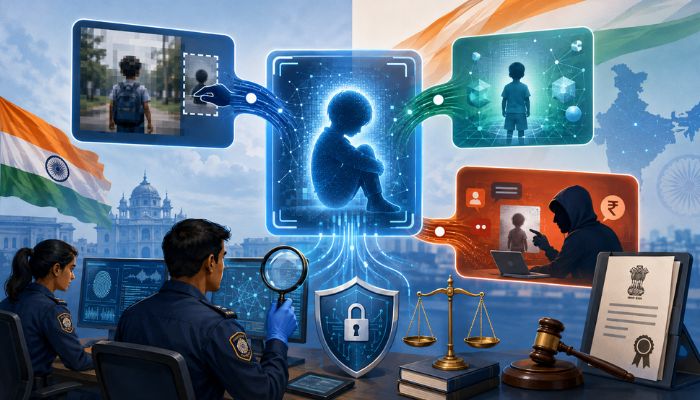
When it comes to India, the same Western media that cannot help but sermonise human rights, sensitivity, justice, child protection, and whatnot, forgets to practice what its own unsolicited sermons preach. Bloomberg has received backlash for calling the Indian government’s notification to Meta for the removal of child porn, a ‘regulatory headache’ for the US tech giant.
On 5th July, Bloomberg published a news item, written by Sankalp Phartiyal, headlined, “India Tells Meta to Remove Child Abuse Content from Instagram”.
The article covered the notice issued by the Indian Ministry of Electronics and Information Technology (MeitY) to Meta Platforms ordering it to take down the Instagram ads promoting child sexual abuse content and give a detailed explanation on the matter within seven days.
Despite being a short and straightforward news item, Bloomberg triggered an online backlash with its insensitive “regulatory headache” framing.
“India notified Meta Platforms Inc. that it needs to remove sexual content involving children from its platforms, including Instagram, marking the latest regulatory headache for the US tech giant,” the Bloomberg article reads.
Bloomberg calling a government order to remove child sexual abuse content a “regulatory headache” is utterly tone-deaf and insensitive reporting. Child sexual abuse is not some usual corporate gripe about data rules, competition policy, or free speech tussles; it involves real sexual abuse of minors.
Neither Bloomberg nor its reporter Sankalp Phartiyal need to be apprised that child sexual abuse is one of the most serious crimes imaginable. Despite the apparent seriousness of the matter. Bloomberg demonstrated sheer lack of editorial ethics and framed the Indian government’s notice seeking removal of child porn ads and explanation from Meta as an inconvenience to the social media giant.
Advertently or inadvertently, Bloomberg ended up deflecting the focus from the harm of creating and publicising child porn ads on Instagram and made Meta’s compliance responsibility come across as a ‘burden’ even as it profited from such degenerate paid ads, and a bigger issue than child porn advertisements itself.
Calling out Bloomberg’s insensitivity, one Indian X user wrote, “Headache? Removal of sexual content involving children is a Headache to you.”
Headache?Sexual content involving children removal is a Headache to you.
Another one questioned, “Why would removal of child sexual content from a social media platform be a regulatory headache for an American tech giant? Does the US allow child sexual content on Meta platforms?”
One X user wrote, “Bloomberg’s problem isn’t that child sexual abuse content exists on Meta’s platforms – it’s that India is forcing Meta to remove it. They call this moral duty a ‘regulatory headache’. Bloomberg is getting Pakistanified and now acts like pedophilia isn’t even an issue.”
It appears that Bloomberg took this insensitive liberty and minimised the gravity of the issue, since the issue is from India. Bloomberg has earned notoriety for peddling anti-India propaganda through its opinion pieces, often by Indian brown sepoys; however, exhibiting such insensitivity in a child abuse-related incident is a new low. OpIndia has reported earlier how the Western media comes up with unimaginably weird narratives, contributing to an already all-time-high anti-India racism and hatred.
Every year on July 6, the nation remembers Babu Jagjivan Ram on his death anniversary, one of the tallest Dalit leaders. Politicians cutting across party lines pay tributes to him, recall speeches he made during India’s freedom struggle and his contribution to the country in the following decades.
Then, almost as quickly as the commemorations begin, they end.
Unlike Dr BR Ambedkar, Jagjivan Ram seldom becomes the subject of serious intellectual debate or editorial commentary. He is remembered as an efficient administrator, a long-serving Union minister, the Defence Minister who oversaw India’s victory in the 1971 Bangladesh Liberation War, or the Deputy Prime Minister in the Janata government. Rarely is he remembered as a political thinker who articulated an entirely different roadmap for Dalit emancipation.
This neglect is curious.
Jagjivan Ram was among the longest-serving members of independent India’s political establishment. He entered Jawaharlal Nehru’s Interim Government in September 1946, before Independence itself, and remained a Union minister almost continuously until 1977. He handled Labour, Railways, Communications, Agriculture, Food and Defence, each among the most consequential portfolios in government. He was Congress President during the tumultuous split of 1969.
Twice, he came close to becoming the President of India. In 1979, after the fall of the Morarji Desai government, he also came within touching distance of becoming India’s first Dalit Prime Minister.
Few leaders have occupied so much executive power for so long.
Perhaps one reason lies in the fact that Jagjivan Ram refused to fit neatly into any ideological framework that dominated Indian political discourse in the decades following India’s independence, where Marxist ‘historians’, backed by successive Congress-led governments, wrote and edited history to their liking.
Ram fought caste discrimination uncompromisingly, yet refused to reject Hinduism. He remained deeply rooted in the Sant Ravidas tradition and believed that Hindu society had to be transformed from within rather than abandoned altogether. While Ambedkar eventually concluded that caste was inseparable from the Hindu social order and embraced Buddhism, Jagjivan Ram insisted that Dalits were equal inheritors of Hindu civilisation and should claim it as their own.
This was perhaps one of the most significant reasons Marxist ‘historians’ that shared Congress’ ideological moorings did not celebrate Ram as much as he should have been.
History has largely remembered one vision.
The other deserves renewed attention.
A Dalit who reached the highest offices, but never the highest honour
Born on 5 April 1908 in Chandwa village of Bihar’s Shahabad district, Jagjivan Ram experienced untouchability from childhood. One famous episode from his school days illustrates both the discrimination he endured and the temperament that would define his public life.
Separate earthen pots were kept for Hindu, Muslim and “untouchable” students. Jagjivan Ram repeatedly broke the pot reserved for Dalits until the school administration finally abandoned the discriminatory practice altogether.
The episode was symbolic.
Throughout his political life, Jagjivan Ram preferred dismantling discriminatory institutions rather than merely protesting against them.
After graduating from Calcutta University in 1931, he emerged as one of the most articulate voices for the Depressed Classes. He organised Ravidas Sabhas, mobilised Dalit youth, founded the All India Depressed Classes League and soon entered the national movement under Mahatma Gandhi’s influence.
His rise thereafter was extraordinary.
At the age of just thirty-eight, he joined the Interim Government headed by Jawaharlal Nehru. He remained among independent India’s most trusted administrators for three decades.
As Labour Minister, he helped lay the foundations of India’s labour welfare architecture. As Communications Minister, he expanded public infrastructure. As Agriculture Minister, he navigated India through food shortages and played a pivotal role during the Green Revolution. As Defence Minister, he oversaw India’s armed forces during the Bangladesh Liberation War.
Yet administrative excellence alone does not explain why Jagjivan Ram matters.
His true importance lies elsewhere, in the distinctive political philosophy that guided these achievements.
The forgotten letter that changes the story
Contemporary political narratives often portray Jagjivan Ram and Dr B.R. Ambedkar as if they stood permanently on opposite sides of Indian politics.
The historical record is considerably more nuanced.
One of the least discussed documents relating to Jagjivan Ram is a confidential letter he wrote to Dr Ambedkar on 8 March 1937. Preserved in the Government of Maharashtra’s published collection of Dr Babasaheb Ambedkar: Writings and Speeches, the letter offers a fascinating glimpse into a relationship that was initially marked not by hostility but by cooperation.
Jagjivan Ram had recently led the Depressed Classes League to a respectable electoral performance in the provincial elections. Writing to Ambedkar, he updated him on developments in Bihar, responded to an earlier communication from Ambedkar, and invited him to attend the Provincial Conference of the Depressed Classes League in Patna.
The tone is striking.
It is not that of a rival writing to another rival. Nor is it a formal exchange between two distant politicians.
Instead, Jagjivan Ram appears almost like a younger activist reporting developments to a senior leader whose opinion mattered.
The letter also reveals another important historical fact.
It shows Ambedkar actively reaching out to regional Dalit organisations beyond his own political movement. Before their ideological paths diverged, both leaders recognised the necessity of building broader platforms for the uplift of the Depressed Classes.
This forgotten correspondence reminds us that history did not begin with disagreement.
It began with dialogue.
Where Jagjivan Ram and Ambedkar parted ways
The divergence between Ambedkar and Jagjivan Ram was neither personal nor rooted in different objectives. Both devoted their lives to ending untouchability. Both sought dignity, equality and political empowerment for Dalits.
Where they differed was in diagnosing the nature of the problem and prescribing the remedy.
Ambedkar increasingly came to believe that caste was not simply a social distortion but an organising principle of Hindu society itself. The annihilation of caste therefore required structural rupture, with inherited social arrangements, with orthodox Hindu authority, and eventually with Hinduism itself. His politics consequently emphasised constitutional safeguards, independent Dalit political organisation and, ultimately, conversion to Buddhism.
Jagjivan Ram accepted neither this diagnosis nor this prescription. He agreed that untouchability was a civilisational disgrace. He agreed that Hindu society required radical transformation. He even agreed that cosmetic reforms would never suffice.
Where he differed was in believing that Hindu civilisation itself remained worth reclaiming.
Jagjivan Ram’s religious convictions were not incidental to his politics but foundational to them. His lifelong devotion to Sant Ravidas and broader Sant traditions shaped a worldview that rejected caste hierarchy while simultaneously affirming a Dalit identity within Hindu civilisation. Rather than seeking liberation through religious rupture, Jagjivan Ram envisaged liberation through moral, political and institutional transformation.
In that sense, Jagjivan Ram was no less radical than Ambedkar. His radicalism simply operated in a different direction. Ambedkar sought to dismantle caste by rejecting the social order that sustained it. Jagjivan Ram sought to dismantle caste by forcing that very social order to reform itself.
This distinction becomes evident in one of his earliest speeches.
Addressing a gathering in Patna in 1931, Jagjivan Ram criticised upper-caste reformers who merely advised Dalits to give up meat, alcohol or supposedly impure habits. Such sermons, he declared, were no longer sufficient. Dalits demanded equality, not lectures.
It was a remarkably modern intervention.
He rejected paternalism while simultaneously rejecting separatism. His politics sought dignity without disengagement. That philosophy would soon bring him into one of the most consequential intellectual disagreements in modern Indian history.
The Hindu who refused to leave, the reformer who refused to compromise
If the correspondence between Jagjivan Ram and Dr B.R. Ambedkar in 1937 demonstrates that the two leaders once shared a common platform, the years that followed also mark the point where their political philosophies decisively diverged.
By the mid-1930s, Ambedkar had reached a conclusion that would permanently alter the trajectory of Dalit politics. At the historic Yeola Conference in 1935, he declared that though he had been born a Hindu, he would not die one. For Ambedkar, caste was not merely a social practice but a structural feature of Hindu society. Consequently, the liberation of the Depressed Classes demanded not only constitutional safeguards and political assertion but eventually an exit from the religious framework that sustained caste hierarchy.
Jagjivan Ram could not agree.
Not because he underestimated caste oppression. His own life was testimony to it, but because he diagnosed the problem differently. He believed untouchability was a moral degeneration of Hindu society rather than the essence of Hindu civilisation. Therefore, the solution was not civilisational rupture but civilisational reform.
It was perhaps the most fundamental ideological disagreement in twentieth-century Dalit politics.
“We are born Hindus, we shall die Hindus”
Long before Ambedkar embraced Buddhism in 1956, Jagjivan Ram had publicly articulated his opposition to religious conversion.
Speaking at a convention of the Untouchability Society in Patna in 1931 in the presence of Rajendra Prasad, Jagjivan Ram delivered a speech that deserves to be remembered alongside the landmark speeches of the era.
He rejected the patronising attitude of caste Hindus who advised Dalits to improve themselves by abandoning meat, alcohol or supposedly “impure” habits.
“Dalits no longer want sermons,” he declared. “They demand to be treated properly.”
He then made a statement that would define his political philosophy for the rest of his life:
“We are untouchable Hindus. We are born Hindus, will remain Hindus and die Hindus. We created the nation; we were not created by the nation.”
In the same speech, he opposed all forms of religious conversion while simultaneously demanding the complete abolition of untouchability and calling upon every caste and religion to unite in India’s freedom struggle.
The chronology matters.
This was 1931, years before Ambedkar’s conversion to Buddhism.
Jagjivan Ram’s opposition to conversion was therefore not merely an anti-Ambedkar position. It was an independently evolved philosophical conviction rooted in his own understanding of religion, society and nationhood.
Years later, when debates over conversion intensified, Jagjivan Ram expressed himself even more forcefully.
An Indian Express report carried the striking headline: “Only cowards will leave Hinduism.”
Addressing a conference of the Depressed Classes League, Jagjivan Ram declared:
“We are Hindus and those of us who want to get out of the Hindu religion are cowards.”
He insisted religion was “a matter of faith and not an instrument for bargaining for political rights.” While acknowledging that differences of opinion existed between him and Dr Ambedkar, he refused to personalise the disagreement, observing that “time alone will tell who is on the right path” and adding that “we are not among those who abuse and throw mud on others.”
Equally significant was the other half of his message.
Having appealed to Dalits to remain within the Hindu fold, he turned towards caste Hindus and warned that they had an equal responsibility to treat the Depressed Classes on the same footing as every other Hindu.
This dual appeal captures Jagjivan Ram’s politics perfectly.
His message to Dalits was: do not abandon Hindu society. His message to caste Hindus was: transform Hindu society. Both demands were inseparable.
Radical, but in a different direction
It would be a mistake to describe Jagjivan Ram as a moderate reformer.
His methods were often remarkably radical.
The difference lay not in the intensity of his objectives but in the instruments he employed.
Ambedkar’s strategy centred upon constitutional restructuring, autonomous Dalit politics and ultimately religious conversion.
Jagjivan Ram sought equally transformative outcomes through institutional intervention, administrative reform and social integration.
Perhaps no episode illustrates this better than one of his least remembered innovations as Railway Minister.
During his tenure, the Railways created the post popularly known as “Paani Pandey”, employees responsible for distributing drinking water to passengers on railway platforms. Preference for these positions was deliberately given to Scheduled Castes.
At first glance, this appears to be an ordinary employment measure. It was anything but ordinary.
Jagjivan Ram understood that untouchability was sustained not merely by laws but by everyday habits. On a scorching Indian afternoon, when a thirsty traveller arrived at a railway platform, caste prejudice collided with human necessity.
The traveller now had two choices: Drink water served by a Dalit employee or refuse water altogether. Jagjivan Ram had effectively forced Indian society to confront its own hypocrisy.
This was reservation employed not merely for economic uplift but for social transformation. Instead of reserving only elite bureaucratic positions, he reserved an everyday human interaction.
The message was unmistakable.
If one believed touching a Dalit was polluting, one would have to deny oneself water in the Indian summer. Few administrative decisions have challenged untouchability so directly.
Integration, not assimilation
Academic literature has often misunderstood Jagjivan Ram because it has tended to evaluate him through an Ambedkarite framework.
Peter Friedlander’s reassessment of Jagjivan Ram argues that his politics cannot be understood without appreciating his grounding in the Sant Ravidas tradition and the broader Shiv Narayani movement into which he was born. These traditions rejected caste discrimination while remaining firmly situated within a Hindu devotional universe. They emphasised equality, spiritual dignity and social reform without demanding that believers abandon Hindu civilisation.
This religious inheritance profoundly influenced Jagjivan Ram’s political philosophy.
Unlike many Congress politicians, religion was not merely a private matter for him.
Nor was it an obstacle to social justice. Rather, it became the moral foundation upon which he built his politics.
He organised Ravidas Sabhas across eastern India, promoted Ravidas Jayanti celebrations as platforms for Dalit mobilisation and worked for temple entry movements across the country. An Indian Express article published in 2016 noted that his efforts contributed to opening major temples, including Kashi Vishwanath, Meenakshi Temple and Jagannath Temple, to Dalits.
His vision therefore was neither assimilation nor separatism. It was integration with dignity.
Dalits would neither remain permanently subordinate nor withdraw from Hindu society.
They would reshape it.
Congress’s indispensable man but never its first choice
For nearly three decades, Jagjivan Ram remained indispensable to successive Congress governments. Few ministers matched his administrative versatility.
Yet when the highest constitutional offices became available, he repeatedly found himself overlooked.
In 1969, Indira Gandhi reportedly wanted Jagjivan Ram to become President of India. Internal opposition within the Congress Parliamentary Board prevented that outcome.
A decade later, after the collapse of the Morarji Desai government, Jagjivan Ram again appeared poised to create history by becoming India’s first Dalit Prime Minister.
Jagjivan Ram himself reportedly remarked with deep bitterness that in India, “a chamar can never become Prime Minister.”
The remark reflected the disappointment of a man who had devoted almost his entire adult life to public service.
Why Jagjivan Ram never became an ideological icon
Today, Ambedkar occupies a central place in India’s constitutional imagination. Jagjivan Ram does not. Part of the reason lies in their respective legacies.
Ambedkar left behind a corpus of constitutional, economic and philosophical writings that naturally became the foundation of an intellectual movement. But more importantly, he urged his supporters to walk away from Hinduism citing the caste system. That became a philosophical anchor for Marxist historians to wield as a weapon against Hinduism and poison impressionable minds with their propaganda.
On the other hand, Jagjivan Ram’s legacy was expressed primarily through governance. Yet there is another reason. Jagjivan Ram is difficult to appropriate. On top of that, Ram was unapologetic about his Hindu roots.
Congress remembers him as a loyal administrator but seldom foregrounds his unapologetic Hindu convictions or his categorical opposition to conversion.
The Left celebrates Ambedkar’s critique ofthe Hindu social order but finds little room for a Dalit icon who believed Hindu society could reform itself from within.
Ironically, Jagjivan Ram falls between two dominant narratives. To reduce him merely to a Congress loyalist is historically inaccurate. To dismiss him because he remained Hindu is intellectually impoverishing.
His politics represented a distinct school of Dalit thought, one that combined fierce opposition to untouchability with an equally fierce refusal to surrender Hindu civilisational inheritance.
Remembering Jagjivan Ram in full
History does not require us to choose between Ambedkar and Jagjivan Ram. Both worked towards social justice, expanded opportunities for millions of historically oppressed Indians. Both redefined social equality.
But where they differed was in their vision of how liberation could be achieved.
Ambedkar concluded that caste could not be annihilated without breaking decisively from the Hindu social order.
Jagjivan Ram believed that the battle had to be fought within that order until it yielded equality.
One sought transformation through rupture. The other sought transformation through reclamation.
On every July 6, therefore, India should remember Babu Jagjivan Ram not merely as its longest-serving Union Minister or the Deputy Prime Minister who almost became Prime Minister. He should also be remembered as the architect of an alternative intellectual tradition in Dalit politics, a tradition that insisted one could be uncompromising in the struggle against caste while remaining uncompromisingly Hindu.
Pakistan has launched an aggressive rebranding campaign aimed at positing the 78-year-old Islamic Republic as a ‘civilisational state’ through a selective embrace of the region’s pre-Islamic history. Pakistan’s sinister pursuits have found a supporter in Islamo-leftist rag The Wire.
On the 4th July, The Wire published an opinion piece headlined, “How the Two Partitioned Nations Choose to Remember Their Past”. The article is authored by ‘independent journalist’ Rohinee Singh, who was among the 61 Indian signatories of the joint Aman ki Asha letter signed by Indian and Pakistani ‘concerned citizens’ that sought revival of the pro-Pakistan Musharraf-Manmohan framework on Jammu and Kashmir and PoJK.
In her article, Rohinee Singh juxtaposes the renaming exercise of certain places, buildings, roads by the governments in Pakistan and India, and weaves a narrative that somehow, Pakistan’s newfound love for its pre-Islamic and pre-partition past as a sign of ‘maturity’ and ‘correction of history’ while the Modi government’s renaming drive is ‘ideological positioning’, ‘curation of history’, and everything abominable.
The article begins with how Lahore’s Laxmi Chowk remained Laxmi Chowk in people’s consciousness despite official renaming as Maulana Zafar Ali Khan Chowk, and Delhi’s GB Road was not forgotten despite official renaming as Swami Shraddhanand Marg.
It proceeds towards arguing how governments across the world use maps, monuments, and place names as instruments of power. Roads, cities, railway stations, airports, and public buildings as “political canvases” to “project their preferred version of history.
Author Rohinee Singh insinuates that the Modi government renamed the road named after Mughal tyrant Aurangzeb, whose reign witnessed killings of Hindus, demolition of temples and imposition of Jizya, to Dr APJ Abdul Kalam as BJP’s political statement.
“After 2014, Aurangzeb Road became Dr. APJ Abdul Kalam Road. Mughalsarai Junction became Pandit Deen Dayal Upadhyaya Junction, and Rajpath became Kartavya Path. The Hall of Nations at Pragati Maidan, an architectural symbol of post-independence India, was demolished in 2017 and eventually replaced by Bharat Mandapam, inaugurated ahead of the G20 summit in 2023,” the article reads.
The article quotes a Delhi-based heritage conservationist, Sohail Hashmi, who says that “In this cycle of naming and renaming, people who made major contributions are often replaced by figures who are politically useful in the present.”
The Wire contends that while the ‘Hindu nationalist’ Modi government is changing names to erase India’s Muslim and British or pre-partition history, Pakistan is walking an absolutely opposite path. Rohinee Singh claims that Pakistan is ‘restoring’ Hindu-Sikh names of certain places in Lahore.
Rohinee Singh, however, did not apply Hashmi’s “politically useful in the present” argument in the context of Pakistan’s sudden embrace of its pre-Islamic and pre-partition history.
“Ironically, while India continues to rename roads and institutions associated with its medieval and colonial past, Pakistan’s Punjab province has begun moving in the opposite direction. The provincial cabinet met in May of this year and approved the Lahore Heritage Area Revival Project, aimed at restoring several older place names,” The Wire article that first appeared in Sapan News reads.
Singh cites the restoration of the Babri Masjid Road’s name as Jain Mandir Road, or Rahim Gali becoming Ram Gali, to insinuate that Pakistan is pivoting towards embracing pre-partition history and becoming secular and tolerant while India is deviating from secularism by changing names of roads and buildings from those of Mughal tyrants and Islamic fanatics to original Hindu names or after prominent political figures neglected for over six decades of Congress rule due to political-ideological opposition.
Rohinee Singh did not mention that Pakistan’s supposed pivot to secularism and embrace of pre-Islamic history is performative and driven by geopolitical interest rather than any genuine realisation that the Two-Nation Theory, rooted in Islamic intolerance of Hindus, is regressive and primitive.
Lahore restorations are a part of a tourism boost drive under a specific provincial government. They do not change Pakistan’s Islamic exclusivist nature and state ideology where Hindu and other religious minorities are subjected to brutalities and discrimination of all imaginable kinds just because of their non-Islamic faith. Pakistan has a documented history of demolishing temples, vandalising, encroaching on, and repurposing Hindu heritage sites, in addition to changing names favouring Islamic identity.
Interestingly, in its agenda of portraying the Islamic Republic of Pakistan as a mature and tolerant nation in contrast to a ‘secular’ Hindu-majority India, Rohinee Singh did not reveal complete facts about the restoration of pre-partition Hindu names in Lahore.
Earlier this year, the Punjab government proposed restoration of pre-partition Hindu/Sikh names in Lahore, making Islampura as Krishan Nagar, Sunnat Nagar to Sant Nagar, Babri Masjid Chowk as Jain Mandir Chowk, etc, under the Lahore Heritage Areas Revival Project.
The Pakistani ruling dispensation and their online supporters widely boasted the move as ‘while India is descending into communalism, Pakistan is shining as a symbol of secularism and tolerance’. However, in the face of the slightest backlash from Islamic extremist groups, the government caved and Lahore Deputy Commissioner Captain (Retired) Muhammad Ali Ijaz publicly stated that no final decision on the name changes had been officially implemented.
The Wire platformed Rohinee Singh to peddle her pro-Pakistan propaganda based on half-truths, because for Islamo-leftists, facts are secondary and ‘narrative’ is the priority.
There is also a fundamental difference between the so-called renaming exercise in India and Pakistan. While Pakistan’s efforts to restore pre-Islamic names of certain roads or cities etc is a part of national rebranding, India is simply ditching the colonial hangover and unwarranted glorification of medieval-era Islamic invaders and tyrants whose supposed architectural contribution to Indian heritage is outweighed by their Jihadist mass killings and conversion of Hindu, Buddhist, Sikh, Jain and other communities following Indic faiths.
It makes no sense that Rohinee Singh is heaping praises on even Pakistan’s failed attempts at restoring specific original Hindu names of roads and places with Islamised names, but paints India as intolerant and bigoted for doing exactly the same.
“In India, recent renaming exercises largely reflect a broader project of cultural and political redefinition. Islamic and colonial references are being replaced with names rooted in Hindu mythology, indigenous traditions, or figures associated with contemporary nationalist narratives,” Singh writes.
Citing ‘experts’, Rohinee Singh claims that Pakistan is trying to reclaim a large South Asian identity and it wants to be seen differently on the international stage.
The 78-year-old Islamic Republic perpetually ignored and even destroyed pre-Islamic history and its archaeological remnants, be it Mohenjo-Daro, destroyed or vandalised heritage sites linked to Sikh king Maharaja Ranjit Singh, disregarded Bhagat Singh, an ‘Indian freedom fighter with no role in Pakistan’s liberation’, and Buddhist heritage as insignificant, and demolished ancient temples.
And yet, based on just one isolated ‘Hindu names restoration’ bid in Lahore, Rohinee Singh whitewashed Pakistan all past anti-Hindu hatred, bigotry and related crimes. One Laxmi Chowk does not erase all the past sins of the nation created on the hateful idea of Muslim exclusivity and superiority.
Pakistan is curating history, India is correcting it: Blinded by Aman ki Asha, Rohinee Singh fails to see the obvious
Either the delusional Aman ki Asha blinds Rohinee Singh, or she is a part of Pakistan’s concerted efforts to reinvent its image as a ‘civilisational state’, to not see that it is Pakistan that is curating history, not India.
From Aurangzeb Road, Mughalsarai Junction, Rajpath, Pragati Maidan’s Hall of Nations, Allahabad, Chhatrapati Sambhajinagar, bust of Edwin Lutyens, Mughal Gardens, Andaman Islands, to Kolkata’s Suhrawardy Avenue, discontinuing colonial-era Navy insignia, etc, all changed for the right reasons. A truly independent nation does not burden itself with the continuation of imposed identities and symbols from the era of its occupation.
Pakistan, on the contrary, has for over seven decades dismissed its pre-Islamic history as an era of ‘Jahilliyah’.
While in rhetoric, Pakistan is promoting Indus Valley Civilisation and Gandharan heritage as ‘ancient Pakistan’, the 78-year-old Islamic Republic has demonstrated historical neglect of the region’s ancient history and its archaeological remnants merely because of their Hindu or Buddhist influence.
From IVC sites like Mohenjo-daro and Harappa to Taxila and Buddhist sites in the Swat Valley area, the Pakistani governments over the decades have failed to prioritise principled conservation of these historical sites. Neither the absolute Hindu-hating Jihadist military dictators nor the military-backed ‘democratic’ governments cared much about the Indus Valley Civilisation, the pre-Islamic historical sites and their conservation.
Last week, the United Nations Educational, Scientific and Cultural Organisation (UNESCO) formally asked Pakistan to reverse recent ‘reconstructions’ and “unnecessary interventions” at Mohra Moradu, a Buddhist monastery and stupa complex from the Kushan era, and Sirkap, the Indo-Greek city layer, in the Taxila/Takshashila archaeological complex.
Such is Pakistan’s sensitivity and seriousness about protecting its ‘ancient’ heritage that Pakistan’s Department of Archaeology and Museums used cement and modern masonry at Mohra Moradu and Sirkap, under its ‘conservation’ work.
However, Rohinee Singh would come up with a counterargument that at least Pakistan has progressed from destroying heritage sites and statues using explosives, to applying cement for preservation.
Rohinee Singh portrayed one Laxmi Chowk and the failed bid to restore Hindu names of some roads in Lahore, as Pakistan’s massive ‘rediscovery and embrace of pre-partition history and culture’.
She, however, conveniently turned a blind eye to the fact that Hindu, Sikh, Christian and other non-Muslim girls continue to be abducted, forcibly converted to Islam and married off their Muslim abductors with courts and governments siding with jihadis, temples continue to rot either in utter neglect, demolished or repurposed for contemporary use by Muslims, and managing to stay alive without undergoing forced conversion and faith-based discrimination is still a luxury for Hindus in Pakistan.
On one hand, Pakistan is rebranding itself as a ‘civilisational state’ and promoting IVC sites as its national pride, labelling Pāṇini, Chanakya, Raja Purushottama and other historical Hindu Sanatani figures as ‘ancient Pakistanis’; on the other, it is destroying or damaging its pre-Islamic history.
Pakistan’s sudden embrace of the pre-Islamic history of the Indian subcontinent is pretentious, agenda-driven, a tactic of retrofitting facts to appropriate the history of ancient India. One or two pre-partition name changes do not change the fact that Pakistan’s foundation is still rooted in the Two-Nation Theory that essentially says that Muslims cannot co-exist with Hindus. Pakistan’s state ideology is tied structurally to Islamic exclusivity and intolerance of non-Muslims.
In February 2026, when the Hindus across the world celebrated Vasant Panchami, a kite-flying festival, Pakistan reintroduced the Hindu festival as Basant. The country’s political leadership marketed it as a return of freedom and tolerance, winning praise from a section of Indian people as well.
However, either driven by fear of Islamist backlash or their own moral indecency, they decoupled the Hindu religiosity and worship of Maa Saraswati from the festival, passing off Vasant or Basant as a ‘cultural’ or ‘regional’ festival just as Islamo-leftists in India de-Hinduise Hindu festivals like Onam, Pongal, and even gods like Murugan as regional or cultural festivals and deities.
OpIndia reported earlier on how Pakistan’s newfound love for Indus Valley Civilisation, pre-Islamic past, and concoction of the farce called ‘ancient Pakistan’, is all tied to the Indus Waters Treaty, and an image makeover from a Terroristan to a ‘civilisational state’.
However, someone like Rohinee Singh, who gleefully signed an ‘Aman ki Asha’ letter to PM Modi and Pakistan PM Shehbaz Sharif, which essentially sought India to relinquish its legitimate claim over PoJK, would not care much about the fact that India has, through civilisational continuity and Sanatan Dharma, preserved its ancient history and roots, while also accommodating other faiths, their rights and dignity. Rohinee Singh exemplifies what Dhimmitude truly means; no wonder she is, as per The Wire, “engaged in India-Pakistan Track II peace initiatives and reconciliation efforts.”