Home Blog Page 130

As Madras HC quashes FIR against former IG Pon Manickavel, read how the officer battled to save ancient idols of Hindu temples in Tamil Nadu

On 26th September, the Madurai Bench of Madras High Court dismissed a case brought by the Central Bureau of Investigation (CBI) against former Inspector General Pon Manickavel who oversaw the Criminal Investigation Department’s (CID) idol theft division in Tamil Nadu.

He was charged with falsely implicating former Deputy Superintendent of Police (DSP) Kader Batcha in a case relating to stealing of idols. The order was issued by Justice RN Manjula after Manickavel submitted a plea.

The bench issued a ruling in response to two related petitions presented by him. It pronounced that the criminal charges against him were the result of an improper procedure. The accused has the right to know the results of a preliminary inquiry before being charged, the court emphasised, when a First Information Report (FIR) is filed based on the same.

“Both the FIR and the charge sheet on the face of it do not disclose any materials to sustain the charges made against the petitioner. Even if the allegations in the charge sheet are uncontroverted, the guilt of the accused cannot be proved. The FIR itself is non-est and redundant, as it has been registered not only in excess of the authority of the first respondent without seeking permission from this court in pursuant to the earlier directions given by the Hon’ble Division in W.Ps. 20392 and 20363/2018. And further the court also cannot act upon by taking cognizance of the charge sheet in view of the bar under section 195 CrPC (Code of Criminal Procedure),” the court pronounced.

The court noted that the investigation was transferred to the CBI based on the complaint of one Kader Batcha, who was also an accused in the investigation carried out by Manickavel. She observed that if courts were to accept the representations made by accused person in every case claiming that the documents produced are false, no police officer would dare to investigate any criminal case by discharging his duty.

“In any criminal case filed by a responsible investigation officer, if the court presumes on the representation made by one of the accused that all the materials are false and that the investigation officer has to be prosecuted for bringing false evidence, no police officer will dare to investigate any criminal case by discharging his duty as an investigation officer. Because any accused can play game with the investigation officer by dragging him to criminal charges. It can also go to the extent of initiating disciplinary proceedings against the officer,” the bench highlighted.

The report was neither protected nor designated as confidential, hence the court ruled that the refusal to divulge it could not be justified. According to the judgement, denying the accused this material deprived him the chance to successfully defend himself and even to try to have the FIR quashed.

The bench decided, “Furnishing information about the charges is not an empty formality but a necessary element of natural justice.”

The court further stated that it was aware of the abuse of authority committed against innocent people by dishonest police officials. It mentioned that anyone who felt wronged by officers could pursue a remedy in accordance with the due process clause. The bench directed that the victim could request a discharge or stop the criminal proceedings by demonstrating a lack of supporting documentation. It then added that a complaint could be made against a police officer for violating any human rights.

The justice conveyed that if someone is made to stand trial on false pretences, he might petition the court to take action against the individual who provided false evidence after the trial is over. The court expressed that no action is taken on the allegation of false evidence prior to the trial’s end because this check and balance mechanism was made possible by law. However, in this instance the claim was made before the conclusion of the proceedings and CBI acquired control of the inquiry.

“If the court has not been given with any discretionary power to form its own opinion in order to prefer a complaint under section 195 CrPC, every one will try to stall the proceedings by making such complaints and undo the investigation already made and render the materials collected inactive,” it declared.

Unlawful FIR and charge sheet against Pon Manickavel

The court mentioned that there was no proof that the officer had submitted falsified witness testimonies or paperwork. It stated that Manickavel’s use of public authority while looking into the alleged acts at the time could not be considered a breach of law.

“No calculated attempt can be allowed to destabilize the progress made by the special team in the cases involving idol theft handled by them,” the justice asserted.

The court reaffirmed that FIRs should be quashed when the allegations do not reveal an offence or when the proceedings amount to abuse of process, citing the Supreme Court’s seminal decisions in Bhajan Lal and Lalita Kumari. The FIR and the charge sheet that followed were determined to be illegal and unsustainable in the present case.

“If such baseless reports are allowed to be given undue importance than what it would deserve, then in every case involving police officials, an opposite syndicate will start act against the investigating team and try to sabotage the material gathered and filed in the court by the investigating team. Such an unhealthy trend will certainly affect the interest of justice,” it stressed.

As a result, the court quashed the charge sheet against him after finding no supporting evidence.

The court issued these observations in Manickavel’s petitions against the Judicial Magistrate for not giving him copies of the preliminary inquiry report. He also petitioned to have the CBI’s FIR against him quashed. On the plea of Kader Batcha, who was working as an Inspector of Police and was later charged as an additional accused in the heist, the investigation into the idol thefts was turned over to the CBI.

However, Manickavel contested the FIR as well as the decision to deny access to the preliminary report. He maintained that his request for a copy of the report, which served as the basis for the FIR, was improperly denied by the Additional Chief Judicial Magistrate, Madurai.

Additionally, he argued that the proceedings went against previous division bench orders that explicitly ordered that no action could be taken against him or his team without the high court’s approval.

His reasons were accepted by the court. It pointed out that Manickavel had previously received an impeccable record from the state when he was named Special Officer in 2018, praising his efforts to retrieve multiple ancient idols valued at crores.

“A person who was considered as a hero has been reversed to a villain now. And that too on a complaint given by the second respondent who has already been shown as an accused in one of the cases registered against him,” the bench commented.

Background of the matter

Kader Batcha petitioned the court to order the registration of a complaint against Manickavel for falsely accusing him of being involved in the theft of thirteen idols from the Palavoor temple in Tirunelveli. Batcha was termed as an offender because he and some other cops reportedly sold two of the idols they had found during the inquiry for Rs 15 lakh.

Batcha approched the high court in 2019 to take action against Manickavel. The CBI was ordered by the court to carry out an initial investigation which was finally completed in 2024. It alleged that Manickavel had intimidated Batcha, forged documents, framed him in criminal proceedings, and committed wrongful arrest. The CBI launched a formal complaint on this grounds in August of last year.

Afterward, the agency submitted a preliminary report to the court of the magistrate. Manickavel went to the high court after he was refused a copy of it despite his request. The charge sheet was filed by the CBI while this case was still pending. He therefore put forward the second plea to have the FIR cancelled.

Manickavel was already granted anticipatory bail by the high court after CBI lodged the case against him last year.

Manickavel was booked under sections 167 (public servant framing an incorrect document with an intent to cause injury), 193 (punishment for fabricating false evidence for the purpose of using it in any stage of the judicial proceedings), 195A (threatening or inducing a person to give false evidence), 196 (using evidence known to be false), 211 (false charge of offence made with an intent to injure), 218 (public servant framing incorrect record or writing with an intent to save person from punishment), 506 (punishment for criminal intimidation) of the Indian Penal Code.

Pon Manickavel: The saviour of Hindu idols in Tamil Nadu

Former Inspector-General of Police A.G. Pon Manickavel assisted in solving more than fifty cases, retrieved twenty idols and remained an inspiration to many members of the police force. He headed the idol wing of CID and launched aggressive measures to rescue stolen and documented idols.

He even announced firm warning to show documentation or certifications in order to keep the item or turn in the unrecorded idols. If caught, failure to do any of these would lead to criminal prosecution.

50 years after being stolen from the Brihadeeswarar Temple two 1,000-year-old bronze idols of Rajaraja Chola and his wife Lokamadevi, were found by Manickavel’s idol wing. Poigainatha Kilavan Adhithan Sooryan, the Kodumablur king who assisted Raja Raja Chola in constructing the temple, reportedly presented the two idols to him alongside 11 others who remained missing.

The estimated value of the two idols exceeded Rs 150 crores. The idol wing of Tanjore Police filed a formal complaint against unidentified individuals in March 2018. The team visited the Calico museum after doing enquiries and the figures were discovered.

The dismantling of the Puducherry smuggling network was another noteworthy achievement of Manickavel. An idol wing team led by him searched a home in Colas Nagar in December 2016 and found 11 panchaloha idols valued at crores. Lord Nataraja’s idol was among them and the antique alone was worth Rs 31 crores at the time.

The recovered artefacts also included idols of Lord Shiva, Parvathi, Amman, Kalyanasundara, Somaskandar and Mahishasura Mardini. A crew lead by him recovered a stolen panchaloha idol of Amman after pursuing a car in autorickshaws. Four others were also taken into custody.

The top even exposed corruption in the Hindu Religious and Charitable Endowments (HR & CE) Department. A senior staff member of the department was detained by the idol wing for embezzling money. Officials stated that two idols that should have had 5.75 kg of gold combined contained not a single gramme of the precious metal.

“Idols worth several hundreds of crores of rupees are preserved in rooms fitted with locks costing just Rs 250,” he informed in court once. He also told the court that the department was not properly maintaining the idols in another incident to which it responded, “If the idols are kept locked up without any maintenance, what is the purpose of having such a department?”

Predictably, the HR and CE authorities expressed their outrage for what they considered to be harassment. On the other hand, Manickavel had been praised profusely by those who closely studied the cases of heritage theft in India.

“TN HRCE Officials are ready to face hell in their next births but no possibility of conviction in this birth. Pon Manickavel’s honesty drives them desperate,” wrote temple activist TR Ramesh on social media.

Manickavel was a tough disciplinarian even concerning his own police personnel. An idol smuggler personally alerted Manickavel in 2008 that Subburaj, the Head Constable and Inspector Khader Basha had dealt illegally with six bronze icons that had been found on his property. They were then apprehended.

Attepmts to frame Pon Manickavel

There were significant efforts to discredit Manickavel. He was transferred to IG Railways after serving in the idol wing but the Madras High Court stepped in to keep him there. The Tamil Nadu government eventually granted him full additional charge in September 2017 as IGP of Idol Wing.

However, the relationship between the two sides was sour. The government sought to move all of the cases from Idol Wing to the CBI claiming poor performance, despite his stellar record but the government order was halted by the high court. Notably, CBI previously outlined that they lack the manpower to examine the cases.

Meanwhile, Manickavel continued to perform his duty. “They were conducting some probe behind my back and trying to fix me in some sort of allegation,” Manickavel voiced in Madra High Court in November 2018. The bench which was made up of Justices R Mahadevan and P D Audikesavalu, took his statement into account and ordered the state government to refrain from taking any negative action against him or his team without its consent.

Interestingly, as a result of his many accomplishments, Manickavel became a state icon. A Tamil film called “Pon Manickavel” which is based on his name starring Prabhu Deva and Nivetha Pethuraj in lead roles was released in 2021.

Does MP affidavit have anti-Hindu assertions? MP govt says viral screenshots not from affidavit but a 1980 report by expert committee formed by Congress, submitted along with other reports :Details

On 1st October, the Madhya Pradesh government issued a ‘fact-check’ hours after screenshots went viral accusing the state and the ruling Bharatiya Janata Party (BJP) of being ‘anti-Hindu’. The screenshots of the pages, claimed to be from the affidavit filed before the Supreme Court in the ongoing OBC reservation case, contained controversial assertions targeting Hindu civilisation.

The purported affidavit excerpts blamed Hindu scriptures such as the Ramayana and the Manusmriti for the “backwardness” of nearly 80% of Hindus. Not only that, the screenshots viral on Twitter show that several other outlandish claims were included. For example, one screenshot showed that the killing of “Rishi Shambuk” in the Ramayana was presented as an example of caste oppression. The truth is that caste had nothing to do with the killing of Shambuk by Shri Ram. It was done not owing to his caste identity but because of his intentions towards Goddess Parvati.

In another screenshot, it was claimed that Manusmriti dehumanises Shudras by comparing them to animals, and credited British interventions and Periyar’s self-respect movement with weakening caste hierarchies. The document even suggested that Hindu society was deliberately kept divided for centuries in order to maintain upper-caste dominance.

Manusmriti is often a tool used to hurl accusations at Hindus. However, the very elements who deride Manusmriti often forget that even Dr Ambedkar had cited and leaned on the Manusmriti when formulating the Hindu Code Bill. Further, the criticism also reached a crescendo with Periyar being credited for weakening caste heirarchies. EV Ramaswamy aka Periyar was an anti-Hindu ‘activist’ – a man even PM Jawaharlal Nehru was disgusted by. In a letter [pdf] to Madras Chief Minister Kumaraswami Kamaraj on November 5, 1957, PM Nehru stated, “I am much distressed by the anti-Brahmin campaign continuously carried on by E.V. Ramaswami Naicker. I wrote to you I think about this some time ago, and I was told that this matter was under consideration.”

“I find that Ramaswami Naicker is going on saying the same thing again and calling upon people at the right time to start stabbing and killing. What he says can only be said by a criminal or a lunatic,” he pointed out.

PM Nehru told the Madras Chief Minister, “I do not know him adequately to be able to decide what he is, but one thing is clear to me that this kind of thing has a very demoralizing effect on the country. All the anti-social and criminal elements imagine that they can act in this way also.” Nehru, the first Prime Minister of India was of the view that anti-Brahmin ‘activists’ such as Periyar should be placed in a mental asylum, meant for the treatment of ‘perverted minds.’

The content triggered widespread anger online. Social media users, particularly those aligned with Hindu causes, accused the BJP of betraying its core ideological plank by allegedly endorsing “leftist propaganda” in a court affidavit. Hashtags calling the government “anti-Hindu” trended for hours, with opposition handles amplifying the controversy.

Congress-era commission report, not affidavit – MP govt

In the clarification issued by the MP government, the state categorically denied that these remarks form part of its affidavit. Officials said that the controversial content comes from the final report of the Madhya Pradesh Backward Classes Commission, headed by Ramji Mahajan, which was constituted on 17th November 1980 when Congress was in power and which submitted its final report on 22nd December 1983.

The Mahajan report, along with several other commission reports, had long been part of government records. Since the matter of OBC reservation has been under judicial scrutiny for decades, these records were earlier placed before the High Court and therefore automatically became part of the case file submitted to the Supreme Court.

The state stressed that including such reports in a judicial file does not mean the current government endorses their findings. Rather, it is a procedural requirement, since all relevant past reports are routinely presented before courts when reservation matters are heard.

Officials added that along with the Mahajan report, the government had submitted annual reports of the State Backward Classes Commission from 1994 to 2011, and the 2022 report of the State Backward Classes Welfare Commission. The clarification was aimed at underlining that the viral pages were not part of the affidavit prepared by the BJP government but a Congress-era report that is part of the judicial record.

Reservation figures compared

The BJP government also drew attention to the fact that the Mahajan Commission had recommended 35% reservation for OBCs. The present state government, however, has been pressing for 27% reservation. Officials said this itself proves that the BJP does not treat the Mahajan report as gospel. Instead, the state has based its policy decisions on constitutional parameters and social realities.

In other words, the Mahajan Commission’s suggestions were never accepted in full. The BJP argued that if it had agreed with the 1983 report, it would have pushed for a 35% OBC quota. Instead, it settled for a lower figure.

State calls it a mischievous campaign

The government statement described the circulation of these screenshots as “false, fabricated, misleading and motivated by mala fide intent”. It called the selective presentation of isolated portions of academic or commission reports part of a “malicious propaganda campaign” against the state.

The statement further emphasised that the Madhya Pradesh government is fully committed to “Sabka Saath, Sabka Vikas” and social harmony, and would never endorse any narrative that seeks to vilify Hindu traditions or scriptures. Officials warned that a probe will be conducted into how the misleading screenshots were circulated and those responsible will face action.

Online outrage

The controversy has caused significant damage in the political space. Critics of the BJP have accused the party of being careless in allowing such reports to remain in the system. Others went further, alleging that the presence of these documents in official records reveals how Congress-era propaganda has seeped deep into the machinery.

Earlier in the day, the BJP government in MP was at the receiving end of a barrage of criticism. One user wrote, “BJP is actively creating division and hatred against the General Category.”

Another added, “This is not just betrayal, this is BJP spitting on the very people who stood by them through thick and thin. And the irony? The so-called ‘Hindutva Party’ is now doing the dirty work like Periyarites and the British, all for vote banks.”

Lingering questions

Though the government has come up with a clarification, it remains a cause of worry as to how documents inspired by leftist propaganda continue to remain part of the ‘system’ and ‘records’, furthering an insidious narrative against Hindus.

The next date of the ongoing hearing in the Supreme Court is 8th October and it remains to be seen if this controversy might form part of courtroom debates. For now, the Madhya Pradesh government has insisted that no anti-Hindu assertion has been made in its affidavit and promised strict action against those spreading fabricated content. The government has also said “The Government of Madhya Pradesh is fully committed to ‘Sabka Saath, Sabka Vikas’ and social harmony. It is reiterated that the viral content is neither mentioned in the Government’s affidavit nor is it part of any approved or official policy or decision of the State Government”.

UP ATS arrests Akmal Raza, Safeel Salmani, Mohd Tausif and Kasim Ali for raising ‘Mujahideen Army’ to topple government

In a major success, the Uttar Pradesh Anti-Terrorism Squad (ATS) busted an Islamic terrorist network and nabbed four individuals in connection with the same on Monday (29th September). The arrestees have been identified as Akmal Raza from Sultanpur; Safeel Salmani alias Ali Razvi from Sonbhadra; Mohammad Tausif from Kanpur; and Qasim Ali from Rampur.

According to a statement released by the UP ATS, the accused were raising a ‘Mujahideen Army’ to topple the democratically elected government through violent Jihad and impose Sharia Law in the country. They had also bought weapons to wage violent Jihad against the Indian government. The statement said that the accused were influenced by Pakistani radical Islamic organisations and had been organising meetings at different locations. They were active in several social groups, wherein they shared audio and video messages to incite people and spread their radical Islamist ideology. The accused had been collecting funds to buy weapons and plot the targeted killing of prominent non-Muslim religious preachers in the near future.

During interrogation, the accused admitted they were conspiring to wage Jihad and impose Sharia Law in the country in retaliation for the atrocities, as they believed, being inflicted on Muslims in the country. They used to approach people who agreed with their ideology and radicalise them. They had marked several individuals whom they planned to kill. The accused had been collecting, creating, and disseminating Jihadi literature in their network. The ATS seized five mobile phones, Aadhaar and PAN cards, debit and credit cards, and a PhonePe scanner from their possession.

The accused will be produced before the concerned Magistrate, where the ATS will seek their custody to conduct further investigation and identify their associates.

RSS turns 100: Driven by dedicated Swayamsevaks, with blessings of mothers and sisters, the holistic journey continues in the service of Rashtra

The work of the Rashtriya Swayamsevak Sangh has now completed one hundred years. In this long journey, countless people have been companions, contributors, and well-wishers. This journey was full of hard work and challenges, but the unwavering support of ordinary citizens turned it into a fulfilling one. As we pause in the centenary year and look back, memories of many such moments and people come alive, those who devoted their everything to ensure the success of this mission.

In the early years, young karyakartas set forth across the country like dedicated warriors, driven entirely by their love for the nation. Be a family man like Appaji Joshi or full-time pracharaks such as Dadarav Parmarth, Balasaheb and Bhaurao Deoras brothers, Yadavrao Joshi, Eknath Ranade, all of them, under the guidance of Dr Hedgewar, took Sangh work as a sacred vow of lifelong service to the nation.

The progress of the Sangh has always rested on society’s constant support. Because its work remained in tune with the spirit of the people, acceptance grew steadily over time. Once, Swami Vivekananda was asked during his foreign travels: “Most of your countrymen are uneducated, they don’t even know English, so how will they understand these profound things you talk about?” Swamiji had replied, “Just as ants do not need to learn English to find sugar, my people do not need foreign tongues to recognise a noble and spiritual cause. Their inner wisdom will guide them.” This statement turned out to be remarkably true. Similarly, despite the slow pace, society at large has continuously recognised and supported the Sangh’s sincere efforts.

From the very beginning, Sangh Karyakartas received blessings, shelter, and encouragement from ordinary families. In fact, the households of swayamsevaks themselves became the foundational centres of the work. The contribution of mothers and sisters has been critical in giving completeness to this journey. Inspired figures like Dattopant Thengadi, Yashwantrao Kelkar, Balasaheb Deshpande, Eknath Ranade, Deendayal Upadhyaya, and Dadasaheb Apte drew strength from the Sangh and went on to build several organisations in different walks of social life. Today these organisations, with immense growth, have brought about constructive changes across many fields. Among women too, towering personalities like Mausiji Kelkar and Pramila Tai Medhe, through the Rashtra Sevika Samiti, have offered a motherly strength that has been central to this mission.

Over the decades, the Sangh has raised several issues of national importance, always with society standing in support. At times even those publicly opposed have lent their voices for the larger Hindu cause. The Sangh consistently sought consensus and cooperation on matters of Hindu unity, national security, social harmony, democracy, and preservation of culture. Thousands of Swayamsevaks endured unimaginable hardships, and many laid down their lives. Through all this, society’s hand of support was always there.

In 1981, when a few Hindus in Meenakshipuram, Tamil Nadu, were converted under misleading circumstances, a massive Hindu awakening movement followed. A conference attended by nearly half a million people was presided over by Dr. Karan Singh, then a senior Congress leader. In 1964, the Vishwa Hindu Parishad was founded with the active participation of renowned spiritual leaders like Swami Chinmayananda, Master Tara Singh, Jain muni Sushil Kumar, Buddhist bhikshu Kushok Bakula, and Namdhari Sikh Guru Jagjit Singh. The initiative was inspired by Shri Guruji Golwalkar, with the purpose of reaffirming that untouchability had no place in Hindu scriptures. To uphold this principle a grand World Hindu Conference was conveyed in Udupi where revered spiritual leaders, saints and mahants came together extending their blessings and support. The spirit voiced earlier at the Prayagraj conference—that Na Hindu patito bhavet (No Hindu can ever fall from grace) was echoed at this conference as Hindavah Sodara Sarve (All Hindus are brothers, children of Bharat Mata). From the campaign for cow protection, to the Ram Janmabhoomi movement, Sant-samaj (saintly fraternity) has always given blessings to the Sangh swayamsevaks.

After Independence, when political reasons led to a ban on the Sangh’s activities, it was not only ordinary people but also highly respected figures who openly stood by it, giving courage in those difficult times. The same was experienced during the Emergency. That is why, despite so many obstacles, Sangh work has continued seamlessly and steadily. Through crises, it has often been the mothers and sisters who shouldered the responsibility of keeping Swayamsevaks and their work intact, becoming a constant source of inspiration.

Looking ahead, in this centenary year, Sangh Swayamsevaks will make a special effort to reach every household, across big cities, remote villages, and among all sections of society, to invite wider cooperation and participation in the mission of national service. With the coordinated effort of all well-meaning forces of society, the next stage of our nation’s journey, towards holistic development, will certainly be smoother and more successful.

(The writer is the Sarkaryavah of the Rashtriya Swayamsevak Sangh)

India and Bhutan announce first-ever railway links: How this cross-border railway project goes beyond connectivity

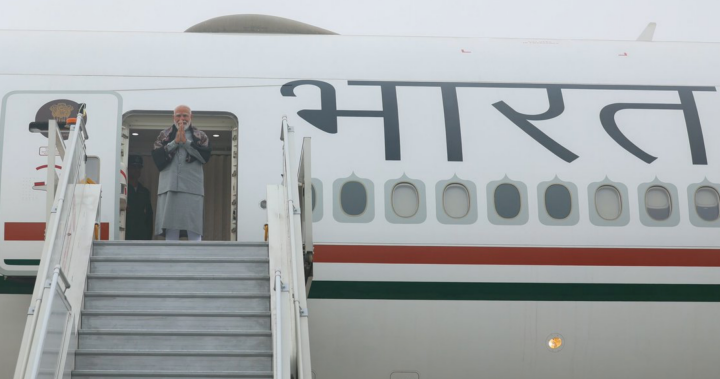
A historic plan to build rail connectivity between India and Bhutan has been unveiled by the central government on 29th September. It will be the first cross-border railway project in Bhutan. It is a part of the ambitious “Make in India” initiative.

Union Minister Ashwini Vaishnaw and Foreign Secretary Vikram Misri revealed plans to build new railway linkages that will cost Rs 4,033 crore. It will connect the industrial city of Samtse and Gelephu, a centre for mindfulness. The Indian Railways network would be linked to both lines at Banarhat in West Bengal and Kokrajhar in Assam.

Foreign Secretary Vikram Misri declared that these two projects are a part of the first batch of rail connection projects between the nations. “There is a major new initiative between India and Bhutan on the establishment of rail connectivity between our two countries,” he added.

A new beginning between two significant partners

A formal agreement was signed during the Bhutanese Foreign Secretary’s visit to New Delhi and the Memorandum of Understanding for these projects was reached amid Prime Minister Narendra Modi’s visit to Bhutan in March of the last year. “The total length is about 90 kilometres to be precise and 89 kilometres of railway network will be created,” informed Vaishnaw.

He outlined, “India is the largest trading partner of Bhutan and most of the exempt trade of Bhutan is done through Indian ports. Therefore, it becomes very important to have a good seamless rail connectivity for the Bhutanese economy to grow and for the people to have better access to the global network. That’s why this entire project has been undertaken.”

Bhutan would have access to 1,50,000 kilometres of the Indian railway network owing to the rail linkages. The Banarhat-Samtse line would be built over a three-year period while the Kokrajhar-Gelephu rail link would be developed over the following four years. The railway lines would be built to accommodate electrified Vande Bharat trains.

The Indian government will cover the cost of the railway lines and all train coaches as well as technology would be produced domestically. There will be six stations, two viaducts, 29 major bridges, 65 minor bridges, two sheds, one flyover and 39 underpasses along the roughly 69 kilometer Kokrajhar-Gelephu line with Rs 3456 crore.

Two stations, 25 bridges, one major flyover, 24 minor flyovers and 37 underpasses will all be built as part of the 20 kilometer Banarhat-Samtse line at the cost of Rs 577 crore.

Misri conveyed, “As you are all aware, India and Bhutan share a relationship of exceptional trust, mutual respect and understanding. This is a relationship that is rooted in cultural and civilizational ties, extensive people-to-people relations, and our shared developmental and security interests. These ties are reflected in very close contact at the highest levels.”

He reported, “These links that are being worked on will be critical for enhancing cargo and passenger movement. So, it is in the context of this very special relationship that the two governments have agreed to establish two cross-border rail links between Banarhat and Samtse and Kokrajhar and Gelephu. This will be the first set of rail connectivity projects with Bhutan.”

According to Misri, the railway ministry will finance the Indian portions of the two linkages while New Delhi will provide Rs 10,000 crore for Bhutan’s 13th five-year plan for 2024-2029 to build the sections inside Bhutanese territory. The sections that lie on the Bhutanese side of both lines are little longer than two kilometres.

Image via @AshwiniVaishnaw/X

The work on both projects, including the purchase of land will commence shortly. The two nations will work out security arrangements while the Land Ports Authority of India builds a number of new integrated check posts (ICPs) along the Bhutanese border.

“India and Bhutan share a relationship of exceptional trust, mutual respect and understanding. This is a relationship that is rooted in cultural and civilizational ties, extensive people-to-people relations and our shared developmental and security interests,” Misri further pointed out.

Jigme Khesar Namgyel Wangchuck, the King of Bhutan, established Gelephu as the location of an independent economic centre with administrative, legislative and judicial authority. The Indian government has expressed support for the flagship project which aims to establish broad commercial and other ties between Bhutan and the Indian subcontinent.

Bhutan will be able to access India’s vast railway network owing to the two new train links which will also make it easier for commodities to go to seaports and to third nations like Bangladesh and Nepal.

More to the development than meets the eye

Bhutan serves as an essential trading partner for India, however, its significant location further enhances its importance for New Delhi. It is a land locked between India and China in the Eastern Himalaya. Four Indian states, Assam, Arunachal Pradesh, West Bengal and Sikkim share a 699 kilometer open border with it.

Consequently, it is increasingly vital for New Delhi to cultivate strong relationships with its neighboring countries, despite the recent thaw in relations with Beijing. Trump’s second term has reminded New Delhi that world leaders cannot be taken at face value, and even trusted partnerships can falter. The Hence, the railway project is a substantial move in the same direction.

While differing perceptions on border and line of control has often been the root cause of conflicts between India and China, most notably illustrated by the Galwan Valley clashes in 2020, and before that in Doklam, a strategically important plateau and valley at the intersection of China, Bhutan and India, the new rail connectivity serves to strengthen the close strategic cooperation between India and Bhutan. Interestingly, Bhutan and India acknowledge Doklam as a Bhutanese territory while China disputes this.

Image via visionias.in

The two armies engaged in the largest military standoff in recent memory. It began when the People’s Liberation Army (PLA) of China built a road on the Doklam plateau, which China claims is part of its Donglang province, and the Indian Army protested. An old Indian army bunker wwas demolished by the People’s Liberation Army there.

China even blocked the access across Sikkim’s Nathu La route towards Kailash-Mansarovar in response to the confrontation. Moreover, the two sides escalated the number of their troops in the region.

The fact that India occupied the heights and was therefore tactically in a far better position than China was evident from the start. New Delhi successfully managed to stare down Beijing after a 73-day conflict that lasted from 16th June to 28th August preceded by numerous rounds of negotiations between the two sides.

The Sikkim, Bhutan and Tibet trijunction is strategically and defensively important to India and the advantage would have been lost if the road had been constructed in the area. This illustrates the vitality of ties between India and Bhutan to counter China.

“Neighbourhood First Policy” of Modi government and development in Northeastern states

In addition to security implications, the rail links also enshrines Modi government’s “Neighbourhood First Policy.” Originally proposed in 2008, the “Neighbourhood First Policy” came in the spotlight after PM Modi was voted to power in 2014. It directs India’s approach to managing relations with nations in its near neighbourhood, such as Sri Lanka, Bangladesh, Afghanistan and Bhutan.

Its goal is to increase trade and business while also improving physical, digital and interpersonal connectivity throughout the region. However, it also seeks to establish interdependencies that bolster India’s authority and challenge outside influences.It strives to ensure a stable regional environment by fostering confidence and fortifying diplomatic ties.

India can cement itself as a regional power in South East Asia by working closely with its neighbours. The recent development concerning Bhutan represents a continuation of the same. Moreover, New Delhi’s leading position in advancing the Global South’s interests in international fora is strengthened by working alongside its neighbours. This promotes improved comprehension and collaboration on international matters.

China currently enjoys a significant presence in the Indian subcontinent and has made substantial investments in nations such as Nepal, Sri Lanka and Pakistan its “all-weather friend.” Therefore, it is increasingly vital for India to strengthen its relationships with its neighbours.

Furthermore, alongside nurturing positive relationships with neighbours, the policy also serves as a catalyst for growth and progress in the Northeastern region of the country. This area has historically been overlooked by successive Congress-led governments and has lacked even basic infrastructure.

The development story of the Northeast only commenced after the Modi government came to power. Security is closely related to both internal and regional connectivity and therefore, the infrastructure not only benefited the local population but also a new wave of development in the region long neglected by New Delhi under previous regimes.

The government has also been making a concerted effort to bring Northeast India closer to the rest of the nation since 2014. Prime Minister Narendra Modi’s “Vikas through connectivity” agenda is driving the government’s development of infrastructure, particularly railways, as the primary tool for promoting socioeconomic advancement and national integration.

Major railway projects like the Bairabi–Sairang line in Mizoram, the Dimapur-Zubza line in Nagaland, the Sevoke-Rangpo project in Sikkim, and the engineering marvel Bogibeel Bridge in Assam connecting to Arunachal Pradesh have brought tangible progress to the Seven Sisters and One Brother of India, supported by the central government’s persistent focus on “Act East” and infrastructure-led growth.

Substantial advancements have also been made along the Line of Actual Control, which encompass the development of roads, remote area infrastructure, dams and national highways to improve connectivity with the rest of the nation while bolstering security.

Similarly, the railway network connecting India and Bhutan will not merely boost connectivity between the peoples of these two countries and promote infrastructure growth, but may likely usher into greater strategic and geopolitical cooperation.

Stamp of India’s authority as a confident regional power

The announcement of the railway connection between India and Bhutan represents not only a significant achievement for the country’s foreign policy but also an astute geopolitical move that cements India’s standing as a confident regional power. Moreover, it paves the way for the development of India’s Northeast, which is a key component of the Modi administration’s development agenda.

Furthermore, New Delhi’s energy needs can be satisfied by Bhutan’s enormous hydroelectric resources.

Bhutan is primarily a Buddhist nation. India is the birthplace of Buddhism and hosts a lively Buddhist community in addition to its Hindu majority. This can only act as an additional binding force in the strong cultural ties between the two partners.

Trump’s new Gaza plan: Will it finally move Hamas to lay down arms, because earlier ‘deadlines’ have not worked, and peace is still elusive

The Israel-Hamas War, which started with the massacre of Israeli civilians by the Palestinian Islamic terror group Hamas on 7th October 2023, might finally end with a peace plan for Gaza, proposed by US President Donald Trump. Though welcomed by many Islamic countries, and supported by neutral nations seeking an end to the conflict, Trump’s 20-point plan would work only if Hamas agrees to lay down arms before the given deadline. The problem with these ‘deadlines’ is that these are already ‘dead’ to a tone-deaf Hamas hell bent on fighting Israel to its end.

On 29th September, President Trump unveiled a comprehensive peace plan to end the war in Gaza. During his visit to the White House, Prime Minister of Israel Benjamin Netanyahu publicly backed Trump’s proposal. Trump, however, admitted that Hamas has not agreed to the proposal so far.

The main components of the proposal include the release of all the living and dead hostages in Gaza, imperative for Hamas to lay down arms, withdrawal of Israeli forces from the territory, the delivery of humanitarian aid, in addition the installation of a civilian governing authority for Palestinians. Not to be pessimistic, but the points of the proposal are quite telling that it may not actually work.

The very first point of the proposal that Gaza will be “a deradicalised terror-free zone that does not pose a threat to its neighbours” is a near-impossible feat to achieve. The Palestinian people, including the Gazans, have, over the years, be it in elections or surveys, have expressed unwavering support for Hamas. To think that just because not all Gazans are armed, they are different from Hamas, is harbouring a delusion that will prove detrimental eventually.

Besides turning Gaza into a ‘deradicalised terror-free zone’, the peace plan also proposes to redevelop Gaza “for the benefit of the people of Gaza, who have suffered more than enough.”

The third point says that if both parties, Israel and Hamas, agree to the proposal, “the war will immediately end”.

“If both sides agree to this proposal, the war will immediately end. Israeli forces will withdraw to the agreed upon line to prepare for a hostage release. During this time, all military operations, including aerial and artillery bombardment, will be suspended, and battle lines will remain frozen until conditions are met for the complete staged withdrawal,” the proposal reads.

The plan also includes a point that, within 72 hours of Israel publicly accepting this agreement, all hostages, alive and deceased, will be returned.

Israel will release prisoners for hostages, but how will that work?

“Once all hostages are released, Israel will release 250 life sentence prisoners plus 1700 Gazans who were detained after October 7th 2023, including all women and children detained in that context. For every Israeli hostage whose remains are released, Israel will release the remains of 15 deceased Gazans,” the proposal reads.

Since the Israeli Prime Minister has agreed to and welcomed the Gaza Peace Plan, Israel would most likely release the Hamas Jihadis the Israeli forces took as prisoners and even release the Gaza civilians it detained. However, what is the guarantee that Hamas would, firstly, agree to this proposal in true spirit, and would not renege on its commitment once Gazans and Hamas terrorists are released by Israel?

It must not be forgotten that in the 2011 Gilad Shalit exchange, Israel had freed Palestinian prisoners, including Yahya Sinwar, who went on to become a top Hamas leader and orchestrated the October 7 assault.

The next point in the Gaza peace plan says that once all hostages are returned, “Hamas members who commit to peaceful co-existence and to decommission their weapons will be given amnesty. Members of Hamas who wish to leave Gaza will be provided safe passage to receiving countries.”

This would basically become an export of Islamic Hamas terrorism to other receiving countries. The Islamic countries like Egypt, Jordan, Syria and Saudi Arabia, among others, have demonstrated nonchalance in inducting more Palestinian refugees. In such a case, it remains a question if Hamas terrorists who ‘commit to peaceful co-existence’ will be accommodated in non-Islamic or secular countries. If yes, then who will give the guarantee that these ‘former’ Hamas terrorists would not soon return to their old ways and perhaps carry on their Jihadist activities in host nations? Basically, the amnesty for ‘peace-committing’ Hamas Jihadis could embed sleeper cells and safe passage for others might allow them to regroup and even establish strongholds in neighbouring countries.

The proposal provides for supplying humanitarian aid to Gaza, if and when both conflicting parties agree to the plan.

‘Board of Peace’, headed by Donald Trump

Importantly, the Gaza Peace Plan proposed by President Trump states that “Gaza will be governed under the temporary transitional governance of a technocratic, apolitical Palestinian committee, responsible for delivering the day-to-day running of public services and municipalities for the people in Gaza. This committee will be made up of qualified Palestinians and international experts, with oversight and supervision by a new international transitional body, the “Board of Peace,” which will be headed and chaired by President Donald J. Trump, with other members and heads of State to be announced, including Former Prime Minister Tony Blair.

“This body will set the framework and handle the funding for the redevelopment of Gaza until such time as the Palestinian Authority has completed its reform program, as outlined in various proposals, including President Trump’s peace plan in 2020 and the Saudi-French proposal, and can securely and effectively take back control of Gaza. This body will call on best international standards to create modern and efficient governance that serves the people of Gaza and is conducive to attracting investment,” the point number 9 of the proposal adds.

The plan further proposes a “Trump economic development plan to rebuild and energise Gaza”. It adds that “many thoughtful investment proposals and exciting development ideas have been crafted by well-meaning international groups…to attract and facilitate these investments that will create jobs, opportunity, and hope for future Gaza.”

The plan also promises that a special economic zone will be established with preferred tariff and access rates to be negotiated with participating countries.

Apparently, had there been any rare earth deposits in Gaza, America’s ‘plane of democracy’ would have landed there years ago.

Can Hamas be trusted, can it be truly rooted out?

Under point number 13, the plan says that Hamas and other armed factions will agree not to have any role in the governance of Gaza, directly, indirectly, or in any form.

“All military, terror, and offensive infrastructure, including tunnels and weapon production facilities, will be destroyed and not rebuilt. There will be a process of demilitarization of Gaza under the supervision of independent monitors, which will include placing weapons permanently beyond use through an agreed process of decommissioning, and supported by an internationally funded buy-back and reintegration program, all verified by the independent monitors,” the point reads.

This is basically telling Hamas, a well-funded, dominant and popular (among Palestinians and the Islamists globally), that it must cease to exist. However, it is highly unlikely that Hamas will agree to this. Even if it does secure an immediate reprieve from Israel’s hammering, the countries funding this Islamic terror outfit will not truly allow Hamas’s cascading into oblivion.

The peace plan also proposes that the United States “will work with Arab and international partners to develop a temporary International Stabilisation Force (ISF) to immediately deploy in Gaza.” Again, this will truly work only if Hamas does not backtrack from its commitment and refrains from regrouping to ‘liberate’ Gaza. If Hamas returns to its old violent ways somehow, the ISF and Hamas will engage in conflict; thus, Gaza will become what it was before the peace plan’s implementation, a conflict zone.

The ISF’s Arab-led composition is innovative, perhaps driven by the idea that Hamas would not engage in conflict with Arab-led forces due to shared Muslim religious identity. However, this shared identity, though Shia-Sunni differences exist, could not prevent the Saudi-Houthi conflict. It is also not impossible that Hamas would seek Iran-backed Hezbollah support to ensure weapons, funds and logistics supply. In a nutshell, Shia and Sunni hate Israel more than they hate each other.

Israel will always have to remain cautious about its safety since the plan states that Israel will not occupy or annex Gaza and “once the ISF establishes control and stability, the Israel Defense Forces (IDF) will withdraw based on standards, milestones, and timeframes linked to demilitarization that will be agreed upon between the IDF, ISF, the guarantors, and the United States, with the objective of a secure Gaza that no longer poses a threat to Israel, Egypt, or its citizens.”

Point 17, a contingency plan in case Hamas disagrees?

Point number 17 of the Gaza peace plan says that “in the event Hamas delays or rejects this proposal, the above, including the scaled-up aid operation, will proceed in the terror-free areas handed over from the IDF to the ISF.” Does this mean that ISF will be formed regardless of Hamas’s agreement or disagreement with the proposal? The point’s phrasing hints at a contingency where, if Hamas does not agree, the peace plan’s humanitarian and stabilisation components, particularly, aid delivery and ISF, will move forward in zones cleared by the Israeli Defence Forces as “terror-free”. Apparently, the ISF’s formation is not contingent on Hamas’s approval.

The proposal’s points 19 and 20 say that when Gaza development advances and reform of the Palestinian Authority (PA) is carried out, “a credible pathway to Palestinian self-determination and statehood, which we recognise as the aspiration of the Palestinian people.”

It further states that the US will establish a dialogue between Israel and the Palestinians to agree on a political horizon for peaceful and prosperous co-existence.

While it is true that we only make peace with our enemies, not our friends, the Palestinian populace, including Hamas terrorists, is not going to have a sudden change of heart towards Israel and Jews.

The majority of Gazans and Palestinians are Sunni Muslims. While Trump wants Palestinians to agree on a ‘political horizon’ for a peaceful co-existence, Palestinians care only about the ‘religious horizon’. If this were not the case, the local populace would have pressured Hamas to release Israeli hostages and engage in dialogue with Israel. However, despite the violence, chaos, destruction and derailment of normal life, Gazans cheered when Hamas paraded dead bodies of four Israeli hostages, including a woman and her two infants, in February this year before handing them over to Israel.

Point 18 is wishful thinking: ‘From the river to the sea’ won’t be forgotten just like that

Now let’s discuss point number 18 of Trump’s Gaza Peace Plan, which says, “An interfaith dialogue process will be established based on the values of tolerance and peaceful co-existence to try and change mindsets and narratives of Palestinians and Israelis by emphasising the benefits that can be derived from peace.”

This point almost confirms why Hamas will not agree to this plan, and deem it as a victor’s document detailing terms and conditions of surrender. This proposed interfaith dialogue process, based on tolerance and peaceful co-existence values, will never truly succeed in changing ‘mindsets and narratives’, at least not of the Palestinian people. The Israel-Palestine/Hamas conflict is not simply a war for a piece of land or a conflict arising out of a prejudiced mindset and narratives. It is rooted in Islamic hatred for the Jews.

Hamas enjoys popular support of Palestinians, and the Hamas Covenant of 1988, also known as the Hamas Charter, outlines Hamas’s ideological standpoint regarding Israel, Palestine, and the larger conflict between Jews and Muslims. One of the key assertions in the charter is that all of Israel, from the Jordan River to the Mediterranean Sea, is considered Waqf land that belongs exclusively to Muslims.

This argument is based on the concept that once a land has been claimed by Islam, it will never return to non-Muslim control. Thus, Hamas considers all of Israel to be ‘illegitimately occupied’ by the Jews and is hell-bent on bringing it under Islamic autonomy.

The Palestinian Islamic terrorist group Hamas has clearly stated in its charter that the Palestinian movement aims to establish the supremacy of Allah over “every inch of Palestine”.

The Hamas Charter has declared Israel as an Islamic Waqf hallowed for the coming Muslim generations until the Yawm ad-Din or Judgment Day.

“The land of Palestine is an Islamic Waqf [Holy Possession] consecrated for future Moslem generations until Judgment Day. No one can renounce it or any part, or abandon it or any part of it,” Article 11 of the Hamas Charter reads.

The very reason why all the efforts by Israel to reach a peaceful solution to the Israel-Palestine dispute have gone in vain can be understood from Article 13 of the Hamas Charter ,which outrightly dismisses even any possibility of a peaceful resolution of the dispute with Israel as a “waste of time” since “Jews are infidels and only Jihad is the solution.” Hamas’ unwillingness to recognise Israel’s right to exist, as well as its desire for its annihilation, as written in the Hamas Charter, leaves no room for any peace talks. 

“[Peace] initiatives, and so-called peaceful solutions and international conferences are in contradiction to the principles of the Islamic Resistance Movement… Those conferences are no more than a means to appoint the infidels as arbitrators in the lands of Islam… There is no solution for the Palestinian problem except by Jihad. Initiatives, proposals, and international conferences are but a waste of time, an exercise in futility,” Article 13 of the Hamas Charter states.

Hamas also called for the slaughtering of Jews and asserted that the “Judgment Day” would not come until the Muslims fight and kill the Jews. To back its call to violence, Hamas cites references to the Islamic text.

“The Day of Judgment will not come about until Moslems fight Jews and kill them. Then, the Jews will hide behind rocks and trees, and the rocks and trees will cry out: ‘O Moslem, there is a Jew hiding behind me, come and kill him,” Article 7 of the Hamas Charter reads.

While one would argue that it may be Hamas’s extremist ideology and not necessarily the opinion of the entire Muslim world, or at least of all Palestinian Muslims. However, the Islamic verse mentioned in Hamas Charter’s Article 7 is taken from the Islamic text Sahih Al Bukhari (a collection of Hadith and book of Sunnah) which reads: “The hour will not come until the Muslims fight the Jews and the Muslims kill them, until the Jew hides behind the stones and trees and the stones or trees say, ‘O Muslim, O servant of Allah, this is a Jew behind me, come and kill him.”

In short, hatred against Jews and Israel is not just an ideological problem confined to Hamas and other such extremist groups, but is mandated in the Islamic texts. Thus, only if, somehow, all of the Palestinian Muslims decide to abandon Islam or reject the Islamic texts or verses commanding them to wage Jihad against Jews, forget that prosperous, even peacefu,l co-existence is impossible.

Failed ceasefires, unmet deadlines have happened before

Besides, there is also a history of failed deadlines and ceasefires between Israel and Hamas. The first ceasefire agreement, starting from 24th November 2023, broke down on 1st December 2023, after Israel resumed full military operations since Hamas violated the ceasefire. Between December 2023 and January 2024, multiple proposals also did not yield lasting positive results. The second major ceasefire comprising 6-week phases also fell apart despite Hamas releasing 18 living hostages and Israel freeing over 730 prisoners. As Hamas continued to mobilise forces, Israel conducted airstrikes on 18th March 2024. Even the US tried to intervene; however, it could not secure a lasting ceasefire.

Despite there not being much hope for Hamas to agree to the Trump Gaza Peace Plan, the foreign ministers of Islamic countries, Qatar, Jordan, UAE, Indonesia, Pakistan, Turkey, Saudi Arabia, and Egypt have issued a joint statement welcoming the proposal. They also lauded Trump’s commitment to block any Israeli annexation of the West Bank. In their statement, the ministers affirmed their “readiness to engage positively and constructively” with the United States and other parties to finalise and implement the agreement.

Interestingly, most of these countries do not even recognise Israel’s right to exist. However, they see a silver lining in the proposed peace plan. These Islamic countries will not have to take in Gazan refugees on a massive scale. The biggest hypocrite, however, remains the Islamic Republic of Pakistan. Pakistan does not recognise Israel, its people and politicians hate Israel to the core and often give “Delete Israel” calls. However, with their backing to Trump’s peace plan, Pakistan, which is governed by Madarsa-bred Field Marshal Asim Munir, as its de facto ruler, has pivoted towards officially recognising Israel. It also won’t be a surprise if Pakistan ends up joining the Abraham Accords and establishes diplomatic ties with Israel.

Even the Palestinian Authority has also welcomed Trump’s “sincere and determined efforts to end the Gaza war”. In a statement, PA said that it “welcomes the sincere and determined efforts of President Donald J Trump to end the war on Gaza, and affirms its confidence in his ability to find a path toward peace.”

It is, however, pertinent to mention that the Palestinian Authority had, in 2023, condemned Hamas’s October 7 onslaught only to backtrack later. Not only this, a one-page document dated 18th October 2023 was issued by the Palestinian Authority’s Ministry of Endowments and Religious Affairs. The document issued to imams of mosques laid down directives for Friday (Jummah) sermons. This document contained the same Islamic verse Hamas cited in its charter, which calls for the murder of all Jews by Muslims.

Will a piece of paper stop Islamic terrorists?

However, while it is easy to propose a peace plan, it is delusional to expect hardened Islamic terrorists to suddenly start believing in peaceful coexistence and lay down arms. The question remains that even if Hamas somehow declares that it will support the peace plan, is a piece of paper stating they won’t arm again is going to be enough to keep them unarmed and unorganised? Trump-led Gaza Peace Plan is full of optimism, sure, but it comes across as divorced from ground realities beyond the scope of the deplorable state of the Gazan people and a dire need for the return of normalcy.

While Trump’s peace plan and its endorsement by Islamic countries may solidify his Nobel Peace Prize claim, it’s more a tactical pause than a ‘final’ solution and peace remains elusive. Perhaps for this reason, Trump said that if Hamas does not agree to the Gaza Peace Plan, he will back Israel to “finish the job”. It seems that the much-hyped peace plan might crash even before take off, as Prime Minister Netanyahu has said that the IDF “will remain in most of the territory” as part of the plan drawn up with Trump, and that Israel did “absolutely not” agree to a Palestinian state

Mismanagement, lack of NOCs and hidden fund motives: Ayodhya mosque trust faces heat as work fails to take off despite immediate land grant by govt and donations

0

The controversy regarding the new mosque in Ayodhya, as pronounced by the Supreme Court in the landmark Ram Mandir verdict, shows no signs of resolution. Each passing day only intensifies the challenges faced by the construction project. The recent discontent is associated with Iqbal Ansari, who served as a petitioner in the Supreme Court regarding the Ram Janmabhoomi–Babri Masjid dispute.

Ansari resides across the street from the Ram Temple in a three-room home and witnesses thousands of people seeking Ram Lalla’s darshan every day. However, he lamented that a new mosque has not yet been constructed in lieu of the Babri.

“When 5 acres of land was given for the mosque, why did a museum start being built there? A Muslim of India can give money for a mosque, but will never donate for a museum. Zafar Farooqi brought an absurd plan of hospital and museum in Dhannipur mosque. His thinking was that if we show this to people, we will get lots of money from within and outside the country and business will grow,” he expressed in a conversation with Bhaskar English.

Zafar Ahmed Farooqui serves as chairman of Indo-Islamic Cultural Foundation (IICF). A modern mosque, a 200-bed hospital, a museum and a communal kitchen were among the ambitious plans revealed in 2020 by the trust which was established to manage the mosque and related projects. However, approval-related obstacles have prevented development from moving forward.

Ansari added, “They should know that Indian Muslims are not foolish. After 6 years, now neither are people demanding a new mosque in place of Babri, nor are they interested in its construction. The Muslims of Awadh have given up hope that the mosque will be built now.”

The Supreme Court rendered its decision in the Ram Janmabhoomi matter on 9th November 2019. The construction of the temple is nearing its conclusion after six years. However, not even the plan for the mosque has been authorised yet. According to a recent RTI, its layout proposal was automatically denied since it lacked the required NOC (No Objection Certificate). Muslims will now have to wait longer as a new plan will need to be put together.

The responsibility clearly rests with the trust and the individuals associated with the construction of the new mosque, as they have consistently failed to obtain the necessary approvals for the new structure.

A new mosque in Dhannipur town

The Supreme Court ordered the Sunni Central Waqf Board to construct a new mosque in Ayodhya as part of its ruling in the Ram Janmabhoomi case. Afterward, on 3rd August 2020, Anuj Kumar Jha, the then-DM (District Magistrate) of Faizabad, gave the Waqf Board five acres of property at Dhannipur which is 25 kilometres from Ayodhya.

The task of constructing a new mosque in the town of Dhannipur was assigned to IICF. The Muslim-majority neighbourhood of Dhannipur is located next to the Raunahi police station on the Faizabad–Lucknow National Highway. Muslims make up 60% of the population of the area which has 2,500 residents.

IICF stated that the Mohammad-bin-Abdullah mosque which would have five minarets will be constructed on five acres of undeveloped land near the well-known Shahgada Shah shrine. A lack of funding and an unapproved building plan have caused the work to be put on hold.

The issue surfaced on 16th September when Ayodhya Development Authority (ADA) responded to an RTI filed by journalist Om Prakash Singh, who lives in Devnagar Colony of Ayodhya and informed that the mosque trust has only paid ₹4 lakh in project fees thus far.

IICF needs to obtain NOCs from the Public Works Department (PWD), the Fire Department, the Pollution Control Department, the Civil Aviation Department, the Irrigation Department, and the Municipal Corporation before beginning any development on the property. The last six years have seen the mosque trust unable to carry out its obligation.

“On 23rd June 2021, the mosque trust had applied for approval of the plan, but later they withdrew the first plan. The deadline was to get all NOCs cleared by November 2024. The mosque trust could not get this work done by the set time. This was the reason that the building layout plan was automatically rejected from the portal,” ADA Secretary Hem Singh conveyed.

6 years and no work amid growing resentment among Muslims

IICF made a public request in August 2021 for assistance in constructing the mosque following the court ruling. The trust made its bank account information publicly available for this purpose. The trust had received approximately ₹40 lakh in donations from all throughout the nation by November 2022.

The Shahgada Shah shrine at Dhannipur displayed posters with pictures of the Mohammad-bin-Abdullah mosque with the words “A masterpiece in making.” Slowly, time went by, but the mosque’s construction did not start. T he posters of the new mosque that had been affixed to the shrine were also taken down.

“At first it seemed that the government didn’t want the mosque to be built, but now it appears that the mosque trust itself doesn’t want to move the work forward. Many dates were given for the new mosque, bricks and materials arrived. Even the land was measured, yet work couldn’t begin,” highlighted a man named Mohammad Shamim.

Dhannipur local Sohrab Khan was a member of the mosque committee, but he deleted his name from there because the work did not begin on time. “People in the area have lost hope regarding the new mosque because for the past 6 years there have only been promises after promises that work will start now, work will start then. Nothing has happened till today. Now it is being revealed that due to incomplete NOC, ADA has also rejected its plan,” he complained.

Iqbal Ansari lashes out at the trust

Iqbal Ansari is also angry about the lack of progress on the mosque project. He believed that the mosque was intended for Dhannipur’s Muslim community, but there are currently plans to construct a kitchen and museum there.

He mentioned, “Our ancestors testified for the Babri Masjid. Fought the case, but after the verdict came, the responsibility of the new mosque was given to Zafar Farooqi’s trust. They left out the local Muslims and recruited outsiders in the trust. Because of this, the people of Faizabad stopped taking interest in it. Everyone thinks why should we donate to those whom we don’t know.”

Ansari declared, “In Islam, if even a wall is erected and named as a mosque, people start considering it a place of worship. The foreign design that Zafar Farooqi brought had hidden motives of earning money rather than building a mosque.”

Non-payment of fee to ADA

The ADA disclosed that the mosque committee had sent in a revised map for approval, during the consecration ceremony of the Ram Mandir. However, they would only receive approval after they paid the land use conversion fee. At the time, this sum exceeded ₹1 crore. The green light could only be given to construction if the money has been paid.

“Before starting any construction on the 5-acre government land given in Dhannipur, the mosque trust will have to get different NOCs cleared. Due to this process being pending for a long time, the mosque map was automatically rejected from the portal,” Hem Sigh stated.

He further conveyed, “After the map rejection, now the mosque trust will have to submit all documents again and get NOCs cleared as soon as possible. Only then can the work proceed. The map was auto-rejected in November 2024 itself, but the mosque trust has not talked to us about this matter till today.”

Hem Singh pointed out that the trust had submitted an application for approval of the initial map in June 2021, but they later modified their strategy. No trust member has met with the ADA since 2023 to authorise the updated map as of right now.

He asserted, “The mosque plan can only be approved when they re-upload all necessary documents on the portal with the new application. The trust will also have to inform the ADA about the new map if there are changes in the old map again.”

No NOC for the construction

Mosque trust secretary Athar Husain said that during a site inspection, the fire department had raised concerns about the approach road. As per the norms for the proposed mosque and hospital building, the road should be 12 metres wide, while the road at the site is only about six metres wide and just four metres wide at the main approach of the mosque.

The mosque trust’s secretary, Athar Husain, previously revealed that during a site inspection, the fire department had voiced concerns over the approach road. According to Husain in November 2022, the ADA provided 14 of the 15 NOC needed for the construction but the fire department’s refused because of the road’s narrowness. Notably, the problem continues to persist as the issue has not been fixed even after all this time.

Majority of funds given by Hindus for the mosque

The Supreme Court gave the site to the state Sunni Central Waqf Board in order to appease the Muslim community which has been claiming the Ramjanmabhoomi for many years. About four months following the verdict, the state board finally agreed to accept the land, despite their initial resistance. Notably, a Hindu individual donated the initial donation to help build the mosque.

According to Athar Husain, secretary of the mosque trust, Rohit Srivastava submitted the first cheque for 21,000 as a donation for the mosque.  Till November 2022, out of the total amount of donation received by the mosque trust, around 40 per cent was given by Hindus, while Muslims have only contributed 30 per cent. 

Venezuela’s oil wealth: Through US sanctions, regime change and power plays, India’s energy security needs to balance a geopolitical tightrope

The United States’ approach to Venezuela has alternated between sanctions, law enforcement measures, diplomatic negotiations, and sporadic military signaling since the failed 2002 coup against Hugo Chávez and the 2025 naval build-up in the southern Caribbean. The chain of events is not as enigmatic as it may appear: multiple administrations have attempted to prevent the consolidation of an authoritarian, corrupt government that also controls the largest proven oil reserves in the world, encourages widespread regional migration, and Washington claims to provide sanctuary to transnational criminal and trafficking networks.

A short coup overthrew Chávez in April 2002, but it fell apart two days later due to local and regional pressure. This marked the beginning of the lengthy arc. The Organization of American States’ (OAS) condemnation of the disruption of constitutional order serves as an early reminder that Latin American legitimacy is based on inter-American norms rather than forceful regime change, regardless of how one interprets the United States’ awareness of opposition plotting. The episode strengthened Chavista mistrust of Washington and planted the myth that Venezuela’s issue is due to “imperial” involvement rather than a breakdown in internal government. This narrative is still widely held in Caracas.  

After 2014, sanctions were the primary tool used by the United States, particularly as street protests were met with violent repression. In March 2015, the United States declared a national emergency and issued Executive Order 13692, laying the groundwork for targeted sanctions that would subsequently include oil-sector and sovereign-debt restrictions. The bet was simple: increase the cost of repression and corruption for insiders while implying that measured democratic reforms could provide relief. That thinking remained consistent between administrations, even as tactics changed.

The conflict became a test of regional diplomacy in 2019 when opposition leader Juan Guaidó was recognized as interim president. While Maduro was supported by Russia, Iran, China, and Cuba, the majority of the hemisphere (including the EU) supported the opposition. Given the defensive nature of TIAR and Venezuela’s delicate membership position, OAS governments even abandoned the Inter-American Treaty of Reciprocal Assistance (TIAR/Rio Treaty) in order to coordinate pressure that was more symbolic than kinetic. Although the action fell far short of sanctioning force, it did signal political isolation. 

Following Russia’s full-scale invasion of Ukraine and the subsequent global oil crisis, energy and sanctions policy were interwoven. Through OFAC General License 44, Washington offered a sanctions pause in October 2023 in exchange for Caracas adhering to a Barbados Agreement roadmap for competitive elections in 2024. Treasury allowed GL-44 to expire and went back to stricter regulations when Maduro broke his promises to prevent opposition candidates and not release complete polling-station tallies. Through General License 41/41A, Chevron’s heritage joint ventures were given limited exceptions. The goal of this intermittent energy accommodation was to mitigate price increases while using sanctions to force open election space, a strategy that mostly failed by the middle of 2024. It had nothing to do with loving Maduro. 

The 2024 election became the pivot. The contest “did not meet international standards,” according to independent observers, and officials would not provide the underlying polling-station records required to confirm official results. Similarly, the European Union refused to recognize until the tally sheets, or “actas,” were fully published. Despite opposition from the United States and Europe, Maduro was sworn in for a third term in January 2025. Washington’s tougher stance more focused sanctions, more forceful human rights rhetoric, and legal pressure on regime leaders was cemented by that result. 

Why, then, does the US continue to “play” with Maduro instead of normalizing ties or, on the other hand, overthrowing him? Three drivers are particularly noticeable.

Mass migration comes first. From the U.S.-Mexico border to Florida, the almost 7.9 million Venezuelans who have fled the country have caused one of the worst displacement crises in history, putting a strain on neighbors and changing domestic politics in the United States. Any White House must demonstrate that it is tackling a fundamental issue that affects regional burden-sharing, police, and migration policy. For this reason, the lifting of sanctions has been contingent on substantiated reforms, and losses (like as the 2024 election) prompt retaliatory actions. 

Great-power competition comes in second. Beijing is Venezuela’s biggest creditor, with about $60 billion in state-backed lending over the past ten years and growing political-security ties; Tehran has been shipping fuel, spare parts, and refinery know-how since 2020; and Moscow flew nuclear-capable bombers to Caracas in 2018 as a geopolitical billboard. U.S. strategists worry that a strong regime in Caracas may give competitors a foothold in the Caribbean’s information and energy markets. That does not imply war, but rather that Washington will continue to reduce the power of its enemies through diplomacy, law enforcement, and sanctions.

Third, the protection of assets and energy security. Even though Venezuela’s oil is heavy, emits a lot of pollution, and lacks infrastructure, every extra barrel counts in competitive markets. Under OFAC’s “favorable licensing” stance, US courts in Delaware proceeded with a creditor-driven auction of PDVSA’s U.S. refiner, Citgo, while the US toggled licenses to control pricing without sending money to Caracas. The purpose is contradictory on the surface: push the regime while stabilizing supply and upholding the rightful interests of bondholders and expropriation victims.  

Washington has alternated between selective licensing, increased sanctions, and high-profile security measures in the southern Caribbean since Venezuela’s contentious July 28, 2024, presidential election, which the EU, OAS, and Carter Center concluded lacked transparency. The United States even launched deadly attacks on boats it claimed were Venezuelan drug-running vessels in September 2025, indicating a new stage of coercive pressure. Regardless of how wise you think that strategy is, it is already changing maritime routes, legal risk, and energy flows including those that India and Indian businesses rely on.

The India angle: Subtle but substantial

ENERGY SECURITY: Crude slate and margins are where India’s stakes begin. The mega-complexes in India, particularly Reliance’s Jamnagar, are designed to handle the heavy and sour barrels produced by Venezuela. Reliance requested and obtained U.S. approval in July 2024 to resume Venezuelan imports following US relaxation in late 2023, which momentarily improved differentials and optionality. However, as the United States tightened once again in 2025, Venezuelan flows were restricted and commerce became more complex due to shifting tariff and license dynamics. 

UPSTREAM EXPOSURE: In San Cristóbal (40%) and Carabobo-1 (~18%), ONGC Videsh still has stock. Caracas agreed to pay some of the about $600 million in unpaid oil dividends after 2023–24 flexibility, but additional US tightening forced ONGC to look for its own unique US licenses to operate and collect debts. India’s capacity to recover previous investments is strongly impacted by the speed at which those permissions (or denials) are granted. 

PHARMACEUTICAL TRADE: Venezuela’s payment risk and healthcare shortages pose a threat to Indian pharmaceutical companies. In order to collect arrears, New Delhi proposed an oil for drugs barter in 2016. India’s pharmaceutical shipments to Venezuela were still worth $111 million in 2024, but they were still insecure. That vital market is at risk from any downward spiral or sanctions-related backlash.

MACRO GEOPOLITICS: Russian oil is already putting pressure on India’s delicate balance with the United States, Russia, and the Global South. New Delhi has pushed Washington to ease access to sanctioned Iranian and Venezuelan oil if it wants India to stop buying Russian oil because the price of alternative barrels is higher due to new US tariff pressure and connections to trade discussions. India’s energy hedging strategy includes Venezuela policy.

Conclusion

The practical lesson is straightforward for India. When preparing the crude slate for the upcoming quarter or the export goals for the upcoming year, keep a watch on Caracas. Keep an eye on the licensing cadence, General License 44 family and General License 41 family, as every modification toggles freight payments, compliance risk, and heavy-barrel availability. Keep an eye on the election-legitimacy dispute, as it influences coordination throughout Europe and the hemisphere and, consequently, the likelihood of abrupt policy changes that generate price shocks. Keep an eye on the Caribbean’s marine pace, as insurance and routing issues increase the delivered-cost floor for exports of Indian goods. ONGC Videsh’s license petitions and Reliance’s licenses should be followed since they represent the real-world turning points for India’s energy involvement. Additionally, pharmaceutical exporters should review their backup plans from the oil-for-drugs discussions in 2016 in case payment methods are taken over.

Furthermore, would a US invasion or attack dissuade adversaries? The argument is well-known: using decisive action in the Americas would break the purported union of state and cartel while also giving Beijing, Tehran, and Moscow legitimacy. However, the cost is really high. Strategically, it would risk a surge of refugees on top of an already historic displacement, possible proxy entanglements, and a breakup of the very coalition (EU/OAS democracies, important Latin neighbors) that Washington claims is its comparative advantage. Legally, an invasion without Security Council cover would be a violation of the UN Charter. To put it another way, it may indicate strength but destroy the wiring that maintains leverage. 

100 Years of RSS: As PM Modi lauds the Sangh in Mann Ki Baat, recall his Red Fort praise and birthday tribute to Bhagwat that cut through long-peddled propaganda

On 28th September Prime Minister Narendra Modi referenced the 100th anniversary of the Rashtriya Swayamsevak Sangh (RSS) during his “Mann Ki Baat” program. This marks the third occasion in the last month and a half that he has acknowledged this significant milestone of the outfit. This is particularly noteworthy as there has been a persistent effort by certain elements to suggest that there are disagreements between the Modi government and the group.

On the one hand, it is asserted that the government disregards the organization’s viewpoint and on the other hand, a growing “distance” between the two sides is projected a through orchestrated narrative.

PM Modi and the RSS share a relationship that spans several decades. He served as an RSS pracharak for an extended period prior to his affiliation with the Bharatiya Janata Party. Historically, both the two have refrained from openly discussing each other. However, PM Modi has unequivocally indicated that there is no rift between him and the group but instead a strong bond, in recent days.

PM Modi’s remarks during “Mann Ki Baat”

PM Modi reflected on the RSS’s role in nation-building. He stated, “This Vijayadashami holds special significance for another reason. It commemorates the 100th anniversary of the establishment of the Rashtriya Swayamsevak Sangh. This century-long journey is remarkable, unprecedented and inspiring in equal measure.”

He added, “Thus, alongside the independence of the country, it was also essential for the nation to be liberated from ideological oppression. In this light, the highly respected Dr (Keshav Baliram) Hedgewar began to consider the issue, and then, for this monumental task, he established the RSS on the auspicious occasion of Vijayadashami in 1925. After his death, the esteemed (Guruji Madhav Sadashivrao Golwalkar) continued this noble effort of national service.”

“The essence of sacrifice and service, along with the principles of discipline, constitutes the genuine strength of the sangh. Presently, the RSS has been diligently serving the nation for more than a century. This is why we see that whenever a natural calamity occurs anywhere in the country, RSS volunteers are the first to arrive on the scene,” the prime minister highlighted.

PM Modi penned an article on Mohan Bhagwat’s birthday

On 11th September, PM Modi published an extensive article in honor of RSS Sarsanghchalak Mohan Bhagwat’s birthday. This article effectively dispelled all rumors regarding the dispute between him and Bhagwat.

The prime minister mentioned, “His life has been an unwavering source of inspiration. He has devoted many years to working in the rural and marginalized areas of Maharashtra, particularly in Vidarbha. Many volunteers fondly remember the contributions of Bhagwat during his time as the All India Physical Chief. During this time, he spent invaluable years of his life in the villages of Bihar, fully committed to the cause of empowering the society.”

“We, the volunteers, are privileged to have a visionary and diligent Sarsanghchalak such as Mohan Bhagwat who is guiding the organization during this critical period. His life journey from a young volunteer to Sarsanghchalak exemplifies his commitment and ideological consistency,” he conveyed.

“Mohan Bhagwat has dedicated his entire life to strengthening the spirit of equality, harmony and brotherhood, inspired by the mantra of Vasudhaiva Kutumbakam,” he wrote while sharing the piece. PM Modi outlined, “He is always willing to serve Mother India,” and added, “On the special occasion of his 75th birthday, I have expressed my feelings regarding his inspiring personality. I wish him a long and healthy life.”

Mention of RSS from the Red Fort

On 15th August, PM Modi praised the RSS while speaking from the ramparts of the Red Fort. This was the first instance during his premiership that he brought up the group from this iconic location. PM Modi voiced his pride regarding the organization.

“One hundred years ago, an organization was founded: the Rashtriya Swayamsevak Sangh. A century of service to the nation is a splendid golden chapter. With the determination to shift nation building from individual progress to the aim of Mother India’s welfare, for one hundred years, volunteers have committed their lives to the development of the motherland,” he declared.

He stated, “The Rashtriya Swayamsevak Sangh, recognized for its commitment, service, organization, and unmatched discipline, holds the title of the largest NGO (Non-Governmental Organization) globally. From the historic Red Fort, I pay my respects to all the volunteers who have played a role in this century-long journey of national service.”

Furthermore, PM Modi made a visit to the RSS headquarters located in Nagpur, where he paid tribute to the RSS founder, Dr Hedgewar, in late March 2025. RSS chief Mohan Bhagwat also held an extensive meeting with him at his residence in late April. This was followed by the announcement of a nationwide caste census.

PM Modi recent statements clearly demonstrate that there is no discord between him and the RSS, nor is there any division between the government and the RSS. On the contrary, this relationship is founded on trust, shared ideology and commitment.

As India fortifies its position on the global platform today, PM Modi’s accolades for the RSS further illustrate the critical role of ideological strength and social organization in bolstering a nation. The RSS is contributing this strength to India.

Founded by Dr. Hedgewar in 1925, the RSS has dedicated the past 100 years to social service and nation-building without any official political identity and it continues to make strides in this area. PM Modi’s comments unequivocally show that no matter how much the opposition propagates, the enduring bond between him and the sangh will continue to thrive.

Read the report in Hindi here.

Chinese court sentences 16 members of Myanmar-based Ming crime gang to death: Read how similar gangs have been targeting Indians too

On 29th September 2025, a Chinese court sentenced 16 people in connection with a Myanmar-based telecom fraud gang. The convicts were accused of fraud, drug trafficking and prostitution.

As per the Wenzhou Intermediate People’s Court in China’s Zhejiang province, since 2015 the Ming family crime gang used its influence in the Kokang region of Myanmar to set up a number of “parks” and collude with financial supporters to carry out criminal activities including telecoms fraud, gambling operations, drug trafficking and organised prostitution. These crims involved over 10 billion yuan (US$1.4 billion).

The Chinese media reports that the Ming family crime gang along with other such groups, “killed and injured people involved in fraud who tried to escape or disobeyed them.”

In October 2023, this gang’s members shot four Chinese nationals dead to stop them from being handed over to China.

Of those sentenced, five were given a two-year reprieve, and their sentence may be commuted to life imprisonment. The rest of the convicts include Ming Guoping, also known as Mg Myin Shaut Phyin, whose father was Ming Xuechang, a Chinese-Myanmar national who led the Ming crime group.

Xuechang, who died of alleged suicide in 2023 under Chinese police custody, was a member of Myanmar’s Shan state legislature and a former member of the Kokang leadership committee. His granddaughter Ming Zhenzhen, or Ma Thiri Maung, was also sentenced to death by the Chinese court.

In November 2023, the Chinese authorities had issued arrest warrants for the Ming family on charges of fraud, murder, and illegal detention. The court found that the Ming family’s criminal gang caused the deaths of 10 workers and injuries to two others who attempted to escape.

By December 2024, Myanmese authorities had handed over more than 53,000 suspects to China.

Earlier, in February this year, as many as 1000 Chinese nationals were airlifted from Myanmar to China after being rescued from online scam centres.  In recent days, thousands of Chinese nationals who were lured to Thailand on the pretext of jobs and trafficked into Myanmar, have been rescued and repatriated as a part of a crackdown on online scam centres in Myanmar.

These Chinese nationals were forced to carry out romance and investment scams among others. Karen Border Guard Force, a group allied with Myanmar’s military government has announced that it will be deporting all these Chinese nationals from the Myanmar-Thailand border region.  

Myanmar-based fraud gangs have been targeting Indians too

The scamsters defrauded their victims through romantic ploys, bogus investment pitches and illegal gambling schemes. The victims are manipulated into sending money or investing in fraudulent schemes often involving cryptocurrency and fake trading platforms. Besides, several online platforms operated from these scam centres trick users into betting money, with the operations rigged to ensure losses.

A report from the Chinese state broadcaster CCTV in 2023 indicated that authorities estimated the involvement of as many as 100,000 individuals in telecom fraud in Myawaddy alone.

As OpIndia reported back in December 2023, in addition to being a centre for the trafficking of crystal methamphetamine, the northern Shan State in Myanmar is also home to numerous other illicit operations in outposts along the Chinese border. These activities are fuelled by the continuous military conflict and civil turmoil under the junta that took control of the state in a coup in 2021.

Being surrounded by China, the northern Shan state has developed into a hub for Chinese scammers preying on their own people. Between early September and mid-December 2023, more than 40,000 Chinese people were detained and deported in connection to the online scam operations.

Myanmarese criminals kidnap Indians

Similar to the Chinese, Indians have also become targets of criminal organizations that have progressively intensified their illicit activities. Many Indians, seduced by the promise of lucrative employment in Thailand, have been trafficked to a cybercrime syndicate in Myanmar, from which they were rescued by the Indian government. Last July, eight Indian nationals, who were engaged in work at a scam centre in Hpa Lu of Myawaddy, were saved and handed over to the relevant Myanmar police and immigration authorities.

It was reported that several kidnapped Indian nationals were being forced by an armed group to commit online fraud. Their families complained to the Ministry of External Affairs, seeking intervention for their release. A group operating in Myawaddy, pressured over 300 Indians, including at least 60 from Tamil Nadu, into participating in cybercrime activities. These victims were subjected to threats, torture and compelled them to work more than 15 hours daily. They further stated that when they refused to take part in unlawful activities, they faced physical violence and electric shocks.