Home Blog Page 1763

Jammu and Kashmir: CRPF’s elite CoBRA unit deployed in the valley

0

For the first time, the elite CoBRA unit of the Central Reserve Police Force (CRPF) has been deployed in J&K, News18 reported on Monday (18 September) citing sources. The move signifies that security measures and missions similar to the anti-Naxal operations in the Left-Wing Extremist areas could be carried out in the Kashmir Valley.

The Commando Battalion for Resolute Action (CoBRA) units have been stationed in Bihar and Jharkhand. However, in April, the CoBRA unit was brought to Kashmir to undergo rigorous training in the jungles of the valley. As per media reports, sources said that this anti-Naxal force – the CoBRA unit has been deployed in Kashmir’s Kupwara. However, they haven’t been given any assignments yet. Meanwhile a source said, “But now, they are ready for deployment.” 

Notably, the CoBRA unit is credited for breaking the backbone of the Naxalite movement. It is a specialised guerilla warfare commando unit of the CRPF and it has extensive expertise in fighting in the forest areas.

The commandos of the CoBRA units have tough mental and physical attributes. The majority of these CoBRA teams are deployed in various Naxal violence-affected states. At the same time, some of the CoBRA units have also been based in the northeastern states for undertaking counter-insurgency operations.

With a strength of about 3.25 lakh personnel, the CRPF is designated as the lead internal security combat unit. Its maximum deployment is in Left Wing Extremism-affected states, and insurgency-hit areas in India’s northeast.

This development comes in the wake of the ongoing operation to flush out terrorists hiding in the Gadole forest area of J&K’s Anantnag district which entered the sixth day on Monday (18 September).

The officials said that security forces are using drones and helicopters for surveillance of the dense forest area with several cave-like hideouts where terrorists are believed to be holed up since Wednesday after killing two Army officers and a deputy superintendent of police in the initial exchange of fire. 

They added that the security cordon has been extended to the neighbouring area of Posh Kreeri on Sunday. This was done as a precautionary measure to ensure that terrorists don’t slip into civilian areas. 

Top officials within the security apparatus in Kashmir, including the Director General of Police GP and the General Officer Commanding (GOC) of the Army’s 15 Corps, have been monitoring the operation.

Punjabi University female student death: Heavy police force encircles university as students demand case against professor for mentally harassing her

0

On September 18, around 150 police personnel were deployed at state-run Punjabi University in Patiala as the students launched a peaceful protest demanding an FIR against a professor and the cancellation of an FIR registered against University students. As per reports, a female student died at the University, leading to an attack on the professor who was accused of mentally harassing her.

Student unions United Sikh Students’ Federation, Students’ organisation of India, and Secular Youth Federation of India had announced a protest on 18th September to demand an FIR against the professor. Furthermore, they also demanded that the professor be removed from all duties at the University immediately. A case was registered against the students, which they demanded to be quashed.

In response, the police personnel circled the main gate, parking lots and back gates of the University. Deputy Superintendent of Police (DSP) City-2 Jaswinder Singh Tiwana and Urban Estate SHO Amandeep Singh controlled the situation at the University. Reportedly, they asked the students not to shut the gates of the University.

Around 60 students gathered at the main gate of the campus to show support for the deceased girl and held a protest. Notably, political and farmer leaders have also joined the protest. Takht Damdama Sahib Jathedar Giani Harpreet Singh has also come forward in support of the victim’s family and sought support from the public. In a video message, he demanded a high-level probe into the matter.

Death of a female student at Punjabi University

A 2nd-year student in the language department, Jashandeep Kaur, reportedly died on 13th September at her Choke Village home. She suffered from chronic lung disease, and the students accused Professor Dr Surjit of mentally harassing her, who is the coordinator of five-year integrated programmes at the University.

Jashandeep’s health reportedly deteriorated on 13th September, after which her family members took her home, where she succumbed to death. The student alleged Dr Surjit had been mentally harassing her for some time even though he was aware of her chronic illness. The students further accused the professor of similar behaviour towards other students in the past.

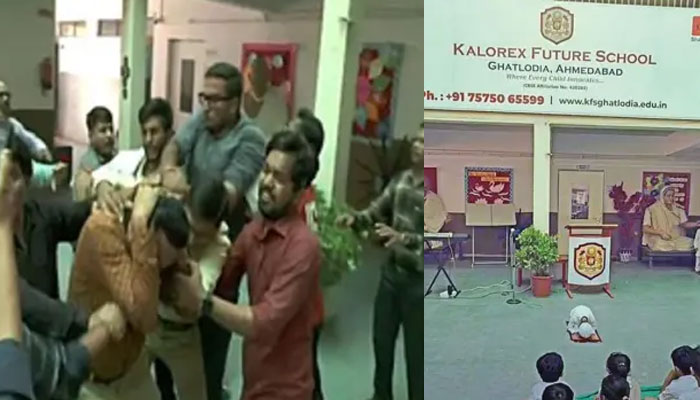
Following her death, students launched a protest at the University. They noticed him coming out of VC’s office, where they circled and attacked him. A video of the incident reportedly went viral on social media. Both male and female students were seen attacking the professor. The campus security team rushed to rescue the professor. A case under Sections 341, 323, 308, 148, and 149 of the Indian Penal Code (IPC) was registered against the students.

Professor Arvind, VC of the University, said, “The girl had taken admission in 2021. She was suffering from a chronic disease. She had dropped a year and again taken admission this year. She was reported unwell at 9.30 AM on Wednesday. An ambulance was called, and she was taken to the health centre. Her family was informed, and they came and took her home. We later received information about her death. I have not received any written complaint so far in the case, and hence, no inquiry has been marked. We have filed a police complaint about the professor being attacked.”

However, the students told a different story. A student, Harman Kaur, told Indian Express, “Jashandeep Kaur had a lung issue. Shewas admitted to the University in 2021. Dr Surjit’s behaviour was abusive towards her. She couldn’t meet the attendance criterion due to her poor health. Surjit then didn’t allow her to sit for her exams, forcing her to drop a year. She returned to the same class in 2023. She again faced some issues and applied for one month of medical leave, which was denied. She was feeling sick on Wednesday, after which her family was informed. We learnt that she died at her home later. She was being pressurised and was in depression. She is not the first girl whom Surjit had abused.”

20 female students accused Dr Surjit of harassment

On 15th September, at least 20 female students approached VC Arvind to complain against Dr Surjit, accusing him of harassment. Reportedly, he refused to accept verbal complaints. Later, a four-page written complaint against Dr Surjit was sent to the VC with the signatures of over 20 students. One of the students alleged Dr Surjit called her parents and questioned them about her character. Another student alleged he told her there must be a problem with her character as her parents don’t allow her to stay in a private accommodation as she was seeking a room in the hostel.

Upon receiving the complaint, the VC said, “An inquiry officer has been appointed to investigate the complaints. Now the University is peaceful, and everything is back to normal.”

Vadodara: Big blow to Congress as nearly a dozen party leaders join the BJP, organise a mega roadshow

0

In a big blow to the Congress Party, almost all the members of the party from Vadodara, Gujarat, joined the BJP in the presence of Gujarat BJP chief CR Patil. The development took place when Patil had been to Vadodara to welcome two former city presidents from Congress, Prashant Patel and Suresh Patel. During the event, a large number of members from the grand old party including the councillors joined the BJP.

According to the reports, the number of Congress leaders who joined the BJP is close to a dozen. While the Congress leaders held massive roadshows to get people to come to the event and join the BJP, Paatil made a visit to veteran leader Suresh Patel’s home before the event, greeting him and leading him to the site.

Vadodara city chief Prashant Patel, veteran leader Suresh Patel, former Vadodara Municipal Corporation (VMC) corporators Minal Gohil and Anil Parmar, real estate developers Bhavesh Patel and Sunil Agarwal, Jayesh Patel, and several supporters of the leaders were among the Congress leaders who joined the BJP on Sunday, September 17. 

While Prashant Patel, Bhavesh Patel, and Suresh Patel conducted roadshows with vehicles carrying BJP flags, Patil paid a visit to Suresh Patel’s place of residence with BJP Vadodara city president Vijay Shah and former Vadodara mayor Bharat Dangar. This was to welcome Suresh Patel to the BJP and join in his rally at the venue.

Patil enumerated many government projects implemented by Prime Minister Narendra Modi during the years he served as Gujarat Chief Minister in his address to a gathering of BJP leaders. The event was organized at a venue under the Solar Panel at the Akota-Dandia Bazar flypast.

Patil, who laid the virtual foundation stone for the Kamalam, also criticized the Congress, saying that the opposing party insulted PM Modi’s Jan Dhan Yojana but is now ‘feeling the pinch.’

“The Congress middlemen have stopped getting the kickbacks from the scheme. They also started believing that Modi was right when he said, ‘I am not corrupt, I will not allow corruption (Na Khaunga na khane doonga). We can only pray for Modiji’s good health to help him continue to serve the country and its people on his birthday today,” he said.

While addressing to the newly joined members of the BJP, Patil said, “People like Prashant (Patel), Suresh (Patel), and other leaders are strong on their own, but they felt that they want to serve people; service towards people has ceased in the Congress, and they have joined the BJP.”

“They (oppositions) don’t want to perform any seva, they only want to eat meva (dry fruits). In the BJP, it is the leaders and party workers who are involved in public service. Elections are contested by its workers. But it is true we lost many seats (in the 2022 state elections) by a small margin. Had we won the seats Congress won only by a margin of up to 5,000 votes, it would have been a Congress-mukt Gujarat,” he added.

Prashant Patel, the former Vadodara city Congress President who contested on a party ticket in the 2019 Lok Sabha elections, resigned from all positions on Thursday, September 14 citing his “conscience” encouraging him to embrace the BJP’s Hindutva thought.

“I had stopped going to Congress events for the last year or so… But my conscience kept telling me that since Prime Minister Narendra Modi is working for the betterment of the Hindu Rashtra, which is the identity of the country… I want to work for the Hindu community. The concept of Hindu Rashtra includes distributing equal benefits to all communities but it is taking the country on the path of Hinduism…”

Apart from Prashant, another Congress politician, Jayesh Patel, also indicated that he and his supporters would join the BJP on September 17.

Notably, Suresh Patel who was Congress President of Vadodara stated that he and his family had been associated with Congress for three decades. But he was recently suspended from his position without any notice for giving the party plot to RSS for a program. Patel is said to have joined the party with 1200 supporters.

Married woman consenting to physical relations with another man was aware of consequences: Jharkhand HC quashes rape FIR

0

Dismissing a rape case filed by a woman, the Jharkhand High Court on Monday (18 September) stated that the woman, who was married at the time, was fully aware of the potential consequences of engaging in a physical relationship with another person.

“Victim married V [name redacted] in the year 2018 as she was major; still without getting the marriage dissolved by the competent court of law, she established physical relation with the accused Abhishek Kumar Pal though on allurement to marry her. The victim being a major and married lady, was very well aware of the consequences of a physical relationship with another person, more so she had married in the year 2018. Therefore, the consent herein cannot be said to be obtained by the accused under misconception. Therefore, the allegations made in the FIR are believed that she was deceived by the accused,” the Court observed.

The woman alleged that the accused had lured her into a romantic relationship, engaging in physical intimacy, and pressuring her not to inform her parents about their relationship.

The accused then left to pursue his education and the woman got married to someone else. The accused continued to be in touch with the woman and promised to marry her. In 2019, the woman divorced her husband.

In 2020, the woman and the accused applied for marriage registration but the process was delayed owing to the COVID-19 lockdown. Meanwhile, the physical relations between the two continued.

When the woman disclosed their relationship to her parents, the family of the accused allegedly pressured him to refuse marriage, and the woman alleged criminal intimidation by the family of the accused.

A case was then filed against the accused, his brother, and his mother under Sections 376 (Punishment for rape), and 506 (Punishment for criminal intimidation) of the Indian Penal Code.

The court ruled that the accused could not be deemed to have obtained her consent under false pretence. The court also observed that the woman was still married to her former husband at the time of her physical relations with the accused.

The Court observed, “Indeed, no judicial divorce was taken by the informant-victim from her former husband. The divorce agreement, which is on record between the informant-victim and her former husband V, in which, by way of mutual agreement reduced in writing on Rs 20/- stamp the marriage dated 26.04.2018 between the victim-informant and V was dissolved, therefore, this marriage was not judicially dissolved by the competent court.”

“The victim was major since the very time when she came in contact with the accused and while during the love affairs of the victim with the accused Abhishek Kumar Pal at college time, the victim was major, while the accused was minor at that time being 2 years younger to the victim.”

Justice Chand further observed, “This agreement in regard to the dissolution of marriage is nothing but a waste paper which has not evidential value in the eye of the law. Since the marriage of the victim was solemnised with V on 26.04.2018′ but still after solemnisation of marriage, the victim continued in contact and established relation with the accused.”

The ruling came in a Criminal Revision filed against the order passed by the Sessions Court. Based on the allegations made in the FIR and the evidence collected, the Court said there was no sufficient ground to make out the offence under Section 376 of the IPC against the accused.

The order passed by the Court below was set-aside and the petitioner was discharged from the charge framed under Section 376 of the IPC.

PM Modi to convene Union Cabinet meeting at 6:30 pm today amid special session of Parliament

On Monday (18 September), PM Narendra Modi called a meeting of the Union Cabinet at 6:30 pm. The announcement comes in the wake of the ongoing special session of Parliament which commenced today and will continue till 22 September. 

The meeting of the Union Cabinet will be held in the old Parliament building. Though the government has not officially revealed the agenda of this meeting, media reports claim that several key bills that have been listed for consideration during the special session could be discussed.

Union Parliamentary Affairs Minister Pralhad Joshi has announced that the five-day special session will be discussing eight bills. These will include –

  1. The Advocates (Amendment) Bill, 2023 
  2. The Press and Registration of Periodicals Bill, 2023 
  3. The Post Office Bill, 2023 
  4. The Chief Election Commissioner and other Election Commissioners (Appointment, Conditions of Service and Term of Office) Bill, 2023
  5. A bill on the welfare of senior citizens 

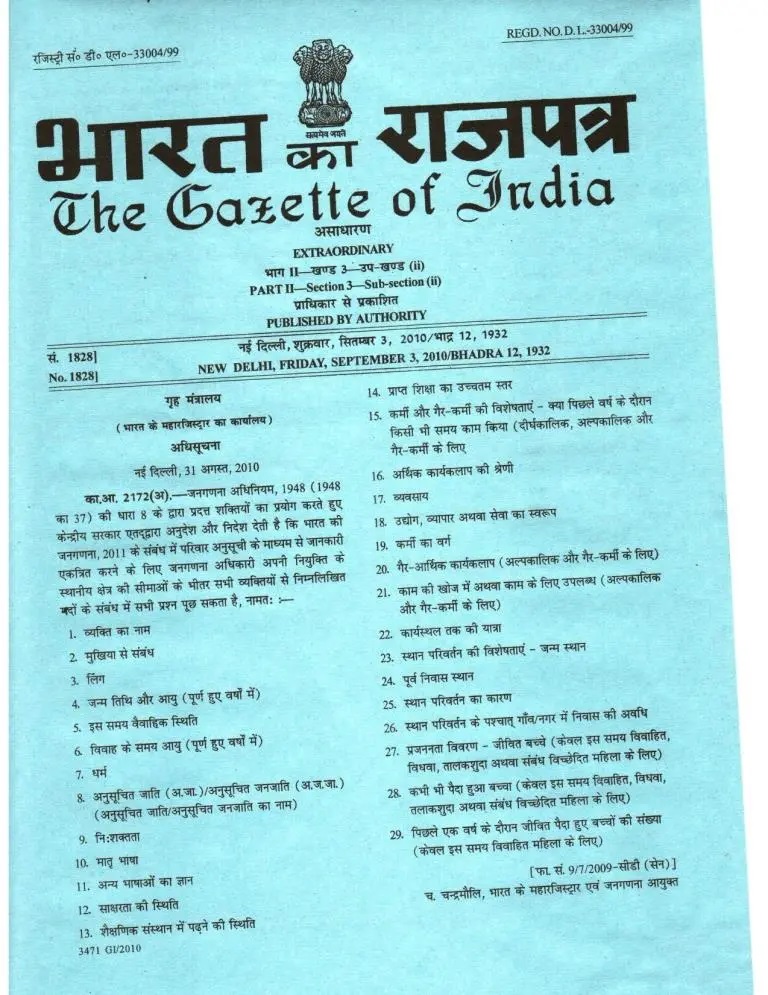
The Minister added that three other bills will be related to SC/ST order. 

However, considering the past governance model of PM Modi, particularly around the introduction of the Article 370 bill in the Upper House of the Parliament, speculations are rife that the government may introduce some surprise moves. 

Earlier in the day, the special session of Parliament began with Lok Sabha Speaker Om Birla congratulating the nation on the success of the G20 Summit under Bharat’s Presidency in New Delhi on 9-10 September.

Afterward, Prime Minister Narendra Modi addressed the Lower House by recalling several momentous periods in the history of the Indian Parliament.

Prime Minister Modi, while delivering the last address in the old Parliament building, recalled the day he first entered the Parliament as an MP.

While mentioning the historic decisions like the revocation of Article 370, and passing of One Nation One Tax, One Rank One Pension, and other such schemes, PM also appreciated and recognized the work done by the media in covering Parliament.

Currently, discussions regarding the 75 years of incredible journey of our Independent nation are ongoing in the old Parliament building.  

On the second day of the special session, 19 September, on the auspicious day of Ganesh Chaturthi, the Members of Parliament will begin regular work in the new Parliament building.

Sonia Gandhi prompts Adhir Ranjan Chowdhury to list her achievements in Parliament, directs him to ‘carry on’ after he stops abruptly

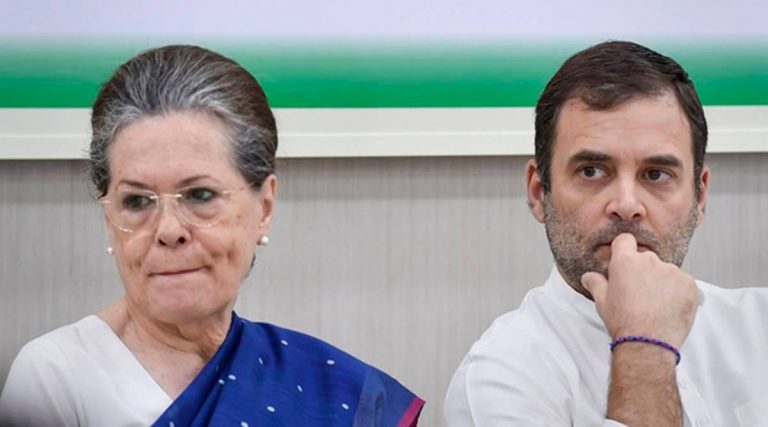
On Monday (September 18), Sonia Gandhi was seen prompting Congress MLA Adhir Ranjan Chowdhury to list her achievements during the special session of the Parliament.

While discussing the ‘Parliamentary Journey Of 75 Years’ in Lok Sabha, Chowdhury highlighted the ‘accomplishments’ of past Prime Ministers including Jawaharlal Nehru, Indira Gandhi, and Rajiv Gandhi.

At about 21:55 minutes into his speech, the Congress leader said, “I am tempted to take the name of Madam Sonia Gandhi ji, who took the initiative to pass the landmark legislation ‘Right to Information Act.”

Adhir Ranjan Chowdhury also credited Sonia Gandhi for other legislations such as the Right to Education Act and Mahatma Gandhi National Rural Employment Guarantee Act (MNREGA), and the National Food Security Act.

Later during his speech, Congress Chairperson Sonia Gandhi was seen telling Chowdhury to talk about Congress and Information Technology. She was also seen prompting him to add the grand old party’s supposed fight for granting women reservation.

When Speaker Om Birla indicated that his allotted time was over, Adhir Ranjan Chowdhury stopped abruptly to seek additional time from the Lok Sabha Chair. At that point, Sonia Gandhi was heard instructing, “Carry on, carry on, carry on…”

The Behrampur MLA quickly adapted to the situation and immediately listened to the directive of the party’s supremo. In August this year, Prime Minister Narendra Modi quizzed the Opposition Congress party about its decision to not allow Adhir Ranjan Chowdhury to speak on the no-confidence motion.

“Why did Congress sideline Adhir Chowdhury? Was there a call from Bengal?”, he was heard saying. Even Home Minister Amit Shah took potshots at the Congress party for sidelining the Behrampur MLA.

“Your party members don’t allow you to speak. They haven’t mentioned your name in the list. Why are you speaking during my speech? Sit down,” he had said.

India’s solar mission: ISRO’s Aditya L1 starts collecting scientific data using STEPs instrument

On Monday, September 18, the Indian Space Research Organization (ISRO) announced that its recently launched solar mission, Aditya L1 has commenced collecting scientific data from the space.

“Aditya-L1 has commenced collecting scientific data. The sensors of the Supra Thermal and Energetic Particle Spectrometer (STEPS) instrument have begun measuring supra-thermal and energetic ions and electrons at distances greater than 50,000 km from Earth,” the ISRO said on X (formerly known as Twitter).

The organization further revealed that the data that Aditya L1 has begun collecting would help the scientists analyze the behavior of particles surrounding Earth.

The STEPS instrument, which is part of the Aditya Solar Wind Particle Experiment (ASPEX) payload, has begun data collection. STEPS is in charge of monitoring supra-thermal and energetic ions with energies ranging from 20 (kiloelectronvolt) keV/nucleon to 5 (mega electron volt) MeV/nucleon, as well as electrons with energies surpassing 1 MeV.

These data are critical for understanding the behavior of particles in the Earth’s atmosphere, particularly in the presence of the magnetic field.

STEPS was activated on September 10 at a distance of more than 50,000 km from Earth, which is more than eight times the radius of the Earth. Following necessary instrument health checks, data collection proceeded until the spacecraft passed the 50,000 km mark from Earth.

Each STEPS unit is operating normally, and the accompanying figure shows observations indicating fluctuations in the energetic particle environment within Earth’s magnetosphere captured by one of the units.

These measurements will be carried out throughout the cruise phase of the Aditya-L1 mission as it approaches the Sun-Earth Ll point, offering critical insights into the genesis, acceleration, and anisotropy of solar wind and space weather phenomena.

STEPS was created by the Physical Research Laboratory (PRL) in Ahmedabad with assistance from the Space Application Centre (SAC), demonstrating India’s developing capabilities in space science and technology.

As per the official statement released by ISRO, STEPS consists of six sensors, each searching in a different direction and monitoring supra-thermal and energetic ions with energies ranging from 20 keV/nucleon to 5 MeV/nucleon, as well as electrons with energies surpassing 1 MeV.

STEPS was launched on September 10, 2023, at a distance of more than 50,000 kilometers from Earth. This distance is more than 8 times the radius of the Earth, putting it considerably beyond the radiation belt region. After completing the requisite sensor health checks, data collecting continued until the spacecraft had traveled more than 50,000 km from Earth.

“Each unit of STEPS is operating within normal parameters. These STEPS measurements will persist during the cruise phase of the Aditya-L1 mission as it progresses toward the Sun-Earth L1 point. They will continue once the spacecraft is positioned in its intended orbit. Data collected around L1 would provide insights into the origin, acceleration, and anisotropy of solar wind and space weather phenomena,” the official statement by ISRO read.

The Aditya-Ll spacecraft, India’s maiden mission to investigate the Sun, has made substantial progress. It recently performed its fourth earthbound maneuver, bringing it closer to the mission’s intended course.

On September 2, the spacecraft was successfully launched, carrying seven different payloads aimed at a comprehensive study of the Sun. Four of these payloads will study the Sun’s light, while the other three will measure in-situ plasma and magnetic field parameters.
ISRO’s portfolio of space exploration missions continues to grow, reflecting its dedication to expanding scientific understanding and space technology in India and beyond.

The main goals of the Indian solar mission include the investigation of the physics of the solar corona and its heating mechanism, the solar wind acceleration, coupling, and dynamics of the solar atmosphere, solar wind distribution and temperature anisotropy, and the origin of Coronal Mass Ejections (CME) and flares and near-earth space weather.

The Aditya-Ll mission’s next manoeuvre is scheduled for September 19.

‘Will the Supreme Court open at night for us as well? JNU VC raises questions on SC granting relief to Teesta Setalvad on a Saturday night

0

On Sunday, September 17, Santishree Dhulipudi Pandit, Vice-Chancellor of Jawaharlal Nehru University (JNU), raised questions on the working of the Supreme Court. She pondered whether would SC treat others as it did when it granted relief to activist Teesta Setalvad on a Saturday night.

The JNU VC was referring to the Supreme Court’s grant of interim protection from arrest to Setalvad on July 1 in a case concerning evidence falsification to frame innocent individuals in 2002 post-Godhra riot cases.

“The Leftist ecosystem still exists. You know, the Chief Justice of the Supreme Court opened the court on a Saturday night to give Teesta Setalvad bail. Will it happen for us,” she asked while at the launch of a Marathi book named ‘Jagala Pokharnari Davi Walvi’ (World-weakening Leftist Termites) in Pune.

Pandit has a long association with Pune as she was a lecturer in the Political Science department of Maharashtra’s Savitribai Phule Pune University. “To retain political power, you need (to have) narrative power. We need to have it. Unless we attain it, we will be like a directionless ship,” she said.

During the address, she also said that she was associated with RSS-affiliated organizations in her childhood years. “I was a Bal Sevika’ in my childhood. I got my sanskaras (values) from the RSS only. I am proud to say that I belong to the Sangh (RSS) and I am proud to say that I am a Hindu. I do not hesitate at all. Garv se kehti hu main Hindu hoon,” she repeated as the audience shouted the slogans of ‘Jai Shri Ram’.

“Left and RSS are individual ideologies. There has been a major paradigm shift post-2014 in the conflict between these two ideologies,” she said.

Pandit, who was appointed as JNU VC in February last year, stated that some individuals objected to her choice to display the national flag and Prime Minister Narendra Modi’s photograph on campus.

Pandit asserted she informed them they were eating free meals on campus paid for by taxpayers and that they should bow before the national flag and PM Modi’s portrait.

“Until I went to JNU, there was no photo of PM Modi, the President of India, or the national flag. Many people told me not to bring (them) on the campus. I told them you enjoy free meals here with taxpayers’ money, bow before them. He is the prime minister of the country. He does not belong to any party. More than a year has passed and nobody has protested against it,” she said.

In reference to the upcoming Nalanda University in Bihar, she stated, “I recently visited the Nalanda University at Bakhtiyarpur.” We should modify the name of Bakhtiyarpur. That’s a strange name.”

“Our Bharatiya civilization is superior, feminist, and the greatest in the world,” she said as she remarked on the country’s ancient civilization. “Draupadi is the first feminist and not one Simone De Beauvoir (French philosopher). Our civilization is nature-centric,” she said. 

On July 1, a 3-judge bench of the Supreme Court granted interim bail to controversial activist Teesta Setalvad. A bench of Justices BR Gavai, AS Bopanna, and Dipankar Datta was hearing the case. The larger 3-judge bench was formed minutes after a 2-judge bench of Justices Abhay S Oka and Prashant Kumar Mishra failed to arrive at a consensus on the appeal challenging the Gujarat High Court order refusing regular bail. 

As reported earlier, the 3-judge bench was formed within minutes, and the hearing was scheduled at 9.15 p.m. CJI Chandrachud, who was watching a Bharatnatyam performance at that time, got up multiple times and ensured the formation of a larger bench for the sake of Teesta Satalvad’s bail hearing.

Marathwada Water Grid Project: The much-needed project to solve the chronic water crisis in drought-prone Marathwada

On 16 September 2023, the government of Maharashtra held a special cabinet meeting in Chhatrapati Sambhajinagar in the Marathwada administrative division in the state. In the meeting, the state government took multiple decisions regarding Marathwada, approved many projects, and sanctioned various grants for development works in the region. In an interaction with the media after this meeting, Maharashtra’s chief minister Eknath Shinde said that the Marathwada Water Grid Project will be the game changer for this region and that it will bring prosperity to the farmers in the drought-hit Marathwada region.

CM Eknath Shinde said, “Marathwada Water Grid Project can be a very big game changer for this region. Unfortunately, during the two-and-a-half years of rule of the MVA government, it was put in cold storage. Had they been pushing it a little more, it would have advanced ahead by now. But it is our ill fate that they (Uddhav Thackeray’s government) did not do it. I don’t know if it was halted intentionally. We are taking it ahead. The union government and honourable Prime Minister Narendra Modi himself are ready to extend all the support we need for this so that the drought-hit region of Marathwada gets water and the farmers in the region prosper. So, in this way, it is a very big game changer project.”

CM Shinde also took a dig at the previous state government and said, “Some people say that you only do announcements but I would like to tell them that in the whole year whatever decisions our government took from the first cabinet till now, we have kept in mind the welfare of people. We have granted 35 irrigation projects for farmers. How many grants have been given by the earlier government? So, we don’t just make announcements and keep them on paper, we implement them,” CM Eknath Shinde said.

Further, Deputy CM Devendra Fadnavis also spoke after the Cabinet meeting and said that the state government has sent a newly updated proposal of the Har ghar Jal programme to the Centre and requested them to help us. “When Har Ghar Jal program was announced many states sent their proposals to the Centre. Unfortunately, the Maharashtra CM at that time did not send any proposal. Now our government has sent a newly updated proposal and requested them (Centre) to help us,” Devendra Fadnavis said.

What is the Marathwada Water Grid Project?

The Marathwada Water Grid Project is an ambitious project to provide a sustainable water supply to the drought-prone Marathwada region. The project was announced by former Chief Minister Devendra Fadnavis in 2016, with an initial budget of Rs. 25,000 crore. However, the budget has since been increased and can go up to Rs. 40000 crore till its completion which will be spent at various stages of the project.

Marathwada encompasses eight districts, namely Chhatrapati Sambhajinagar, Beed, Latur, Dharashiv, Parbhani, Hingoli, Nanded, and Jalna, collectively housing more than 12,000 villages.

In July 2019, the state cabinet approved Rs 4300 crores for the first phase of this water grid project in the Chhatrapati Sambhajinagar and Jalna districts. However, the government could not continue after the election in October 2019. The project which was stalled during the subsequent MVA government is now revitalised by the Eknath Shinde government in the recent cabinet meeting at Chhatrapati Sambhajinagar.

The project will involve connecting 11 dams in the Marathwada region through a network of pipelines. The dams to be connected in the region are Jayakwadi Dam at Paithan in Chhatrapati Sambhajinagar, Mula Dam in Chhatrapati Sambhajinagar, Siddheshwar Dam in Parbhani, Manjra Dam at Dhanegaon in Beed, Kesapuri Dam at Majalgaon in Beed, Terna Dam in Dharashiv, Sina Kolegaon Dam in Latur, Lower Terna Dam in Latur, Manar Dam in Nanded, Vishnupuri Dam in Nanded, and Yeldari Dam in Nanded district.

The total length of the pipeline network is expected to be around 3,000 km. The project will provide drinking water to over 2 crore people in 8 districts, 76 towns, 79 talukas, and over 12,000 villages. The pipeline, which will be laid for the water grid in Chhatrapati Sambhajinagar, will be 737 km long, while that in Jalna district will be 458.29 km long. The detailed plans for other districts are underway.

The Marathwada Water Grid Project is a complex project that will involve a variety of engineering challenges. One of the biggest challenges is the natural topography of the region. The region has a lot of hills and valleys giving it a topography of mid to high levels with diverse spreads of varying elevation over the terrain which will make it difficult to lay the pipelines. Devendra Fadnavis took up the challenge when he was chief minister of Maharashtra. After a halt of three and a half years to this project, he has taken the initiative to revive it as the deputy chief minister of the state.

To overcome this topographical challenge, the project will use a combination of gravity flow and pumping stations. Gravity flow will be used in areas where the natural topography is favourable. Pumping stations will be used to lift the water to higher elevations. The project will also use water purification plants to ensure that the water supplied to the people is of good quality. The water purification plants will be located at strategic locations along the pipeline network. The water supplied through this network will be used for drinking and civil use, irrigation, and industrial purposes.

In January 2018, a significant milestone was achieved as Mekorot Development & Services Ltd, the national water company of Israel, and Maharashtra Jeevan Pradhikaran signed a Memorandum of Understanding (MoU) for the Marathwada Water Grid Project. This collaboration with Israel, known for its expertise in water management, holds immense promise for the Marathwada region, which spans over 65,000 square kilometres and grapples with inadequate rainfall, resulting in distress among farmers and frequent crop failures leading to widespread farmer suicides.

Marathwada Water Grid Project Map. Image Source: Facebook Page Chhatrapati Sambhajinagar

The Marathwada Water Grid Project is an ambitious project that has the potential to transform the Marathwada region. The project will provide a sustainable water supply to the people, which will help to improve their quality of life and boost agriculture and industrial development in the region.

A Brief History of Marathwada Water Crisis Resolution Efforts

During the period of Congress-NCP governance, spanning from 1999 to 2014, a notable collaborative effort emerged within Marathwada, involving representatives from various political parties. Their common goal was to address the region’s pressing water crisis by linking the Krishna River basin to the Godavari River basin. This ambitious project envisioned the transportation of approximately 27 TMC (thousand million cubic feet) of water from western Maharashtra to Marathwada, primarily through Marathwada’s southwestern regions.

Vilasrao Deshmukh, a prominent Congress leader, held the position of Chief Minister of the state during this crucial time. His cooperative relationship and understanding with the opposition leader of the BJP, Gopinath Munde, played a pivotal role in forging a consensus. As a result, regional policymakers mutually agreed to divert 23 TMC of water from the Krishna River basin to alleviate Marathwada’s water woes.

Of the allocated 23 TMC, it was anticipated that villages in Beed and Dharashiv districts would receive 7 TMC of water through the Krishna-Marathwada scheme, sourced from the Ujani dam. However, it’s important to note that a dispute surrounding the allocation of the remaining 16 TMC of water from the Krishna basin to Marathwada remains unresolved and is currently pending before the Krishna Water Disputes Tribunal.

It is also notable that Vilasrao Deshmukh was chief minister of the state for more than nine years in three different terms. He hails from Latur in the southern part of Marathwada. He could not bring a drop of water to Latur. He had to face fierce opposition from the Congress and NCP MLAs from western Maharashtra before considering any demand of people from Marathwada. This also affected the funds allocation. Latur was also worst affected by the severe water crisis in Marathwada that lasted from 2012 to 2016.

In such a situation, Devendra Fadnavis became the chief minister of Maharashtra. It was Chief Minister Devendra Fadnavis who in 2015-2016 sent a water train from Miraj in western Maharashtra to Latur – the hometown of the second longest-serving chief minister of the state. Next year, Fadnavis came up with the idea of linking all the dams in Marathwada with a pipeline. This was named as Marathwada Water Grid Project. The project is expected to mitigate multiple issues in the region. Let us now dive deeper into the socioeconomic problems due to the scarcity of water in this region.

Water Scarcity is the root cause of many problems in Marathwada

The Marathwada region has historically had no other revenue source than agriculture. Nizam implemented the Jagirdari system where local feudal landlords would exploit others as labourers in their farms. After merging with the Indian Republic, the region experienced perpetual neglect. The water scarcity which already prevailed, was joined by the irregular rain pattern due to the climate change over the next decades. Every 2 decades, this region experiences a severe drought affecting the rainfall for continuous 3 to 4 years. This has given politicians an uncontrolled freedom to become more exploitative in this region which has the worst poverty index in the state.

As a result, people gradually left farming and started pursuing higher studies. Migration to Pune and Mumbai became the life goal of the youth in Marathwada. After the Jayakwadi dam was built in 1976 near Chhatrapati Sambhajinagar, some industries dared to step into this region. With this dam, Chhatrapati Sambhajinagar went on to become the only industrial hub in the region and the sole option of migration within the region for the local youth. Operating water tanker services and illegal smuggling of sand from the dry river basins became attractive businesses for mafias.

As recent as 2018, about 4000 water tanker service operators were active in Marathwada. These operators take water from private borewells and sell it at any price. The cost goes up every week especially from the first week of February when most of the water bodies in the region see a near bottom level. This water tanker business has taken a heavy toll on the groundwater level of the region because nobody practised groundwater recharge for decades before Devendra Fadnavis brought in the Jalayukt Shivar Yojana (the water-rich farmland scheme) in 2016. This scheme was focused on groundwater recharge as well as broadening and deepening the river banks.

Implementation of this Water Grid Project is important; but not that easy

Like every audacious goal, the Marathwada Water Grid Project also has its own perceived challenges to address. Many self-styled experts have talked about those challenges. One of the biggest challenges is the scarcity of water in the Marathwada region. The region is frequently affected by droughts, and the dams in the region seldom fill up to their full capacity. This raises the question of how the pipeline grid will be profitable if there is scarce water in the first place.

The cost of the Marathwada Water Grid Project is estimated to be Rs. 40,000 crore. This is a huge investment, 60% of which is to be borne by the implementing company while 40% will be given by the state government under a hybrid annuity model. The 40% amount will be given during the construction period in instalments based on the percentage of construction completed and the rest of the amount will be given after the project completion. The advantage of HAM is that it gives enough liquidity to the developer and the financial risk is shared by the government. The pace of industrialisation growth after this project is expected to be higher. Farm produce is also expected to improve. But everything is just on paper right now, there is no clear idea about the time to recover the expenditure.

The pumping of water through the pipeline grid will require a lot of electricity. This will lead to high electricity bills for the consumers which are local bodies in this case. For example, the Latur municipal corporation pays crores of rupees for the electricity bill for pumping the water supplied to the city from the Manjra dam. Besides, the leakages and maintenance issues of the pipeline may lead to various local disputes. Therefore, carefully planned implementation of this project is extremely necessary to ensure that the people get the benefits aimed by this project.

Plight of Marathwada

The plight of Marathwada is much more than just the water and drought issue. The region was under the rule of the Nizam of Hyderabad till 17 September 1948, when it was merged into the Indian Republic after a brief military action of 4-5 days. The Nizam of Hyderabad was a Muslim ruler who ruled over a large part of the Deccan plateau, including Marathwada. The Nizam’s rule was oppressive and tyrannical. The people of Marathwada suffered under his rule. In 1947, India gained independence from British rule. However, the Nizam of Hyderabad refused to join the Indian Union. He wanted to remain an independent ruler. The Indian government launched a military operation in September 1948 to liberate Hyderabad. The operation was a success, and Hyderabad was merged into the Indian Union.

After independence, Marathwada was merged into the state of Maharashtra. However, the region has always received step-motherly treatment from the state government. Unlike Vidarbha, another drought-prone region in Maharashtra, Marathwada did not put any condition to merge in the Marathi state. However, it has always received step-motherly treatment from the state government. Nagpur in Vidarbha was given an assembly house and a dedicated winter session of the assembly, the status of a deputy-capital (or sub-capital), a high court bench, and whatnot.

But Marathwada got only a high court and a promise to hold an annual meeting of the state government’s cabinet in the Chhatrapati Sambhajinagar city. All other questions of the region went unanswered for the last 75 years as the cabinet meeting promise was also not kept. This cabinet meeting would not happen for years. Even in 2016, when Devendra Fadnavis was the chief minister, this meeting had taken place after a gap of 8 years.

As the Hyderabad liberation day which is also known as the Marathwada Mukti Divas in this region marks the completion of 75 years on 17th September 2023, this Marathwada Water Grid Project is seen as a ray of hope for the long-ignored region waiting to recover its eternal backlog of development.

Freedom fighters, governance, and temple of democracy: Highlights of PM Modi’s historic speech during last sitting at old Parliament

On Monday, September 18, the special session of parliament began with Lok Sabha Speaker Om Birla congratulating the nation on the success of the G20 Summit under Bharat’s Presidency in New Delhi on 9-10 September.

“The success of G20 Summit under India’s Presidency has filled every Bharatiya with pride,” the Speaker said. He appreciated the Prime Minister’s vision of making Bharat’s G20 Presidency a people-run event. Speaker Om Birla highlighted and lauded the achievements of the G20 Summit including the New Delhi Declaration, inclusion of African Union in the G20, giving prominence to the voice of the Global South among many others.

“Bharat emerged as voice of peace and restraint in the world during G20 Summit,” he said.

The LS Speaker concluded his remarks on 75 years of Bharat’s Parliamentary Democracy by remembering Ganesh Vasudev Mavalankar, the first Speaker of the Lok Sabha of independent India. Following this, Prime Minister Narendra Modi began his address by recalling several momentous periods in the history of the Indian Parliament.

PM Modi recalled his first steps inside the Parliament

Prime Minister Modi, while delivering his last address in the old Parliament building, recalled the day he first entered the Parliament as an MP. He said, “Today, when we are going to leave this Parliament and head to the new Parliament, we are seeing that it is the opportunity to express the respect that has been given to the emotions of the common Bharatiya.”

“When I became the member of Parliament for the first time, and entered this building as an MP, naturally, I bowed down at the entrance of the Parliament and entered this temple of democracy. That moment was filled with emotions for me, I couldn’t have imagined. But it is the power of Bharat’s Democracy, it is the example of the devotion of the common citizen for the Bharatiya Democracy that a child from a poor family working at a railway station could enter the Parliament. I would never have imagined that the nation would bestow so much respect, so many blessings, and so much love on me. I had never thought,” the Prime Minister said.

A temple of Democracy built by Bharatiyas

PM Modi recalled Bharat’s 75 years of journey as a parliamentary democracy. He said that while the decision to build this structure was that of the foreign rulers, the work put into actually building it was done by Bharatiyas.

“Before independence, this Parliament was the place of the Imperial Legislative Council. After independence, this was re-identified as the Parliament building. It is true that the decision to build this structure was that of foreign rulers. But we can never forget that the sweat put into building this Parliament was that of my people, the hard work was that of my people and the money too was that of my people,” PM Modi said.

“Although we will be entering the new Parliament building, but this old Parliament, too, will continue to give inspiration to the coming generations. This is a significant chapter in the golden journey of the Indian Democracy which, through this building, will continue to introduce the world to how Democracy flows in India’s veins,” he said.

PM Modi congratulated Indian scientists in his last address at the old Parliament

Recalling Bharat’s historic Chadrayaan-3 success, the Prime Minister congratulated the Bharatiya scientist community at large for their continuous dedication and achievements across sectors.

“The world all over is talking about the achievements of Bharat and that too with pride. This is the result of our combined initiatives over 75 years. Not only Bharat, but the entire world is rejoicing the success of Chandrayaan-3. A new face of India’s capabilities, which is associated with advancement, science, technology, with the capabilities of our scientists, the power of 140 crore citizens, it is going to create a new impact on the nation and the world. This Parliament and through this Parliament, I would once again like to congratulate the nation’s scientists and their colleagues.”

Role of India’s federal structure in the success of G20 Summit

The Prime Minister thanked the Parliament for the successful culmination of the G20 Summit. “I believe you have increased the pride of the nation’s citizens. I thank you,” PM said.

“The success of G20 is the success of 140 crore citizens. It is Bharat’s success. It is not a person’s success, it is not a party’s success. Bharat, with its federal structure, its diversity, hosted more than 200 summits across 60 locations with various governments; this has left an impact on the world. This is worth celebrating.”

He recalled that it was during India’s Presidency that the African Union (AU) became a permanent member of the G20. “I cannot forget that emotional moment when the AU was declared (a member) and the AU President said to me that ‘it was such a moment in my life that I might cry while speaking.’ You can imagine how it was in India’s destiny to fulfil such big aspirations.”

The Prime Minister also took a jibe at doubters saying that naysayers were at it again doubting India’s Presidency but were proven wrong again. “Many people have this nature to doubt Bharat. This has been going on since India got independence. This time too it was being said that ‘there will be no declaration, it is impossible’, but it is Bharat’s power that the declaration was released, that too unanimously, with a road map for the future,” the PM said.

The Prime Minister welcomed the Speaker’s announcement for a P20 Summit where Speakers of Parliaments of the G20 nation states will meet ahead of the conclusion of India’s Presidency at the end of November this year.

PM Modi remembered 2001 terrorist attack on the Parliament

PM Modi also recalled the 2001 terrorist attack on the Parliament and paid tribute to the bravehearts who died in a bid to protect the nation.

He said, “The terrorist attack was not only an attack on the Parliament building but in a way, an attack on the soul of our Democracy. This nation can never forget that day. Today, I bow down to those who took the bullets in order to save the Parliament and the Parliamentarians. They are not amongst us, but they made the ultimate sacrifice.”

Tribute to freedom fighters

The Prime Minister recalled the bombings by revolutionary freedom fighters Bhagat Singh and Batukeshwar Dutt in the Central Legislative Assembly against the British Raj. He said, “This is that Parliament where once Bhagat Singh and Batukeshwar Dutt with their bravery shook the British Raj with a bomb blast.”

The Prime Minister added, “The echoes of that bombing will never let such people sleep who want the good for the nation.”

PM recounted historic events that took place in the Parliament

The Prime Minister paid tribute to former Parliamentarians in his address and recounted the momentous decisions undertaken in the Parliament in the past 75 years. He pointed out that all communities across the nation have been represented in the Parliament. He said that women too have played a key role in elevating honour of the Parliament.

The Prime Minister recalled former member of Lok Sabha Indrajit Gupta for his 43-year-long tenure as an MP. He also remembered Samajwadi Party MP Shafiqur Rahman saying that he is serving the Parliament even at the age of 93. He added, “It is the power of Bharat’s Democracy that 25-year-old Chandrani Murmu became the member of this Parliament.”

“Debate and discussion are something we have all exchanged and even initiated, and yet we have all participated like members of a family. Despite all the differences, we don’t leave with any bitterness. Even when we meet years after leaving Parliament, we don’t forget our colleagues and our time together. This has been my experience,” the PM said.

The Prime Minister recalled the terms during the pandemic as well. “Despite the threat of COVID-19, our Parliamentarians attended the House proceedings and did their duty. We did not let the nation’s work come to a halt. We maintained social distance, had to test repeatedly, wear masks, seating arrangements were changed, timings were changed, the members did it all so as to keep working for the nation”, he added.

The PM paid a special tribute to former Parliamentarians who continued their connect with the Parliament and fellow MPs even years after their tenures. “I have seen that those who must have served 30-35 years ago kept visiting the central hall without fail just like how people have a habit of visiting temples. This is how this place attaches you to itself, and many such leaders, who are not in service today, they continue to make visits once in a while. This is the effect of this Parliament.”

PM Modi also recalled Jawahar Lal Nehru’s first speech post-independence and the dark chapter of Emergency during Indira Gandhi’s tenure. “This is the very Parliament where Democracy was born again,” he said.

PM Modi recounted the unanimous assent given by the Parliament to the formation of Chhattisgarh, Uttarakhand, and Jharkhand but also remembered the violence in the course of demand for the formation of Telangana.

He also remembered former Prime Ministers Atal Bihari Vajpayee, Manmohan Singh, Narsimha Rao, and VP Singh, and their contributions. The Prime Minister also expressed gratitude to former President Ramnath Kovind and current President Droupadi Murmu for their guidance during his tenure.

While mentioning the historic decisions like revocation of Article 370, passing of One Nation One Tax, One Rank One Pension, and other such schemes, PM also appreciated and recognised the work done by the media in covering Parliament.