Home Blog Page 1797

From Commonwealth Games to G20 Summit: Delhi transforms from a symbol of corruption and infrastructural woes to a modern-day national capital

India is hosting the G20 conference this year in which top leaders, diplomats and businessmen of 20 major economies of the world are scheduled to stay in Delhi during the period. The face of the entire national capital has been modified. It took several months to prepare for the momentous occasion.

Since India assumed the presidency of the G20 in December 2022, significant events related to the highly reputed conference have been organised in parts of the country from Srinagar in Jammu and Kashmir to Thiruvananthapuram in Kerala and from Guwahati in Assam to Kutch in Gujarat. Multiple cities hosted important international events.

Any country that is given the honour to host a global event is provided with the golden opportunity to exhibit its capabilities, promote its culture and impart knowledge about its public welfare programmes to the rest of the world.

Prime Minister Narendra Modi made it crystal clear from the very beginning that India’s G20 presidency would be employed to advance the idea of ‘One Earth, One Family, One Future.’ India counted green development and women-led progress among the priorities of its G20 presidency.

Now, let us travel back in time to 2020 when there was a different government in the country. Dr Manmohan Singh was the Prime Minister and the Congress-led United Progressive Alliance, known as UPA (which has now abandoned the name and formed a new alliance called I.N.D.I.A.) was in power at that time.

Former Congress president and Rae Bareli MP Sonia Gandhi was at the helm of affairs. India had the chance to demonstrate its power to the world even then. With six years in office, the Congress government had ample time to accomplish a lot of things. Commonwealth Games were held in India in 2010 in which 4352 players from 71 countries participated.

However, what did the previous government do with the chance? Not only was it lost, but the country’s image was also tarnished due to scams that people believed India was incapable of hosting even the most basic international event, let alone promotion of the culture.

Although India had already hosted the Asian Games in 1951 and 1982, the 2010 Commonwealth Games were the biggest sporting event to take place in Delhi up until that point. The fraud in the Commonwealth Games cost the nation the most money in the chain of severe corruption scandals witnessed during the UPA period.

The event didn’t deliver any good news for India in terms of safety or sanitation, labourers’ allowances and conditions, delayed work, claims of racism, allegations of a rise in prostitution, or in any other area.

Whenever India showcases its strength to the world through G20 and makes the world aware of its culture, the time has come to assess how the country missed the opportunity in 2010 whereas the chance received in 2023 was used in the best possible way and that too without any controversy.

However, as opposed to the Commonwealth Games, which was a sporting event, the G20 is a diplomatic gathering, but there is a connection between the two because both are global events. The former could have been utilised to enhance India’s position on the international stage if the government of the day had displayed the right intentions.

A major reason for this was that during the UPA era, the administration had nothing to show in the name of achievements and on the other hand the Modi government is active in the implementation of the schemes.

2010 Commonwealth Games: Corruption, negativity and blot at nation’s image

Crores of rupees were spent for the Commonwealth Games, but the conditions in Delhi did not improve at all. It was promised that the national capital would be transformed into a city of international stature, but nothing of the sort occurred. Furthermore, the accommodation for the players and foreign nationals wasn’t completely prepared.

Imagine the impression that those who came to India from outside would have had of the country. The stadiums were not functioning properly, including one ‘Shivaji Stadium’ which was not even ready to host any game.

Even the ticket sales did not begin on schedule. Many roads were dug out and several had potholes in various places. Demolition was carried out in the name of the Commonwealth Games, but no repair and beautification work was undertaken. The planning for the event had a fixed deadline of March 2010, but it had to be extended to June, then to July, and eventually to August.

The crucial point is that it was established in 2003 that Delhi would host the Commonwealth Games in 2010. An estimate of Rs 19,500 crore was proposed for organising the Commonwealth Games, and as the budget grew, it became three times more, however, the result was underwhelming.

The proposed budget for the Commonwealth Games was Rs 19,500 crore, but the outcome was underwhelming even though the budget went up three times. The expense of restoring the stadiums was in the millions. The budget for the event was hiked numerous times and money was wasted, despite the fact that India was experiencing grave problems at the time, including poverty and malnutrition.

Today, while work is in full coordination for the G20, Mani Shankar Aiyar, who was a prominent Congress leader at that time had wished for the failure of the Commonwealth Games. Mani Shankar Aiyar served as the UPA’s Sports Minister at one point in spite of his opinion.

He stated that he would be very sad if the event became successful because then there would be more sporting events in the future. He opined, “I am delighted in a way because rains are causing difficulties for the Commonwealth Games. Basically, I will be very unhappy, if the Games are successful because then they will start bringing Asian Games, Olympic Games and all these.”

The state of education, infrastructure and health facilities was in such a poor condition that even Wipro founder Azim Premji criticized the expenditure. However, now, India not only provided 200 crore doses of indigenous vaccine during the Corona period but also sent them to more than 100 countries.

Let us have a look at how the underprivileged were treated during the Commonwealth Games. Two lakh people were ejected forcibly from 19 regions of Delhi under the pretext of work. This was discovered as a result of a study conducted by a non-governmental organisation (NGO) named the Housing and Land Rights Network (HLRN).

The majority of these individuals were not even relocated, whereas in the present, Prime Minister Narendra Modi refers to workers as “Shramjivi” and honours them during special occasions like project inspections and inaugurations as well as interacts with them.

Now, understand what happened during the Commonwealth Games. The working conditions were extremely poor. The employees were forced to work the entire day for less than 100 rupees and when many of them were hurt in accidents, they weren’t even allowed time off for treatment.

The Commonwealth Games saw widespread instances of child labour, notwithstanding the fact that it is forbidden in India. There were dozens of cases of both child labour and forced labour. The event registered a considerable upsurge in prostitution as well. The members of the escort service earned a lot of money. Just consider how a programme that could have helped India’s tourism industry was reduced to.

Women from other states were being brought as sex workers. One NGO even charged that more than 40,000 women were transported from the northeastern states alone. A ‘toilet paper scandal,’ which was a fraud in toilets also surfaced during the time. One toilet paper was bought by the organisers for $80. Similarly, liquid soap was purchased for $61 and first aid kits were purchased for $125. A tissue paper was purchased for 1500, in terms of rupees.

The Comptroller and Auditor General of India (CAG) discussed these frauds in-depth as well. About half of the volunteers quit their positions right before the Commonwealth Games. They weren’t offered any money and a certificate was used to tempt them.

Half of the 22,000 refused to work after training because of the poor system. These games were not even attended by spectators. There were complaints that the players were treated like animals in the opening ceremony. Australian athletes alleged that they were mistreated.

Racist incidents that targeted African sportsmen came to light. The highest honours are now bestowed upon Prime Minister Narendra Modi by nations like Papua New Guinea. African nations received Corona vaccines from India.

The situation in the newly constructed sports village was likewise dismal. Thousands of used condoms clogged the drainage system there. A number of countries also threatened to boycott the Commonwealth.

Suresh Kalmadi was given the task of planning the event and afterwards, the Central Bureau of Investigation (CBI) designated him as the primary accused in its charge sheet. It was revealed how he handed over several contacts to businesses in contravention of the law. He was released on bail after serving an 11-month sentence in Tihar Jail.

Now, think about the effect all of this would have had on the country’s image. There was time to use the occasion to improve our reputation, but instead, India’s standing fell so much that the nation had to deal with disgrace.

G20: India made good use of the opportunity and promoted its culture

The G20 is being successfully organised in India and no scam-related news has come to the fore. India is heavily promoting tourism under the umbrella as well. The Delhi Metro offers special passes so that visitors from other countries can visit significant locations in the city.

There was a separate meeting of the culture ministers of these nations and they ranged from tourism working groups to finance working groups. India has used the grand platform to regularly update the world about its accomplishments in the digital industry.

India’s most hi-tech convention centre was built in Delhi on 123 acres, free from any controversy. Not only was it named ‘Bharat Mandapam’ inspired by Lord Basaveshwara of Karnataka, but it also housed an idol of Nataraja, the presiding deity of the Chidambaram temple in Tamil Nadu.

There were no accusations of any corruption in the construction of the complex built at a cost of Rs 2700 crore. Prime Minister honoured the labourers and they did not face any issues here.

Numerous G20-related events were held in more than 50 Indian cities and boosted tourism. The important fact is that Delhi and the centre had the same party government during the Commonwealth Games. However, currently, there is Arvind Kejriwal’s government in Delhi, which remains in the headlines due to its conflicts with the Lieutenant Governor (LG) and the centre administration.

Despite this, there was no negligence in the development of infrastructure. The Lieutenant Governor has assured that these development works are set to continue in this manner. The Dhaulakuan-Airport route in Delhi was illuminated in addition to the roadways near Pragati Maidan. Numerous metro stations were renovated.

Up to Rs 100 crore in funding has been given, according to the New Delhi Municipal Council’s (NDMC) announcement from December 2022, to upgrade Delhi’s infrastructure. There are now new parks. The key aspect is that it is evident where the funds are being allocated. Additionally, it is visible how the Indian government is advancing our culture.

Today, when more than a billion transactions were made through the Unified Payments Interface (UPI) in the month of August 2023, the success of “Digital India” reflects the new story of India. Overall, more than Rs 15 lakh crore was transferred through UPI this month. The German minister used it to buy vegetables on the roadside and praised the system.

Where the opportunity was missed during the Commonwealth Games, this time it was capitalised on. A new Parliament building is built as part of the Rs 13,00 crore Central Vista Project. Moreover, money was not a topic of contention here either.

It is not that only one party can make such events successful. It is possible if the objective is right and the leadership is strong. Take Odisha as a case in point. It benefited immensely from the impressive organisation of the Hockey World Cup and its image uplifted to a level where the state raised an investment of Rs 10.3 lakh crore through ‘Make in Odisha Conclave.’ The event took place in January 2023 and a grand stadium was built in Rourkela in just 15 months.

Notably, during the Commonwealth Games in which the country’s image was tarnished, today the secretary of the same Commonwealth, Patricia Scotland has lauded India during the G20 Summit.

According to her, doing so would render it easier to address global concerns. Furthermore, she applauded the Indian Space Research Organisation’s (ISRO) “Aditya L1” and “Chandrayaan 3” missions. She also supported India’s digital transformation. India, based on her, is achieving extraordinary success.

Tehreek-e-Taliban Pakistan captures several villages in Khyber Pakhtunkhwa, attacks army posts killing 6 Pakistani soldiers

Tehreek-e-Taliban Pakistan (TTP) on Wednesday (6 September) launched a “large-scale” military offensive against the Pakistani army in the Chitral district of Pakistan’s Khyber Pakhtunkhwa province. The major assault on the Pakistani army, which TTP has reportedly named ‘Operation Malakand’, has attacked several army posts in which several Pakistani soldiers have been killed or injured. Additionally, the TTP terrorists have also claimed that they have captured several villages in the area.

The attack began in the early hours of the day, a TTP commander told The Khorasan Diary over the telephone. He said, “An operation in the Chitral district has been launched by the TTP and various villages have been captured. It started at 4 AM (Pakistan time) this morning. We will share pictures. Currently, we are having poor internet issues.” 

Speaking with The Khorasan Dairy a senior Pakistani security official rejected the claims made by the TTP and said that no areas have been captured by the terror outfit.

Notably, the Khorasan Diary claims to be a non-partisan platform, one that provides real-time information and analysis. 

In a statement to local media, TTP spokesman Muhammad Khurasani asked the local citizens to remain calm as their “war” was against the Pakistani army which he referred to as “usurping” and “oppressive” security agencies. It is worth noting that today Pakistan is marking its Defence Day

Khurasani said, “We want to say to the people of Chitral that you should remain calm. No harm will come to you. Our war is against usurping and oppressive security agencies.” 

Meanwhile, various unconfirmed videos have surfaced online on X (formerly Twitter) in which it is being claimed that the Pakistani SSG commands have been called in the Chitral area to fight 500 TTP terrorists who have captured a few villages.

Several social media handles including prominent journalists having expertise in Pakistani affairs have claimed that clashes took place between Pakistani forces and TTP along the Durand Line. This resulted in the closure of the Torkham border crossing. 

While the Pakistani army has denied that it has sustained any casualty, TTP terrorists have claimed that they have killed 6 Pakistani soldiers. 

Interestingly, the Pakistani media has maintained a strategic silence and for obvious reasons, it has not covered TTP’s major offensive against the Pakistani army.  

It is important to note that the TTP which is also known as Pakistan Taliban had declared an all-out war against the Pakistani military in November 2022. It vowed to defeat the Pakistani army and establish Sharia laws in Pakistan, just like the Afghan Taliban did in Kabul. 

In the recent past, the Pakistani army and establishment-sponsored terror industry have come back to haunt it. It has been hit by a wave of terrorist activities carried out by the terror outfits that they have been nurturing for decades.

As per several UN reports, TTP is said to be working closely with Al-Qaida and it is being blamed for several deadly attacks across Pakistan.

Earlier, on the 2nd of September, a Pakistan Army Major and a soldier were killed in a gunbattle with TTP. The Pakistani army suffered these casualties during an intelligence-based operation in the northwest tribal district bordering Afghanistan. 

Additionally, two days earlier, nine Pakistani soldiers were reportedly killed in a suicide attack by the TTP in the Khyber Pakhtunkhwa province.

AAP and Congress Punjab units refuse to share seats as I.N.D.I. alliance’s “as far as possible” resolution faces its first roadblocks

Just days after the opposition alliance, I.N.D.I.A. passed a resolution to fight the 2024 Parliament elections together “as far as possible”, leaders of alliance partners AAP and Congress have refused to form an alliance in the state. 

Refuting the possibility of an alliance with Congress, AAP leader and Punjab Minister Anmol Gagan Mann categorically stated that there would be no alliance with the Congress party in the state. She added that AAP would contest elections on all 13 Lok Sabha seats in the state under its own symbol.

Mann said, “The decision at the national level will be made by the high command, but the Aam Aadmi Party will contest on its own symbol in all 13 seats in Punjab. We cannot have any agreement with the Congress.”

Interestingly, several Congress leaders in the state also vehemently oppose the idea of forging an alliance with the Aam Aadmi Party. 

Evidently, on Tuesday (5 September) state leadership of the Congress party asserted that they are against any kind of alliance with the AAP in Punjab for the 2024 Lok Sabha polls. They asked the state Congress President Amarinder Singh Raja Warring and the leader of the Opposition, Partap Singh Bajwa, to convey to the party high command that they are against the alliance.

Remarkably, Bajwa had expressed his strong dissatisfaction with the idea of forming an alliance with AAP. Speaking against an alliance with AAP, Bajwa said, “Our party workers do not want to be even remotely associated with people who are anti-Punjab.” 

Similarly, on the issue of state leadership advising not to form an alliance with AAP, Raja Warring stated that the issue would be taken up with the party’s national leadership. However, he added that the party is preparing to contest all 13 Lok Sabha seats in Punjab. 

He said, “There are people who are for it and against it. This is the party’s internal issue; we will have discussions with our leadership. Congress President Mallikarjun Kharge and Rahul Gandhi have asked us to prepare to contest all 13 Lok Sabha seats to fight against the government.” 

Speaking on the development, Former Punjab Congress Chief Navjot Singh Sidhu claimed that the decision of the party’s high command is supreme.

Earlier, on the 1st of September, the opposition alliance passed a resolution that they would contest the 2024 Lok Sabha polls together “as far as possible“. The alliance claimed that seat-sharing arrangements in states would be concluded at the earliest in a “collaborative spirit of give-and-take.” 

However, in less than a week, both the alliance members in the state have said no to the I.N.D.I. alliance in Punjab, yet again exposing the ‘as far as possible’ caveat in the resolution.  

PM Modi departs for Indonesia to take part in ASEAN-India Summit and East Asia Summit in Jakarta

0

Prime Minister Narendra Modi emplaned for Indonesia on Wednesday to take part in the ASEAN-India Summit and East Asia Summit.

Earlier, in his departure statement, the Prime Minister said that he is looking forward to exchanging views with other leaders on practical cooperation measures to collectively address the global challenges.

He also termed the engagement with the ASEAN group as an important pillar of India’s ‘Act East Policy’.

The Prime Minister is visiting Jakarta at the invitation of the Indonesian President, Joko Widodo.

“My first engagement will be the 20th ASEAN-India Summit. I look forward to discussing with ASEAN leaders the future contours of our partnership, which has now entered its fourth decade. Engagement with ASEAN is an important pillar of India’s ‘Act East’ policy. The Comprehensive Strategic Partnership entered into last year has injected new dynamism in our ties,” the Prime Minister said.

“Thereafter, I will be attending the 18th East Asia Summit. This forum provides a useful opportunity to deliberate on issues of importance to the region including food and energy security, environment, health, and digital transformation. I look forward to exchanging views with other EAS Leaders on practical cooperation measures to collectively address these global challenges,” he added.

PM Modi will return to New Delhi on Thursday evening ahead of the G20 Summit, which will be held on September 9 and 10.  


(This news report is published from a syndicated feed. Except for the headline, the content has not been written or edited by OpIndia staff)

Udhaynidhi Stalin claims not inviting President Droupadi Murmu to open new parliament was caste discrimination, forgets his own party voted against her

Even as the controversy around his “Sanatan Dharma should be eradicated” comment is yet to cool down, Udhayanidhi Stalin continues to brazen it out. On Wednesday, September 6, during a media interaction, the DMK scion was asked if he could give an example of caste discrimination in Sanatan Dharma, to this, Udhayanidhi Stalin said claimed that President Droupadi Murmu not being invited to the inauguration of the new Parliament complex is a recent example of caste discrimination under Santan Dharma.

“President Droupadi Murmu was not invited for the inauguration of the new Parliament building, that is the best current example,” Udhayanidhi Stalin said.

Moreover, over the question of apologising for his slanderous remarks against Sanatan Dharma, the Tamil Nadu Minister for Youth Welfare and Sports Development refused to respond.

Udhaynidhi Stalin’s explicitly Hinduphobic remarks have elicited significant outrage from both political and non-political quarters. On September 2nd, the DMK leader and CM MK Stalin’s son likened Sanatan Dharma to contagious diseases such as dengue and malaria and urged for its eradication. He argued that the overwhelming majority of Indian citizen’s belief system, Sanatan Dharma, must be eradicated.

The blatantly Hinduphobic remarks have so far elicited strong responses from politicians and Hindu leaders, as well as the general public. It has also cast doubt on the intentions and strategies of the I.N.D.I.A bloc, of which the DMK is an essential ally.

Udhayanidhi Stalin claimed that not inviting President Droupadi Murmu to inaugurate the new parliament was caste discrimination, he conveniently forgot that the same BJP-led government had nominated and voted Murmu as the president of India. The BJP-NDA coalition did not discriminate against her based on her caste but rather recognised her illustrious career and service to the nation. Moreover, Udhayanidhi Stalin’s own DMK party, along with several other opposition parties, had voted against her in the presidential elections. They had voted for Yashwant Sinha, an upper-caste Brahmin.

While Udhayanidhi Stalin cited President Droupadi Murmu not being invited to inaugurate the new parliament building as the “best” example of caste discrimination under Sanatan Dharma, it is worth recalling that a PIL was filed in May this year asking the Supreme Court to rule that President Droupadi Murmu, and not Prime Minister Narendra Modi, should preside at the inauguration of the new Parliament building. The plea, however, was not only denied by the Supreme Court bench but stated that the petitioner lacked locus standi to bring such a plea and mentioned that he should be grateful that the court is not fining him.

Stalin’s assertion that President Murmu was not invited to inaugurate the new parliament building does not hold water as the ruling dispensation had back then clarified why it was appropriate for Prime Minister Narendra Modi to preside over the inauguration ceremony.

Union Minister Hardeep Singh Puri stated in a series of tweets back then that, while the President is the Head of State, the Prime Minister is the Head of Government and leads the Parliament on behalf of the Government, whose policies are enacted through laws. The President is not a Member of either House, whereas the Prime Minister is. Apparently, President Murmu’s absence from the new Parliament’s inaugural ceremony had nothing to even remotely do with caste, discrimination, or Sanatan Dharma.

In fact, the question arises as to whether the DMK’s boycott, along with 15 other political parties including the TMC and Congress, of former President Ram Nath Kovind’s address to the joint sitting of Parliament at the start of the Budget session in 2021 in solidarity with farmers protesting against the three farm laws, can be characterised as “caste discrimination.” When a self-proclaimed crusader for social justice does something, it is acceptable, but when the BJP does something, even if it is in the right spirit, Stalin brings up caste (discrimination) and Sanatan Dharma. It is also worth mentioning that Udhayanidhi Stalin’s party, which now regards President Murmu’s absence at parliament inauguration as discrimination, did not even support her during the presidential elections.

Udhayanidhi Stalin, who identifies as a Christian, stirred up not only religious but also regional divisions, a typical Dravidian political approach. It is inevitable that the Nehru-Gandhi Congress has supported Udhayanidhi’s Hindu-hating viewpoints with Congress leader Priyank Kharge backing him, but this has put the I.N.D.I.alliance in a tough spot.

China: Lawmakers mulling over introducing a law to ban clothes that ‘hurt feelings’

0

A proposed draft law in China has alarmed Chinese citizens and has caused great apprehensions. There is a growing concern that Chinese lawmakers are mulling bringing a law that would impose penalties and jail time for people who offend the government’s sensibilities by wearing the “wrong clothing”, Western media outlets reported.

Evidently, the Standing Committee of the nation’s legislature recently released a draft of revisions to the law that could prohibit a wide range of behaviour. These ‘unacceptable’ behaviours reportedly include dress or speech that could be “detrimental to the spirit of the Chinese people and hurt the feelings of the Chinese people.”

Interestingly, the lawmakers have not clearly spelt out exactly for what ‘offences’ people could be sent to a detention centre for up to 15 days or fined up to 5,000 yuan ($680). However, they have clearly listed the law among their priorities for this year. 

Last year, the police officials in Suzhou which is a city near Shanghai, arrested a woman for wearing a kimono in public.

Notably, China has strained relations with Japan that stretch as far back as World War II. This recently worsened after Tokyo decided to release treated wastewater from the wrecked Fukushima nuclear plant into the ocean.

In the wake of this rivalry with Japan, Chinese authorities have also taken strict action against people who wear shirts with rainbows at concerts or distribute flags on a university campus that have the pro-LGBTQ symbol on them. 

Reportedly, the flag episode against which Chinese authorities acted harshly occurred at the prestigious Tsinghua University, where two students were officially reprimanded.

According to Bloomberg News, many Chinese citizens expressed concerns on their social media platforms about the proposed changes to the law and have claimed that Chinese lawmakers may have gone “too far”. 

One user who goes by the handle Nalan lang yueyueyue on Chinese social media site, Weibo asked how authorities would know when the nation’s feelings would be hurt. 

The user asked, “Shouldn’t the spirit of the Chinese nation be strong and resilient?” and added, “Why can it be easily damaged by a costume?” 

A man who identifies himself as a lawyer on Weibo, Du Zhaoyong said that the law would “definitely bring huge uncertainty and open wide the door of convenience to arbitrary and unauthorised punishment.” 

Unsurprisingly, the great Chinese firewall acted against the post and it later disappeared from Weibo.

However, no initial response could be received from the National People’s Congress. 

The proposed law is a glaring example of how Chinese President Xi Jinping has clamped down on civil liberties during his reign and this includes further expansion of internet censorship. 

Explore the Nishkalank Mahadev Temple in Bhavnagar in Gujarat, where sea waves anoint Lord Bholenath, read how sacred Dhwaja is protected even during high tide

India is home to numerous temples and Hindu sanctuaries, each harbouring its own trove of hidden secrets. Whether it’s the revered Dwarka, the illustrious Jagannath Temple, or the enigmatic Nishkalank Mahadev Temple, these sacred spaces possess a cosmic energy that sets them apart and imbues them with deep significance. Temples in northern India often find their serenity amidst the pristine rivers and majestic Himalayan landscapes, while their counterparts in the southern regions stand as magnificent exemplars of India’s rich temple architectural heritage.

These distinct geographical and architectural features have woven a tapestry of spiritual diversity and cultural significance across the nation’s sacred landscape. Today, we delve into the realm of one such ancient temple, the Nishkalank Mahadev Temple, dedicated to Lord Shiva. It is situated in Bhavnagar, Gujarat.

The Nishkalank Mahadev temple, nestled along the Bhavnagar coast, boasts a rich and illustrious history steeped in mythology. However, numerous intriguing facets of this temple remain relatively unknown to the general public. Today, we embark on a journey to unearth and share intriguing insights about this majestic and mythological Shivalaya – the temple of Lord Shiva.

Local resident Rajdeepbhai Desai told OpIndia, “Nishkalank Mahadev Shivalaya, situated in the Arabian Sea approximately 3 km from Koliak village within Bhavnagar district, offers a truly captivating experience in close communion with nature. Visiting this sacred site bestows a sense of blessing upon Shiva devotees and pilgrims, imparting profound tranquillity.

The positive energy enveloping the place has the remarkable ability to dispel worldly perplexities, granting an extraordinary sense of peace. In the divine presence of the immaculate Mahadev, one momentarily feels transported to another realm. It stands as a paramount responsibility for every Shiva devotee and the local community to cherish and promote such a remarkable holy place.”

Ancient History of Nishkalanka Mahadev

During an exclusive conversation with Opindia, Jayadevagiri Goswami, the chief priest of the Nishkalank Mahadev temple, said, “Five and a half millennia ago, the epic Mahabharata war unfolded, culminating in the Pandavas’ triumph but also mourning the loss of numerous family members. Seeking redemption for their deeds, the Pandavas turned to Lord Krishna for guidance. He instructed them to carry a black flag and a black cow and explained that when both the cow and flag turned white, they should install a Shivalinga at that spot. Worshipping Lord Shiva there would cleanse them of their sins.”

He further said, “The five Pandavas arrived at a beach near Bhavnagar, where they witnessed the transformation of the cow’s colour and the flag to white. In response, they consecrated five Shivalingas and performed Vedic rituals to honour Lord Shiva. This act liberated them from the burden of the violence and bloodshed that marred the war, which included the deaths of their own kin. The local community affectionately knows this sacred site as Naklang Mahadev.”

The five Pandavas established five Shivalingas to seek penance for the transgressions of Kurukshetra. Remarkably, these five Shivalingas continue to stand tall at the site. Devotees can have darshan and worship at this sacred location for a limited five-hour window daily. Beyond these hours, the sea waves cover the Shivalingas. The devotees see this phenomenon as if the sea deity conducts a ritual jalabhishek (water anointing) on the Shivalingas. The word Nishkalank literally means one that frees the worshipper from the blots of bad karmas. By worshipping Lord Shiva here, five Pandavas cleansed the blot of committing violence in the war of Mahabharata.

Nishkalank Mahadev is located in the Arabian Sea

Numerous coastal places of worship grace India’s seashores, including Shivalayas – that is temples of Lord Shiva. However, this temple possesses a unique distinction as it is situated 3 kilometres inside the sea from the shoreline. Here, each day, the waves of the Arabian Sea reverentially perform Jalabhishek on all five Shivlings. Devotees can catch a glimpse of the sacred deity Mahadev for a brief 5-hour period daily. During the remaining hours, this shrine remains submerged beneath the sea’s waters, with only its pinnacle and pillars visible during high tide.

Due to its unique location in the heart of the sea, this Shiva temple offers a darshan of the deity during specific hours each day. The timing of darshan is intricately tied to the ebb and flow of the tide, which fluctuates in accordance with the Hindu calendar’s lunar months. High tide and low tide cycles align with the phases of the full moon and new moon. Under normal circumstances, this temple experiences periods of submersion in seawater, followed by the sea receding to reveal the path leading to the temple.

A big fair is held on the New Moon of the month of Bhadrapada; the Maharaja of Bhavnagar princely state hoists the Dhwaja

Typically, during the sacred Hindu month of Shravan, and particularly on Shravan Mondays, thousands of devout pilgrims converge upon this site. Additionally, a traditional folk fair is celebrated during the new moon of the Hindu month of Bhadrapada, drawing a massive crowd. An estimated 2 to 3 lakh individuals attend this fair, fervently chanting praises to Lord Mahadev. Notably, participants from South India, including Gujaratis, actively engage in this vibrant gathering. The locals affectionately refer to this fair as the Naklang Fair, and it holds special significance, particularly for the people of Chennai.

Traditional fair at the Nishkalank Mahadev Temple

As per the temple’s auspicious timings (Muhurat), devotees partake in a ritual sea bath before seeking the divine Darshan of the deity and offering heartfelt worship to Lord Shiva. Remarkably, the village residents generously extend their hospitality by providing lodging and meals to the visiting pilgrims, a testament to the warm and welcoming spirit of this coastal Hindu community.

Maharaja of Bhavnagar offering the Dhwaja to the temple.

On the auspicious day of Bhadrapada Amavasya (new moon), a significant ceremony unfolds as the Maharaja of Bhavnagar state presents a revered 52-yard Dhwaja (Dharmik saffron flag) to the temple. The commencement of the fair hinges upon the solemn hoisting of this flag, accompanied by the recitation of Vedic mantras. This age-old tradition, spanning centuries, continues to this day. Remarkably, the very same Dhwaja continues to flutter on the top of the temple for an entire year. Astonishingly, despite the temple’s year-round exposure to the sea’s elements and the region’s occasional heavy winds, this flag remains unharmed. It even withstood the formidable earthquake of 2001, waving proudly without any damage.

The stunning natural beauty of the place

Imagine the enchanting experience of strolling along the damp seabed to witness five magnificent Shivalingas nestled in the heart of the sea. The picturesque vistas must be truly captivating! Devotees undertake a faith-filled journey, traversing a 3-kilometre expanse of sea with bare feet, to partake in the divine Darshan of this extraordinary temple. The soothing, balmy sea breezes, the ethereal ambience, and the profound tranquillity combine to transform this sacred site into a full-fledged tourist attraction, bridging the gap between land and sea. Even the younger generation finds excitement in capturing images of this temple situated in the sea.

Surrounding the temple, one encounters the serene embrace of the sea. Here, one can immerse themselves in the inherent positive energies of the ocean. The tranquil and melodious sounds of nature, the warm hospitality of the coastal community, and the majestic flight of birds all contribute to the temple’s natural grandeur.

Traditional beliefs linked to the temple

Folk beliefs vary significantly from place to place, and they constitute a crucial and distinctive aspect of any folk culture, encompassing folk beliefs, legends, and mythical narratives. The local populace holds profound and steadfast convictions associated with this temple, each rooted in its own set of beliefs and traditions.

The local belief holds that the mere sight of the Nishkalank Mahadev temple’s flag can absolve an individual of all their sins. Furthermore, it is thought that by applying the ashes of a deceased relative’s pyre to the Shivalinga and allowing them to flow into the water, the departed soul can attain salvation. Within the temple, offerings of pyre ashes, milk, curd, and Shriphal (coconut) are made to the deity.

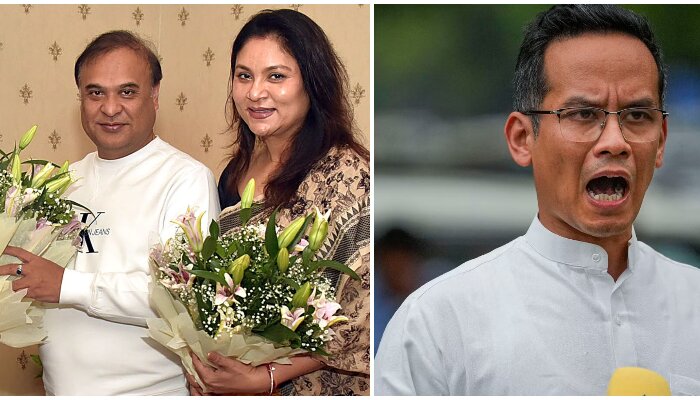
‘India vs Bharat’ is not a matter of debate, Supreme Court already said both names can be used: Assam CM Himanta Biswa Sarma

In what can be perceived as an attempt to end the debate on speculations that the official name of India will be changed to Bharat, Assam Chief Minister Himanta Biswa Sarma today said that there is no controversy on the issue. It is notable that the Assam CM was among those who had triggered the speculations and the subsequent debates on the issue with a cryptic tweet on 5 September.

Addressing the media in Guwahati today (6 September), Himanta Biswa Sarma said that the matter of using India or Bharat is not a matter of debate, and both names can be used interchangeably. He said that just a few days ago when Home Minister Amit Shah presented the Bharatiya Nyaya Sanhita, which will replace the Indian Penal Code, 1860, nobody had objected to the name.

It is notable that on 11 August, three new bills, Bharatiya Nyaya Sanhita 2023, Bharatiya Nagarik Suraksha Sanhita 2023, and The Bharatiya Sakshya Bill 2023 were presented by the home minister. These laws will replace the Indian Penal Code, 1860, the Criminal Procedure Code, 1973 and the Evidence Act, 1872, and all 3 new laws have Hindi names with the word Bharat, not India.

Himanta Biswa Sarma also added that the Supreme Court has already settled the matter in 2016, when the apex court had said that both the names India and Bharat can be used. The court had delivered this verdict in response to a PIL seeking a direction that India be called ‘Bharat’ for all purposes. A bench of Chief Justice T S Thakur and Justice U U Lalit had said, “Bharat or India? You want to call it Bharat, go right ahead. Someone wants to call it India, let him call it India.” The court was hearing a petition by Niranjan Bhatwal, a social activist from Maharashtra.

When a similar petition was filed in 2020, Chief Justice of India S.A. Bobde dismissed it saying that “India is already called Bharat in the Constitution itself”. However, the court had said that petitioner can make a representation in front of the central government over the issue.

Assam CM Himanta Biswa Sarma also said that several prime ministers in the past, including Dr. Manmohan Singh and HD Deve Gowda, had taken oath of office using the name Bharat. He said that Indira Gandhi also took oath as the Pradhan Mantri of Bharat, not as Prime Minister of India.

Therefore, it is not a matter of debate, the CM said.

It is notable that whenever a union minister chose to take oath in Hindi, the name Bharat is used, while the name India is used for oaths taken in English.

The speculations of renaming the country had started after the Modi government announced a special session of parliament without announcing an agenda. Later the speculation was bolstered when the words ‘President of Bharat’ was used in an invitation for G20 Summit dinner sent by the president. Amid this, Himanta Biswa Sarma had tweeted, “REPUBLIC OF BHARAT – happy and proud that our civilisation is marching ahead boldly towards AMRIT KAAL,” reinforcing the speculations.

This had already created a massive debate with opposition parties opposing the move. But the comments by Assam CM seems to indicate that there is no plan to change the name of the country. Notably, it has already been reported that while the special session will start on 18th September in the old parliament house, it will be move to the new parliament house on 19th September on the auspicious occasion of Ganesh Chaturthi. The new parliament house was inaugurated in May this year by PM Modi, but the monsoon session was held in the old parliament as some finishing works at the new building were yet to be completed.

Therefore, the agenda of the special session could be starting business in the newly built parliament, and the agenda may not include changing the official name of the country.

“Need proper response”: PM Modi reacts on Udhaynidhi Stalin’s remarks on Sanatan Dharma, asks ministers to respond firmly

In his first reaction to the hate speech by the son of Tamil Nadu CM MK Stalin, PM Modi has categorically stated that the remarks of Tamil Nadu minister Udhayanidhi Stalin “needs a proper response”. While addressing the Council of Ministers meeting ahead of the G20 Summit in New Delhi, PM Modi instructed Cabinet Ministers to properly respond to the opposition for making hateful remarks against Sanatan Dharma. 

However, he advised the Ministers to exercise caution and not indulge in the India vs. Bharat dispute. He added that only the authorised person should speak on the matter. According to media reports, the PM asserted that Ministers should instead focus on contemporary issues and firmly respond to Udhayanidhi Stalin and the opposition’s vile remarks against Sanatan Dharma with facts.  

During the Council of Ministers meeting, PM Modi reportedly said, “Do not go into history but stick to the facts as per the Constitution. Also, speak about the contemporary situation of the issue.” 

Apparently, PM Modi’s remark comes in the wake of an outright display of Hinduphobia which has spiralled after Udhayanidhi Stalin’s call for uprooting and eradication of Sanatan Dharma. 

Evidently, on Wednesday (6 September), another Congress leader spewed venom against Hinduism. The Home Minister of Karnataka G Parameshwara made a controversial remark on Hinduism and asked ‘Who knows when it (Hindu dharma) was born?’  

On the other hand, despite massive public outrage, Udhayanidhi Stalin, the son of Tamil Nadu Chief Minister MK Stalin, has refused to apologise for comparing Sanatan Dharma with diseases like Malaria and corona and calling for the complete eradication of Sanatan Dharma

Earlier in the day, a Police official said that an FIR has been registered against DMK leader Udhayanidhi Stalin and Congress president Mallikarjun Kharge’s son Priyank Kharge in Uttar Pradesh’s Rampur for allegedly outraging religious feelings.

Meanwhile, a group of Hindu youth in Hazaribagh, Jharkhand, took out a protest march against Tamil Nadu Minister Udhayanidhi Stalin for his remarks insulting the Sanatana Dharma. 

In the protest march, demonstrators rallied with an effigy of Tamil Nadu CM MK Stalin’s son and inserted a bamboo inside it saying that those who insult Sanatana Dharma will meet the same fate.

The anti-Sanatan remark has attracted widespread condemnation from believers of Sanatan Dharma. In fact, the Malaysian Hindu Sangam wrote a letter to the High Commission of India condemning Udayanidhi Stalin’s hatred against Sanatana Dharma. In the letter, the Hindu Sangam requested the Indian Government to take tough action in this matter.

US city Louisville declares 3 September as ‘Sanatana Dharma Day’ amid ‘eradicate Sanatana’ calls by opposition parties in India

0

Craig Greenberg, the mayor of Louisville city in Kentucky in the United States has declared 3 September as ‘Sanatana Dharma Day’ in the city. The official pronouncement was read at the Maha Kumbha Abhishekam event at the Hindu Temple of Kentucky in Louisville by Deputy Mayor Barbara Sexton Smith on behalf of the mayor.

The celebration was attended by several spiritual leaders and dignitaries including Chidanand Saraswati, president of Parmarth Niketan, Rishikesh, Sri Sri Ravi Shankar and Bhagawati Saraswati along with Lieutenant governor Jacqueline Coleman, deputy chief of staff Keisha Dorsey, among others.

Notably, Greg Fisher, a former mayor of Louisville had earlier proclaimed 20 July to be ‘Encyclopaedia of Hinduism Day’ in Kentucky.

Chidanand Saraswati and Bhagawati Saraswati presided over the religious ceremony which launched the sacred rites and rituals that re-energise, rejuvenate and re-imbue the deities of the temple with potent divine energy. The observance was part of the auspicious occasion that entailed seven days of pooja and havan at the temple.

The intricacies of the various connotations associated with each of the elements provided in the pooja, such as the fire, the water, the flowers, etc., were revealed by Sri Sri Ravi Shankar. The immense influence and significance of Sanatan Dharma and the Sanatan tradition were stressed by Chidanand Saraswati.

Hinduism’s connection with science and spirituality was underlined by Bhagawati Saraswati who illustrated how the two fields interact as well as overlap. The deputy mayor officially conferred Sri Sri Ravi Shankar and Chidanand Saraswati with honorary citizenship of Louisville following the addresses. In addition to being appointed a Kentucky Colonel, a high state award, the latter had already been given the Key to the City of Louisville.

He voiced his displeasure over the recent controversy which revolved around the inflammatory remarks of Dravida Munnetra Kazhagam (DMK) leader and Tamil Nadu Minister Udhayanidhi Stalin. “It is so sad that in India, some people are creating such negativity around Sanatan Dharma without realizing or understanding its value and depth, and yet here in America, in Louisville, Kentucky, we are celebrating the great declaration by the government of a day dedicated to Sanatan Dharma.”

Row over provocative comments on Sanatana Dharma

DMK youth wing chief and Tamil Nadu Sports Minister Udhayanidhi Stalin equated Sanatan Dharma with diseases and called out for its complete eradication. “Mosquitoes, dengue, flu, malaria, corona, we should not oppose these things. They’ve to be eradicated completely. The same is the case with Sanatan,” he stated while addressing the ‘Eradicate Sanatan Conference.’

When the controversy escalated, he asserted that he would stand by every word he uttered in connection with the religion and further urged for uprooting it completely. “Uprooting Sanatan Dharma is upholding humanity and human equality. I spoke on behalf of the oppressed & marginalized, who suffer due to the Sanatan Dharma. I spoke on behalf of the oppressed & marginalized, who suffer due to the Sanatan Dharma.”

Meanwhile, he garnered support from Congress party including son of Congress president Mallikarjun Kharge and Karnataka Minister Priyank Kharge, son of veteran Congressman P Chidambaram and Lok Sabha MP Karti P Chidambaram and Tamil Nadu Congress spokesperson and General Secretary Lakshmi Ramachandran for his outrageous statement.

Priyank Kharge claimed, “Any religion that does not promote equality or does not ensure you have the dignity of being human is not religion, according to me. Any religion that does not give equal rights or does not treat you like humans is as good as disease.”

Karti P Chidambaram went on an anti-Hindu tirade and alleged, “Sanatan Dharma is nothing but code for a Caste Hierarchical Society. All those batting for it are hankering for the Good Ole Days! Caste is the Curse of India.”

Lakshmi Ramachandra attempted to create a divide between north and south Indian. She posted, “Sanathanam is another name for the hate-mongering, casteist Hindutva which has its origins in the North. In the south, our Hinduism is peace-loving and striving to be inclusive. Ramanujar, Vallalar and Narayana Guru kind of Hinduism is our Hinduism.”

Congress General Secretary KC Venugopal mentioned that Congress believes in the ideology of “Sarva Dharma Samabhava.” However, he added that “every political party has the freedom to tell their views” and Congress party respects everybody’s beliefs.