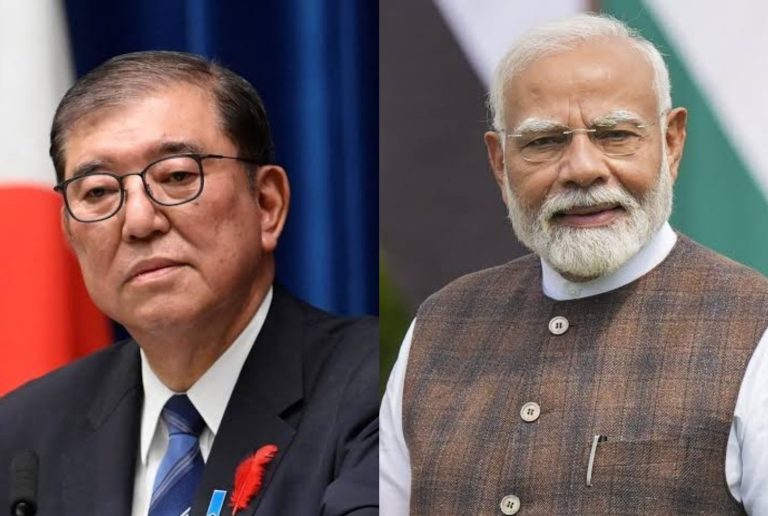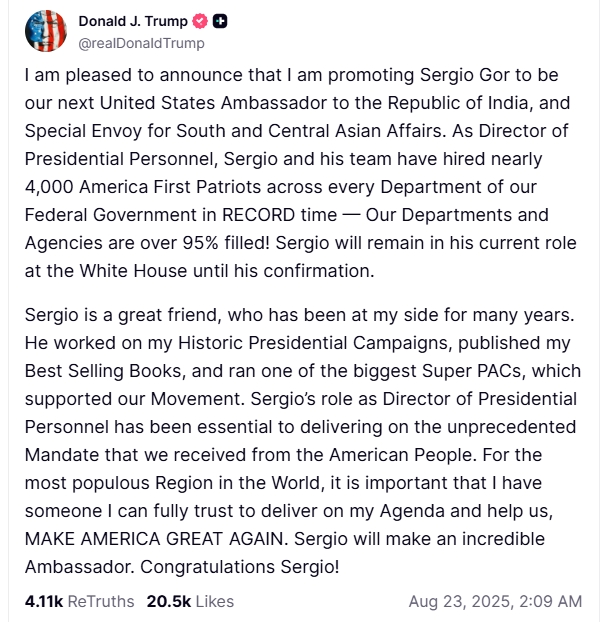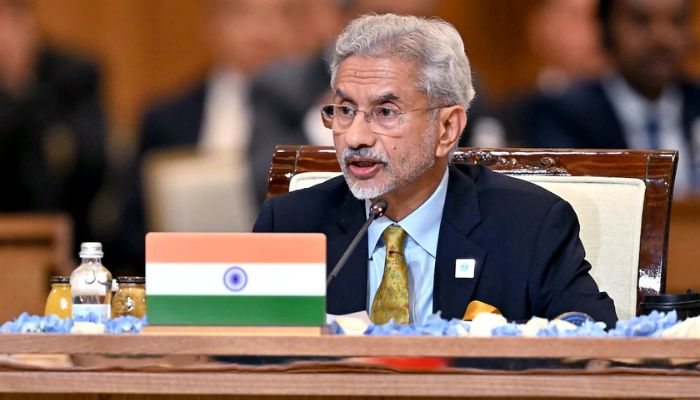
In an explosive announcement on Truth Social, US President Donald Trump declared that India would be slapped with a 25% tariff plus additional penalties starting August 1, accusing New Delhi of maintaining “obnoxious” non-monetary trade barriers, buying energy and military hardware from Russia, and resisting U.S. pressure during trade negotiations.
While the message was delivered in characteristic Trumpian flair, the underlying reality it betrays is far more significant: India stood its ground, refused to buckle under pressure, and prioritised strategic sovereignty and national interests over economic subservience.
Tariffs as a signal of failed coercion
Let’s be clear: the tariffs are not a punishment for bad behaviour, they are a testament to India’s refusal to surrender to Washington’s coercive tactics. At a time when the US was offering exceptions in its tariff regime to compliant allies like Japan, New Delhi walked away from the table rather than sign a one-sided deal. Negotiations were ongoing, and a waiver could have been on the cards had India agreed to allow unrestricted access to U.S. agricultural products and dilute its protective framework for domestic industries. It did not.
Instead, the Modi government held firm, valuing long-term national interest over the short-term gains of a skewed deal. Trump’s tariffs, therefore, are not a mark of failure on India’s part; they are a clear admission that India refused to yield.
Trump’s frustration exposes his lies about brokering a ceasefire between India and Pakistan during ‘Operation Sindoor’
This development also punctures Trump’s earlier claims that he brokered de-escalation during Operation Sindoor, the Indian military operation that not only avenged the Pahalgam terror attack but also exposed Pakistan’s role in cross-border terrorism as pictures of Pakistani Army officials attending funerals of UN designated terrorists surfaced online. India pounded 11 Pakistani airbases and over 9 terror camps, effectively establishing a new military doctrine: that it will no longer put up with Pakistan’s continued support to terrorism against India. A cowered Pakistan immediately pleaded for ceasefire as Indian missiles struck with precision even as its Chinese air defences were caught napping.
However, Trump fell over himself to appropriate credit for brokering a ceasefire between the two countries. He had since repeated the claim ad nauseam despite the fact that India had long maintained that there was no third party intervention between the two countries and India decided to stop only after Pakistan’s persistent begging to stop the attacks. If India had truly followed US diktats and deferred its decisions to Trump’s wisdom, it would hardly be facing trade penalties now. Trump’s fresh outburst clearly demonstrates that India made independent strategic choices, not ones choreographed from Washington.
Trump’s frustration over India’s continued purchase of Russian oil and arms exposes another inconvenient truth for the US, India is not playing by America’s Cold War-era geopolitical templates anymore.
Russian energy: A rational economic choice
India’s decision to buy Russian oil at discounted rates was a pragmatic economic move, not a political provocation. With global energy prices soaring, and Western sources often coming with geopolitical strings attached, Russia offered a cost-effective and reliable option. This helped India save billions in energy bills and keep inflation in check, a crucial factor for a developing economy with a massive energy appetite.
To expect India to shun affordable fuel just to please American optics on Ukraine is utterly unrealistic, especially when European nations themselves continued buying Russian gas well into the conflict.
Defence ties with Russia: A legacy, not a loyalty
Trump’s gripe about India’s arms purchases from Russia ignores decades of history. From Nehru and Indira Gandhi to Vajpayee and Manmohan Singh, India’s defence relationship with Moscow has been one of necessity and reliability. During the Cold War, the U.S. actively courted Pakistan to fight its Mujahideen war in Afghanistan, shutting India out of its defence markets. It was Moscow that supplied India with critical military systems through thick and thin, including during the 1971 Bangladesh Liberation War.
For Trump, or anyone in the U.S. establishment, to now expect India to junk decades worth of operational compatibility, training protocols, and logistical chains just to appease American whims is not just strategically tone-deaf, it’s logistically absurd and economically foolish.
India chooses sovereignty over subservience
At its core, this episode is not about trade. It is about sovereignty. In choosing not to bow before Trump’s aggressive style of transactional diplomacy, India has sent a message to the world: it will not become a vassal state of any global power. Be it military decisions, energy sourcing, or trade policy, India will act in its own national interest, not in the service of another nation’s foreign policy agenda.
In standing up to Trump, New Delhi has shown that it is willing to bear economic costs to preserve strategic independence—a stance that aligns with its broader vision of a multipolar world where nations are not forced into binary alliances.
Tariffs today, respect tomorrow
While the tariffs may sting certain sectors of India’s export economy in the short run, they are, in the larger scheme, a small price to pay for long-term autonomy. Trump’s imposition of punitive trade barriers is not a diplomatic defeat, but a diplomatic declaration that India won’t sell its sovereignty, even to the most powerful nation on Earth.
As India charts its path as a rising power with an independent foreign policy, economic resilience, and deepening partnerships with multiple poles of power, the message is clear: India is no one’s satellite. It is a sovereign civilisation-state, making decisions on its own terms.
In a landmark initiative for the horticulture sector, Adani Agri-Fresh has launched the country’s first digital apple market platform in Bithal near Rampur, about 120 km from Shimla.
Designed to directly benefit apple growers across Himachal Pradesh, the project is currently being implemented as a pilot phase, but farmers are already expressing strong support for its transparency, convenience, and profitability.
Speaking to ANI, Mahinder Pal, an apple grower associated with Adani Agri since 2006, said that this digital market will benefit the small farmers.
“This new digital market is excellent. Today is the first day, and it already seems promising. Earlier, there used to be rejections in grading at Adani stores, but now farmers can sell directly, and even payments are processed online,” he said.
“Today, my apples sold for Rs 2200 per crate, which will benefit small growers significantly,” Pal added.
The platform enables farmers to digitally participate in transparent auctions, avoid middlemen, and ensure assured payment. The apples are graded, packed, and marketed under the Adani brand, ensuring uniform quality and higher bargaining power for growers.
Elderly progressive farmer Harichand Roch also welcomed the digital reform.
“This is a market reform that gives bargaining power to farmers. If ten farmers’ apples go into one batch, the grading, colour, and size will be uniform, packed with Adani branding. Farmers can now decide whether to sell or store. This empowers even small growers,” he said.
“Progressive farmers are now demanding tissue culture labs and stone fruit plant material as well. This initiative is truly welcome. With transparent grading, uniform branding, and storage options, small growers are no longer being exploited and are marketing directly from their homes,” Roch said.
He further urged Adani Agri-Fresh to set up tissue culture labs in the region.
“Without good planting material, we can’t produce international-grade apples. If Adani adopts tissue culture, similar to Reliance’s approach with mangoes in Jamnagar, our cherries, apricots, and other stone fruits can access global markets, including Europe and the Arab world. Tissue culture is not rocket science; this will uplift small farmers and benefit the company too,” he said.
Gopal Singh Thakur, another farmer, said the idea for such a digital marketplace came from the farmers themselves.
“We had discussions with Adani officials and suggested this regional model. The fruit that comes from controlled atmosphere stores during peak market months creates price distortion. This digital platform will keep farmers informed about national market prices and ensure quality assurance through Adani’s systems,” he said.
“I’ve been associated with Adani since 2006. Payment is assured within 7 to 12 days. Unlike outside markets, where some farmers wait for years, here, there is 100 per cent payment assurance,” he added.
Traders are also expanding a very good business ahead from this first digital Mandi of the country.
Girish Anand, a private trader, also expressed optimism about the model.
“This digital platform is beneficial for both buyers and growers. Bidding can be done from anywhere. Though the rollout will take time across Himachal, this initiative has great potential. Controlled atmosphere storage has already been successful, we believe this model will be too,” Anand said.
Manish Agarwal, Business Head, Adani Agri Fresh Ltd., highlighted the motivations behind the platform.
“For the past 20 years, we’ve run controlled atmosphere storage in Himachal, but only high-altitude growers benefited. Traditional mandis were not transparent. Now, this digital system ensures transparency, from grading to auction, and eliminates the hassle of manual packing,” he added.
“Buyers can view their purchase digitally through our mobile app. Each apple is pressure-tested, colour-graded via optical sorters, and photographed. There are no hidden charges, only packaging fees, which are transparently disclosed,” Agarwal said.
“We’re building a digital agricultural infrastructure. If this model is successful in apples, we’ll extend it to other commodities as well,” he emphasised.
Agarwal added that farmers have full control in the market.
“If a farmer is unhappy with the auction price, they can withdraw their lot after paying the packaging charge. The entire process is SMS-tracked for updates on unloading, grading, auction, and payment,” he added.
Himachal Pradesh boasts 11 lakh hectares of cultivable land, with two lakh hectares under fruit cultivation. Of this, over one lakh hectares are dedicated solely to apple orchards, making apples 50 per cent of the state’s fruit-growing area. The state produces nearly 5.5 lakh metric tons of apples annually, contributing over Rs 5,500 crore to the economy. So far, Adani Agri-Fresh accounts for around 8 per cent of this production, a share expected to rise with the launch of the digital mandi.
With the success of this pilot platform at Bithal, Adani Agri-Fresh aims to expand the digital mandi model across apple-producing regions in Himachal, transforming the way fruit is marketed and sold in India.
(This news report is published from a syndicated feed. Except for the headline, the content has not been written or edited by OpIndia staff)
After successfully preventing the auction of the ancient Piprahwa gems, the Indian government has been able to bring back the sacred relics associated with Lord Buddha. The Piprahwa relics were discovered in 1898, but were taken out of the country during the British rule. Now, the relics have returned to India 127 years after their discovery.
Prime Minister Modi on Wednesday (30th July) informed about the return of the gems to India. “A joyous day for our cultural heritage! It would make every Indian proud that the sacred Piprahwa relics of Bhagwan Buddha have come home after 127 long years. These sacred relics highlight India’s close association with Bhagwan Buddha and his noble teachings. It also illustrates our commitment to preserving and protecting different aspects of our glorious culture,” PM Modi wrote on X.
A joyous day for our cultural heritage!
It would make every Indian proud that the sacred Piprahwa relics of Bhagwan Buddha have come home after 127 long years. These sacred relics highlight India’s close association with Bhagwan Buddha and his noble teachings. It also… pic.twitter.com/RP8puMszbW
“It may be recalled that the Piprahwa relics were discovered in 1898, but were taken away from India during the colonial period. When they appeared in an international auction earlier this year, we worked to ensure they returned home. I appreciate all those who have been involved in this effort,” he added.
It may be recalled that the Piprahwa relics were discovered in 1898 but were taken away from India during the colonial period. When they appeared in an international auction earlier this year, we worked to ensure they returned home. I appreciate all those who have been involved…
An announcement about the gems being put on auction was made in February this year by Sotheby’s, a global auction house. The date of the auction was set as May 7, 2025, in Hong Kong. But, the news of the auction of the relics attracted the scorn of historians, archaeologists, and the followers of Buddhism worldwide, which soon turned into a global movement leading to the intervention of the Indian government.
On May 2, 2025, the Director General of the Archaeological Survey of India (ASI) wrote to the Consulate General of Hong Kong, requesting to halt the auction with immediate effect. A bilateral meeting took place the same day between Culture Minister Shri Gajendra Singh Shekhawat and Rt Hon Lisa Nandy, UK Secretary of State for Culture, Media and Sport, for the prevention of the auction of the gems.
This was followed by a legal notice being served to Sotheby’s by the Indian government in May 2025. On May 6, 2025, a high-level Indian delegation led by the Secretary, Ministry of Culture, including the Joint Secretary (East Asia Division, MEA) and the Consul General of India to Hong Kong, held discussions with Sotheby’s representatives.
During the discussions, the Indian delegation highlighted the significance of the relics for Buddhists globally and said that they rightfully belonged to India as they were taken away in an unauthorised manner during the colonial period. The same day, Sotheby’s confirmed the postponement of the auction.
What are Piprahwa gems
The Piprahwa gems are a collection of ancient jewels, dating back to the 3rd century BC. These were buried along with the cremated remains of Buddha at Piprahwa, a village alongside the Indo-Nepal border in Uttar Pradesh. In 1898, a colonial landlord named William Claxton Peppé ordered the excavation of a Stupa on his estate in Piprahwa. During the excavation, five reliquaries were found containing bone fragments, ash, and gemstones, including amethysts, corals, garnets, pearls, rock crystals, shells, and gold.
Piprahwa Excavation site (Image via The Hindu)
An inscription in Brahmi script on one of the excavated caskets confirmed that the relics were deposited by the Sakya Clan and belonged to Buddha. The excavation marked a significant discovery in Buddhist history. Out of over 1800 excavated items, some were gifted by Viceroy Lord Elgin to King Rama V of Siam. Parts of the items were allocated to temples in Burma and Ceylon. The remaining items were divided between the Indian Museum, Kolkata and Peppé.
Relics excavated at Piprahwa on display at National Museum, New Delhi (Image via The Hindu/V.V. Krishnan)
The excavated items are of immense religious significance for Buddhists, who consider them as Sharirk Dhatu (corporeal relics). According to Naman Ahuja, professor of Indian Art and Architecture at Jawaharlal Nehru University, Buddhism recognised three main types of relics, the most precious being Sharirik Dhatu or the remnants from the physical body of the Buddha himself.
Buddhists believe that the items buried along with the cremated ashes of Buddha in the original caskets of Buddha comprise Sharirik Dhatu. According to Buddhist belief, the bodies of great masters turn to crystal over time. These are said to transform into quartz, rock crystal, amethyst, and other such forms. This is the reason that the auction of these sacred relics invoked opposition by Buddhists worldwide.
The Congress government in Telangana, led by Chief Minister Revanth Reddy, is looking at a proposal to fix some long-pending issues in reservations for backwards Muslim communities. According to a report of The Indian Express, the plan is to give proper benefits to 14 Muslim groups, including around 3 lakh Shia families, under the Backwards Classes (BC) category based on how socially, economically and educationally backwards they are.
Right now, these groups have 4% reservation under a special category called BC (E), but due to legal complications and poor awareness within the community, this quota has not really worked as it should have. Many people in these Muslim communities are not getting the benefits they are entitled to, say government sources.
Earlier this year, the Telangana government made public the findings of a large-scale social, educational, economic, political, and employment (SEEPC) caste survey. According to the report, Muslims make up about 12.58% of the state’s population. Out of this, about 10.08% are listed as BC Muslims while around 2.5% fall under the OC (Other Castes) category. Interestingly, this is slightly lower than the 2011 Census figure of 12.69%.
However, officials believe that the Muslim population might have been under-reported by 1-2%, especially in parts of Hyderabad’s Old City, where many women didn’t feel comfortable sharing details without male family members present during the survey.
The survey of the castes revealed that the BC population within the state, comprising Muslim BCs, is approximately 56.33%.
Following the survey’s conclusions, the Telangana Assembly legislated two significant pieces of legislation in March 2024. These pieces of legislation enhanced the overall BC reservation in government employment, education, and local body polls from 27% to 42%. The Bills were referred to Governor Jishnu Dev Varma, who has referred them to President Droupadi Murmu for approval.
Mohammed Ali Shabbir, who advises the Telangana government on SC, ST, OBC, and minority welfare, said that 2.5% of the Muslims in the state are doing fairly well and are above the poverty line. But a large chunk around 10.08% are very poor and need support in education, jobs, and political participation.
He pointed out that communities like the Saiyyeds, Mughals, Pathans, Arabs, Kojja Memons, Agha Khanis, and Bohras are not included in the existing quota benefits. According to him, the BJP is creating a false narrative that this is about religion-based reservation. “These are occupational caste groups, just like other BC communities, and they need help based on their condition, not their religion,” Shabbir said.
He also explained why this proposal is different from earlier failed attempts. “Earlier, courts and governments always asked, ‘Where is the data?’ Now we have it. The caste survey tells us exactly how many people belong to which group and what their condition is. Most of the Muslims living below the poverty line are fruit and vegetable vendors, scrap collectors, and auto drivers, just like other BCs. They deserve the same benefits.”
He added that the government is seriously thinking about extending the same welfare schemes to these 14 Muslim groups as it is offering to other backwards communities.
Karnataka has already taken similar steps through its caste survey
Telangana is not alone in trying to address the needs of its backwards Muslim communities and politics around them. Karnataka has already made headlines with its caste census, which has created a lot of political showdown in the state.
The report of the Karnataka caste survey was leaked recently and created a furore, particularly among the ruling classes. Several prominent leaders within the ruling Congress party have condemned the report as “unscientific” and demanded that the government reject it.
But the leaked report has made a strong recommendation: increase the total reservation for backwards castes from 32% to 51%. It specifically points out that Muslims make up about 12.6% of Karnataka’s population, based on data from 2015. The report says the Muslim community should get 8% reservation under Category IIB, double the 4% they currently get.
It’s not just Muslims. The report also recommends changes for other communities. For example, under Category III(A), which includes the Vokkaligas and two other dominant groups, the total population is 73 lakh, and the recommended quota is 7%. Under Category III(B), consisting of Veerashaiva-Lingayats and five other large groups, the total is 81.3 lakh, and the proposed reservation is 8%.
According to five women who were assaulted by grooming gangs consisting of primarily Pakistani Muslim males, police officers also violated them during their childhood, in Rotherham of United Kingdom. Notably, one victim reported that two South Yorkshire Police (SYP) officers abused her and named PC Hassan Ali as one of them, reported BBC.
Ali passed away after being struck by an automobile in January 2015. Due to an inquiry into his suspected role in the abuse scandal, he was placed on restricted duty on the day of the crash. He was never taken into custody. Additionally, both policemen supplied narcotics, based on the victim’s statement.
According to a SYP, the police had received complaints against Hassan Ali that were about “allegations of persistently asking a victim on a date, sharing information, and failure to safeguard victims” rather than drug-related offences.
Garry Harper worked for two years on “Operation Linden” for the Independent Office for Police Conduct (IOPC), which examined how SYP handled reports of child sexual abuse in Rotherham from 1997 to 2013. “There were several complaints that he had supplied and taken drugs, as well as sexually abused some of the survivors,” he noted.
He added that SYP had permitted the other cop to retire at the time, despite the fact that the IOPC and SYP were aware of his actions. “At best it was a reputational covering exercise. That’s me being incredibly generous to them. At worst, it was out and out corruption to let him go,” Harper stated.
Grave allegations, no accountability
According to the witnesses, they were exploited and even physically assaulted by active police officers for years between the mid-1990s and the beginning of the 2000s alongside the Rotherham grooming gangs. Majority of them were teenagers but some were as little as eleven.
One woman voiced that a youth worker called social services and the police after she was forced into an illegal abortion by the grooming ring after she was repeatedly raped by hundreds of men as well as two cops for many years when she was only 11.
Later, she was interviewed by one of the officers who had been sexualy assaulting her. She added that no further action was taken as the same officer tore up her statement in front of her a few days later and tossed it in the trash.
Another stated that a SYP officer in a marked police vehicle sexually assaulted her when she was 12 years old. She highlighted that if she failed to comply he would threaten to return her to the rapists.
Only 17 of the 30 women who provided statements consented to the police utilising their testimony. Some of the last witnesses have pulled out of the SYP probe, declaring they no longer believe in the police or the legal system.
Another woman who was in foster care in the late 1990s and frequently escaped from children’s homes recounted that a police officer would rape her in a squat after discovering her. He preyed on the children in care and took advantage of their fear because he knew they were vulnerable.
“He knew we wouldn’t be missed, he knew we wouldn’t be reported. He knew we wouldn’t be able to say anything. He knew that he had the upper hand,” she expressed. Garry Harper acuused that SYP “managed to evade almost any accountability,” calling the eight-year probe “an abject failure from beginning to end.”
43 allegations against specific officers were upheld by the watchdog. Eight of them were charged with misconduct and six with gross misconduct. However, no officers were charged with a crime or lost their employment.
An IOPC representative disclosed that 91 investigations were part of the operation. “We concluded in 2022 that SYP fundamentally failed in its duty to protect vulnerable children and young people during that time.”
Due to suspicion of prior sexual offences such as attempted rape, indecent assault and misconduct in a public office, three former cops have been arrested since December 2024. The offences occurred between 1995 and 2004 while the officers were on duty as police constables (PCs) but they are not charged.
A new criminal inquiry into the participation of police personnel in the Rotherham grooming crisis is now being launched by SYP’s major crime section, under the purview of the police watchdog.
In 2014, Professor Alexis Jay’s investigation showed that between 1997 and 2013, at least 1,400 children in Rotherham suffered abuse by men. “From the evidence we read and heard, the majority of victims identified their perpetrators as being of Pakistani heritage,” she mentioned.
The United Kingdom has been rocked by several cases of Pakistani grooming gangs that targeted young British girls, even those who were underage, inflicting physical abuse, rape and torture for decades. The government, authorities and media have also been accused of attempting to underplay the severity of these offenses to avoid being branded as racists.
Caste-based violence and ‘honour killing’ have been a persistent issue in Tamil Nadu. In a recent case, a 27-year-old software engineer, Kavin Selva Ganesh, belonging to the Scheduled Caste, was hacked to death by the brother of his girlfriend, who belongs to the Most Backward Classes (MBC).
On 27th July 2025, the woman’s brother, S Surjith, allegedly attacked Kavin near the Siddha hospital in KTC Nagar, Tirunelveli. The woman, Subashini, works as a consultant. Surjith is the son of two police sub-inspectors, Saravanan and Krishnakumari. Named as co-accused in the FIR, Saravanan and Krishnakumari allegedly instigated the accused to attack the deceased victim. The duo also threatened Kavin, who worked at Tata Consultancy Services (TCS) in the past, over his relationship with their daughter.
Reports say that Kavin and Subashini have been in contact since their school days. However, the woman’s family was opposed to their relationship due to their caste differences. While the woman belongs to a Most Backward Classes (MBC), the victim and his family belong to a Scheduled Caste (SC). The deceased victim’s family has alleged that the co-accused had threatened them several times in the past.
Kavin went to KTC Nagar on Sunday to speak with Subashini about his grandfather’s failing health. Surjith allegedly went up to him there and claimed their parents wanted to talk to him. Trusting Surjith, Kavin then headed on a bike with him towards Astalakshmi Nagar.
However, as per the complainant and the deceased victim’s mother, S Tamizhselvi, the accused Surjith suddenly stopped the bike and confronted Kavin, asking him aggressively how the victim dared to love a girl from a different caste. Subsequently, the accused allegedly took out a sickle hidden on his back and attacked Kavin continuously.
As per eyewitnesses, a severely injured Kavin tried to flee the spot, however, Surjith chased him and hacked him to death. The Palayamkottai Police have arrested Surjith and his parents. The trio have been booked under relevant sections of the Bharatiya Nyaya Sanhita (BNS), in addition to the provisions from the Scheduled Castes and Scheduled Tribes (Prevention of Atrocities) Act, 2015.
The deceased victim’s body has been sent for postmortem examination. The police have also found CCTV footage that serves as key evidence in the case.
The parents of the deceased victim have reportedly refused to accept his body until stringent legal action is taken against the co-accused police officers and the parents of the main accused, Surjith. “They objected to the relationship from the beginning and repeatedly harassed my son. Even now, they may use their positions to influence the case,” Tamizhselvi said in her complaint.
Meanwhile, locals are outraged over the incidents, and there have been protests in parts of Tirunelveli and Thoothukudi district, seeking justice and suspension of the accused police officers.
Beyond the façade of reforms and progressiveness, caste-based murders are a stark reality of Tamil Nadu, where calling casteism ‘Brahminism’ is a dishonest but politically convenient trend
Kavin Selva Ganesh’s killing is one of the many cases of caste-based murders in Tamil Nadu. These caste-based ‘honour killings’ remain a grim reality of the state. Often rooted in the rigid enforcement of caste endogamy, these cases expose the deep-seated casteism that festers across the various caste groups, not only in rural but also in semi-urban and urban areas of the state.
In Tamil Nadu, the narrative around casteism is often concocted by political parties that thrive on widening caste fault lines to divide Hindus, Periyarists who hate Hindus, especially the so-called ‘upper caste’ people like Brahmins, and the liberal cabal. While they collectively have framed casteism as ‘Brahminism’, equating caste oppression and discrimination with the ‘influence’ of Brahmins, the caste-based ‘honour’ killings in Tamil Nadu point to a pattern that defies the equivalence drawn between Brahminism and casteism and the idea that Brahminism is synonymous with casteism.
Even as the anti-Brahmin narrative around casteism is entrenched in Tamil Nadu’s socio-political discourse, far from being synonymous with Brahminism, casteism in Tamil Nadu often finds manifestation in violence and killings perpetrated by non-Brahmin castes, as seen in the case of Kavin Selva Ganesh, an SC man killed by a man belonging to the MBC group.
Caste-based conflicts and killings are rampant between backward castes and Dalits as well as within sub-castes. What fuels them further is the political environment of the state, certain regional political parties doing caste politics, exploiting caste ‘pride’ and divides.
Back in 2013, Ilavarasan, from the Pallar (SC) community, and Divya, from the Most Backward Classes (MBC) Vanniyar community, were found dead after their inter-caste marriage. The duo braved all odds, threats and the opposition from Divya’s family, and tied the knot after eloping from their houses. Their intercaste marriage triggered riots in Dharmapuri, MBC Vanniyars torching Dalit homes. In 2014, after a habeas corpus petition was filed by the mother of Divya, she returned to visit her mother and eventually stayed there. She also stated that she would not return to live with Ilavarasan.
Ilavarasan was later found dead on a railway track. While his death was eventually declared a suicide, his family reports and several activists suggested foul play, pointing to a possible honour killing. Local casteist political parties took sides and escalated tensions in the area at that time.
In a similar case from 2016, V Sankar, a Pallar Dalit youth, was hacked to death in broad daylight by individuals hired by the family of his wife Kausalya, who belonged to the Thevar (MBC) community in Udumalpet. The couple’s inter-caste marriage provoked Kausalya’s parents, who opposed their union. Kausalya somehow survived the attack and testified against her family in he court. Her testimony led to a 2017 lower court conviction of six people, including her father, Chinnasamy, sentenced to death. However, in 2020, the Madras High Court overturned most convictions. The case remains pending in the Supreme Court.
In 2020, a 24-year-old youth, M Sudhakar, who belonged to the Oddar caste (a sub-caste of MBC), was hacked to death by his girlfriend’s father, Moorthy and cousin Karthiravan, who belonged to Vanniyar (an MBC sub-caste). Sudhakar was murdered in the Thiruannamalai district of Tamil Nadu. Sudhakar’s killing sparked communal tensions in Arani Taluk.
In 2018, eight Dalit people belonging to the Pallar community were attacked with knives and sickles by members of the Agamudaiyar (MBC, part of the Thevar group) community in Kachanatham village during a temple festival. The violence stemmed from a dispute after a Dalit, Prabhakaran, was abused for allegedly not offering temple honours (Kalanji) of the Karuppanasamy Temple to the Agamudaiyar youths. Three Dalits—Arumugam, Shanmuganathan, and Chandrasekaran—were killed, and five others were severely injured. In this case, a special court in 2022 imposed life sentences on 27 convicts.
In the 2019 Varshini Priya (16) and K Kanagraj (22) case reported from Tamil Nadu’s Mettupalayam, an inter-caste couple, Varshini Priya (Arunthathiyar, a Dalit sub-caste) and Kanagaraj (Valayar MBC sub-caste), was killed over caste differences. In January 2025, Vinothkumar, the brother of K Kanagraj, was found guilty of murdering his brother and wife. Vinothkumar was booked under the Scheduled Castes and Scheduled Tribes (Prevention of Atrocities) Act. The court acquitted three other accused in the case.
Kanagraj, a daily wage labourer, was in love with Varshini Priya, but his brother Vinothkumar, also a daily wage labourer, was opposed to their relationship. Vinoth and Kanagraj often quarrelled over this issue. Kanagraj then sought help from his father, Karrupswamy, who advised him to live separately for the time being and promised to arrange his marriage with Varshini Priya. Thus, Kanagraj and Varshini Priya moved to a rented house in 2019 in the Sri Rangarayan Odai area. After finding out about this, Vinothkumar conspired with his friends and three co-accused. In June 2019, they arrived at Kanagraj’s rented accommodation and attacked the couple with a sickle. While Kanagraj died on the spot, Varshini succumbed to her injuries two days later in a hospital.
In June 2024, a man named Azhagendran from the Arunthathiyar community was beheaded over his relationship with a woman named Rudrapriya from the Devandra Kulla Vellalar community. While both of them belonged to the Scheduled Caste (SC) group, Devandra Kulla Vellalars believe that they rank ‘higher’ in the caste hierarchy than Arunthathiyars. The deceased victim’s head was found buried separately on the bank of an irrigation tank nearby in the Kalligudi town in Tamil Nadu’s Madurai district.
Earlier, the couple reportedly tried to get married at a Murugan temple in Thiruparankundram; however, Rudrapriya’s family found out. They arrived at the temple and allegedly attacked Azhagendran and took the woman away.
One K. Kavita from the Gounder community was killed by her family in 2015 after she married M. Murugan, who belonged to the Scheduled Caste community.
In Theni, a woman named K. Prema from the Gounder community was killed by her family after she married a man from the Scheduled Caste community in 2010.
One of the most noted cases of caste-based honour killing was the 2003 Kannagi and Murugesan double murder case. Kannagi, a MBC Vanniyar, had married her lover Murugesa,n who was a Dalit and a chemical engineer. The duo hailed from the Puthukkooraippettai village in Tamil Nadu’s Cuddalore district. The inter-caste couple got married on 5th May 2003 against the wishes of the girl’s family.
Murugesan and Kannagi, who were poisoned to death in 2003 (Image source: TheHindu)
The two were murdered in the most horrific manner as they were forced to drink poison in broad daylight on 7th July 2003 by Kannagi’s brother, Maruthupandian and other family members. Their bodies were later burned. As Murugesan’s father alleged a shoddy investigation in the case, the Madras High Court handed the case to the Central Bureau of Investigation (CBI).
In this case, a Cuddalore special court sentenced Maruthupandian to death and sentenced life imprisonment to a serving inspector and a retired DSP and 10 others. Eventually, the Madras High Court commuted Maruthupandian’s death sentence to life imprisonment and sentenced Kannagi’s father, C Duraisamy and 8 others. In April 2025, the Supreme Court dismissed the plea moved by the convicts against the high court order and upheld their sentences.
Notably, in his 2022 research journal titled: Analysis of Caste-Based Honour Killings with Special Reference to Tamil Nadu, advocate Kavin Castro states that beyond the ‘upper caste vs lower caste’ honour killings, such crimes take place even across the sub-castes of Dalits, MBCs and BCs. The journal states that the concept of graded inequality in the caste hierarchy remains relevant, along with the preservation of family property, caste purity and family honour.
Conclusion
From Kannagi and Murugesan’s brutal killing to Kavin Selva Ganesh, honour killing with non-Brahmin or the sub-castes of Dalits, MBCs, and BCs is prevalent in Tamil Nadu. The cases discussed above are just a few of the numerous such incidents reported in the state over the past few years. Many such cases go unreported. The caste dynamics in these cases indicate that, unlike the narrative pushed by the usual suspects, casteism is not solely a product of supposed ‘Brahmin supremacist’ influence. Rather, it is a broader societal issue perpetuated by various caste groups forcing their own supposed superiority, hierarchies and notions of ‘honour’.
While vilification of Brahmins as the sole enablers and perpetrators of casteism may serve a political purpose for Dravidian parties who yearn to eradicate Sanatan Dharma, the issue remains largely persistent and unaddressed. Many factors perpetuate casteism even within Dalit sub-castes, such as child marriage, caste-based housing segregation, economic disparities, caste-based pride and biases, caste-based politics and polarisation among others. Casteism and related violence and murders transcend the Brahmin-non-Brahmin binary narrative entrenched in the state’s socio-political discourse. Yet, Brahmins are made the scapegoats and vilified as the root cause of everything problematic about caste.
Using the terms casteism and Brahminism interchangeably is dishonest and sinister. If a Most Backward Class individual kills an SC person over caste, if an OBC threatens an SC person over an inter-caste relationship, if a Dalit Christian is attacked or discriminated against by non-Dalit Christians, it cannot be mindlessly called Brahminism, as most adherents of the ‘Dravidian’ ideology do.
It is like the outrageous notion of ‘good terrorism’ and ‘bad terrorism’, creating a narrative that casteism is bad when Brahmins are involved in it. In contrast, other manifestations of casteism displayed by non-Brahmins or by those belonging to Dalit sub-castes are not as bad or not worth the outrage and scrutiny that Brahmins and ‘Brahminism’ are subjected to.
The caste-based killings, exemplified by cases like Kavin Selva Ganesh’s murder and others, expose the fallacy of calling casteism ‘Brahminism. Caste-based honour killings and violence also involve people from caste groups dominant in their areas. Ironically, calling casteism Brahminism itself is a reflection of a casteist mindset.
When Rahul Gandhi stood up in the Lok Sabha to speak on Operation Sindoor, one expected at least some semblance of national unity following a successful and widely applauded military response to the Pahalgam terror attack. Instead, what unfolded was a brazen, meandering tirade, an attack not just on PM Modi, but on the very doctrine of Indian sovereignty, deterrence, and diplomatic stability.
Gandhi called Operation Sindoor a public relations exercise meant to protect Modi’s image, claimed the military’s hands were tied, and accused the government of lacking political will. But beneath the cluttered emotionalism and theatrical barbs lay a more sinister strategy: to provoke Modi into an uncalculated reaction and derail India’s carefully constructed, long-term foreign policy posture, especially with the United States.
Deliberate provocation: Rahul’s real target is Modi’s US strategy
One of the most revealing moments in Rahul Gandhi’s speech was when he dared PM Modi to call former U.S. President Donald Trump a “liar” on the floor of Parliament. This was not just political rhetoric; it was a trap. Gandhi was baiting Modi to react emotionally, to rupture the fragile but functional Indo-US equilibrium that the Modi government has sustained with patience and foresight.
With the mercurial behaviour Trump has demonstrated ever since he came to office for the second time, one can only imagine what a direct confrontation between India and the United States could mean for New Delhi, especially when India is eyeing to become the West’s favoured nation in terms of trade after their fallout with China. In fact, even Congress supportive media personalities like Rajdeep Sardesai called Rahul’s proclamations as “bravado”, highlighting that he wouldn’t have done anything he was suggesting if he were the Prime Minister.
However, Modi’s refusal to take the bait is emblematic of his broader strategy: engage the U.S. on India’s terms, not as a junior partner, but as an assertive, autonomous power. India simply cannot afford to play geopolitical roulette, especially when its domestic industries, digital infrastructure, and defense architecture are still transitioning toward greater self-reliance. Gandhi’s goading isn’t about accountability; it’s about sabotage. A deliberate ploy to undermine India’s interests so that he could later use them as props in his propaganda efforts to malign the Modi government for electoral benefits.
Modi’s approach: Restraint, leverage, and strategic patience
Contrary to the “lack of courage” slur Rahul Gandhi tried to attach, Operation Sindoor was a masterclass in precise, deliberate statecraft. Within 48 hours of the horrific Pahalgam terror attack, India launched a targeted military operation that destroyed multiple terror infrastructure hubs inside Pakistani territory. PM Modi revealed that the ceasefire was not due to international pressure but because Pakistan was on its knees, pleading for mercy.
As he told the House, no world leader asked India to stop. When U.S. Vice President JD Vance called Modi in the middle of a military briefing, Modi made it clear:
“If that’s their intention, it will cost them dearly. Goli ka jawab gola se denge.”
India didn’t need to bomb civilian cities to prove a point. It did exactly what was necessary: establish deterrence, avoid escalation, and preserve geopolitical capital. That is leadership. That is strategy.
In fact, a recent article in the New York Times titled “Flatter, Defer, Nudge: Europe’s Playbook for Trump Yields Some Results” underscores what world leaders are doing to keep themselves in good books of the US president and prising out best possible trade deals for their respective countries by employing a mix of cajolement, charm offensive, and measured disagreement. A hostile confrontation with Trump could threaten a country’s prospects, as witnessed after the fiery spat with Ukrainian President Zelensky following which the United States had temporarily halted weapons supply to the beleaguered nation embroiled in a conflict with neighbouring Russia.
Global South, Russia, and Redefining Independence
More importantly though, Modi’s broader foreign policy is not driven by the need for headlines but by the goal of reducing India’s historic dependence on Western hegemony. First, India is positioning itself as a voice of the Global South, deepening ties with Africa, Latin America, and ASEAN while reshaping BRICS into a geopolitical counterbalance to Western groupings.
Second, India’s relationship with Russia remains strong, not out of nostalgia but pragmatism. During the Ukraine crisis, while Europe and the U.S. expected India to fall in line with their sanctions regimes, India maintained a neutral, sovereign stance. This infuriated the Western deep state but proved India is no longer beholden to anyone.
Third, and perhaps most crucially, Modi has quietly but decisively begun building the foundation for tech and data sovereignty, an issue of immense geopolitical relevance that Congress either ignored or actively compromised.
Tech sovereignty: Lessons from the West’s censorship machine
The Ukraine war laid bare a reality that India can no longer ignore: Big Tech is an extension of U.S. foreign policy. From Meta and Google to YouTube and Apple, American platforms weaponised their algorithms to shape narratives, censor content, and enforce Washington’s geopolitical objectives.
If tomorrow, India were to have a disagreement with the U.S. on trade, tariffs, or Kashmir, what’s to stop these same companies from suppressing Indian voices or pushing anti-India narrative globally? This is not paranoia; it’s precedent. The Modi government has seen this and begun building its defenses.
India’s India Stack, Digital India Act, and Semicon India push are just the beginning. Localisation of data, tighter regulation of cross-border digital flows, and the emphasis on open-source public digital infrastructure are all designed to reduce the chokehold of American tech giants.
The Nayara case: India’s battle for sovereignty, one sector at a time
A key flashpoint that illustrates this battle is the Nayara case, involving India’s push to reclaim control over critical national infrastructure from foreign stakeholders. On the surface, it’s about a private energy deal, but at its heart, it’s about ensuring foreign capital doesn’t translate into political veto power. Whether it’s in energy, data, or defense, the message is clear: India must decide its future, not foreign investors or foreign governments.
Congress and the US deep state: A history of submission
Ironically, it is the Congress party that should be the last to question India’s current foreign policy posture. Under Nehru, India’s so-called non-alignment only succeeded in alienating the United States without gaining strategic depth. Indira Gandhi’s flirtation with the Soviet Union further entrenched American suspicion.
But it was under UPA-II that Congress fully surrendered to the U.S. deep state, overcompensating for decades of maintaining strategic distance. From surveillance cooperation to trade concessions, the Congress government was eager to please its Western handlers. Cables leaked by Wikileaks show just how embedded the U.S. embassy had become in India’s policy circles during that era.
Today, Modi’s government is trying to rebalance that unequal legacy. And what does Rahul Gandhi do? He parrots talking points that are indistinguishable from those pushed by hostile foreign media, Western-funded NGOs, and certain Washington-based think tanks funded by global disruptors and deep state agents like George Soros. Whether knowingly or as a useful idiot, Rahul is aiding the very forces that want to keep India dependent, reactive, and pliable.
Operation Sindoor was a message to the world, and so is this sabotage
In dismissing Operation Sindoor as a publicity stunt, Rahul Gandhi is not just attacking Modi; he is attacking the morale of our Armed Forces. He is ignoring the military’s tactical success, belittling the sacrifice of those who executed the mission, and emboldening the enemy by suggesting India blinked. As Modi very eloquently enunciated during his address to the Lok Sabha on Tuesday, India achieved what it set out to during Operation Sindoor and our Armed Forces ensured Pakistan will remember this lesson for decades to come.
However, what Rahul is insisting is chaos dressed up as “lack of political will”. This is not dissent. This is treachery dressed up as debate. And his rhetoric is not born out of bravery but out of desperation to remain relevant, even if that means pushing India into reckless confrontations or back into the clutches of global hegemons.
As Modi builds a sovereign future, Rahul sells a colonial past
Operation Sindoor was not about Modi’s image; it was about India’s message. That we will retaliate, but on our terms. That we will fight terrorism, but not to please foreign capitals. That we will assert sovereignty, not surrender it for a handshake.
While Prime Minister Modi is building a long-term architecture of independence, be it technological, diplomatic, or economic, Rahul Gandhi is busy throwing tantrums on the Parliament floor, demanding that India shout slogans rather than shape policy. In doing so, he reveals not courage, but complicity.
He may win a few viral moments, with his supporters online going gaga over their leader’s posturing in the Lok Sabha, but India cannot afford to let its future be dictated by a desperate dynast reciting scripts prepared in Washington. The age of submission is over. India is rising, not with noise, but with strategy. And no amount of posturing by a flailing “prince” can stop that momentum.
The people in Russia were awakened to devastating scenes as one of the most powerful earthquakes in recent memory struck off its far eastern Kamchatka Peninsula, in the early hours of 30th July. Initially, it was recorded at a magnitude of 8.0, however, the United States Geological Survey later revised it to 8.7 (8.8 per some reports).
The sheer intensity and energy exploding from this quake. ?
The quake was registered at a shallow depth of 19.3 kilometres, roughly 125 kilometers southeast of Petropavlovsk-Kamchatsky. It is a city housing 165,000 residents along the coastline of Avacha Bay. The Russian Ministry for Emergency Situations announced that 3 to 4 metres tsunami waves had been observed in some areas of the Kamchatka region.
The catastrophe prompted tsunami alerts, warnings and advisories in countries which share the Paciific coast including Philippines, Indonesia, Japan and the United States, among others as Russian officials reported that the earthquake was the strongest in decades. It is tied for the sixth-strongest recorded earthquake and the greatest to shake the planet since 2011, when a 9.0 megaquake hit northeastern Japan.
? Tsunami Strikes Kamchatka Following Massive M8.7 Earthquake – Footage Shows Destruction In Its Wake
US President Donald Trump urged Americans to be vigilant for tsunami warnings. “Due to a massive earthquake that occurred in the Pacific Ocean, a Tsunami Warning is in effect for those living in Hawaii. A Tsunami Watch is in effect for Alaska and the Pacific Coast of the United States. Japan is also in the way. Stay strong and stay safe,” he expressed.
As tsunami waves lash over the shoreline and transportation is delayed statewide, over 1.9 million people in Japan have been asked to evacuate to safer ground. Furthermore, several South American nations including Chile, Peru, Ecuador and others also issued tsunami warnings alongside Mexico and Panama.
On the other hand, the first tsunami waves reportedly reached coastal regions in Japan’s northernmost big island, Hokkaido and Russia’s Kuril Islands. The epicentre of the quake in the shallow depths off the ocean off the Petropavlovsk-Kamchatsky area, falls in the Pacific Ring of Fire.
Pacific Ring of Fire
The Kamchatka Peninsula is located on the famous Pacific “Ring of Fire” which is a chain of volcanoes and earthquake-prone locations around the ocean’s rim. It is home to around 75 per cent of all active volcanoes on Earth and nearly 90 per cent of all earthquakes originate in its vicinity.
Image via National Geographic
The ring isn’t exactly a circle and resembles a horseshoe. It is 40,000-kilometer (25,000-mile) long with a series of 452 volcanoes which run from the southern tip of South America to the North American coast across the Bering Strait down through Japan and into New Zealand.
It extends from southern Chile to the Philippines via the islands off Alaska, Japan, and the west coast of the Americas. A sequence of volcanoes in Indonesia is also included in the ring by some geologists. However, it is “closed” by a number of Antarctic volcanoes both active and dormant.
This belt traces arcs of islands, including the Kuril Islands, the Indonesian archipelago, the Philippines, Japan, the Aleutians, Tonga and the New Hebrides as well as other arc-shaped geomorphic features such as the Andes Mountains and the western coast of North America. It is framed by a sequence of deep ocean troughs with continental landmasses beyond, on the oceanic side.
Interestingly, a sequence of deep ocean trenches that mirror matching volcano arcs along the ring will be exposed if all the water in the Pacific Ocean is drained away. Both islands and continental mountain ranges are formed by these arcs.
The ring houses major volcanic activity
The sliding of a tectonic plate beneath a neighbouring plate, known as subduction, lowers the melting point of rock in the mantle and produces these volcanoes. A volcano is created when the rock transforms into magma, rises to the surface and erupts.
“What’s special about the Ring of Fire is that multiple oceanic plates in the Pacific have subduction boundaries there,” stated a volcanologist at Drexel University in Philadelphia, Loyc Vanderkluysen while talking to Live Science. He added, “About 90% of the 34,000 miles (55,000 kilometers) of subduction plate boundaries on Earth are found in the Pacific.”
He stated that “just due to sheer numbers, the Pacific region is an immense natural laboratory for volcanism, and explosive volcanism in particular” since the ring has approximately two thirds of all volcanoes that have erupted on Earth since 1960.
Plate tectonics formed the Ring of Fire. The mantle is a layer of solid and molten rock on top of which the plates are constantly shifting. They can occasionally slide adjacent to one another, clash or separate. The majority of the ring’s tectonic activity takes place in these geologically active areas. There have been more than 80% of earthquakes with a magnitude of 8.0 or greater there.
Significant locations in the ring
The United States has 65 historically active volcanoes 27 of which are in the Aleutian Islands in Alaska. Notably, the Aleutian Trench is parallel to the Aleutian Islands of Alaska. As the Pacific Plate subducts beneath the North American Plate, both geographical features continue to take shape.
Likewise, the Peru-Chile Trench, formed by the subduction of the Nazca Plate beneath the South American Plate, is parallel to the Andes Mountains of South America. Nevados Ojos del Salado, the highest active volcano in the world which is part of the Andes Mountains. It rises to 6,879 meters (more than 22,500 feet) at the Chile-Argentina boundary.
The East Pacific Rise is recognized as a prominent area of seafloor spreading in the ring while the San Andreas Fault, traversing the central western coast of North America is identified as one of the most active faults on the ring. It is situated on the transform boundary between the northward-moving Pacific Plate and the southward-moving North American Plate.
The 1906 San Francisco earthquake which devastated about 500 city blocks, was caused by movement along the fault. Half of the city’s population was left homeless and almost 3,000 people lost their lives in the earthquake and the ensuing fire.
Hot spots and active volcanoes
Hot spots or places where heat rises from deep inside the Earth’s mantle, are also found in the ring. The Erebus hot spot in Antarctica has Mount Erebus, the planet’s most southern active volcano, situated above its eruptive zone. Since its discovery in 1841, this glacier-covered volcano has been continuously erupting, with a lava lake at its peak.
The western side of the Ring of Fire which stretches from the Kamchatka Peninsula in Russia to the islands of Japan and Southeast Asia to New Zealand, is host to the majority of the active volcanoes. With minor eruptions every year and major eruptions around every 50 years, Mount Ruapehu in New Zealand is one of the more active volcanoes in the ring.
Indonesia’s Krakatau, also called Krakatoa, is an another island volcano. The largest and most well-known mountain in Japan, Mount Fuji, is an active volcano in the ring that last erupted in 1707.
The Aleutian Islands, the Trans-Mexican Volcanic Belt, the Andes Mountains, and the Cascade Mountains in the western United States are among the active volcanic regions found in the eastern portion of the ring. Mount St. Helens is an active volcano in the Cascade Mountains located in the Washington.
Popocatepetl ranks among the most perilous volcanoes in the ring. 15 eruptions have been documented since 1519, making the mountain one of Mexico’s most active volcanoes.
Currently, the earthquake in Russia and the subsequent alerts in other countries have drawn attention to the “Ring of Fire” and the risks associated with locations that are vulnerable to it.
The Gujarat Anti-Terrorist Squad (ATS) has arrested a woman on Wednesday, 30th July, from Bengaluru for her suspected involvement with Al-Qaeda in the Indian Subcontinent (AQIS), a banned terrorist group. She is the fifth person to be held in the ongoing investigation.
ATS officials said the woman, identified as Shama Parveen, was “highly radicalised” and was running an online terror network. According to ATS officials, data recovered from her phone showed that she was in contact with several people in Pakistan.
The ATS collaborated with Bengaluru police to identify and locate Parveen. A joint team conducted a raid at Parveen’s residence in Manorayanapalya locality and arrested her. Parveen is a graduate degree holder and has been living in Bengaluru for three years with her brother, who is a software engineer.
Before this, according to some reports, ATS had already arrested four accused in connection with the same case. These include Md Faiq from Delhi, Md Fardeen from Ahmedabad, Sefullah Kureshi from Modasa, and Zeeshan Ali from Noida.
They have been booked under sections 13, 18, 38, 39 of Unlawful Activities (Prevention) Act and sections 113, 152, 196, 61 of Bharatiya Nyaya Sanhita 2023.
Investigators say all five were part of an online group that worked through Instagram to share provocative and violent content, including jihadi videos and messages supporting terrorism. The group is believed to have operated accounts like ‘sharyat-ya-shahadat’, ‘f4rdeen_03’, ‘mujahideen 3’, and ‘seffulah_muja_hid313’.
The ATS claims they aimed to spread AQIS’s radical ideology under the name ‘Ghazwa-e-Hind’. They allegedly tried to incite Indian Muslims to take up arms against the Indian government and promote a Sharia-based Islamic rule in India.
They have been charged under several sections of the Unlawful Activities (Prevention) Act (UAPA) and the new Bharatiya Nyaya Sanhita.
From one of the accused, Fardeen Shaikh, the ATS recovered literature linked to AQIS, which called for jihad in response to India’s “Operation Sindoor.” Another accused, Md Faiq, was allegedly in touch with a Pakistani Instagram user to coordinate anti-India propaganda.
A female civil judge from Shahdol in Madhya Pradesh tendered her resignation after a judicial officer, whom she had accused of mental harassment, was elevated to the Madhya Pradesh High Court. District Judge Rajesh Kumar Gupta was elevated to the High Court through a central government notification on Monday (28th July). Hours later, civil judge Aditi Kumar Sharma wrote a resignation letter to the High Court Chief Justice expressing her disappointment.
“With every ounce of my moral strength and emotional exhaustion, I hereby resign from judicial service not because I lost faith in justice, but because justice lost its way inside the very institution sworn to protect it,” the judge wrote.
The judge expressed her despair over being let down by the judicial system. “But today, I write this with a shattered spirit and the ache of betrayal. Not at the hands of a criminal or an accused, but at the hands of the very system I swore to serve,” she said. “Let it remain in your archives as a reminder that there once was a woman judge in Madhya Pradesh who gave her all to justice, and was broken by the system that preached it the loudest,” the judge added.
She expressed resentment for not being given an opportunity to be heard despite citing documented facts against Gupta. “Shri Rajesh Kumar Gupta, who orchestrated my suffering, was not questioned, was rewarded, recommended, elevated, given a pedestal instead of a summons. The man I accused not lightly, not anonymously, but with documented facts and the raw courage only a wounded woman can summon was not even asked to explain. No inquiry. No notice. No hearing. No accountability is now titled Justice, a cruel joke upon the very word,” Sharma hopelessly wrote.
Wrote to the President and the Supreme Court Collegium
In July 2025, judge Aditi Kumar Sharma filed several complaints against District Judge Rajesh Kumar Gupta by writing to the President of India and the Supreme Court collegium, requesting them to reconsider Gupta’s elevation to the High Court. In her letters, she said that “a person against whom there are serious unresolved allegations must not be rewarded with elevation.” Apart from Sharma, two other judges had also reportedly submitted complaints regarding the conduct of Gupta.
Reinstated by the SC after termination
In June 2023, judge Aditi Kumar Sharma, along with 5 other judges, faced termination by the Madhya Pradesh government. The termination order was passed following the findings of an administrative committee and a full court meeting of High Court judges, which showed her performance as unsatisfactory. She moved the Supreme Court against her termination, which ordered her reinstatement after finding that her termination was “punitive, arbitrary and illegal”.